New Forestry Plan

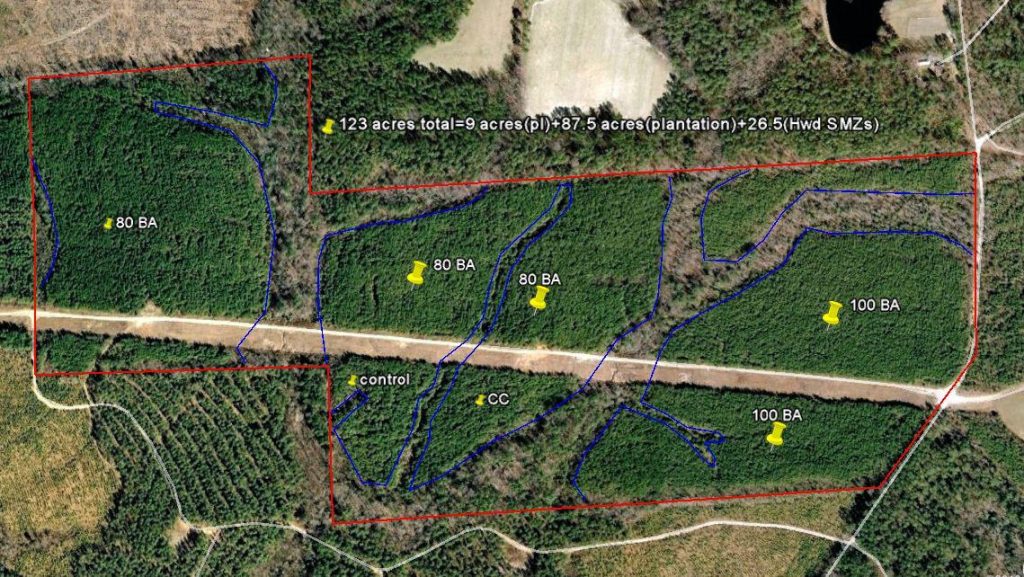
There is an exciting (at least for me) development in my forestry business. I am working with Eric Goodman from the KapStone Mill in Roanoke Rapids, NC to make our Freeman property into a kind of experimental/demonstration tract. 

We are going to thin to different densities, with two residual basal area targets of 80 & 100. In addition to that, we will have a five acre control block where no thinning or treatment will be done and another five acre area (labeled “CC”) that will clear cut and replanted with a combination of loblolly and longleaf next year. 

Planting longleaf is particularly interesting. Longleaf pine (pinus palustris) was once common throughout the south. It is a beautiful big tree, that forms in grassy groves and park-like palisades. But it is hard to grow and fire dependent, so it has not been propagated as much loblolly.

A National Wildlife Federation study says that longleaf pine ecosystems may be particularly well adapted to expected climate changes. The longleaf is well adapted to extremes that might become more common in the Southeast. You can read the study at this link about longleaf and climate change.

After thinning, we will experiment with other management techniques, such as burning, herbicides, pruning and fertilization.  It seems like it will keep us busy.

The picture/map up top shows the plan.

Encounters with the Legal System

One of the punks that attacked Alex is up for trial.  He is summoned to give testimony.  He doesn’t remember anything, but he has to go anyway.  I don’t know how strong a case they have against this particular guy.  I am fairly sure he is guilty, but as I mentioned before he is one of six guys who attacked Alex.  The bad guys are taking legal refuge in the confusion about which of them actually did the kicking and stomping.

The attack on Alex has made me a lot more sensitive to random crimes and hate crimes.  He is very lucky that he was not hurt more seriously or permanently.  I read in the paper about a kid about his age who was in a fight that put him into a permanent coma.  Of course, Alex could have been killed and for nothing.  He was just in the wrong place and had the wrong appearance.  I like to think that the world is rational, but not always.  Life can change in a second and all the hopes and aspirations can be gone.

Alex really had a hard time last year.  He starts a new school, away from home for the first time.  That is stressful enough.  Then he gets set upon by six thugs.  He still finished his exams on time and never complained about his bad luck.  He didn’t even want to tell his professors why he missed a week of class and why he had some trouble concentrating after he came back.  I admire him for it, although I thought that he should have at least played for a little sympathy.  It must have impacted his grades.

My other contact with the legal system next month will be jury duty.  I have been a registered voter for nearly thirty-seven years, but I have never served on a jury.  Of course, I was overseas a lot of that time, but I don’t think I was ever even summoned before.   We are lucky to live in county with lots of voters in relation to criminals.  Some of my colleagues who live in DC, where the ratio tends to run less favorably, serve on juries with monotonous regularity. I don’t know if I will actually get to/have to serve on the jury.  I just have to report and see if they need me for anything.   I want to serve on a jury, to have the experience, but I would prefer not at this particular time, when I am focusing all my energy and attention on learning Portuguese and about Brazil.  I suppose there is never a really perfect time to do jury duty, but last October would have been good.

Going Back up Before Finally Going Down

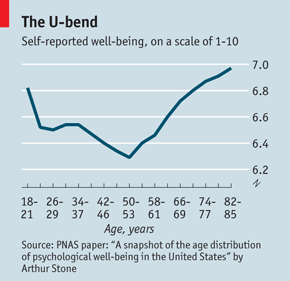
Old people are happier than young people, according to an article I read in the Economist.  Studies show that people have a declining happiness from youth until their mid-40s.  In your forties, many people go through the mid-life crisis, when you realize that you probably won’t achieve all those things you aspired when you were still a callow youth.  Age 46 is the nadir, but also the turning point; after you start to get happier again.

I suggest you look at the article linked above for details.  The authors discuss some of the objections that might be raised about the data-sets.  But they explain that the results hold even when you control for income, education, location etc.   Of course, these things make a difference. Richer people are generally happier than poorer people, for example, but the age differences hold when adjust for such things.

There are a few interesting permutations. Women tend to be happier than men, as a group, but women also suffer depression at significantly higher rates.  Some people are naturally happier than others in ways that you might expect. Some neurotic Woody Allen types can never be happy even in good times, while outgoing people are often happy even when conditions around them suck.  Another interesting apparent contradiction is that when asked about OTHER people, both young and old say that younger people are happier, but when you ask them about their OWN happiness, the older guys come out on top. It is hard to remember with certainty, but I think I am happier now than I was twenty-five years ago. I don’t remember being unhappy back then, BTW, but I have reasons to be happier now. Life is easier.  It is exciting to start out in life and a career, but it comes with lots of stress and uncertainty. I used to feel like I was falling behind.  At this stage of my life, I know what I have achieved and what I am likely to in the future and it is good enough. Maybe you just get used to being “average.”  The article quotes the philosopher William James who said. “How pleasant is the day when we give up striving to be young—or slender.”

Diversions on the Way to Pick up Alex

I picked up Alex at James Madison today and brought him home for Christmas vacation. I am glad to have him home and I like to ride with him, so I don’t mind the drive up and back.  The road has become familiar and I have developed routines. For example, I always stop off at the Wilco Truck stop on the way home. I have around fifteen cents a gallon on gas, as compared to the prices in the Washington metro area. They have everything I need, a Hess gas station, a Subway Sandwich shop & Dunkin’s Donuts. But I don’t save any money despite the cheaper gas because I waste a couple dollars in quarters in the gambling machine you see up top.  

You drop quarters in and sometimes they push more quarters into the tray and you “win.”  The quarters perch enticingly on the edge, as you can see. In fact, there is no way I can win at this game and I know it. Oh yeah, I can win a few rounds. Sometimes I get the joy of hearing a pile of quarters fall into the tray, but those just permit me to play a little longer. It is just a diversion. I can afford it. I suppose it is more transparent than bigger deal gambling in casinos. At least with these machines it is easy to understand that you aren’t really going to win.

Speaking of things you cannot win, I used to play “Space Invaders” when I was in college. Sad to say, I got very good at the game, which indicates how much money I wasted. It costs a quarter to play, and that was back when a quarter was a lot more money for me. I could “beat the game,” which meant that it went through nine cycles and started back at the easier level. You never got your quarters back, but you could put your initials on the high score board. For a few glorious months, there was status in winning at video games. That was when college students (i.e. semi-adults like I was) were the champions. But we were soon replaced by teenagers and then children who had even more spare time than college students and more capacity for the mindless repetition it takes to master games. There isn’t much honor in beating a kid & even less in being beaten by one. In fact, finding an adult too good at any video game is not a good sign. I had a colleague who was master of Minesweeper & computer solitaire; not a good worker.

Of course, today games like Space Invaders are hopelessly primitive. My kids laugh. I explain that it used to be a bigger deal and that it is more challenging to play in a bar after you have had a couple of beers. My other favorite game was Missile Command. That game took more coordination than Space Invaders, so I played that one earlier in the evening.
On my way to pick up Alex today I got out a little ahead of the rush hour traffic, but I still was happy that I could use the HOV lanes on the way out.  One of the advantages of the hybrid is that I can use the HOV lanes.  Frankly, I don’t think it should be allowed.  We have HOV lanes to cut congestion. Conserving fuel is only a secondary goal.   My car does indeed save fuel, but I noticed a single guy in a Lexus SUV hybrid who also had the special right to use the HOV lanes.  I suppose a Lexus SUV hybrid gets better mileage than an ordinary SUV, but I bet it gets poorer mileage numbers than an ordinary Honda Civic.

First Snow of the Season

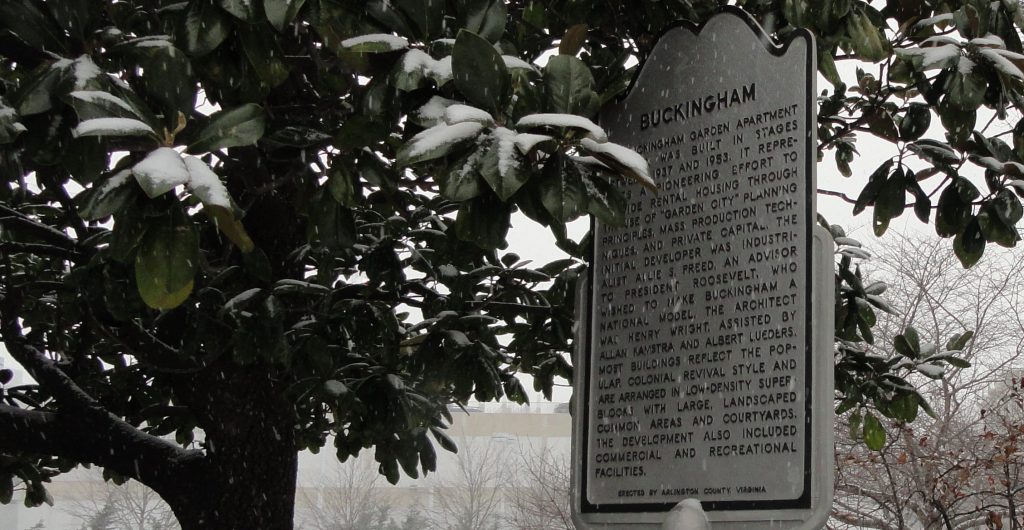
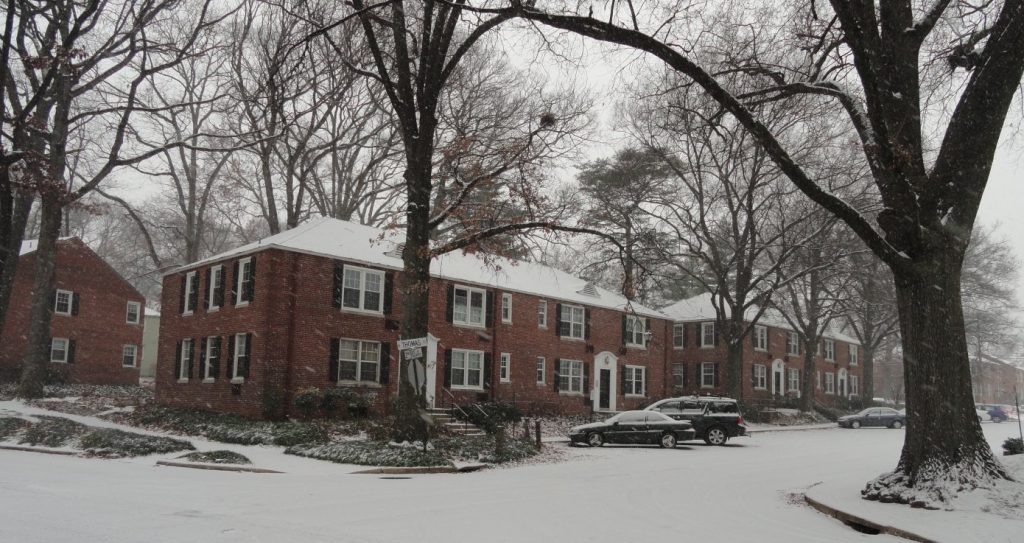
We got our first snow today. It was only a couple inches, nothing like some other parts of the country have been suffering. Still, it is a big deal for Washington, a city that combines southern efficiency with northern charm.  Schools closed; the government had liberal leave policy, i.e. you could take unscheduled leave if you wanted.  Most of it will melt soon, even if it stays cooler than usual, as it has been.  You can tell we are in the south by the leaves on the magnolia tree near the sign, still green with the snow swirling around them.

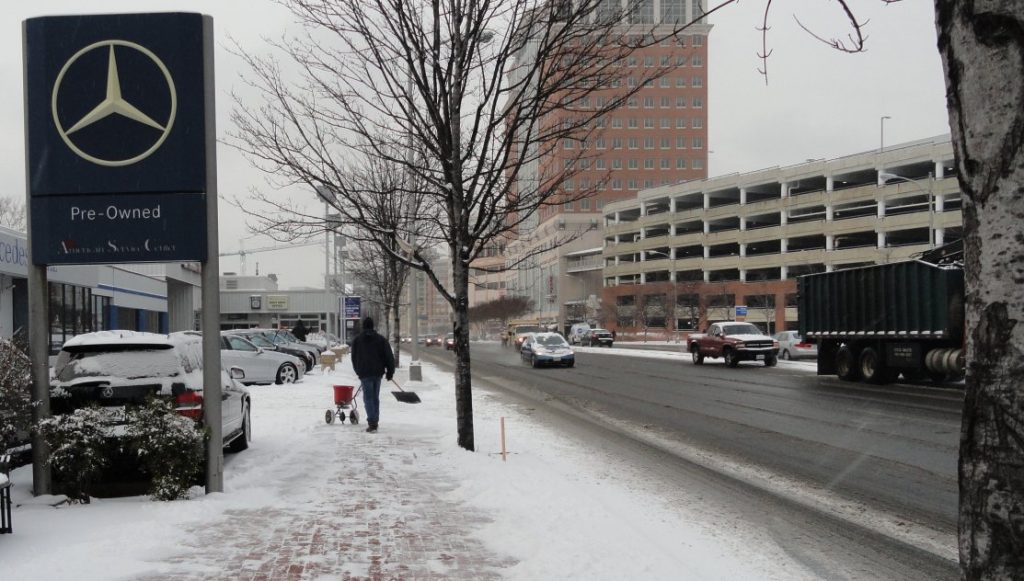
The pictures show some of the buildings near FSI & Balston. If you can read the sign in the picture, you can read that this area was built between 1937 & 1953. It was supposed to be a low density garden city community in the colonial style popular at the time.  It is a nice setup. They originally were rental properties, but many have now been converted to condominiums.

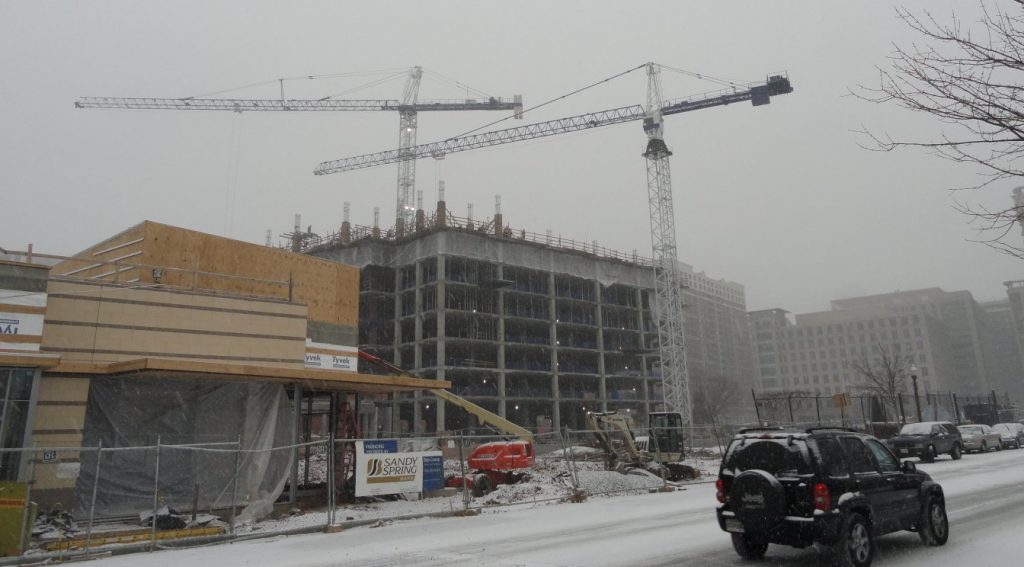
It must have been fairly remote back in 1937, but now it is near densely developed cityscapes. The Balston Metro made the development more attractive. You can see above across the street and below the new construction just down the block.  I felt sorry for the poor guys working high up in the snow.

Blustery Day with Intellectual Challenges

I attended a lecture this evening on Theodore Roosevelt and the Progressive movement. It was an interesting talk, but the whole thing made me feel a bit inadequate.  There were lots of smart people in the audience, such as Michael Barone and Ben Wattenberg.  They asked insightful questions, but it wasn’t just that that made me feel lower.  I have never been able to keep my experts straight. These guys can compare subtle differences between works of various people and between philosophies. I have a more mix & match mind.  It works well in many things, but I am outclassed by the big brains when it comes to straight intellectual debate.

FSI gave me a kind of an aptitude test recently. I didn’t pay much attention, but it did “reveal” that I don’t set clear boundaries, meaning my learning style is find similarities instead of differences. They spend a lot of time developing these tests, but they never really tell you what you can do about it, since they always say that all the styles are equally okay. IMO, the holistic approach works for lots of things, but it doesn’t work for the intellectual parsing I talked about above. I enjoyed the talk and I took notes.  I will use the information for something in the future, I suppose.  But I will be unable to keep it straight.

That Michael Barone is a genius. I have long read his books and watched him on TV. He seems to be able to remember the details of every political contest, down to the county level, since the founding of the Republic.  The interesting thing he brought up was the hypothetical about what would have happened if Roosevelt had not died in 1919.  He probably would have run for president in 1920 and almost assuredly would have won.  How different would history have been?  Would he have repeated the energetic presidency of his youth, or would the second act just have ruined his reputation and maybe hurt the country. Of course we will never know.

On the plus side, I had my informal first Portuguese test and I got – unofficially – 2+/3.  This means nothing to most of you reading this, but it is a decent score after six weeks of instruction for someone who has been away from a language for twenty-five years.   The assessments are on a five point scale.  Zero is when you cannot say a word in the language; five is educated native proficiency. Even many native speakers in a language cannot get a five, since it is an educated speech.  We have to get a minimum of 3 speaking and 3 reading, which is “minimum professional proficiency.” 

I would like to get to 4 both speaking and reading and I think I have a good chance, but it is hard, since the difficulty rises exponentially.  It is a lot easier to get from 1 to 2 than it is from 3 to 4 and – as I said – almost nobody gets to 5, even if you are born in the country.  Four is good.  Everybody knows what you are talking about and you don’t make any serious mistakes, but you retain a (no doubt) charming accent, think Ricardo Montalban. Language is such and important part of my job that I think it is worth the effort. I had a 3+/3+ in Polish, which served me fairly well, but I can do better than that in Portuguese. I already have some background; besides it is an easier language & State is giving me the time and instruction I need to get the job done.   Back in 1985, I went to Brazil with 3/3.  During my time there, my language improved, but I didn’t test when I came back, so I don’t know what I had.  I don’t think it was better than a 3+.  I was very fluent, but I lacked the polish that I hope to get this time around.

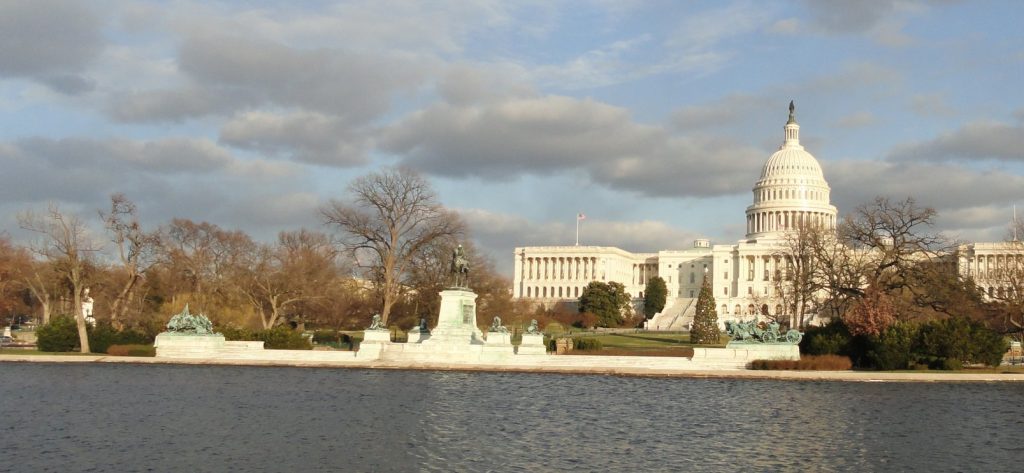
The pictures are from my walk around the Mall today. It was cold with a very strong wind, but I walked from State Department to the Gold’s Gym at Capitol after my Portuguese class and it was okay because the wind was from the west, i.e. at my back. I took the Metro up to the stop near AEI for the lecture this evening and so avoided the freezing wind most of the time. 

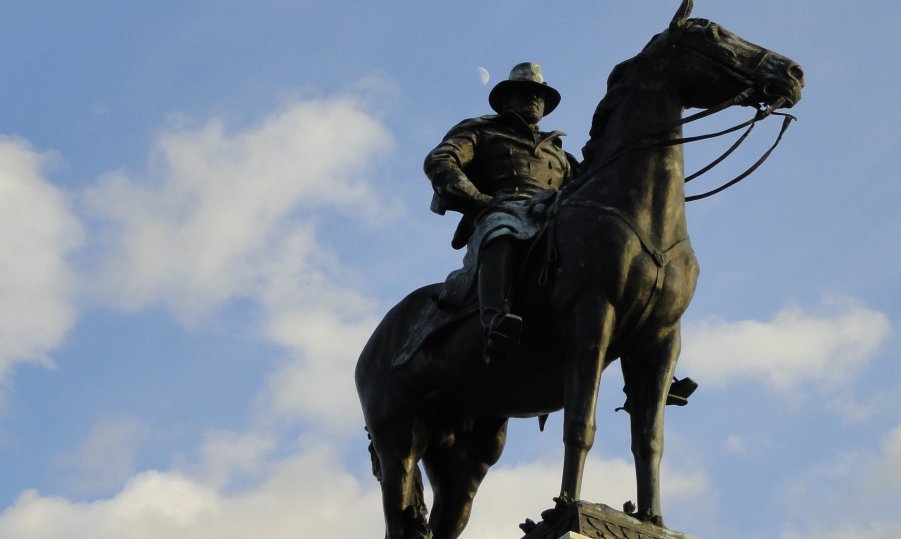
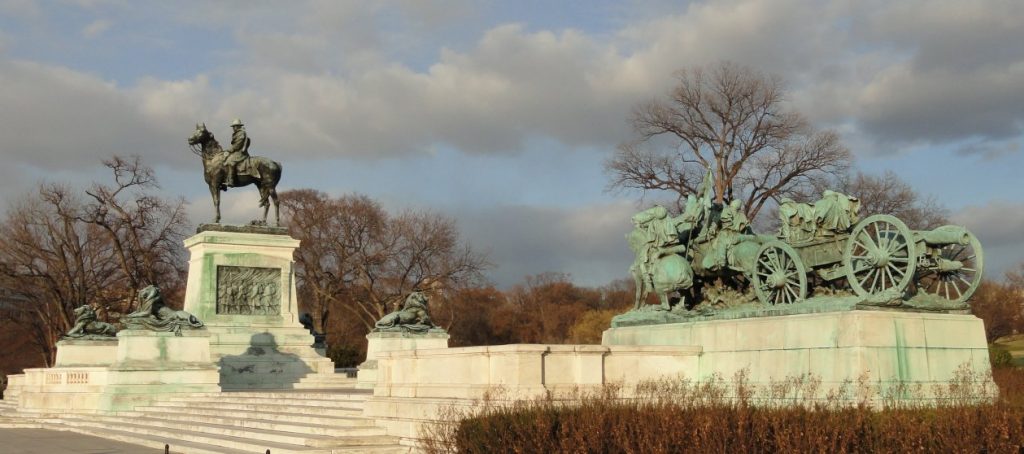
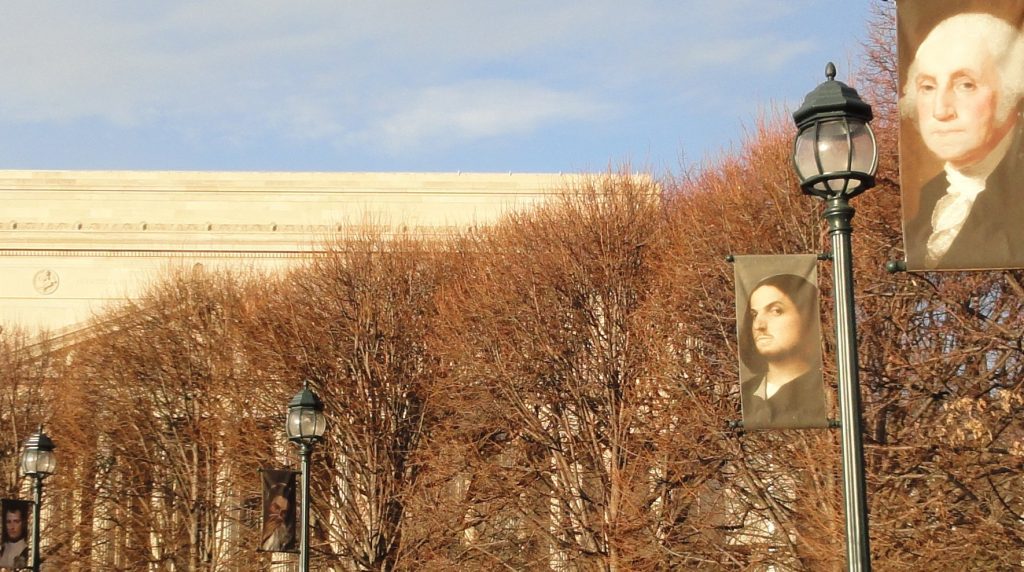
The top pictures are of the Grant Memorial near the Capitol.  In the second picture, notice the half moon above Grant’s head.  Below is the skating rink on the Mall and some portraits along the path.  I recognize Washington and Napoleon, but I don’t know the other two.

More photos are at this link

BTW – I am sorry that I am not writing more. Portuguese and Brazil is taking most of my intellectual energy, as I mentioned.  I watch the Brazilian news every day and read some books and magazines. After the homework is done, there is less time to write. language training is serious business, but rewarding.    

Loaded for Bear

Hunting is good. It puts people in close touch with nature and enobles both. But hunting evokes strong emotion. NPR ran an article about a girl in Mississippi who likes to hunt deer.  It got more than 500 responses, so far.  These things usually get one or two.  Of course, the anti-hunting voices were louder, especially on NPR, but a poll that went along with the piece showed that around 70% of the people liked the article.  

The State of New Jersey is allowing bear hunting this season. There are an estimated 3,400 bears in the state, up from only 500 in the 1990s.  State officials would like to reduce the number by around 500-700.  Hunting at the expected levels won’t be enough to reduce the population by these numbers, since past hunts have yields only around 300 bears. What they need is a yearly hunt to create a steady and experienced bear hunting population. Unfortunately, no bear hunts have been held in New Jersey since 2005.  Animal rights folks often dislike lethal wildlife management and they have sometimes been successful in getting judges to suspend hunts.

Around 6500 bear hunting licenses have been sold, of course few of these guys will actually successfully shoot a bear and most will not even encounter one, maybe because of the lack of experience mentioned above, hence the probable yield of around 300 bears.  Currently, New Jersey bear hunters can use only shotguns and black powder to bag the bears.

As I mentioned in an earlier post, bears have been spotted with increasing frequency around our farms. The bear population is growing down there too. I remain unenthusiastic about bears in my woods. They are generally harmless, but the qualifier “generally” worries me. I like to take my lunch with me. I don’t want to worry about attracting the big hairy beasts by leaving my ham sandwich on the seat of the truck and I would prefer to be easily the winner in any potential wildlife struggle. Fortunately, I have reasonable confidence that the bears will be kept under control on the farms.  We have lots of well-armed hunters in Brunswick County, loaded for bear.

The greater problem nationwide is that the number of hunters is declining. Hunting is something rural people do more than urban ones, so when the rural population shrinks, so does the hunting population. Beyond that, more and more land is being closed to hunting. I am glad to have hunters on my land, but not every landowner is so enthusiastic.

Meanwhile the populations of many animal species are exploding. There are more deer in Virginia today than there were in 1776. They have learned to thrive in close proximity to humans.  The same goes for coyotes, raccoons, woodchucks, squirrels and many others. Turkeys have made a successful comeback and I am afraid that bears are next.  Animal populations will get out of hand.  This was hard for me to believe a few years ago.  I grew up when wild populations were generally much lower and sometime locally endangered. Those times have passed for most game animals.  Hunters are now the “endangered species” in many locations. 

The alternatives to volunteer hunting are much more expensive and troublesome. Imagine creating a government bureaucracy and hired bureaucrats as hunters. Hunting requires reasonable skill. Hunters spend a lot of time exposed to the weather. They get up early and suffer in silence.  Imagine hiring somebody to do that.  Think of the overtime you would have to pay?  Now imagine hiring someone to do it and him joining some kind of public employees’ union. I suppose the animals would be safer.

Endangered species no longer

Related to hunting is an announcement that grizzly bears and wolves may be taken off the endangered species list.  These species have made a comeback. Nature is resilient & species that are/were successful can leap back. The problem for many endangered species is that they were marginally successful in the natural environment.  The very cute panda bear is a good example. The species is headed toward an evolutionary dead end.  It cannot reproduce well; it eats only a limited type of food, for which its digestive system really is not well suited to process. Human intervention just pushed it sooner. Wolves and grizzly bears don’t have this problem.

Populations of wolves and bears can be managed and should be managed by hunting, among other tools.  the endangered species law doesn’t allow for much flexibility. It assumes, as it must, that larger populations are better. But with a healthy population, this is not always true. In fact, a smaller, more genetically diverse population, might be better than a large one with different characteristics. A commitment to preserving each individual is rarely a good idea when you are talking about species. All animals are not created equal. Nature is not concerned with rights.

We also need to decide  WHERE endangered species should be defined. EVERY species on earth is “locally” endangered somewhere because every species range ends somewhere. Take the example of the common and familiar sugar maple tree. It grows from Canada to Florida, but it is common in some places and thin in others. Eventually, it just peters out at the end of its range. If you made a map with all U.S. counties where sugar maples had ever grown, you could argue that the species was locally endangered and even extinct in some places where it had once been reported to have lived.  If you looked hard enough, you could identify local varieties that could be declared endangered or extinct. And you could call it science.

Wolves are a successful species, but we would not want them to re-inhabit every place they were found in 1607. This does not indicate a failure of wolf protection.

I used to study wolves way back in the 1970s when I still thought I would have a career in wildlife and forestry. Experts believed that wolves were doomed and that the best case scenario would be to slow the loss. At that time, wolves lived in Alaska, a shrinking area in the arrow head region of Minnesota & on Isle Royale in Lake Superior, but they had not been seen recently in other places in the U.S.  Today the population has returned to places like Northern Wisconsin and the Rockies.  We won this. The wolves have been saved. Now we have to manage the populations.

IMO, we have to change the paradigm that includes the word “save” or features those dreadful countdown metaphors that imply soon it will be all gone. This may have been appropriate in the 1960s or 1970s, but today the better words would be some like “manage” or “prioritize.”  We are no longer defending the ever shrinking territory.  Now we have to figure out what to do with the options.  
New Music for a New Brazil

Brazilian TV had an interesting program on the types of guitars in Brazil.  Even if you cannot read Portuguese, you can see the pictures of the various types of Brazilian guitars (viola) at this link. There are six major types.

The latest music sensation in Brazil is a variation of Musica Sertaneja, which I talked about in an earlier post.  It is not the type of music that immediately comes to mind when you think of Brazil.  It started off similar to country music; often with duos singing harmony, but it has recently developed into something more like a type of country-rock.   Although it is popular in cities, it is keeping some of its country roots.  At first, Sertaneja singers were mostly men, but now some of the most successful are women, such as Paula Fernandes, whose picture you see above (looks sort of like a younger Emmy Lou Harris.) She is proudly from the State of Minas Gerais.  You can see some of the state and hear her sing at this link

You can get a taste of the new Sertaneja at this Brazilian TV program.  I don’t think you really need to understand all the language. Just look at the people and listen to the music.

It is only a supposition, but I think that the growth of Musica Sertaneja is related to the growth of the lower middle classes in Brazil.  Sertaneja was/is a kind of bottom up phenomenon that comes from the aspiring interior of the country, from the new cities of aspiration such as Cuiabá or Porto Velho, rather than among the establishments of the older cities nearer the coast.  

I listen to the words in the songs.   Of course, most of them are the usual mix of lost love and longing, but they often have a meta-theme of going back to simpler life with traditional values.   This is often a theme of the upwardly mobile, people who have moved somewhere else to improve their life chances.  They know that they are better off now, but they also would like to hang on to some of what they left behind.  I think it is the same feelings expresses in the old Bobby Bare song “Detroit City.”  Bobby Bare is also known for his other hit “Dropkick me Jesus through the Goalposts of Life.”

Anyway, Samba and Carnival are not going away, but there is a lot more to Brazil than those things. The new Brazil has a new feeling in many ways and different sounds.

How to Manage Climate Change

Adapting to climate change is getting more sustained interest lately. The Economist magazine had a big story last week and NPR Marketplace had several stories this week. The impression you take away from this and other related stories is that we can expect pretty much nothing from all those international conferences, but the people are making decisions now that will help us all adapt.

“Marketplace” had a good article on Wednesday about the insurance industry and how they are adapting when they are allowed. Insurance rates are rising where risks are higher because of weather patterns. Insurance firms can work more efficiently. They don’t have to wade into the debate about whether climate change is man-made etc. They just look at the numbers and project costs.

Insurance and the ability to manage risk has been one of the most important, if unheralded, contributors to our well-being in the last couple of centuries. These guys figure the risks and then charge a differential which gives people incentives to be smarter. For example, if it costs you way more to get insurance to build a house on low ground, you move higher and avoid the risk. Insurance companies have been instrumental is improving fire safety, reducing accidents and making us all more healthy. But this only works when the costs can be passed to those who can affect decisions. Short-sighted politicians sometimes circumvent this process. For example, many areas of Florida are smack in the path of hurricanes already. No private insurance firms will willingly sell insurance to homeowners in some places, at least at rates they want to pay. This should tell us something. If a firm whose business it is to insure doesn’t want to sell you insurance, maybe there is too much risk. Unfortunately, the State of Florida has stepped in to offer cut rate insurance insurance for people who should move elsewhere. This is just like setting a time bomb that makes some people happy in the short run, but will create much more expense and suffering in the future.

I don’t know how much the climate will change. Nobody does. But there is no avoiding it as a general proposition. We don’t have to know all the details in order to know some of the steps we need to take. If we believe sea levels will rise, we sure should not expand construction in places that are already subject to flooding at today’s levels. Trees take time to grow. We should plant varieties of trees that are adapted to a wide variety of possible climates and develop new varieties. Buildings last around fifty years. We should make sure we are adapted. These things are not rocket science, just common sense.

We can live in a variety of places WITH the proper adaptations. We are not powerless. We renew our infrastructure all the time. It just seems permanent to us. Most of the buildings we live or work in are less than 50 years old, and among the older ones virtually none have not undergone major renovations. If we start now, much of the adaption can be almost business as usual. Just incorporate smart changes.

Most of us have trouble envisioning anything really different. We intuitively project the future in sort of a straight line from the present. It has never worked like that. We have a kind of punctuated equilibrium, with long periods of stability and burps of change. We have chances to adapt when times are “stable.” Once the change hits hard, it is too late.

I know that some people want a “collective” decision and that is what we will get. But it will be a collective decision by billions of individuals, firms and organizations. Governments will need to kick in some big infrastructure investments, but all should be made with an eye to the future, not simply saving things of the past. Adaption might often be hard, but it will not be impossible.

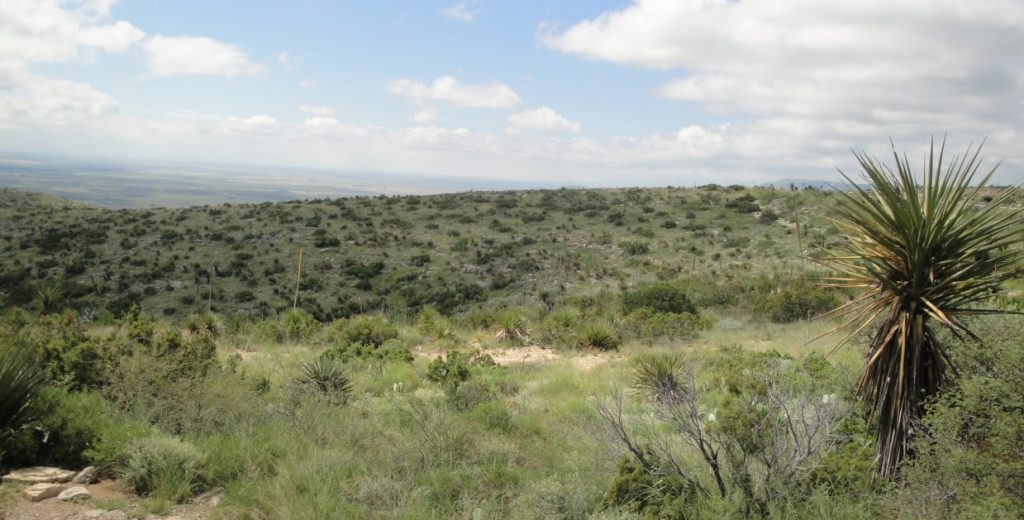
The picture up top is the Permian Basin in New Mexico. It used to be the bottom of a warm sea. It is higher & drier now. The Permian Period, for which this place is named, ended with the greatest mass extinction in earth history. Things change. Life adapts. We need to too.

BTW – I had to skate over the top of this issue, so as not to write way too much. If you want more detail, do read the “Economist” article. The EPA has a general report with some links. I also saw a couple of really good TV reports about adaptation to climate change. Unfortunately, they are in Portuguese. One of the specialists explained that the city of São Paulo has ALREADY warmed a couple degrees and storms are more severe. This is because large cities are ”heat islands”, i.e. buildings and paved surfaces concentrate heat. The city has been adapting to these changes, as we will more generally need to do.

Learning Brazil

Language learning is really a total experience, at least for me. I have not been writing as much to the blog for that reason. This is the fourth time the FS has given me language training, although only the third language, since Portuguese is a repeat. Now I watch Brazilian news and read Brazilian papers and books every day.  I have only four hours of actual instruction, but I think that I am doing at least ten hours of Portuguese-Brazil related stuff every day. 

This even goes for my walking around IPOD.  I loaded on Brazilian music. The kind I like is “musica sertanja.” It is a lot like country or maybe more like Western music. It kind of reminds you a little of Marty Robbins. I have learned that it is very popular in Brazil, especially in the interior of the country. 

My favorites are Jad & Jefferson.  I bought one of their albums from I-Tunes. They do a great harmony.  One of my favorite songs is Não Aprendi Dizer Adeus, a song that seems to be an old standard. I bought a version by a duo called Leandro e Leonardo and also one by a guy with a famous name Julio Caesar. One of the singers who sound the most “country” is a guy called Sergio Reis.   But if you watch the Youtube, you see that he still has the Brazilian arrangements with the pretty girls backing him up.     Much of the music has to do with traveling the country roads and being on the sertão, which is much like our home on the range. A nice calming song is Deus e Eu no Sertão, by Victor & Leo. That means God & me on the open range and it is what you might expect, extolling the simple pleasures of being out on the range. The clip linked above shows what the range in Brazil looks like. I think that the pictures are mostly from the state of Mato Grosso do Sul.  One of the singers popular with young women is Zezé di Camargo.  Watch him sing the Brazilian national anthem at this link and you will understand why.  They even made a movie about him and his brother Luciano.   It is the story of a couple poor guys from the state of Goiás who make good.  

I also bought a bunch of Brazilian movies. I mentioned “Tropa de Elite” in my earlier post, but I pretty much buy whatever I can find on Amazon that is still in Portuguese. I don’t have any particular desire to watch dubbed movies, although I am happy for the subtitles. They are sort of gritty sometimes. I will do the English titles.  One called “Man of the Year” could have been made by Quentin Tarantino. It has the feel of “Reservoir Dogs.”  A theme seems to be journey movies too, which is okay with me since I get to see Brazilian countryside. In this general theme, I have “Central Station,” “God is Brazilian” & “The Middle of the World.” Two more that I really cannot characterize, but are a bit depressing are “House of Sand” and “Behind the Sun.”

I notice some of the same actors in the movies in widely varied roles. An older woman called Fernanda Montenegro seems to have first opportunity to be in any movie made in Brazil. She also has a big part in a currently popular soap opera called Passione. I tried to watch it for a while, but I really cannot follow it. TV Globo provides only scenes, so you have to keep on clicking on them to keep the action going. Anyway, it seems like a good soap opera, but it is still a soap opera.

This has been my most holistic language learning experience. It is more fun, because I have been able to jump over a lot of the boring drills and get more into the substance of both the language and the society of the country.