The Light Bulb Goes Off

The great Ronald Reagan said that you could accomplish almost anything as long as you don’t care who gets credit. Of course Reagan was not the first person to say that. It is almost impossible to trace an idea to its “source” because there really is no one source. Ideas don’t pass unchanged through the people who hold them and none of us ever has a truly original thought, which is why we might not fight so hard to take or give credit. 

 I proudly proclaim that I have never in my life had a truly original thought. I am well educated. The chief benefit of education is that you tap into the accumulated wisdom of other people, places and other generations. I spend a lot of time reading with the specific goal of appropriating the ideas of others. I cannot keep them straight. I often cannot remember where I picked them up and I mix them together in ways that complicate provenance. It doesn’t bother me, although I suppose that some people of deceive themselves about their own originality might be upset that I “stole” their ideas. Footnotes have always been a challenge for me. 

The image of the lone genius coming up with a great breakthrough was always mostly mythical. Innovative ideas are created when they bounce off and recombine with each other. (Matt Ridley, author of The Rational Optimist characterizes it as ideas having sex and producing synergistic offspring. His book, BTW, is among those I have assimilated in the Borg-like fashion I mentioned above.) They do not do well when they are contained in a single mind, the more people involved in an idea, the better.

I have little patience with the careful parsing of credit. That is a reason I had to flee academia, where the first ¾ of any research consists of summarizing and discussing the lineage of all the ideas you will be considering in the second-last paragraph of your thesis. It is just an awful long run for a very short slide and beyond that it does not reflect how people think or ideas are born outside the ivory tower.

Let me break my credit rule again by referring to another book I recently read called Where Good Ideas Come From. If you follow the link, you will find a good illustrated summary of the main ideas of the book, which saves me the need to write it all down here. The summary does not include, however, the point that in an academic sense I would give him credit for. That is that many people have similar ideas when faced with similar challenges and similar opportunities. Of course, this is not a new idea. I wrote a post with some of the same thoughts before I read the book and I think before the book was published. It kind of proves the point about ideas flowing around.

You can also look at the TED Lecture. If you are unfamiliar with TED lectures, you might want to take a look; they are usually interesting. On an unrelated note, one of my favorites was on the intelligence of crows.

Johnson gives some good examples. The most famous is probably Darwin and Wallace, who came up with the theory of evolution completely independently about the same time. The idea was gestating around in general at the time. Thinking up the theory was made possible by scientific advances that made analysis of species possible, by floods of communications that spread that knowledge and, not inconsequentially, by the society that had developed in the West that would not stone or burn anybody who published such ideas as infidels or heretics. In short, a person living in the 15th Century anywhere in the world or even living in the 19th Century anyplace else probably could not have thought of the details of the theory of evolution at all or, if he had managed the thought, would have died in a nasty way shortly after revealing it to anybody else.

When I studied anthropology and ancient history, we used to refer to diffusion. This was the concept that ideas and technologies were created in some place, in ancient history usually the Mesopotamia or Anatolia, and then they were carried – diffused – to other parts of the world. This led to a linear type of history, where your attention is first drawn to Sumer in southern Mesopotamia and then you move the “center” of civilization to northern Mesopotamia, expand it to include the Eastern Mediterranean, then to Greece, then Rome. After that you move to the Empire of the Franks, then to England and finally you end up in America.

Of course, I am conflating diffusion with an ethnocentric historical perspective, but diffusion is essentially an ethnocentric historical perspective and it is based on that bogus concept that ideas are invented and then spread, rather than the more correct one that ideas spread and then they are invented. (This diffusion thing gets even worse, BTW. Some people believe that space aliens came around and “seeded” ideas)

It is not exclusive. It is likely that people in different places, faced with similar challenges and opportunities came up with similar adaptations. It is also likely that when they came in contact with other ideas the mixed, matched and innovated. So did the use of particular tools, pottery or agricultural techniques spread through diffusion from originating centers or did they develop in many places at once? The answer is yes.

So the academic exercise of trying to find the “origins” can be fun, but it is isn’t much use.

Next year we will essentially outlaw the traditional incandescent light bulb, and with it the long-time symbol of innovation and new ideas. We all learned that Thomas Edison invented the light bulb, but there are always wise guys who point out that he didn’t. They are right. The Greeks invented light bulbs almost 3000 years ago. The problem is that they didn’t work. Who had the basic idea first doesn’t really count for much. It matters who can make it work and make it useful. The greatest innovators are not those who have the best new ideas, but rather those who can figure out how to make ideas work for themselves and others and those who can reformulate ideas into new mixes.

All ideas are old in their basic form. I am convinced that the Greeks, Chinese or Native Americans (if you want to be PC) pretty much thought of everything on a basic level. If you want to say that the concept of a chariot of the gods is essentially the same as the space shuttle, you are being silly and impractical but you have a nerdly rhetorical point. Just don’t take that kind of thing to seriously and don’t get annoyed when you don’t get credit for having useful ideas.

Cooper’s Hawk

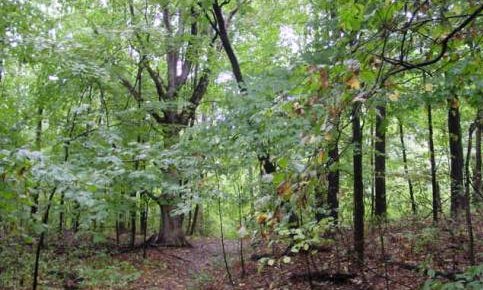
I think this is a Cooper’s hawk, also called a chicken hawk. Hawks are more and more common and I even see eagles sometimes near the Potomac, but I never get pictures because they are on the fly. This one was chasing something by flying and then running on the ground, so I got the picture. Whatever it was after got away. The photo is not perfectly focused because I still had to shoot fast and the light was not great.

According to what I read, these birds eat other birds. I have noticed there are a lot fewer pigeons and I think the resurgent hawk population is one of the reasons. That alone would make the hawks a good thing in my book. A pigeon must be an easy meal for a hawk. This one was right next to Glebe Road just a little north of Henderson, in a fairly built up area. I read that hawks have adapted well to cities. Some of types actually prefer urban living because there are lots of slow witted pigeons and fat squirrels and tall buildings provide many of the attributes of cliffs.

I saw a really majestic bird up close a few months ago on Independence Ave. It swooped right past me, actually frightening a woman on sidewalk in front of me. It was a kind of white color. I think it was an osprey. It was bigger and more impressive than the one above, but it was long gone before I could even get my camera out.

Boldy Go Where No Man Has Gone Before

A green field investment is when you build a plant where none have been before. The term “green field” is exactly descriptive of the actual geography and contrasts with the “brown field” which is when you rebuilt or build on an old industrial site.   Which is better depends on what you plan to do. Existing buildings and infrastructure can be worth a lot, but they can also be worth nothing and sometimes they even have negative value because existing structures must be demolished and the new owners have to take responsibility for perhaps years of pollution to ground water, soil etc. This can be a major liability and is a big reason why it is so hard to redevelop old industrial areas. Nobody wants to take on the liability. The green field has none of the baggage, but of course you have to build all the necessary infrastructure to support the investment. Circumstances dictate whether or not this is an advantage.

New transportation patterns, markets and changing technologies can make old locations obsolete and create opportunities for new ones. The raw geographical distance doesn’t matter. What matters is the practical distance, which depends on the quality of infrastructure and technologies of transport. A few dozen miles away on an unreliable dirt road can be farther away – practically – than a few thousand miles by sea transport.   A load of wood sitting at the Brazilian port of Santos might well be closer in the practical sense to a construction site in New York than the same wood stacked in a hollow in the hills of West Virginia. Geographical distance doesn’t change, but practical distance changes all the time, creating and destroying business opportunities.

Fortunes are made when somebody recognizes a new practical distance. For example, I have been reading about the Maggi brothers, growers of soy in the Brazilian state of Mato Grosso. It is worth pointing out that soy production in Mato Grosso became possible only within the last decades because of advances in agricultural techniques and plant science. They could not have done what they did fifty years ago. Nobody could, since the technologies were unavailable. But their business was almost killed by logistics. The Maggi family came from Southeastern Brazil and everybody continues to look in that direction to sell their products internationally through the Ports of Santos and Paranaguá. But the overland transport was too expensive. So they looked in the other direction and moved their product north west to the river port of Porto Vehlo in the state of Rondônia, where the products are put in barges, a very inexpensive way to transport bulky commodities, and shipped down the Madeira River, which eventually flows into the Amazon from which the products can be put onto ocean transport. Most of the soy ends up in China, a market that was unavailable twenty five years ago.  So what we have here is a product that had not yet been developed twenty-five years ago, grown in a place that would not have supported it, sent over a transportation system that didn’t exist or was “undiscovered” and finally sold to a market that only recently came into existence. And you wonder why the world is a surprising place. 

Markets and productive capacity are created by human ingenuity. They are not “out there” waiting. 

What got me thinking about green fields was another story about Brazil; this time about a little city called Tres Lagoas, in Mato Grosso do Sul, the state next to Mato Grosso. I was surprised to learn today that Tres Lagoas is the world’s biggest producer of cellulous.  Who knew? I didn’t believe it, so I researched it and sure enough it is true. It only happened within the last couple of years because of a partnership between a big Brazilian firm called Fibria and International Paper. The reason they chose Tres Lagoas is because it was the classic greenfield investment, with a great capacity in the neighboring area to grow eucalyptus trees. Paper/pulp/fiber mills have trouble if the forests that supply the fiber are more than 60-80 miles away. This is not a problem in Tres Lagoas.   

Look at the slide show of the fiber plant at this link

Of course, once you get the wood to the mill, you still have to move the product to markets.  No problem again. Tres Lagoas is located in a region that is flat as a board. It presents no building challenges.  But the infrastructure is already there. The city sits astride rail, highway and canal infrastructure and is even on the right of way of a pipeline that brings Bolivian natural gas to Brazil. This has attracted other industries.   Petrobras is locating there to build a fertilizer operation. Natural gas is a feedstock and the growing areas (remember the Maggi brothers et al) are nearby. There are also steel mills expanding, among other things.

So how about that? People not very old can remember when there was nothing much in these places. Who knows how many other places in the world are languishing, waiting for a change in technology of a paved road. It is amazing how fast wealth can be created and how the practical landscape can change in years or months. Sometimes all it takes is a paved road and some imagination and vision. We sometimes think the heroic age of innovation is over. We are wrong … again. As long as there are humans, they will create opportunities and – to steal the phrase – boldly go where no man has gone before.  

More Thoughts on Telework

I used to manage a professional staff of around forty-five, most of whom telecommuted twice a week. Telecommuting is not appropriate for all jobs, but in the jobs where it is possible workers can be more productive away from the office. We have to get used to it, anyway, since President Obama signed into law the Telework Enhancement Act.

I wrote a lot about this on other occasions, in response to an an NPR story on Results Only Work Environments and when we was all kept at home by snow storms.

The bottom line for me is that telecommuting is a good thing that can improve morale and productivity. Take a look at the linked article and the links in it for the pluses But there are caveats & I believe that my experience managing telecommuting as well as telecommuting myself, sometimes between continents, give me some insights, which I can share.

One non-obvious thing that is necessary for telecommuting is a degree of arbitrariness.Some people can handle telecommuting; others cannot. The manager of telecommuters has an additional responsibility to use judgment to make reasonable distinctions among employees. This is very difficult to do. You will often be accused of being arbitrary or unfair.

Those that abuse telecommuting usually can come up with good excuses for why they couldn’t complete their work on time. A good manager cannot let them get away with it. It is unfair to the good workers. What I have seen too often, unfortunately, is an abdication of responsibility in the name of “fairness”. Managers either ignore the transgressions or they punish the innocent and guilty alike with onerous rules and restrictions.

Managers also have to get used to looking for results instead of “face time”. Most managers claim they are interested in results, but they reward presence. Beyond that, although few will admit it, many managers like to have people around that they can boss. We also have to admit that a properly designed telecommuting program may mean that we need fewer middle managers. The organization afforded by technologies can to some extent replace the organization provided by middle management.

Still thinking of this from the manager’s point of view, we have to learn not to ask too much from our good teleworkers. Flexibility is one of the advantages to telecommuting, but some managers think that flexibility means stretching work hours to … forever.

I learned this myself by my own mistakes. I work odd hours and my work and my leisure overlap, i.e. I actually enjoy many of the parts of my work, so I do them in my free time too. I used to check my email when I woke up in the morning and before going to bed at night. When I saw something that needed to be done, I would often make my comments and send it off to whoever was going to have to handle it the next day. What I quickly learned is that my best colleagues also checked their work early and late. They also sometimes took my comments as commands to get the work done right away.

People follow the lead of the boss. The boss often enjoys his work and doesn’t mind – even likes – long hours. More importantly, the boss is in control. He/she doesn’t feel the same stress that the subordinate does. When I sent along a comment, all I meant was that it would be a good idea to work on this tomorrow morning, or maybe just think about. When my colleagues got my midnight message, they thought it was an urgent command. It is a smaller version of the Henry II “command” about Thomas a-Becket.

I finally had to make a rule that nobody was supposed to touch their office work between 8pm and 7am. I know that people looked at the work. I did. But I didn’t send or respond to any emails.

This brings me to my last caveat. Telecommuting is part of the whole technology-social media world. It brings with it the same danger of magnifying the trivial, flattening priorities and destroying the whole idea of actual deliberation. The instant nature of communications creates the illusion of knowledge. It is tempting to act before you have all the information you need for smart decisions. We are tempted to see trends where none exist.

We used to have a saying that you should “sleep on” any hard decision. This gives you time to put things in perspective and it remains a good idea in many cases, but it is much harder to do and much harder to separate the important from the merely urgent when you are awash with information.

Teleworking is more than just letting people work at home or cutting the commuting time. It is not just something that can be tacked onto a workweek, like pinning a tail on the donkey. It requires a system wide adjustment. Some people will thrive in a telework environment; others not so much. It is a bigger change than most people think and a bigger opportunity.

The Worms Crawl In

This is something that just never occurred to me. 

I was watching a gardening show today about worms. Gardeners usually like worms. They help the soil remain fertile and aerated. That is what I always thought. But when I looked it up, I found out that worms are an invasive species. All those worms (night crawlers and the like) I remember as a kid were introduced from Europe.

Earthworms are destructive to forest soils, according to what I found at a University of Minnesota associated webpage.  Worms were wiped out by glaciers during the last ice age, which retreated only around 10,000 years ago. Without human help, worm populations move very slowly. Northern ecosystems developed in a worm-free environment. When worms arrive, they change the ecology. Evidently the worms eat the organic material too fast, taking away the layers of humus that all for the reproduction of forest floor plants and trees like sugar maples. Worms are small, but there can be lots of them and they don’t stop.

I never knew this or noticed it. The maple forests around Milwaukee already had earthworms, so I thought that was natural.  It still seems pretty strange to me that earthworms could be a threat. I suppose that when you are talking about long-established ecological relations, almost anything new that comes in can be disruptive.

BTW – honeybees are also not native to North America and neither are a lot of the flowers we see in fields, along with most farm animals and most crops we eat. Actually, I suppose that I am an invasive species, so I am not sure I buy into the native is better idea as a general construct. I will have to find out more about it.

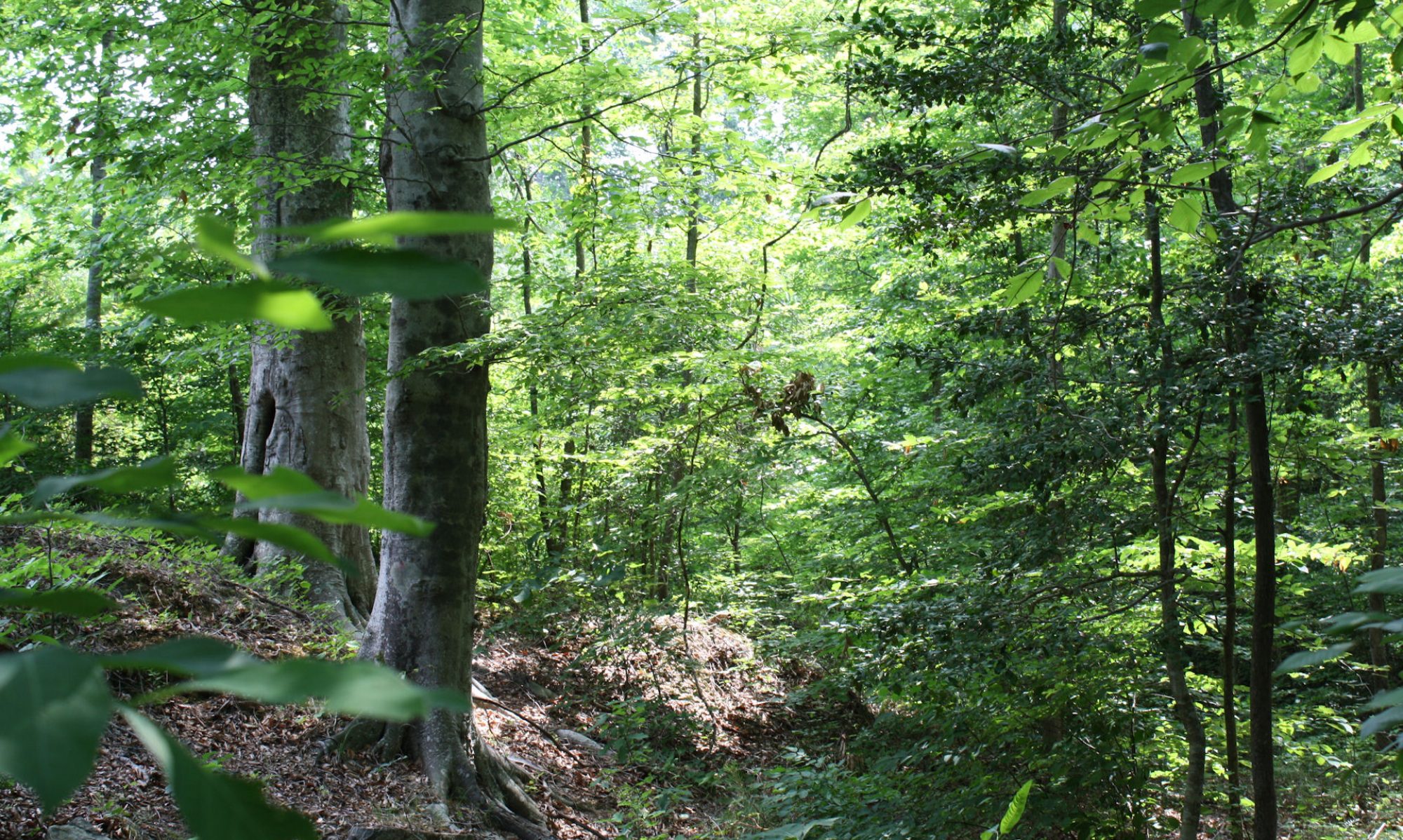
The picture up top is one I took way back in September 2003 near the Milwaukee Airport, it shows the northern hardwood secondary growth forest.  We made a trip across the U.S. in 2003.  I kept up a webpage, it was the predecessor of my blog.  The link is here

Bean Soup

My father subsisted on pea soup and bean soup, more or less, for the last twenty years of his life, those things plus some Polish sausage and almost ripe tomatoes. Making them is easy and cheap. The biggest challenge is remembering to soak the beans/peas overnight. You can use leftover ham as a base, or the parts of the ham that you didn’t want to eat because they were too fat or too hard to pick off the bone. You can see why this is such a wonderful peasant food.  It stays good for a long time. In fact, it improves with age.  Nothing is wasted.  You can also toss in whatever vegetables were laying around.  It all turns into a kind of thick gruel that tastes pretty good if you put in a little pepper and salt.

I don’t make these soups as much as I did when I was in college. Back in college pea soup and bean soup were among the foods that had the three attributes I craved: they were cheap, reasonably nutritious and I could make them. That is probably why my father ate them all the time too.  But my kids don’t like either, so they cannot form the basis of a family meal.  As I recall, I didn’t like them either when I was a kid. I learned to like them when I was in college. No doubt under my father’s influence, I made it from scratch, the less expensive and better way, rather than buying the pre-made stuff in cans.

You can get pea soup at some nice restaurants, but it is kind of a specialty not common most places.

We had ham for supper and we have ham bone left over, so today I made bean soup.  In a couple of days, I will make some pea soup with what still will be left of the ham.  This week, we will dine like the old man taught me.

Oh yeah, he used to make cabbage soup too. I haven’t made that for a long time. No matter how much of this kind of food you try to eat, you really cannot get fat on it.  These kinds of food fill you up before they can fill you out – the original diet food.

Groundhog Day

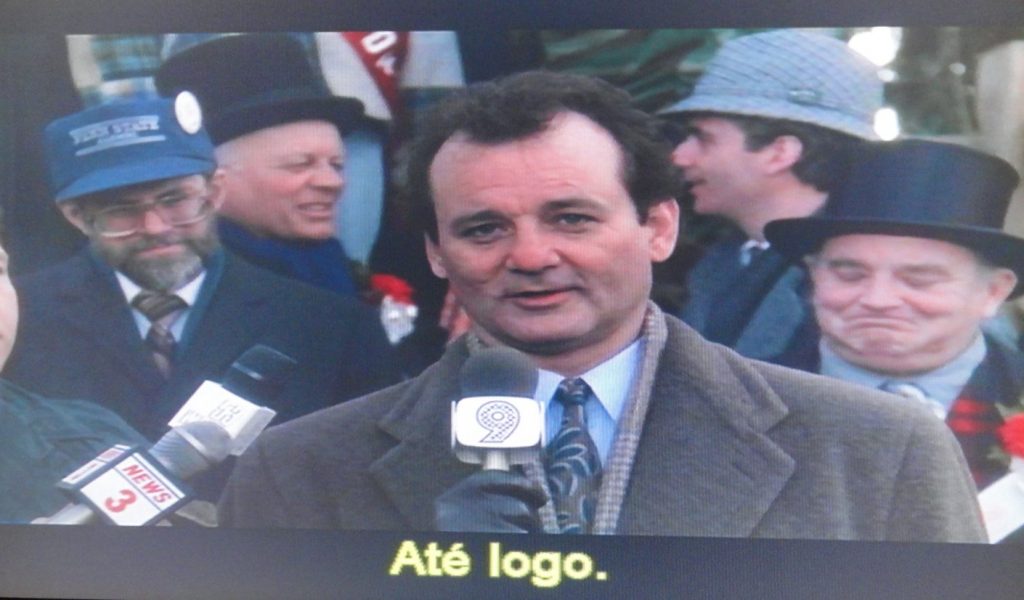
“Groundhog Day” is one of my favorite movies.  I was watching it this morning, dubbed into Portuguese with Portuguese subtitles, so I could assuage my guilt for not studying enough.

I like it for several reasons.  One is unrelated to the movie itself.  The movie was on cable at the Condo where we stayed when we took the kids to the theme parks in Orlando back in 1994. It seemed to be on over and over, so I recall it being on the whole time.  It was a good time.  The kids were excited about Disneyland etc.  The weather was perfect that October when we went and our sense of relief was accentuated because we were coming from Krakow, where the weather was turning bad and – more significantly – the air pollution in those days was horrendous.  So I remember being in a clean, green place with Chrissy and the kids having a good time.  Everything associated with that basks in the glory of that moment, including “Groundhog Day”.  But there must have been other things on too that I don’t recall.  “Groundhog Day” had other things going for it.

The setting is comforting.  The movie is set in Punxsutawney, Pennsylvania, but it was filmed somewhere in Illinois, so it has a thoroughly Middle American feel. Of course, I have never actually seen a small-medium sized city that is as lively or has so many diverse things to do, but it is nice to imagine.

If you have not seen the movie, you should. A brief summary is that a weather man comes to Punxsutawney for the annual groundhog festival, but each day he wakes up to the same day. It repeats, over and over. They never say how long this happens, but it is a long time, maybe thousands of years’ worth of February 2. The main character, Phil Connors played by Bill Murray, goes through predicable stages. At first he is confused; after that he takes advantage of life with no consequences; then he gets depressed and kills himself many times in many ways, but each day he wakes up in the same place. Finally he decides to live in the moment. He improves himself by reading and learns to play the piano.  He also improves the lives of the people around him w/o any expectation of personal gain.  He does these things essentially because they are the right things to do at the time when he does them.  Finally, after living the perfect day, he progresses to the next day and that is the end.

The movie raises lots of philosophical questions, but it does it in a stealthy almost unconscious way, which makes it such a unique film. I suppose you could watch the whole thing just for the fun of it w/o getting any deeper than the funny lines and situations.  But I think it would be hard not to think about it, if you were at all paying attention. Most of us have thought about how we might do things differently if we could do things over again, if we had a second chance. This takes us a little beyond that. What should be your ethics in a world where there are no permanent consequences to your actions? I think that the film leads to the conclusion that there ARE permanent consequences, even if external conditions don’t change, because the consequences are contained in the person, who chooses, or not, to do the right thing. The movie is a story of personal development, of redemption.

Phil starts out a selfish a-hole, who after many renditions of the same day develops into a man balanced and at peace with himself. It is not the he just becomes unselfish and helpful to others. More profoundly, he becomes selfless in the true sense of the term. He merges himself with the people, things and the place around him.  He becomes his task no matter what it is, he becomes what he does and loses himself in it. He no longer works on being good, no longer thinks about doing the right thing, he just does it because it has become what he is.

I suppose I am reading way too much into a Bill Murray movie. But I have read many books of wisdom: the Zen of this, the Tao of that or meaning of everything. I am not saying that watching the movie is the one-big-thing.  There is no one-big-thing; however, if someone asked me about the great spiritual sources, I would include this movie. Like all works of philosophy, it should be watched, considered and discussed over time. The book – or in this case the movie – doesn’t change but your different experiences make it different each time. That is why it is impossible to understand any philosophy at the first sitting.  It takes a while to sink in, maybe years with differing conditions.

Lately I have been giving a more philosophical career advice. I tell the young people who ask me that they should strive to become the person they want to be, become the person who deserves success rather than strive for success itself. Success can be limited. Only a few people can be the bosses, champions or among the best at anything.  But everybody can aspire to become what they think is a good person. Reasonable success will almost assuredly follow anyway, but no matter what, you will have something of value when you are finished.  

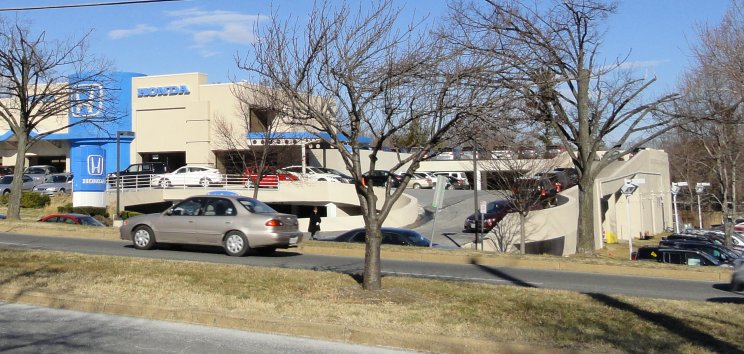
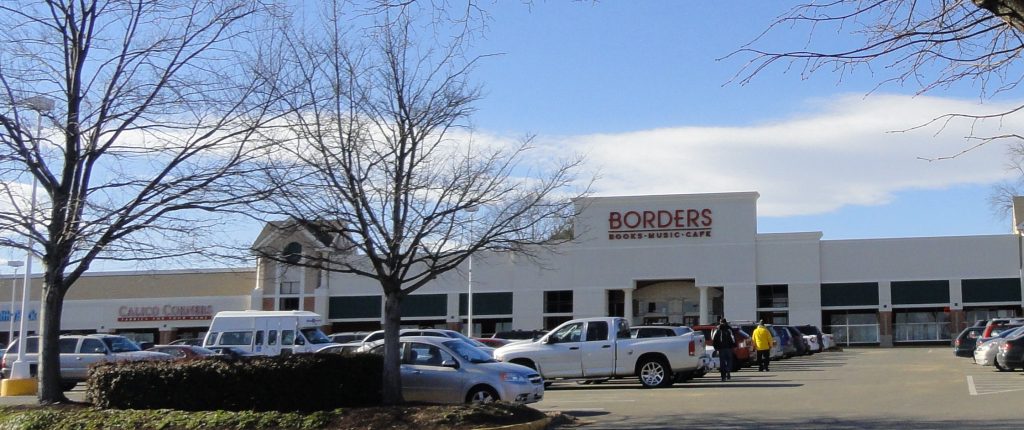
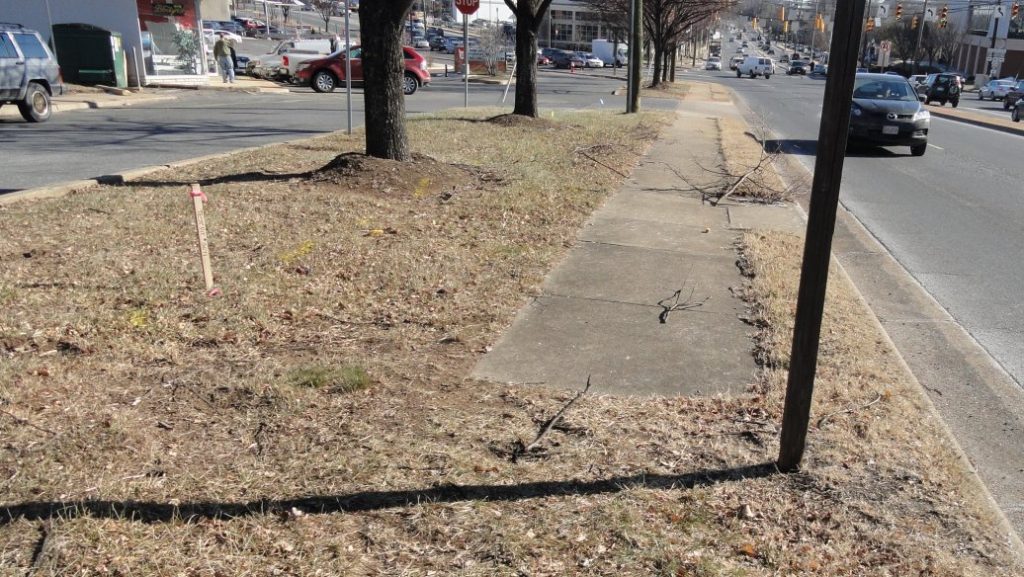
The picture up top I took of the TV with “Groundhog Day” playing. The other pictures I took when I was wandering around getting the car serviced.  You can see Fairfax Honda and the Borders Book where I got the Hadrian book I wrote about yesterday. The last one shows the respect that pedestrians get around there. I was clearly in the middle of a car-preferred zone.  It is no place for old men, since you have to make a run for it when you want to cross the road.

Gossip about Dead Celebrities

I took the car in for routine maintenance at Fairfax Honda. They always treat me well; however it takes time to get it done. But I didn’t really mind.  I wandered over to Barnes & Noble across the street, bought a book – “Hadrian” by Anthony Everett – and for the price of a cup of coffee, and I suppose the book, got to sit and read in the Seattle Best coffee shop associated with the bookstore.

Anthony Everett specializes in biographies of famous Romans. I read his earlier books about Cicero and Augustus, so I figured this one would be good too. So far, so good. I haven’t really gotten that much about Hadrian yet. The author is talking about the Roman world, which is as interesting. He admits that it is hard to write a real biography of ancient people.  The sources are just not that good and they tend to be sensationalized.

For example, the big biographer of the first “Twelve Caesars” is a guy called Suetonius. He wrote distant in time from his subjects, so he includes lots of gossip and legend. The stories you hear about Caligula and Nero probably come from him.  In some ways ancient biography is like trying to get information from tabloids.  I read parts of the “Secret History” by Procopius when I was in school.  He writes about the Emperor Justinian and his wife Theodora, who had been a circus performer and maybe a prostitute before she met Justinian.  Some of the parts are sort of like classical “Penthouse Diaries,” which is probably why these histories survived for more than a thousand years. I recall the line from one of those teenage films, that history is just the story of dead celebrities. That is not wrong.

Everett point out that some new, or at least overlooked sources of information about the life of Hadrian are those architectural monuments you see in the pictures. When Hadrian visited or caused them to be build, there was always an inscription marking the event. Modern scholars can follow in Hadrian’s footsteps by following the monument trail. Of course, archeology has its limits and is subject to significant interpretation. It can also tell you little of the person’s inner thoughts, which is what many people really want in a biography.

Hadrian has recently become much more interesting to some segments of modern society because he was gay, or at least bisexual. To many modern readers, establishing justice and sound administration in the world’s greatest empire takes a back seat to sexual preferences of a man now dead for 1800 years. I think this is the “history as dead celebrities” school. But anything that gets people exploring the classics is probably a good thing.  Hadrian is one of my favorite emperors for equally venal reasons.

My mother bought me a Roman coin when I was ten or twelve years old. Alex has it now.  It was a silver denarius from the time of Hadrian and featured his profile on the coin. Roman coins are less valuable than you might assume, BTW.  (I think my mother paid around $10, which even in those distant days was not a great deal of money.) The Empires coin stampers made a lot of them w/o distinctions that excite collectors, such as dates and consistent mint marks. I suppose they are also easy to fake, although you can tell some fakes because they are smooth, like our coins today.  Romans stamped their coins, i.e. the pounded them with hammers, so the real ones, and good copies, show the evidence of that. I was happy to have it, nevertheless.  It put me in touch, I thought, with the brightest part of the golden age of the Roman Empire. I also have a “relationship” with Hadrian because of all his statues.  He was a vain individual and, anyway, it was imperial policy to make a cult of the emperor. So you find his statues all over the place.  I saw dozens in the “Roman” places I visited, such as Italy, Greece, Jordan & Egypt. Hadrian traveled all the time and evidently left a statue of himself wherever he went.

Although he was from a Roman family from Spain with some Carthaginian/Phoenician/African ancestry (the empire was becoming cosmopolitan) Greece was the place Hadrian came to admire most and he made Athens into a kind of spiritual capital of the Empire.  You can still see the evidence of his largess in Athens today.  Lots of what you think is classical around Greece is really from Roman times, or at least rebuilt by the Romans.

Everett talks a little about the ambivalent attitude Romans had toward Greeks, whose cleverness and sophistication they both admired and despised. This was no short term thing, BTW.  It persisted for many centuries and ultimately was one of the dividing lines between the Eastern & Western Empires.

“Greece” in those days did not include only the little country we think of today. Most Greeks and certainly most people who aspired to Greek culture, lived in places like Sicily, North Africa, Asia Minor (now Turkey) and Syria.  Alexandria, in Egypt, was a completely Greek city. Cleopatra was a Greek in ancestry, language & culture, descended from Ptolemy, one of Alexander the Great’s generals.  Greeks of at least people who had become Greek in culture and outlook, ran the place from around 300 BC until around AD 700 when Muslim armies conquered them. Even after that, Greeks persisted until recently as merchants and craftsmen in Egypt and the Levant. Greek was the language of the whole Eastern Mediterranean, which is why the original language of the New Testament is Greek.   

The world would not see anything like this kind of cosmopolitan culture again until the 20th Century, when English came to play the “world language” that Greek played. 

Hadrian recognized the power of “Hellenism” and used it to strengthen the Empire.  He was not the first or the only person to try to melt the Latin & the Greek cultures, but he was among the most effective.  It is probably one of the reasons we call it Greco-Roman sometimes today.

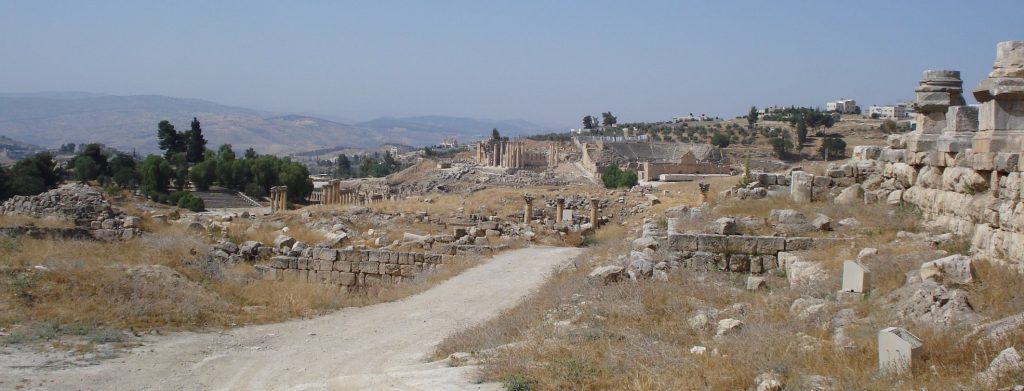
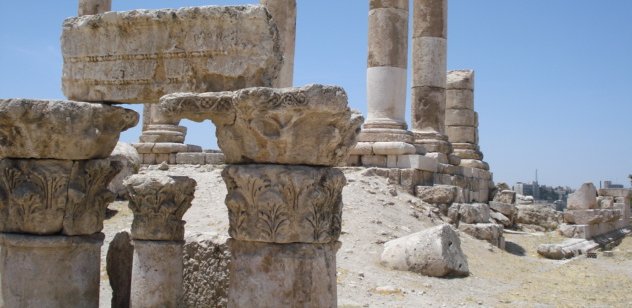
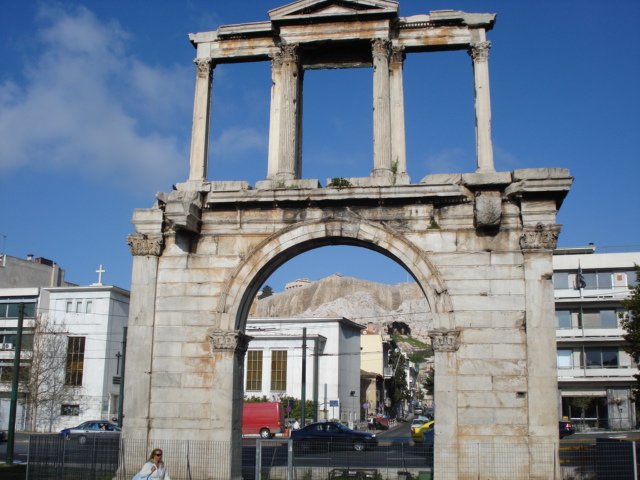
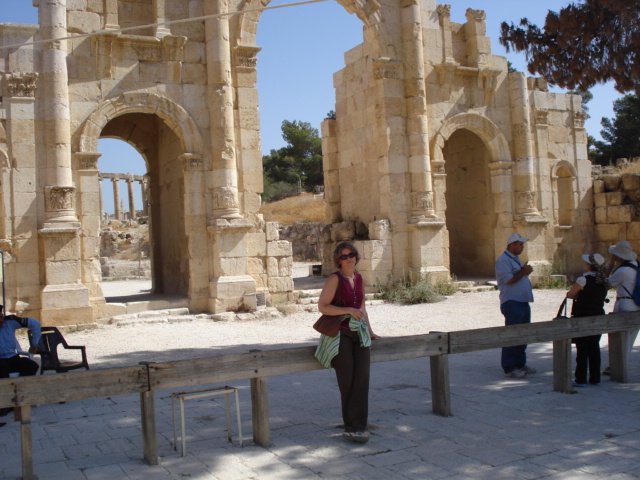
I am a little ahead of myself. I have not finished the book yet. In fact, I have to put it off for a while.   During this week I am doing “self-study” for my Brazilian-Portuguese. I have to keep up with Brazilian news and finish two books.  One is relatively easy. It is “the Accidental President of Brazil” a memoir by Fernando Henrique Cardoso, who with his “Plano Real” was the individual most responsible for reforming Brazil into the very promising country we have today. It is a very easy and interesting book to read, and it is in English. I am learning a lot about modern Brazil from learning about Cardoso’s life experiences. My other book, “Brasil, País do Presente – O Poder Econômico do Gigante Verde” is much harder because it is in Portuguese.  It is not difficult Portuguese and since it Is mostly about economics many of the words are familiar variations of English terms. Beyond that,  the book is conveniently broken up into manageable sections, but it presents a challenge. I have to write up decent notes on both books by the end of this week, so Hadrian will have to wait. The pictures up top show Roman ruins in Jordan at the edge of the empire. The picture with Chrissy is one of Hadrian’s arches in that city, now called Jarash in Jordan, and the other one is Hadrian’s arch in Athens.  You can see that he stuck with a kind of formula, but it worked for him. I was going to put in the pictures I took around Fairfax Honda, but I suppose I can post them separately. They don’t seem to fit the story.

Generations: Boomers XYZ

It is easy to over define something as fluid as a generation. Old guys think young folks just are not quite as hard-working or tough. Younger generations always think that they are unique in world history. Stereotypes are not w/o merit. My father’s Depression-WW II generation was tougher than mine since they grew up in harder times. As for today’s young people, until the recent economic downturn, nobody born after 1980 really remembered hard times and despite all the gnashing of teeth the general level of affluence remains high. They are unique.

But the most unprecedented generational changes have to do with connectedness. We thought we were connected because we grew up with television. My father’s generation thought radio was the cat’s pajamas.   And a generation before that they had the amazing possibility of getting new transmitted by cable printed in morning newspapers.  When you get farther back than that, not really very long ago in the great scheme of history, speed of communication had not really changed too much for thousands of years.  News traveled as fast as a horse could walk or the wind would push a ship.

The speed of communication really has not changed much since they laid trans-Atlantic cables during the reign of Queen Victoria.  The fastest messages have essentially traveled at the speed of light for more than a century, but the reach, breadth and the interactivity has grown with each technological advance and the astonishing spread of Internet and cellular phones represents a quantum leap that changes the rules not only of communication but also of society.

I am a member of the “baby boom” generation, born between the end of World War II and the early 1960s. We were THE youth generation, even after we got older.  After us was what they called generation X, born from the middle of the 1960s until around 1980 and then generation Y, born beginning around thirty years ago, now entering the labor force.  Some people talk about a generation Z, which would be kids around ten years old.  The borders between generations are not very distinct and a generation means  than just being born during certain years.

Generations pass through events that shape their members.  Baby boomers, for example, experienced the post-war prosperity and then the upheavals of the 1960s.  We then went through the hard times of the 1970s, which made us more conscious of the need to get and keep jobs.  It was nothing as hard as our parents Depression experience, but it made an impression.  The generation X folks in many ways had a harder time.  They are a smaller generation (birthrates dropped after the baby boom)  that grew up in our shadows.  They felt the hard times as kids, but generally did okay in the 1980s and 1990s.  Their biggest challenge was baby boomers, who hogged a lot of the good jobs. This problem is not going away, but it may be made even worse by the arrival of generation Y.It is hard to arrive just a little behind. Others entrench themselves in the better jobs and you can be second place for most of your career. The boomers were supposed to retire, and the older ones have started to move off, but the recent downturn has kept more of them in the labor market. So generation X waits its turn.  Unfortunately for them, generation Y has arrived and is ready to go.

Generation Y has advantages.  They grew up with technology and so they are very good at computers and social networks. Their knowledge is up-to-date, which trumps the experience of many generation X folks.   Beyond that, the boomers, who are getting ready leave – finally, like generation Y. They are qualified, as I mentioned above. They are energetic and they are literally the children of the boomers. Imagine a boomer (age maybe 55) thinking about a successor.   He can choose as “steady” & “solid” person of around forty-five, who has served the firm well, but maybe never rising to the higher levels (blocked by boomers).  Or maybe he can look to the techno-savvy, innovative & energetic thirty-year-old, who reminds him of his own smart kids.  Notice the adjectives.  Do you think I am choosing the wrong words?

This is causing significant tension in many workplaces. The Generation Y folks don’t much respect hierarchy.  They feel perfectly entitled to take their new and innovative ideas to the big boss (still often a boomer), bypassing the middle-manager, who is likely to be generation X. Some generations get the breaks.  There was a similar dynamic with the World War II generation and the boomers. Like the boomers, the World War II generation dominated the scene, until they were replaced by boomers. We forget about the “silent generation,” those just too young to go to war, but too old to be boomers, the ones born from around 1930 to 1945. Take the symbolism of the Presidency. From 1960 to 1992 all the presidents were World War II era veterans (Although Carter was not active duty, he was at the Naval Academy during WWII).  The office then passed to baby boomer Bill Clinton, completely bypassing the silent generation. George W Bush was a boomer and so is Barack Obama.  His likely Republican challengers in 2012 are boomers, so we are virtually assured of boomers in office until 2016 and maybe 2020.  By that time, the younger boomers will still be in their late fifties, still prime time for the presidency, and generation Y will be knocking at the door by 2028.  We could skip a generation again.

Of course, everything for me now has a Brazilian angle. In fact, I was moved to think about this subject after watching a series about generational change in Brazil on TV Globo. They are in Portuguese, but if you want to watch, they are here, here, here & here.

The Brazilian generations do not correspond exactly to ours, but they are close. The difference is that the differences are sharper there between generation X & Y.  Generation X grew up during the time of the dictatorship.  They were concerned with establishing their positions in society and their status, maybe more than American generation Xers. Beyond that, Brazil was economically isolated in the 1970s and 1980s.  Protectionism and import substitution were the rules. That meant that lots of the products were substandard and relatively more expensive.  Computers, for example, were always behind the curve.  Making matters worse was the poor economy, high inflation and external debt. This tended to keep Brazilians down. The 1990s saw revolutionary changes, perhaps as stark and rapid as the more famous changes in Eastern Europe. Brazil opened and its economy improved remarkably. Technology poured in, essentially allowing Brazilian to skip a technology generation. Younger Brazilians, at least the educated ones we are thinking about in firms, suddenly had communications and travel options that were unheard of for most of their immediate elders.  

So in Brazil, the X-Y divide is even sharper and the Brazilian equivalent of baby boomers is acting similar to their American cohorts. In addition, the younger Brazilian generation is more open to risk taking and innovation.  They are starting firms and hopping jobs in ways the more cautious generation X folks find frightening. I expect this to be a factor when I am managing staff in Brazil and interacting with firms there. I do not believe that demographics is destiny. There will be many variations, but I think it is something to keep mind.

Transcontinental Railroads for Soy

Brazil is the world’s second largest producer of soybeans. The country made great advances over the last quarter century, thanks in great part to the work of EMBRAPA and the development of Brazilian agriculture. I wrote a note about the expansion of the Brazilian agricultural frontier at this link. They have learned how to make the formerly non-productive soils fertile and developed new varieties of crops, such as soybeans adapted to the tropics that have revolutionized agriculture in the country and may soon help less developed countries in places like Africa.

The intractable problem remaining is infrastructure. Infrastructure is weak all along the chain from the farm field to the ports. Infrastructure that we take for granted just does not exist in many parts of Brazil. They have no network of paved trunk roads, for example. These webs of roads bring agricultural products to markets and greatly reduce prices and waste. We don’t even think about this most of the time, but I understand their worth sometimes when I drive down one of my dirt roads after even a light rain. It is not hard to imagine how bad it would be if traffic was more and heavier just me, not hard to imagine, but it would be hard to work with it.

Freight rail is an often out-of-sight but crucial part of infrastructure in any large country. The state of Brazilian railroads is even worse than the roads, outside small areas of the Southeast.  A truck can, with difficulty, drive across an undeveloped path; a train obviously cannot go where there are no tracks and there are no tracks laid across most of the Brazilian agricultural frontier.  

As part of my quest of getting to know Brazil, I was doing a little research on infrastructure in the interior of the country and found an interesting article about the “soy railroad” or what Brazilians call Ferrovia de Integração Centro-Oeste (Fico) – the trunk railroad for the Central-West. Look at the link to see where the railroad will go. It will be part of a massive transcontinental railroad that will cover 4,400 kilometers. Work is supposed to begin April of 2011, initially with R$ 4.1 billion from the Programa de Aceleração do Crescimento (PAC) – program for the acceleration of growth. The rail project has been slowed by environmental concerns, as well as management challenges of such an ambitious project.  

The project is supposed to be completed in two phases. The first phase will go from Campinorte in the state of Goias, connect with the north-south railroad, and end up in Lucas do Rio Verde in the state of Mato Grosso.  I didn’t know where these places were either, but you can look them up with Yahoo Maps. The railroad would be a straighter line than the road and I think be better environmentally, since RR traffic is more easily controlled.  As I wrote above, the trains obviously cannot leave the tracks.

When the project is up and running, it will save R$ 1 billion in the annual cost of freight for producers in the region, according  to Glauber Silveira da Silva president of the Mato Grosso Association of Corn and Soy Producers.  He also talked about the need to complete BR-163, the highway that is supposed to connect Cuiabá in Mato Grosso with Santarém in the state of Pará. It was started in the 1960s, but  much of it is a dirt road with ruts big enough to swallow cars. The completion of this infrastructure would change the direction of the product flow from the central-west. Most of the freight currently goes south and east, toward to overloaded ports of Santos in São Paulo state or Paranaguá in Paraná. A good road/rail connection could take the products north to Itaqui, in Maranhão, or Vila do Conde, in Pará, closer to export markets.

These heroic infrastructure projects are very exciting for me. I have read a lot about building our own transcontinental railroads and I am generally fascinated by trains and roads. (One of big advantages that I noticed when I was there was the Iraq’s great rail potential.) The challenge for the Brazilians is not only to build these things, but also to do so in a way that protects the environment. I believe that we can indeed have sustainable development and I look forward to seeing how/if that works in Brazil