CENTENE (see link) has the challenge of getting science into common use. Centro de Estudos e Sistemas Avançados do Recife (C.E.S.A.R.) does that as its primary task. Its job is innovation or more correctly translating innovation into profitable and sustainable enterprises. I talked to Claudia Cunha and asked her what she meant when she used the term innovation. This is not a simple question. Innovation is one of those terms that everybody loves but sometimes defines in different ways and often when people say innovation, they mean totally new products, but don’t include the actual application. I was pleased to see that we agreed on the more inclusive definition. Innovation, of course, includes new technologies or processes, but it also includes different ways of using old things or organizational changes that increase productivity. And it always means actually bringing improvements outside the think tank or the laboratory.
As a sidebar we talked a little about the challenges of productivity in the recent economic downturn. All wealth creation is ultimately based on productivity, but productivity means that you can produce more of the things you want with fewer inputs of time, materials or labor. In other words, productivity – in the short run – costs jobs. More precisely, productivity improvements costs jobs in existing enterprises and in existing clusters, while creating them in other places where they might not be seen as the result of productivity, not a good argument for politicians. This is a problem as old as innovation, but it is worth thinking about it all the time when arguing for more productivity.
CESAR is an incubator and a consultant. It works with existing firms (such as Motorola, Samsung, Vivo, Oi, Positivo, Dell, Visanet, Bematech, Bradesco, Unibanco, Banco Central do Brasil, Siemens, Philips, CHESF e Agência Nacional de Águato and others) to improve their products and processes. It also provides financing, incubates and then sells off startups. We couldn’t talk about all the aspects of the work. They maintain strict separation of lines of endeavor, since they are working with proprietary information.
Suffice to say that this is another non-profit that makes a good living. They want to have “profit” in order to do more. Profit, after all, is the price of survival. The CESAR method has been successful in Pernambuco and now has been established also in CESAR Sul, in Curitiba, Paraná. I don’t know why they still call is CESAR. Maybe it should be CESAPR (for Paraná).
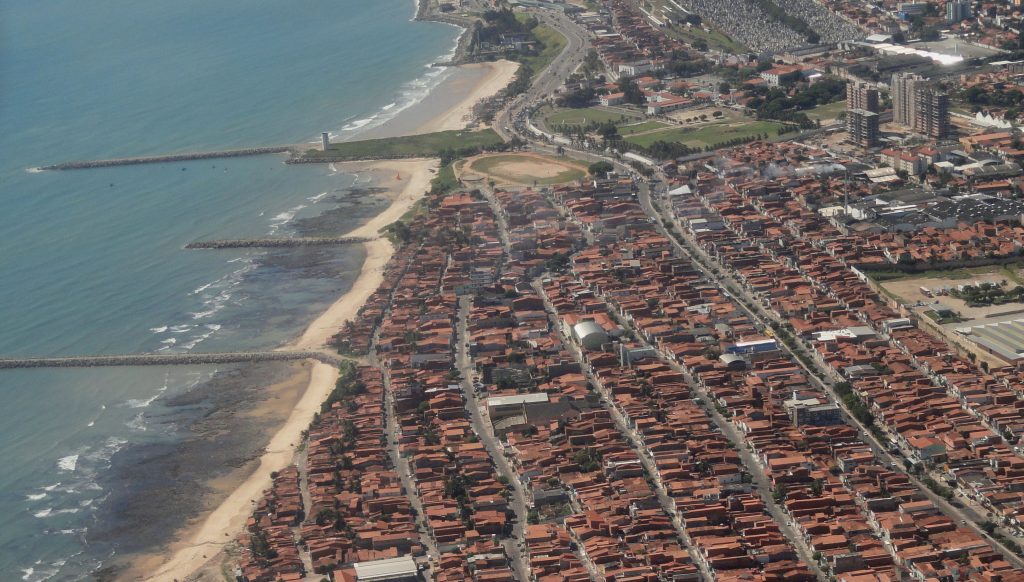
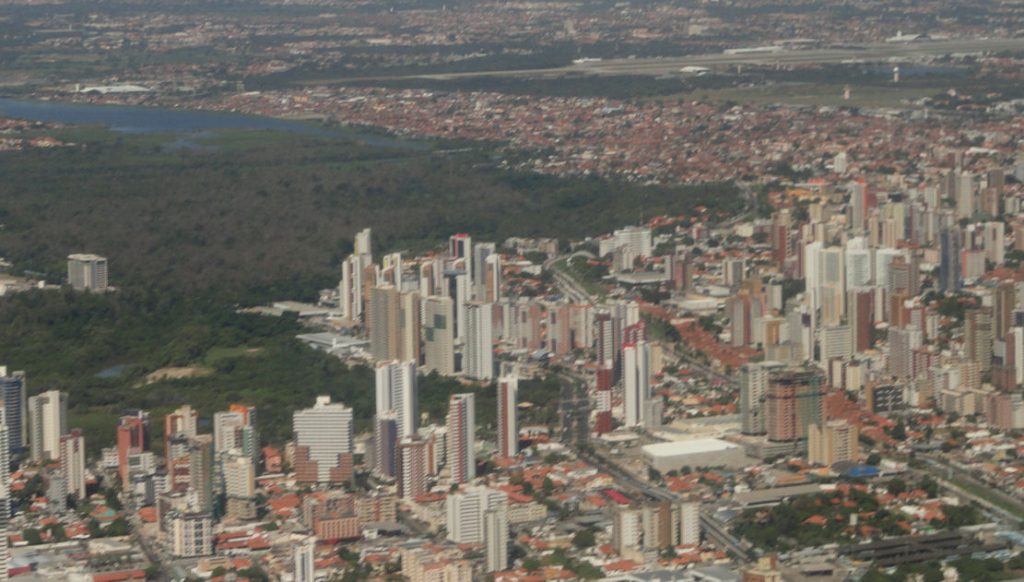
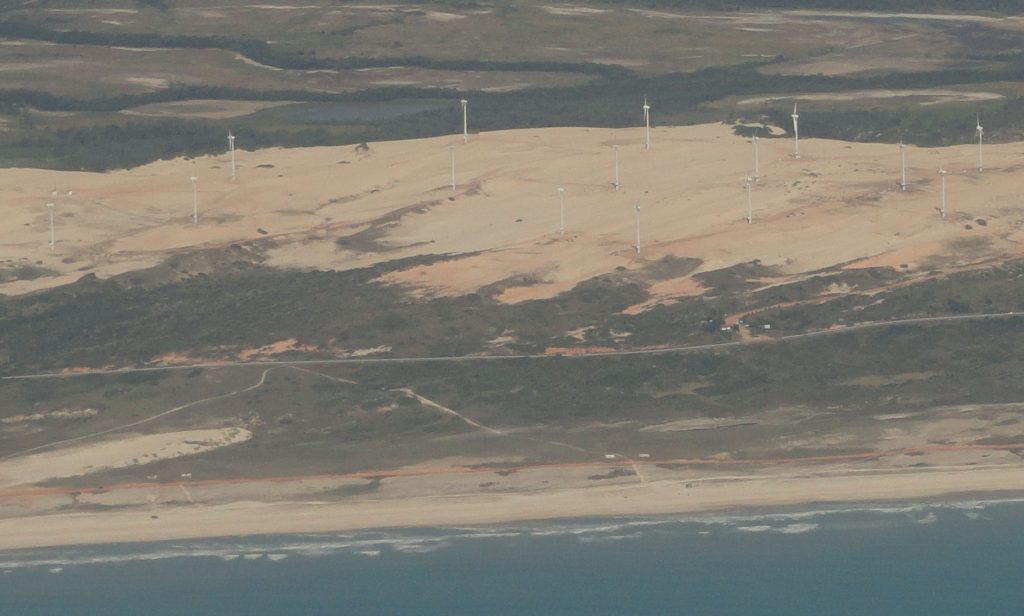
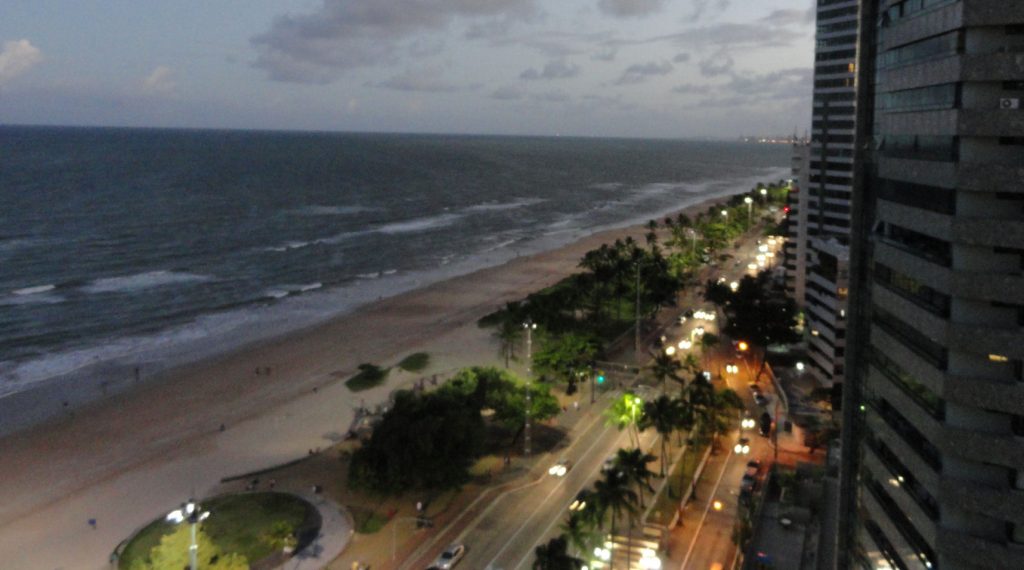
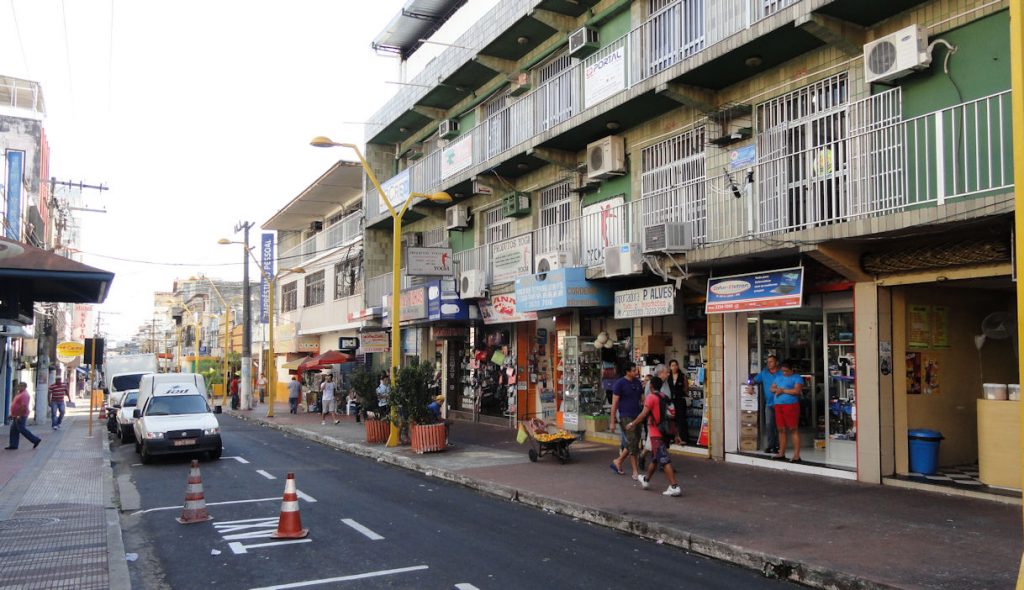
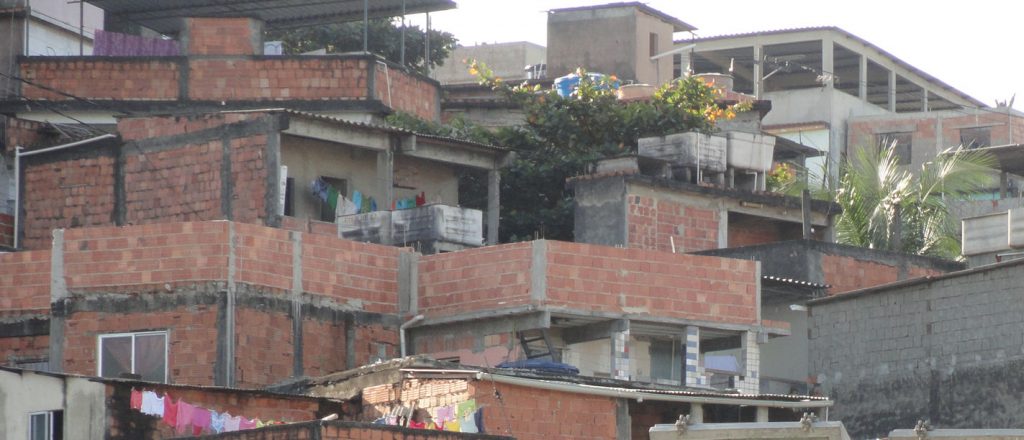
My pictures are not from CESAR. They didn’t want me to take pictures, lest I inadvertently reveal some proprietary information. The pictures are Fortaleza, where I made a stop on the way to Manaus. I got them from the plane just before they made us turn off electrical devices, which I learned includes cameras. This is still in the Northeast (CESAR’s district) so I figured it was appropriate enough. Up top is a low rent district that still has a nice sea access. Below is the city itself and finally are some windmills taking advantage of the steady winds.
Recife and the state of Pernambuco are some of the places in Brazil that have changed the most in recent years. In fact, the whole of the Northeast has been changing. It is still the poor part of the country, but it is catching up. Recife is now a center of high technology and a magnet for high tech businesses. Centro de Tecnologias Estratégicas do Nordeste (CETENE) is a part of this.
CETENE was founded in 2005 by the Ministry of Science and Technology. Its mission is to develop and disseminate technology in the area of the Northeast. This includes nanotechnology and biotechnology. One of the main thrusts is the development of energy using the resources of the Northeast, which include lots of sunshine (for solar energy) and long growing seasons. They are working on plant varieties and biotechnology that will produce fuels such as ethanol and biodiesel more efficiently. They are also cooperating with EMBRAPA to produce blight resistant varieties of plants for the Northeast.
I hit it off well with Giovanna Machado, who specializes in nanotechnology and her colleague Andréa Baltar Barros, who does biotechnology. Biotech and nanotech are truly the industries of the future since they deal with basic materials we use to construct our lives and with life itself. Giovanna is interested with working with us on a mentor program for women and girls in science. Our role would be to facilitate the sharing of American experience, maybe do some CONX programs or even a speaker tour. Our Consulate is working on this program.
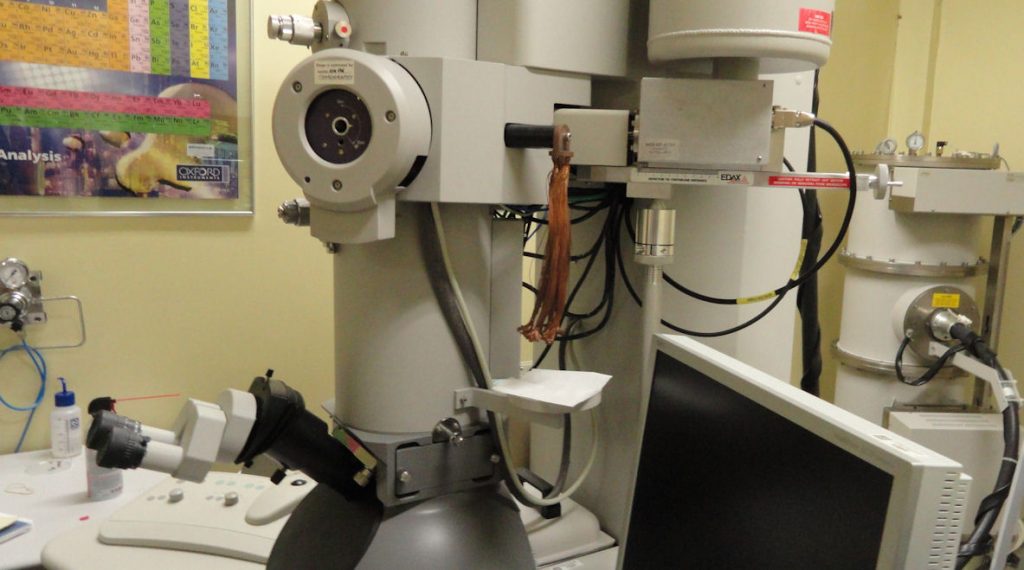
The facilities at CETENE are modern and well equipped. Most interesting for me was the electronic microscopes that can see down past the molecular level (see nanotech). These devices are so sensitive that vibrations caused by far away traffic or even the waves on the sea can cause them to malfunction. Giovanna told me that the ground in Recife is a little unstable. The city is not build on bedrock. To address this, CETENE has an elaborate system of balances. We talked about the strength and versatility of carbon nanotubes and the strange properties of elements at the nano-level. Gold, for example, is a superb conductor and catalyst, but very expensive. At the nano-level a less expensive metal such as copper can be made to have the same properties as gold. It has to do with surface areas. The surface area is the only part of a material that really interacts with others. Nanotech can alter this interaction. Nanotechnology has the capacity to essentially eliminate shortages of crucial products, such as rare earth elements, since manipulating substances at the molecular level make other things do the same job. Manipulated copper might be ersatz gold, but if it behaves like gold in the way you need it to, does it really matter? The dreams of the alchemists may yet be realized in ways they could never have imagined.
Just to add a little background – A nanometer is a one billionth of a meter. How small is that? It is so small that a human hair is 100,000 nanometers thick, an average man is 1.7 billion nanometers tall, a strand of DNA is 2-3 nanometers & an atom is 1/10 of a nanometer. You can’t see a nanometer with your naked eye or even with the most powerful optical microscopes. But we can see them with our electronic microscopes mentioned above and nanotechnology means we can now manipulate matter at the atomic level. This is nanotechnology, one of the most exciting industries of the future.
For most of the activities of our daily lives, the things we can see with our eyes, Newtonian physics works just fine. But when things get very small, on the nano level, elements behave in different ways. A nano-particle is not the same as a molecule. Molecules are stable. Nano-particles are not because they behave according to the rules of quantum physics. Don’t ask me to explain that.
Nanotech is an enabling technology. For example, nanotechnology is already being used in medicine. A nano-particle can deliver medicine directly to cancer cells and kill them w/o affecting neighboring cells. Some nano-particles can be activated by infrared or magnetism. In that case, a nano-particle could be directed to a cancer cell and then activated to get hot and kill the cancers. These advances have developed only in the last five years.
We are now familiar with the stain repelling, wrinkle free fabrics, even sox that won’t stink. These were developed using nanotechnology. We also have self-healing paints. For example, paint on a car that can cover its own scratches. The closest thing to a mass produced commodity product today are carbon nano tubes. They can be stronger than steel but at almost no weight.
Biotechnology is similar to nanotechnology in that scientists are changing the properties of things, in this case living things and their DNA codes. (This has often created reactions among those who fear the new science and there have been bans of biotech products and crops.) It is also similar to nanotechnology in that the things they are working with are very small. I didn’t learn much about the specific biotechnology experiments. I have to admit that I would have had trouble understanding some of it even if we were speaking English instead of Portuguese. But I can give you some of the simple-man conclusions.
Among the things they are working on are yeasts and algae that secrete biofuels (see biofuels). For example, they have some kind of fermentation that produces biodiesel instead of alcohol. They also had some kind of algae that is supposed to break the bonds in water, releasing oxygen and hydrogen. This is what is pictured above. Photosynthesis normally separates oxygen from carbon in CO2. This also separates oxygen from hydrogen, don’t know how. I do know that hydrogen is a superb fuel, but it doesn’t have much mass. In its natural (gas) form, hydrogen has only 1/24 the weight of gasoline and takes up lots more space per unit of energy. That is why it will never be used directly to drive vehicles. A pound of hydrogen has more energy than a pound of gasoline, but a pound of gasoline is much denser. A gallon of gasoline contains four times the energy of a gallon of LIQUID hydrogen, which would require high pressure tanks to maintain. But hydrogen can be used to generate energy using fuel cells at fixed locations and since energy is fungible to some extent this will address the liquid energy problem.
We talked a little about cellulosic ethanol. I used to have great hopes for that, but I don’t anymore. They told me that the science would eventually make it possible to make ethanol from cellulose at an acceptable cost, but the real market for it might not be there.
For a little background – Cellulose is common in farm and forestry wastes and is “available” as a feed stock, but it also has other characteristics. Most notably, cellulose waste is bulking, heavy and it tends to burn well. It will never make practical sense to move all this stuff to factories to be turned into ethanol, a process which will produce relatively little energy in return for the massive input. The most useful alternative is what the Brazilians already do with bagasse (the mostly cellulous remains of sugar cane after the sugar is extracted) and what many pulp, paper and wood mills do with their sawdust and scraps: burn them on site to produce electricity. This is a good use if we remember the more inclusive word bioenergy instead of the narrower biofuel. This woody biomass is a vastly underutilized bioenergy source. If we use electric cars, it would be good if the electricity is produced from a carbon neutral source such as woody biomass.
In Brazil, not only does the bagasse fuel most of the ethanol plants that use sugar as a raw material, they also produce electricity for the Brazilian grid. It is especially useful because the cane harvest season coincides with the dry season in Brazil, when the hydroelectric plants have less water. Why would you give up the real benefits of bagasse as a fuel to chase the chimera of cellulosic ethanol?
The most promising bioenergy that might replace petroleum is not really bioenergy at all, but rather is a byproduct. Much of our modern industrial society is petroleum based and much of that is not the stuff we burn. Plastics, drugs, fertilizers and many composites even the paving on our streets is petroleum based. We could replace liquid petroleum fuel a lot easier than we could do without many of these petroleum based products. But when we recall that petroleum is a biofuel, we can see that we could use bioenergy production to replace petroleum in many of these uses. In fact, Middle Eastern potentates feel more acutely threatened by developments in alternative materials than they do the development of alternative fuels. As long as we need the “byproducts” production of oil etc is assured.
The problem for CETENE, they told us, was the difficulty they have in translating science into practical applications. We talked about other research parks in the U.S. and I mentioned Research Triangle in North Carolina. I was surprised that they did not know about it, but we will follow up with information and maybe a CONEX program or speaker tour. We will be in touch.
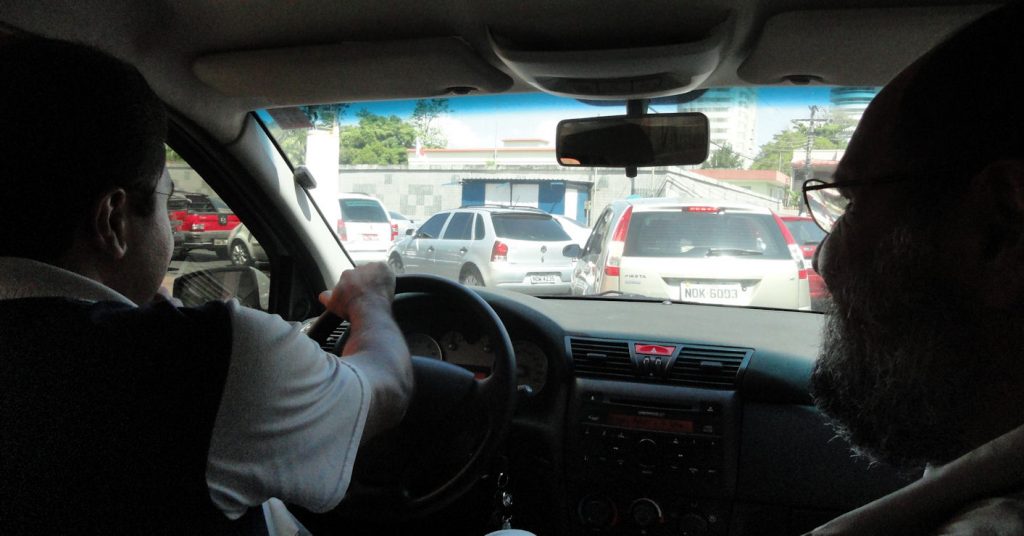
It is hard to get a taxi driver’s opinion about things, unless you ask. They aren’t a statistically valid representative sample of the population, but they know the city better than average and they get to meet lots of different people, so it is worth asking. I rode in eight taxis in Manaus and decided to get something more from the exchange than transportation. I started with similar questions. (1) How long have you lived in Manaus and (2) How do you feel about the changes in the last ten years? That kept the conversation going for the rest of the trip, no matter how long and one trip took an hour.
All but one of the drivers had grown up in Manaus and the one who didn’t had lived there more than forty years. This was a bit surprising, because they all told me that most of the people in Manaus are newcomers. Maybe taxis drivers are uniquely recruited from native populations. But besides the guy who had immigrated to Manaus, nobody had ever gone anywhere else, not even other parts of Brazil. They explained that Manaus was like an island. It was not connected to the rest of Brazil by any road that you could use. To get to Manaus you had to fly or take the boat up the river. A couple grumbled that this was a kind of conspiracy by the elites in the rest of the country, who wanted to prevent competition from the new frontier regions. One guy told me that there used to be a road that went west across Amazonas and connected with Rondonia and from there to Brazil in general, but the road had fallen into disrepair and was now been reclaimed by the jungle. They blamed foreign NGOs and environmentalists for preventing repairs and improvements.
Manaus has grown fantastically in the last ten years. Although it is far from everywhere else, it has a port on the Amazon that can handle ocean going trips. Once you get a container on the boat, shipping costs to any other seaport of the world become much less important. It can cost less to ship bulky cargo thousands of miles around the world than it does to ship a hundred miles on some of Brazil’s roads. Manaus has a free trade zone, which has attracted all sorts of assembly industries. They assemble computers here, no surprise, but they also make heavy things like cars and Harley-Davidson motorcycles, thanks to the capacity for cheap shipment by water.
All this growth is a mixed blessing. The city’s infrastructure is not up to the population growth. A couple of the taxi drivers told me that they used to play football on the streets that are now so chocked with traffic that it is hard to run across them to the other side to safety even when the light in in your favor. One of the drivers told me that there are 3000 more cars on the streets every month. This might be apocryphal, but it gets on the perception of the problem.
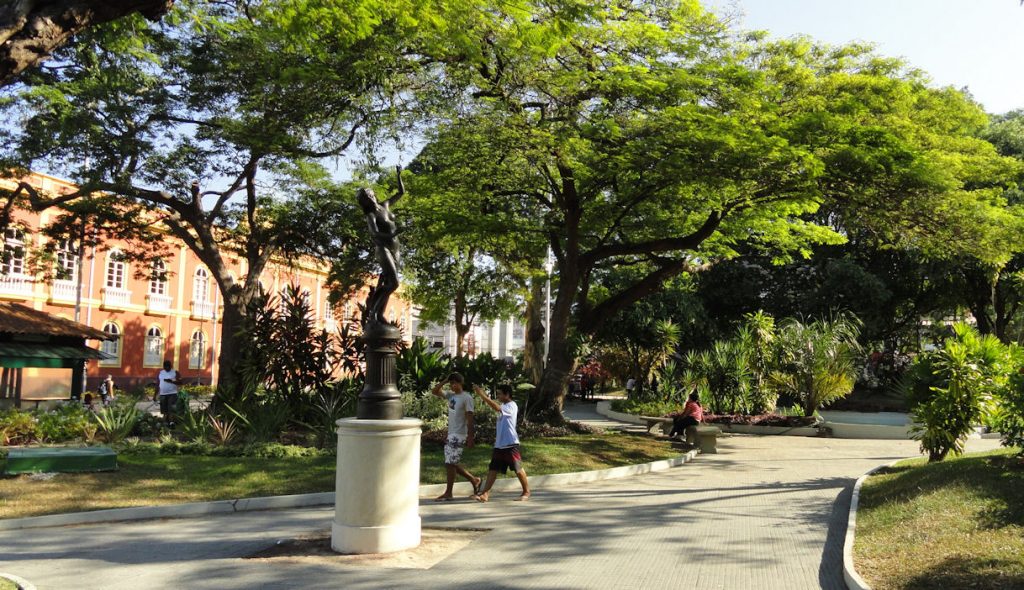
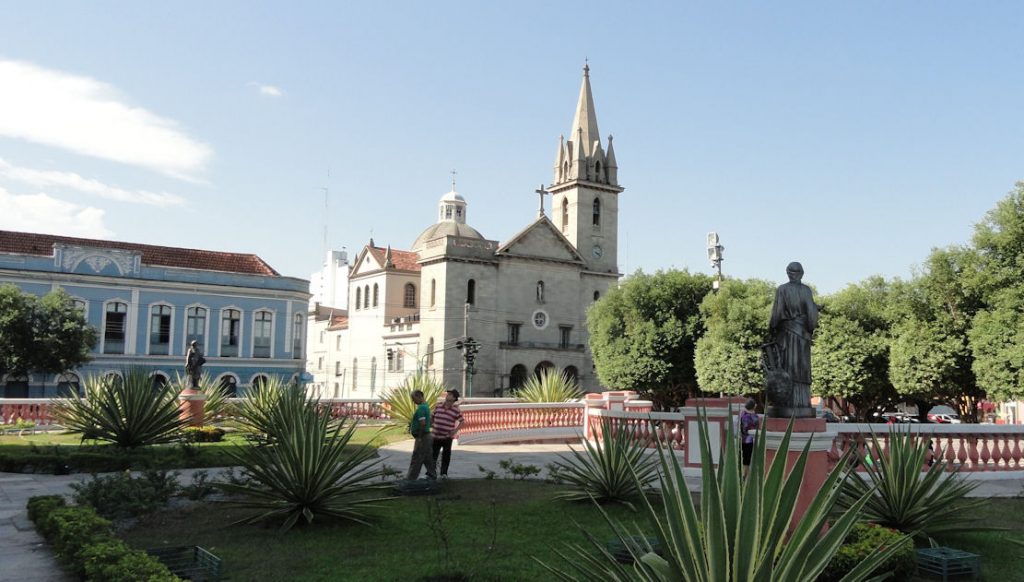
Many of the buildings and whole neighborhoods are new in Manaus. There is a feeling of growth and vitality. It is becoming a high-rise city, although there are some nice green and low places in the old city, as you can see in the pictures. It would be nicer if the transportation network could keep up. Mass transit is not good. They have plans for a monorail that is supposed to help with all the traffic associated with the World Cup. Of course, having it ready by the time the World Cup rolls around in 2014 is a low probably event. It is expected to go only thirteen kilometers anyway. It would not address the problems of the large and growing city.
A couple of travel & taxi-tips – there are not enough taxis to meet the demand during most of the day, but especially during rush hours. It is not like São Paulo or Rio. Taxi stands tend not to have taxis waiting. You have to call. Traffic is increasing daily. You need more time between appointments than you think. Distances also tend to be a little greater than you would think if you were thinking about a more densely packed cities like Rio or São Paulo.
Evangelical Religions
Besides the new buildings, the thing you notice driving around Manaus are the many protestant churches and meeting houses. They are mostly store front affairs, but some are really big. I didn’t ask the taxi drivers about their religions, but one volunteered that Jesus had changed his life. And they all talked about the growing religion.
I don’t know the figures, and I am not sure figures would be accurate anyway, but it seems that Manaus has more evangelicals than other places in Brazil. This would seem to track with the idea of migration. People willing to make big changes in their lives in one way, for example moving to a new city, are also often more willing to change their lives in other ways, like converting to a new religion.
The protestant religions are mostly native Brazilian, i.e. they are not the result of recent foreign proselytizing or foreign immigration. I say recent, because clearly the Baptists and Pentecostals so widely present in Brazil did not originate here, but they have been fully Brazilianized so that now the people seeking new converts are Brazilians. Brazil is evidently even sending missionaries to other places like Africa and even the United States.
In any case, the many new churches are self-sustaining with local support. I heard about, but did not actually see that a new Mormon Church was being constructed. I also heard that a mosque was being built, but this is not a native development. According to what I heard, it is being implanted with Arab money, maybe Saudis, but that is all the information I have. There is a significant Arab community in Manaus, but many are Christian Arabs, whose families have lived in Brazil since the time of the Ottoman Empire, and many with no particularly strong religious affiliation. Brazilians generally seem tolerant of religious differences in an easy-going way.
I learned a lot from my taxi experience, but I followed the trust but verify rule, i.e. I asked others too at my other meetings and there was significant concurrence. For example, I asked a few educators about the idea that Manaus was being disadvantaged by elites in other parts of the country. They said that they personally did not believe that to be true, but that lots of people did believe it and they could find examples. I suspect my taxi research is as useful as any focus group. Way back in MBA School I was officially trained as a researcher. After all, it was only a quarter century ago.
Speaking of taxi knowledge, I have a story from São Paulo too, this one a little less serious. In the morning, one of the drivers told me about a football game to be played between Corinthians and Americana MG. He told me that Corinthians were the team of the people and that all good people in São Paulo liked them. That evening in another cab I heard the game on the radio. I figured it must be that game, so I said that to the drivers. It was and Corinthians were ahead 1-0. I commented on the game and the driver was surprised and delighted. When Corinthians scored a second goal, he said I was good luck. And when it came time to pay, he rounded the fare down $R 5, which is not common for taxi drivers to do. Of course, the truth was that I had deployed every bit of knowledge I had on the subject. Good he didn’t ask any more questions about football.
I had never been to the Amazon rain forest before and I am not sure that I have been there now. Manaus is indeed the heart of the Amazon rain forest, the place where the Rio Negro (Black River) meets the Rio Solimões to form the Amazon. But Manaus is a very big city. It has more than 2 million inhabitants and you can easily forget that you are in the Amazon when you are stuck in traffic and surrounded by tall buildings.
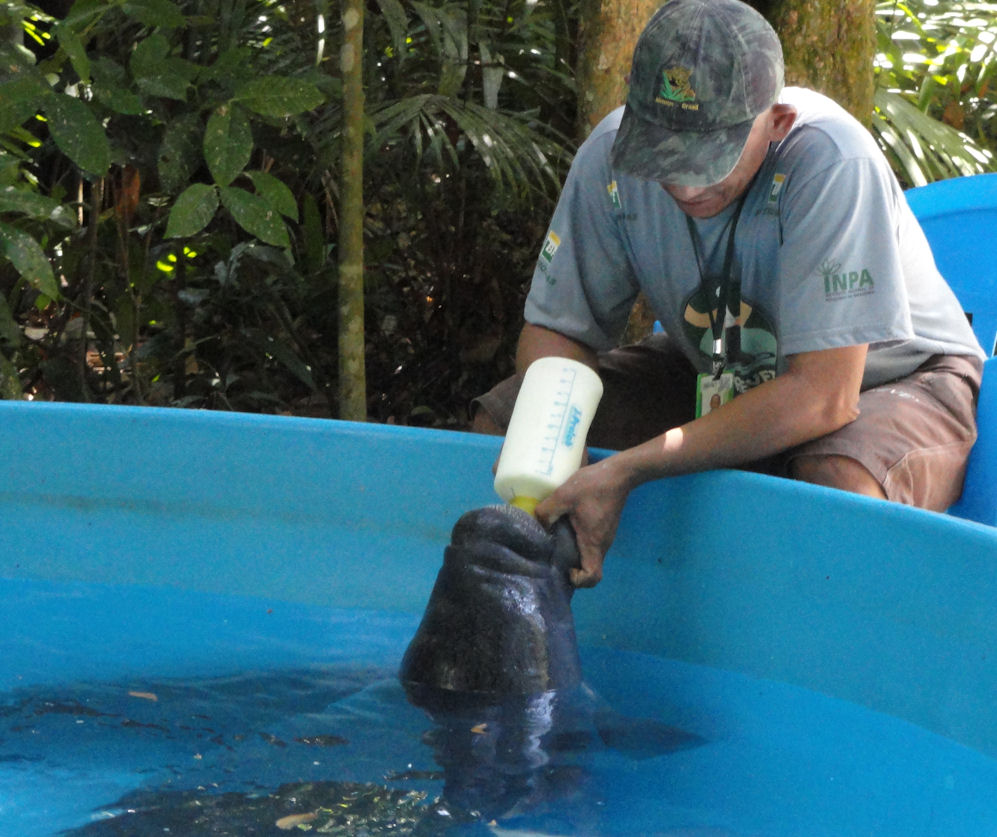
My appointments included the usual meetings with journalists, academics and a stop at the local BNC. These are things I would do in any other city. I did, however, get to make a stop in the remnant of the forest. As the city was growing rapidly, a few farsighted people figured that it would be good to have a big green and natural place in the middle of what would become the greater city. They set aside – and really defended – a large area of natural forest. It is called the Bosque da Ciência and now features native forests and animals such as manatees and otters that were injured and brought to the place.
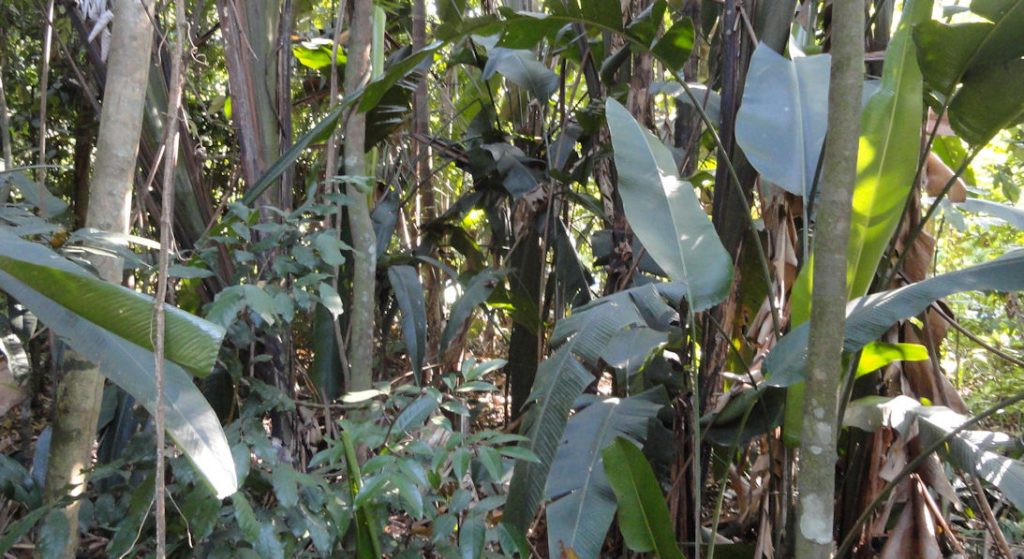
I was a little surprised by the forest. The trees were not a big as I thought and there was a lot more brush on the ground. I read that rainforests were so dark because of the shade of big trees that there was not so much growing on ground level. This was not a completely natural place, so maybe it is like our own temperate forests, i.e. thicker when they are reestablishing.
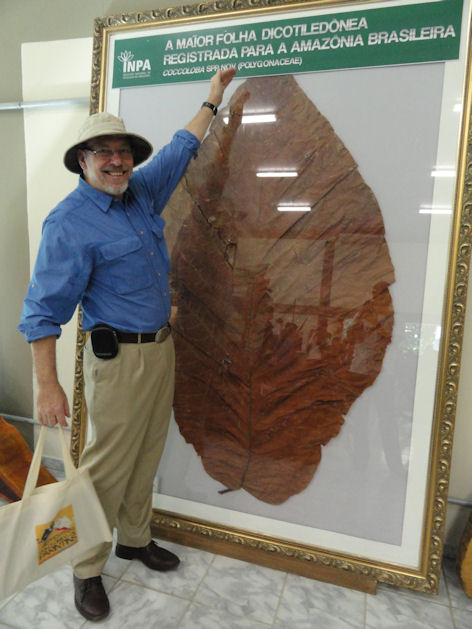
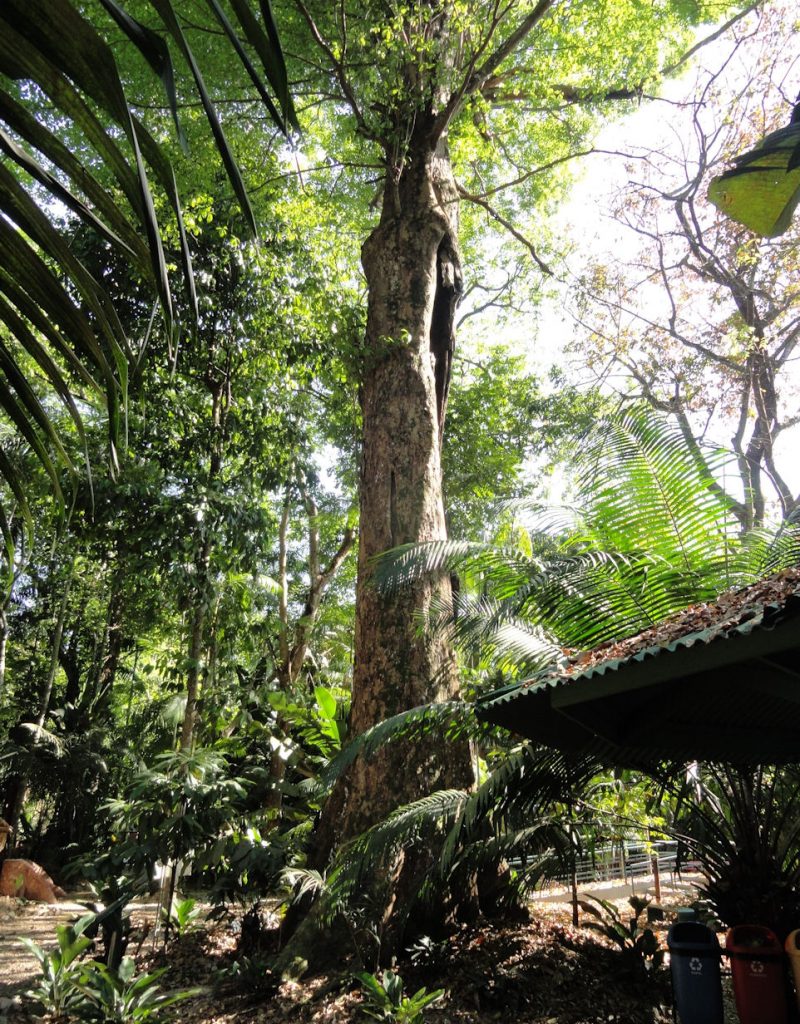
Maybe it sounds strange, but the Amazon forest I saw just reminds me of being around a lot of really big house plants. Many of the species are the ones or like the ones that decorate our windowsills and offices. Look at that picture of me with the giant leaf. It gives a the thought of falling leaves a menacing aspect. The tree on the side is thought to be the oldest in the park, at least 600 years old. It is mostly hollow and provides a home for all sorts of animals.
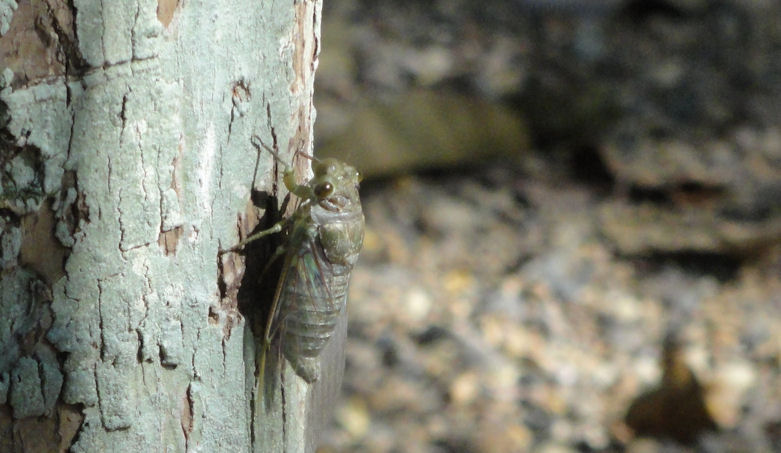
My ostensible reason for visiting the forest was to accompany a group of U.S. youth ambassadors and their Brazilian counterparts, as well as their escorts from the BNC. I got there before they did, so I had a chance to look around in the company of one of the young Brazilian guides. It was hot and humid, but I just love being in the woods, no matter where. I understand, of course, that I couldn’t survive long if I were actually in this wild. The first thing I noticed was a kind of howling sound. Big cicadas were responsible. You can see what they look like in the picture nearby. The sound was more musical and a lot less annoying than the kind of mechanical sound similar bugs make in North America.
I went into a little museum, were I encountered a group of Brazilian school kids. I was evidently more exotic than the animals. They literally flocked around and followed me, bashfully saying words in English. It was funny. I guess Americans are rarer around here than the cool animals.
I got a very interesting fact talking to one of the scientists. She said that they are studying the ecology of the forest in a very broad sense, including studying the habits and culture of the people who live in the woods. She said that they had to persuade forest dwellers to change their long-held habits. One of the cultural habits that needs to change is the slash and burn agriculture practiced by the natives for generations. Of course, I knew about slash and burn agriculture. I learned about it in anthropology classes many years ago. But I guess I didn’t focus on it in the modern context.
The natives have been using slash and burn for thousands of years. It was a sustainable kind of agriculture because native populations were very small. The burned fields remain productive for only three to five years using the ashes as fertilizer. After that, the farmers have to move on and clear new land. Obviously, this destroys lots of forest, but with low population densities the forests grew back before the stone-age farmers came back. Think about what this means. It means that the tropical forests are not very old, although a few very old ones would survive in limited areas, especially around rivers or ravines. Even with low densities, it is likely that forests would be slashed and burned every fifty to 100 years. This seems like a long time and it is a long time in human terms. But in a forest terms, it is not. My pine forests go from inception to final harvest in around 35 years. The rain forest is essentially a kind of extensive farm. It also means that the trees can grow back rapidly. It is a hopeful thing.
I bought an interesting book at the airport in Brasilia, “Guia Politicamente Incorrecto da História do Brasil” (A Politically Incorrect Guide to Brazilian History) and read it on the plane to Recife & Manaus. It was the #1 non-fiction best seller on Veja Magazine and featured lots of debunking of popularly held misconceptions. Among other things, it talked about the treatment of the forests by native Brazilians. They burned them regularly and it was actually the Jesuits who taught them that the forest should sometimes be left standing. This is very similar to the case in North America, as I have often written in my forestry blogs. Fire is the favorite tool of stone-age man. It is really the only way they can clear and manage forests. Stone axes just don’t do the job. Anyway, my airplane reading fit exactly into my on the ground information. Sweet. I want to get a much more in depth study of the rain forests and get to know them in the ways I know my North American woods of home. It will take a lot of study as well as contact with somebody who really knows the biomes.
My trip to Manaus taught me a couple of things. First, Manaus is a big city that only happens to be in the Amazon. I worry about the urban advance. Second that the Amazon forests were regularly disrupted and burned long before the European arrived. On the plus side, it means that renewal is possible.
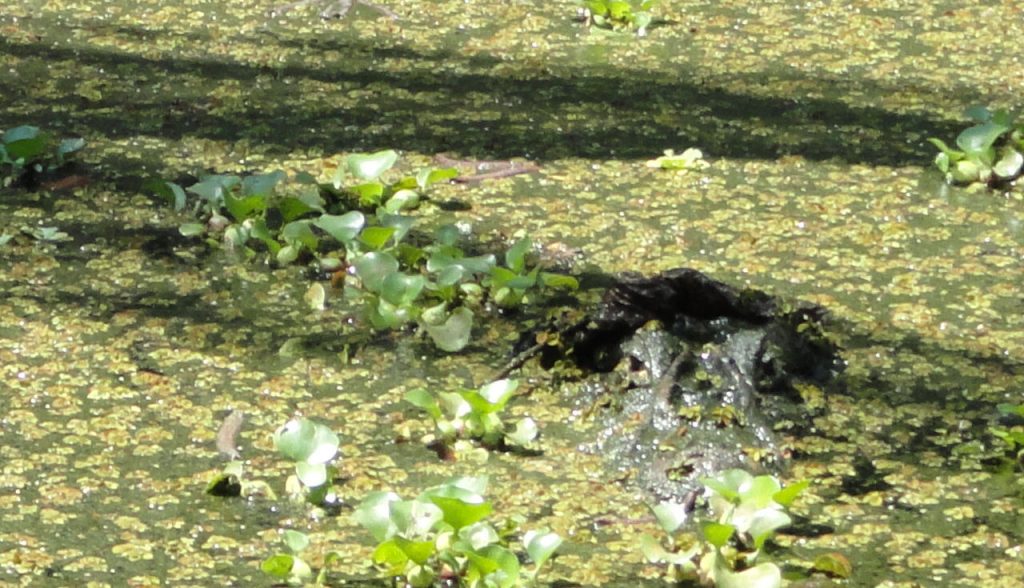
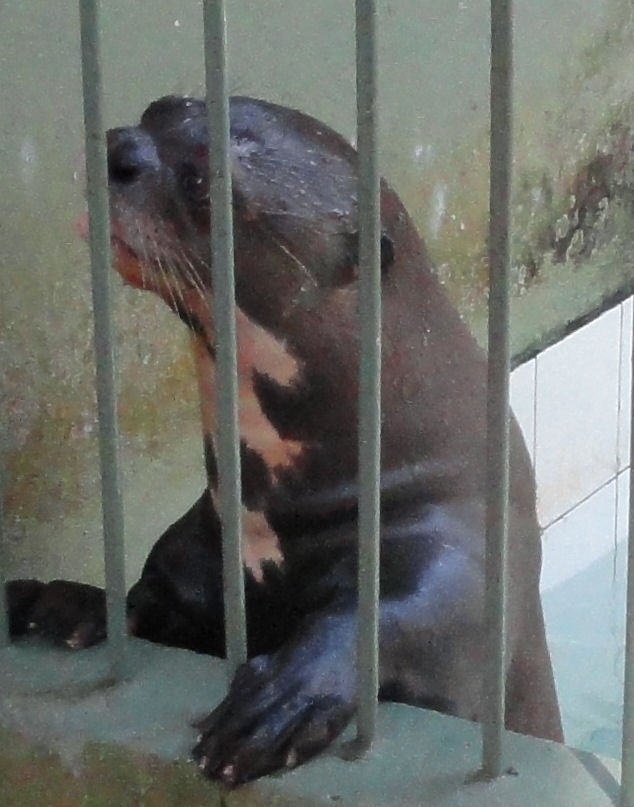
The pictures are explained in the text or need little explanation. The otters are very cute, but they are aggressive. If the put two of the same gender in the same place, they will kill each other. They eat mostly fish and breed rapidly. The Amazon manatee you see being bottle fed does not breed very fast. They are at greater risk. The local river dwellers and natives eat them given the chance. The popular local name for them is river cow and some people think of them exactly as that. Come to think of it, we used to call them sea cows before they picked up the less pejorative name of manatee. Manatees are harmless herbivores. Other things inhabit the water, like the alligator or Jacaré. You can not easily see it laying there in the plants. They have brains the size of a peanut, but they don’t need to be very smart to bite down. I am not really very fond of them.
This is another of my out of order posts. It is from my trip to Rio a while back.
National Basketball Association (NBA) players came to work with kids in the Complexo de Alemão, which just a few months ago was one of the worse and most violent favelas in Brazil. It requires the sustained intervention of the Brazilian army and police to push out the drug dealings and retake control of the neighborhood. They are employing a kind of counterinsurgency strategy that I recognize from Iraq. It is the “seize, hold, build” strategy at work. General Petraeus would understand.
The back story is interesting, as one of the top-cops explained it to me. There was a political reaction against the police and the military after the end of military rule in the middle of the 1980s. One of the dominant modes of thinking explained and to an extent excused crime among poor people as a reaction to the violence and disrespect of the authorities. There were obvious problems with the police at the time and there was merit to the idea that the police should act less as an occupying force and more like members of the community, but what amounted to a partial withdrawal of the forces of order had a negative result. Of course, this is a simplified explanation and nothing ever happens for one simple reason, but this is part of the explanation.
In any case, the favelas were effectively out of control. Movies like “Tropa de Elite” show the situation, no doubt with some cinematic exaggeration, but the fact is that nobody would enter the favelas in safety and the crime spilled out into all regions of the city.
Crime was oppressing not only favela dwellers but spilled into other parts of the city. Some commentators almost seemed satisfied that the quality of life for “the rich” was declining because of the fear of violence, but a storm that wets the feet of the rich often drowns the poor. The rich retreated to walled compounds and hired guards. The poor just got robbed and killed.
The Rio authorities decided to pacify the favelas. They started cautiously, trying to bring services into the favelas, building sport complexes. We had our NBA event in one of those complexes. It was/is a nice facility, but until the police established order, it was a used as drug emporium.
Anyway, even the limited pacification efforts annoyed the drug lords of the favelas, who wanted to keep things the way they were. Evidently to show their displeasure and get the government to back off, the drug gangs started to attack and burn cars and buses outside the favelas, but instead of backing down, the government doubled down. It was a heroic moment. State, local and Federal authorities cooperated to retake the territory from the drug gangs. The Brazilian army literally invaded the favelas, taking them back from the traficantes. Following the forces came services. It was the “seize, hold & build” strategy.
Today police presence remains strong and obvious, but the big story is the return of life and vitality to the favela. I was able to walk freely in places were heavily armed police could not tread just last year.
The authorities have no illusions about wiping out the drug trade. There will always be criminals. But there is a big difference between crime that goes on in the world and actual control of territory by criminal gangs. It was important to secure the authority of the government. When they raised the Brazilian flag on the high point of the favela de Alemão at the end of November last year it was a proud day for the Cariocas and all Brazilians.
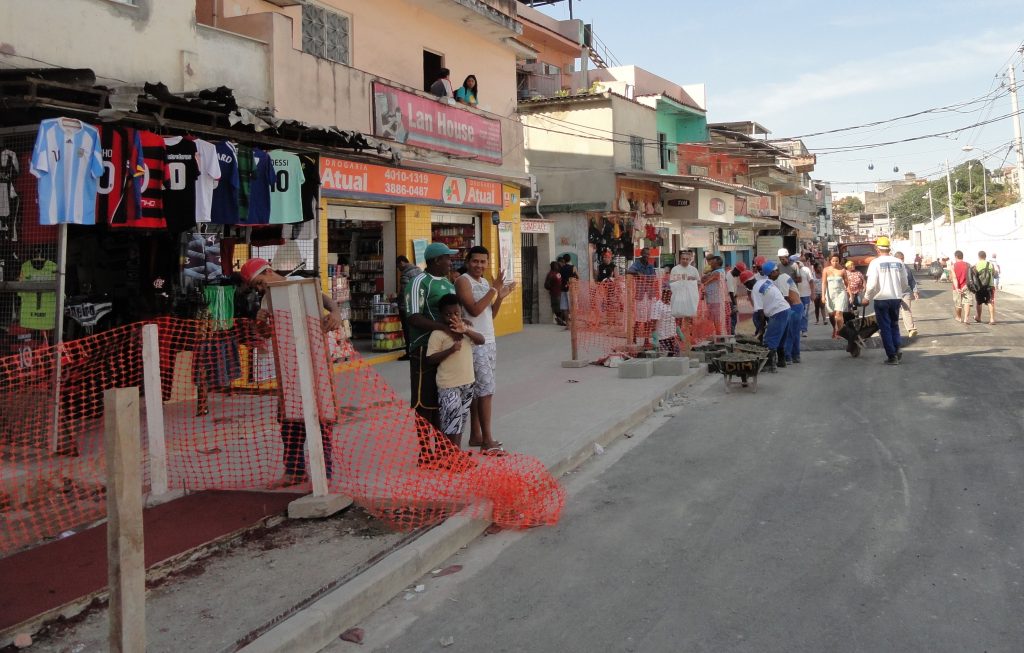
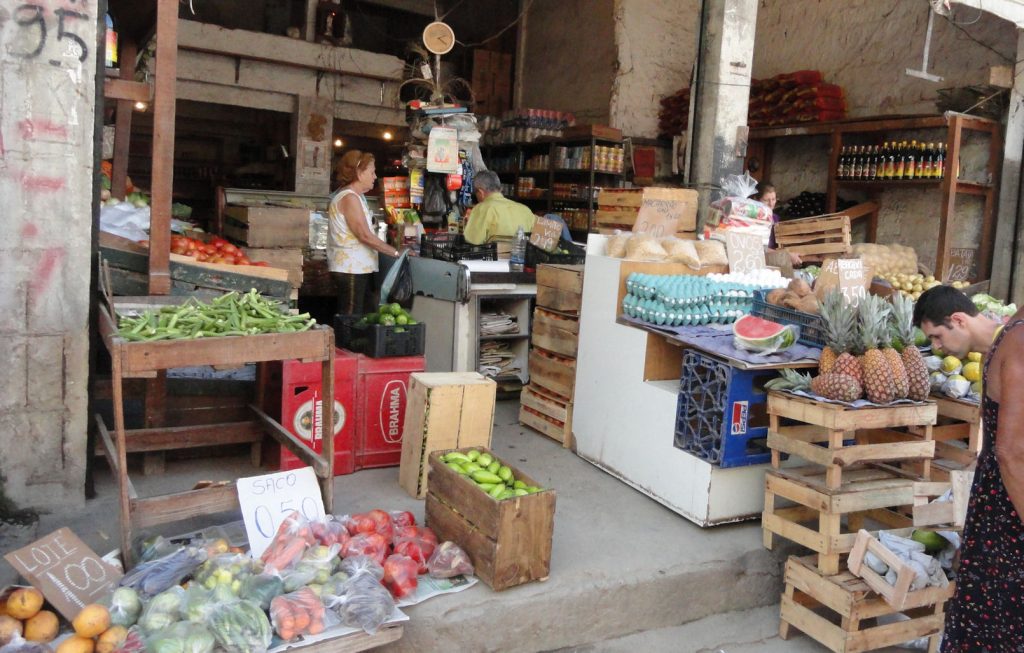
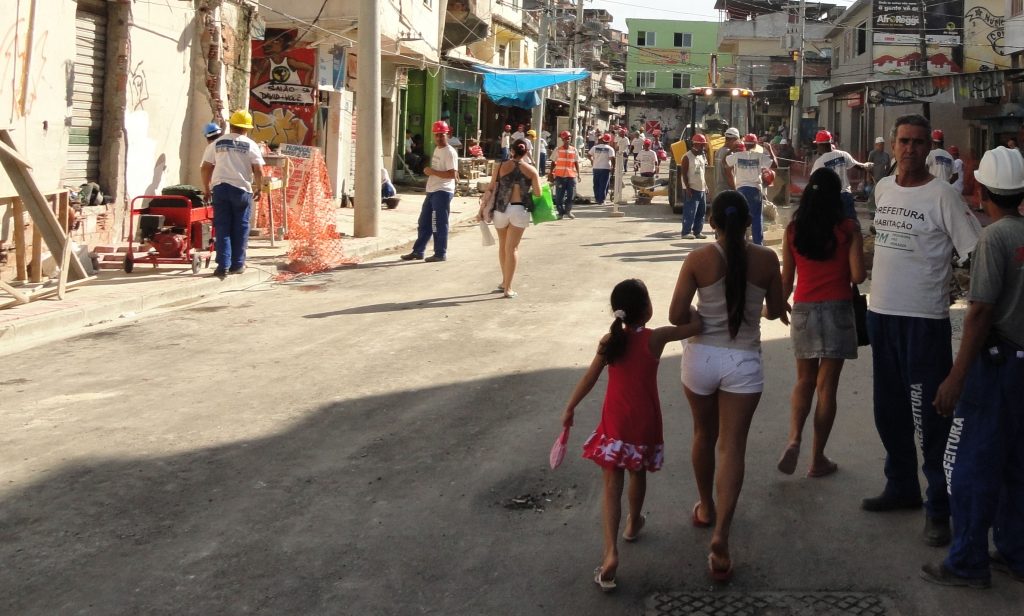
So far, so good. The streets of the favela are now crowded with people and the shops have products in them. There is a chance now. The security has been established, the essential first step. Now the government is making investments in infrastructure. You can see all the workers in the pictures. It is also an auspicious time because the Brazilian economy is growing and providing jobs. But perhaps the most surprising development, one unpredicted by experts, is the dropping birthrate within the favelas. This will give Brazilian authorities and people of Brazil a breathing space to make the changes they need to make in the culture and nature of the favelas.
The pictures are from the favela. You can see the closeup of what it looks like. The favela is a kind of vertical city. It crawls up the hill. It reminds me of those Pueblo Indian dwellings, only much bigger. One guys roof is another’s front yard and walking the streets near the top means climbing stairs and even ladders.
ABA is one of the newest BNCs in Brazil, only twenty-three years old. Executive Director Eduardo Carvalho told me that when the BNC was founded, they looked to their older cousins for advice and modeled their program on ALUMNI in São Paulo. ALUMNI at that time was aimed mostly at adult students, so that is what ABA did too. They soon found, however, that most of the demand was among younger people, teenagers and children. ABA now enrolls around 3500 students; 800 of them are adults. Preteens and teenagers make up the biggest group.
Four American Youth Ambassadors were visiting ABA for their orientation while I was there. This is only the second group of Americans. The Embassy has been sending Brazilian Youth Ambassadors to the U.S. for more than ten years. The program was so successful that everyone agreed that Americans should make the return trip. The Americans arrived last week and have been spread across the country. I will be meeting with some of those who went to Manaus tomorrow. Their goal is to learn about Brazil, learn a little Portuguese and interact with Brazilians.
Eduardo is enamored with technology and wants to use it throughout his program and you can see his interest all over the building. There are well equipped computer rooms and the library has digital access to publications. I noticed notices without much text taped to walls around the building. Eduardo showed me what they were with his I-Phone. They were I-Phone patches that could be read with the device and each of the patches had a clue, in English, for a kind of scavenger hunt. The students were supposed to learn (and play with) the technology while learning English and solving a puzzle. You can see what the posters look like and the ABA library in the top picture. I will put Eduardo in touch with IIP’s office of innovative engagement. They make I-Phone apps that I am sure will be a big hit in Recife.
Business is good at ABA, both their own and that of others. A big source of income and connections for ABA comes from the business seminars they sponsor or host at their headquarters. Recife has grown into a business capital. Firms are flocking here for the high tech industrial base, including informatics, nanotech and biotech, as well as because of the growth of the port facilities and heavy construction. The port is expanding to handle bigger shipments of agricultural materials from the interior, expected when a new rail line is completed next year. Petrobras is using Recife as one of its staging areas for the exploitation of oil in the big new discoveries in the Pre-Sal formations off the coast. All this business creates business for ABA. People need to learn English and businesses need places to train their staffs. ABA is ideally positioned for both these things.
ABA is an impressive operation. It is not-for-profit, which means that it is not allowed to distribute money to owners or shareholders, but it is – or would be – a profitable enterprise. It produces enough revenue to cover all its costs and do valuable social services, such as provide scholarships and cultural events. ABA also houses one of our EducationUSA advisers. It is a great and growing partner in a great and growing part of Brazil.
I would be remiss not to mention to efforts of our neighbors to the North. Brazilians often refer to us as North Americans and I suppose that can include Canada. The Canadians have claimed some of the space in ABA with their early childhood program called “Maple Bear.” I saw classes of little kids learning English by playing games. Some people joked about “the competition” but I don’t see it that way. The kids are learning English, which means that they will come to the American BNC at a higher level. Beyond that, it is great if more people have exposure to better English at an early age. We don’t offer anything like Maple Bear, so we should be thankful that our farther north-North Americans have stepped in. I don’t think most of the customers care.
My posts will be late an out of order. I am really enjoying my work in Brazil and I asked my colleagues to create very tight schedules for me on my travels. They did. I am usually scheduled with an early morning or breakfast meeting, meetings during the day and then some sort of representational event at night. I don’t write this so much to brag (maybe a little) but to emphasize the scheduling. Back home, some people think the life of a diplomat is just doing fun things … and it often is. It is great fun and personally rewarding to have the chance to meet so many Brazilians and talk to them about such a wide variety of concerns.
But it is also very tiring. I always tell people that everything about doing public diplomacy is simple. You just have to keep doing it and keep doing it. It is also hard to speak Portuguese all day AND at the same time keep track of the important things that are being said. You will read in subsequent posts about our visits to a high-tech complex in Recife. It is hard to talk nanotech in Portuguese. Actually, many of the high-tech words are almost the same, but the concepts are not easy in a foreign language.
The biggest challenge is writing notes. What I post on the blog are derivatives of the notes, so you know what I am talking about. I take out most of the names and some of the details and add a few more touristic details. I generally cannot take written notes during meetings. It would be strange or bad manners to pull out the old note book at every lunch meeting. So I have to write notes within a day or two, otherwise I forget details. If I don’t make a note and share it with others it is not really much of a meeting from the practical point of view.
I think I should add a note about the “tourist” aspects of diplomacy, because this is something I didn’t understand as a junior officer. My first time in Brazil, I mostly worked on the things people call work. I wrote all my reports, made the official points etc. I think I did a good job, but not a great one because I didn’t understand that the fundamental task of a diplomat (IMO) is to understand and appreciate the local reality. I am not talking about the usual tourism, of course, but of a better understanding. The people I contact in Manaus want to know that I have seen and appreciate their Opera House, for example, even if some of them have not actually visited themselves, BTW. So one of the most important tasks is to learn about the points of pride or concern and just be there. Imagine a diplomat in Washington who never had time to visit the Washington Monument or the Smithsonian. His credibility is compromised. So now I make it my business to study the places I go. It makes my job a lot more interesting and makes me much more effective. That is the part the blog posts reflect.
The Brazilians that I meet have often known other American diplomats. The ones that they remember, the ones that were effective, are those that knew and appreciated Brazil, not the ones that effectively delivered talking points about the most recent hot issue. They did that too, but they knew that the message has to be delivered in the proper cultural context.
My rant is done. Have to get to work now.
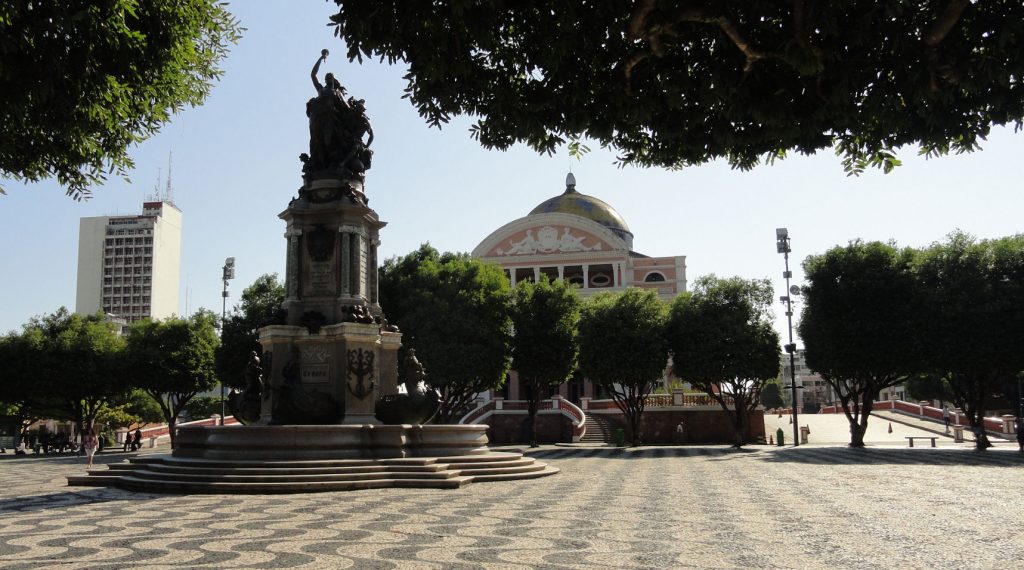
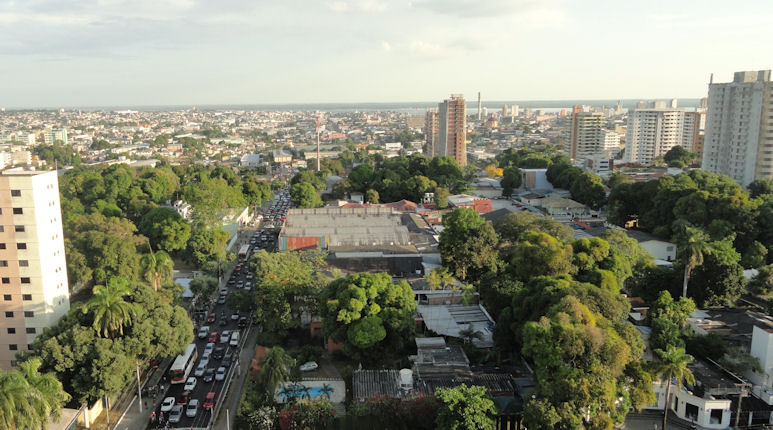
The picture up top is indeed the Manaus Opera House, which I made sure to see. Below is a picture of modern Manaus. It is a big and dynamic city. You would not know you were in the Amazon, except for the remarkable heat and humidity.
Brazil doesn’t have think tanks in the sense that we have them in the U.S. Brazilian scholars of politics and society are generally linked to universities, the media or political parties. But there are some that do what think tanks do. During my recent visits to São Paulo & Rio, I visited a few of the organizations that perform the think tank function.
Before going on, it might be a good idea to admit that the concept of a think tank is not well defined and in the U.S. as in Brazil they overlap & share personnel with universities and the media. Think tanks in the U.S. would include institutions such as the American Enterprise Institute (AEI), Brookings or RAND. RAND was set up to advise the military. Maybe the reason Brazil doesn’t have such a defined network of think tanks is because it doesn’t have a big military establishment that can consume and pay for expert advice. A second generation of think tanks emerged in the 1970s and 1980s, occupied chiefly by conservatives who felt that their ideas were viewed with little enthusiasm in traditional universities. Probably the most famous of these is the Heritage Foundation. In reaction to this, think tanks developed on the more liberal side.
Think tanks develop and elaborate ideas that are often adopted by government, firms and in society generally. They provide options an intellectual framework for policy. They also provide a home for thinkers and former officials when they are out of favor or power. Most successful think tanks have few actual employees but lots of associates and contributors.
Fundação Getulio Vargas (often just called FGV) comes close to being a think tank, although it remains primarily a school that grants degrees. The headquarters is in Rio and there is a branch in Brasilia. The FGV business school in São Paulo (Escola de Administração de Empresas de São Paulo -FGV – EAESP) was established in 1954 in cooperation with Michigan State University. The business school is responsible for a lot of the think tank sort of research that is published in Brazil.
25% of Brazil’s top business leaders are graduates of FGV-EAESP. And FGV-EAESP is extremely well connected with Brazil’s most successful businesses. Businesses sponsor programs, chairs and wings of their building. In return they get their names and often their products in front of Brazil’s future leading executives and some of the current ones, since in addition to traditional student FGV-EAESP is extensively involved in short term training and courses of executive MBAs.
FGV welcomes cooperation with American institutions and they have been seeing a lot more of their representatives in recent years. Universities and firms from Europe & the U.S. are starting to understand that they need a “Brazil strategy” and they are rushing to make up for lost time. What FGV wants are real partnerships, where both sides give and get. What they don’t want is the kind of one way street where an American or European institution sends down its professors and students for a semester of “Brazilian experience” w/o much contact with Brazilians. This, unfortunately, has been a pattern for many semester abroad programs. FGV doesn’t need this kind of thing. But they are interested in true partnerships and very interested in visits by notable U.S. experts who want to share their knowledge while learning about Brazil.
We talked a little about the lack of Brazil experts among Americans. Brazil is the biggest and most important country in South America, culturally, economically and temperamentally very different from its neighbors, yet it is too often treated as a sub-set of Spanish speaking Latin America. It is not sufficient to be an expert in Latin America. Speaking Spanish helps understanding Portuguese, but they are obviously not the same language and the overlap is more limited than many people think.
Another think tank experience visit was at CEBRI in Rio. This is a smaller operation. We talked about Brazil’s new place in the world and referred to the Council of Foreign Relations report about Brazil. Everybody agreed that the U.S. and Brazil should develop a more mature relationship of mutual respect and partnership. They liked the word partnership. They also pointed to the problem that Americans have of thinking of Brazil as a subset of Spanish America. Although most Brazilians can understand Spanish quite well, they don’t like to hear it from Americans. It is probably better to speak in English in many cases. The U.S. needs to develop a bigger body of experts that know Brazil, know Portuguese and know better the difference between Brazil and its neighbors.
I finished off my almost-think-tank tour with the Institute of International Relations at PUC. This is housed in the university (PUC) but participants have aspirations to be more. They have developed a “nucleus” to study the BRICS. I asked what “BRICS” really meant, since I could think of nothing that they BRICS had in common except a cool name thought up by an analyst at Goldman-Sachs a few years ago. They laughed and told me that Walter Russell Mead had asked similar questions. It seems to be an American thing. Nevertheless, there are few commonalities except that they were all developing countries and not Western Europe or the U.S. Being BRICS, if nothing else, provide a forum for the various countries to get together and being in the convenient group amplifies their voices. In the longer term, however, cooperation depends on common interests or at least common aspirations.
I am not sure that Brazil NEEDS think tanks along American lines, but I am reasonably certain that the country will develop them sooner rather than later. Think tanks fill a niche in the American, and increasingly the world. As I alluded above, in the U.S they provide independent, if often ideologically tinged, analysis. Their analysis is demanded in the marketplace of ideas. It will be useful to politicians and business people who can pay for or at least support the infrastructure needed to create the ideas.
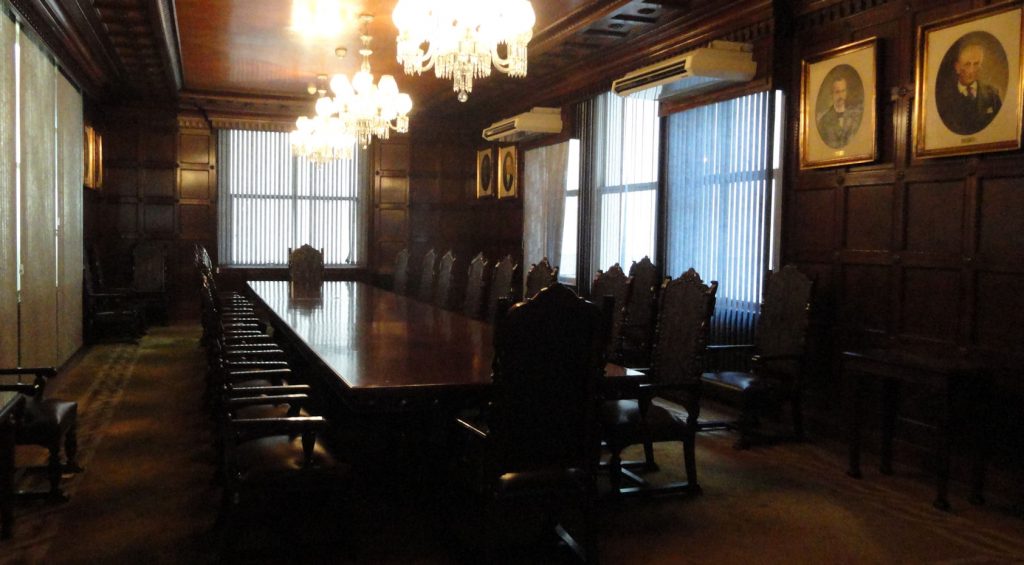
My picture is from the board room at Banespa. It was not a think tank, but it was the symbol of consolidated and deliberate power.
Race is a complicated issue. There is nothing genetically true about race and categorizations based on appearance are always going to be wrong. Racial classifications are an entirely cultural construction. In Brazil, estimations of race were long made on appearance alone. It is possible for brothers to be members of different races and one family might have people called black, white and various colors between.
There is currently a big debate here about quotas based on race for university admissions. We had (and still have) conflicts about this in the U.S., where we have more clearly defined groups. I don’t really know how they determine group membership in Brazil, but I expect that self-identification as a person of African descent will increase among those who could claim multiple ancestries. As I said, there is no biological basis for race; it is a strictly cultural choice.
For many years Brazilians often emphasized their own and their country’s European heritage. There are areas of the country inhabited by decedents Germans, Italians or Poles that look like Europe in almost every way, except for the palm trees. Brazil also has the biggest community of Japanese outside Japan and lots of people from the Levant. But African heritage is a big part of Brazil’s cultural and physical makeup and in recent years there has been more emphasis on this.
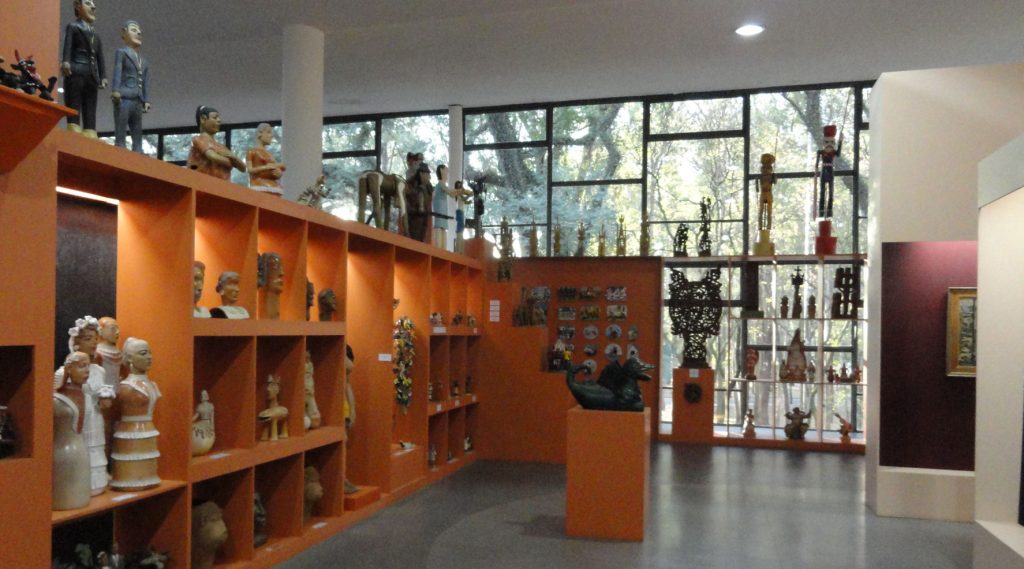
States such as Bahia are especially known for their African heritage, but you can find contributions of Africa all over Brazil. In São Paulo I went to visit Afro-Brazilian museum and talk to its founding spirit and artistic director Emanoel de Araújo.
Emanoel is a truly interesting guy. We invited him to the U.S. back in 1975 as part of our international visitor program and he told me that the visit changed his life. He came to understand much better that the African diaspora was similar all over the Atlantic-America and that the African cultures of their origins were worthy of admiration and study.
The museum is built around this concept. You start with African art and artifacts that show the excellence & sophistication of great African civilizations. The exhibits next show Africans in the new world. Of course, the subject of slavery cannot be ignored, but the exhibits are more about overcoming the effects of oppression than about the oppression itself. They show the slaves as competent individuals with important skills that built Brazil. Among the slaves were skilled carpenters, masons, blacksmiths and artists. Their work is celebrated. In addition, Deputy Artistic Director Ana Lucia Lopes told me that Africans had brought important skills and products with them. For example, the strains of rice grown in colonial Brazil came principally from Africa, not Asia. Africans knew how to cultivate these crops and essentially brought this sort of agriculture to Brazil.
The contributions of Africans might seem obvious, but are often submerged in a dominant narrative that Africans supplied mostly unskilled hard labor and that the finer things were planned and managed by Portuguese colonialists. This is just not right. The colonists came in small numbers and they relied on first Native American and later Africa labor AND skills. Brazil, like the U.S., is the result of these multiple influences.
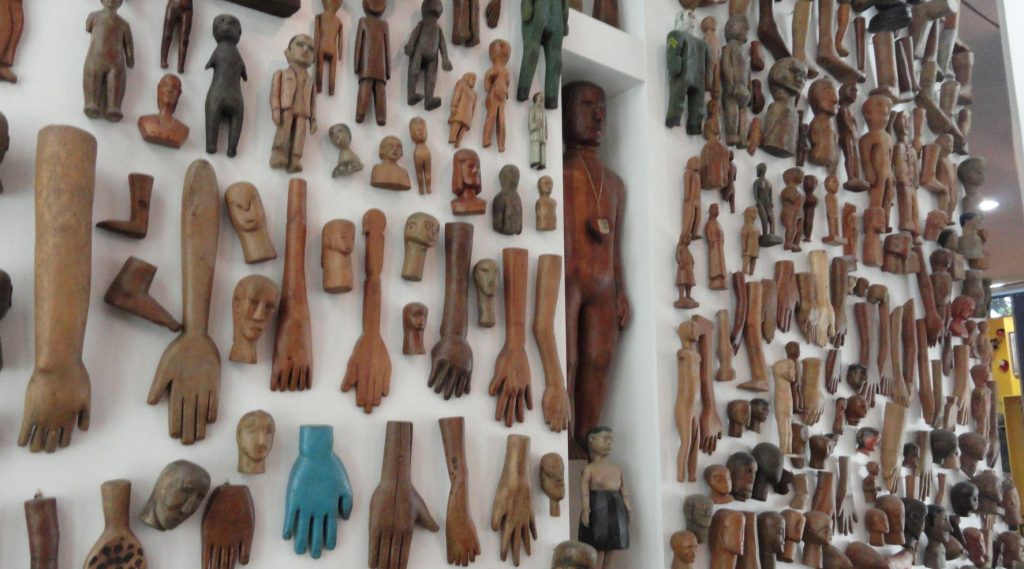
The rest of the museum is filled with interesting things from Brazil’s current or recent culture or current events. The picture second from the top shows “promessas”. These are relics given as homage to a saint in return for helping alleviate a problem. The carving indicted the part of the body or the thing that was affected. So if somebody has a headache, he would carve a head. Some people have broken bones. You see lots of hands and legs. A lot of times, the person is generally sick, so you get the whole person. These were made of wood. Ana Lucia told me that many are also made of wax, which is easier to mold, but they don’t last as long. I took a picture because I just couldn’t tell what it was until I heard explanations. Among the other current events exhibits is one on our President. President Obama is popular in Brazil and the Afro-Brazilian museum featured an exhibit called “From King to Obama.”
I spent a couple hours at the museum and could have spent a lot more talking to Ana Lucia & Emanoel but I had a dinner with the President of the University of Nebraska and had to run. Whoever nominated Emanoel for the IVP program was prescient. It has paid dividends over and over again. Besides the obvious, physical evidence of the museum, Emanoel still loves the United States. Despite our own persistent problems with race, Emanoel sees our country as an example for others to follow.
I constantly bore people by repeating that public diplomacy is a lot less about information and a lot more about relationships. But I repeat it because it is true and I don’t want to let us fall into the trap of thinking we have done our jobs when we pass along some information. We need to work through people. The example of Emanoel shows how effective, sustainable and long-lasting this can be.
One of the challenges we have when talking about law with experts in most other countries is that the American system is fundamentally different. A big part of our system is common law. Among our 50 states, only Louisiana has a code law heritage, based on the Napoleonic Code, in force in Louisiana when Thomas Jefferson bought the place from France in 1803.
Common law has the disadvantage of being unclear, since it relies on experience. This flexibility is also its strength. Common law can be pragmatic; it relies on experience and judgment of generations working with real world problems. Most other countries, including Brazil, base their law on codes. There is convergence, as our system comes to rely more on legislation.
But we still value precedents in deciding cases, judges usually have discretion in applying the law and juries can and do bring their own interpretation of the cases to bear. As some of the judges at the São Paulo State Appeals Court explained to me, this is not how it works in Brazil. In Brazil, as in other code law countries, the law is supposed to anticipate all eventualities and the job of the judges is to apply the law. Of course, this is not as easy as looking in the books, but the big difference is application versus interpretation.
Another big differences is juries. Brazil uses Juries only in homicide cases. In other cases, lawyers represent clients, but they argue before trained judges & are considered more as servants of the state or the law than of individual clients.
Although Brazil has states, like the U.S., the states do not have the independence in law as they do in the U.S. In Brazil, laws apply across the country and lawyers are regulated on the federal, not the state level. One of my interlocutors explained the difference. In the United States, the states preceded the federal government and they created the Union. The Union, in its inception at least, was a servant of the states and American states retain much of their autonomy. Brazil was an empire. Provinces existed, but not states. With the establishment of the Republic, states were created and they have characters of their own, but the Brazilian government preceded the Brazilian states and the central government created them.
It is often hard for Americans to understand what the centralization means in Brazil as it is hard for Brazilians to understand what our greater decentralization means in the U.S.
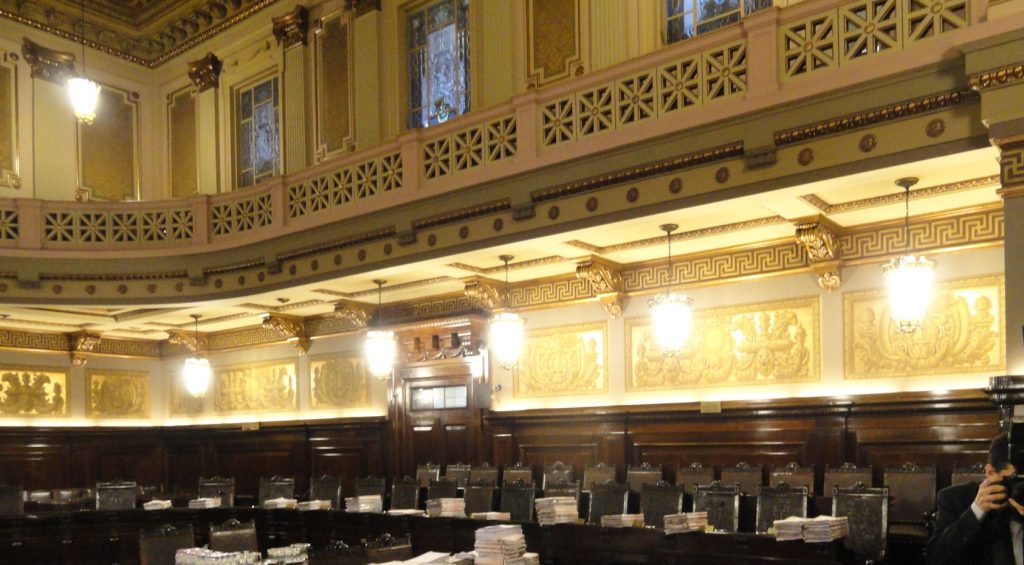
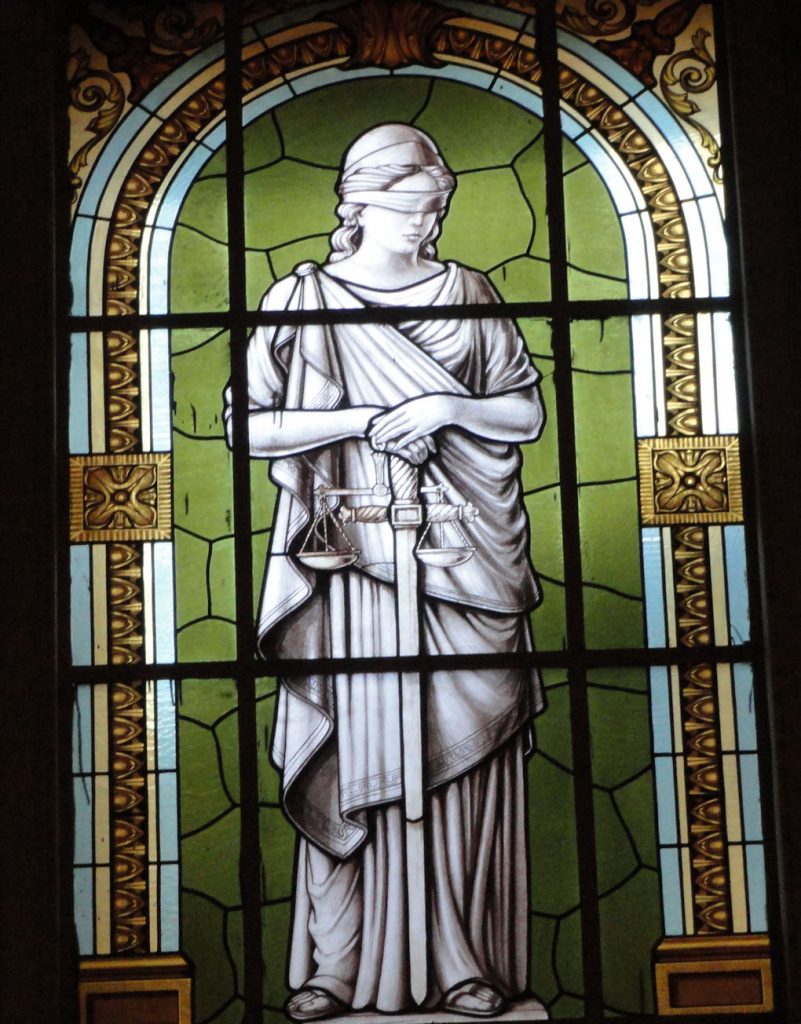
We often use the same terms and symbols (look at the courtroom and the depiction of Justice and you see the same things as you would in the U.S.); we don’t perceive that they mean different things. As I wrote in a previous post, our Brazilian friends sometimes misunderstand the fact that our states and their universities are not managed by the federal government, so they cannot make an agreement with the federal authorities that will hold true in all the states.
In the case of an appeals court, where I visited, however, the differences are not as significant, since an American appeals court also has the duty of applying the relevant law. Still, there is not a court that corresponds to a state supreme court in the U.S.
I understand, BTW, that I am in over my head on this, since I have no legal background. I am giving an interpretation of what they told me. I welcome any comments that might clarify or correct my work.
I also visited the school for prosecutors at the Tribunal de Justiça do Estado de São Paulo. This was a fairly big operation. Speaking of applicable law, the school is working on a conference to study American law concerning fraud and asked our support to bring American experts. The result of this conference is supposed to be a proposal for a law to be put before the Brazilian Congress to make frauds in securities more difficult to perpetrate and easier to prosecute, a worthy goal.
Law is complicated and we have to let the experts do the thinking about the details, but is important to a free people that law is simple enough for the average guy to know whether he is doing right or wrong. The thing I always liked about having a strong dose of common law included in our rules was that it is a check on the otherwise uncontrolled rule of experts. When law becomes too complicated for the people to understand, at least in a general way, it has just become too complicated. I think we can all share that experience.
I mentioned the impact of the various permutations of the “Law & Order” franchise. Whether or not they always get everything exactly right, it is a good educational show for Americans and many Americans … and Brazilians understand law through this simplified prism. There is a “Law & Order UK” which highlights some of the differences between U.S. and UK procedures, even thought UK is also a common law country. “Law & Order” as well as the LA and Special Victims are available on Brazilian TV and my lawyer friends said they liked the shows. I need a “Law & Order – Brazil”.