Sports Diplomacy

I wrote about music in public diplomacy a few posts back.  This one is about sports diplomacy. I am belatedly getting around to writing this; it actually happened in Rio before the music program in São Paulo.

This one was also depended on the generosity of individual Americans, this time NBA basketball players. This program was also a great deal for us; it cost us absolutely nothing except our time to support the activities and publicize them.
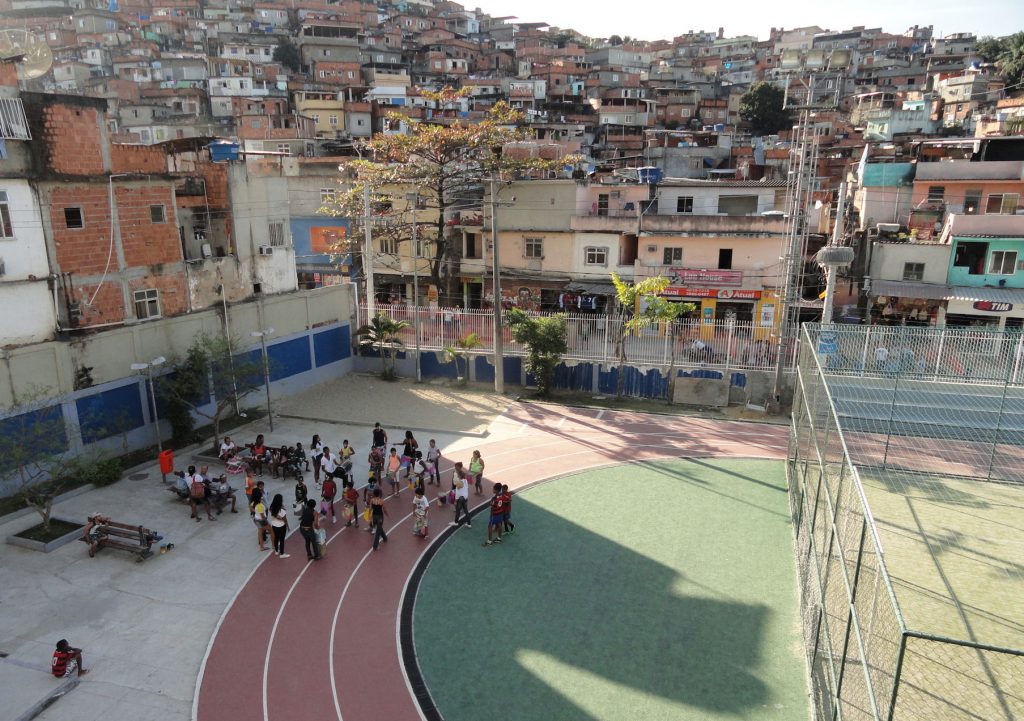
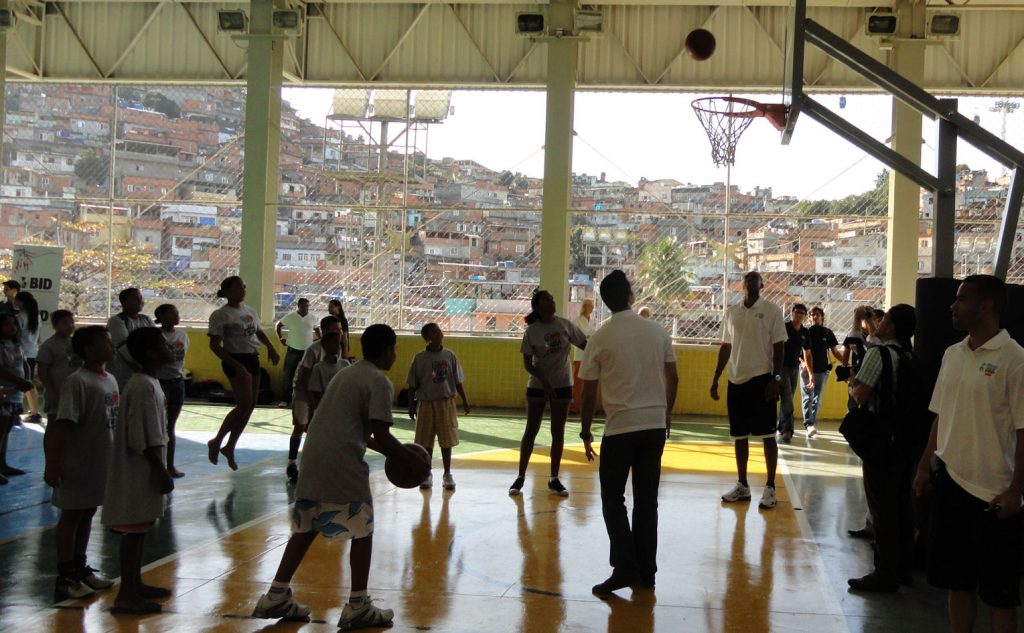
Our part consisted mostly of attending a basketball clinic at a community center in the Complexo do Alemão.  This was one of the most violent and dangerous places in the world until a few months ago. It was controlled by drug gangs. Honest people were in constant danger and the police could not enter many of the areas; they were outgunned by the traffickers. As the City of Rio tried to establish order, the traffickers lashed out.  They attack and burned buses and cars to show that they were serious about their violence and get the authorities to back down. Instead, the Brazilian authorities went all in, using the military and special police units to pacify the favela.
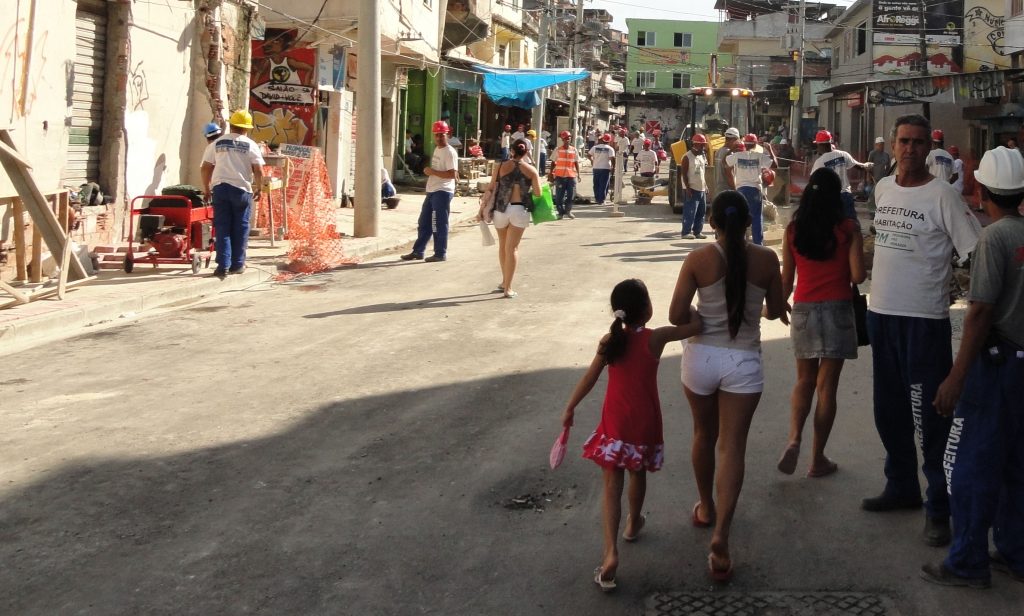
What we see now is a variation of the “seize, hold, build” counterinsurgency strategy. In fact, walking on the streets reminded me of my time in Iraq. These former violent places were bouncing back.  There was still a heavy police presence to maintain order, but the emphasis now was on building and providing services.

The basketball (Called basketball without borders) was helping with the reconstruction of civil society.  NBA players came at their own expense and the NBA paid to set up a basketball court, which they inaugurated with the clinic that you see in some of the pictures.
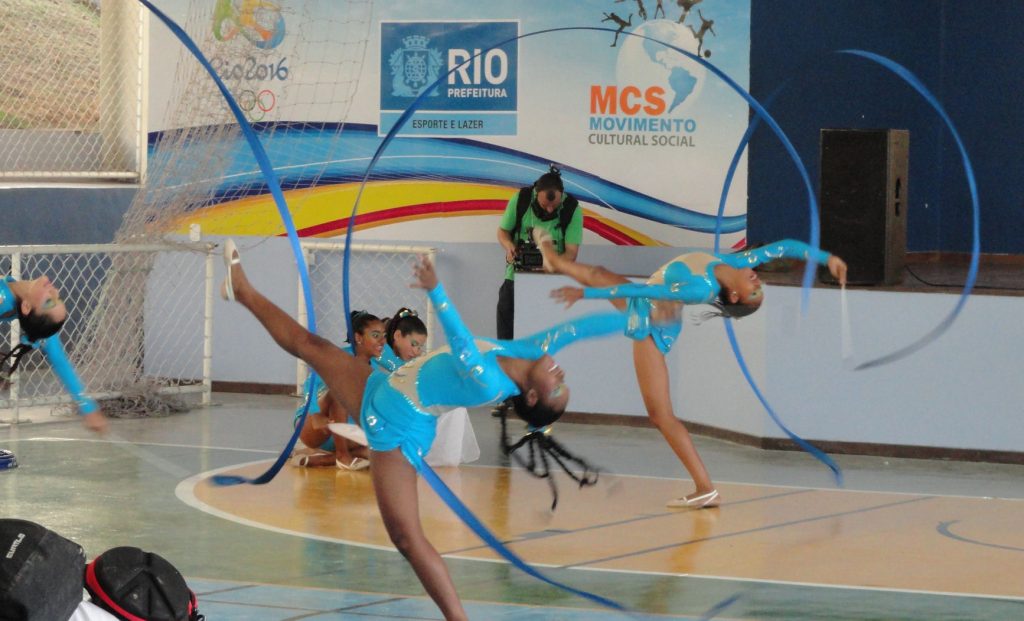
Our post in Rio did a good job of publicizing the event. I use a variation of the old saying that it is like the rooster taking credit for the sunrise.  This event could have happened w/o us.  IMO, it would not have been as successful, but who knows?  But we (the post) helped call attention what was happening and explain its significance. So it is not like the rooster taking credit for the sunrise. It is rather like the rooster calling attention to the rising sun; he spreads the good news so that others can understand the significance and benefit from the light and the warmth. It is a very important task.  
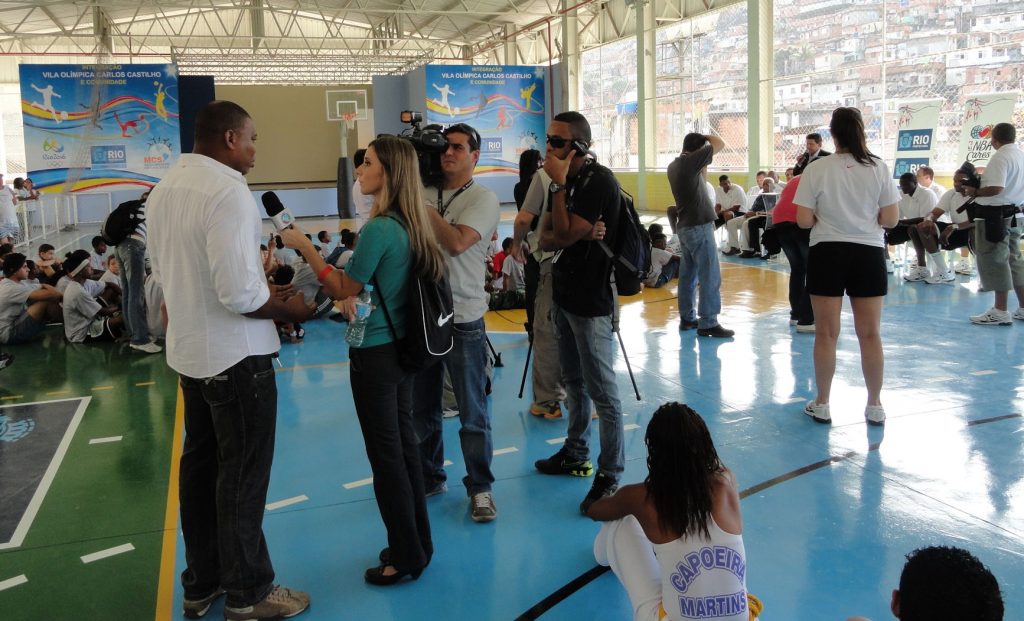
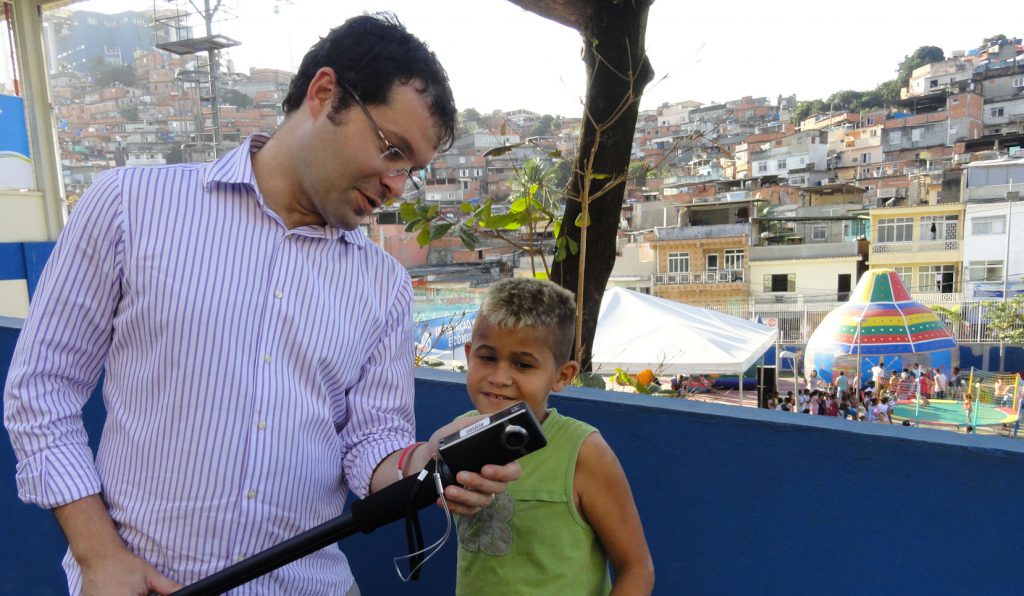
Sports, like music, engage people that we often cannot engage with our programs. Also like the music, we could not possible afford to pay the participants what their talent is worth, so we are grateful that they give it freely. Above and below you can see the public diplomacy tasks. The bottom show our Rio colleague explaining to one of the kids how things work. Other pictures show the NBA athletes teaching kids; the local community showing its talents with dance and capoeira.
São Paulo: the City That Never Ends

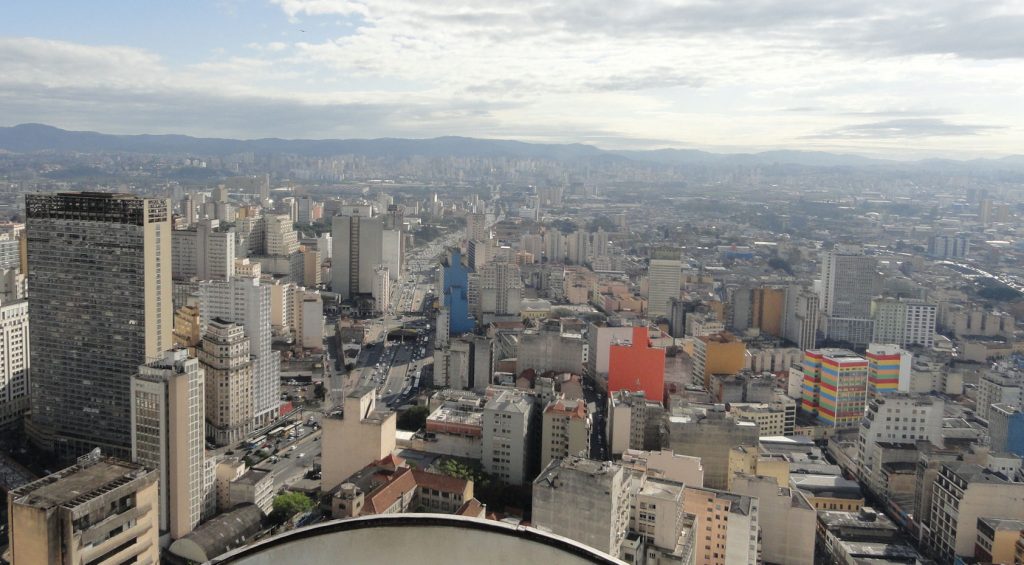
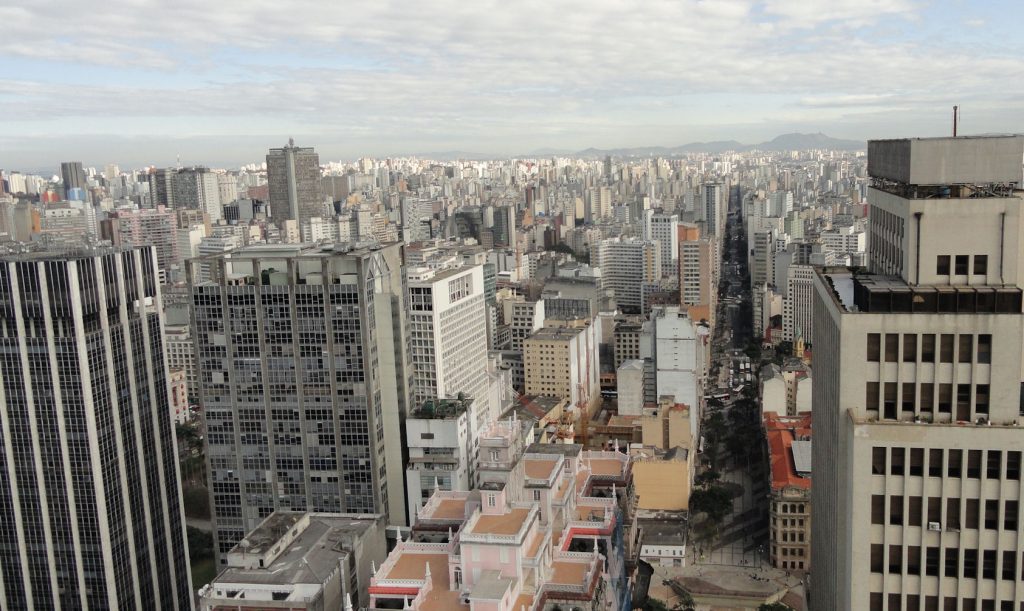
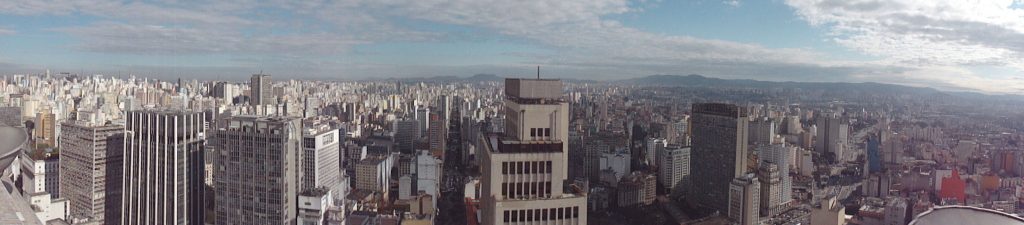
If New York is the city that never sleeps, São Paulo might be the city that never ends. I got to the top of the Banespa Building and looked over city almost as far as the eye can see. Because it was a windy day and the air was clearer than usual, you can see the hills in the far background. Most days, the horizon just shades off into the mist. The Banespa Building started in 1939 and completed almost eight years later. It was the tallest building in São Paulo for twenty years and at the time of its inauguration the tallest building outside the United States. It is modeled after the Empire State Building. The pictures were taken from the top. Above & below is the São Paulo skyline.

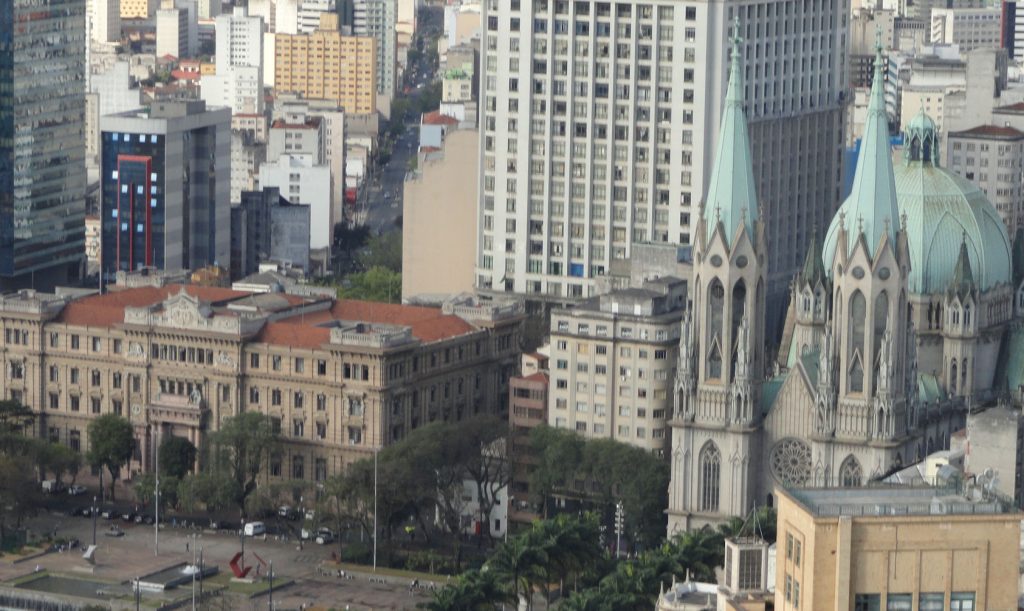
Below is the Sao Paulo cathedral from the roof.

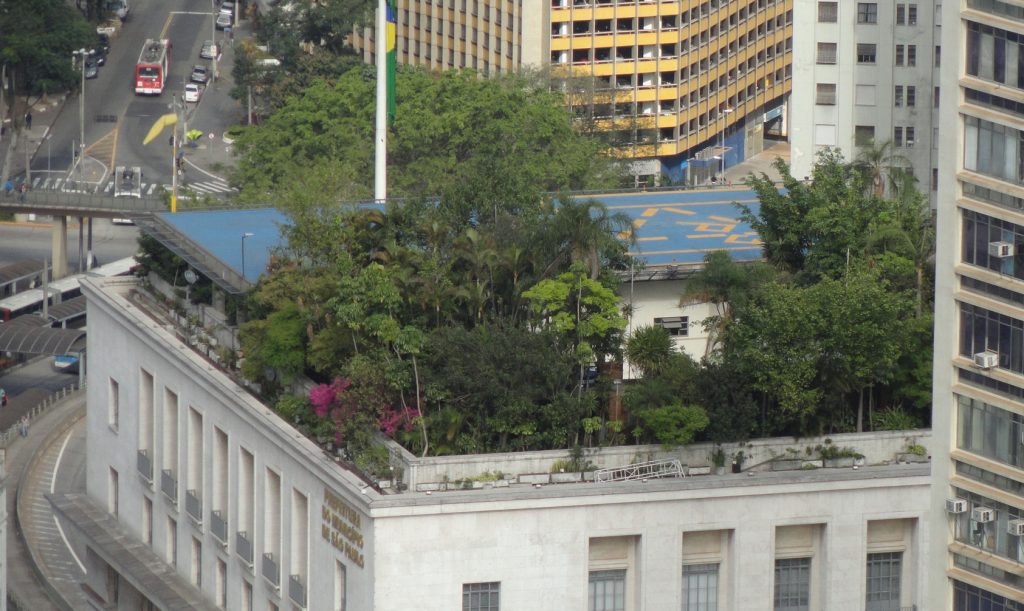
Below is a rooftop garden and heliport. It is interesting the parallel worlds that exist in a three dimensional big city. From the street, you would never know that there was a forest park overhead. 

Below is one more view of Sao Paulo. If you look right in the middle you will see a rooftop mansion.

All That Jazz

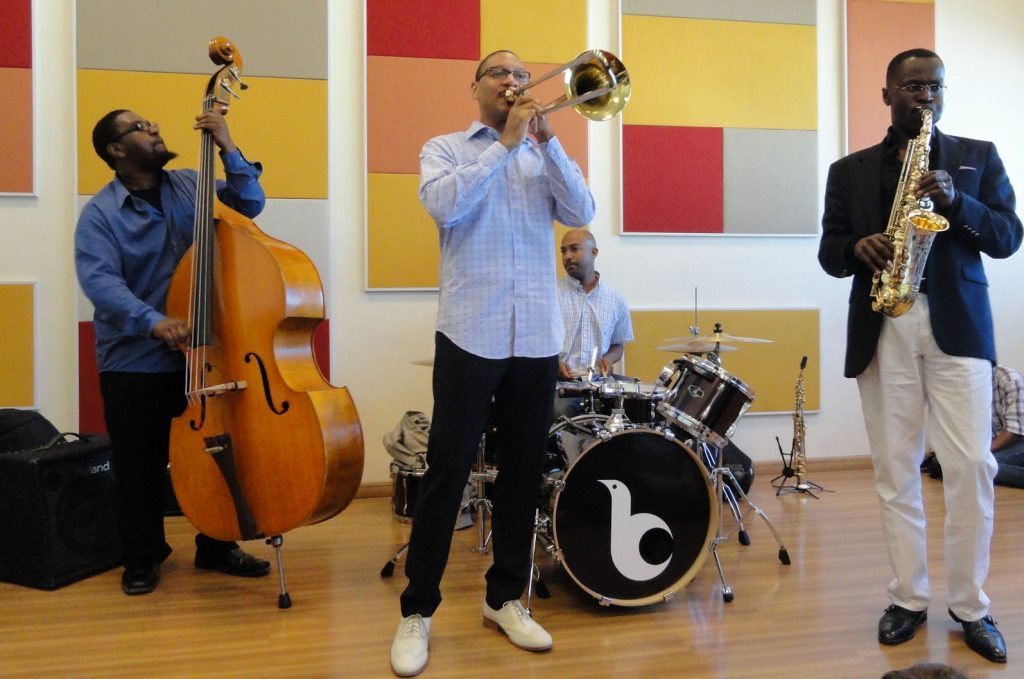
We helped bring some music to the favela, as I mentioned in the earlier post. The leader of the group was Delfeayo Marsalis. His whole family is talented and most people have heard of his brothers, trumpeter Wynton Marsalis and saxophonist Branford Marsalis. Branford was the leader of the band on the Tonight Show with Jay Leno before Kevin Eubanks.  

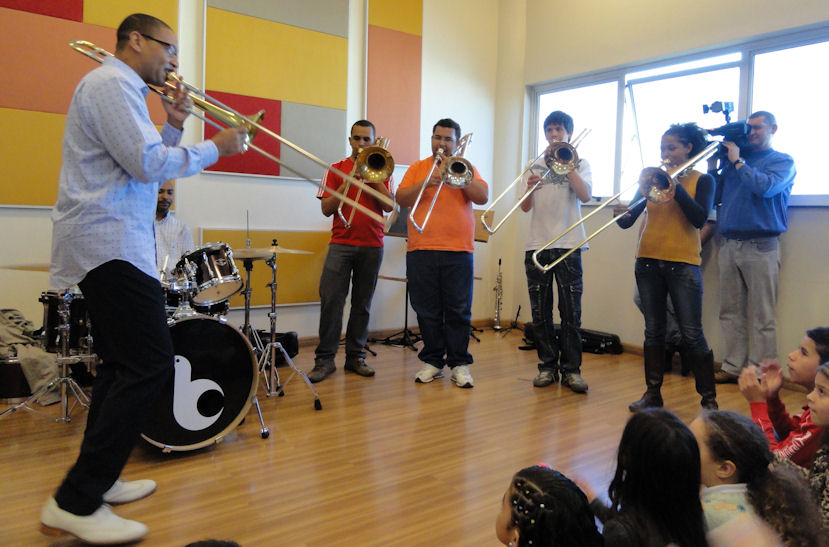
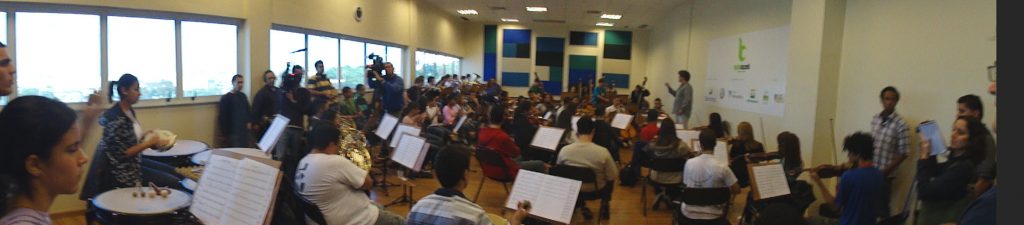
They played New Orleans style music, but they were not there just to perform. They were there to work with the kids from the favela and they did a wonderful job, inviting kids to perform with them and encouraging everyone to develop their own style based on their own heritage. Above you can see the student orchestra that played for our jazz musicians, showing them Brazilian style.

I am not in the entertainment business. What we want to do is to increase understanding between Americans and Brazilians. This program worked. I could see it on the faces of the kids in the audience and hear it in the words of their parents and teachers. The community will remember this for a long time. The good feelings will linger as everybody remembers the talented Americans who shared their talents and appreciated the talents of Brazilians. The good coverage we got in the media will help spread the word. It was good all around.

The American nation is greater than the American government. This was a good example. We (USG) helped bring the jazz players, but we helped defray only a part of their expenses. The musicians contributed their time and talent. They were paid in the joy they shared with young Brazilians, but theirs was an act of charity and good will. 

This is true of most of the participants in our programs. We could not afford to pay these talented people what their time is worth, but they give it freely. It always makes me proud to be in the company of such people. I tell them, but I am not sure they believe me. It sounds a bit schmaltzy, as it does when I write it, but it is the truth. The only true wealth of a nation is contained in its people. We are blessed with great people and it is good just to stop sometimes and be thankful.

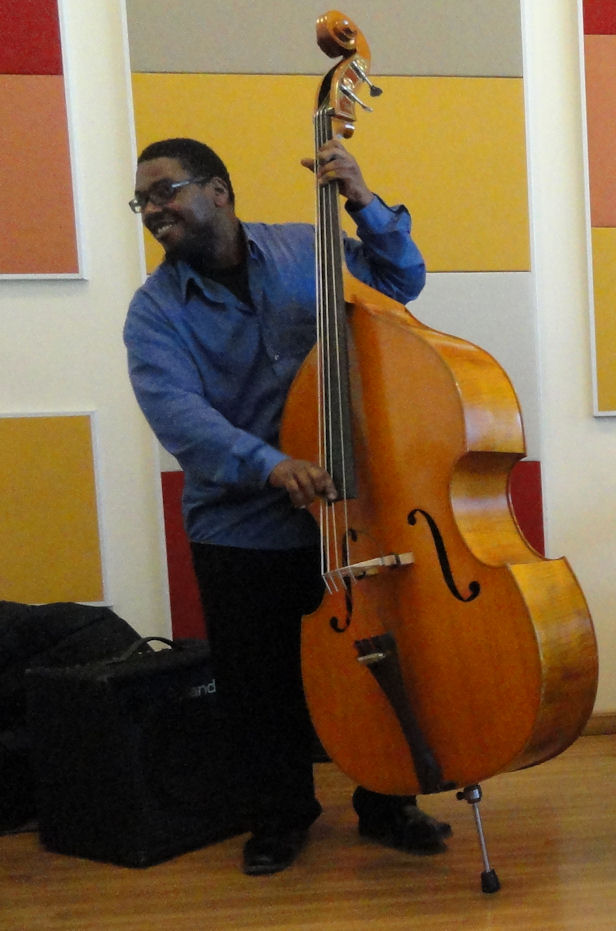
Look at the joy on the base player’s face. That joy comes from losing yourself in the flow of an activity. Music is one of the most common, but it also happens in sports or any task that is a challenge that can be mastered but remains a challenge. It is important to remember that nobody can give this joy to anybody else, since it comes from the accomplishment based on hard work,  but they can inspire it in others.

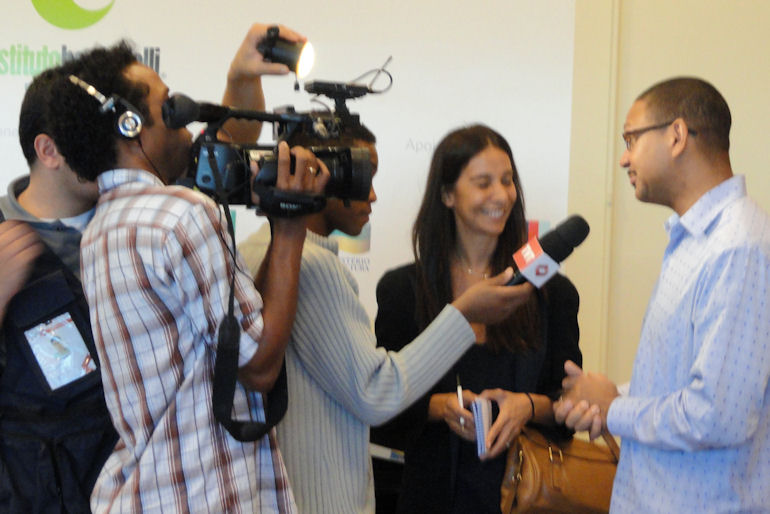
My pictures are self explanatory. I took them all during the workshop. Sorry about some of the focus problems. The light was hard for me to work with.  I don’t really know how to work the camera and rely on the automatic settings.

The Other Side of Sao Paulo

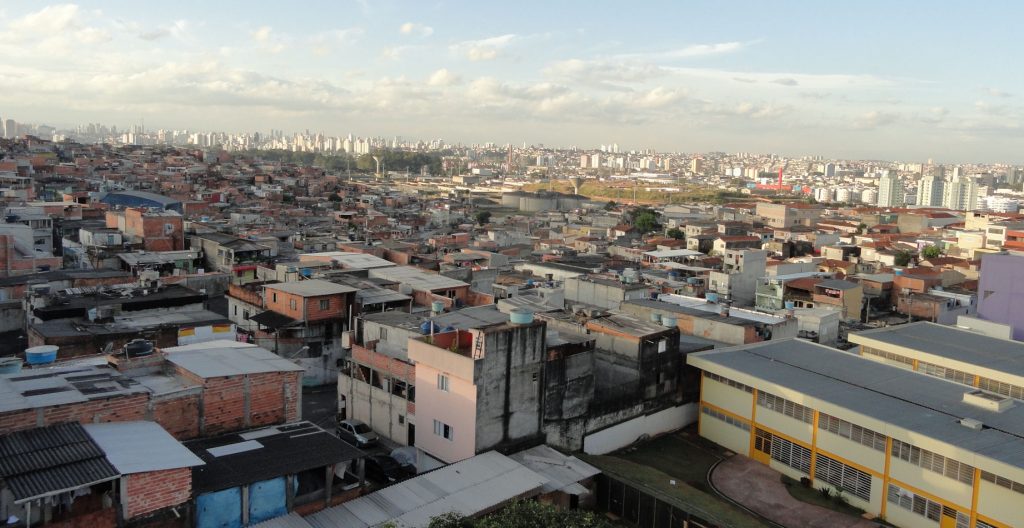
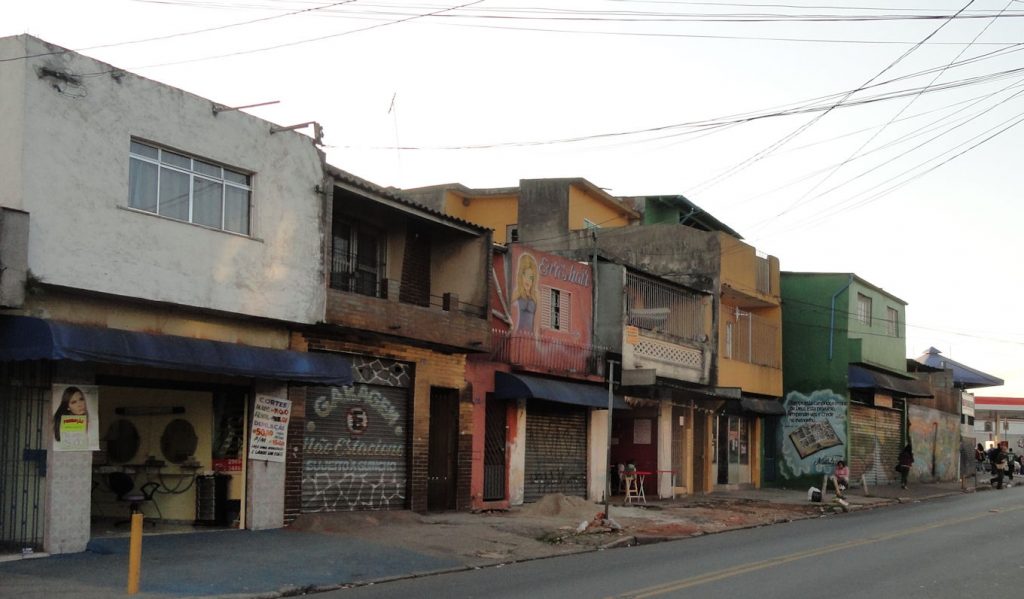
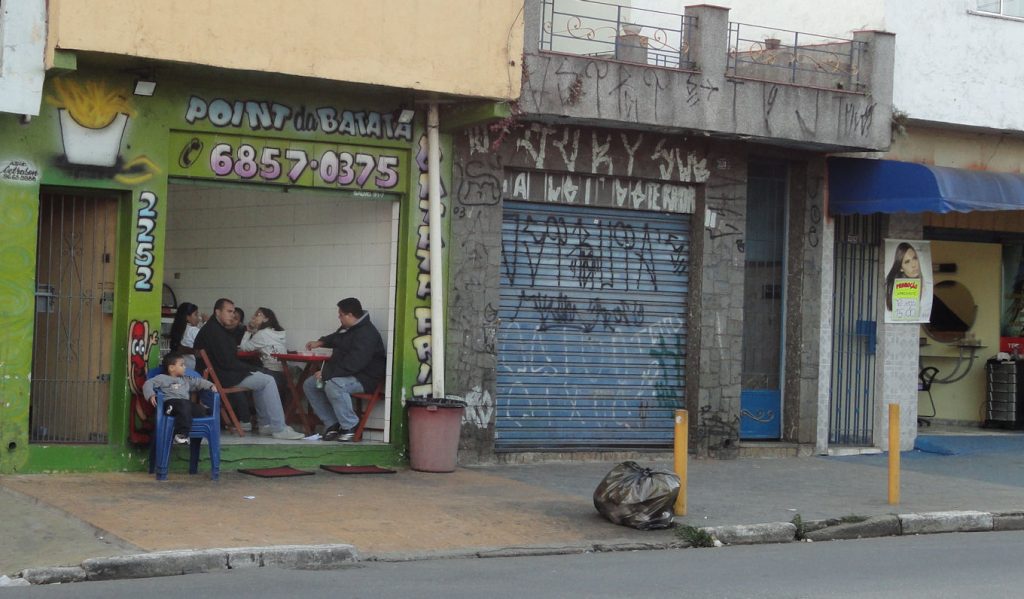
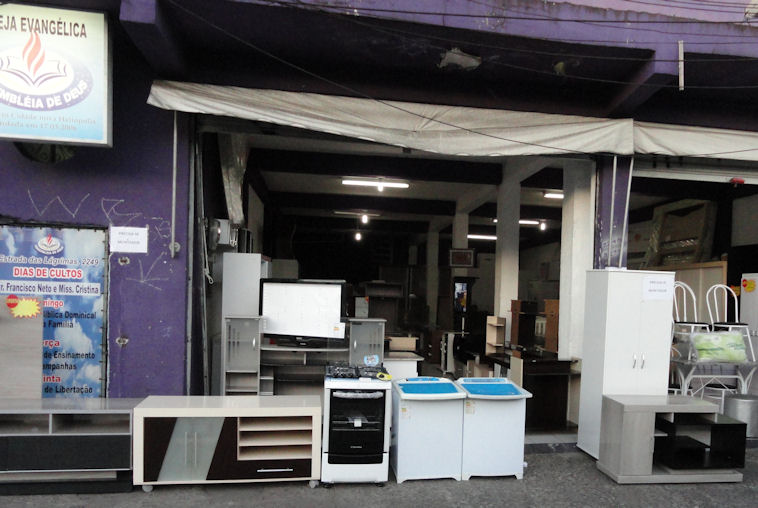
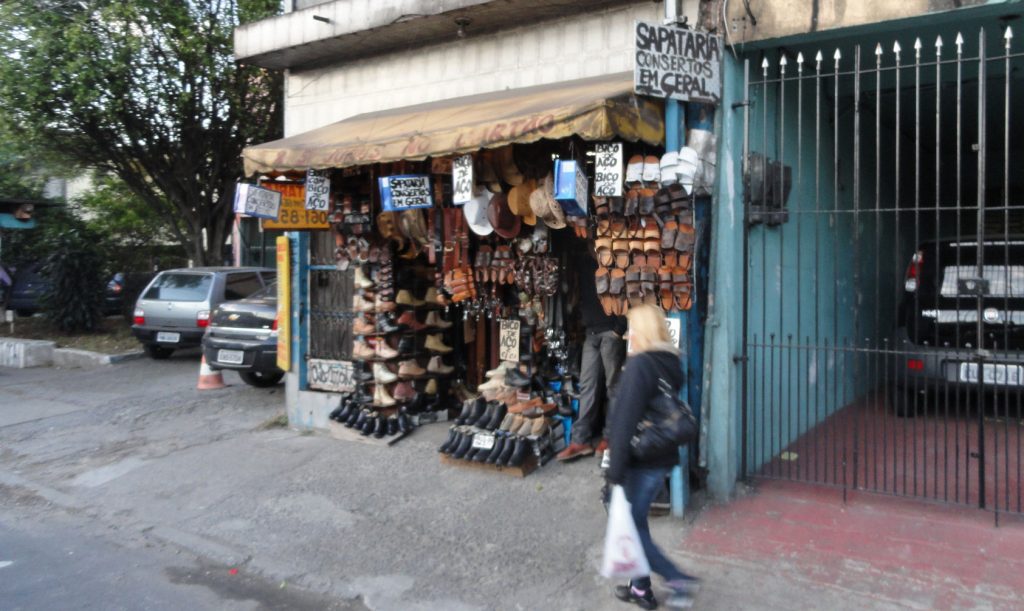
Like all big cities, São Paulo is a city of neighborhoods with characters of their own. The city has some beautiful areas of big homes and beautiful gardens.  It also has some less beautiful sides. The pictures are from a favela are called Heliopolis. You can see what it looks like from the pictures, but the pictures don’t tell the whole story.

The favela is very lively.  You can see the shops. They do some nice graffiti as advertising signs.  The picture up top say “potato point.”

We helped sponsor a jazz workshop in a local music school. I am not a big fan of jazz, but this was a great program. The jazz musicians worked with local music students.  All of them came from the favela and all of them were committed to learning music and by extension other things. For them, music was a live changing experience. I learned from talking to some of them that they did not depend on the “big score”, which is often a curse of the aspirational poor. They weren’t counting on being big rock stars. Instead, they were working hard to perfect their craft.  Most understood that they would not be able to make a career in music, but they knew also that music would enrich their lives and improve it in other ways. The discipline of music was what they wanted and what they were getting. I will add more details in the next post.

People take the opportunity, even in the poorest and ostensibly most hopeless places.  It is a tribute to the human spirit and to the power of arts and music to let it soar.  This is not THE solution to the problems of the favelas, but it is a step in right direction.

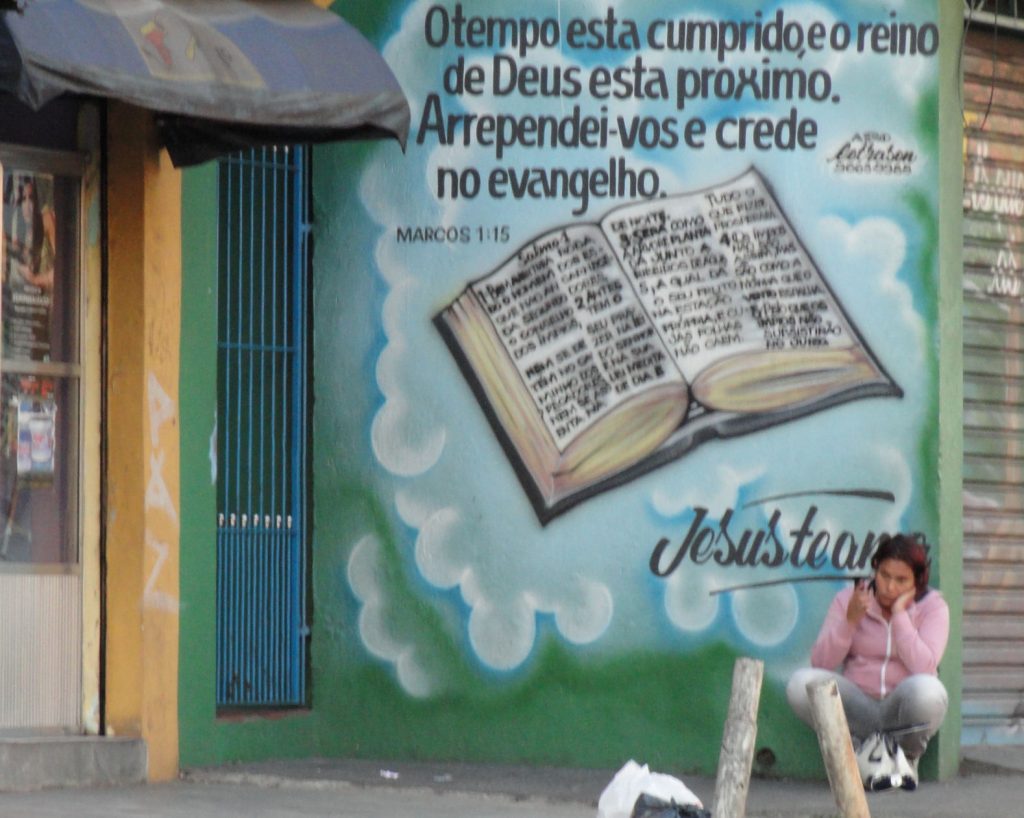
Below shows one of the many signs of advancing evangelicalism in Brazil, especially among the poor. 

São Paulo

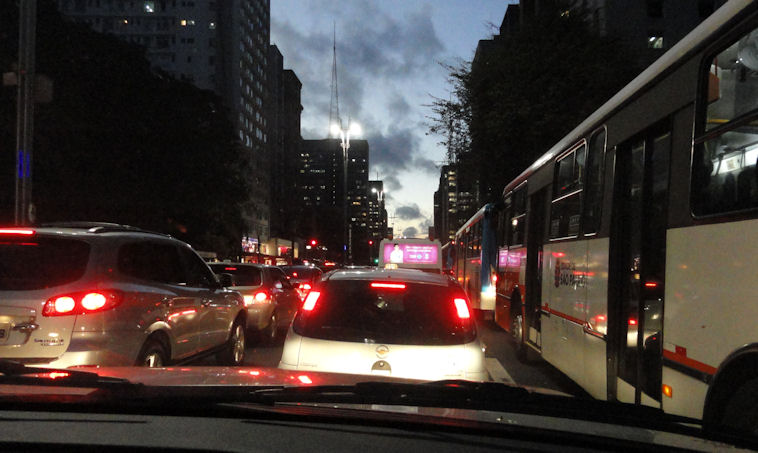
The dominant activity during my four-day visit to São Paulo was sitting in traffic between the many wonderful visits that my colleagues at the Consulate in São Paulo arranged for me.  After a while, I started to notice the landmarks and the geography. We really were not going very far, but it was taking a long time because of the traffic, a very long time.

People in São Paulo have adapted to this traffic and the uncertainty it creates about arrivals. Nobody is upset when you arrive late … or early. We don’t often associate traffic challenges with early arrival, but that happens too. You build in time with the “expected traffic”. It can be worse, but it can also be better. Traffic was lighter than expected on a couple of occasions. My colleagues called ahead, apologized for coming early and asked if we could move our appointment forward. Of course, we also called ahead to explain that we would be late when conditions were different. 

The key to success seems to be the mobile phone. It doesn’t eliminate uncertainty, but allows all participants a range of estimates. My colleagues call ahead and tell the person on the other end of the line what landmarks we are currently passing. Evidently everybody is so familiar with the landmarks and the expected traffic patterns that they can make an estimate themselves. 

We were lucky to have a Consulate driver, who knew the roads and more importantly the characteristics of the places we were going. A lot of time can be spent getting in and out of building complexes. There are lots of gates and lots of guards. Going down the wrong way can cost time and tension. Our driver was highly skilled at fitting into and through spaces I thought were way too small.  Many of the government buildings have parking and garages inside, but they are not obvious parking garages like you might find in the U.S. Instead, you have what looks like a pedestrian entrance with a gate. I would never have thought to turn into a place like this. 

I don’t know how I could have done business w/o my colleagues and the driver. Actually, I do know. It would not have been nearly as easy. I would have spent even more time in traffic, in taxis and been lost most of the time.  I think I might have walked more. Some of the places were not far apart if you went on foot.  I prefer to walk, whenever possible, but walking is not always a safe activity. Although the crime rate in São Paulo has dropped, it is still high. More urgently is the difficulty of crossing some of the streets, because of all that traffic we talked about earlier.   

When the traffic slows or stops, people literally run between the cars to cross street.  One of my colleagues advised me NOT to cross at the walk signal, which he said was more dangerous than waiting for the cars to stop and dashing between them.  It reminds me of that old video game “frogger”. The cars are a hazard, but at least you can get a fair idea about their movements. The more immediate menace, IMO, comes from motorcycles.  These things race between and among the cars as they wait in traffic. When I say “race” that is what I mean. They are not edging down the road.  They are going at high speed, creating a danger to themselves, cars and pedestrians. Some of the motorcycles have altered handlebars to make them narrower. This allows them to fit through even narrower spaces, but also reduces leverage & makes them harder to steer. Neither thing is good. Brazilians authorities have moved to make such alterations illegal, w/o significant results, in my observation.

I don’t see a way out for São Paulo. It is just too big. At some point any system becomes too big to properly manage. People have adapted in many ways, as I mentioned above with things like flexible schedules.  São Paulo offers many benefits that – so far – outweigh the costs for most residents.  I talked to many people who cannot imagine living anywhere except São Paulo.  They are a lot like inveterate New Yorkers in that respect. The things you can do in São Paulo are almost limitless – IF you can get to them.  You might be better off locating elsewhere and dipping into São Paulo when you need something.  A commute via air from Brasilia is shorter than a drive from one end of São Paulo to the other. I am not the only one to figure this out. I hear that businesses are locating outside the city if they can. The problem is that they have to go a long way before they are out of the city. I have decided that São Paulo is a great place to visit, but I wouldn’t want to live here. Having a hotel near restaurants and meeting is great.  I could walk to some places.  Most people don’t have that luxury and I would not have it if I lived in São Paulo permanently. I can stand being entombed in traffic sometimes, but every day would be more than I could tolerate. 

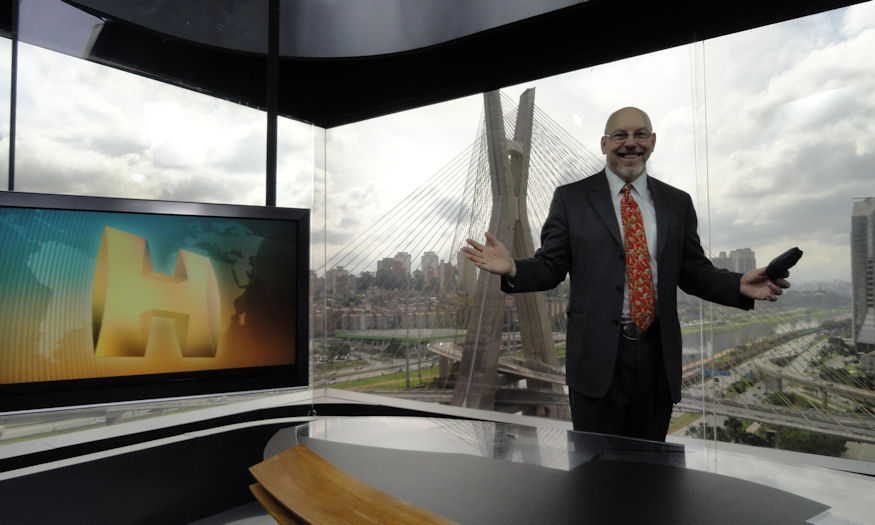
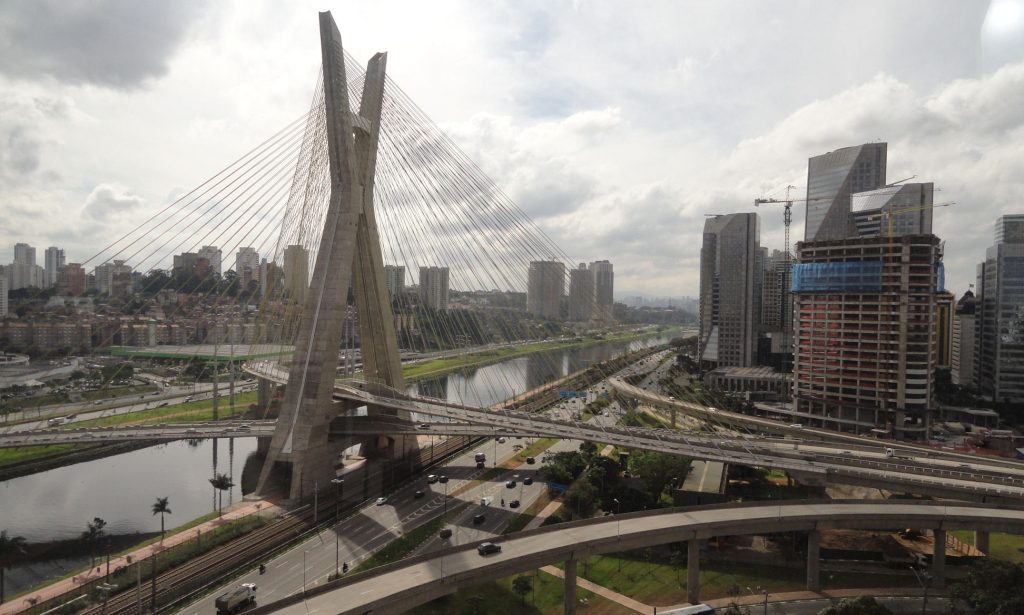
My pictures are from the TV Globo affiliate in Sao Paulo. The bridge is one of the landmarks of the local area. It is a nice bridge that doesn’t carry much traffic. If you live on the road serviced by it, you are lucky. The river you see has a very distinct smell. You are lucky to have only the photo.  

Can’t Say it Better Myself

I got these recent studies about the effectiveness of good forest management.  I usually don’t just do cut and paste, but I wanted to publish these from foreign landowners association.

New Forest Products Lab Report Confirms FLA Position

                           One of the tag lines on our new web site, and one that FLA CEO Scott Jones uses often in his presentations is, “In order to sustain forests, we must sustain the people who own them”. Another is “healthy markets make healthy forests”.

Both of these facts were confirmed loud and clear in a recent Forest Products Laboratory report, Sustainable Development in the Forest Products Industry. Researchers state that “The historical data we examined in this study support the hypothesis that an economically vibrant industrial forest products sector has been key to forest policies and forestry practices that support sustainable timber supply and demand”.

Based on their observations, the authors further conclude that the future direction of forest products technology can have a large influence on sustainability of forests and forest management.

“If future technology and wood demands generate sufficiently high values for timber as a raw material, then historical experience suggests that forests and forest management will thrive; if the value of timber is cheapened, however, through low-value use or insufficient forest product technology development, then forests may face significant challenges regarding their future sustainability.”

The full report can be accessed at the following link  www.fpl.fs.fed.us/documents/newsline/newsline-2011-3


            New Bio-energy Report Confirms Working Forests Better Than Carbon Neutral

A new report from Dovetail Partners concludes “A comprehensive review of research conducted over the past decade reveals convergence in findings that sustainably managed forests can be ‘better than carbon neutral,’ yielding a range of useful products, including energy, while at the same time providing significant carbon storage and emission reduction benefits.”

The report states that “Over 847 billion cubic feet of timber have been harvested from U.S. forests in the past sixty years. This harvest volume is equivalent to a pile of wood measuring 2 miles x 2 miles x 7,600 feet high. Put another way, this is enough wood to create a square foot stack that would reach to the moon and back 334 times! During this same time period, the volume of wood within America’s forests increased by more than 50 percent.”

This and other interesting data prove that long-term sustainability is being achieved. This “must read” report from Dovetail Partners can be viewed at: http://www.dovetailinc.org/content/dovetail-partners-releases-new-report-bioenergy

EducationUSA

Brazilian President Dilma Rousseff wants to send 100,000 Brazilian students to study science, technology, engineering and math (STEM) in other countries by the end of her term and we want to help. It is the classic win/win. American universities are coming to Brazil to get their share of the new students. We have an opportunity rich environment. Great.

Americans and Brazilians have been working together on this for a long time. We have the venerable Fulbright program, which was established in Brazil in 1957. U.S. universities have been active in Brazil and Brazilians have looked to the U.S. for more than a hundred years. American universities are acknowledged to be the best in the world.  It is an embarrassment of riches. We have all the networks in place and they have been working well for a long time, but now we are going to push more through the network than ever before.

Among our best assets is a regional educational advising center (REAC), headquartered in Rio at PUC University. I visited there during my recent visit to Rio. PUC, our Brazilian partner institution, gives us the space, which is at a premium on their crowded campus. Their students also provide volunteer support in marketing and advertising the services. In addition, we have advisers at twenty-three other centers, such as BNCs, around Brazil and three offices at private universities. State Department’s Educational and Cultural Affairs (ECA) office trains the advisers, but they are paid and otherwise supported by their local Brazilian institutions. Such is the demand for this service that our partners are happy to cooperate. The centers can defray some of their expenses by offering translation services and consultation on writing in English, but they do not charge prospective students for educational advising.  

One of their big activities is sponsoring Education USA fairs. American universities come to Brazil to recruit students.  The advising centers can and do charge U.S. institution to defray costs.  Interest in Brazil is growing and the fair in Rio scheduled for this fall is already booked up with fifty U.S. universities. Other centers also hold fairs.  The BNC Casa Thomas Jefferson will hold a fair later this month in Brasilia, for example. 

Nobody really knows how many Brazilian students there are currently in the U.S.  Our deceptively precise number is 8786, but we get this figure by a survey of answers supplied voluntarily by U.S. universities. Our educational advisers think this number is lower than the real one. They mentioned anecdotal evidence of universities where they know there are Brazilian students that reported none, but the real number in not much more. If Dilma’s aspiration becomes a reality, there would be more than four times as many coming to the U.S. in the next four years. This is a big bump and you get an idea of the challenge. 

One thing we have to explain to Brazilians is that America’s higher education system is extremely decentralized. The Federal government cannot order state or private universities to admit Brazilian students or offer them tuition discounts. This must be done on a individual basis. The good news is that we have hundreds of excellent universities in the U.S. and many want to get Brazilian students to diversity their student body and build a future alumni network in what will be a much more important country in the future. One of our (Embassy & REAC) goals is to spread the students out over the U.S. Brazilians tend to know only a few American universities.  Everybody wants to go to Harvard, MIT or University of California and who can blame them. But dropping thousands of Brazilians into a few institutions would not be desirable, even if it were possible. Our task is to explain the diversity of American education. We have many excellent choices and sometimes the best programs for a particular student might be at an American university that few in Brazil (maybe few Americans too) know exists.

Our centers are reaching out to Brazilians to explain things like that and to help with applications.  Their motto is that studying in America is “mais fácil do que você pensa” easier than you think. We have to remind students that there is essentially no waiting line for a student visa to the U.S. and that it is indeed, easier than they think. 

This is a great opportunity to shape the future of Brazilian-American relations through education.  It is truly a win-win. We just have to do it.

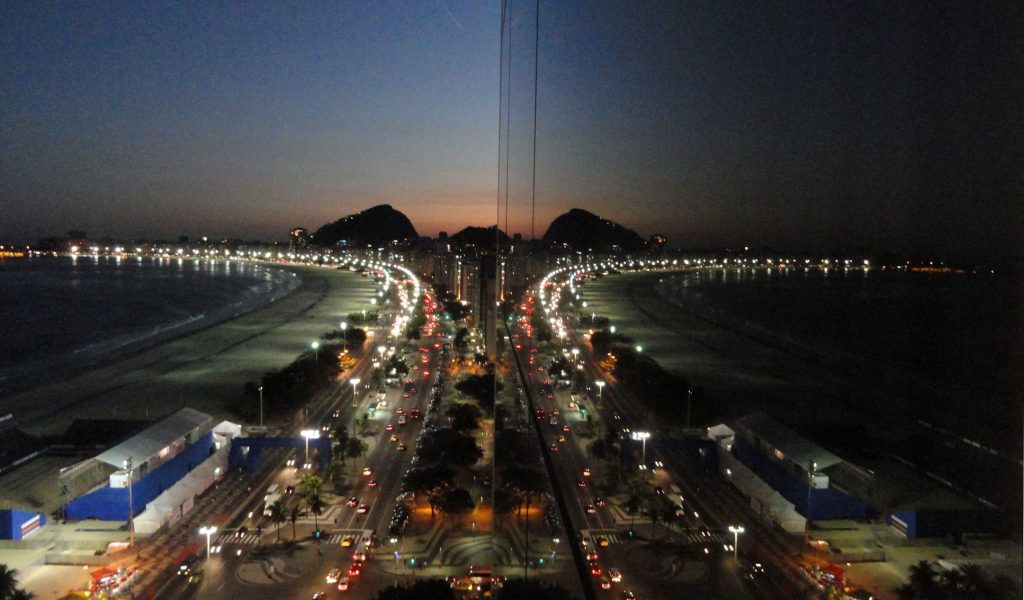
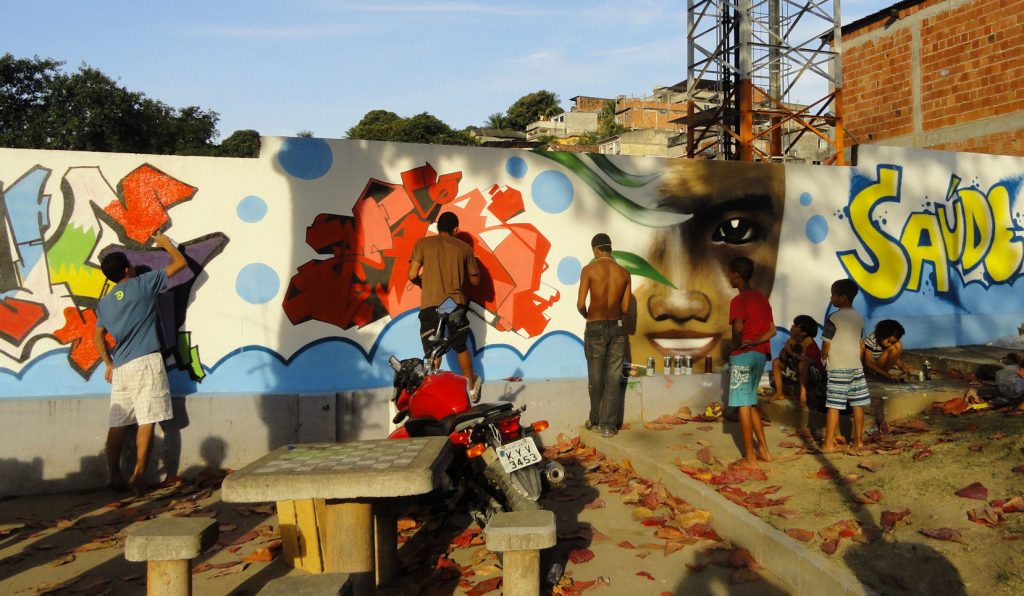
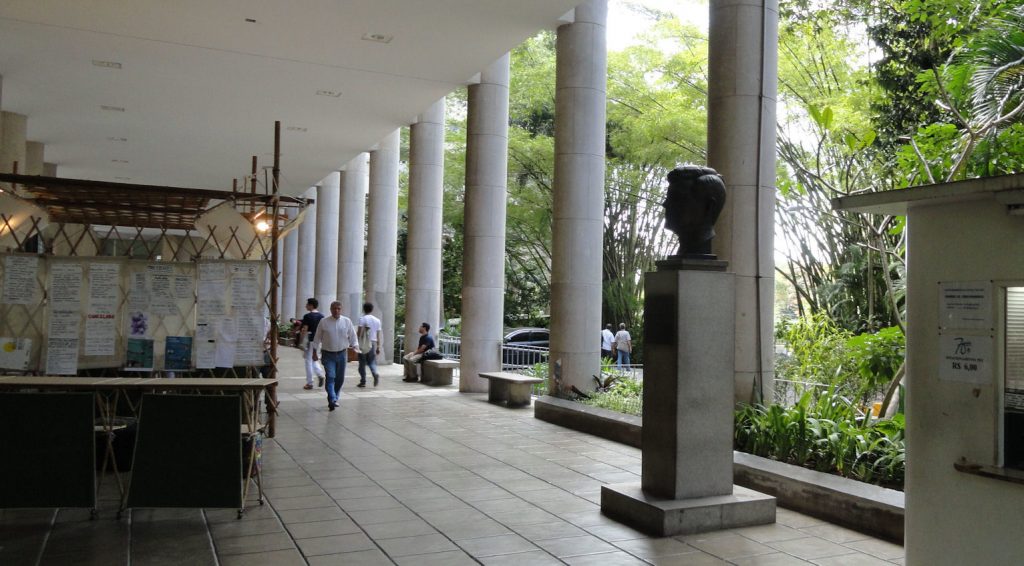
My pictures – at top is Rio from my hotel window. You see the symmetry of the reflection in the glass. I didn’t get perfect symmetry because I could hang only so far out the window w/o falling 21 floors. Might have been a cool picture on the way down, however. Below that you see graffiti artists at the Complexo de Alemao, a favela that the Rio authorities recently took back from gangs and drug dealers. Third down is the Kennedy Wing at PUC. It is dedicated to the U.S. and JFK. Bobby Kennedy came down for the commemoration of the bust in the picture.

Future High End Real Estate: Rio’s Port Redevelopment

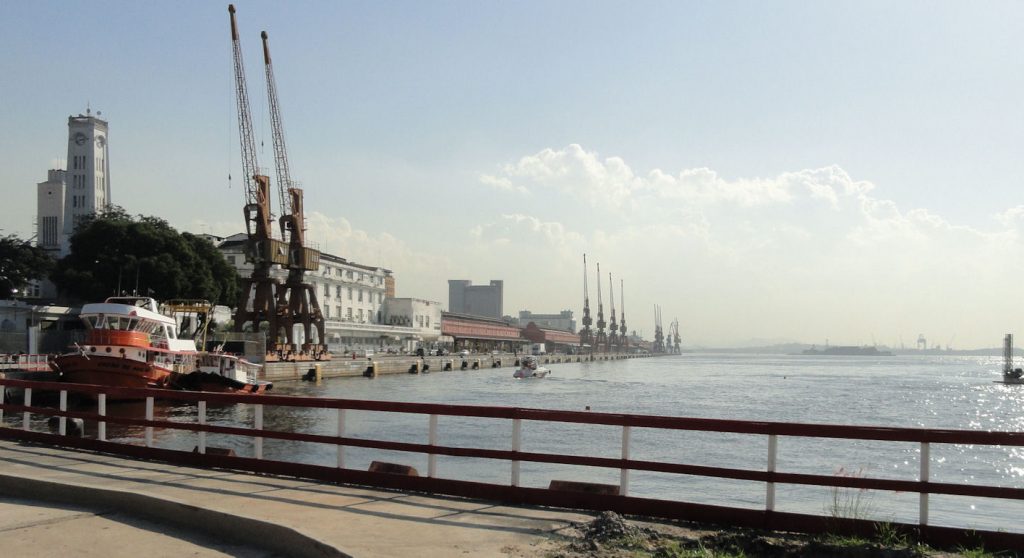
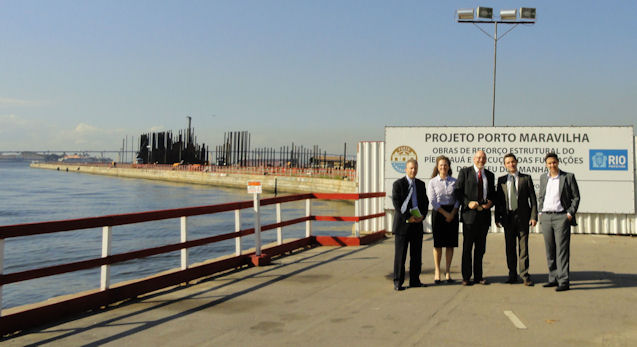
The general idea is that the long neglected and now nearly derelict part of the port would be turned into an exciting area with shops, condos and office space.  Cruise ships and pleasure boats would dock at a Y shaped pier that will go out from where you see the first row of cranes in the picture above. I nice dream.

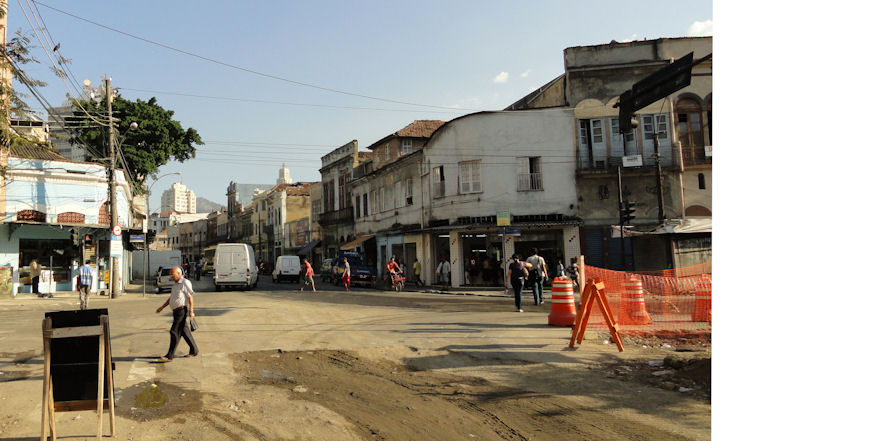
Rio’s port experienced the same changes that affected ports all over the world.  Containerized cargo rendered most of the existing warehouses unnecessary (containerized cargo is just stacked up) while the larger size of the ships & the big equipment needed to load and unload them made it necessary to have more open space, both on the land and in the water.  Inland, wider roads are needed. The old infrastructure is no longer appropriate.  Finally, the once busy docks are now largely abandoned; a machine run by one operator does the work of hundreds of longshoremen, so all the houses and apartments once occupied by dock workers, their families and associated workers are now empty. Put in a more positive light, there are lots of opportunities for redevelopment.

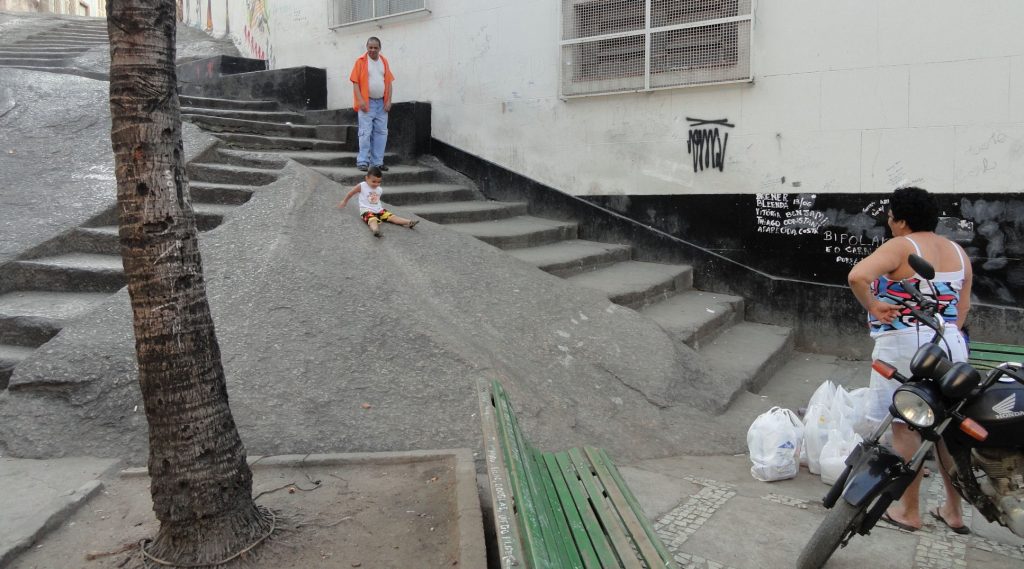
Someday, if things are done right, this area will be high end real estate, as we have now in Baltimore, Boston or Charleston. It is an aspiration that makes sense, but it takes a imagination to picture it now.  Below is a kid sliding down a rock that obviously many kids have used before.  But the rock has a darker history. It was the place where slaves were unloaded and sold in Rio’s first days as a Portuguese colony.

Rio de Janeiro

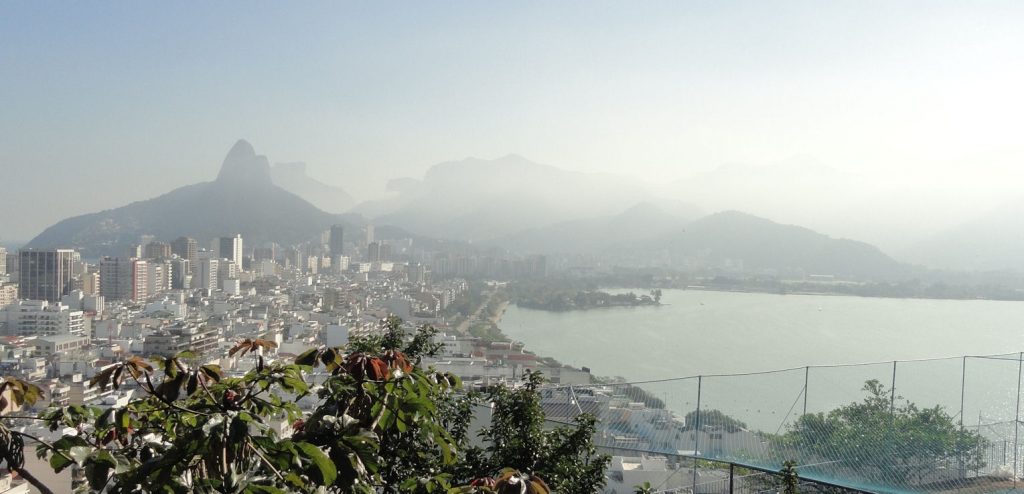
I went down to Rio last week, the first time I have been there in twenty-five years. It is still a beautiful place and I will write up notes about my  very busy schedule there later. For now I am posting a few of the pretty pictures. The one up top is a very big picture. I didn’t shrink it down, so you can look at the source (http://johnsonmatel.com/2011/July/Rio2/Rio_de_Janiero_foggy_view.JPG) and see it in more detail.

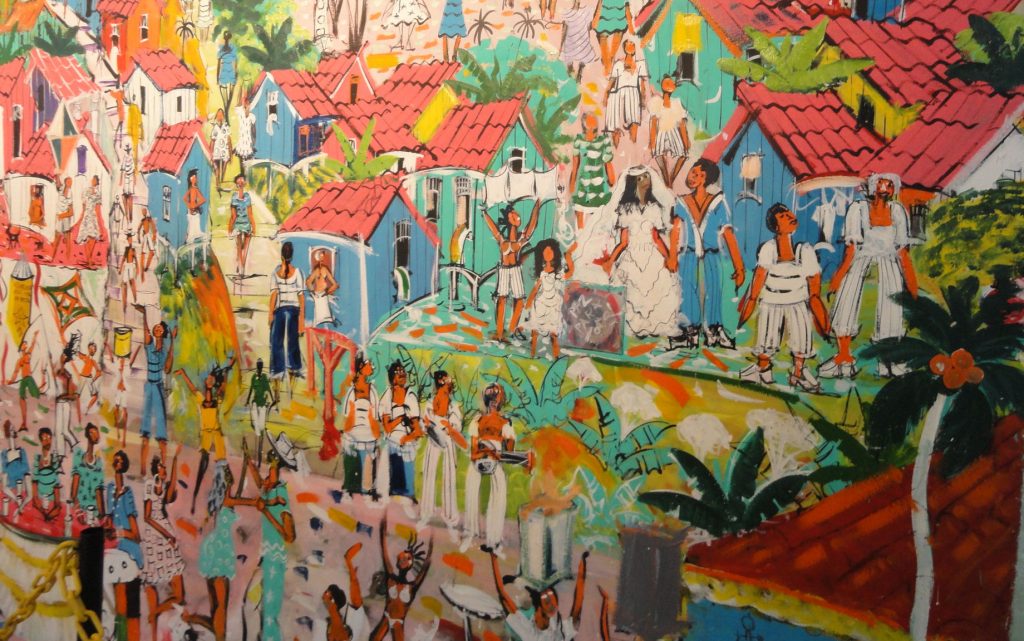
I took the picture from one of the favelas, or slums.  This one had recently been the scene of terrible violence and literally wars between the authorities and drug dealers. Now it is pacified.  Below is a mural drawn of the favela – or maybe the community they would like it to be. If you look at the bottom you see a gray spot. That is where a bullet hit during the late unpleasantness.

High Cost of Labor

You can see the changes in the news, in advertisements and in the behavior of people. Labor, even semi-skilled labor, has become more and more expensive. As a result, individuals and firms are quickly adapting, substituting machines for people or changing processes in order to avoid hand labor altogether.

The TV news a couple days ago featured an article about the quickly rising wages of “empregadas” or maids. Let me explain that household help in Brazil was not something only for the rich, as it tends to be in the U.S.   In Brazil, when labor was cheap, middle class people had maids, gardeners etc.  Anyway, I saw stories about this on the news and read about it in the papers. Some empregadas were happily reporting that they had five or six offers for their services and could decide among them, a good news story for empregadas, but maybe not sustainable. 

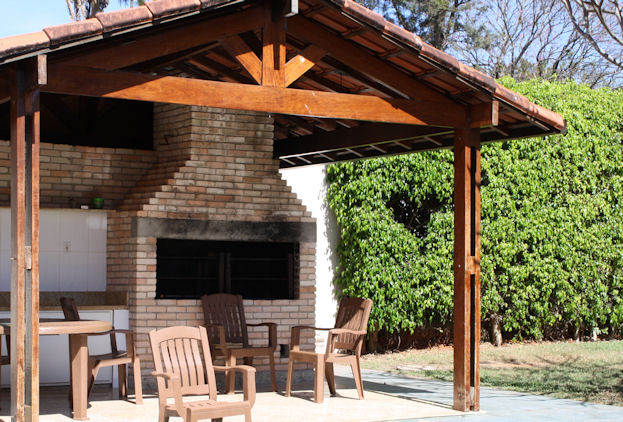
Brazilian houses tended not to have the labor saving devices found in American homes. For example, the USG has put me in a very nice home. It has a built in grill and many other luxury features (you can see in the picture up top). But it doesn’t have a dishwasher. Nobody invests in labor saving devices when labor doesn’t need to be saved. Or more to the point, there are two types of dishwashers; one is mechanical.

Things have changed.  There are lots of advertisements for dishwashers of the mechanical variety. On the farm show “Globo Rural” there are more and more stories about agricultural equipment, even on small holdings.  This morning featured a story about a small holder in a poor region of the Northeast who found it cheaper to rent a combine than to hire his usual team of farm workers.  

This is what happened in America generations ago. Brazil is following the pattern.

I had a pleasant Sunday w/o any labor. I went running down near the lake before the sun got high enough in the sky to burn my pale skin, came home and planted my garden and then spent the afternoon sitting in the yard in the shade and reading my “Veja” Magazine. I have a kind of history. When I was nineteen and knew nothing about the world, I was impressed by one of my co-workers at the cement plant who seemed to know lots of things. He said he just read “Time” every week. So I started to do that, sitting in my backyard in Milwaukee in the cool of the early mornings. Eventually, I learned enough to pass the Foreign Service exam.

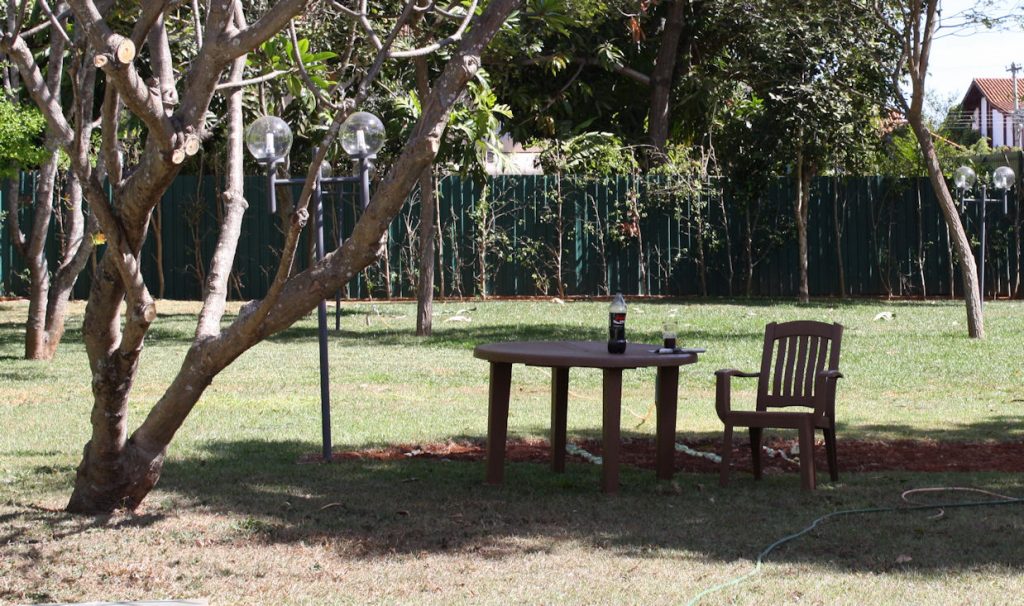
You can see my reading spot in the second photo. If you have shade, Coke-zero and something to read, you are set. About the garden, you can see it behind the chair. I am not sure what to do. I planted my flower seeds, but who knows what the seasons do around here? There is no winter in the sense of getting cold and it is certainly warm enough for the seeds to grow, but we are in the dry season. I figure if I keep the dirt moist, I will get something.  Of course, how long will a normally annual plant keep on growing if there is no frost to kill it off?

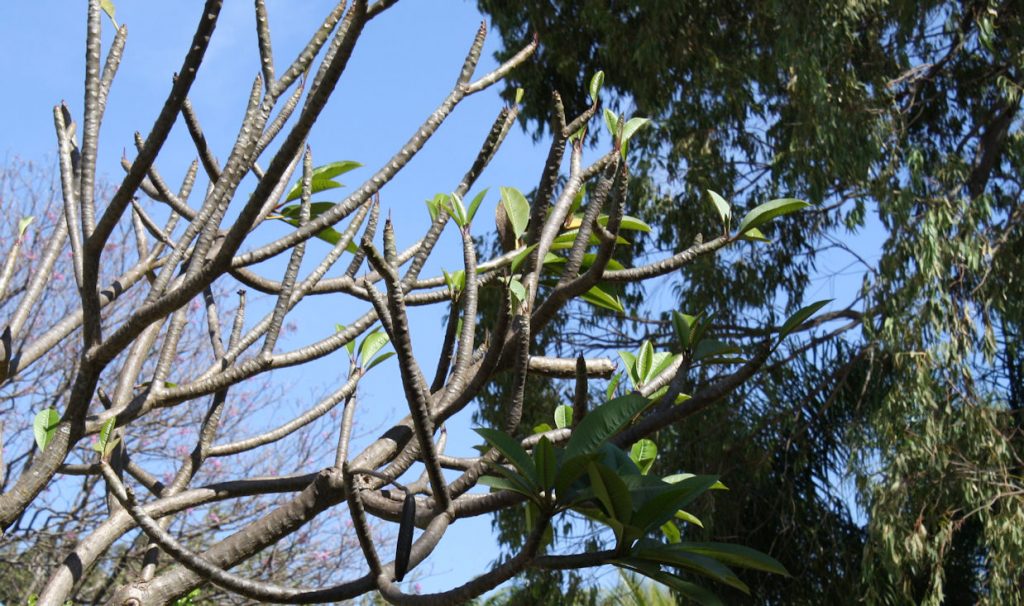
Above is a tree in my yard. I don’t know enough about tropical trees to identify it. Before I moved in the yard was overgrown. The gardeners cut back all the bushes and trees, including this one. It looked like it was dead when I moved in a couple weeks ago. Now it is growing back from the stumps. The gardener says that it will be completely grown out again in a short time. It looks like it is starting. Things grow really fast around here.