Lucky to Live in Washington

I spent the day with Alex in Washington showing him what a great place it is to be. He is finishing with NOVA this summer but will not start JMU until spring semester and worries that his brain will atrophy, so we are working up a work-study-exercise regime.  I think he is beginning to understand how lucky he is to have this opportunity. I don’t think there is any place better than Washington to pursue this kind of self-education, since we have all the free museums around the Smithsonian, think tanks, parks, monuments … But you have to do it deliberately.
We started off at AEI with panel discussion on regulation of greenhouse gases.  Alex thought the guy from the Sierra Club made the best presentation. You can read about it here. I agree. He was mostly talking about the problems of coal. Coal is cheap but dirty from start to finish. In Appalachia, they remove whole mountains and dump them into the valleys.   We can reclaim these lands with good forestry, but we all probably better off not doing it in the first place. 
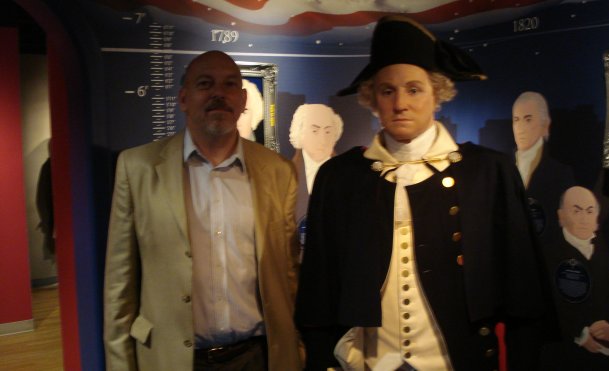
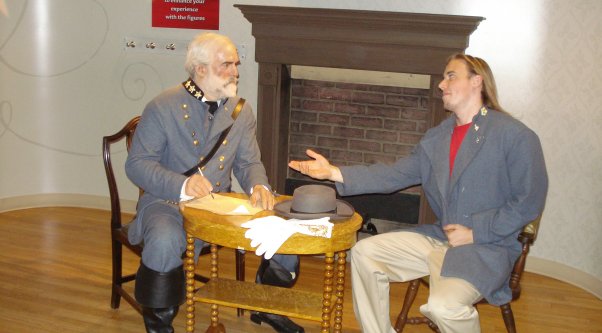
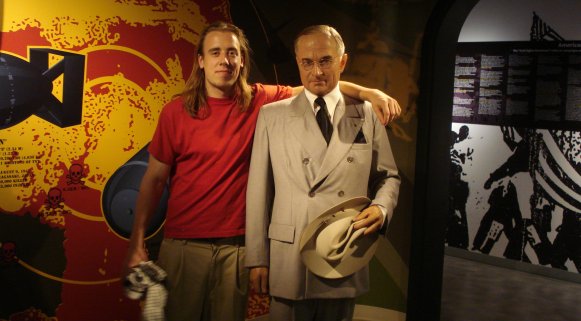
After that, we just blended in with the tourists.   Our first stop was the wax museum.   You can see some of the pictures.    You really feel like you are standing with the person.   They are very careful to get the heights and shapes close to the real person.  
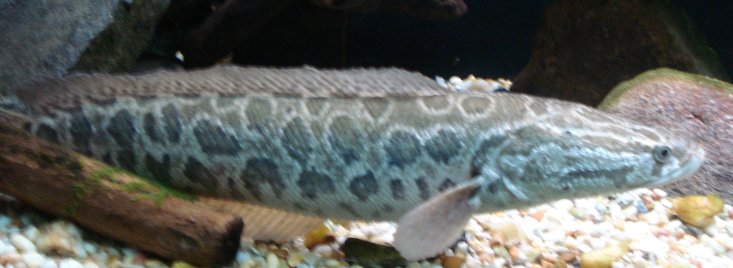
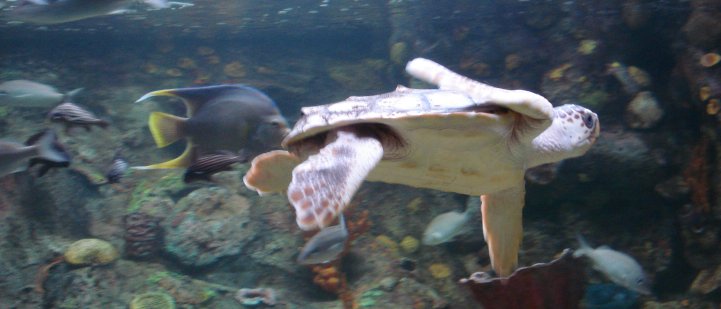
We next went through the aquarium.   The National Aquarium in Washington is not nearly as good as the one in Baltimore, but it is worth going if you are in the neighborhood.     This is the first time that I saw a living snakehead.   These are terrible invasive species that can wipe out the native fish.  They are very tough and hard to get rid of.   They are semi-amphibious and can literally walk from one pond to another.    The take-away is that if you see one of these things crush it with a rock or cut it with a shovel, but do not let it survive. 
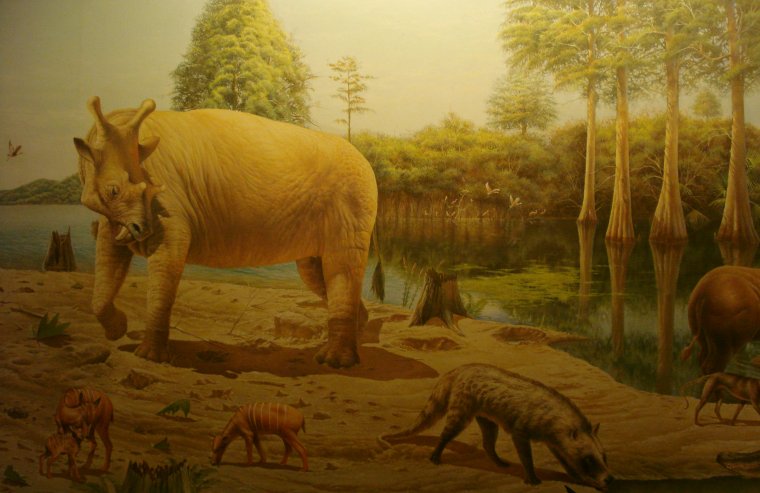
Finally, we went over to the Natural History Museum. We have been there many times before, but I learned a few things. Alex pointed out that the Eocene period was warmer than most of the time during the Mesozoic and, of course, much warmer than today.  According to what I read, the earth was free of permanent ice and forests covered all the moist parts of the earth, all the way to the poles.  It is interesting how trees adapted to living inside the Arctic Circle, where it is dark part of the year and always light in summers, but the sun is never overhead and always comes as a low angle, so trees needed to orient their branches more toward the sides. 
Alex rolled his eyes when I was excited by a new (I think temporary) exhibit on soils.  I didn’t learn much new, but I like looking at the actual exhibits.  Soil is really nothing more than rock fragments and decaying shit, but very few things are more complex, more crucial and more often ignored.
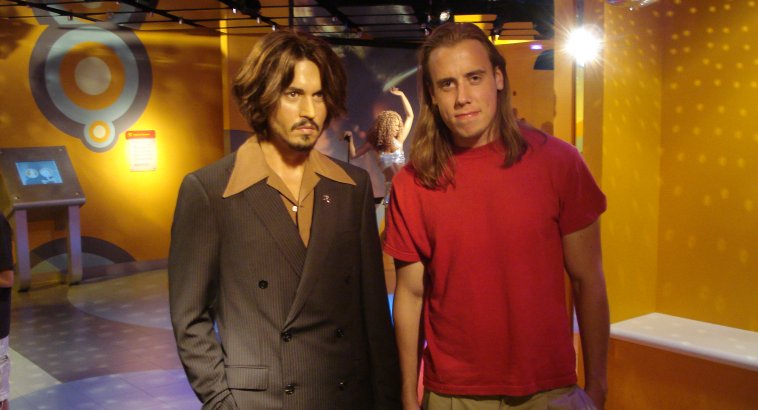
Anyway, we had a good day and “met” lots of celebrities like Johnny Depp above.  We had lunch at a place called “the Bottom Line” on I Street.  I had a very good mushroom cheese burger.   Alex has the Philly cheese steak sandwich.
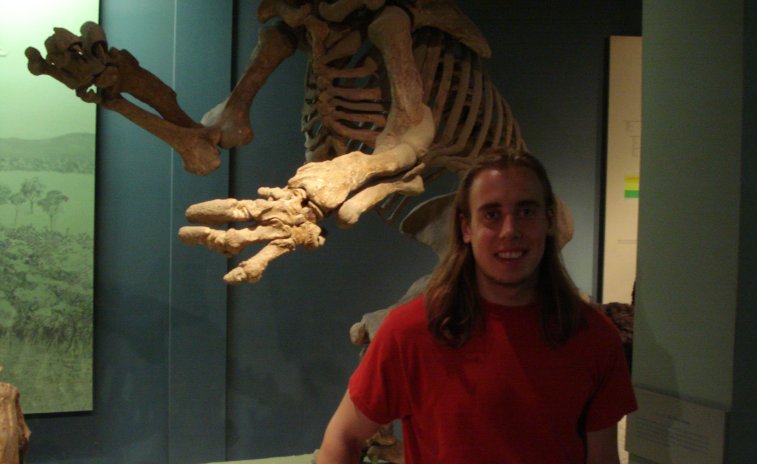
The skeleton above is a giant sloth.  I don’t know how that thing could have survived.  Must have been one big tree that thing hung from.
New Media: Exceeding the Carrying Capacity

I have the repetitive task of trying to find the various types of new media outreach. The constant change means the job is never done and it is getting bigger all the time.   But it is like the expanding area of a balloon as you blow it up.  As we expand the area we cover, we are simultaneously thinning out coverage.   This goes for any kind of new media and, in fact, for any media in general.   It is a broadly applicable formulation.  But I am observing this most with wikis, so I will talk mostly about them, with the stipulation that it is more broadly related to any attempts to aggregate knowledge. 

Everybody seems to have discovered the wiki concept and is trying to put this useful model to work in the service of aggregating their particular knowledge and making it useful to the members of their organizations.   But there is a problem with the proliferation of wiki style systems.  A wiki exists in a kind of ecological relationship with its customers.   In order to be healthy, each wiki requires enough interested and knowledgeable people to contribute their experience.    If the population of potential contributors is too thin, or there are too many wikis competing for their attention, wikis will be unhealthy.    (It is like too many zebras eating the too little grass & too many lions trying to eat them) Articles will not be updated.  Not enough will be contributed and the advantages of the wisdom of the crowds will be lost.

Most people are passive consumers who do not contribute to wikis and the smaller number of contributors passes through stages of enthusiasm and burnout.   Even if they retain their desire to write, they may exhaust their store of useful knowledge they have to share.  That is why you need a much larger population of potential contributors than most parts of any organization or even most entire organization can provide.   

Of course, we are assuming we even have passive consumers.   Many wikis are imposed by a boss who has just read some management literature about the necessity of becomes a learning organization or by someone trying to impress that boss.  They may start out well, with a few good postings, but w/o the large community using them, they quickly atrophy.     A wiki is a network good that increases in value as more people sign on.  If users wander off after a few visits, or never come at all, there is no living wiki. 

I don’t think we should try to eliminate little wikis or interfere with their proliferation, but we should break down the barriers among them.  Some people might prefer to contribute on a specialized platform.  This is okay, as long as there are no difficult walls to climb walls that keep some participants out and others in.   In this case, I believe that wikis will merge.  The specialized ones will not become extinct, but rather be subsumed into the larger ones. 

One of the most formidable walls is mere ignorance.   It may be that a specialized or small wiki doesn’t actually wall out potential users, but others just don’t know that it exists.  I frequently find that smaller groups boast that their wikis are so great but unnoticed … that exist for a time in splendid isolation and soon pass, still unnoticed into oblivion.

It is like that doomsday device in Dr. Strangelove.   You have to tell people about it or it doesn’t work.

New Media: Common Sense & Walled Gardens

Lots of things are easy when you don’t have to do them yourself.  In theory it is easy to lose weight (eat less/move more), save money (just say no) and be reasonably successful (work hard/avoid bad habits).Nobody should be fat, sad or poor, but it doesn’t always work out that way. The same is true of using the new media.It is really easy, as long as you don’t have to produce results.As with most good v bad habits, the solution to all our problems is simple, just not easy.

I include the caveat paragraph since I am about to proffer some of the advice and lessons I took away from the new media workshop and everybody will know it already.  They are actually about all communications.   The new media just amplifies them. (To err is human, but to really screw up you need computer or government support.  We have both.)  Like the good advice about eating less and moving more in order to lose weight, these are not profound thoughts, but they bear repeating because they are the simple things that everybody knows we should do, but not many people really do.  Here are a few.  They overlap. 

·    Engage before you explain.  This is the simple idea of tuning in to your audience. I talked about it more extensively in my post a couple days ago. I don’t think I have ever met anybody who doesn’t “know” this, but most communications efforts remain inwardly driven.   We are telling them what we (or our bosses) want them to hear in the manner and on the media that we like best.    

·    Use information you gather about your audience or don’t bother to gather it. This is a corollary to the first point. I have observed that organizations often do not fail to gather information, but the fail to gather useful information.  If you cannot or will not change your approach based on the information you obtained from research, it is worse than useless, since you have wasted the time and money you spent on the study AND lulled yourself into a false feeling of security. ·    Connect all the parts of your organization, but leave them autonomy.  This is a variation on the “In Search of Excellence” formula or simultaneous loose and tight controls in a learning organization. It is made more relevant in the new media age by the various technologies, such as wikis and blogs that leadership can use to communicate with a light or heavy hand. 

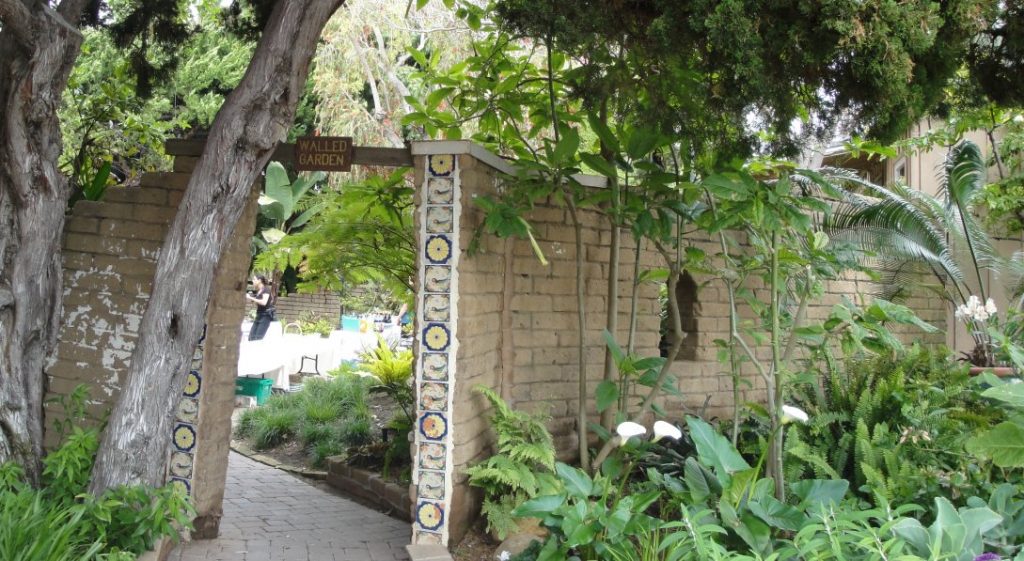
·    Don’t build walled gardens. It is tempting to create your own systems or groups using technologies and techniques perfectly suited to your own unique situation. Don’t. You are probably less unique than you think you are and beyond that you almost certainly cannot keep up with technical improvements that will make even the most exquisite made-to-order system obsolete in a few months. Besides building a walled garden will almost certainly keep out other ideas (see the first point above.) 

·    Leverage existing systems and products. You can still have a great garden w/o the walls.  There are always existing communities where you can participate and after you have participated maybe invite others into your own system to participate with you.   Remember that there are always more smart people outside the organization than within it.

·    Be platform flexible.   Your message is important, not the medium it is delivered on. You have to be flexible enough to choose the appropriate delivery mechanisms and not fall in love with any one of them. They pass quickly.  Just ask Jeeves.  ·    Give up some control.  If you want to influence others, you have to be prepared to be influenced by them.  My way or the highway works only in rare instances and if you demand what you think is perfection; you may soon find that you have that perfection all to yourself, since everybody else has wandered away from you.   

·    Try lots of things and know that most of what you try will fail, usually publicly, sometimes spectacularly.  Revel in it.  Embrace it. It is impossible to predict outcomes in the new media. Even if you had perfect knowledge of the current situation, it will change in unexpected and unknowable ways. The best strategy is a statistical one of spreading your bets and then responding to changes as they happen, rather than try to set out with certainty in advance. Those who try nothing, get nothing and it is small consolation that they are never wrong.  

Have I written anything that wasn’t simple or that you didn’t know already?  Why don’t we do it? 

Biking at State Department

I thought it was a joke, but it true.  The State Department now has a bike lending program. You can borrow a bike at State and peddle to your meetings around town, at least until 4:45, when you have to bring it back.  The bikes on offer seem a little lame, but I like the idea. I hope it catches on and I also hope that it provokes a bit of culture change at the Department and in the wider community.

I have been using my bike to get to work since my very first real job,  when I rode clean across Milwaukee to get from the South Side to Mellowes’ Washer Co on Keefe Street.  That means I have been commuting by bicycle since 1973 – around thirty-six years, so I know something about bike commuting. Overall, it has gotten better, at least in Washington. They have built some good bike trails and put some bike lanes on the road. I can ride the 17 +/- miles to work almost completely on bike trails or lightly traveled roads.  (Of course, that required some planning. When we bought our house in 1997 we made sure we were near both a Metro Stop and a bike trail. The W&OD bike trail is a mile from our door.) But we still get no respect when we mix with traffic.  

For example, part of my bike ride to work goes down a city street – Clarendon Boulevard – in Arlington.   There is a nicely marked bike trail along the road, which is a one-way street most of the way I go.  It is also mostly downhill on the way to work, which would make it a nice ride except for the cars.  People treat the bike lane like a drop off zone.  They pull in front of me and then abruptly stop and sometimes pass me and then make a right turn right in front of me into a side street or parking lot.  Since they just passed me, I assume they should be able to see me, but they don’t seem to care. They know that I have few options.  I don’t get as upset about this as I used to, but these clowns endanger my safety. I especially hate the people who talk on cell phones. 

There really is no such thing as multi-tasking when driving.  There is just driving poorly.     

I have had a few close calls and one bona fide bike & bone crunching accident –  in Norway where I got seriously hurt and had the pleasure of experiencing socialized medicine – but I really cannot complain when I consider how many miles I have logged. Most people apologize and lamely claim they didn’t see me.  Sometimes they are aggressive and tell me that I should not be on the road.  I would caution drivers that it is probably not a good idea to do this when the bike is at the side of your car, since we have metal pedals and can easily  scratch the paint on the side of the car door with those pedals “by accident” w/o anybody noticing until later. That is what I used to do … in my younger days of course.

The daily practical problem with biking is lack of showers. I am lucky because Gold’s Gym is across the street & I keep clothes in the office to change into. Otherwise you cannot really ride if you work near other people.  You will get sweaty even on a short ride, especially in a climate like ours in Washington. You also sometimes get rained on and spattered with dirt. State Department, like most other big organizations, talks a good game about bikes, but does not provide showers and changing areas.

I figure the State Department’s bike lending program is mostly a PR gesture, but it is good if it gets people thinking about riding bikes to work and appointments. The world has become friendlier to bike commuters.  Thirty years ago, almost everybody thought I was crazy; today only about half think so.

Engagement: Seek First to Understand

It is habit # 5 of the Seven Habits of Highly Effective people and it is highly effective when communicating with others. Seek first to understand and then be understood.   We need to be reminded of this simple rule and encouraged to apply it to different situations.  When trying to communicate in the new media, it is especially important because the age of the semi-captive media audience is over. People have options beyond three channels and the hometown newspaper.   

Organizations and individuals accustomed to wielding power are particularly likely to forget the necessity of seeking first to understand. Government organizations can compel attention and we usually think our messages are so important that we have the right to interrupt and just start telling our story. This can bring short term results in terms of notice and attention, but it just doesn’t work for long term persuasion. People learn to filter out what they don’t want. We have to get into the subjects & venues where our potential audiences are already interested in participating. After we build trust, or at least after they get used to us, we can make more useful & credible contributions. 

As you can see from my recent posts, I am back thinking about on the new media. This time it is because I just finished a very good course on new media at FSI. We discussed some practical how-to topics like how to properly use hash tags in Twitter or the strategic use of key-terms. I also learned a few fascinating things about commonly used technologies such as Google. For example, I had no idea that there was a function called “wonder wheel” where you can see the types of subjects associated with a term you Google. I did myself and found that the associated terms made general sense.

All this is related to search engine optimization that makes it more likely that your information will come near the top of a Google or Yahoo search.   No matter what you think of the social media, most people probably still find you based on search engines. Google is the most successful search engine – for now – but it keeps it algorithm for determining ranks a secret and changes it when anybody starts to figure it out.   The basic structure, however, is that it is a kind of information market mechanism.  As in a market, not all the inputs are equal. In Google it matters if a lot of people read your posts, but it is much more complicated. It matters more who links to your posts AND who they are.   So if you want to be high on the search engine, you need to be popular and credible (or notorious) enough that people link to you. 

Anyway, it was more a seminar than technical training. You can figure out how to do most of the new media by yourself, so you don’t really need “hands-on training.  You mainly need to discuss the appropriate mix of media and what they are good for in public affairs and that is what we got. this was the first rendition of this particular course and it was one of the best FSI courses I ever attended.   We had a very good instructor called Eric Schwartzman. Do click on the link and read about him.   He was passionate about the subject, engaged and very interesting, and he brought some insights from the private sector to our government mindsets, as you see above, but I also think he was impressed with how much we in State Department have been using the new media.

The more I see what others are doing (or not) I really think that State is a leader in applying new media to public affairs. We did a live webcast of a presidential visit from Warsaw in 2001 and I know others were there before us.  (We were probably TOO early on this one and it went largely unnoticed.)  We have been building our social networks using webchats and outreach for several years and we got into Facebook and Twitter almost as soon as they were generally available.  I am very interested in our internal Wiki, called Diplopedia. It is really getting good and I have been using it to find out things I need to know about our activities and the Department. As I have been writing in other posts, we have been working on these things for long time, but they are now reaching critical mass and takeoff stages, phase shifts

My picture, BTW, is the Church of Hagia Sophia in Istanbul.  It was built by the Eastern Roman Emperor Justinian the Great.  Istanbul is one of my favorite places.  It is a place of wonder with its mix of Turkey with the lost civilizations of the Greeks and Romans who were there for thousands of years before … and then were gone.  It is a place think about understanding.

New Media: No Garden w/o the Gardener

New media, social media, no matter what we call it everybody loves it. It is revolutionizing communications with the public and within organizations.  Whole theories of management are developing on how leaders have to use new media tools to run their organizations. 

But there is a flaw in how it is usually portrayed and I fear how it is understood. New media is often treated as a technique, section or method that is separable from the rest of the organization.    Organizations have computing and IT departments, why not a new media department?  Create a capacity, put some specialists in charge of it, and then let it work on its own.   

The problem is that the new media already permeates everything & cannot be separated or put on autopilot. It cannot be deployed by management and then left to do its work because communication is the essence of management and the new media has become integral to communications. If leadership gives the new media to someone else, they will also be giving them the real leadership. 

I am not saying that the boss will need to master all the nuts-and-bolts of the technologies.  The beauty of the new media is that the applications have become much simpler as the technologies have become more complicated. Most people do not understand how their car or their telephones work – technically – but they can use them just fine.   

I remember hearing a story about a guy who wanted a garden that would just take care of itself while he would get the benefit of flowers, fruits and vegetables. It just doesn’t work that way.   The gardener can pass some of the digging and hoeing to others but he has to specify the types of produce he wants and has to understand enough about the system to know what results he can expect.    The analogy with new media is that leadership has to be using the new media.   You cannot get the advantages of real time, hands-on experience by reading the report a couple of weeks later.   You cannot just deploy and forget. There is no garden w/o a gardener.   

I did recently find this somewhat contrary opinion, however.  

Walking Trees

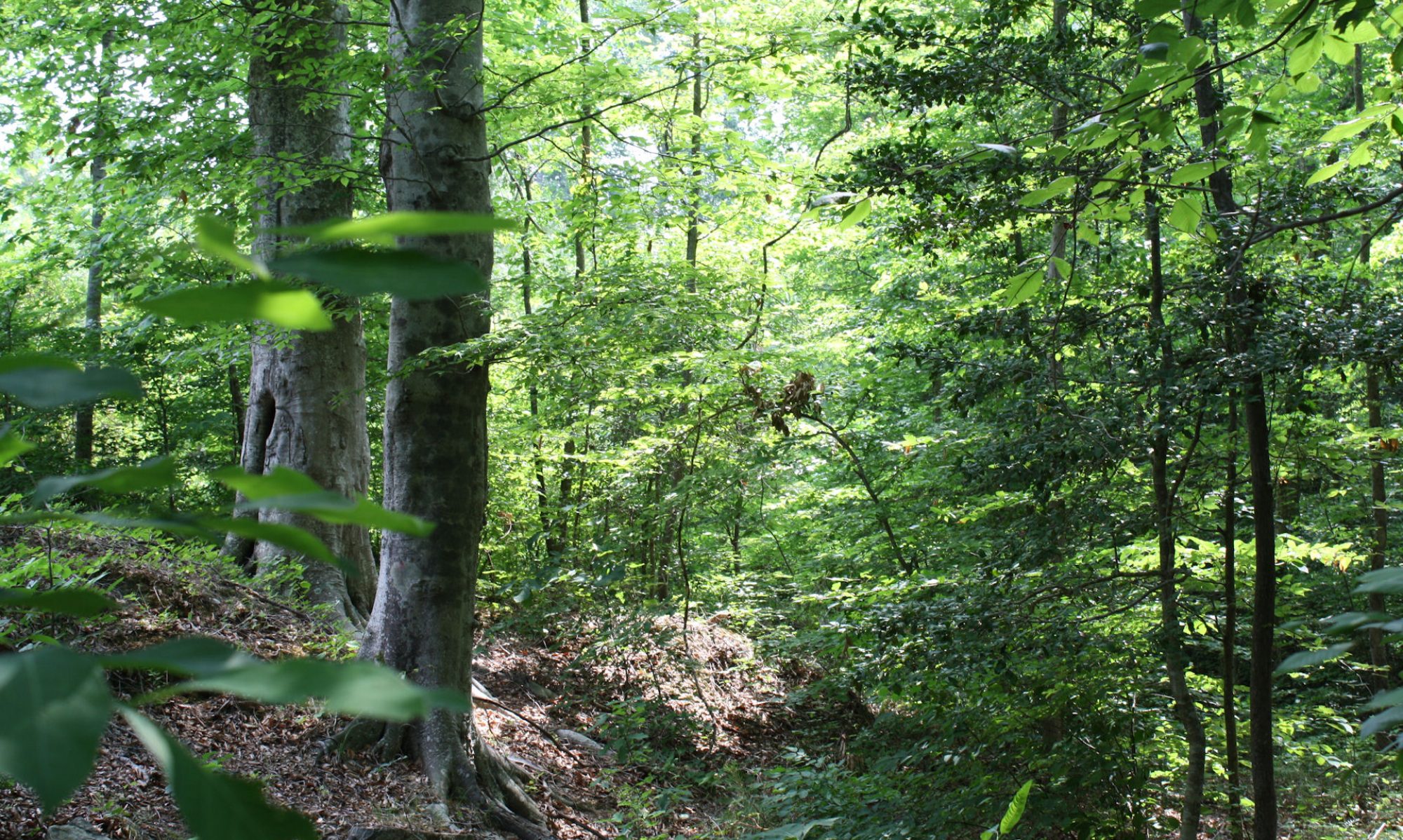
Species moving is nothing new and I was glad to read about serious efforts to think ahead and planting trees in new environments to adapt to global warming.   The tree you plant today will be around for a long time and if the climate changes it will still be there.  Of course, humans moving tree species is really nothing new.   Foresters have pushed the loblolly pine north and North American trees dominate the plantation forests in South America, Australia and South Africa.   Sometimes trees grow better someplace other than their native range.    A most famous case is the Monterey pine, which grows poorly in its narrow native range in California, but thrives magnificently (some think invasively) in the Southern Hemisphere.  

As environments shift, global warming will redefine what we mean by “natural” or “native.”   Environments won’t merely shift north or uphill.  They will be different from what we have today.   We will soon be seeing environments that have not been around for millennia or maybe even millions of years.   There have not been temperate forests north of the Arctic Circle for millions of years, for example.   The relationships among species will be new.     It will be an interesting time to be alive and we have to be involved in the dynamic of changing environments. 

Anyway, read the article.

I wrote a post covering some of these issues, BTW.

That’s a Fact

The printing press created facts by mass producing books and papers that were relatively difficult to alter w/o detection and could be traced more or less to a printer.  Lots of what appeared in print was wrong, but it came with some authority and some authorities became the authorities that most people agreed to accept.    We had the Encyclopedia Britannica for the almost erudite and the Guinness Book of Records to settle barroom disputes about the facts.

You could never be sure of a fact in the pre-print age.  Most information passed by word of mouth.  It was oral history, susceptible to unreliable memories, wishful thinking and ordinary mendacity.   The written word was literally written.  Each copy was different.   Specialists can date manuscripts by the errors that have entered them.   Think of it.   You say something; I hear something else.  We dispute what you said and neither of us remembers correctly.   This is the pre-print world where everything is a matter of opinion and subject to interpretation.

Welcome back to this old world, brought about by new media.   The Internet lets everybody “print” anything.   Finding the facts on Internet may require a kind of triangulation.   You have to compare different sources and then decide which version you believe.    You can also alter what appears on the web.   Well, technically there is a record somewhere, but you can “update” and perhaps overwhelm that.   Truth often means what appears on the first screen of a Google search.

The general level of information has greatly improved.   I am amazed at the extent of what you can find on Wikipedia and the accuracy is very good in many cases.    Wikipedia is essentially an information market.    It works very well when there are lots of participants w/o very much controversy.   Where it falls down is where the market is thin (i.e. few participants to check and correct) or where there is enough controversy to attract lots of people with their own deceptive agendas.   It never stands still.

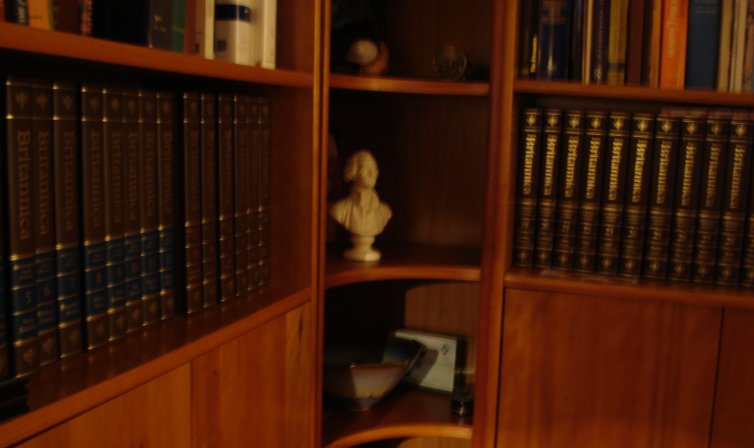
I have a set of Encyclopedia Britannica.   I used to love those books.  I would just pull one out and read what I found, a kind of a random walk.   I used to like to have the true facts.    I am looking at my Britannica from my chair.  They are nice books to look at, but they are no longer accurate.  Populations have changed since this edition was printed nearly thirty years ago.   Some whole countries have been created or disappeared.   New things have been invented.    My Britannica’s certainly are not worthless, but it would be very foolish to trust them on science, politics or current affairs.   Actually, the only thing they are really good for is history.   I am sure that they have not changed since I got them, so I can trust that those were the “facts” of around 1980.   But overall I am better off with Wikipedia.

This makes me sad.  I liked the idea that I had all the accumulated knowledge on my bookshelves, which now contain facts of antiquarian interest and opinion.   On the other hand, I have the information of the world a few key strokes away.   Decent trade, IMO.

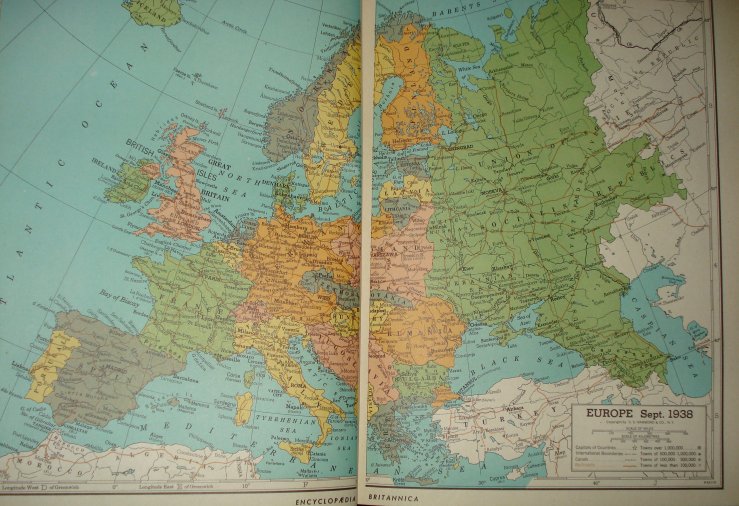
But it is still cool to have the real book, printed at the real time and touched by real people.  Below is from my Britannica Atlas, which is older than I am.  When this map was printed, during WWII, the editors did not know what the map of Europe would look like before the ink was dry, so they went back to the pre-war map, which was only valid for a few months.  This map points to another print v Internet difference.  This obsolete map is in my book unaltered.  I can find the same map on the Internet, but I have to look for it.  The Internet piles new information on old, like a sediment w/o outcropping.  In a book, you might just find something intriguing like a map that doesn’t make sense and bids you learn more.  In the Internet age, if you don’t dig, you don’t find.

National Arboretum

The weather in Washington this year has been superb, cooler than usual w/o too much humidity. I took advantage of a warm pleasant afternoon to go over to the National Arboretum. It is not very far from where I work, but I had never been there.   It is actually astonishing when I think about it. I go many miles to see trees in other states and even countries, but never bothered to make the short trip. I will have to wander back and spend more time.

It is located in the middle of one of DC’s less nice neighborhoods.  That is one explanation.  But it has been improving.  Washington has gotten better in general.  In 1988, when I was here for language training, the place was going to hell.  Things have gotten a lot better since Washington elected reasonably competent and non-crooked mayors.  It was depressing back in the 1980s when Marion Barry kept getting reelected, but that is another story.

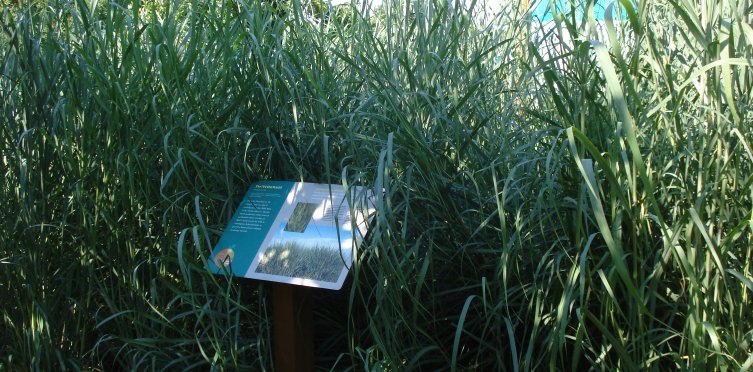
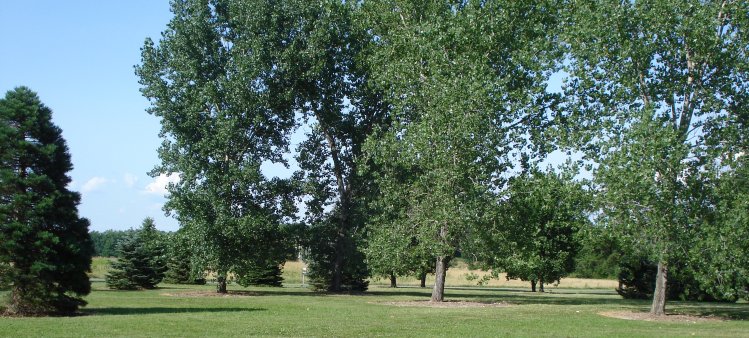
The Arboretum is very pleasant.   It reminds me of Whitnall Park in Milwaukee. I had the place almost to myself.  I thought the trees would be thicker, but there is a lot of open space.    They also had some plant exhibits about how farm plants could produce energy. You can see the pictures.   

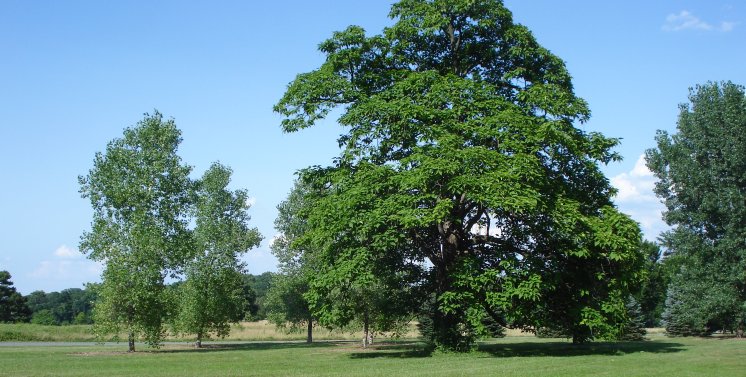
The top picture is a big catalpa.  We used to call them Indian cigar trees, because of the long pods that hang down.  Catalpas are native only to the area around Indiana, Missouri and Illinois, but they have been planted all over the U.S.  My Aunt Loraine had one in her front yard on Whitnall (again with the Whitnall) Ave.  It was still there last time I passed.  The next picture is switch grass.   The last picture shows cottonwoods.  They are tough trees.  Their leaves quake in the wind producing a nice gentle sound.  They grow very fast, but don’t live very long (for a tree).

Hanging Around

As long I am wallowing in doubt and indecision, I have a few more thoughts about work, making a contribution and retirement. 

I could retire today… in theory.  FS is like the military in that respect.  We can get our full pensions after 20 years if we are at least fifty years old.  I have achieved both.  We have an up-or –out system.   Had I not been promoted in 2007, and presuming no promotions in 2008 or 2009, they would be kicking me out come this October.  As it is now, I can stay until February 2016.  My last promotion bought me six years and they gave me an extra year as compensation for my year in Iraq.

We are only allowed to stay in each pay-grade-class a certain number of years and we only get 27 years to jump into the Senior Foreign Service.  The grim reaper is always taking the hindmost.    The system, IMO, has a major flaw in that it puts faster risers at greater risk, since they come sooner up against their time in class.   We also have an interesting concept of “opening your window.”  You cannot be promoted into senior FS unless you open your window.  When you do that, it starts a clock ticking.  You get six evaluations and if you don’t make it to SFS by the time the clock runs out, your window shuts and you are involuntarily retired.    Your life can be extended if you go to a place like Iraq or have a year of training (as I did at Fletcher School, which is why I would have gotten the boot in 2009 instead of 2008).  A cautious person would wait until he had been in the FS for 21 years.  That would mean that he would lose nothing if he did not get promoted, since he would get kicked out of the FS in general in 27 years.   Of course, anybody who does that is probably not very ambitious. 

I opened my window as soon as I was eligible.   I didn’t want to hang around like a fart in a phone booth.   I could have survived as an FS01 until 2012, so that would have been only a four year difference (w/o the long term training year).  On the other hand, they could promote me and I would have more options.  I honestly didn’t think I would make it.  The odds are against you.  I knew that I should not hang around too long, but I also knew I would not have the courage to just set out w/o the boot.  So it was a kind of play or trade option. Get up or get out.

There is a kind of FS life-cycle and I fell into it for awhile.  When we are around forty-five, we complain about the lack of recognition and start bragging that we will be out the door the minute we become eligible for retirement, presumably earning the big bucks in the private sector. When we turn forty-nine, we go silent.  We stop talking about retirement in general and start to count the years until our time in the FS runs out.  A couple years later, we start complaining again, but this time it is decry the injustice that a “good worker like me” may be forced out while “I still have so much to contribute.” 

My question is about how much I still have to contribute.   As I wrote a few days ago, I am concerned that some of the new media is passing me by.  A lot of my skills have become obsolete.    Of course, I can learn new ones, but is it really a good deal to taxpayers for somebody like me to retrain to learn something that a lower-paid newer employee can just do out of habits learned as a child growing up with computers?  

It is always a dilemma to weigh experience and judgment against raw talent and brain-power.    Experience improves judgment, but only within a range of similar situations.  In times of rapid or discontinuous change, experience with former systems may be as much as an impediment as an advantage.   Old generals know how to fight the old wars.  They always are in danger of being overtaken by a revolution in military affairs.  The tank means changed tactics. The same goes for all walks of life, if somewhat less dramatically. That is why you have to clear out experience sometimes and let younger people in.  The experience of the past hangs on their necks less heavily or not at all.   Our up-or-out system is supposed to guard against this sort of complacency, but eventually you get to the end of the trail and maybe you get to the end of your own trail before they vote you off the island.

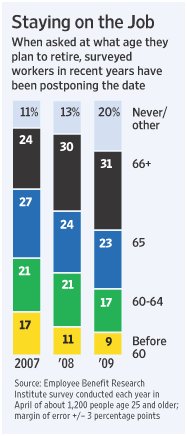
This is not a problem limited to the FS. In fact, we are relatively better off than many others precisely because of our up-or-out system.  The economic downturn has changed the equations.   All over the country people are delaying retirement. This is good in that it saves money on pensions and keeps people productive.   But it also clogs the arteries of an organization.   You need people leaving at the top in order to give people on other rungs of the ladder the opportunity to climb.

IMO, older people should keep working as long as they want to and as long as they can.  In fact, given the upcoming Social Security and entitlement crisis many will have to do just that, like it or not,  but maybe not in the same jobs or even the same professions.  You get stale after a while, as the pathways your good ideas and sound practices have blazed become ruts and craters that limit options for yourself and others. 

My baby boom generation is the biggest, healthiest and best educated cohort of soon-to-be senior citizens in the history of the world.  We see old people running marathons, discovering new things and opening new businesses.   We still have a lot to contribute and a duty not to sponge off the smaller generations that follow us.  I think we will see an amazing flowering of entrepreneurship among older people.    The Internet will greatly facilitate this trend.  

But maybe we need to be bumped out of our ruts. Our experience is valuable to the extent that it does something valuable.   It is a tool and like any tool, it must be used. It does not entitle us to anything, any more than the ownership of a hammer entitles you to pound.

I don’t know where I am going with this.   It is the time again for me to look for a new assignment and so the thoughts like this are clogging my brain. I have options where I can use my experience in new ways.  But I am not sure what to do.   Should I go down a path where I can use the skills I have developed, where I am reasonably sure of success, or try to cut a new one?