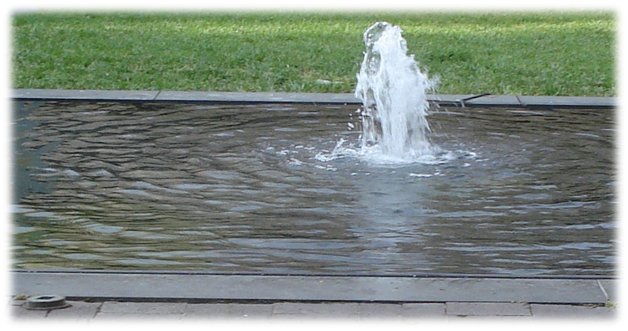
Punctuated Equilibrium & Phase Transitions

It is a type of evolutionary theory.   I won’t vouch for my grasp of  the biological details, but I think it well applies metaphorically to societies and lots of things in life.   Events seem to go along more or less the same for a long time and then they jump to something else.  In fact, little changes are building up over time, but they are not apparent and counterbalanced until the system just cannot hold.   This is what happened in the old Soviet Empire and it may be what is happening in Iran today.    It is hard to understand how people of the time could have not anticipated the change because it is so easy to see … looking back. Prediction is a lot harder.

The concept that goes with this is “phase transition.”  The standard example of this is water.  It is a solid ice until it reaches 32 degrees.   Then it turns to liquid. This doesn’t happen gradually.  20 below zero looks like 31 degrees above, but get above 32 and it is completely different.  After that it stays the same from 32 until 212 degrees, when it suddenly turns into steam. 
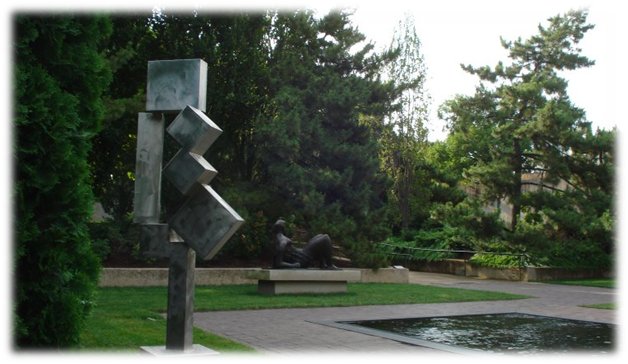
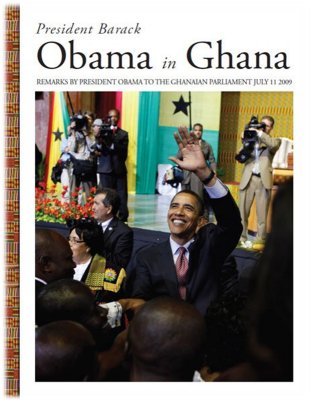
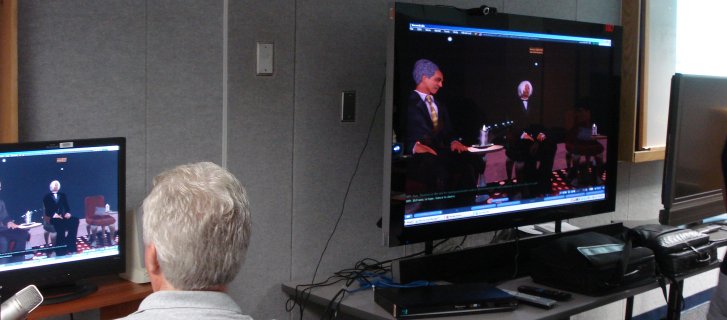
No matter what you call it, I feel like I have just experienced it with the new media.  All those webchats, twitter, Facebook, Flickr, webpages etc have been kicking around IIP for a long time.  Some people were working on them.   But today I noticed that we have made a kind of phase transition.   We are a new media organization.  President Obama is speaking in Ghana today.   We at IIP are supporting with SMS, Twitter, Facebook, and Flickr.  We even have a place on Second Life, where avatars will discuss President Obama’s words … and it all seems natural, business as usual, NBD to everybody but me. 

And I am feeling like I just missed a train. I liked blogs. I felt reasonably comfortable with Facebook.  But I really don’t have much use for SMS or Twitter and I positively don’t like Second Life.   I used to be kind of a leader in new tech methods of public diplomacy.  I was a pioneer, a mapper of strange new waters – at least that is what it seemed to me.   Now colleagues are swimming effortlessly in the new media ocean, while I am looking out after them like a beached whale.    The wonder is that this all happened in the course of about a month.  The world I have known for some years have shifted, hence my thoughts of punctuated equilibrium and phased transitions.

I am not sure I can go along on this phased transition. Maybe I walked along this trail as far as it can take me and I need to leave further progress to others. Maybe it is just that it is almost 3am and I can’t sleep. Maybe things will look clearer in the light of day. President Obama will speak on a from a far away continent in just a few hours and our new media will shrink the distance to something inconsequential. What a wonder.

Anyway, I suppose there are other things I can do. 
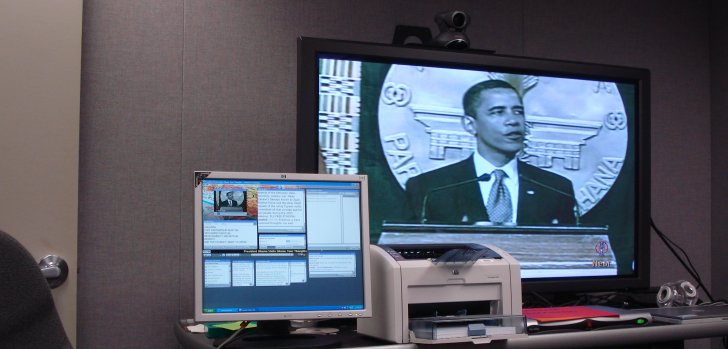
New Media For the President

My colleagues at IIP did a superb job of supporting President Obama’s address in Ghana on all new media platforms.   

The center of the program was sending SMS highlights of the President’s speech as he delivered them.   Three of our colleagues watched the live coverage and released the highlights at the appropriate time.    Computer penetration in Africa is not as extensive as it is in most of the rest of the world, but Africans have innovatively connected themselves to the world with cell phones, so SMS is a way to go there.  I thought President Obama gave an excellent speech.    It helps to have good and interesting content. 

BTW – I feel no compunction in bragging about this shamelessly because I had almost nothing to do with the success except that I was standing nearby. That was the beauty of this operation. It was largely self organizing, with everybody not only doing their jobs but being proactive in taking leadership roles where appropriate and following the lead when it made sense.  In my time in government, I have rarely seen such a large operation run with so little tension and so much good humor. Life doesn’t have to be tough.  You can usually get better results with happy and engaged people.

Chrissy asked me why I thought it worked so well.   It might be too soon to tell, but I think there are several things that have been working and growing, as I mentioned the previous post, that are now flowering.   IIP has been building new media skills for years now.   It takes years to grow people, acquire skills as an organization and build trust.  We have grown people with skills and more importantly the innovative attitude that overcomes obstacles and finds opportunity.     Into this mix, we have added some really great young people, who have grown up using the new technologies.   They feel as comfortable with the various new media as I do watching television.   By a combination of foresight, planning and luck, we just have the right kind of people for what we are trying to do right now.

On the cynical side, IIP currently has no political appointees, which is rare enough, but even more remarkable is that our big boss is a career FSO who has been in charge at IIP for about three years, so we have had stable, non-political leadership across two administrations.  This meant that our programs could continue to develop w/o the transition hiccups.   Don’t get me wrong.  We all love the energy, enthusiasm and skills brought by political appointees, but sometimes the reach of their enthusiasm exceeds their grasp of the realities of the situation.

What was so remarkable? Lots of things just worked.  When everything works as it should, you really have achieved excellence. And some things were outstanding.

I am not a big fan of Second Life, but I have to admit that it worked well in this case.   Our colleague Bill May had some friends who organized a virtual discussion group that featured viewing of the speech and discussion by/with experts.  IIP let them use our “island” in Second Life (for those unfamiliar with it, Second Life is a virtual world, where you can set up virtual events and build your own online communities on your own virtual islands.) but interested individuals carried the load.   The new media requires that you relinquish some control in order to achieve better results, and our leadership was wise enough to let it be.

Beyond that, IIP’s bloggers blogged and twitted the program.  CO.NX did their usual interactive good work.   We distributed translations in English, Portuguese, French & Swahili important for Africa, and of course the usual Persian, Arabic, Spanish, Chinese & Russian.   And everything got out and posted almost immediately. 

Of course, our overseas posts, especially those in Africa, localized our products and did their own programs. I understand that our post in South Africa got 250,000 participants in their own SMS outreach in the first 24 hours.   

It was just excellent all around. It worked. I am proud to have been standing nearby.

Webchat

I will participate in a live webchat on August 12 (see below).  Please sign up so that I am not embarassed by lack of interests and send in your comments and questions.  Thanks. 

Click on this link to go to the Facebook page.  

Sustainable Forestry and Climate Change
Join forest owner, carbon credit producer and sustainable forestry advocate John Matel for a live chat on August 12

Host:Co.Nx: See the World
Network:Global
Date:Wednesday, August 12, 2009
Time:9:00am – 10:00am
Location:Online
City/Town:Washington, DC
Email:conx@state.gov
 

Description

Date: August 12, 2009
Time: 9:00am EDT (1300GMT)

Experts estimate that 20% of greenhouse gas emissions come from deforestation. Yet forests are the ultimate in renewable resource. A well-managed forest can produce wood, help clean the water and air, as well as provide a home for wildlife and a place for recreation now and essentially forever. In addition, rapidly growing forests remove and sequester large amounts of carbon dioxide. (Growing one pound of wood in a vigorous young forest removes 1.47 pounds of carbon dioxide from the atmosphere and replaces it with 1.07 pounds of oxygen.) In short, while good forestry practices are not the only solution to the problems of climate change and environmental degradation, there is no workable solution without them.

John Matel is a forest owner who is working to put sustainable forestry into practice on his land in the U.S. State of Virginia. In addition, as Communications Director for the Virginia Forestry Association Tree Farm Program, he helps foster good forestry stewardship on private lands around the Commonwealth of Virginia and beyond. Pine forests in the southern U.S. supply around 58% of the U.S. demand for timber and account for more the 15% of the world’s timber production. This is done sustainably and each year landowners in the southern U.S. plant more than a billion trees.

Drawing on his experience with things like the sale of carbon credits, the environmental value chain, prescribed burning and sustainable forestry, John Matel will be available to answer your questions on a live webchat.

Please read more at his webpage at http://johnsonmatel.com/blog1/forestryecology.

A Cool & Green Season

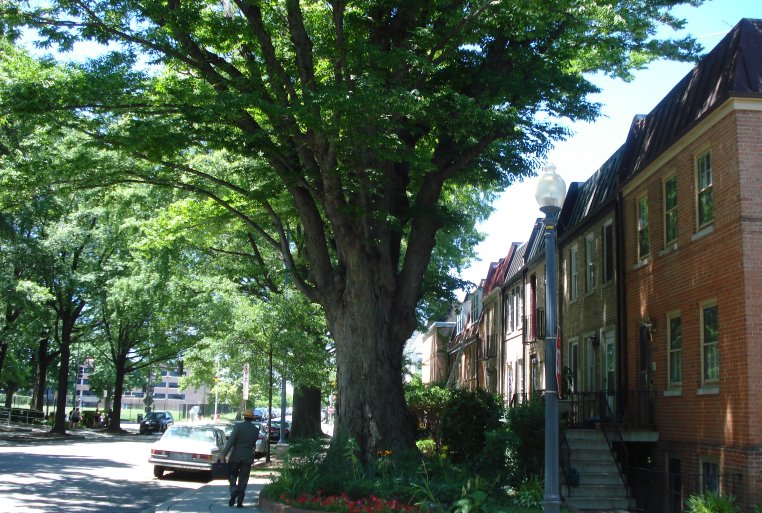
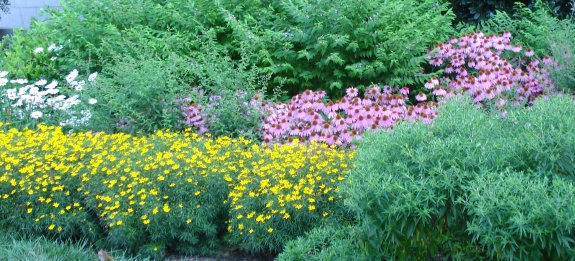
The weather has been great this year.  This evening it is actually chilly.   It will get down to 60 degrees tonight.   I don’t remember it ever being so cool in Washington in July.   I read that last month was the coolest June since 1958 and one of the coolest since they started to keep records.   It has also been usually rainy, so everything is very green and robust.

Below are a few pictures from around SW Washington.  

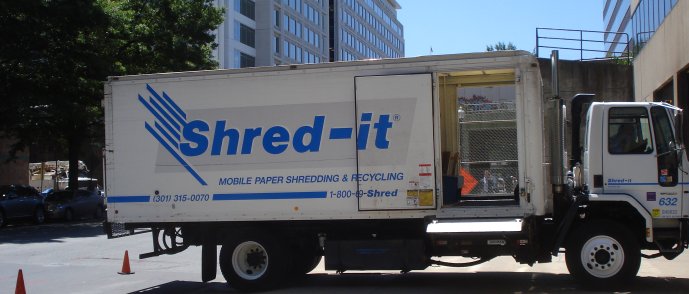
This is our shredder truck.  We are moving to our new building nearer the Main State.  Some stuff needs to be shredded.   This truck brings us the industrial strength shredding power.

Broadcast Monitoring System – The Rise of the Machines

Years of science fiction make big real-world advances look puny. All of us have seen the fantastically multimedia computers on Star Trek or the James Bond and have come to expect instantaneous processing time, perfect video delivery and trouble-free operation.   Of course we know that the real world data systems don’t work like this, but even when we know the real world, it is the illusions we recall. 

I thought about that at a briefing today.  I saw a broadcast monitoring system that lets you to search broadcasts using key words, as well as set up permanent watch lists, much the same way you can do now for text.   It monitors major satellite broadcasts and produces machine generated transcripts in original languages. 

And I thought, “So what?  No big deal.” But it is, actually, a big deal even if it looks a lot like what we imagined we had before. Consider the analogy of search engines.  Think of how much better you can search with Google than you could with Lycos, Magellan, the aptly named “dogpile” or so many of the others whose names we forget. But all Google does is the same thing as the most primitive search engines; it just does it better. That is how progress is made, by making incremental improvements until at some point you have something new, but nobody notices. 

Untethered imagination is much overrated. It is funny to hear people say that Leonardo da Vinci invented helicopters, tanks or submarines just because he imagined the concept and drew some unworkable sketches or that Jules Verne pioneered space travel because he wrote a book about going to the moon. Yet when a helicopter flies overhead, you could say, “NBD, da Vinci invented the thing nearly 500 years ago, it just didn’t fly; this is just a minor improvement.” And I hate that childish notion that this or that modern machine was “really” invented by ancient Africans, Arabs, Chinese, Greeks, Incas, Persians, Russians … Who cares?

It matters less who imagined something first than who make it work first and then who keeps improving it.    It also matters who tells others about.  If you make a great discovery, but nobody else knows about it, you really didn’t make a great discovery. You just indulged your idiosyncratic curiosity.

Returning to the subject at hand, the broadcast monitoring system takes the place of those bored guys that used to watch TV and take notes (Presumably, sales of coffee and cigarettes will decline.)  The advantage is that the machine never sleeps or has to take a bathroom break.  The disadvantage is that the machine doesn’t think or make free association.  It only produces exactly what it is asked to give, although more sophisticated programs are allowing them to branch out with a kind of artificial intelligence.

The original language transcripts are good, the translations, not so good.  They have some of the comical aspects we associate with mistranslation.  However, retrieval is more important than perfection.   Skilled human translators can make whatever changes necessary after the machine does the initial sorting.

The systems I saw can do Arabic, Spanish, Chinese, Persian and English. Bahasa, Hindi and Urdu are planned.  It takes at least six months to “train” the program.  They need enough of a sample.   For example, if you let it go for only a short time, for example last week, you might have nothing but Michael Jackson stories.  Your machine would have a strong vocabulary on plastic surgery, gloves, music videos and bizarre behavior by aging man-boys, but maybe not enough on more important topics. 

The system is around 80% accurate, but it depends on who is talking and about what.   It can pick up around 95% of what an anchorman says when he is speaking directly to the camera, but starts to decline when there are multiple participants in a conversation and/or when people start slipping into dialects or even idiolects.  

It works a lot like Google for video and you could probably start using it in less than ten minutes.  The hard part is to know what you want to get from the system and how to use it.   Translation is more an art than a science. Of course, decision making requires even a greater use of judgment. 

I think this is very promising for understanding big trends. As we get more data points to smooth out outliers and the quirks of special situation, we can start seeing the simpler patterns in the ostensible complexity. But despite the coolness of this technology, it provides essentially the same sort of service for video that a reasonably skilled user of Google can achieve with texts. Of course, while Google is very useful in finding information, we still have not really figured out how to use it as an analytical tool for audience research or evaluation.

Still not as cool as I saw on Star Trek many years ago. I suppose Leonardo da Vinci invented the concept.

Crap TV

When I was in Norway, one of the local television stations constantly played reruns of Ricky Lake and Jerry Springer.  I used to wonder what kind of image of our country these clowns created. They were bad enough, but now we have a whole slew of reality shows.    They show unattractive people being venal and selfish.  We live here and we have a wide variety of other impressions.   But I was imagining if I was to see something like “Bridezillas” w/o other context I might not want anything to do with the culture that produces such monstrosities. 

Americans are no more venal than people in other countries and our television shows are really no worse than other.   For example, the Dutch invented many of the reality shows, like “Big Brother.”   But most of these offerings don’t get distributed around the world.   The Brits seems to have developed the perfect television PR.    I have been to the UK and seen some of what they watch back home.   It is not very uplifting.  Yet in the U.S. and around the world, we get “Masterpiece Theatre.” 

I am not the only one to worry about the coarsening of America.  I don’t know how much television is reflecting changes in America and how much it is driving them.    I also am not sure of how people are looking the programs.   When I see people being selfish and demanding to be covered in bling, I look down on them.   Everybody needs somebody to look down on and the low-lives on reality TV provide an outlet.

There is an old saying that the bad man is a lesson for the good.  You can see what not to do.

But are negative role models enough?  Are they really seen as negative?  A lot of the bad people get what they want by being aggressive.   Maybe some people see that as good thing.

We should not underestimate the power of television.    Advertisers understand that a fifteen or thirty minute commercial can sell a product.   Maybe a thirty minute or an hour program can sell a lifestyle.  I watched a lot of television when I was a kid and I know that I consciously modeled some of the behavior and habits of some of the television characters.     It sometimes surprises me today when I watch an old show and see one of my traits in embryonic form.    Maybe I was just more impressionable than most kids, but I don’t think so.   I hear too many stories, jokes and tag lines from movies. 

Television characters help define the boundaries of what is acceptable.   For example, when did it become acceptable to call women “bitches,” much less use the word on TV?  But both things are now common.   How is it that the “poor” people on reality TV can afford and think they deserve fancy cars and jewelry?

I grew up on science fiction and westerns.   Both were common when I was a kid. They were actually very similar.   “Star Trek”, for example, was a lot like “Wagon Train.”   They travel through unexplored territories meeting strange people, with whom they alternatively cooperate and conflict.    And they all were morality plays, very simple and clear.   They seem very naive today, but they are certainly no more simplistic than “Bridezillas” and they have a better purpose.

I have to stipulate, however, that television has generally improved. The production values as well as the complexity of programs are much better than they used to be.  In addition, we have many fine productions on history, science and human affairs.   But this is a result of a general widening of offerings.  There is much more choice now.    You can choose to watch well produced dramas (like Law & Order), good news programs (Newshour on PBS), technology (Modern Marvels) or any of the great variety of history programs.   Or you can watch crap all day and night.

Choice is enhanced (exacerbated) by the ability to time shift and save programs.  At one time television united the country.  We watched the same things at the same times and that made us more similar.  Most Americans watched the evening news with Walter Cronkite.  Half the country tuned into the final episode of “The Fugitive.”   Now we all watch different things at different times.  I suppose that will make us all more different.  Unequal inputs produce unequal results.

Vines Take Over the World

It looks like vines are going to take over the world.   I am fighting vines on the tree farm.   The recent thinning and biosolids fertilization on the Chrissie’s pond tracts has benefited them as much as the trees.   I am not sure of all the kinds, but I have at least oriental bittersweet, wisteria, trumpet vine, Virginia creepers, Japanese honeysuckle and wild grape.    (I don’t have kudzo and I am thankful for that.) Each presents different challenges.

The oriental bittersweet is the worst, although not the most pervasive.   It is destructive because it winds around the truck and branches of the trees.   It deforms them and I think it would kill them in time.   The trumpet vines are very pretty, but they overtop the little trees.  Virginia creepers are just heavy.  They cover trees and weigh them down but are not very hard to control if you keep at it.   Wild grape is like that too.   All vines are vulnerable to controlled fire and I look forward using this tool to taking care of the vines, along with some of the ticks, next year.   

Until then, I am doing the holding action.   Yesterday I tramped through the brush and physically cut down the clinging vines.  I also trimmed off some of the lower branches of the pine trees.  It makes it easier to see what you are doing and besides the lower branches act as ladders for the vines.   I must have done this for more than 1000 trees.   Of course, there are 500+ trees per acre and +/- 110 acres of pine on CP, so it is a little like peeing in the ocean and anticipating a flood, but not all the trees are affected by the vines and I have gone after the worst infestations.   That ought to hold them off until I can burn them up. 

The Japanese honeysuckle is only present on the Freeman property.  I have not seen any on CP.  It is also pretty and the scent is nice, but it ruins trees. I have a problem only at the edges. They don’t grow well in the shade.  I have not been expending too much energy fighting these invaders.   The trees on the Freeman track are tall enough and thick enough to resist for a couple of years and in a couple of years we will do first thinning and then I can do controlled burning.    This is essential, since the opening to the sun and the biosolids applied after the thinning will encourage them.  The first burning will control the honeysuckle, as well as those other vines that will grow up, and a second one a couple years later will essentially wipe them out.

My fight against the tree of heaven, on the other hand, is going well.   The boys helped with hack and squirt (where you whack the tree with machete and squirt in the herbicide) using Arsenal from BasF in 2006 and we made a big dent in the thickets, but I think the most effective after that was when we converted much of the area that had been covered in tree of heaven to wildlife pasture. Some are still sprouting out, but it is much easier to get at them.  I can control the meadow and when the pine trees get big enough to shade out the new tree of heaven, they will not be much of a menace in the woods.

Of all the things I do on the farm fighting back the invasive species is probably the most useful.  If not controlled, they can take over wide swaths of acreage. I believe that my efforts over the last couple of years have saved acres of my pines.  When I come across places I missed, I sometimes find deformed little trees strangled by vines. The tree of heaven had already taken over at least five acres before we pushed them out. Most of these plants were introduced because somebody thought they were pretty or good (Chinese use tree of heaven in folk remedies) and they are indeed good at growing in North America. There really is nothing wrong with them except that they are too good at the competition.  If you don’t mind having nothing but vines and tree of heaven, you really don’t have a problem. Of course, I am trying to grow an American forest.   

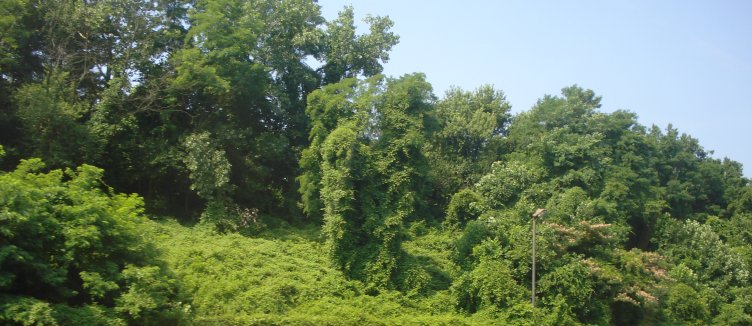
You can see what happens when people stop caring by driving along the freeway on Route 66.   Everything is blanketed in vines.  It looks like somebody dropped a green cloth over the landscape.   The trees below are gradually dying.  Vines have a great, if parasitic strategy.   They don’t have to waste energy making woody stems.  They just grow up and cover whatever is nearby. 

If left alone, I suppose in thousands of years some kind of balance would assert itself.   Of course, none of us will live long enough to see it happen, so I will keep the balance on my little acres.  

What You Measure is What You Get

Some people have come up with ways to measure the value of a standing tree.   Not surprisingly, there is some controversy and a lot of disagreement about the values going in.    Most of what I have seen so far seems to overvalue individual trees and undervalue whole ecosystems.   It is sort of a tree rights movement and it seems to me that much of this valuation is designed to be used as a club to pummel developers.   This is unfortunate, because there is a real need to develop markets for environmental services, as I have written on several occasions.  But everything must be viewed from the system point of view.   When you get down to the level of individual tree, you are just being silly.

I got a link to a system called I-Tree.   It purports to help value trees in urban settings.   I haven’t really done much with it, but I admit that I am a little suspicious of an overarching measurement system.    We always have to be careful not to outsource our brains and judgment either to consultants or to systems.    As long as these are only tools, it is good. 

The I-Tree had a study of the forest in Milwaukee that surprised me so much that I doubt its validity, although I question my own observations too.   According to the report, nearly a quarter of Milwaukee’s tree cover is European buckthorn.   This is a kind of bush.  It is an invasive species, but I just cannot believe it is that common.    The parks I know well are covered in oaks and maples.   Buckthorns, not so much and even then they are growing in the understory.    I suppose there are lots of them because they are small.  Supposedly, they make up only 5.5% of the leaf area.  But still, that seems out of whack. 

I am looking at the places I know well in Milwaukee on Google Earth.  Most of the forested and park area is dominated by basswoods and maples, with a lot of oaks and beech trees near the lake.   There are also a fair sprinkling of cottonwoods on some of the slopes. Anyway, the report paints a picture of my native city that I don’t recognize.   It could be that I just don’t see the vast world of European buckthorn dominating the landscape like dark matter in the universe.  I read once that more than half of all the species in the world are a type of beetle.  Sometimes things can be strange and not obvious; or it could be that the information fed into the I-Tree tool was faulty.   Mistakes in input produce mistakes in output.   The problem with a tool like this is that you cannot know for sure w/o taking it apart and the ostensible precision of the graphs and numbers gives you a false sense of certainty.

According to the report, Milwaukee is dominated by buckthorn, box elder and green ash, which together make up around half of all the trees.Green ash is planted by homeowners and the city as street trees, but buckthorn and box elder just grow by themselves.Box elders grow down along the railroad tracks and anyplace you disturb the natural cover, but they are early steps in succession.They don’t live long and are replaced by other treesas the site matures.They are also weedy, weak, short lived and generally undesirable trees.You don’t have to do anything to encourage them.In fact, it is almost impossible to get rid of them if you want to.  How depressing is that if they are the forests of Milwaukee?

But I don’t think they are, no matter what the report says.

Climate Bill

There are lots of things not to like about the climate legislation passed by the House, but it may be the best we can do at this time and it might be possible to improve it later. 

For me, it was interesting to see how lobbying worked, IMO sometimes in good ways.   For example, the bill as it stands now guarantees that forest offset market opportunities will be created for family forest owners in America.   A few days ago, it looked like this would not happen and/or the breaks would only be available to foreign offsets. 

The USDA will have the lead role in implementing the offset markets for forests.  Why is this important?   The USDA is staffed by people who are close to the earth and have a practical knowledge of what works.  I trust these guys more than average regulators.

The bill ensures that “early actors,” family forest owners, who have already taken steps to manage their properties responsibly, will be rewarded for their carbon-positive activities.  This is important to me personally.   I have been working hard last couple of years to make my forests more sustainable (and have written about it).  It would be unfair for our less responsible compatriots to be able to profit from their profligacy.    

The bill will allow all biomass from family forests to be used to meet the Renewable Electricity and Renewable Fuels Standards.  The original definition in the Waxman-Markey bill and the 2007 Energy bill didn’t do that. 

Finally, the bill allows a range of green building standards, including those that allow the use of wood from American Tree Farm System® certified forests.  We had some trouble with LEEDS certification.   Our tree farm would was not included in some of the initial standards. 
That is why we need lobbyists.   If government is going to make far reaching rules, you need someone around to educate the legislators.   Frankly, I would not have known that the things above were even threatened. Some make a big difference.

The LEED thing is a good case in point. LEED are so-called “green buildings.”  Unfortunately, they didn’t take in the full life cycle of a product.   Concrete, for example, is a good building material in its final form, but it creates a lot of pollution and emits great amounts of CO2 during its production.   Green buildings sound like a good idea, and our political representatives might vote for it, but the details are important.

Most people would just like to mind their own business.  Unfortunately, government doesn’t always give us this option and regulations can be used as offensive weapons.  We need lobbyists to protect ourselves from the active-aggression of those who will use government to further their own interests at the expense of ours.

I would just like to grow my trees, but all sorts of regulations impact my choices. Some of the regulations are made by ignorant people. For example, lots of people oppose controlled burning and would like to outlaw it.   They don’t understand the ecological necessity. 

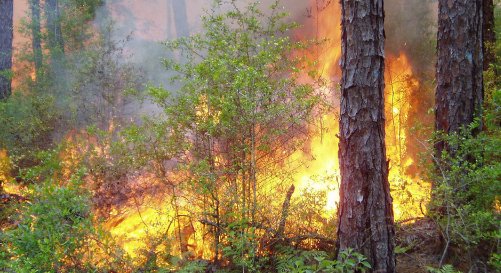
The picture up top, BTW, shows a good thing. It is a controlled burn that will make the forest ecosystem healthier. It is good for the trees and good for wildlife. It will make the trees grow faster and sequester MORE carbon.   That is not immediately apparent, is it?  You can see how the practice might be outlawed.   That is why I am glad we have lobbyists to look out for us.

Please refer to my original source at this link

Merrifield Town Center

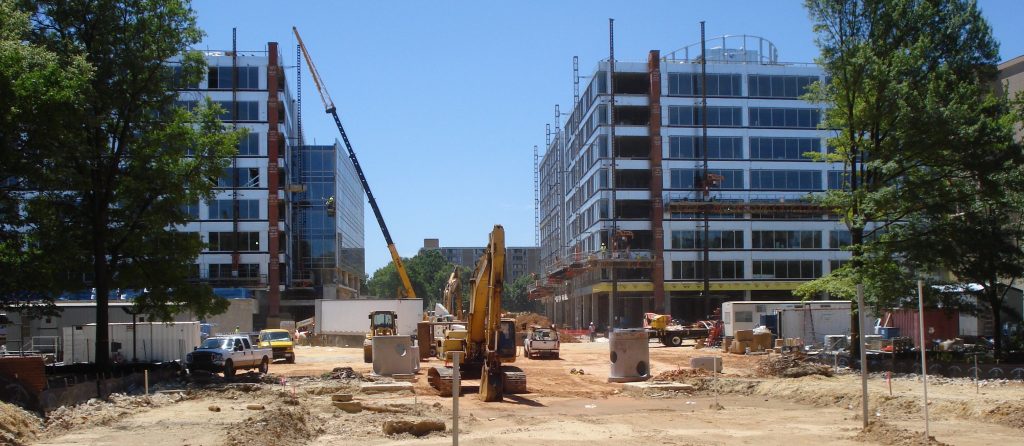
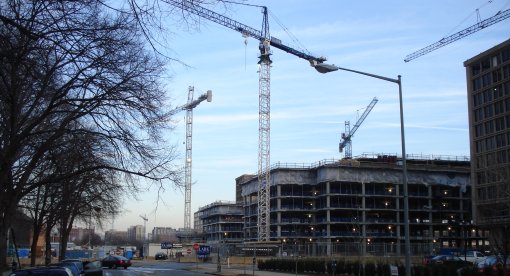
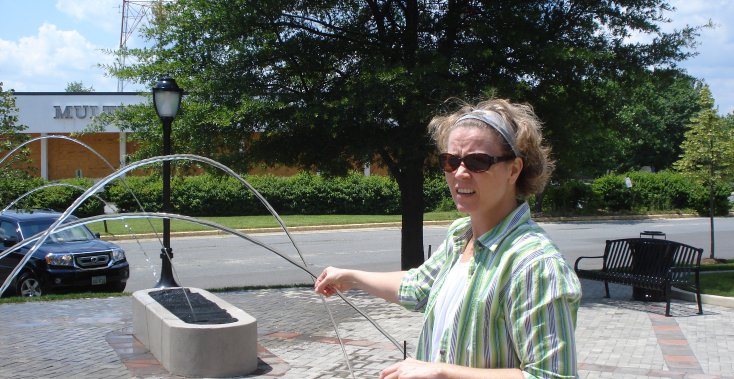
The redevelopment around the Dunn Loring Metro and the Merrifield Town Center is moving slowly but inexorably along.   The plan has been in place since before we bought our house in 1997.  Basically, the plan is for something like a metro transit-oriented development like in Arlington from Ballston to Roslyn.   We are a little farther out and this area will be more car friendly.  For example, they are widening Gallows Road,  so they had to tear down various fast food places (Taco Bell, Pizza Hut etc).  There is still nothing in those places, but farther down they have started to build condominiums and planning the town center too.

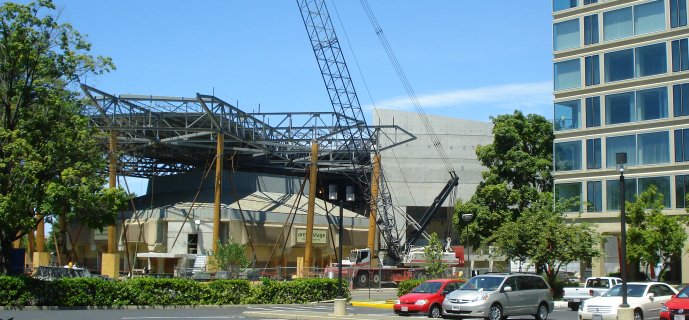
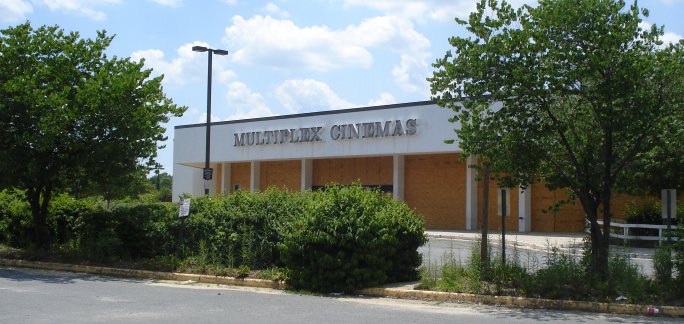
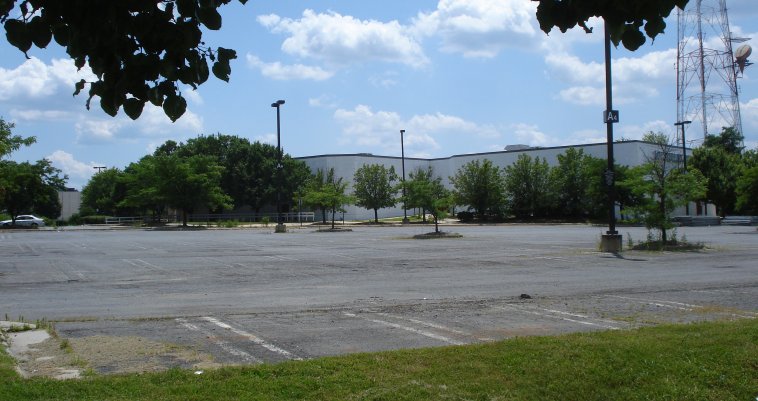
The economic downturn slowed some of the plans, but is not stopping them.  Above is the old multiplex cinema.  It is shut down now.  They owned a really big area of parking lots.  Originally, it was a drive in.  Anyway, much of the parking area will eventually be developed into condos and retail space.  Parking will be in multistory parking garages.   Below is the old surface parking lot.  There is a series on History Channel called “Life Without People”.  It shows how fast nature returns when people leave.  You can something of that here and it has only been a year.

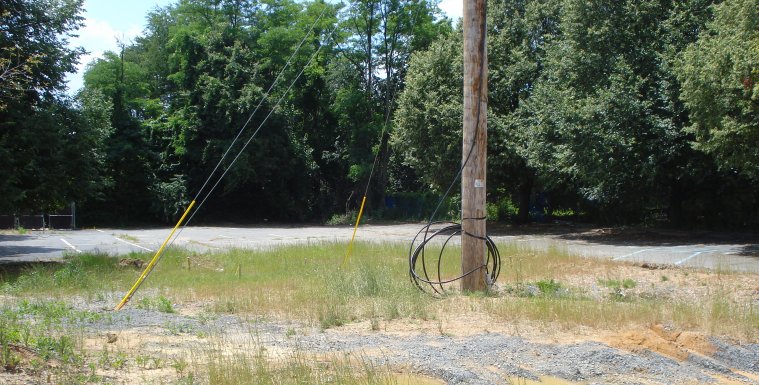
Below used to be a Pizza Hut.  It is always amazing to me how small the footprint of a building looks when the structure is gone.  

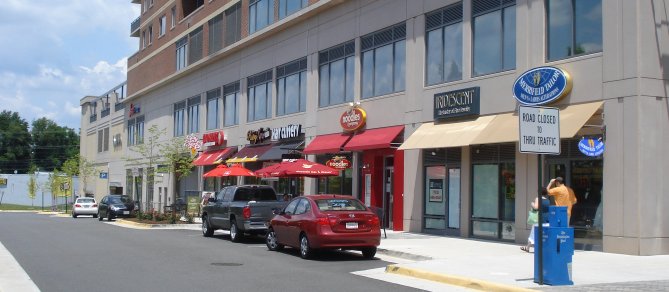
Below are shops in the new Merrifield Town Center.  It is a good example of mixed use.  There is residential on top, parking below and retail on street level, all within walking distance of the metro.  I am glad they are building, if slowly.  The shops are a little yuppified.  I got a ice cream cone that cost $5.23.  It was a fancy cone, but that is a little too much to pay, IMO.  It reminds me of the old story about the horse who walks into a bar.   The bartender says, “We don’t get many horses in here.”  The horse replies, “With these prices, I am not surprised.” 

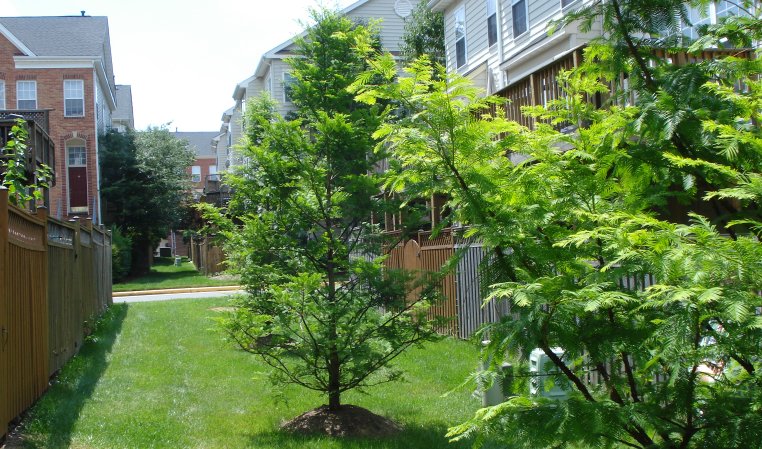
Below are dawn redwoods.  Chrissy had them planted at our complex when she was home-owner association president.  They will be one of her lasting contributions.  Dawn redwoods are related to our redwoods and sequoias as well as baldcypress.  Like baldcypress, they are deciduous and they look like baldcypress, except dawn redwoods are more pyramidal.  In their native forests in Sichuan and Hubei Provinces in China, they grow rapidly to around 90 feet.  They were thought to be extinct until  groves were discovered in the Chinese mountains in 1948. Since they are recent introductions to Virginia, nobody is sure how big they will get here, but they are growing very fast and strong.   Sometimes trees grow better away from their native ranges.   California redwoods, for example,  were introduced to New Zealand.  There are some growing there that are around 150 years old and doing even better than they do in California.  Experts expect that within a few years the tallest redwoods, so the tallest trees in the world, will be in New Zealand. Redwoods may live 2000 years, but they do most of their growing early in their lives.

One more joke – A horse walks into a bar.  The bartender asks, “Why the long face?”

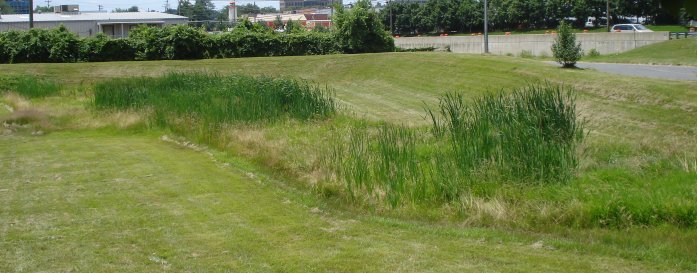
Below – neglect can be a good thing.  This is one of those drainage holes that they usually keep mowed.  Evidently, they lost control of this one and it is more distinct.  I like the cattails.