Final End of USIA

The United States Information Agency (USIA) was absorbed by State Department in 1999.  I was there when they took down the USIA eagle and prosaically renamed the building State Annex 44 (SA 44).  There was and still is a palpable feeling of loss among some of my colleagues and I miss some parts of my old agency, but not much. By the time of the anschluss with State, there was not much left of USIA worth saving. USIA suffered truly horrible top-leadership through the 1990s and they wrecked the place.  We closed our libraries, shut branch posts, let our contact networks atrophy, laid off experienced FSNs and the director seemed actively hostile to hiring new public affairs officers; by 2000 there were only around half as many of us as there had been ten years before.  

Our fearless leaders were under a general impression that since we had won the Cold War we didn’t need relics like public affairs anymore. After 9/11/2001 we found we were wrong and suffered mightily from our compromised ability to communicate with foreign publics.  But all that is history.   

I think we are better off integrated into State Department. But I still remember with nostalgia and pride coming into the USIA almost a quarter century ago, so the final closing of our offices in the old USIA building makes me sad. We are moving out next week and my group is the last to go. It is finally finished.

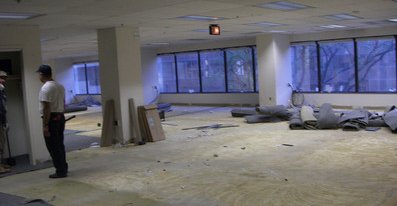
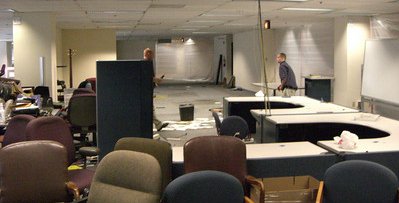
Tim Receveur took a few pictures of the end of days at SA 44 and you can see them on this post. There is a kind of Twilight Zone feeling to the old place.  We will be moving to a new building across from the Harry Truman Building.  The offices are nicer, but the location is worse. SA 44 is in a great place. The Orange Line is nearby and you always get a seat on the way home since you board before the big crowds get on after Metro Center. Gold’s Gym is a few minute walk. We are near the Mall, as well as restaurants.  Our new building is near nothing. The State cafeteria is not very good and it is a little expensive for what you get. I will adapt. I just need to find a place to lock my bike and take a shower.  

USIA has been gone for ten years, now the building is recycled and all its denizens scattered and relocated. I guess that’s all there is.  Move along. Nothing left to see. Only a vague remembrance of past glories.

Pathbreaking Green Government

The guy sitting next to me from the Post Office told me that he was in process of renewing the fleet of delivery trucks.   They were thinking about alternative fuels and maybe electricity.  This is where government can foster some real progress, by both leading by example and breaking a path for others to follow. 

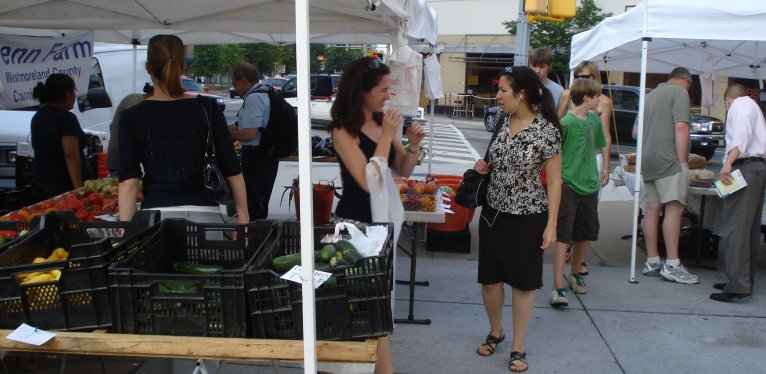
Below is a marketplace at Clarendon Metro.  I got a flat tire on my way to work, so I locked up the bike and hopped on the Metro to get to work. This was in operation when I went to pick it up.  People were selling vegetables, bread & honey.

A problem with translating small time innovation to big time application is usually a kind of chicken and egg dilemma.   For example, you cannot deploy alternative fuel vehicles unless you have a network of alternative fuel stations to service them.   On the other hand, you don’t want to build a network of alternative fuel stations until there are enough vehicles to justify the expense of building them.   The government is big enough to do both at the same time.

This is the kind of infrastructure path breaking government should do.   It is always hard to be the first down the path.   After that it can be easy for others to follow.   Unfortunately, this is not a very interesting thing for politicians.   The path breaking function is just a slog and once it’s done everybody thinks it would have happened anyway.   The bureaucrat who authorized the spending looks like he wasted the government’s money, since he pays the money and those who follow ride almost for free.  Worse yet, it is hard for politicians to target the benefits to their own constituents or contributors.   Yet some still make the hard and right decision and they should be praised. 

One thing that might help is looking at the whole value chain and considering the longer term.   I wrote a post about the ecological value chain and there is a similar calculation possible for any sort of investment.   You learn in business 101 about break even analysis.   That just shows how much must be sold or how long it will take for an investment to pay off.   In a simple example, you might pay an extra $100 for a boiler that pays off in energy savings in two years.   It makes a lot of sense to think ahead and pay a little more now to get a bigger payoff later, but the future is always uncertain and our government budgets tend to be short term.  

 It takes a wise and unselfish manager to pay more today out of his budget for something that will pay off a little at a time for his successors.   Making the value chain more apparent helps it become more a part of decision making.   Managers need to think of things like energy usage more like long term investments that pay dividends rather than just overhead. 

I learned and thought about these things during a breakfast on “green government” sponsored by “Government Executive” magazine.    You learn a lot when you go to these things, not only from the speakers but also from the people you sit next to.   And you get to eat breakfast too.  Sweet.

Changing Priorities

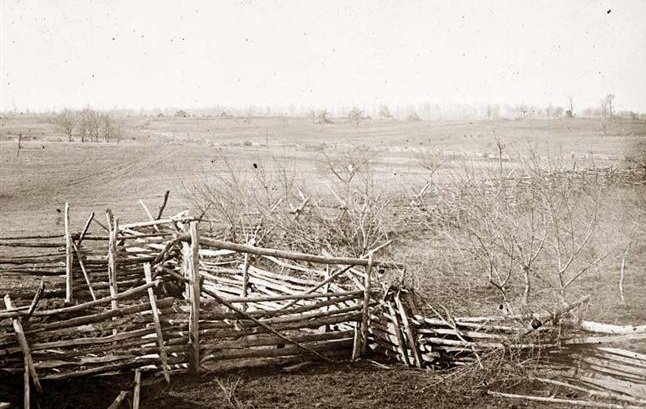
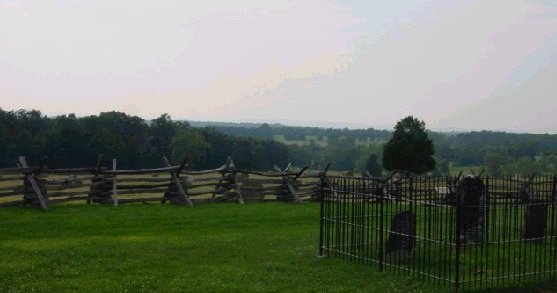
Switzerland’s forests are taking over the countryside and they are abetted in their march up the mountain slopes by global warming.   It is strange to think of forests as a threat, but take a look at the article at this link.   A more nuanced view of nature makes sense to me and tracks with what I have learned over my lifetime.  It is not only Switzerland, BTW.  It happens in America too.  Above is the area around the Manassas battlefield, just outside Washington as it looked in 1861. It needed more trees then. Look at the bottom picture to see how it looks now.  

See the forest SYSTEM, not only the trees

When I was young, I thought that more trees were always better.  That kind of idea made good sense in 1968 because there seemed little chance there could ever be too many trees or too much land covered in forests.  Since then, I have learned to look at the total system.   I can now more clearly see the forest instead of just the trees and I can also understand that the forest is part of a larger system that includes forests, water, wildlife grassland, brush and even some bare sand & rocks … and people.    The most pleasant and productive systems are those that have a variety of different types and a lot of transition edges among them. Nature tends not to produce these sorts of places for very long.   

Solving one problem creates the next

Switzerland had developed a beautiful and ecologically sustainable land use that allowed for bountiful agricultural production as well as superbly managed forests.  Too many trees or forests that are too thick with trees threaten that sustainable balance.  You can have too much of a good thing.  BTW – take a look at the Swiss picture gallery.  It really is a nice place.
The seeds of this dilemma were planted more than 100 years ago. There was not much real forestry being practiced back then.  Instead there was the kind of denuding timber mining that is almost never now done anymore in rich developed countries but remains depressingly common in places w/o good regulator regimes and strong property rights. The bare slopes caused soil degradation, erosion and disastrous flooding, so back in 1876 the Swiss enacted a sensible law to prevent deforestation.  It worked.  That problem was solved.  And since yesterday’s solutions are often today’s problems, the results presented a new challenge.  

It goes up but never comes down 

Set in motion was a kind of ratchet.  In the normal course of things in an agricultural/forestry system, forests expand and are cleared.  Crop of pasture land might take the place of forest and forests might grow on lands previously occupied by crops or pasture.  If it becomes illegal to clear forests once they are established, the areas covered in trees inexorably expand at the expense of meadow and other uses.  Imagine how this happens.  A pasture is neglected for a few years allowing trees to fill in.  Now it is a young forest, which you cannot clear.  You don’t need this ratchet mechanism to produce similar results, BTW. Forests in the U.S. have also been expanding over former farm fields.  As agriculture became more efficient, less land was needed in meadow and field.  You can see this clearly in the eastern United States.  If you look at old pictures and compare them to what you see today, you notice that there are a lot more trees today than there were a century ago.  But the ratchet rules make it much harder to manage the land. 

Build on success

We really have to shift our paradigm. We are no longer the embattled preservationists we were a generation ago.  We won that battle. Now we have to be clever in land use and mange what we have preserved and what technology improvements have preserved for us.   The need to be good stewards of the land is as important as ever, but doing a good job requires a much more nuanced understanding of the overall ecology.   It will never end for us.  There is not finished state for the environment.  But it is time to move to the next stage. 

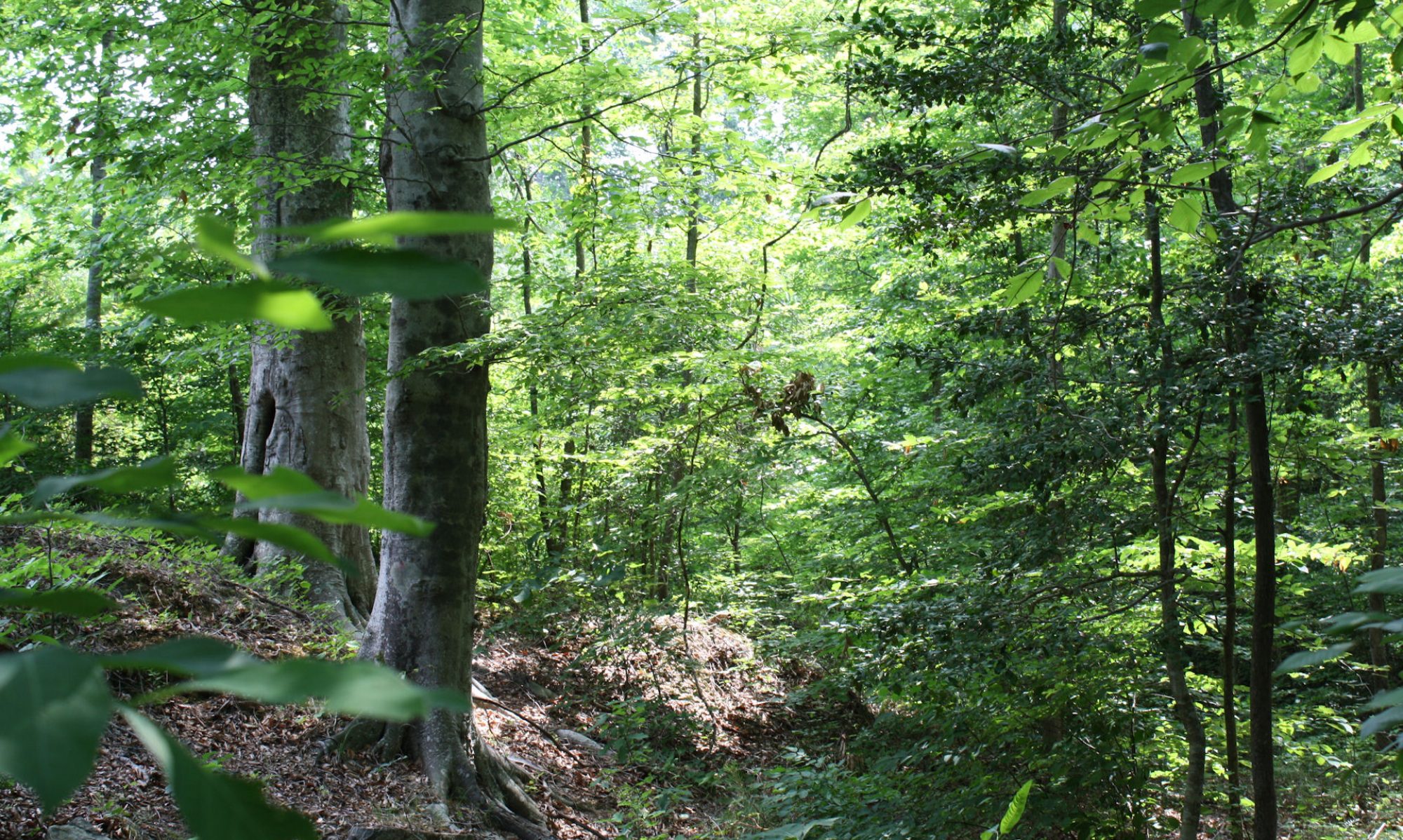
Below is what Manassas looks like now.  I like it better now.  The balance of forest in meadow is good, IMO.  Left alone, the trees, initially mostly tulip poplar, red maples and some cedars, would be around thirty feet high within fifteen years.  

Remembering that yesterday’s solutions are today’s problems, we have to assume the today’s solutions will be tomorrow’s problems.  That does not imply failure.  A good solution under particular circumstances is less useful when conditions change.  We just need to be smart. It never ends.  Perfection and final solutions are impossible, attempting to create them is undesirable and despite all this we manage to persist.  That is what makes life interesting.
The Four Ps of Marketing (and Public Diplomacy)

I was talking to some marketing guys the other day who told me that we should market America like a brand.  We should listen to our customers and make sure we create products the market wants.   I understand this, but there are a few problems with this formulation, not least of which is that America is greater than any brand.  We are something special and we should not prim and trim ourselves to win ephemeral popularity. But that aside, government, especially the U.S. government has fewer “marketing” options.    

Marketers used to talk about the Four Ps: product, price, promotion and place.  Executives supposedly control those four things and can deploy them and rearrange them to maximize the attractiveness and sales of their products.    As a government “executive” I control none of those things. 

Our “product” the U.S. and its policies, is determined by forces way beyond our small ability to add or detract.  I don’t have the ability to alter it to suit changing or local conditions and probably would not want to.   Our product will not always be popular and sometimes very unpopular.  People engaged in actual armed conflict against us or our interests are probably signaling that they are not happy with the “product” on offer, which illustrates the other important difference in the product category.  A marketer never has to appeal to everybody while government is stuck with everybody in the marketing universe.  The private sector supports many options and people can choose.  If you don’t like Coke Zero, don’t drink it. Opting out of government is not so easy.

How about price?  We don’t have one.  We usually think of price as something that limits or stimulates demand, but its most important function is the information it conveys about relative scarcity and attractiveness of the product and its components.  People can easily lie to pollster and often deceive themselves, but when they have to put down the cash, they tend to reveal their true preferences.  Price is a better indicator than polling but we just don’t have that information and have to look to proxies and polls, which are always imperfect and usually behind the curve.

Place is determined by policies (above) and geography.  Conditions and adversaries often determine where we have to engage.  But we do have some flexibility in location.   We can choose to emphasize particular things in particular places.  Of course, we suffer significant leakage.    Information markets are not separate and we rarely have the luxury of being ignored by those not in the target audience.    We also have the problem of having actual enemies who refuse to stay in the places we would prefer of them.    In fact, a significant amount of overall governmental energy involves fixing some of these guys in place (often followed by neutralizing them, but that is not my department).

Promotion is what is left most for us and that is closest to what we do.  Of course, we are not unconstrained even here, but this is the area of greatest freedom of action. Public diplomacy could be included as a subset of national promotion.   

So we are essentially left with two of the four Ps (place & promotion) and not even in firm control of either of them.  Next time you hear somebody talk about the the American image as something that can be branded or marketed as a product, remind them of how real marketing works and the real marketing constraints.   Despite it all,  we still manage to produce some successes. It reminds me of the Samuel Johnson saying about a dog walking on two legs.  “It is not done well; but you are surprised to find it done at all.”

Reopening My Favorite Passage

They closed the gates of Ft Meyer after the 9/11 terrorist attacks.   I didn’t know they were reopened.  Actually they are not open to through automobile traffic, but bikes can use the bike route that goes through Ft Meyer and Arlington Cemetery. 

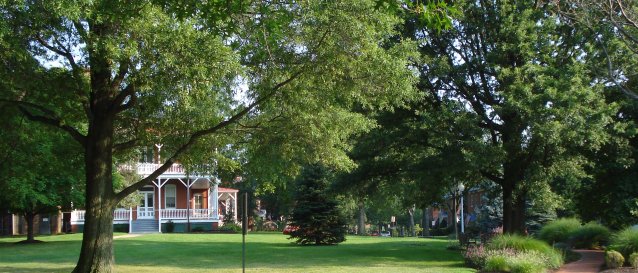
Going this way saves me around ten minutes riding and it lets me avoid ten minutes worth of the least pleasant and most dangerous part of the ride.  To transit Ft Meyer, I need only show my government ID and be polite to the guards. As you can see in the picture above, Ft Meyer is nice to with well kept period architecture.  After riding along the quiet streets of the base, you come out into Arlington Cemetery and it is all downhill from there. 

I like the idea of going through and past all the monuments.   My ride now takes me through Arlington Cemetery, across Memorial Bridge, past the Lincoln Memorial to the Washington Monument and then down the Smithsonian Mall in sight of the Capitol.   I often stop to read the plaques and later look them up on the Internet.  The whole idea of a memorial is to remind visitors of the event or concept.   Daily exposure to history really does work, at least for me. 

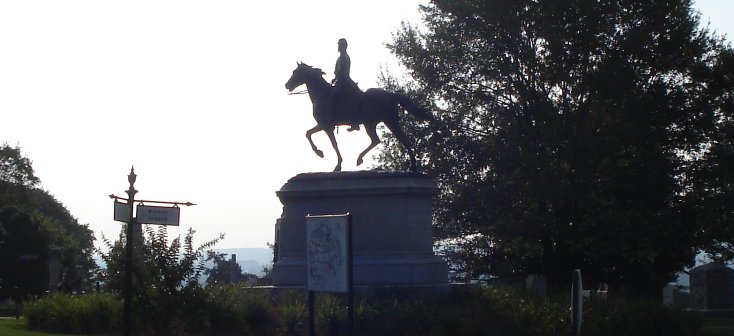
A good example is the statue above.  It is Phil Kearny.  I knew about Ft Phil Kearny, which guarded to Bozman Trail in Wyoming.  The Bozman trail is essentially I-90 these days and we stopped off at the fort on one of our cross country trips.  But I never knew much of anything about its namesake.  After seeing the statue, I did a little reading.  Phil Kearny was a respected professional soldier and Union officer killed in the Battle of Chantilly, not long after uttering the ominous words, “The Rebel bullet that can kill me has not yet been molded.”

Racism and Beer (& Brat) Consumption

Equality can sometimes debase into a type of leveling that is the enemy of real diversity of variety. That was clear in an article in the Washington Post on “The Racial Politics of Beer” decrying the fact that “American brewing was and largely remains a white man’s world.”   What a supremely stupid thing to worry about.   But it is even worse than ordinary stupid.  It betrays that leveling mindset that find discrimination and conspiracy in every human difference that makes life interesting and enjoyable.

None of us has the same culture as our parents, because culture is in a constant state of change, but we can see the persistence of habits & values.  It would be very surprising – and very bad – if everybody just reacted the same way to everything. The basis of true diversity is difference and when you get differences you get different results. Let me write that in a separate line.

The basis of true diversity is difference and when you get differences you get different results.

Let’s think about beer.   They say that the ancient Egyptians brewed a type of beer, but we are heirs to a beer culture that originated in Central Europe in the lands that used to be part of the Holy Roman Empire.  This includes Germany, the Czech Republic, Austria, Belgium and the Netherlands, along with parts of what is now Poland, France & Northern Italy.   The Germans even had a beer purity law called the Reinheitsgebot.  The English and the Irish also have a significant beer culture, as do the Danes and to a lesser extent other Scandinavians.   It tapers off from that home area.  What do you notice about the people living in these places?  Now people drink beer all over, but they still don’t always do it the same way or with equal enthusiasm.  Beyond that, many consumers of beer are not really part of the culture of beer.

Beer culture was not merely a matter of chance.    Beer is consumed in between the places where they can easily grow grapes for wine and where it is too cold and people consume hard booze.  Europe traditionally had essentially three zones from south to north and from west to east from wine to beer to vodka.   Water was not consumed much in pre-industrial days because it was so polluted and carried diseases.   People, even children, instead drank beer or wine, although the daily beer was a weaker version – small beer.

I am from Milwaukee, Wisconsin, which was a center for the American beer industry.  The other center was St Louis and there were significant smaller centers in Cincinnati and Western Pennsylvania.   What these places all have in common were lots of German immigrants. (I still drink beer.  I also eat bratwurst and liverwurst.  I guess that is just because I am privileged.)

In the early part of the 19th Century, one of the criticisms against immigrants was in fact that they were beer drinking boozers.  Beer drinking was not always a cool thing to do.   It still is not.

If you analyzed beer drinking, I am sure you would find significant geographical differences.  I am sure you would also find big difference based on ethnicity.     Big deal.   These differences are based on different preferences.

If you look for them, you can find differences in everything.  This is the way everything is. If you believe racism exists everywhere, you can find it in all of life’s variation and joy.  It is really true that people’s habitual view of the world is a confession of their own characters.  Maybe those who see crooks, racists, shirkers and idiots everywhere are just looking in the mirror.

Hierarchy & Order

Hierarchy has long been unpopular – even among those who benefit most and enforce it most enthusiastically on others – and it is especially loathed by those who see themselves as low men on the totem pole (and even high men feel like that sometimes). It violates our fundamental feelings of fairness and equality. 

Besides, none of us really likes being told what to do or when to do it and that is what hierarchy implies.  Being against hierarchy also brings with it the appealing opportunity of “sticking it to the man.” 

We all enjoy that, since even the most timid and conventional people think of themselves as free spirits or rebels. Hierarchy is easily abused, easily ridiculed and easily hated, but you have to have some of it because we have to choose priorities and we have to set standards.

The establishment of a type of hierarchical order is part of all human & natural systems.  After some kind of disturbance or radical change there is a lot of chaos and experimentation.   It is an exciting time.   It is also full of uncertainty and waste, since many of the experiments will fail and many of the paths chosen will lead to dead ends.   After a while, a pattern asserts or reasserts itself.   Some patterns may be very persistent, lasting a long time until knocked down by outside forces or sometimes they just kind of wear out on their own.   I won’t go into the principles of natural succession or various theories of historical dynamics.  Suffice to say that this is what happens and this is what we are now experiencing.

I have written a lot about the new media being applied to public diplomacy because we are currently in one of those exciting transition times.   Lots of people are trying lots of things and even more people are talking about, pretending to or “going to” try lots of things.   We are reaching out in many directions and in many of those directions it is becoming clear that our reach is exceeding our grasp.   And as the management guru James March wrote, “The protections for the imagination are indiscriminate. They shield bad ideas as well as good ones—and there are many more of the former than the latter. Most fantasies lead us astray, and most of the consequences of imagination for individuals and individual organisations are disastrous.”Now comes the hard part of trying to create some patterns and order in the chaos w/o choking off the imagination and initiative that fuels all this innovation.

This is a rough and narrow path to walk, especially for us.  Government is not especially relaxed about innovation but is exceedingly comfortable with hierarchy.  Government, after all, is hierarchical by nature because its main function is to determine who is in charge with the power to set priories and limit options.  If you don’t believe me, think of why we have laws, rules and regulations and what institution is the final legitimate authority in creating and enforcing them.

Anyway, I hope that we (and I am referring very broadly.  I don’t have much overall influence on this) have the wisdom to pull off this important transition change and can expand the use of new media to promote our country’s interests, but I fear that there will be less total life in the system a year from today than there is now.

Fort Christiana

The webpage for my webchat on forestry and carbon is now available at this link.   I made a PowerPoint as an intro, so please take a look.   You can just sign in as a guest under whatever name you please.

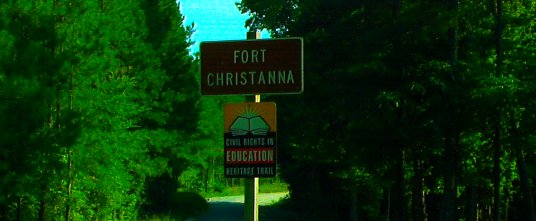
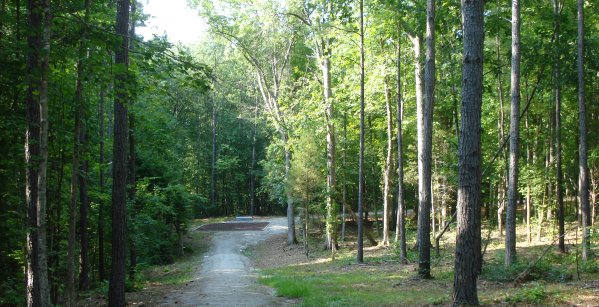
I visited Fort Christiana on the way home from the farm.  It is one of those places worth seeing, but not worth going to see.  You have to go down a gravel road and then you find … nothing.   The fort is long gone.    All that is left is the outline of the fort, a little toilet and some markers.  You can see the gravel outline in this picture below.

If you Google Fort Christiana you will find the wrong place.  There is a fort in Delaware by almost the same name.    That was not a very important place and this place is even less.   So if you want to know about Fort Christiana in Brunswick County, I am your lasts, best hope.

According to the signs, Virginia Royal Governor Alexander Spotswood built a five sided wooden fort near the Meherrin River in 1714.   (Spotsylvania County VA is named for the governor.)   It was an outpost on the edge of the Virginia Colony at that time designed to trade with the friendly Indians.   Inside the Fort was an Indian school, with about 100 students.  The Indian students inside the fort helped ensure continued good behavior of the local tribes.   

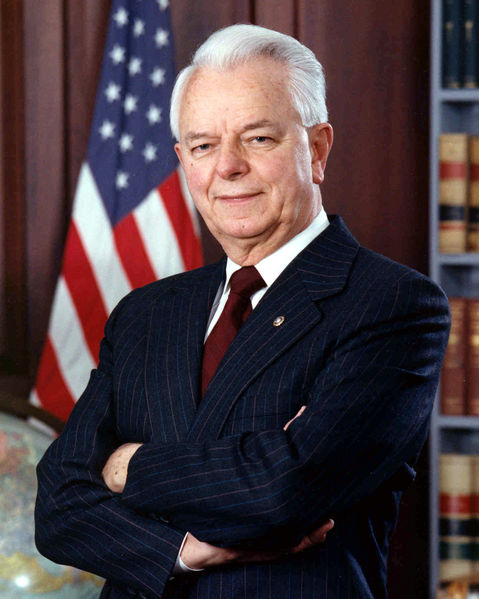
The British withdrew support for the fort in 1718 and when William Byrd (an early member of that very prominent Virginia family and the ancestor of the current W. Virginia Senator Robert Byrd … or given how long that guy has been around, maybe it was him) passed through the region in 1728 he reported that the fort was abandoned.   Not much of a history.    There have been nearby roads that have been under construction for a longer time.

I don’t know why the picture of the sign turned out so green.    That is not the real color.  I must have had it on a strange setting.

The picture that I took of the monument was even worse, so I didn’t include it.  The funny thing is that it was erected by the colonial dames.  I know that dames is an old title of respect for ladies, but I can’t stop thinking of Frank Sinatra, “Guys and Dolls” or “South Pacific.”  There’s nothing like a dame. 

Learning from Locals

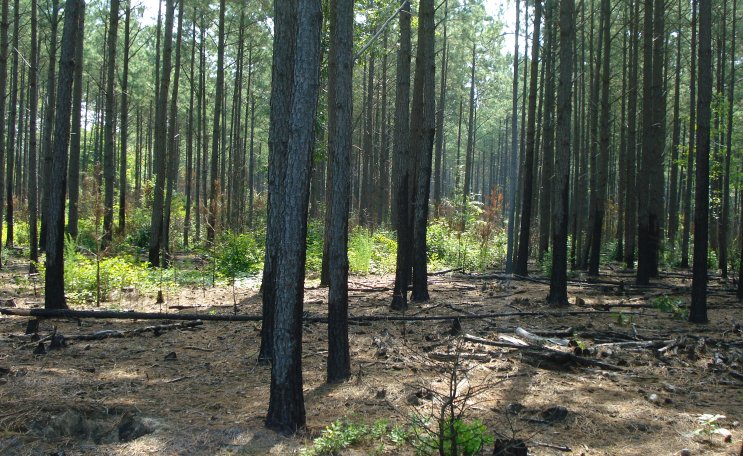
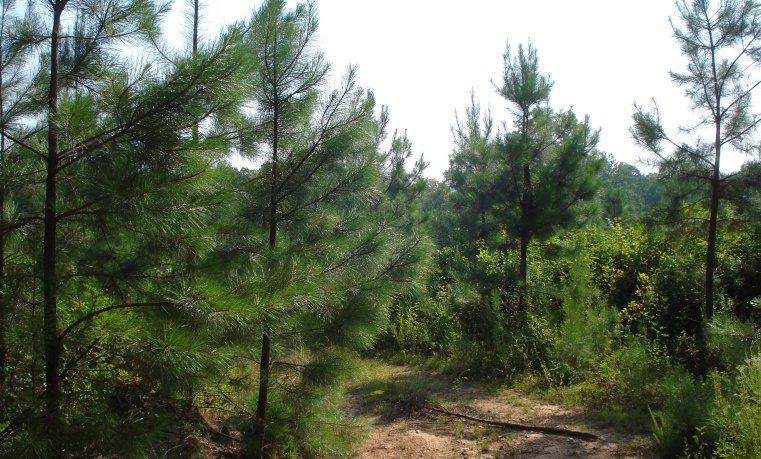
Larry Walker, the guy in charge of the hunt club on our CP land, took me around to some forestry work sites, where they had recently thinned or done controlled burns. I learn a lot from looking at how different approaches produce different results.   

Even a very severe thinning grows back in a couple of years.  Larry thinks it is better to thin early, since that releases the better trees to grow faster and concentrates resources on the stronger trees.  Prices for pulp are low right now, so many landowners are putting off thinning operations, but they shouldn’t wait too long. In Southside VA, you can probably thin at fifteen years and it is a mistake to wait beyond eighteen years. If you miss that window, your trees are stunted and more vulnerable to disease and bugs. In other words, it makes sense to thin even if you aren’t making money on that particular transaction.  


Larry’s son Dale runs the thinning cutter and Larry thinks he is a virtuoso. You have to cut rows in the trees to get the machines through, but after that a good thinner can take out the inferior trees, the ones that are small, twisted or have multiple stems.  he newly thinned forest is in some danger the next year from ice storms, since they grew up leaning on each other. It is best to thin early in the season if you can, but it is not always possible to arrange and/or spring rains and mud can make it impossible for equipment to properly function.  You can do a winter burn the year after that and then apply biosolids, followed by a summer burn to take out the competing hardwoods. With any luck, you can do the second thinning at twenty-two years.

Larry told me that there are more trees growing in Brunswick County now than any time he can recall.  Many of the old fields that used to grow tobacco are now planted in trees.  That is good, since you need a density of forestry operations to support the saw mills, which support the forestry operations. It is a symbiosis.    

I am really lucky to have the hunt clubs on both my forest properties.  They protect my land, maintain the roads and signs and give me good advice. We have a convergence of interests.   We all want a healthy habitat. These guys and their families have been hunting on these lands for generations. 

We have more of a partnership and sometimes I think I am the junior partner. They have more history with it than I do and they make improvements.  For example, the guys on the Freeman property planted some soy beans for the deer to eat and Larry promise to make an herbaceous corridor down to the creek, which will feed the wildlife and make it possible for me to get to the creek overlook w/o getting torn to pieces by the brambles.  

Bee Colony Collapse

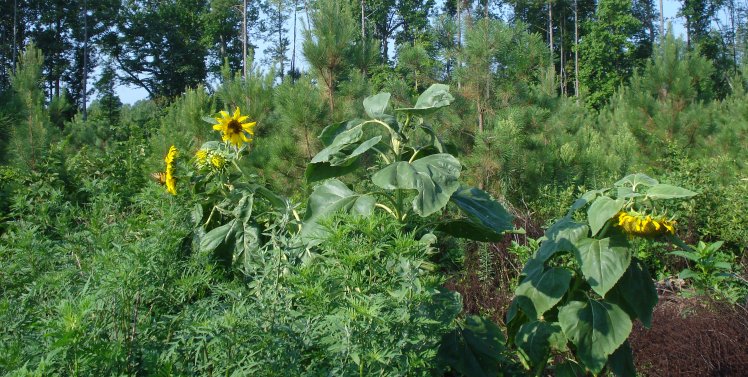
My clover meadows were full of bees this spring.  They were still around the sunflowers, although I didn’t plan to write re bees, so I just took a picture of the flowers.  It is a very pleasant thing.   Today I watched a depressing program on “Nature” on PBS talking about the collapse of honey bee populations.   I read about that a couple years ago, but thought that it was mostly studied and addressed.    As I recalled, the colony collapse (called colony collapse disorder or CDC) had multiple causes, but none of them really extraordinary.    There were some mites and parasites.  A lot of the bees were not getting a good and balanced diet and some were overworked (they move colonies around to pollinate different crops). 

Sure enough, the “Nature” show was made a couple years ago.   More up to date information can be found here and here.   It is a problem, but it is manageable.    The USDA is vigilant and we can be too w/o going nuts.  I worry a lot about things like the emerald ash borer, gypsy moths, pine beetles etc and with the help of extension services, DOF and others, I help address them.

The thing I object to is the apocalyptical tone.  Many things will or could be disastrous if not properly managed or addressed.   That is why we manage and address them.    We always get that BS saying something like, “if nothing is done…” or “if current trends continue …”   But something always is done and current trends almost never continue.

Of course the news that a problem is not going to mean the end of life as we know it is not big news.  People like to be alarmed and they also look for extraordinary causes to ordinary events. In the bee case, they blamed pesticides, global warming, GMO and even cell phones.  Society’s general malcontents take the opportunity of an impending catastrophe to attack the things they don’t like and they are a little annoyed when the catastrophe turns out to be a dud.

Anyway the bees are back, which is good because we need the bees. They pollinate many of our crops, but, of course, we need bees because of the plants we introduced from Europe into America.  Honey bees are not native to North America, so no native American plants require honey bee pollination. The Indians in colonial Virginia evidently called honey bees “white man’s flies” and were astonished that the colonists even put flies to work. Honey bees are in North America because we brought them. It was a good move.  Not all invasive species are bad. But it does show once again that there are no environments in the world unaffected by humans and we need to make sure manage well rather than abdicate and claim we can separate ourselves.