The Changing Face of Hate

It might be a positive sign that there are more hate groups.  This is counter intuitive, but according what I learned at at the Southern Poverty Law Center, the number of active, affiliated “haters” has actually decreased while the number of groups has gone up.  That indicates a fragmentation of the hate culture.  Maybe some people are ostensibly members of several groups and not committed to any. In the 1920s, the KKK had an estimated 4 million members and was organized enough to influence politics at the state level.  Today there are fewer than 10,000 members, mostly unorganized losers. 

I didn’t know that the Klan of the 1920s recruited most of its members by its anti-Catholic and anti-immigrant stance.  In other words, they hated people like my Polish-Catholic grandparents. That probably explains why the Klan was not strong in Wisconsin.

The speaker said that 6-10,000 hate crimes are reported each year.  Most of these crimes are now aimed at Latinos and immigrants.  Ironically, some of the perpetrators are urban blacks who fear that new immigrants are taking their jobs.  This is in many ways a repeat of the anti-immigrant ideas of generations ago and is evidently the hardy perennial of problems.

We have to be very careful in the “hate crime” designation.  It is a very broad category that can range from name-calling and vandalism to actual murder.  Even in cases of actual violence, the hate motivation is slippery.  Murder is always a crime of hate, whether or not those involved are ethnically similar.  And as in any broad distribution, the very serious instances get the most attention but are very rare.    In a classic case of vividness bias; we more easily recall extreme events and our imaginations turn to frightful images when we may have merely a more comprehensive definition or reporting.
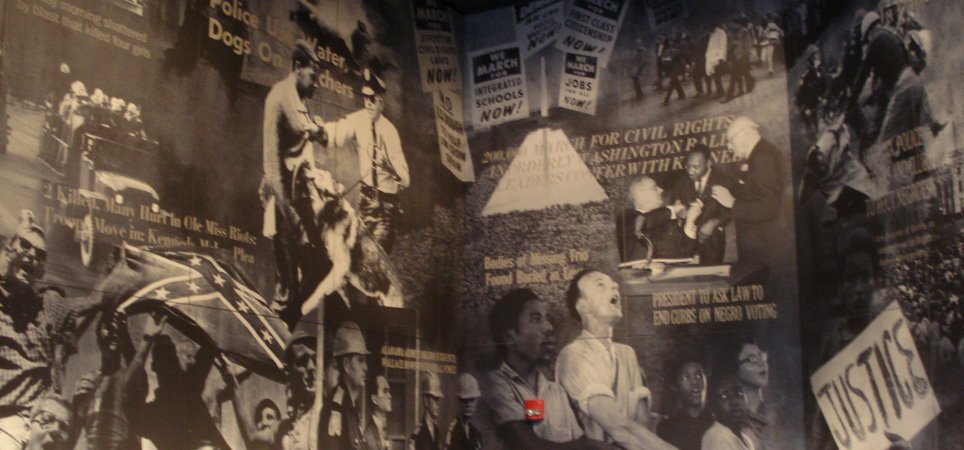
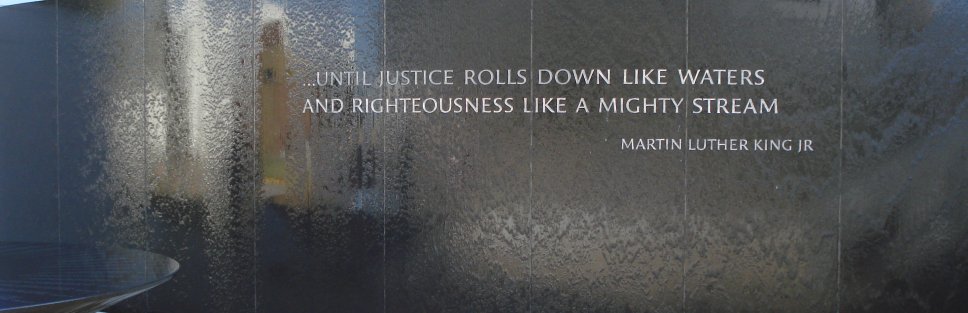
It was much more dangerous in the past to stand up for civil rights in America than it is today and the Institute documented the history of the struggle, especially during the 1950s and 1960s.  There was a memorial listing the names of the forty people killed during those decades.   Alabama was in many ways the center of the struggle and the struggle was much more black and white and not only in terms of race.  When Martin Luther King led boycotts and marches, he was asking only for dignity that most of us agree that all humans deserve.  He was success precisely for this reason.   He appealed to the humanity, virtue and fundamental goodness of his opponents.  Some willing to use firehouses, dogs and worse against protesters, but most suffered pangs of morality.  Almost everybody could agree about what was right and wrong.

Non-violent methods work less well against jihadists or dictators willing or even eager to kill hundreds or thousands of innocent people to make their points and maintain themselves in power.  In Rwanda, Bosnia, Congo or the unfortunately many other places, murder was/is done on a vast scale and individual voices are silenced before they can be heard, sometimes even when they are heard – and murders are seen in the media – as in the recent case of the Iranian elections the regime rolls on. That is the fundamental dilemma of pacifism.  It requires a fundamentally decent society in order to work. 

It has become a lot more complicated since then, which is why I think we often hearken back to those days when right and wrong were clearly defined.  Forty five years after the Civil Right legislation, it is much harder to know which side is right on debates on affirmative action, racial preferences or even – especially – immigration.  The people as the Southern Poverty institutes talked more about immigration than anything else.  Maybe it was just because of the nature of our questions, but I suspect that the direction has indeed turned.

IMO, immigration is much more nuanced and problematic as a civil rights issue.  Good people can disagree about fundamental values.  Of course, individual immigrants are entitled to civil rights and human dignity.  But the act of immigration is not a right and an immigrant who enters the country illegally has committed a crime, no matter what we consider the motivations. A country is also entitled to design its immigration laws as it sees fit. 

I am generally in favor of immigration, since it strengthens the diversity of our country, but there are plenty of problems I do not want to import.  I don’t want immigration that encourages things like the Russian mafia, human trafficking or drugs.  Most people would agree with me on the broad direction, but some of the details of procedures and laws would work against this.  And clever reading of rules can provide “rights” to some pretty bad people in situations that good people might not have envisioned.  I would hate to see the definition of hate expanded to encompass vigorous debate about immigration.

The discussion of immigration inevitably turned to race.  Most new immigrants are non-white, but race is not a necessary dominant factor.  The focus on race indicates a lack of historical understanding or perspective. There are plenty of reasons to advocate strict immigration rules that have nothing to do with race. I remember when our rejection rate in Poland was over half and as I mentioned above the KKK disliked Polish-Catholics.  It just now happens that no European countries now have the growing populations that export people, so that is no longer an issue. The problem with immigration is that immigrants bring different values and often create economic dislocation. Most people want SOME change; not many people want comprehensive change.  There is nothing wrong with wanting to keep change manageable or even not wanting much of it at all.  America is a great country.  It makes sense to be careful when changing a good thing, since usually more things can go wrong than go right.

Frankly I don’t want my country to become more like most countries I have visited in many ways. That is not saying we should just freeze in place.  A culture that doesn’t change, dies.  I like the America of 2009 better than the America of 1969 in most ways. I just want us to get the best, not the worst of what the world offers.  We don’t want to just open the doors and let whoever or whatever come.  It is our right to choose. That is why I want rights to remain attached to individuals, not activities, not groups.  If you protect the people, other legitimate things follow.  It doesn’t work the other way around.
Freedom’s Just Another Word for Nothin’ Left to Lose

The only other time I was in Alabama was in March 1974, almost thirty-five years ago. It was cold in Wisconsin during the spring break so I decided to hitchhike to Florida. I memorized a map, but I got it wrong and ended up two days later in south Alabama.  It took me that long to figure out that I didn’t have enough money and no plan, so I turned around and headed home. This trip was my first big adventure and the first time I understood that being on your own was not always much fun.

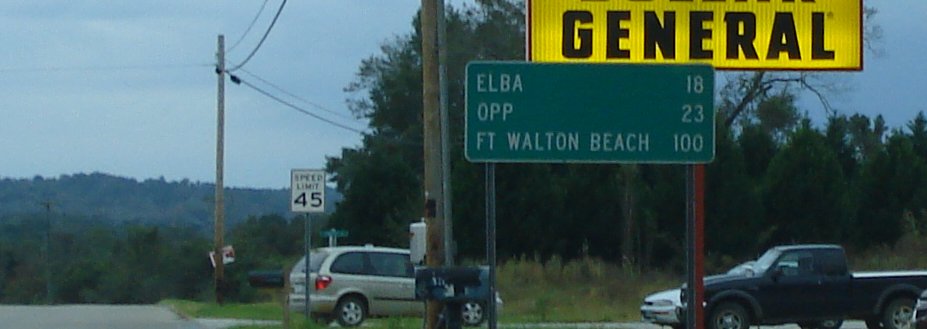
I got a ride all the way from Nashville to Alabama state highway 10. This was a very local rural road back then. A guy in a pickup truck picked me up.  He talked to me for about ten minutes, and I understood not a word.   It worried me.  It was like being in a foreign country.   He dropped me off about two miles down the road, where a farmer was out working in his field.  He came over and talked to me (people were very friendly).  He had an accent, but it was easy to understand.  I mentioned my earlier problem and he just laughed.  “That’s old James.  He’s the town drunk.  Ain’t nobody understands old James,” he told me. 

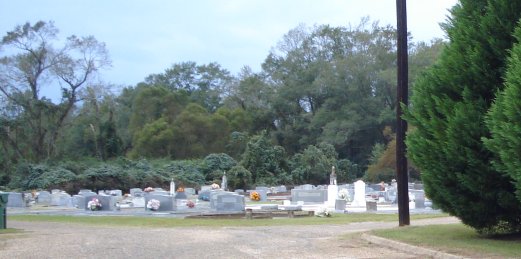
My turn around point was a cemetery near Brantley, Alabama on the way to Opp.  I found the place and you can see it up top.  I spent the night there, actually right outside.  That was not my plan. I was talking to some guys at a local gas station.  They warned me about the poisonous snakes in the tall grass.  Now I understand that they were just giving me a hard time. As I walked out of town in the dark of early evening, I saw nothing but tall grass, until there was some short grass.  I thought it was a roadside, so I spread out my blanket and went to sleep.   

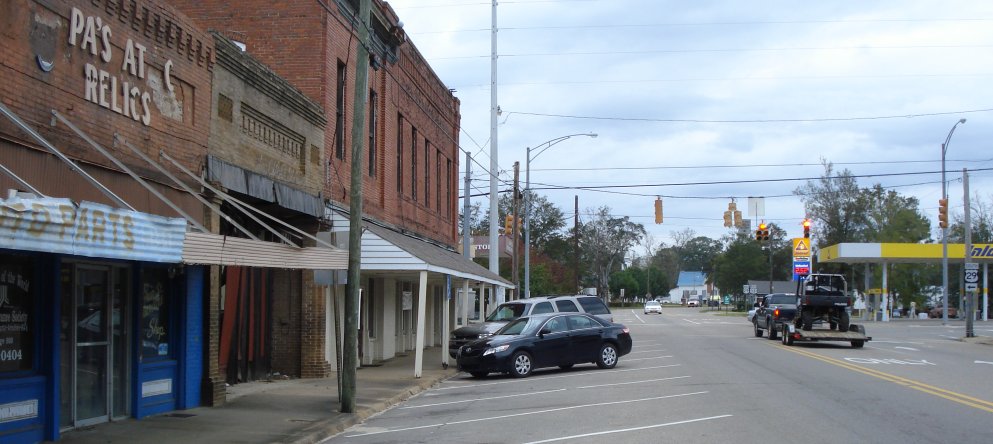
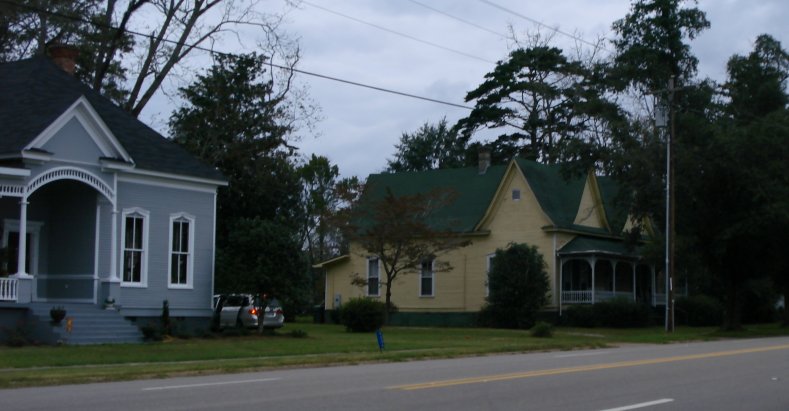
In the morning, I saw that it wasn’t a roadside.  I was sleeping near the tombstones not far from a graveyard.  Had I known where I was, I think I would have slept poorly.  As it was, I spend a peaceful night with the quiet neighbors but that was enough.  I was hungry and lonely and I wanted to go home. I took a picture near the spot where I think I was.  Those leyland cypresses were not there yet.  There was just I was grass and some bushes.  Just being there brought back the feelings of those days.  I did lots of stupid things when I was nineteen, but I think this was the stupidest, on balance.  Above and below are pictures are Brantley what used to be the business district thirty-five years ago and some houses along the road.

I started to hitchhike back north from the spot on the top picture outside Brantley, Alabama.  (For the last thirty-five years, I have believed that I turned back south of Opp.  I remembered that name because it is odd and I saw it in writing.  Now, however, I am 99% certain that the spot above is indeed the high water mark of my first lonely travel adventure.) I made it to Nashville by that night. 

I might have gotten there earlier.  I had a ride going all the way up there, but I got out near Decatur.  The driver was drinking whiskey.  He claimed that he was going to kill his wife and his former best friend.  The wife had run off with the friend. This didn’t seem to bother the guy too much, but they had also taken a couple hundred dollars of his money. This pissed him off. His story sounded a little too much like the words from a Hank Williams, Jr song.  I remembered the words of the old Roy Acuff song, “Whiskey and Blood on the Highway” (There was whiskey and blood all together; mixed with glass where they lay; I heard the moans of the dyin’; but I didn’t hear nobody pray) so I bailed.  I tried to pay attention to the news the next day and didn’t hear about any spectacular murders, so I figure he was just talking … and drinking.  People who picked up hitchhikers often were just looking for someone to talk at and they often are not serious.  But guns, booze, anger and cars are not things you should mix or mess with if you can avoid it.

I spent my last $7 on a bus ticket from Nashville to Evansville, Indiana.  I didn’t particularly want to go there, but that was as far I my money would take me.  What I really wanted was a warm & reasonably secure place to spend the night and the bus was the best I could do.  I arrived in Evansville just about dawn and set off up Hwy 41.  It was 5 below.  They had an ice storm the day before and then it got really cold. Hitchhiking was hard and I picked up only short hops.  The worst was when some A-hole dropped me off directly in front of a sign that said something like, “Rockville Prison.  Do not pick up hitchhikers”.  I later found out that it was a woman’s prison, but the sign didn’t specify. 

I got up to Chicago about the time it was getting dark and a really nice guy drove me all the way home to Milwaukee. It is probably not a good idea to depend on the kindness of strangers, but I was glad that I ran into some good people. Besides the Rockville Prison guy and the homicidal boozer, everybody I met treated me okay, some were very friendly and shared lunches with me. I would have been a lot hungrier if not for that. 

The whole adventure lasted only four days, but it made a deep impression on me, so much that a half a lifetime later I can still recall details. This was the first time I was really alone and unconnected. I realized that a guy could just disappear.  I remembered how it felt to be “homeless” as I drove back from Brantley to my reserved room at Courtyard in Troy, Alabama. It is comforting to have a place to go. The most disturbing part about wandering is looking around for a place to bed down at dusk and hoping that it doesn’t rain or you don’t get rolled.  It is nice to be able to come & go when you want, but in the words of that great country philosopher Kris Kristopherson, “freedom’s just another word for nothin’ left to lose.”

It was a good lesson and not a very expensive one for me.  It was good to learn it early, but it wasn’t smart to set off with no map, no plan and almost no money. I can’t even put myself back in that stupid young-man mindset.  I make much more sophisticated stupid old-man choices today.  I have always been lucky and luck can substitute for intelligence and foresight … until it doesn’t.

I didn’t stop hitchhiking, BTW.  That is how I and many car-free students got around in those days.  And I subsequently hitchhiked around Europe.  But I prepared better.

Air War College in Alabama

The Air War College is located on Maxwell Air Force base in Montgomery, Alabama.  It is a pleasant place and it is still summer in Alabama.  The housing is nice.  I am here for three days of seminars.  It has been interesting so far. I like to get away sometimes and think about the work.  I only wish I could translate the ideas better into practice.

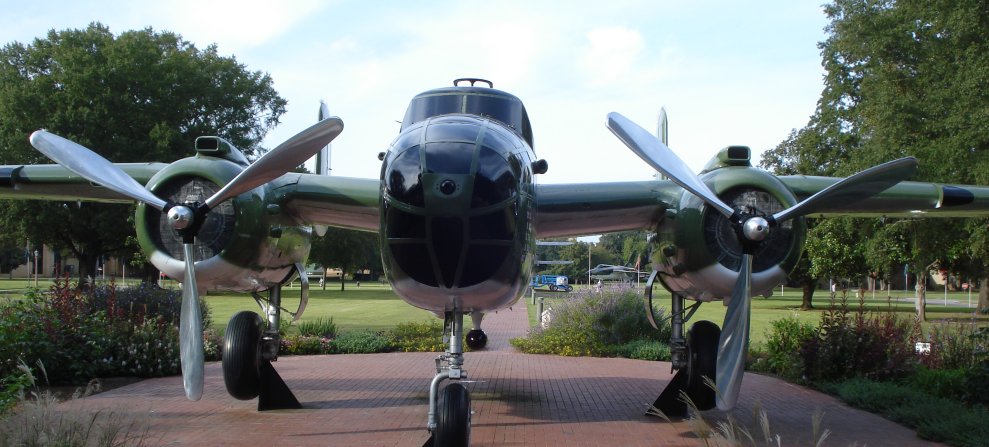
Above is a B-25.  It is also called the Mitchell bomber, named after Billy Mitchell, who warned America that the Japanese could launch a Pearl Harbor style attack.  For his insight, he was court martialed, although later he was honored.  Too bad he was already dead.  He was a Wisconsin boy and the airport in Milwaukee is named for him too. 

The Mitchell bombers planes were used in WWII and were the planes used during the Doolittle raids, when we showed the Japanese that we were serious about taking the war to them after Pearl Harbor. 

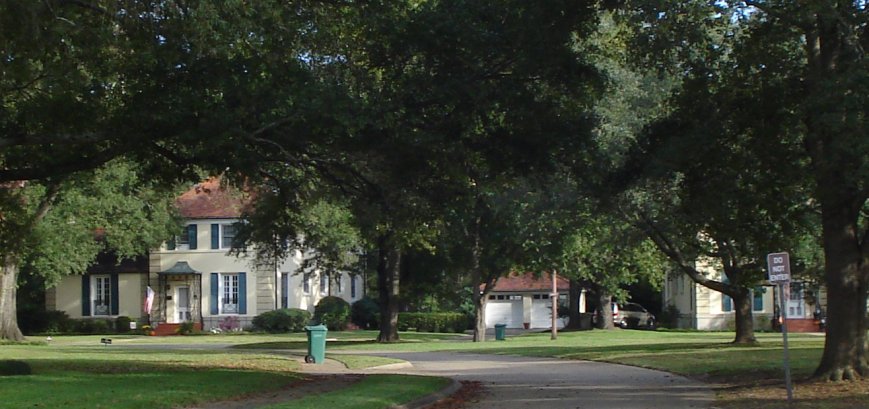
Below is some of the housing on the base.

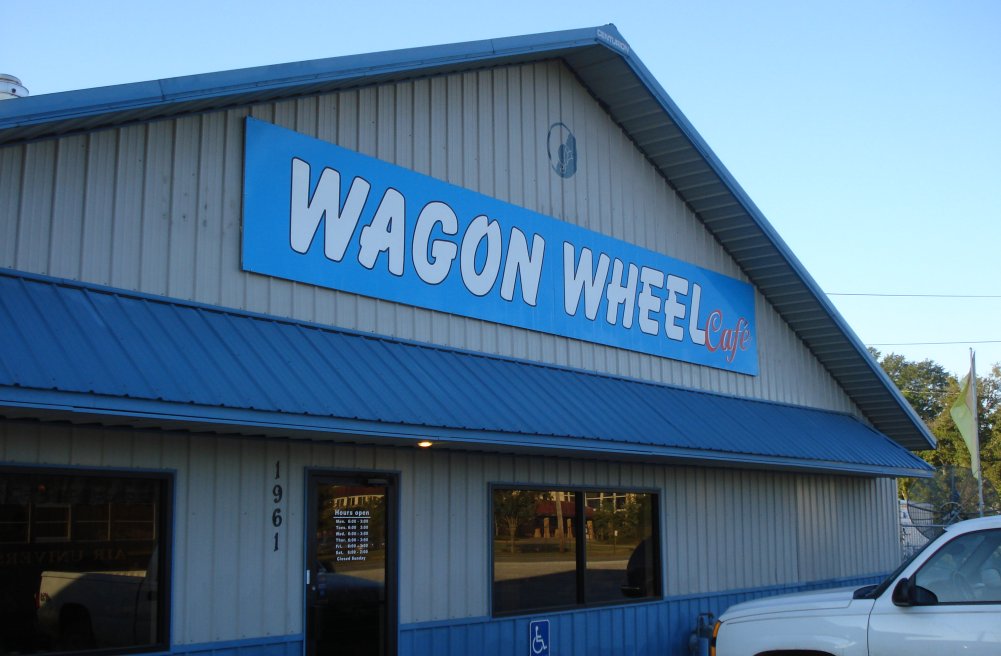
Below is the Wagon Wheel restaurant, where we had breakfast.  It is simple eggs and bacon … and grits for those that like them.  

Golf, Pools, Horses and Sheep

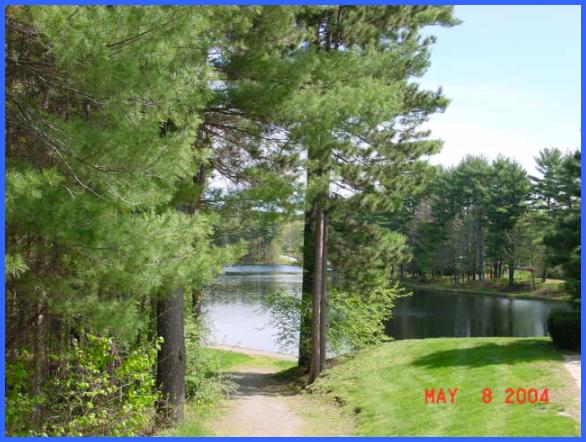
I don’t know if it is true, but several people told me that air bases are required to have golf courses, the idea being that all that flat, grassy space is available in emergencies for landing or at least the storage of aircraft.  It sounds a little glib, but who knows?  Home owners in some arid regions sometimes get a discount on their fire-insurance policies if they have swimming pools that can serve as reservoirs.   We got a discount on our insurance from USAA in New Hampshire because our house was within a convenient hose length from a pond.  I thought that was just a specious reason until the condominium clubhouse caught on fire and the fire department did indeed tap the pond water.   Their attempt to save the structure was futile but they did prevent the fire from spreading to the neighboring woods and homes.

On the left is pond in New Hampshire.

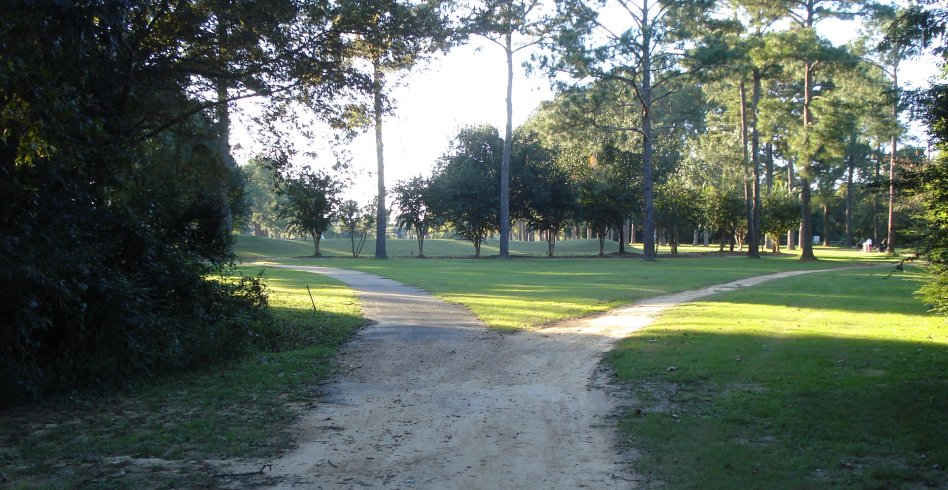
A surprising number of people hate golf courses.  They are evidently offended by them and work themselves into a frenzy saying things like the land and resources devoted to golf courses could be used to feed poor people. I suppose if we were close to subsistence, this would be true and if we plowed up all the golf courses we could feed a few more people.  Of course, there are lots of other places food is wasted that would come first.  We have all sorts of fruit trees we don’t harvest and all kinds of unused land.  I think the real problem is that luddites associate golf course with affluence.   I don’t golf, never have.  But golf courses are usually attractive.  They provide nice vistas and often good places to run -around the peripheries; golfers get annoyed if you get to close to them.

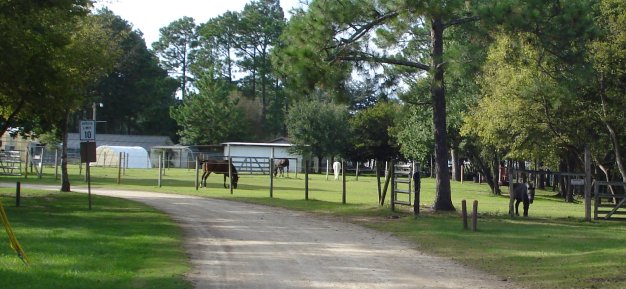
Maxwell Air-Base features another luxury item – horses.  Even the luddites rarely object to horses because they are graceful and beautiful.  I would not want to own one, since I don’t know how to care for them, but I am glad to have them around.  Mariza is very fond of horses.  If she (and we) lived nearer to the tree farms, we could buy one for her.
Grazing animals are good management; of course a couple horses are not enough. It is good to have different types of animals, such as sheep or cows or goats to rotate in the pastures. Animal species have different digestive systems. The sheep help slow the spread of horse parasites and vice versa and tend to favor different mixes of greens. Healthy pastures are diverse because of the different habits of species and the different characteristics of their manure. 

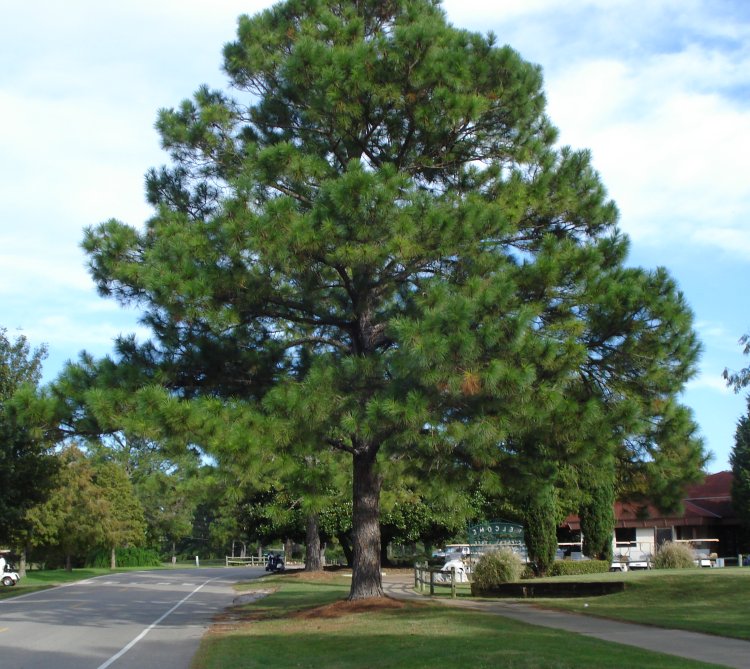
They have lots of nice trees on base and Alabama is a big timber state. Slash, Loblolly & longleaf pine together are called “southern pine”  and they sustainably supply around 58% of American timber needs.

Yesterday’s Solutions are Today’s Problems

We are starting to notice the remarkable, game changing development in energy. Scientists have discovered a new way to get natural gas out of shale. They call it hydraulic-fracturing. And there is a lot of potential. This new technique has increased American gas reserves by something like 39% in the last couple of years.   Experts estimate that we have as much usable gas in the U.S. as the Saudis have oil and if only half of our coal powered plants converted to cleaner burning natural gas we could easily reach our greenhouse gas reduction goals. 

Gas is cleaner than oil and much cleaner than coal, both in terms of actual pollution and in terms of greenhouse gases such as CO2.  Another important consideration is that WE have our own vast new supplies of gas.  Most exportable oil is under corrupt, unfriendly or unstable countries.  It is better not to send American money to some of these guys.  Our gas, on the other hand, is in peaceful, pleasant American places like Pennsylvania, New York, Maryland and West Virginia.  Many of these rural areas could use the jobs that domestic natural gas could bring.

I traveled though much of the area where the gas is when I drove from Syracuse to Virginia.  It is the same area where we did a lot of coal mining.  This is no coincidence.  The same forces that turned Paleozoic plants into coal also made gas.  The gas is trapped in shale formations and you can easily see how the roads were cut through the shale formations. 

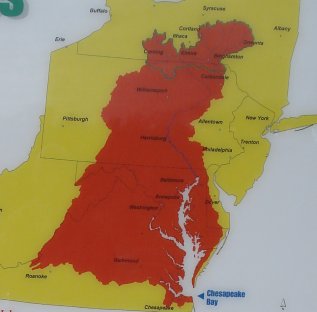
But I noticed something else about the geography of natural gas. It is also the geography of the Chesapeake Bay watershed and much of the water that isn’t running off into the Chesapeake flows into the Great Lakes. We worry about these bodies of water. While listening to local radio driving near Wilkes-Barre, PA I heard reports of firms extracting gas were asking permission to discharge water into the local streams. The HYDRO part of hydraulic-fracturing has to go somewhere.  I don’t know the details of the process, nor do I know about the quality of the water discharge, but I do know that any discharge in large enough amounts is going to create disruptions in the local ecosystem, in this case the Chesapeake Bay watershed.  Some people are already raising concerns.  The process may turn out to be benign.  It could even be beneficial if the water is clean, but we will have to think of this as a balancing among priorities. 

Yesterday’s solutions are today’s problems and it follows that today’s solutions will be tomorrow’s problems.   Abundant American natural gas will help free us from nasty foreign oil suppliers and help us reach climate change goals, no doubt at the cost of something in the future.  This is not necessarily a failure of wisdom or judgment.   It is an ordinary consequence of making choices, setting priorities and doing these things in the context of imperfect information.   All these things are part of the definition of decision making.

Shale gas

Future critics with access to much more information as well as the experience of the past can easily attack earlier choices, but the comparison is usually unfair, as it is always unfair to compare hypothetical solutions with a real ones.  

For now the smart move looks like going for the gas. 

Farther Down the Road

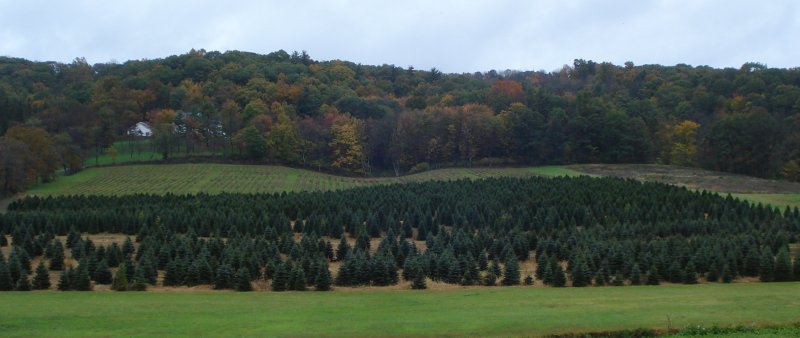
I kept to the smaller roads out of Pottsville. This part of Pennsylvania is very rural. I passed several tree farms; as you can see from the pictures they grow Christmas trees.  I also passed a couple of places that advertised themselves as trappers, fur and hide buyers.  You would think that they would be more circumspect in this PETA soaked world.  It is nice to know that some people are still free enough to resist the pressures of the politically correct.  I suppose they are well armed and irascible.

The PETA types that bravely throw red paint on little old ladies in fur coats tend to give a free pass to motorcycle gang members wearing leather coats and even PETA radicals understand that a well-armed guy living by himself who makes a living skinning animals in a dilapidated trailer is probably something you just shouldn’t fool with.

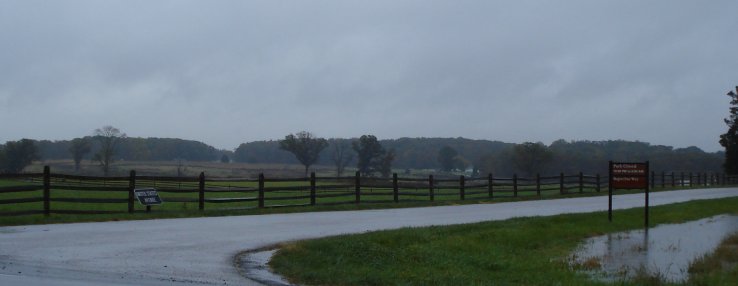
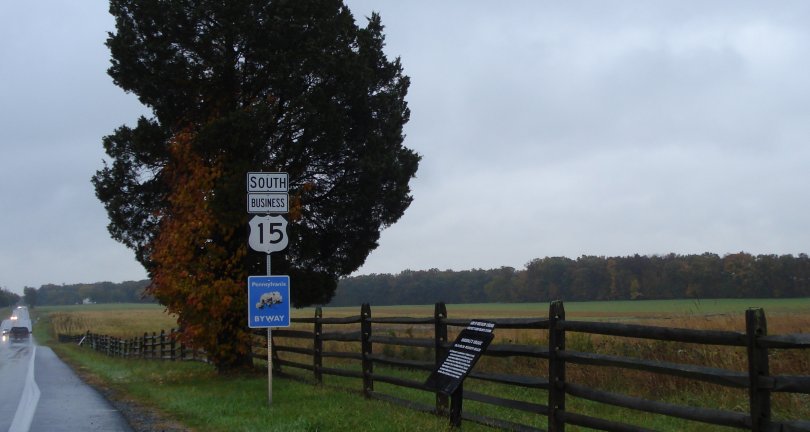
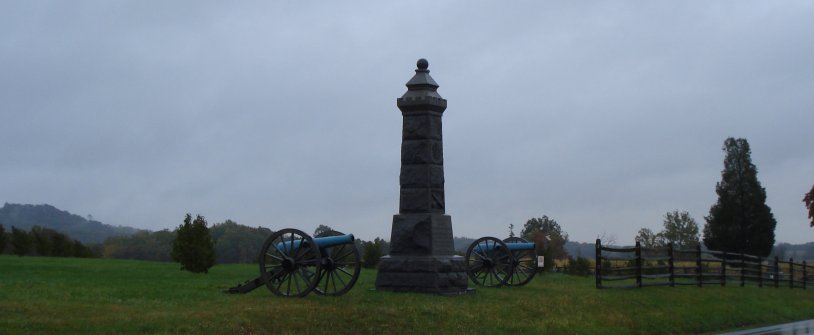
Another “scenic byway” is old Hwy 15 past Gettysburg. The area along the road looks a lot like it must have back in 1863, of course with the addition of the statues and monuments. Many Civil War battlefields are threatened.  Most of the actual territory included in the battles is on private property.  When the countryside was rural, there was no problem keeping it looking appropriately … rural.  But today as shopping centers and subdivisions ooze out across the landscape the authenticity is threatened.  Eventually we could be left with a little patch of green & a few cannons surrounded by fast food restaurants and parking lots.  Following in the footsteps of Picketts charge across a Wal-Mart parking lot would probably not feel right.

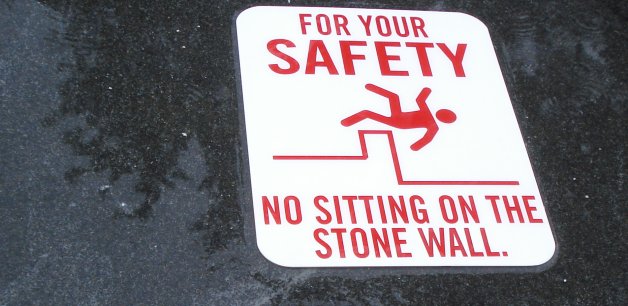
Speaking of new buildings and parking lots, they built a new visitors’ center in Gettysburg.  It was needed.  The old building was too small for the growing crowds, but the new facility is a little too slick for my tastes, too organized.   Part of the joy of visiting historic places is discovering new things, or more correctly discovering old things for yourself. The organization will give more information, but GIVE is the operative word.  It is passive.  If you get it laid out for you by someone else it is not so much discovery.  There is a ridiculous amount of control as you can see from the picture of the sign. The wall in question is around three feet high.  It would be hard to fall off in the first place and if you did it would be hard to be hurt.  But I suppose the lawyers got at it. 

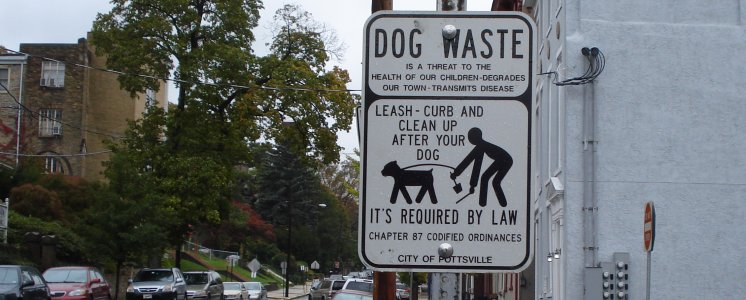
Below is an even more interesting sign, although this one makes a good point.  The picture says it all about which is the dominant animal in the relationship. The dog strides proudly off, leaving the man shuffling, hunched and simian-like to clean up behind.

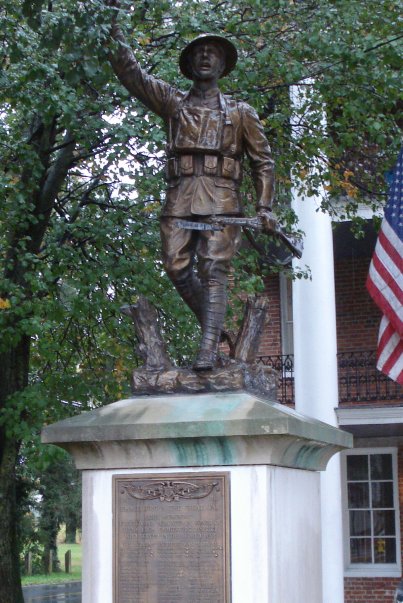
I took one more side road, as I got off the main road and went through Emmitsburg. Below is a monument to the fallen of  World War I in Emmitsburg, MD.  

Business-Government PR Partnerships

The keynote speaker at the SU symposium was Keith Reinhard, founder and president of Business for Diplomatic Action (BDA).   This is an advertising professional with an impressive resume.  You can read about him at this link but you already know his work.  He wrote McDonald’s “You Deserve a Break Today” and “Two-all-beef-patties-special-sauce-lettuce-cheese-pickles-onions-on-a-sesame-seed-bun,” as well as State Farm’s long running theme, “Just Like a Good Neighbor, State Farm Is There.”

Mr. Reinhard said that American business is uniquely placed to lead in burnishing the U.S. image abroad, pointing out that Coca-Cola alone has more than ten times as many employees as State Department.  He also made some good points about travel to the U.S.  It is hard to get visas; we don’t welcome tourist well when they get here and the U.S. does little in the way of travel promotion.   All these things are true. People have been complaining about visas and trying to improve the travel situation for many years. 

(IMO, the single best thing the USG could do to improve our image is improve how potential visitors are treated, from the minute they inquire about a trip to the U.S. until they put their foot back on their home soil. Most of the components of this are within the power of the USG, but this is a complex issue fraught with conflicting interests and priorities.  I won’t even try to address them in this space. Smarter people than I have tried.)

U.S. businesses are indeed very important in shaping the way the U.S. is seen abroad.  We have worked with businesses overseas and there are many venues for cooperation.  Business can help sponsor July 4 celebrations; they can be part of seminars and symposiums; business leaders often make great speakers at events. But cooperation can be oversold.  The notion that business will become involved in partnership with government to improve the U.S. image is one of those great ideas that seems always almost happening, but never quite arrives.

Business-government PR enterprises don’t go as smoothly in practice as they do in concept for some good reasons.  Most people employed by Coke, for example, are doing things like bottling or distributing the product.  This is similar for all businesses.  Businesses do business.  We cannot expect them to devote much of their time or money to helping the U.S. government do image building. They already pay taxes.  They create jobs and build prosperity.  That is their role.    

Getting too close to the U.S. government can be a problem for businesses.  Government’s embrace can be suffocating and dangerous for business and business connections can difficult for government.  

Let’s say it plainly.  If business and government form partnerships, they both hope to gain something from the joint enterprise.  Unless everybody thinks the relationship through, much of what they expect might give the impression of impropriety and sometimes might actually be unethical.

It can be too easy for particular local firms to become the “go to” places for U.S. officials.  Pretty soon it looks like the U.S. is endorsing or backing their products.  Even though nobody says so, foreigners might treat them differently because of this.   When working in Poland, I found that many people assumed that they could get better treatment for things like visas if they worked with firms somehow associated with the Consulate.   We would sometimes have to distance ourselves from a firm that was in fact actively implying such useful connections.

You can easily envision situations where closeness to the USG would be a negative.  Unfriendly foreign authorities might not be able to effectively harass our diplomats, but they can take out their frustrations on U.S. firms or their local employees.

There is also a little disagreement about how much the general image matters anyway.  The numbers seem soft and volatile.  IMO, any opinion that can change week-to-week based on external events is not firmly held or predictive of behavior.  Mr. Reinhart mentioned an article in the NYT that questioned the efficacy of a being ostensibly popular.  (He did not agree with most of it, BTW, and the extrapolations in this paragraph are mine, not his.)Things like cooperation with U.S. policies and sales of U.S. products seem unaffected by the vicissitudes of popularity.  I have come to believe that public diplomacy can be very effective in specific areas and subjects, but is less useful with the general. In fact, I think that the general questions re favorability or approval of the U.S. are almost useless, especially when done across cultures that have a variety of ways of answering questions and interacting with researchers.

All things considered, I think the best things American business can do to improve America’s image is to make quality products, lead their businesses ethnically and respect local laws, culture & customs.  We can cooperate where appropriate, and we do all the time, but business is not going to become some kind of PD auxiliary and neither business nor government should want it to. 

I know that I am giving a negative accounting.   Let me mitigate that a little.  We already have succeeded.  USG cooperation with U.S. businesses is brilliant.  I know that from personal experience. I have worked with American firms since my first post in the FS.  They sponsor many of our events and in the process build their own images and get exposure for their products.  U.S. businesses participate in our symposiums and share their experience.   We all benefit. Of course, American businesses directly sponsor exchanges, investments, technology transfers and all tolled they certainly make a much greater impression on the world than our comparatively underfunded and understaffed efforts.  They do these things for good business reasons.   

Cooperation is good and where it makes sense it has been going on since before the founding of our Republic.  Ben Franklin, our first diplomat, combined representation of government with business. John Adams was less successful as a diplomat because he couldn’t really grasp the interconnections.  Read any of their biographies and you will be struck at how similar things were so long ago.  We have been doing it.  I just don’t see how business-government cooperation can be significantly expanded in the PR area.  We in government would have to ask ourselves what business hoped to get from the expanded partnership (i.e. influence).   Business leaders would have to ask what government wanted (i.e. money). And if all of us were thoughtful and honest the answers might make us rightfully cautious in pushing too hard for more. Some things you shouldn’t do, even though you can and some separate things should not be too intimately mixed.

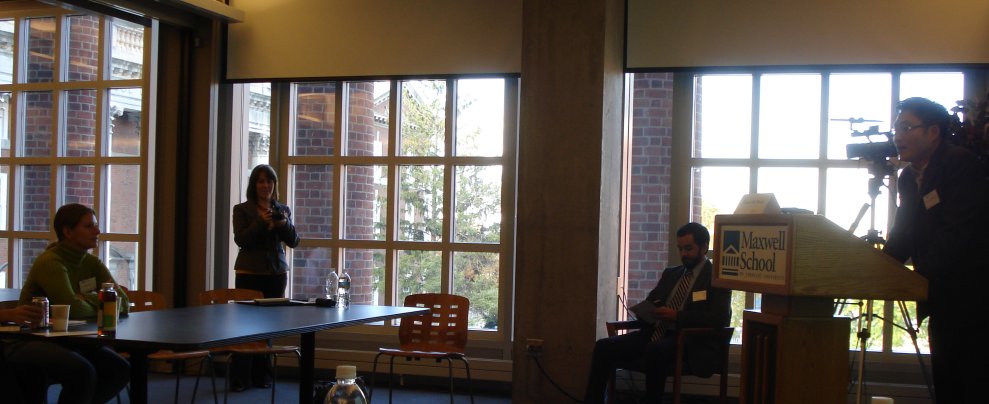
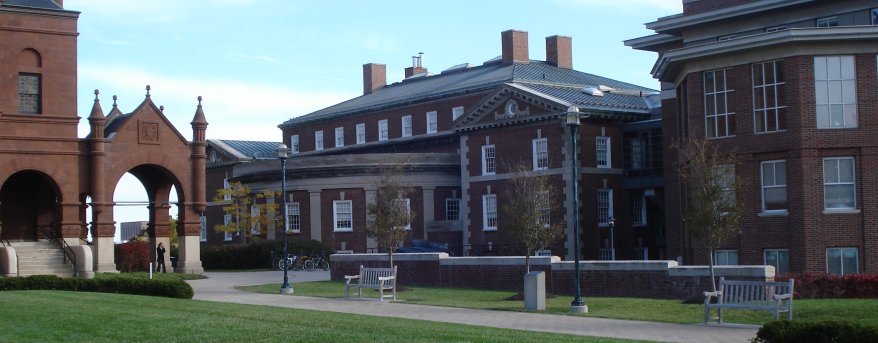
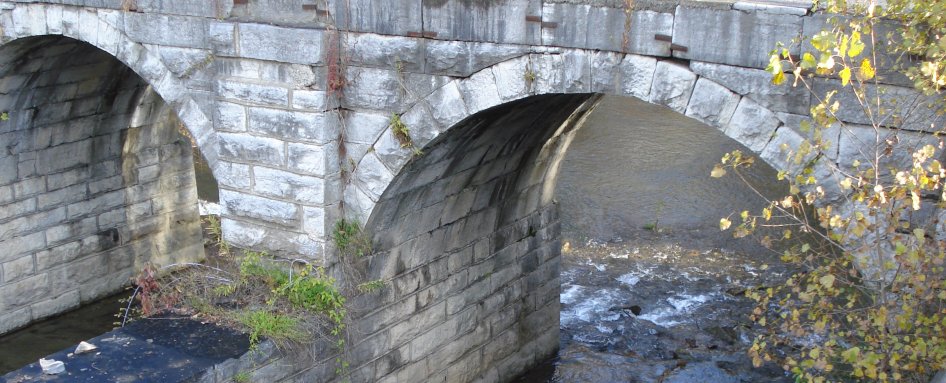
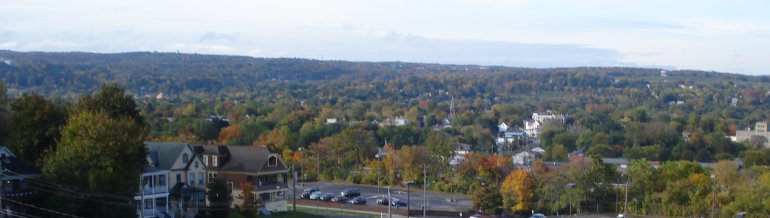
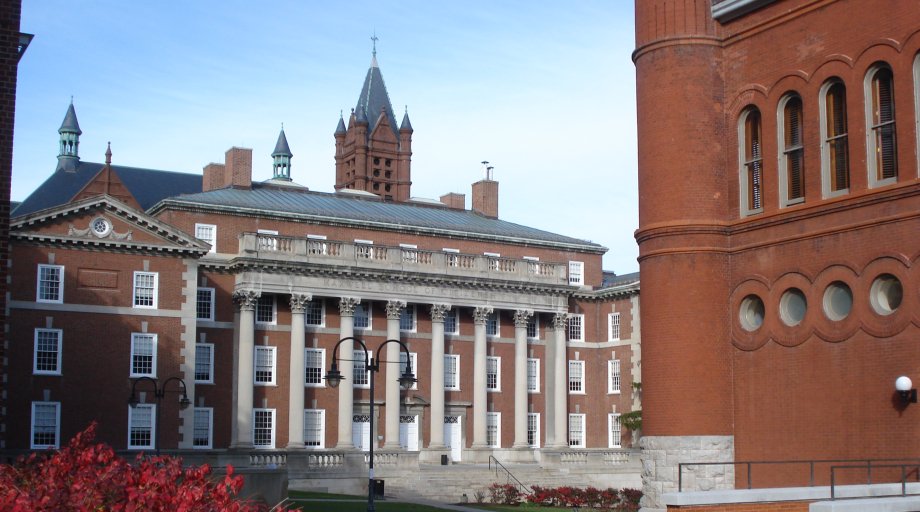
BTW – that is not Mr. Reinhard in the picture at top.  I just got a nice angle on the podium to show both the room and the nice day outside.  The middle picture shows some of the building on the SU campus. On the bottom is an interesting arch along the Erie Canal route.

Lane Change Needed in the Climate Change Debate

We talked about the public diplomacy surrounding climate change at the Public Diplomacy Symposium at Syracuse University.  Karen Akerlof from George Mason based her talk on a report called Global Warming’s Six Americas, which segmented the American public by their belief in global warming and stated commitment to doing something about it. 

I will let you read the report at the link above. Ms. Akerlof pointed out that these diverse groups had more in common in their actions than in their beliefs. For example, those who were dismissive of global warming were MORE likely to do things like drive fuel efficient cars, weather-strip their houses and conserve energy in general.  You could speculate that they were more motivated by the desire to save money than save the earth, but this reveals the biggest challenges in public relations/public diplomacy – people often do NOT act on their expressed beliefs. 

Public affairs professionals like to think that if we can convince people of the righteousness of our positions their behaviors will change in favorable directions, but the relationship between good will and good deeds is not strong.   In fact the gap between what people say they want to do and what they really do is probably the single most common inspiration for literature, myths and self-help books. 

People are Perfidious 

This is the gap between what people SAY – i.e. their stated preferences – and what they DO – i.e. their revealed preferences.  People don’t tell the truth to opinion pollsters when talking about complex issues.  I won’t call it hypocrisy or dishonesty because it goes deeper than that simple explanation.   

People often don’t know what they really think because they haven’t thought through all aspects of most issues.  When asked, they to follow along the familiar ruts of what they think others approve.They might even claim that they feel strongly about it but that doesn’t necessarily indicate their own commitment or their willingness to follow through.  It gets worse when we become more political.

Politics does not REQUIRE strong commitment or follow up among most supporters.   At a cost of about an hour of their time otherwise uncommitted individuals can convince themselves of their virtue once every two or four years and then do not much but complain and make demands in between.  Politicians figured this out long ago (read about it in what Tocqueville wrong in 1830), so they flatter and pander to the uncommitted by giving them an undeserved benefit of the doubt.  Focus on a one-time easy to do action works well campaigns.  The skill level required to make a mark on a ballot or pull a lever on a machine is not high.  But is not a good way to govern or get things done in general.

A Slowly Warming Oven

Climate change is perhaps the place where the one-time, short-term rhetorical – the political campaign – commitment works LEAST well.  The diffuse, slow-motion unfolding of climate change is almost the opposite of a political process.   In climate change, you have to pay the costs up-front and personally.  However, you may never get a personal payoff and the results of your work and sacrifice may not come for many years, may not happen near you and may not be apparently connected to your actions.  In fact, I cannot think of situation LESS likely to inspire consistent action on the part of individuals. Mark Meisner, Another of the SU panelist, laid it out nicely.  He said that the climate debate is hard because of doubts related to complexity, distance, time, visibility, responsibly and consequences.  To me this just means that we’re cooked on this one.

Advocates for climate change action missed major inflection point in the climate debate that happened a few months ago.   Until this year, they had a politically based task.  They had to convince people to SAY they believed climate change was real and that it represented a danger. This task was facilitated by the easy identification of villains.  Global warming deniers (following the construction “Holocaust deniers”) could be attacked.  It was implied that if these guys would just recognize the truth, the problem could be solved.   But this is wrong. Global warming deniers did not cause the problem and they cannot fix it because global warming is a physical problem that requires real, as opposed to political, action.  AND it requires long-term commitment, not mere involvement.

The inflection point that occurred in the debate this year is that almost everybody now recognizes the problem, at least rhetorically. The convincing part of the public diplomacy worked.  Now we have moved to the “so what do we DO?” stage. This is harder. 

Easier to Identify a Problem than to Agree on Solutions

Let me lay it out.  We now agree on the diagnosis of the problem, but we strongly disagree about what we should do, when we should do it, who will pay for it and who is responsible of taking the needed steps.  We have moved beyond the political phase of the problem and are now in the governance phase. They require different skills and methods.

On the one hand, this is to the advantage of the U.S.  Other countries have sanctimoniously hidden behind the U.S. for too long.  We didn’t agree to Kyoto, but Kyoto didn’t work anyway. Those that did agree to Kyoto generally reduced their CO2 emissions LESS since 2000 than we did. It is the difference between the political and the operational paradigms.  In the political paradigm you get credit for what you say you are gonna do.  In the operational paradigm you only get credit for what you actually accomplish.  America has been doing much better in the reality than in the perception of environmental progress.  So as a public diplomat, my life has become a bit easier because we can more easily talk about our practical success.  Clearing away the cover, calling the practical bluff of our detractors will be satisfying.   

Good Decisions Require Good Information, Incentives

But my anticipated joy at rhetorical victories in the public diplomacy game is mitigated by the anxiety I feel as someone concerned about the real environment. I am resigned to the fact that there will be climate change.   We cannot avoid it.  How much it bites depends more on technological developments than on political will.  Politicians can do two things to help.  They can raise the price of carbon, which will encourage alternatives, and they can reduce opposition to nuclear power.   But both these things have political costs, so I expect less help from this sector.

The atmosphere doesn’t care if you say you are an environmentalist.  It doesn’t make allowances for the poor nor does it give credit for good intentions.   It is not impressed by celebrities.  You cannot make progress by changing accounting procedures, borrowing from the future or blaming the past.  You cannot get credit for what you didn’t do and your good works will often by obvious to nobody. In short, the natural environment is a very un-political environment. 

Fortunately, the American people are greater than American politics, or as l like to say, the American nation is greater than the American government. This is true of other countries too.  We are developing new technologies and new techniques. The imagination, innovation & intelligence of the people will produce good solutions if they have the right incentives and information. Environmental protection is one of the places where market-based incentives and information is insufficient because we are dealing with external costs and long term consequences.  Government’s role is to make the needed adjustments in information and incentives, so that individuals and firms make realistic decisions.  But the authorities must resist the temptation to pick winners and losers and micro-manage.

Politicians & public affairs campaigns play indispensable support roles by creating conditions favorable to development, but they develop nothing by themselves.  

In the end, what you have done really is more important than what you say you are going to do.

Chicken & Pigs; Eggs & Ham

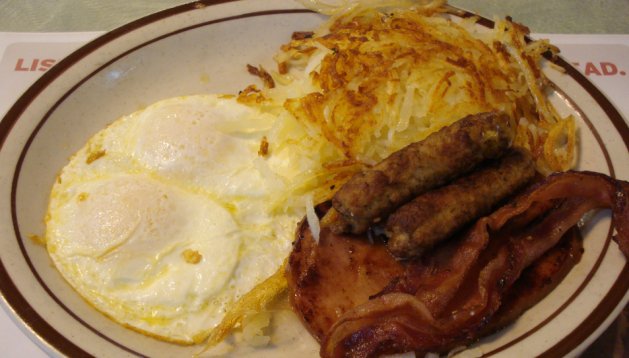
Do you recall the difference between involvement and commitment?  Look at this bacon & eggs breakfast. The chicken is involved.  She drops the egg and has nothing to do ever again.  The pig is committed.  His ass is right there on the plate.   Involvement can be painless and ephemeral.  Commitment is hard and permanent.  You can see why it is easier to get people involved than committed.

Interesting Distractions

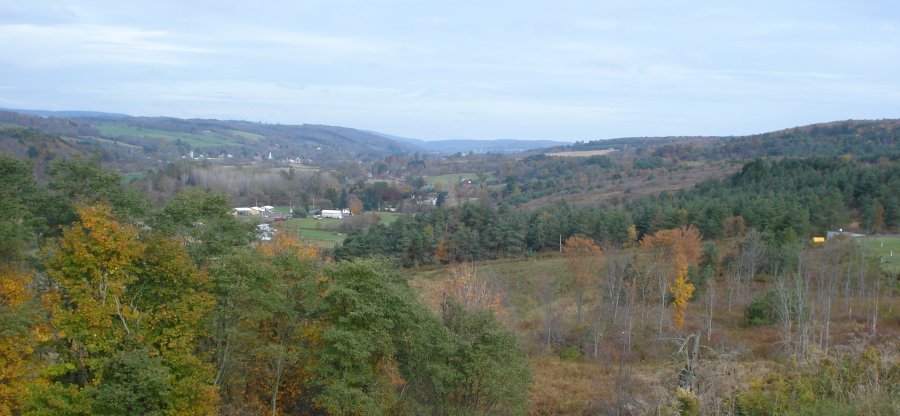
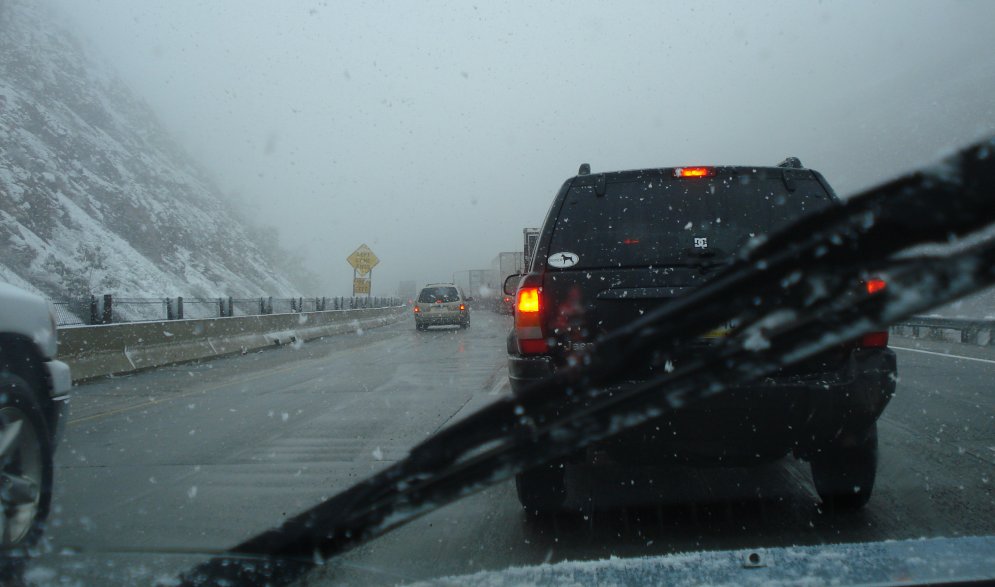
You have to get off the Interstates.   I made a few short detours on my way back from Syracuse.  I only wish the weather had been a bit better.   It is a lot more fun to drive if you can see better. You can see from the pictures when the weather was clearer that fall is coming to New York and Pennsylvania. Actually, it was more like winter in some places. I heard on the news that they got as much as six inches in some of the Pennsylvania hills.   Never before has snow come this early. It stopped traffic at one point, as you can see from my picture. Doesn’t look like October, does it?

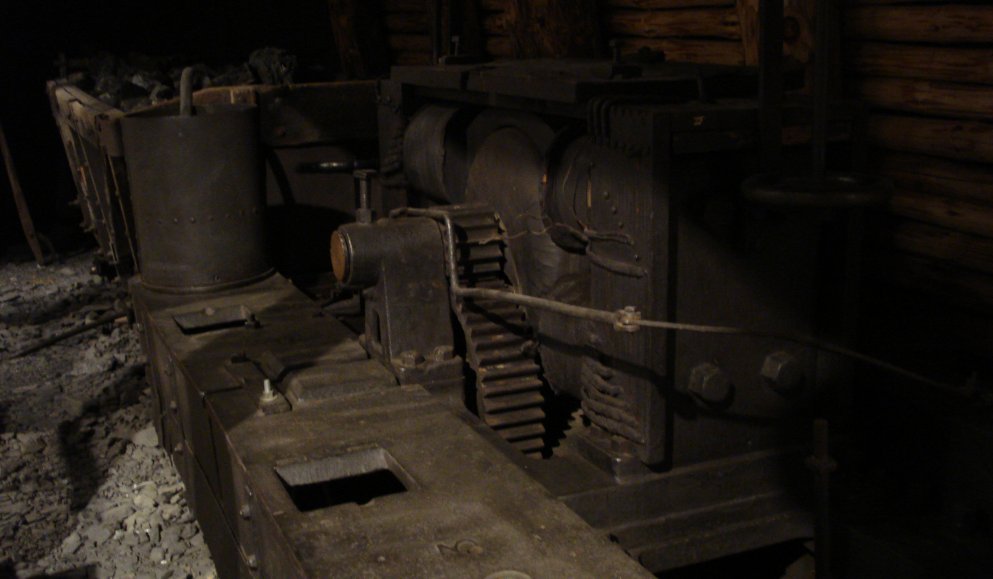
In Scranton was the anthracite coal museum.   I didn’t have time to see the whole thing.  The have a whole mine tour with an outdoor museum including miners houses etc. It would be a day-long study. I went only to the indoor museum.  Anthracite is hard coal with few impurities, so it burns cleaner than other coals.  It used to be important for home heating, where cleaner burning was important, but it has since been supplanted by natural gas, which is cheaper, cleaner and more convenient. Anthracite is too expensive for extensive use in power plants.  Below is a small engine used in the mines. 

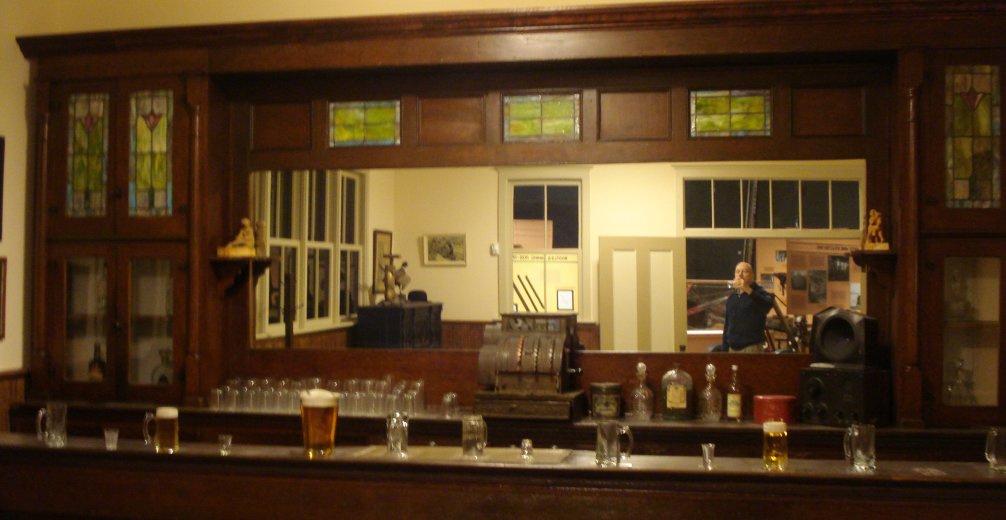
Below is a typical miner bar.  It looks a lot like working bars everywhere.  Life sucked for the miners in the old days.  They were not well treated by the bosses and the work was inherently nasty and dangerous.  These guys were working class heroes and I can understand why they would want to hit the bars after a day in the mines.

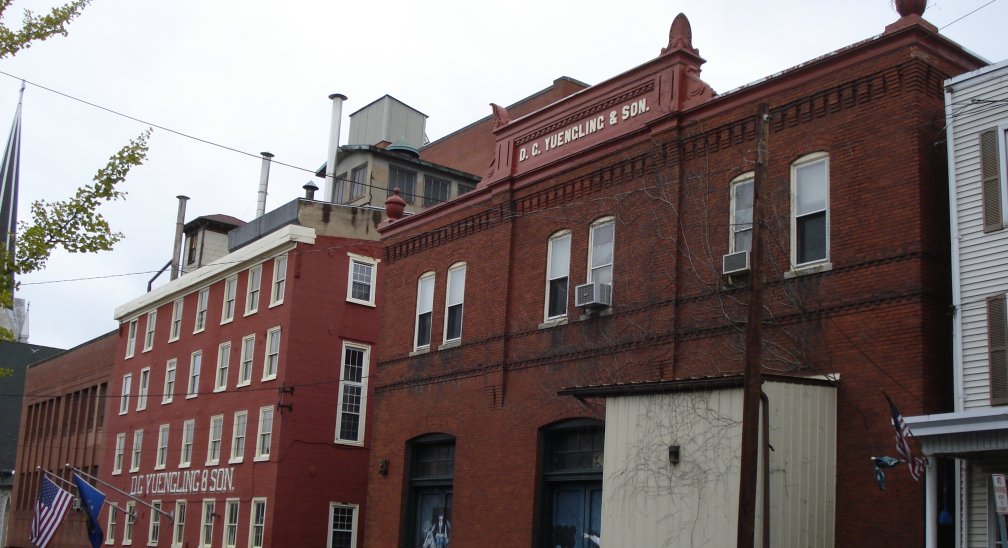
About an hour down the road, I visited Pottsville and the Yuengling brewery.  They claim that it is the oldest continuously working brewery in the U.S.  It is still owned by the same family that founded in 1829.   The brewery building is below.

I had my first bottle of Yuengling when I stopped Gettysburg back in 2004, on my way to pick up Mariza in VA to take her back to New Hampshire. At that time it was just a local brew, but now it is available in Northern Va.  I am glad that they seem to be prospering, but it is a danger to grow too big.   The firm that gets too big loses its personality and ultimately its independence.  I remember that happened with Point Brewery, Leinenkugel and with G Heileman, maker of Old Style and Special Export.  You can still buy those brands, but now they are just part of the bigger corporation.  I mourned their passing, although their beers are still about the same and Leinies has come out with a good wheat beer.   We can all get what we want in this era of mass customization, but I long for the authenticity of old brewers.  

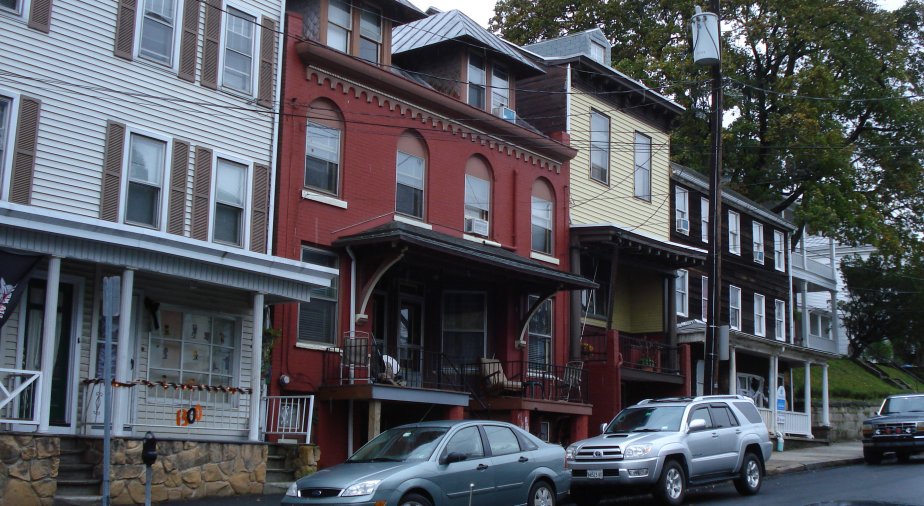
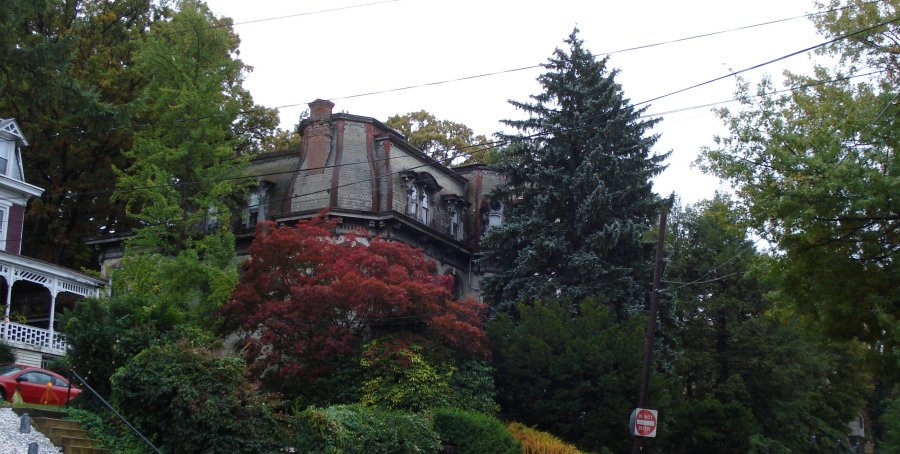
Above and below are street scenes from Pottsville.  It is a cleans & cute town with lots of impressive old houses in a pretty natural setting.  The one below is the kind of house they could feature in a ghost movie, IMO. 

Something New on the Erie Canal

The Erie Canal was a wonder for its time.  It could move stuff many miles at very low cost.  Water was much more reliable than roads of those times.  But it moved only as fast as a mule could walk.  The golden age of canals was cut short by the advent or railroads. There were a few dead ends, such as plank roads.  They were roads made of boards (planks) that elevated the traveler above the mud.  They were very good for swampy areas.   One of the first plank roads in the U.S. was build right here in North Syracuse.   Lots of them were built and they were all the rage.  But they cost a lot to construct and wore our faster than their proponent projected.  If you included maintenance they were a really bad, if picturesque,  idea.  Their memory survives in place names.

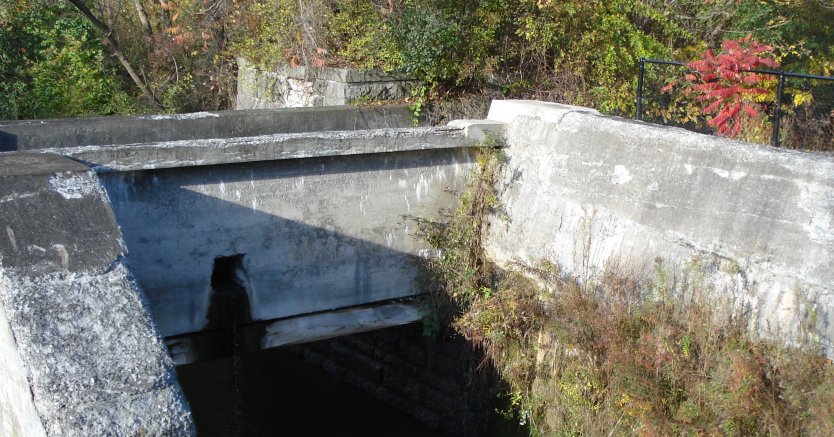
Those days were not really that different from ours.  That was also a time of great changes in technology, relationships and in their case geography.  Let’s make a comparison using technological milestones.  The first Apple personal computer came out in 1976 – thirty-three years ago.  The Erie Canal was completed in 1825.  Thirty-three years later half the U.S. had gone from wilderness to settlement.  Railroads had spread.  The telegraph had been invented and lines were being strung across the county, so messaged that had taken days or weeks now arrived in secondss.  A dozen new states had entered the Union but the Union itself was looking shaky.  A lifetime in the second quarter of the 19th Century was at least as eventful as ours. BTW, the canal had to pass over rivers with a kind of water bridge or aqueduct.  Below is what they look like.

Great fortunes were made and lost betting on which technologies would come out on top.  Like today, the best didn’t always win out.  Sometimes you just had to jump on the one that had the most users.   

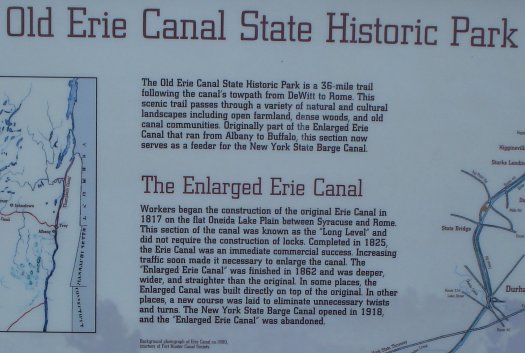
I went down to part of the old Erie Canal that was left near Syracuse.  Through town most of it is now filled in and forms the middle of Erie Boulevard, BTW.  There is a park along much of what is left of the old canal and it is very calm and pleasant.  The tow path is paved with gravel and it would make a beautiful running trail.  I didn’t have time to try it out myself. I can imagine it was not so nice when it was in use.  Picture the mud, mule crap, sewage and garbage.   This is how it often is.  We get nostalgic for the old facilities and they get better looking with time.  Think of all those Civil War battlefields or medieval castles.  They were once factories of war.  Now they are just pretty and interesting.

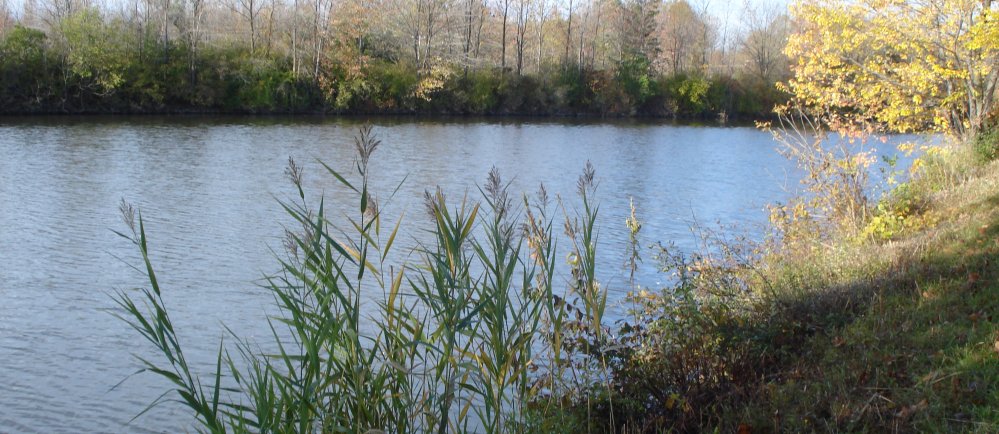
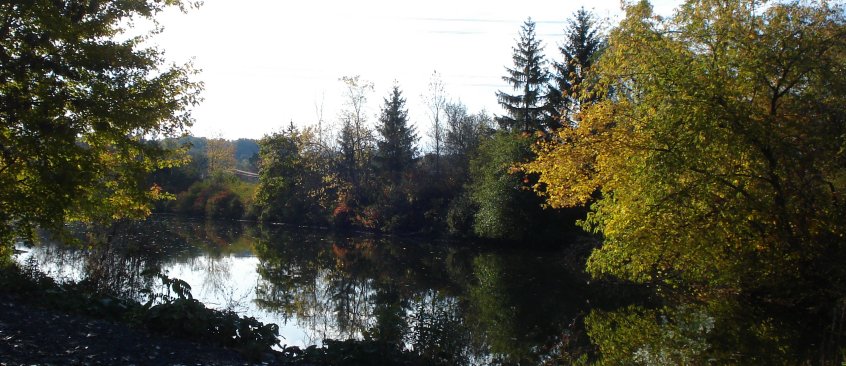
A closer look at the area around the canal shows that not everything is as it was.  Humans have totally remade the landscape and that goes way beyond digging the ditch that became the canal.  look at my pictures above and below.  The plants you see in the foreground above are phragmites, an invasive species of reed.  There are acres of them in the wetlands nearby.  Had you come to this place a generation ago you would have found native American cattails.  The phragmites are ecosystem changing species. Look across the pond on the picture below and you see Norway spruce.  They too are immigrants.  We tend not to call them invasive because they are not as prolific and they are pretty. Not in the pictures but in back of me were Norway maples, which look a lot like sugar maples and are replacing them in some places.  A 19th Century naturalist familiar with the fauna along the canal would be very surprised by the unfamiliar plants.  I couldn’t get a good picture that showed the ruts on the hills a little farther away.  Chrissy’s father explained that to me a long time ago.  The cows walk around the hills in habitual ways. Over the years, they create ridges and indicate that the hill was long part of a cow pasture. Of course, the cows and even the grass is not native.  Some people consider fescue invasive. Even the earthworms living in the soil were imported from Europe.

We had a weather anomaly.  In Pennsylvania and much of western New York it snowed. Parts of PA got SIC inches.  This is the earliest significant snow on record.   A woman who drove up from nearby Ithaca said there were inches of snow there.  But Syracuse was like a donut hole.  It was rain or snow all around.  Here it was cold, but clear, so I got a good impression of the town.  It seems a nice place and Syracuse University is very charming. 
We had a good symposium at SU, BTW.  I will write about my impressions tomorrow.