Retire Smokey the Bear

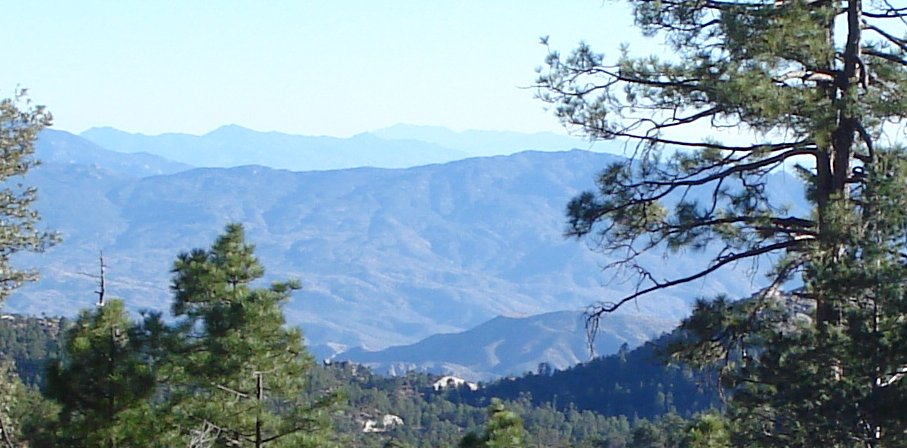
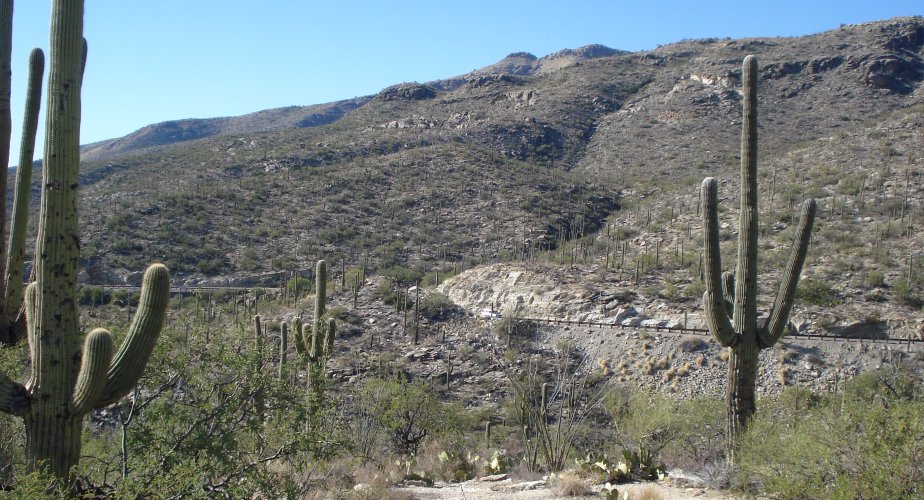
I know it is ecology101, but I had never actually done the road trip version of driving from the Sonora desert biome into the alpine/Canadian biome in around an hour.  To get the same sorts of changes you see as you climb Mt Lemon from the roughly 2500 ft near Tucson to around 9000 ft at the peak,  you would have to drive from southern Arizona up to just south of Hudson Bay.

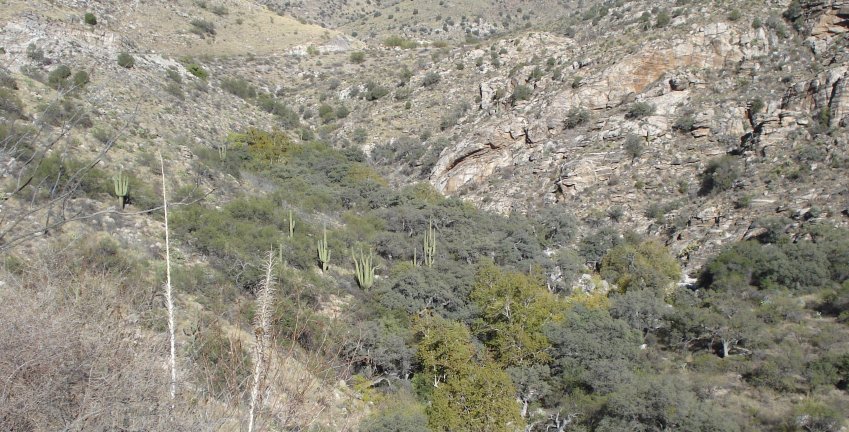
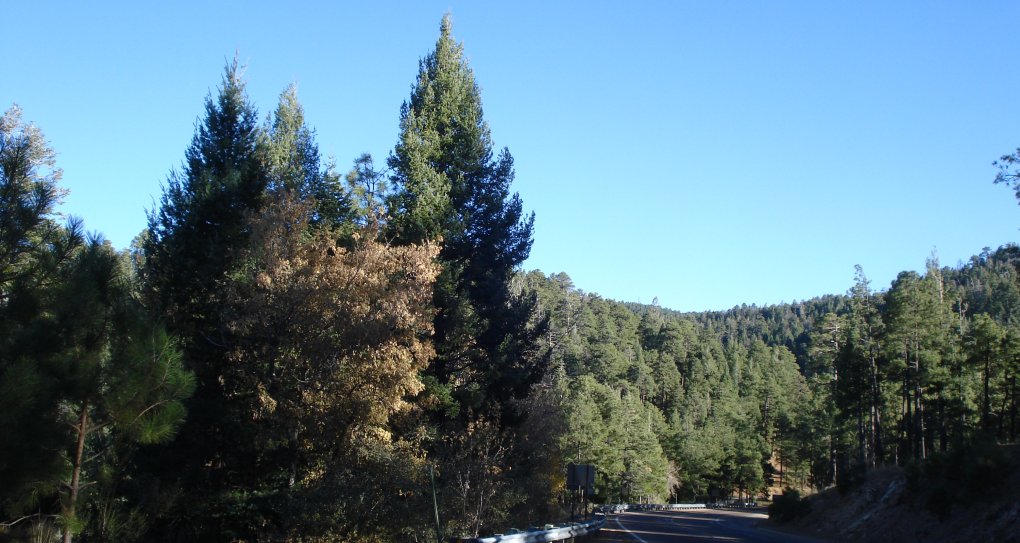
You start in the scrub and cactus forest on the lower slopes.  Next is semi-arid grassland. Soon you get into junipers, some cottonwoods and oak woodland, followed by montane ponderosa pine and then the spruce of the boreal forests. The biomes mix and match in ways they would not if spread over a larger area, as subtle changes in elevation and topography create micro-climates.

It was more than twenty degrees cooler on the top than on the bottom the day I went up.

They call these “sky islands” because boreal and montane forests are islands of this sort of vegetation in a sea of desert.   As with all islands, the environments on them are fragile because of its isolation.   If species are eliminated from a relatively small area, there may be no nearby seed stocks to bring them back.   These communities have been in place since then end of the last ice age, when the cool weather systems were present all around.  We can think of the deserts like rising water as the earth warmed 10,000 year ago. 

It is important to manage these islands carefully, but sometimes good management seems counter intuitive. It seems to make sense to protect the ecosystems from destructive forces such as fire, but years of fire protection have endangered them.  Fire is a natural part of the ecology.   When it is artificially excluded by human efforts, the ecological communities change and large amounts of fuel are left standing in the forests or lying on the ground.   Instead of being a useful and healthy clearing process, fires under the man-made conditions become major disasters.  

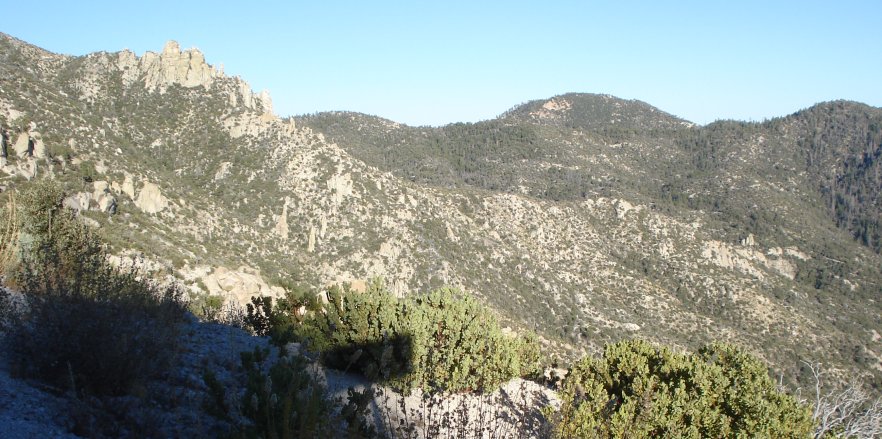
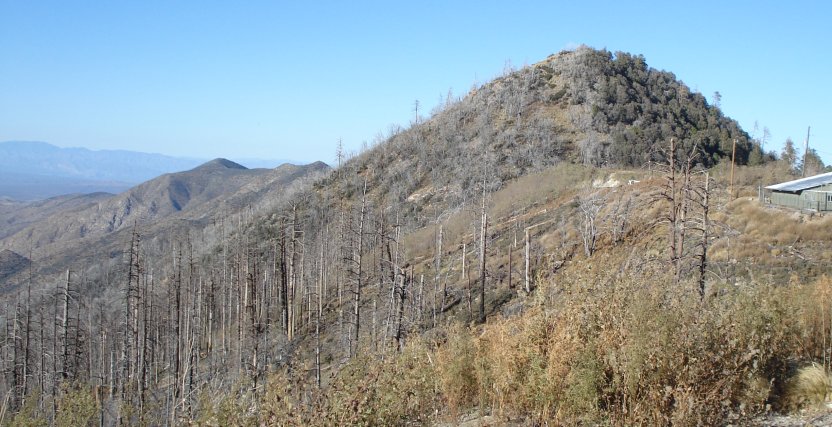
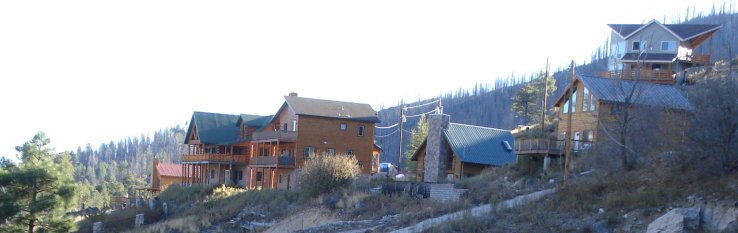
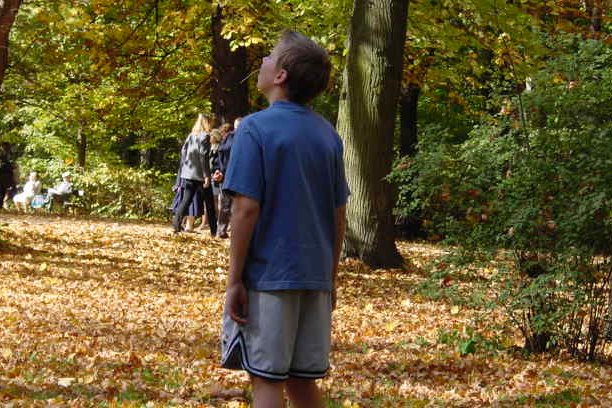
When people see these fires they often demand even greater “protection” making things worse and worse. Above you can see the results of a fire made too big by years of fire suppression.  If we continue to “protect” this land from regular fires, the forest will grow back – again too thickly – until the next big fire.  Below is one of the reasons we exclude and fight fires.  The new cabins are named “Adam,” “Hoss” & “Little Joe” after the characters on Bonanza.  Hoss is the biggest.

Fire is a natural and necessary part of a healthy ecological process.  If we exclude fire, we change the environment in undesirable ways and make it less robust.  Smokey the Bear should probably be put on pension or at least modify his pitch.  He has done too good a job.  Smokey is cute, but when he hired on we didn’t understand as much about the environment. 

PS an interesting article I read after writing is a this link.

Fixing Things

I went up to Mt Lemon yesterday and have some pictures, but I cannot currently post them since I am lacking a connection.  But I have a picture and some general thoughts from the day before.

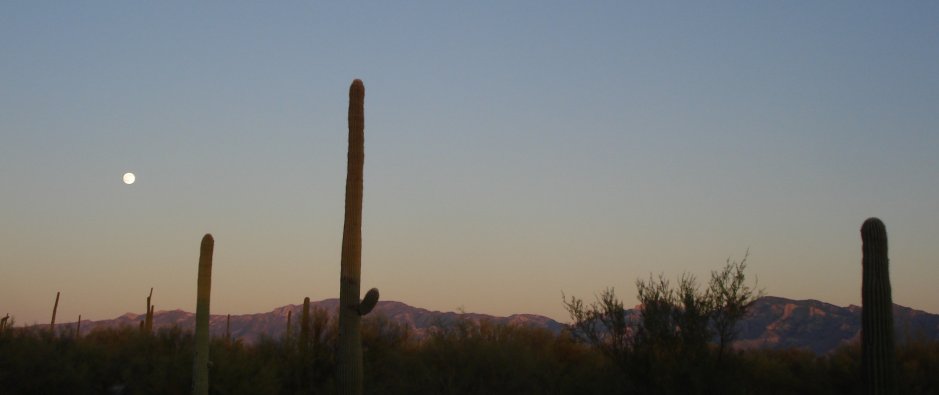
Above is another view from Carl and Elise’s yard, this time during the daylight.  It is amazingly green, although you see that the ground itself is bare.  There were all sorts of birds flying around.  Especially common were desert quail.  They walk around most of the time and only fly when flushed out.  Their calls were very nice to hear. 

I was comparing this desert land to Iraq. I think the land in Iraq is just misused for millennia. The challenge of the desert is that it is unforgiving.  You can get away with a lot more in a wetter place, where grass and trees will quickly grow back after a disturbance. In the desert your mistakes are written on the land for many years or centuries.  I bet that much of Iraq could be as rich in natural diversity as Arizona, but there are too many goats and the country has been too abused for many centuries.  Plants in the desert grow slowly and they depend on the other plants in the natural community.  The brush you cut down or let your goats eat might have taken decades to get that big.  And once taken out, it is hard for it to come back. 

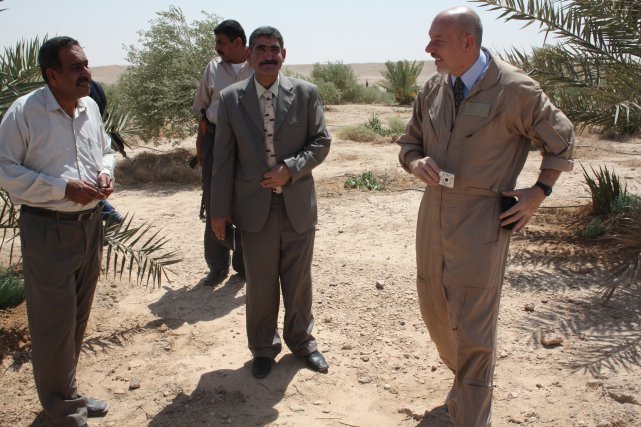
The picture above is me talking with some Iraqis who want to restore their land.  I think it can be done and so do they.  We are standing in the middle of one of their projects.  It is a good start. It just takes work and long-term – multi-generational commitment. 

We have learned many good lessons in land management.  If we just follow our own best management practices and strive to continue to learn, we won’t suffer the fate of the ancient lands of the Middle East.  And maybe if we all learn the right lessons, we can help them return to a better place.  That is a truly worthy enterprise.

Communities in the Desert

Marana vista

Maybe it is just that Carl knows them. (Carl is a connector. He knows lots of people and is genuinely interested in their activities.)  Maybe a place like this is just particularly attractive to people associated with the aviation and travel industries.  Maybe something draws them here.  The nearby University of Arizona evidently gets a lot of grants to do aviation related research or it could be just a case of random clustering.  Whatever the reason, there seem to be are a lot of pilots and airline employees around here.  Many are retired but others own homes here sort of as a base.  I suppose they are like FSO in that respect.  They travel around so much that they really are no longer tied to a particular place, so they choose a nice place like Marana, with its sunny climate and ample amenities.

Below is a view from a bedroom in one of the model homes,

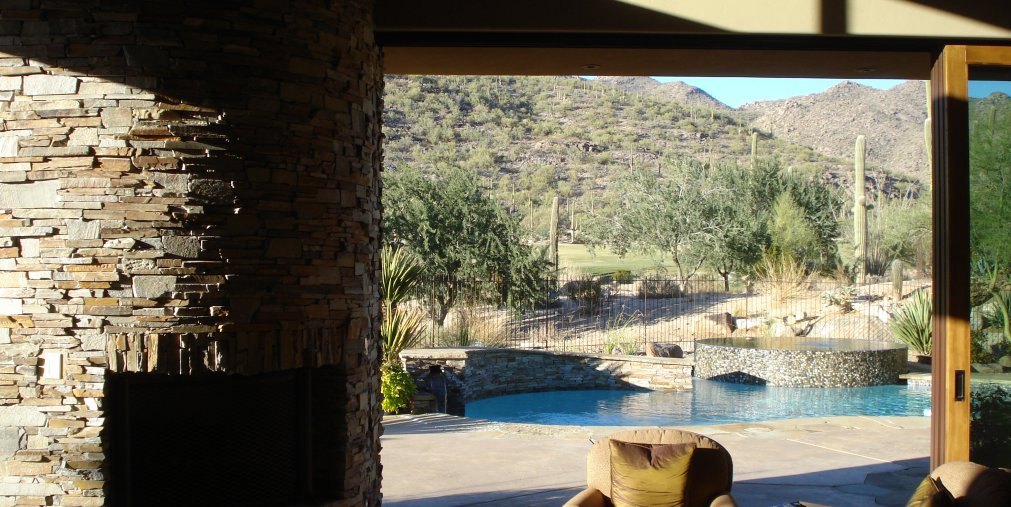
Below is an “outdoor room” at the development.  The doors open completely making the living room and the patio one space.

Carl showed me around his community, which is still an expanding work in progress.   It was started around 1990 and spreads up the canyons.  The growth is extensive, but well-planned.  Distances are significant and it is a long way to grocery stores or services. In other words, it is not a place to walk, except as exercise along the trails or on the golf courses.

You could not call it a retirement community, even though many of the residents are retired or semi retired.   Carl and Elise seem to be typical of the community in that I don’t know think you could say that they are retired.  They no longer work where they did during the bulk of their working lives, but they are active in their community and pursuing a bevy of business ventures.  I mentioned Elise’s Jewelry business.   Carl works on a variety of computer related projects and produces things like custom greeting cards.   A friend of his take pictures of the local wildlife – and sometimes not local as in Australia or the Galapagos – that they use for the cards.    If this is retirement, it is the kind of active and actualized life most of us say we want in both work and leisure.

Putting on the Ritz

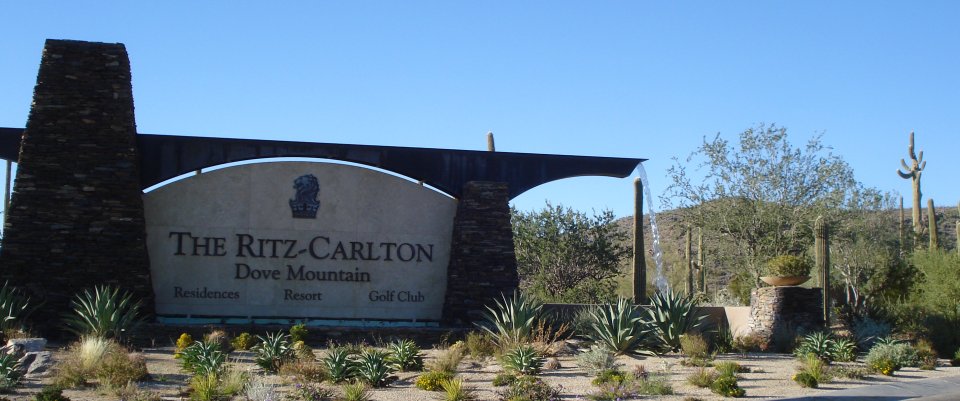
There is some income diversity in the community, but the scale runs from well-off to rich.   You have to pay to live in a nice place like this.  Ritz-Carlton is developing the community up the canyon.   The big resort will open in December and the residences around can take advantage of the facilities there.   The Ritz will also manage the community in terms of trash pickup and maintenance.  This is a step above the average home-owners association, however.  The residents have a concierge service. You can call and have service worker sent to your house or if you are waiting for a service worker, they can send down someone to wait for you.  No more hanging around the house all day waiting for the cable guy.

When I think of putting on the Ritz, the scene from “Young Frankenstein” comes to mind, BTW.

The climate here is hot in the summer, but very nice most of the year.  The higher elevation makes it more pleasant even in the hot months and it is around 5 degrees cooler than Phoenix.   If the mountains seem familiar it is because those of us who watched TV during the 1960s saw them a lot.  Many of the westerns were filmed around here.   Even though Bonanza was set in Nevada, much of Virginia City and the Ponderosa were actually filmed here, for example.  The diversity of scenery and almost perpetual good weather made it good for filming.

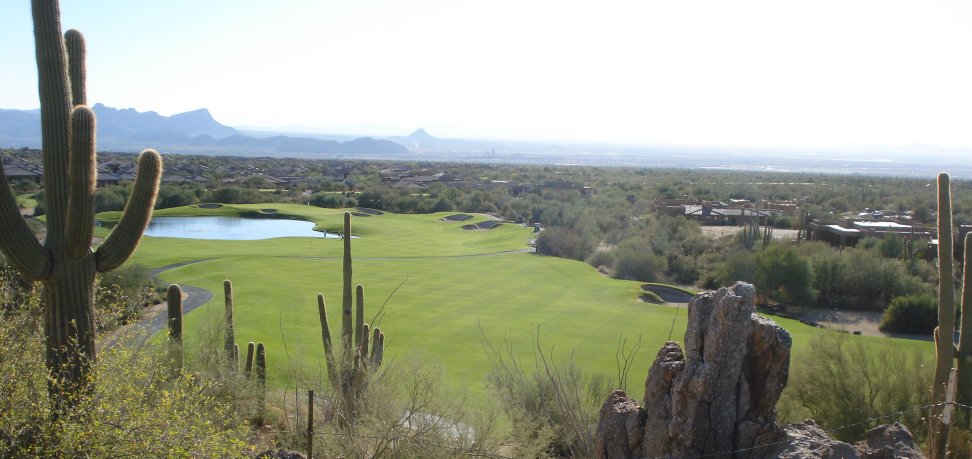
The community builders are doing an excellent job of conserving nature.  I wrote in an earlier post how some people seem to be offended by golf courses, which they claim are ecologically wasteful. Those with that affliction probably should not come here.  But Carl pointed out how the golf courses are built around the natural drainage patterns and are irrigated only with gray water.   As a conservationist, I believe that we should use resources wisely and that is what they are doing here.  

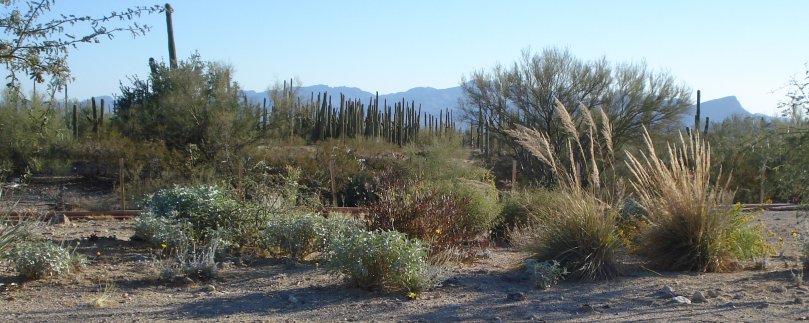
Ample areas are left wild and they make a extraordinary effort to preserve the saguaro cactus. Above is a cactus nursery, where the saguaro wait for a new location.   Below is a cactus forest.

cactus forest

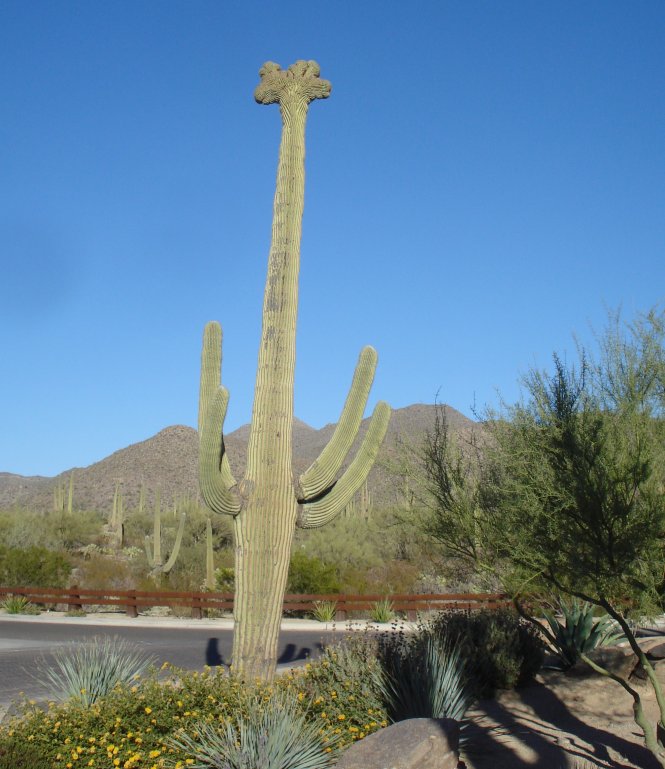
Areas of the cactus forests are put off limits to development and care is taken to move the safely saguaro in places where development must occur.  These symbols of the Sonora desert take many years to grow, but they have small root systems which makes them very easy to transplant.  The apparent anomaly of a shallow root system in a place w/o much water is explained by the hard-pan nature of the soils and the ability of the cactus to suck up and store immense amounts of water during the short times it is available. below and along side is a saguaro crown.  This is not something you see every day. It can take many years for a cactus to grow even one arm. This one is certainly more than a century old.

Marana, Arizona

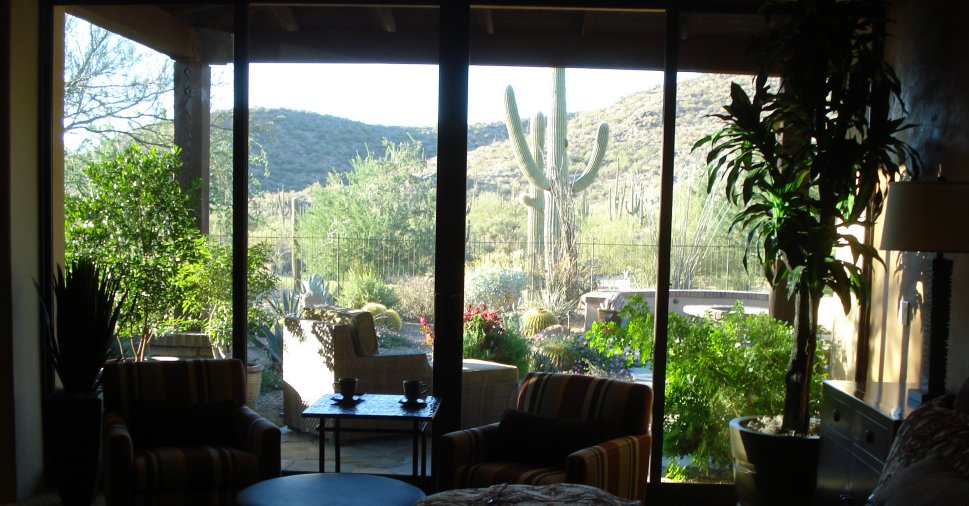
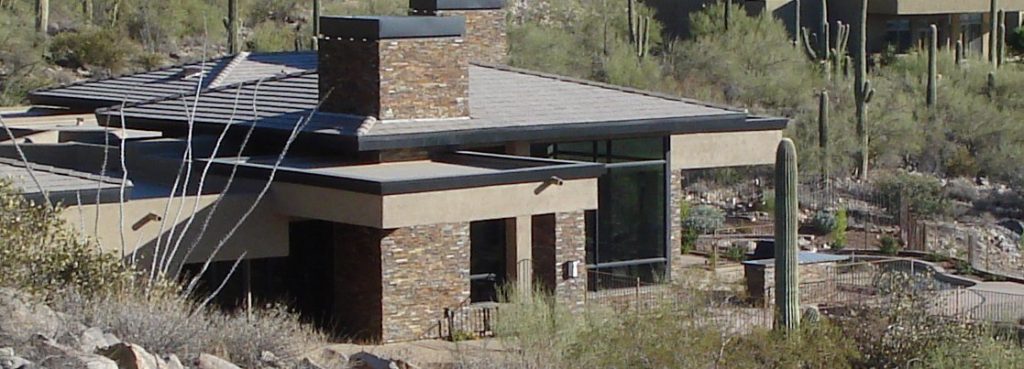
The development where Carl and Elise live in Marana near Tucson is very pleasant.  The developers were careful to leave nature intact whenever possible, so the houses blend in with their surroundings.    The area in back of their house is devoted to natural desert landscape and will not be developed.  Elise and Carl told me that they have seen or seen the signs of many sorts of animals, including bobcats, coyotes, lots of snakes, hawks and even cougars.  In fact, they worry that some of the local wildlife might make a meal of their little dog.   

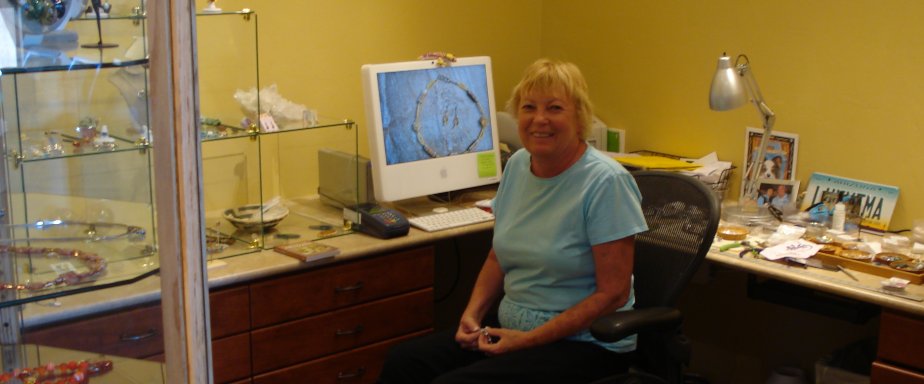
Elise makes custom Jewelry, concentrating on unique styles and colors.  Some are very attractive as you can see in the nearby picture.  I got Chrissy a nice bracelet with a colorful interplay of silver and copper.  I am not a big fan of jewelry in general, but I do like it when it is unique and/or has some significant back story.   The bracelet met both of these criteria.

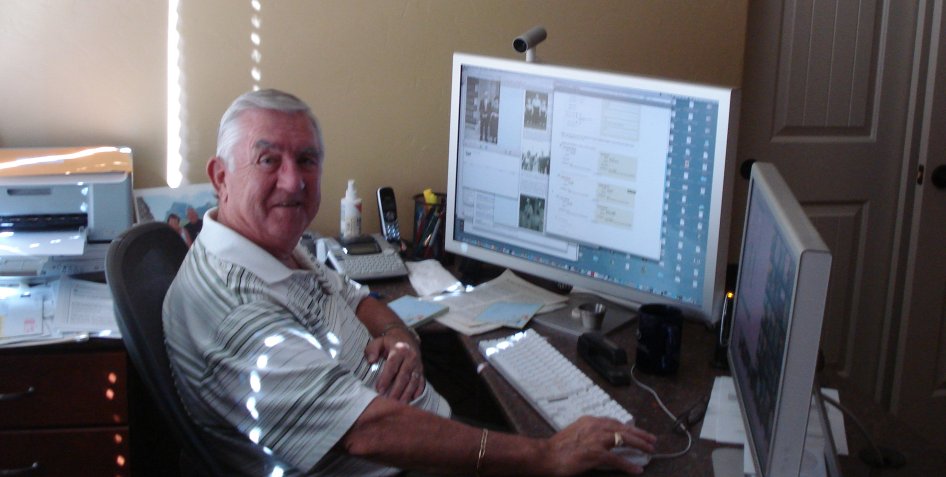
Carl has a passion for genealogy and was interesting in hearing whatever I knew about my family history.  Much of it overlaps with Elise’s family, but he was also interested in my father’s side of the family.  He quickly found a record that recorded my grandfather’s arrival from Russian Poland, via the Port of Hamburg, on March 19, 1899.   He arrived with his brother, Felix.   Interestingly, the record records Matel spelled with a double l on the end – Matell.   It appears like that again in census records and then we lost the extra l sometime after 1910.  It lists his residence in Sakolle in Russia and lists his nationality as Russian.  Of course most of Poland was under Russian control in those days.

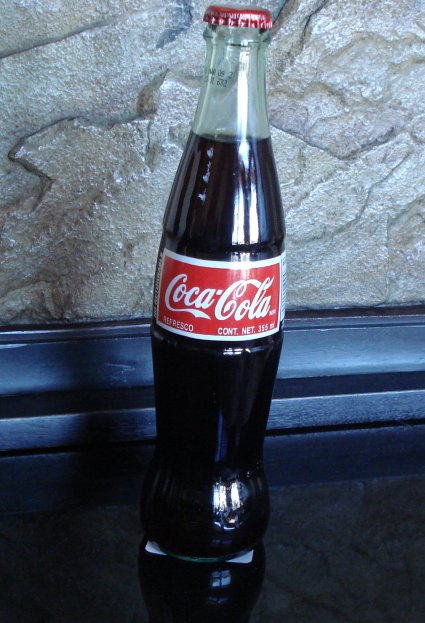
Elise and Carl were very hospitable.  Among the rare and wonderful things they had around the house was Mexican Coca-Cola.  It is evidently made with sugar-cane instead of the corn fructose we use in ours and it tastes subtly different.  My pallet for “real” coke has atrophied since I started to drink mostly Coke-Zero, but I can still taste the difference.

Carl took me around to look at the whole development.  The Ritz-Carlton is developing a whole complex.  Even though it is only a couple hours difference, I am feeling a little tired from travel and jet-lag, so I will write about that and show some pictures next time. 

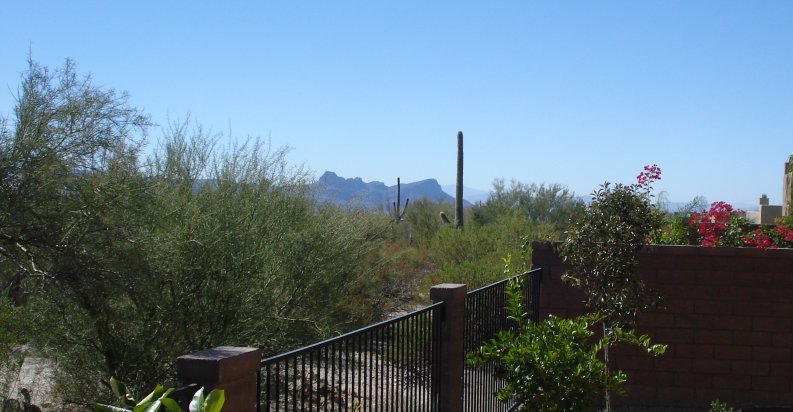
BTW – the picture up top is the view from Elise and Carl’s back yard.  You see Elise in the next picture and some of her creations below that.  Caril is working on his genealogy in the next picture and at the bottom is Mexican Coke.  Maybe I should restate that, Mexican Coca-Cola.

America Lags Behind …

We hear that all the time. Today I read an article saying that America lags behind THE WORLD in processing e-waste. I heard on the radio yesterday that American higher education is at risk. You would think we lived in the worst place it world.  Yet anybody who has lived or especially worked anywhere else knows that America is one of the best places in terms of almost everything people really want. 

Is everybody just stupid for not seeing this?  Is it anti-American propaganda?  Do “they” hate us? Are we betrayed by the opinion-making elites in our own country?   I think the answer often is simpler and structurally-based on a few factors that seem neutral in themselves but produce the negative buzz we have come to expect from the chattering classes in the American and international media. 

Doom and gloom industry

There are definite concrete and often money advantages to looking at the negative side of life.  Various NGOs have organized to solve the world’s problems.  They depend on bad news to fund raise.  What are the chances they will announce that the problem they have been fighting for years has been substantially solved?  This incentive system goes double for lawyers, who can often get courts to use their coercive power to get money directly.   Of course, this doesn’t apply only to America, but it applies especially to America where the money going to NGOs and lawyers is by far the largest in the world.  It makes sense to go after the deep pockets.

Cherry picking comparisons

One of my jobs was to give talks about America to foreign audiences.  I used to start with the statement, “Everything you have heard about America is right.”   This is true because the U.S. is so big and diverse.  We have the some of the best schools and some of the worst.   We have the fattest people and the fittest people.   We also have fifty states, each with its own problems and personality.    We like to make lists and it is very easy to pick the comparison you want and usually those comparisons are negative.

The U.S. is a continental country.   In many ways, it can be compared only to other continental units, such as China, Russia, Brazil, India or maybe the ENTIRE EU. Otherwise we get inappropriate unit comparisons of the whole U.S to whatever are the best performing countries in any particular category.   It would be like comparing the average of 1000 people in various categories against the best individuals – different ones depending on the need.  We could do the same with states. For example, the relatively poor American state of Arkansas has a per-captia income about that of Germany.

There are also problems of scale.  A country like Norway has only around 5 million people and they are relatively homogenous.  Many things can be done on a small scale that cannot be scaled up. I lived in Norway for four years and thought it was a great place to be but I understood that the institutions that work for them cannot be scaled 60 times, even if all the 300+ Americans wanted to do it.

What they say, not what they do

Surprise.  Not everybody does what they promise.  This is especially true among leaders of less democratically oriented countries, since they have less of a domestic check, but it works for everybody.  My personal indicates that America promises less than many other places, but delivers more. Many countries declare the RIGHT to things and may even assign a government bureaucracy to deliver, but they don’t.  Citizens get stuck with long waiting lines or defacto rationing.   For example, I observed that people found it very difficult to get day-care in Norway.  It was a RIGHT, but there was a long waiting list.   Sometimes the problem was solved when the kid got old enough not to need it.  We have fewer official social rights in the U.S. but we can often GET things easier. 

One problem is that REALITY in America is compared with promises or aspirations elsewhere.  It is always easier to make plans and promises than to deliver results.   But it gets even worse when the promises are compared.    We lose whenever we get into a rhetorical bidding war.  Reality is more important but harder to measure.

Government v private & theories of history

The government even today has a smaller role in American society than it does almost every place else.  This goes back hundreds of years.  Alexis de Tocqueville described it in 1831.  We Americans rely much more on self-organized groups and volunteers.  No other country has such a large charity and volunteer sectors.

Related to the role of government is a deeply embedded theory of history and storytelling.  Stories have heroes and villains.   Actual events often do not.  The American system is decentralized and much more self-organized than the average country.  But people still look for some human agent even when something happens for diffuse and impersonal reason. They always find one.  That is why conspiracy theories are so popular.  It is usually not true, but we get blamed anyway.

The Katrina Effect

I was listening to NPR as I was writing this an on came Daniel Schorr with a tangential example.  He was talking about the shortages of H1N1 flu vaccine and how people were blaming government incompetence. People get very high expectations that government can control natural disasters, he said, and when things work less well than can be imagined, they get angry.  It was a similar problem with Katrina. I was a little surprised that Schorr used the Katrina example. I guess as we get farther away from it, it becomes less politically charged. 

Improvement actually makes things look worse

I wrote about this in a previous note. Continuous Improvement Makes Everything Look Bad Looking Back

Anyway, these are a few of the thoughts that came to me after seeing those articles.  I am not saying that there are not bad guys out there that want to give us a hard time, but even absent ill will, we still face structural challenges.  The sad part is that there is little we can do about them.   In many ways it would be better if it was the work of our opponents. We might be able to identify them and contain their propaganda, maybe even change some minds.  With structural problems … we just have to live with them.  I would say that we can slowly change them, but I am not sure we can.  Sometimes you have to choose between actually doing something and seeming to do something. Promises are great, but it is usually better to get something really.
Mongomery, Alabama

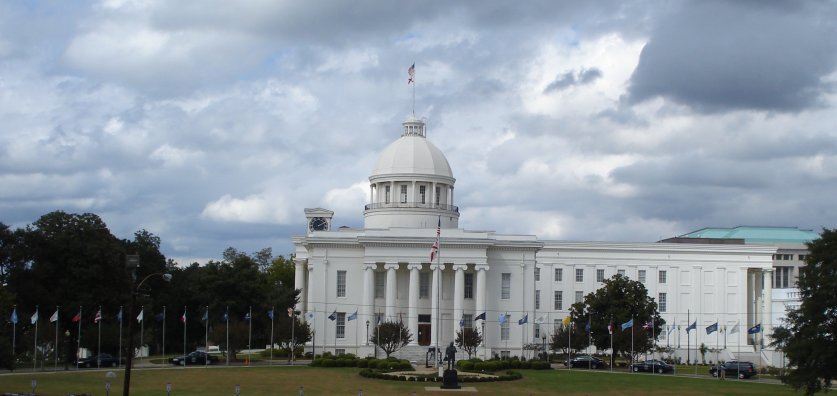
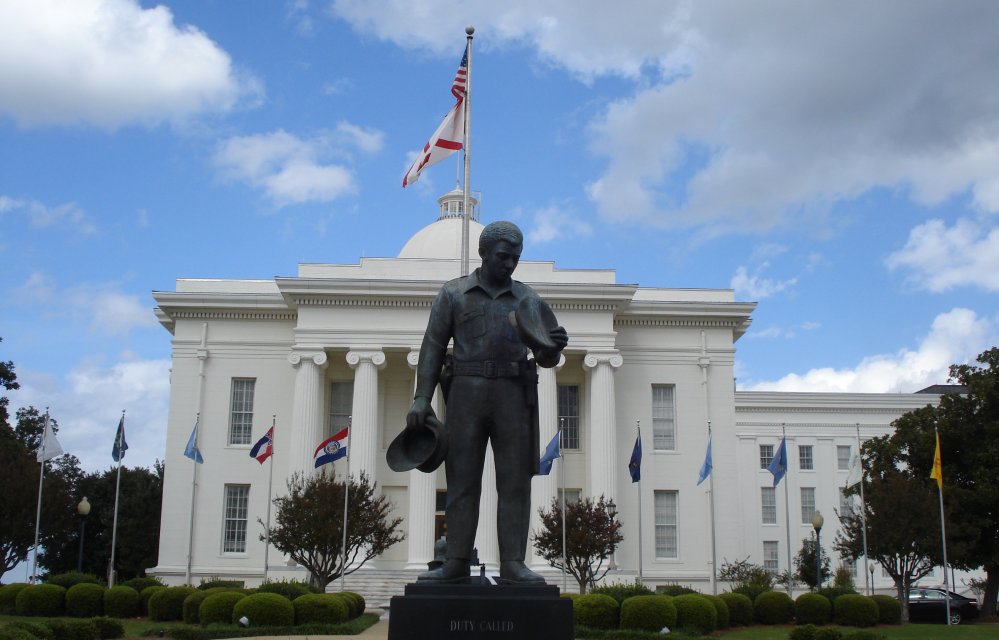
Montgomery is on a flat site so it spreads out easily.  The central part of the city is very quiet.  It is easy to drive and find your way around the grid pattern streets, and there is ample parking all around.   The country’s first electrical trolley line was set up here in 1886.  That started spreading out the city’s population.  There are no natural barriers, so since it was easy just to move a little farther out and since the city’s population is only 200,000 (a little less than Arlington) the whole place has more the density  of a suburb than a city. Above is the state capitol. 

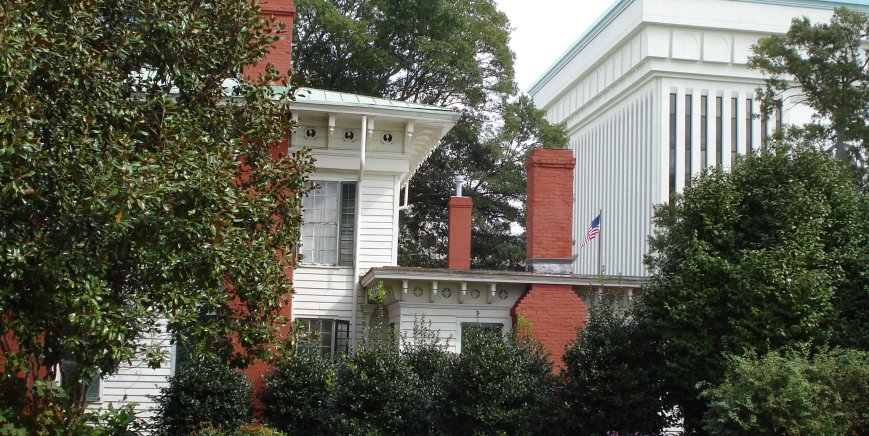
Below is the Confederate White House, where Jeff Davis lived.  Montgomery was the first Confederate capital. The woman running the reception desk was originally from Czechoslovakia.  Her parents fled Sudetenland when Hitler took over, only to be subsumed when he took over the rest of the country after the Munich sell-out.  After WWII, her family wisely got out when the communists took over.  Although she came to the U.S. when she was only eleven, she still had a trace of a Czech accent, overlaid with the Alabama drawl.

I was a couple hours early for my appointment at the Alabama Forestry Association, so I got a chance to walk around the Capitol area.  The buildings are classical revival built with white marble from Alabama or the neighboring states.  Below is the Alabama Archives building. There is a museum inside.  Notice the classical style with the white marble again. 

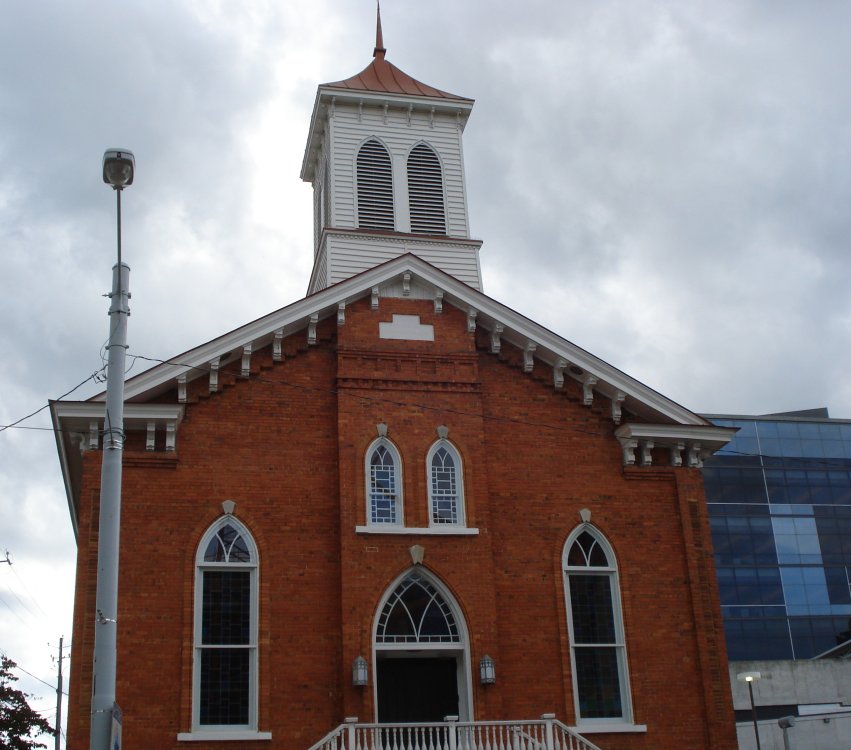
The city has clearly gentrified.  Near the river are a lot of old warehouses and railroad buildings, now converted to loft apartments and nice restaurants.  I didn’t take pictures of them, but below is the Dexter Baptist Church, where Martin Luther King served as pastor 1954-1960.  It was from here that he organized the Montgomery bus boycott.

At the Alabama Forestry Association, I met Rick Oates.  Forestry is an important industry in Alabama.  Although the state tree is the longleaf pine, loblolly is a lot more common. Mr. Oates said that woody biomass looks like it will take off and some of the pulp firms are worried about it.  I wish.  The price of pulp is so low now.  It would take a big change in biomass to bring it back up.  You can find out more about Alabama forests at this link.

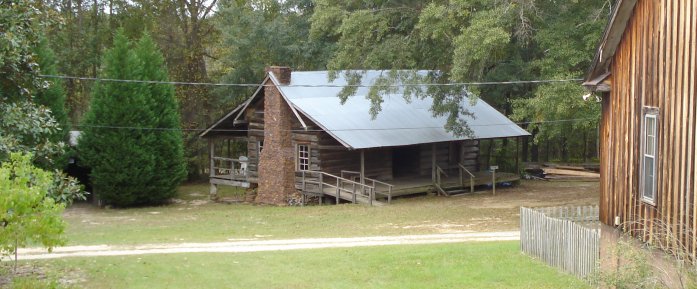
Above is a memorial to police officers at the Alabama Capitol.  Below is a traditional Alabama cabin.

Time Travels

I used to daydream about how much better life would be if could go back in time with the knowledge I have now and make changes.  Used to.  My daydreaming was cut short by the anxiety about what I would lose. I couldn’t go back any farther than January 1991, for example.  Otherwise Espen wouldn’t be born.  Nothing could make up for that loss.  But even stipulating that would not be a factor, it still is problematic. 

The dangers & unintended consequences of using foreknowledge to change the future have been a part of literature since there has been literature.   It captures the human imagination, usually with the ironic twist that the very attempt to change the future is the catalyst that brings about the predicted outcome.

The farther back you go, the more small changes would have big and unexpected consequences.  There is no such thing as destiny.  Things did not have to develop the way they did in the past and the farther back you go the more leverage you would have, but you could never guarantee a better outcome.

It is probably a good thing that we fallible and conflicted humans cannot travel in time. But we can benefit from imagining the possibilities. Analyzing alternative possibilities in the past can allow us to make better decisions about the future. Thinking about what might have been is not a fruitless pastime for dreamers as long as you keep it in its place. I found imaginary time travel a more useful tool after I stopped daydreaming about the real past and started to think about the present and near future in the past tense. It is easier to think backward than forward. I believe I have avoided some regrets this way. I decided to be less career oriented and devote less time to work way back in 1998. I got more time with the family and – unexpectedly – better at my job.  Proper work-life balance makes you more effective all around.   A few years ago I used a similar analysis to decide to buy the forest land. It turned out to be a great decision from the personal fulfillment point of view and not a bad one from the investment angle, at least compared with stocks in recent years.   

Now I am trying to analyze a retirement decision. This is not the first time I have thought about this.  I planned to stay in only seven years when I joined the FS, but they always gave me something fun to do before I could organize myself to move on. I have been eligible to retire since my birthday in 2005. Of course, I couldn’t retire and just not work. I could retire with the FS pension and do something else; there are some enterprises I might try before I get too old.  But the present intrudes in the future.  I still have two boys in college and there is always a risk in giving up familiar work for the promise of something new. I hated looking for a job. I don’t suppose the process is much improved since I did it back in 1984. My resume has improved, but my perceived potential has declined. 

How will this decision seem looking back five or ten years?  I will probably do as I have done in the past: make it contingent on my next job.  The FS has always given me good jobs before I could organize to leave. Opportunism is a strategy, or to say it more elegantly, sometimes a series of tactical decisions becomes a strategic decision. Anyway, what I decide to do now … or not will change the “future-past” but my method of prospective hindsight is not working very well this time.

Will continuity or change be the better choice?  Who know?  Nobody knows.  That is precisely the problem with the future, no matter how you look at it. 

Bees Exposed

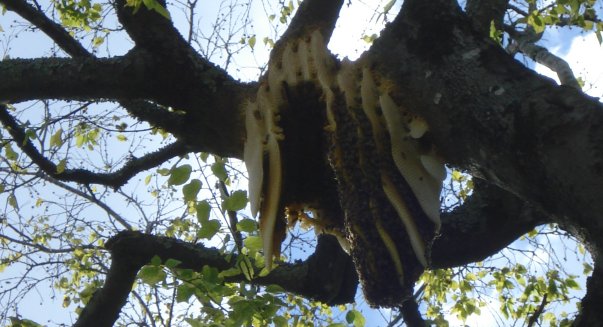
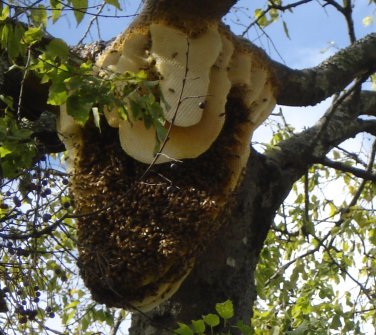
All the bee hives I have ever seen were rounded or in protected places like hollow trees.  Then I saw this up in a tree in Montgomery.  It looks like the bees didn’t bother to put up any defenses or walls, maybe because it never gets very cold. I noticed that many of the houses in the Deep South are also open to the elements.

BTW – I would not have seen this bee hive except for a stranger telling me about it.  I found the people of Alabama extraordinarily friendly and open.  People at shops and restaurants talked with me and were very happy to tell me about their town.  

A Man’s Gotta Know His Limitations

The article I read about education in the Arab world was depressing.   There is controversy about the evolution debate in the U.S., but even in the most evolution-hostile fundamentalist environment, there is a debate.  But only around a third of adults in Egypt have ever even heard of Charles Darwin.  There is no biological science w/o Darwin.  That started me thinking about communicating with people who not only disagree with us but may not even share fundamental facts and assumptions.  

We tend to assume that our public affairs programs will resonate if only we craft them right or that a good policy will get the support it deserves.  These assumptions are not justified, overambitious and probably unnecessary.  Let’s do some reality checking by putting the challenges into familiar terms.

We have the controversy within America about bias on Fox News, CNN and MSNBC among others. Some people disagree strongly with people like Glenn Beck, Rachel Maddow, Sean Hannity or Keith Olbermann, accusing them of bias or not being “real” journalists. But let’s put them in the international perspective.  I chose examples from right and left of the spectrum and we would expect much disagreement among them, but the differences among these guys are small potatoes when put in an international context.   And their journalistic ethics and commitment to accuracy would certainly put them much above the international average. 

We have to look at the world as it is, not as we would like it to be.

So before we tear our hair out about what the world thinks about us, let’s be clear.  Overall, the world information environment is not open, not fair, not balanced and not friendly to us.  The problem is worst precisely in the places we have the most trouble and this probably is not a coincidence. It is useful to keep in this in mind when we talk about lack of popular international support or approval of America and its policies.   Or let’s put this in our own context.  Glenn Beck would get a fairer shake on the Rachael Maddow show (and vice-versa) than we get in the media in much of the world.

The world is a big and diverse place.  Of course it is true that parts of the world enjoy standards of living & openness similar to ours, Democracy, prosperity and freedom are more widespread now than ever, but the blessings of liberty are still a minority proposition among the world’s people.  The Index of Democracy estimates that only half the world’s population lives in some sort of democracy, but only 14% live in full democracies.  Despite advances in democracy, more than a third of the world’s population still lives under authoritarian rule.  Economic freedom is about as widespread (The most democratic countries with the freest markets also tend to be the richest and most competitive.)  And according Freedom House’s press freedom report, in 2009 only 17% of the world’s people live in places where the press is free.    In one of our key areas, the Middle East, there are NO countries with completely free media and the region has more to worry about than that.   

Let’s again take this back to our terms.  Imagine a fundamentalist polygamous community living someplace in the remote mountains.  They spend significantly more time teaching religion than science or math.   They inculcate a general impression that the outside world is vaguely hostile or at best out to cheat or disrupt the community.   We have all seen such communities in the news.  Get the picture in your head.  Now imagine that your job is to convince them of the fundamental goodness and trustworthiness of the Federal Government.  This would be a daunting task.  Now imagine that most of them don’t speak English and a significant number cannot properly read in any language.  

Much of the world’s population presents a challenge like this, or worse.

That is why it doesn’t make particular sense to try to reach the WHOLE world or even very large numbers.  Most people don’t really care very much about our issues.  Others don’t really understand them.  Some are hostile to the messages or have contrary interests.  That is why it makes more sense to target carefully and make our interventions transactional. I don’t really care if people love me in general if they cooperate with me on mutually important specific issues. 

All that requires, however, that we understand our audiences, our goals and our own limitations. 

I spent a lot of time learning not to blame other for my failures. I tried to be proactive and figure out what I could do, no matter what others were doing.  This is a useful and valid outlook.  I have not abandoned it, but I have moved beyond it.  I now understand that sometimes my problems are indeed caused by others. I still have to be proactive, but mostly in ways to avoid the obstruction.  Some people cannot be brought around and it is not my fault.  There are even some people who you DON’T want as friends.  Lay down with dogs and you come up with fleas. The same goes for public affairs. Some people & groups cannot be reached – for all practical purposes – and some shouldn’t be reached because of THEIR characteristics.  There are things you just cannot have and if you look carefully you find sometimes you don’t want them need them.

Unlearned Lessons

I participated in a seminar led by guy who had been on a CORDS team in Vietnam. CORDS (Civil Operations and Revolutionary Development Support) were supposed to do some of the development and coordination activities done by PRTs.  I was aware of CORDS but through talking to some older guys who knew about them. You cannot find much about them otherwise. It is the forgotten war and maybe the forgotten victory.

The professor pointed out that the insurgency in South Vietnam was decisively defeated after the TET offensive and CORDS cemented the victory.   After that, it became a problem of invasion from North Vietnam.  The popularly held idea that a bunch of insurgents, living with the people in the countryside, overthrew the South Vietnamese regime is just wrong.  We all remember the fall of Saigon, but we often forget that it was conquered by the armies of the North; big armies complete with armor and air support.  It wasn’t little guys in black pajamas.     

The successful counterinsurgency, including CORDS operation, was linked with the disastrous fall of Saigon and because we got the history wrong, usually w/o even thinking much about it, we were unable or unwilling to learn the lessons.  

The strategy associated with the surge worked in Iraq. We went from near defeat in late 2006 to a clear success (call it victory) a year later. I personally saw the change and felt its effects.  It was literally a matter of people dying or not. You can do all the academic analysis you want and round the words until they fit into square holes, but I am morally convinced that thousands of people are alive today because of what we did. PRTs were part of the surge and people like me contributed to the victory in Iraq. 

Our work at the PRTs may be following CORDS down the memory hole. It just doesn’t have many powerful champions and there are detractors. Some people are almost embarrassed that the surge worked, since they had so vociferously predicted its failure. Others have convinced themselves that success would have happened anyway.  Still others deny that we were successful at all since the situation is not a perfect as they could imagine. And then there are those who imply that victory or defeat in Iraq were/are just irrelevant.    

Some of the participants in the seminar asked me how State Department had taken advantage of the unique experience I had gained in Western Anbar. How had we absorbed that knowledge as a learning organization.  This is what they wanted to know.  I thought about it. I thought about it again.   The Marines invited me to Quantico to discuss my experience, several times, I told them. An independent scholar contacted me.  He had read my blog and wanted to see if I could tell him anything else.  At State Department … well, FSI asked me to present to classes of PRT folks going to Iraq.  I was on a panel with four other people and collectively we talked for about an hour.  That was good.  I sponsored my own brown bag lunch to discuss Iraq.   Five people came, all of them my friends just trying to be nice. I wrote a few entries on our State Department wiki, Diplopedia.  I don’t know if anybody read any of them, but information gets stale anyway unless it is converted to knowledge.

The follow up question was something like, “then how do you all learn?”  I mumbled about “reading in” to the cable and reports.

It is hard to be a learning organization because it is hard to turn experience into information and even harder to turn information into useful knowledge. We too often content ourselves with information on paper, or these days on computers.  We can gather all the numbers, metrics, whatever you want to call it, but it has to be converted to useful knowledge and categorized by human intelligence.  Creating useful knowledge usually means putting it into understandable context.  It usually also requires that the person digesting the information is also someone who can make decisions.  You cannot outsource your brains.

As a PRT leader, I had first-hand, primary knowledge. I sometimes didn’t know the significance of my information or how it fit into a bigger picture. It was helpful when someone had the secondary knowledge to evaluate and figure out what my information was part of. That is why a learning organization is stronger and smarter than the individuals in it.  If the information contained in individual minds remains un-harvested, the organization doesn’t learn.  It can be full of smart people who are adept at learning and improvising solutions, but it will lack the synergy of a learning organization. This is our problem.

I have been observing organizations for a long time.  You have to look at the organization as a whole with its own behaviors, not only at the separate individuals because groups are more than a the sum of individuals.  They develop a culture. We all know that individuals can learn, but so can organizations under the right conditions.

I see that many can be episodically learning organizations.  Much depends on characteristics of individuals in charge and the culture they engender. People have to talk and exchange information informally and non-judgmentally. The learning episode stops if anybody gets in trouble for being wrong, stepping out of line or presenting information that contradicts a agreed upon course of action.  But it is clearly a lot harder than just letting people talk and engage.  There has to be a way to evaluate information. Someone might be 100% honest and open, but still lack the perspective to create accurate or useful knowledge.  On the other hand, the old saying applies that even a broken clock is right twice a day, so you have to listen to everybody. 
The Marines in Iraq had become a learning organization.  I wrote about it at this link. Parts of State Department have been learning organizations during some periods.  I have been involved in some. It was exciting but those flashes of lights tend to flicker out when personnel or priorities shift. 

Maybe both personnel and priorities have shifted concerning PRTs in Iraq.  Maybe its just me.  Maybe the State Department has moved along.  Maybe the old Arab proverb applies, “The dogs may bark, but the caravan moves on. I don’t suppose my banana index translates very well anyway. It even stopped working in Iraq before I left