Grateful Remembrance

Most of the fathers in my neighborhood were veterans of World War II or Korea. I remember them mostly as middle aged guys with short haircuts, strong forearms and thick necks. They were like everybody else in our working-class neighborhood because they were the neighborhood. 

Non-veterans were rare.  We kids just assumed we would go into the military when we reached manhood.  But I grew up just at a turning point.  They stopped drafting young men the year before I turned 18.  The new volunteer military meant that fewer and fewer Americans had any experience with the military.  Many young people today don’t have any close friends or relatives with military experience.  They take their impressions from Hollywood, which exhibits a systemic negative bias toward the military these days. 

That is too bad.  Today’s military is extraordinarily impressive, but many of those who haven’t seen it up close lately are stuck in the old stereotypes. You hear the prejudice when people say that the military is full of poor people w/o other choices. In fact, the opposite is true.  75% of today’s young people are not qualified for military service because they are too fat, too weak, druggies, crooks or dropouts and studies show that the average soldiers or Marines are better in terms of education, health and general attitude than the average civilian Americans of their age.

Until not long ago when I thought of veterans, I still saw those old WWII guys I knew as a kid. There service was twenty years in the past by the time I knew them.  It was distant, almost legendary. Their sacrifices and those of their comrades were equally remote. The Vietnam vets were only a little older than I was, but that war got compartmentalized, with student protesters and hippies taking the starring roles leaving the military as supporting characters, portrayed as victims, villains or psychos.   (BTW – I think that is one reason why movies like “The Men Who Stare at Goats” or “Brothers” infuriate me so much.  I fear that Hollywood is doing to the heroes of Iraq and Afghanistan what they did to those of Vietnam.)  In both cases, they were isolated from my reality.

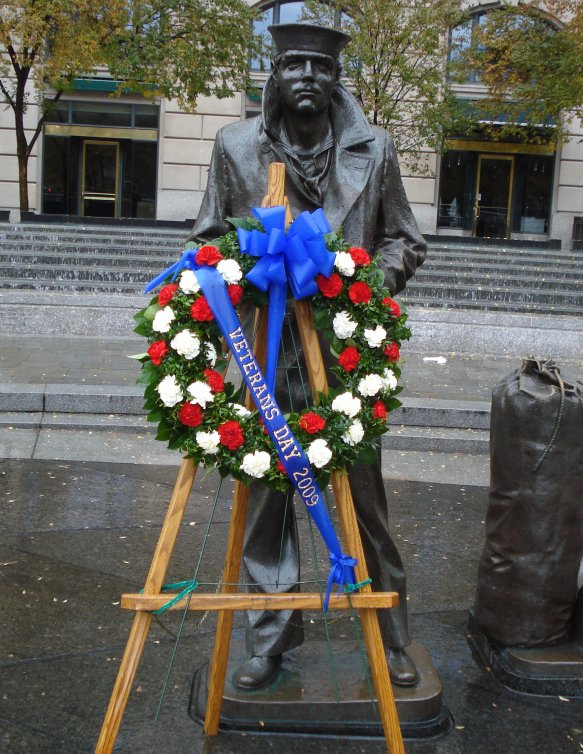
But on this Veterans’ Day I realize that my views of veterans have undergone a significant change.  It is not only because of my Iraq experience.  Some of it is generational.   I am now older than most veterans and many of the older veterans are nearly my contemporaries.   I am now seeing veterans not as fathers, but as sons.   That has made it more poignant and I have seen it closer.

The death that affected me most was that of PFC Aaron Ward. He was only nineteen and had been in Iraq less than two months when he was shot and killed on May 6, 2008 as he stretched his legs outside his vehicle in Hit (that is the city name).  I knew the place but I didn’t know him or anything about him until I attended the memorial service. His friends described him as a friendly guy who liked to lift weights and joke with friends. Like everyone in Iraq, he was a volunteer who had chosen to serve his country knowing that he would be deployed to a war zone.  He seems a great guy and at the same time an average guy who did the things nineteen year old guys do.  I thought of Espen and Alex and I thought of Ward’s parents. And so this Veteran’s Day and every Veterans Day until the day I die I will pause to remember Aaron Ward.

Brave men and women put their own lives on hold and their own lives at risk to protect ours.  We mourn the fallen, but we should think of our military as heroes, not victims. Most come back healthy and alive.  They bring with them the skills, discipline, maturity and experience from their service to our country defending our freedom. They serve in the military for some years. Then they serve as good citizens for the rest of their lives.  Like those veterans I remember from my Milwaukee childhood, first they defend the country and then they come back to build it and keep it healthy. They deserves the honor and respect we give them on Veterans’ Day and every day.

BTW – Please see my note from last Veterans’ Day at this link. 
Take it Easy

Lighten up while you still can

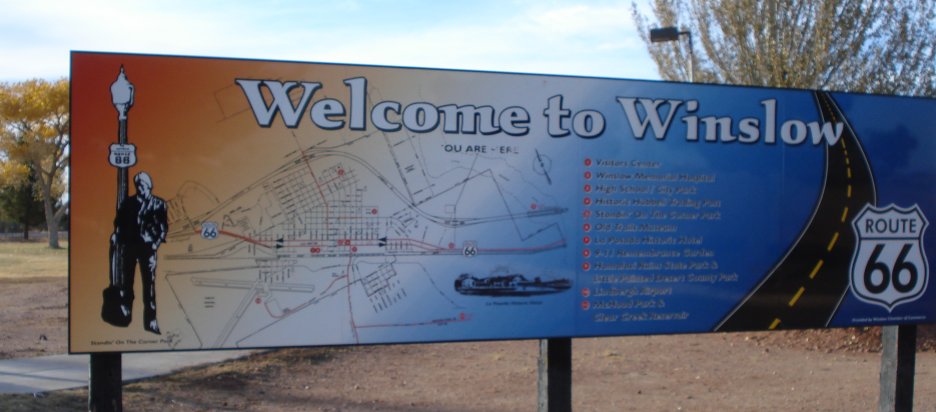
We finally got down to Winslow, Az.  Winslow is world famous among fans of the 1970s pop group “The Eagles,” since one of their hits “Take it Easy” features a hitchhiking vignette when the singer is “…standing on a corner in Winslow, Arizona.”   We didn’t actually see the corner, although I looked for it and evidently drove past it on the way to Highway 87.

Burning Brush

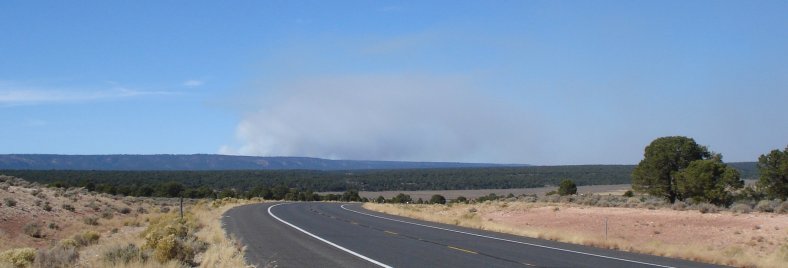
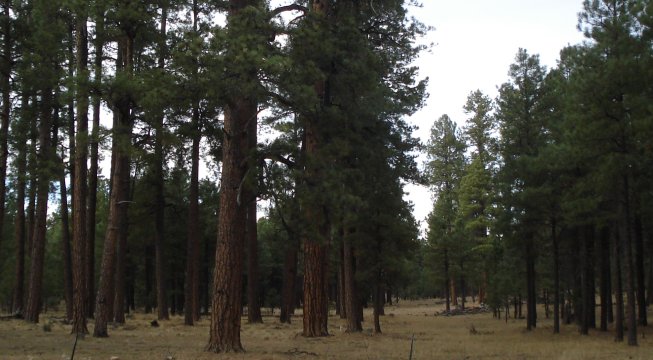
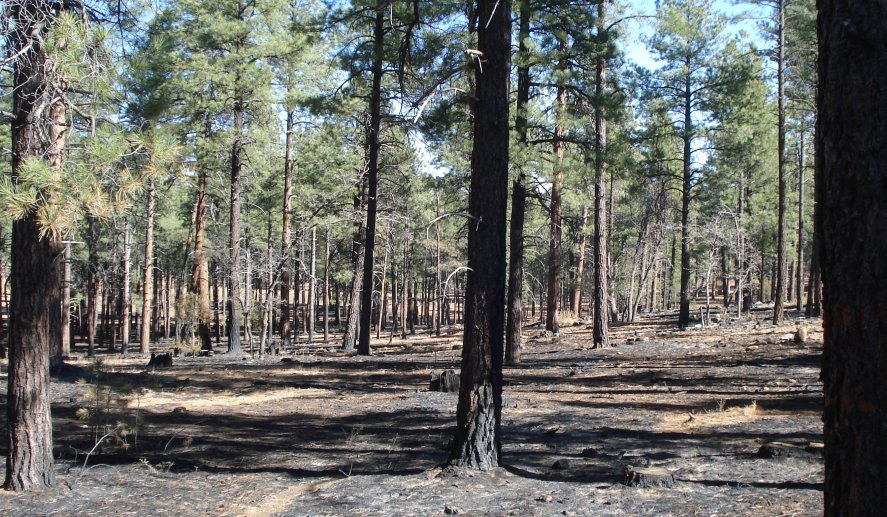
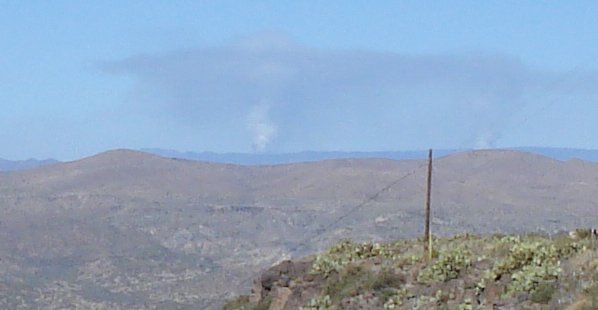
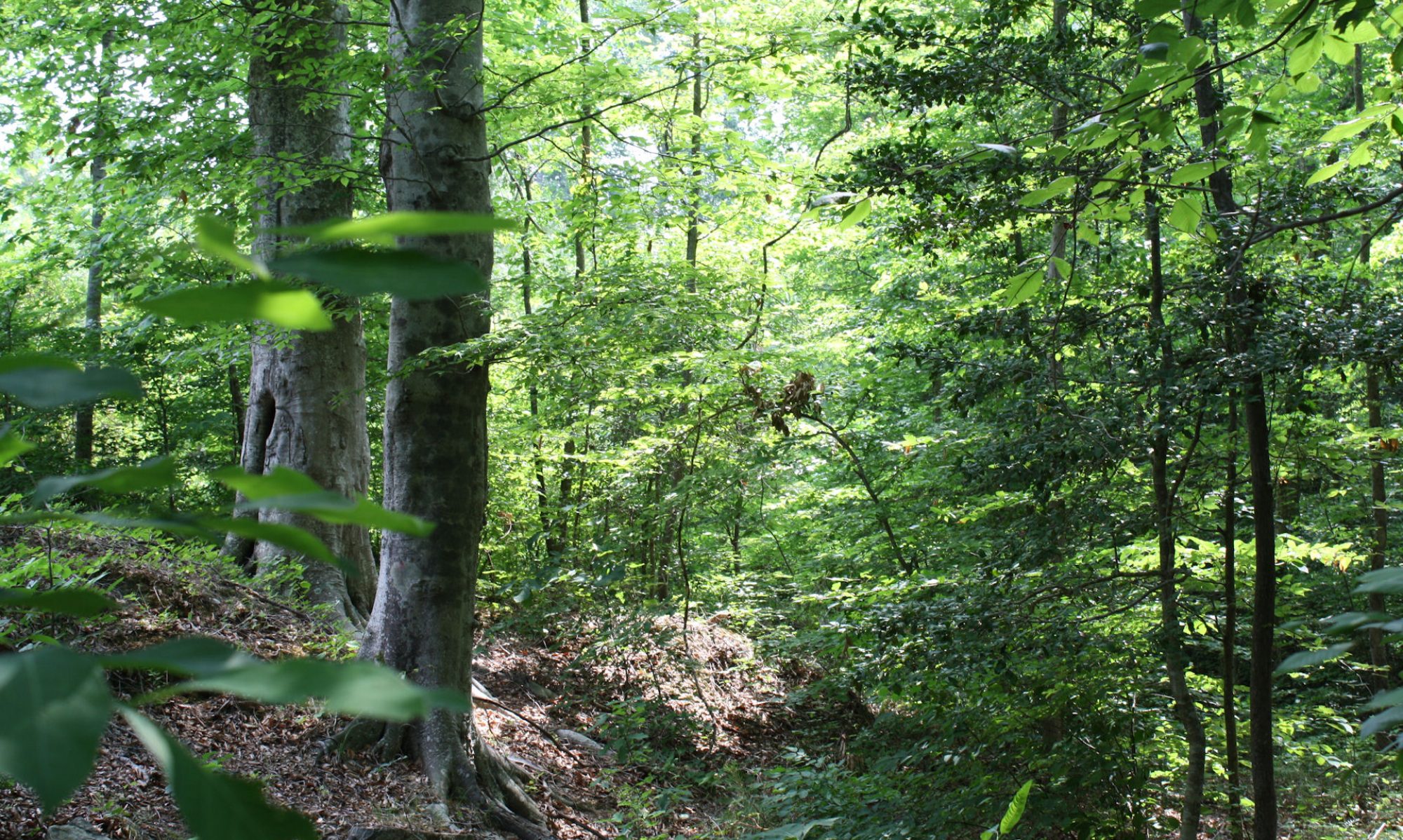
The geography changed as we climbed from the semi-arid grasslands through juniper and back up to beautiful ponderosa pine forests. I regret that it was getting a little late and we were losing the light so I couldn’t tarry longer.  This is part of the Coconino National Forest and the Forest Service was busy burning the brush.  We saw a lot of smoke and even some flames.  You can see the smoke in the distance in the picture above. I am encouraged to see the proactive use of fire to restore the landscapes.  The park-like ponderosa forest, with its interspersed meadows, is one of nature’s most beautiful communities.  Below is a well-managed ponderosa forest.  The ones with the red bark are at least 100 years old.  Younger ones have black bark.

Cool Air and Cooler Sunsets

Although Arizona was experiencing a heat wave, and temperatures in Phoenix were reaching into the nineties, the air in the piney woods was cool.   The thermometer in the car registered 59.  You might think you were driving through upper Michigan.  As I wrote above, we were losing the light and I didn’t want to drive the narrow, curvy roads in the dark, so we cut sideways to catch I-17.  We saw one of the most beautiful sunsets I have seen with red clouds turning purple before going dark.  I think the smoke from the prescribed fires contributed to the color.  I didn’t even bother trying to get a picture.  Beautiful sunset pictures are cliché.   Part of the beauty of a sunset lies in its ethereal & ephemeral elements.  Taking a picture is like trying to grab a handful of air.  

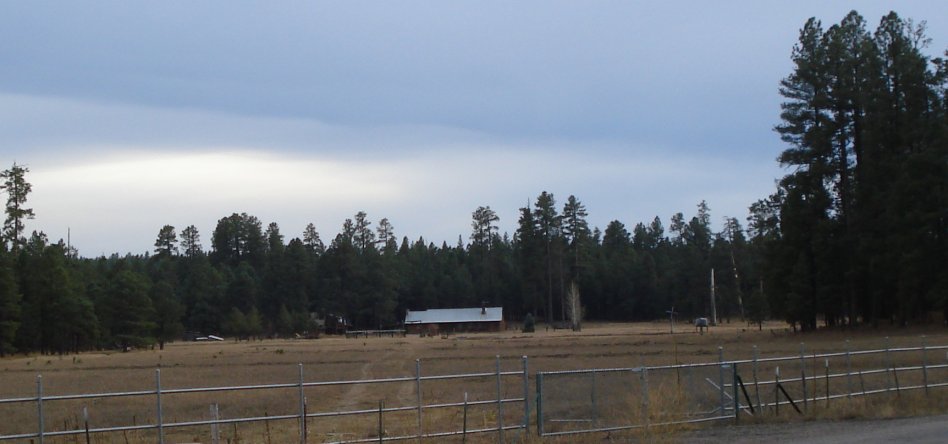
The picture above is taken near a gas station in Happy Jack, AZ.  Interesting name for a town.  We didn’t see the actual town. 

We lost altitude as we approached I-17 and the temperature rose to 81 degrees, in spite of the coming of evening.   It was 86 by the time we got to Phoenix.  Back in the desert.  It is interesting that you can get such changes in such a short time and distance.

Navajo & Hopi Nations

Anybody can eat when he is hungry but it takes a real man to eat when he’s full.

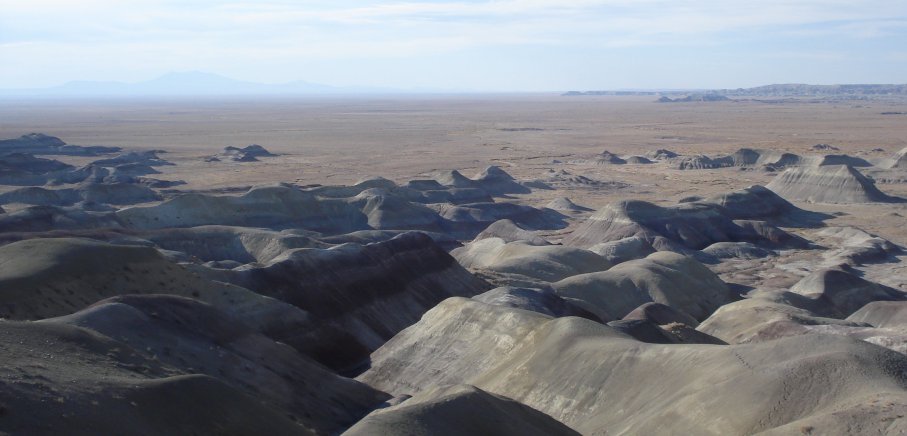
We went east away from the Grand Canyon into the Painted Desert and the Navajo and Hopi nations.  We stopped at a “trading post” in Cameron. 

Information about our trip through the Navajo nation in 2003 are at this link, BTW. 

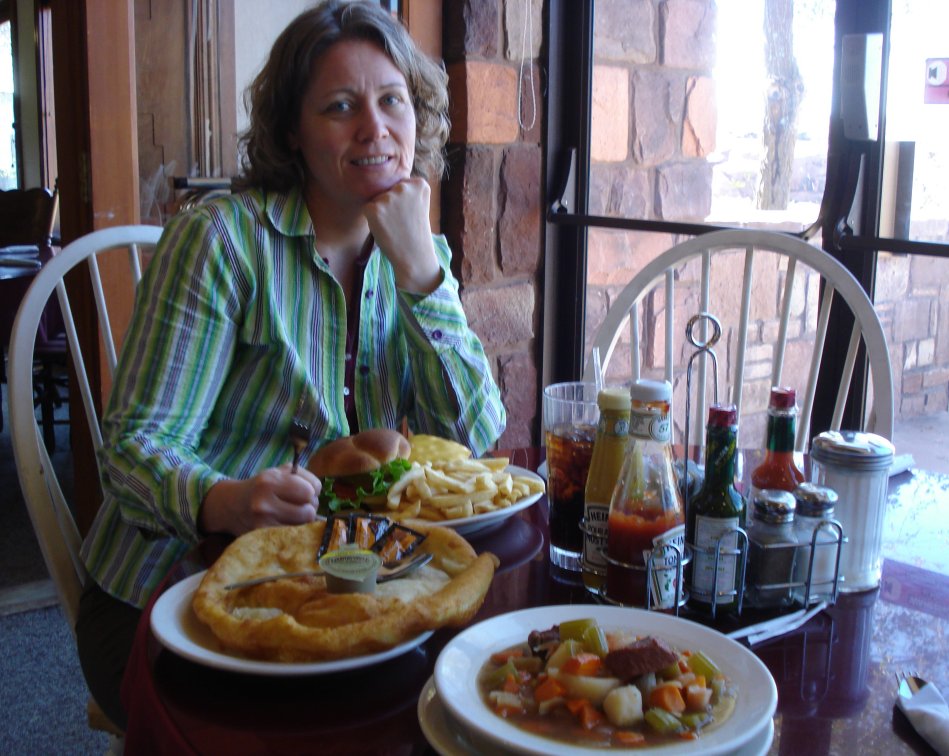
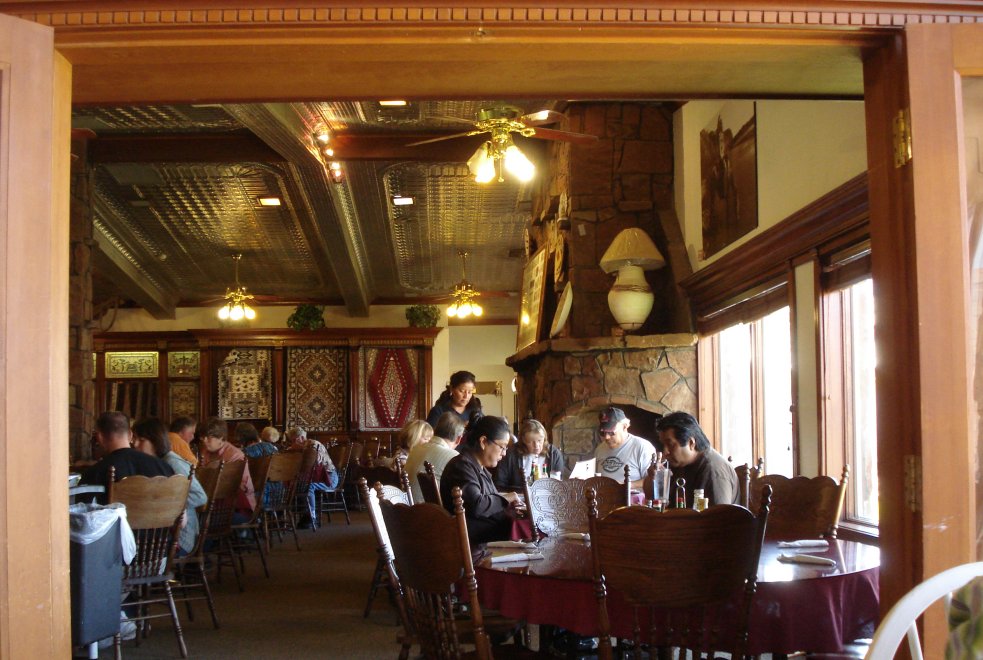
They had a nice restaurant with very friendly staff and an old fashioned ambiance.  I had Navajo stew, which tasted a lot like traditional beef stew.  It came with fry bread, which is excellent, and the portions were generous.  Chrissy just had the cheese burger and fries. Usually I help Chrissy finish her lunch.  This time I failed. The fry bread is very filling.

That fry bread is really good. I enjoyed it just by itself and I tried a little with butter and honey. Then I got the great idea that it might be even better if it had some tomato sauce, melted cheese and maybe some sausages and mushrooms.  Maybe I should check to see if anybody else has had a similar idea before I open my restaurant.

Space & the Eternity Highway

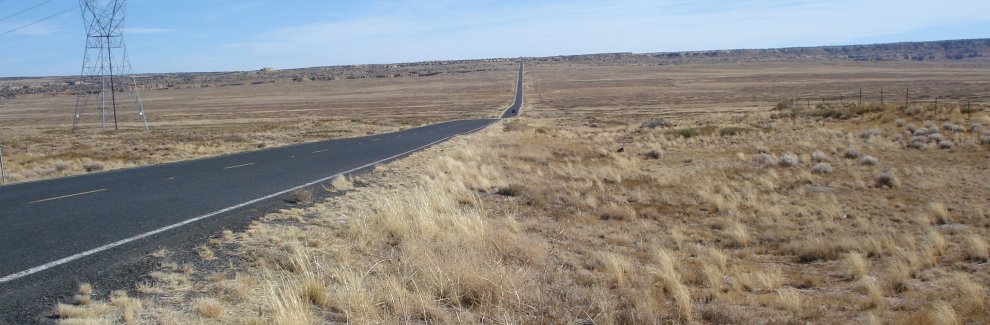
There is a lot of space out here.  Chrissy joked about those signs you sometimes see on developments, “If you lived here, you would be home already.”  These roads are near nothing. We saw a few lonely cows and horses, but not much else. Sometimes I wondered if we were really moving.  Although we were going 65, the horizon didn’t seem to change. This is the kind of landscape featured on SciFi.   The aliens could abduct you out here and nobody would see.

Proper Picture Protocols

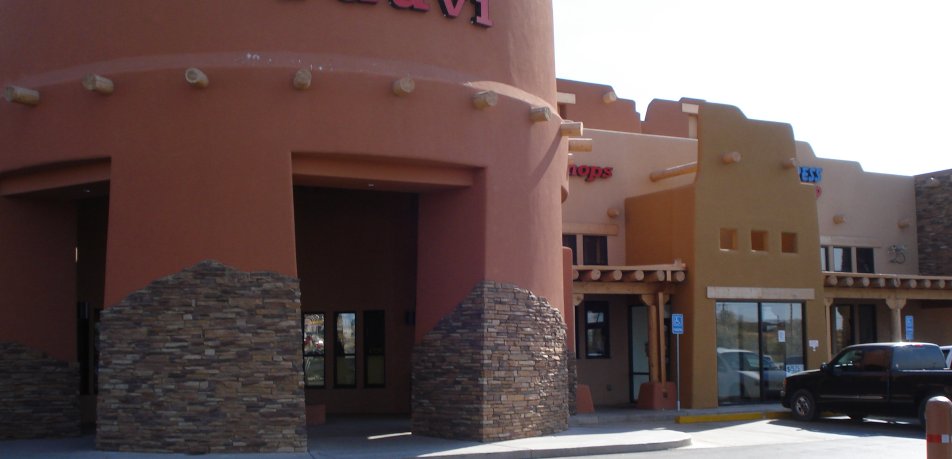
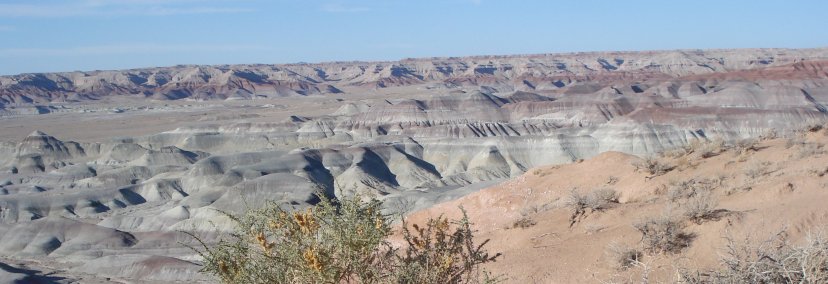
We stopped at the Hopi Museum.  I cannot show you pictures from the actual museum. (The best I can do is the cool looking gas station above, which I assume is culturally appropriate.)  A sign at the museum admonished visitors not even to take notes.  The $3 you pay for admission only goes for you.  Other signs warned that you would have your camera confiscated if you took pictures of various villages or activities. So I don’t have pictures of the Hopi stuff.  I have some Painted Desert pictures below.  There was nobody out there or much sign of life in general.

I have a good memory and could probably tell you about the things I read and saw at the museum, but they seemed unenthusiastic about this sort of sharing, so better not.   Suffice to say that there were some excellent black and white photos from around a century ago of people and places as well as a display of Kachina dolls with narratives complaining about Kachina doll knockoffs and/or imitations based on the concept. 

There was also a lot of information about a boundary dispute between the Hopi and the much larger and faster growing Navajo Nation. As per instructions, I didn’t take notes, but seems that things were not going well. The Navajos and Apache arrived in the area a few hundred years ago and this is only the latest round.  According to the last census, there are almost 300,000 Navajos and fewer than 7,000 Hopi.  The numbers explain a lot.

I framed an excellent picture in my mind.  Outside the museum there were a bunch of guys selling things like firewood, rugs and Kachina dolls from little stands or the backs of pickup trucks.  In the background were spaced pinon pine trees.  Very picturesque.  But business didn’t seem too good and I was intimidated by the picture prohibition.  I didn’t know if I could take a picture or not, but why chance it?  You can find out all you need to know from “National Geographic” and they have better photographers who know the proper picture protocols. I hope I didn’t anger the Kachinas.

Teddy Roosevelt & the Lodges

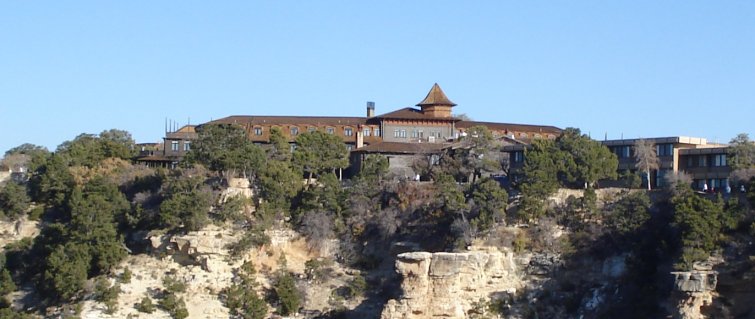
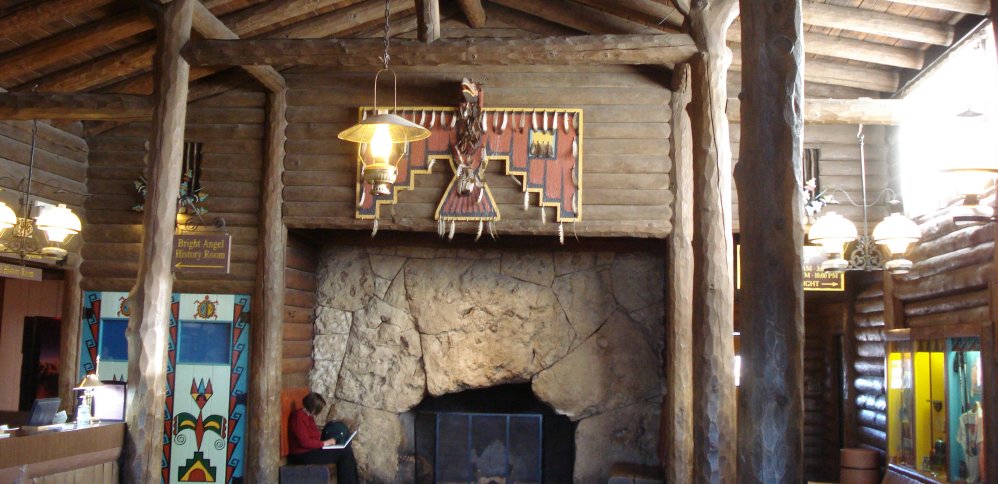
Above is the hotel were we stayed. The El Tovar lodge has that rustic elegance characteristic of the early 20th Century.  It was built in 1905, financed by the Santa Fe railroad as a sort of rail destination. President Theodore Roosevelt took the first steps to preserve the canyon about that time and the lodges here reflect that muscular personality of Roosevelt and America of that era. The Canyon was declared a national monument in 1908 and a national park in 1919.

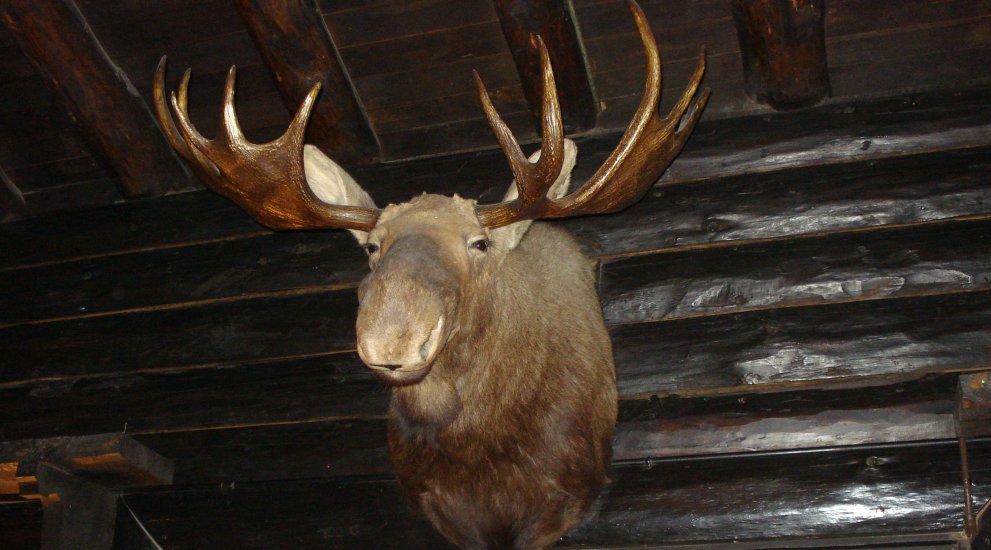
The dark log walls are studded with actual heads of moose, deer, mountain goats and even bison.  I always wanted a moose head for my wall, but I have never had enough walls to handle something as big as a moose head.   You need a really big room with really high walls.  Actually, you probably need something a lot like the room in a big lodge. Moose are not native to Arizona, BTW, so the head came from somewhere else.

Below is Bright Angel Lodge. 

Movies Not to See

George Clooney is charming; Kevin Spacey is villainous and Jeff Bridges is funny. But don’t go to “Men Who Stare at Goats”.  You saw all the funny parts already if you saw more than one commercial for the film, so let me spoil the ending.  The “good guys” put LSD into the water and chow of American troops in Iraq and release a bunch of terrorists from jail to the happy sounds of 1960s style music.  Then the two main characters steal a helicopter and fly off. 

At the cinema, they also featured the trailer for another movie to avoid.  It featured Natalie Portman as the wife of a soldier who disappears in Afghanistan. She proceeds to sleep with his brother. The guy is found alive and comes back home and goes crazy.  It seems to me to be part of the usual crazy veteran movie.  Don’t go.

So far, Hollywood has produced a steady stream of bad movies related to Iraq and Afghanistan. They don’t make money, but they keep on making them.  “Men Who Stare at Goats” is a kind of stealth trashing.  You might not recognize it as such from the trailers or the television commercials.  I liked all the actors.  The idea of the movie is interesting and amusing. They could have just made a funny movie, but they chose to go with the tired old political crap. It sucks. Don’t go.

Feeble Imitations

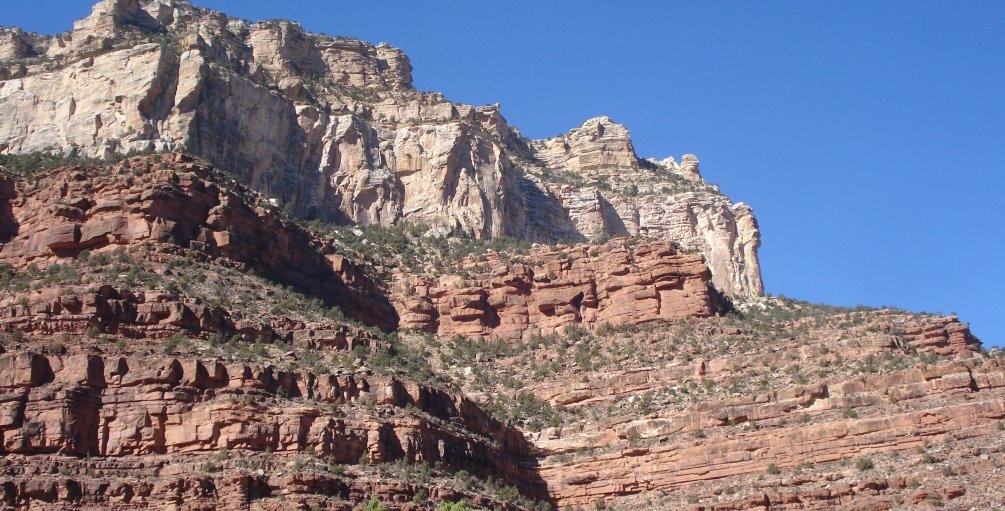
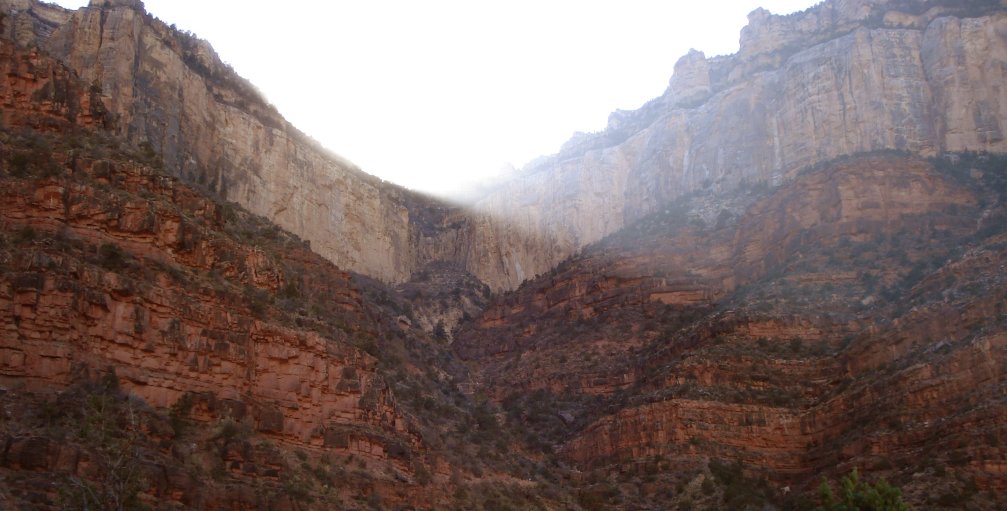
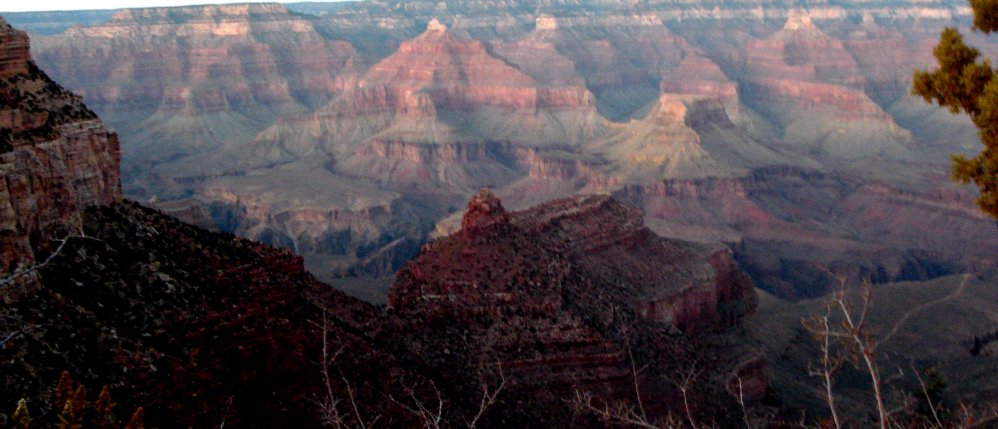
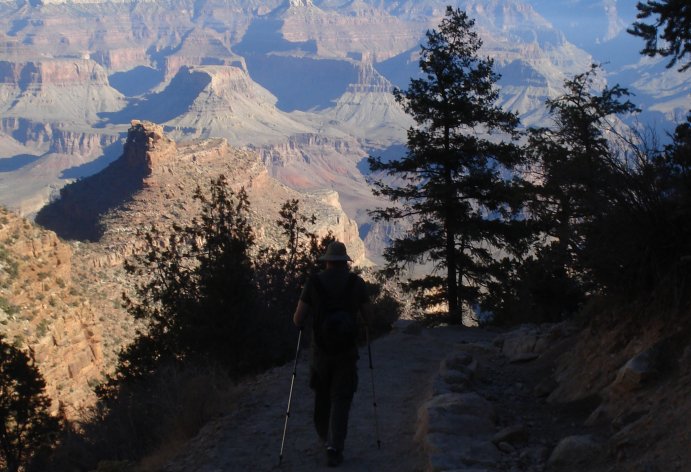
The pictures I took of the canyon do not do it justice.  It is hard to get my camera to adjust properly to the combination of bright light and dark shadows.   Even when the light works, the colors don’t show exactly right and it is impossible to convey the depth.  But this is the best I can do.  You will have to come here yourself.

The light seems to spill into the canyon when the sun is just over the rim.  There is still a little haze in the air.  I think it is left over from prescribed burns to manage the neighborhood forests, as described in earlier posts.

Grand Canyon panorama AM

Above & below are canyon panoramas.  The bottom one was taken just at dusk, so there are not the shadows.   When you see the canyon in person, the shadows make it much more beautiful as you eyes can move and adjust.  But the pictures come out better w/o the sunlight.  I bet the nicest photos could be made when high clouds blocked some of the direct light. 

View Master

The best pictures of the Grand Canyon were the old View Masters I had as a kid.  The canyon seems very familiar to me today because of the many visits I made via View Master.  The simple technology worked great and the fact that we didn’t have very many options gave me the exposure I still remember more than forty years later.  

The Real Thing Requires a Little Pain

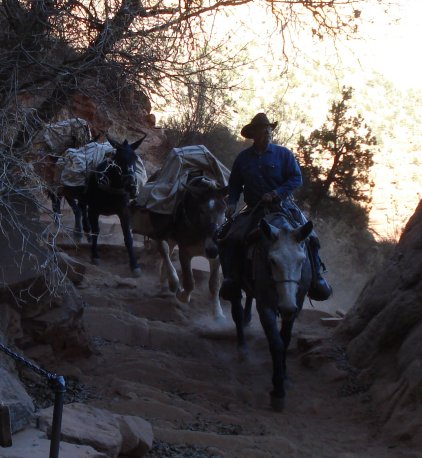
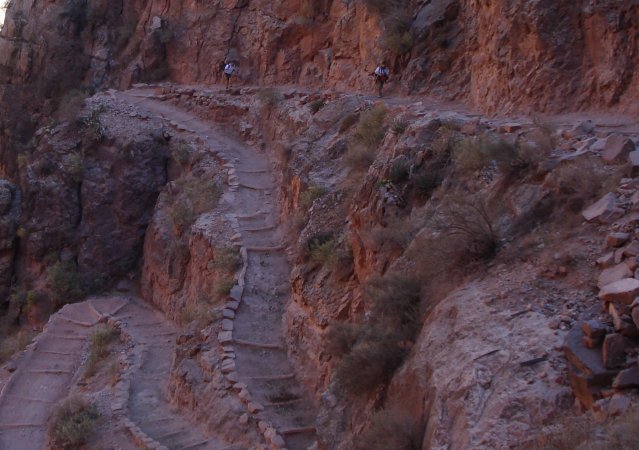
Everything goes in and out of the Canyon on mules or people.  They don’t bring machines, which makes the trails and facilities more primitive and much nicer. 

I hope it never changes. IMO, views and experiences are better when you have to earn them.  Some day I will be too old to make the journey and then I will have only memories and pictures. So sad, but so right.

I don’t want it to be made easily accessible for me or anybody else. Not only would that impact nature adversely, the experience of the Canyon would be different and much shallower if you could just drive down in air conditioned comfort or take an elevator.

It is that way with most things.  A rest you earn with good hard work is different and better than when you just get to lay around.  Achievement easily given is not achievement you value. 

Most people stay on top and marvel at the beauty in a more detached way.  Good. Keep it that way. The more spiritual experience requires a little more skin in the game. The sweat and exertion are part of it.  An erzatz version would be worse than nothing, or at best a feeble imitation.  We already have too much of that in today’s world. 

Four Legs Good; Two Legs Bad

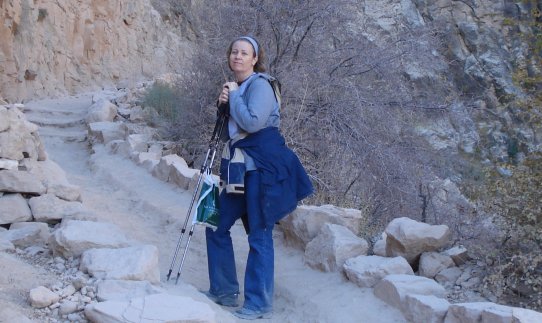
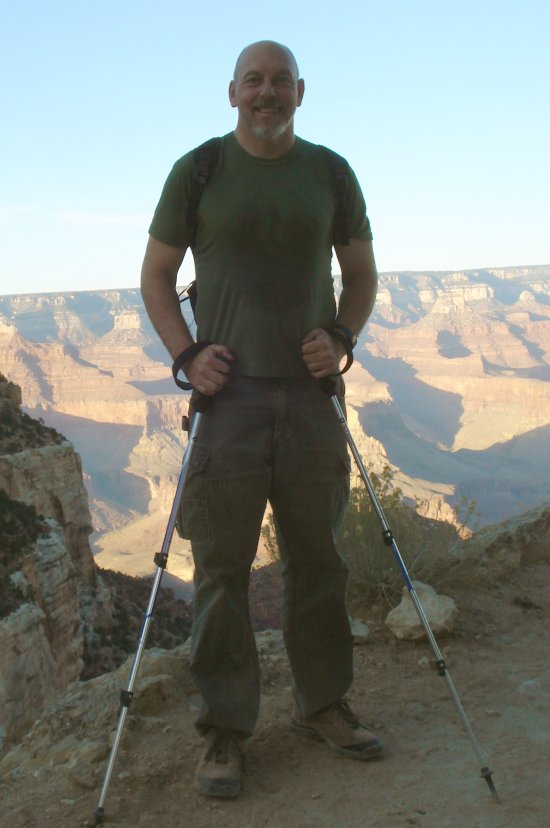
Chrissy and I went down as far as Indian Gardens.  This is an oasis on the Bright Angel trail and it is the logical terminus of a day hike for a person in average condition.  It took us around three hours to get down but only around two and a half hours to get back up.  It doesn’t make intuitive sense.  I think it is because of all the rocks.  I walk gingerly among them going downhill.  We also had to get to the side of the path to let hikers pass who were coming up or mule trains coming down. There was less oncoming traffic on the return trip and no mule trains came past. 

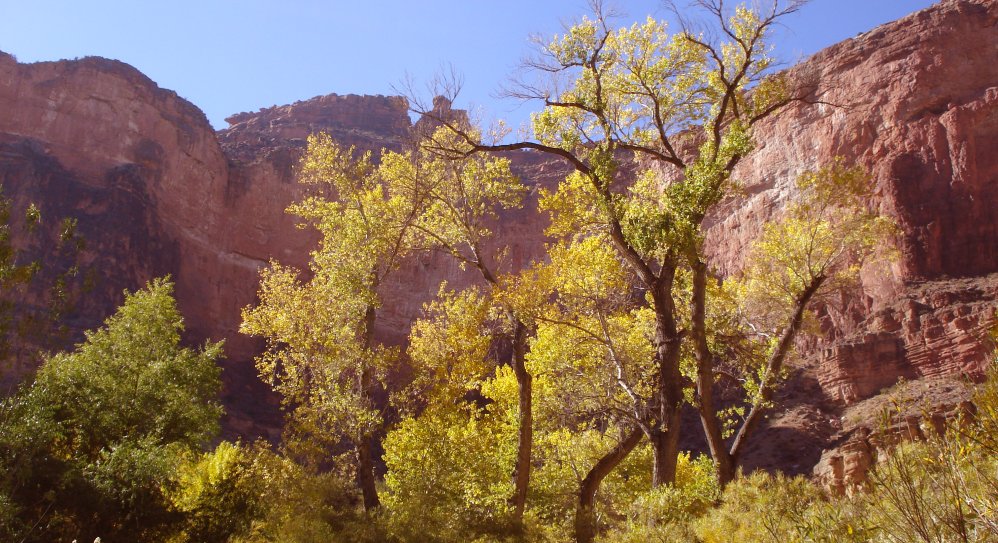
Of course I am not counting the leisurely lunch-break we spent at Indian Gardens.  The cottonwoods and willow make very pleasant surroundings.  Both are fast-growing adaptive trees but are often unloved because of their weak wood, short lives and susceptibility to wind damage.   Of course, it depends on where they are.  As long as they are not near houses or roads, they do just fine.  Except that they grow in generations, i.e. a lot of them come up the same time and whole clumps grow, live and die together.  This is not a problem except during generational change, when the whole clump of cottonwoods begins to die back about the same time.

PS

The morning later I my complaining muscles reminded me that I am no longer in the top condition I used to imagine.   The pattern of pain was interesting, more characteristic of overdoing cross country skiing than overdoing ordinary hiking.  I suppose it is because of the poles. 

My legs hurt a lot less than I would have guessed, but my arms, chest and lats are screaming. 

I used to cross country ski a lot when we lived in Norway.  I am sure I used the poles the way the Norwegians taught me, which is to push off in back of your body instead of leaning forward on the sticks. I recognize the feelings.   The good news is the pain confirms that the poles worked.  I pulled myself out of the canyon w/o overstraining my legs or knees.  

As they say (for different reasons) in “Animal Farm”, “Four legs good; too legs bad.”

PSPS

The link to my earlier trip down the canyon is at this link.  That time we did it in 117 degree heat and went all the way to the river and back.  That was stupid.  The bottoms of my shoes melted off on the hot rocks. Really. 
This time we had perfect weather. Cool at the top and only warm near Indian Gardens. AND we didn’t go all the way down.

Route 66 & Mountain Men

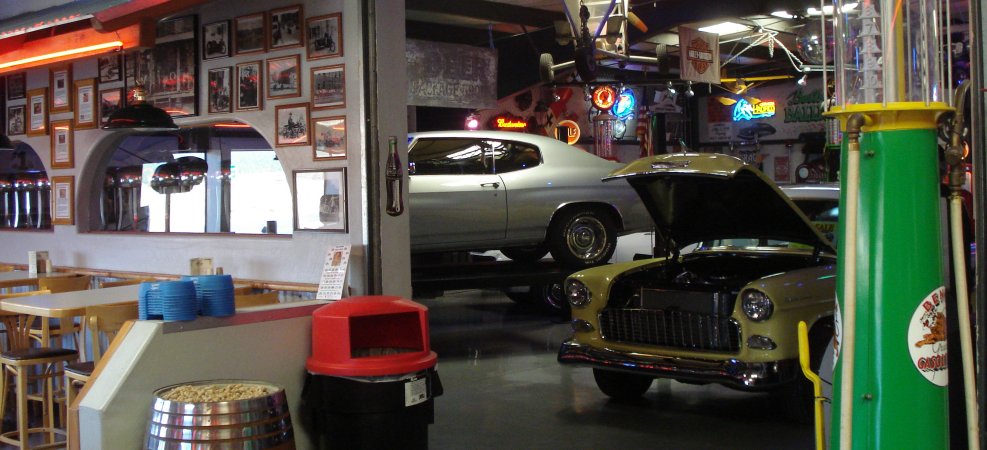
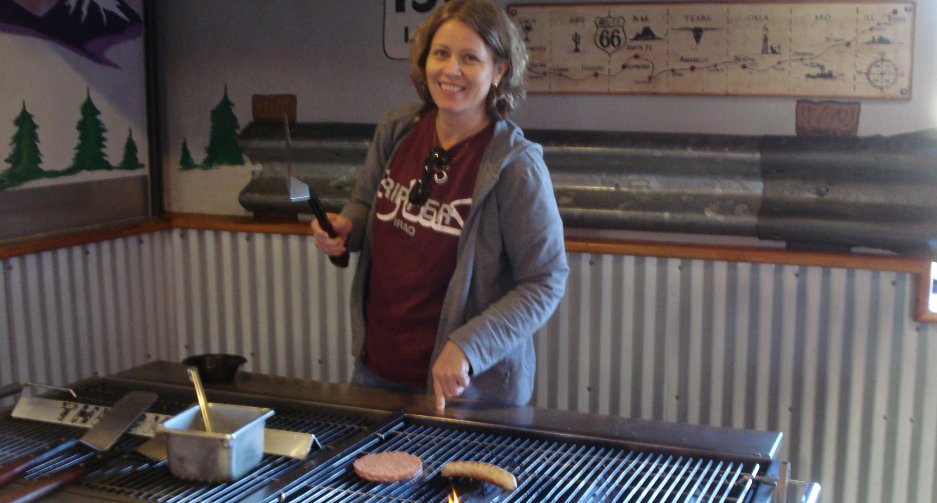
Route 66 has been replaced by I-40 through Arizona, but the legend remains.  Among the places showing homage to the “mother road” is the Route 66 Grill.  My guess is that the clientele includes a lot of bikers and truckers. You get to (have to) grill your own lunch. I chose bratwurst, since I was reasonably sure that I couldn’t mess up with a pre-cooked sausage. I just had to blacken the outside.

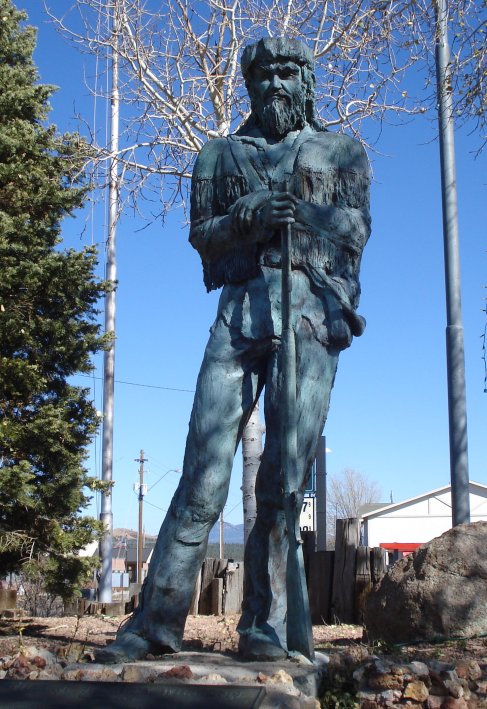
Farther down the road is Williams.  We visited here in 2003 and you can read about that at this link.  Williams has a superb natural location with a nice cool climate in the middle of the ponderosa pine forests on the way to the Grand Canyon, but it is just a little too far out of the way.  It has always been thus.  The town is named for the mountain man (and son of plainly unimaginative parents) William Williams.  According to the plaque at the monument, Williams organized the regional mountain man rendezvous at the site of the current down and generally “did a heap of living.” 
Those rendezvous must have been something to experience, with the grizzly men coming out of the woods once a year to trade their pelts for the goods they needed, including whiskey, women & weapons.  Merchants came from all over to trade and probably rip them off.  Of course, it was dangerous to cross a man who lived by himself most of the time and whose daily life required him to kill animals & fight Indians.  Fuel that guy with rye whiskey and you had murder and mayhem waiting to happen.

Mountain men like Jeddiah Smith, Jim Bridger and William Williams went up to the mountains to get away from civilization, but their activities opened up the wilderness and allowed in what they were trying to escape. 

The mountain man epoch lasted less than a generation.  A lot of their activity was based on chasing beavers to satisfy the vagaries of fashion. The pelts were used for felt hats worn by gentlemen in Europe and the Eastern U.S. The bottom fell out of the market when fashions changed and silk hats became all the rage. Anyway, by that time settlers were moving in and the railroads were binding the nation together. There was no longer any room for the mountain men.  Their legend has endured longer than their moment in history.

The story of our 2003 trip to Williams is here.

Montezuma’s Castle & Red Rocks

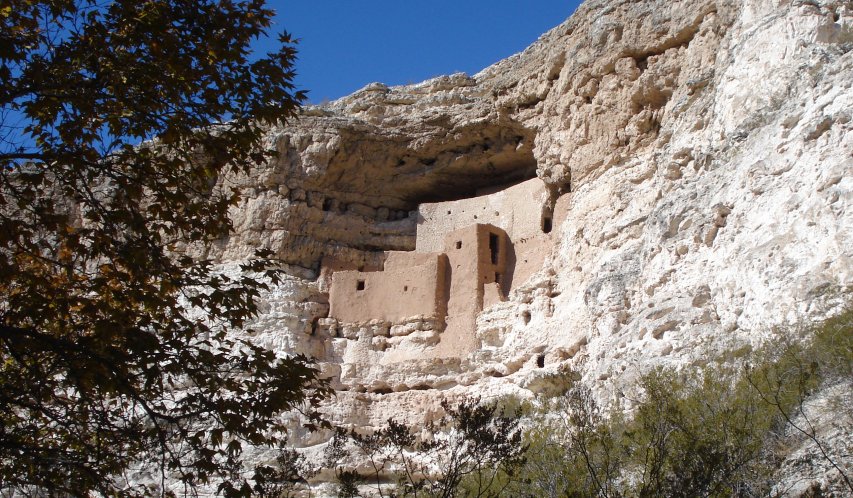
We headed up to the Grand Canyon via Sedona, which took us through the red rock country along Oak Creek.  Our first stop was Montezuma’s Castle, misnamed after the legendary King of the Aztecs, whose people never got this far north.   Castle is also a bit of a misnomer.  It is essentially a lightly fortified cliff dwelling and it was a Pueblo type people who made the structure as a refuge against enemies.  Archeologists call them Sinaqua people.
Looking at the extent that people lived in fortified villages reminds us how precarious life was in the past.   Violent marauders or dangerous animals could appear at any time and the lookouts could only detect as far as their naked eyes could see.   Since old guys, less useful working in the fields, evidently often got the lookout job, sighting distances were cut even further by failing eyesight.

However, as far as stone-age communities go, this was a top of the line location. It was defensible, as mentioned above. Oak Creek provides a steady supply of water, important to human life and attractive to game animals and the loose soils near the creek were easily worked with simple tools available. 

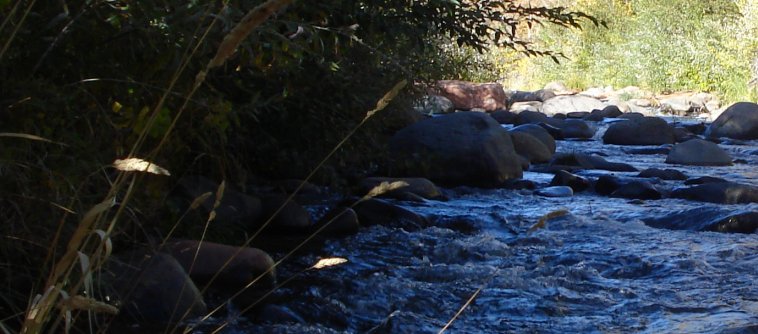
The community thrived for centuries and then just disappeared around 600 years ago. Nobody is sure what happened.  There was significant climate change at the time, with the area becoming drier. This might have changed availability of game species.  That cannot be the only explanation; since the creek did not dry up and no matter how tough conditions were near the creek, they must have been worse away from it. Below is Oak Creek near Sedona.

I blame Rousseau and his “noble savage” myth for giving us the misconception that life before civilization was good. In fact, life for most was violent, unpredictable, generally brief and often unpleasant. A better question to ask is how people persisted for so long rather than why they disappeared. It was probably a combination of war and changing ecological conditions that drove the people away from this area. Of course, sometimes things just happen. Only around fifty people lived in this village. With a small, preliterate culture a few bad decisions, a couple of nasty neighbors or just a run of bad luck can doom a community. I suppose a bigger question is why they didn’t come back.

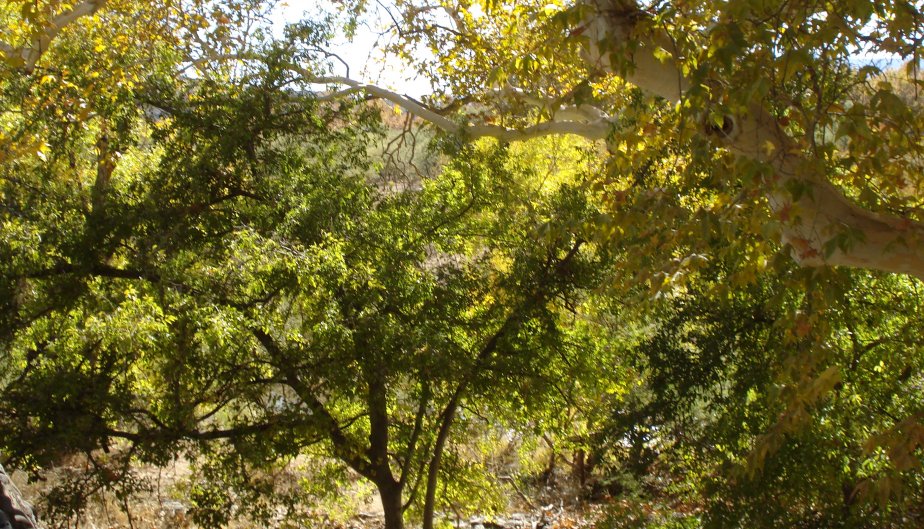
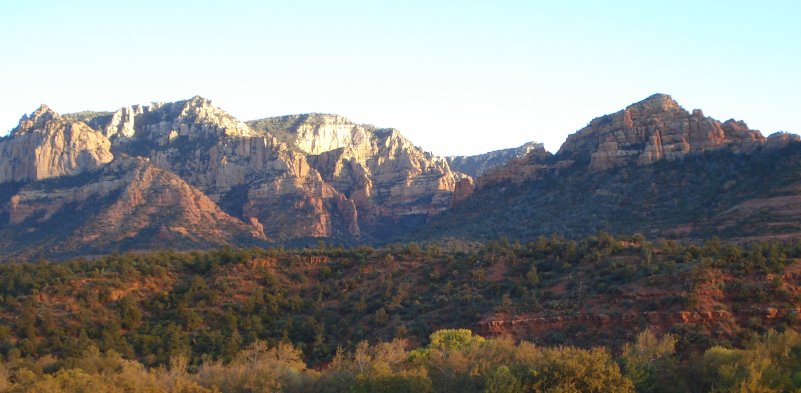
I didn’t think of Arizona as a beautiful autumn location, but the sycamore trees along creek were showing off a rich golden color.  It was a beautiful fall day at Montezuma’s castle, as you can see from the nearby pictures. We moved up the road and upstream to the town of Oak Creek and the Sedona area. We stayed at the Best Western in Sedona.  Below is the view from the balcony.

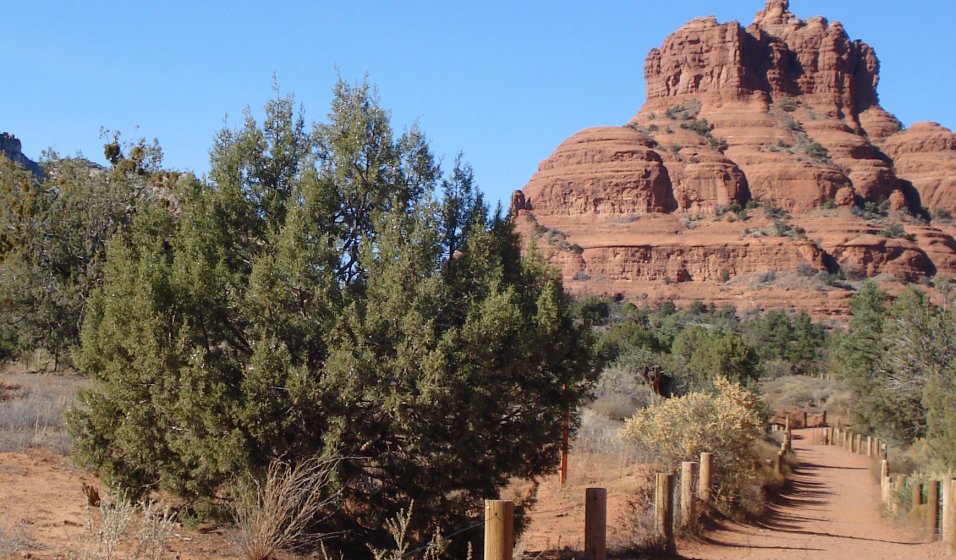
This is the red rock canyons area with natural beauty all around.  It reminded both Chrissy and me of the Petra area of Jordan.   Sedona was a cowboy movie location during the 1940s and 1950s and there were markers with handprints of famous actors who played in the movies.  The only ones I recognized were Gene Autry and Ernest Borgnine.  More recently, it has become a center of arts and crafts and a kind of aging hippie hangout.  There is supposed to be some kind of vortex that connects to other dimensions or releases psychic energy or something like that.  This and the lyrically beautiful scenery attract various sorts of people.  There are also plenty of trails for outdoor activity.  It is a nice place generally.

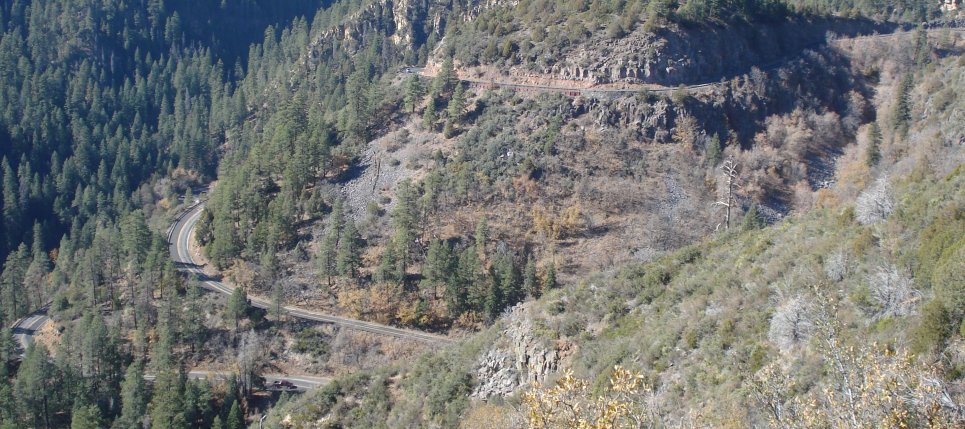
Past Sedona you climb the mountain in a series of switchbacks.  You are still following Oak Creek, more or less.  That little creek is responsible for most of the beautiful topography.  The natural communities change as you climb with scrub, juniper and pinion pines giving way to open ponderosa forests.

The forest service has been managing these piney woods well, at least near the roads where I could see it.  I noticed the results of prescribed burning programs and the trees were often in clumps, as they would be in healthy ponderosa forests of the past.   I saw lots of evidence of fire along the road.  I took a picture of an area that was still warm from the recent burn to show what is supposed to look like.  We saw smoke in the distance the day before, which may account for some of the haze we noticed in Sedona. 

Watering Tucson

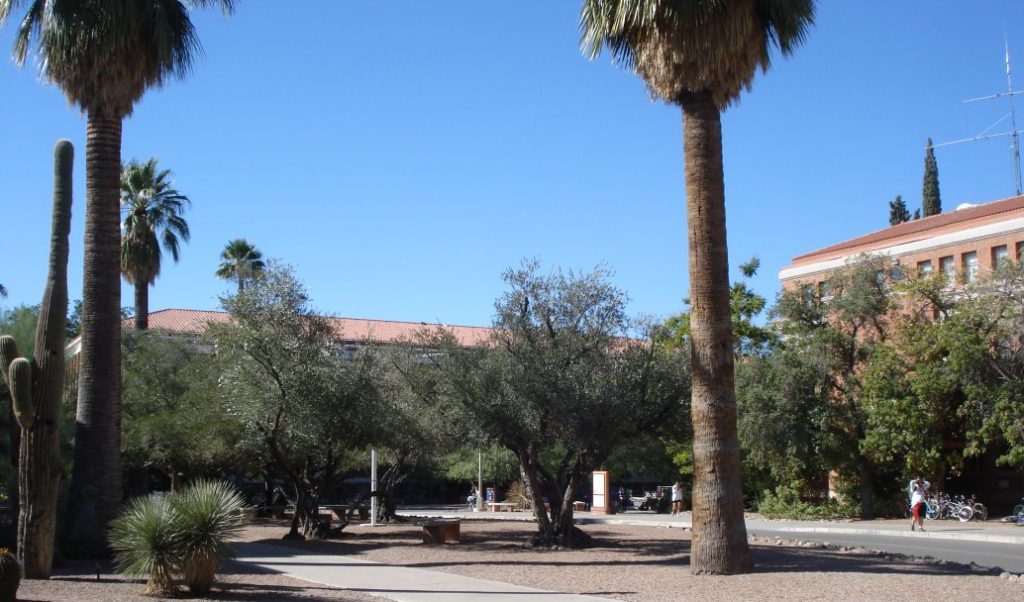
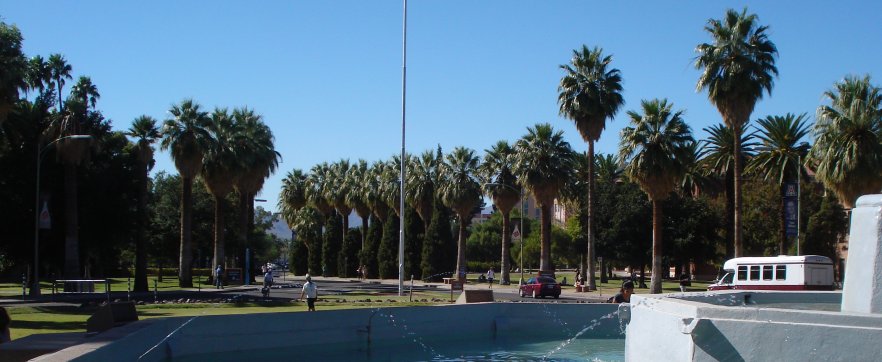
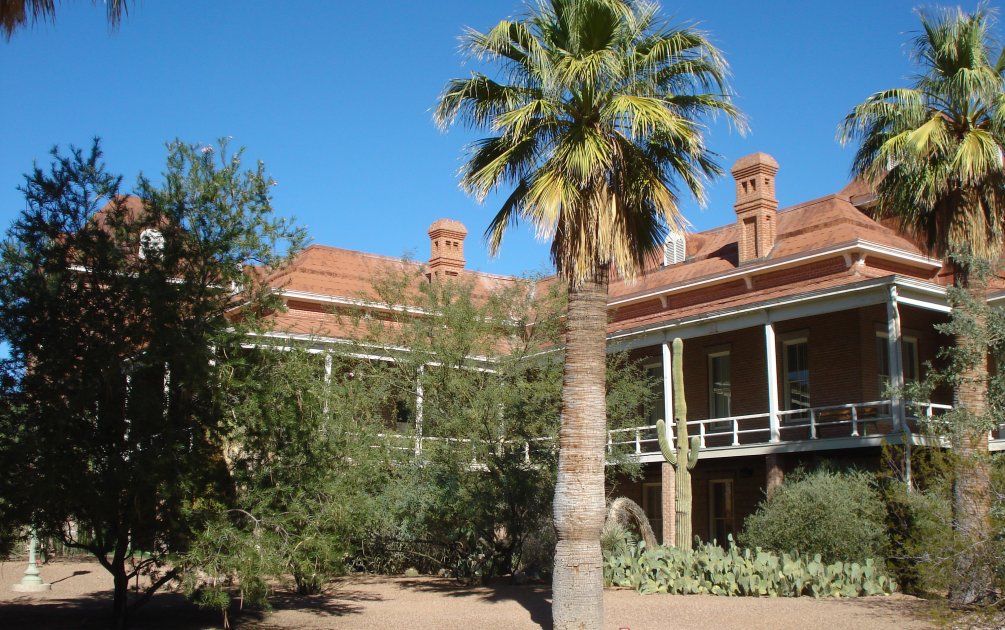
They have been planting trees at the University of Arizona for a long time, so it is not only a pleasant place but also a place where you can see a great variety of plants from around the world.  The climate in Tucson is almost tropical, but the soils and moisture levels are very different, so it makes for some interesting combinations. 

I came here to talk to some University of Arizona professors at the agriculture and soils department.  They were courteous and hospitable.  I can always find good people willing to tell me about the place they live and what they do and I enjoy getting the local angle wherever I go. Their ideas are reflected in the post on Mt Lemon.  They told me about the environment there and suggested that I make the trip up the hill, so I thank them for that piece of local intelligence too. 

My hosts were proud of their town and happy to live in Tucson.  It is not hard to see why.  Tucson has a lot to like.  But the recent rapid growth has presented challenges to the local ecosystems.  The extension services at the University of Arizona and the county extension are actively involved in their communities, helping local authorities, landowners and developers do the right thing to maintain a sustainable environment. 

As with all cities in arid environments, water is a problem.   Tucson depended on ground water and is one of the largest cities in the world to do that.   The ground water renews itself (it is not like the Ogallala aquifer) but not at the rates now required.  They now have a water plan that uses a water allotment from the Colorado River. Importing water creates its own challenges.

Minerals and salts can poison soils.  This is what happened in large parts of Mesopotamia and it is an ancient lesson that we have to be careful when irrigating dry fields. The water itself brings with it minerals and salts and water sitting on irrigated fields can bring salts and minerals to the surface. In either case or in combination, the result is the same. The general idea is that you need enough fresh water dilution to wash out the salts and minerals.  Rainwater is pure except for the small amount it might pick up from things like dust or smoke, but once on the ground it begins to pick up minerals and salts.  When water evaporates, it leaves the minerals and salts it brought along.  Most arid irrigated regions have a positive salt balance, i.e. more come in than goes out.  Over time this buildup is a problem.

There is a lot you can do to conserve water, but conservation is not w/o its own problems.  There really is no such thing as a decision w/o some negative consequences.  All life involves trade-offs. Conservation means you use less, but using less concentrates the minerals and salts in smaller volumes of water, which may be worse for the soils.  That is one reason there is a limit to the amount of gray water (semi-treated) that you can apply to irrigation. The water is reused and recycled … and the salts and minerals are concentrated.   If you live in a place where it rains a lot, you don’t think about these problems very much, but you have to if you live in a arid place like Arizona, with rapidly expanding populations.

On the plus side, the growth of urban populations might REDUCE water demand.  That is because no matter how much water an urban population reasonably uses, it is often less than irrigated agriculture had used with the methods employed in the past.   Ranchers can convert their irrigated agriculture to dry land production and sell the water saved to the growing urban regions.   Production declines, but it might be more profitable.  Municipalities also buy up land, along with the water rights.  This has the double benefit of providing water and open lands for parks and nature reserves.

We learn from experience how to maintain a sustainable environment.  As I often say, yesterday’s solutions are today’s problems, but that does not mean we made stupid mistakes in those solutions of the past.  As conditions change, often BECAUSE of our solutions, our responses must also change.  That simple knowledge should make us less critical of the “mistakes” of our ancestors and less arrogant in our out decision. There is no end to this game, just one move after another. The good player just get to keep playing. Some people think this is depressing (These are often the same ones who were upset when they discovered the principle of entropy.) I find this exhilarating.  It is almost the very definition of being alive.

Tucson is a pleasant place and a lot of people want to live here.  With good management and some foresight, they can accommodate more while keeping it a place people want to come.