Gated Communities & Defensible Space

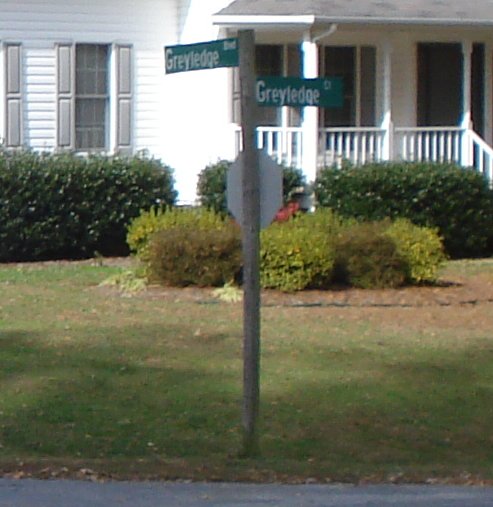
We stopped at the remains of a small artillery fort on the Petersburg battlefield.   These days it is located in the middle of a neat planned community.  As you see in the nearby picture, they don’t have much imagination when it comes to naming streets.  We lived in a nice community in Londonderry, NH.  It was built around a man-made lake and had a lot of green space snaking through.  These were not gated communities, but they are limited access.

I have mixed feelings about gated communities.   Their closed characteristics vaguely offend my egalitarian impulses. I also don’t like the basic layout of the gated communities I have seen.   They are not conducive to walking.  They tend not to have shops or attractions you get to w/o driving a car. 

On the other hand, there are ample recreational opportunities.   Most of these places come with clubhouses and pools and running trails are often usually well laid out. The ones near natural areas tend to have hiking trails connected with the living areas. 

They are also reasonably secure.   The gates keep out troublesome people.  That sounds like a terrible thing to say, but most people really don’t want to open themselves up to all sorts of aberrant behaviors.  A city neighborhood no longer provides “defensible space.”  Everybody has the “right” to come around.   This is a problem.

I admit it.  I don’t like lots of street people around.   For one thing, they compete with me for places to lie around.  I like to run and at the end of a run, or just in the middle of a walk, I like to lie on the grass or on a bench in the sun, look at the clouds and/or take a nap.  This is a perfectly reasonable thing to do – unless you have lots of boozers or street people more or less permanently occupying the prime real estate.  They make hanging around a bad practice.   I suppose my specific habits are a little peculiar, but I think most people just don’t want to be bothered by weirdoes.   Beyond that, I don’t want my eccentric habits to be lumped in with theirs. 

We have be admonished by a generation of after school specials and public service announcements to be accepting of everybody.  This is BS.   A community – any community – is inclusive of members and exclusive to others.   Members must observe some basic rules of behavior and contribute in some way to the community.  We have obligations to our fellow human beings, but these obligations are not open-ended.  We are under no obligation to accept everyone on THEIR terms.  

That is why we need defensible social space and we need defensible physical space, places where we feel comfortable and secure.   When the greater society cannot or will not provide or even allow such space, people seek it in the form of gated communities.

If you cannot defend your work and your community, you will build nothing.  That is the whole basis of civilization.  Even if it offends the romantic in us, property, compassion and civilization clearly go together. 

You cannot be generous until you have something of your own to give.  When the kids were little, we didn’t force them to share everything.  After they felt secure in their own stuff, they became generous on their own.   This applies to larger communities too.     

Visiting Mr. Jefferson

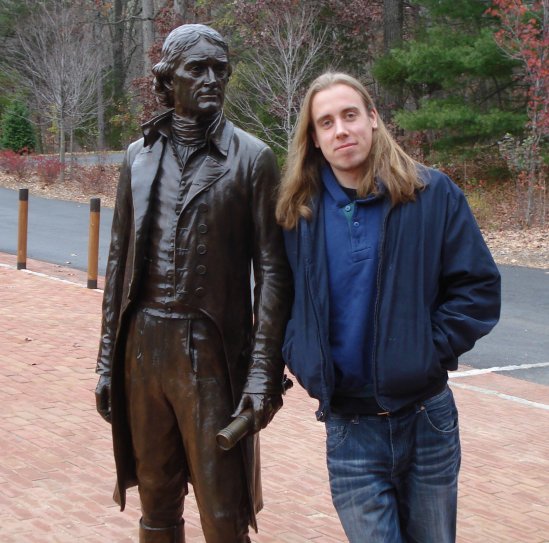
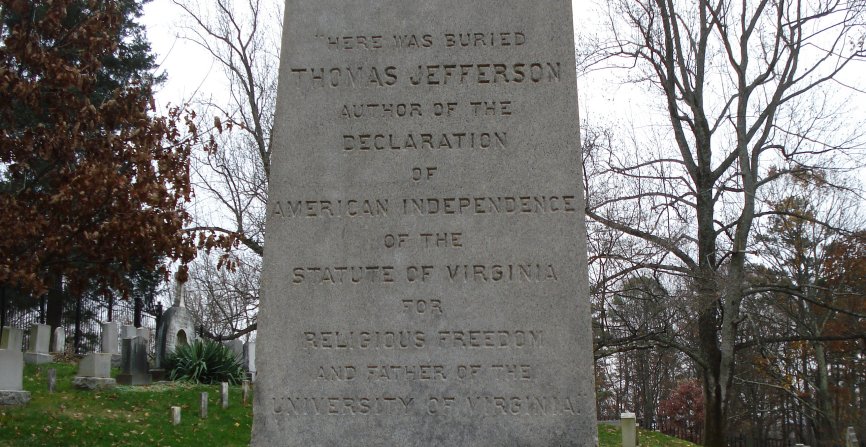
Thomas Jefferson was a remarkable guy.  He thought deeply about almost everything and made the world a better place.  On his tombstone he wanted to be remembered for founding the University of Virginia and authoring the statutes of religious freedom of Virginia the Declaration of Independence.  Any one of those accomplishments would make him a great man.   He didn’t even mention being president of the United States.

We first visited here in 1985.  Chrissy was pregnant with Mariza and I remember thinking that it would be nice if our expected child could become part of this legacy by going to Thomas Jefferson’s university.  She did.   So besides his contributions to our freedom and prosperity, I have a very personal reason to thank Jefferson.

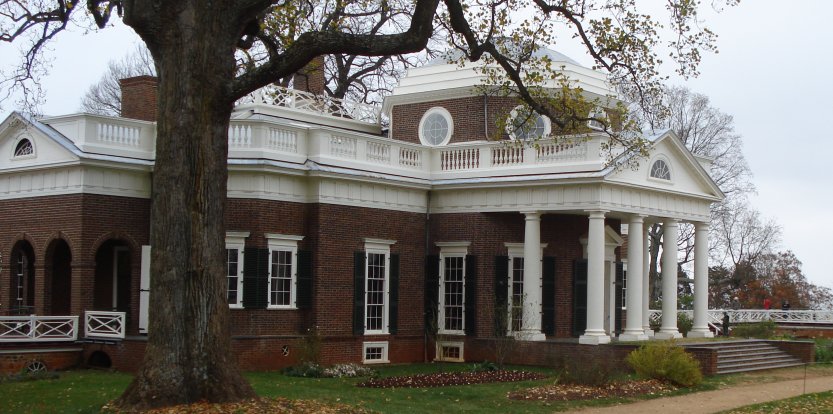
Monticello is owned and run by a private foundation that makes its money from ticket sales and donations.  The foundation supports historians, archeologists and researchers in addition to maintaining the house and grounds.  

Alex and I talked about the pros and cons of a private foundation.  It seems like a place like Monticello should be government owned, but why?  A private foundation is more flexible and can often do a better job.  Many of our best American universities are private and they are the best in the world. A foundation works out just fine for Mr. Jefferson’s home.  

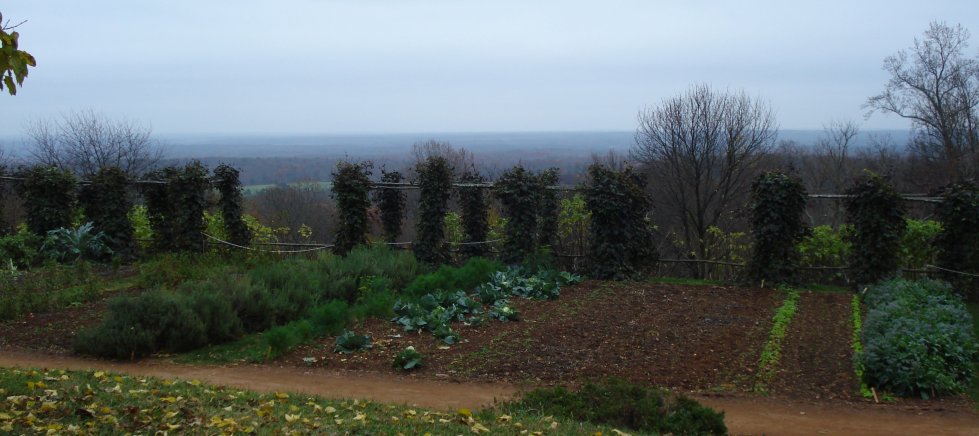
Jefferson always considered himself a farmer.  He grew tobacco and wheat as cash crops and produced vegetables, apples and other fruit for consumption on the farm.  Like other plantations, Monticello was self-sufficient when possible.  They made their own bricks from local clays. Carpenters from the estate made furniture from the wood of the local forests.  Jefferson owned 5000 acres, which gave him a diverse landscape to draw from.  Below is Jefferson’s vegetable garden.  It is set up to take advantage of warming winter sun.

Jefferson was an active manager of his estate. Washington’s Mt Vernon actually turned a profit, not so Jefferson’s Monticello.  The difference was top management.  Washington didn’t have Jefferson’s intellect, but he had practical abilities.  Jefferson was an idea man.   And his house – and our country – is full of his ideas, but he was not a good businessman. He died deep in debt and his heirs had to sell Monticello.

Of course, Jefferson didn’t do much of the real work. The paradox of Jefferson the hero of freedom is Jefferson the slave owner.  Slavery had existed since the beginning of history, but by Jefferson’s time the Western world was beginning to see the moral contradictions of the practice.  Jefferson shared the revulsion of slavery in theory, but couldn’t bring himself to take the practical and personal steps against it.  I guess he was just a true intellectual in that respect and unfortunately remained a man of his times. 

In any case, Jefferson’s contributions far outweigh the negatives of his personal life. All human being are flawed.  They make their contributions based on what they do best, not what they do poorly.  

We Americans were truly blessed during our founders generation.  Washington, Jefferson, Franklin, Adams, Hamilton & Madison all were greats.  But the remarkable thing is how their skills and even their personalities complemented each other, even when they fought and hated each other. Their differences created harmony and their joint efforts filled in for some serious individual flaws.

The American revolution is one of the few in world history that actually worked (i.e. didn’t end in a bloodbath followed by despotism). We can thank good luck & favorable geography.  But the biggest factor was the moral authority, courage and intellect of our first leaders.  We are still living off their legacy. 

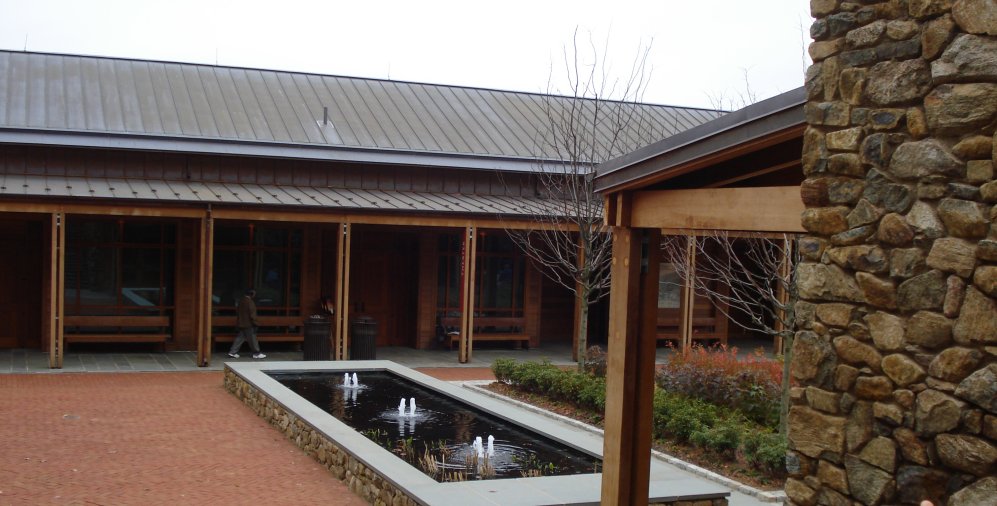
Above is the visitor’s center that opened last year. In the spirit of Thomas Jefferson, it takes advantage of natural forces and uses appropriate technology.  This is a green building, earth sheltered, energy efficient and heated & cooled to a large extent by geotheromal energy.  The wood and natural stone construction is simple, but elegant.  I like it.

Nobility at Appomattox

We got to Appomattox too late yesterday, so we had to go this morning.  It is not the big tourist season, so we had the place largely to ourselves. 

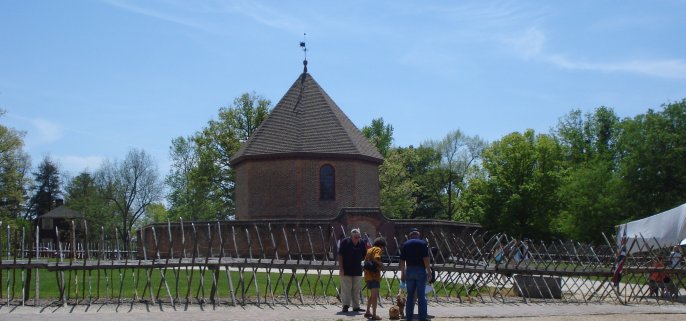
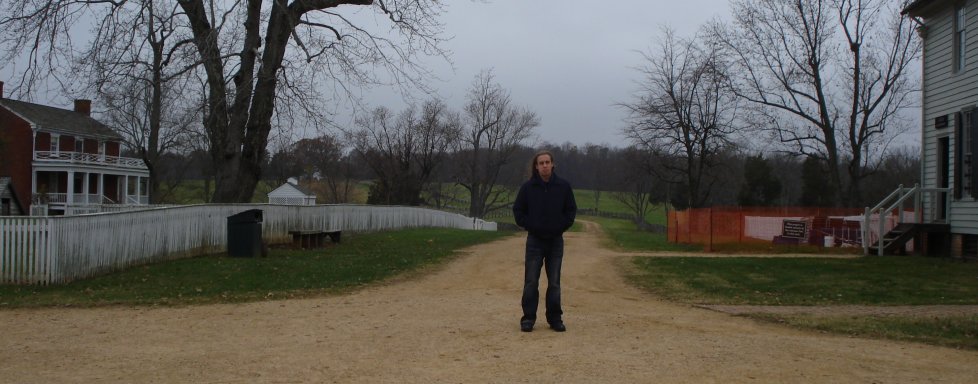
I like these kinds of communities, with the old fashioned houses and the open spaces.  Alex thought the houses were “lame.”   But it is interesting to stand at the cross roads of history.   They have done a good job of preserving and restoring the historical area, but I think they should get some animals.   The community of the time would have featured horses, pigs, cows and chickens.  Well … probably not exactly in April 1865, when the starving soldiers of the Army of Northern Virginia would have made short work of such rations on the hoof, but in normal times a community like this w/o animals would not be normal.   I bet the Park Service could get some farm hobbyists to do it for nothing. 

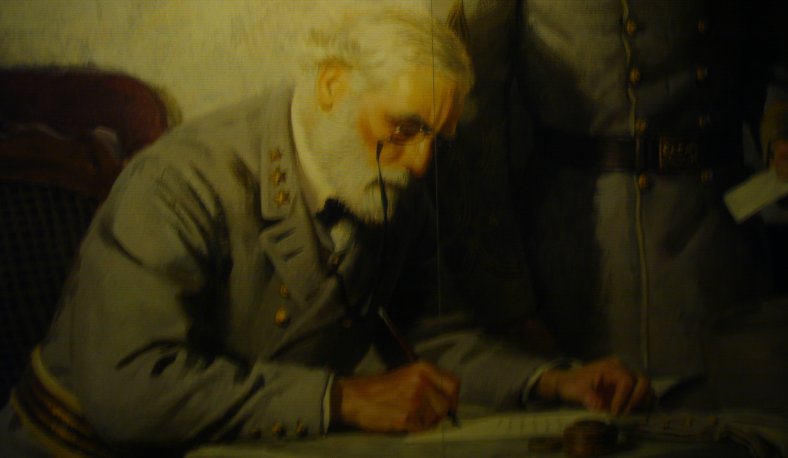
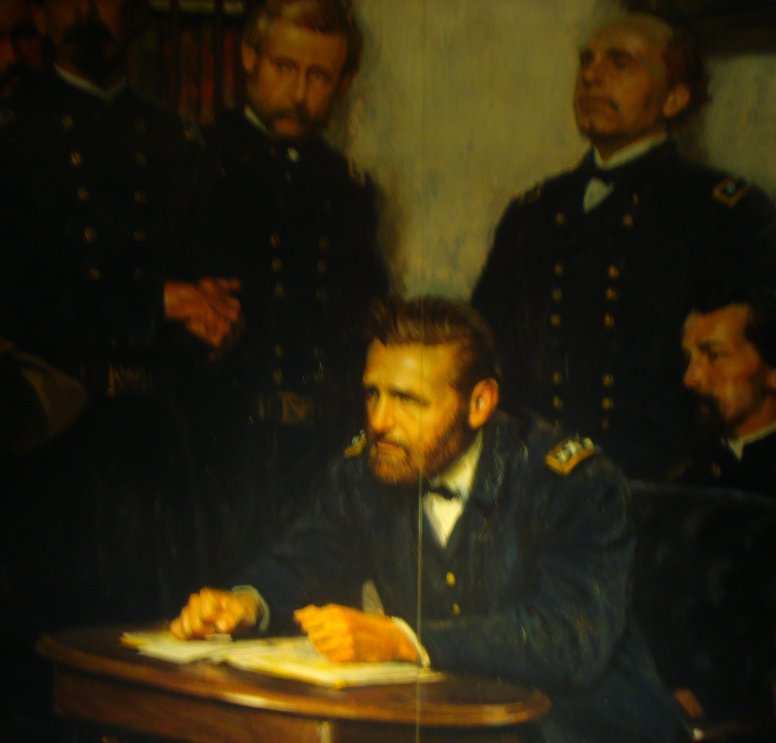
I thought back to April 1865 and the starving ragged Confederates up against Union forces that were better off but still not properly rationed.   Both armies were exhausted.   Robert E. Lee made the horrendous decision to surrender and the enlightened decision not to keep the fighting going on by guerilla tactics, as President Jefferson Davis wanted.   The South was finished.  No reason for more men to die and the country to be torn up even more for a lost cause.   Grant and the Union made it as easy as it could be in such circumstances.  

There was generosity, nobility and honor on both sides.   April 9, 1865 was truly a day when humanity showed its better side amidst terrible suffering and hatred.    As I wrote before, this is a even unique in human history.   Grant later wrote, “I felt… sad and depressed at the downfall of a foe who had fought so long and valiantly, and had suffered so much for a cause though that cause was, I believe, one of the worst for which a people had ever fought.”

There is no such thing as destiny.  People make history. If Grant, Lee or Lincoln had been lesser men – ordinary men – blood would have continued to flow and our great nation may have never recovered.  But it could have been different.

Lincoln was there in spirit and he was a motivating force behind the generosity that Grant was able to give, but within a few days Lincoln would be dead, shot by that cowardly actor John Wilkes Booth. Had Booth struck a week earlier it is not likely that Grant could have offered such terms to Lee.  The conflict might have continued as a desperate war of extermination. 

Grant’s close friend William T Sherman would soon be similarly generous with General Joe Johnston, who would also prove as honorable as Robert E. Lee. 

We all remember Lincoln’s Gettysburg Address, but the Second Inaugural is my favorite.   It is not very long, so I copied it entire.  I especially like the last paragraph.

Fellow-Countrymen:

  AT this second appearing to take the oath of the Presidential office there is less occasion for an extended address than there was at the first. Then a statement somewhat in detail of a course to be pursued seemed fitting and proper. Now, at the expiration of four years, during which public declarations have been constantly called forth on every point and phase of the great contest which still absorbs the attention and engrosses the energies of the nation, little that is new could be presented. The progress of our arms, upon which all else chiefly depends, is as well known to the public as to myself, and it is, I trust, reasonably satisfactory and encouraging to all. With high hope for the future, no prediction in regard to it is ventured.
   1
  On the occasion corresponding to this four years ago all thoughts were anxiously directed to an impending civil war. All dreaded it, all sought to avert it. While the inaugural address was being delivered from this place, devoted altogether to saving the Union without war, urgent agents were in the city seeking to destroy it without war—seeking to dissolve the Union and divide effects by negotiation. Both parties deprecated war, but one of them would make war rather than let the nation survive, and the other would accept war rather than let it perish, and the war came.2
  One-eighth of the whole population were colored slaves, not distributed generally over the Union, but localized in the southern part of it. These slaves constituted a peculiar and powerful interest. All knew that this interest was somehow the cause of the war. To strengthen, perpetuate, and extend this interest was the object for which the insurgents would rend the Union even by war, while the Government claimed no right to do more than to restrict the territorial enlargement of it. Neither party expected for the war the magnitude or the duration which it has already attained. Neither anticipated that the cause of the conflict might cease with or even before the conflict itself should cease. Each looked for an easier triumph, and a result less fundamental and astounding. Both read the same Bible and pray to the same God, and each invokes His aid against the other. It may seem strange that any men should dare to ask a just God’s assistance in wringing their bread from the sweat of other men’s faces, but let us judge not, that we be not judged. The prayers of both could not be answered. That of neither has been answered fully. The Almighty has His own purposes. “Woe unto the world because of offenses; for it must needs be that offenses come, but woe to that man by whom the offense cometh.” If we shall suppose that American slavery is one of those offenses which, in the providence of God, must needs come, but which, having continued through His appointed time, He now wills to remove, and that He gives to both North and South this terrible war as the woe due to those by whom the offense came, shall we discern therein any departure from those divine attributes which the believers in a living God always ascribe to Him? Fondly do we hope, fervently do we pray, that this mighty scourge of war may speedily pass away. Yet, if God wills that it continue until all the wealth piled by the bondsman’s two hundred and fifty years of unrequited toil shall be sunk, and until every drop of blood drawn with the lash shall be paid by another drawn with the sword, as was said three thousand years ago, so still it must be said “the judgments of the Lord are true and righteous altogether.”3
  With malice toward none, with charity for all, with firmness in the right as God gives us to see the right, let us strive on to finish the work we are in, to bind up the nation’s wounds, to care for him who shall have borne the battle and for his widow and his orphan, to do all which may achieve and cherish a just and lasting peace among ourselves and with all nations.

Powerful English

It is LESS important for a speaker of English to learn another language than it has ever been.  I am aware that this statement will sound backward and xenophobic to many,  but as a person who spoke three languages fluently (Portuguese, Norwegian & Polish), one “enough to get by (German) and two with decent reading ability (Latin & Greek), I feel I have some standing about this subject.

Let me bring up the caveat right at the start.   If you plan to live in a country or stay there a long time so should learn the language.  Learning a second language is also a hallmark of a good education. Not to do so is indeed backward and xenophobic.    What I am talking about here is the usefulness of“general” foreign language ability.   This is the one that pundits fret about and scold Americans for not doing.  Their criticism actually stems from their own ignorance and/or not having thought through the problem.

Which One?

There are hundreds of languages spoken around the world.   Even if you limit yourself to “world languages,” those spoken by lots of people in several countries*, there is too big a choice.   I know from experience that learning a language well is very hard and a monumental commitment of time.  KEEPING a language fluent is perhaps a greater challenge.   You really cannot just collect languages and pull them out when you need them.  So if you don’t have a specific plan to go to a region, which language should you learn?

The question is easy for a non-English speaker.   English is THE world language.  There are You can find English speakers everyplace you go.  No other language is like that.  We Americans think of Spanish as widespread because we see so many Spanish speaking immigrants and live near Mexico.  But try using Spanish anyplace outside the Americas or north of the Pyrenees in Europe.  Even in Spain itself you may have trouble in Catalonia if you learned your Spanish in Latin America. Chinese is spoken more people than any other language, but almost all of them live in one place.  Fluency in Chinese in non-Chinese communities is uncommon. 

BTW – the Chinese are finding their relative lack of English a problem in their international relationships.   Generally Engish is the key to economic success and all over the world people are climbing over each other to learn it.   There is no more useful language.  

The Power of the Network

I could go on.  Suffice to say that if you were to be located in a random inhabited place on the earth and asked find somebody within 10 miles whose language you could understand, ONLY English would give you a significant chance of success. You might not find a native English speaker, but you would almost certainly find an English speaker.

The power of English is kind of an open secret. It seems arrogant for Americans or Brits to talk about it openly.  Language is tied up with culture and identity, so people have strong emotional interests in pushing their favorite languages.  But no matter what people say, the REVEALED preference is clear. And I don’t think it will reverse, even if the relative political and economic power of the U.S. and other English speaking countries declines. 

The “network effect” is strong and self reinforcing.  BTW – the network effect refers to the accumulating advantages of adding more people.  If there is only one telephone in the world, it is useless.  The more you add, the better it gets. At some point, it becomes almost impossible to NOT join the network.  This doesn’t mean the network is objectively the best.  English is not the “best” language in the world; it is just the most useful.

Switching is Hard

The power of the network is increased when it is difficult to switch and it is very difficult to switch languages.  Most people really do not have the talents to become multi-lingual in any meaningful way.  I know I certainly do not.  And even if you do have the talent for learning languages, if you don’t have the opportunity for constant practice, you cannot keep them.

I think many people underestimate the difficulty in REALLY learning a language and/or overestimate their own language skills.  If you studied really hard and took four years of French or Spanish in HS, you have probably NOT learned that language. If you took a summer course in Chinese, you have NOT learned that language.  Being able to ask direction to the train station or ordering dinner is nice, but unless you can have a nuanced discussion about an important subject, you really are not there.

If you want a rough guide to how well you are speaking a second language, see how long it takes for a native speaker to compliment you on how well you speak their language.  Generally, the faster they praise your skills, the worse you are doing.  Think about that.  If you run into a person with a foreign accent who speaks English well, do you feel the need to compliment him on his English?  We only notice if there is a struggle.  I have observed this in my work.  When I first get to a country, everyone tells me how well I speak the language.  I am happy to report that the compliments become less common the longer I am there.

It takes an FSO six months to get to a basic level of an easy language like French or Spanish.  That means six months of full-time (i.e. all day, everyday, all week), small group instruction.  For a harder language like Polish it is almost a year, two years for languages like Chinese or Arabic.  And that gets you only to a MINIMUM professional level.  And then if you don’t practice, it goes away.  Really learning a language is essentially a life-long effort.

Since we probably cannot learn more than one second language well enough to call it learned, or we cannot maintain it even if we manage to learn it,  the world is de-facto stuck with choosing one “network language”. What will it be?

Much of international English today is exchanged among non-native English speakers.  A group of international business people from from Germany, Japan, Brazil and Egypt will almost certainly have to speak English among themselves. 

This is a great thing for native English speakers.  I remember talking to a Norwegian a long time back.  He spoke what seemed to me perfect English, but he told me that Americans were lucky because they were “never foreigners.”  I didn’t understand what he meant, so he explained.  Most international conferences featured English, even though most participants were not native speakers. Americans could just jump in.  Others had to do so in a second language.  I felt his pain.  I have spoken other languages fairly well, but it is never the same. 

Language Does Not Mean Identity

I understand that some people reading this might take some offense at what I say about English and the others. This is illogical and based on the idea that languages define or “belong” to particular groups and deserve respect or deference as a part of identity.  (None of my ancestry is from English speaking countries. Should I have learned Polish or German before English?) That makes language choice a value judgment.  It need not be that.  You can still study languages and cultures for their intrinsic value (defined as you like).  I studied Greek and Latin and feel I benefited greatly from getting to know the the cultures and traditions of the past.  But for as a practical matter, we are much better served by English, because that is the one we will have to use now and in the future.

So which language should an American learn if he has no plans to live or work in a particular part of the world?  It would be good to get those math skills in order.  

*    World languages would include Arabic, Chinese, English French, Portuguese & Spanish.  We used to include Russian and German too.
Trench Warfare & Ending a Great Hatred

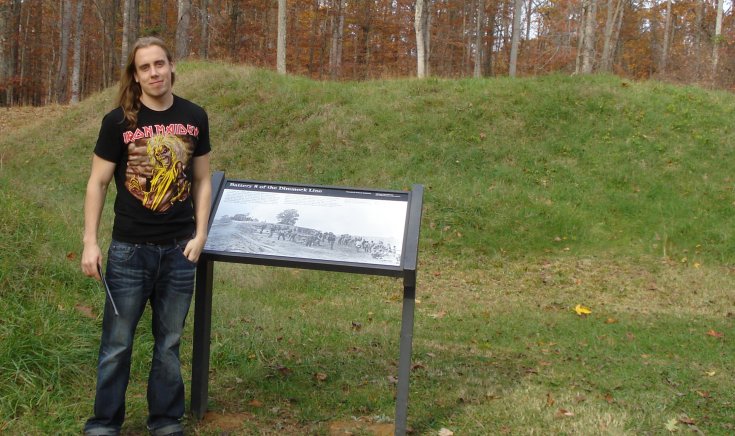
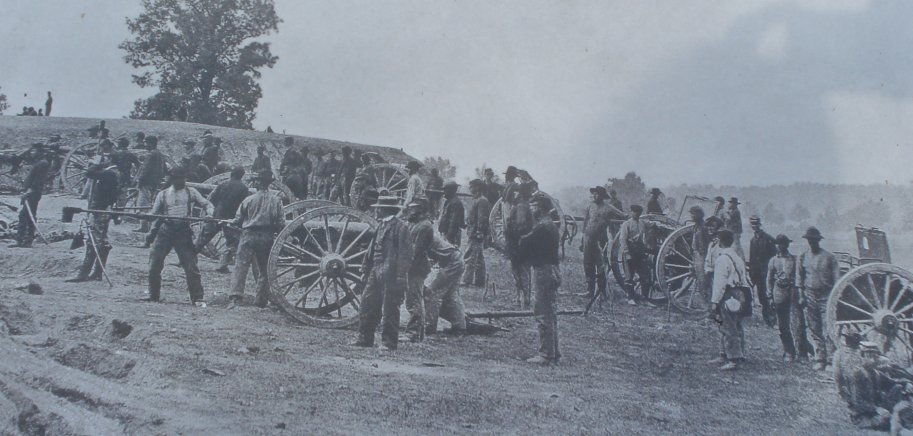
Alex and I visited the battlefields associated with the Petersburg Campaign and Robert E. Lee’s final retreat.   Petersburg gave the world a taste of what trench warfare would be like.  You go from Federal earthworks to Confederate earthworks.   As in the World War I, the armies were racing around the flanks.  It soon became a grim slog, a war of attrition.  The South could not win this kind of war. They just didn’t have enough men or materiel. 

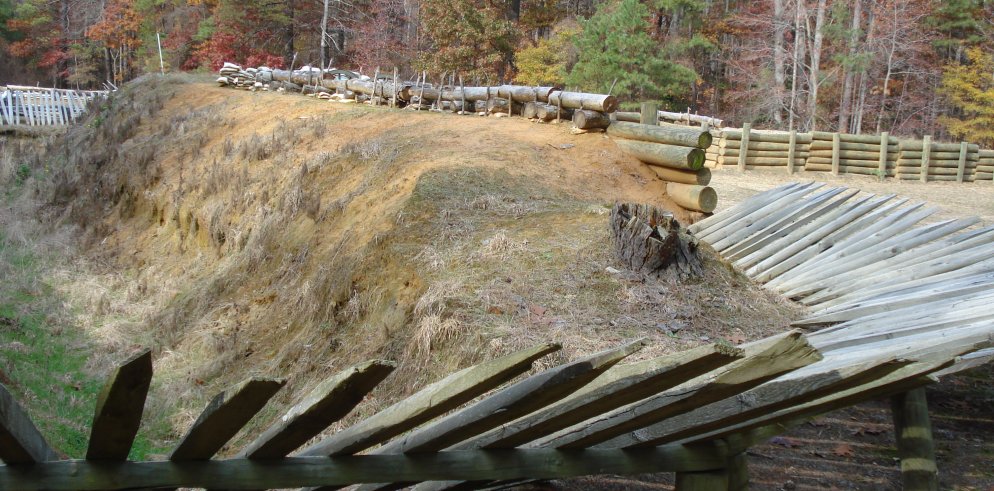
Above is Alex in front of some of the earthworks.  Below is a reconstruction. 

Lee was trying to escape to the west, where he could hook up with General Joe Johnston, while Union forces tried to bottle them up.   Lincoln’s fear was that the war would go on and maybe turn into a guerrilla war.  The Petersburg campaign has that endless war feeling anyway.  They were regularly taking thousands of casualties each DAY.  The soldiers were becoming more accustomed to war and much more cynical. They came to understand that the war in Virginia was ending and nobody wanted to be the last man killed.  There is a good novel about this period called “Last Full Measure” that captures some of the feeling.

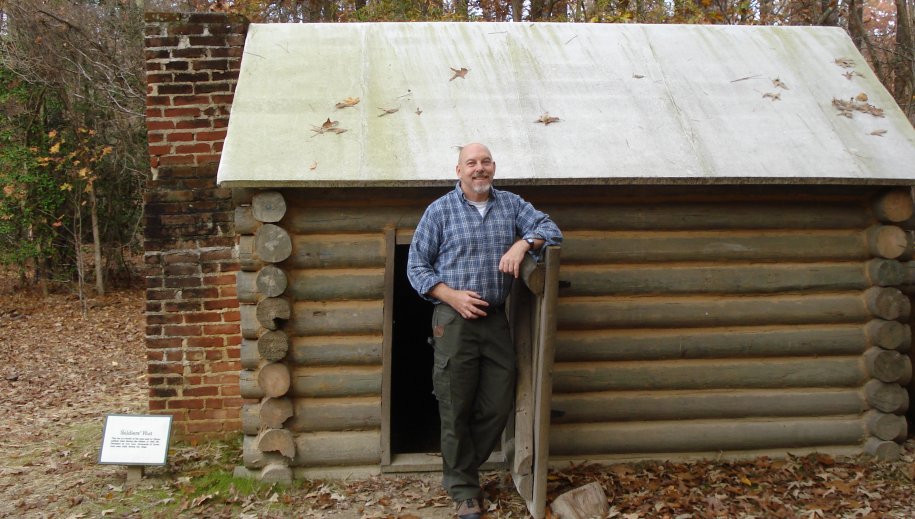
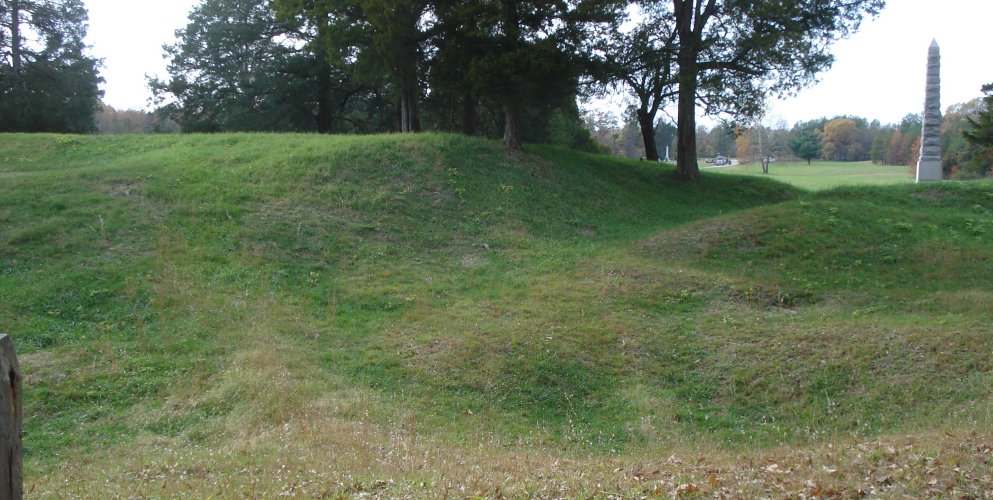
Above is a soldiers’ house.  It looks like a playhouse, but it held four men.   Below is what is left of the crater. Union miners from Pennsylvania made a tunnel under the Rebel positions and blew up Confederate fortifications.  Unfortunately, the attack didn’t go well.  Union troops poured into the crater and many were trapped there. It looks bigger in real life.  You also need to remember that there has been almost 150 years of erosion and filling in.

America’s Civil War was remarkable in its ending.   In France, terror followed revolution.  The Russians and Chinese murdered millions of people in similar situations.  In fact, protracted Civil Wars almost NEVER end without significant retribution and bloodletting.   I think that I can safely say that the ending of the American Civil War was unique in human history.   The victors were generous and the vanquished honorable.  Because it happened as it did, we think of it as inevitable, but the decisions made in April 1865 were not foreordained.

Grant allowed Lee’s soldiers to keep their side arms and their horses.  Robert E. Lee instructed his men to go home and become good citizens.  Most did.   

I know that some scholars talk about the “myth” of reconciliation and point to the problems that persisted. Some people still hold a grudge for Sherman’s march through Georgia and the Carolinas. You have to ask the “compared to what?” question.  In most countries, more people die violently AFTER the wars.  Not in America.  Rebel leaders are usually executed.  The lucky ones are only imprisoned or exiled.  Not here. Can you imagine Cuba exiled welcomes back by the regime?  Russian exiles lured back were usually murdered.  

The Civil War was the worst war in American history.  The destruction was horrendous.  Yet after it ended … it ended.  April 1865 was probably the most remarkable month in world history.  This just doesn’t happen very often – or at all.   I think we should take time to think about this.  If others had learned from the Federal-Confederate example, we might have avoided most of the carnage of the 20th Century.   

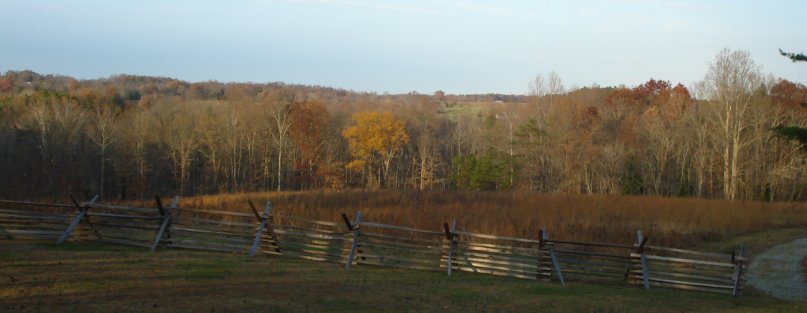
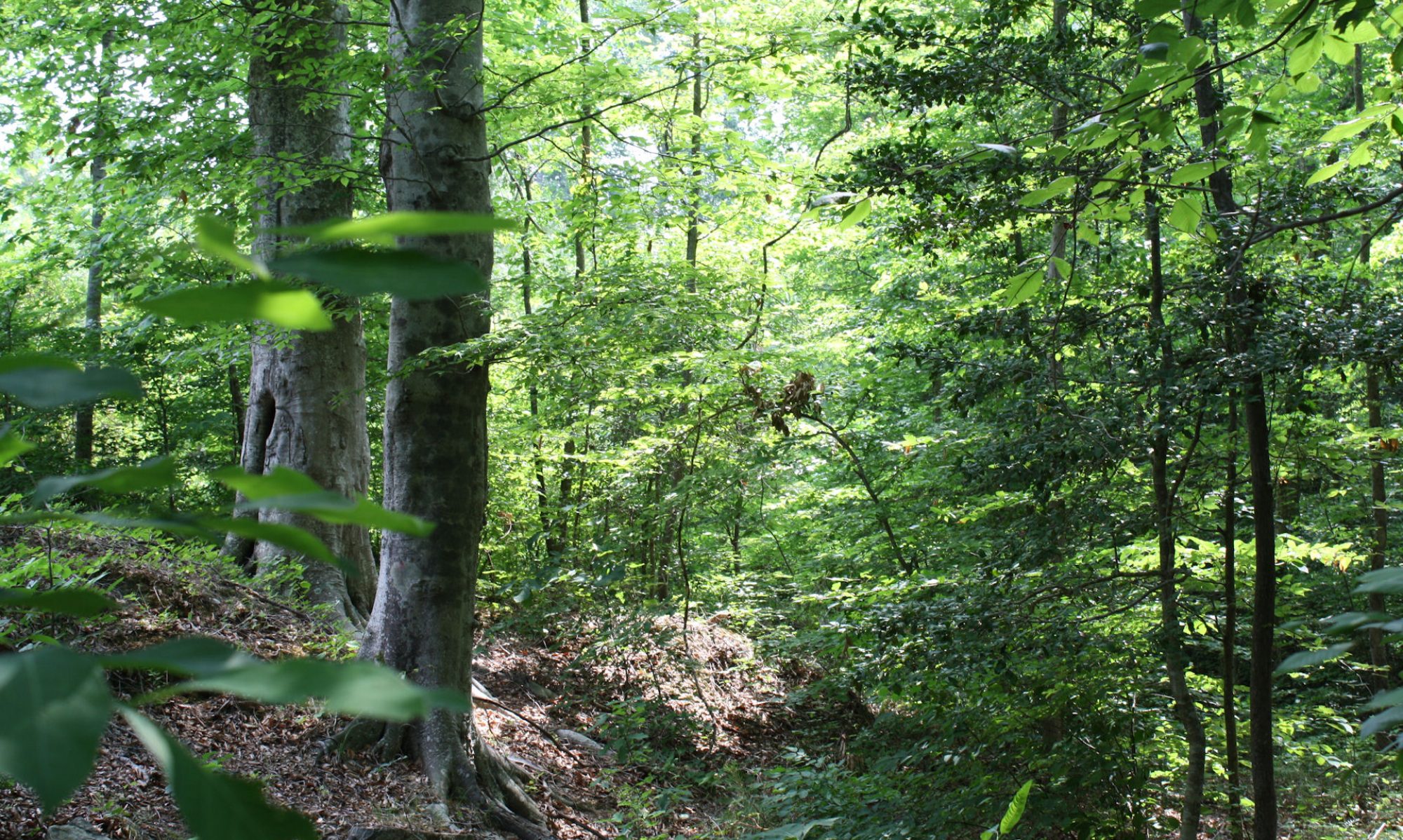
Above is a battlefield at Five Forks.  When the fight turned into a battle of attrition, most of the engagements were small, but this was a key turning point. Phil Sheridan defeated troops under the unlucky George Pickett, who was off having a fish dinner and didn’t return until it was too late. The collapse of the Confederate position at Five Forks led directly to Lee’s decision to abandon Richmond & Petersburg.  It was the beginning of the end for the Army of Northern Virginia and for the Southern Confederacy, and so Five Forks is sometimes called the Confederate Waterloo.  There is nothing much to see here today.  The trees and fields have grown back.  It is hard to believe that war was ever close to this peaceful, bucolic place.

Segmented

We have been admonished to make sure our public diplomacy products appeal to a broad gender audience (i.e. also are relevant to women), for as long as I have been in the public diplomacy business.  Our plans always include a section about reaching out to women, as they should.   But our stuff appeals less to another key demographic – boys and young men. 

If you consider who does what to whom, young men are certainly the key.   But the more “inclusive” we make the material, the less it is likely to appeal to young men.  This is not only a gender issue.  It impacts anything where people are different and that means that it impacts everything we do.

I was thinking about this during a presentation on video games and persuasion.   The most popular games – and this cuts right across cultural divides – involve something blowing up.  The only things that come close are car races and sports, and even in these games something often tends to blow up or at least give that sort of visual impression.   Somebody asked if the games could emphasize peaceful cooperation and inclusiveness.   You could do that, but then the game would appeal to a different demographic.  The general rule seems to be if a mixed gender group of bureaucrats likes it, young men won’t. 

All good marketing features segmentation, since no product appeals to everyone equally.    The more something is loved by one group, the more it will probably be disliked by others.  This statement approaches a tautology.  As you specialize and tailor to a particular set of needs or preferences you by necessity remove or modify the traits that appeal to other needs and preferences.    That is why a product that appeals to very large and diverse groups is usually bland.   It can survive and prosper as long as there are no easily obtained alternatives, but given different choices people will make … different choices.

Public diplomacy does a poor job of segmentation.    In fact, there is a significant disincentive to segmentation.   We are asked to be inclusive.   We often get the question, “Sure, this appeals to people in this particular group/region/circumstance/age/gender/income but how does it address the needs of that particular group/region/circumstance/age/gender/income.”   The proper answer is “It doesn’t.”   The things I mentioned above are ways to segment a market.    You cannot design a product for everybody.  Let me modify that.  You cannot design a SUCCESSFUL product for everybody.

If I could point to one impediment that causes us the most problem in public diplomacy, I would say that it is the lack of ability to differentiate our products to appeal to different market segments. We often got around it in a de-facto way at overseas posts, but it is not a new problem and since it has persisted for at least a quarter century, through a wide variety of different challenges and political masters, I have to conclude that the problem is systemic.   It is just very hard to be against something that is inclusive, fair, and comprehensive with a world-wide appeal.  The trouble is that no such thing exists and the search for this chimera not only distracts but actually impedes development of appeals and products that appeal to discrete segments of the audience. 

You just cannot have a club worth being a if anyone can join.

Flooding

I went down to the farm to check for flood damage.  The farm got more than five inches of rain in a couple days, which is about double the usual monthly average for November.  Larry Walker told me that the road flooded and the Meherrin River was seven feet above flood stage. 

The water was lower by the time I got there, although the creeks are clearly higher than usual.  The forest near the river was still flooded but this is not uncommon even in more “normal” wet weather. There was no serious damage, however. It doesn’t hurt the trees if the water doesn’t stand too long and the sediment deposits are good soil builders.  That is why forestry is so good for watershed protection.  Judging from the sediment deposits, the water spread at least 100 yards from Genito Creek and up the road.  My guess is that it must have been at least eight feet higher than usual.  I have never seen it do that. 

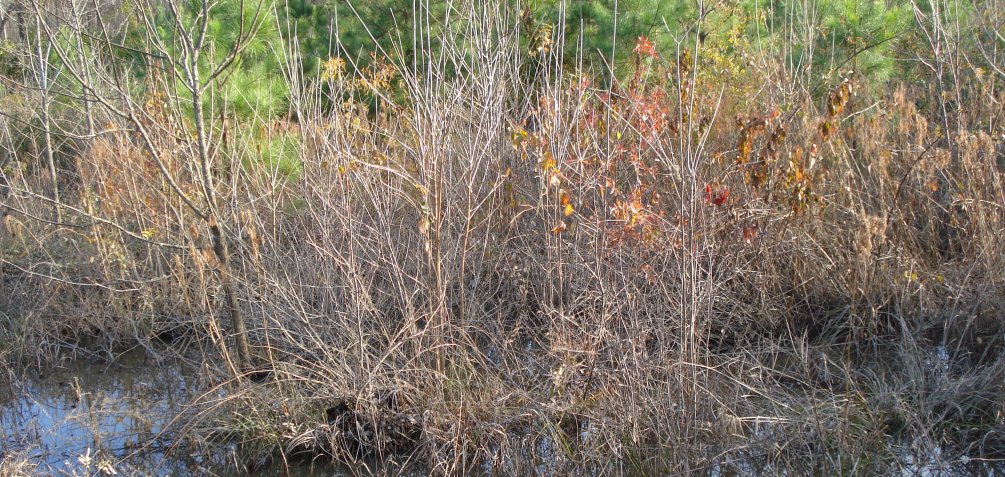
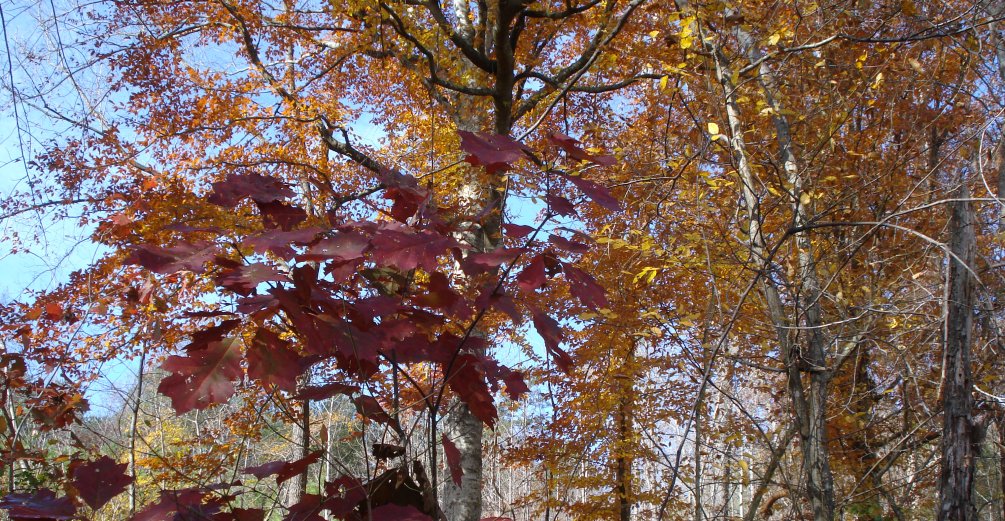
It was lucky that I went down. I got a last look at the fall colors (see above) & I fixed my bald cypress.  The flooding had undercut it. I am very fond of that tree and it is the only one I have on the farm.  I built up the base with rocks and put in some dirt.   That should hold it.  Maybe it will be better rooted by the next time we get such a big flood.

I also had the chance to meet with Larry Walker’s boss to talk about thinning schedules.  He is going to take a look at the Freeman place to see if it makes sense to thin the 86 acres of 1996 pine this year.  It is an exceptionally good stand of trees.  I think that early thinning might be a good idea, even if the pulp prices are low.  Some of the inside trees are already dying back.  You have to balance the benefits with the risks.   Ice storms become a danger the years after thinning, but that will be a problem no matter when you do it.

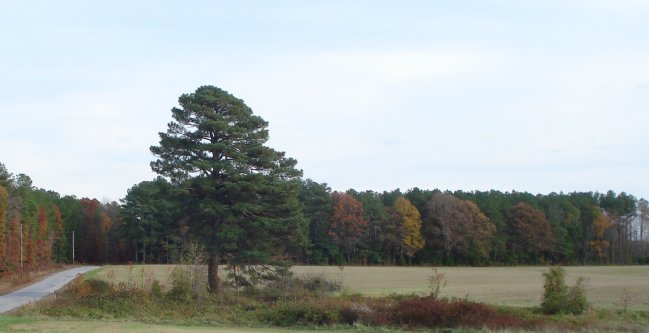
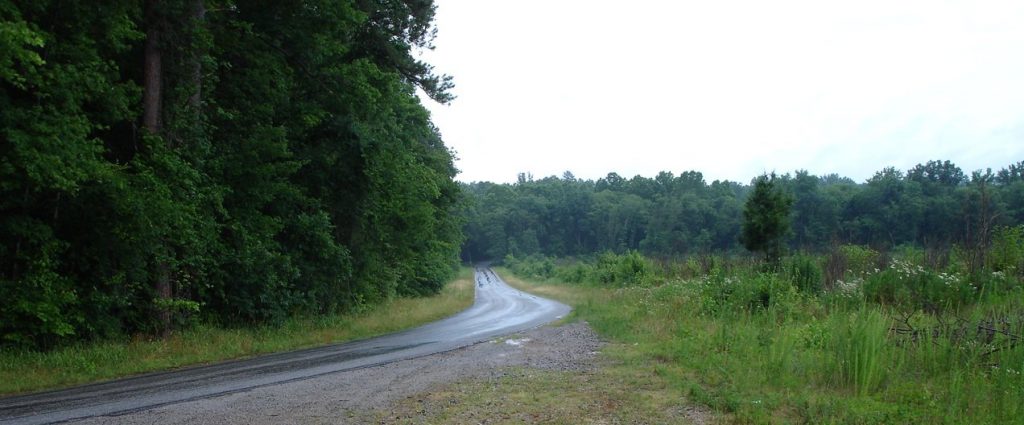
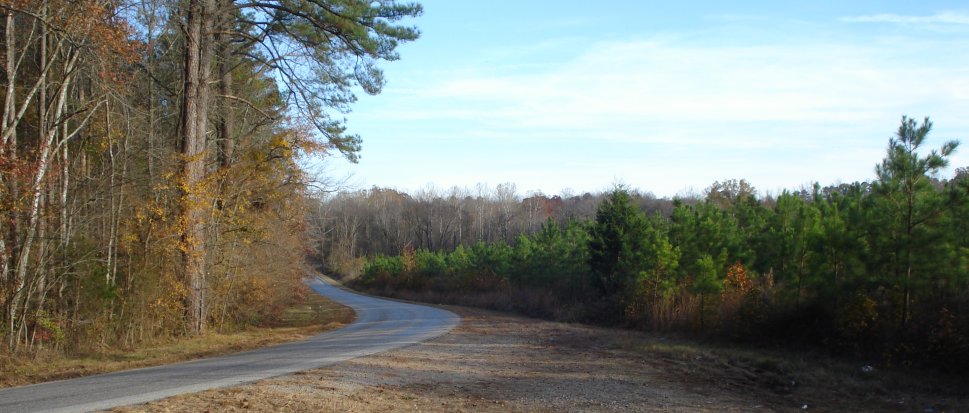
Above & below is the CP forest from 623 today and three years ago.  The trees did well this year. Notice the cedar tree more or less in the middle. It stands out in the field in the top picture,  You have to look hard in the bottom one, as the pines are now almost as big or bigger. In fact, you can hardly see the pines at all in the top picture.  Of course, seasons are different.

Baked Potato Season

You can just about live off potatoes.  I mostly did that during my years in graduate school.   A baked potato topped with a little butter and green beans or sauerkraut is a good meal and really requires nothing else. Potatoes have an unjustly bad reputation. 

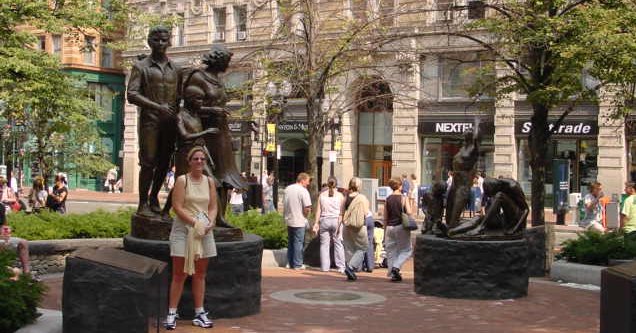
They got a bad rep from the Irish Potato famine (the monuments above commemorate the refugees who fled Potato Famine and became fine citizens of Massachusetts) but more recently they have been attacked for being a high carbohydrate, high calories food.   A potato has no more calories than an apple of around the same size (potatoes tend to be bigger). The calories come from all the crap we pile on them; it’s the butter, bacon bits, sour cream, cheese and all the other things that add that fat and calories.

Despite their ubiquity central and northern European diets, Potatoes are a native American food.   It took a long time to get Europeans to eat them. Like most “ancient traditions” it is not really very old.  Many people thought they were poison.  The green tubers and sprout are indeed poisonous.   Potatoes and tomatoes are members of the nightshade family and most of the siblings are as dangerous as the ominous family name implies.  But the bigger reason was just habit.   Potatoes are strange.  They are not like other root crops such as carrots or turnips.  In fact, they are a lot more like an apple.  The French even call them pomme de terre or ground apples.

The French Revolution and the generation of violence it provoked across Europe was the catalyst that thrust potatoes firmly into European cuisine.  The edible part of the potato plant grows below ground and so is less at risk when marauding armies trample or burn the crops.   Of course, potatoes were not as good back then.  The potatoes most of us love were developed by Luther Burbank in 1872.  Like the corn & tomatoes, potatoes as we know them are largely a man-made modern creation.   

I still eat baked potatoes seasonally.  There are a couple of reasons for this.  First is that potatoes are available and cheap in the fall.   You can get a ten pound bag of potatoes for a few dollars in November or December.  That is why I ate them as a poor graduate student.  (You can get a week’s worth of meals for around $10 even at today’s prices.)  Beyond that, I don’t like to bake during the warm weather months, but it is nice to let the oven warm up the house when the weather turns cold.   I learned to be a cheapskate long ago and I see no reason to change now, especially when my potato habits make sense and potatoes are so good.

Anyway, potatoes are easy to cook, cheap and basically good for you when you add some vegetables and not too much butter or sour cream.  I suppose that is the reason why they are an integral part of a hardy meal.

The Desert Speaks

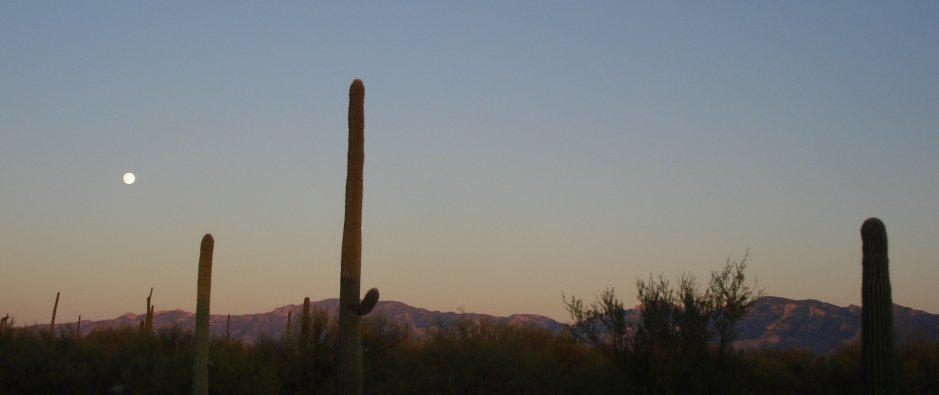
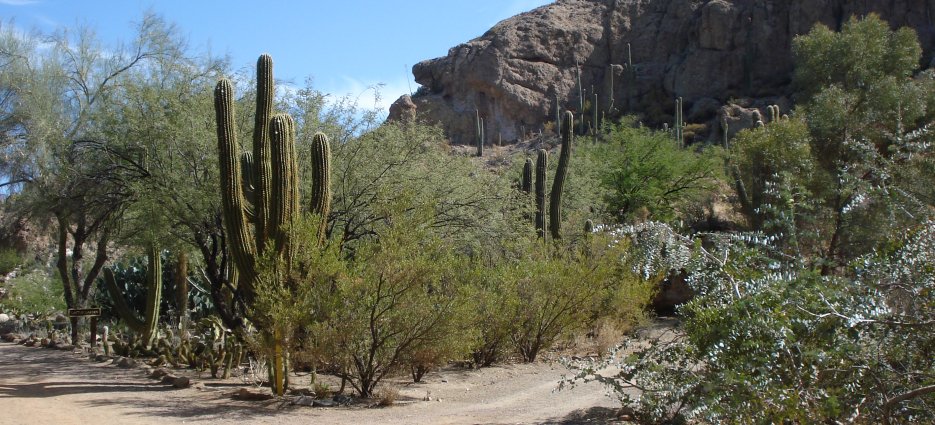
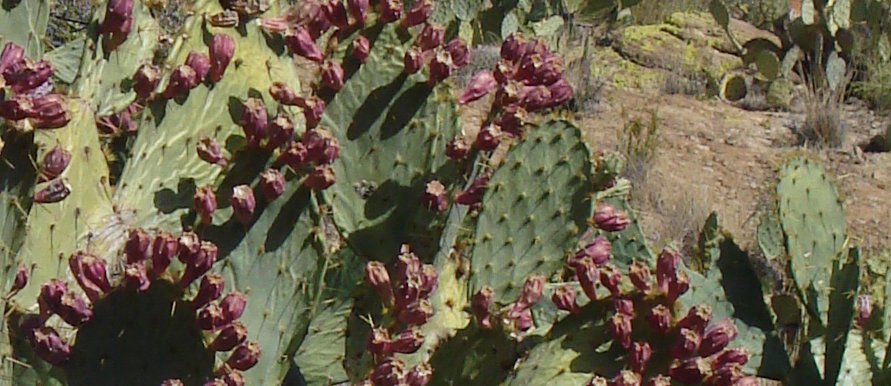
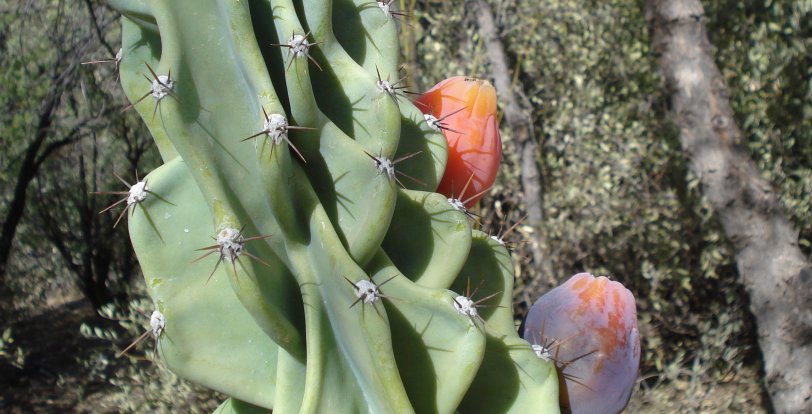
We spent our last day in Arizona at the Bryce Thompson arboretum, where you can see trees and plants native to the desert southwest, the Sonora and Chihuahua regions, as well as those from deserts in South America, Africa and Australia.

Desert landscapes are strange for someone who grew up in Eastern North America, although the Sonora vegetation is vicariously familiar because of all the cowboy movies.   Almost everything has thick skin and thorns and takes a long time to grow. 

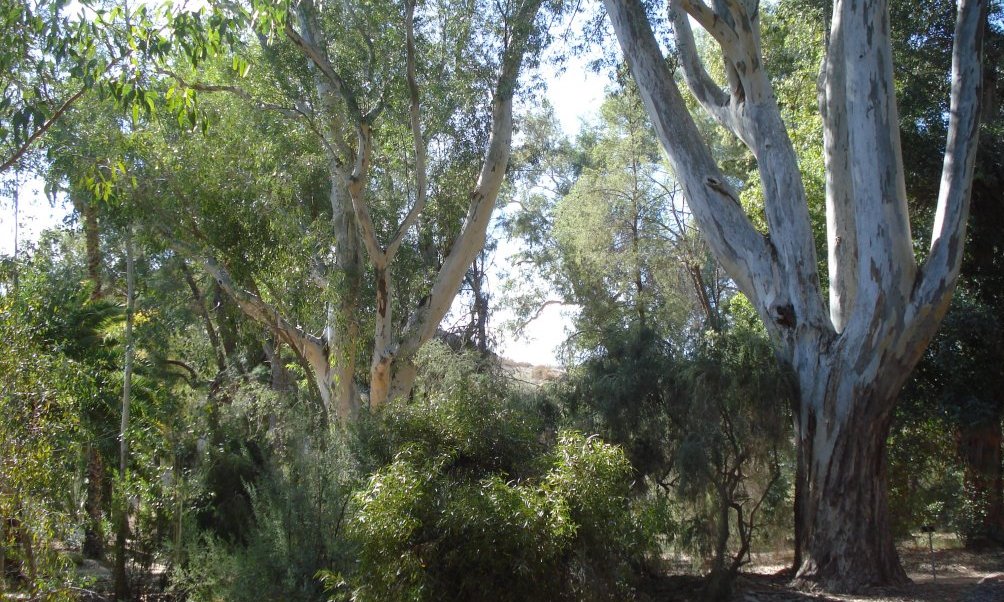
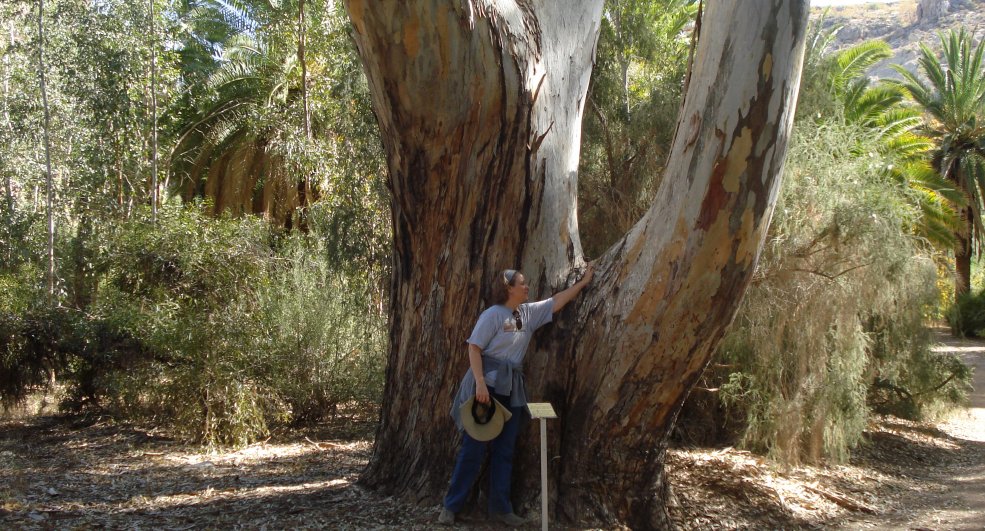
The exception is the gum tree or eucalyptus. It is a type of miracle tree from Australia.  It can grow very fast in dry harsh conditions.  This wonderful capacity for growth and adaption has made eucalyptus an invasive species.  It can often out-compete the native desert flora, but it provides little for wildlife to eat.  

Kuala bears eat the leaves, but most other animal avoid them. I suppose this is because they smell like Halls Mentholypus cough drops and probably taste like them too.  It is an acquired taste.  Like everything else, its value can be judged only in context.  Eucalyptus are great trees to provide shade, cover and erosion control.  They get big. The one pictured below was planted in 1926.  And they are attractive individually and in clumps.

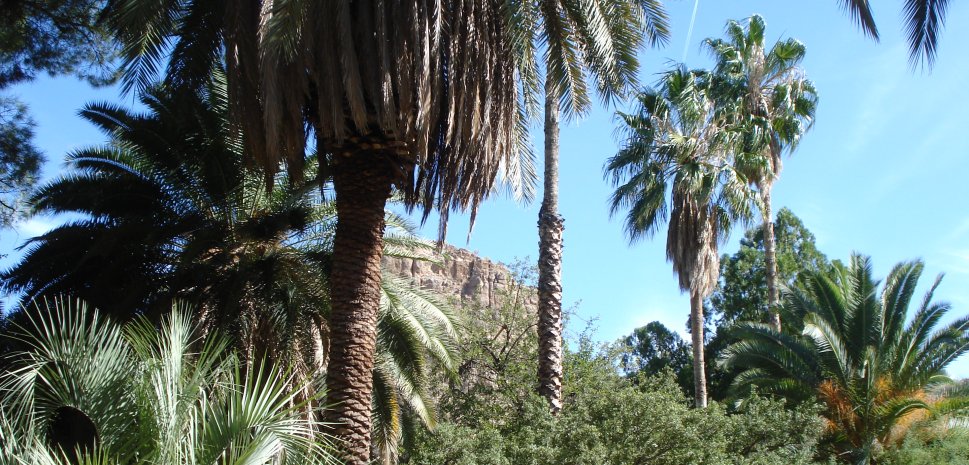
Date palms were familiar from Iraq. Dates are a very productive desert tree.  I have written about them before. I cannot tell them apart, but I understand that there are dozens of varieties.

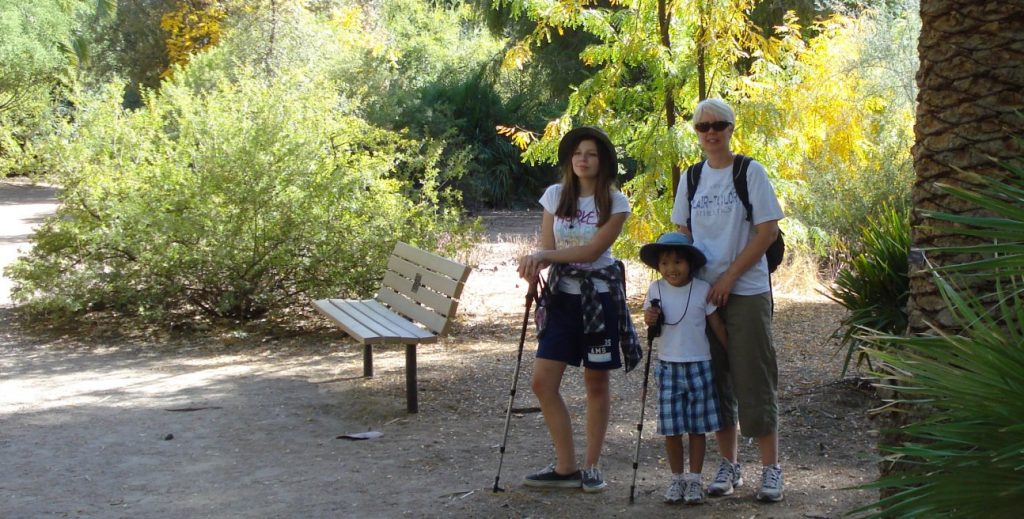
An arboretum is not only a pretty place. It is also a place to learn about natural communities. They say the desert speaks, but I like to have someone put up a few signs to interpret it for me.  The biggest surprise was an Australian she-oak.  It is not related to our oaks (quercus).  I had absolutely no idea what it was.  Below are Maleah, Diane & Christiana in the date palm grove.

Happy Birthday, Ma

My mother was born on this day in 1923.  I never got to know my mother after I was an adult.  She died when I was seventeen.  So my memories are seen through the eyes of a child or at best a teenager.  The one thing that I remember very clearly was that I was always sure that she loved me. Everything else is less important after that and I know that she shaped a lot of my character.

Our house was the center of family activity while my mother was there.  She had three sisters (Mabel, Florence & Lorraine) and two brothers (Harold & Hermann) and we had much of the extended family, minus Harold, who I don’t remember ever meeting.  The family didn’t get along with his wife, Sophie.  I don’t know why.  All the other aunts and cousins would come over to play cards. Usually the cousin would come too, so while I had only one sister, I feel like I had lots of siblings. I really don’t know what card games they played.  I just recall the constant chatter of a kind of mixed German-English.  “What’s spielt is spielt” and “now who’s the high hund?”   

As I wrote above, I didn’t get to know my mother as much as I would have liked to and I am astonished at how much I don’t remember or maybe never knew. Kids are rarely interested in their parents’ life stories until they get older, maybe because they just cannot believe their parents were ever young enough to have anything to say. Besides, kids in my generation spent most of their time outside and away from the house.  Parents and children have much more intense relationships these days, if for no other reason than that they are together when parents drive the kids everywhere and arrange various teams, trainings and activities.  We didn’t have a car and we didn’t belong to any organized activities. I spent most of my days hanging around outside with my friends who lived nearby and I didn’t ask much. I know she was born Virginia Johanna Haase (Mariza has her middle name). Her father was Emil and her mother was Anna (Grosskreutz).  She grew up on the South Side of Milwaukee and married my father after the war. Of her childhood, I know little. Her father was an engineer who remained employed throughout the Great Depression, which was evidently a rare achievement. She was an unenthusiastic student in HS and dropped out in the tenth grade, but she always encouraged education for my sister and me.  She worked at Allen Bradley during WWII but not long enough to get Social Security benefits.  After she married my father, she no longer did any paying work, besides occasionally free-lance catering with her sisters.  My mother made really good German potato salad, which was always in demand at family gatherings.

Ma

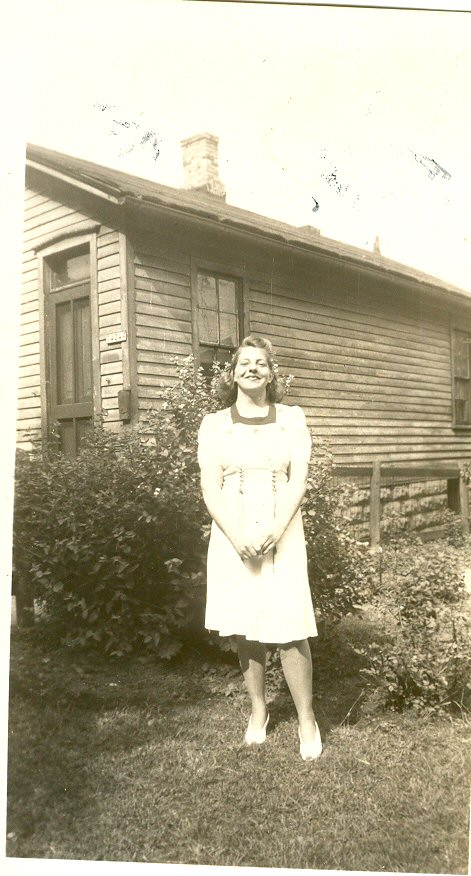
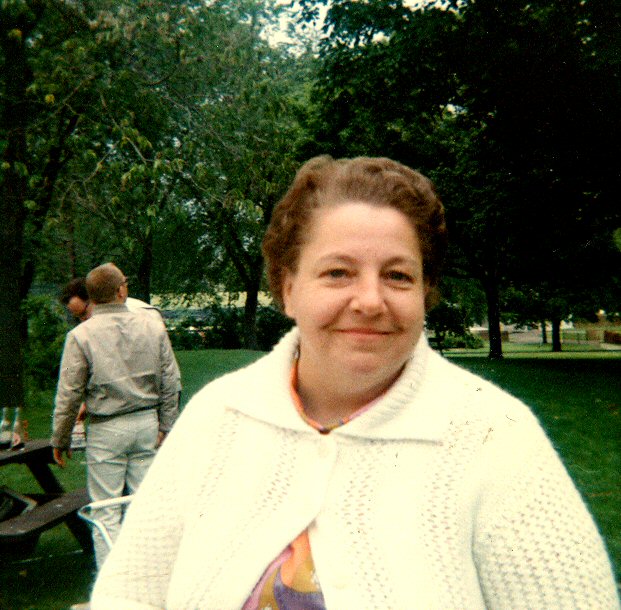
Ma was phenomenally good natured and I remember her always being cheerful.  My father told me that he was lucky to get my mother to marry him, since she was extremely popular because of her open personality.  She later became a woman of substance, as you can see in the bottom picture.  My father was fond of big women, so I guess they had a good thing going.  

My father enjoyed beer, but Ma drank only a little.  She had one bottle of Gordon’s Gin in the downstairs refrigerator. She had a drink at Christmas and that bottle was down there as long as I remember, only gradually emptying.  It was still half full when she died.

Sad to say that my most vivid memories are from the end of my mother’s life.  I was riding my bike up to the Kettle Moraine State forest when my mother went into the hospital for the last time.  It was a big trip that I had planned for some time.  My parents kept my mother’s urgent condition from me so as not to ruin it.  When I called from the pay phone at the lake, my father told me that ma was sleeping.  I thought that was odd, but didn’t think that much about it. When I got home she had gone to the hospital.  I never saw her again.

We talked on the phone, but my mother didn’t want us to visit her in the hospital during the last days. I feel a little guilty about that, but it was a good decision. She wanted us to remember her from better times and I do indeed remember her healthy and happy instead of what I imagine it must have been after the chemotherapy and ravages of cancer.

My father got a call from the hospital about dawn on the day before she died. I heard him talking on the phone and inferred what was happening, but didn’t come out of my room when he went to the hospital.  We didn’t handle the whole thing very well, but in retrospect I am not sure how it would have worked out any better if we did things differently. I lived in dread the whole day, but she didn’t die that day. I know it is illogical but I convinced myself that she would be out of the woods if she only survived the day.  

But miracle recoveries happen only on television & in the movies.  

They cut down the last of the big elm trees soon after Ma died. I thought it was symbolic and I paid special attention. She loved those trees and felt bad as they succumbed, one-by-one, to the Dutch elm disease.  The tree by the alley was the last survivor near the house, and Ma was happy to have at least one left.  It was in its yellow fall colors as I watched it fall to the ground.  It was a pleasant fall day with wispy clouds.

I don’t want to end on this sorrowful note because that is not the end of the story. Among many other things, my mother left me a special legacy. Ma followed my various interests and encouraged them. All I needed to do was mention an interest in something, and soon a book appeared about it.

I have to thank my mother for all the books on dinosaurs, ecology and history. Even more important, she gave me the gift of reading itself. A well organized or impressive child I was not, but my mother had confidence in me anyway in a way that only a loving mother can. My first grade teacher put me into the slow reading group and I lived up to the low expectations. My mother complained to the school, essentially arguing that I was not as dumb as I seemed and my problem was not that the reading challenge was too great, but that it was not great enough to hold my interest. She convinced my teacher to put me into a higher reading group. Although I couldn’t meet the lower standards, I could exceed the higher ones with Ma’s help. This kind of paradox is not uncommon.  I wonder how many kids w/o mothers as good as mine were/are trapped by the gentle cruelty of low expectations. Ma saved me from all that. She just expected me to succeed. I did, by my standards at least.

Thanks Ma. I wish you could have met the grandchildren.  They would have loved you.  

Please check out what I wrote for my father’s birthday at this link