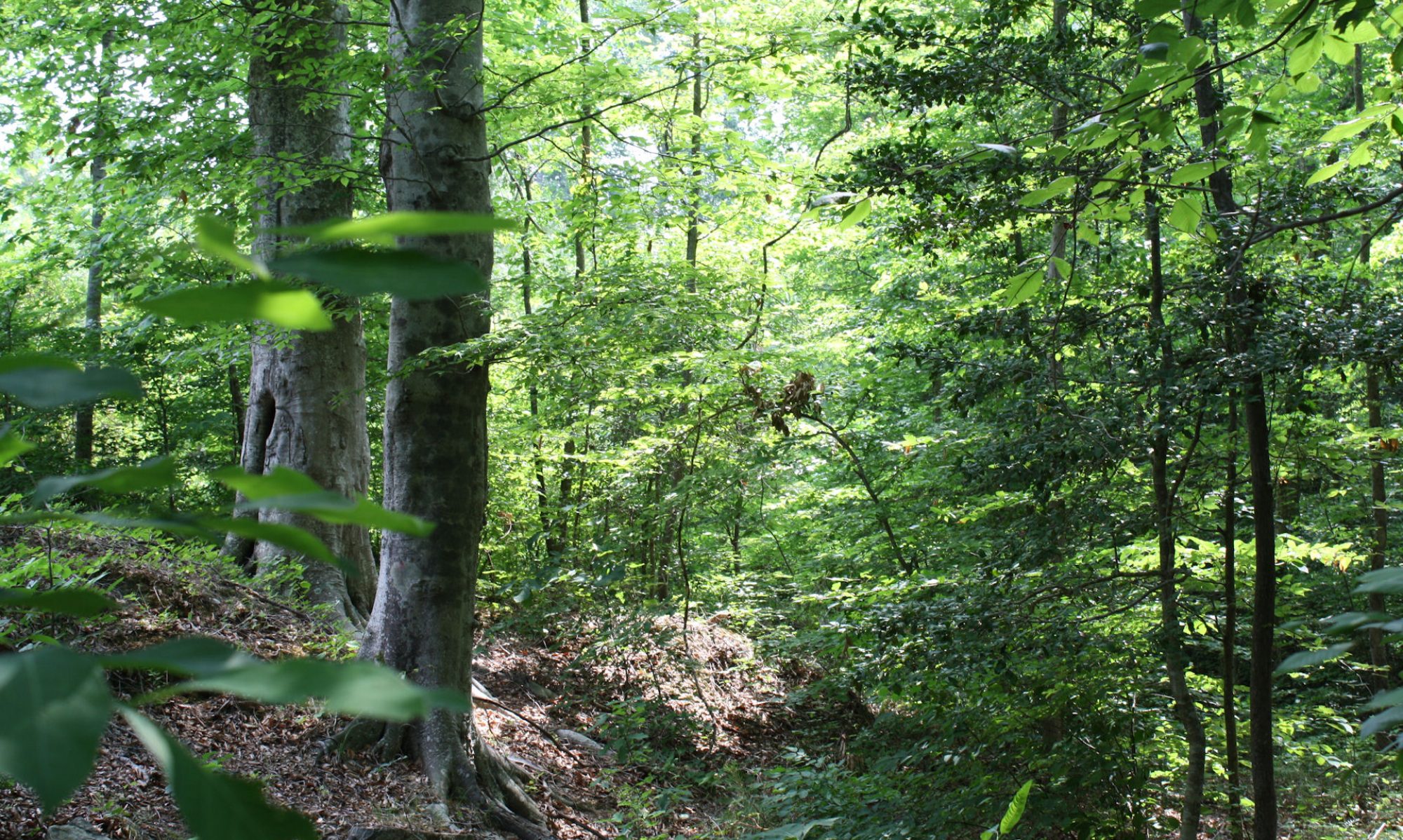
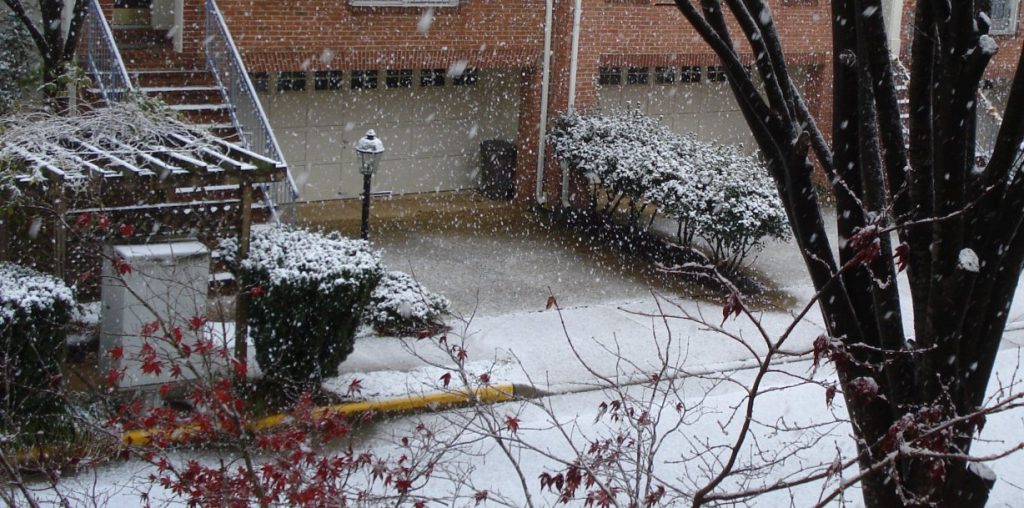
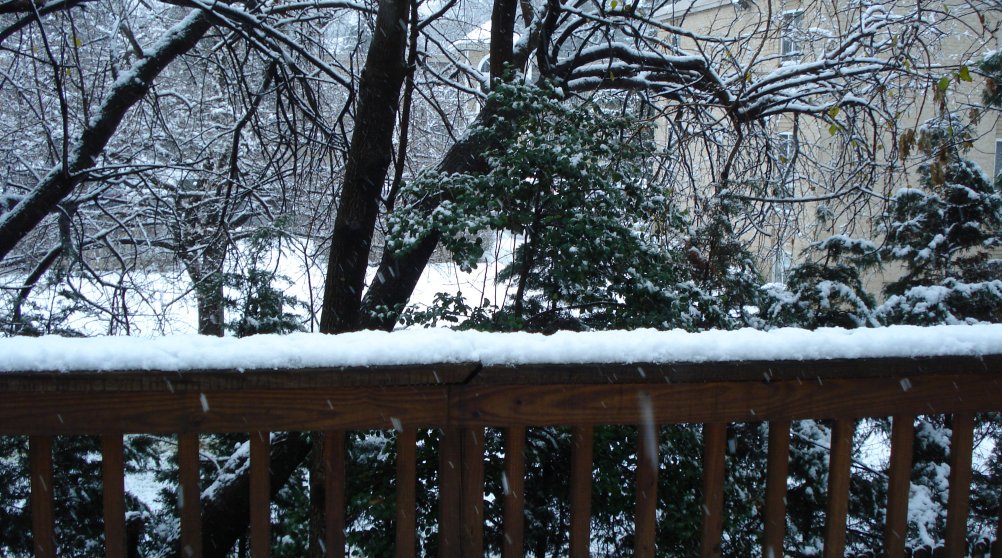
This is Virginia. We usually don’t get snow this early in the year, but this has been a cool and wet year and maybe winter will come early. The pictures are taken from our back and front doors. The snow is falling on some trees that still have not finished shedding their leaves.
Confirmation Bias?
Forbes Magazine has a good article about forestry as an investment called Buying Woodlands for Fun and Profit. I cannot believe how lucky I was to get into forestry and I keep on getting confirmation of that. I admit that I went into it backwards. I have always loved trees and wanted to have something to do with forestry. Since we are not rich enough to own such a thing as a luxury, I had to figure out a way to make it an investment, and I think I succeeded.
I sometimes worry that I am victim of confirmation bias, i.e. I notice the information that confirms what I already believe and just overlook or ignore contrary arguments. I suppose the downsides are the large initial investments & long term commitment. It also helps to know something about trees. I got good deals on both my forest parcels. It is not only luck. I looked at dozens of properties and I could envision what the land would look like in a few years. This is now the fifth year we have owned the first piece of land. It is developing about as I anticipated, only a little better.
Everybody has to save for retirement, especially these days. Forestry is a good option.
Given the ways the deficit is shooting faster than it has since World War II, I don’t think anybody can count on Social Security and other investments will be devalued by the inflation that will have to come in the wake of our enormous spending binge, not to mention paying for health care and the raids on the trust funds. Forestry is a tangible asset. It will rise with inflation. But it is much more than an ordinary investment.
It is just a joy to walk across MY land and I believe that I am doing something that has lasting value. I just don’t get that same feeling from mutual funds in an IRA.
The joy of forest ownership
Owning a forest has changed my thinking on forestry and changed my life. I understand a lot more about the moral imperative to make forestry work. It is much more work and better for the world to grow and sustainably harvest trees than it is to set up a “sanctuary” or “preserve.” I feel a little like I am swimming against the tide of environmental perceptions. And when I think back to how I used to think, I understand the misconception. I just have to make it my business to explain how it really is.
Read the article if you are interested in forestry or owning a forest. If not, you probably have not gotten this far down the post anyway. It is not something everybody wants or can do, but it is easier than most people think. You just have to really want to do it. It requires a commitment and you have to recognize the terms. You won’t get your money back quickly and your fortunes are controlled by the rhythms of nature. You have to think of it as a long-term retirement asset, not a quick turnaround investment. It literally grows slowly over time. But it is a great thing if you can wait for it.
I understand that the chances are small that I will live long enough to make the final harvest, but that is okay. We all plant trees for the next generation as the last generation did for us. Life is one long chain letter.
The media is wallowing in the Tiger Woods affair. The idea seems to be that he deserves special opprobrium because he seemed so good before. Schadenfreuden always take pleasure in anybody’s trouble, but it goes deeper than that. Many people seem almost to resent goodness as an affront to their own imperfections and they think they can pull themselves up by pulling others down.
One of their most effective tools of character destruction is setting an impossibly high standard. When nobody can reach the standard, the losers can say that we are all equal – equally craven.
Two types of standards are useless: stupidly low standards that include virtually everything and impossibly high standards that are almost impossible to attain. Mark Phelps is a better swimmer than I am, but if we make the test the ability to swim 50 yards in less than five minutes, we both equally qualified as swimmers. On the other hand, if we make the test the capacity to swim from California to Hawaii, we are both equally unqualified as swimmers.
It is fairly easy to identify and argue against absurdly low standards. It is harder to get at the absurdly high ones. Proponents can accuse you of being against excellence or not caring about improvement. The fact that nobody can achieve the standard just proves that we have a long way to go before we get where we should be. The challenge is that these arguments can be valid to improve motivation and performance. It is just that they are easily misused.
So we just have to recognize that everybody is a sinner; everybody makes mistakes; everybody should strive to do better and some do better than others, i.e. we are not all equally good or bad. I told the kids that saying you are sorry means you will not do it again. That means you have to do better and if you can do better it implies that not everything is the same. Just because we cannot achieve perfection doesn’t mean we have the option of slouching into decadence. Just because you cannot do everything doesn’t mean you have to do nothing.
I take no pleasure in Tiger Wood’s fall. It is none of my business. I do not have the “right to know” and neither do the hack-journalists covering the affair. The fact that another human is not perfect doesn’t absolve any of us of the responsibility to be better. It is a challenge we face every day and it is a challenge that nobody can face for us. We should be judged on how well we fight the good fight, aware that we will never achieve the ultimate success.
People who delight in the misfortunes of others are assholes, but I feel a bit sorry for them. How bad must your life be if your outlook can be brightened by someone else’s sorrow?
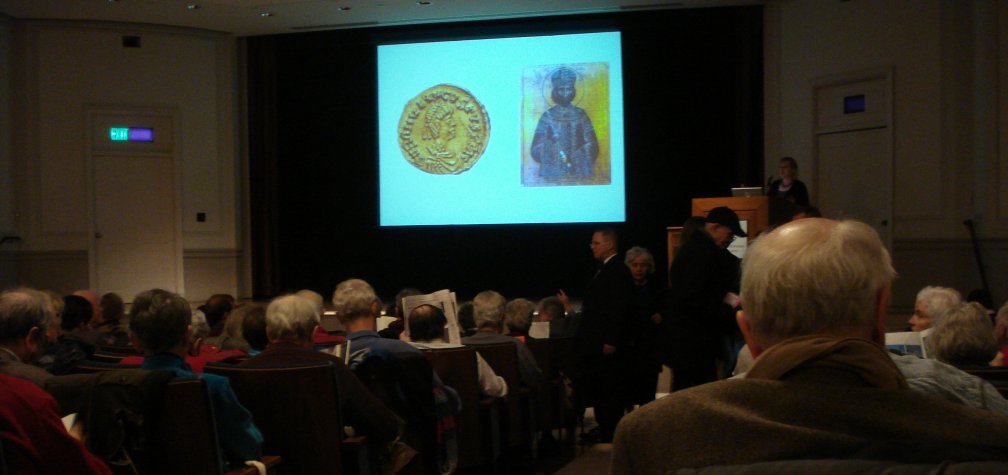
Alex and I went to a lecture at the Smithsonian about the Byzantine Empire by Lars Brownworth. It was a good lecture and the guy had very good humor timing but he also made some excellent points.
One of the key points is how the Byzantines have been disrespected for centuries. Even the name “Byzantine” is pejorative. The Byzantines referred to themselves as Romans, which made sense since they were indeed the heirs to the Roman Empire in an unbroken line of history. Some of it is the responsibly of one man – Edward Gibbon, whose monumental book “the Decline and Fall of the Roman Empire” has set the concept of Rome for more than 200 years. But in many ways he was merely reflecting a general Western prejudice against the East.
It seems to make sense that we could call the end of the Roman Empire when the city of Rome fell, but this is not the case. By the time the actual city of Rome fell to Barbarians in 476 it had no longer really been the capital of the Empire for some times. The Western Empire was ruled from the more defensible Ravenna. The more important Eastern part of the Empire was ruled from Constantinople. By that time also the Roman Empire had occupied the Mediterranean world for more than 600 years. It had become a single cultural entity a lot like the U.S. in North America. California or Nebraska is not less American than Virginia or Massachusetts because.
Take that back in terms of our own history and we are back to 1409, almost a century before the European discovery of America. Henry V had not yet become king of England and – BTW – the Eastern Roman Empire was still in existence. That was a long time ago, so you can imagine that a citizen of the Roman Empire had no real concept of anything before Rome, or maybe had about the same feeling as we would about Henry IV (for most people i.e. none).
Anyway it was one cultural region and the Mediterranean united the region, not divided it. North Africa was as much part of this Roman world as Italy. We forget about that today because we think in terms of East and West and we think of the Muslims in the Middle East as natural and native. BTW, many mosques are pattered after Byzantine churches (especially Hagia Sophia, that you see in the picture) and the Muslim world owes a lot to the Eastern Roman Empire in general, as we do.
If you read other parts of my blog, you know I am a fan of the great empire of Rome. The Byzantines preserved and transmitted the ancient heritage to us. Byzantine texts and scholars helped spark the renaissance. We should pay more attention to their history.
I think it is great that Smithsonian sponsors these lectures and that hundreds of people come to listen to them.
America has most of the world’s top universities, but what really stands out about our country is the depth and breadth of opportunity on offer. You don’t have to be in a big city or an important capital to find a first-class education and you don’t even have to be in college to get started. Community colleges are increasingly filling roles as not only technical trainers but also launching pads for academic careers.
I am biased. Alex graduated from Northern Virginia Community College and will start as a junior at James Madison University next month. But that also gives me some special insights into the subject. I won’t say Alex is typical of all students, but let me tell a little about college and community college with him in mind.
Alex didn’t have a plan when he graduated from HS. He had not been an enthusiastic student and his mother and I made the hard decision NOT to push him right into college. I made that mistake myself long ago. All I did was drink beer (the drinking age was eighteen back then) and my 1.60 GPA in my first year at UWSP continues to haunt me to this day.
Alex avoided that. After HS, he went to work at the local Multiplex. It was a really crappy job, but he soon did better, moving to Home Depot, which treats its employees well. He has continued to work there and won the respect of his bosses and co-workers. This experience will serve him well in future. It disturbs me that many college students have never actually done any real work.
After a few months, he decided to start community college while continuing to work part time. Community college makes the transition from work to study easy. Tuition is cheap and students can take a few courses at a time. Alex eased in and started to get good grades.
Not everybody is ready to go to college at eighteen. I wasn’t, neither was Alex. I think this is especially true of boys. They tend to be less interested in academics and a little more rambunctious. They might need a little more time. It is certainly out of style to say, “Boys will be boys” and it is not true of all boys, but it is indeed generally true. They get clobbered when they are pushed too soon into some situations and sometimes they don’t recover. Alex matured and after passage of time, he was ready to do well. To everything there is a season and a time for every purpose under heaven.” The old wisdom makes sense. Sometimes waiting is best, but it hard.
No size fits all. But I think we would be well served to rethink college entrance in general. I don’t think it is possible to make a good admissions decisions when a kid is eighteen years old. An eighteen-year-old is largely the product of his/her parents. A couple years later you get a better look at the adult. AND the kids make better choices. A couple years make a big difference at this time.
It might be better to start most kids in community colleges and then let them move on to university as their demonstrated talents and now better informed choices indicate.
Alex also saved me the big bucks. Community college is about half the cost of State schools and Alex lived at home.
Now let me shift to the other side. I am glad that Alex is going away to school. I think it is important that kids NOT live at home the whole time. They learn a lot from living with other young people and being away from home. And as I wrote a few paragraphs above, one size does not fit all. Mariza and Espen went right to college after HS and Mariza was only seventeen (she skipped second grade).
So I am glad that we have options. America is the land of opportunity because it is also the land of second and third chances. There are many roads to success and lots of time to take them.
People say that like it is a bad thing. In fact, the ability to put a price on most things is the basis of most of our prosperity. It also reduces or even eliminates many conflicts and just makes everything work smoother. A lot of blood has been shed over “priceless” things, but any problem you can buy your way out of is not longer a problem; it is just an expense.
People have a strange way of disparaging thing they want the most and talk obliquely about them. For example, when somebody says, “you cannot put a price on that” he usually means that the price offered is too low. When he says, “Nobody should have to pay for that” he usually means that he wants somebody else to pay for it for him.
Something for Nothing
Everybody likes to get something for nothing (or at least for not too much.) We wince when we think about the venality of some of our interactions, but it is just part of human nature. Actually, it is part of nature in general. Animals implicitly calculate the amount of effort expended for a particular payoff. Lions go after the zebras or wildebeests that are easiest to catch and they chase their prey only so far. After that, it is not worth the effort. And the king of beasts is happiest when he can find a fresh carcass that he doesn’t have to chase at all, i.e. get something for nothing. That’s nature.
What is it Worth?
The most important part of a price is the information it contains. The price tells you whether it is worth the effort. It also tells you how much effort others would put in making or getting this thing. It allows you to compare and make choices about disparate things and forms a judgment on the relative effectiveness of various producers. All this is Econ 101, but it bears repeating since we often forgot why prices are good.
BTW – I have been watching a good show called “Pawn Stars.” I recommend watching that when thinking about the “true price” of anything.
Price’s role in conflict resolution is something we talk about less often but it is one of its most important functions. Price can accomplish so much because it contains all that stuff mentioned in the paragraph above. W/o price, these are things you would have to fight about. To illustrate the role of price in conflict resolution, imagine a situation where two or more people want exactly the same thing and have determined it is priceless. Those are the conditions where people come to blow and nations go to war.
Think of the rare heirloom from grandpa that all the grandchildren want and think is theirs by prior right. They can all come up with endless credible arguments as to why it should be theirs. Put a reasonable price on the thing and the conflict usually drains away, as most of the heirs decide they really didn’t want it that much and/or something else is more valuable to them.
Something Beyond Price, or Just a Price Range
Of course, there are some things we really would not put a price on, but fewer than we like to admit. I am telling the truth when I tell people that I don’t want to sell my forest land, but my statement is valid only within an implicit price range. I am not exactly sure what that range is. I know a price I would accept is currently significantly more than I am likely to be offered, which I why I can make my “not selling” statements with such moral certainty. But I think if someone offered me $1 million an acre, I would take it.
There is joke (I think it is from Groucho Marx) that illustrates the price dilemma: This guy asks a woman if she would sleep with him for $1 million. After a little thought, she says she would. He says, “How about $10?” To which she indignantly replies, “Sir, what do you think I am?” The guy says, “We have established what you are; now we are haggling over the price.”
You Can’t Sell That
It is precisely our human “price flexibility” that makes it necessary to have some laws about things that cannot be sold. No matter what the price, you cannot self yourself into slavery, for example. Society does this not only because slavery is odious or even to protect the person selling, but rather defends the whole concept of freedom and takes it out of the negotiation/price world. I think most people support this kind of limit on choice, but we need to be careful not to go far in proclaiming too many things off limits. Things w/o a price often tend to get abused.
I recently read a series of articles about the art world. Art is one of those places where you have a lot of price confusion. Much of the price is based on fashion and capricious opinion. Artists put a lot of their personality into their works and usually pompously over-value it. And many people get positively indignant about prices that are too high, too low or anything else. But price may be more important in the art world than in many other places. Simply stated: price preserves both art and artists.
Price Preserves Art
One article talked about Chinese art. Now that some Chinese have piles of money and Western currencies to burn, Chinese art has risen in value. Some complain that it was undervalued in the past and that Western collectors were able to buy it up at a fraction of what it was worth. This is a fairly meaningless statement, BTW, because it is worth what somebody will pay for it. Today it is worth more. That’s it. But there is another permutation.
During the bad old days of Mao’s Cultural Revolution, traditional Chinese art was often worse than worthless within China. The Communists made a special effort to denigrate and destroy what they considered symbols of decadence and oppression. Much of the Chinese art now being “repatriated” would have been lost of destroyed had it not been “plundered” by Western collectors at a time when the people on the ground didn’t value it.
Think of the terrible case of the Tailban destroying those giant Buddhas, because they were an offense to their fundamental interpretation of Islam. If the British had “plundered” them, they would still exist.
Unappreciated Ancient Civilizations
The same goes for a lot of the art of ancient Greece, Egypt and Mesopotamia. I know this provokes strong emotions, accusations of insensitivity and even expressions of outrage, but if you look at the historical record, it was British, French and German archeologists who essentially brought the ancient world back to the places where it had been and had been forgotten. The current inhabitants didn’t know much and cared less about the world of antiquity and usually saw archeological sites merely as places to dig up valuables or convenient places to steal bricks or rocks for new construction.
There is a legitimate dispute whether those ancient artifacts now housed in museums in Berlin, Paris, London or New York were plundered or saved. I think it is clear that had those things not been preserved in those museums, most would have ended up lost, part of somebody’s retaining wall or – at best – in some rich guy’s private collection.
Anyway, it is a good thing that these things had a price and that somebody was willing to pay it. The Rosetta stone could have easily become pavement on the road to Cairo, which illustrates another benefit of price. It tends to put things into the hands of those who want or can use them the most. The Rosetta stone was laying around for more than two thousand years and nobody bothered to try a translation until it got into the hands of someone who cared.
I got an interesting comment on a post I wrote a year ago. Goes to show how things live on once posted to the Internet. The commenter said that I was delusional, full of myself and a con artist. I admit that I was a little taken aback. I can understand the delusional and full or myself accusations, but con artist just doesn’t make any sense. The guy didn’t like what I wrote about nature and how I mange my forest lands. You can read the original post at this link and his comment at the bottom of this post. I admit that I chose a provocative title and I guess it provoked … eventually. I invited this guy to write 500 words rebutting me and I promised to post it. I doubt anything will come of it.
People sometimes send comments directly to me, which I don’t publish. I publish almost anything else anybody sends in, but I don’t get too many complaints or comments in general.
My Audience & Editorial Policy
The “delusional” comment made me think about my “editorial policy”. I don’t really have one. I write the blog mostly for my friends and relatives. I know I have acquired some “online” friends and I am grateful for their continued support. The statistics tell me that we get around 600 visitors on a good day, but most are just from search engines hitting on some of the pictures. I figure only that only a couple of dozen people regularly read what I write. During my time in Iraq I know that some families of the PRT & USMC colleagues read the blog for general information about the situation their loved ones faced in Anbar. I am glad that I could provide that service. I suppose most of them have wandered off now that I am out of Iraq. Given the personalized, idiosyncratic nature of my interests and all things considered, I don’t have a “general” audience.
But let’s get to the question of editorial policy. There is a valid question about how comprehensive, balanced or fair any writer should be. Some people worry about this, but it is not something I struggle with. I am honest and try to be as accurate as I can. But I feel absolutely no obligation to be fair, balanced or comprehensive. Mine is only a miniscule contribution to a very large whole, one piece of a very large puzzle. Presumably those looking for a variety of views will gather mine along with a lot of others and make up their own minds.
I think that is a good policy for a blogger who writes for nothing and doesn’t promote his blog.
I believe in pluralism. We need to have a lot of ideas put forward and tested against each other. Our goals should NOT be to achieve consensus or hold each other accountable, beyond the basic imperatives to be honest, remain reasonable and stay reasonably civil. We should also not try to clip our ideas to fit the sensibilities of others. That is the good thing about pluralism. You don’t have to be inclusive. Those who are offended can go someplace else where they feel appreciated, not merely tolerated. That is all I can offer.
Do Not Block the Way to Inquiry
We need to express our idea AND be willing to accept criticism. Everybody is entitled to his/her opinion but nobody is bound to respect them. Too much respect won’t help us find useful truth. Conflicts, corrections, experimentation and restatements are how we come closer to truth. We never get to possess THE truth, BTW, but we will get closer to useful knowledge. (THE truth has no meaning outside religion.) Building knowledge is an iterative process. We try something, learn something, adjust and try again. This goes for individuals, organizations and societies. “Do not block the way to inquiry,” is what the philosopher Charles Saunders Pierce said and he was right.
NB: This is the comment and response copy/pasted from the old blog.
You are delusional. You write as though you are the final authority of all conservation methods, and i quote: “REMEMBER” (as though you are teaching me something from a vast storehouse of knowledge you lord over all other humans)… “Remember, if you want to preserve special places…” you have to chop down others. You’re nothing more than a con artist who has convinced himself you have the perfect key to the very history of natural conservation. You’re completely FULL of bologna, and full of youself to boot. Your best footprint would be perhaps to never have been born. Maybe then your land would not be mangled by the likes of you, but simply owned by someone who appreciates nature. So, YOU REMEMBER THIS: Nature will always trump the stupidity of humans, especially man; who believes he has an answer for everything.
When you have a field, and you allow all the natural elements to contribute in their inevitable way to this field. It then has limitless possibilities. When you decide you know infinitely better than the original design, you simply limit all possibilities, in lieu of what YOU think is best.
This does not make you a great handler of conservation, this just proves that humankind is barely evolved enough to live here, especially those who are so SURE they know best, such as yourself.
Posted by: Robert | November 28, 2009 12:28 AM
Robert
Don’t worry. Not many people read this blog. I write based on my opinions and observations and the only people who read it are those who want to.
I don’t advertise or promote my blog and do not set it up as anything except what it is – my opinions and observations.
If you want to write and send me something around 500 words telling my audience how stupid you think I am, I will post it.
Posted by: John Matel | November 28, 2009 09:14 AM
“When you have a field, and you allow all the natural elements to contribute in their inevitable way to this field.”
It will soon stop being a field and become a patch of secondary growth woodland, and eventually mature forest. This is great for squirrels, but it doesn’t put food on the table.
The kids are back for Thanksgiving and it is nice to have them home. We had the usual turkey dinner, probably for the last time. I don’t mean this is our last time together (hope not) but we decided that nobody really likes turkey that much. Next year we will have something else. My favorite parts of the meal are the potatoes and stuffing with some corn on top.
We see wild turkeys down at the farm. I read that they are elusive. They don’t see very elusive, just dumb. Sometimes they just wander onto the road. The return of the wild turkey is one of those unlikely ecological success stories. They were rare just a generation ago. Some experts said they could never come back in large numbers because they required larger ranges than they could have in a settled modern countryside. Turns out that nature is much more adaptive than that and that turkeys can live and prosper in close contact with settled civilization.
Taking a Different Way
My walk down 23rd St. from Foggy Bottom Metro to the State Department is less pleasant than the trip I used to make along the Smithsonian. The sidewalks are a little narrow and you have to jostle with lots of other pedestrians. There also seems a surplus of smokers getting in their last drag on the way to work. It stinks up the sidewalk, even in the open air.
But it is easy to avoid this. All I have to do is walk one block down. It is quiet and uncrowded. It adds less than five minutes to the trip. Sometimes solutions are easy.
But it still isn’t as nice as Smithsonian walk. One of the little things nice about walking along the Mall is the tactile and auditory pleasure of walking on a firm gravel path.
Nutty as a Fruitcake
I don’t know why so many people make fun of Christmas fruitcakes. I like them and I am happy to see them on the store shelves this time of year. They are packed with nuts and packed with calories, so I have to be careful not to eat too much, however.
Maple Leaf
The Japanese maple in the front yard turns differently each fall. The leaves tend to hang on well into the cold weather, but the colors are different. I suppose it depends on the weather and when the first hard frost comes. A couple years ago we got an early frost that killed the leaves before they were ready to let go. The colors weren’t very nice, but some of the leaves persisted until they were pushed off by the new growth in the spring. This year was cool and rainy, but we haven’t had a hard frost yet. I think that is why the tree is such a bright red this year.
It is great to reach out to adversaries and open a dialogue even with enemies, but in our zeal to make friends of those who have never much liked us, let’s not forget the ones who have stood with us in the past. Good relationships also require maintenance. When it is all said and done and when our overtures & concessions to those who don’t like us have produced what results they will, I hope we don’t look around and find we have fewer dependable good friends left.
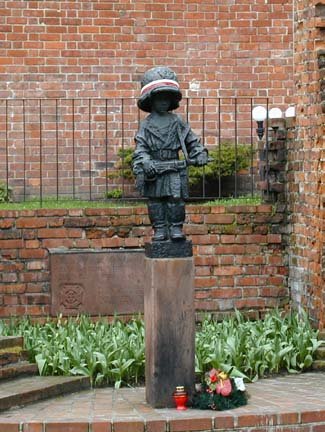
On the left is a monument to the children of the Warsaw uprising of 1944. Stalin encouraged the uprising, but then paused to give the Nazis time to destroy the Polish resistance. The Soviets also interfered with relief efforts mounted by the U.S. and other allies. As many as 200,000 were killed and 700,000 expelled or escaped, many moving through the sewer system to avoid Nazi patrols. The Nazis systematically destroyed Warsaw in retaliation.
I am upset about a little thing. I got an email from a Polish friend about an obscure museum in rural Virginia is installing a bust of Joseph Stalin in a place of honor along with those of Churchill & Roosevelt in the D-day Monument. Friends in Poland have noticed. It might not matter much … usually, but it comes on top of some recent events and missteps on our part.
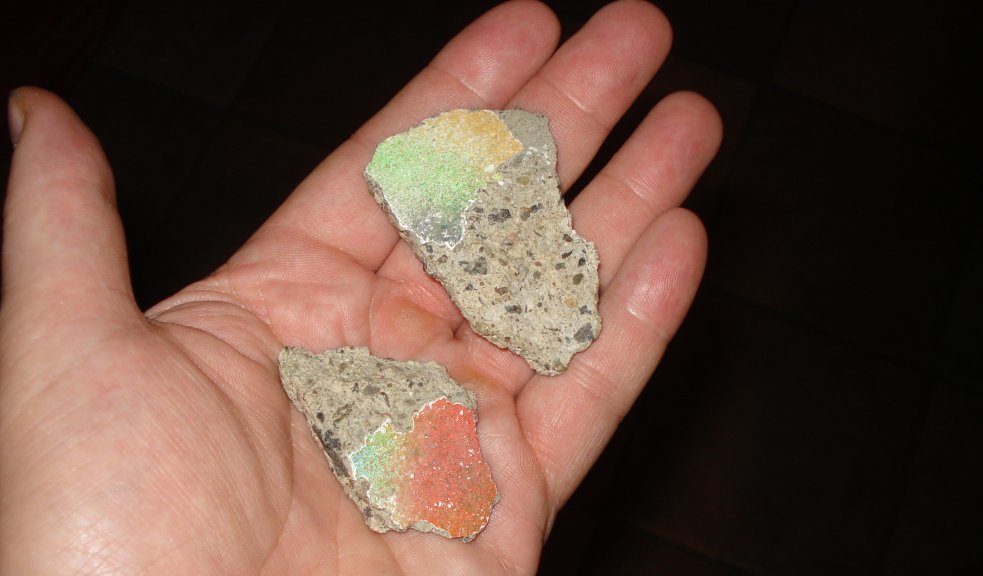
In September, we announced we were backing out of our agreement on missile defense with Poland and the Czech Republic. Presumably, this would help with outreach to the always sentimental Vladimir Putin and the decision is justifiable on many grounds. But we announced it on the very day – the 60th anniversary of the day – when Soviet Armies invaded Poland in 1939. The next month, it was announced that President Obama would not attend ceremonies marking the fall of the Berlin Wall. Although that took place in Germany, the fall of the Wall was a big deal for Poland and Poles feel justifiable pride in what they did to hasten the destruction of the Iron Curtain. The fact that the President travels so frequently to foreign destinations made the absence in Berlin seem more calculated than it was in fact. Below are pieces of the Berlin Wall. I got them when I was in Berlin in 1990. Of course, they could have been any clunks of concrete, but I got them near the Wall and there seem to have been lots of chunks from the Wall available so I figure it was real enough.
Then a couple days before the Obama-free Wall ceremonies, Homeland Security Secretary Janet Napolitano announced that Poland would not be eligible for the visa waiver program any time soon. This is a bigger deal in Poland than it would seem to us. I would hasten to add that Napolitano’s decision is sound by the criteria of the program, but if you are looking at this sequence of events from Warsaw or Krakow, it might seem like your old American friends are turning their backs.
That is why the little Stalin thing is so big. Stalin was indeed a truly odious man. He was our ally only because Hitler attacked him – reneging on a deal the two dictators made to jointly rape Eastern Europe. While there can be no doubt that we could not have defeated Hitler w/o the Russians, it is also true that w/o our material aid and the second front, the Nazis could have conquered the Soviet Union. Stalin gave no more than he had to protect his own power and at the end of the conflict he gobbled up as much as he could and imposed a tyranny on Eastern Europe that long outlived him. The murderer of tens of millions and the architect of a nefarious system that subjugated almost half the world for almost fifty years is not just another interesting and important historical figure.
This is a case where public diplomacy and the perception of events makes as much differences as the events themselves. Objectively, our decisions were sound and need not have engendered any practical problems. The perceptions were different.
I have been Poland-centric in this post, but I have seen similar patterns with other old friends.
“Make new friends but keep the old; one is silver and the other gold” That is a rhyme I learned in second or third grade.
It is easy to be beguiled by the possibilities of new relationships. But dealing with countries is not the same as kids making new friends on the playground. For one thing, there are no “new kids”. Every relationship already has a history, usually going back generations. There may well be a good reason why we don’t get along well. Sometimes we have conflicting goals. Often our aspirations do not mesh. Sometimes it is an identity problem. There are leaders in the world who derive much of their personality and power from their stance of being opposed to the U.S. If they couldn’t blame us for their troubles, the blame might fall on them.
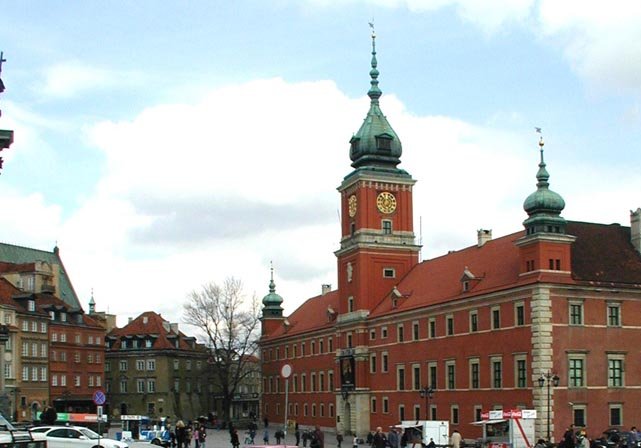
Above is the King’s Palace In Warsaw. The Nazis destroyed it and all of Warsaw in 1944. The Poles rebuilt. It was in front of this Palace that President Clinton in 1997 announced our support of Polish NATO membership. Poland formally became a NATO member in 1999.
On the other hand, we have shared interests and shared identities with many countries. Our allies in Europe, for example, remain our strongest cultural, security, trading and investment partners. Things generally proceed so smoothly among us that we pay little attention. Remember our good friends the Japanese and recall when we were not so good friends. It is a lot better now, isn’t it? How about our border with Canada? Good thing on both sides that it is secure and peaceful. I could make a longer list, but I would inevitably leave somebody out and feel bad about it. But as I said up top, good relationships do not maintain themselves. It is a lot less exciting and you cannot do something unprecedented by maintaining the familiar paths, but you often have to pay MORE attention to your friends than your foes.
It is sort of like the unglamorous job of maintaining underground infrastructure. It doesn’t seem very important until the water main breaks washing away your car and drowning your cat.
Another childhood story pops to mind. Remember the Aesop fable about a dog holding a bone in his mouth? He sees his refection in a pond and thinks there is another dog down there with a bone as big as his own. He wants that bone too. So he jumps into the water to take it, only to lose what he had and just come out boneless, frustrated and all wet.
A significant part of my pay could be “performance pay” now that I am in the Senior Foreign Service (Senior Executive Service) and don’t get automatic increases. I didn’t get to compete for performance pay for 2007/8 because of a technicality – Congress acted too late on my class’ promotion and we were not in grade long enough to qualify according to the State Department’s arcane rules. (Ironically, however, they acted quick enough that I lost my overtime pay in Iraq and ended up taking a pay cut because of my promotion. It won’t be until the middle of next year that I make up the money I lost by being promoted.) This year I just didn’t get performance pay. I am a little surprised.
This was the last performance report that included Iraq. Next year my Iraq experience will be buried under the relative obscurity of this Washington assignment. If I didn’t deserve performance pay for Iraq, I certainly should not get it for Washington, so my prospects don’t look good. Iraq was about the best I can do. I am beginning to feel unpopular.
In fairness, my colleagues are doing lots of important things in Embassies overseas and in Washington. I don’t doubt the merit of those on the list.
But being a PRT leader in Iraq seemed a bigger deal to the Department when they asked me to take the assignment. They dragged me out of the job I had and made me feel that delay of even a couple of days was disastrous. It sure seemed important. Of course, the perceived value of a service declines rapidly after that service has been performed and there has, anyway, been a shift in priorities. You get little advantage being tied to yesterday’s urgency, no matter how important they told you it was at the time.
I said when I signed on for Iraq that I did NOT do it for career advancement and I was telling the truth. I remain glad that I volunteered. I derived immense satisfaction from doing the job there. I worked with great colleagues and I am convinced that there are people alive in Iraq today who would not be had we not done the work we did. I would not change my decision.
Nevertheless, it bothers me a little to conclude that I would likely have been in a better career position, at least in terms of contacts & assignment prospects, had I not volunteered, had I kept and built on the good job I had in September 2007. Things moved along w/o me while I was literally wandering in the desert. It is my own fault too. I did a poor job of reconnecting. I thought I could just pick up where I left off; I was mistaken.
Chrissy says that I don’t get mad enough about these sorts of things and that I need to develop a stronger sense of entitlement. Sometimes the people who make the most noise get the most recognition. I tend to downplay hardships and achievements and I am not prone to anger. I am mad about not being recognized for my Iraq service, but this is about the extent of my rage.
“Do it because it is the right thing to do, but remember that the State Department talks a lot about the importance of the mission and the people who do it, but the bureaucracy has no memory.” That is what I will tell the people who ask my advice on taking on hard assignments.
It is a dreary, depressing day, both in terms of the weather (as you can see from the picture above) and my outlook, but the sky will brighten up and so will my situation. I plan to wallow in self-pity for a little longer; then I will stop and try to do something useful again.
I knew an interesting woman called Eva Sopher who ran the Theatro São Pedro in Porto Alegre. She helped me understand the meaning of cultural treasures. The Theatro was being refurbished and put under the direction of a foundation to conserve the building and protect its traditions. They weren’t doing many plays, so the “output” was low. If you wanted to put on plays, you could have much more efficiently done so in many other locations or built a new theater. Donna Eva explained why we should in a different direction.
The plays actually performed, she explained, were just a small part to the output of a cultural institution. From the cultural point of view, the preparation, rehearsals, production and venue were probably more important. The Theatro created a cultural community that included not only the theater goers and actors, but also the myriad of others who supported the enterprise. This was part of a tradition that stretched back centuries and with any luck would continue for centuries into the future. It was a task that was never done and could never be done. There was no finish line. She didn’t use the tired cliché, but I will. The journey was more important than the destination. In fact the real purpose of the “product” – a successful play – was to support the other parts of the community that made it happen. Eva Sopher was impressive and it was her force of personality that drove this lesson home to me. It takes year to develop this kind of personal integrity. That too is a cultural output. Her personal story was compelling. She was born in Germany to a well off Jewish family. They wisely left Germany and took refuge in Brazil when it became clear that the Nazis were literally out for their blood. She embraced the country of her choice and enriched its culture.
“Objective” Measures Don’t Capture Unique Value
Imagine trying to measure Eva Sopher’s effectiveness with “objective measures.” What did she really do that you could capture in numbers? Twenty-five years ago she spoke to a first-tour American diplomat and convinced him to give her a very small grant and sponsor a musical program that drew less than thirty attendees. Yet she gave me something I could keep and remember. Her influence on me was never manifest in any way a bean-counter could capture. My subsequent influence on others is completely out of the picture. I don’t remember what kind of grant we gave her, but it as within my discretionary money so it could not have been more than a couple hundred dollars and that is all the research would count.
How about from my side? Did I waste my time having tea with this old lady? I would be hard-pressed to show a concrete public diplomacy outcome from having her as a friend and having the Consulate reach out to her and ensconcing us as an honorary part of her community.
***
What Good is a Speaker?
I was talking to a researcher about our speaker program. I was a consumer of speakers when I worked in posts overseas and used to run the speaker program in Washington, so I know something about it. The idea is the measure the effectiveness of the speakers we send overseas. It costs a fair amount of money to send someone overseas, so it is good to measure, but the measures are inadequate.
They talked about measuring the number of people who listened to the speaker. Moving a step up the sophistication pyramid, they also talked about estimating the number of people who may know the direct listeners, a secondary audience. Of course, they would measure any media that came out. What is wrong with this? Time. It doesn’t measure the effects over time. Refer again to my Eva Sopher example. But there is a bigger flaw in this sort of measurement. It doesn’t account for the meta-purposes. When I gave the grant to the Theatro São Pedro, I really didn’t care if they did a performance or did anything “useful” with the money at all. My grant was a kind of an ante-up or earnest money. I was buying my way – the Consulate’s way – into the game, making us a part of that community.
This is how good public diplomacy folks use the speaker program. Bringing a speaker to an event is a way of opening a door to a community. We cab piggy-back on the speaker’s expertise. Bringing an expert on architecture, for example, makes us honorary experts too. It puts the Embassy’s public affairs into the game. Frankly, the message delivered on any particular occasion is usually the secondary effect. The primary goal is relationship and community building. So if you measure effectiveness by number of people who received a message, you have problems.
“Who?” May be More Important than “How Many?”
And that doesn’t even account for the “who” question. If I shout out my window I may reach 100 people with my message. But if they don’t care or cannot do anything about what I am saying, it is a complete waste. We often fall into the numbers trap. It is seductive but pernicious.
Is There a Better Way?
You might be expecting me to say something about what we should do. After all, I made such a big run up to it. But I can’t. I think that we should indeed measure numbers, reach, output etc. But we have to recognize that there is a very big area of unknown and objectively unknowable stuff out there. It is like the dark matter of public affairs. It is the place where we have to apply judgment. So I have no universal fix. You have to use judgment in particular cases.
Indispensable Judgment
Judgment – now that is a slippery term and not a very popular one. We like to get every process down to close detail so that we can be perfectly fair and consistent. But the world doesn’t work like that. We can program something only to the extent that we completely understand it and with the expectation that things will happen in the future as they has in the past. Human affairs don’t work that neatly most of the time. So let’s indeed gather information and analyze it. But then trust the judgment of the people we have trained and educated to make the right choices.
Otherwise we will go with today’s tabloids and ignore the Eva Sophers.