Grand Strategy of the Byzantine Empire

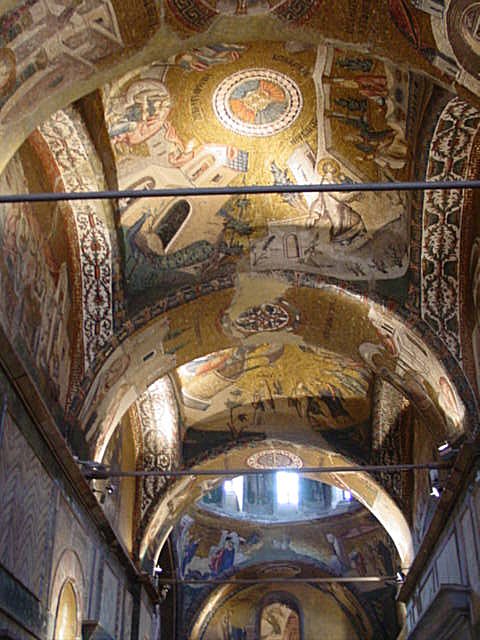
It seems an esoteric subject, but it still makes a useful study today.   I went to see a talk by Edward Luttwak on the “Grand Strategy of the Byzantine Empire.”  Luttwak is an interesting guy who has done lots of things.  He not only writes books about the Byzantines, but he also write regular commentary about current events and even is part owner in a cattle ranch in Brazil.  BTW – for reference I also attended a lecture on Byzantine history at Smithsonian and wrote a post re.  

Luttwak started with the sources, of which there are many but they are complicated.  If you study of the pre-Byzantine Roman Byzantines, you have a lot of history and archeology to study.   Byzantium is harder in some respects and easier in others.  While there is a wealth of numismatic evidence, archeology is not as helpful.  So much was concentrated in Constantinople (Istanbul) and that has not been well studied.  One reason is that the Turks didn’t much care about the Christian-Greek-Roman civilization they displaced and more modern archeologists were more interested in the ancient Greeks, but probably the most important reason is that the city has been continuously occupied.  It is just hard to dig in such a crowded place.  But what you don’t have in archeology, you make up for in manuals and diplomatic reports.

The uses of intelligence and guile 

The Byzantines were very sophisticated in their study of diplomacy and what we would today call intelligence or anthropology.  They did research observations, made reports and wrote field manuals a lot like we do today. They needed them. For much of their history, the Byzantines were beset by enemies all around.  They didn’t like to use their army too often because it was relatively small, and expensively trained and equipped. It was better to use leverage, so they studied everybody around them, found their strengths, weaknesses and vanities. The reports still exist.  Often the Byzantine sources are the best historical documents for neighboring people. The early history of the Turks, Croats, Serbs, Bulgarians, Hungarians and others comes mostly from Byzantine observations.

Divide and conquer

The Byzantine method was to get enemies to fight each other.  Flatter, cajole, threaten or bribe as appropriate.   Their longest enduing and most dangerous rivals were Muslims, but then as now the Muslim world was not united. The Byzantines noted that no connection between supposed religious fervor and willingness to take bribes. When their spies told them that there was talk of jihad, they would send around gift baskets to local Muslim rulers, which often served to dampen enthusiasm for the holy war, at least temporarily. Their politically incorrect assessment was that these guys were either at their throats or at their feet. True or not, that assessment worked for them.

Byzantine diplomats studied everybody and reported back and they interviewed anybody who came to Constantinople.  Often the emperor would meet important foreigners himself. The system worked reasonably well, evidenced by the fact that the empire endured for centuries in a very rough neighborhood.

The Byzantines believed in being benevolent when they could, but they recognized that this came only through strength, never weakness. Always be combat ready but avoid combat if possible. If you can bribe or trick your way out of a mess, why not?

It reminds me of the saying l learned, “Any problem you can buy your way out of is not a problem; it is an expense.”  Maybe the original thought came from our Byzantine ancestors.

Soft power

Success of this kind of strategy required an openness not usually associated with the Byzantines. Luttwak pointed out that they allows a mosque in Constantinople (for foreigners and visitors).  They also freely translated their texts into other languages.  Unlike the Muslims who insisted that the Koran remain in Arabic, the Byzantines were liberal with their sacred texts.  The Byzantine monks Cyril and Methodius created a written language for the Slavs and many Slavic languages are still written in the script named for Cyril.

Rise comes before the fall

Luttwak thinks that the weakening of the empire came as a result of too much temporary strength (pride goeth before a fall). Life was good in 1025. That was the year when the Emperor Basil II left the empire in possession of lands from what is now Iraq into Southern Italy.  Borders were secure and the Empire prospered.  There followed a golden generation, when the Byzantines got flabby.   They permitted large landholders to take over tracts formerly occupied by people who supplied the border troops and didn’t pay enough attention to security.  When the threat did come, they were not united enough or clever enough. After  the Turks wiped out much of the professional core of the Byzantine army and captured the Emperor at Manzikert in 1071, Anatolia opened to the Turkish conquest and colonization.  The Empire never really regained its footing.   The real death blow came in 1204, when the 4th Crusade sacked Constantinople. The Byzantines regained the city, but after that the “empire” was more of a local Greek state than an empire.   By the time the Turks finally conquered the city in 1453, there was not much left but the city itself.  

The held on long enough to keep learning alive

The Byzantines were in every way heirs to the Roman and classical civilization. It was they who kept the works of the classical authors and they would almost certainly have been lost if the Empire had fallen to the first Muslim attacks.   As it was, the final fall of the Empire and the scholars who fled the declining Empire helped spark the Renaissance in Italy and Western Europe. We sometimes forget that the light of classical civilization was not really extinguished in the East until 1453. By that time, the West was ready to take back its heritage.
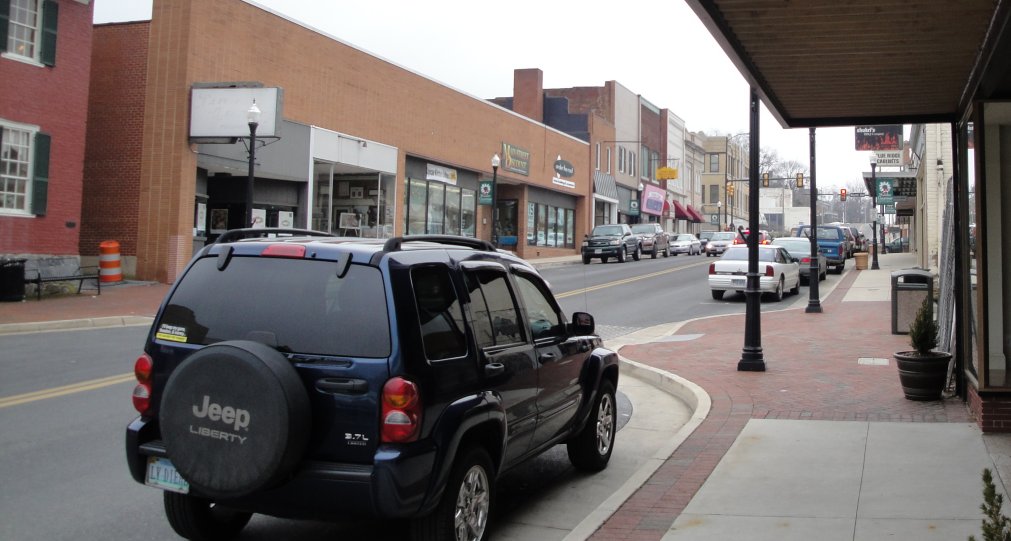
Charlottesville, Waynesboro & Harrisonburg

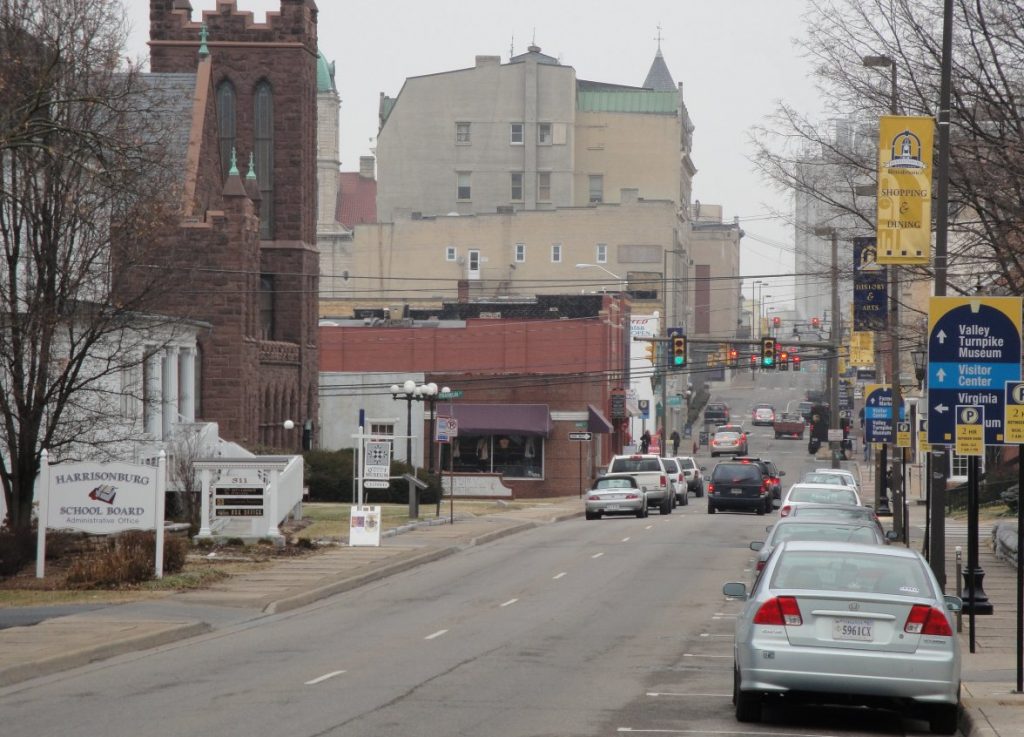
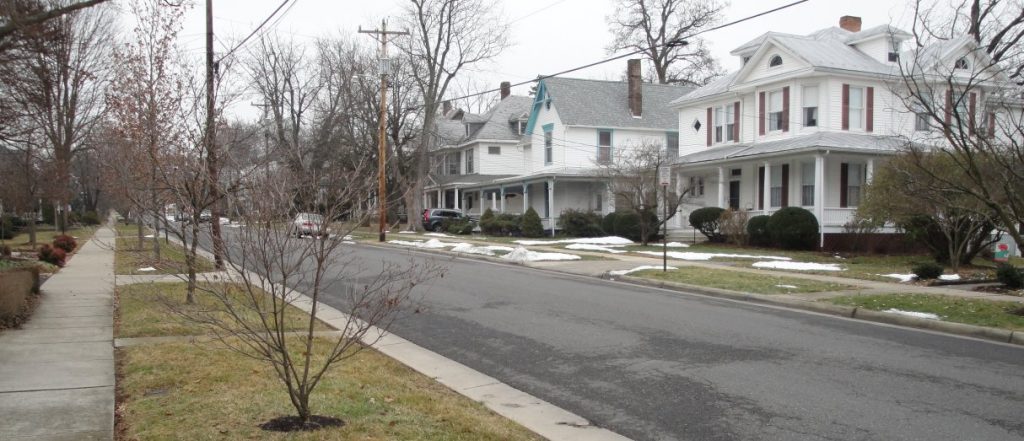
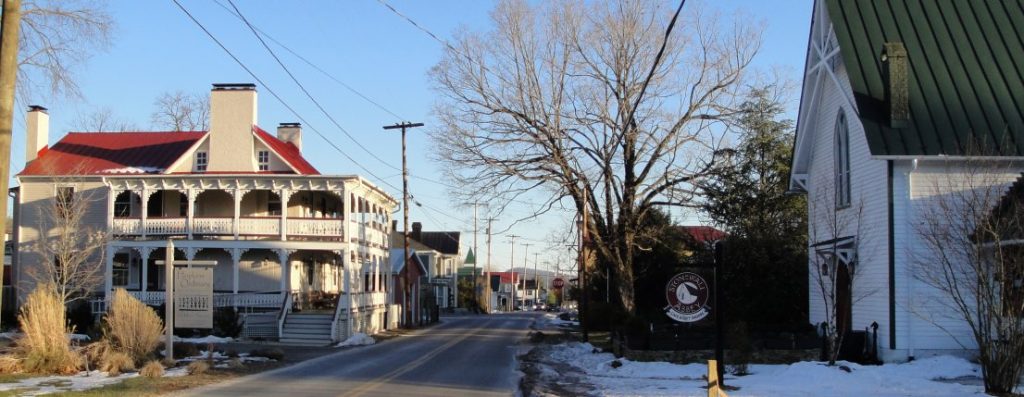
I went to Charlottesville for the meeting of the Virginia Tree Farm Committee.   Unfortunately, the meeting was in Richmond.  They alternate between those two places, and I just screwed it up.   I had actually written the correct place in my calendar, but went to the wrong one.   Well, I am not crucial to the meeting and It was not a total loss.  I got to visit Alex, since Harrisonburg is not far from Charlottesville.   In fact, I think that my desire to see Alex might have figured into my mental slip. Above is the main street in Waynesboro.  

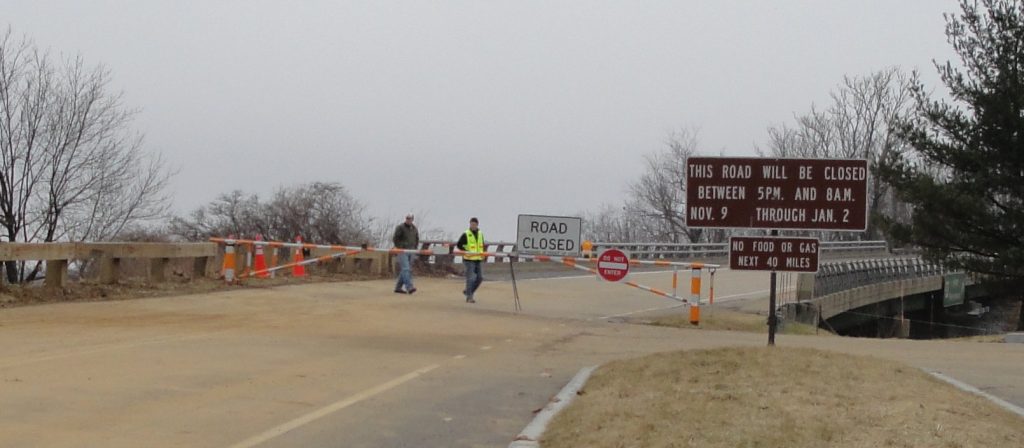
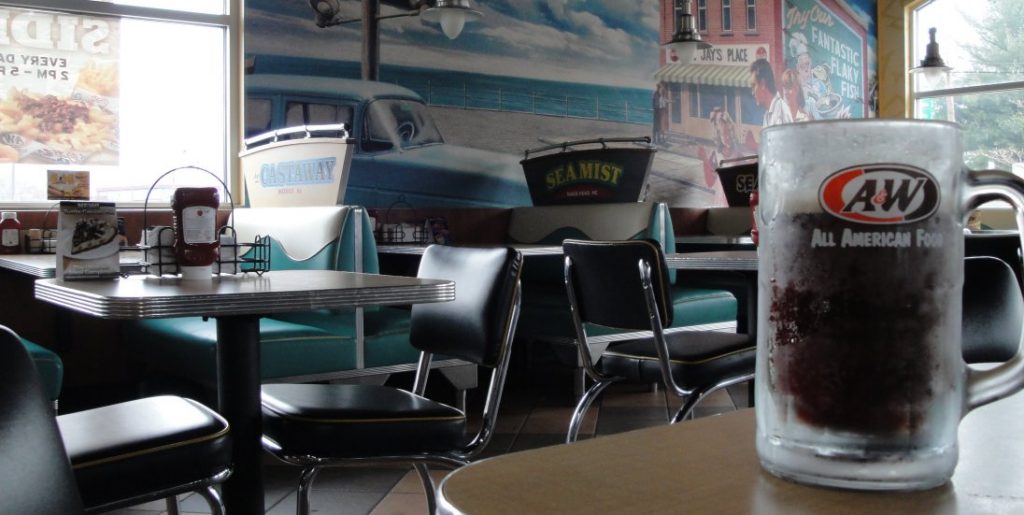
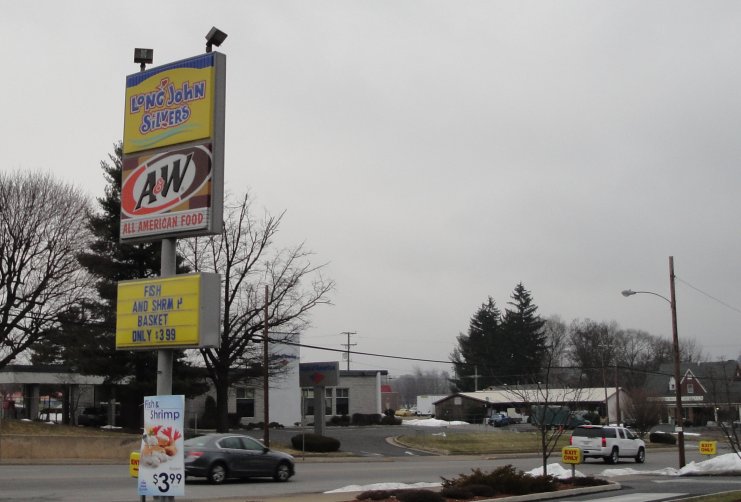
Alex had classes until 3:30.  This was good when I had planned to attend the meeting, but now I had lots of time on my hands.   I thought I might drive up along the Blue Ridge Parkway but it was closed, evidently weather related.  So I went through Waynesboro.   I  was not seeing it on the best day but they did have an A&W.  I like the hamburgers and the root beer.  A&W fries are not good, however.

Above is the dining room. I had it to myself. Below is the outside.

I followed a little road north.  It was a charming rural area.  I wanted to stop off at Grand Caverns, but it was closed for the season.   Again, not the best time to come around.   Since I was still too early, I walked around Harrisonburg.   You can see pictures.

Alex likes his classes at JMU.  He has a couple of Asian history classes, symbolic logic and an anthropology class on North Americans native people.  He found the gyms and good running trails.  College life is good.  We had supper at “the Blue Nile” and Ethiopian restaurant.   Harrisonburg is well endowed with restaurants and services.

Rain mixed with snow scared me a little when I left Harrisonburg at around 6pm.   I don’t much like driving up I-81 because of all the trucks even in good weather.  The weather cleared up not too far into the trip and there wasn’t too much traffic on 66. I got 42 miles to the gallon on this trip, which is good for going through the mountains. I usually get good mileage on the way to Charlottesville along 29.  I think it is because of the slower speeds and the hybrid does particularly well on the rolling hills. I get a significantly better mileage at 50 MPH than I do at 65. 

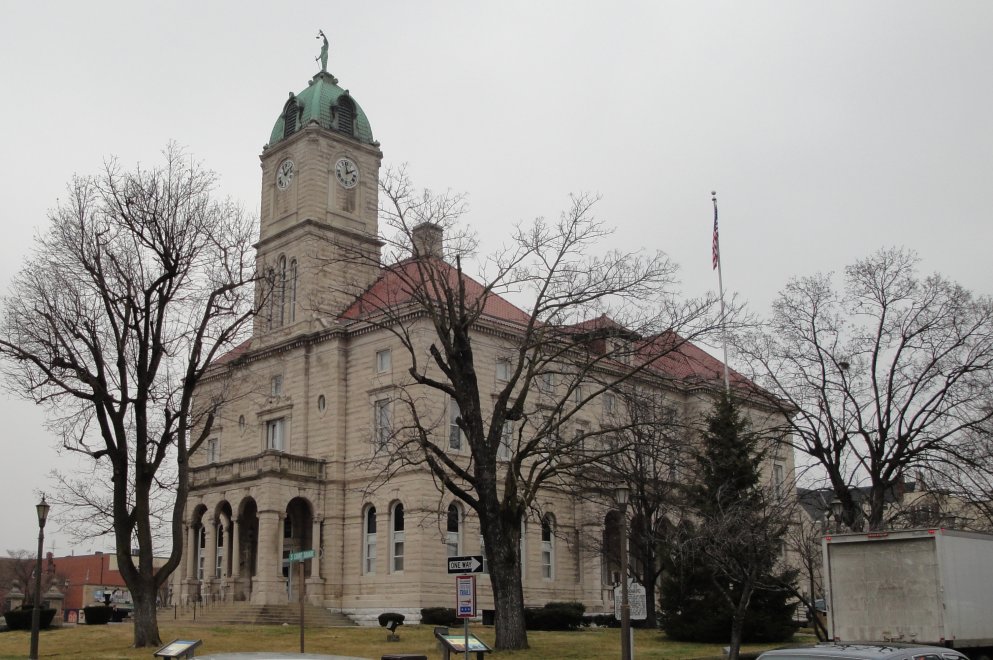
Below is the city hall in Harrisonburg.

Swine Flue

“If you see 10 troubles coming toward you, you can be sure nine will run into the ditch before they reach you,” so said Calvin Coolidge and he was right. He could also have added that politicians will work the people into hysteria about those nine, take credit for vanquishing them, be distracted enough not to properly address the real one and then blame the tenth (the one that actually arrives) on somebody else.

It seems the swine flu may be the mildest pandemic ever and likely fewer people will die this year than in a normal flu season. We could credit the fast and effective action by the authorities, but there wasn’t much of that. The vaccine is only now becoming generally available. 

Please let me be clear that I am not saying that our efforts to fight the flu were misplaced. I got my own flu shot a couple days ago. It is only that we had a fairly routine problem which the authorities made sound like the return of the Black Death.  Unfortunately, this has become a common communication method.

According to the media, stoked by politicians and special interests, almost everything is an existential crisis.  When you look back, the disasters not only did not destroy civilization as we knew it, but are not important enough to be reported a few months later. On to the next “hair on fire” crisis. This is not a coincidence.

Forestry From the Air

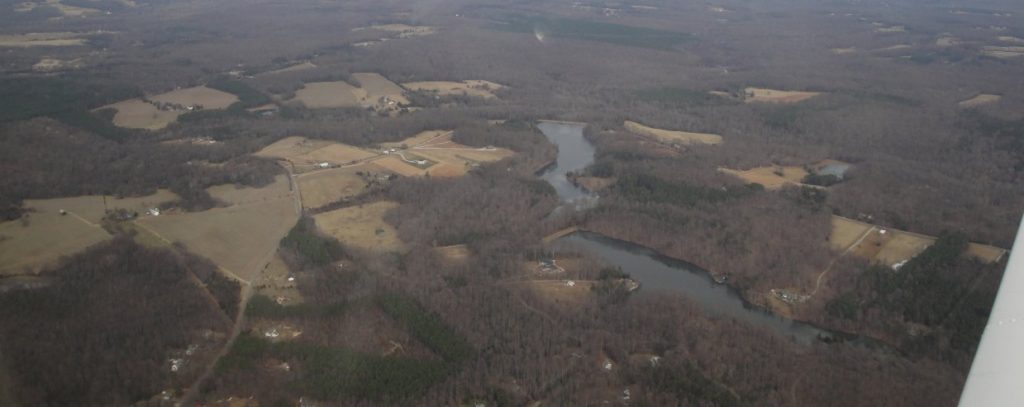
I talked about my flight over the farms with Brian in my last post.    The aerial perspective was fun.  I could see the interrelations of the wildlife plots for the first time.  Below are some pictures with comments.

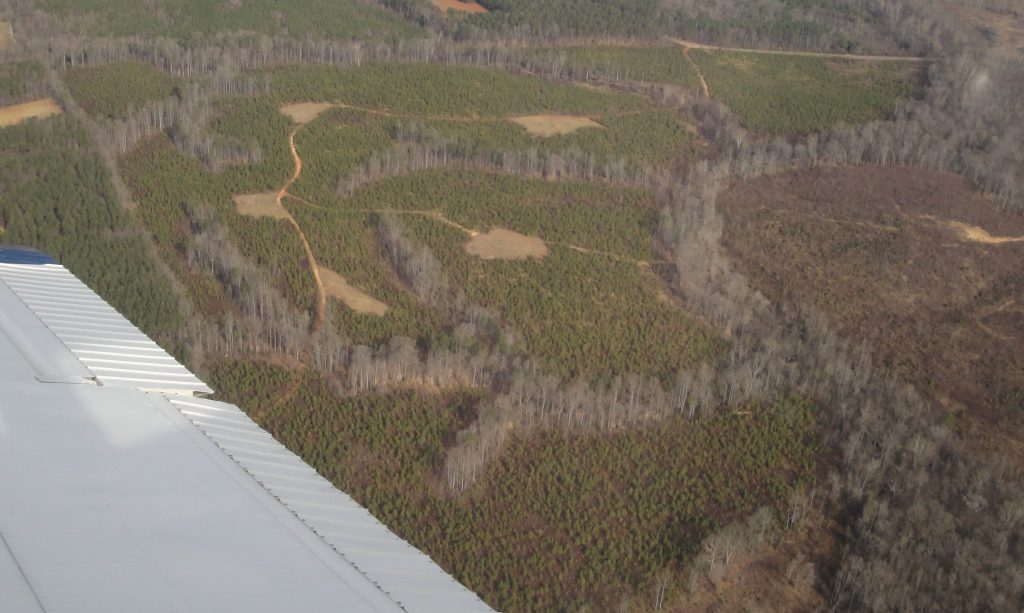
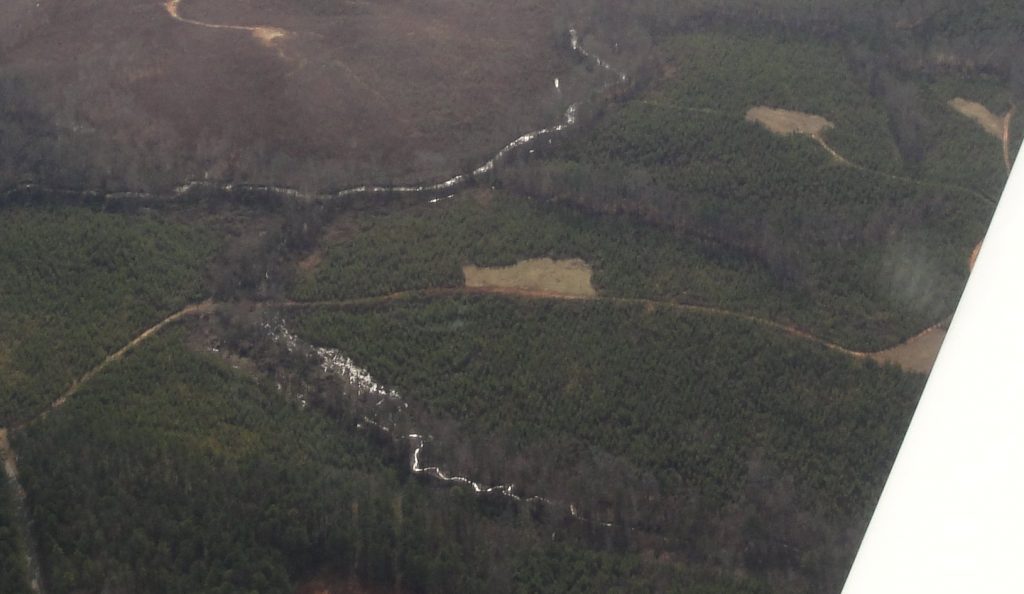
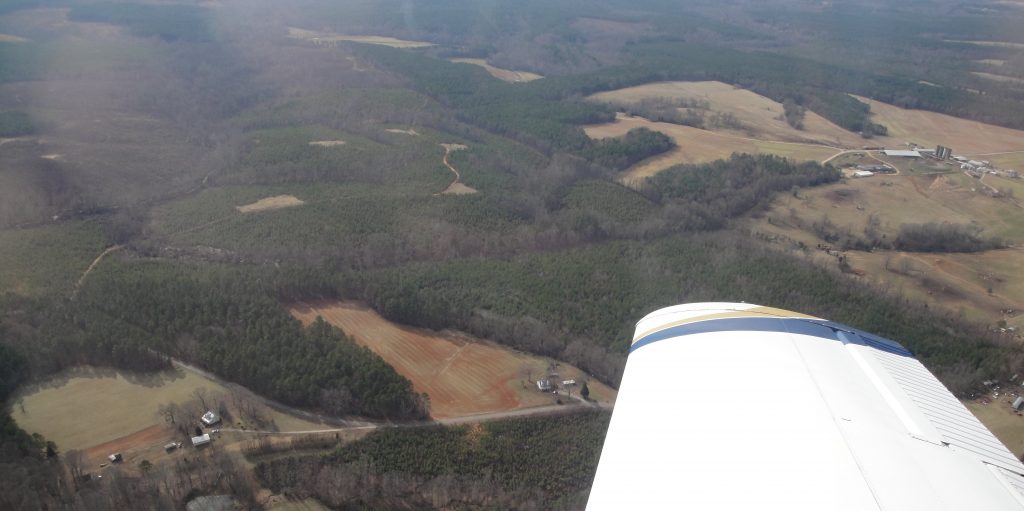
Above is a panorama of the feed plots and a picture of almost the whole CP farm (the wing covers only a small corner.)  You can see how they are connected and how form openings in the woods.  They are mostly covered in clover, which appears a lighter green this time of year.  The picture below shows the sun reflecting off the streams.  It has been a wet year, so they are wider than usual.  I was a little surprised how much water is spread over the wetland area near the center of the photo.  BTW, the gray trees are the broad-leaf forest, currently bare of leaves, around the streams and boundaries, so you can see things clearer this time of the year than when everything is green.

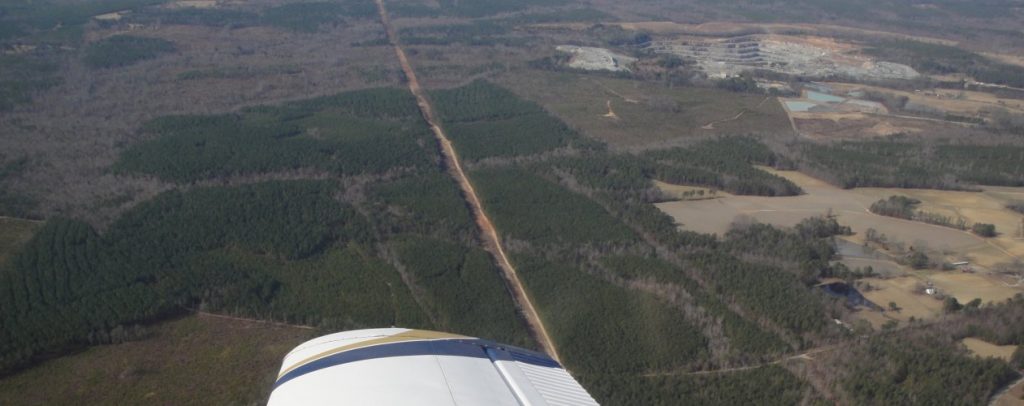
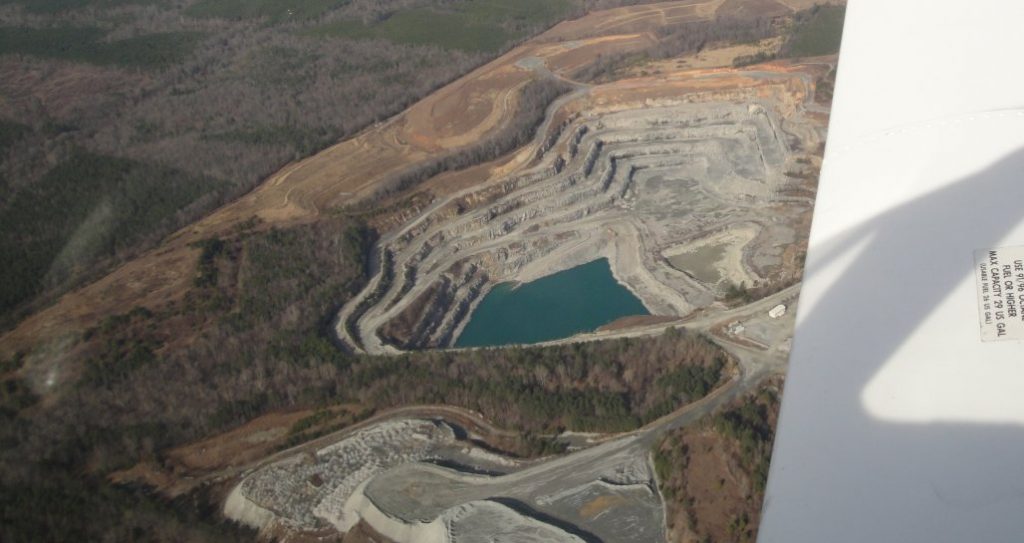
Below is the Freeman tract.  You can see the boundaries with the deciduous bare branches.   It is roughly rectangular.  You can see the Vulcan quarry off to the NW.  It is much closer to our property than I thought.  You have to drive a long way around to get to the farm gate. As I wrote in yesterday’s post, that quarry may eventually become a deep lake, which would be a nice addition.   The utility lines that run through the property were recently upgraded, and the dirt was a bit torn up by the machines.   I have a total of eight acres under those lines, so it is not inconsequential.  I would like to plant this over in warm season native grasses and encourage some quail habitat.  The long narrow aspect provides a lot of edge environment.

The Freeman trees will be fourteen years old this year.  It is an exceptionally good stand and I think they will be ready for thinning, maybe even this year.  I have spent a lot less time on this tract.  The CP farm was my first one, so I spent a lot of time there just getting to know forestry, it is also more interesting because it has a greater variety of environments, including the wetlands and hills.  You cannot really tell from the pictures, but CP is a lot hillier than Freeman.  But Freeman is more valuable for growing trees, acre for acre.  Less interesting is often more valuable.

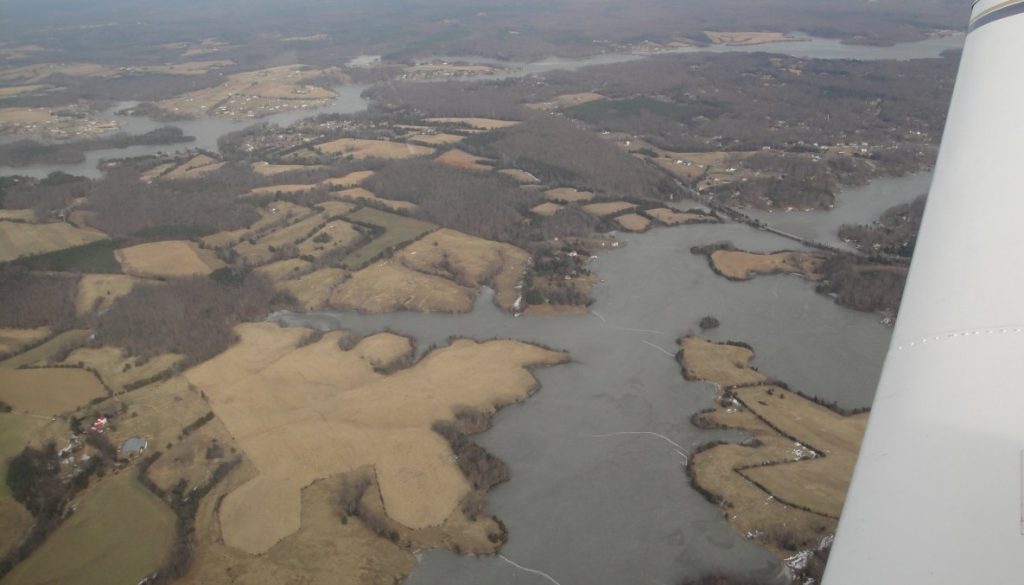
Above is a panorama showing the local lay of the land.  My forest is only part of the bigger picture.  The whole area looks like this.  You can see how important forestry is to southern Virginia. Flying over made that clear. It is not just covered in forest, but also lots of clearly managed forests.  BTW, the distortion you see in the picture is just the reflections from the window glass.

Flying Over Virginia

Brian (that is him above) has a plane and knows how to fly, so I got a chance to see the tree farms from the air.  This is something I have long wanted to do. I can get the pictures from Google earth, but they are not completely up to date, give only one angle and are just not the same as a live view.  I will included some pictures I took in the next post. They are a little hazy because I took them through the glass of the windows.

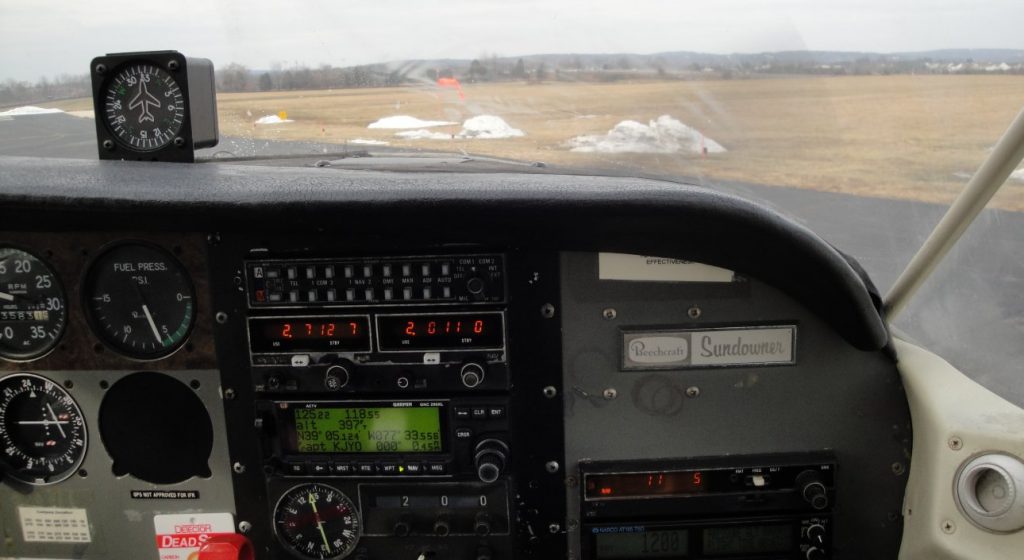
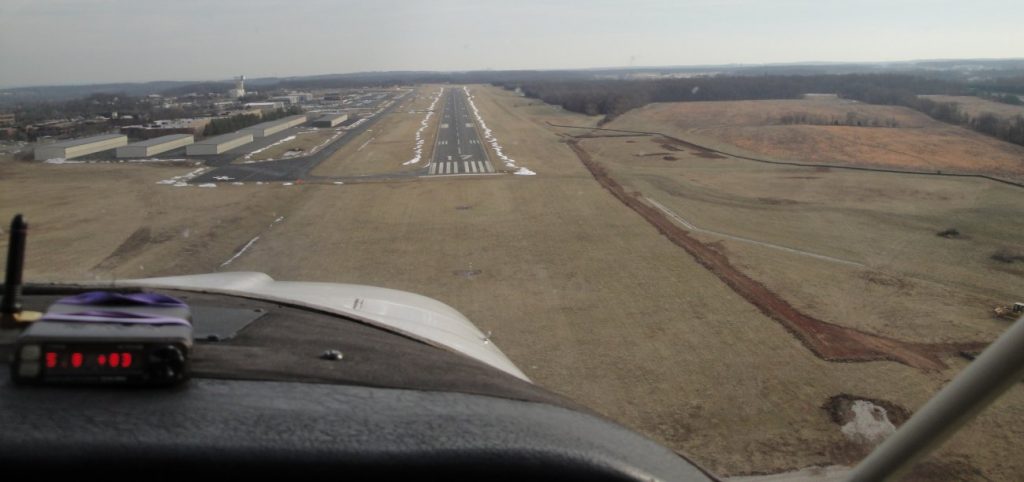
Above is take off and below is landing.

I have never flown so low over places I knew so well. We left from Leesburg Airport.  All the little planes are lined up and it is amazingly informal.  Flying out around Washington is highly regulated, but once you get outside the security zones, you can fly were you want. We had GPS, but actually found the farms by looking for landmarks on the ground. It is more fun that way. 

You notice a few things from the air that are less clearly evident to the terrestrially tied road denizens. There is a lot more empty space than we think. Most of our structures are near the roads, but roads make up only a small amount of the countryside. On the other hand, lots of very nice houses are hidden down long paths, away from the main roads, obscured by trees or topography. This seemed to be especially true in Loudon County.  Of course, my sample was skewed since I took off and landed there, but Loudon County is a classic wealthy exurban area, so I think this kind of settlement is indeed more common there.

Another thing I noticed was the large numbers of ponds and impounded water.  Natural lakes and ponds not associated with meandering river are uncommon south of the Mason-Dixon Line because they are largely gouged  out by glaciers and the most recent glaciations didn’t get that far south.  But people like lakes and they have created lots of them were they didn’t exist before.   You can tell the ponds because they tend to have at least one straight side from the dam that holds back the water.   Larger impounds have very irregular banks.  Water wears away the jagged banks over time, but not enough time has passed for these man-made bodies of water.

Below is Vulcan Quarry near Freeman. That is where my rip-rap comes from. The material is porphyritic granite. I am not sure exactly the significance of that, but the rock is kind of grayish with crystals and twenty tons of rip-rap cost around $500, delivered. It is good to have land near the source.  In time, I suppose that quarry could become a fairly deep lake.  Since it in not far from the Freeman forest tract, we may eventually have lakefront property.

Neither man-made nor natural lakes last very long in the great scheme of geological time, since they silt up.  Man-made lakes tend to silt up faster because they are often or river fed and they impound muddy floodwaters.

Who Writes History? Who Reads it?

I-Tunes have been a great thing for those who like university lectures.   You can download full courses that would have been almost impossible to find before, or at least very expensive. The one I am listening to now is Donald Kagan’s history of ancient Greece from Yale University  I have admired Kagan’s books and I find that his lectures are equally well presented and prepared. 

Greek history is something I knew very well, but it is surprising how much you forget and how much you can still learn from a basic survey course taught by a good professor.   It is also interesting how my perspectives have changed over the years since I studied the Greeks in graduate school.  

Experience is the big difference.  I studied history back then w/o experiencing much of it myself.   Human events look a lot different after you have been involved more of them.   Things seem a lot neater back then.   As far as I understood, leaders made decision and people followed them.  I now understand that leaders often make unclear or confused decisions, or they don’t make them at all.  Even when they are clear and definitive, the details get mixed up by the time they move to the lower layers.   And even if the communications are clear, their followers often don’t follow.   

Many times the writing of the history itself is what makes sense of the events.  Historians provide frameworks that sometimes don’t really fit, but still may be persistent.   Thucydides, the great historian of the Peloponnesian War, influenced the writing of history and ideas about democracy for 2500 years.  He evidently tried to be fair, but in his act of choosing made the narrative what it became.  The father of history, Herodotus, told many of the stories we still remember.   We probably would not have heard of the 300 Spartans and they certainly would not be making movies about them today, if not for the compelling story told by Herodotus and many of the quotations he used.   When the Persians threatened that their arrows would blot out the sun, the Spartans responded that they would fight in the shade.   That sticks.  

Thucydides was a participant in some of the events he wrote about.  He had been a man of politics.  He had led an expedition in battle.  Herodotus was also a man of the world.  Not so much modern historians.   I wonder how much a scholar can understand the events they write about if their only experience is vicarious.   Sometimes shit just happens.  There is no good explanation.   A scholar tends not to like this.

Kagan addressed the problem of agriculture in Greece.  He mentioned that it was a difficult area, long debated by historians. I know that, since I wrote my master’s thesis on the reforms of Solon.   (It was a very bad thesis and I hope it has been lost, BTW).   Kagan mentioned Victor Davis Hanson on several occasions.   Hanson is a classical scholar, but his insights come from the fact that he is also a farmer.  Few historians have that kind of background and it was this unique background that gave Hanson his insights.  Some things make perfect sense to someone with experience.  For example, why do you grow a variety of crops on a small farm?  Because you want to take advantage of all the diversity of soils and seasons.   Sometimes the “optimal” crop just won’t grow.  Beyond that, if you have just one crop, you will have too much to do at some short times during the year and than almost nothing to do the rest of the time.   It is obvious once somebody says it.   Most Greeks were small farmers.  The rhythms of the season influenced their history.   It is good to understand them. 

For example, it is easy for a marauding army to burn a wheat crop, but only at certain seasons.   Greek farmer-soldiers usually had to be close to home at this time to protect and harvest their own crops.  Spartans were an exception to this, since they lived off Helot-run estates and didn’t do any farming themselves. (or any work at all besides war)  It is nearly impossible to kill an olive tree.    An invading army can chop at them, but they sprout back.  Ancient historians sometimes refer to these things and/or to weather conditions, but a lot of it goes clear over the heads of any historian or student who has not experienced such thing.

I wonder how much else we all miss.

A Cold Year Slows Down Running

It has been usually cold this season, which has made it unpleasant to run.  I am not dedicated enough to run through the cold, ice and snow and when the temperature gets down in the lower thirties it more or less freezes out my running.   

People who know I am from Wisconsin sometimes jokingly ask if I can no longer take the cold, but I never did.  I didn’t start my running season in Wisconsin until April 1 and gave up when the leaves fell off the trees, which was around November 1.  Virginia is a year around running climate, but not every day.

Running gets good when it gets into the middle forties, if it is sunny w/o too much wind.  Average Virginia temperatures in January are in the upper forties, so most years you can have good afternoon runs during the mild winters.   This year, those “average” days have not been very common and there have been a lot more on the downside than the up.

It was warm (actually close to average) today, so I took the opportunity to run, but sporadic running is not so good.  You tend to pull muscles or just get sore, since conditioning declines between the too infrequent periods of exercise.   But I have to run when I can for both physical and mental health.   I just don’t feel good if I don’t run with reasonable regularity.

Tomorrow is supposed to be warm again.   They predict highs of fifty degrees.  That should be good running weather.

Man Does not Live by Bread Alone

Past year’s market collapses seemed to confirm all the clichés about capitalism. Subsequent panic-based responses by government with its big bumps in spending and creating of new entitlements confirmed many of the clichés about government.   In April 2009, only 53% of American adults thought capitalism was better than socialism and a full 20% actually preferred socialism (the rest don’t know), according to Rasmussen.  We have since recovered some of our optimism.
 
I got some insights about this at the AEI program “Recovering the Case for Capitalism” featuring Yuval Levin.   I like to attend lectures at AEI when I can.   You have to get there on time, since there is usually a good sized crowd and they start punctually.    Most of the lectures are free. The Bradley Lectures cost $5, which doesn’t even cover the price of snacks and utilities.    The Bradley Lectures were sponsored by the family who owned Allen-Bradley in Milwaukee, BTW.
 
Levin started with Adam Smith.  We often get the caricature of what Smith wrote or mendacious misinterpretations like the Gordon Gecko “greed is good” statement.   Smith actually just made a moderate observation that people were not really good or bad but they were motivated by self-interest.  Most people also have a desire for approval, which can be moved to empathy and “good.”   Smith never advocated getting rid of government.   A good government doesn’t generally push particular outcomes, but it creates institutions that direct people’s self-interest and vanity to proper objects.
 
The market will discipline participants by encouraging people to do things other people find useful or desirable, since everybody has to approach the market terms of what he can provide, not what he will be able to get or even demand.    But the rules of the market are not self creating.  Some people will try to employ coercion.  Rules are necessary to maintain security and open completion, so that negotiations are free and pricing is not coercive. This does not ensure that outcomes are equal and not every transaction serves the interests of everybody, but overall the market produces the best achievable outcome.
 
Nobody seriously questions capitalism’s ability to produce material goods.   A century ago, some people thought a socially planned economy could produce more, but experience had dispelled that idea.   Nevertheless, few people love capitalism.    
 
The market tends to be unkind to established interests and established businesses have an interest to collude with government to limit competition.   Our modern welfare system is largely a creation of this kind of corporate-government collusion.


Capitalism also doesn’t properly stoke the egos of all participants. You are judged by what you do and what you contribute – lately.   The market disperses decision making and it is evolutionary, so in constant state of change, so it doesn’t appeal to academic intellectuals who like intelligently designed theoretical master systems. Most systems work better in theory than the free market, since there really is not a comprehensive theory of capitalism.
 
Capitalism is process, but it is incomplete. This is not a bad thing, considering the world’s experience with the more comprehensive systems. Capitalism is not a totalitarian. It leaves the details of your life and beliefs up to you. In this respect, it is more a tool than a comprehensive system and it requires the input of values from outside. Traditions, family, religion and other anthropological aspects form the “soul” of our system. Capitalism makes freedom possible, but it is not in itself freedom.   Humans need more. The free market makes it possible for them to seek it but it doesn’t force choices.  
 
I guess it is true that man does not live by bread alone.

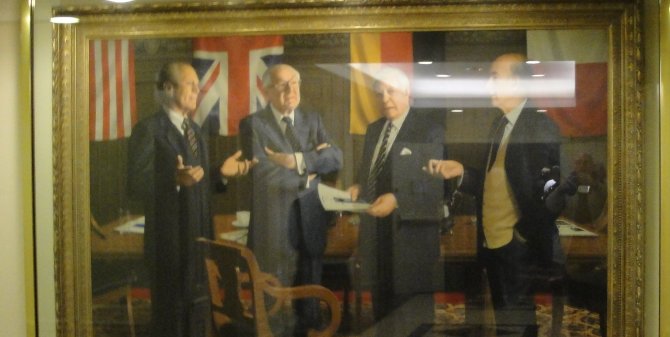
The picture above is a painting at AEI featuring Gerald Ford,Helmut  Schmidt,  Valéry Giscard d’Estaing & James Callaghan.

Alex @ James Madison University

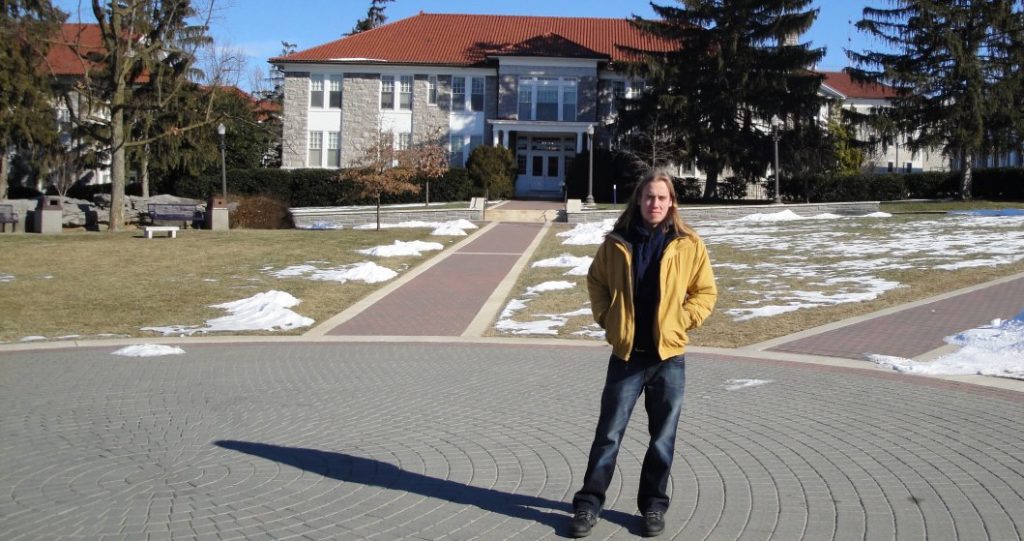
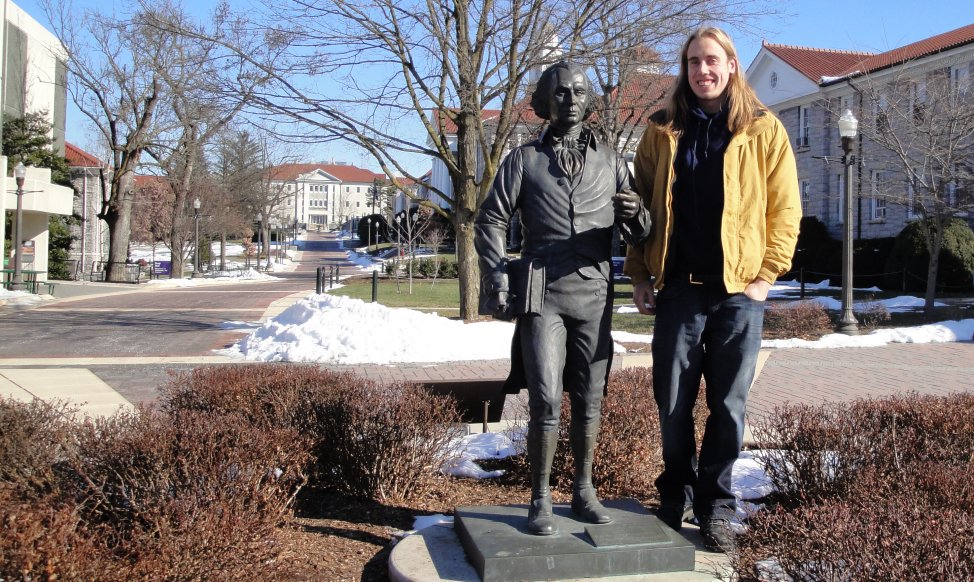
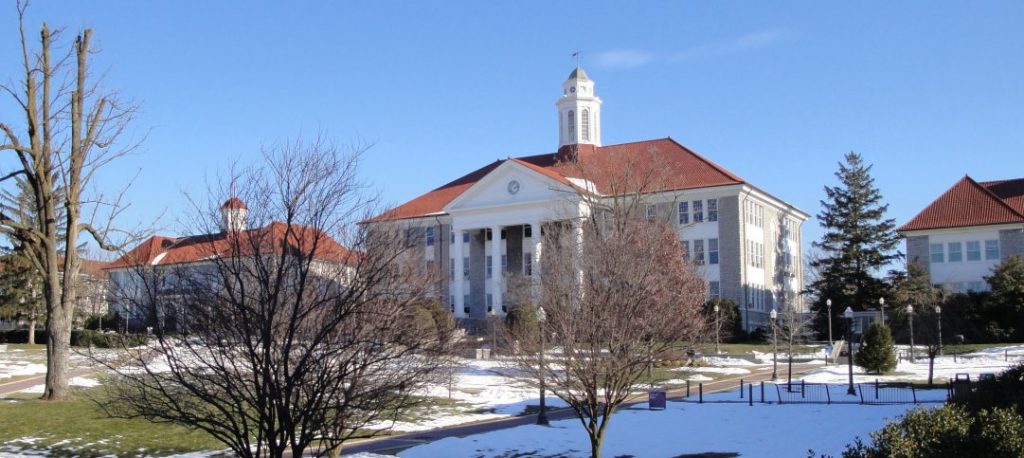
Alex is off.  I drove him up yesterday and left him at James Madison University today.   I am proud that he is becoming more independent but sad that he is pulling away. Above is Alex at the quad. Below is Alex next to James Madison.  It is life sized statue. He was a little guy.

I used to talk to the kids at bedtimes.  Sometimes I know that they allowed me to ramble on just to prolong the time before bed, but I enjoyed it and I know they learned some things because I hear them saying them.   I miss that.

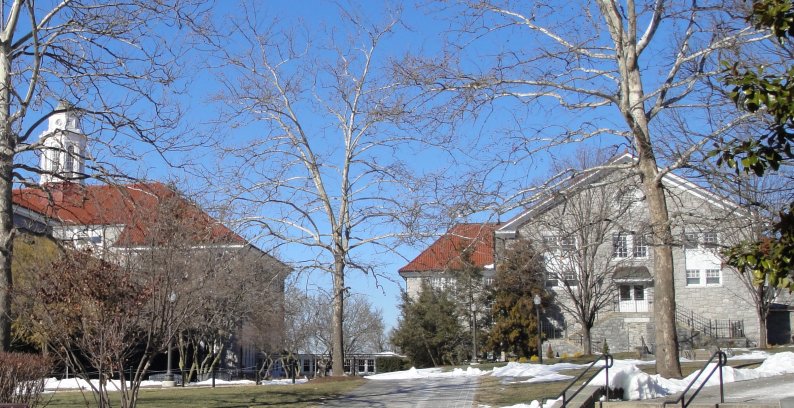
Above and below are buildings on campus. 

James Madison is a good university and looks like a nice place.   It reminds me a little more of a Midwestern university than it does of Virginia.  Maybe the stone buildings on the hills remind me of some of the building at UW along the lake.  Maybe it is the spruce trees.  Spruce trees can and do grow in Tidewater and Piedmont Virginia, but they don’t  thrive.  They do better in the cooler, more continental climate of Western Virginia.

Above is Alex’s dorm room.  Below is the TV lounge. 

We spent Saturday night at the Marriott Courtyard in Harrisonburg.   Alex wanted to get there first thing in the morning when the university opened.   We didn’t need to do that.   Alex was the first customer when the dorm opened.   The hall lights didn’t work, so we had to find his room by sense of touch.  Empty dorm rooms are vaguely depressing, but it literally brightened up when we opened the roll-up shades.   His room has a nice southern exposure.  Alex appreciates the sun too and since he was first in, he could claim the bed near the window.

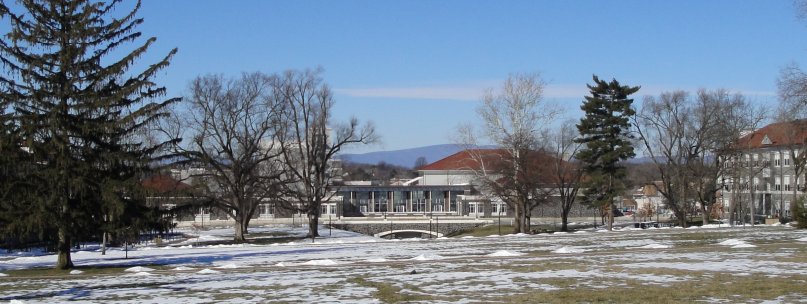
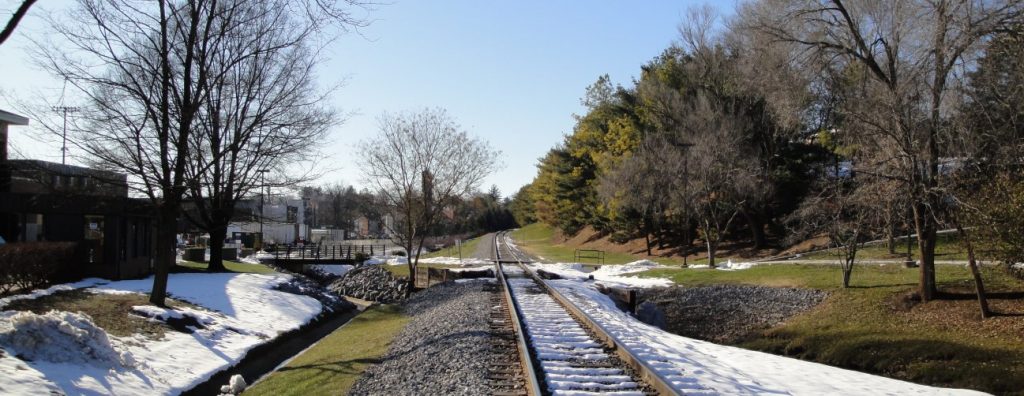
Above is a view from the quad. Below are Norfolk and Southern RR tracks that run right through the center of campus. 

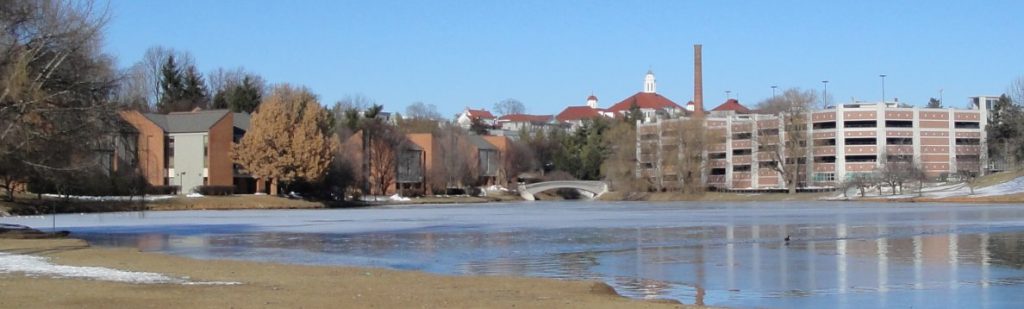
Alex hadn’t been able to make the orientation, so the second thing on our list was to get his ID. The place didn’t open until 1 pm.  We were second in line.   It went very efficiently once we got in.  The ID is the key to success.  Alex can now use the libraries, get into building and – perhaps most importantly – eat at the chow hall. Below is the lake at JMU.

I didn’t want to leave Alex but the time came and I went.   Alex will be fine.   He won’t be as close as Espen.  It is an exciting their lives, full of potential and contradictory emotions.

I drove home through the mountains of Shenandoah National Park and along Highway 211.  It is still rural much of the way with beautiful woods and fields.    There was not much traffic and it was a relaxing drive.   Back home, a little more lonely than before but hopeful, grateful and optimistic. Above is Sperryville, VA.

Say what you want about Wal-Mart. They don’t rip you off.

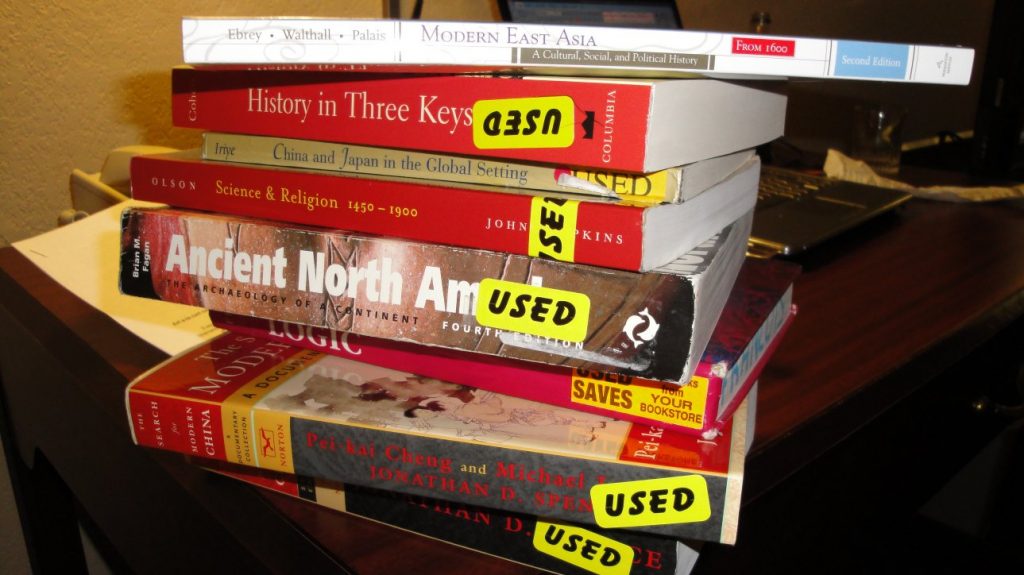
I took Alex up to James Madison today and bought the books for his classes.   I buy lots of books.   In my experience, a good hardcover book costs around $20.  Not textbooks, evidently.    One book, a small book, called “Modern East Asia since 1600” cost $81.60.   You would expect at least to get the whole history of East Asia for that kind of money.   I checked on Amazon.com.   It is not available in that edition.  That is the trick.   The editions keep on changing.  Not much really changes inside, but the pages are different so students can’t properly use the old ones in coursework.

I could well understand if professors were getting kids to buy classics that would be of lasting value.  It might be worth it to pay big money for a good copy of “the Iliad,” “Wealth of Nations” or “Paradise Lost”.  Not that the kids would always actually read all of them, but at least they could legitimately grace their bookshelves for the next decades.   Ironically, the classics are usually inexpensive.  But the books they are asked to buy are rarely classics or even candidates for being classics.  Don’t take my word for it or rely on my judgment.   The authors obviously don’t think their tomes have any staying power, or else they wouldn’t keep on making minor alterations that require endless new editions.  

So let’s talk about how Wal-Mart is different.    After buying the textbooks at a total cost of more than $300, we went to Wal-Mart to buy a mini-refrigerator for Alex’s dorm room.  It cost $99.  How does that work?  Maybe we should put Wal-Mart in charge of the textbooks. 

Actually, I have to admit that I have been paying too much because I was stupid.  The kids bought the books they needed and I paid for them w/o thinking much about it.  I remembered that when I was in school books were expensive, but used books were usually a decent deal.   But now the used books are not that much cheaper and even when the discounts are steep they start from such lofty heights that it still is outrageous and there are fewer used books because of all the new editions.  I found that Walmart can indeed help, but not always and not that much.   The books are still really expensive because they start off really expensive.  

IMO, the problem is precisely that those making the demands (i.e. the professors) are not those making buying the books (i.e. the students) and those buying the books are not the ones paying the bills (i.e. the parents or government).   It gets worse.   Professors often write the kinds of books that nobody reads voluntarily.   (Those professors who do write books that sell (usually for around $20) are disparaged by less popular members of the professoriate as popularizers.)  Even if they didn’t write the assigned books themselves, many professors feel a kind of solidarity with their colleagues toiling in the narrow fields plowing up the dirt that where only specialists are allowed or willing to tread.

Nobody spends other people’s money as carefully as he spends his own and some people seem to think that it is a positive virtue to be generous with other people cash.  You can imagine a professor saying to himself, “Scholarship is more important than money anyway and if I can help deserving but poorly remunerated fellow professors make a little extra money, who does it hurt?”  Who does it hurt?Some things get cheaper over time, at least in real dollars. These things include computers, laser eye surgery, electronics & small appliances. Other things get more expensive.  These include university education, medicine besides laser eye surgery and public transportation. How are these things different?