Geographically Local and Dispersed Local Communities

http://johnsonmatel.com/2010/January/Snow_Day_on_the_Farm/little_creek.jpg

Our communication goal is to reach targeted audiences with content and delivery methods appropriate for them. This often conforms well to what Speaker of the House Tip O’Neill said about all politics being local and local has usually meant geographically local. Far reaching media made a dent on this localism long ago, but more recent developments have the potential to essentially erase localism in geography. However, it may be replaced by an even more homogenous localism of habits and ideas. 

Diasporas & international chattering classes

Supra-national groups have always played a disproportionate role in international politics.   Diaspora communities of Jews, Greeks, Chinese, Armenians and many others have often had more in common and identified more strongly with members of their diaspora communities in other countries than they did with the phyically closer people in their countries of residence. There has long also been an international chattering class, made up of intellectuals and expatriates who see themselves as part of a wider regional or world community. This has been going on for a long time and we have adapted well in many cases to reaching these groups. 

Local need not mean nearby

The new media has facilitated the creation of new “local” communities very much like diasporas or international intellectuals, but united by less abiding characteristics and more by sometimes transient common interests and socials media.  No matter how esoteric an interest, you can usually find among the billions of people in the world a sufficiently large number of likeminded people to form a community.

Let’s take the example of a surprising community.    “The Big Lebowski” was released in theaters in 1998 to a lukewarm response.   It barely broke even in the U.S. and had it been released a couple decades earlier, it would have fallen into the memory hole and been generally unavailable except on a few college campuses.  But in the Internet age nothing is unavailable and “The Big Lebowski” acquired a cult following.   Now there is a Lebowski community.  You can market to that community and you can reach them with particular phrases.   No geographically local community could sustain this, but a media local community clearly can.

If a nation is a group of people who have common experiences, believe common myths and share common stories, what does it mean if virtual communities supplant geographical ones?

Yeah, well. The Dude abides.

Geography has not become unimportant.   On the contrary, people are often sorting  themselves geographically based on their habits, lifestyle preferences and even their political beliefs.  Fairfax, County Virginia is separted from Montgomery County, Maryland by a about a hundred yards of river water.  The topograhy is similar.  They same sorts of plants grow in both places.  They are part of the same metro area. Median incomes diverge very little.  They have similar distributions of minority populations and the educational attainments of both populations are almost identical, yet people notice signficant differences in attitudes and behaviors and these factor into some home buying decisons.  But geography is no longer the destiny it was in the past.   There is another layer on top of the physical geography (although I bet Macs sell relatively better than PCs in Maryland than they do in Virginia.)  It is possible for someone to live in one place but have most of his friends and most of the things that influence him spread all over the world.   These are also local communities that we can identify and benefit from addressing.   
Re-defining the Human Space

My colleague Bill May made a good point during our recent talk at FSI about Edward R. Murrow’s fabled last three feet when he explained that his kids have virtual friends that they have never met in person and may never meet in person.  But they are still friends.  They still influence each other.  They have entered Edward R. Murrow’s three feet range but they have done so electronically.   

Putting the human space in context

Let’s update Murrow and maybe put his statement in context.   Of course, the social media didn’t exist in his time as it does today, so he was talking only about broadcast media when he said electronic media.  He was right back then and he is right today – if we talk about broadcasting.   

The three feet idea refers not to physical presence but to human engagement.   Engagement w/o physical presence was nearly impossible in Edward R. Murrow’s time; it has become easy to do today.  So we should modify the three-foot-theorem, but not abandon it.   And Murrow’s admonition about overestimating the reach of electronic media still applies.

You can’t have a two-way relationship with a million friends …

The key is engagement and engagement still requires human interaction.   I have previously written about the Dunbar number, which postulates that individual human beings cannot maintain meaningful contact with more than something like 150-250 people.  There just is not enough time in the day and we don’t have the cognitive power to do more.   Even if you could keep millions of relationships straight, the recipients might object.   Most people like to think that their friends care about them.   How much can a guy with a million friends care about any one of them?   There has to be some kind of sorting.

… but maybe machines can

There is a qualification, however. People are increasingly comfortable interfacing with machines and artificial intelligence.  For example, I feel I have a relationship with something like Amazon.com, even though I am certain that no human at Amazon.com knows my name or cares about me as a person. Amazon.com has a very good algorithm which figures out what I like by comparing my previous purchases to those of others. Google does a similar thing with search.   

Kids love their teddy-bears

They are just making comparisons and projections based on the past behavior and revealed preferences, but it sure seems like human intelligence. And just like the kid who personifies his teddy-bear, I have to admit that I have personified Amazon.com, Charles Schwab, the Nature Conservancy and many of the other organizations that play these kinds of personalization games with me. I like to think that there are humans behind all this, but I don’t think there are.   Or more correctly, the humans are also part of this personalization machine.  If I call an actual person at Charles Schwab, they are very friendly and they know a lot about me – BECAUSE of the relationship we both have with the algorithm.  This is not real human contact.

Does human interaction have to be with humans?

The implications are both comforting and frightening and public affairs professionals have to pick up both ends of this stick.  Some “human” transactions can indeed be put on autopilot and the interactions may actually improve.   I prefer to do my banking, travel arrangements and much of my shopping online and would rather interact with a computer database than with a person.   But that goes only for things I already understand. I still trust humans more when I am making unfamiliar decisions.  We need both.

The test of artificial intelligence is how long it takes before you know that there is not another human on the other side of your conversation.  As technology improves, it takes us longer to know and we care less when we find out.  The machine has an advantage over us: it never forgets.  That means it can recognize long-term trends and patterns we might miss in ourselves and others. They say that a good friend is someone who sometimes knows you better than you know yourself. Welcome to the new world.

Second Draft of History

If journalism is the first draft of history, some of the stuff that appears on the new media is like notes jotted on the back of a napkin.   How can anybody make sense of this cacophony of contradiction?   You can’t, actually.  Events don’t make sense until they are put into a narrative.   It is true that journalists usually get the first shot at constructing the narrative, but their perspective is limited because they don’t know how the story will end.    They usually don’t even have all the current parts and don’t understand the interrelationships.   But you have to start someplace.

The first ones to get the story out often have an advantage in shaping narratives because once you have heard a story with facts arranged in particular ways it is hard to see it any other way.   And sometimes the facts can be influenced by an information cascade, where each subsequent person is influenced  with the one before until everybody thinks everybody else agrees on a formulation that might not be true in detail and sometimes not even true in general.   That is why pressure groups and politicians are so enthusiastic about getting their talking points accepted early.

But it doesn’t end there.   Subsequent events often change the interpretation of earlier ones.   Time may be linear, where causes must precede effects, but memory is not and so perception is not and history is not.   Beyond that, truth matters and investigations and comparisons help find more truth (although I don’t think we ever arrive at THE truth, we can get closer if we work at it.)

So what is the second draft of history?  It traditionally consisted of memoirs & the results of academic seminars.  Henry Kissinger’s “White House Years” or the various Bob Woodward books are other examples.  I think what we are seeing more and more today are television documentaries setting at least the intermediate narratives.   Programs like PBS Frontline are the obvious example, but lately more pervasive are the kinds of things you see on “History Channel” or “The Military Channel.”  These are often appreciated by specialists of those really interested in the facts in question, so they have greater staying power than things aimed at more general audiences.

I have been watching what I think is a rewrite of the Iraq war narrative.   The “first draft” featured U.S. troops suffering confused in a confusing environment in a war they couldn’t win.   The truer narrative that I see coming out in specialty publications and some military documentary programs is that the Iraq experience was difficult but ultimately successful counter insurgency campaign.  It doesn’t discount or overlook the mistakes, but accounts for them in context.  My guess is that MOST people still believe the old narrative, but most people really don’t care that much.  The people who really care enough to find out are the ones that understand the revised one and ultimately, that revised narrative is the one that will stick after the ephemera is passed.

So in the end it is not only numbers or precedence that counts but also intensity of interest or maybe demonstrated accuracy and consistency with other contemporary and subsequent events. When we want to find out about past events, few of us go to old newspapers. We look for near contemporary analysis and this second draft of history becomes what we (a little loosely) call primary sources. And those sources shape the narrative … usually.

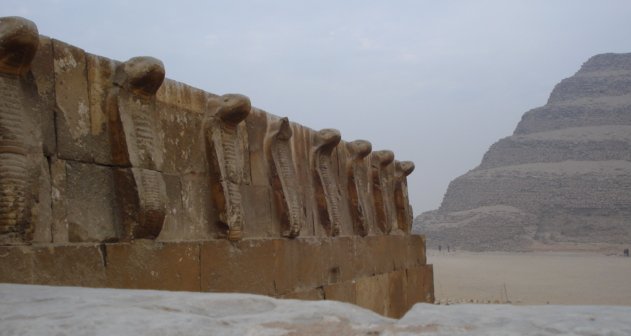
Around 1274 BC the Egyptian Pharaoh Ramses II fought a battle with the Hittites at Kadesh, which is in what is now Syria.  The Egyptians wrote the history and Ramses left an impressive monument to his victory.   It is the earliest example we know of an attempt to set a narrative.   Most historians don’t believe Ramses, but archeological evidence is inconclusive.   The Egyptians subsequently pulled back from the region.   So even more than 3000 years after the event, the precise narrative is still in dispute. The bottom line is that no matter who won that day, the Hittites got to keep the region.   Of course, you don’t find many Hittites around anymore.  There are still Egyptians, but they have little in common with the Ramses variety.  Astonishingly, some of us still care.

Snow in the Virginia Woods

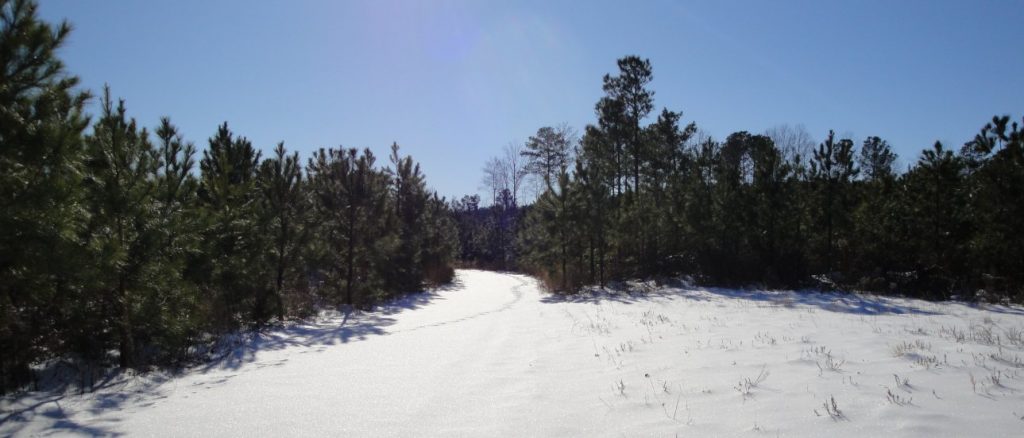
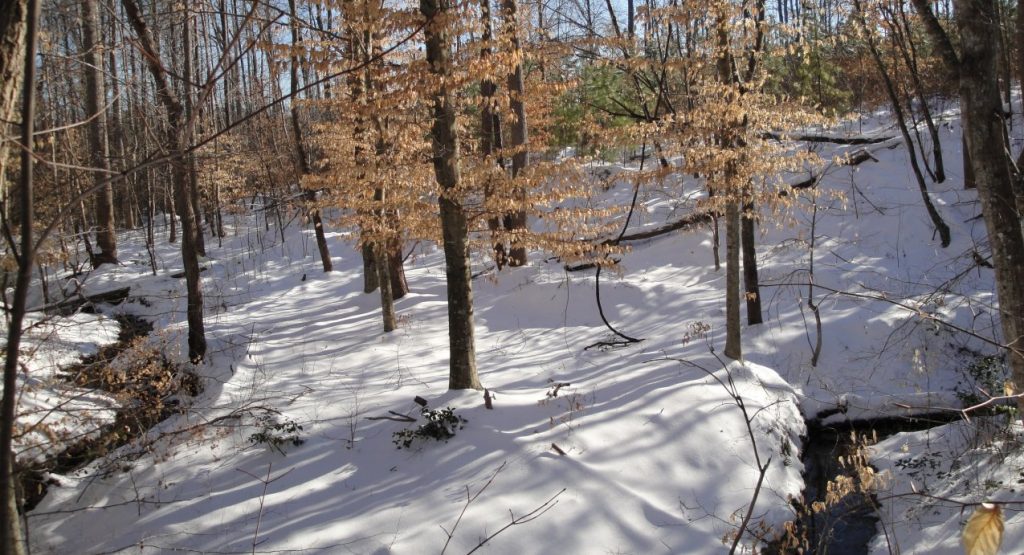
It has been cold again this year but this year we are also getting more snow. They got a lot of snow in southern Virginia & North Carolina, so I wanted to go down and look at the snow on the farm.  Well, it wasn’t a lot of snow by Wisconsin standards and it will melt in a few days, but there was more than usual and it created a different look for the place. You really wouldn’t guess that you were looking at southern Virginia.

I saw a couple cars in the ditch on the way down and I didn’t dare take the back roads, as I usually do.  Instead I went down I95 all the way down to Emporia and then went over on 58. I also didn’t dare drive down the dirt roads on the farm.  You can see that 623 was good in the spot above, but look near the bottom and you can see why I didn’t want to drive up the farm road.  It is harder to walk through the snow but it is nice to feel it underfoot. There were a few animal track, but it was otherwise undisturbed. It is nice to have land.

It was a long trip to see it and it took longer because of the adverse weather conditions. I finished almost the entire audio-book Infotopia, which I found very interesting and useful (I hope) in my job.   This was one of the three audio downloads on Audible.com that Mariza gave me for Christmas.   It was a good gift.  Audio books make long drives bearable and even beneficial. I lose my NPR a few miles outside Washington.  I don’t like music radio or those silly talk shows that purport to give advice that will solve problems that I don’t have. Audio books do the job.

Another good audio program is “the Teaching Company”.   Alex likes them too because they are around forty-five minutes long, which fits his workout schedule.

Anyway, take a look at the nice pictures. 

(Re)learning Languages

I got my “welcome to post” notification from Brasilia.   It is still more than a year in the future and it seems sort of ironic as I watch the snow falling outside my window but the future has a way of becoming the present faster than you think.  

So much advance notice is unusual.  I had my boots on the ground in Iraq about a month after I first even thought about volunteering for the job, but usually we get around a year.   Two years is unusual unless you are assigned to hard language training. 

Portuguese is an odd language when it comes to our training.  It is a “world language” and it is a fairly easy language to learn, but it is not as common as other “easy” world languages like Spanish or French.  Since it is not a  not a “hard language” like Russian, Arabic or Chinese, the FS sometimes doesn’t build in enough time to learn or relearn it as it does for officers assigned to posts with hard languages.   This system can work for French or Spanish, since there are lots of people in posts with those languages, Portuguese maybe not so much.   I don’t know if I explained that well, but it makes sense to me.   Suffice to say that for this PAO assignment they really wanted someone with good Portuguese, so this time they built in enough time to make sure of it and I am the beneficiary.

This is very exciting.  I learned Portuguese at FSI a quarter century ago and I got to be fluent when I was in Brazil for a couple years.   In those days you had to use the language all the time, since English was not that common in Porto Alegre.  But fluent is not necessarily the same as good.  You can speak very fast and fluently but not get the grammar or the words exactly right and I never felt really confident.   Diplomats should be really good at the languages of the countries where they are assigned and this additional training – with some consistent work – will put on the polish.   I hope so.

I don’t expect to speak like a native, but I want to get very good.  We have numbers from 1 to 5.  I want to get to 4 before I leave for Brazil, but the numbers don’t mean much.  I think of it in terms of foreign actors.  I want to get to the equivalent of Ricardo Montalban, but I am afraid I had only reached the sophistication of Sergeant Shultz on the old Hogan’s Heroes in my previous time.  I am not starting from zero this time.  I have been reading the WSJ in Portuguese.  I don’t get all the details, but I can understand most of the articles.  I also bought a dozen of Brazilian movies.  W/o the subtitles I would be out of luck, but even in the short time I have been doing it; the language is starting to come back.

Technological advances make it a lot easier to learn languages; at least it has become a lot easier to get the materials.  I can read Brazilian newspapers online and listen to radio and TV.  And of course Brazilian-Portuguese movies are easy to find.  There is almost no comparison to how it was twenty-five years ago.   I remember being happy to get those old newspapers and having to copy audio tapes.

Look below at what I just did   I used Word to translate the paragraph above into Portuguese and then back translated into English.  It did a decent job.  I would have to make a few minor corrections.   The strangest thing is that it translated the word Portuguese into English.   It also left out some of the subtlety, such as “I want.”  The Portuguese translation is better than the back translation to English, it has the “I want” (quero) for example.  This is understandable, since it is like making a copy of a copy.  But the translation certainly still makes sense and is a thousand times better than I could do on my own – the wonders of modern technology.  

Desta vez, quero aprender a escrever português.   Temos de aprender a falar e ler-se nos nossos cursos de língua, mas nós não aprender a escrever, pelo menos não como escrever bem.    Aguardo com expectativa a obtenção de muita ajuda a este respeito de Bill Gates.   Microsoft Word é muito bom na fixação de palavras que estão escritas quase corretamente.   Ele faz isso em inglês, parto do princípio de que é possível fazê-lo também em português.

Back translation

This time, I learn to write English.   We must learn to speak and read in our language courses, but we do not learn how to write, at least not how to write well.    I look forward to getting a lot of help from Bill Gates.   Microsoft Word is very good at fixing of words that are written almost correctly.   It does this in English, I assume that it is possible also in English.

It is really interesting the way that the machine can translate in seconds.  But somehow I am staring to understand how John Henry felt when he saw that steam drill rolling up.

When Confidence outruns Competence (or a Man’s Gotta Know His Limitations)

There are times when my confidence outruns my competence. I cannot easily detect those instances beforehand, since blindness to the problem is essentially included in the definition. But years of painful experience have taught me how to recognize the general conditions, sort of the weather of error.

With all due modesty, I have a gift for quickly assimilating information and expressing it well to others.  With all due concern, this is a dangerous gift when not properly managed. There are two big pitfalls. The first is that it tempts the possessor not to prepare sufficiently for engagements. If you can “wing it” there is strong temptation to do just that. This is a clearly defined fault and while it is easier identified than address, it is simple (although not always easy) to manage by larding in “extra” time and care. The second pitfall is harder is more of a stealthy problem.   It is too easy to extrapolate from what you know into things that seem to make logic sense but are not really supported by the data.

The reason the extrapolation trap is so dangerous is that you MUST go to places where you may fall in, since you must make decisions and draw conclusions based on incomplete or contradictory information.   It is embedded in the very nature of decision making. If all the facts are clear and known, you don’t need to make a decision; you can just use a formula. So you have to extrapolate and there is danger in jumping too far as well as not jumping far enough.

The two bits of folk wisdom don’t always work together.  You need to look before you leap (i.e. hesitate), but you cannot jump a chasm in two hops (i.e. be bold).

If you are waiting for a solution, I will disappoint you. IMO, it is a problem that can be managed but never solved. Two things have made me think about it a little more recently.  

The first is my investments. I studied stocks ten years ago and got reasonably good at investing in my small way.  Of course, it was easy to seem smart back then when things in general we headed up, but I did better than the averages.  But I don’t really pay attention any more.   One reason is that with the kids in college and forest land to pay for, I don’t have much money to invest, but the bigger reason is that I am just not interested.  When I was moving some money in the kid’s college fund, I just realized that I should not buy any individual stocks.   I just don’t know enough about it.   So I am defaulting into index funds. That will guarantee that I will not make big money, but it will also protect against catastrophic loss. That might seem like a no brainer, but it hurt my self-concept to realize that I just don’t know enough anymore and I probably will never again learn enough to go back in.   So in this case, I take refuge in mediocrity … and forestry, which is slow but steady investment. A man has gotta know his limitations.

The second problem is more serious because mediocrity is not an option. I am talking about my job. Over the years, I have studied  the components of my work, such as negotiations, leadership and communications, and tried to integrate them into a continually improving and developing performance.  Of course, I produced some failures as well as successes, but on balance I made significant forward progress. As you can see from some of my blog entries, I have tried to stay in the forefront of applying new technologies of communication to public diplomacy. But I have recently had some serious doubts about my continued prowess.

I think we can learn lessons from the past and I reach back for analogies and lessons all the way to the dawn of history.  That is why I think it is good and useful to study and think about things like the grand strategy of the Byzantine Empire, among other things.   My trust in these things is based on the implicit assumption that fundamental human relations are constant, so there is something to be learned by looking at how things worked in a variety of places, times and circumstances. Not everybody agrees. My extrapolation comes from believing that things that Thucydides wrote 2500 years ago apply to our modern age communications, albeit with greatly accelerated connections.  What if this is not true?

The new media is creating a kind of global consciousness that may be a discontinuous break with the past, a “novus ordo seclorum” to steal the fancy phrase (I am still the historian and I have a dollar bill).  Discontinuous change invalidates previous experience.

I have helped design an FSI course on the social media and it has a lot of aspects of my personality are fixed in the structure and this goes beyond the fact that I am personally giving the keynote and handling one of the big “learning organization” modules.  Although it is about the NEW social media, the premise I embedded is that social media is more an anthropology or human relations question than a matter of technology. To me the actual technologies are superfluous.   I realize that this is the thinking and design or a classic historian. Not everybody would be so dismissive of the latest and greatest techno-wiz (BTW – I use the word wiz in both its slang versions) and I fear that it might be me who is out of line.

I recognize the weather of error, but it doesn’t tell me what to do.  It could be that my anthropology paradigm is a good one, or it could just be all wet.   I will do a couple of interactive talks at the new FSI social media seminar next week.  Maybe that will give me better insight.

Compared to What?

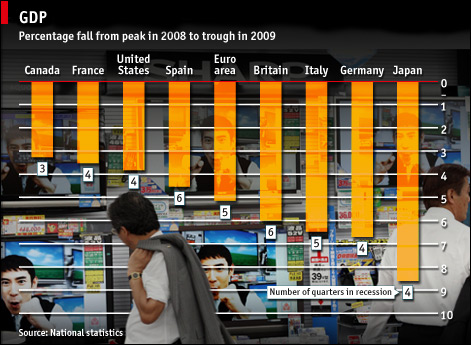
They say that misery loves company, but that is just an uncharitable way to put it. Comparisons are useful because they provide insight into problems and possible solutions. For example, you should be a lot more willing to change your habits if you see that you are doing poorly while everybody else prospers but if you are part of the larger trend learning from the experience of others might be less immediately useful. The Economist shows graphically how rich countries have fared in the recent recession.

Americans suffered in the “great recession” and it is cold comfort that Spain, Italy, Germany, Japan, the UK and the whole Euro-zone suffered more. But it should make us stop to consider the root causes of a downturn that affected a passel of countries with such a wide variety of institutions and economic programs.

The precursor the problems of the 1930s was the rapid rise of the U.S. as a creditor nation along with the circular flow of funds from Germany in the form of reparations to the allies, to the U.S. in the form of loan repayments back to Germany as loans, all the while the U.S. market was not absorbing significant imports. The great economist, John Maynard Keynes foresaw some of these problems in his “” (1919). In the 1970s, we had the problem of recycling petro-dollars after the quadrupling of oil prices in the early 1970s and further hikes around 1980. That liquidity went into loans to developing countries which soon became a problem. Recently, we had the rise of China, which has followed a neo-mercantilism strategy of selling outside while maintaining trade barriers and an artificially low currency. The dollars that pooled up in the Middle Kingdom were/are recycled into debt in the U.S. and elsewhere, helping keep interest rates low, but also helping to create a debt overhang.

 The Panic of 1907, which I include only for the sake of completeness, because it spurred the creation of the Federal Reserve and because I just finished reading the book in the link, was also precipitated by rapid growth and investment in the U.S. It is unusual in that it was largely “solved” by the intervention of one individual, J Pierpont Morgan. This would be the last time that one individual was ever able to take on that role.

The Great Depression ended only with the onset of World War II, which is a fairly high price to pay to end an economic downturn. Amity Shlaes has written a good book called “The Forgotten Man” that details some of the policy fits and starts that did not alleviate the depression and may have deepened it. The end of the recession of 1982 is still way to close to be dispassionately assessed. We forget how bad that one was. Unemployment reached 10.8% but it soon eased and we had a quarter century of decent economic growth punctuated by two short recessions.

We don’t know what will bring us back to prosperity this time, but I have confidence that we will recover. We always do.If you look back at history in the last century, it seems we have a painful downturn every twenty-five years or so. The times of trouble last for around ten years (except in the 1907 case). Let’s hope this one will be shorter. But since nobody has been able to “predict” even the past accurately, I don’t have a lot of confidence in anybody’s ability to predict the economic future.

Flying Johns

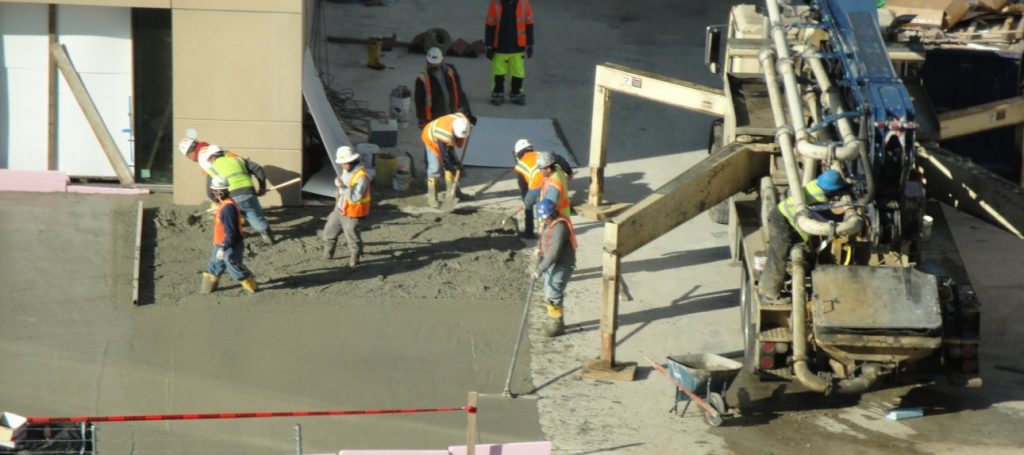
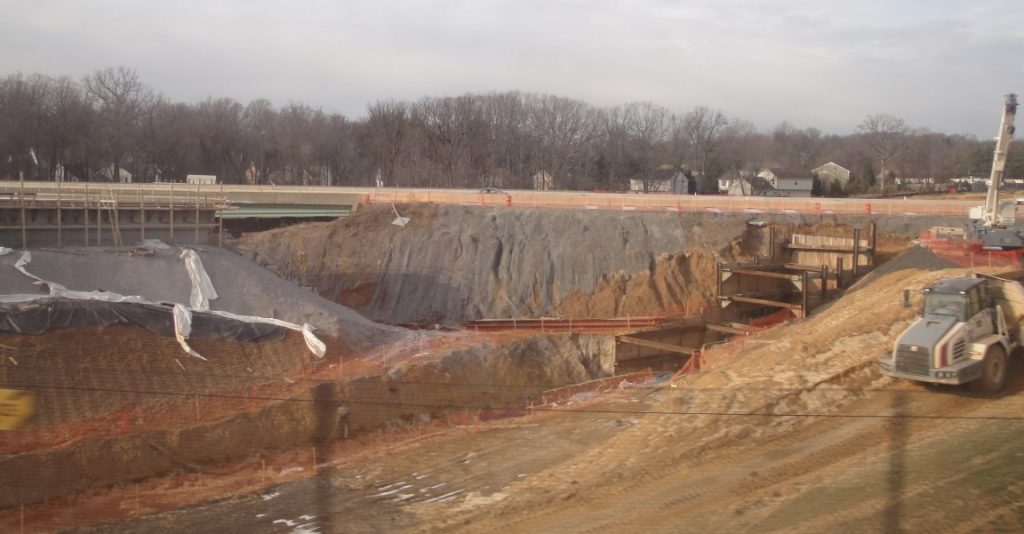
I have been watching the Institute of Peace building going up outside my office.  Most of the time it is pretty prosaic work, like the guys laying concrete in the picture above.   But sometimes there is something more unusual, such as the flying portable toilets, pictured below.

I imagined how it would be if some poor guy was using it when the crane picked it up.   I suppose the best course of action would be to lock the door, hunker down and hope for a soft landing.

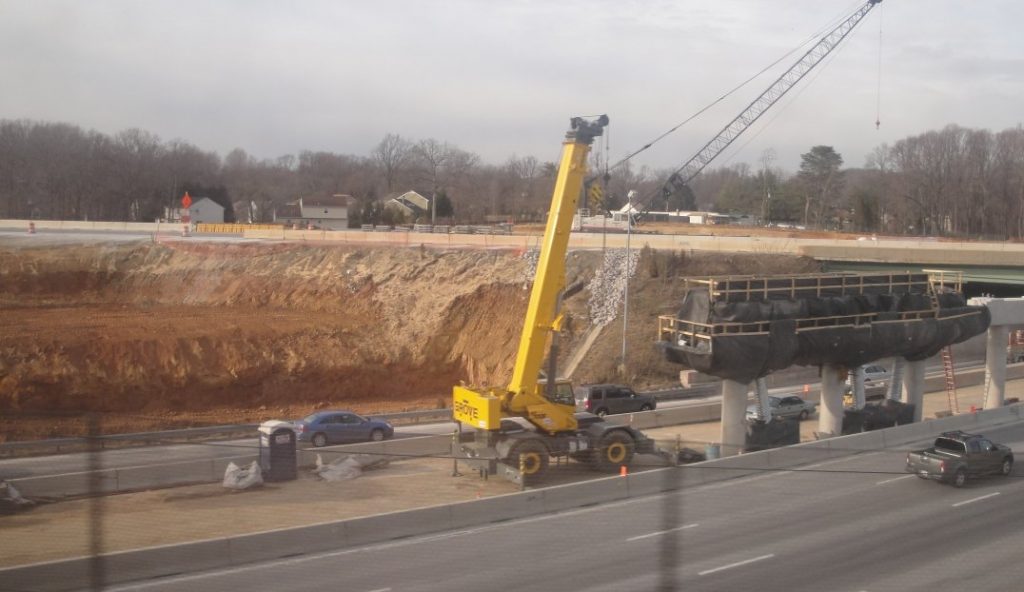
As long as I am on construction, below are pictures from the hot lane construction along the I-495 beltway.  I wrote a post re the hot lanes last year.  I took the pictures from the rolling Metro, which accounts for some of the blur.

***

Happy Birthday Espen (2010)

I wrote about Espen’s birthday last year.  He is unenthusiastic about me putting too much about him or recent pictures of him on the blog.  He came home for the weekend and we had a cake, but Mariza and Alex were unable to come, so it wasn’t a party.   Espen wanted to go over to Fuddruckers for his birthday dinner and we had a good talk, but I don’t want to post all that on the blog.  Suffice to say that I miss him, but I am glad he is close and proud of him. Happy birthday, Espen.  We love you.

Natural versus Sustainable

Below is my article for the next issue of “Virginia Forests”.  It is based on an earlier blog post, so if you have a feeling of deja vu, that is why.

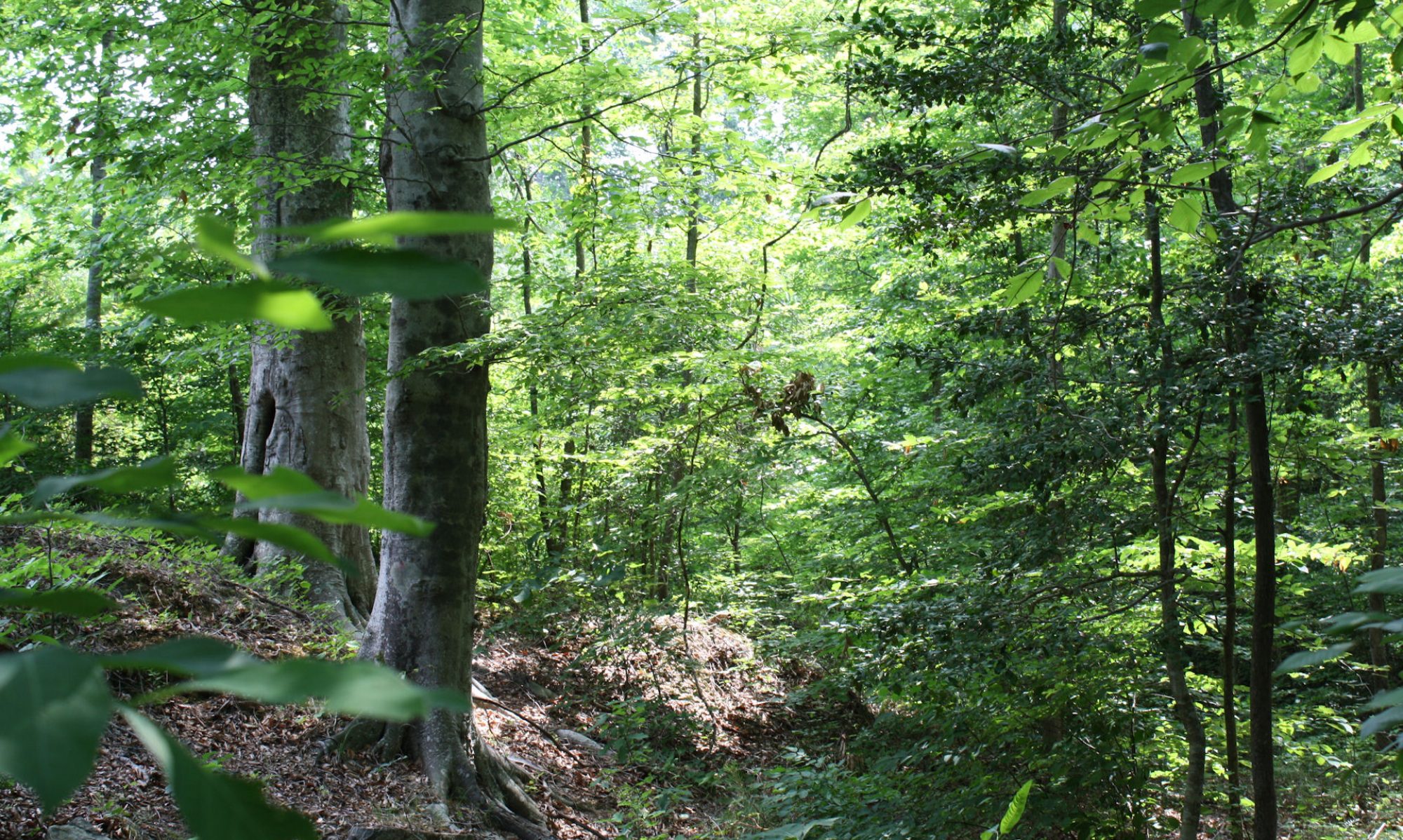
Everybody has his/her own idea about what is natural, and often thinks everybody else’s ideas are wrong.  What is a natural forest, for example?  Is it made up only of native species?  Does it feature only local species?   Is a tree farm natural? The distinction most often made is that “natural” is what the situation would be like absent human activity.  Of course, nobody has ever seen that.  The “natural” Virginia of 1607 was the result of thousands of years of human activity.  Natural is not an attainable or even a useful goal when talking about forestry.

I think the goal should be sustainable, not “natural.”  Natural is a slippery, arbitrary and often arrogantly used term.   It assumes also that an environment that results from random chance and the interactions of non-human animals and plants is somehow qualitatively different than one with human influences and implies that human interventions are always damaging. This is just not true.   Besides all that, some environments that are natural are not sustainable and some environments that are sustainable are not natural.  Many of the most productive, beautiful and sublime environments are the results of long term human interference and management.   They are not “natural” if that term implies human-free.   But they beautiful and productive and they are sustainable.  

That is why I also quibble with words like “recovery” or “damage” used too freely when talking about human interactions with the environment. They can sometimes be appropriate.  Humans do serious damage to the environment and recovery may be necessary, but they too often go too far.   Some radical misanthropes who call themselves environmentalist actually believe that somehow the earth would be better off without humans.  Of course, this is a very short-sighted and ironically very human-based point of view. 

We would not want most human-influenced, human created, environments to revert to a pre-human state, even if that was possible and even if we could determine what non-human even looks like, since there has not been such an environment in most of the world since the end of the last ice age or before.  The wonderful “natural” environments of pre-Columbian America were by no means natural.   They were created by Native American activities, especially the use of fire, for example.  Humans have changed the environment ever since there have been humans.  Other animals have done so too.  Change is written into the book of life and all life creates change.  Everything is always in the process of becoming something else. Natural environments come back quicker than we often think and The truth is that it takes a lot of human effort to prevent nature from obliterating the most of the works of humans. 

Sustainable is clearly the better concept.  It provides a wide variety of choices and varieties of human influence. We will always have human influence as long as we are here.  So let’s go with sustainable, which is achievable and good, rather than some hypothetical “natural” state.

A well-managed tree farm clearly meets the standards of sustainability and through the “ecological services” it provides, such as cleaning water, providing wildlife habitat and just making the world a prettier place, it helps make the rest of Virginia a sustainable environment.  The constant learning and experience sharing provided by organizations such as ATFS, university extensions, departments of forestry and others helps us all adapt to changes in the environment.  This is a sustainable ecological system and we can all be proud to be participants.