We are off from work again today and the government will be closed again tomorrow. They say that we got more snow this year than any time in recorded history. This is less impressive when you recall that they have kept detailed weather records for only a little more than 100 years. Nevertheless, it is a lot of snow and it has been a cold season.
There is a real blizzard today and I can see why nobody should be driving. Espen tried to drive the truck to visit one of his nearby friends. He got stuck in our complex. Fortunately, Chrissy and I could walk over and dig/push him out. Yesterday, however, wasn’t bad until around 5pm. In fact, the main roads were perfectly clear. As I wrote in yesterday’s post, I drove down to the forestry conference in Keswick , near Charlottesville. It is a little more than a two hour drive.
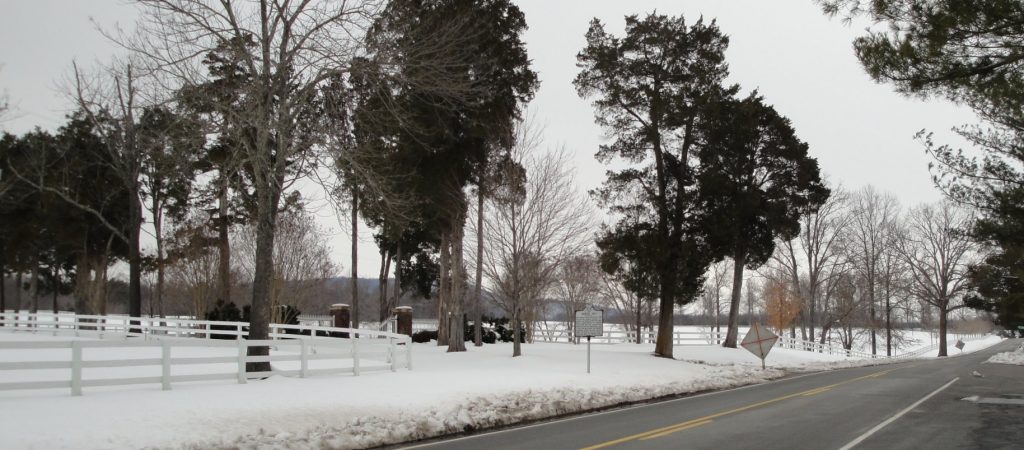
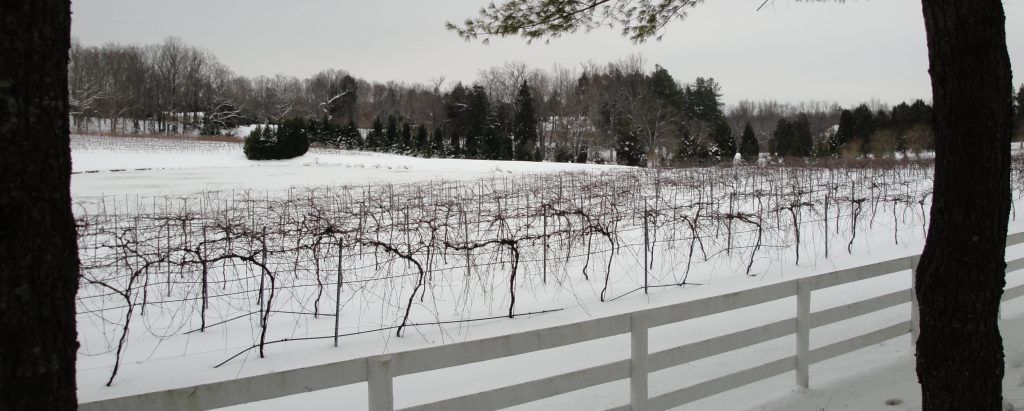
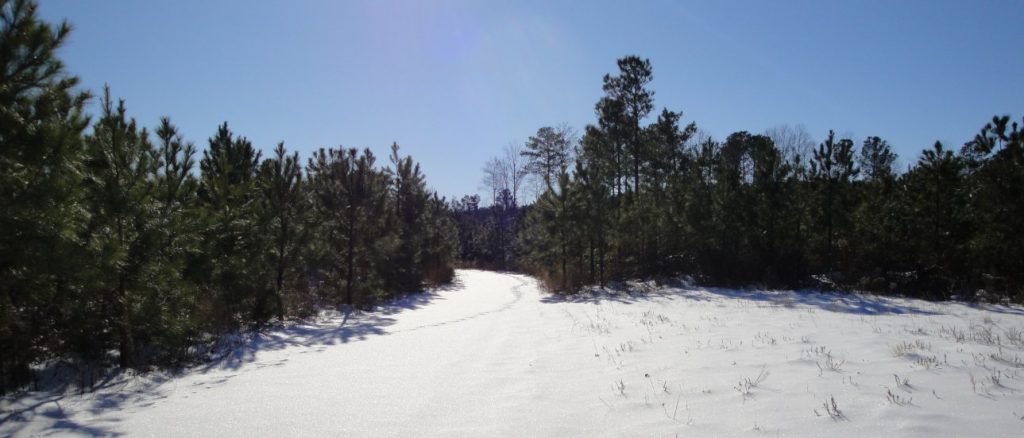
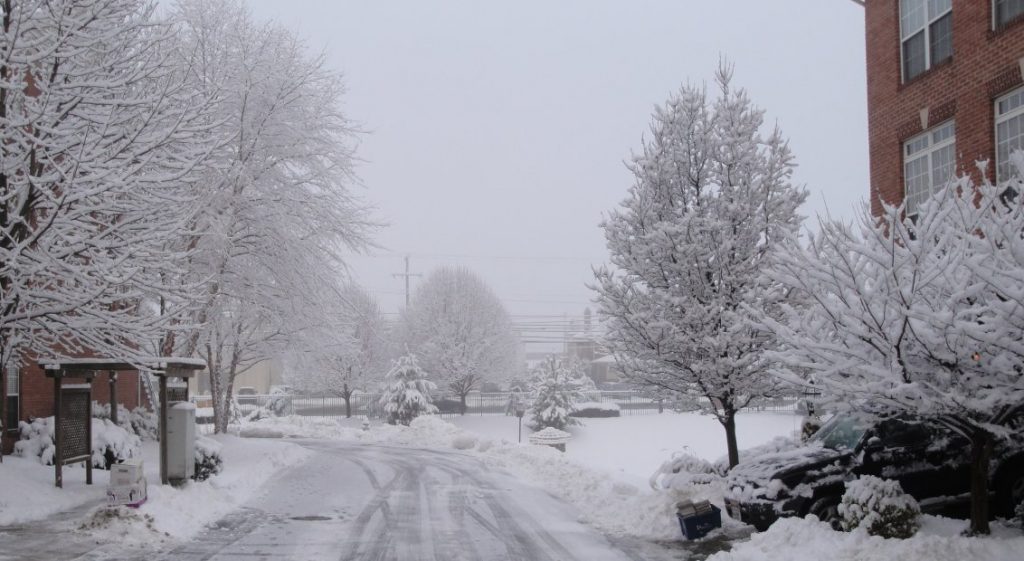
I took a little different way than usual. I started down I66 to US29 as usual, but then I cut off on US15 through Culpepper and Orange. The drive takes you through a really beautiful countryside, full of horse farms and vineyards with the Blue Ridge Mountains as a backdrop. James Madison’s estate is nearby and so is Thomas Jefferson’s Monticello. The soil is good and the climate is moderate. You can see what it looks like covered in snow. It is even prettier in springtime.
The debate about whether heredity or environment is more important in shaping human behavior has been a hot topic for many years. The “blank slate” idea dominated thinking when I was on college and I remember being embarrassed by the castigation I got from one of my anthropology professors for suggesting that human events were influenced by genetics. We have reached a more nuanced understanding, but books like “The Blank Slate”, by Stephen Pinker still cause controversy. And suggesting innate differences among people can still get you in serious trouble in some places.
The tree and genetic determinism
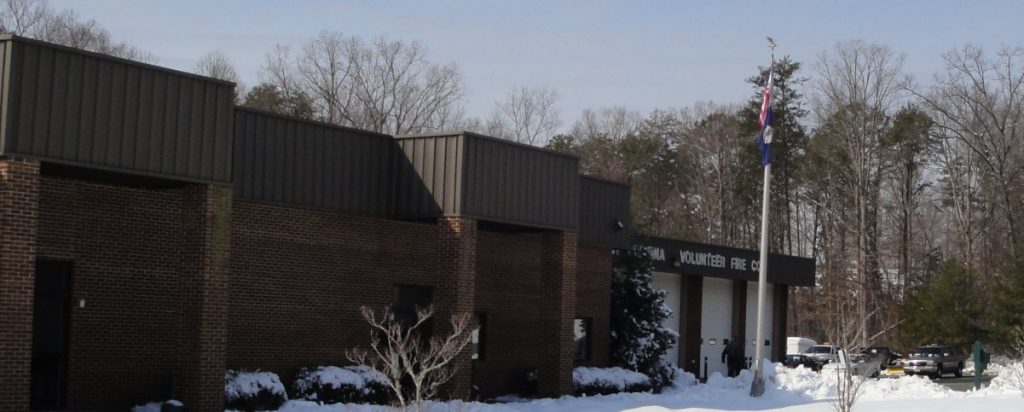
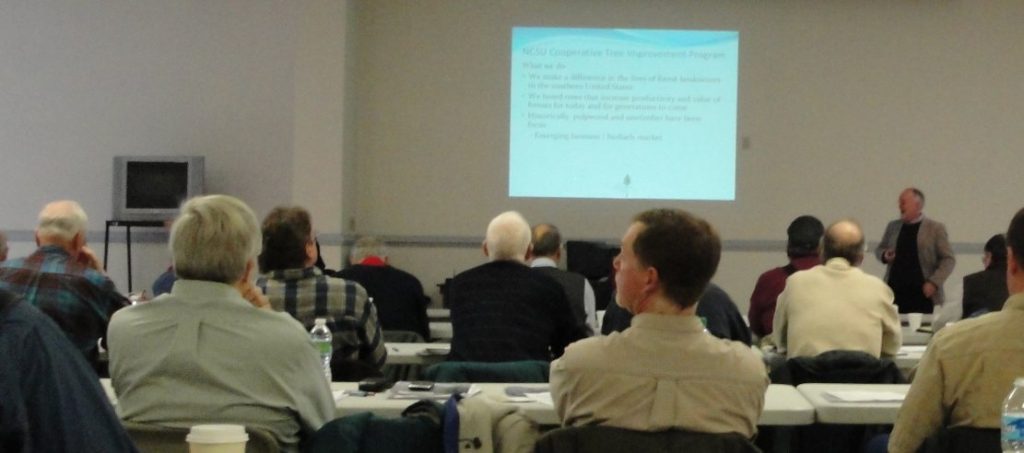
So let me talk about genetic determinism in trees. Presumably none of them will be insulted or feel that I have diminished their self esteem. Getting the best genetic stock and managing it for optimal results (nature & nurture) was a topic at the Forest Landowners’ conference on forest productivity that I attended. They were going to hold it at the Virginia Department of Forestry in Charlottesville, but the snow knocked out the electricity, so they moved it to the Rivanna Volunteer Fire Department (above), where they have a big meeting room (below).
Both genetics and environment are important and they build on and affect each other. The anger of my anthropology professor just showed that he was not qualified to teach the subject. Unfortunately he was reflecting the mainstream scientific consensus of those times.
Genetic improvement changed forestry
Genetic improvements have greatly changed forestry in the last fifty years. This is especially true for loblolly pines, the most commonly planted timber tree in the South, which are unusually adaptable. The “original” loblolly is a fast growing but often crooked and ugly tree. Genetic improvement can be very simple. You just choose the trees with the best characteristics and try to plant more of them. We are now in the third generation of loblolly and the differences are remarkable.
The new trees take thirty years to get as the original trees get to be in eighty. They are also a lot straighter, more resistant to disease and have a better branching structure. You can achieve these goals in different ways. The easiest is the simple one I mentioned above. Just gather the seeds from the best trees; grow them and repeat. In this system the trees pollinate themselves, so there is randomness in this process. A next step is to control pollination to ensure that the best fertilize the best. This is more labor intensive, since you have to put little bags on the trees to be sure that only the right pollen gets to the right flowers.
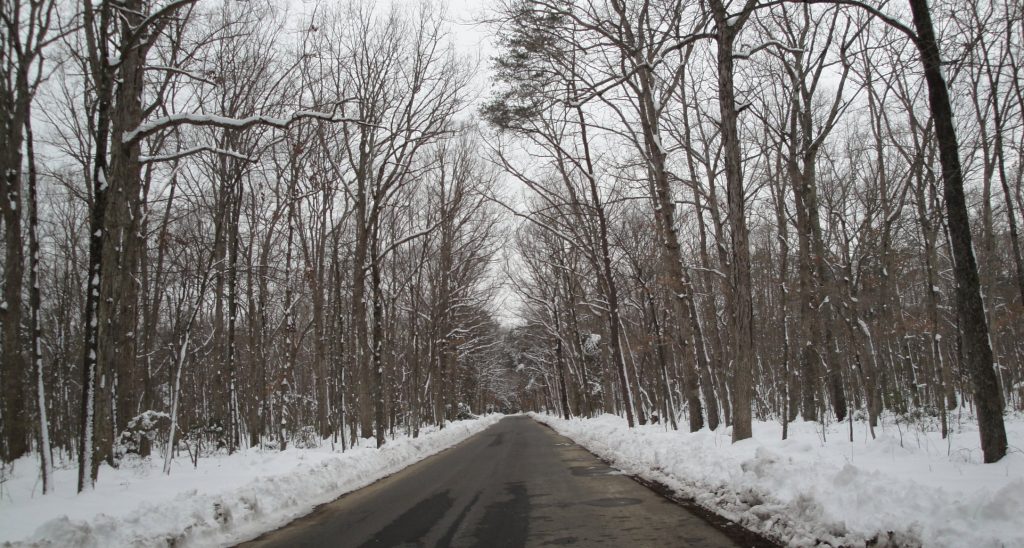
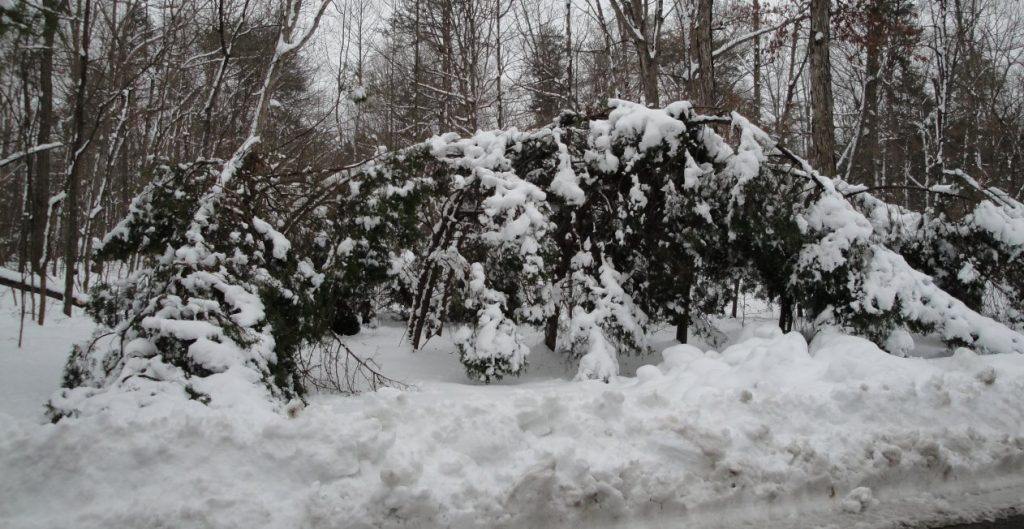
Below are Virginia pines squashed by the snow. Virginia pines are weedy trees and not much use. They don’t live long and break easily. I saw lots of broken Virginia pines along the road.
Bring on the clones
The latest step is cloning. Let’s explain a little about cloning in plants, lest we think about a “Caprica” scenario. Most gardeners have cloned plants. You can clone a willow or a cottonwood just by shoving a stick into wet ground. If you see a bunch of cottonwoods along a river, there is a good chance that they are all the same tree – genetically – as trees sprouted from roots or from sticks that lodged in the mud. I once inadvertently cloned a cottonwood when I used a freshly-cut cottonwood branch as a marking stick. A couple days later it sprouted into a little tree. Pines are harder, but they can be done. The clones are all genetically identical, so they can be a good test for the nature v nurture question.
Good genetics can move the whole curve higher, but variation remains and good genetic are the most profitable deployed as other conditions improve. Many of the costs associated with establishing and managing the stand of trees remain the same no matter what you plant. If you are planning to expend a lot of energy and time on management and planning, you are well advised to spend a little more for genetically superior trees. All trees will do better with better management, but the better trees will do better than the others.
Improving conditions make good genes more important
In other words, the more you improve conditions and remove obstacles, the more import genetics becomes to the results and the greater the gap between the superior and the inferior trees. It makes sense when you think in terms of potential. It doesn’t make much difference if one tree has the genetic potential to grow 80 feet tall in twenty years while another can only grow 40, if limiting conditions prevent any of the trees from growing more than 30 feet tall.
Limiting factors
So what are some of the limiting factors? The most obvious are climate, rainfall, soil and elevation. These make a difference when choosing a site, but after that they are beyond our control. But there are many limiting factors that we can control, including spacing among the trees, thinning schedules, rotation timing, competition control & fertilization.
Spacing
Trees will grow faster and stronger if there is more space between them. It is like thinning flowers in a garden. Everything else being equal, a similar amount of wood will grow on a given piece of ground no matter how thick or thin the trees are planted, but the health and quality will be very different. If planted too thick, you will have lots of small, maybe worthless trees. The optimal number of trees per acre is still debated among foresters.
Some of it depends on your goal. If you want to produce lots of pulp, you might want to plant thick. If you are trying to grow saw timber, you need to plant thinner. Another consideration is that if the trees are close enough together, they will sooner shade out competition and also shade out lower branches so that the trees will essentially prune themselves, leaving wood with fewer knots.
Thinning
Thinning schedules are a type of spacing issue, but with additional considerations. Thinning does not have to be a random selection. You can take out the inferior trees when you thin, so thinning both produces more space, more sun, water etc, but also leaves the better trees.
Controlling competition
Competition control is crucial. If you don’t control hardwoods, they will out-compete pines in most situations. Some hardwoods, such as gum and tulip trees just grow faster, but hardwoods also often have the advantage of an established root system, since they sprout from stumps or roots even after many years of being shaded out. Hardwoods can be controlled with physical methods, such as cutting, but the best way to control hardwoods these days is chemical.
BasF makes a couple of products called “Chopper” and “Arsenal”. They kill most hardwoods but leave the pines. Unfortunately, they don’t work very well with herbaceous plants or with blackberries, which easily over top the little trees, but they still do a good job with the hardwood competition, which is the key.
It is smart to spray with Chopper when you are establishing a pine stand. After that, you can go in with backpack sprayers. The boys and I killed off a couple acres of invasive Ailanthus using hack and squirt (where you smack the stem with a machete and then squirt in some arsenal) and I still have to go after individuals constantly. The good thing for the landowner is that the prices of these chemical has plummeted, as they have gone off patent. IMO it is still good to buy the name brand because they support the product better and the name brand product is also fairly cheap.
Fertilization
Fertilization is still not much used in forestry but it can increase yields. Most forests in Virginia grow on bad soil, either naturally poor or depleted by bad farming practices of times past. (The key crops of Southern Virgina, cotton and tobacco, are hard on soils.) If the soil is good, the land is usually devoted to row crops, which pay more than trees. (An exception is recently converted tobacco land. When the government stopped supporting tobacco crops, many tobacco farmers left the business and the land has been planted in trees. These trees are only a few years old, but they seem to be growing well.)
Deficient Virginia soils
Virginia forest soils are almost always deficient in phosphorus and nitrogen and trees grow a lot faster when they are provided with them. You have to give both, since just providing one or the other doesn’t do much good. You can fertilize when the stand is established and or fertilize after 6-10 years. Until that time, there is usually enough P & N for the little trees.
I fertilized my CP property with biosolids in September 2008. It seems to have given them a good jump.
Anyway, those are some of the things I learned at the meeting. I have drifted a little from the nature versus nurture. I think both are important. We cannot choose between them, since it is nearly impossible to know where the effects of one stop and the other start and they actually change each other by being in contact. As the trees show, equalizing or improving opportunity and conditions will make genetics more – not less – important and will make inequality more – not less – acute. The trees don’t care; people might.
Dulles Airport got 32 inches of snow, a record amount. Reagan-National only got 17 inches. This is the 4th largest amount. But it ain’t over. It is good to have Espen at home for the snow. He is a strong boy and actually shoveled us out w/o us even having to ask.
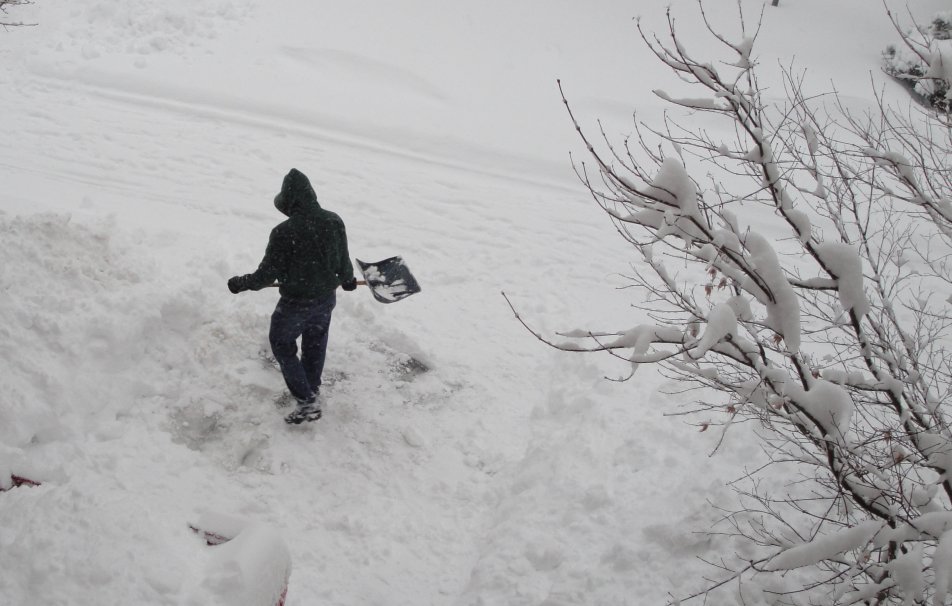
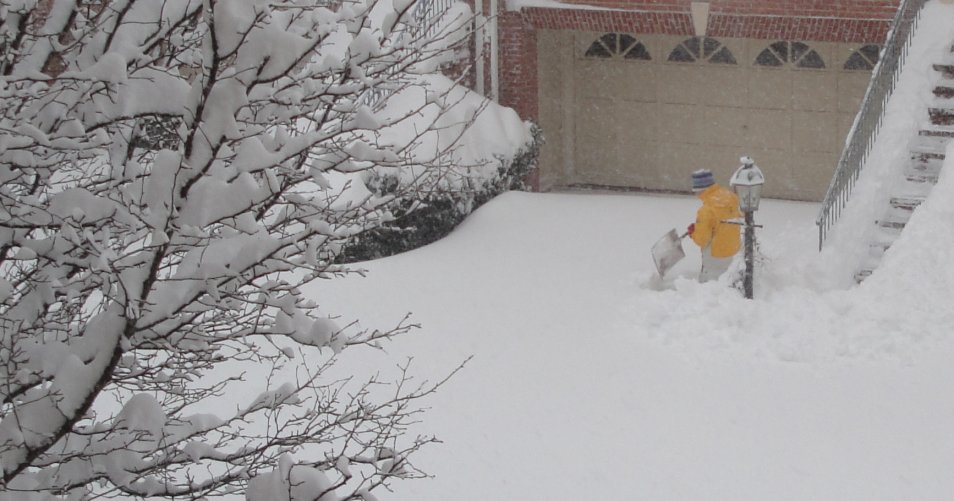
We didn’t have to go to work today. The government was closed. It will be closed again tomorrow. They already announced it. I am betting that the government will be closed on Wednesday too. We are supposed to get another foot of snow on Tuesday/Wednesday night. That will paralyze our Nation’s capital again. Below you can get an idea of the snowfall with the picture of our cross the street neighbor making a path.
We had around three feet of snow on the back deck. I was a little afraid that another foot of wet snow would cause a collapse, so I pushed most of it off. On the radio, they warned people not to overdo the snow cleanup and specifically not to push the snow off their own roofs. You should get a licensed contractor, they said. They featured some poor old woman who hired a kid to push the snow off her flat roof. She seemed to have good sense and didn’t really take it seriously. I suppose it is possible that somebody will fall off, but I think that risk is well worth it compared with the wimpy idea that you would have to get an officially sanctioned person to do that. Maybe we should bubble wrap ourselves before we go out. I don’t think they were talking about decks, but I felt offended anyway. I didn’t like the earnest way they seemed to care about my welfare.
Espen was stranded at home. They canceled classes at GMU today and tomorrow. We had planned to pick up Alex on Friday, but were snowed out. His classes were also canceled so he is hunkered down in the dorm, but he says he can get to the chow hall, which is open, so all is well.
I don’t recall if they ever shut down University of Wisconsin because of snow, although sometimes nobody was in class. I remember trudging to class through some very high snowdrifts. But the difference was distance. We walked to school and those that drove didn’t have to drive that far. Now they have to worry about a very wide metro area. Like all old guys, I think we were tougher back then. I also remember walking across the Mississippi River in Minneapolis when it was 25 below – real temperature not that wind-chill dodge. It was several minutes before I could get my frozen glasses off my frozen eyebrows.
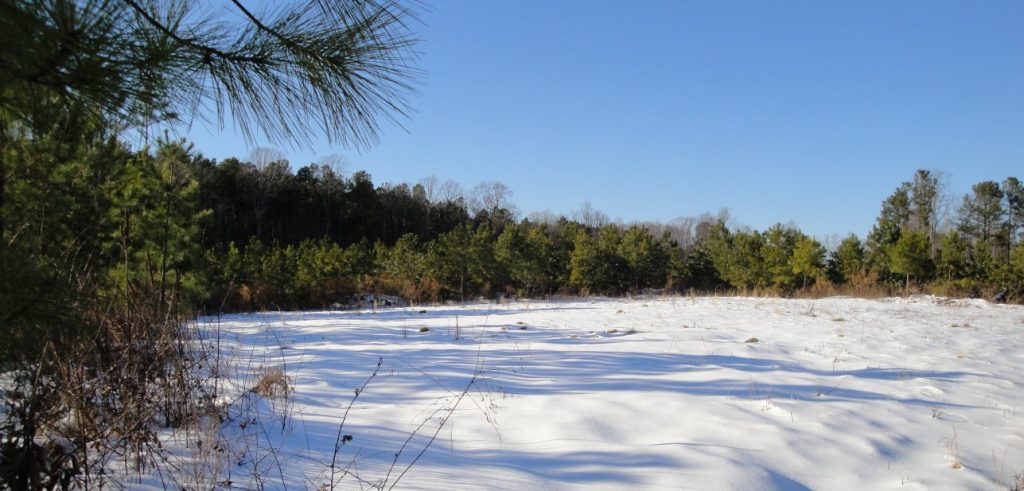
It is not nearly as cold here as it gets in Minnesota or Wisconsin but the snow piled all around is starting to make me feel at home. And it looks like it’s not going to let up for at least another week or two. We are getting a real winter here. Below is one of our meadows sleeping under the snow last week. It is piled higher now.
On the plus side there should be a lot of good soil moisture for my trees and clover and the cold weather will freeze out most of the southern pine beetles. Of course, none of my trees were infested before anyway. But I will really enjoy looking at the burst of green this spring in the wildlife pastures. The hard winter will produce a vibrant spring.
We rarely solve big problems; we just go beyond them, usually by redefining our goals and priorities and often by employing knowledge and technologies that were unavailable when the problem was initially defined. In other words, our vision of solutions for the future is often limited because those solutions have not been invented yet. We have a phase “overtaken by events” (OBE’D). It refers to facts, ideas or plans that are invalidated by subsequent events. Most problems are not really solved; they are just OBE’D.
Stuff happens sometimes for no reason we can understand
The future is uncertain by definition, but we have learned to manage risk. Our increasing ability to identify and manage risk is one of the too often overlooked foundations of our complex modern civilization but we never eliminate it and there are many situations where there is so much uncertainty that we cannot even properly assess the risk, i.e. figure out the odds. (I read a couple good books on this. I recommend “the Black Swan” & “Against the Gods.”) This is what drives people crazy. It seems counter intuitive to some, who seem to think that if we could solve our big problems if just worked hard enough and planned well enough. We things go badly wrong, they look to blame someone. Well, sometimes we just have uncertainty. Shit happens in ways nobody could have reasonably predicted and sometimes in ways nobody could have predicted at all.
Not all of this is bad, however. In fact it is mostly good. There are upside and downside surprises but in the long run the upside surprises are more important. Why? Even if the ups and downs are distributed randomly, we can apply human intelligence to adapt to them. Within broad parameters, the quality of our lives depends less on the good or bad luck we experience than on the responses we make to what comes along. We have to use an iterative approach that learns from experience and changes responses to changing circumstances.
Einstein was right when he said that we cannot solve problems with the same kind of thinking that we used when we created them.
O Fortuna velut Luna
The best system is not one that plans in detail for all the challenges but rather one that is robust enough to adapt to changing conditions and exploit opportunities, one that embraces the statistical nature of the future and takes advantage of it. We need more of a planning process than a precise plan. We cannot anticipate all the events but we can have processes in place that can recover from setback to adapt to changes. I think of it like a tool box and portfolio. In an uncertain world, you have to diversity and empower those closest to evolving events. This is how markets work, BTW.
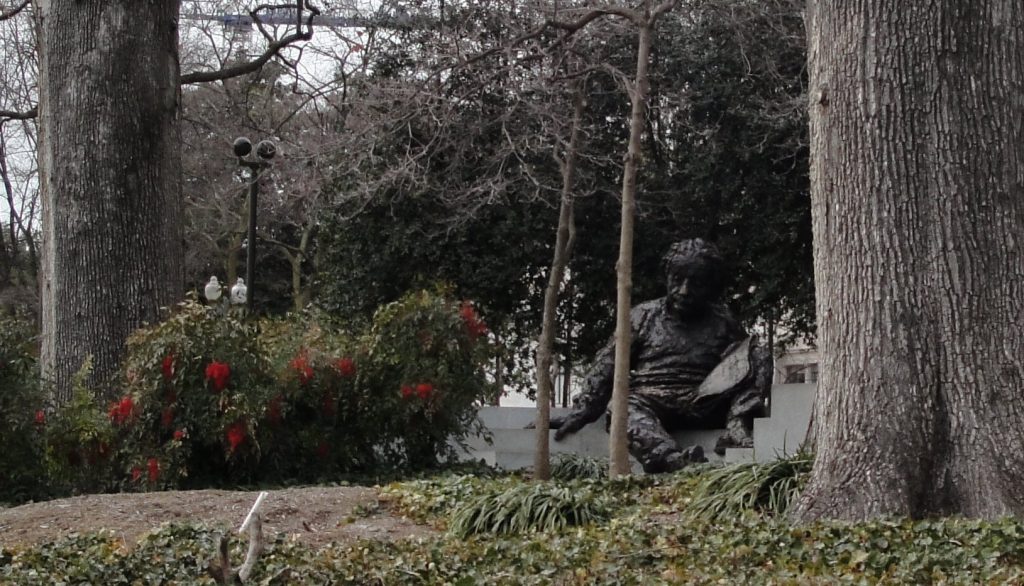
This is a harder sell than the dishonest or self-deceptive statement that you have anticipated and planned for all the eventualities. Most people crave certainty and they love those who claim to have it, even when they know or should know it is bogus comfort. We make systematic errors in the direction of imposing patterns of certainty where none exist. That is why we think clouds look like Snoopy or Albert Einstein. There is even a five dollar word for it “apophenia”.
Anyway the simple advice is to find or create adaptive robust systems that can survive downside shocks and move quickly to exploit upside opportunities, all the time understanding that the Lady Fortune’s Wheel never stops turning. (BTW I am thinking of this in terms of Boethius, not Pat Sajack and Vanna White) It can pull you up and down and some big things can come up pretty fast.
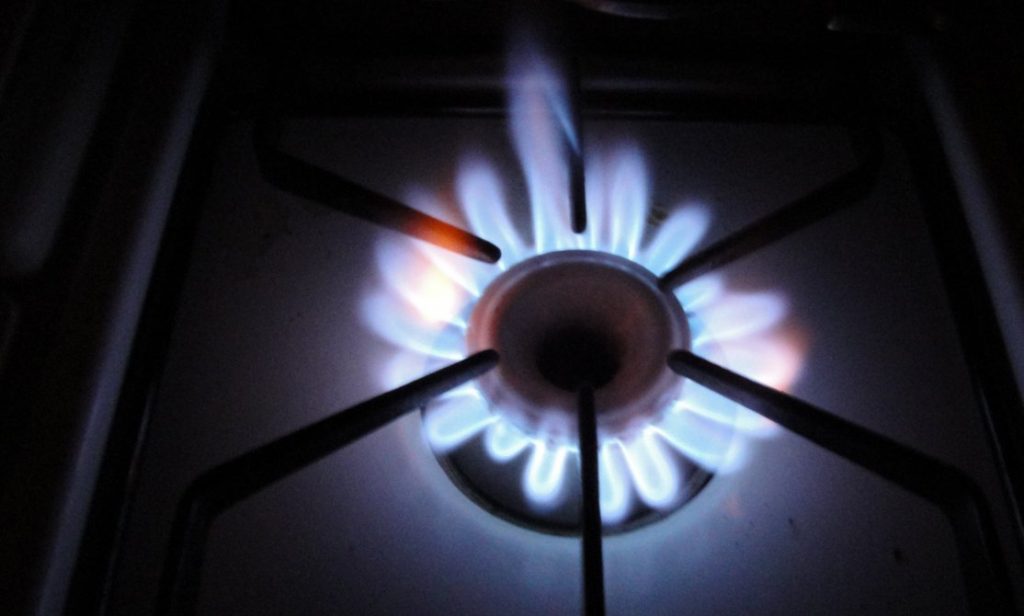
Now you’re cooking with gas
One upside surprise that is a real game-changer is the recent technological advance that allows us to get natural gas from shale deposits. In the last couple of years, we have made available natural gas deposits with more than the energy potential of all the oil in Arabia. A solution that was unavailable and largely unforeseen five years ago will change all our lives … soon. I wrote about this a couple of months ago as I drove through the Pennsylvanian coal – and now natural gas – country.
Natural gas is the perfect partner for wind energy, since gas plants can be turned on and off relatively easily. Wind is very good when it is blowing but it can cut off quickly. In other words, it is unreliable w/o backup. Nature gas is the backup.
Natural gas can help us squeeze oil out of our transportation network. According to the linked article, “the chief obstacle to developing a natural gas infrastructure capable of supplying service stations and highway rest stops is regulatory. If that is removed—and here we do need government action—we could expect to see trucks, buses, and cars running on natural gas in a relatively short period of time. The reduction in greenhouse gas emissions would be considerable.”
This new energy future will not only help us free ourselves from the despots who control most of the world’s oil reserves (it seems like kind of a divine joke that most of the world’s easy to get oil is under such regimes) but it will also reduce greenhouse gas emissions w/o the draconian measures contemplated just a short time ago. Natural gas is cleaner than oil and much cleaner than coal in terms of pollution and in terms of CO2.
So a problem that was intractable with the conditions and technology of 2005 could be party solved in ways that nobody really anticipated. But we have to use our intelligence to make an upside surprise into good fortune … before it is OBE’D or Fortune’s wheel takes another turn.
Experts have been saying that America is in decline since – even before – we became an independent nation. Kotkin acknowledges that someday these critics will be correct, but not today, and he paints an optimistic picture of our American future. America has a lot of advantages going into the next generation. It starts with demographics.
Americans still remember how to have kids; it is evidently no longer a universal skill
The U.S. is unique among developed country since we have a positive rate of natural increase. It is not very much above replacement level, but that is more than others, some of which are almost in free fall. America is also an anomaly in that in some of our suburbs wealthy, well-educated women sometimes have three or more kids. (I recall reading an article about the big families in affluent Loudon County next door to us.)
We also still get millions of immigrants. That means that the America is growing older slower than other developed countries and the American labor force will continue to grow through 2050, while others suffer greater or lesser proportional decline in their productive populations relative to their dependent ones. The interesting thing about his data was that it also shows that the world’s most populous country – China – will begin to suffer labor shortages (at least for skilled labor) very soon. The Chinese labor force will start to decline as early as 2015 (yes, five years from now) as a result of their perhaps necessary but draconian one-child policy. (Long term predictions are always tough, but by 2050 the U.S. labor force is projected to rise by 42%; China’s will drop by 10% and Japan’s labor force will decline by an astonishing 44%).
More old people, fewer young workers
This labor force decline will be accompanied by a big growth in the elderly dependent population, both in relative and absolute terms. The world has never experienced anything like this before and our lack of models will require adaptions we cannot fully anticipate. We are truly going where no human societies have gone before.
But America will suffer these declines later and less severely than most others. In addition, the U.S. has a very robust & adaptive economic system. National power is based on economic strength, innovation and demographic clout. Among the great nations of the last generation, only the U.S. will still have these elements in abundance in the next generation.
Managing genteel decline not the same as planning robust growth
This U.S. outlook contributes to disagreements with old allies. For example, the Europeans can also make demographic projections. They see that their populations will decline and their economies will grow much slower than ours. When your population will get smaller and your economy won’t grow much, you don’t worry very much about promising cuts in CO2. You need different policies if you are managing a genteel decline than when you are planning for robust growth.
The U.S. will change internally too. The growth of the last fifty years went mostly to the coasts. The next fifty years will see a return to the heartland. Kotkin doesn’t say that all the little prairie towns will be back, but space and affordable housing will draw people away from the coasts. He says that the whole idea of suburbs has become meaningless. There is more a blending of suburbs, cities and rural areas. Kotkin foresees what he calls an archipelago of villages. More people would be connected by new media in greener and less crowded communities. It sounds a lot like the Loudoun County communities mentioned in the article I linked above.
Today’s ethnic & racial categories will not mean much in 2050
Much has been said about the changing ethnic composition of the U.S. population and in 2050 the white native born population is projected to drop to around 50% of the labor force. But how significant will this be? Kotkin pointed out how foreign the large immigration of Irish seemed in the 19th Century. We just forget how different earlier waves of immigrants had been and how completely they have been integrated into our society. When my grandfather and his brother Felix came to the U.S., they spoke no English and probably had never seen an American before. There is probably no population on earth today that is so “foreign.”
The younger generation doesn’t really care very much about race, with vast majorities in favor of interracial marriage, so by 2050 today’s categories will be as meaningless as some of the national and religious distinctions made in our grandparents’ childhoods. In other words, by 2050 nobody will care.
Still some challenges and skills mismatched
The road to this bright happy future is not necessarily certain. We have a challenge of education, not so much college but technical. We might, in fact, be pushing too many kids into college when the more appropriate skills might be technical. Our community and technical colleges should be given a bigger role as providers of final or working degrees rather than way-stations to four-year colleges. Kotkin thinks it is just a problem of incentives. We reward careers in finance and law more than we do those who actually make useful things. If that changes, so will our career paths.
We have been able to import skilled labor, but that might be slowing. We have some competition now. Places like Canada & Australia are also pleasant and welcoming like the U.S. They are also “countries of aspiration” and they drawing in some of the skilled immigrants. There are also now more opportunities in many source countries, as people around the world reap the benefits of market liberalization reforms of past decades. Indian engineers, for example, now may have good opportunities at home.
The general pool of attractive potential immigrants is also shrinking, as birth rates drop even in those place that traditionally had very high rates of growth, such at Mexico and parts of Asia. A good example of what this pattern can look like comes from South Korea, which a couple decades ago sent millions of immigrants to the U.S. and now absorbs its own population growth, which is now much lower than that of the U.S.
We need more Engineers & plumbers and fewer leaf blowers & Lawyers
We Americans screw ourselves, however. Canada or Australia favor the skills their countries need. An immigrant with skills has a better chance of getting into those places. Our immigration policies give too little weight to the skills and education we can use in our economy. We are too “fair”. We don’t need to import any more unskilled labor or even worse – people who don’t plan to labor at all. We have the right to ask potential immigrants what they will contribute to our country. Besides the relatively small numbers of bona-fides refugees, we have no moral duty to admit anybody. As long as we will limit total numbers and we have a choice, we should choose the best and the brightest, not people we need to train before they can operate a leaf blower.
Unfortunately, unskilled labor can create its own demand. My personal complaint is against leaf blowing. That is usually a job that just need not be done at all and if unskilled labor wasn’t so cheap maybe we wouldn’t do it very often. You can learn to use a leaf blower in about thirty seconds. We don’t need more of those things. We are better off with people with useful skills. Some jobs – such as leaf blowing – are worth less than zero. I have discussed the value of doing nothing (with specific reference to leaf blowing) here & here.
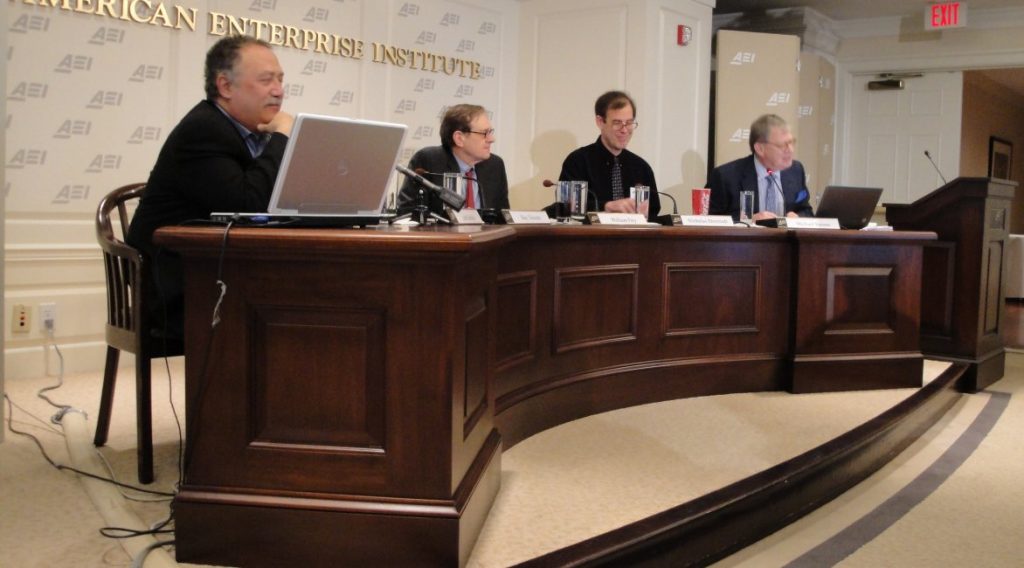
Anyway, the AEI event gave me something to think about. I will have to buy the book and read the details. I have to say – once again – that we are really lucky to have these kinds of events offered free or cheaply to anybody with the inclination to listen.
Today is Ronald Reagan’s birthday and I was trying to decide whether he was the greatest president of the 20th Century. I decided that FDR edged him out, but only because Roosevelt lived in more interesting times. Both presidents presided over inflection points in American history and both responded well to circumstances they faced.
After a while all presidents belong simply to the American people. That is why I can put Reagan and Roosevelt in the same category. The fact that Reagan undid many of the things Roosevelt had wrought does not affect the analysis. Roosevelt did things appropriate for the 1930s & 1940s, things that helped make American prosperous for decades. But nothing lasts forever and even the most effective solutions ossify and break apart with time. By the 1980s the appropriate thing for Reagan to do was change them. Solutions must be appropriate to the circumstances.
By the end of the 1970s, most people could see something was wrong. Stagflation was sitting on the economy like a raven. The old nostrums no longer produced desirable results. Even Jimmy Carter recognized this. It was Carter who deregulated important industries such as trucking & airlines. (Carter also did a lot to deregulate the financial industry. While we may see that as unwise now, it was appropriate for the times.)
But in 1980, Americans wanted something new and better, true change not mere adjustment. This is where Reagan came in. He was an immensely popular president, who actually won a majority in the three man race in 1980 and was reelected with nearly 59% of the popular votes when he carried every state except Minnesota. His opponents did not (and still do not) understand him. To them he was just an amiable dunce.
Recent scholarship has enhanced Reagan’s reputation as an independent thinker and debunked the disinformation of the time that Reagan was fed his lines, like the actor he had been. However, Reagan himself seemed comfortable with their assessments.
Like Roosevelt, whom Oliver Wendell Holmes described at a man with “second-class intellect” but a “first-class temperament.”, letting others underestimate him allowed Reagan to disarms, cajole and co-opt all those smart guys who would rather be correct than right. Now that we have access to Reagan’s hand written notes we can see that his ideas were based on his extensive reading and experience. He was a one man think tank, but he understood that there is no limit to what a man can do or where he can go if he doesn’t mind who gets the credit.
Ronald Reagan led a remarkable life. He was no child of privilege and his lifeguard job & diploma from Eureka College hardly impressed the elites. We can see the development of his character from his time as a New Deal Democrat, to the time when faced down communists in the Screen Actors’ Guild (Reagan was the only president who had been a union leader), to his getting to know the country as spokesman for GE, to his political career and election as president.
He was the right man for the times. Inflation raged at more than 13%. Unemployment reached more than 10% some months. The Soviet Union was on the march. Energy prices were spiking. The America we envision in our nightmares is what we actually experienced in the late 1970s and early 1980s. (We still have not reached those levels of unemployment and we have essentially no inflation at all.) Ronald Reagan’s presidency marked a turning point for our country. It really was morning in America. He was a great man and a great American.
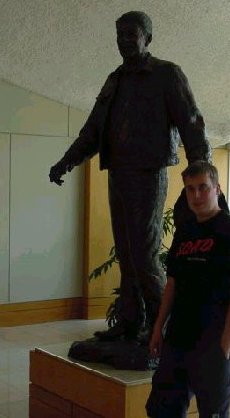
The photo, BTW, is Alex in 2003 with a life-sized statue of Ronald Reagan at the Cowboy Museum in Oklahoma City.
I gave my staff the option to telework today, anticipating the dreadful white monster said to be slouching toward us and expected to blanket Washington with 16-24 inches of wet snow by tomorrow morning. (The record snowfall in Washington is 28 inches, set in 1922. If you want to follow the storm’s progress the hashtag is #snowpocalypse.) I did that yesterday morning. Soon after, we got a notice telling us that telecommuting should be encouraged. Good. Now we got a further notice telling us that the government employees will get four hours early dismissal and this goes for teleworkers too. Not good. I know this is done in the spirit of fairness and of course we will comply with the directive. I know that I will sound like a scrooge, but it really doesn’t make sense.
Presumably we are giving people four hours off so that they can flee the confines of Washington before they are frozen in place by the fierce winter storm. This is smart, especially around here where we are dependent on transportation systems that seem especially sensitive to weather. But our telecommuting decision has already addressed that problem for those working from home. They are already safely hunkered down in their warm cocoons and don’t need those four hours to come safely home. If it were up to me, I would just let them work the full day.
I have long been a supporter of telecommuting and encourage it to the greatest extent possible. I fought to protect and extend telecommuting when I ran the IIP-Speaker office and have written in support. It is good for morale, the environment and productivity where appropriately employed. But telecommuting is one of those things precariously balanced on a slippery steep slope and it starts the downward slide to perdition when it transitions from being a mutually beneficial working arrangement to a type of defined right for an employee.
Social pressures weaken when employees are away from their bosses and colleagues. Working alone requires a lot more self-discipline than working where everybody can see you. There is significant temptation to use telecommuting as a type of semi-vacation day. That is why telecommuting is not for everybody and why it can never become a right. A few people will abuse it and – sorry for the cliché – ruin it for everybody. Managers have to maintain an arbitrary power over telecommuting, i.e. we have to have the authority to call telecommuters at a moment’s notice and change or assign different work. It is also important to specify that if telecommuters cannot do the work from home, they must make other arrangements. In other words, you cannot claim equipment failure as an excuse. The telecommuter has MORE responsibility at home than he/she has at work. Responsibility is a price of the freedom and flexibility of telework.
I have a simple kind of karma rule for life. If things are not too big a difference, I call them equal. My analogy is the vending machine. If I put my money in and the machine rips me off, I don’t complain. On the other hand, if it gives me too much change, I don’t try to give it back. It is just too much effort to care very much and if you care only in one direction, you are being dishonest.
Work and trust are similar two-way propositions. I don’t complain when co-workers take a little extra time at lunch and don’t expect complaints when people have to stay a little longer to finish work. As a worker, I am actually in favor of leaving a little more on the table, i.e. I try to put a little more effort in than I think I “need” to. Since I assume that I overestimate my contribution (as we all do) this probably makes it objectively about fair. Most people are okay with that, but there are always a few bad apples who try to take as much as they can and give back little or nothing.
I learned these things from hard experience, BTW. I will give one example. A few years ago, I couldn’t get in touch with one of my telecommuters for a couple of days. When I finally found him, he told me that his phone and computer had gone down and thought that was a good excuse. When I asked him what he had done during those two days, he just repeated that he had been unable to work. I think he was lying about the phone and computer, but that didn’t matter as much as the demonstrable result that he didn’t work for two days. I made him take those two days as annual leave and took away his telecommuting privileges until he could guarantee that his equipment would work. There was much gnashing of teeth and some people thought that I was unfair and arbitrary. I would say it was indeed arbitrary, but it was very fair. I further believe that if managers ever lose the power to be arbitrary in this manner, that telecommuting is doomed to become something like those jobs in the old Chicago political machine, where people showed up for their city jobs only to collect their paychecks.
Returning to my original thought, there is no reason to give telecommuters four hours off. This would be an excellent opportunity to demonstrate why telecommuting is such a good thing. As I wrote in the original linked posting telecommuting makes our organization more robust and less susceptible to the caprices of nature. We should revel in that, savor the success, not throw it away in a misguided show of magnanimity. It violates the social contract and just doesn’t make sense.
This year has been especially cold and there has been more snow than usual. The snow in December filled and exceeded last year’s whole year averages. It looks like we are going to fill this year’s quota by the end of next week.
Northern Virginia does a good job of keeping the streets clear – too good, IMO. The snow is supposed to start tomorrow morning, but the crews are out already “pre-treating” the roads with salt so that the initial snow falls will melt and there won’t be that crust when the plows go through.
Of course, Virginia has a kinder climate. The temperatures might drop below zero after a snowfall in Wisconsin or Minnesota. This literally freezes in ice and snow. In Virginia you can be pretty sure that it will get fairly warm soon enough after even a heavy snowfall the warm sun will hit the road surface and melt off whatever the salt and plow missed.
Nevertheless, the thought of snow fills Washingtonians with dread and makes them question their very survival. I went to Safeway today for routine shopping. The place was packed and people were stocking up on necessities. One old guy scooped up a dozen packages of baloney. Bread was gone. As you can see in the picture, we managed temporarily to produce Soviet style conditions.
It is silly. In the worst case scenario the snow will tie us down for two days. Even then, the paralysis will not be complete. Who in our modern and prosperous society has a cupboard so bare that he cannot go for a day or two w/o shopping. You can actually go longer than that w/o eating at all and I have not seen many people these days who couldn’t live off their fat for longer than that.
The lines at the checkouts were long. I got into a line that was for the self-checkouts. I didn’t want to use them because I had a fair amount but I also didn’t want to get into another line, so I did my own. It was a problem. I use my own shopping bags. I got them ten years ago and they are still like new. They are much easier to pack and they are eco-friendly. As I recall they are made from recycled plastic from old bags. But they make life hard at the self checkout. The self checkout wants you to use their bags and gives you a hard time if you don’t. It also evidently weighs your purchases and when I put a new bag of my own on the scale, it thinks I am stealing something. I felt sorry for the people behind me, but people were cheerful despite my ineptitude and the dread of snow. The clerk had to reset my counter a couple of times, but I got through.
I first became aware of Todd in the 1980s when I was assigned to Brazil. Those were still Cold War years and despite – maybe because of – glasnost the KGB was particularly active in spreading lies and planting stories in media worldwide. I had to address lots of Soviet disinformation in the my local media. Todd’s information helped me smack down at least some of the silliness.
Especially troubling and pervasive was the story cooked up by the by KGB that the U.S. had created the AIDS virus as a bioweapon. The story still resurfaces from time-to-time. It was fairly easy to debunk, since there were so many inconsistencies in the time-lines and the biology involved, but most of those who pass along conspiracy theories are not very bright or they are malicious, so that facts have less impact on them than you might imagine. Nevertheless debunking these things early and often limits their spread. It is like pulling weeds in a garden. It is not much fun and you are never done, but you have to do it.
Read the paper. Todd discusses why and how rumor spreads. Of course, false information often proliferates in the same ways that accurate information does and we have to be self-aware enough to understand that much of what we believe at any one time is not accurate. So just thinking about these things in the way Todd does is a useful therapy for the hubris that we self-designated smart guys (wise guys?) often suffer. It is also useful to recall that false information often seems to make more sense than truth, since the lies can be modified to make a more coherent narrative.
There is a consistent human tendency to believe that big results must have had big causes. When a great leader is killed by a lone-gunman, we almost instinctively inflate the assassin to the size of his target. This kind of mental matching is usually unwarranted and it is not harmless, since it elevates little villains to iconic status and helps make political violence more successful.
Anyway, I will pass along to Todd any comments you want to make. It is worth reading his paper.
I am listening to a great “Teaching Company” series on Western Literature. (BTW – you never have to pay full price for these things. They always go on sale.) Western literature traditions are a little out of style these days, which is a shame because the great literature really does speak to us across the centuries. A good education has to include some knowledge of the classics and nothing can become a classic until it has been well-known enough for a long enough time to influence thought and literature in a broad sense. In other words, no matter how great something written a couple of years ago may be, it cannot have the power of older literature. Maybe it is a future classic, but it is not a classic yet.
Literature extends influence beyond the grave
The guy giving the lectures explained that literature is a way of talking to the dead and getting an intergenerational perspective. I was thinking about that as I drove down to the farm last weekend. I was listening to “Infotopia,” by Cass Sunstein. He was talking about markets, in the broad sense to include markets for attitudes and ideas and how they aggregate the opinions and attitudes of many minds. Literature is like that. He mentioned that the great economist Fredrick Hayek had contended that traditions are a type of market too and you have to be careful changing established relationships, since they are essentially long-term distilled experience, a record of how people adjusted and adapted to problems over the years. Edmund Burke made a similar observation about morality. I did too. When I wrote my note Found in Translation I didn’t directly recall my literature professors or Hayek or Burke, but don’t doubt that is where the ideas originated. One of the benefits of a liberal education is that you learn all these things and if they sink in early enough and deep enough you come to think of them as your own. There not any really new ideas; just restatements of and new compilations.
Reformulations
The funny thing is that those w/o the “useless” liberal education often believe they thought them up for the first time. And they often get away with it. Many best-selling authors and highly paid speakers recycle old stuff. I suppose they sometimes do it consciously, other times not. You tend to get the classics in the watered down version. I remember reading the science fiction “Foundation Trilogy” by Isaac Asimov. I recognized it back then as a allegory of the fall of the Roman Empire. What I didn’t get at the time was how closely the second foundation tracked with Boethius on the consolation of philosophy. Asimov was an educated man, so I think he did it on purpose. Generations of Sci-Fi fans have essentially read Boethius.
BTW – I first came met Boethius way back in 1975. You can go through college w/o ever coming into contact with him at all, since he has largely “fallen out of the cannon.” I got to know him when studying Chaucer. Boethius was a much bigger deal in the Middle Ages than he has been more recently and if you study the philosophy surrounding Chaucer’s writings, you run into Boethius. I mostly forgot about him for the last … oh thirty years. I was reminded of the details of his death by the audio program. It was dreadful, but I guess it helped secure his position as a martyr. After he fell afoul of the Ostrogoth King Theodoric and was executed by having wet leather straps wrapped around his head. The straps contracted as they dried and crushed his brain. It must have been very unpleasant and it is an example of man’s inhumanity to man. What kind of guy even thinks of that? I mean really, was there a bunch of guys sitting around thinking of novel uses for wet leather straps and ones gets the eureka moment? Well, hey, we can use these leather straps to wrap this guy’s head.
Old literature and new persuasion
I am thinking of “new” media and the arts of public diplomacy persuasion in my last couple of posts, since I am doing the FSI course on that subject, but I think this fits right in. Consider the persistence of influence of great literature and how it is so useful to have a compete repertoire of literary images, motifs and metaphors. After all, not only are they time-tested but they also lurk in the subconscious of our culture waiting to be revealed. It is a good lesson in this ostensibly fast-changing world that some things move slowly but have profound influence and create sustainable structure and technologies of the mind.
And the delivery mechanism is very much new media. I get these lectures over the Internet and download them onto my I-pod. This I-pod is smaller than a matchbox, yet can probably hold a full college curriculum of courses and lectures, along with supplementary texts. Sweet. But how does that delivery method change how the classics are received and how about who receives them? An old guy like me is unlikely to get them from a college professor standing in front of him. The whole relationship to knowledge is changing. That is new media.