Rain Dancing

Sometimes there is nothing you can do, but everybody expects you to do something. That is the time for the rain dance. Put on a good show, create a lot of sound & fury to keep people occupied so that they will keep you around long enough for things to improve, so you get credit. Politicians are master rain dancers, butt all of us have done a few. Sometimes you just have to be seen to be doing something.

I have been reading a book about real rain dances, called Floods, Famines and Emperors:  El Nino and the Fate of Civilizations.  The author talks about the various times when climate change caused civilizations to thrive and crash.   One chapter talks about the Pueblo of the Southwest.  (I think that is where the term “rain dance” comes from, BTW.)  Their population expanded during relatively wet times and then their populations starved and dispersed during when the same Medieval warm period that brought prosperity to Western Europe brought droughts to Southwestern North America that lasted decades or centuries.  Changes always bring winners and losers.

The author Brian Fagan says that a lot of early civilizations were based in part on the implication that priests and rulers could control the weather. Their activities to do this ranged from the merely wasteful to the downright gruesome.  A lot of complicated rituals and ceremonies were designed to do things like make the Nile flow or bring on the season rains.  The ancient Maya seem to have based their belief system on the need to capture, humiliate, torture and kill people from neighboring areas in order to sacrifice them and appease bloodthirsty gods who otherwise would bring drought and destruction.  They left some nice pyramids, but living through in those times must have been like being a minor character in a endless horror movie.   Unfortunately, these kinds of superstitions were the rule and not the exception in pre-scientific societies.

At our safe distance, we sometimes think of these superstitions in the benign fairy-tale sense of an enchanted forest full of fairies, elves etc. But think of how horrible it would be if you really believed it. The pre-scientific world must have been a frightening place. Everything you did could offend some spirit or nymph, so you needed to turn to shaman, witch or priest to protect you from capricious nature, which they (and you) attributed to benign or malevolent intelligence that had to be mollified.  

Some ritual had to be performed, but nobody was ever was sure if they worked.  Of course, they didn’t work but sometimes they might look like they did. If I do ceremonies to make it rain, and it eventually rains, I take credit.  A smart shaman probably had an intuitive sense of probability, so he did his rituals at times when things were moving in the right direction. You can see how the shaman might have added some value by his experience, on balance, however not. 

I suppose superstition is a step toward science. Alchemy led to some real discoveries about chemistry and physics. Astrology gave us some of the tools later needed by astronomers. 

Superstitions are an attempt to put some planning and order into an unpredictable world.   The problem is mostly based on mistaking correlation for causality, poor record keeping and the evidently natural human propensity to see patterns that don’t exist. Superstitions are a kind of distortion of reason, but they can be ostensibly reasonable.    

Of course, we still do rain dances too. The world is still an unpredictable place.

Anyway, I recommend Floods, Famines and Emperors. A lot of his ideas seemed very familiar, but I didn’t put it together until I started writing this that I had read one of his earlier books called The Long Summer.  It is still sitting on my bookshelf. These books help put the climate change debate in its historical perspective. We have been here before and maybe some perspective on how earlier climate changes affected earlier people may help us in the future.

Old Men Forget: Yet All Shall be Forgot

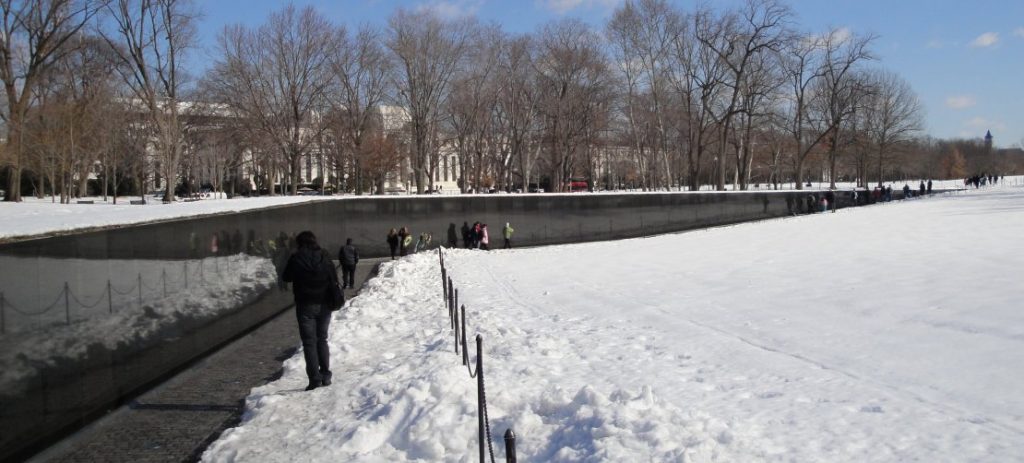
Above is the Vietnam Memorial.  There was a bunch of grade school kids visiting the place and I heard them talking. They have no personal connection with a war that ended a quarter century before they were born.  It is almost as remote to them as World War I was to me.  It is not their war, nor even their fathers’. Vietnam is something their grandfathers may have experienced. Funny how fast time moves and how the defining events of your life are just history now. 

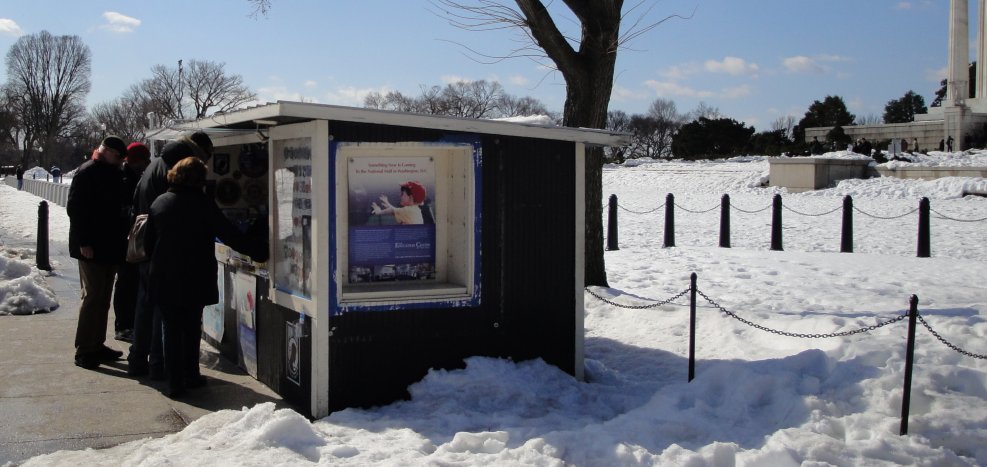
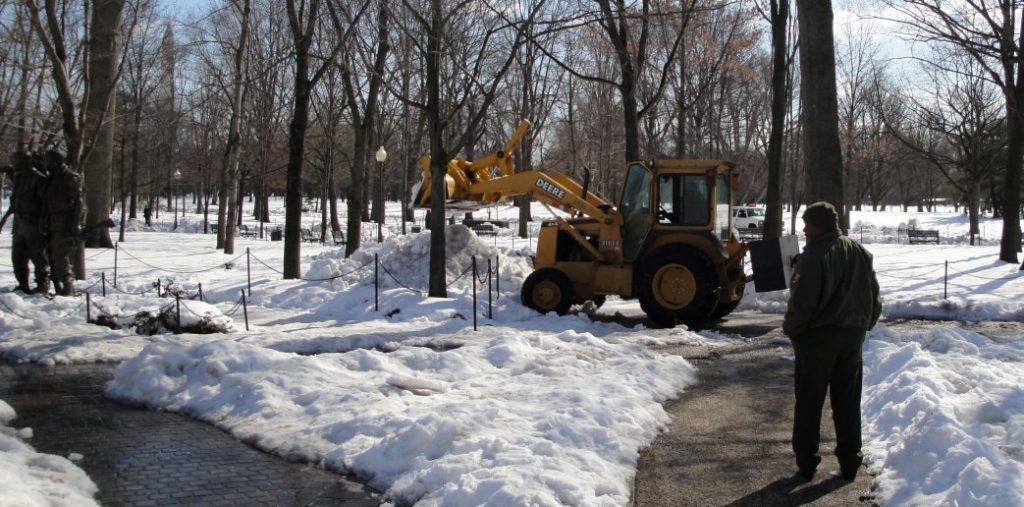
Above is the MIA booth.  They sell mementos, medals and patches.  Below is snow removal near the Memorials.

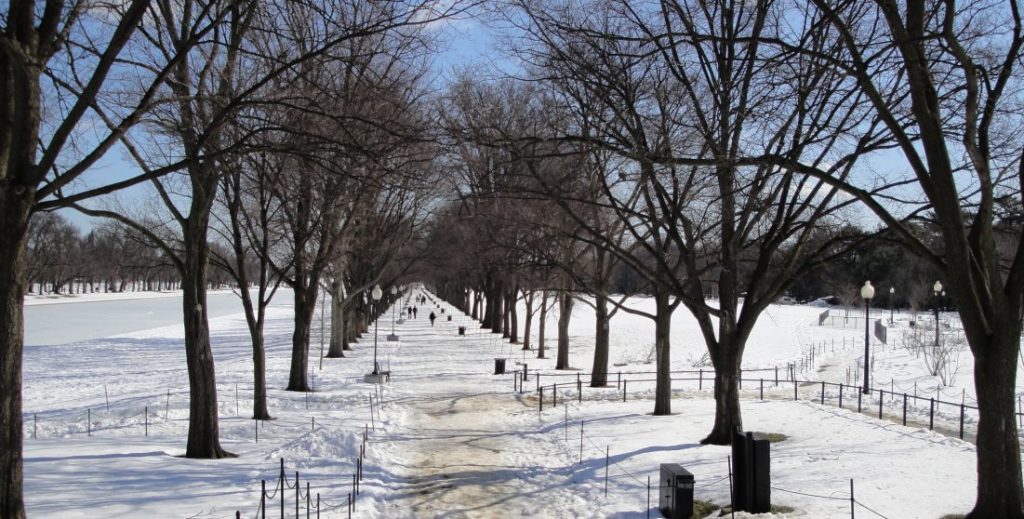
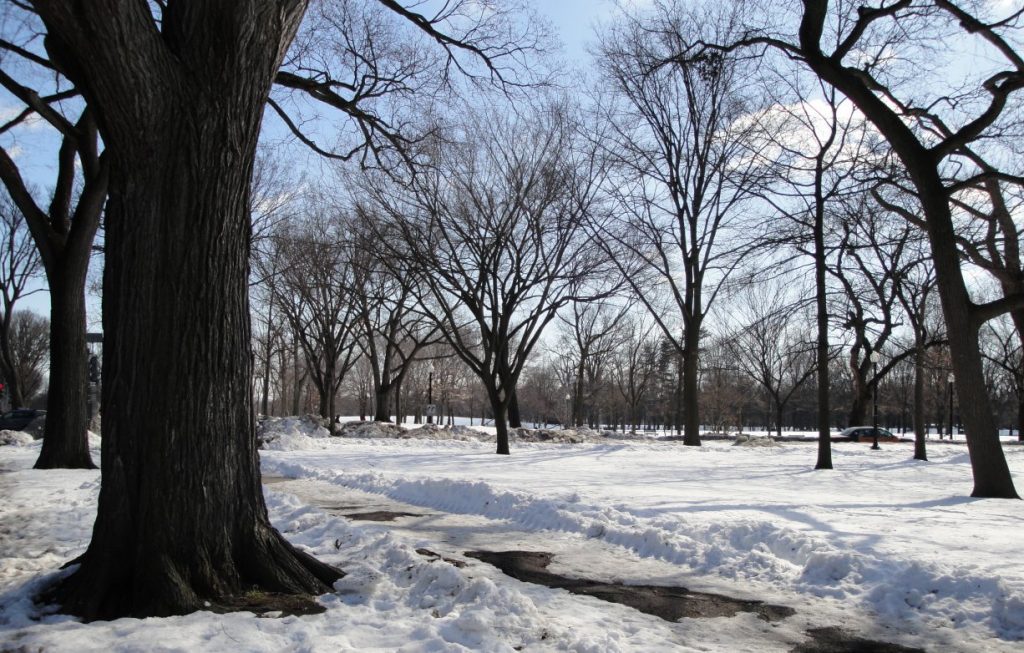
Below is the path along the reflecting pool going toward the Washington Memorial

Pedestrians get no Respect

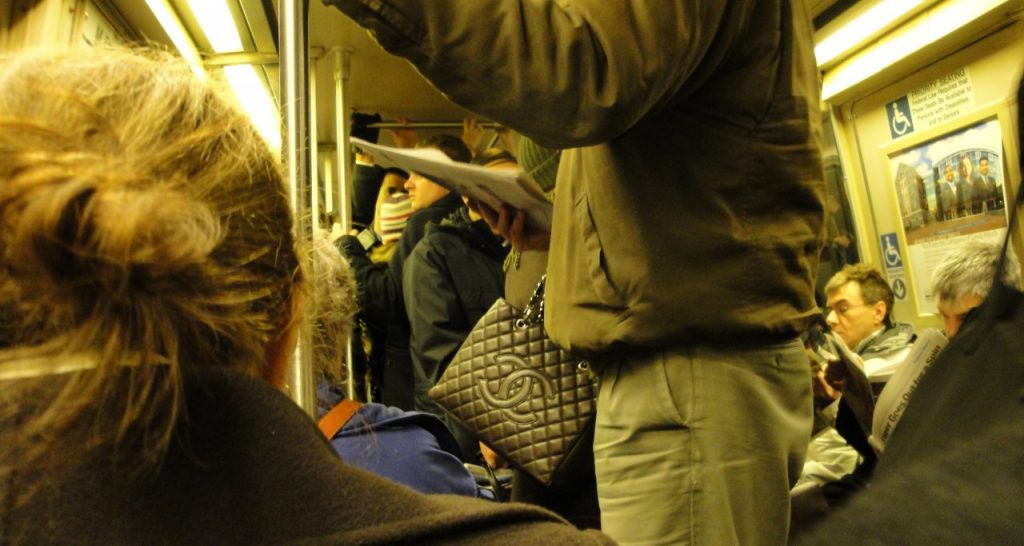
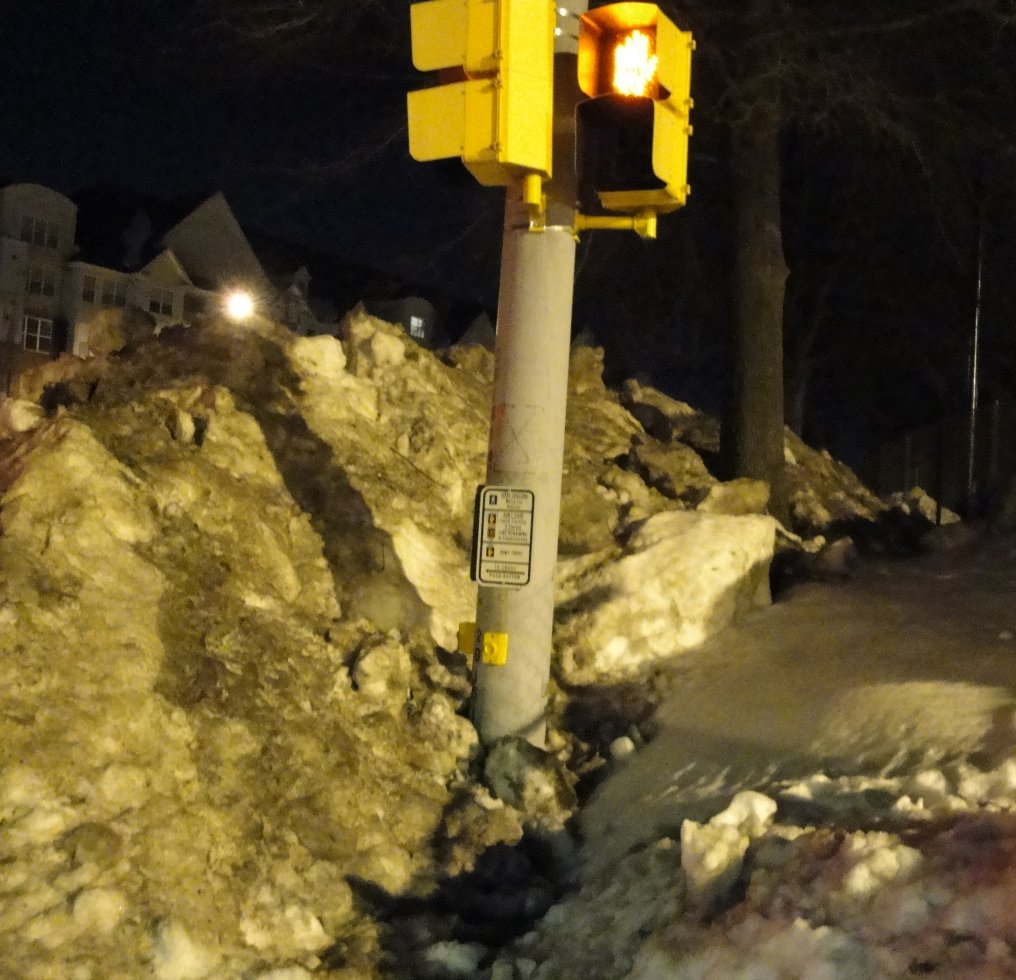
Above is the crowded subway car on the Orange Line. I usually get a seat, but lately they have the cars have been more crowded.  They are raising the price of fare by a dime, but will probably also still cut service. Below is the sidewalk on the way to the Metro stop.  They take care of the roads fairly well, but that means eight foot high banks of snow.

Washington Snow Cone

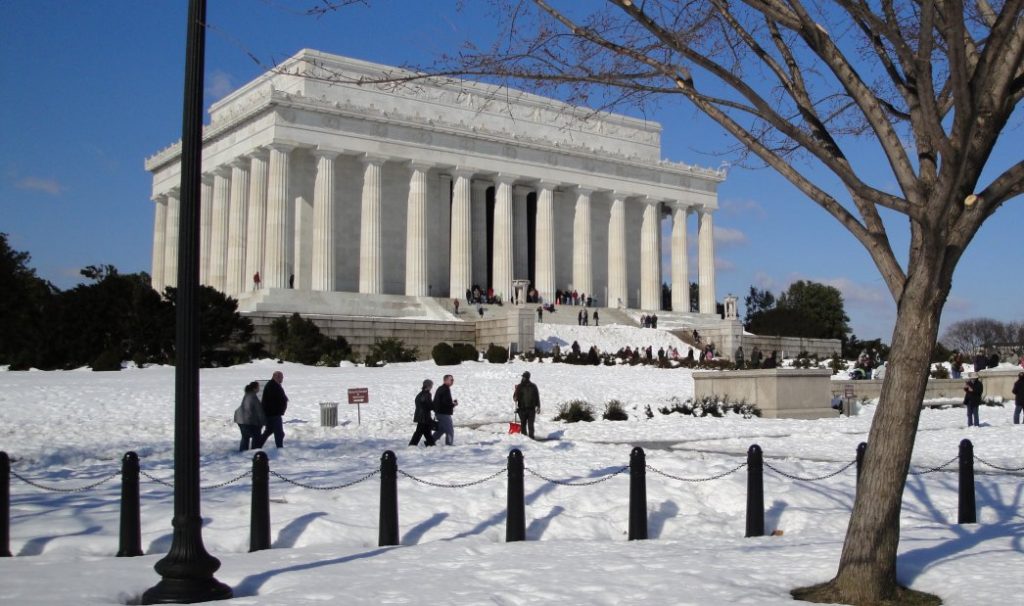
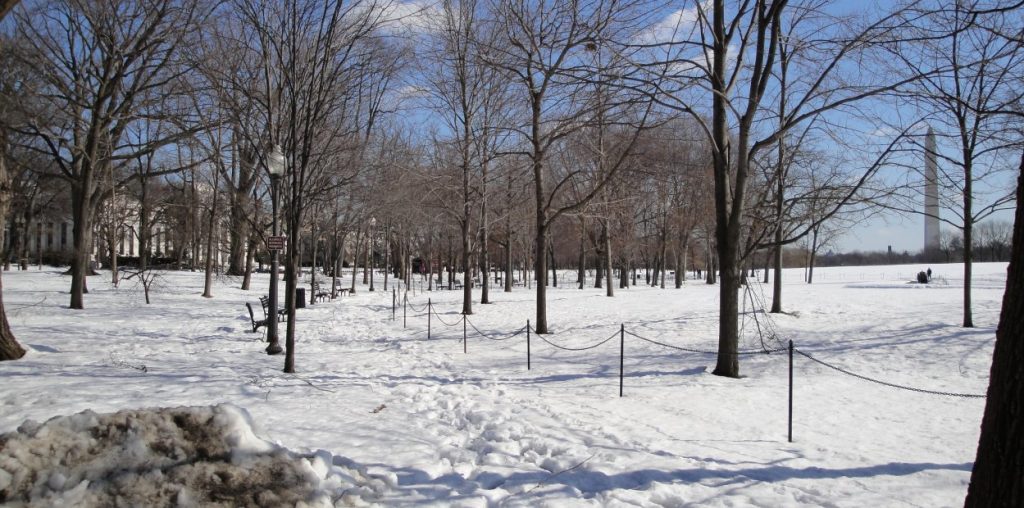
Washington is under more snow than any living person has seen and this has been the longest time ever when my running path were snow clogged.   But Washington is pretty in the snow, as the pictures show.  

It was warm and sunny today and the snow has the consistency of a snow cone.  It will take a few more warm days to melt it all off.

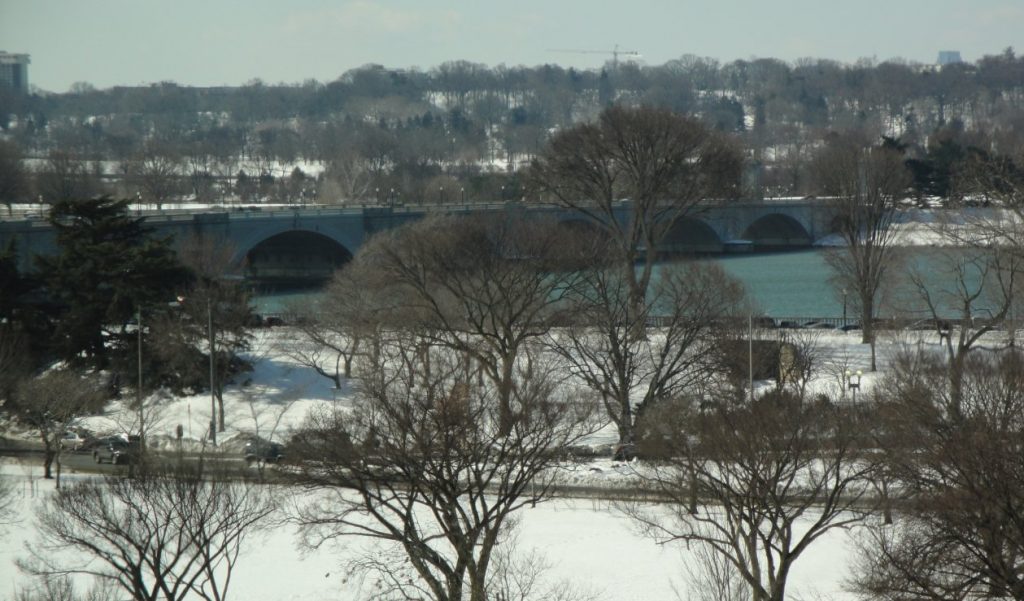
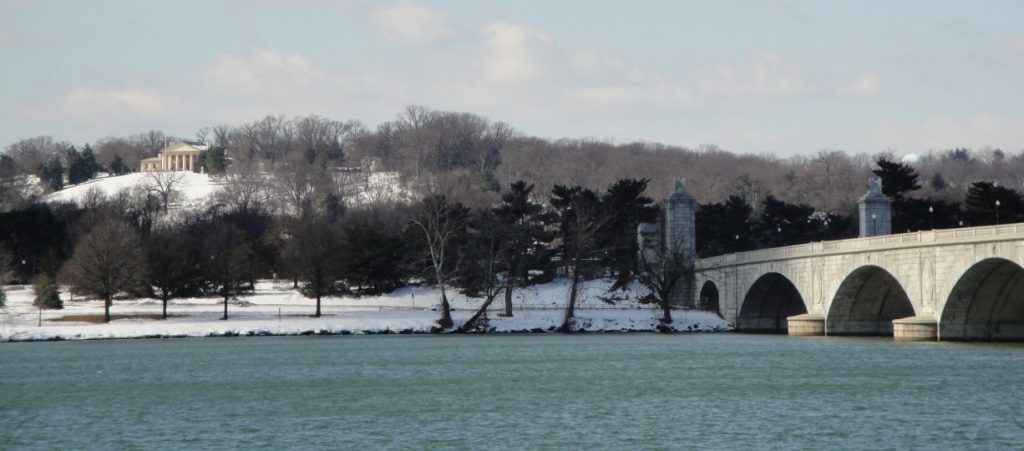
Above is the Lincoln Memorial.  Below Robert E. Lee’s house and Arlington Cemetery from across the Potomac.

Below is the snow covered running path near the Vietnam Memorial

Equality v FAirness

The concepts of fairness and equality significantly overlap, but they are not the same. A recent study showed how people’s perception of fairness of equal outcomes varied depending on what rewards were being offered. It seems that most people think equality is fair up to a certain level; after that treating unequal contributions equally is unfair. Modern philosopher John Rawls in his theory of a “hypothetical contract” argued we could imagine a fair society if we imagined a situation where all of our individual identities were temporarily unknown. What rules would we all set up if we didn’t know what role we were going to get to play? This kind of analysis is bound to produce equality and you can see this kind of thinking at work for SOME things.

The sun also shines on the wicked

People tend to believe in equal distribution when they believe rewards are random or unearned. That makes sense to me too. If you cannot make reasonable distinctions, your best course of action is to treat everybody equally. People are even more generous with things they don’t feel they earned. The best time to ask for a loan is after someone has come into an unexpected windfall. Do the thought experiment yourself. How different would be your response to a friend asking for ten of dollars if (1) you just found $100 on the ground or (2) you just spent 12 hours washing dishes to earn $100 (maybe $60 after taxes and fees)?

And think of how much more generous you could be if it wasn’t even yours. I remember as a child, friends would sometimes let friends skip in line … but almost always in BACK of them. No cost generosity can be appealing.

So people believe that fairness is pretty much the same as equality when rewards are random. They also tend to believe in minimums. Few people think it is morally wrong for a starving man to steal bread from someone who has more than enough. It is interesting to consider how the evaluation changes when one starving man steals bread from another starving man. Most of us believe in basic equality, i.e. some minimum level.

Outside games of chance, the world offers few examples of complete randomness.

After that, fairness and equality diverge and their fairness requires unequal treatment of unequal inputs. It is a very imperfect calculation. There is a lot of random chance involved and that makes judgment more difficult. And it was difficult already, since the amount contribution might be hard to see. The contribution of someone who thinks for a couple of minutes and then makes the effective move might be worth more than someone who struggles all day doing the wrong things.

We also come against the problem of previous expertise. There is the story about the man who locks himself out of his house. He calls the locksmith, who wisely quotes a price of $50 BEFORE solving the problem. After they agree, the locksmith takes out a little hammer, whacks the lock and it opens.

“Fifty dollars,” the man complains. “All you did was hit it once. I want an itemized bill.” The locksmith hands him a bill – “$.05 for whacking the lock; $49.95 for knowing how to whack the lock.”

Those least able to make meaningful distinctions tend to favor equality of outcomes

It is no coincidence that the love of equality is most ardent among the young. They have not yet had much of a chance either to earn anything or see anybody else earn it. With experience comes a greater appreciation for fairness. Interestingly, the young tend to believe in economic equality, but can be ferociously unequal in other ways. The degree of social stratification among teenagers is something most adults never see. You can see what they think more about and what they know more about.

A modern society makes it harder to judge fairness too. In an agricultural society, everybody’s efforts were literally on view. Laziness or ineptitude would show up in a farmer’s crops. If there was bad luck, such as weather or unexpected bugs, everybody would be aware of that too. A man who worked hard only to have his crops destroyed by a hail storm clearly deserved help, the drunk that never bothered to plant at all, not so much.

Did the ants marginalize the grasshopper?

The old fable of the ants and the grasshopper appeals to an agricultural society. Retelling in our contemporary context often has the grasshopper saved by the generosity of strangers. I am sure there is a version that taxes the ants to pay for the grasshopper’s welfare and criticizes the narrow-minded, if hard working ants, for their insensitivity to grasshopper culture.

People are much more willing to tolerate suffering in themselves or others when choice is involved. Physically hard work is less common than it used to be, but people are willing to put themselves through grueling physical suffering in pursuit of sports. Nobody feels sorry for the Olympic Marathon runner, but imagine if someone was forced to go through that much agony to earn a daily living. The difference is choice

I liked (and still like) to drink beer and on some occasions have consumed enough to suffer severe “flu-like” symptoms the next day. Chrissy makes no attempt to mitigate my suffering and in fact boldly opens drapes and stomps around the house in the early morning (i.e. before 10 am) hours. Her behavior is very different if my flu-like symptoms are caused by actual flu. What causes the difference? Choice.

It is just plain cruel to punish someone if he has no choice and cannot change his behavior. On the other hand, if someone can choose, it makes sense not to protect him from the consequences of those choices. In fact, allowing someone to persist in error when he has the capacity to change is a morally questionable and cruel thing to do. Should you let a child walk into a fire because he is fascinated by the flame?

This is the moral hazard of insurance. Insurance is great to the extent that it spreads the risk of random events so that no individual is destroyed by bad luck. However, if individuals start to engage in riskier behaviors BECAUSE they can take advantage of others through insurance, you have a moral hazard as well as higher system-wide costs.

Free will or determinism

I think that current debates between liberals and conservatives often come down to the age-old debate about freedom and determinism. You can see it in the way they use language. Consider the case of the drunken farmer reference above. When asked why the fields went untended, a conservative might say something like, “He just wouldn’t stop drinking long enough to do the work,” while a liberal might say, “He was unable to stop drinking …” or even “He didn’t get the help he needed to stop drinking ….”

There has never been a definitive answer in the free will debate. The most nuanced approaches talk about free will exercised within the limits of constraints, but this just moves the discussion argue about the height of the walls of the constraints.

Somewhere between stimulus and response is a choice

A poor man might have fewer opportunities than a rich one, but how much is his behavior DETERMINED by his poverty and how much exercise of free will does he have? Nobody has complete freedom and nobody accomplishes anything completely on his own. But we are not animals. Somewhere between the stimulus and our response is a region of choice.

It is not always bad to start off or be economically less well off. For example, I am happy that I grew up in modest means. It has made my life easier in the respect that I didn’t have to “live up” to a high standard of the previous generation. Some of my richer friends have never escaped the shadow of their parents’ wealth, and it seems to fill them with anxiety and guilt. They might have really nice baggage, but maybe it is better not to have to carry it all.

The bottom line for me is that it is not unfair that some people are rich and others are poor. My own prejudice would be for some limits, so that we could relieve existential poverty and I believe that great wealth is morally corrupting, especially great unearned wealth. But that is just my prejudice.

I think there is a moral hazard in wealth redistribution. The test for me would be sustainability. If “society” can “invest” in you and there is a reasonable chance that this will help you become a productive and independent citizen who will someday make contributions (not only economic, also social, artistic etc.) in excess of the investment, it is the right thing to do. You have the choice not to play in this game, but others should have the reciprocal choice not to give to you. In other words, nobody should have the right to make demands w/o offering something in return.

Reciprocity is one of the basics of civilization

Most of us do not expect perfect reciprocity in every transaction, but you expect something. If you are generous to me today, you might never expect something back from me specifically to you, but you do expect that I will at least be grateful and/or be generous to someone else in the future.  Remember that movie “Pay it Forward”?

Freedom is more than another word for nothin’ left to lose

We have choices. We often call the sum of our choices “freedom”. Sometimes people ask what freedom is good for and we might try to answer that it helps create wealth or that we can help the poor more etc. It does these things. Free countries tend to be richer, cleaner and generally more pleasant. But freedom is not the means to a goal. Freedom is the goal for which we are willing to sacrifice other things. If we created a perfectly “fair,” “just” or “equal” society at the cost of freedom, which includes the freedom to succeed and the freedom to fail, we have accomplished nothing.
Empowering Posts

I was cleaning out my old files and I discovered this.  I wrote it last March, but it makes sense still.  In fact, it makes more sense to me now that I have experienced Washington’s reach and as I anticipate going overseas again.  I post it in unedited (since March 27, 2009) form.

We inevitably have a Washington perspective when we live in Washington, but we have to work to get beyond it because it is more dangerous than ever.   The new media gives us tools that can reach anywhere in the world in seconds.  We can bypass gatekeepers and some of them deserve to be bypassed.  But we can also bypass friends.  I am thinking of our colleagues in posts overseas. 

It is temping to just get it done; pass that information; make that connection.   We CAN do it and in making a direct connection from Washington to the journalist or blogger in the field we undoubtedly improve the short term efficiency and effectiveness of our information operation.  But this short term success comes at the expense of damaging the system that makes us effective in the long run.

When you look at the whole system, you quickly realize that the main product of a public diplomacy operation is not information.   Information is nearly free in today’s interconnected world and there is very little that we can give anybody that they cannot get somewhere else.   If information is not the key, what is?  The answer is relationships.  We are working to build relationships of trust and reliance.   Our relationships are what makes our information stick and helps put it in the proper contexts.   Our relationships are the basis of our reputations.   The connections count.

From Washington we can build electronic relationships and a type of customer base, but at best we have a relationship akin to a book lovers’ relationship with Amazon.com.   It is not multifaceted and may not be robust enough to endure really hard challenges.   When Barnes & Noble offers a better price, I abandon Amazon. 

Most of the effective long-term relationship building is done on the local level, i.e. our posts.   We can help them from Washington by providing backup and materials.  We can help coordinate our programs among posts.

But we can also harm and uncut the post and we will probably do that with the best of intentions.  When we bypass the post and reach directly into their audience, we are weakening their ability to maintain their contact network.   The worst case scenario is when powerful Washington directly provides important local media outlets with information, interviews or editorials.   It makes the people at the post look ineffective in the eyes of the recipients.   They want to eliminate the middleman.

We can also do similar things with our electronic programming.  That is why we have to be especially careful to involve posts.  I don’t believe that there has been a problem so far.  In the case of a CO.NX program, for example, we get participants from all over, but we are careful to keep the posts in the loop.   It works like a cooperative and I am convinced that IIP programs to date have enhanced and expanded the reach of our posts overseas.  But as the new technologies and methods develop, this coordination may become more difficult. 

Web 2.0 presents lots of challenges of management, coordination, communications and control.  The spontaneity, inclusiveness and reach are strengths of the new methods but also its weaknesses.  We have made a very bad trade if we create a Washington-centric network of relationships at the expense of those based around out posts in the host countries.   We have to always be aware of what we are doing and sometimes choose to be “less effective” in a particular transaction in order to maintain and grow the effectiveness of our total system.

Listlessness & Going to the Dogs

I have not had much to write about.  The snow has held me down/in.    I have been reading a couple of good books.  The most interesting is called “Sonic Boom” by Gregg Easterbrook.  It has given me something to think about, but I have not thought it through yet.  

I feel a little responsible for the new “dog twitter” because it is made by Mattel, almost my name.  It seems that Mattel is going to sell a collar for your dog that allows the animal to twitter you. Read about it here.  

I miss the kids.   It is not that I see that that much when they are home, but I like them around.  Espen came home for the weekend last weekend; the now kept him at home for the rest of the week.  We were supposed to pick up Alex that weekend too.  The snow on last Friday stopped us, but we were able to pick him up for this weekend.  So we had both of the boys.   Too bad we didn’t have Mariza too.

As I said, we don’t really see much of the boys when they are home.  They tend to stay up late, go out with their friends and sleep much of the day. But we had a good lunch with them yesterday at Fuddruckers.  When I think back, I cannot think of anything specific, but I think that describes many good times.   It is just nice being together.

I drove Alex back to James Madison in Harrisonburg today. We dropped off Espen at George Mason on the way.  The trip back from Harrisonburg was lonely.  

I was in a bit of a hurry.  I wanted to get home before the new snow they were predicting and I had to get back by 3:50 to go to the dentist.   The good news I got today is that they can fix the problem.  The bad news is that toothache I mentioned requires a root canal, which I will get tomorrow.  It is not very painful any more, but it costs a lot.

I read a couple of interesting articles today about trees.   One talked about how trees are growing faster as a result of climate change.   Of course it is not all good.  Evidently less fog in California may do long term harm to the redwood forests.

National Climate Service

NOAA is establishing a National Climate Service, analogous to the National Weather Service. This is a good step for the very practical reason that it will facilitate planning and adapting to changes in climate. But it also carries with it the legendary pitfalls of prognostication.

You can listen to the NPR story about it at this link.

Weather predictions have become a lot more reliable in the last ten years. You can make reasonable plans based on hours of the day. For example, I was able to make drive across my state ahead of a blizzard because the weather service was able to accurately predict sun in the morning before the blizzard hit in the afternoon. Climate prediction is still not up to the scientific level of weather prediction, but it is getting better. We should soon be able to make reasonable predictions on the regional and sub-regional level.

This brings the obvious blessing that we can take advantage of changes and/or minimize losses. For example, as I have said on many occasions, it is positively insane to rebuild the below-sea-level parts of New Orleans. We should not extend subsidized flood or storm insurance to any new construction on low-lying coastal plains and we should encourage people to move to higher ground, even if that means building higher premiums into insurance policies and mortgages of those who won’t.

BTW – we DO NOT have to mandate this, if we just refrain from getting governments to subsidize or require insurance or mortgages be available at “reasonable” rates. The market will sort out which places are too risky. If someone is willing to insure your house on a mud-slope, it is his business and yours. People can build if they want, but we should not become accomplices to stupidity. We might also plan to retire some crops or cropland and get read to move into others. Advanced plant breeding and biotechnology will be a great help here.

Climate change will create winners and losers. Having a reasonable idea of the shape of the changes will make it possible to reap more of the benefits and suffer fewer of the penalties. But think of the troubles along the way.

Somebody today owns valuable land near major ports or in the middle of today’s most productive agricultural land. On the other hand, somebody today owns near worthless land. These might change places. Think of the ports around Hudson Bay. How many of us can even name one? If you look at a globe instead of a flat map, you can see that Hudson Bay is more convenient to many parts of Europe or Asia than is Los Angeles or New Orleans. The problem until now has been ice. The place was locked up most of the year. If this changes, so does the shipping calculation.

Are the current owners of prime real estate and infrastructure going to welcome all the newcomers? Are they going to welcome a study that shows investors and government decision makers a future that makes their wealth creation machines redundant?

Woe to the GS-13 bureaucrat who issues the report proving that no more government aid should go to New Orleans’ 9th Ward. Imagine how much more this will be true of more crucial and expensive infrastructure owned by politically powerful people and interests.

I think the National Climate Service is an excellent and useful idea. It will help us adapt and prosper in the future. But I fear the daunting politics.

I remember talking to a guy from North Carolina during disastrous floods a few years ago. He told me that they had detailed maps that could accurately predict almost the exact shape of a flood, but they couldn’t use them because people objected when the places they wanted to build were shown to be in the middle of seasonal swamps. We have seen this kind of stupidity in New Orleans and continue to see it.

There is a whole genre of literature involved with someone getting a prediction of future events and being unable to do anything about it. Predictors are dismissed (e.g. Cassandra) or often the twist is that the very attempt to stop the predicted event is what brings on the tragedy (e.g. Oedipus Rex). Let’s hope that our prognostication works out better.   

Toothaches

I had a terrible toothache yesterday. I tried to get in to see the dentist, but the blizzard closed her down too.  So I used a lot of “Orajel” and took some pain-killer pills left over from when Alex had his wisdom teeth pulled. This sort of worked, but only if I hung my head over the back of my chair and left my mouth open. I have no idea why that worked, but it relieved the acute pain.

Today the pain is gone – mostly. I couldn’t explain why it started and I cannot explain why it went away. Misery is a mystery to me. I still plan to go to the dentist on Monday to preempt any recurrence. My teeth are rotten. I treated them poorly when I was young and now they are getting their revenge. It is not hereditary. The kids have excellent teeth and have never had even one cavity among them. Modern toothpaste and fluoride in the water has banished cavities. 

Life does get better, but you just don’t think about it. There was a TV commercial when I a kid.  It featured a kid who came back from the dentist bragging, “Look mom, no cavities.”  That kind of claim sold toothpaste in those days because not having cavities was so rare. Today it is different.  You don’t think about cavities when you don’t have any. It becomes normal.  

You don’t think of too much else when you have a bad toothache, but you forget about it as soon as it goes away. It is a blessing to forget pain but also an invitation to complacency. I was tempted to just let it go after the pain dissipated and that seems to be the pattern for life in general. We ignore what is not bothering us.

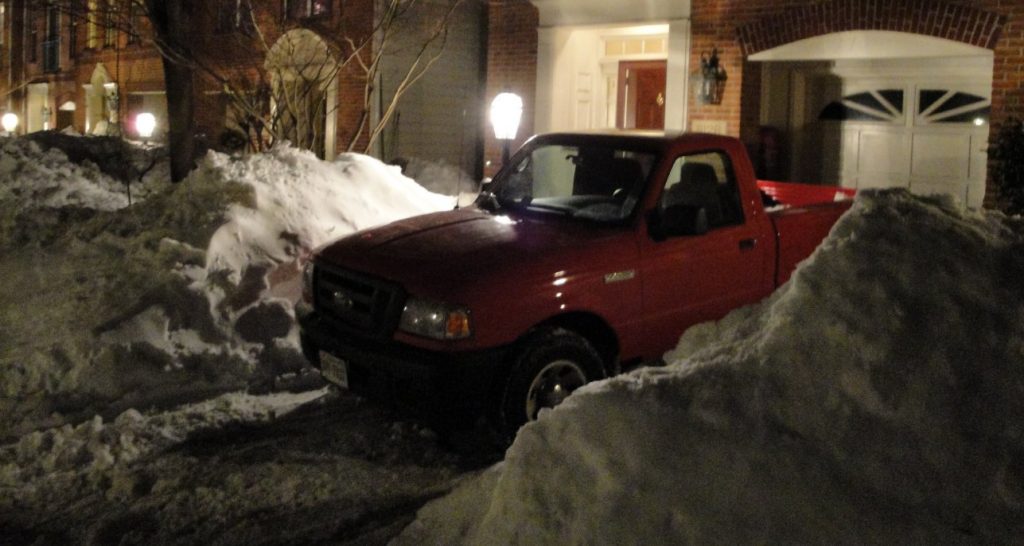
The picture above is the truck among the snow banks, snowing how high the snow has gotten. 

Crooked Lawyers

I have been a plaintiff in at least three class-action lawsuits.  I got nothing from any of them and never really understood what the cases were about. The one I understood best involved a leather coat I bought from Joseph A Banks. “My” lawyers said that I had been deceived by online advertising.  I didn’t feel aggrieved but they make it very hard to get out of the “class.” My lawyers won a pile of money, but their fees took it all, leaving nothing for us victims. 

These kinds of class action cases are shakedown. 

Unscrupulous lawyers cruise around looking for people they can call victims and corral into a class. Sometimes they even create victims if they cannot find any on the free range. The key is to tie the victims to a firm that has money.  The target firms know that they may have done nothing particularly wrong, but they also understand they really cannot win. It might cost more to fight to a righteous victory than to pay the extortion money requested by the pirate leaders … sorry lawyers and there is always the chance with the crap shoot that can come from going before a jury made up mostly of people who had nothing else to do and/or couldn’t think of a good excuse to avoid being there.

BTW – I have not served on a jury and have never even been called up. Where you live makes the difference. Where we live in Fairfax County, they have lots of voters and not too many perps.  Some places the balance is different and voters there get lots more jury opportunities.

Toyota in the shakedown zone

What brought this subject to mind was a program I saw today with a lawyer talking about his plans to shakedown (he didn’t use that word) Toyota. This just makes me sad. We owned a couple of Toyotas.  They were good cars and the company was a good company.  I think they still are.  Nothing is perfect and the demand for perfection usually gets you in big trouble. Toyota may be able to pass through this purgatory but the lawyers will make it that much harder.

That is because they will demonize Toyota in order to make more money. What has the average Toyota owner actually lost? Most have lost nothing. But if clever lawyers can figure out ways to corral enough of people into a class, they can figure out how to shakedown the company. The lawyer on TV was running the gambit that Toyota owners may have lost resale value, since the demand may have declined as Toyota’s reputation has declined and that Toyota should pay them off. The TV host scoffed a little and pointed out that this sum would be nearly impossible to figure out and would not be much money per person. 

Not to worry. If lawyers put all these people into a class, it will be possible to get enough money out of Toyota to pay their legal fees. Of course, the average owner will get less than nothing. Why less than nothing?  Because all these lawyers will distract a good company from making better cars.  Instead of innovation, they will start playing defense.

A few very simple things that can be done to reform this system

First is to force the class-action lawyers get individuals to take the affirmative step of opting into the class. In the three class actions I was part of, they never asked me if I wanted to be in. In fact, they make it very hard to get out once they have herded you into the corral. I would never have opted in. Lawyers know that, which is why they don’t want to give us the choice. The second thing is to make the loser pay the reasonable costs of the winner in any lawsuit. Some people say that we should also get rid of contingency fees (where lawyers get a piece of the action only if they win), but I think the loser-pays system would change the incentives and take care of this too. 

Loser-pays would embolden the victims to take on the lawyer shakedowns. As I mentioned above, sometimes individuals and firms settle because they know that the cost of a successful defense would still be more expensive than just paying off. This would remove that as an obstacle.  

Innovation is great in science and technology, bad in law

It is good to be innovative and entrepreneurial in most things. That is because innovations can create wealth for everybody involved. It is a positive sum proposition, a win-win. When two or more people make a trade, they all get more of what they want.  The law is an exception because it is zero or even negative sum. Law settles disputes.  For every winner, there is a loser and when you count in all the other costs less comes out of a legal case than goes in. And once the lawyers get involved, the warring parties will harden their positions because of the adversarial nature of our law and it is unlikely that they will come up with synergy that makes them both better off. 

Law is also not voluntary. If I buy something you are selling, presumably we both think we got a good deal, since neither could force the other to participate in the transition. Law is all about coercion. One of us would prefer not to take part in the transaction and we both hope to use the coercion of the state to force the other to do something he/she would not do under coercion-free conditions.

Law should be plodding, boring and predictable

Law should be predictable, even if it is plodding, because people have to be able count on it.  It should not change to radically or rapidly that most people cannot keep up with it. In a just society, everybody is reasonably sure when they are acting within the law and when they are not.   Justice suffers when laws are ambiguous. In fact, there is a rough way to recognize a good society by answering a couple of questions.  (1) You have done something you think is wrong.  How afraid are you of suffering proportional consequences?  If the answer is “a lot,” the society is reasonably just.  (2) You have been accused of a doing something you do not believe is a crime.  How afraid are you that you will suffer disproportional consequences?  If you are very afraid, the society is unjust.   To the extent that lawyers blur the lines, they create injustice.

Innovation and entrepreneurial behavior among lawyers tends to dampen those things in other parts of society. A law fare assault on one frightens dozens and makes them less likely to try anything new. 

The coat was a good deal

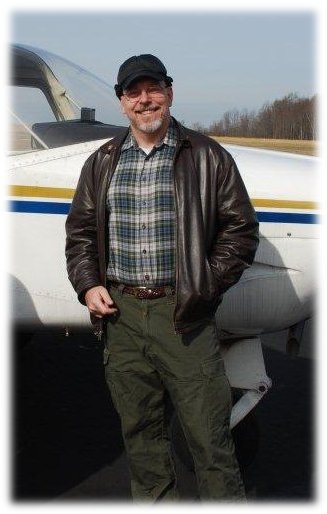
BTW – the coat was really nice. You can see what it looks like now in the picture above.  I bought it online for $149 in 2003.  It is very comfortable.  Given our local weather, I wear it much of the year and it looks like it will last many more years to come. It was not possible that I could have been significantly harmed by anything Joseph A Banks did, ergo the lawyers who did this to them and used people like me as an offensive weapon, were crooks. I pity the people at Toyota. They will be lawyered for years to come.