The New Brazil

I attended a  launching of a book “The New Brazil” at the Wilson Center’s Brazil Institute yesterday.  Riordan Roett, the author, is a professor at the Paul H. Nitze School of Advanced International Studies at Johns Hopkins University & director of the Western Hemisphere Studies and Latin American Studies Programs.  He claimed that he had been studying Brazil for more than fifty years and seemed to be telling the truth. The book’s main emphasis is on the last sixteen years during the Presidencies of Fernando Henrique Cardoso and Luiz Inácio Lula da Silva.

The discussion at the meeting centered on what or who should get credit for Brazil’s remarkable success since the middle of the 1990s.  Like most success, it is the result of good decisions and good luck and it is hard to tell where one leaves off.  The most obvious place to start is with government policy.  Many other things about Brazil remained the same, so the change in policy was probably a major factor.  The big change in direction came with the “Plano Real”.  Fernando Henrique Cardoso, as Finance Minister, led the team that created the plan and then as president brought it to maturity. I won’t go into details about the plan, since I have not yet studied the details, but in general is stabilized the currency and created economic stability. It took many of the economic decisions out of the hands of politicians and privatized many state enterprises.  And it opened the Brazilian economy to foreign investment and trade by lowing tariffs and making it generally easier to do business.

When I lived in Brazil twenty-five years ago, we talked a lot about the fact that the Brazilian people were very enterprising but that obsessive rules and government interference kept the country from achieving its potential.  Extensive parallel markets developed, which drained much of the energy out of the official enterprises.

The Plano Real seemed to work and Brazil has leapt forward.  Of course, there are also aspects of good fortune.  One of the biggest factors working in Brazil’s favor has been the rise of China.  Brazil remains primarily a producer of primary products, agricultural products, minerals etc.  The rise of China, and to a lesser extent other Asian economies, vastly increased the demand for products that Brazil could profitably produce.   (My one good investment (which unfortunately I have to sell before going to Brazil to avoid the appearance of conflict of interest) was in the stock of a Brazilian company called Vale do Rio Doce, or just Vale (pronounced VaLay).  Vale is a mining company, mostly iron ore.  I bought the stock in 2003 and I only wish I had bought more.  The Economist just published an article about it.  It is one of those world class Brazilian firms that were quickly able to take advantage of opening markets.)

Another piece of good luck, for Brazil if not others, was the rising price of oil, which made profitable their investments in ethanol produced from sugarcane.  Now Brazil has also discovered vast reserves of oil and gas off the Atlantic coast in a formation called pre-salt. To help finance exploration and exploitation, the Brazilian oil firm, Petrobas recently floated a $67 billion stock share offer, the largest in history.  These developments will make Brazil energy independent and maybe even an oil exporter.  The Brazilians already produce most of their electricity from renewable hydropower.  They have developed ways to produce hydropower w/o the extensive ecological damage associated with previous large water projects.  Of course, no energy source is worry frees and there is still controversy, but manageable.

There is some bad news, of course.  Brazilian infrastructure is poor.  This already impacts prosperity and will do it more in the future.  The price of sugar, for example, spiked a couple weeks ago because of backlogs at the Brazilian port of Santos.   Brazil is the world’s second leading producer of soybeans (behind us).  Infrastructure is what keeps them from becoming #1. They can grow soybeans in the grasslands of the cerrado, but they often cannot ship them to market.  Many of the connecting roads and even some important highways are poorly maintained and sometimes not properly paved at all.   Brazil will need to invest heavily in improvements and it will have the incentive and money to do it, which will be a great opportunity for construction firms.

Human infrastructure is also a weakness.  Brazil has excellent public universities and produces great engineers, doctors and lawyers.  But the level down is very bad and there is a big gap.  Many people remain functionally illiterate and significant numbers are just illiterate, period.  The lack of basic education in the work force makes it difficult to devolve decision making and innovation to the workers on the shop floor, as is required by many modern processes.  

Again to interject a personal note, I remember when Mariza was born in Brazil.  The doctors were great, as good as anything we could expect in the U.S., but the quality quickly fell off and you had to be very careful with the nursing staff and especially with the aids.  I had some dental work done in Porto Alegre.   The dentist was great, but his assistant was less well trained. He was putting a cap on one of my teeth and had exposed the nerve. As he stepped away for a minute, he told his assistant to keep the area on the tooth clean.  She alternatively squirted water and compressed air onto the raw nerve until I begged her to stop and wait until he got back for the final cleaning squirt.

Brazil’s educational system is very uneven and counter intuitive to an American. The best universities are public.  They are tuition-free and open to all through a highly competitive test.  But the only way to properly prepare for that test is to go through private grade schools and HS, since the public schools at the lower level are generally bad.   In America, our top universities (Harvard, Yale, & Stanford) are often private and smart rich people want to go there.  Private universities in Brazil are not on top and poorer Brazilians are more common in them.  It is a little odd that those who could afford to pay get to take advantage of the public universities while the private ones are the ones that serve the others.

Professor Roett thinks that the educational system will soon improve, as people will demand it.  The Brazilian middle class has grown significantly during the boom times. For the time being, they are happy that they can afford new refrigerators and nicer apartments.  But there is a Maslow principle at work here.  As their material needs are better satisfied, they will start to want more intangible, such as better education for their children.  Beyond that, the more developed economy is demanding higher level skills.

Somebody asked the question about evangelicals.  Brazil has traditionally been a casually Catholic country, but you cannot help noticing the vast numbers of evangelical protestant churches, often in storefronts or other general buildings.  The evangelicals also exhibit a lot of energy and a strong work ethic. Brazil is actually exporting evangelical missionaries to Spanish speaking America and Africa.  Evangelicals could play a pivotal role in Brazil’s presidential election at the end of the month.  This is the first time they have been recognized as a political force.

Anyway, I am enjoying learning and relearning about Brazil.  My Portuguese starts in November and I will be able to devote even more time to learning about my once and future post. 
Around the Mall & Left Over Pictures

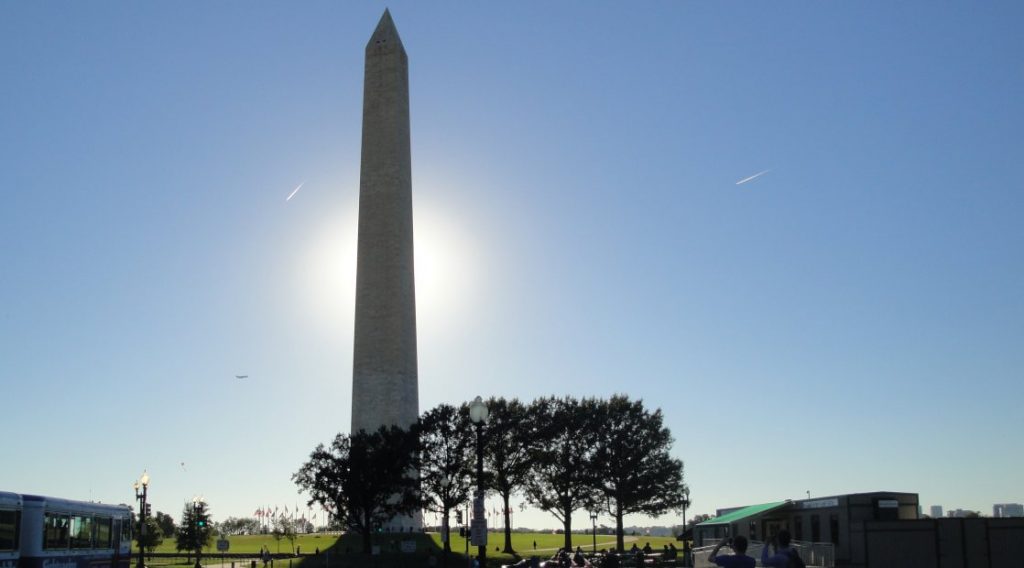
I walked from State Department to Gold’s Gym in SW.  Since we moved to Foggy Bottom, I don’t get to the Mall as often. Too bad. It is pretty and relaxing. I usually find something to look at or something to admire, even if it is the same old monuments that never lose their appeal. I have a couple of pictures with not much text to go along, but I wanted to post them.I also have a few left over from our drive up country. Above is the Washington Memorial at around 6pm. The Washington Monument is the only one w/o any inscriptions carved into the stones. I guess Washington was so great that he requires no explanation.

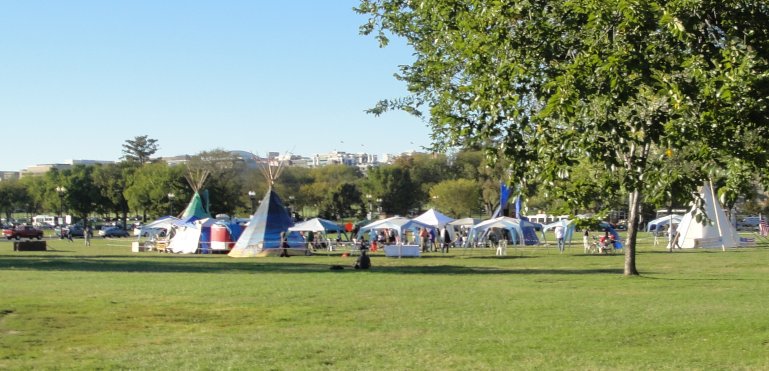
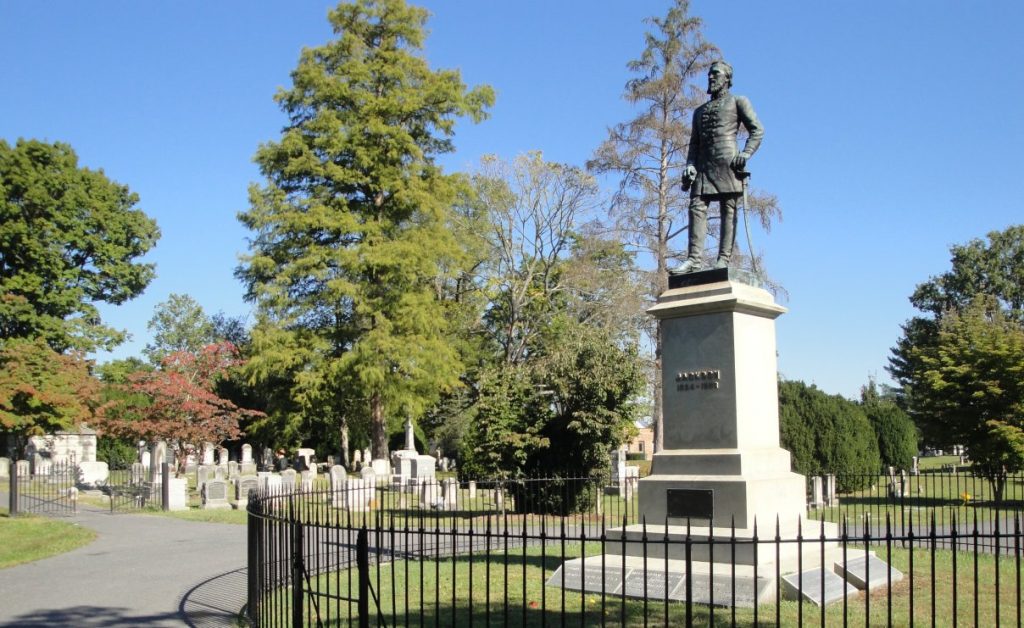
Above is a “peace camp” on the Mall. The sign said that they were going to hang around until peace was established. I think that their camping permit will run out sooner.  I didn’t go in. It seemed like a bunch of hippies. I didn’t mind that, but they had some kind of ritual when you walked through their gate. I didn’t need that. Below is Stonewall Jackson’s grave in Lexington, VA. I wonder how famous Stonewall would be if he was just called Thomas Jackson? He was a good general, but the South had many such.

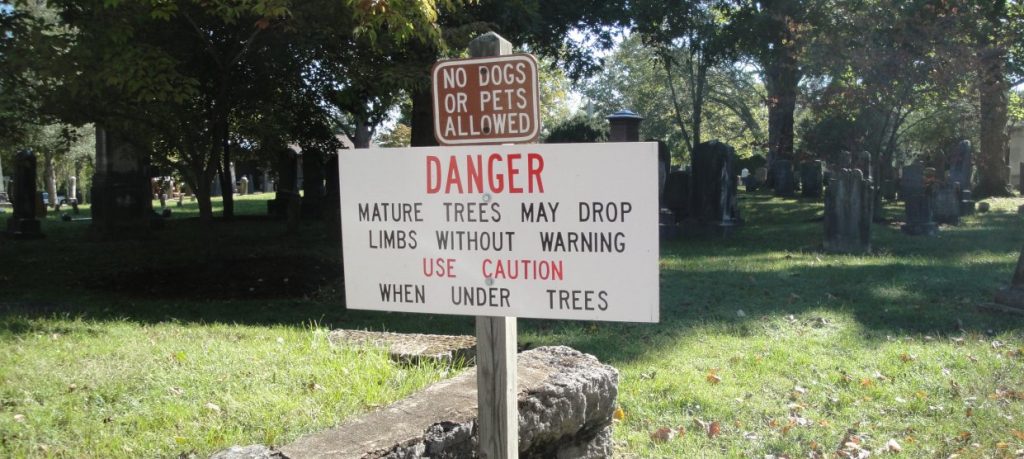
Below is a bit of over-protection at the cemetery where Stonewall and lot of other Confederates are buried. I guess I have been endangering myself for a long time walking under trees.

Which Do you Prefer?

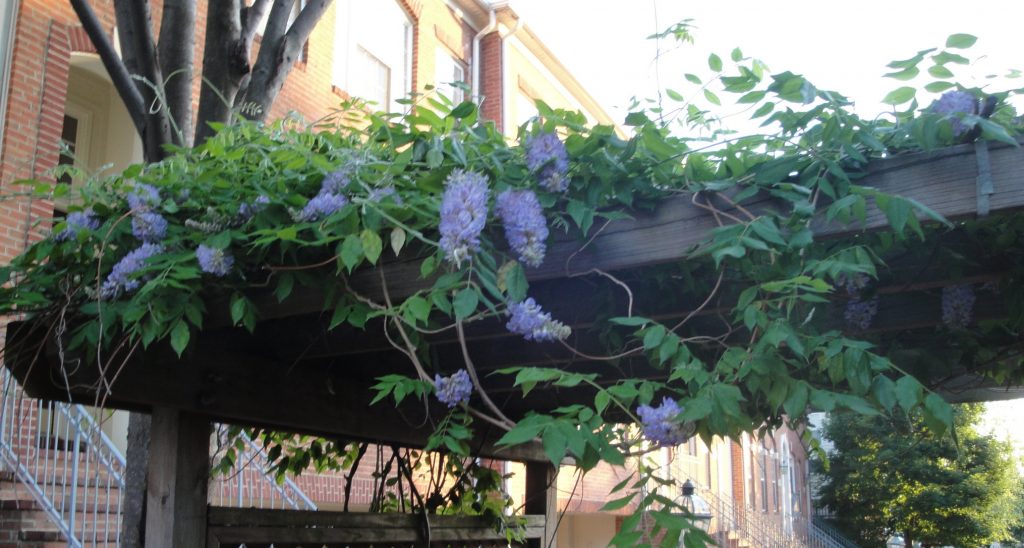
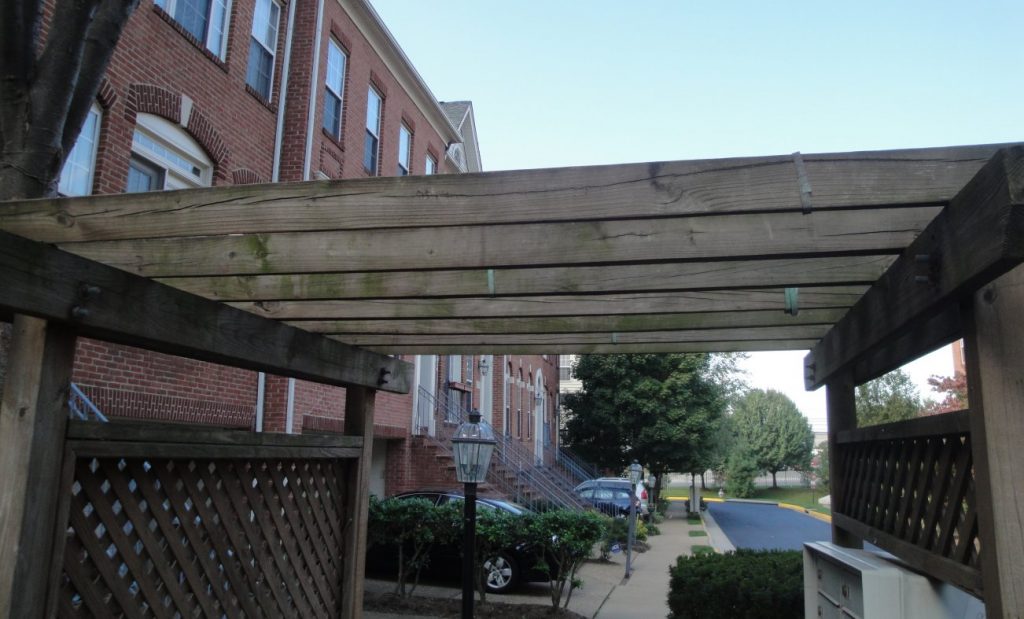
Pictures can tell the story better than words and I will use both. Above is a picture of the recently destroyed wisteria vine in better times earlier this year. With the permission and encouragement of the HOA at the time, I planted that vine and tended it for the next five years, falling a little behind in trimming only during the time I was serving in Iraq.  I finally got it to grow completely over the trellis about a month ago. We looked forward to a profusion of flowers next spring. The landscapers evidently thought it was out of control. Look at the picture below. Tell me which you would prefer. The little straps you notice on the boards, BTW, mark places where we had tied and trained the vine, so you can see the progress. Let me add the flowers were free, while the blank wood cost hundreds of dollar to achieve.

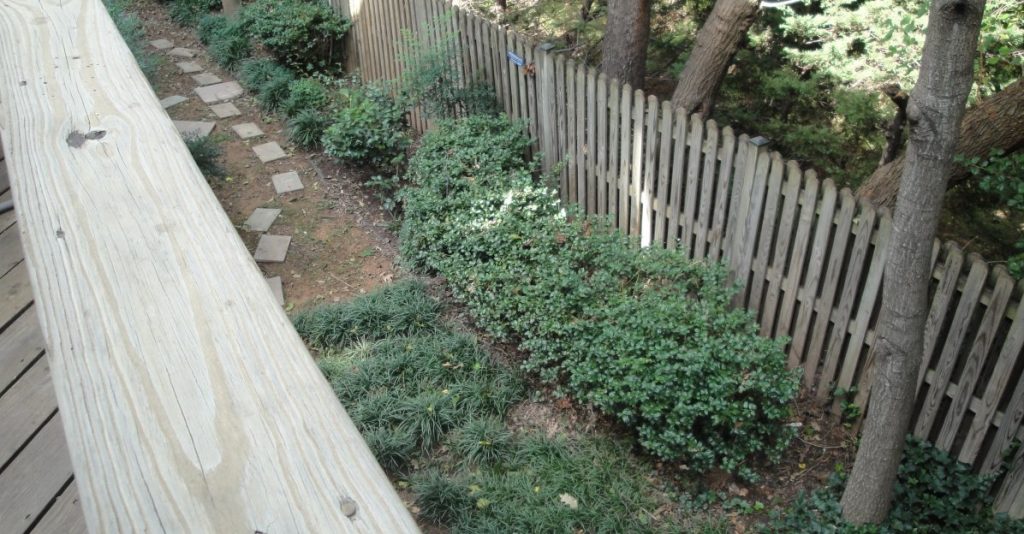
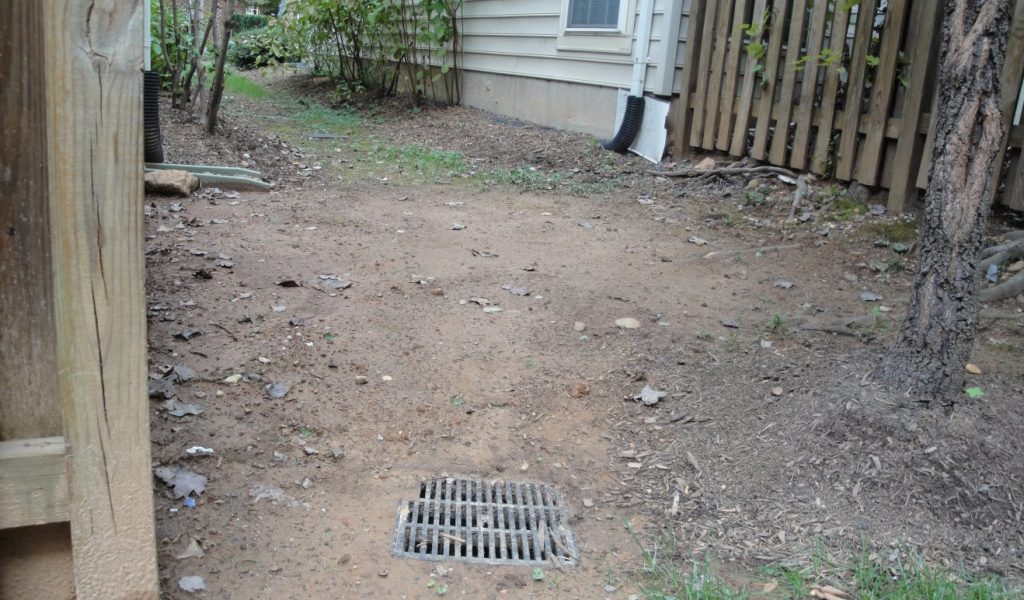
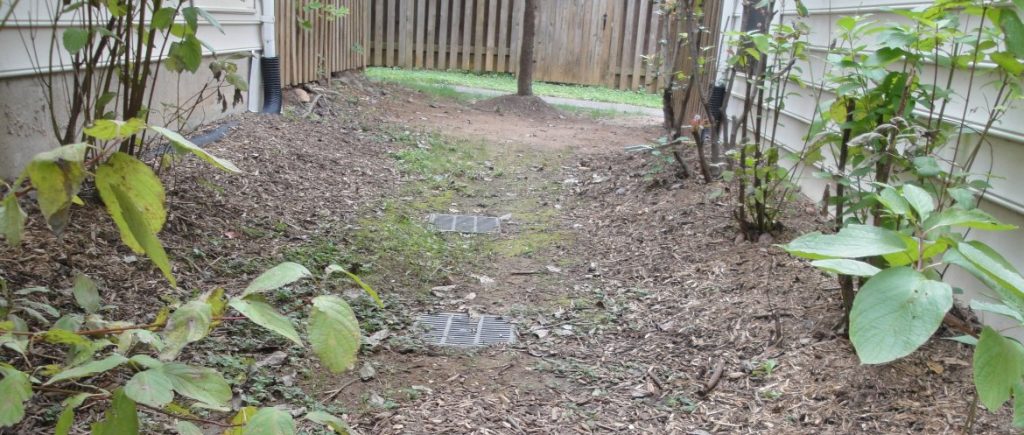
Below is lily turf behind our house on Quinn Terrace. I don’t have a “before” picture, but before I planted it (again with the permission and encouragement of the HOA at the time) there was a gully about a foot deep on the far end of the picture. It was worse than the dirt you see to both sides of the picture, since my plants slowed the erosion in those places too.

The area in back of the houses is shaded by the houses and decks. There is not enough sunlight to support most plants, so only shade tolerant plants can grow there. But they CAN grow there.  The plants you see stopped and reversed the erosion problem where they were growing and made it a lot less serious problem both above and below by slowing the velocity of rain water. In addition, the plants allowed water to soak into the ground, helping in a small way to make our complex healthier for local streams and the Chesapeake Bay. 

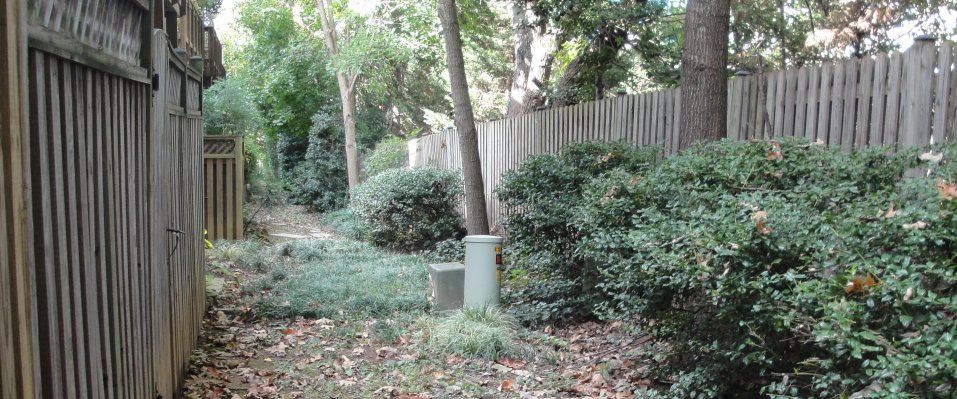
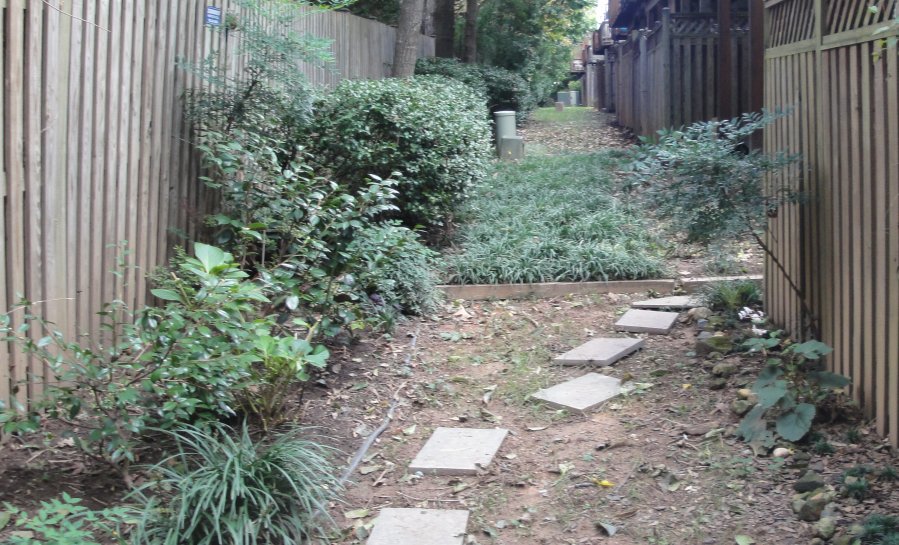
Above you see what it looks like from ground level looking west; below is the same thing looking east. This small plantation has trapped enough silt and runoff to raise the soil level by around six inches. Our containment pool used to be yellow with muddy water after a rain. No more. Not since the plants filled in. The only time erosion was a problem recently came when our landscapers scalped the plants down to the nub. It took them a couple months to grow back, but they did.
You can see from the ground level picture that the plants have spread a little to the next lot. They are very adaptive. I volunteered to help plant such cover all along the back of the houses, which would completely solve the erosion problem. Beyond that, these sorts of plants require almost no care. Instead of the landscapers cutting every two weeks, they can trim them back in spring every two years. I understood that there was a plan to make some plantings, maybe also involving river rocks to further help the water flow, but nothing came of it.
Please refer to the pictures above and below for an example of how to solve a problem in an environmentally unfriendly and ugly way and still manage to waste money doing it. There has been a lot of uninformed talk about putting in some kind of drain to improve the landscaping behind the houses. One piece of advice is that you should not take recommendations from people who want to sell you something, and we have experience with exactly this sort of thing. An earlier HOA “solved” a drainage problem by installing drains. They are right across the street from my house. I don’t know how many thousands of dollars this cost, but I think my free planting of lily turf is nicer. I have seen the landscapers mowing that area above, BTW. At least they keep it well trimmed.

Sometime the least expensive solutions work the best. We have paid thousands of dollars to do damage. Maybe an approach that takes into account actual conditions on the ground would work better.  Finally, I have to put in the maybe cheap shot of the landscaper’s tree trimming. Good job, guys. I sawed off that branch before it broke off and hurt somebody.

So the choice is between green and growing plants that some people might think are “out of control” (judge for yourselves from the pictures) and neatly trimmed mud and empty pressure treated wood.  Which do you prefer? And let me add that the flowers and plants are cheaper or free, while the mud and bare wood costs thousands of dollars in maintenance.

Happy Brazil

I have just finished reading a Pew Research Report about Brazil and I am convinced even more that I am lucky to go there at a particularly auspicious time.  The issues I am most comfortable and competent in addressing, environment, energy and economics, are the ones that by far are the most important in Brazil and Brazilians are generally in a good mood. 

According to Pew Research, 62% of Brazilians have a favorable opinion of the U.S and only 7% don’t like us.  Not only that, more than 60% think foreign companies are having a good influence in their country and 75% think that people are better off in a market economy.  This may seem to be no big deal, but I remember that when I was there last time it was our goal to encourage these kinds of attitudes, but we were not having much luck.  It is amazing what a few years of prosperity will do. People’s attitude toward others often is closely related to what they think of themselves. The funny thing now is that Brazilians more often have favorable attitudes toward the market economy than Americans do.

On the foreign policy front, Hugo Chavez is the most unpopular foreign leader among Brazilians and 85% of Brazilians are against Iran getting nuclear weapons.   Of those, 65% are willing to consider stronger sanctions and a surprising 54% might favor military action.

So the country I will be going to next year is very different from the country I left in 1988. I look forward to getting to know the country again – or maybe really for the first time.   I remember last time I was there it seemed the most individuals were happy, but the country wasn’t.  Maybe now everybody will join in.

Crossing the American Nation

I wanted to take a trip across the U.S. – again – to remind myself about the America outside what I see in and around Washington.  It is easy to forget that there is a lot of America far away from Washington when you live around here.

Driving is different than flying to particular cities because you see the places you cross close up. It is impressive how long it takes to get from place to place. You quickly understand that it is a big country, with pretty good roads.  I tried to get off the Interstate when I could. The Interstate is faster, but you see less and you never get the feeling of the open road that you do when you are the only one on a county road. You also cannot usually stop on the Interstate, so if you do see something interesting all you can do is race past it at 70mph. 

I enjoyed driving most on the old U.S. Highways. They are usually smooth and fairly straight. They were designed for more traffic than they get now in most of the rural areas, as the Interstates have drained the traffic, so it is often a comfortable and almost traffic free experience. I like the diversion when I slow down through towns. The Interstate bypasses them or hurries you through them on ramps above, artificial valleys below or man-made canyons of noise control walls if you stay at ground level. You miss a lot of history.

I drove through sixteen states, including the State of Missouri. I mention Missouri specifically because Missouri was the only one of the continental states I had not visited before. Missouri is just about right in the center of the U.S., so it is strange that I missed it so many times. I really didn’t see it too much this time either. All I did was stop at a rest stop and put my feet on the ground for a few minutes.But I got a picture.

I noticed the changes in the physical landscape. Once you cross the thickly forested eastern mountains, you get into relatively flat formerly-forested landscapes until you get to about fifty miles out into Kansas.  Rainfall drops off below the amount (about 30 inches a year) needed to support natural forests at about the 98th meridian. This divides prairies from forests. Historically, the prairies extended farther east because the Native Americans used to set fires to maintain the grassland. Today, our own civilization has brought trees into the grasslands and grasslands into the trees, but you can still clearly discern the differences as you pass over. The mountains in the West have all sorts of variations of climate. That is the attraction of the West. You can drive 100 miles in the East w/o noticing big changes. In parts of New Mexico I crossed dozens of biomes in that same distance.

I am not sure if it was Texas or New Mexico that were most surprising. I had been to both before, but not really through them. New Mexico, as I mentioned in one of my posts, is truly a land of enchantment, with a great variety of environments in very close proximity because of the mountains. Texas was also very surprising. I wrote several posts about that. Texas is such a big state that I should not have been as surprised by the variety, but I was.

The geography and topography was very different, but I found that Americans were very similar everywhere I went. I am in a good position now. I am old enough that I both am not too shy to approach and talk to strangers and I seem harmless enough that they are willing to talk to me. Actually, I am repeated surprised at how friendly people are and how much they like to tell you about themselves and their home towns.  The pride is palpable and everybody thinks his/her place in unique. And they are all right. But what is not unique is the feeling of unique pride in being different. It is a kind of a paradox.

It makes me a little sad that the regional differences are weakening. As each part of the U.S. becomes more diverse the country is becoming less so. You find the same restaurants, stores and outlets wherever you go. And it is not only the well-known chains. You can find the same sorts of independent Chinese, Mexican, or Japanese restaurants in San Antonio or Dodge City as you do in Milwaukee or Nashville. Everyplace is diverse now. All these places were less diverse internally a generation ago, but they were more different from each other. The whole country has been blended. It is great that you can get all the same things almost anywhere, but maybe also not so great.  You can tell this by what you CANNOT bring back home that you can’t already get back home.

What is becoming more important is what you might call the back story. We are becoming a lot more concerned with the origins and the “stories” of the things we eat, drink, wear and enjoy. We can get to know these stories when we travel. As our country blends, we all look for the special things and we are reviving or recreating traditions, especially on the high end. This is how we connect in a world that doesn’t tie us to our roots. For example, the Bourbon makers we visited have been working harder to make “craft” products and people are willing to pay more. Farmers are developing or rediscovering heirloom fruits and vegetables. I saw longhorn cattle like those that were essentially eliminated a century ago. Somebody is reviving the herds. I think this is healthy. It is usually not mere antiquarianism.  People are respecting traditions but also working and applying their innovation and intelligence to make them better. New traditions are being evolved from the old ones all over our country, so while we are becoming more homogeneous we are also developing new diversity.

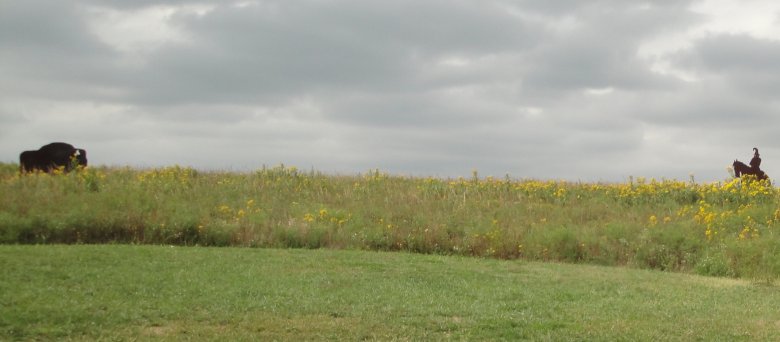
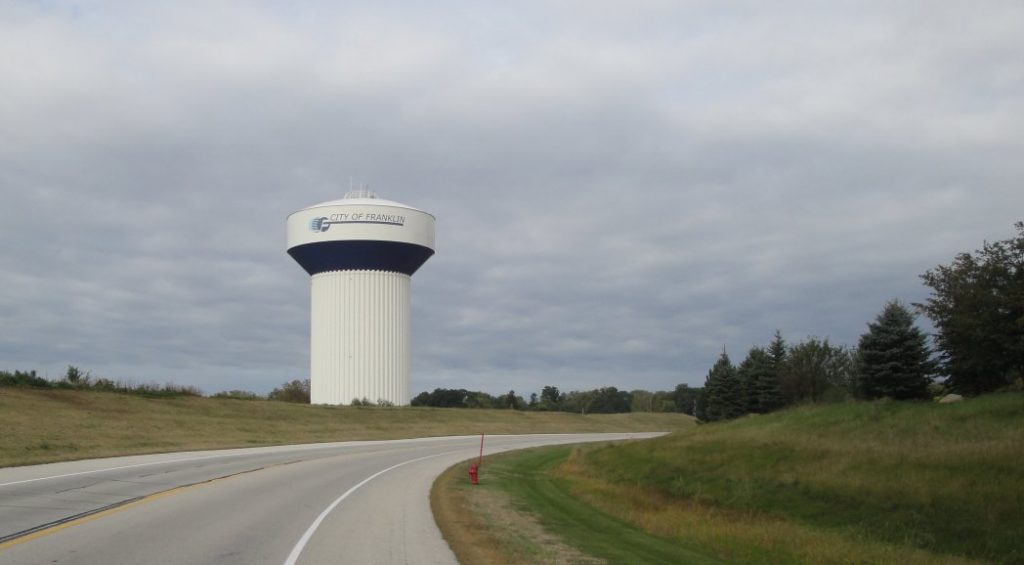
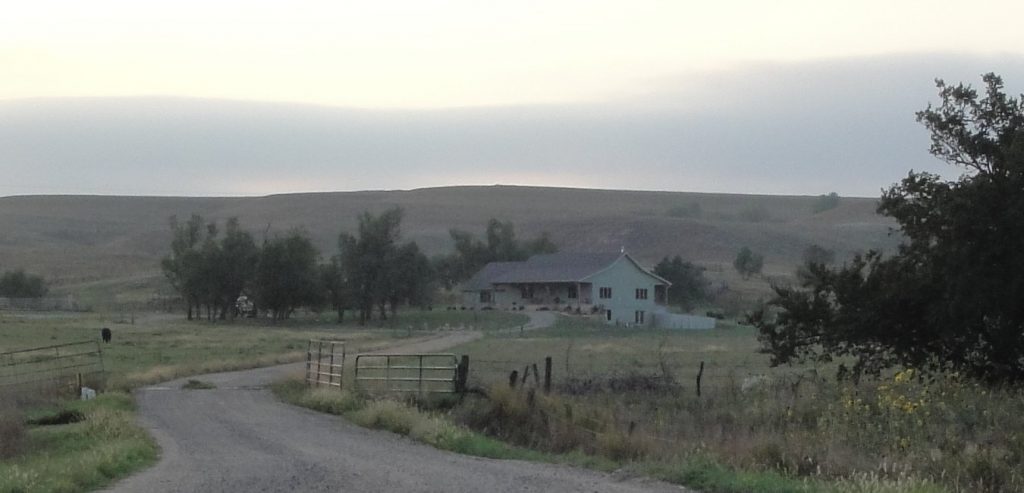
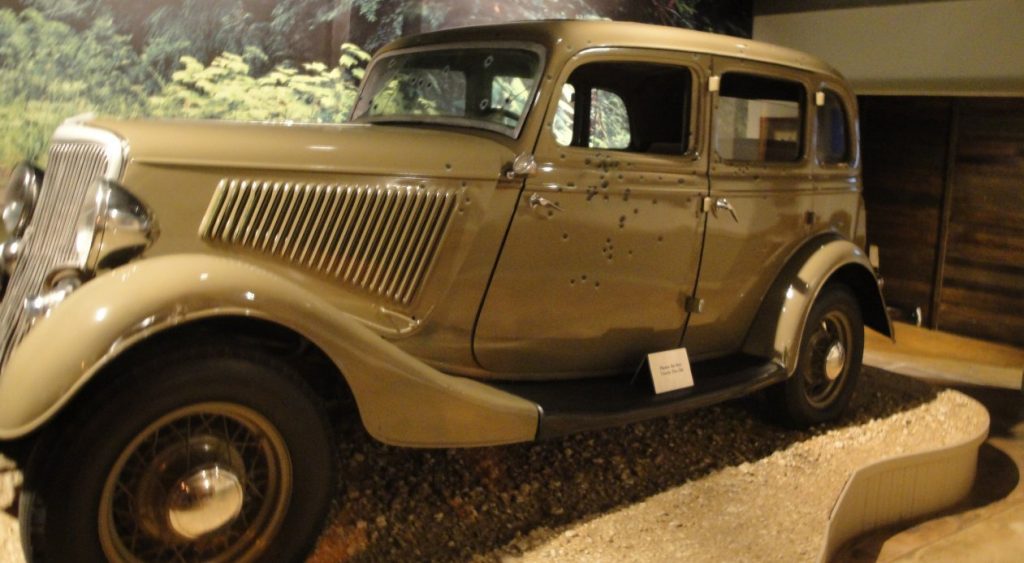
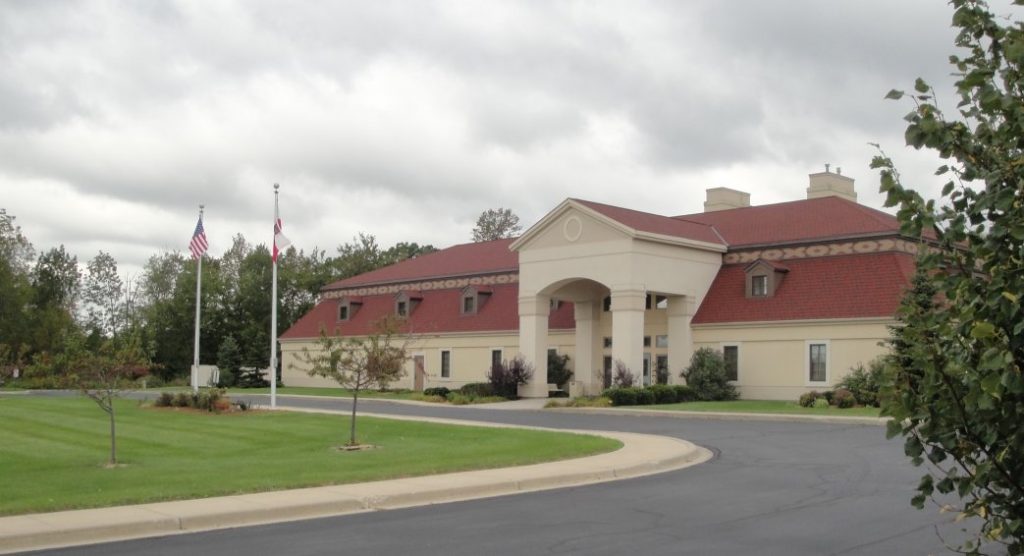
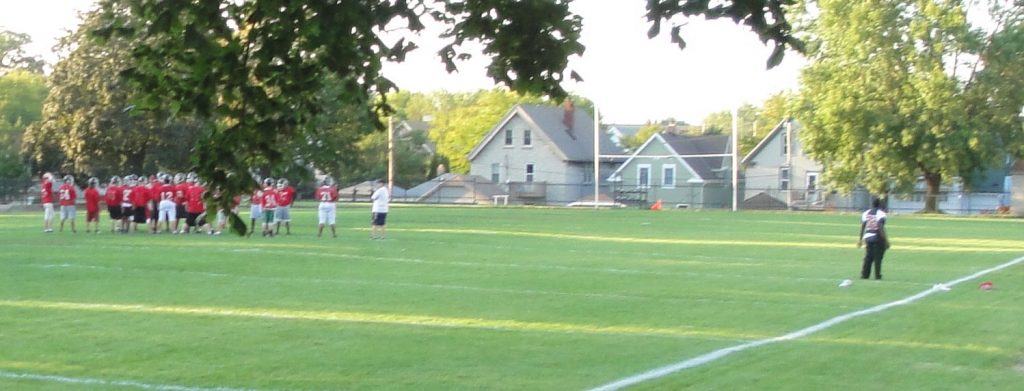
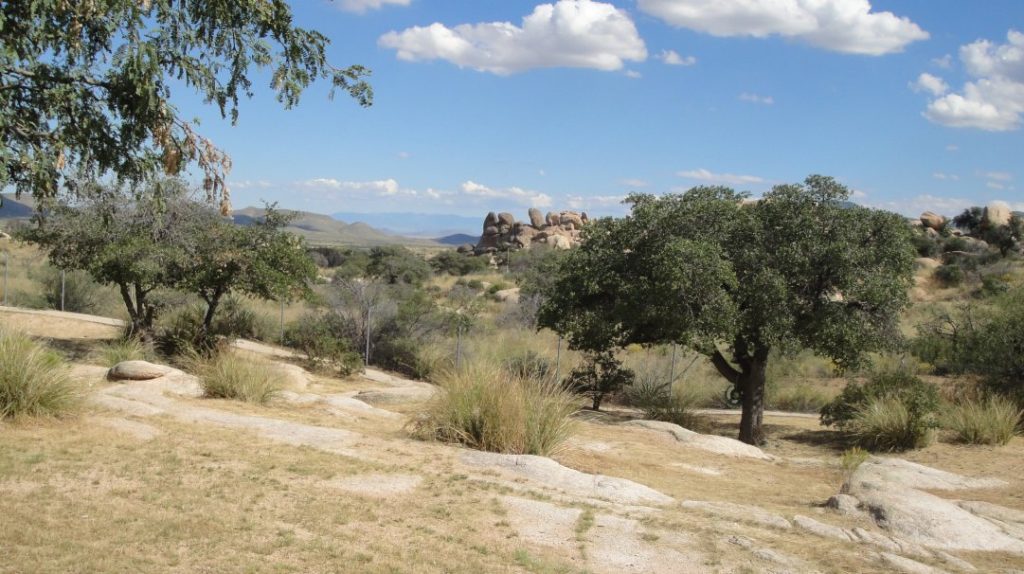
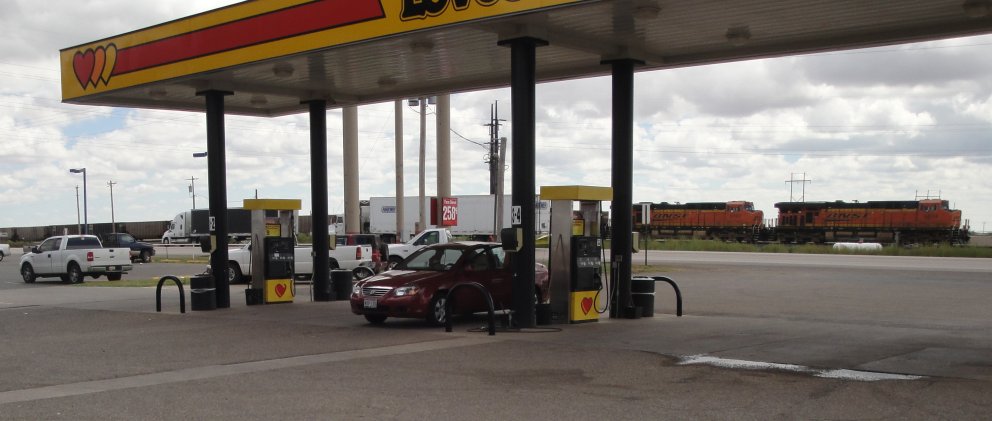
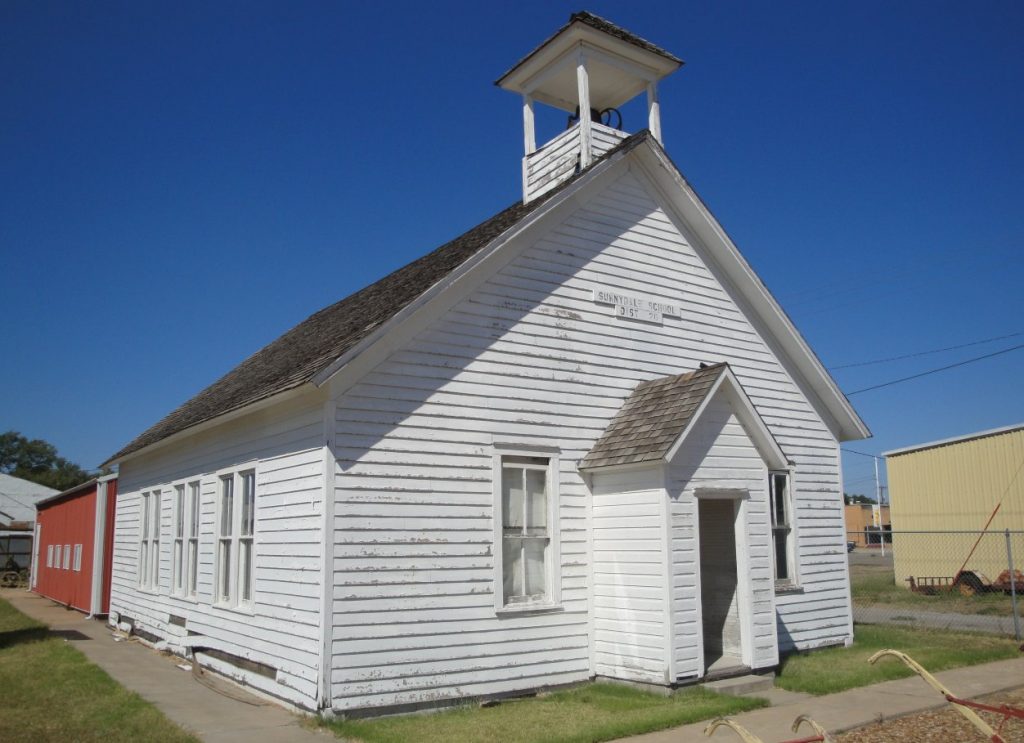
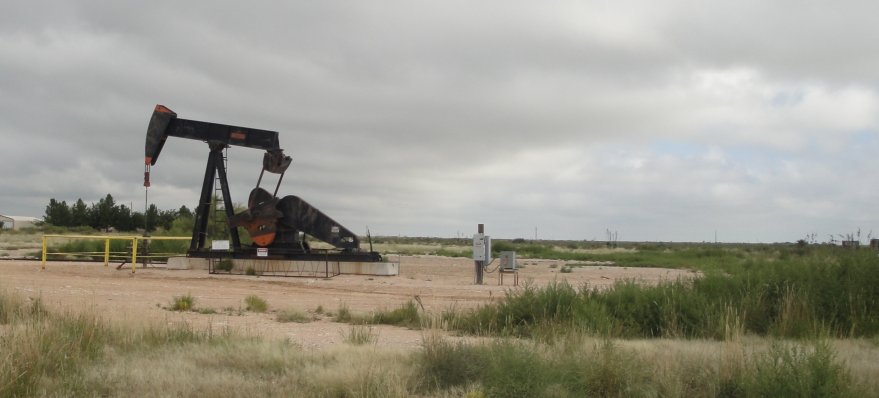
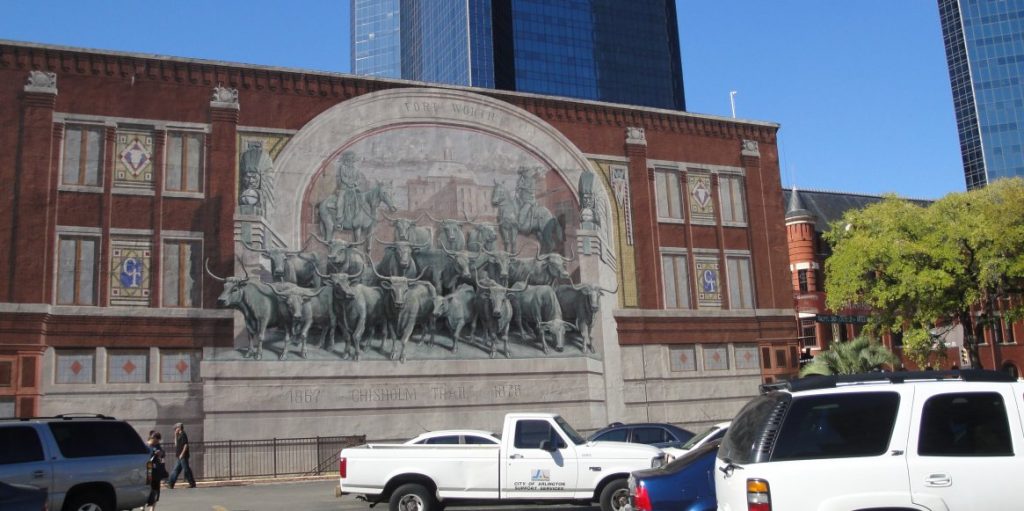
I have a few miscellaneous pictures from the tip that I have included. The top picture is art work in the grassy hills above a Missouri rest stop. They are flat steel cutouts of Indians hunting bison.  Next is a water town in Franklin, Wisconsin.  A ranch in Kansas is below followed by a replica of the Bonnie & Clyde “death car.” In the middle of the page the Polish-American Center in Franklin and then the Bay View “Redcat” football team in early season practice. The rocks in the next picture is off I-10 near the place where the Apache leader Cochise hid out.  Next is a gas station in New Mexico with the railroad in the background. The next two show an old school house in Mead, Kansas and then an oil pump on the Permian basin in New Mexico. Below is a mural in Fort Worth, Texas honoring the Chisholm Trail

The Best Thing that ever Happened to Corn

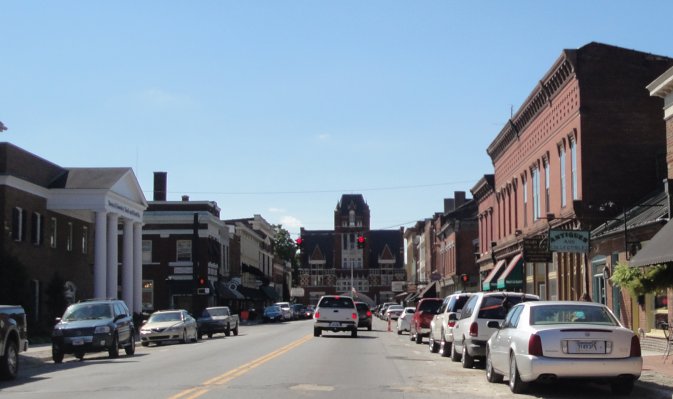
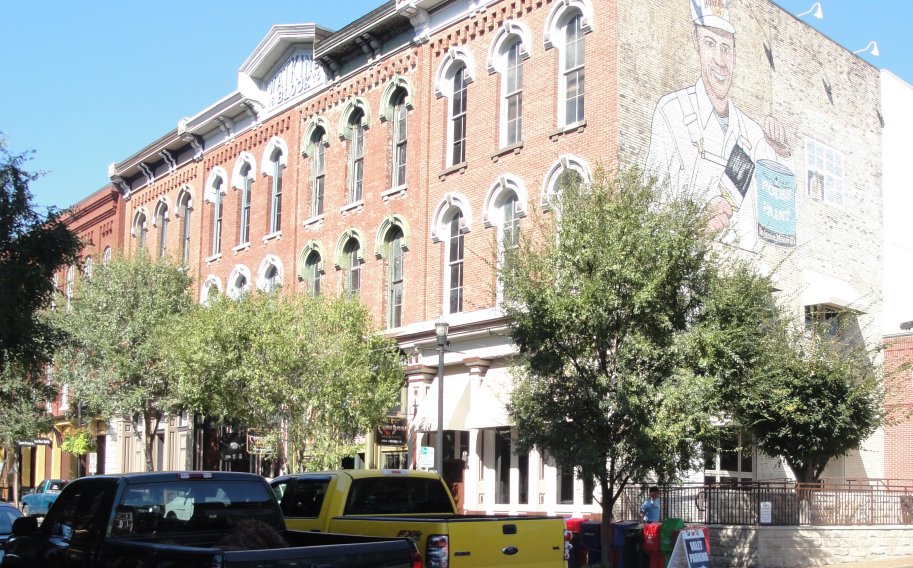
The Kentucky Bourbon Trail connects six Bourbon makers in Northern Kentucky. It is a very pretty drive and you get the added benefit of visiting distilleries and tasting their whiskey. We stopped only at Jim Beam and Wild Turkey. I think you might need a couple of days to do the whole thing, not least because you probably could not drive if you visited all the distillers in one day, even with the very small samples you get. Below is the center of the district, Bardstown, Kentucky the “Bourbon capital of the world.”

Bourbon is a true American product. The Congress declared Bourbon to be America’s native spirit and there are specific requirements for making it. For example, it must be at least 51% corn. In early American times, distilling bulky corn and other grains into whiskey was the best and sometimes the only way farmers on the distant frontier could get their products profitably to markets across wilderness with no or bad roads. Bourbon can be made anywhere in the U.S., but around 95% is made in the State of Kentucky, near where this sort of whiskey originated. Northern Kentucky has good water for making whiskey because of its limestone and limestone soils that filter water and make it “sweet.” 

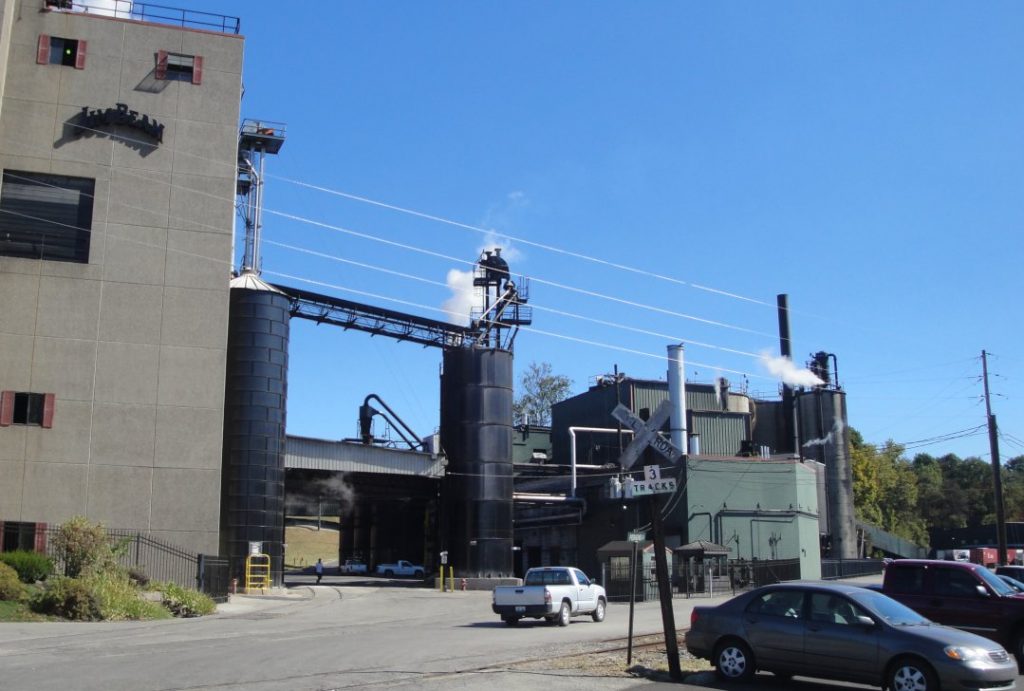
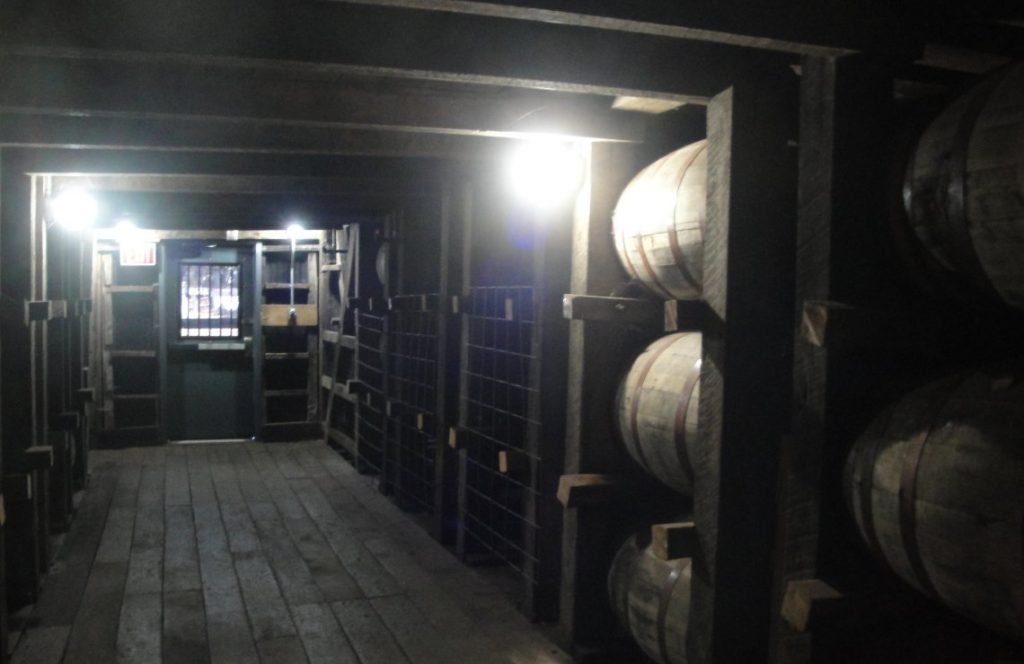
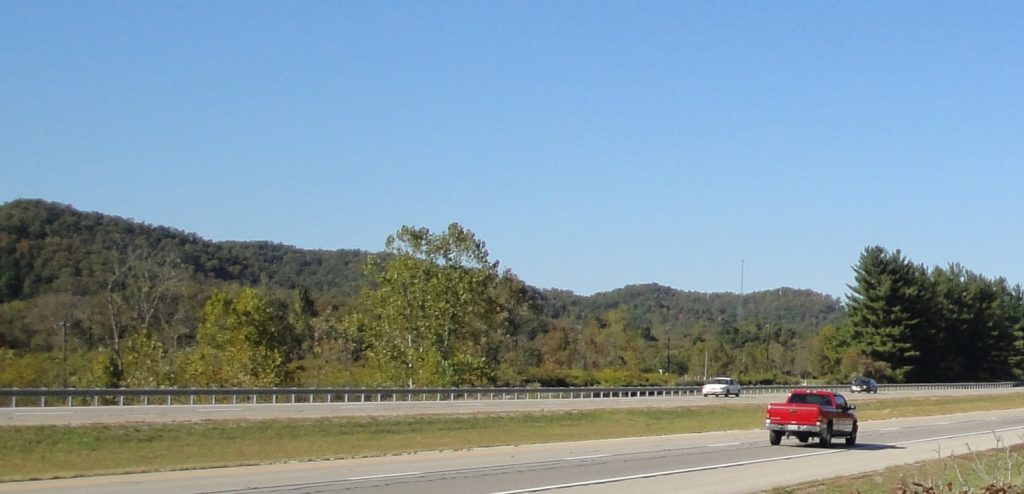
All Bourbon must be aged in new white oak barrels. The barrels can be used only once, after which they are sold to Scotch whiskey producers and makers of other alcohol products. They are charred inside. The raw whiskey – called white dog, this is as far as they get when they make moonshine or white lightning – is clear and essentially flavorless. No artificial colors or flavors may be added to the finished whiskey. During the seasons of the aging process (the aging barns are not heated or air conditioned) the whiskey expands and contracts soaking up woody flavors and color from the wood and charcoal of the barrels. When you take a drink of Kentucky Bourbon, you taste the forests, creeks and at least four and maybe ten years’ worth of Kentucky seasons. Below shows Kentucky along I -64.

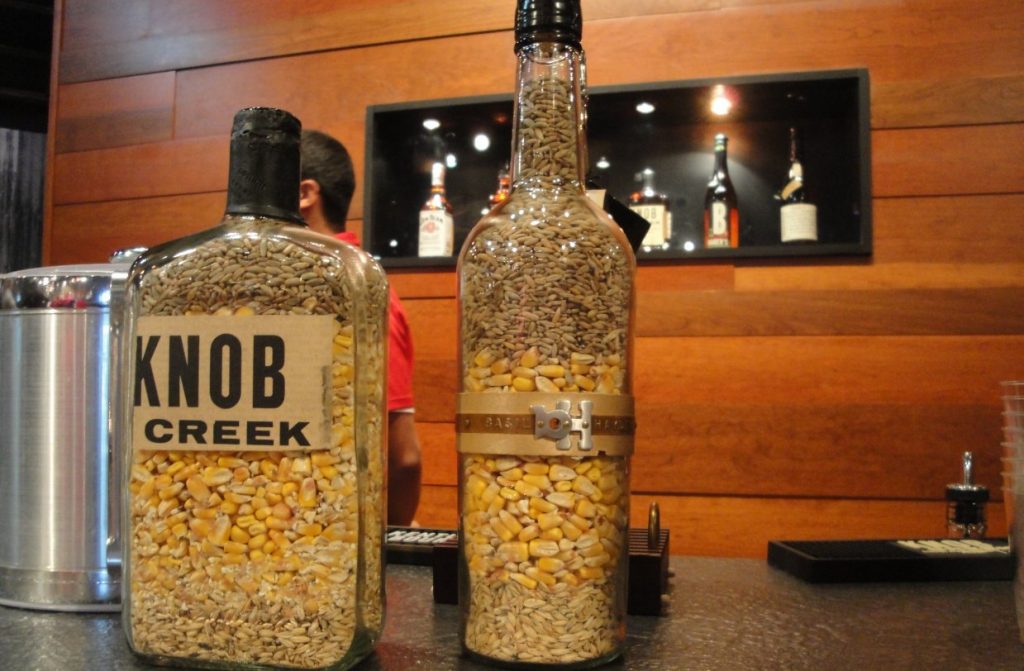
We bought a couple of bottles of whiskey at Jim Beam. I got a bottle of Jim Beam Black. It is older than the white label and has a noticeably smoother feel. If you want to drink Bourbon, this is the one I recommend.  I keep around a bottle of “Old Forester” because I like the name, but the Beam Black is better. We also got a bottle of a new product called “Red Stag”. It is not officially Bourbon because it has some cherry flavor added.  At the Wild Turkey distillery, we got a bottle of rye whiskey. This also was technically not Bourbon. It tastes a little more like Scotch. You can see below the distribution of grain in two Jim Beam products, Basil Hayden and Knob Hill. I don’t like the Basil Hayden. It is a little too harsh. Knob Hill is good, but a little too pricey, IMO.

We should all drink responsibly, of course, but I think we should all drink a little. Beers, wines and whiskeys are deeply embedded in so many of our traditions, both in the creation and in the consumption of the products.  There is just much more than the schluck going on. I suppose you could have specific health or religious concerns, but besides that, it is a silly person who refuses a drink when offered.

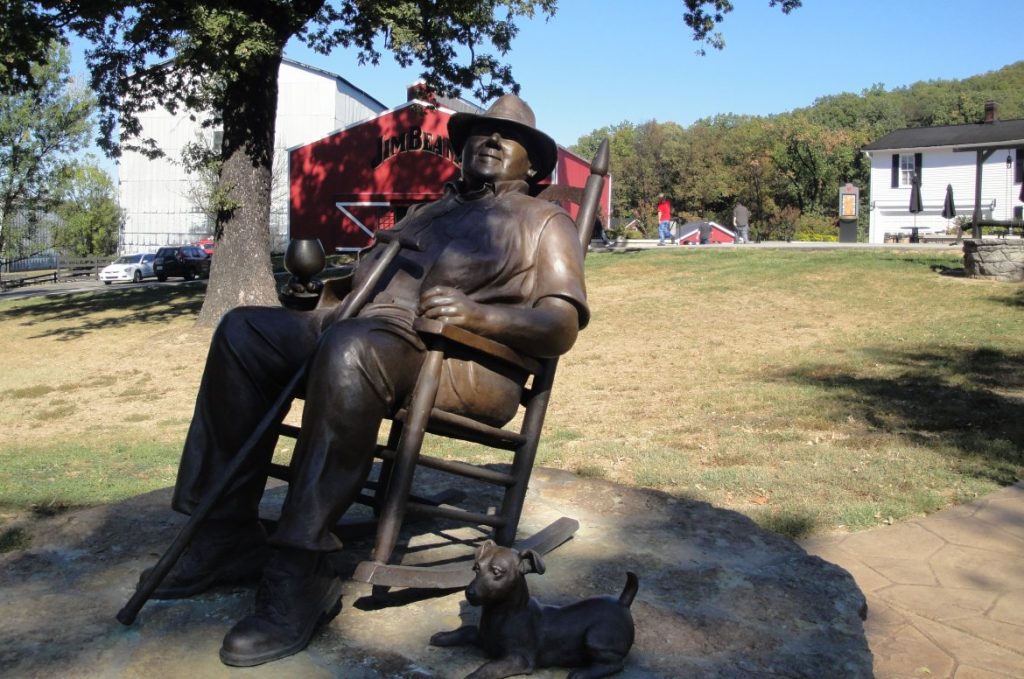
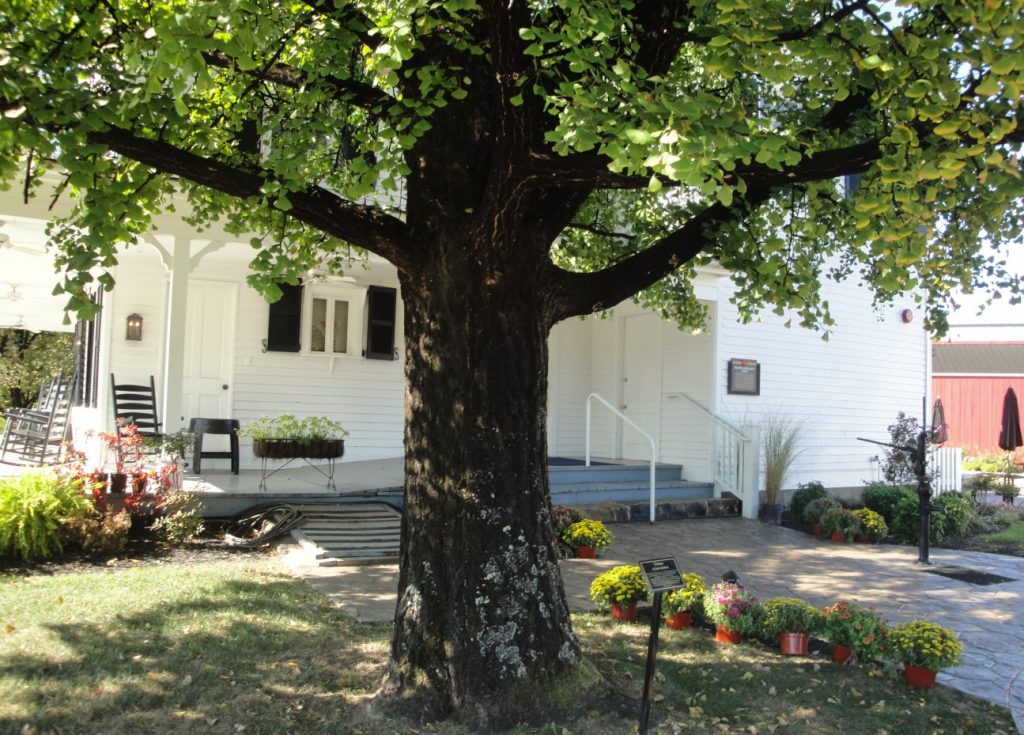
Above is Booker Noe, the grandson of the eponymous Jim Beam. Booker created the modern Jim Beam distillery.  His son, Fred is the 7th generation of the Beam family to run the business. If you look in back of Booker and below at the ginkgo tree in the front yard, you notice the black bark. This is caused by a fungus that grows on the surfaces around distilleries because of the evaporation from the whiskeys. The lost alcohol is called the “angel’s share” and in humid climates it feeds the fungus. It makes it look like there has been a fire, but it is evidently harmless to the trees.

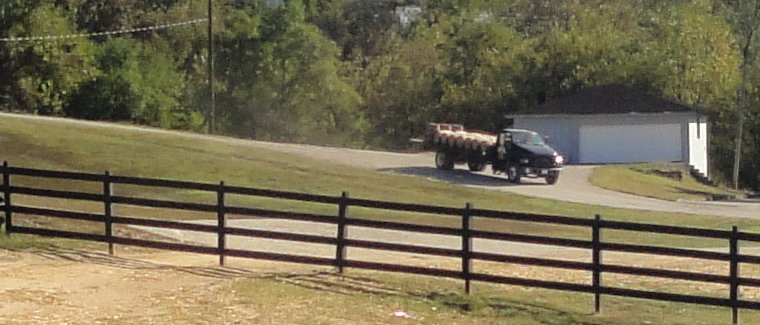
Below is a truck moving the barrels. 

Nashville

The State Department has a good, but generally underused, program that lets us to volunteer to speak to people around the country when we travel. I often give them my schedule when I am traveling and sometimes they can arrange meetings in my free time.  I find I get more out of travel when I get to talk to interesting people and this is a good – official – opportunity for that. I learned a few things about Nashville at a meeting arranged by State public affairs.

I think of Nashville as the capital of country music and that is still true. The Grand Old Opry is here and musicians come to Nashville from all over the country.   But I learned that Nashville is much more, with a diverse economic base. The biggest industries are education, health care & tourism.  

The most famous local university is Vanderbilt, but there are many others.  The guy at the mayor’s office told me that around 60% of the students who come to the area to study stay after graduation, enriching Nashville with their “human capital”.   He pointed out that young people today often choose where they want to live and AFTER that look for the schools and the jobs that will get them there.   Young people today, especially those with the most marketable skills – the kind of people cities are trying to attract – are more mobile than we were.  On the other hand, they are a little less likely to move once established.  This may be because they choose the place in the first place and like it and/or because relationships hold them in place.  

Nashville competes with – and “benchmarks” – cities like Austin and Charlotte, NC. They are around the same size and have similar compositions.  Austin also has a strong music scene.

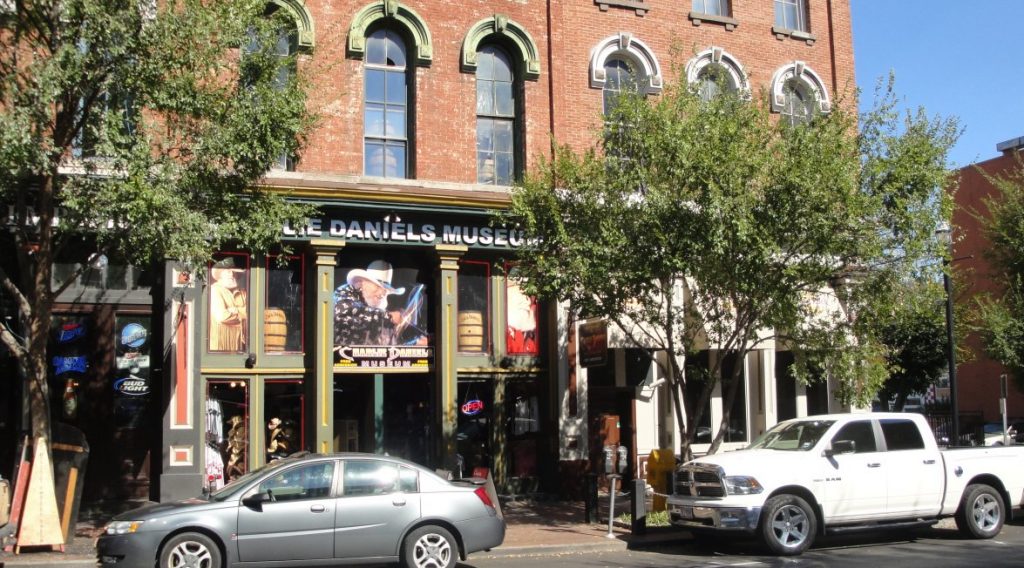
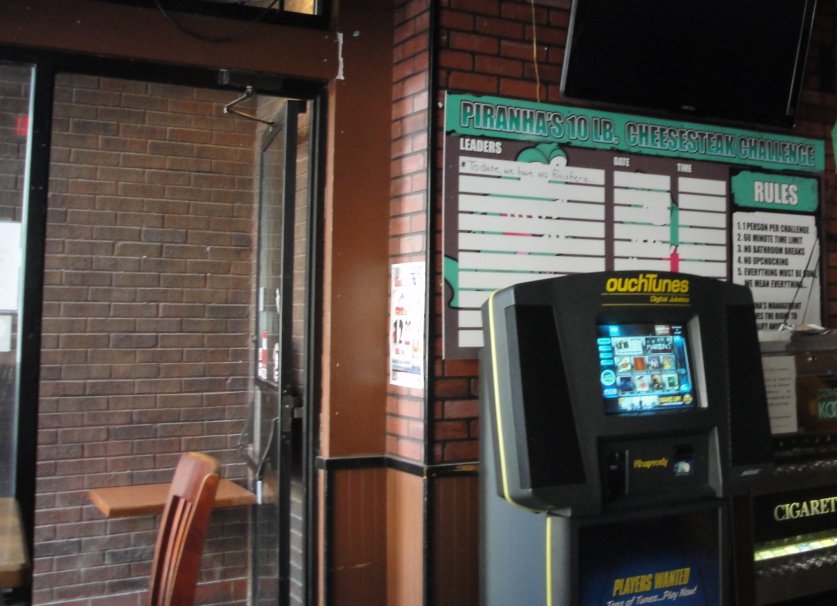
Chrissy and I had lunch at a bar and grill called Piranha’s.  They had a truly odd sandwich made of roast beef with the French fries jammed in.  It tasted okay and was very filling, but I don’t think I would order it again.  You see in the picture above that they have some kind of contest going about eating a 10lb cheese steak.   Nobody has won, so far, and I am not surprised.   I think the whole thing might just be a bridge too far even for the biggest eaters.   I recall that the “Big Texan” in Amarillo has a 72 oz steak challenge.  If you can eat it, you get it free.  Some people succeed in that and a solid meat meal would be a bit harder – maybe – that something including bread, but I just cannot figure out how eating 10lbs of anything would be possible. Maybe I misunderstood the challenge.  Across the street from Piranha’s was the Charlie Daniels Museum, actually just more of a shop, pictured above.

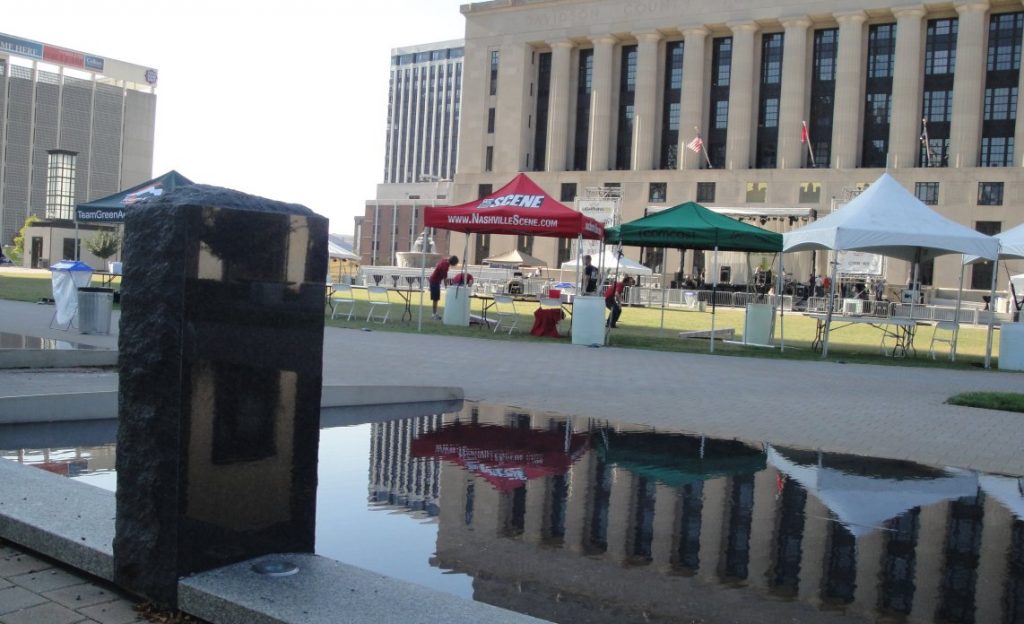
The other pictures are the cheese steak challenge, some interesting buildings and a music festival being set up in front of the courthouse. I understand they have live music most weekends. 

Local Heroes in Western Tennessee

We spent last night at the Holiday Inn in Forrest City, Arkansas.  The town was named for Nathan Bedford Forrest.  As we drove through western Tennessee, we came across Forrest a few more times. He was very much the famous home town boy.  I read that there are thirty-two monuments associated with him in Tennessee. Nathan Bedford Forrest was a Confederate cavalry officer and a true military genius.  On the other hand, he trafficked in slaves, was accused of war crimes and was associated with the KKK, although he denied both of the latter. On the other hand, in later life Forrest advocated re-consolidation between North and South and between the races.   

The man was a fighter and good at his job.  He famously said that war means fighting and fighting means killing.  What you can say for sure about Nathan Bedford Forrest is that he was a man of significant contradictions and that he was well-thought-of at least by some people around Western Tennessee, Western Arkansas & Northern Mississippi.

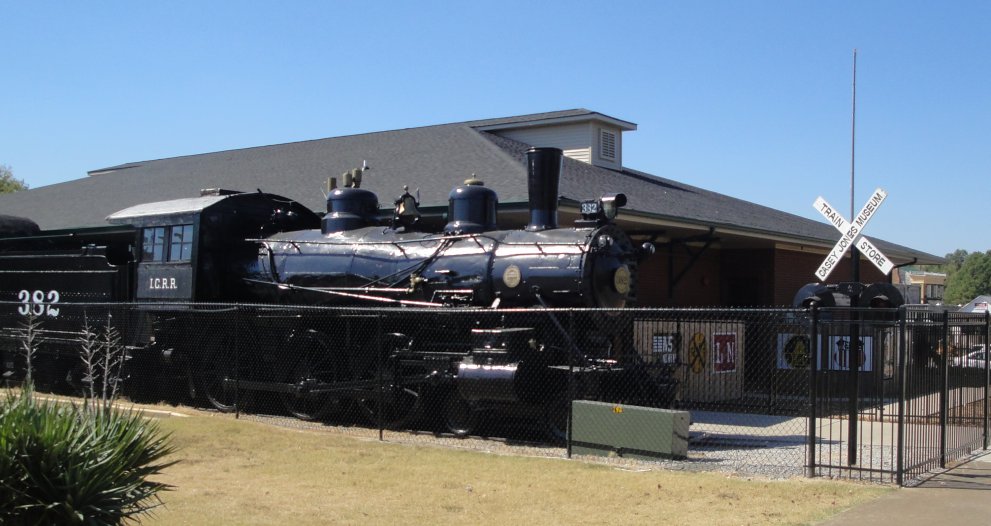
A less controversial local hero is Casey Jones.  He was an engineer on the Illinois Central Railroad.  His passenger train, the Cannonball Express, ran into a stalled freight train near Vaughan, MS.  Jones stayed with the train, pulling on the brakes. He managed to reduce the speed of his train from around 75mph to 35mph. His bravery undoubtedly saved the lives of passengers, none of whom were killed, but Casey Jones died in the wreck.

Casey Jones’ experience was immortalized in a song, much like the Wreck of the Old 97, in Virginia. Train wrecks made an impression on those around to see them. We visited the Casey Jones museum in Jackson, Tennessee and saw his house, some railroad artifacts & an engine much like his. It is one of those places that is worth seeing if you are already driving past, but probably not worth going to see if you are not.

The lyrics to the song are at this link.

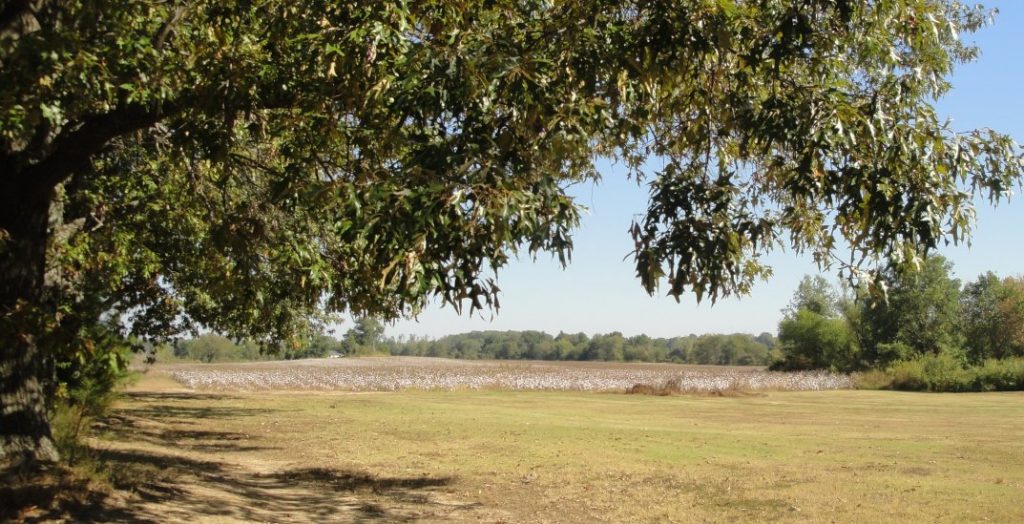
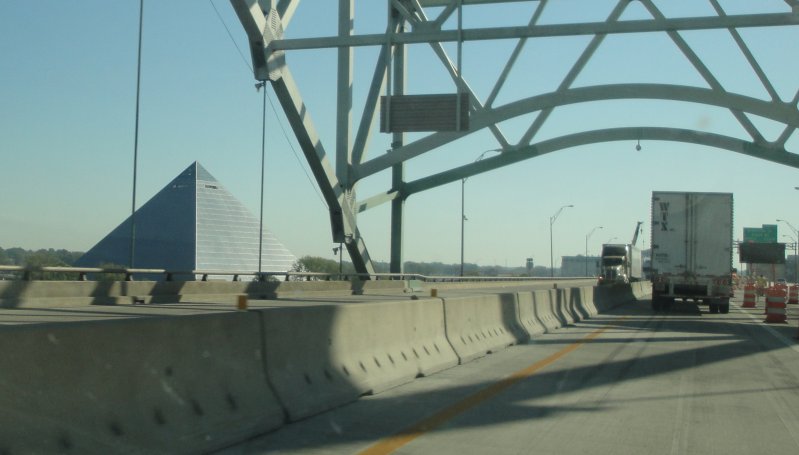
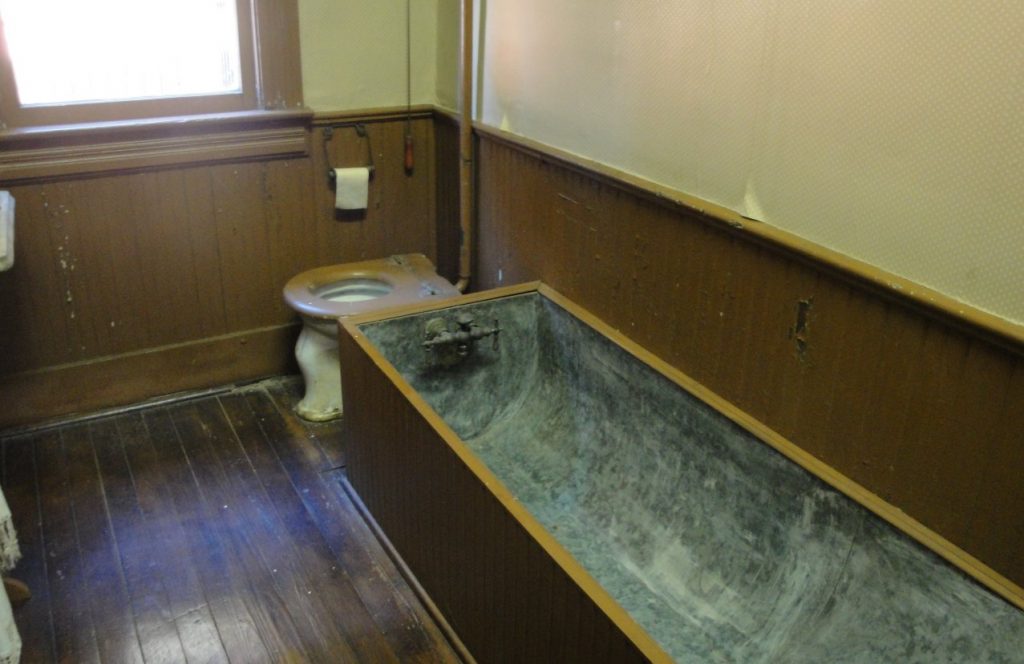
The top picture is a cotton field in Western Tennessee. Cotton is very hard on the soil & the crop exhausts the nutrients quickly. This was wasteful but it also provided incentive for westward expansion, as new lands were constantly needed. Next is the pyramid of Memphis. I guess it is an arena.  Chrissy took the picture of the pyramid, as we drove over the bridge and she demanded I give her credit. This was indeed a good picture, but the others she took on the fly look like they were taken by a drunken monkey.  We have to take the sweet with the bitter. BTW – there are no pyramids in the original Memphis. The next picture is an engine like the machine that Casey Jones would have driven, but this one is smaller. The bottom picture is the bathroom in Casey Jones’ house. He was fairly well off for the time. I would like to visit the past, but I wouldn’t want to live there. Besides all the exotic diseases, poor dentistry and interesting smells, we had bathrooms like this for those lucky enough to have such luxurious accommodations.

Waiting at the Bat Cave

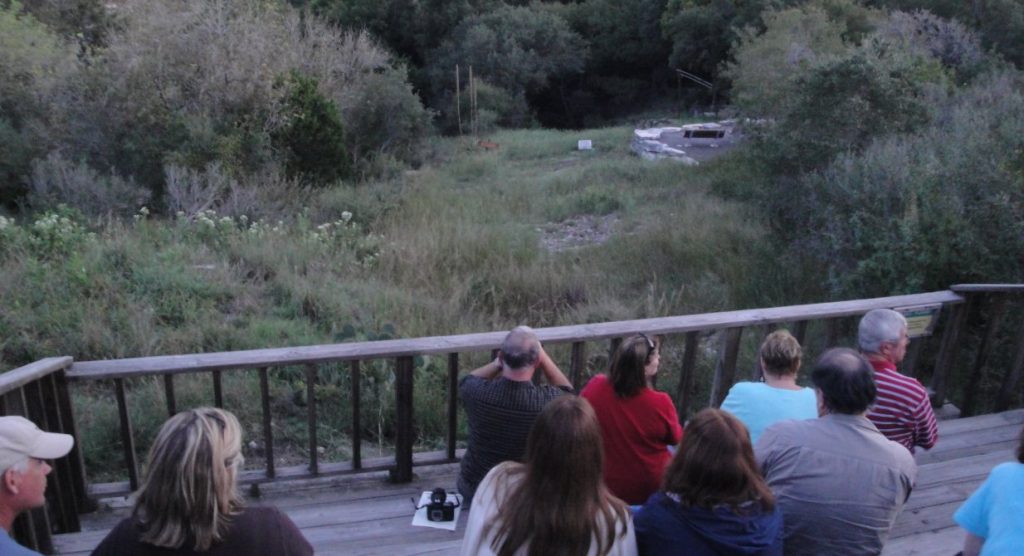
We went to an old railroad tunnel near Fredericksburg to see the bats emerge. You can see from the picture above that bat viewing is a minor local attraction. We didn’t actually see the bats emerge. They did it too much after dark. They come out around dark every night. If they come out around dark before it gets too dark, you can see them, otherwise we just take their word that they came out.

The bats in the tunnel are Mexican free tail bats. They are small bats that eat insects, mostly moths.  They are useful because they devour prodigious numbers of corn moths. 

We were told, but I didn’t actually see, that the bats take off in a spiral to get enough lift to get into the air.  The experienced bats do it well.  When there are lots of new bats, the show is evidently more chaotic, presuming you can see it.  The bats never come out on schedule and nobody is sure why they come out when they do. One theory is that they just come out when they get hungry, so it depends on how much they ate the night before.  Another theory is that there is not theory. One or more of them wanders out and others follow.

A couple people run the “bat watch”. Bat people are special and they are very enthusiastic about bats.  They showed pictures and explained the importance of bats in the environment.  As I wrote above, the most useful thing they do is eat lots of flying bugs. Bat guano makes very good fertilizer and the bat woman explained guano used to be one of Texas’ biggest exports.

Bats are threatened by a fungus disease called white nose.  It can wipe out whole bat colonies.  Nobody knows what causes it, but it is probably helped to spread by people coming around from cave to cave, so many bat caves are now closed off to casual visitors. At out bat viewing area, we were told not to go down to the opening.  I would not have done so anyway. I appreciate the importance of bats and understand that these little bats are harmless, but I still  think it would be a little creepy to be standing right among them.  Besides, they probably crap when they fly.

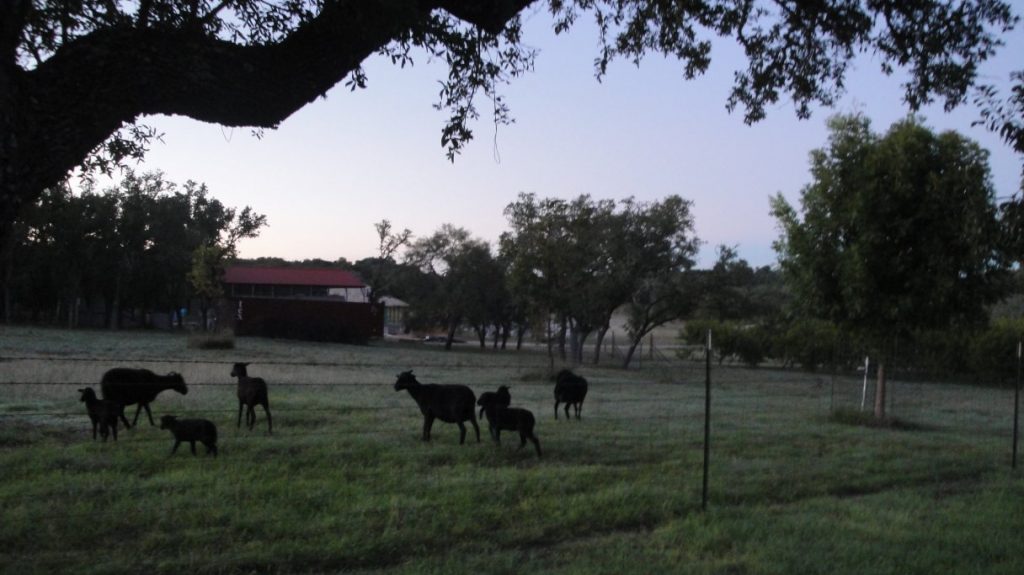
The top picture is the crowd waiting for the bats. Below that picture is one of my friend Dennis Neffendorf’s sheep just before sun up. Dennis owns a peach farm near Fredericksburg. If you want some great peaches, let me know and I will put you in touch. You met Dennis in earlier posts. He worked with me in Iraq.  The sheep are unrelated to the bats, but I needed a place to put the nice picture. 

President Johnson & his ranch

We also visited the LBJ ranch. Unfortunately, I deleted the pictures by mistake. My only text would be that LBJ actually cared about his ranch. He had a great herd of cattle and he took good care of the land. No matter what you think of him as a politician or a human being, he was a good steward of the land.  For me, that means a lot. 

Dennis, mentioned above, grew up near the Johnson ranch and as a kid got to do odd jobs around the ranch. He know a lot about the Johnson’s and the people around them. He said Johnson was a bigger than life type guy. He could be a bully and an A-hole, but he remembered his roots and took an interest in everyone he met.  Like all great men, he was complex and contradictory, so biographers can find what they want.  Lady-Bird Johnson was universally a lady in all the positive senses of the word and she stood by Lyndon. I took a good picture of the tombstones of Lydon and Lady-Bird. Hers is a little bigger.  On his tombstone is the presidential seal.  Hers features a Texas bluebell. Mrs. Johnson did a good job with wild flowers.

Deutschland uber Texas

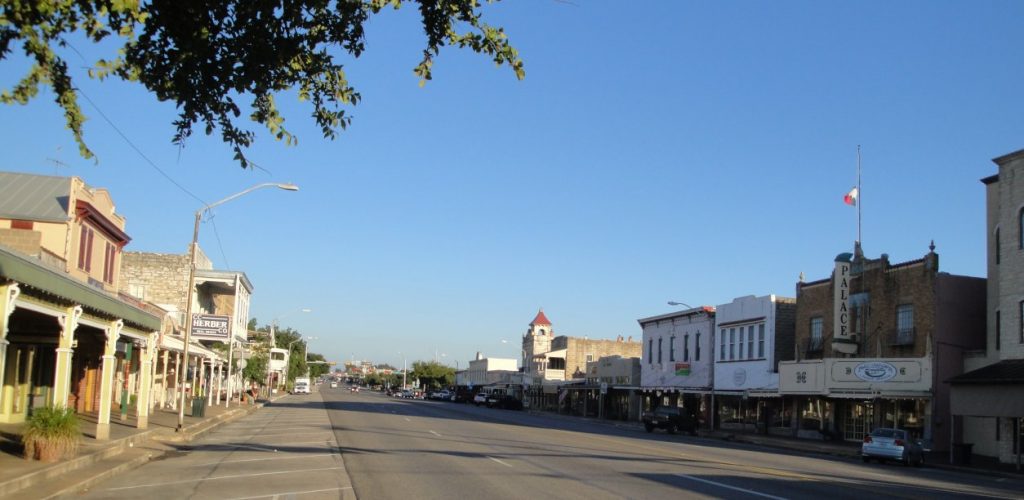
You can see the physical German influence in the buildings and the people in Fredericksburg and all around the Texas hill country. I knew that lots of Germans colonized Texas, but I was surprised by how much this resembled Wisconsin in terms of heritage and appearance. My picture doesn’t really show it. I made a mistake and erased fifteen of my pictures, so I have to use what I have left.  Along this street there are mostly German names. We had breakfast in a nice German bakery. 

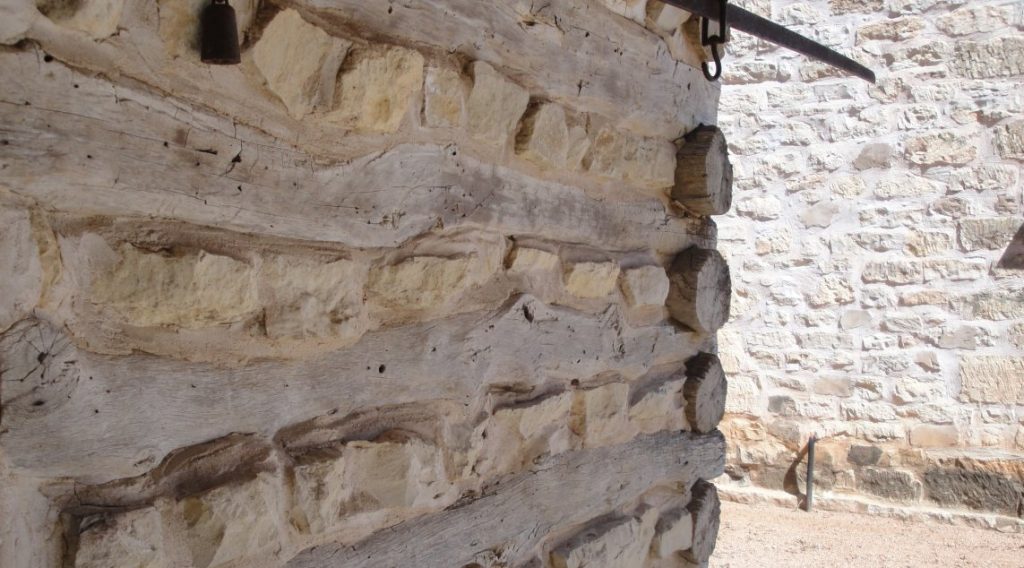
Germans were hard-working and frugal, which meant that they adapted fairly well almost wherever they went.   We visited one of their neat farms – the Sauer-Beckmann farm – near the LBJ ranch.  They have living history, with period costumes, appropriate livestock etc.  The original colonists, the Sauer family, made a “modified” log cabin.  I say modified because logs were relatively rare in this part of Texas centuries ago.  (It is a little misleading to look around today because there are more trees today, since the wild fires started by lightning and Indians have been controlled.) To save on wood, the logs were interspersed with stones, which were common. Making a wall entirely of stone takes longer than making this kind of hybrid.  When they had the time, they made the buildings out of limestone and so later additions were often stone.

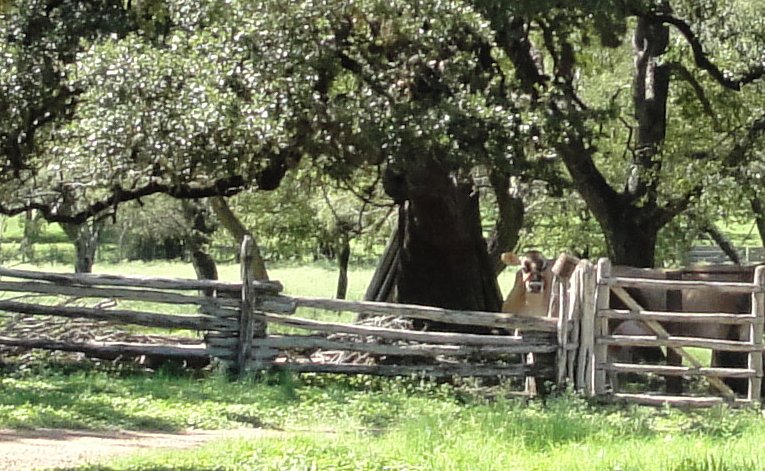
The pictures above and below are from the Sauer-Beckmann farm, part of the LBJ park complex.  One good thing about both is that they have actual livestock. Livestock were a big part of rural life and when they do the recreations w/o them it is not realistic.  Johnson himself left some of his land to the park system with the stipulation that they maintain the place as a working ranch with cattle. 

The Germans fit uneasily into the pre-Civil War Texas because they set themselves apart to some extent and had a superior attitude at times.  More importantly, they were strongly and loudly against slavery.  When Texas voted to succeed from the Union in 1861, the counties with heavy German populations voted to remain in the Union.  Texas Confederates declared the hill country in rebellion – against the confederates.  There were open battles between pro-union and Confederate forces.  Scores of Germans were killed in the fighting, others were shot and hung.  Lynching of Germans was practiced. These episodes of Civil War history are not well known.   Germans being lynched, beaten and murdered because of their stand against slavery doesn’t seem to fit in well with subsequent narratives.

I have written before about Germans in the U.S. and recently about the Amana Colonies. We now have forgetting the contributions of America’s largest ethnic group because Germans and their contributions have become as American as hamburgers, hot dogs and good beer.