Age of Discovery

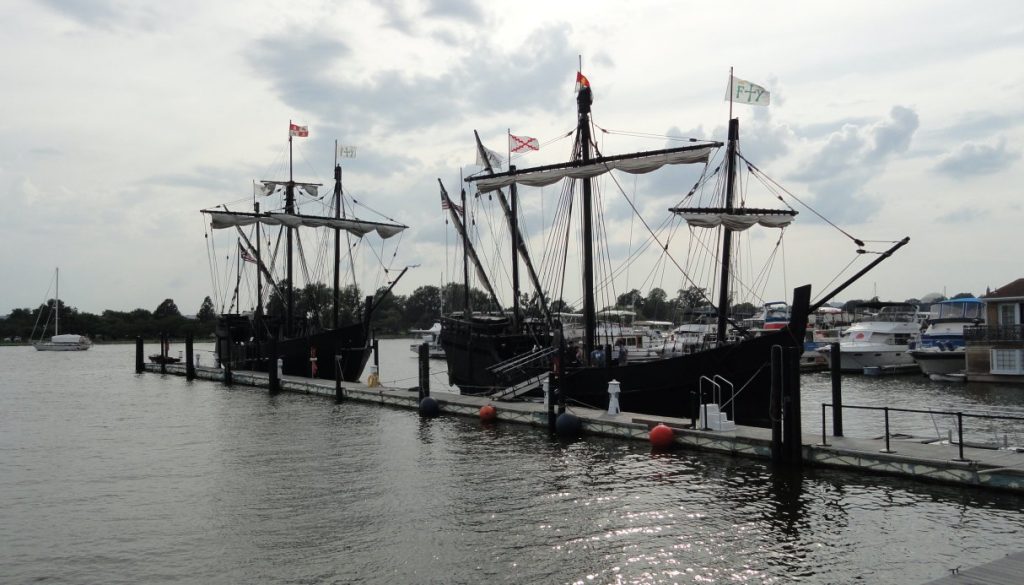
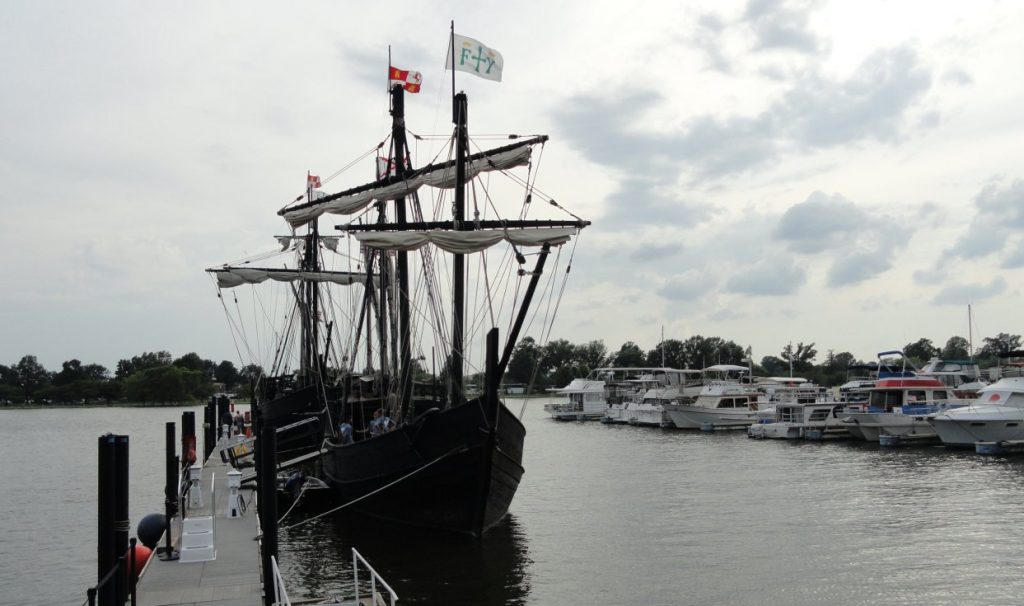
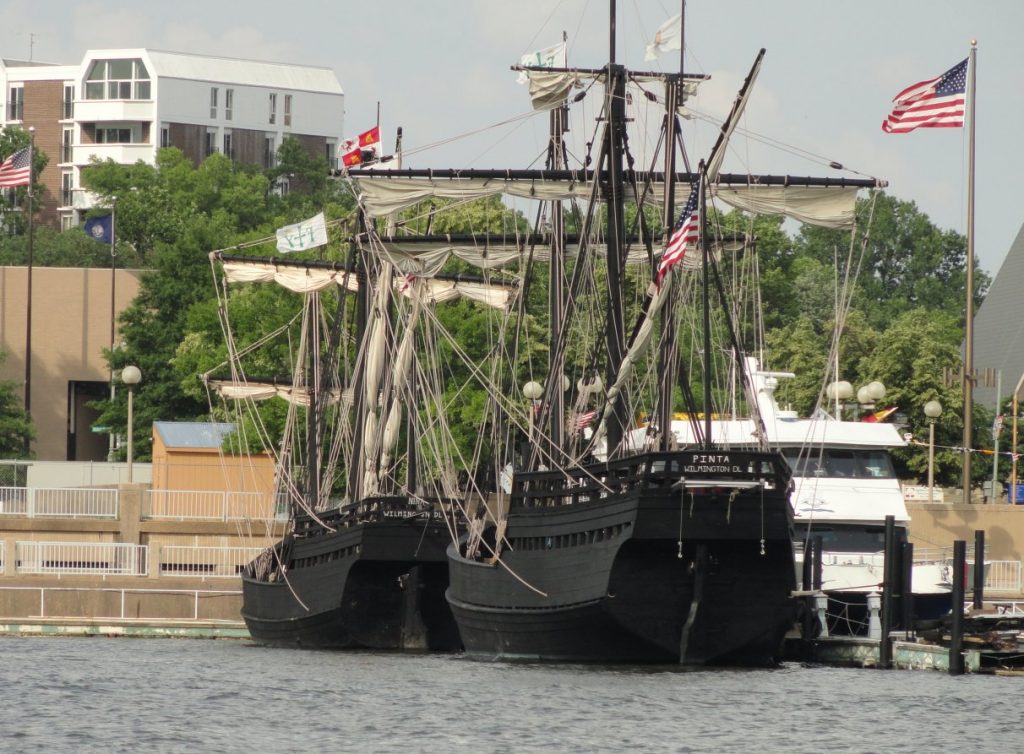
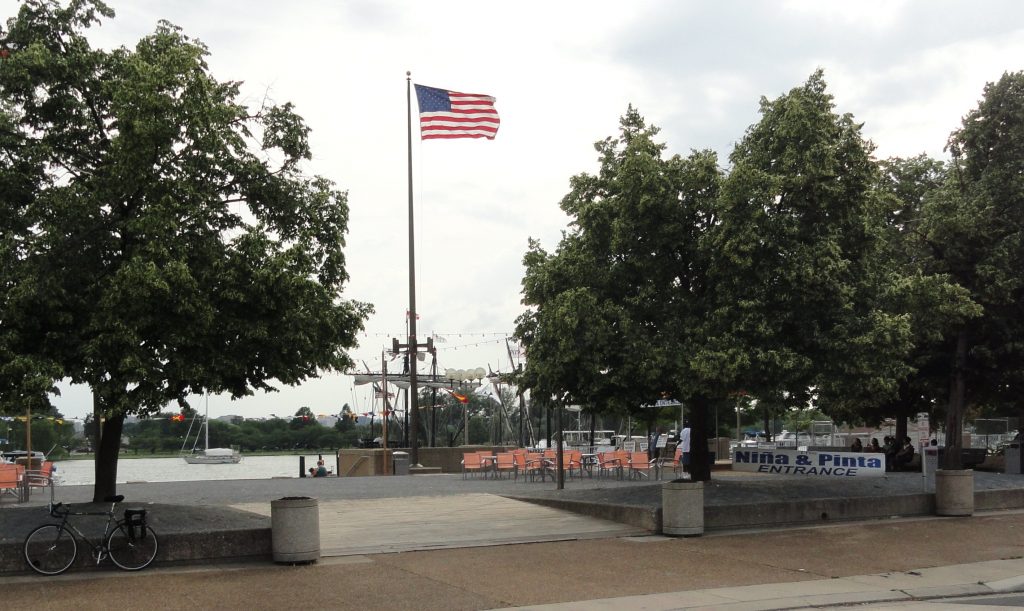
Replicas of Columbus’ ships the Niña and the Pinta were anchored in the Potomac branch in DC. I didn’t go aboard, since I didn’t have much time and it cost $8. I could see everything I wanted to see anyway. The ships were built in Salvador in Brazil. They sail around for exhibitions and, according to the notes, they were featured in the movie “1492”.

These boats are small. I would not want to cross a big lake in one of these things. You can see some modern boats nearby for size comparison.

A statue of Columbus stands in front of Union Station and Washington is in the District of Columbia.  Columbus used to be a hero. We sang songs about him in grade school. Lately, however, he is reviled by some and considered un-PC, since his voyages led to the “conquest” of the Americas. I think it was probably a good thing overall.  I don’t buy into that Rousseau noble savage stuff. Life was nasty, brutish and short in those days for just about everybody. 

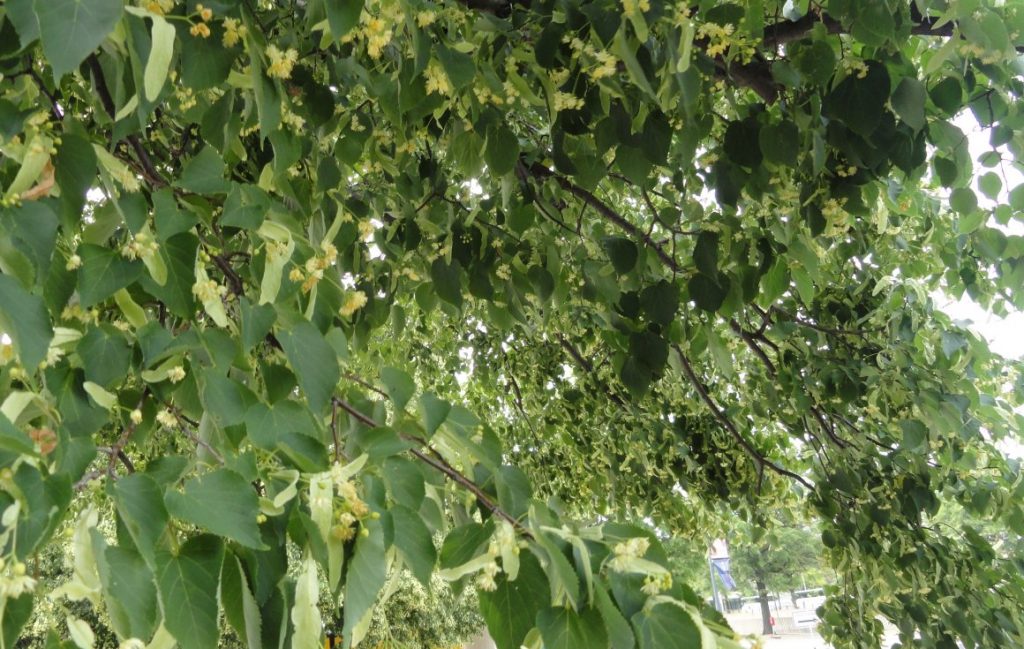
This area of town is changing. They just rebuilt the area around Waterfront Metro stop and it has gone from being seedy and dangerous to being nice and pleasant. Above and below are linden trees in bloom. I really love the scent.  It reminds me of Germany and Poland. I comment on them every year because every year it is nice. The linden is the European relative of the American basswood, sometimes even called American linden. The Euro variety is smaller, but has showier and more fragrant flowers. Bees are fond of the flowers and there is even a variety of honey called basswood honey. They only flower for about ten days. The lindens flower in Europe in late June and July, about the same time as they do in Wisconsin and Minnesota. Here we are a month ahead.

Notice the flag. There was a very strong south wind that brought in rain (see the last picture below)

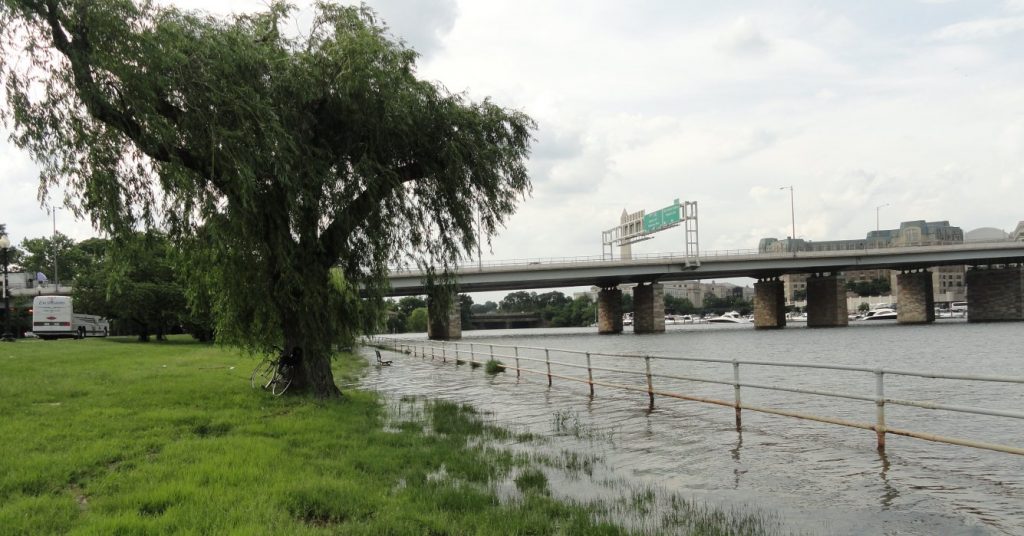
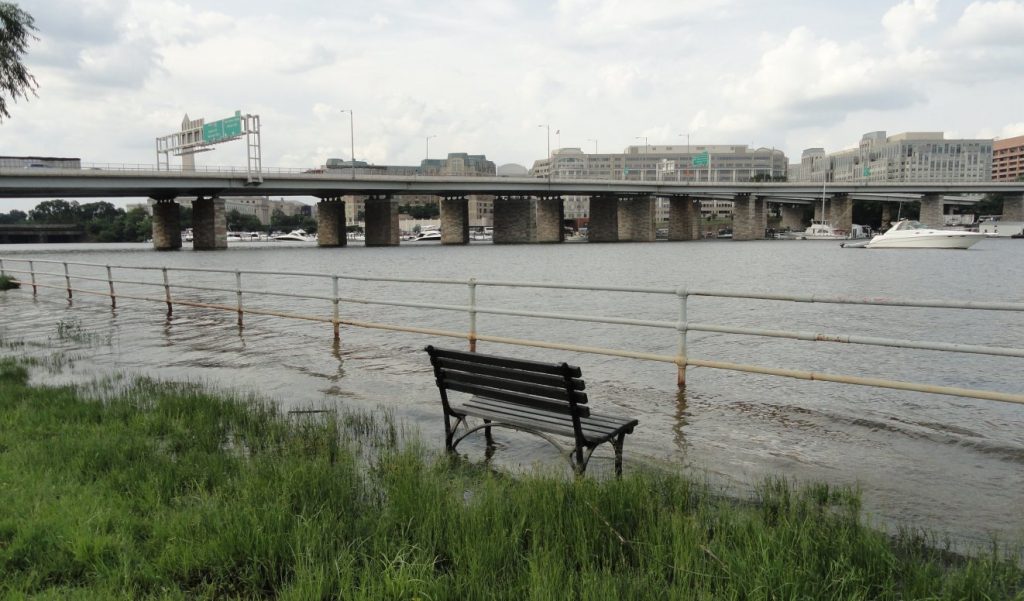
The Potomac is fresh water, but it is affected by tides in the Chesapeake Bay. The tidal basin at the Jefferson Monument is meant to control for some of that. You can see the water flooding over the banks in the pictures above and below. It reaches about five yards farther in at times. At low tide, the place where you see the fence is 3-4 feet above the water surface. 

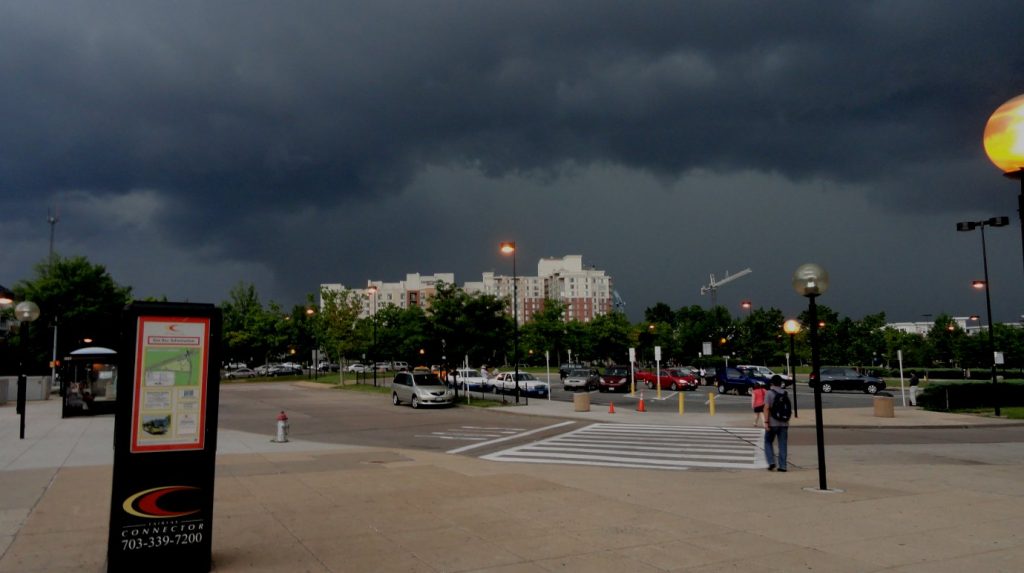
Below are storm clouds racing in at Dunn Loring. I snapped the picture and rode for home. I arrived just as the rain was starting. Literally seconds after I got in the safety of the garage, we had a cloudburst. A couple hours later, it knocked out the power for a while all over. Urban dwellers like us are unaccustomed to the sold wall of darkness. 

American Chestnut

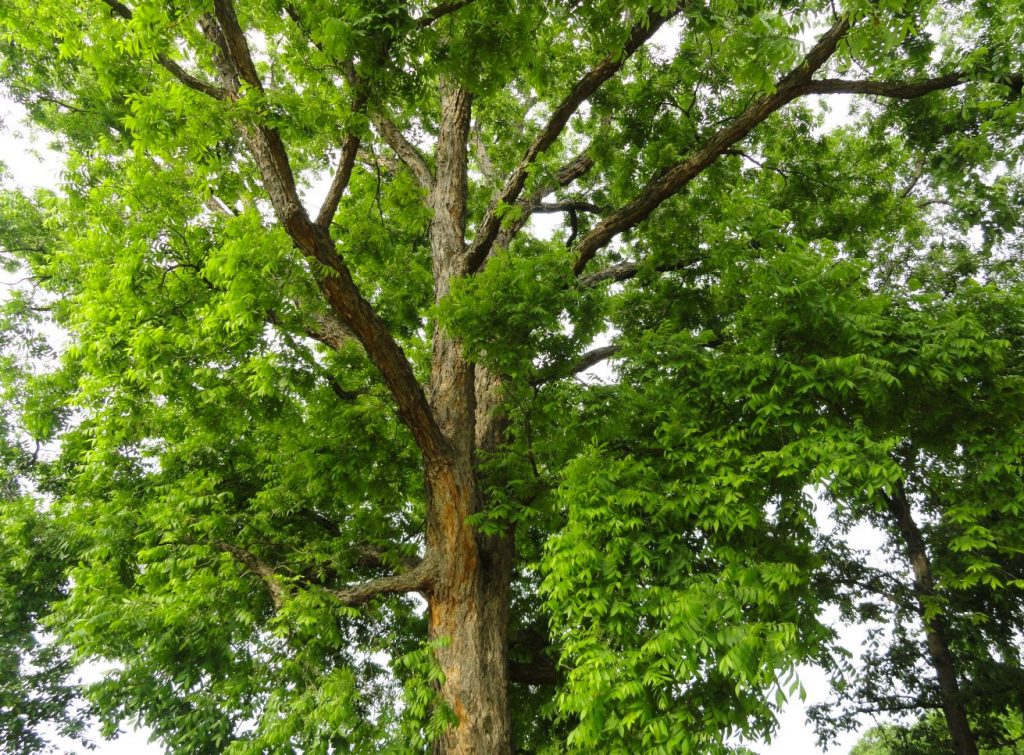
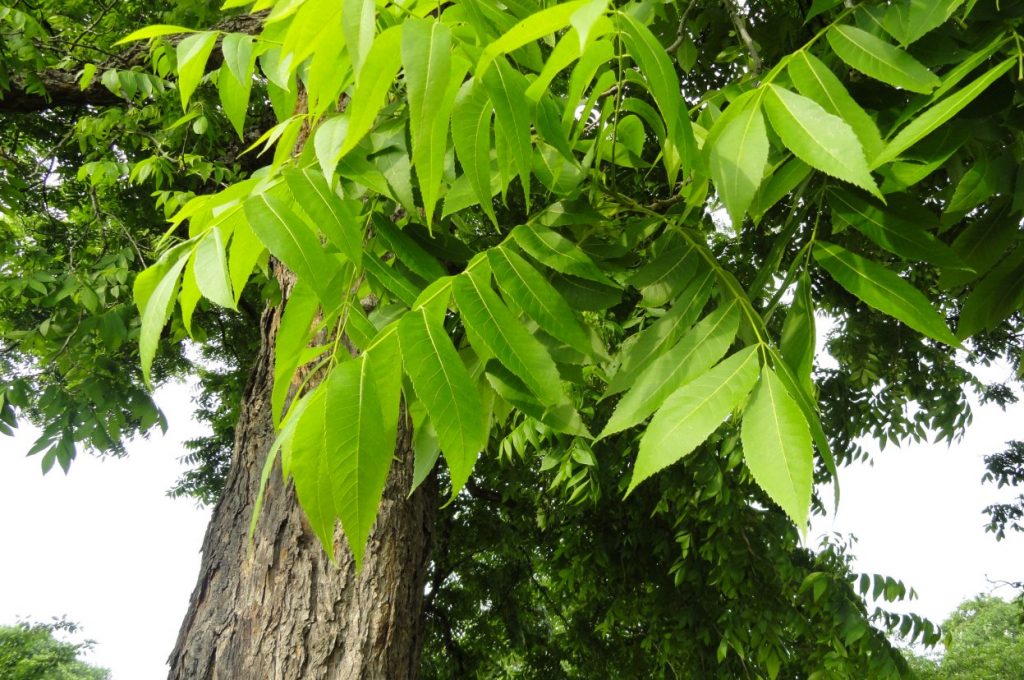
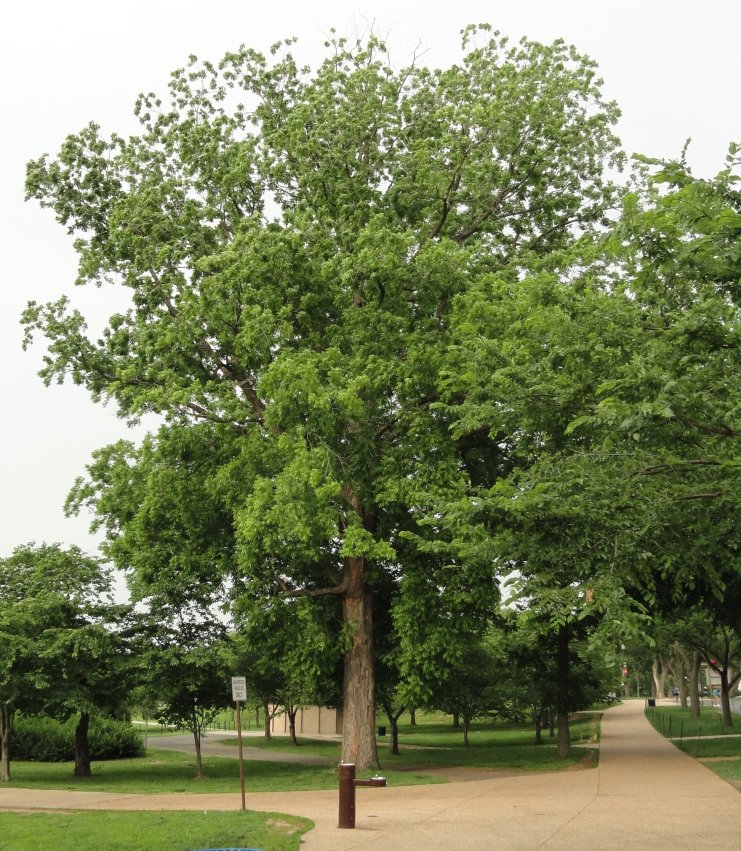
I found one hidden in plain sight – maybe. I was wrong when I said that I would never seen a big American Chestnut.  In fact, I had seen it, many times, but didn’t look close enough. I actually had noticed the big tree before, but I rode past it on my bike or ran past it w/o stopping or looking closely.  I just assumed it was a big oak tree, maybe a chestnut oak, which has similar leaves.

Back in October I was walking (instead of running or biking) near the Washington Monument and walked under the tree. The bark wasn’t right for an oak tree, I thought. The leaves looked like the pictures of chestnut leaves I has seen, although I never had seen a live one. I almost just forgot about it, as I probably has a few times before, but I noticed that the Park Rangers were nearby, so I asked them about the tree. They didn’t know, but promised to consult the guy who knew all the trees. I left my email address, not really expecting a reply. I got a reply telling me that it was an American chestnut.

I don’t know for sure if that is true and I have trouble believing it. I waited until it leafed out again this spring. I won’t be here in fall to check for chestnuts. It looks like the pictures I have seen. Of course, it could be some kind of European hybrid.  It is a nice big tree, in any case.

Bioenergy

Bioenergy is part of any energy solution, but it is not THE solution and the idea that bioenergy will soon make a large part of the American fuel mix probably violates the laws of physics and certainly is not justified by our levels of technology or economics. 

Oil and gas are forms of bioenergy; they are just the fossil forms. Although when we say bioenergy, we almost never mean oil, gas or coal, remembering their ultimate origin helps understand the challenge of bioenergy today.  Coal, gas & oil were once living organisms. For millions of growing seasons, ancient forests laid down these carbon-based energy riches. There is a geological period in deep time called the Carboniferous, because so many of our coal resources were laid down during it roughly sixty million. During this period, vast tropical rain forests expanded and then collapsed due to rapid climate change.  This one period and there are many more millions of years.   

When we are producing bioenergy today, we are using the product of one growing season, or at most that of dozens in the case of wood. You can see how our ephemeral efforts seem feeble in comparison to the millions of years and many trillions of life forms that produced the fossil fuels. Gasoline from fossil fuels is a superb liquid energy source that gives us more energy per gallon than almost anything else.  A gallon of ethanol yields only around 80% of the energy of a gallon of gasoline. A pound of hydrogen contains much more energy than a pound of gasoline, but hydrogen weighs less than air and a pound of hydrogen takes up more than ten times as much space as a pound of gasoline. Even with its greater energy output, a gallon of hydrogen produces only a little more than 25% as much as a gallon of gasoline.

I digress into the geological and physical facts because I enjoy such things and also to explain the origins and weaknesses of biofuels that are often overlooked. To continue with the mainstream article … 

There are many varieties of bioenergies. GMOs promise to deliver biodiesel & other forms of energy from many varieties of plants. We can already produce fuels from things like oil seeds and palm oil. Some of these things have significant ecological costs. For example, rain forests are sometimes removed to plant oil palm. These things can add more greenhouse gases than they remove.   

In the profound understanding that yesterday’s solutions are today’s problems, we should be careful, understanding that some of today’s solutions will be tomorrow’s problems.   

The most promising bioenergy that might replace petroleum is not really bioenergy at all, but rather is a byproduct. Much of our modern industrial society is petroleum based and much of that is not the stuff we burn.  Plastics, drugs, fertilizers and many composites even the paving on our streets is petroleum based.  We could replace liquid petroleum fuel a lot easier than we could do without many of these petroleum based products.  But when we recall that petroleum is a biofuel, we can see that we could use bioenergy production to replace petroleum in many of these uses. In fact, Middle Eastern potentates feel more acutely threatened by developments in alternative materials than they do the development of alternative fuels. As long as we need the “byproducts” production of oil etc is assured.  

The most famous liquid bioenergy is ethanol. Ethanol is criticized because its production can be inefficient (i.e. consume as fossil fuel as it replaces) and the feedstock is usually some form of food and/or the production of the crop for ethanol displaces a food crop.  

The first criticism can be valid. You can make ethanol from almost anything that grows in the earth, but some are less efficient than others. You have to look at the precise circumstances. The idea that it displaces food production is one of those things that make intuitive sense, but it not true.  

The displacement argument is based on a zero sum thinking that is rarely valid. A modern diversified agriculture produces a variety of crops in a variety of ways. These crops can complement each other and allow greater productivity. For example, some farmers plant sugarcane (a multiyear crop) followed by corn and then by soybeans.  One crop enriches the soil for the others.  It also can make sense to intersperse crops.  In any case, the U.S. has produced more food and feed in the last five years than in the previous twenty while simultaneously producing a bumper crops for biofuels. It works on the small scale as well. Poor farmers in Tanzania, for example, have had success in producing cassava and sunflowers, used in bioenergy along with the crops they eat. Production in general has increased, while addressing the problem of persistent energy poverty.  

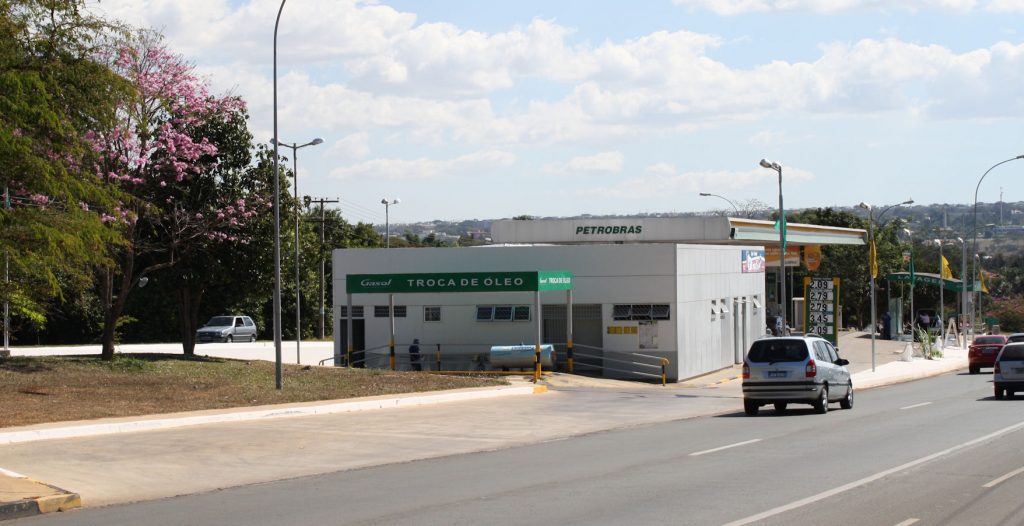
Biofuel is not the same as bioenergy, which is a broader term. This is clear in the production of ethanol.  Ethanol production from sugar cane is very efficient because of the energy potential of the feedstock itself, but also because of the usefulness of the “waste” i.e. the stalks called bagasse. Burning these residues produces enough energy to completely fuel the ethanol production plus surplus energy that can be fed into the national grids. (In 2010, the EPA designated Brazilian sugarcane ethanol as an advanced biofuel due to its 61% reduction of total life cycle greenhouse gas emissions, including direct indirect land use change emissions.) 

All new Brazilian vehicles are flex fuel and Brazilians consumers have the choice of ethanol or gasoline at the pump. They make choices based on the relative prices. When the price of ethanol moves above 80% that of gas, they buy gas. Ethanol prices have been high in recent months and so Brazilian drivers have been opting more and more for gasoline, while Brazil, somewhat ironically, has been importing ethanol from the United States. The United States is both the world’s biggest consumer and producer of ethanol. Brazil is second; between our two countries we account for 87.8% of total world production. Brazil and the United States partnered to share techniques and technologies among themselves and with developing countries in the Caribbean and Africa.  

The Holy Grail of ethanol production is ethanol from cellulose, i.e. wood chips, corn husks, switchgrass etc.  President Bush mentioned this as a goal in his State of the Union speech in 2006. President Obama has reiterated this pledge. Presidents, BTW, have been making similar pledges on various technologies since Richard Nixon. Anyway, they always say the technology will be available about 5-10 years from the time of the speech. It is a good round number that allows them to take credit but largely be out of the way when it doesn’t happen.  

IMO, biofuels will never come close to replacing petroleum as a liquid fuel source. The science is still not available, but as importantly it lacks practical or economic sense. Cellulose is common in farm and forestry wastes and is “available” as a feed stock, but it also has other characteristics. Most notably, cellulose waste is bulking, heavy and it tends to burn well. It will never make practical sense to move all this stuff to factories to be turned into ethanol, a process which will produce relatively little energy in return for the massive input. The most useful alternative is what the Brazilians already do with bagasse and what many pulp, paper and wood mills do with their sawdust and scraps: burn them on site to produce electricity. This is a good use if we remember the more inclusive word bioenergy instead of the narrower biofuel.

This woody biomass is a vastly underutilized bioenergy source. If we use electric cars, it would be good if the electricity is produced from a carbon neutral source such as woody biomass. Why take the expensive and less effective extra step of turning it into ethanol?

Anyway, I see bioenergy as an important part of future energy portfolios, but never anything close to a really major solution. We just do not have enough land to produce enough biofuel for even a small percentage of our vehicles.  On the other hand, bioenergy and byproducts can form an important part of materials we use and additives in other products. For example, using ethanol as an oxygenator in gasoline makes a lot of sense – burning the stuff in pure form, not so much.

In an uncertain world, you have to try all of the above with a wide portfolio of solutions … and be ready to be flexible when some of your favorites don’t work.  
Burning it Away

I bragged a few days ago about getting 52 miles to the gallon when driving on a smooth, flat and almost traffic free stretch of road on Michigan’s Upper Peninsula. Yesterday I had to waste ¾ a tank of gas.

We are shipping our RAV 4 to Brazil. It cannot be shipped with more than ¼ tank of gas, so I used up most of the gas and planned to send it along. Unfortunately, Espen forgot my admonition NOT to fill the tank when we were gone. He so rarely fills the tanks with gas, that I was surprised when we got home about 6pm yesterday to find the RAV 4 full of gas. I quickly learned that you really cannot siphon gas out of a new car, so Alex and I drove all over Northern Virginia and Maryland to get the gas down to the expected level.

On the plus side, a RAV 4 gets decent mileage for a SUV. It was doing about 27 miles per gallon, which meant we had to drive for hours. We drove down I66 to Winchester, almost in West Virginia. Going there and back took us down only to a half tank, so we drove completely around the beltway, through Maryland and back to Virginia on the other side until we just touched the quarter tank. 

If I would have had another day, it would have been good to go somewhere using that fairly expensive gas.  It is ironic, since I usually try so hard to save fuel, driving the kids nuts by gliding to stops and never accelerating too fast. It was not a complete loss. I had a good talk with Alex in the hours we spent driving with the only object of burning fuel quick as possible.

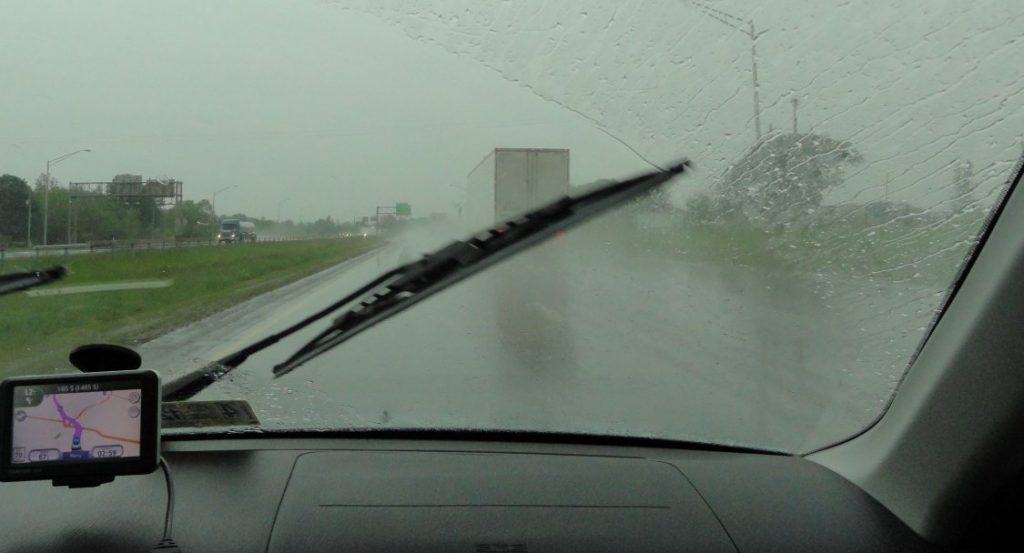
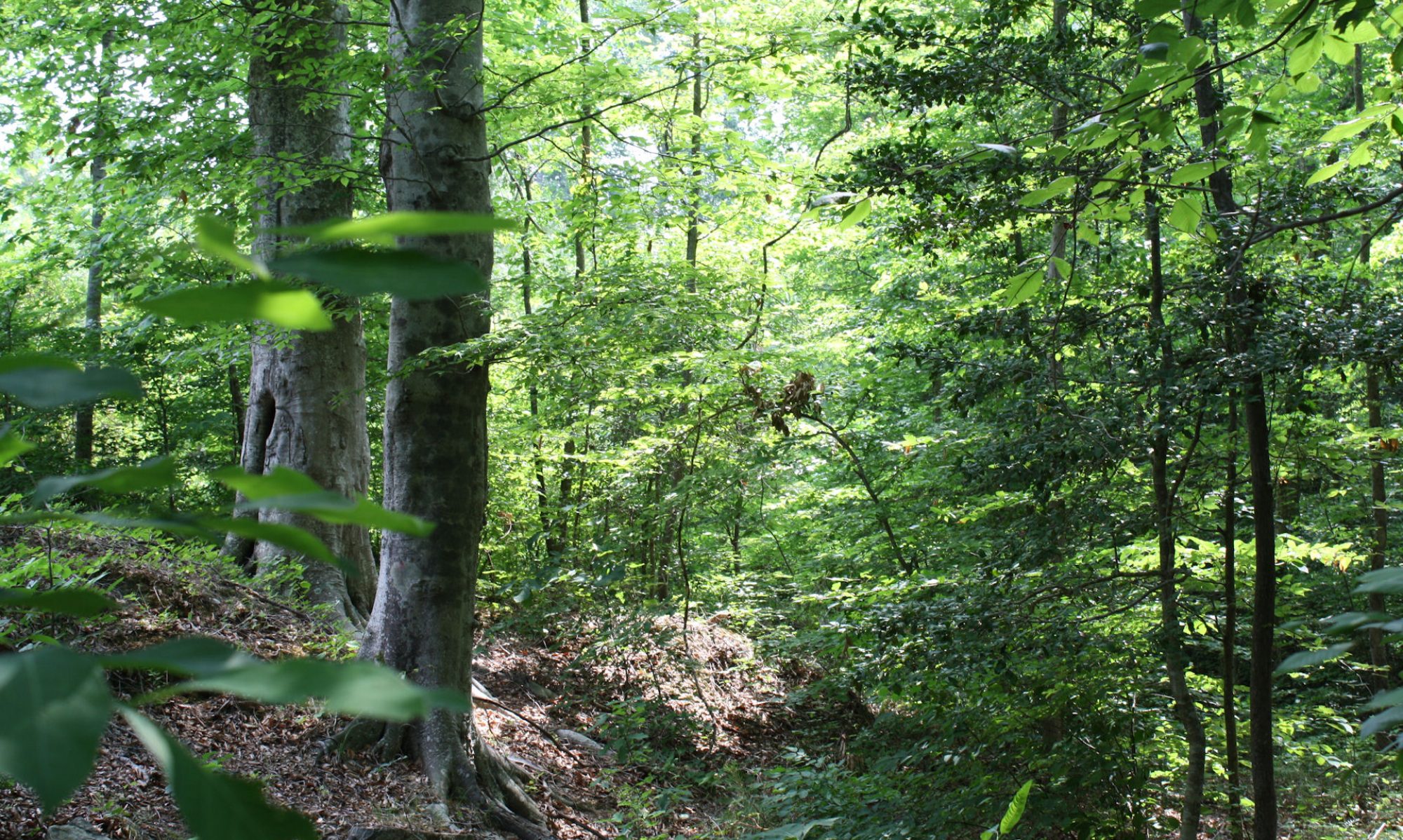
The picture up top is left from our trip. It is the heavy rain through Indiana on I65.

Nanotech will be Big

A nanometer is a one billionth of a meter. How small is that?  It is so small that a human hair is 100,000 nanometers thick, an average man is 1.7 billion nanometers tall, a strand of DNA is 2-3 nanometers & an atom is 1/10 of a nanometer. You can’t see a nanometer with your naked eye or even with the most powerful optical microscopes.  But we can see them with our electronic microscopes and we can now manipulate matter at the atomic level. This is nanotechnology, one of the most exciting industries of the future.  

I don’t understand the physics, but I am excited by the possibilities. What our expert told me today was that for most of our daily lives, the things we can see with our eyes, Newtonian physics works just fine.  But when things get very small, on the nano level, elements behave in different ways. A nano-particle is not the same as a molecule.  Molecules are stable. Nano-particles are not because they behave according to the rules of quantum physics.

It’s like alchemy. Our experts explained that nanotech cannot turn lead into gold, but it can make an element like lead behave like gold in certain circumstance. For example, gold can be used as a catalyst in some situations. At the nano level, a cheaper material such as copper can be made to perform like gold. This is way beyond my level of understanding, but it has to do with surface areas. The surface areas is the only part that really interacts. This is as far as my science goes. 

One of the interesting uses mentioned was to use nanotechnology to minimize the need for or even replace so-called rare-earth elements.  In recent years, the Chinese have cornered the market on many of these.  We don’t require vast quantities of materials, but they are crucial to the production of many high-tech products.  Nanotech will allow us, once again, to do an end run around a would-be monopolist.  

Nanotech is an enabling technology. For example, nanotechnology is already being used in medicine. A nano-particle can deliver medicine directly to cancer cells and kill them w/o affecting neighboring cells. Some nano-particles can be activated by infrared or magnetism. In that case, a nano-particle could be directed to a cancer cell and then activated to get hot and kill the cancers. These advances have developed only in the last five years.  

We are now familiar with the stain repelling, wrinkle free fabrics, even sox that won’t stink. These were developed using nanotechnology. We also have self-healing paints. For example, a car paint can cover its own scratches. The closest thing to a mass produced commodity product today are carbon nano tubes. They can be stronger than steel but at almost no weight.  

Nanotech can help with the environment, for example, turning seawater into drinking water with reverse osmosis or using nanotechnology in agriculture and food

Of course, nothing is free and with any advance comes risk. Nano-particles are so small that they can penetrate deep into your body.  They can breach the blood brain barrier, for example. This is great for delivery of medicines but not so good for potentially harmful substances.

R = E * H – i.e. risk equals exposure times hazard. This is how we need to assess risk.  A shark is very hazardous, but if you are not in the ocean and not exposed to it, there is no risk. On the other hand, constant exposure to a low level hazard can be much more dangerous. To most people, bees are a much bigger threat than sharks. Of course, exposure to some things is not hazardous at all.  

In traditional risk management, dosage or amount makes a big difference. In these cases, the difference between a deadly poison and a harmless substance or even a beneficial medicine is often the dosage, even something as deadly as arsenic in small enough quantities is harmless. With nanotech, we are just not sure if that useful rule applies. Researchers disagree. Another uncertainty is just in the production of nano-materials.  We still don’t understand all the processes so there is great variation from batch to batch, even when made by the same people ostensibly the same way. This is why regulating nanotech is a challenge.  

Nanotechnology has the potential to be a revolutionary process. It changes the very nature of matter that we work with. But we do have to evaluate risks versus benefits on individual basis and do so across the whole product lifecycle, i.e. from material to manufacturing to consumer use to final disposal.  

More information from CRS:

Nanotechnology and Environmental, Health, and Safety: Issues for Consideration

Nanotechnology: A Policy Primer

New/Old Milwaukee

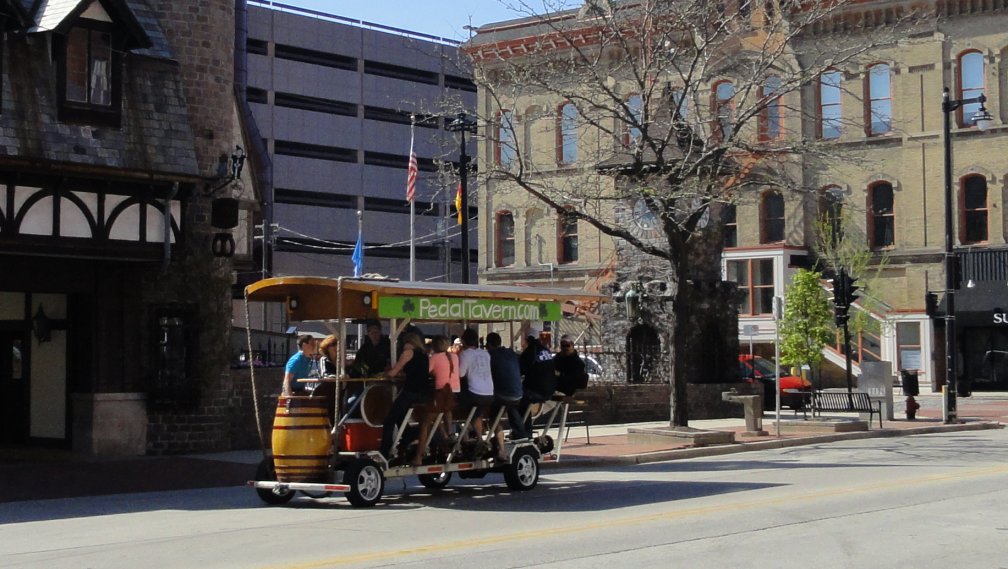
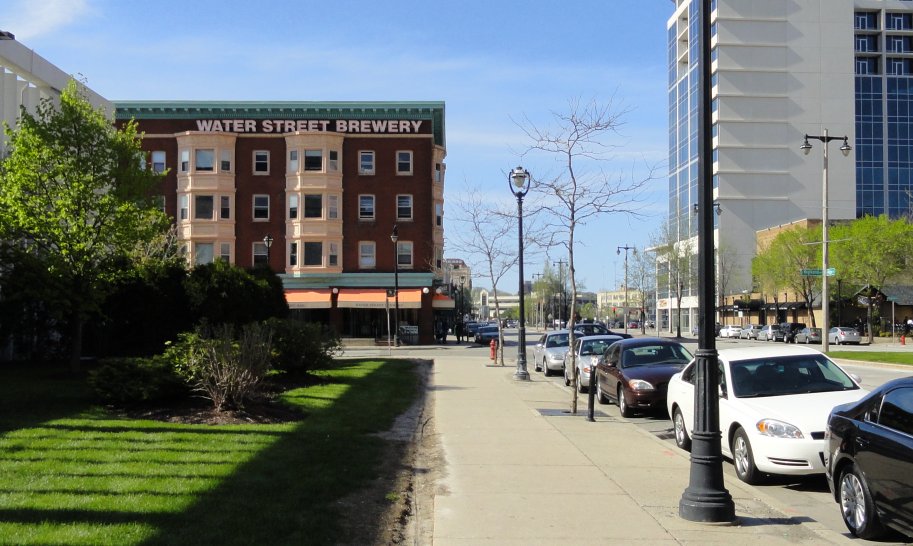
Some things, place & people become trendy about the time they stop being used by ordinary people.  This is what has happened in some parts of Milwaukee and some old habits. I mentioned the decline or disappearance of Milwaukee industry. The old industrial park is now becoming trendy. All those old industrial buildings make wonderful, sun-filled loft condos. Old bars that used to serve beer and whiskey, now serve drinks with cute names along with an impressive array of beers … with cute names.  I thought the “pedal tavern” above was cool. The drinkers have to propel themselves. Everybody seems to be having a good time.

Milwaukee was livelier than it used to be, even if it is more of an afterglow than the commerce we used to have. People with money actually live near and in the downtown, in all those condos. We didn’t see what downtown looks like in the evening, but I understand that nightlife is improved. A lot of these places used to be scary during the day and no-go zones at night.

So I am not sure how I should react. As I wrote in my previous post, the old Milwaukee had jobs and texture that the new one does not. On the other hand, the new Milwaukee is cleaner and more pleasant.  

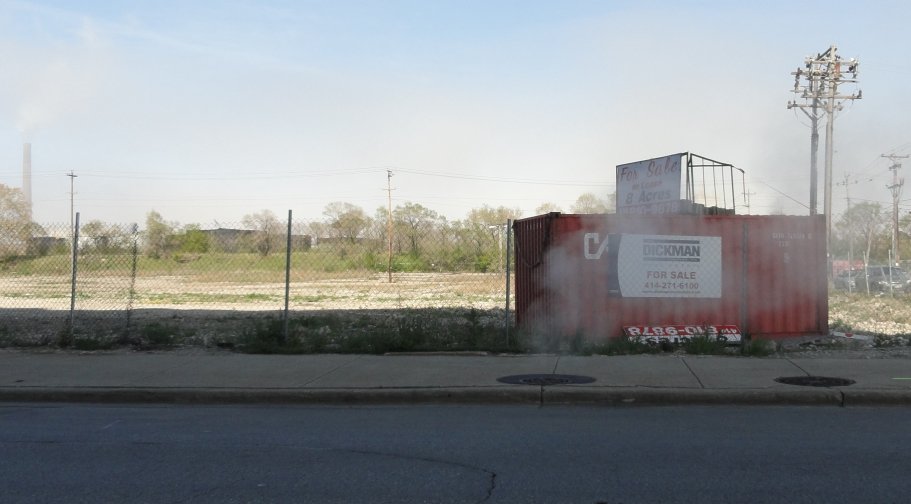
The industry will never return. Industry in general has changed. It takes a lot fewer workers to produce industrial products, so even if industry returned, jobs would not.  Beyond that, no intelligent large manufacturer will ever locate in a old city when they can more easily build a new operation in a new place. An old industrial center like Milwaukee has too much baggage.  Think about a place like the old Grede foundry site. You can see from the picture I took yesterday, that there is now an eight acre site all flattened out and ready to go. But what about the roads? There are narrow, urban streets. A truck would waste hours navigating those streets. And what is below that ground? Industrial processes used to be dirtier than they are today. Many old industrial sites have toxic waste issues. 

Milwaukee is a pleasant place with a beautiful lakefront and one of the best system of county parks in the world.  But it is not a crossroads place.  It is not a prime industrial location.  I grew up during Milwaukee’s industrial heyday and thought it was natural, as did many others. But it was really the end of an era, the last flash, the last hurrah, glorious but ephemeral. Those trendy places represent the future. People will live in the buildings where our fathers and grandfathers worked. Milwaukee can be a great, medium-sized city. But it never again be the industrial city it was. Those times are gone and will never return.

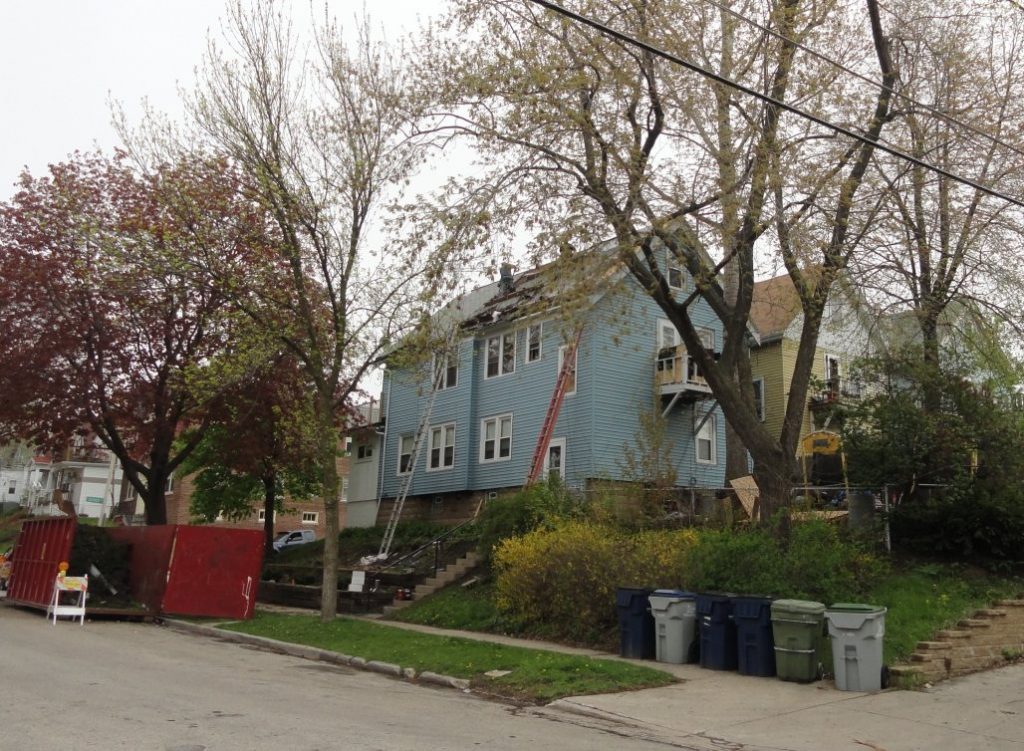
The new people will like the cleaner, more trendy city better and the old people are mostly gone.  Below is our old house. They are putting on a new roof. My father had the roof put on in the late 1970s. The trees are interesting. The crimson Norway maple was planted in 1972. The silver maple was planted in 1967. The horse chestnut in the front I grew from a chestnut in 1966.

Disrespecting the Wishes of the Artist

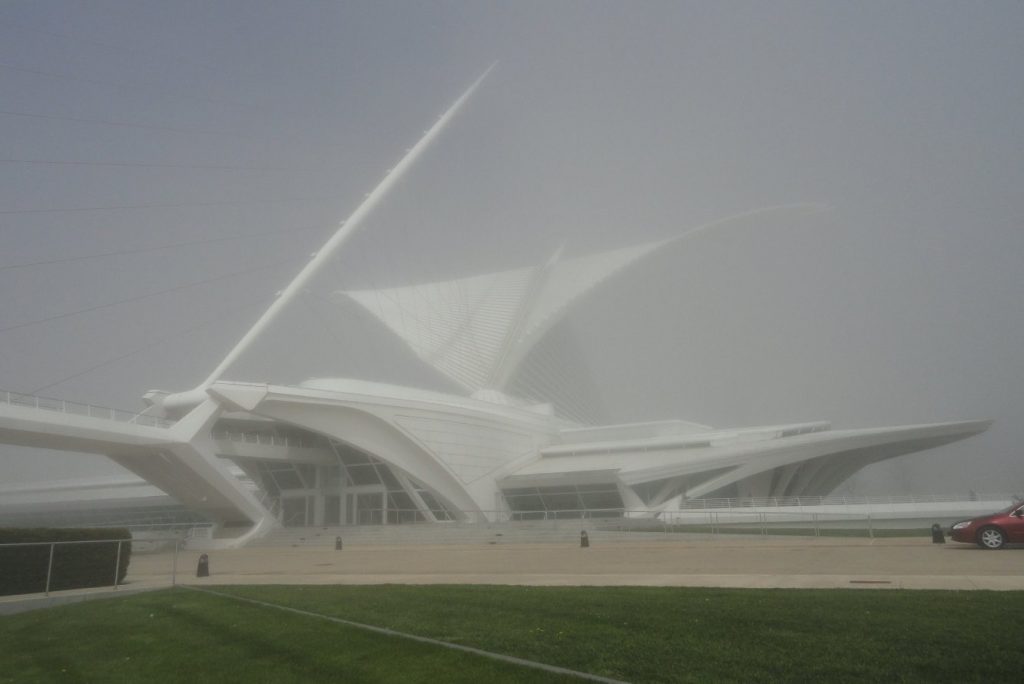
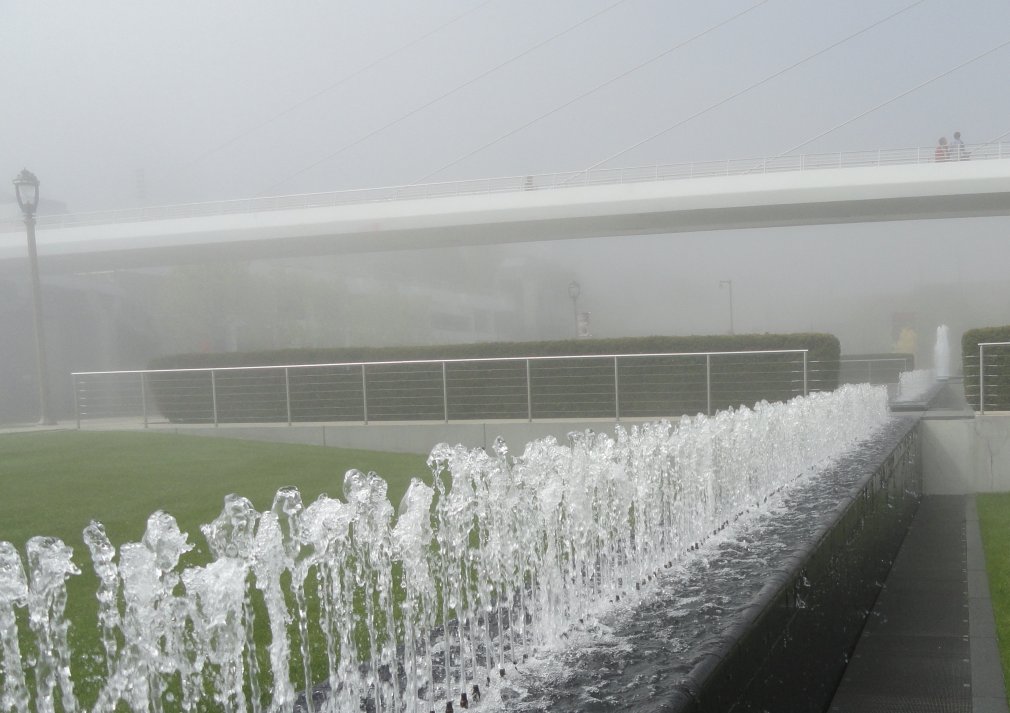
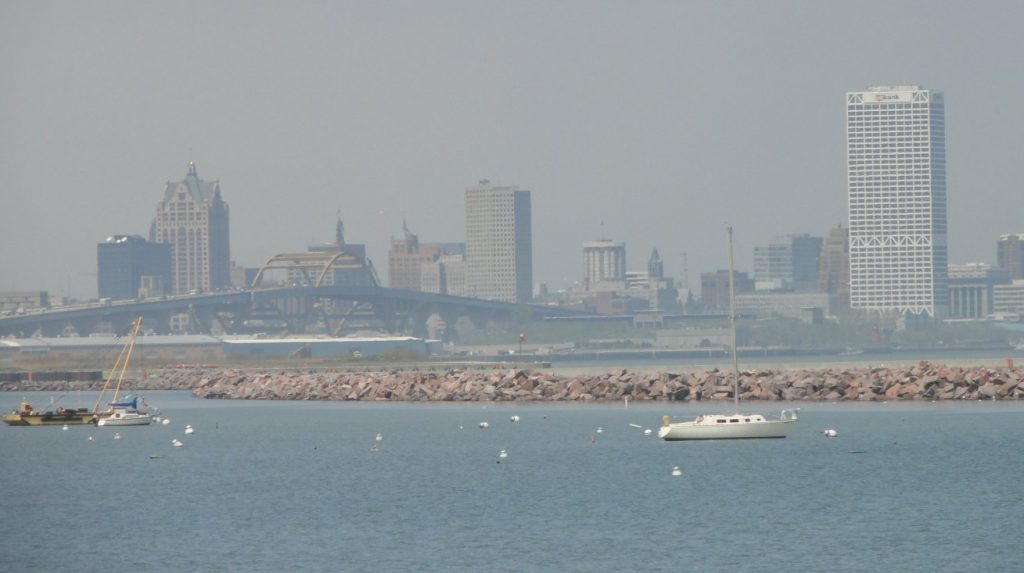
The Milwaukee Art Museum building is itself a work of art, perched on a wonderful location up against Lake Michigan.  Chrissy & I saw it shrouded in the lake mists.   I am sure that the designers anticipated such meteorological events as part of the presentation.


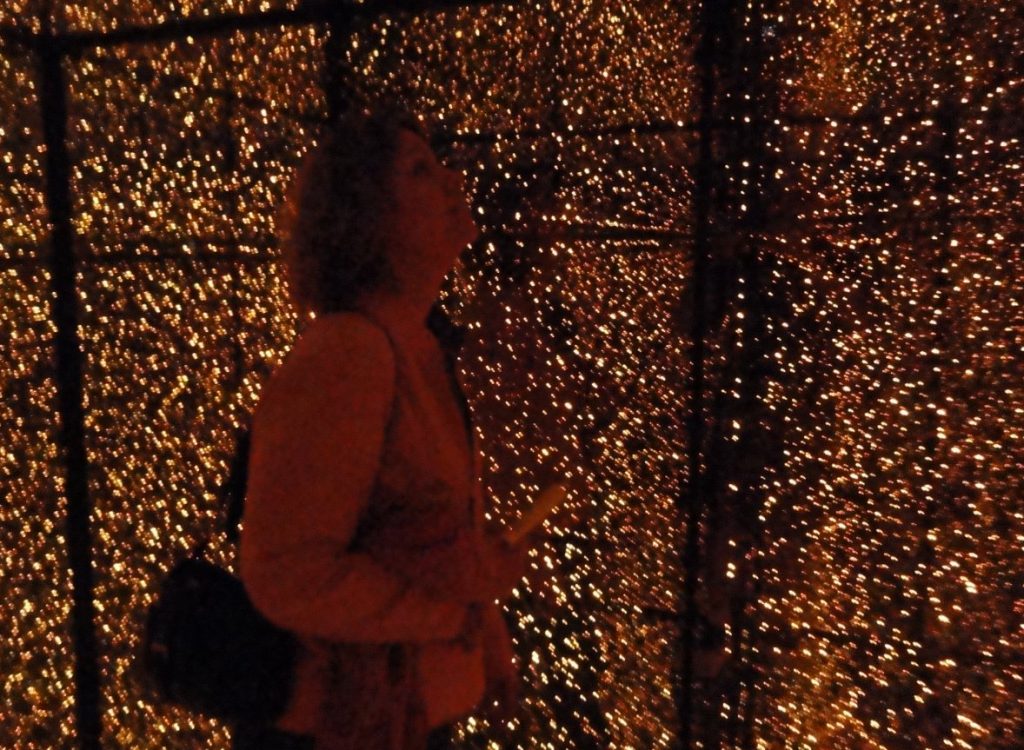
How much does art belong to the artist?  This is a difficult question.  IMO, we revere artists too much.  Artists express themselves through their art.  But it only becomes meaningful when interpreted by other people.   I don’t really think very much of individual expression. Art is a social activity.  Below is a good example. It is the infinity room. The artist evidently thought it represented outer space. Do you think it does? And I think that Chrissy standing there greatly improves the artist’s vision. It is a human showing wonder at the otherwise soul-less light show. So the art was not complete until we stepped into it. And it will not be complete until others do too.

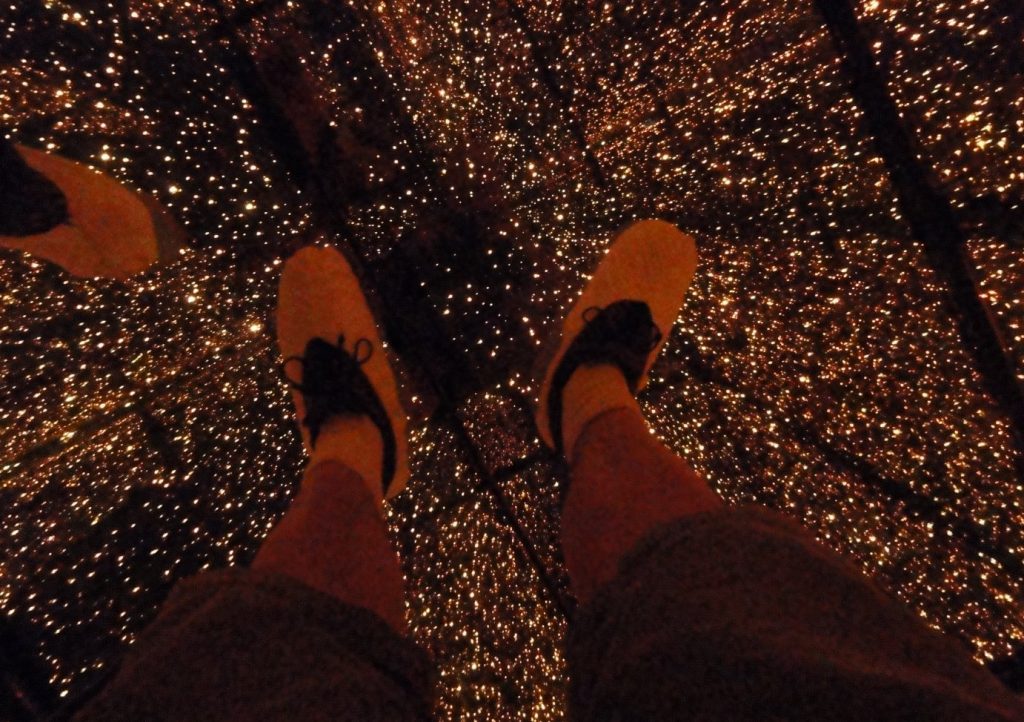
I wrote a couple of posts on this general subject here & here and won’t repeat it here.  I guess the general idea is that art is like a general idea.  You put it out there and other people add to it, change it and maybe perfect it. Below is the infinity room again with my feet improving the art.

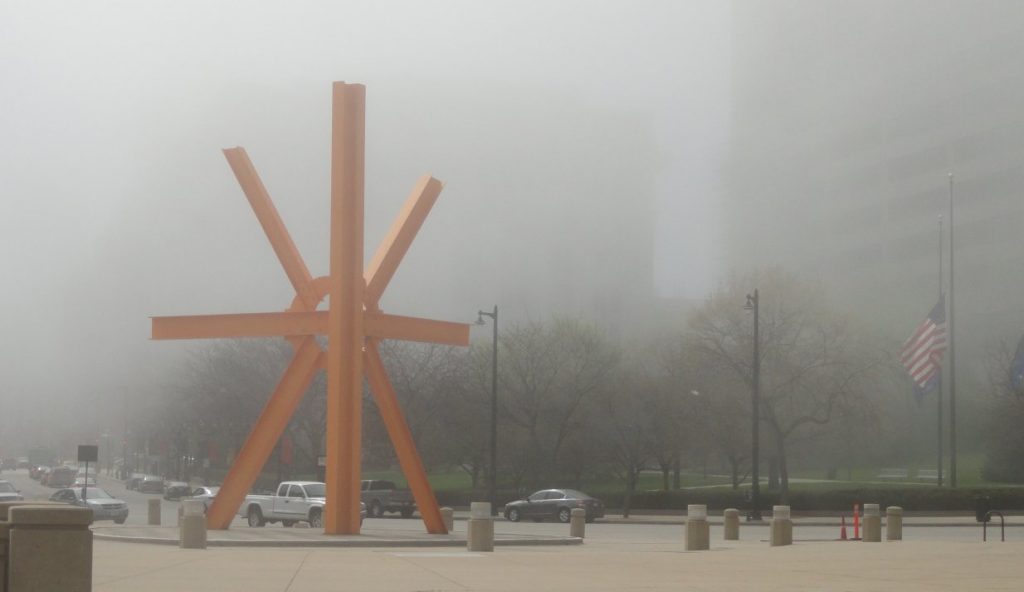
I think it was a good thing when artists had patron who could help call the shots. A lot of great art resulted from the tensions between the creator and his patron.  When artists are left to their own, they too often drift into a kind of self-indulgence.  Art usually improves when it ages because it gets modified or reinterpreted.   Most art is incomplete when the artist gets done with his part.  Below is a “sunburst” sculpture.  It is made our of girders. It is interesting, but the city paid too much for it, since any competent steelworkers could make the same thing. In fact, when the city bought the thing, I recall that some old guy on the South Side made his own smaller version out of scrap steel.  Some art is like the “Emperor’s New Clothes”.

Milwaukee De-Industrialization

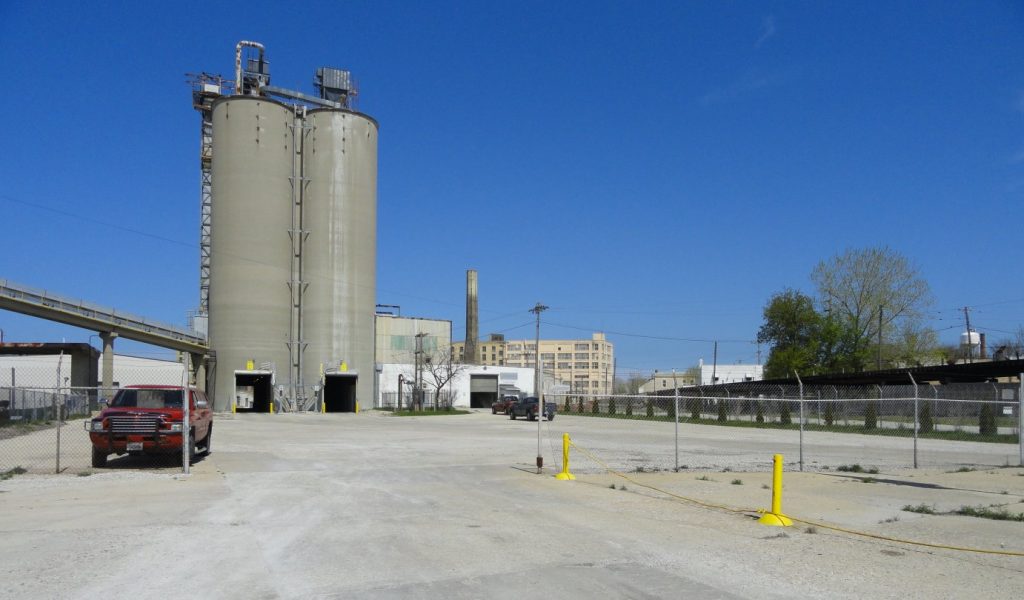
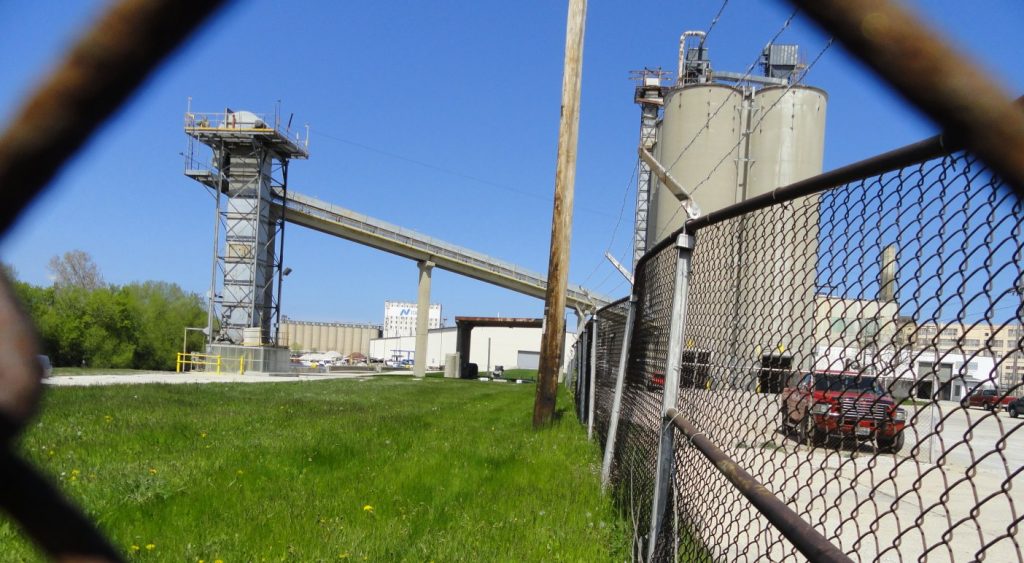
My father’s (and my erstwhile) employer at Medusa Cement seems to have left Milwaukee. There is a company still using the facilities called St. Mary’s. It looks almost the same, which is not surprising since there is not much you can change. The view that you see in the picture above could have been taken when I was worked there more than thirty years ago, except back then there was a big sign saying “Medusa Cement”. They evidently no longer get any cement via rail. I used to work on the hopper cars next to the river. Today the tracks are gone or at least overgrown with grass, as you can see below. The grass is very nice. They must have done something. Strange that you would cultivate such a nice lawn next to a parking lots in back of a rusty chain link fence where nobody goes.

Milwaukee is a very different from the place where I grew up. Milwaukee was an industrial city, characterized by its job-shops & quality tool and die makers. There were also a great variety industries. Many were not particularly clean, but they did provide lots of jobs and good middle class lives.

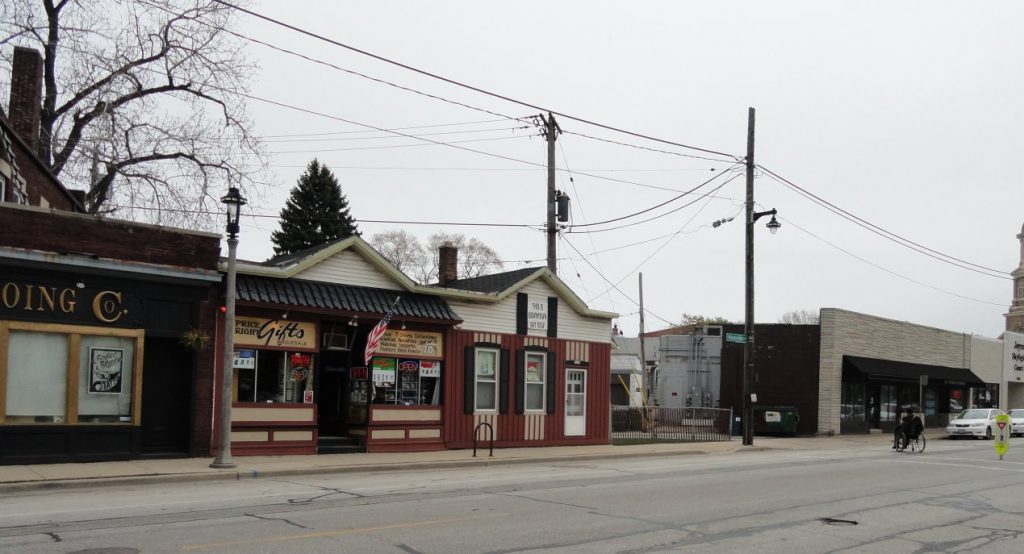
Milwaukee’s industry was written on the wind. I used to ride my bike from my house on the South Side all the way up to Mellows lock-washer Company on Keefe Street on the North Side, where I had my first job.  This gave me a tour of industrial stinks. I started off with the steel-coal smell from Pelton and Nordburg if the wind was out of the west. East wind would bring the smell of the sewage plant, where they processed our flushes into Milorganite. Up the street on First Street, you came into the coke-coal plant.  It had an eternal flame, where it flared off gas. Then you hit the metal smell from Grede Foundry (the location of the foundry is above.) A short distance farther was some kind of tannery. It was the worst stink. Crossing the river, you got a sweet smell from the Ambrosia Chocolate Factory, but this was quickly replaced by the yeasty smell of the breweries.

I didn’t really know that these smells were strange until I went away to college in Stephens Point. When I came back for a visit, I was surprised as the stink.

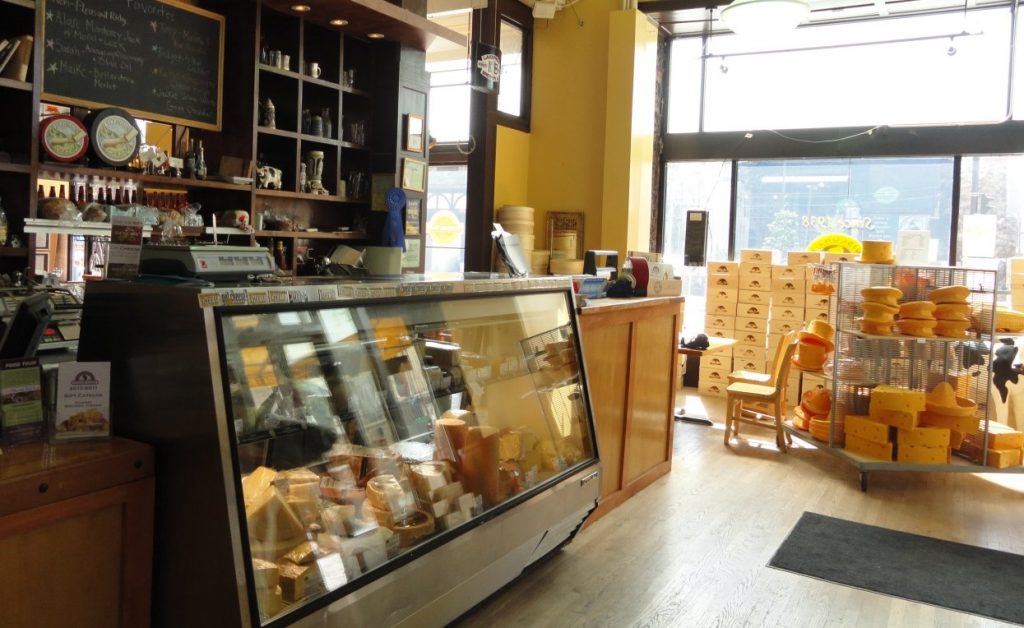
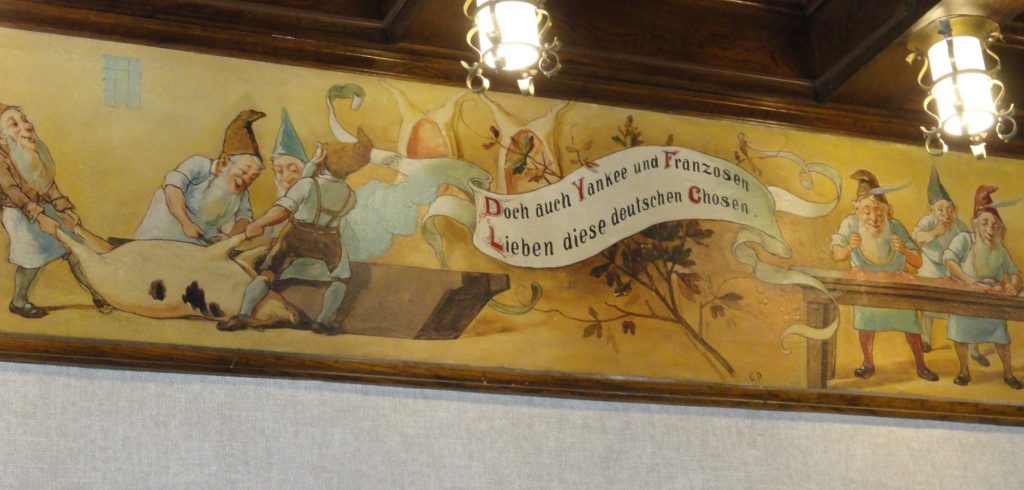
All the smells are gone now. Some is attributable to better pollution control, but more of it has to do with the industries just going away. The sewage plant doesn’t really smell at all anymore. I didn’t detect any smell from the tannery. I don’t know if it is gone or not. The Foundry is now just eight acres of flattened rubble for sale. Pabst, Schlitz and the other Brewers except Miller are gone. Their former buildings are now high priced condos. You can still buy Schlitz & Pabst. I don’t know where they make it but the smell is gone. Milwaukee now has a few craft brewers (you can see a picture of one above) but the baseball team name – the Brewers – is the only tangible remnant of what was once America’s greatest beer city. The coke-coal plant closed down years ago. It couldn’t meet pollution rules and the inefficient plant couldn’t compete economically. I don’t know what happened to Ambrosia Chocolate, but there is no sign of it.

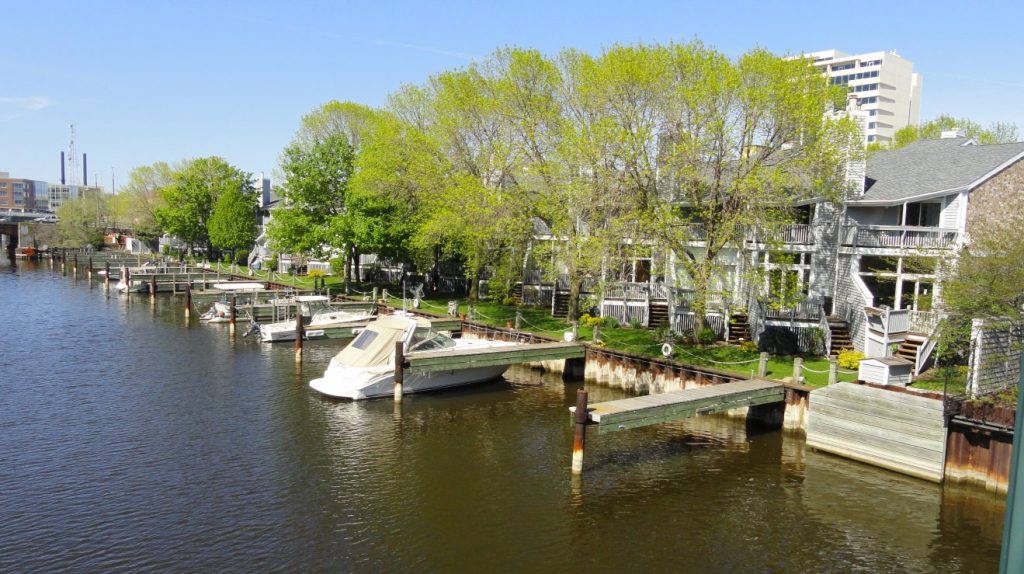
The rivers are also cleaner. The Kinnickinnic River used to come in a variety of colors, since there was some kind of paint factory up stream. The Milwaukee River just stunk. It picked up all the industrial waste of the Menominee River than lots of its own. I didn’t believe my aunt Florence, who told me that she learned to swim in the Milwaukee River. I didn’t want to even get splashed by that water. Today there are upscale condos along the river and a river walk that attracts people. The condos come with their own yacht slips. I suppose you could swim if you wanted to. I still wouldn’t, unless somebody pushed me in.

Everything is cleaner now and more pleasant. I even read that Milwaukee is “cool” and the our old blue collar Pabst Blue Ribbon has become kind of a trendy drink, but I still sometimes miss old Milwaukee. 

Fog Season & the Woods of Home

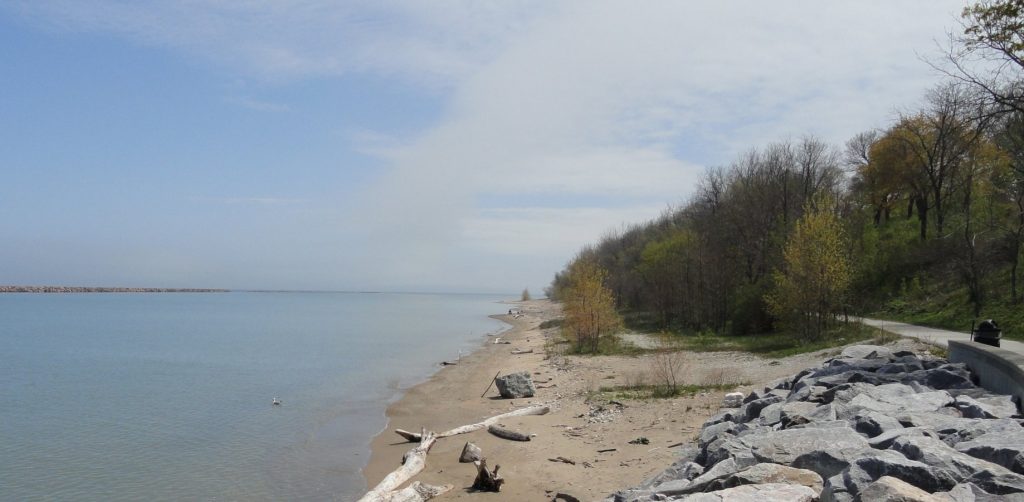
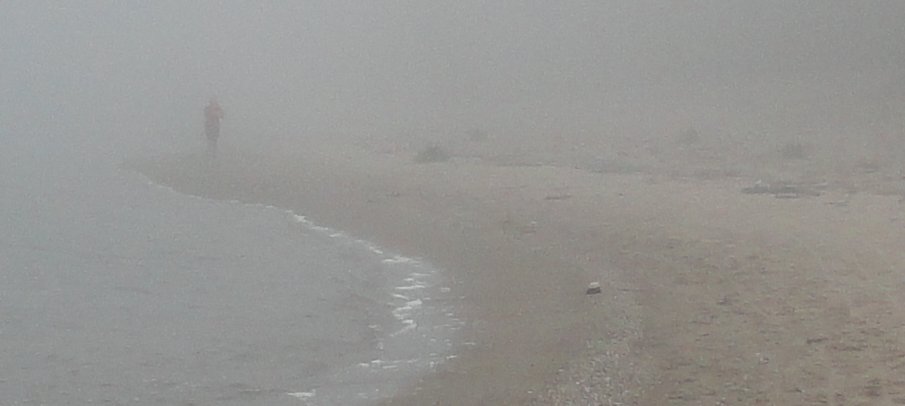
For two days, the fog & the sun fought over a half mile of shoreline w/o conclusion. It never pushed more than a quarter mile inland and didn’t hang more than a quarter mile out in the lake.   It was a funny kind of fog, very bright. It could make you squint.

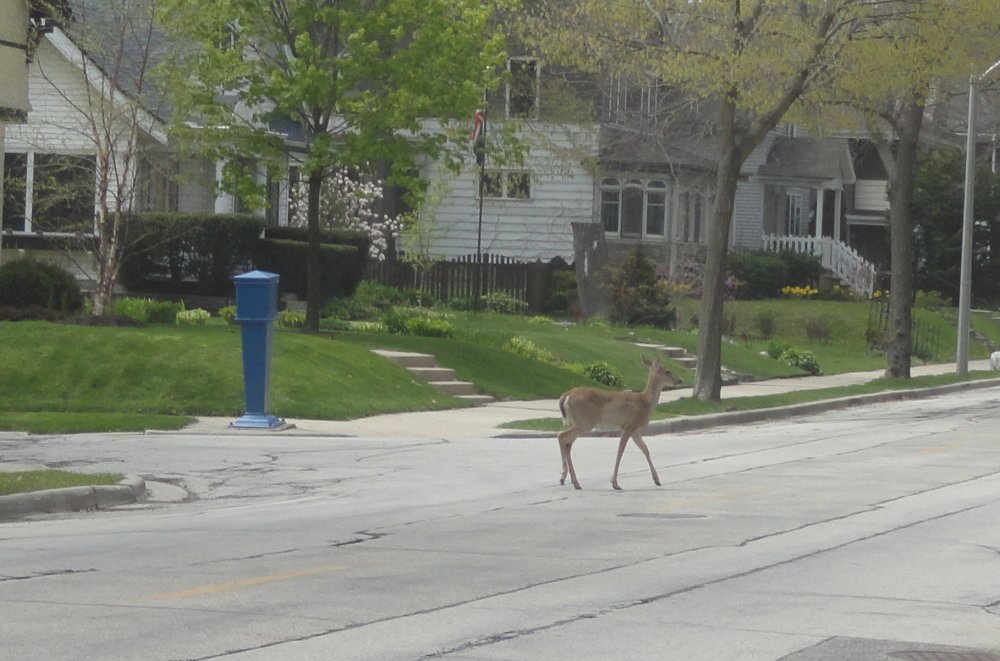
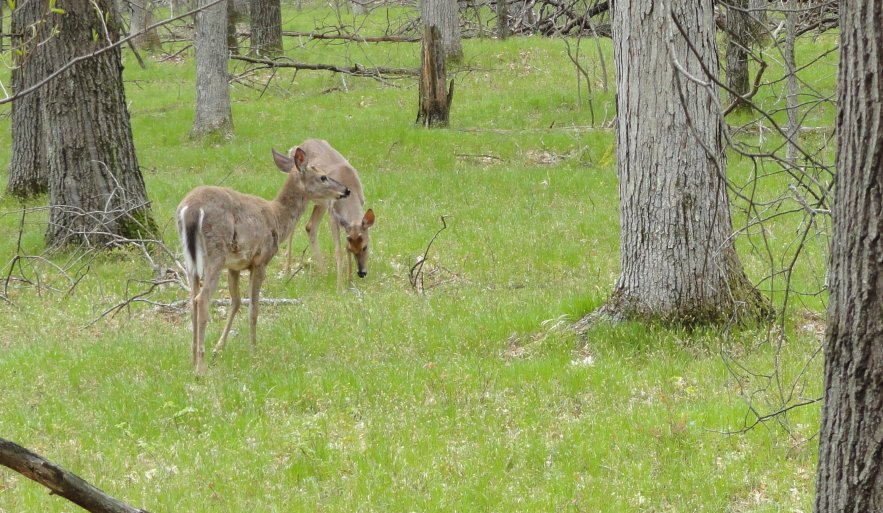
I was down at the Lake four separate times, so I saw the variety.  Chrissy (sister) and I got down to South Shore under sun and blue sky. By the time we walked to Bay View beech, it was so foggy that you couldn’t see clearly even ten meters ahead, as you can see in the picture above, with the runner coming toward us out of the fog.  It was just a little like a soft focus picture by time we got back along Superior Street, where we saw the deer wandering the roads, as you see below.

Chrissy J and I went down to Grant Park.  Actually, I ran from Warnimont to Grant ravines and met Chrissy there.  We walked done the Seven Bridges trail, built by the CCC many years ago.  Unfortunately, one of the bridges has collapsed.  I don’t think they are going to fix it, since they just removed the debris w/o doing much of anything else.  I have a theory.  I think they cannot repair the bridge because if they did they would have to upgrade it and the whole trail to make it ADA compatible, which would cost big bucks and ruin the ravine by putting up a wide, sloping paved path.  Nothing can be done inexpensively anymore.
Beech-maple

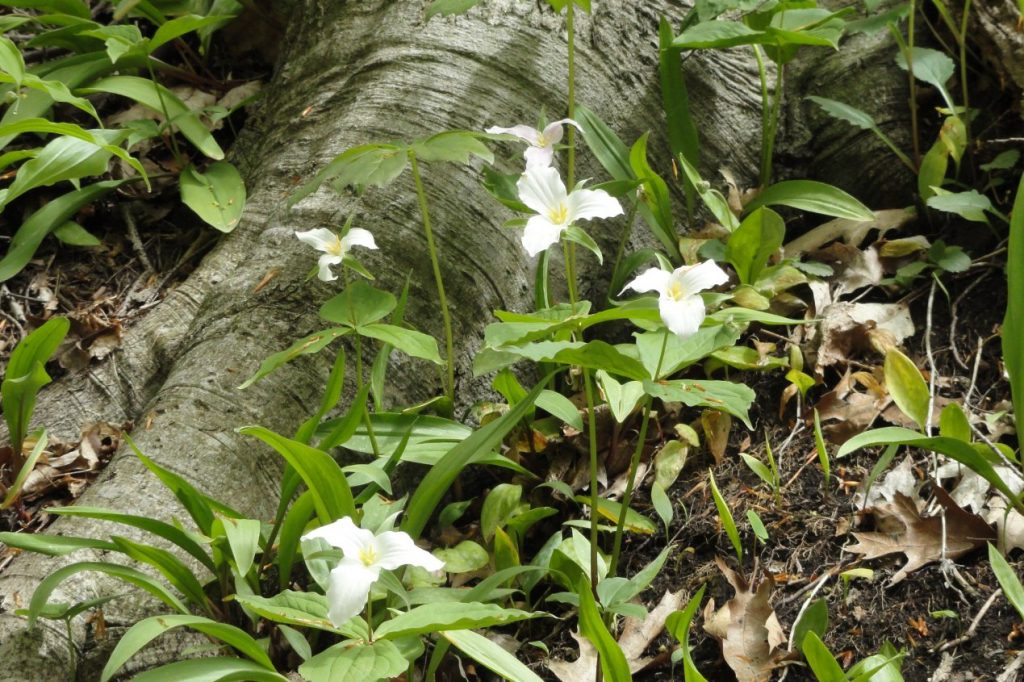
Grant Park is a unique part of southern Wisconsin in that it is covered in beech-maple-basswood forests.  You don’t find beech trees growing naturally even a few miles inland.   The Lakeside in Milwaukee County is the eastern edge of the natural range.  It is evidently the result of a subtle difference in climate and humidity.   We have beech trees in Virginia. They tend to grow on north facing slopes or in ravines, places with more moisture laden air.  Virginia is hotter than Wisconsin, but also more humid.  Near Lake Michigan, there is lots of fog.  As I wrote above, the fog pushes in and lingers only about a half mile inland.  In Grant Park area, it is about up to Lake Drive, more or less where the beech trees leave off.

Wildflowers

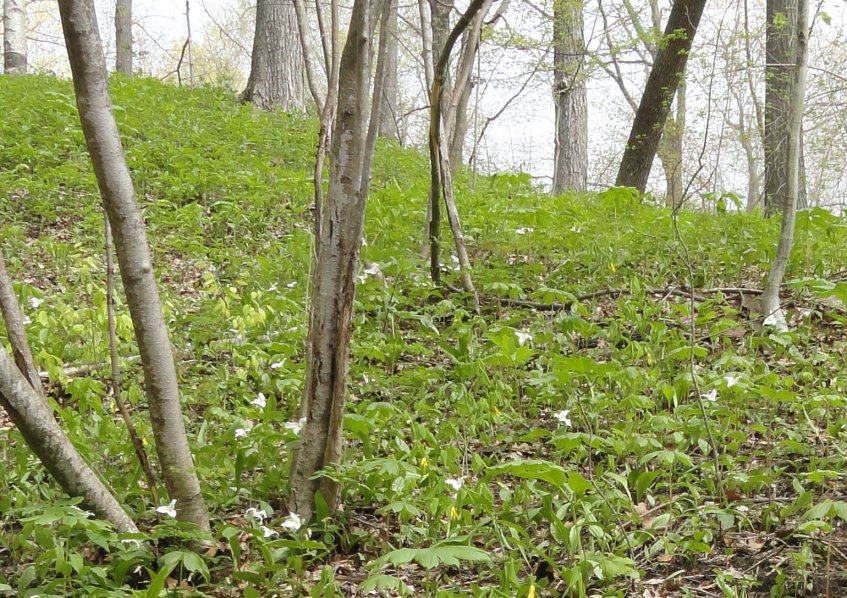
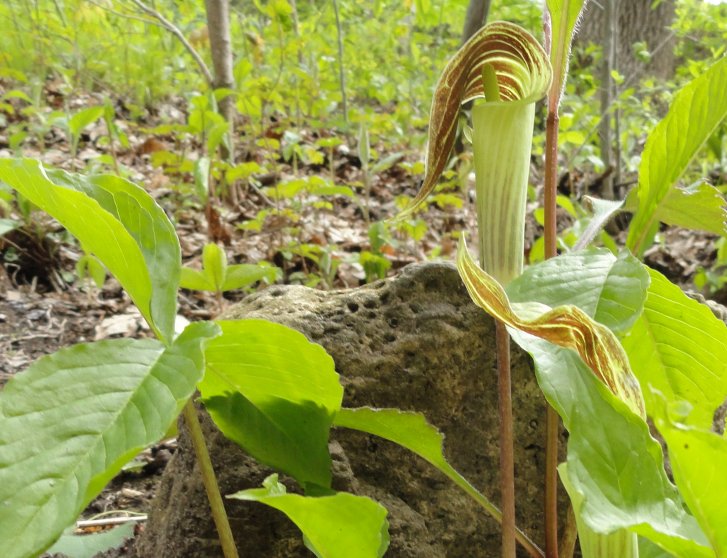
I grew up with the eastern forests, so they are what I think of as home and I have seen the seasons of its changing face.  In spring-time, just before the leaves come out, the wildflowers on the ground have their chance. They have to finish their generation before the canopy closes and the leaves put deep shadows on the ground. The flowers you see above are Jack-in-the-pulpit. If you look at the flower, you can see the pulpit and Jack is in it.  Below are trilliums. Their seeds are spread by ants.  The northern broadleaf deciduous beech-maple-basswood forest is too shady in summer to support much understory vegetation. In Virginia on our tree farms, the basswoods are replaced by tulip poplars and there are red maples instead of sugar maples.  The understory vegetation is also much thicker.  It took me a while to get used to Virginia.  Now it seems strange to see the more open woods of Wisconsin. There is also a big difference in color schemes. Virginia forest soils are reddish-orange. Wisconsin soils are brown or black.
Stephens Point & Madison

The Schmeeckle Reserve was not here when I went to school at UWSP, but I used to spend a lot of time up here. My friends and I would camp out in this wet woods north of campus. Of course, camp out usually just meant drink beer and sleep outside. Back in those days, the trails were not very good. We had to trudge in through the water and muck. Today there are nice trails and boardwalks over the bogs and marshes.  They also made a nice lake and restored the prairies and wetlands.
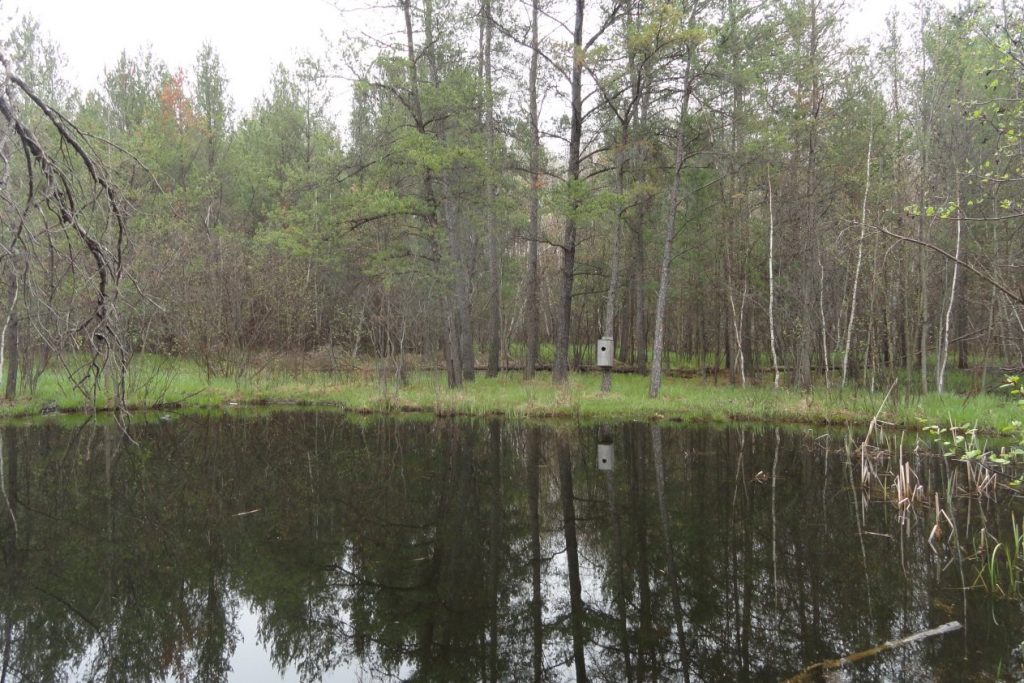
I don’t remember very much about the events leading up to the establishment of the reserve, but I recall that we (my friends and I) were against it.  We thought it was some kind of corporate land grab, since Sentry Insurance was getting a road through the woods to their headquarters.  We were stupid kids and we understood pretty much nothing.   I actually understood less than nothing, since I was working on wrong understanding.  Student leaders told me it was a corporate greed and I believed them w/o knowing what it meant.   

What the university officials and corporate sponsors did was to take 280 acres of failed and abandoned farm fields and made it into a restored wildlife area, a place that can sustainably regulate water flow and provide beauty and recreation for students and visitors alike.  In addition, they improved the road, which was really dangerous for students walking or on bikes. It was a win for all around.

We drove from Stephens Point to Madison along US 51.  It is a lot easier drive now than it used to be.  I enjoyed going to school in both Madison and UWSP.  Madison has a very beautiful campus and there was a lot to do, academically and socially.   I get mixed up now. When I think of coming to Madison for graduate school in Madison, I don’t think of myself; I think of Alex, who is now studying history as I was. It was a magical time for me and I hope he is enjoying the same thrill from finding things out.

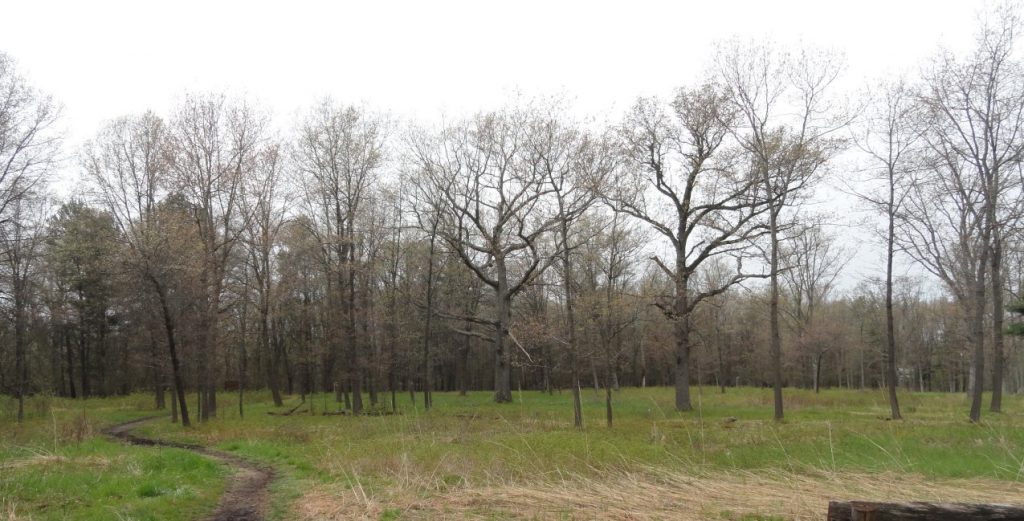
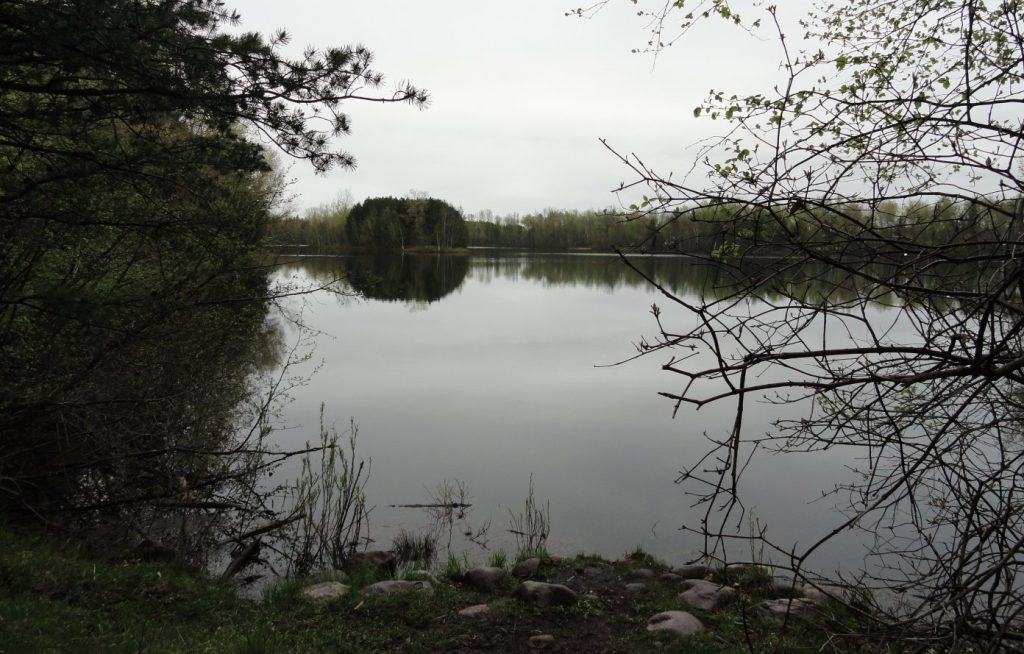
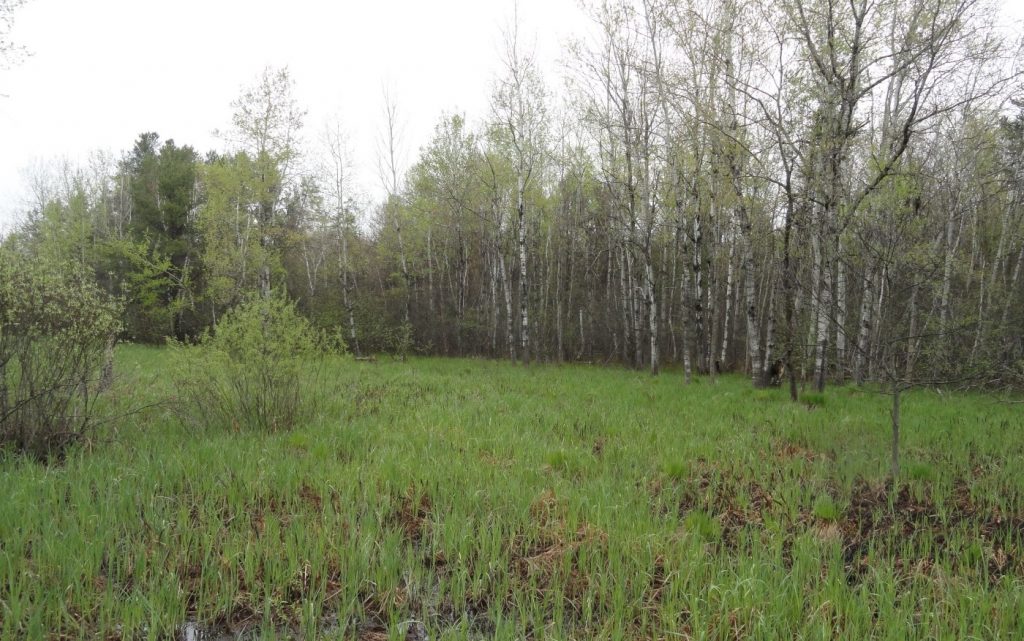
The pictures:  I have a bunch below that I will comment on separately. As you can see in the photos, spring comes more slowly to Central Wisconsin. In Virginia, it is already summer. The pictures show the Schmeeckle Reserve.  There are lots of deer and other wildlife and lots of wetland. The bigger trees are oaks in the middle picture. The lower picture is mostly aspen.

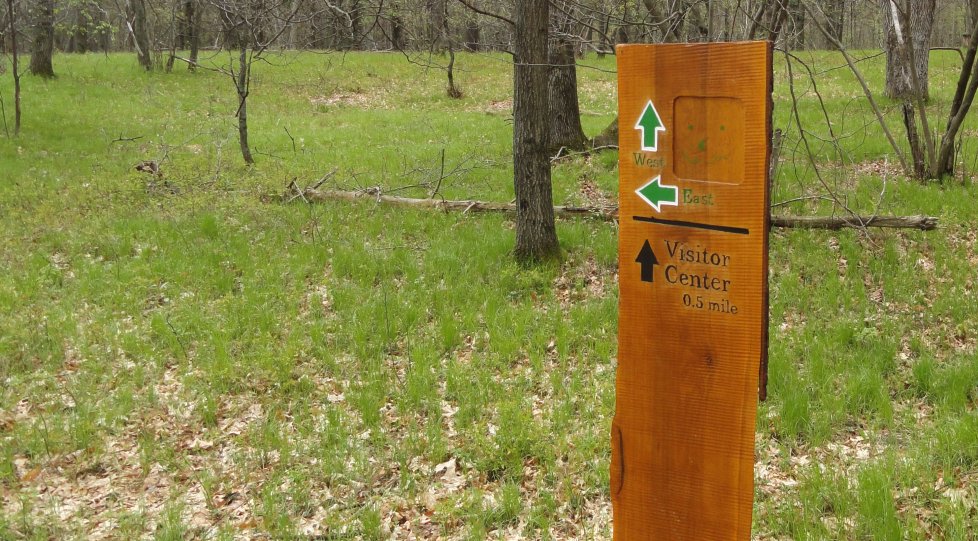
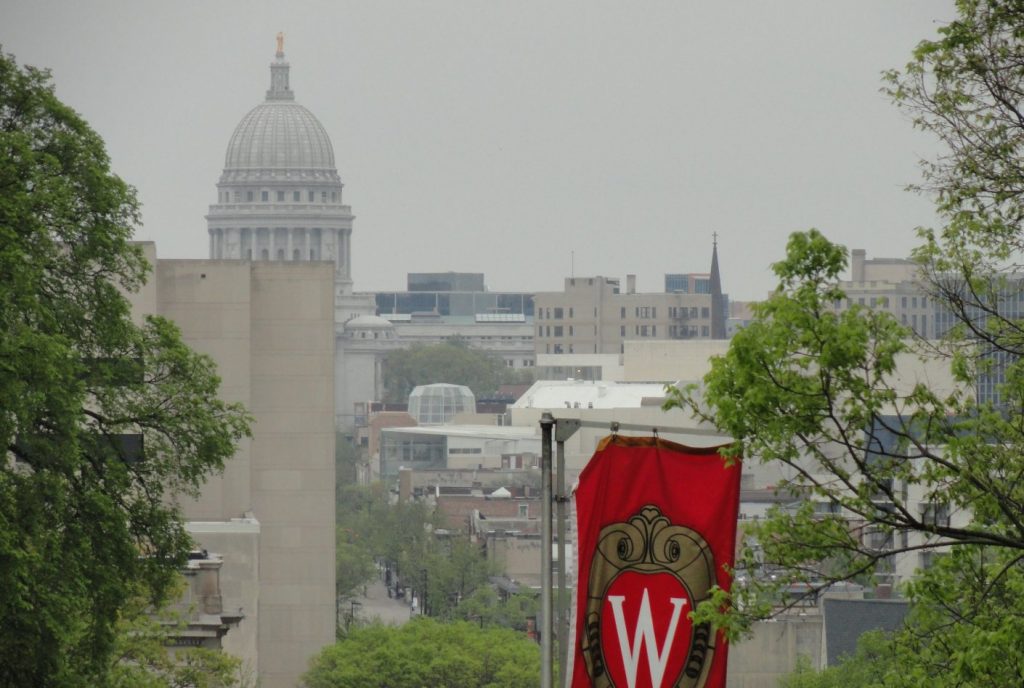
Above is a geographic anomaly. Look closely.  The top arrow purports to point west and the bottom one east. I always thought that east and west were opposites, but maybe not in the reserve. In fairness, there used to be some kind of sign next to the arrows. Maybe that explained. Below is the Wisconsin State Capitol from Bascom Hill at UW.

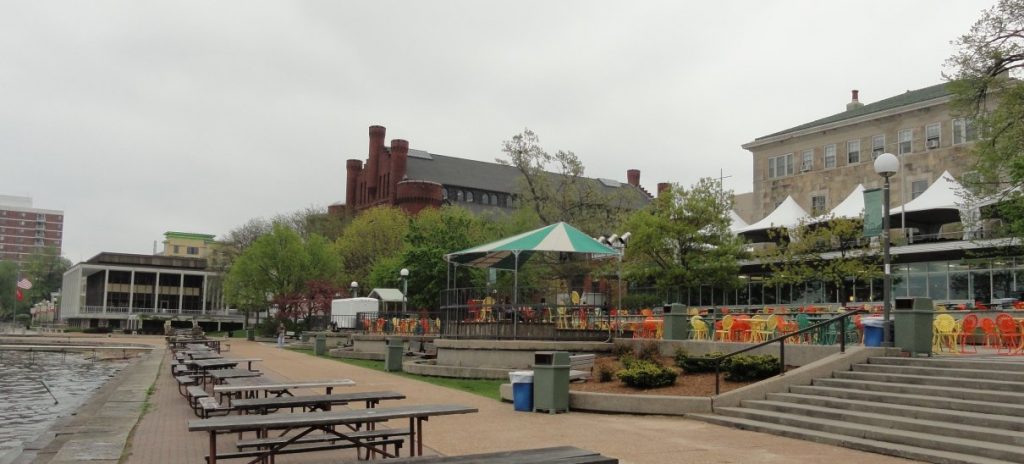
Below show the lake shore in back of the UW student union. In the middle distance is the Red Gym. It used to be the armory.  When I went to UW, there was a small pool and a kind of dumpy gym. I used to go there in between studying. The library was across the street.  The workouts woke me up.

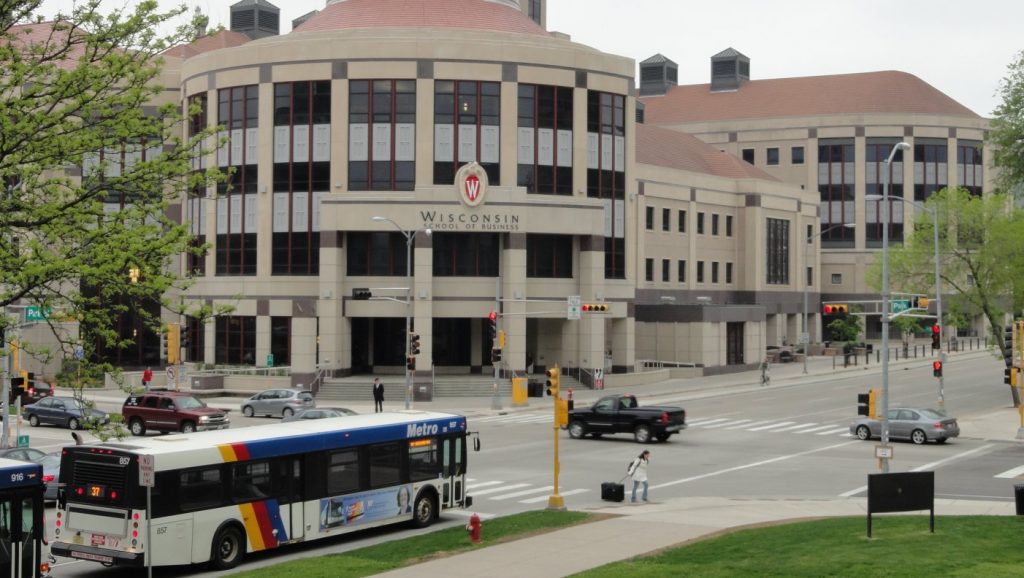
Below is the new business school at UW

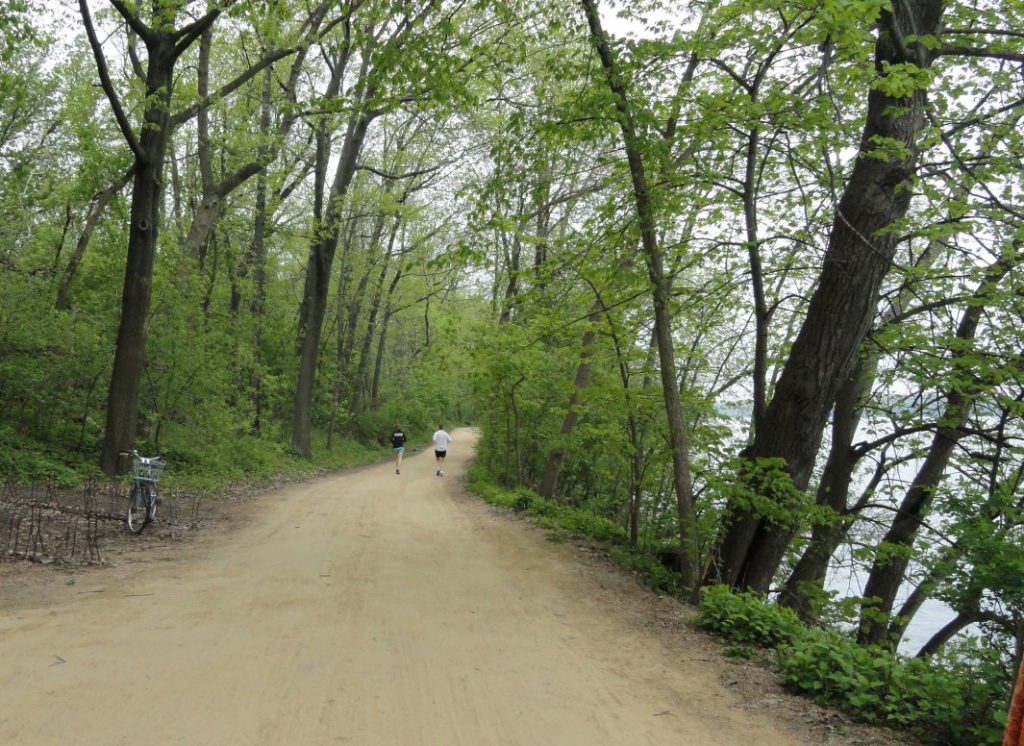
Below is my old running trail. It goes out to the point of a peninsula in Lake Mendota. I used to be able to run out there and back in less than 40 minutes. I cannot do that now.  It is a wonderful running trail. It goes through a variety of landscapes; lots of students use it, but not too many; and the surface is good for running.

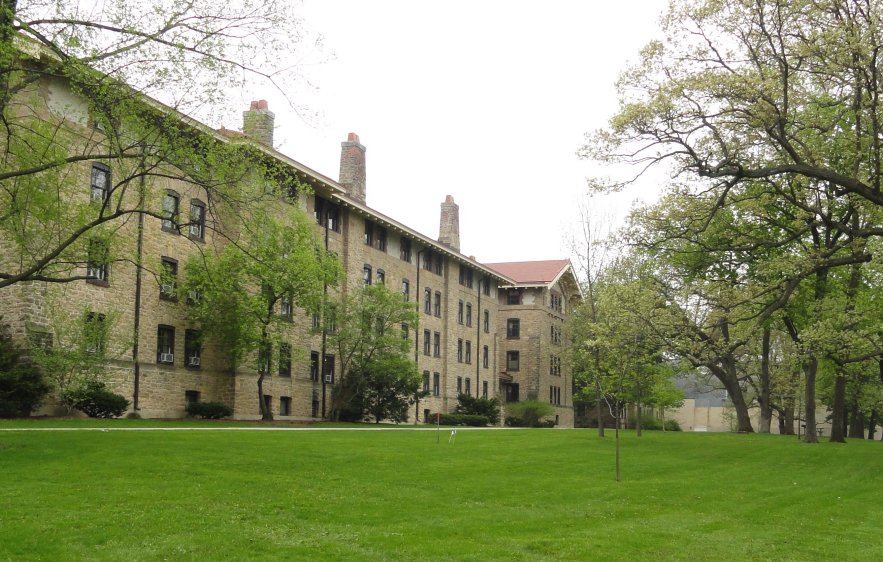
Below are UW dorms along the running trail mentioned above. 

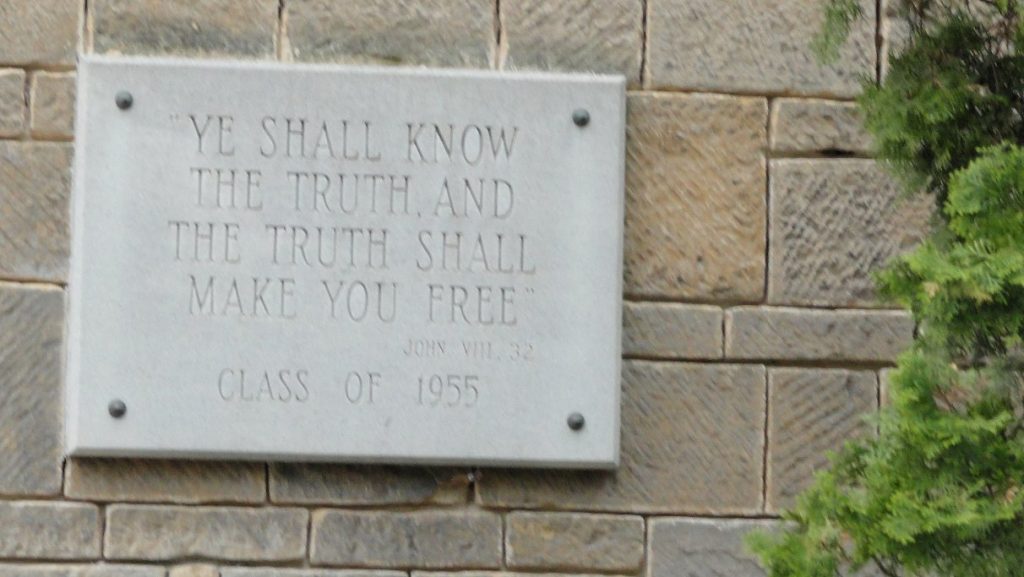
Below is a plaque – you shall know the truth and the truth shall make you free. Sometimes people downplay such things and call them corny.  But I passed this thing most days and it make an impression on me.

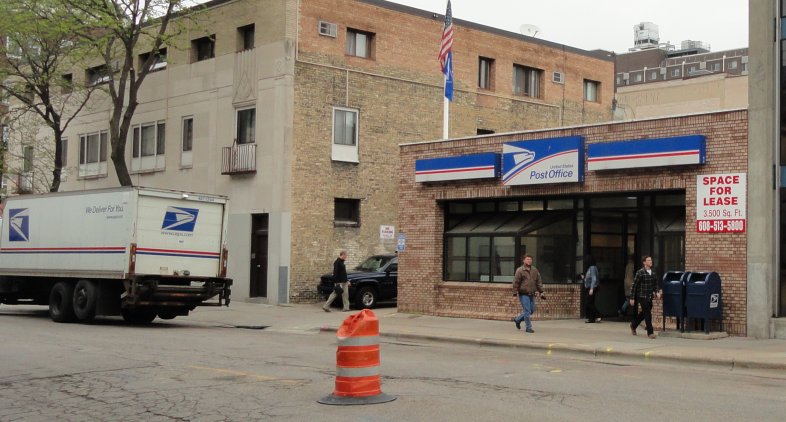
Below used to be a McDonald’s where I worked during my first year a Madison. Now it is a post office. At McDonald’s, I mostly did the counter staff. We used to have to remember the orders and do the math in our heads.  Now machines do the counting and the remembering. One of the techniques was to start the shake machine, grab the fries and then pick up the shake on the way back. I was quick. But I quit after 9 months because they refused to give me a 5 cent raise. The manager said that he didn’t like my carefree attitude toward the products.  When I complained that I was a fast and good worker, he told me that if I didn’t like it, I could quit. So I did. He was surprised and – incongruously – accused me of leaving him  w/o warning. I actually had another job, delivering mail at the history department. Working two jobs that added up to around 40 hours and doing full time grad work was killing me, so I was happy to have a reason to get rid of one of them. I missed the free lunch I used to get and I did not get that much more effective. When I had an extra 20 hours a week, I found that I often just wasted more time.