Pasties & Packers

This part of the Great Lakes has some distinct traits. Some of it is based on the shared challenges of the harsh climate.  The soil is not rich, but there have been booms. The UP once supplied much of the country’s copper & lots of iron. You can still see it in the place names. There is Iron Mountain, Iron River etc.  But most of this was mined out. And the timber was also extracted in what was a lot like a mining operation. After the timber boom, the cut over land was sold to immigrant farmers. But the soil could not support farming in most places, so they left it.  Much of it reverted to state ownership for none payment of taxes and then it reverted to forest. Today large swath of the UP’s territory is National Forest.Tourists and summer residents love the place.Not so many people stay year round.  

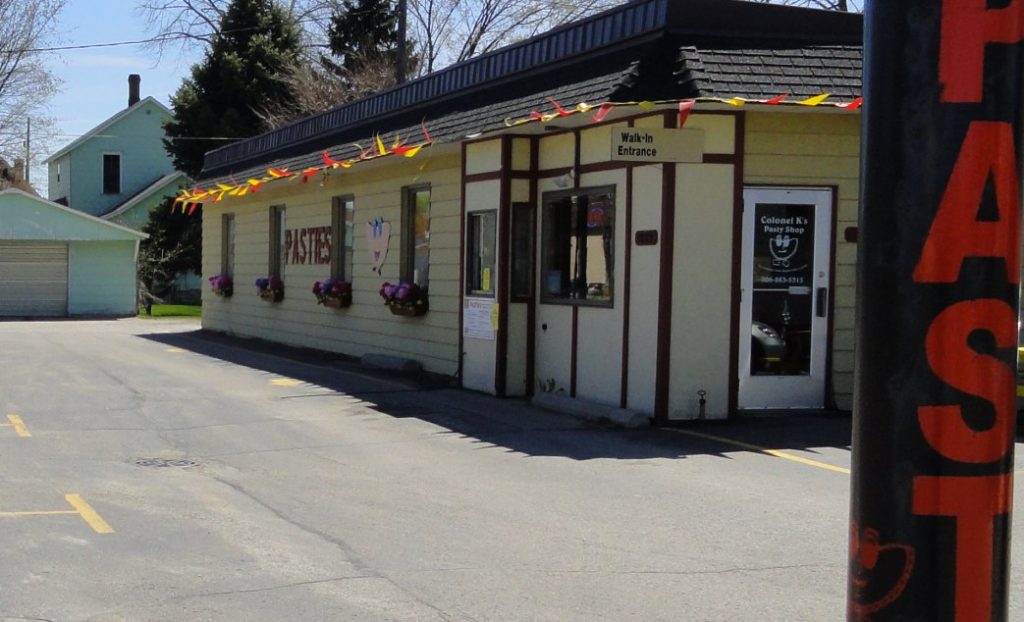
We had a little bit of the local flavor for breakfast and lunch. Breakfast included whitefish. It comes from the Great Lakes.  It has a mild flavor, so it makes a good breakfast addition. I had eggs, hash browns and whitefish for breakfast. For lunch we had pasties. Pasties, according to the guy selling them, were brought to the UP by Cornish miners. They are a pastry filled with meat, potatoes and rutabagas, among other things.  They are very filling and convenient. You can see why they were popular among workers. Above is where we ate pasties.
We got into Wisconsin on U.S. 41.   U.S. 41 was second only to U.S. Route 66 as a famous American highway.   It used to go from Canada to Key West.  I suppose it still does, but now it is overtaken by Interstates in most places.  Anyway, we took U.S. 41 down to Green Bay with a stop in Peshtigo.  

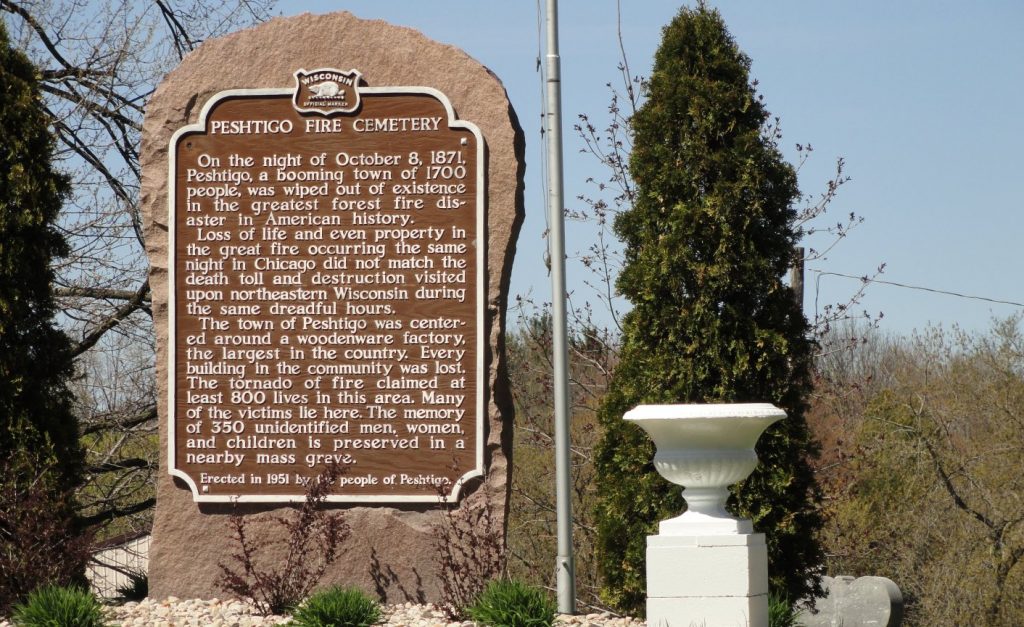
Peshtigo was the site the biggest forest fire in the 19th Century. Unfortunately, the “Fire Museum” was not open.  We could see the fire cemetery nearby. There is not much there either, except for a marker.  More than 300 people were buried in a mass grave after the fire destroyed most of the city. The Peshtigo fire was disastrous, but because it happened at the same time as the Great Chicago fire, which got all media attention, it was largely ignored at the time and forgotten after.   

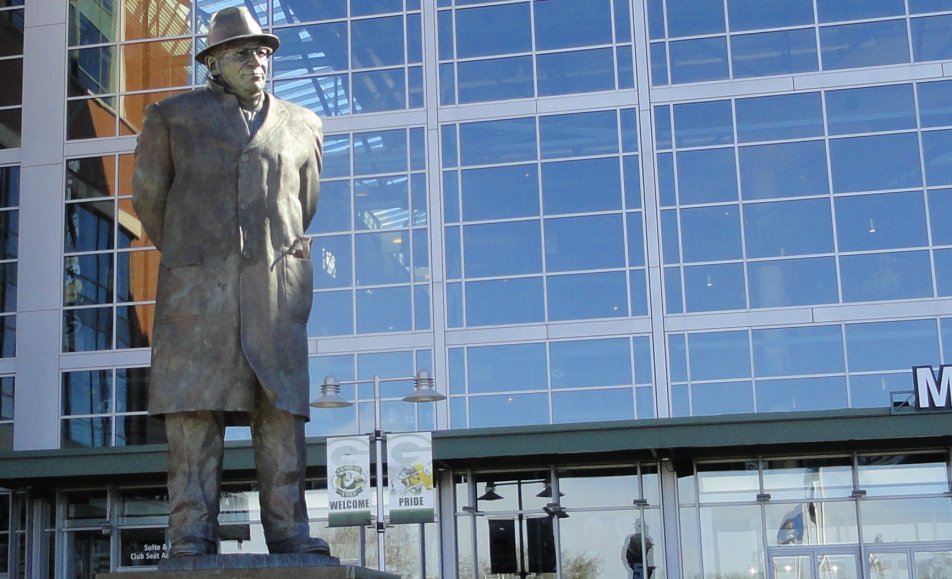
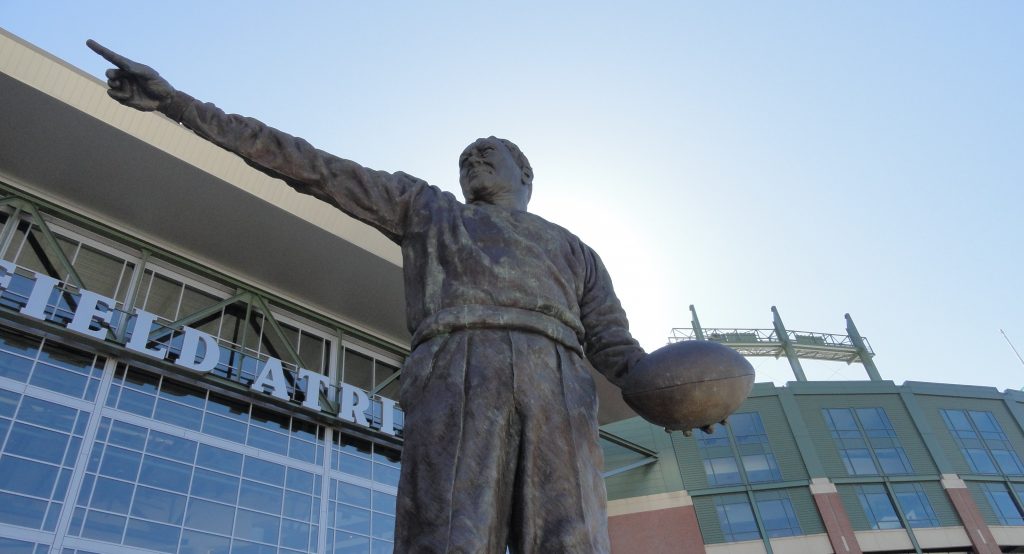
Our next stop was Green Bay. Green Bay would be an unremarkable city except that it is the home of the Green Bay Packers.  I wrote a post about this before and won’t repeat it here. We went to Lambeau Field, so now I have pictures. Above is Vince Lombardy. Below is the team’s founder Curly Lambeau.

By the Shining Big-Sea-Water

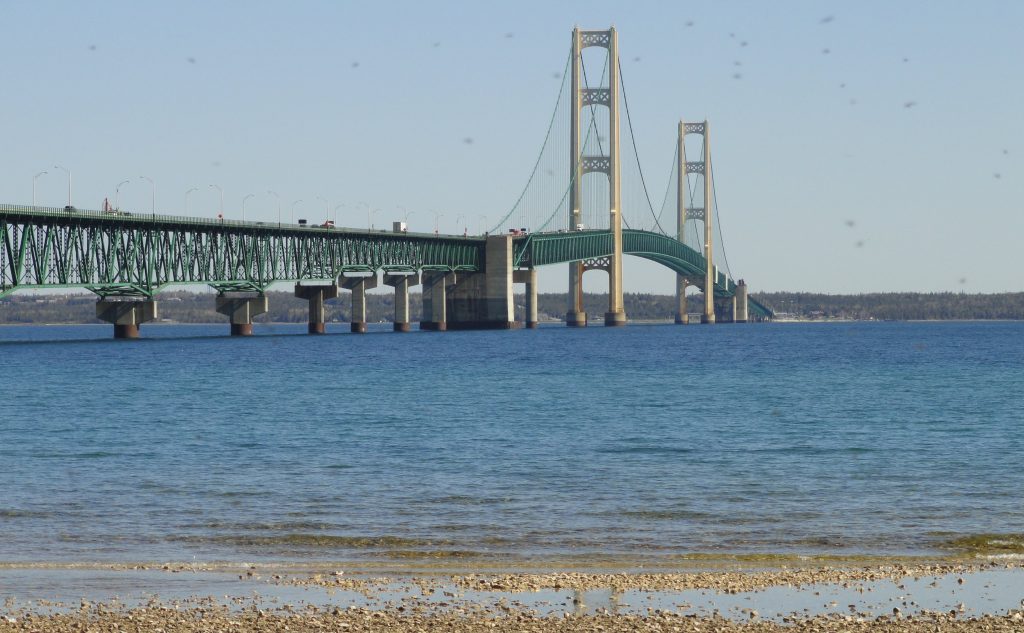
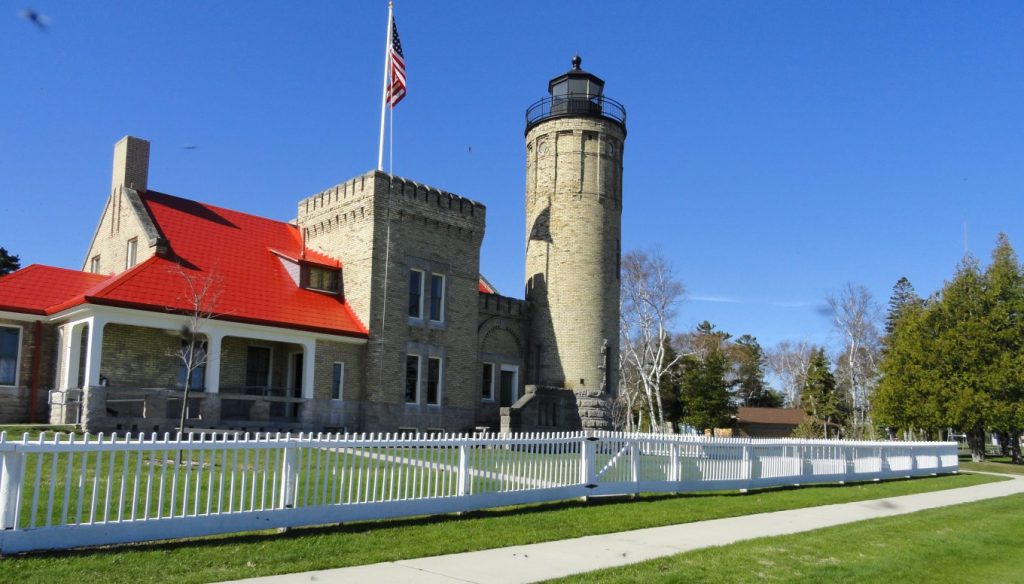
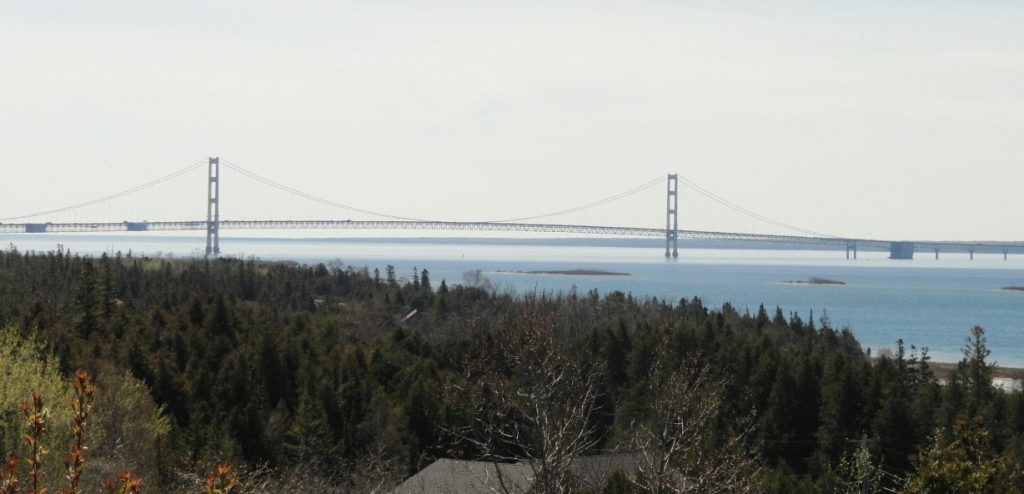
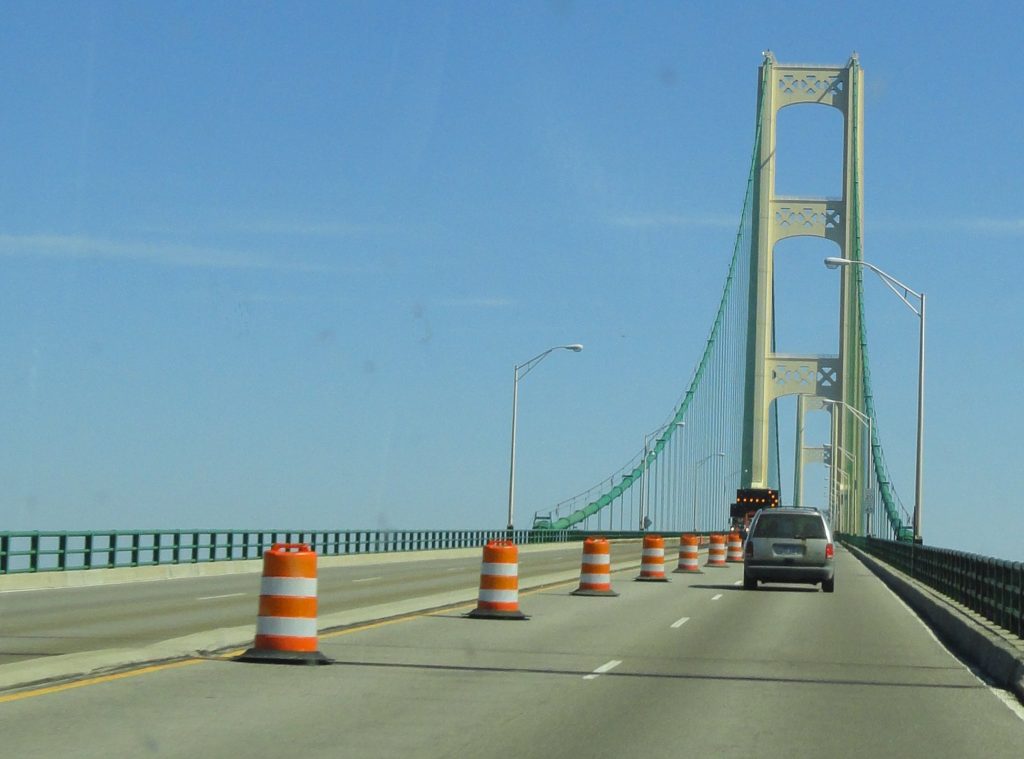
The Mackinac Bridge was the world’s longest suspension bridge until a couple of years ago. Now it is #3, behind one in Sweden and one in Japan. But Mackinac hung onto the title for almost fifty years, which is a good run.  The bridge connects the lower and the upper peninsulas of Michigan and spans the straights where Lake Michigan meets Lake Huron. The picture above shows the bridge; below is the lighthouse that used to protect shipping. It looks like my camera lens is dirty, but that is not where those spots come from. There were millions of little bugs all over the place.  A woman at a local restaurant assured me that they are only a problem for a little while during spring. But they made life very uncomfortable.

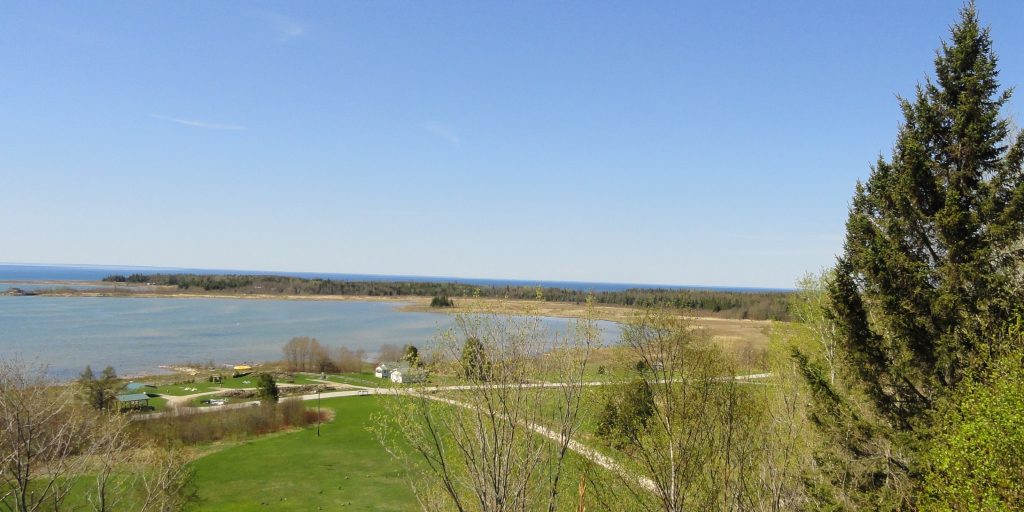
You can tell how cold it gets around here by the vegetation. First of all, you find natural spruces. This means it gets cold. But the other tip-off is the lateness of the season. As you see in the pictures, most of the deciduous trees have not yet fully leafed out by the middle of May. Wet forests, with tamaracks, white spruce & white cedar, occupy on the lower places; hardwoods and white pine grow where it is a bit higher.  

We got phenomenal mileage – a little more than 52 miles per gallon for more than 150 miles. Never before have I got such good mileage over any significant distance. Conditions were perfect. We could drive comfortably w/o air conditioning as we followed U.S. Highway 2 along the north shore of Lake Michigan. The road was smooth and flat with almost no traffic, so I kept it at 56 MPH, which I think is optimal from the Civic Hybrid. It was a pleasure to drive, which is not something you get to experience every day.

The UP is very beautiful and it seems familiar. When I was in college, I had lots of friends from the Michigan-Wisconsin border and I spent a fair amount of time in these mixed forests. I was also primed for it by my mother reading me the “Song of Hiawatha” when I was a little boy. It was set in forests like this.

“By the shores of Gitche Gumee, By the shining Big-Sea-Water, Stood the wigwam of Nokomis, Daughter of the Moon, Nokomis. Dark behind it rose the forest, Rose the black and gloomy pine-trees, Rose the firs with cones upon them; Bright before it beat the water, Beat the clear and sunny water, Beat the shining Big-Sea-Water.”

Gitche Gumee is actually Lake Superior, not Michigan, but Longfellow could have been talking about the north shore of Lake Michigan. And the Big-Sea-Water was shining today. 

Other Side of the Lake

I looked east over Lake Michigan for more than fifty years before I got to look the other way when  I took the car ferry to Muskegon, Michigan in 2008.  Today I get to do it again, this time from Bay Harbor near Charlevoix, Michigan.  It gets more interesting.

We are staying at the Marriott at Bay Harbor, which is built on an old limestone quarry and Portland cement plant.  This has special meaning to me, since my father worked for 36 years at Medusa Cement & I loaded the stuff during four summers 1973-77.  Our cement didn’t usually come from this quarry, which was owned by a competing firm, Penn Dixie. But Medusa used a nearby quarry in Charlevoix.  The rock is pretty much the same. My father got lots of overtime when the ship came in from Michigan.  The rock from Michigan built the freeways in Wisconsin.

You wouldn’t know this was an old industrial site if nobody told you.  The old dock is now just a little concrete jetty.  The deepest part of the quarry is now “Bay Harbor.” They removed the rock separating the quarry from Lake Michigan.  It looks good.  The old walls of the operation look like bluffs.  If you look close, they do not seem perfectly natural, but I suppose a few more years of weathering will take care of it.

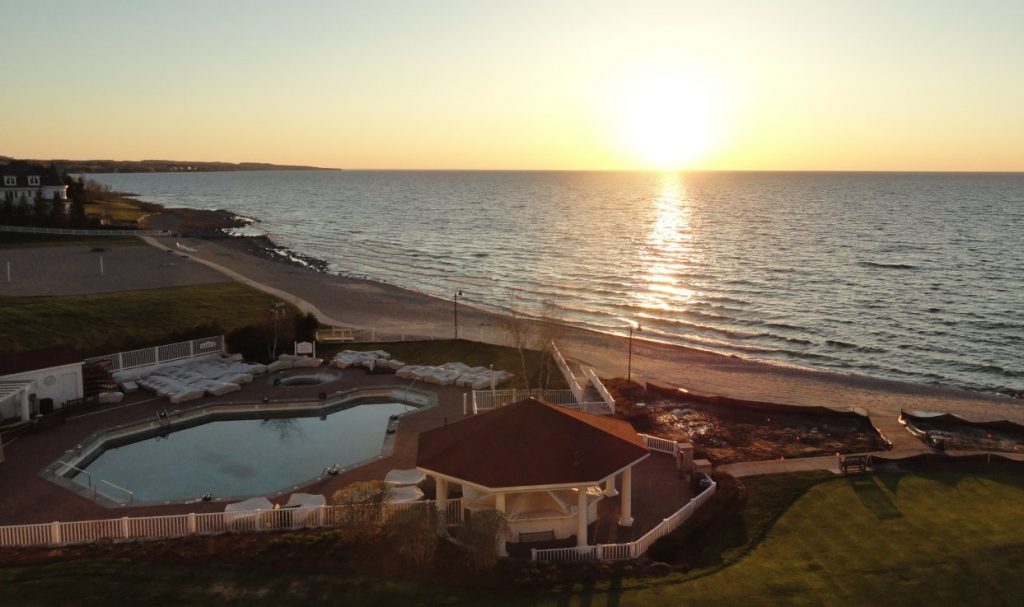
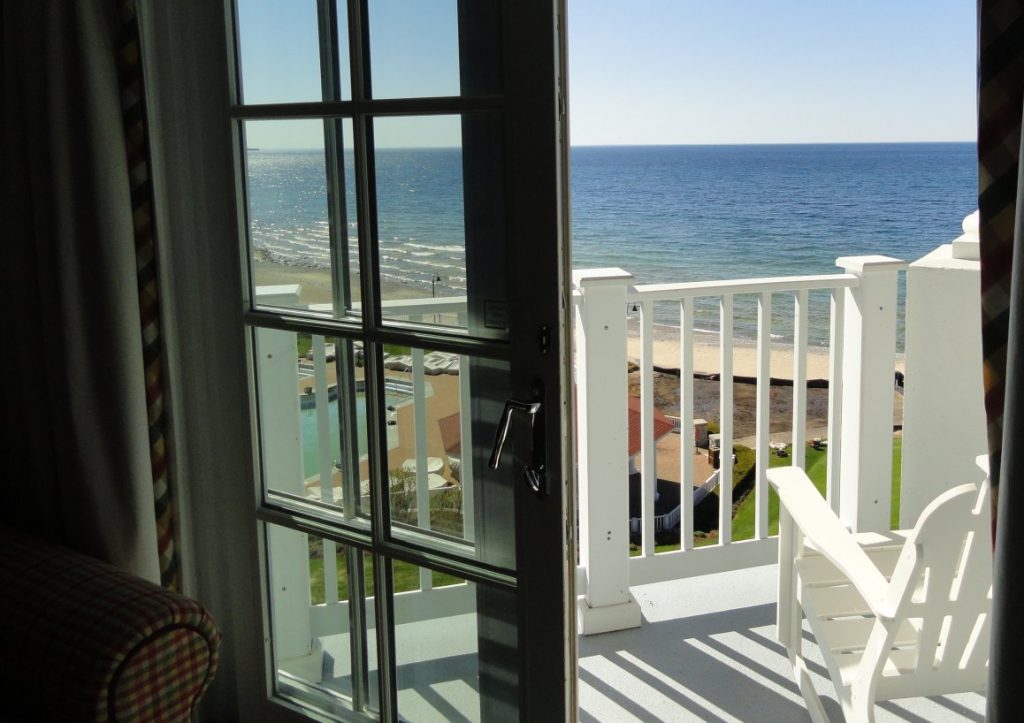
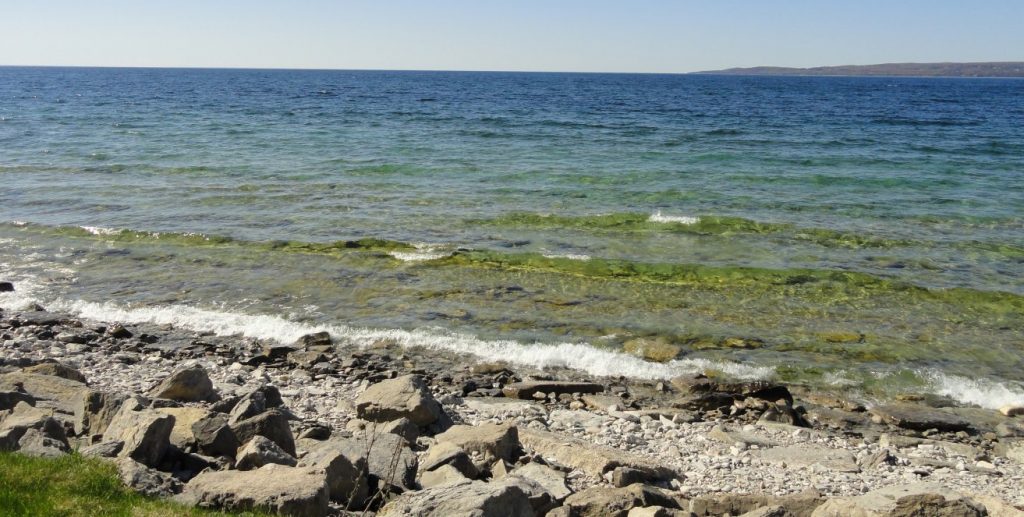
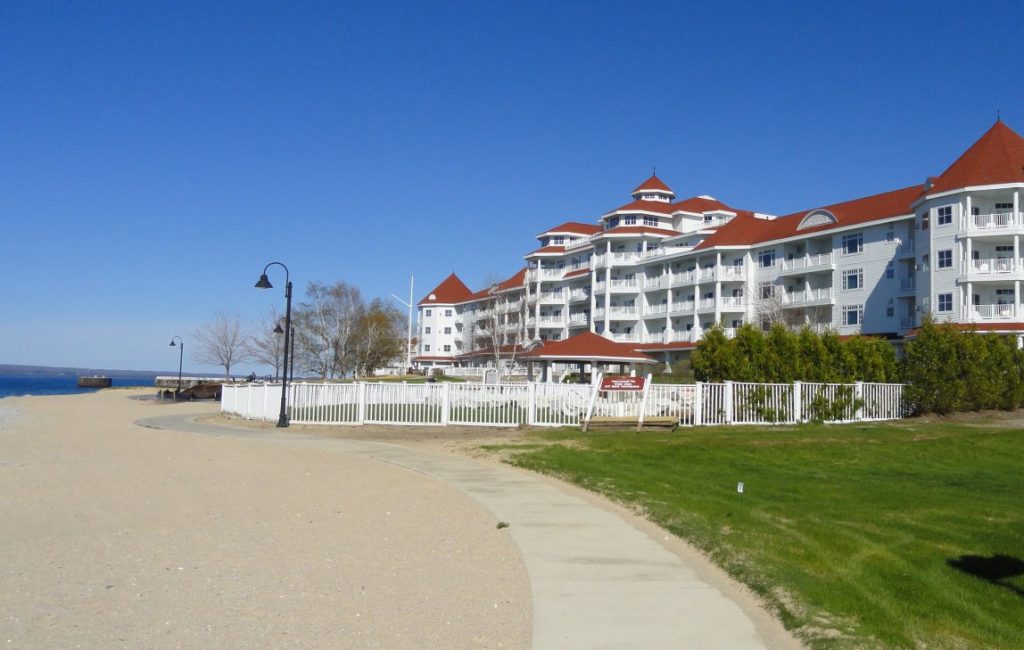
The top picture is sunset from our porch at the hotel. Next is the porch from the window.Third is a boat on the lake at a minute after the sun has dropped below the horizon. And below us is the hotel.

Civilian Conservation Corps

We saw a sign for a CCC memorial just off I-75, so we stopped to see. As an out-of-state car, it cost us $8 for the short visit, but it was worth going to see. My father was in the CCC and they planted trees so I feel a special connection in two ways. The monument is in a quiet place with lots of trees. The day was beautiful, cool and sunny. I feel comfortable but a little sad in such places. Bittersweet is the word. They remind me of good things past and gone.

The CCC boys, my father among them, planted trees and did other conservation chores. It was important work for them and for the country. The early part of the 20th Century was the time when our American forests were in their worst shape ever. Lots of people feared we would run out of wood and that our soils and water would be forever lost.  The CCC was not the only reason we have had such great success in turning the situation around, but it was important. 

My father used to tell me about the CCC. When I think back on it, it was remarkable for him. He told me little in general about his life as a young man. I don’t know much about his years in the Army Air Corps & I don’t know anything for sure about his childhood, but I know a lot about the CCC from him. He enjoyed being in the woods and was proud of the work he had done. Whenever I saw a row of trees that I thought was planted by the CCC, I thought of him. It was one of the things we shared over the years.

When my father first told me about these things, it had less than thirty years since they did their work. Now it is more almost seventy. The trees they planted are fully mature and in some places they are in the second generation. They accomplished their mission, but youth has matured to age. I still think of the old man when i think of the CCC; I still feel proud of what he did and I still miss him. As I said, it is bittersweet.

Generations pass quickly and memory passes with them. I suppose that most young people know little and care even less about the CCC. I don’t suppose many people come to places like this, at least not voluntarily.

The CCC took young men like my father and gave them some productive work to do. It kept lots of unemployed kids out of trouble and helped prepare our country for the challenge it would soon face in WWII.  My father told me that it was very much like a military operation, including revelry and assembly. He said that when he went into the army in 1942, the instructors favored the men with CCC experience.

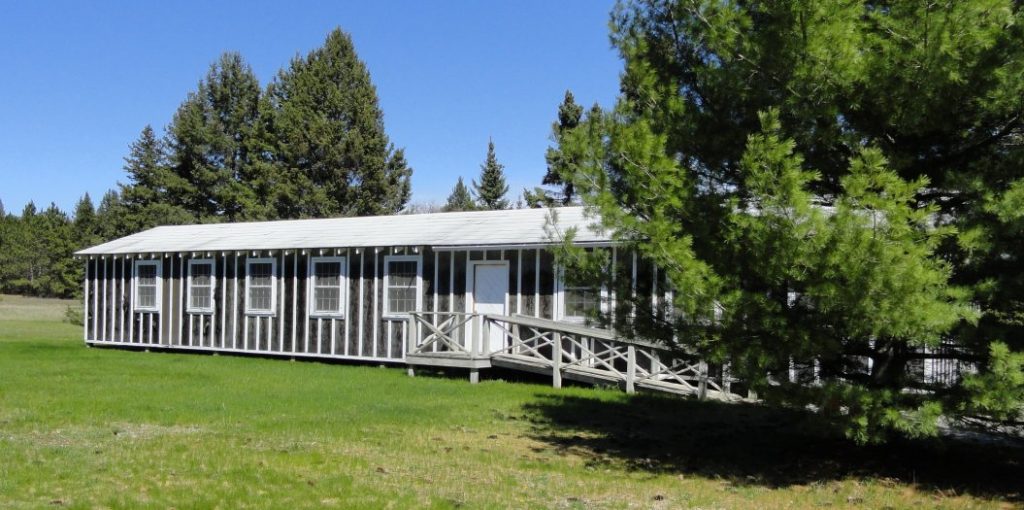
We have some similar unemployment problems today, but this solution wouldn’t work. I fear we have become too wimpified as a nation. The CCC boys built the barracks you see in the picture above. Forty of them lived in it in Spartan conditions. It was hot in summer, cold in winter and probably leaky when it rained. Before they built the barracks, they lived in tents. Imagine “subjecting” poor kids to that sort of thing today. Of course, I am sure there would be accusations of “bullying”, not to mention myriad violations of the Americans with Disabilities Act. And how would public employee unions react to thousands of kids making low wages taking jobs in public parks?  Finally, the CCC boys (I think they were all boys) had to send much of their money home to their mothers. How would today’s kids feel about that?

The Pictures:

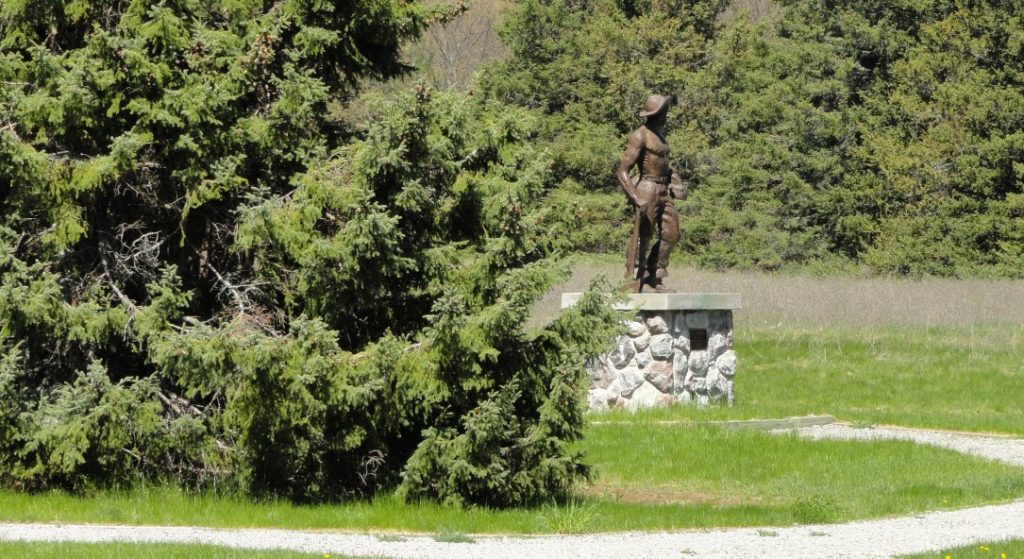
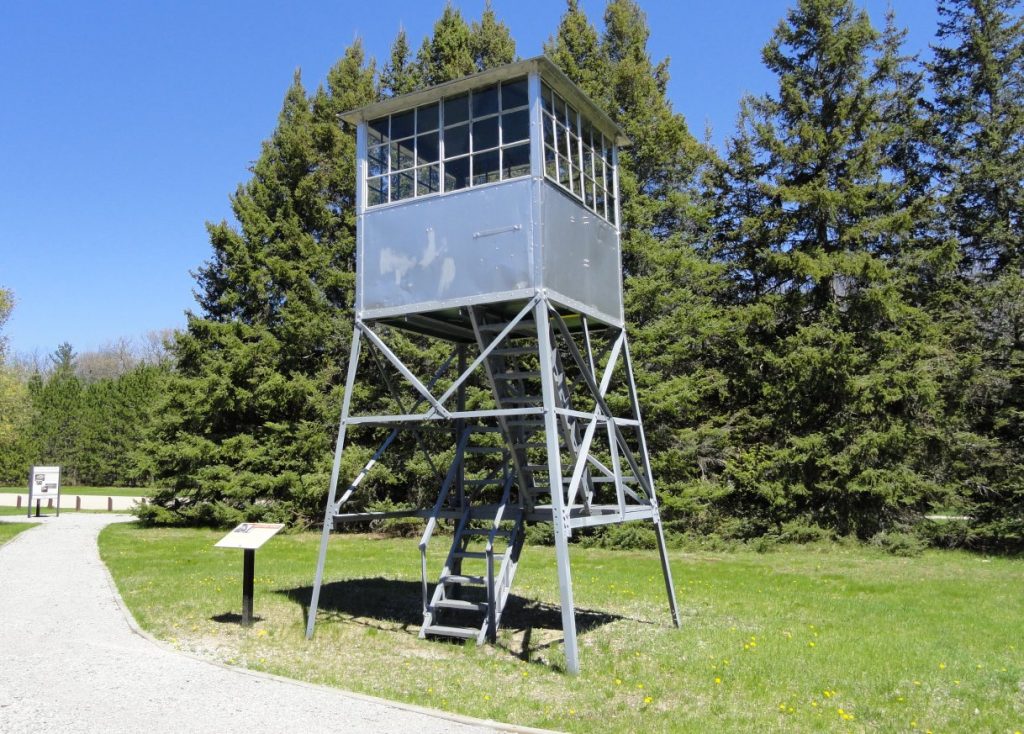
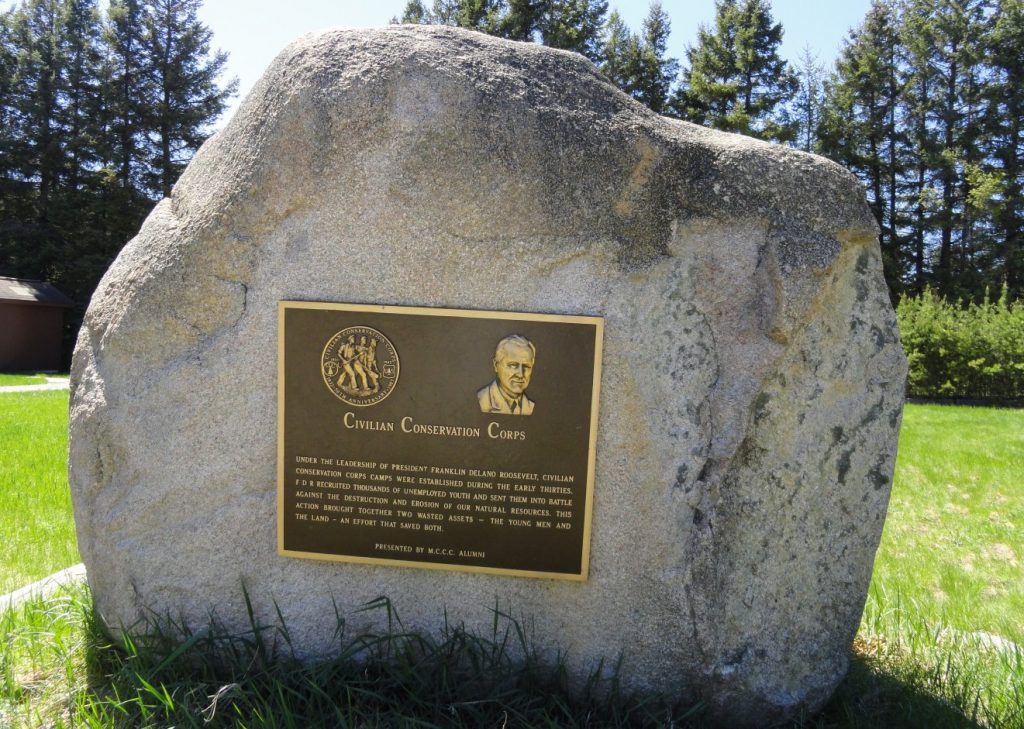
On top is a statue of a CCC boy.  Next is a mini fire tower, followed by a plaque talking about the CCC. The last picture is the CCC barracks. 

No Viable Future w/o Biotechnology

We should base our regulations and plans on actual risks, not the perceptions of risk. Biotechnology is a lot less radical and a lot less risky in than it is perceived to be. Let’s start with some things that are not problems. You can avoid biotech product if you eat nothing but organic food, but all the rest of us have eaten biotech food, since most of our American corn and soybeans, among other things, are genetically modified. There has never been a case of a documented health problem attributed to biotech food. This is a surprising outcome, given the extreme amount of scrutiny biotech gets. It is likely that biotech is actually SAFER than ordinary products because of all the scrutiny.   

Of course, organic food has recently killed at least 30 people and made another 3000 sick, as we saw with the recent e-coli outbreak in Germany attributed to organically grown bean sprouts. The fact is that no food is perfectly safe all the time. You can be sure that if a biotech product had somehow been in contact with this organic product and got infected by it, the biotech would get the blame. We should not “blame” organic food, but recognize that humanity ate organic food for most of our history and our ancestors were not more robustly healthy than we are.

There have been complaints that biotech firms lock farmers into seeds, since they are not allowed to save seeds for next year. This is a meaningless complaint, since it is nothing new in the seed world. Productivity in American corn fields grew fantastically after the introduction of hybrid seeds in the 1930s. Farmers could save seed, but it wouldn’t work. Hybrid seeds are so productive because they have the hybrid vigor. The hybrids are developed to exhibit the best traits from the parent stock. The next generations lose this and may be even poorer performers than the original stock. They may, in fact, exhibit the worst traits of the parents. It is indeed true that farmers using biotech seeds generally agree not to use the seeds again. But if they want to be most productive, they probably would not want to do it. Like those who use hybrid seeds, they can always choose not to use the biotech seeds. They choose to use the better quality seeds because they believe the harvest will improve enough to justify the costs.

Biotech agriculture is becoming more widespread everywhere except Europe. European firms are active in biotechnology, but activists in the Europe resist wider introduction, which is one reason Europeans pay more for their food. Alternative “natural” food is something that only the rich can afford to choose, since it means lower productivity. This might seem like a bold statement, but it approaches a tautology. If the “alternative” is more productive, it becomes the usual method. The poor have often been forced to be organic, since they couldn’t afford other options, but they make the logical choice when they have a choice.

Biotechnology also increases diversity. With traditional agriculture, farmers have to plant one variety, in order to make harvests practical. Biotechnology creates new varieties. You can still keep the old ones if you want, but you have doubled your choices.

Biotechnology is good for the environment, but creating and using plants and animals suited to their environments. They require fewer chemical treatments and less cultivation. This is one reason it increases farm productivity. They farmer needs to spend much less time in the fields spraying or cultivating.

31% of the world’s emissions of greenhouse gases come from agriculture. Biotechnology can reduce that by requiring fewer inputs, everything from herbicides, to fertilizers to the fuel for tractors to deliver these things to the field. No till agriculture, which protects soils, conserves moisture and makes it possible for farmers to cultivate much less often, is very much facilitated by biotechnologies. Overall, the introduction of BT Roundup ready crops is estimated to have been the equivalent of taking 6-8 million cars off the road.

Biotechnology is developed by big firms. This is because only well-financed firms can afford the equipment and trained scientists. But an even bigger consideration is the regulatory environment. Governments require extensive testing and field trials. Only a well-financed firm can afford to comply. However, the biotechnology itself benefits small and big farmers. Biotechnology is scale neutral. The small farmer can get as much benefit as the large one and the relative benefit to small holders is often greater, since they often lack the equipment and expertise to take full advantage of traditional farming technologies.

I personally believe that biotechnology is a necessary tool to protect the environment and keep our world reasonably pleasant. We live in a global world. Even people not very knowledgeable about the environment understand that we face the challenges of climate change. Fewer people are aware of the bigger threat of invasive species or the development of native menaces in the face of changing environments. Everything can catch rides on our modern mobility. This includes plants and animals, but also diseases and bugs. Many of our most treasured plants and trees are threatened, including our oaks, maples, beeches … pretty much everything. Natural systems cannot adapt at the pace of change we humans have created. Biotechnology is the best hope we have to save the ecosystems we love and on which we depend. I am unwilling to accept that my oaks will wilt, my maples will be killed by Chinese beetles; my ashes will all succumb to the emerald borer or my hemlocks will be turned into ghosts by woolly adelgids. We can fight back with chemicals and cultivation, but one of the most potent and ecologically benign tools will be biotechnology

I understand the risks of change. But looking around at what we get w/o biotechnology – the food shortages in developing countries, the widespread death of forest species etc, I don’t think we have a good alternative.

There is no alternative w/o risk. We need to be cautious about what we do, but we also need to adapt to rapidly changing realities. World population growth means we need to increase food production. Climate change will make that productivity growth harder. We need to use all the tools we possess and certainly should not refrain from employing the most exciting innovations recently created by human imaginations. We need to deploy biotechnology. We should be circumspect by not timid. The future belongs to the innovative.
Thomas Edison

Thomas Edison invented lots of things, but his most important invention was the invention of invention.  He originated the concept of the research lab, where lots of experts came up with ideas and then made ideas into reality for the purpose of making an end product.

Before that time, people who came up with ideas just tried to make them or maybe get somebody else to do it.  Inventors might try to peddle an idea.  But never before did idea generation and implementation have this kind of scientific aspect.

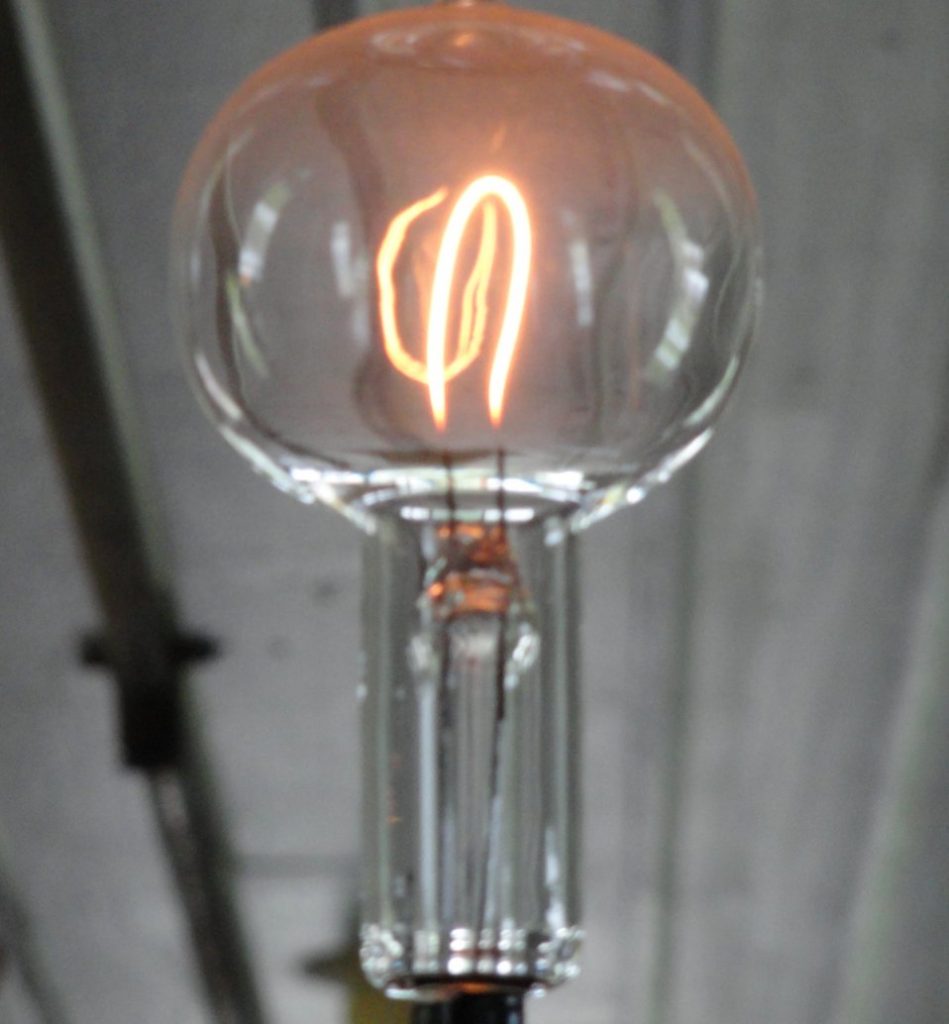
The light bulb was Edison’s most famous invention.  He did not originate the idea or most of the concepts that went into it.  What he and his team did was to make a light bulb that worked.  The two important parts of the last statement are “and his team” and “that worked”. 

Ideas are easy; making them work is hard.  We often underestimate accomplishments of others because it is an idea that we think we had a long time ago.  Anybody could have done that, we think.  But it is not true.  Working through the idea is the hard part.  The other part is that great things are usually accomplished by more than one person.  Single individuals almost never have the complete competence to get things done.  On the other hand, leadership is important.  Edison was obviously a genius, who made others productive and contributed greatly himself.
So we have another paradox.  We should honor the accomplishments of great individuals.  There ARE indispensable people.  On the other hand, nobody can do it alone.  Many things are just “ready to happen” and the person doing it is just the natural following.

It is EER season and so many people are thinking of promotions and accomplishments.  I think the thing that helps explain the paradox is that there are many more people who COULD do great things than there are those who actually accomplish great things.  And all accomplishments are done in some sort of social context, even if they are influenced by people who they have never met.  The genius who cannot work with others is usually just nuts.   They also need to come at the right time and place.  If recent geniuses like Mark Zukerburg or Bill Gates had shown up on the scene a few years earlier or later, they would just be run of the mill nerds.   Who knows if Edison, with his mechanical skills, would have done well in the electronic age?

Edison had all the attributes of the person who accomplishes great things and he came at the right time and place to do it.

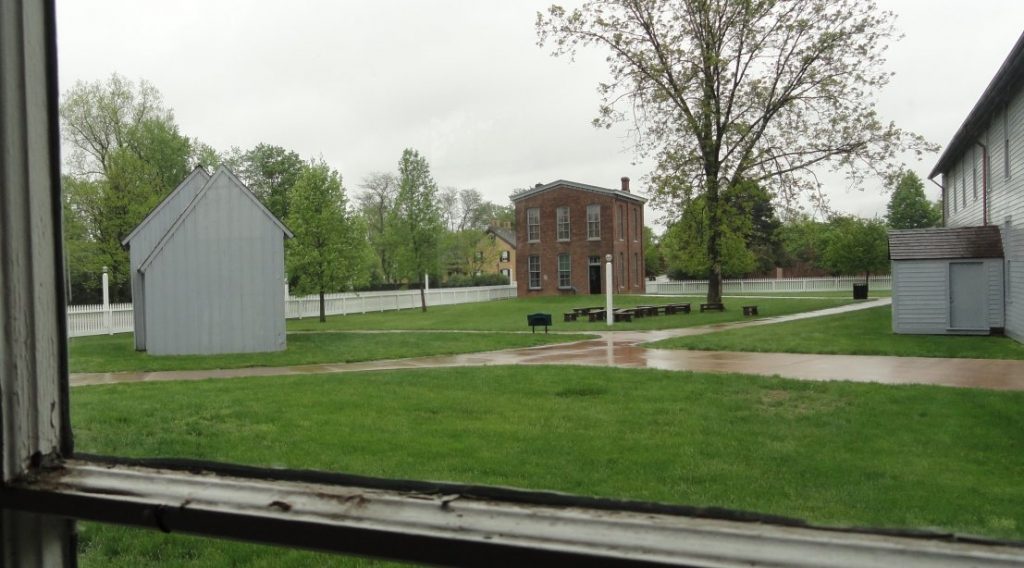
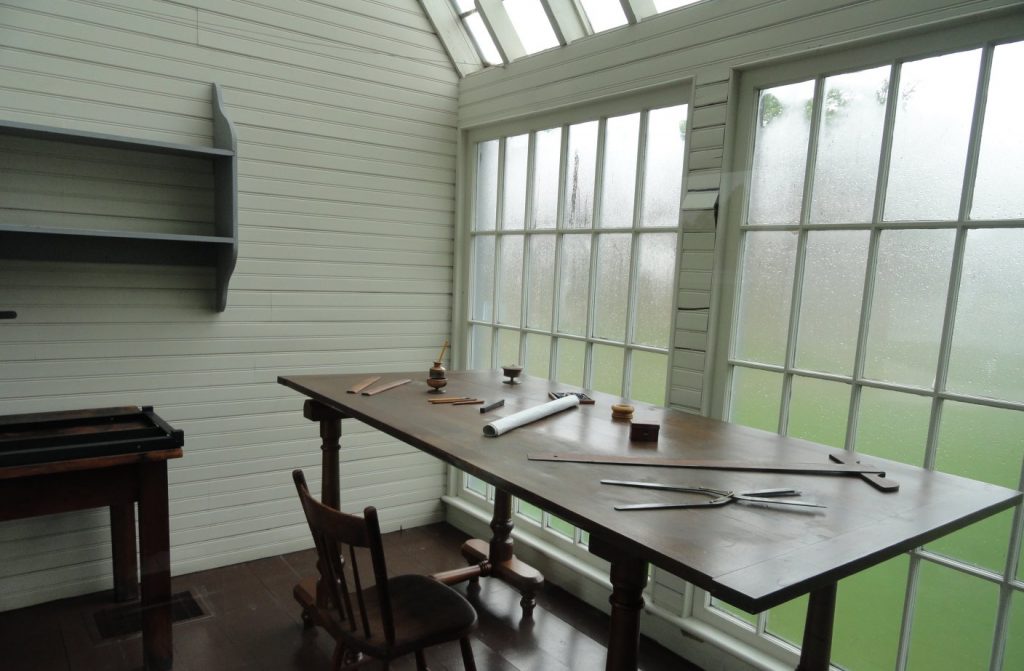
The pictures show the Edison part of Greenfield Village.  Henry Ford brought the whole complex from Menlo Park, NJ.

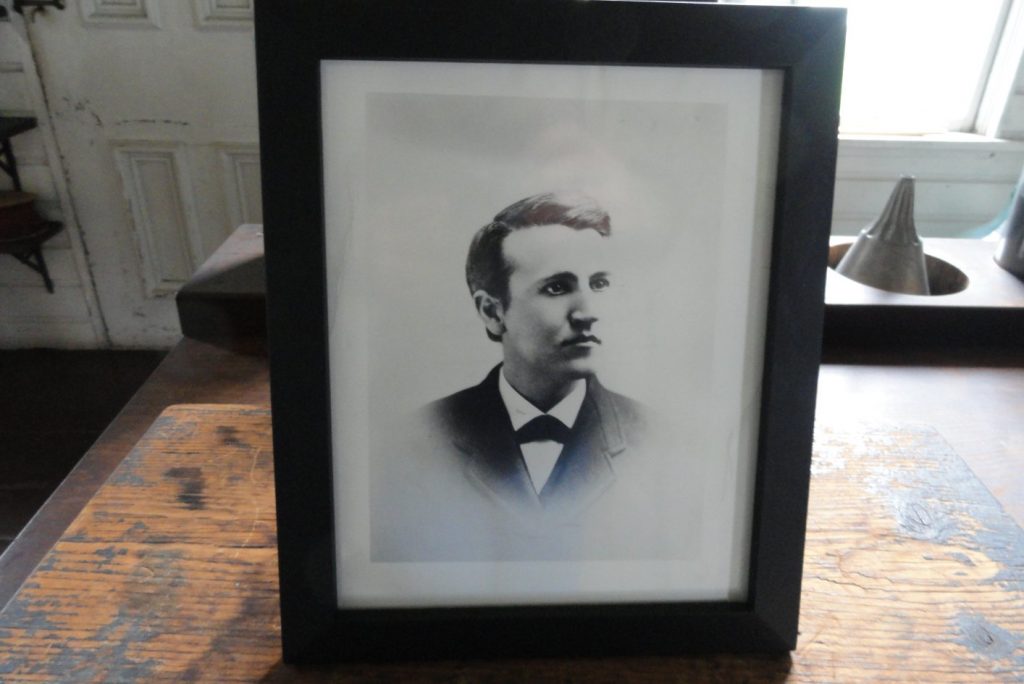
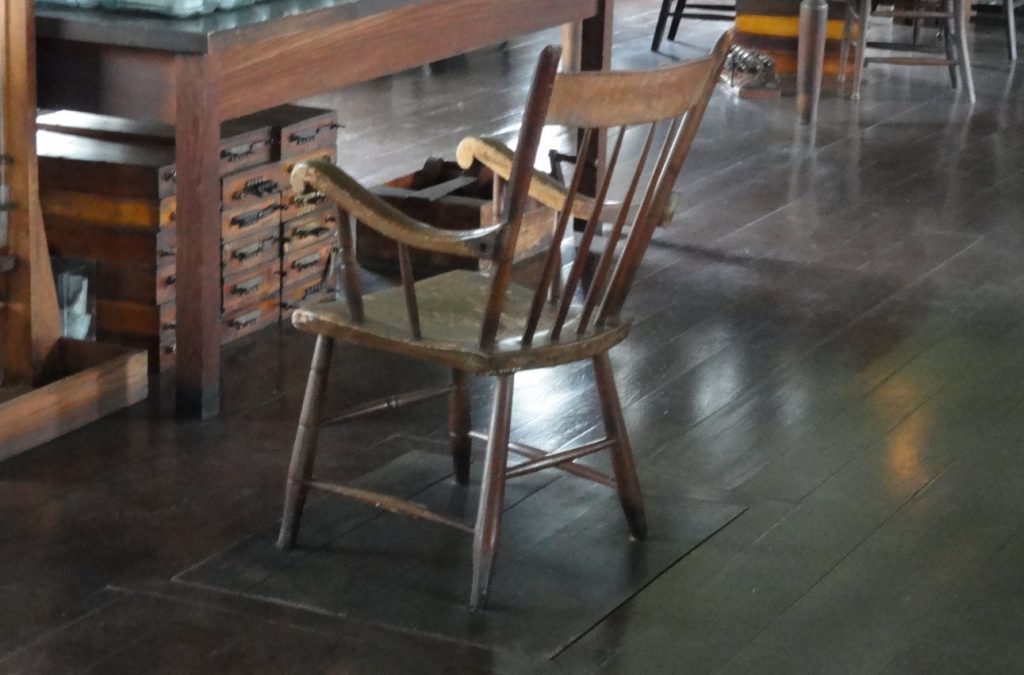
The top picture shows Edison himself as a young man.  The chair in the next picture is Edison’s thinking chair. He sat in the middle of his lab and spewed ideas. Ford brought it to Greenfield Village and restored the lab around it.  He invited Edison, then an old man in 1929 to visit. Edison sat in it one last time. Ford ordered the chair nailed to the floor and, according to the staff, nobody has even sat in it since.  Notice the floor is different under the chair. They had to change the floor, but they kept the original under the chair. 

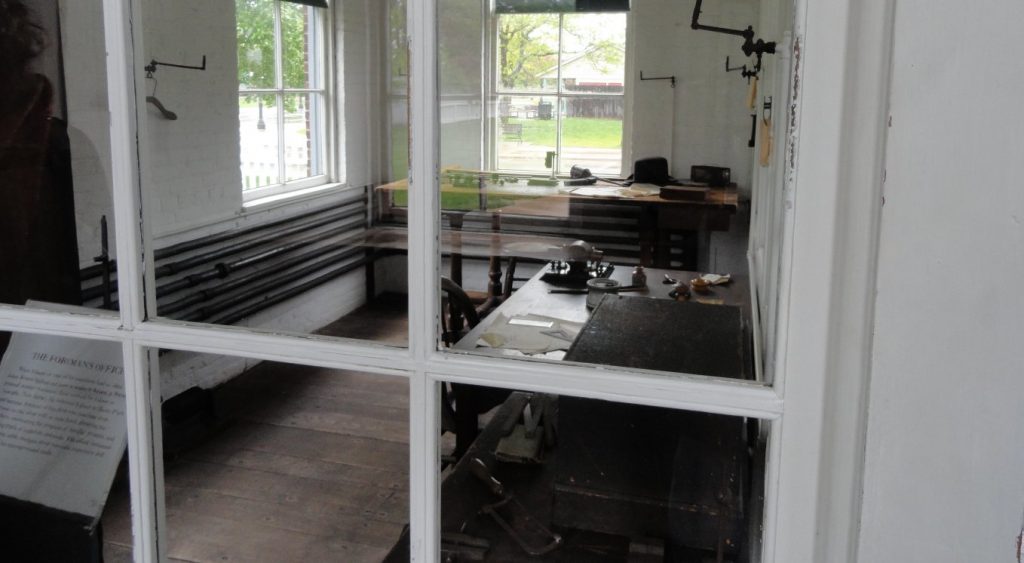
The next picture is Edison’s foreman’s office. This is the guy who managed the production of ideas. 

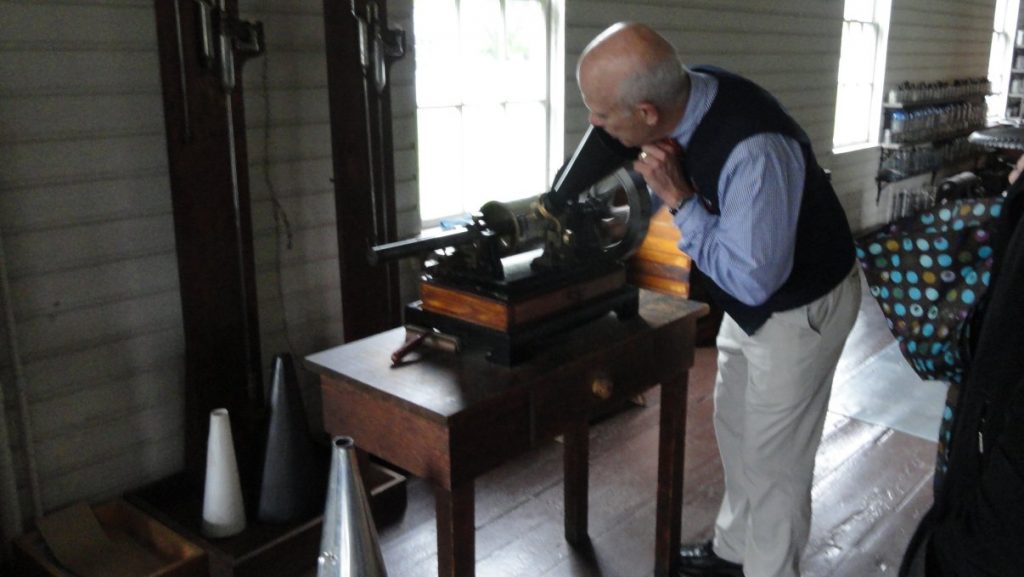
The old guy is yelling into the phonograph Edison created.  It is an original and still works. The sound is graphed on tin foil. It is not great sound quality, but it is sound.

the bottom is a replica of the light bulb. It doesn’t throw much light. You notice from the other pictures that they still need a lot of natural light.             

Henry Ford

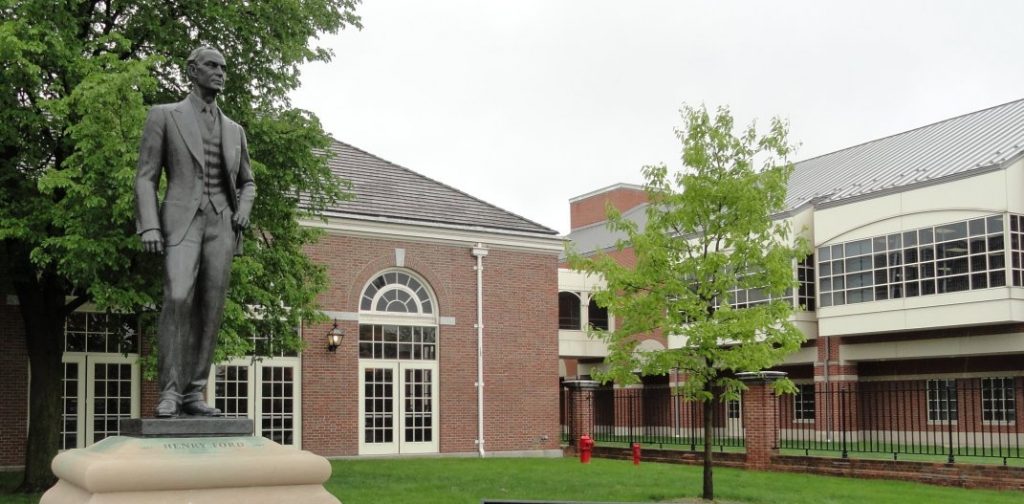
Henry Ford has a mixed legacy. He was a great innovator and philanthropist. He perfected the assembly line which created the productivity that allowed him to pay his workers enough that they could have good lives and actually buy the products they made. In this way, he contributed mightily to creating the American middle class. 

On the other hand, his paternalism annoyed some of his workers. He did what he thought was best for them; not all them agreed. Henry Ford believed in the old virtues of the America he imagined existed in his youth. This didn’t include lots of the aspects of modern society, especially things like labor unions. But his innovations, both mechanical and sociological, were instrumental in making that America obsolete. He provided for his workers, but set up puritanical rules to keep them in line, including differential salaries. All greatness is based on paradox.

He was both ahead of his times and behind them. Ford had a vision of a countryside integrated with the industries usually associated with urban areas. It was reflected in quarters he built for his workers in places are distant as the Upper Peninsula of Michigan and Fordlandia in Brazil. They were designed to get products from the local countryside and the workers houses often included gardens, where they were encouraged to grow their own vegetables. This kind of distributed production was impractical in the old industrial model, but may become possible with the dispersed integration allowed by Internet.

In his later life, Ford tried to preserve some of the old America in an open-air museum. In Greenfield Village, he brought  artifacts and whole houses together. You can find Noah Webster’s house next door to Robert Frost’s.  He also brought Thomas Edison’s complex all the way from Menlo Park, NJ (more on that in the next post.)
It is a pleasant place. It would be nice to live in place like this.

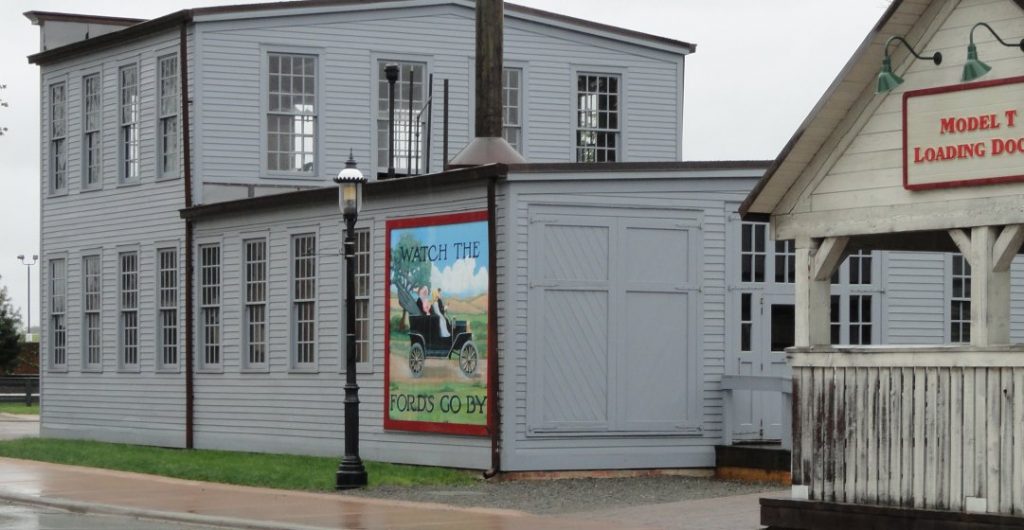
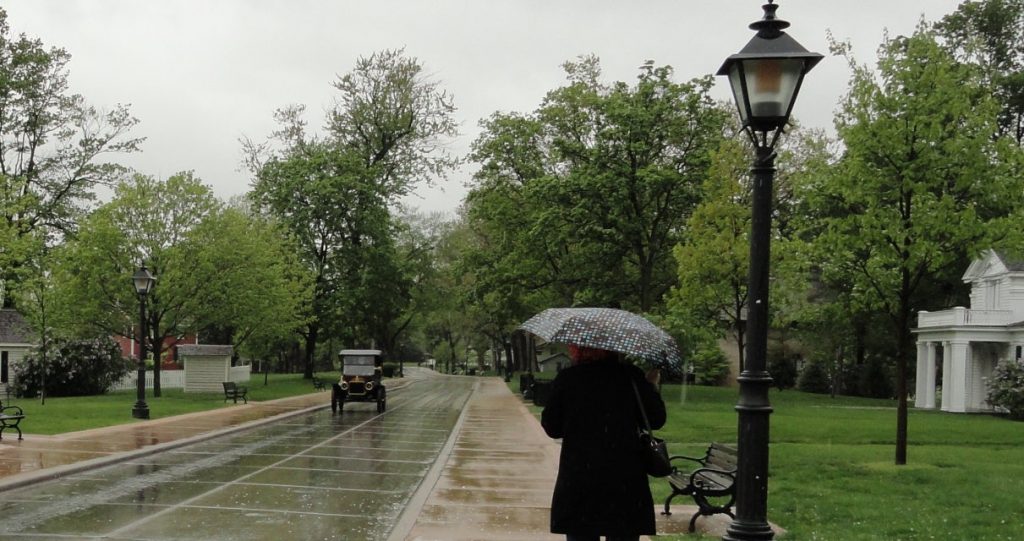
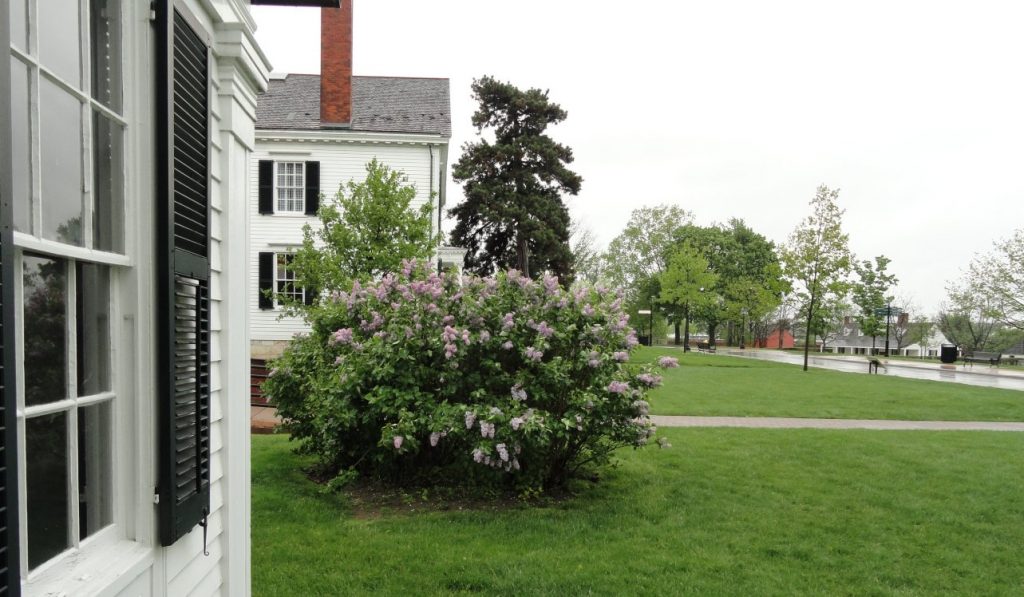
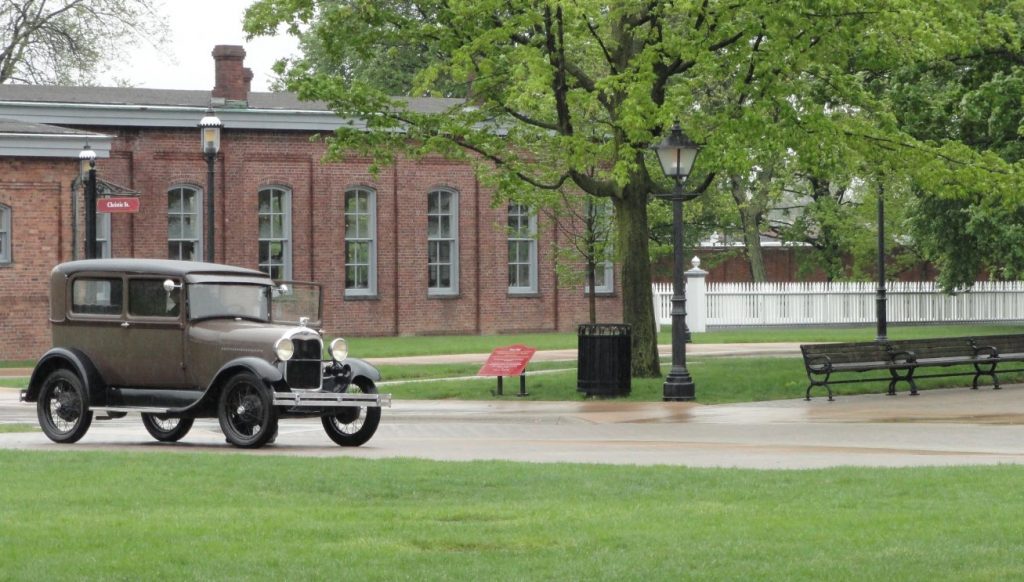
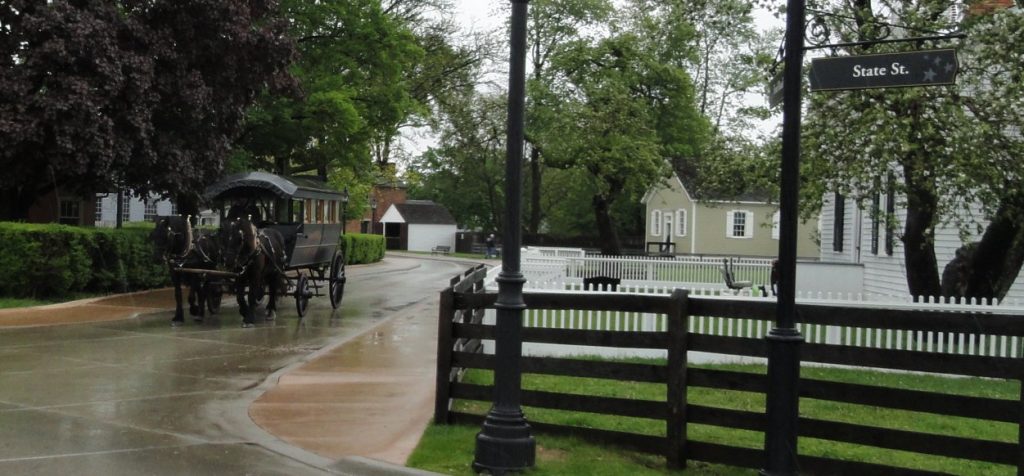
The Pictures: Up top is Henry Ford himself. The others are street scenes at Greenfield village. I would call your attention to the middle picture with the houses and the lilacs. The far house belonged to Noah Webster. Robert Frost lived in the nearer one. Of course, the individuals did not live next to each other and the houses were not next to each other under Henry Ford moved them to Greenfield Village.

BTW – you notice the wet. We had that same cold drizzle I described in the earlier post. 

BTW2 – The most interesting book to read about the auto industry, Ford included, is “The Reckoning” by David Halberstam.  I recently read another book called “Fordlandia”, ostensibly about Ford’s investment in Brazil, but lots about Ford in general.

Cold Rain on Lake Erie

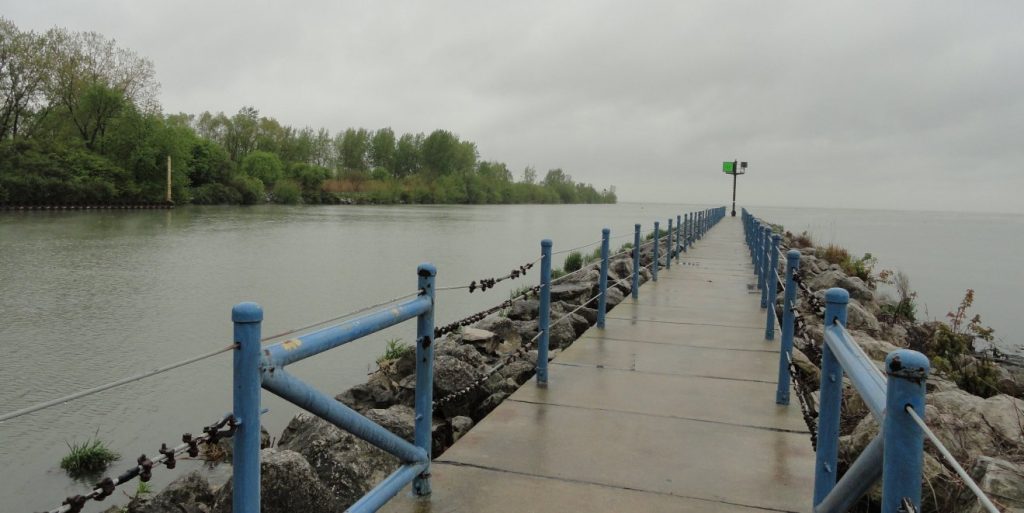
The drive from Virginia to Michigan took us back to early April in terms of weather & leafing out of the trees. I wonder how different my impressions would be if the weather was warmer. Highway 75 goes near Lake Erie, but never in sight. So we went down to get a fast look at the lake, which I don’t ever recall actually seeing.  We came to the water near a place called Monroe, Michigan. There was not much to see. I suppose there are lots of prettier places and I understand that my view could be pretty much any lakeside, but I walked through a half foot of water & drizzly rain to get to the pier to see the lake, so I am sharing it with you.

Lake Erie is the shallowest of the Great Lakes. Some scientists said that it was dead back in the 1960s, but the reports of its death were exaggerated.  Because it was shallow, it got polluted faster than the other Great Lakes, but it also could flush out and clean up faster. It is now an ongoing environmental management challenge, but not dead. Many of the sources of pollution have been addressed, but not all. And the problem of species composition and invasives remains.

The Road to Ohio

I have been on that road many times before, but I have never seen so many dead deer. We saw twelve dead deer by the roadsides. The population is really high. Besides that, even with that, the drive from Virginia to Columbus, Ohio was uneventful.

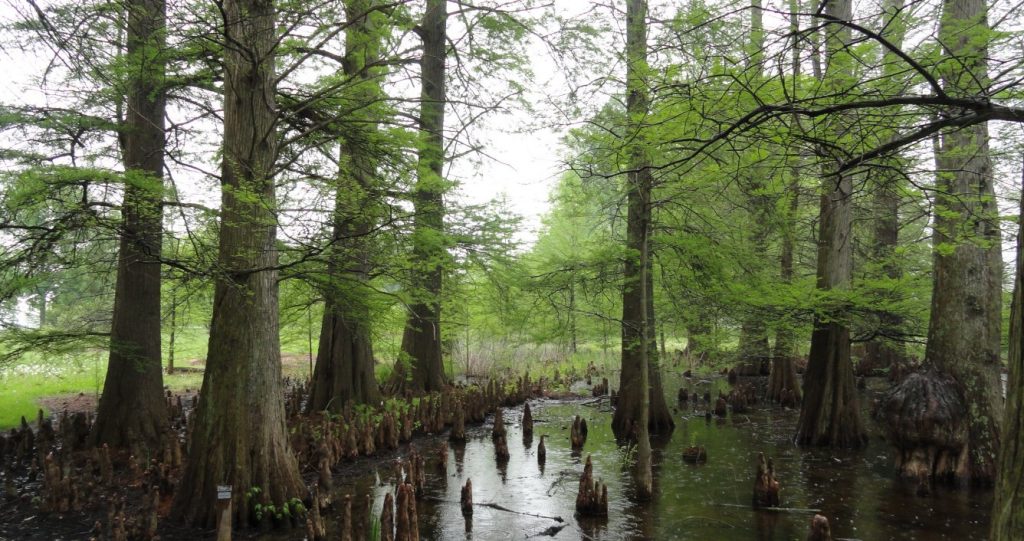
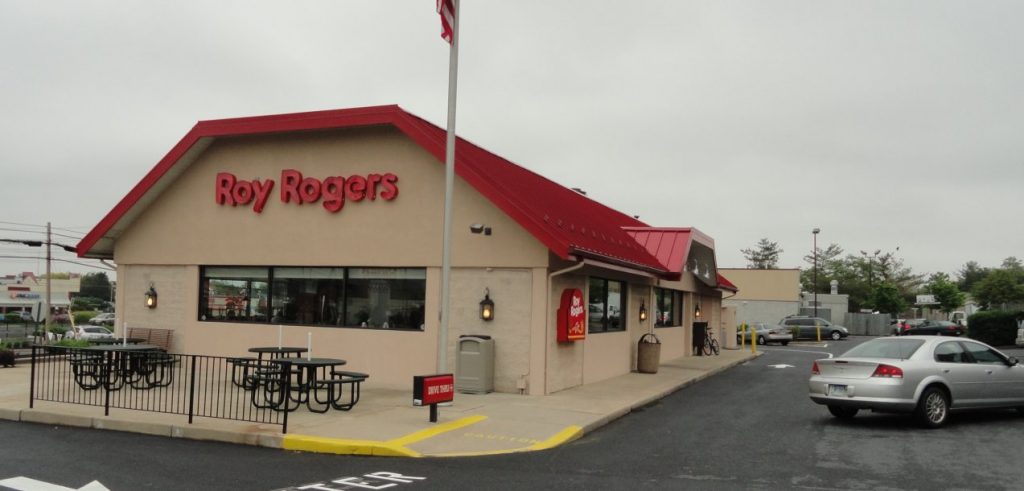
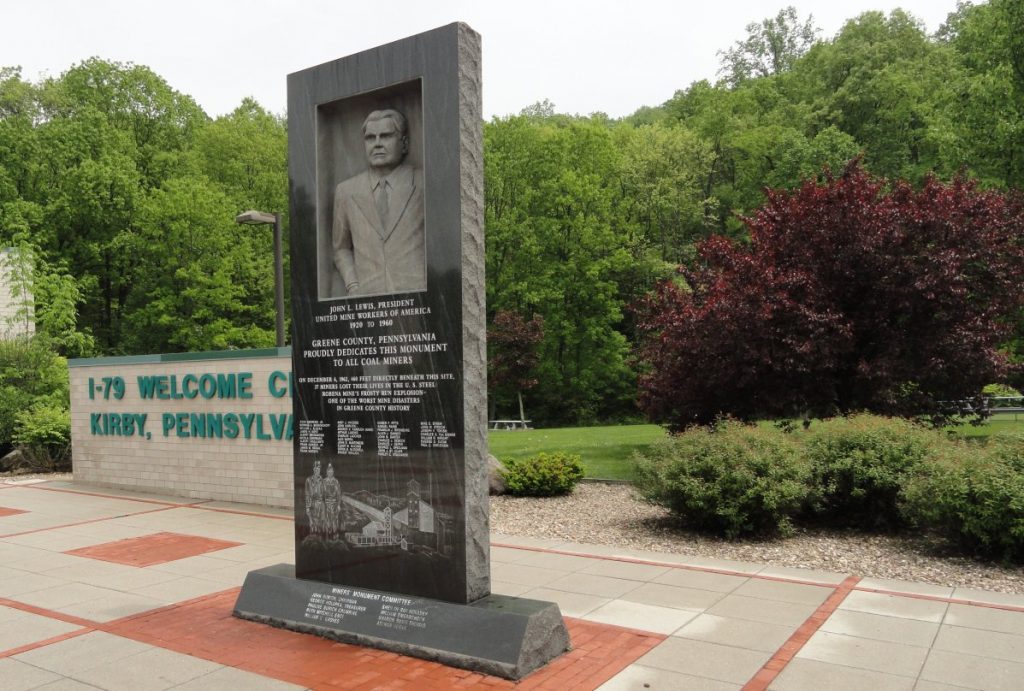
We made only a few stops.  We stopped at a Roy Rogers for lunch. We don’t have them anymore in Virginia, so we wanted to go in for old times’ sake. We stopped for gas at Pilot and at a Pennsylvania rest stop that featured a miner memorial.  The only long stop we made was at the Dawes Arboretum. That was a chance encounter. We saw a sign and stopped in. I took some pictures that are included. I will explain them at the bottom.

We have been to Columbus many times before because it is about a day’s relatively easy drive from Washington.  But Columbus was always just an overnight stop. We got here a little earlier this time, so we stopped at Columbus’ “German village.”   As the name implies, this is the part of town built by German immigrants. According to the brochures, the place thrived from around 1840 to the end of World War I. It seemed very familiar. It has some characteristics of Milwaukee, not surprisingly. There were more brick buildings and the neighborhood is more intact than comparable ones in Milwaukee.

We ate supper at the Schmidt Haus. They had German sausage & potato salad, very good. The restaurant also featured a duo (an accordion player and a tuba player).  I had a good time. Chrissy liked it too, but maybe less.

Pictures:

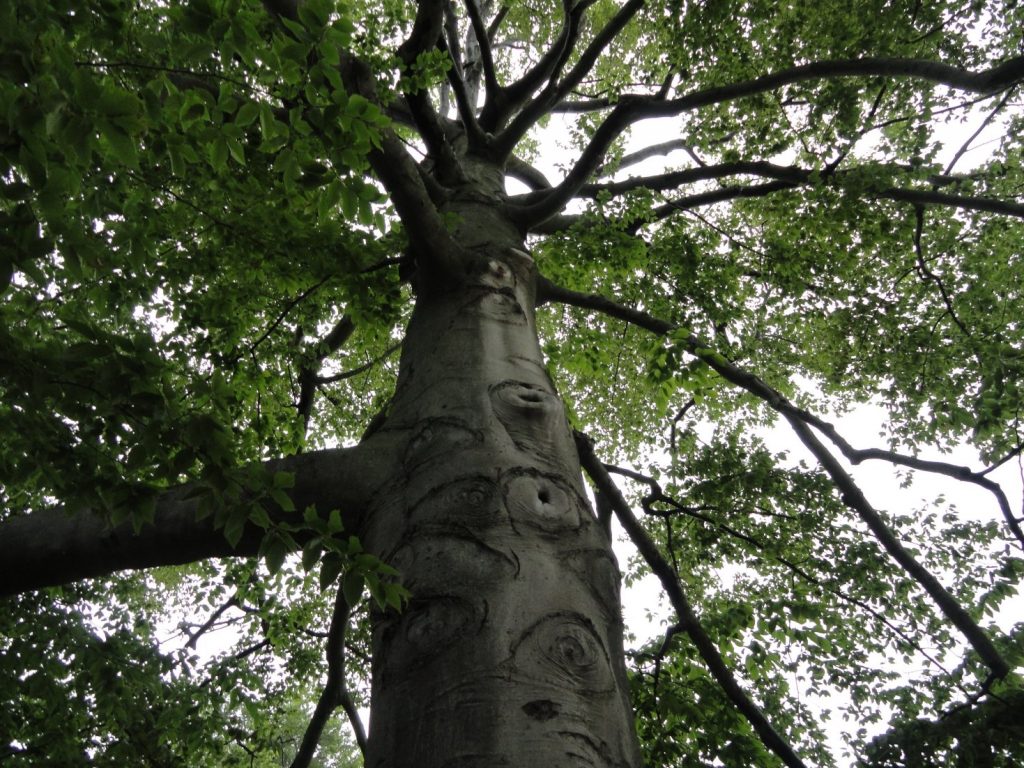
The picture up top is the cypress swamp at Dawes Arboretum. Of course, it is not natural. Bald cypress will grow as far north as Minnesota, but they do not naturally reproduce outside the south. The northern boundary of their natural range is just about the southern line of Virginia. Next picture is Roy Rogers.  The one below that is the Miners’ Memorial. It commemorates a mining accident that took place under the rest stop and killed 37 workers. The man portrayed is John L Lewis, the famous leader of the Mine Workers. Next is a big beech tree at the Dawes Arboretum, one of the biggest I have seen.

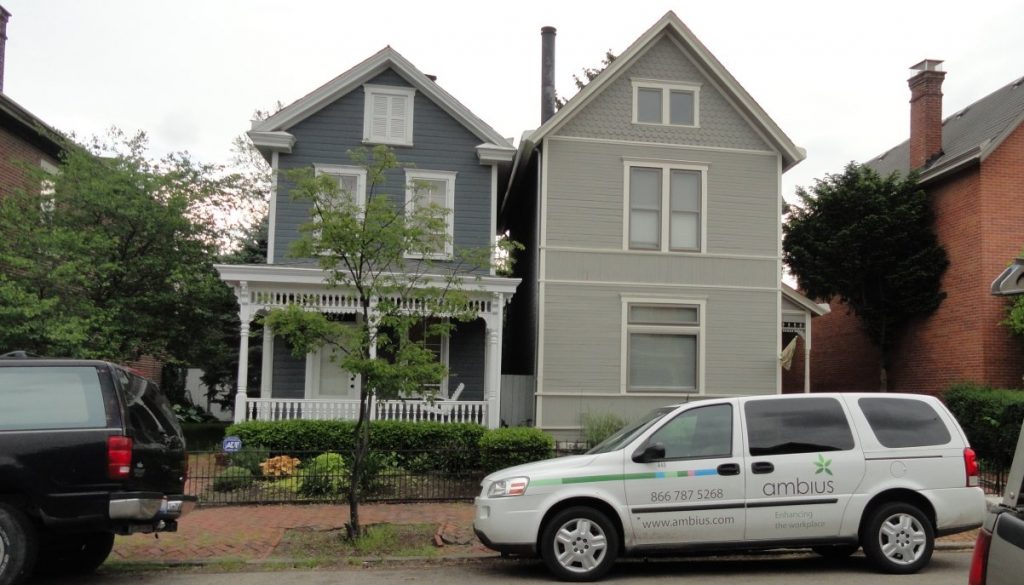
The pictures below are from the German Village.  The first is a couple of houses on the same lot. The German village is pleasant and upscale, judging by the cars parked outside the houses. I suppose that the people who lived here originally were not so rich.

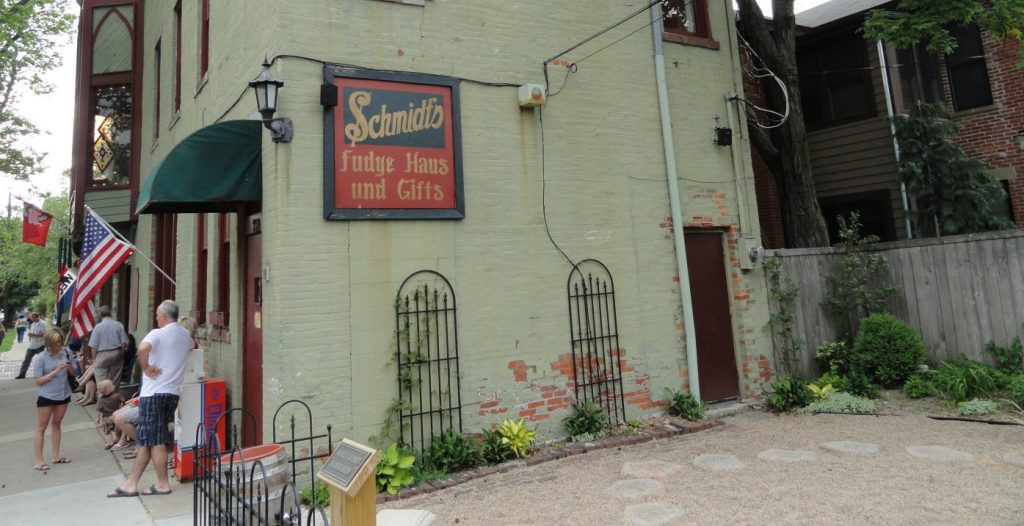
Below is the Schmidt Haus restaurant.  It used to be a livery stable.

Above shows the amusing use of mixed languages.  They use the German “haus” plus English fudge and gift.  Fudge doesn’t mean much but “gift” in German means poison.

Early & Late in Washington

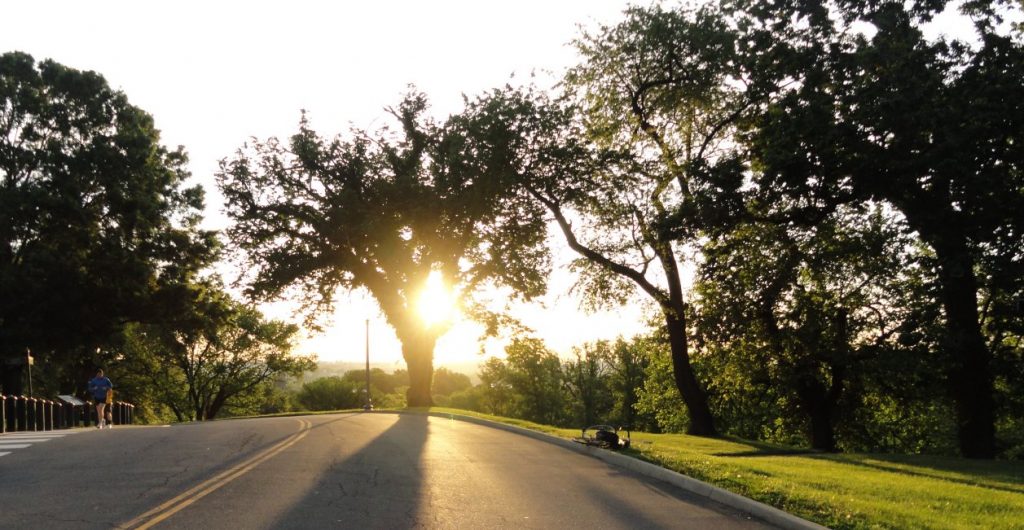
I don’t like to get up on my bike before dawn, but I am embracing it, since I have no choice. I have to be at work before 7, which means I have to leave the house at around 5:45, which is just almost sun-up this time of year. It is relaxing to ride through that twilight, knowing that it will soon be lighter.  There is also a lot less traffic on the roads, although – ironically – a few more bikes and runners on the trail.

Although I get to work early, I still stay until I can take the subway home. But I go down near the Potomac to enjoy the evening twilight.  So I get the early twilight and the late twilight. Sweet.  

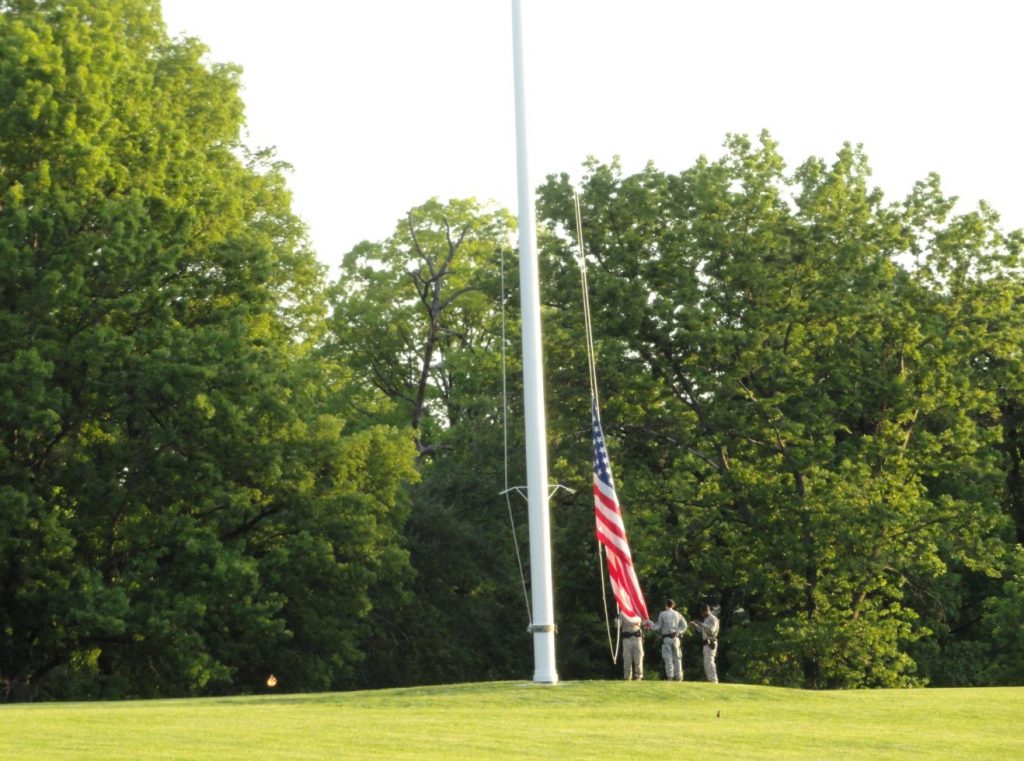
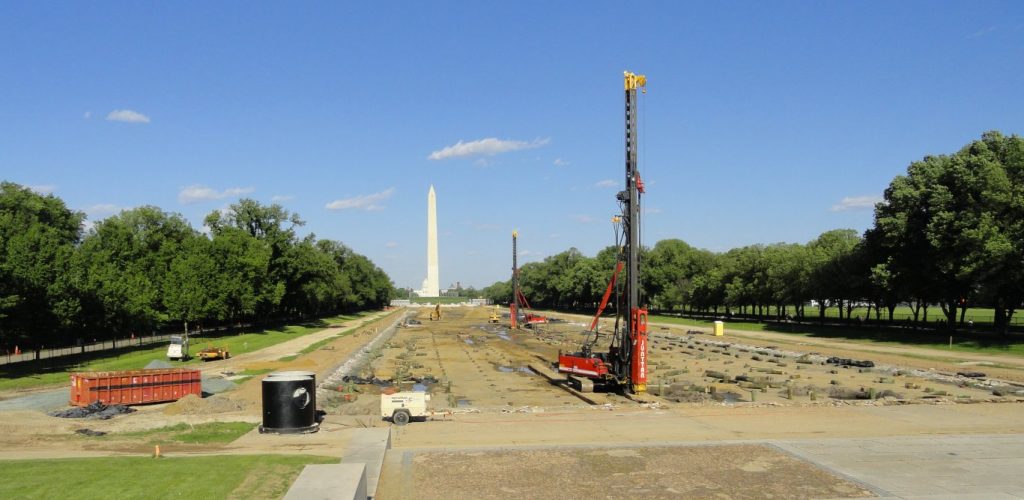
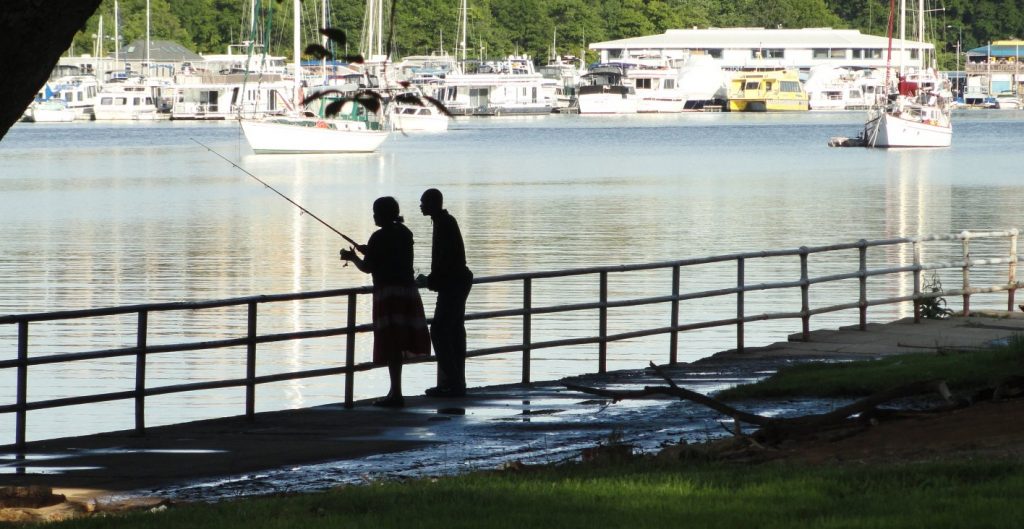
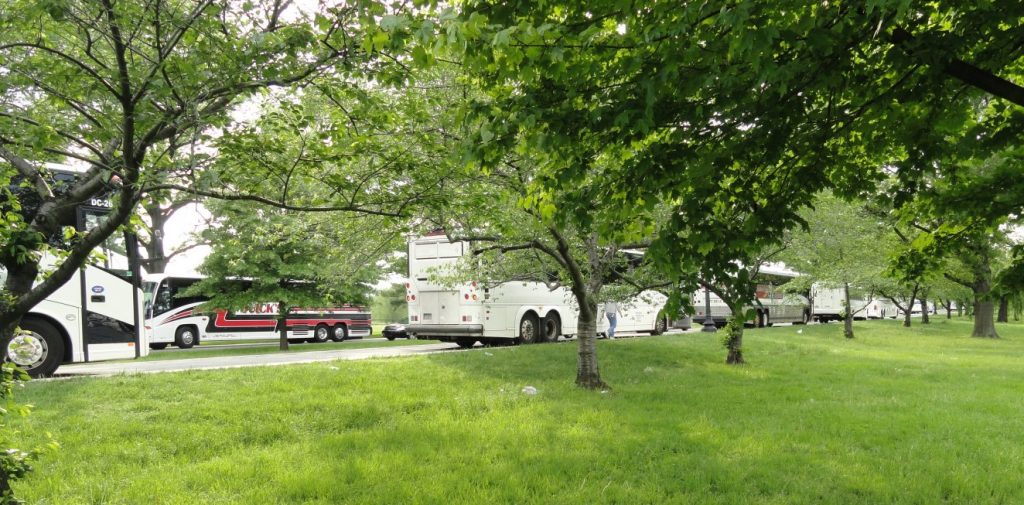
The pictures – Up top is the sun rise over Washington from Ft Myer. The sun is blinding at this angle, so I ride right in that shadow of the tree.  Next is flag raising at Ft Meyer. Below that is the reflecting pool with no water. Everything needs maintenance. Below here are people fishing in the Potomac at the end of the day. And under that are buses parked in the Potomac Park. Evidently this is now the new tour bus parking place. I don’t like it.