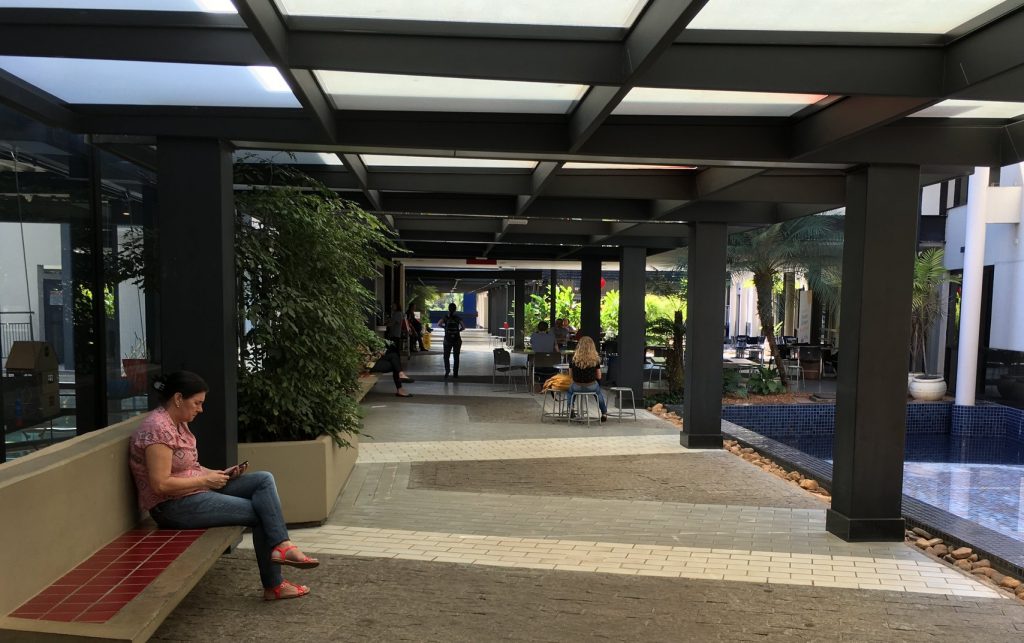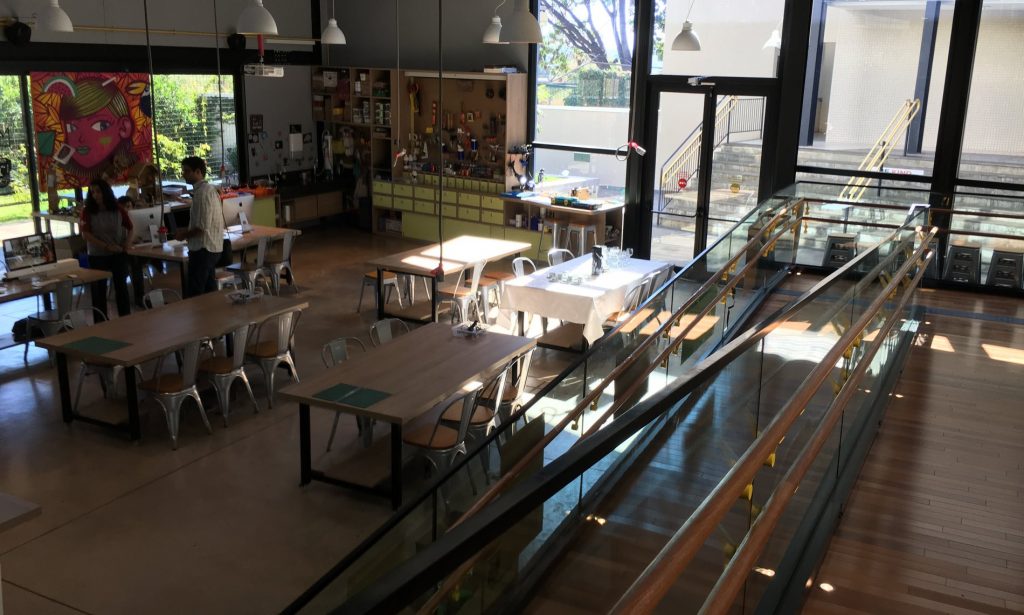
Maker Space at Case Thomas Jefferson

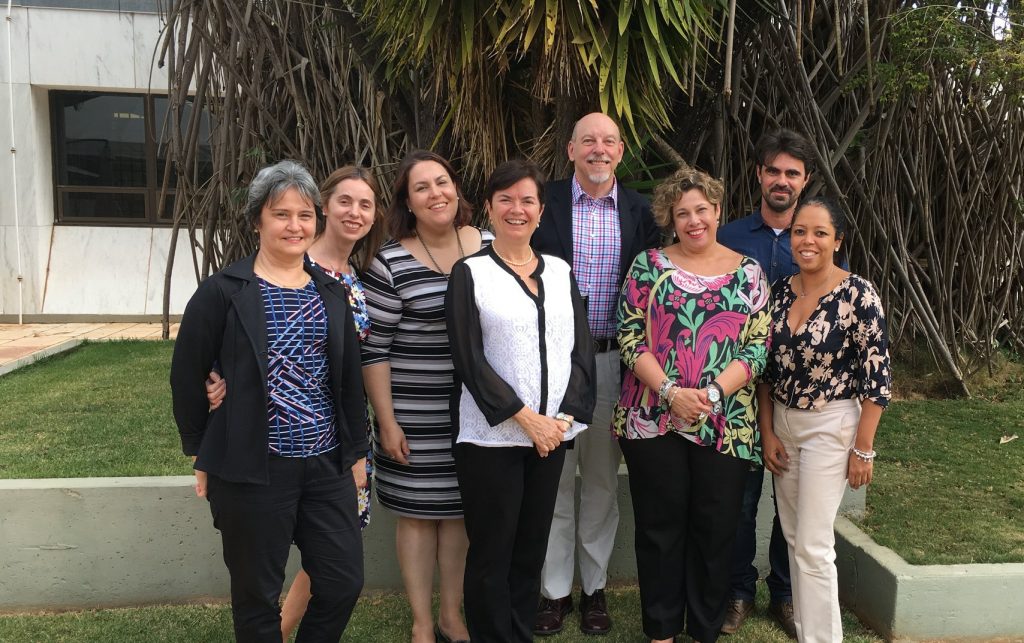
I cannot claim credit, but I was present at the creation and I am deeply gratified by the small part I played – I signed the original seed grant and helped facilitate contacts between Casa Thomas Jefferson and Smithsonian. What I can claim is a useful perspective. I saw the start of this idea and how it grew with the help and active participation of so many people, in Brazil and in the USA. Coincidentally, I was Senior International Adviser at Smithsonian when CTJ people visited to follow up on plans. And now I get to see the program in glorious fruition
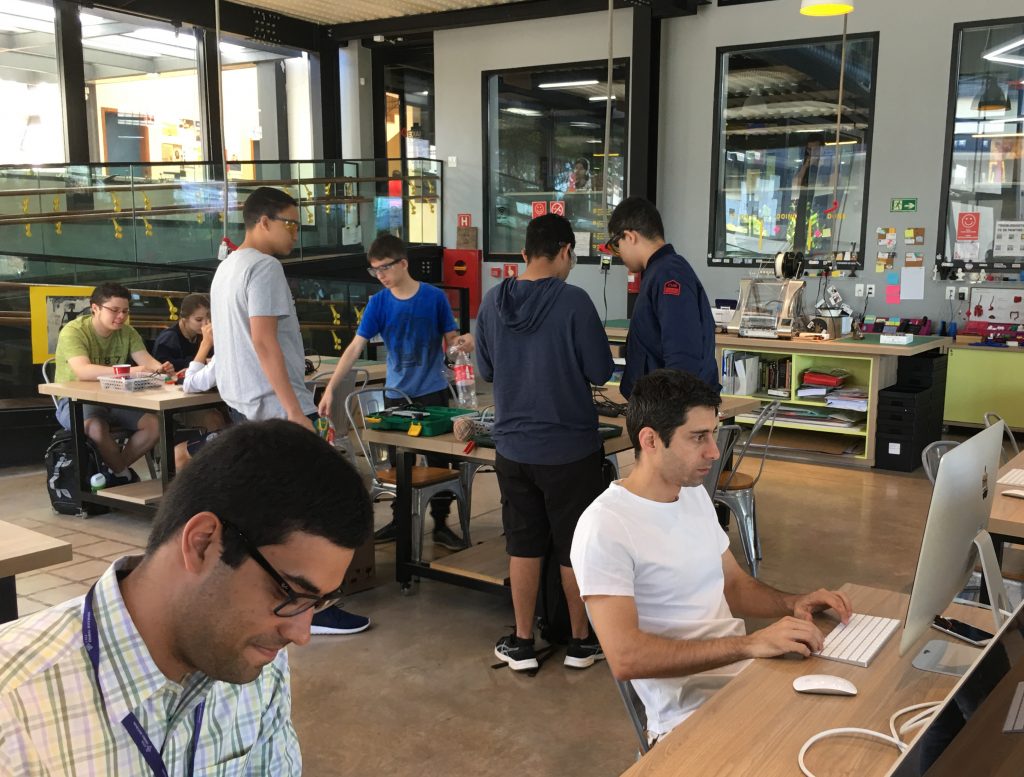
The choice to build an updated American space to include a maker space seems like a natural one now, prosaic and mundane. Back when CTJ made the decision, the future was not as clear. Lucia Santos, then fairly new as director of CTJ, had to make a courageous decision to commit a large amount of money and staff resources to a project that lots of people could not understand. CTJ was already in a great position, the most prestigious English teaching cultural institution in Brazil. It would be easy to rest on the laurels. But they did it.

The partnership with Smithsonian was crucial. Despite my subsequent sojourn at Smithsonian, I have no special knowledge of how they came up with that idea, so I will refer you to the great article in this link, “Side by Side by the Smithsonian.” I became aware of the program when the Smithsonian contacted the Embassy about CTJ. They were looking for some of the best spaces in the world, to serve as models for others, and CTJ rose to the top. We facilitated the visits. Well … it worked.

The idea is to go beyond CTJ, although CTJ with all its branches is pretty big just by itself. (They just opened a branch in Uberlândia, first time outside the Federal District.) CTJ is reaching out and working with other BNCs in Brazil and in Latin America.

Lucia Santos told me that they are aware of the competition among English teaching operations. Binational Centers have history on their side. Binational Centers, as the name implies, are Brazilian-American joint ventures. The first ones were founded just before and during World War II, when Brazilians and Americans alike feared the active and aggressive “cultural” influence of the Nazis in Latin America. They were not initially strongly associated with the United States government, but rather with U.S. NGOs, semi-government and philanthropic organization. We just had not yet developed those mechanisms. USIA was founded only in 1953. But American diplomacy was soon involved. I learned to love BNCs during my first posting in Porto Alegre. They are wonder venues for cultural events and learning, much better, IMO, to those commercial schools who may do a competent job of teaching English, but do not feature the broader commitment to culture, the arts and development of Brazilian society. This commitment, however valuable, is not w/o costs, so the BNCs need to stay a step ahead of the competition.

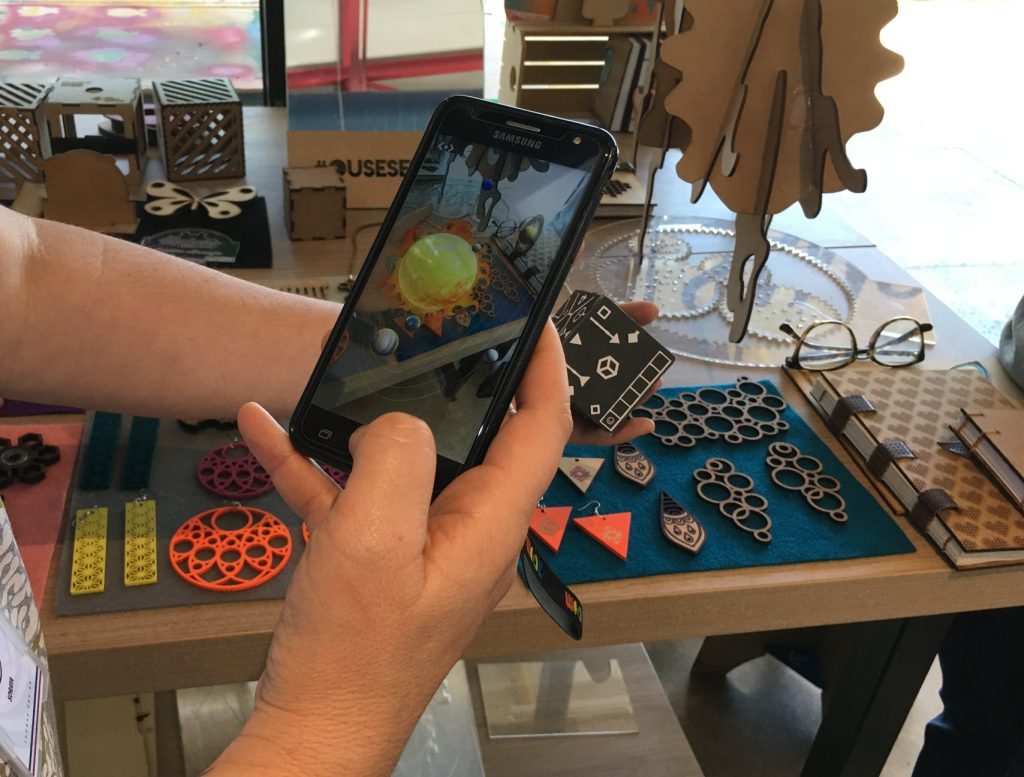
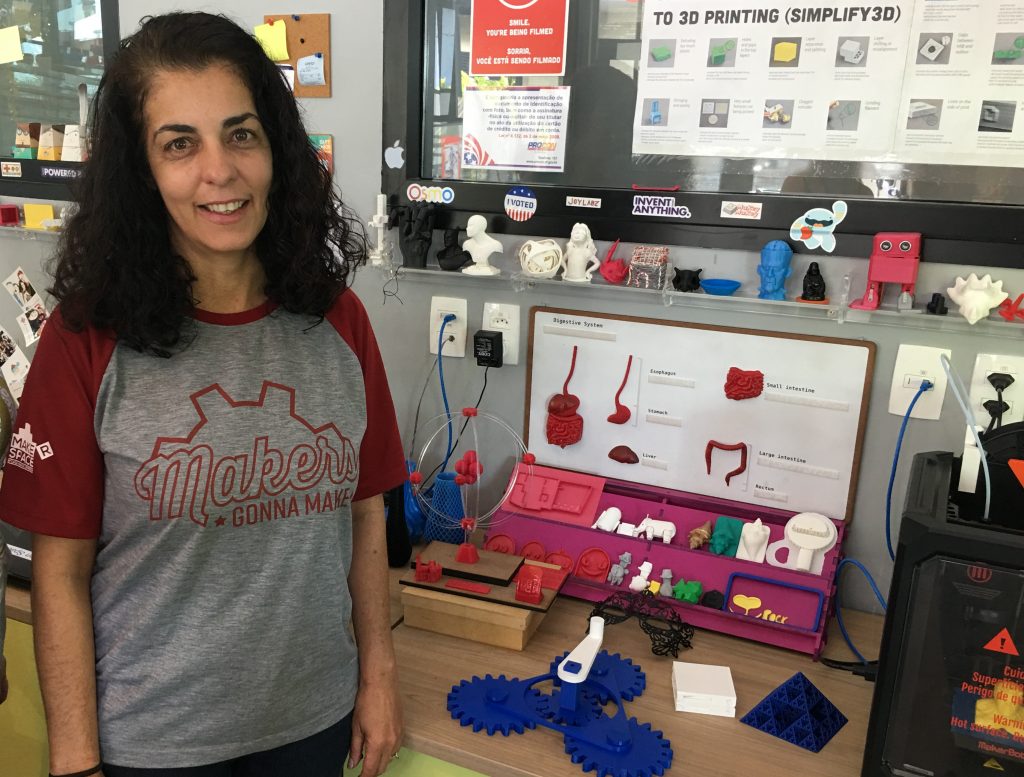
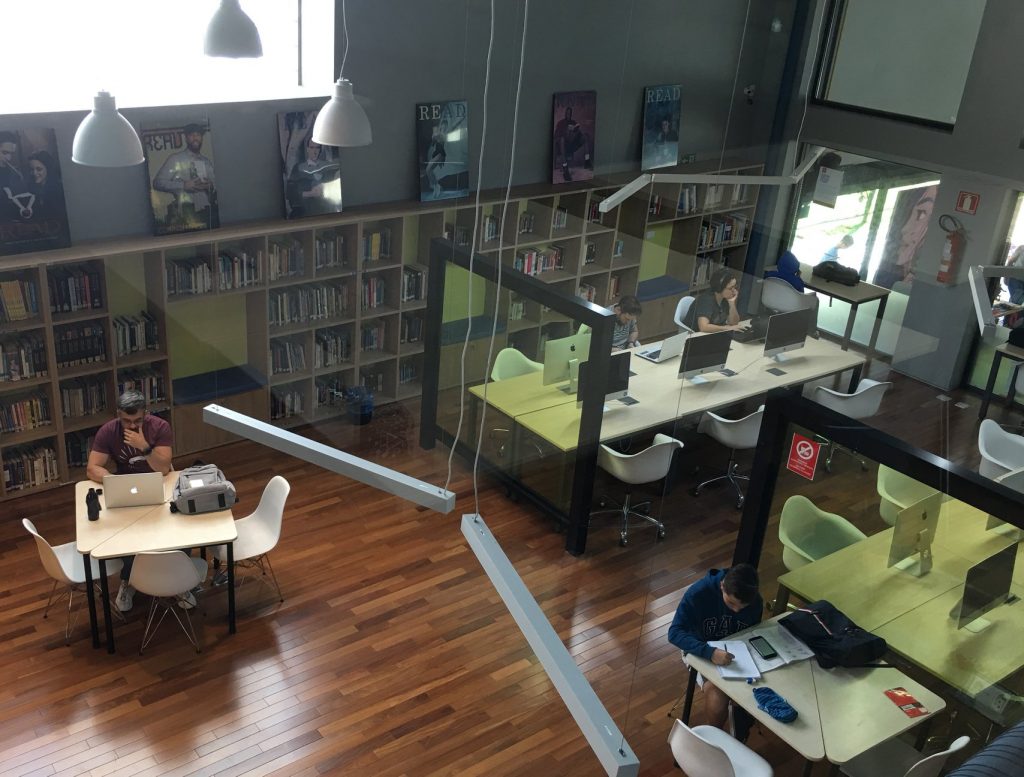
This American space/maker space is more than a step ahead. There is currently no equal in Brazil. CTJ uses the space to teach its own students, but shares with public schools, scholars and entrepreneurs. In this sense, it is almost like a business incubator.
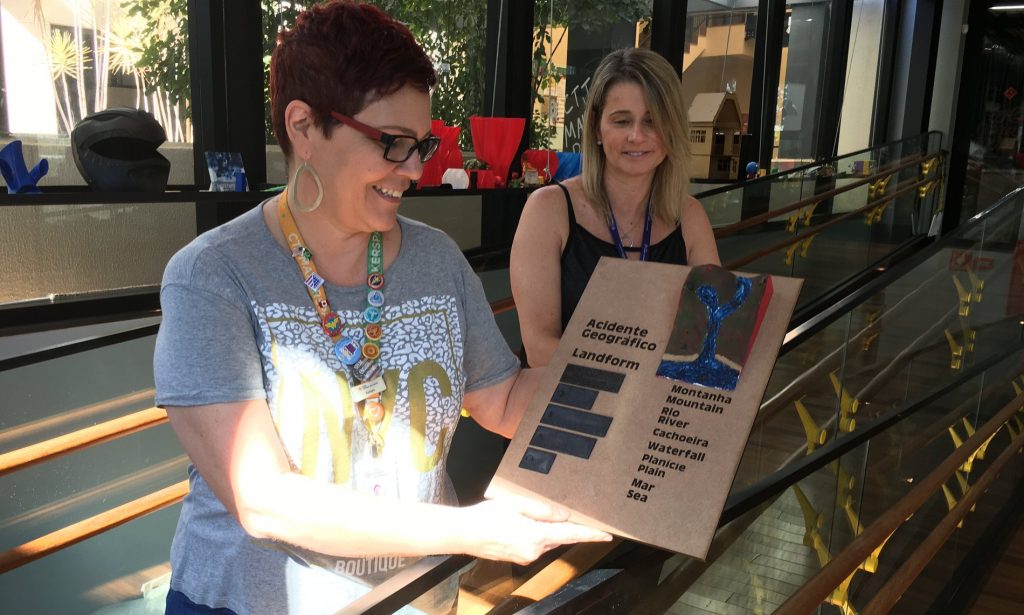
A couple of projects that you can see in the pictures were designed by students to help teach blind kids about science concepts. They can feel the 3D river system, for example. The student task is to identify challenges and then figure ways to address them. This has the double advantage of exercising the minds of the students and providing useful tools to those who need them.

BNCs are one of “our” best program. I put our in quotation marks, because they have grown so far beyond our initial vision. CTJ, for example, supports itself and in fact supports us. We could not run programs like Youth Ambassador or much of our outreach w/o BNCs. They do the educational advising and they provide library services. BNCs operate our Access Program that reached the less fortunate. We always know where to find friends in Brazil. They are at the BNCs.

CTJ celebrated its 50th Anniversary while I was serving in Brazil. I wrote the linked note. In Salvador, I attended the 70th Anniversary in 2011. Yeah, got history.
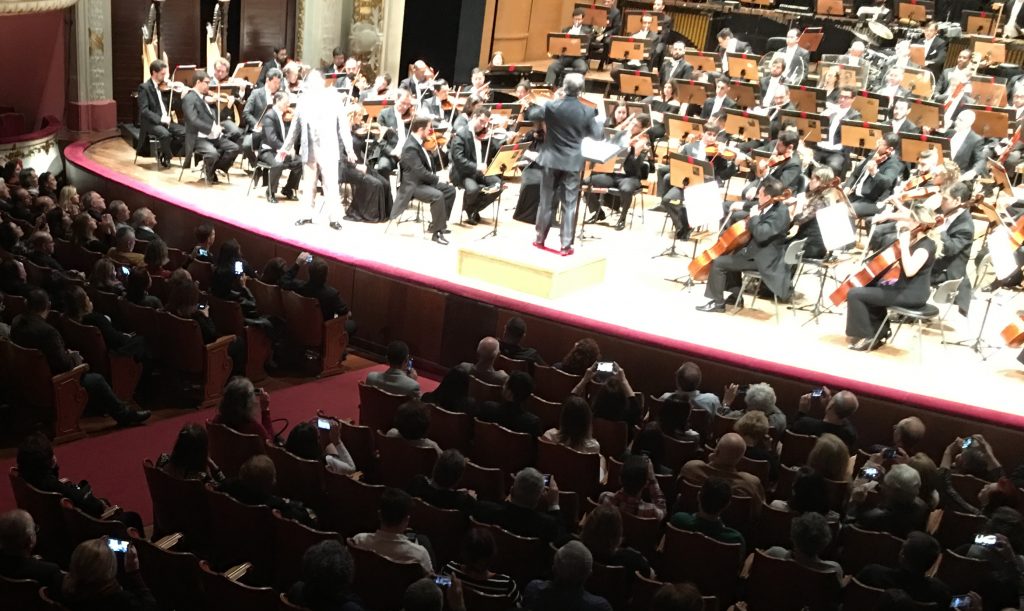
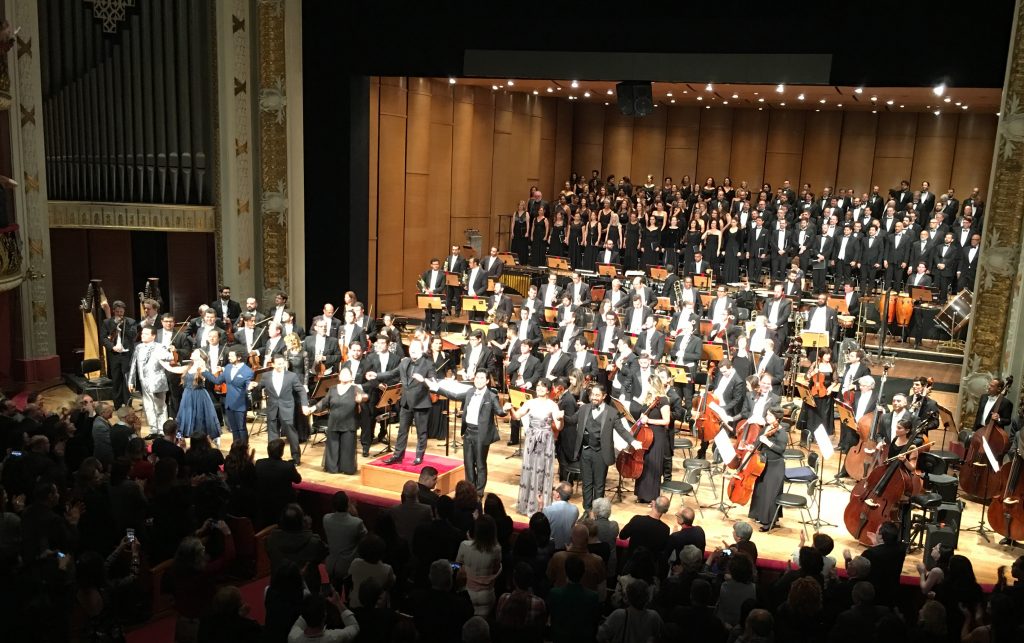
São Paulo Symphony Orchestra played a tribute to Leonard Bernstein

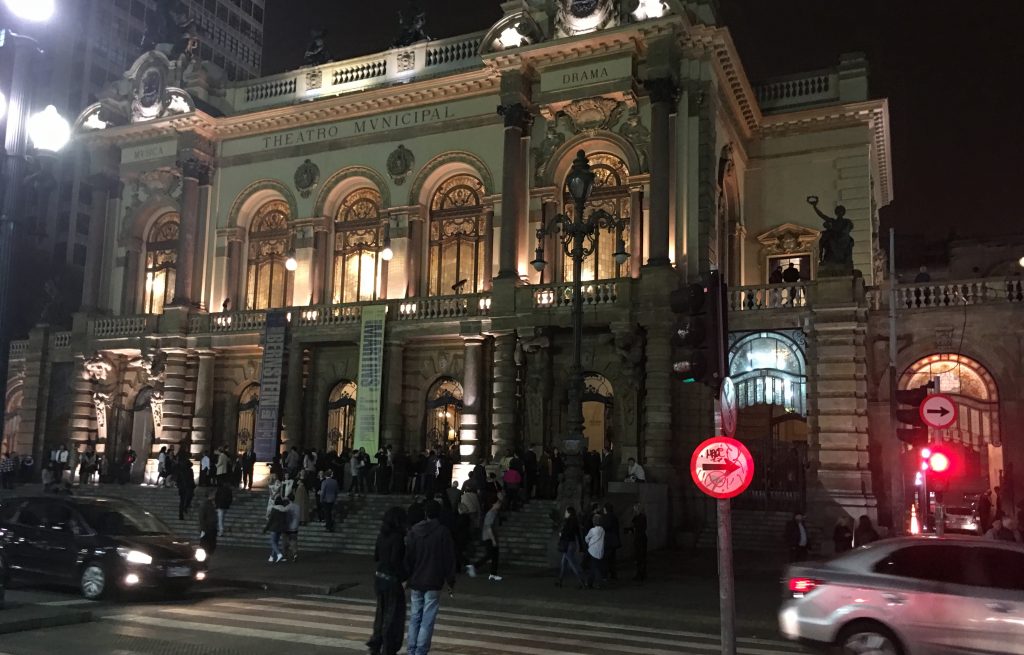
The São Paulo Symphony Orchestra played a tribute to Leonard Bernstein, including selections from Candide, West Side Story, Slava & On the Town. Good to see American culture showcased in Brazil. The concert was at the beautiful São Paulo Municipal Theater.
I went with the new Consul General in São Paulo, Adam Shub – seems a good guy, very interested in cultural events. We went to a Peruvian restaurant before the show. My choice. The food was good, but the immediate neighborhood was not good. I walked to the restaurant, got there a bit early and reconnoitered. There were lots of odd people hanging or as often laying around even during the day, graffiti and boarded up building. I did not feel comfortable even in broad daylight. After dark, I thought it best to take a taxi rather than walk the five-seven minutes to the theater. Those who know my predilections about walking will appreciate that this is not usual for me. Not good.

There were signs of improvement, I suppose what we would call gentrification, and there was a clear dividing line. Actually, it was more like a couple of blocks of bad surrounded by good or okay. Unfortunately, it got a little too grungy between where we were and where we wanted to be. When we picked up the taxi, I apologized for the short trip, but the driver said that we made a good choice not venturing through that gauntlet and said that a lot of his business is just driving customers around that couple of blocks. We gave him a good tip.
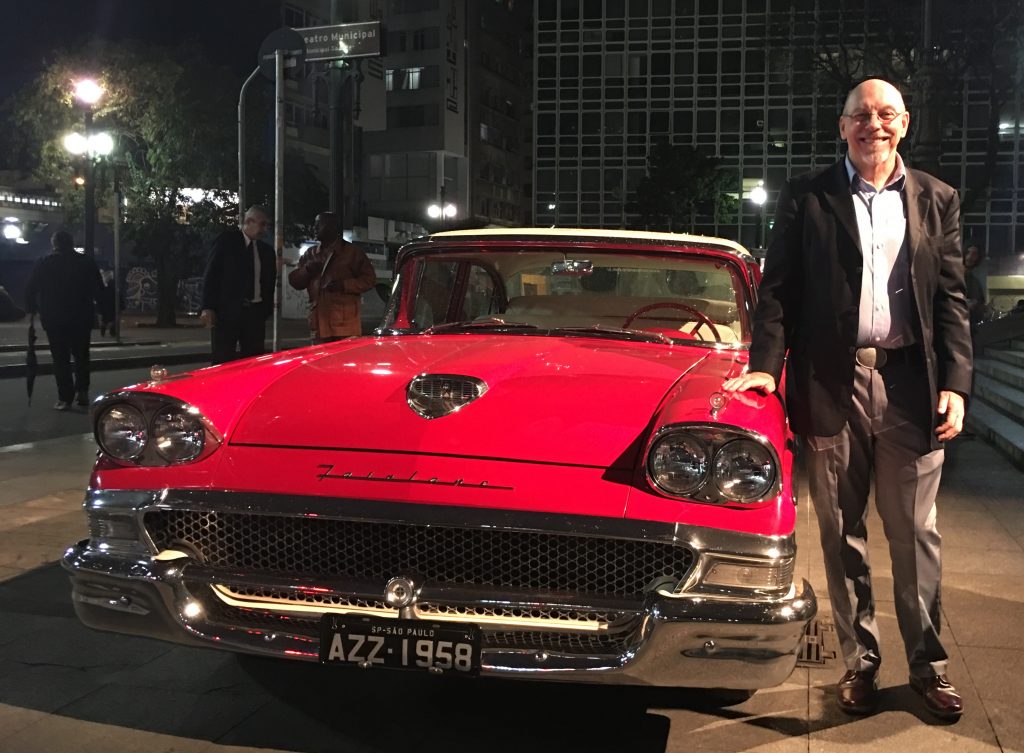
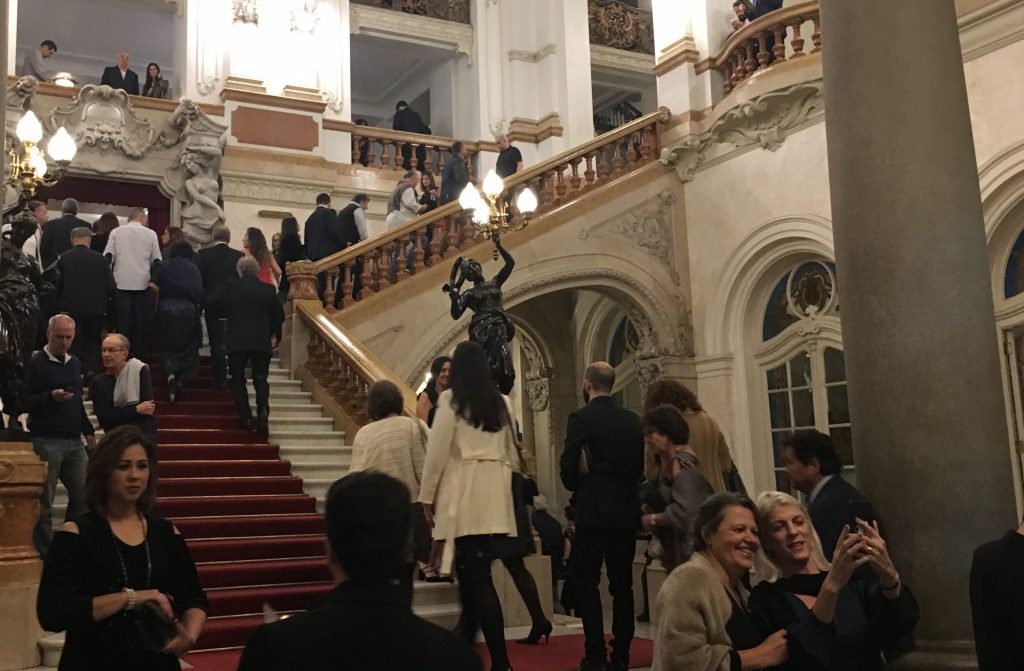
The area around the theater was nice. It is an attractive 19th Century building, beautiful inside and out, as you can see in the pictures. They are very enthusiastic that you not check your phone. There are guys deployed in the top balcony that shine laser pointers on anybody who takes out a phone. They to this to the end, when everybody takes out the phone to get pictures of the players and selfies, I suppose. They parked a classic Ford Fairlane outside, I guess because or West Side Story. Lots of people were taking pictures with it, so we did too.
Me too

 An Active and Effective Woman

Juliana de Faria created a #metoo type movement in Brazil a couple years before it took hold in the USA. She was moved by the same sorts of actions that affected Americans.  I will let you see her explain it herself at her TED Talk linked. She is speaking in Portuguese, but the talk has English subtitles. She is founder of the feminist blog Think OLGA and the campaign Chega de Fiu Fiu (Enough with the Catcalling) that challenges sexual harassment in public places. She was recently named one of “8 Incredible Women Who Will Inspire You to Break the Rules” by Cosmopolitan magazine and the Clinton Foundation’s No Ceilings Project.  Ms. de Faria partnered with the Public Defender of the State of São Paulo to create and disseminate informational material about sexual assault. Her e-book Meu Corpo Não É Seu (My Body Is Not Yours) was published 2014.

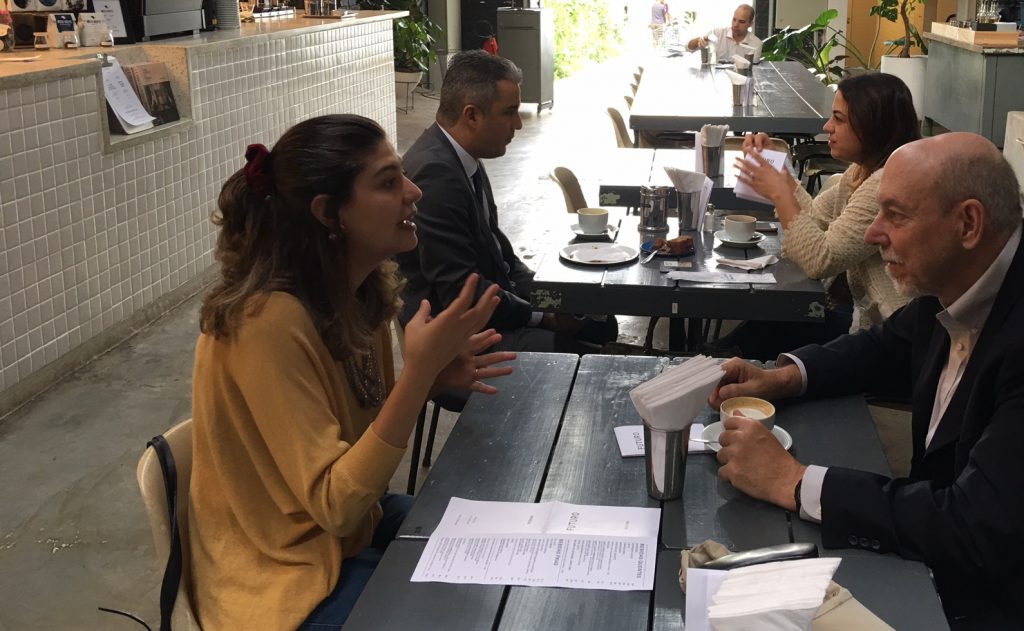
She was one of our IVLPs who traveled in 2016 on IVLP regional project “Women Leaders – Promoting Peace and Security,” so I was interested in learning more about her experiences on our exchange and if it affected here activities.  We had coffee and discussed her program. BTW – I asked her permission to write this up and share it, since I otherwise take out the names and some details.

Juliana was already active and effective before she went on her IVLP visit, which is how she came to the attention of our Consulate colleagues.  We talked about added value.  She talked about the power of networking and that the visit gave her a greater appreciation of how that works.  It is not enough, she said, to get lots of attention of lots of people interacting on social media, although those things are important.  Affecting lasting positive change requires lasting commitment, and that requires organization, and creation or influencing institutions.  She also came to appreciate more the need for partnerships.  Partners need not agree with everything you are trying to do. They may even be opponents of some of the things you consider important, but it is better to find points of agreement and work on those.

Networking and the Art of Working with Partners

As we talked, I realized that what she was describing was essentially the theory of networking and idea transmission that we had long studied and tried to implement in public diplomacy efforts.  I was concerned that I was hearing what I wanted to hear and feared confirmation bias. I rephrased what I thought I heard her saying, admitting the possibility of confirmation bias. She thought that the rephrasing was consistent with what she was saying, so we were reading from the same page.  We agreed that it was less an example of confirmation bias as simple confirmation.  We both believed that this was a useful and effective way to pass information and help promulgate ideas.

The Joy and Challenge of Multi-Regional Projects

Speaking specifically about the IVLP experience, Juliana said that it has facilitated her networking with Americans and with others from Latin America who had been with her on the tour. One drawback was that most of the other participants were from Spanish speaking Latin America.  Spanish and Portuguese are similar but not interchangeable and it tends to be a one-way transmission in that Portuguese speakers can understand more Spanish than Spanish speakers can understand Portuguese.  Juliana and other Brazilian participant were okay with English, but Spanish translation was provided and that tended to make positive group dynamics a little harder.

After her return she had a visit with President Obama.  Juliana praised his intelligence and his commitment to improving the situation for women.  She mentioned that she was pregnant during the visit and President Obama joked that Barack is a good name for a baby.  This was in October of last year when she participated in a dinner for former President Obama when he visited Brazil.  That seems some very high-level networking.

Biomath – if your model says it is raining, it is still a good idea to look out the window

I was not sure what “biomathematicians” did, but when I looked it up I learned that I was familiar with the work, if not the more complex current techniques. You can trace the field at least as far back as John Snow (the London man who traces a cholera epidemic to a polluted well and helped create the whole science of public health, not the King of the North in “Game of Thrones”) Biomathematicians essentially map and model biological phenomenon, such as disease spread or dynamics of wildlife populations.

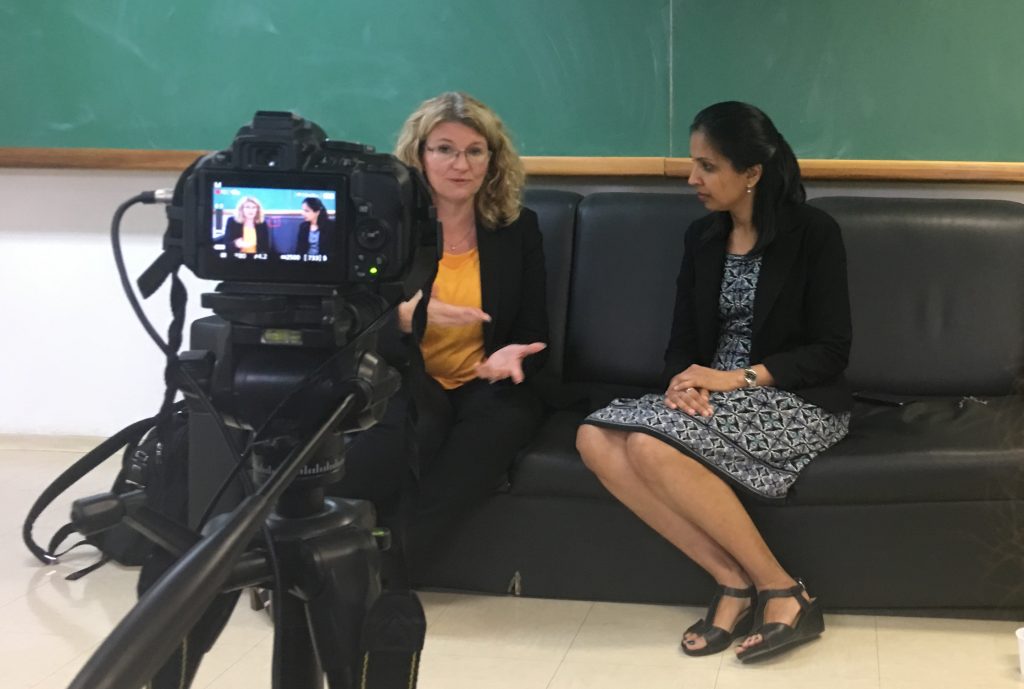
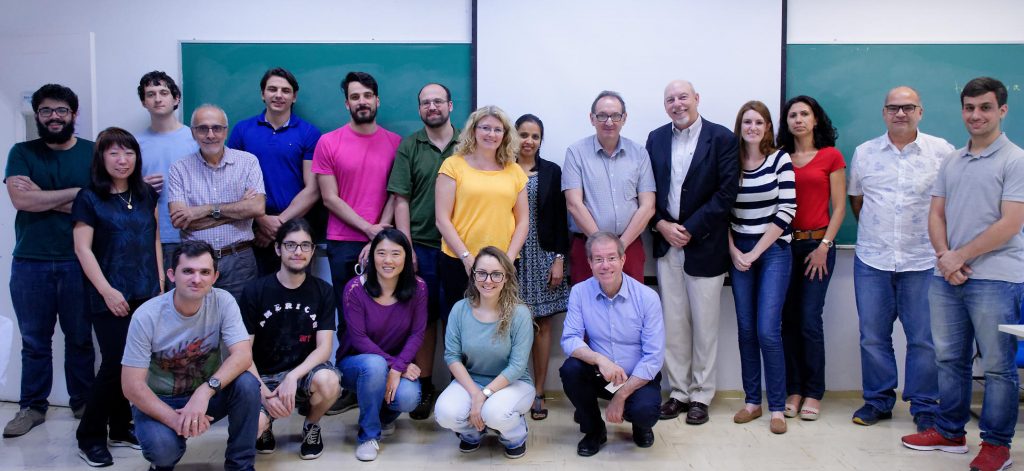
This I needed to know because the Mission sponsored a lecture visit by two biomathematicians – Dr Lora Billings from Montclair University and Dr Shweta Bansal of Georgetown. They were collaborating with colleague around Brazil, for us more specifically at the State University of São Paulo (UNESP). I got to have lunch and attend some lectures and a media event.

Connecting people and ideas
For the Mission, this visit satisfied a couple of our goals. First was the simple connections principle. One of the most important functions of diplomats is that we act as connectors, putting Americans in touch with counterparts in other places. Connectors play a key role in the information ecosystem but they (we) are easily overlooked or dismissed.

Women in STEM
When connecting works as it should, it grows way beyond our capacity and it is tempting to believe that it “would have happened anyway.” I am aware of this attitude because I used to share it. It was only with a fair amount of experience and some focused study that I came to appreciate the connector niche. The second of our goals, more a “meta-goal,” was to highlight women in science, in the STEM fields. Both goals were achieved.
Lots of the math was beyond me, but I did finally learn what an eigenvalue did, at least in a general sense. It is a measure of stability. The reason I bring up this piece of esoterica is that since I was in college one of my jokes (of limited use) was that in my statistics studies I learned about eigenvalues but in all my years after never saw them in action.

Modeling Disease Spread
Dr Banal talked about modelling the spread of influenza. It is not as easy as running time series, since there are many factors in complex relationship. The flu itself mutates every year and this interacts with weather, behaviors that change in relation to other factors, random chance … lots of things. She mentioned that complex is not the same as complicated and talked about how that affects ability to predict, i.e. prediction in complex systems is not possible in detail but you can model and get some ideas that can inform decisions and action.

Dynamics of Ecological Systems
Dr Billings talked about the dynamics of ecological systems, modeling what happens when you add in an invasive species or take out existing ones and/or change the dynamic as in climate change. The good news is that the impact of invasive species may be limited, in that they invade into disturbances and then may moderate. The bad news is that there are lots of disturbances these days.

Malaria Transmission
One of the Brazilian colleagues, Dr Roberto Kraenkel,  talked about modeling malaria outbreaks. He had some kind of graph that could show relationships among variables that were not clearly correlated or were both correlated to other factors. Experts understand these things. For guys like me he gave a simple example. Water in a lake is correlated with rainfall in the watershed. If you know something about the watershed, rainfall may be predictive of lake levels. However, lake levels are not predictive of rainfall, but you can tie both to other factors. Even the simple example soon moved beyond my full understanding. What I got was more rain makes the lake rise – sometimes, not always.

Reality Checks
All the participants mentioned the need for boots on the ground study and they listened to local information. They were concerned that models could get ahead of reality and so built in realty checks. I thought this was great wisdom. Big data and computer power can find lots of relationships and correlations, sometimes even when they really are not there.
That is why even if your model says it is raining, it is still a good idea to look out the window.

Paulo Agustoni

Paulo Agustoni had been working for the USG for more forty years by the time I started in the FS and he was waiting from me when I took up my post in Porto Alegre. All counted, Paulo would spend more than fifty (50) years in the service of the United States of America. He showed me his service pins from ten, twenty, thirty and forty years of service. They evidently do not have one for fifty. It so rarely comes up.

I went to visit Paulo during my visit to Porto Alegre. He is now ninety-one years old. People often say that old people still “sharp.” In Paulo’s case, they are telling the truth.

Paulo has a big book of pictures, letter and personnel actions. I was happy that I wrote his EER competently back in 1987, because he still has it.

He was a typical Gaucho when he was born in Passo Fundo, RS back ninety-one years ago, i.e. he was the son of immigrants. His father came from nearby Uruguay. His mother came from farther away in Naples.

Paulo’s daughter pointed out that her grandmother immigrated directly to Porto Alegre. I learned that this was unusual for the time. Most Italian immigrants headed for “the colony,” which was the land of the Italians in the RGS mountains where they came to predominate in cities like Caixias do Sul or Bento Gonçalves, and in the countryside around where they established vineyards and small farms. There is town called Antonio Prato much loved by Romance language linguists, since that is where they go to study Italian dialects no longer extant in the old country.

This area of Rio Grande do Sul and neighboring state of Santa Catarina is one of the most pleasant landscapes on earth. The climate is moderate, since it has higher altitudes and lower latitudes. It gets enough rain to keep it green all year around and immigrants from Italy and Germany constructed neat communities among the majestic araucaria trees (sometimes called Parana pine).

In 1944, Paulo started to work for the USG at the predecessor of the USIA. His job was to show films in the interior of the state. From there he worked his way up and made a good life for himself and his family.

Paulo helped me when I was a green young officer and it was great to see him again.
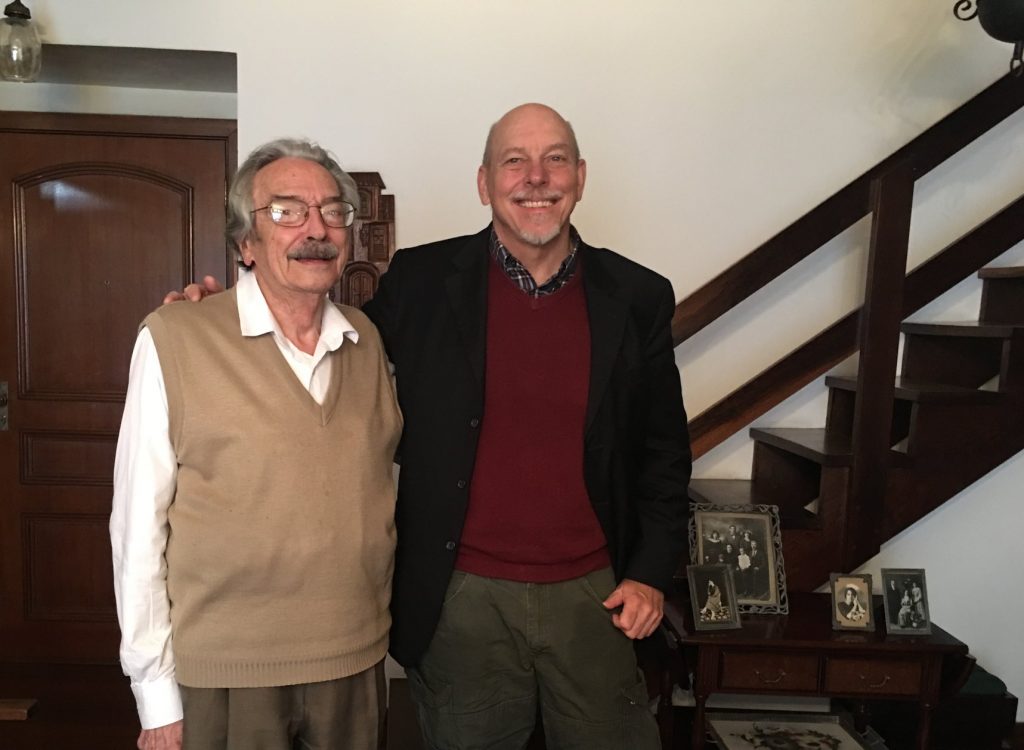
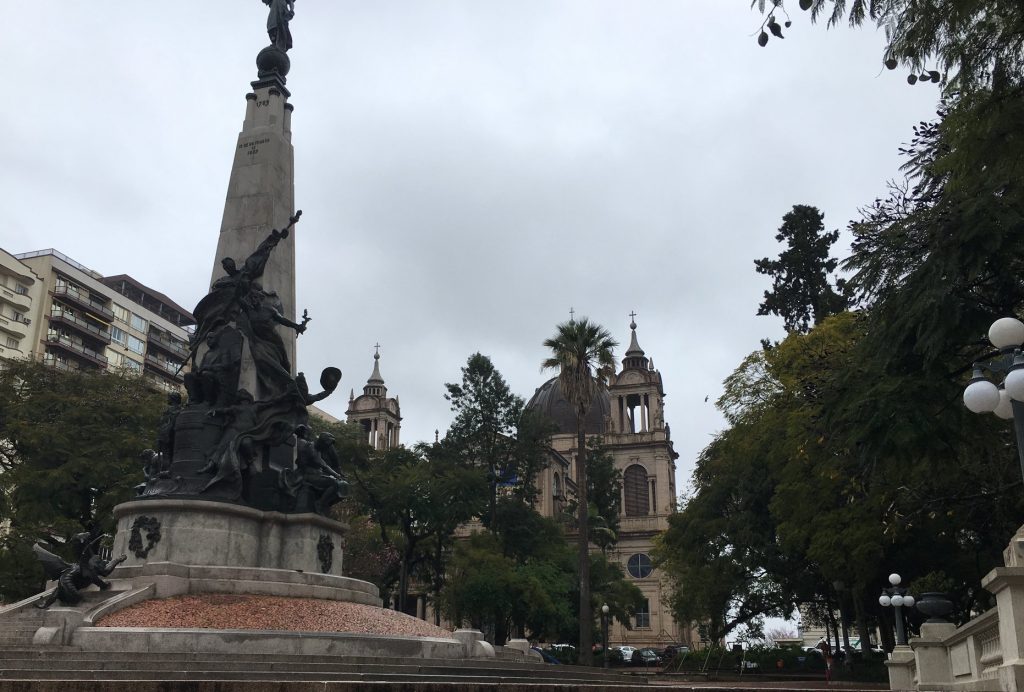
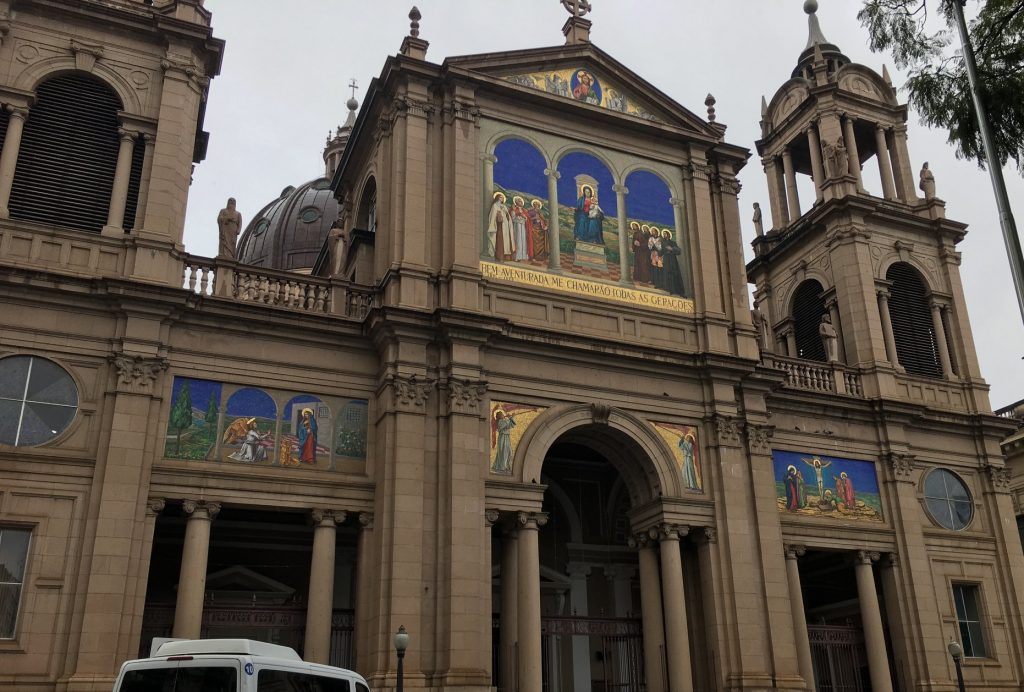
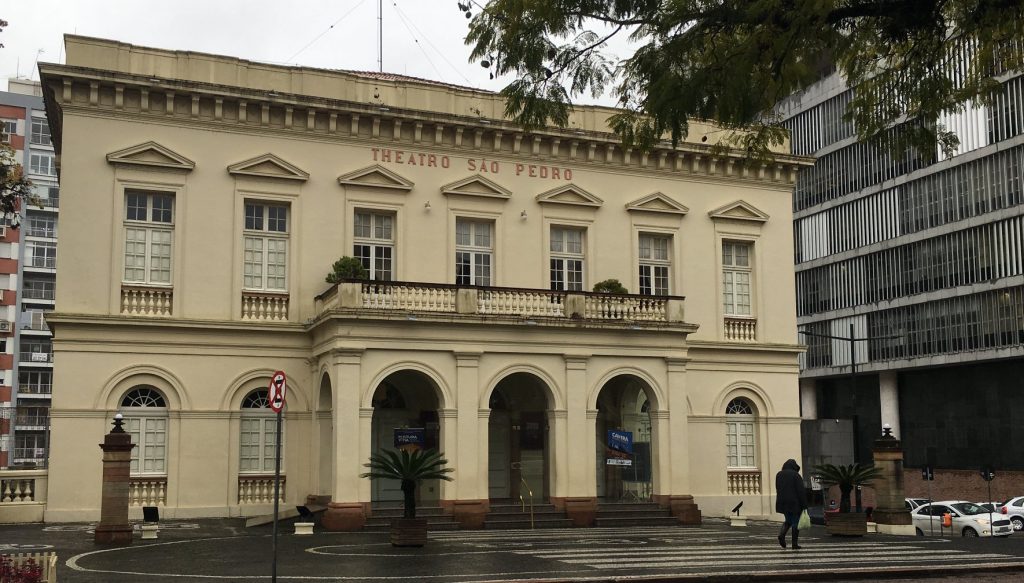
My first picture shows Paulo and me. Next three are from the Cathedral Square in POA. Picture # 4 shows Theatro Sao Pedro. Back when I first came to POA, it was a ruin. Some people wanted to tear it down and build one of those steel and concrete monstrosities that passed for modern architecture – like the the thing you see at the edge of the picture. It was saved largely though the efforts of Eva Sopher. Her family fled Hitler and found refuge in RGS. She paid pack the kindness by saving this landmark. I met her a couple times. Remarkable woman, the kind of person who is the epitome of culture and kindness. Her work lives on.

Parque Farroupilha

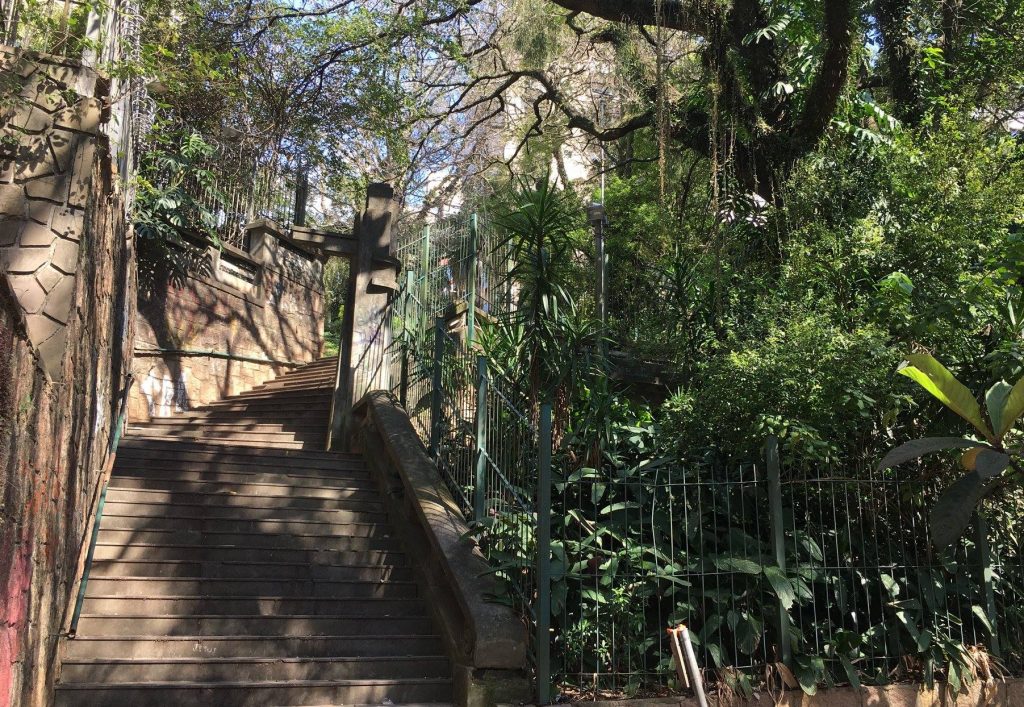
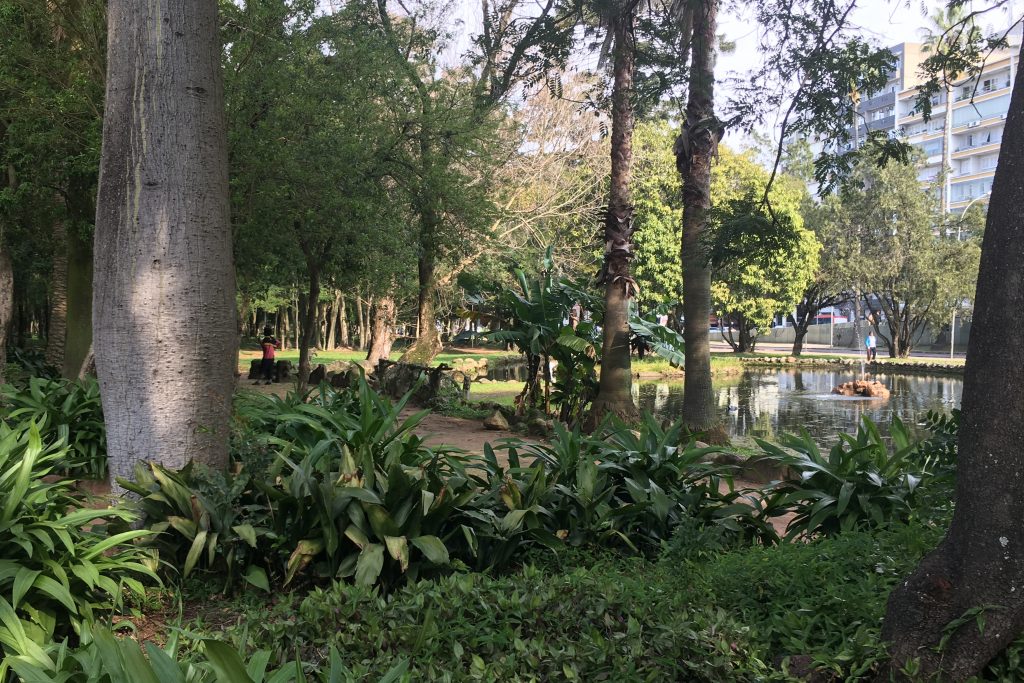
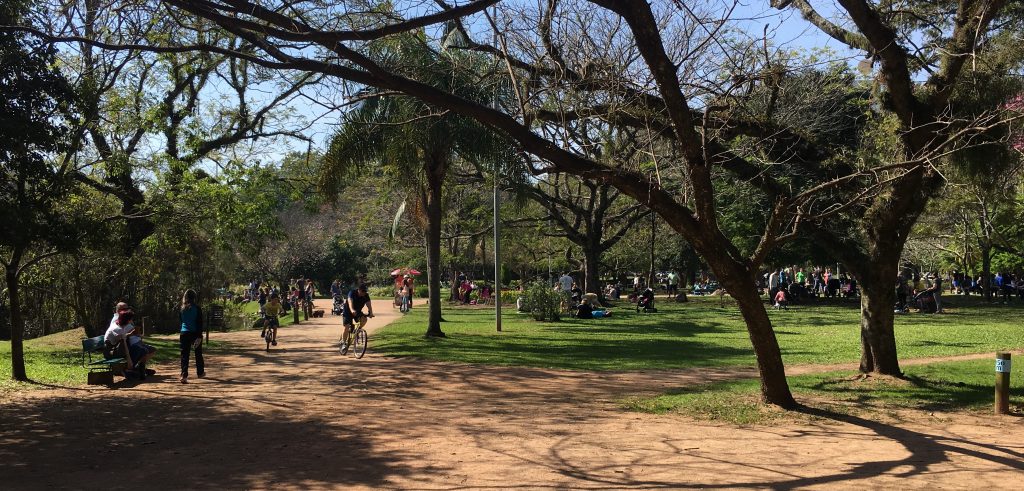
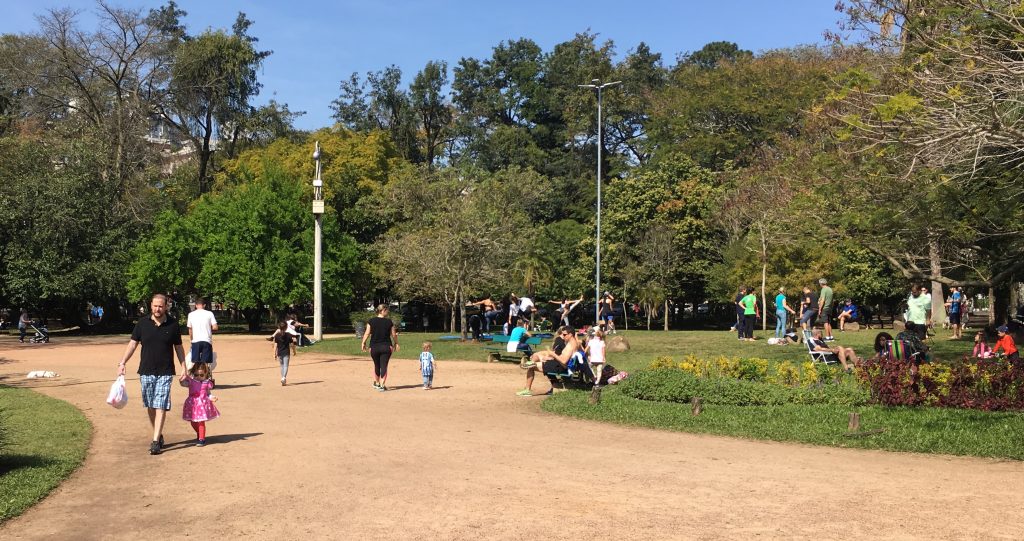
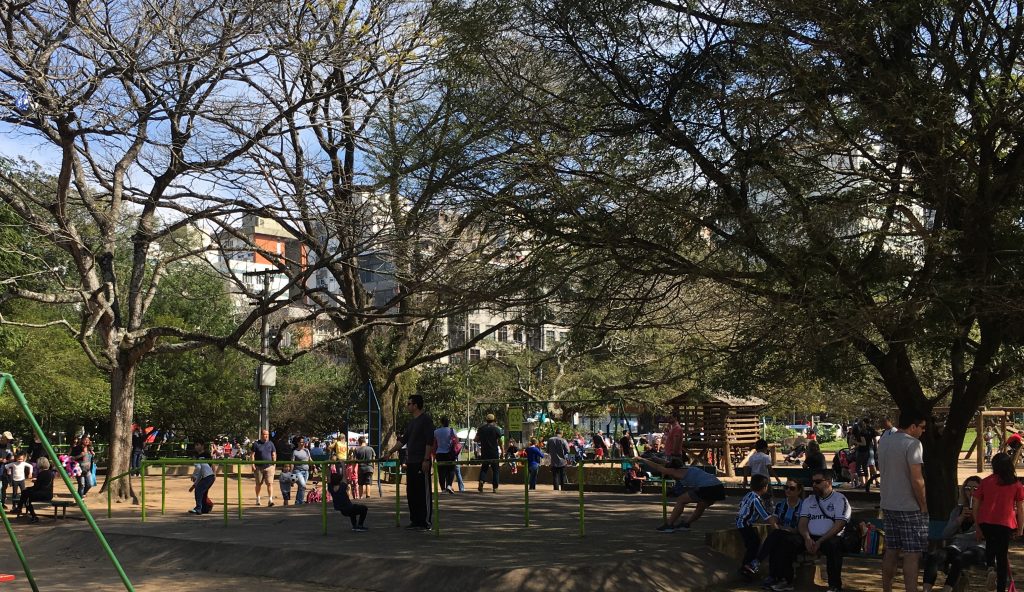
Parque Farroupilha is a big urban park with lots of different features. It is designed to give some variety. When we lived in Porto Alegre, I used to run around the park. It is – was – not big enough and I would have to double back and go in loops, but the variety made it seem a little better.

We lived in Porto Alegre when I was in my early 30s. This is a tough time for erstwhile athletes. You just cannot run as fast as you used to. You fool yourself that somehow harder work will stave off the slowing. It does not. All that happens is that you pull some muscles more often. The good news is that eventually you get old enough that it doesn’t matter.

I appreciate the park now in a different way. I just like to look around and notice the things that I ran past too fast.

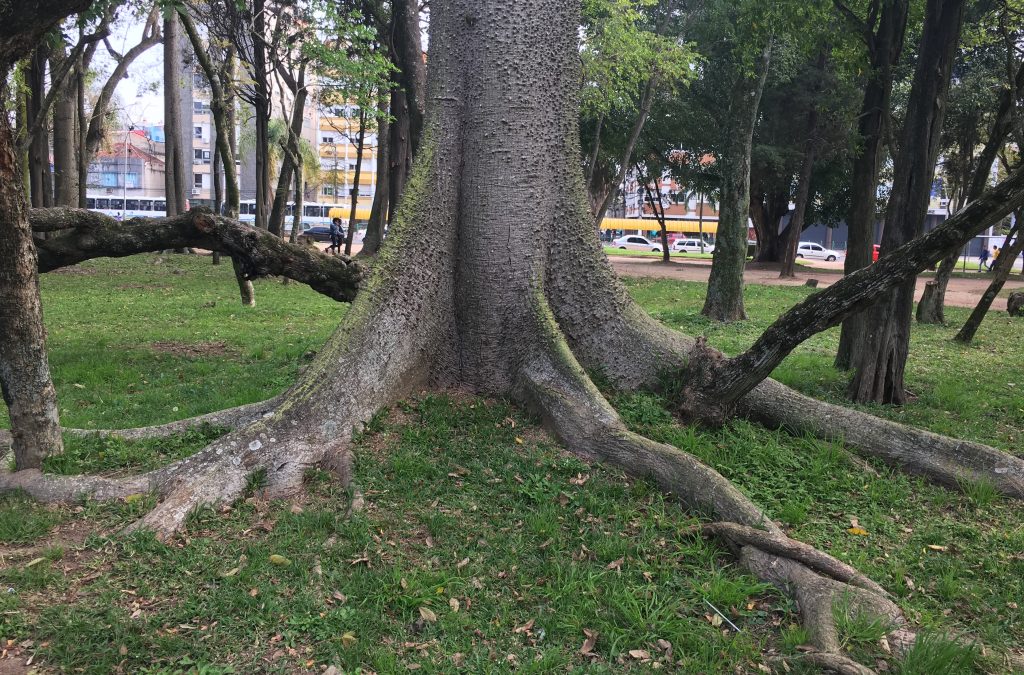
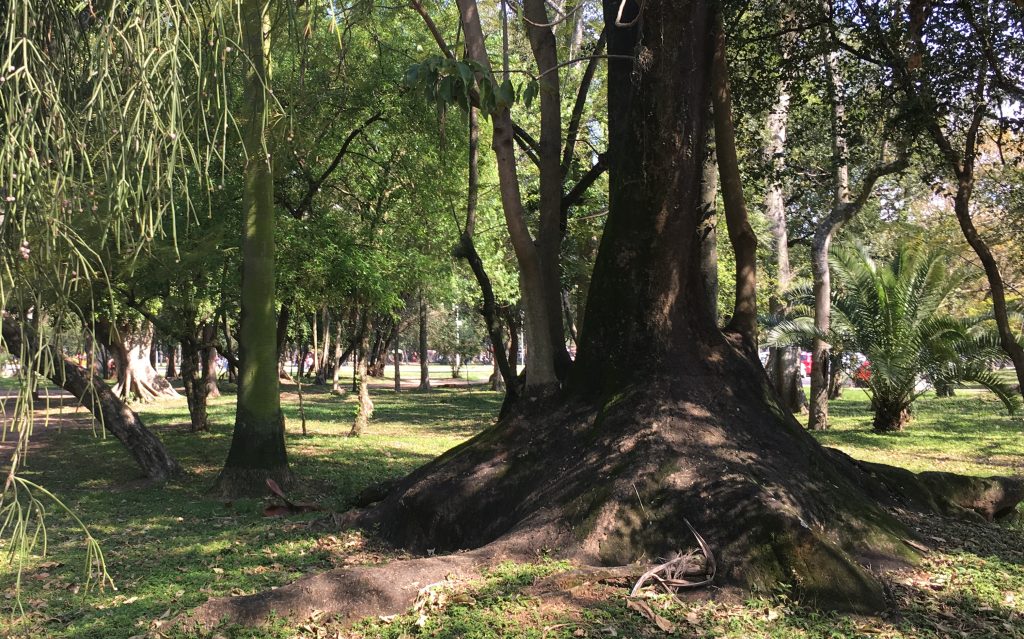
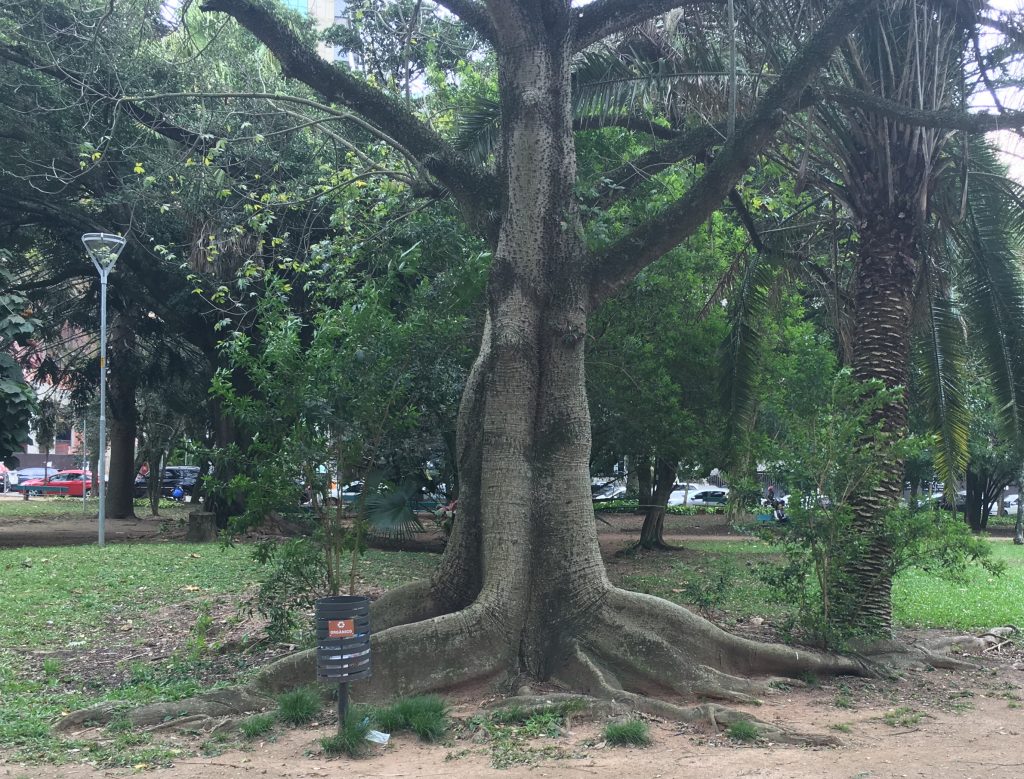
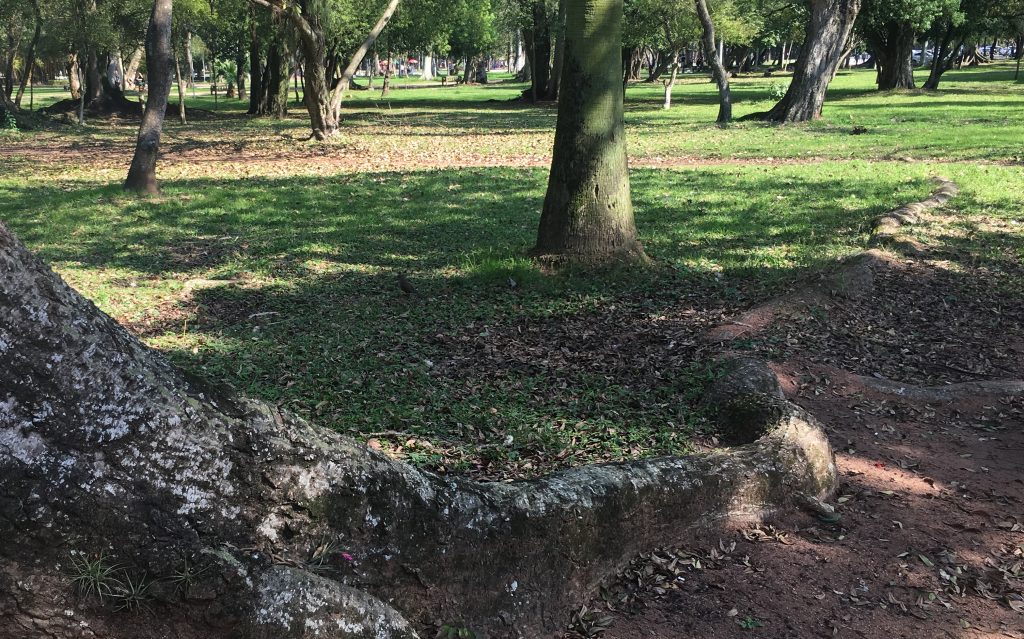
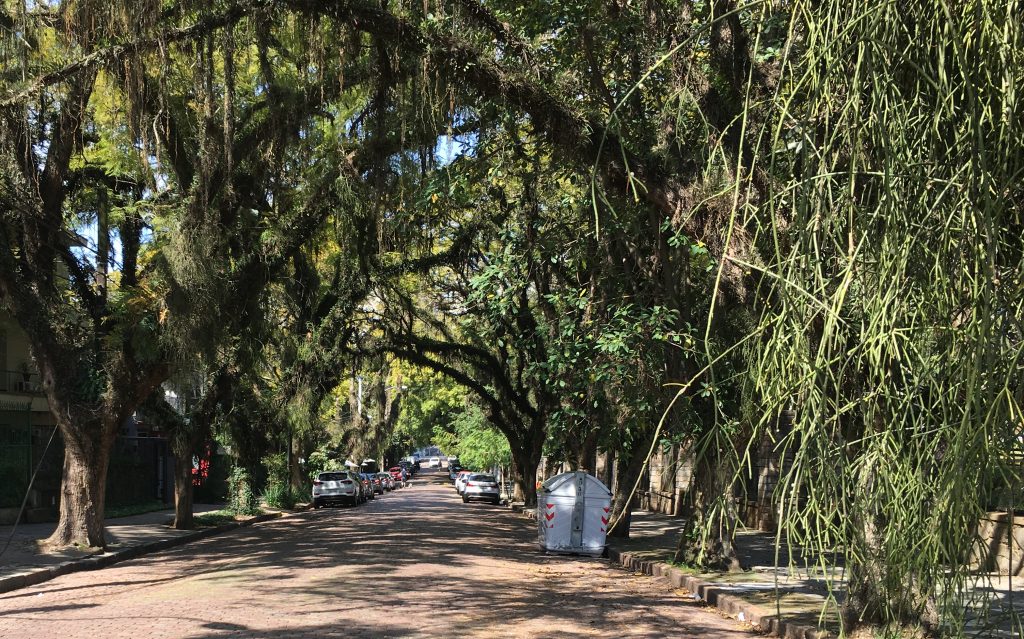
A cool thing is how the tree roots grow. Trees in the tropics and semi-tropics seem to develop much wider roots and bases. I took some pictures of these.

Marizaland in Moinhos de Vento

As far as I am concerned, the parks around our neighborhood in Moinhos de Vento is “Marizaland,” since everyplace around there reminds me of our little daughter, Mariza. She is not so little anymore, but the little white-haired girl abides here. Ironically, Mariza herself can have no memory of all this.

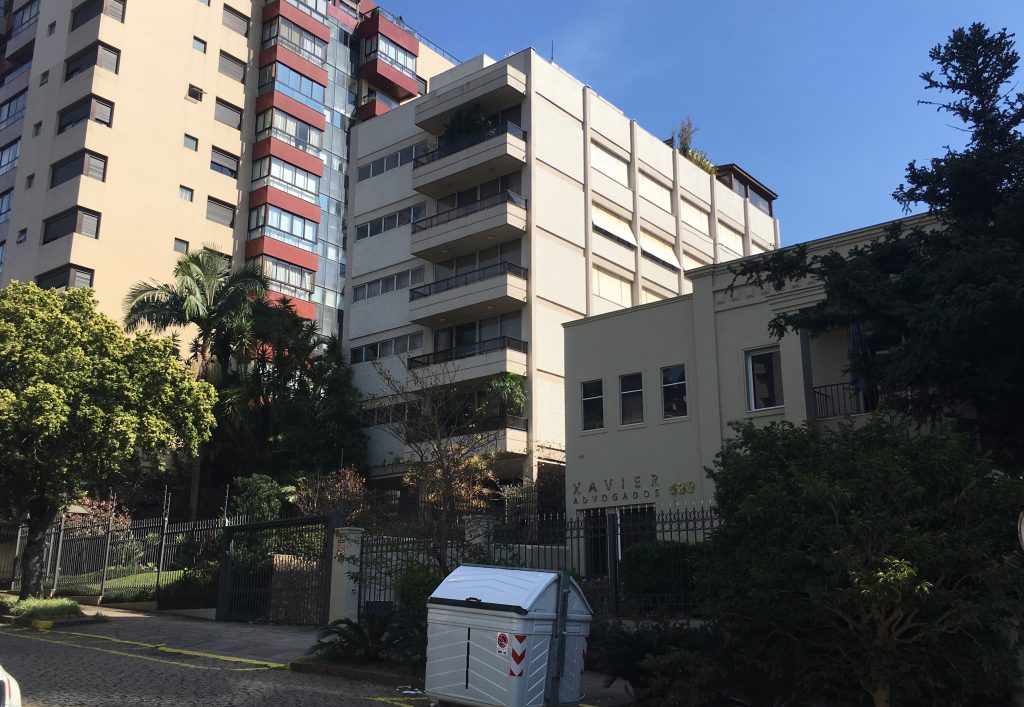
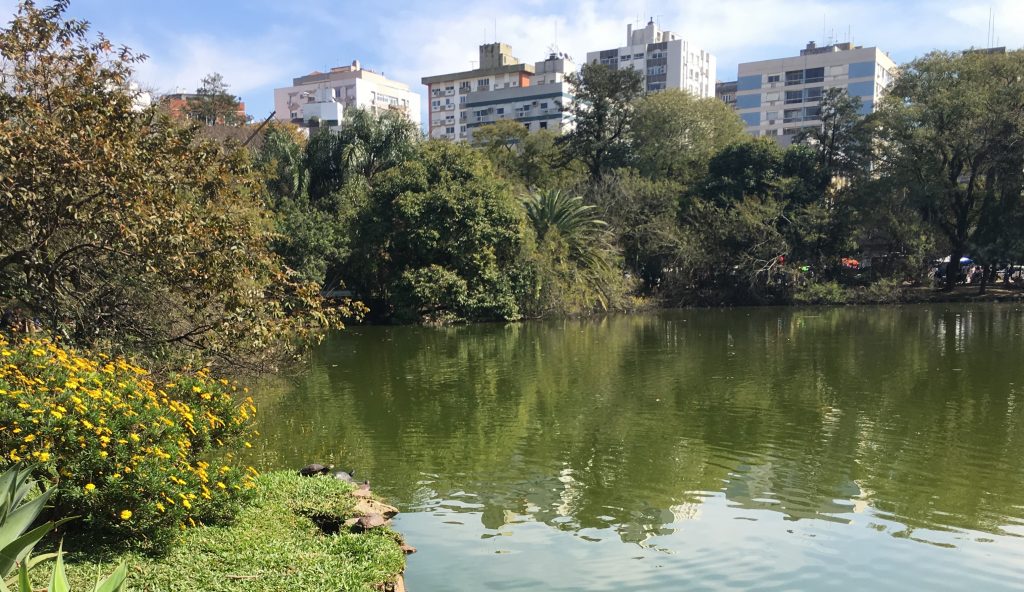
First three pictures are from Park Moinhos de Vento. That means windmills. This is some of the highest ground in Porto Alegre and they evidently had windmills here at one time to take advantage of the stronger wind. None are left now, except a ceremonial one in the park. Picture # 4 is our apartment. We had the top floor. We were always afraid that Mariza would fall out of the windows. They had locks, but parents worry. Last picture is La Basque ice cream shop. We used to love the double chocolate.

Recall that it is winter in Porto Alegre. It never gets very cold here and today was warm, but some of the trees do not have their leaves. It will be very beautiful in spring in a couple months. I said it does not get very cold and it does not by Wisconsin standards. But the relative warmth makes people not concerned about heating buildings, so have to have some warm coats and sweaters for the inside weather.

World's Best Steak in Porto Alegre

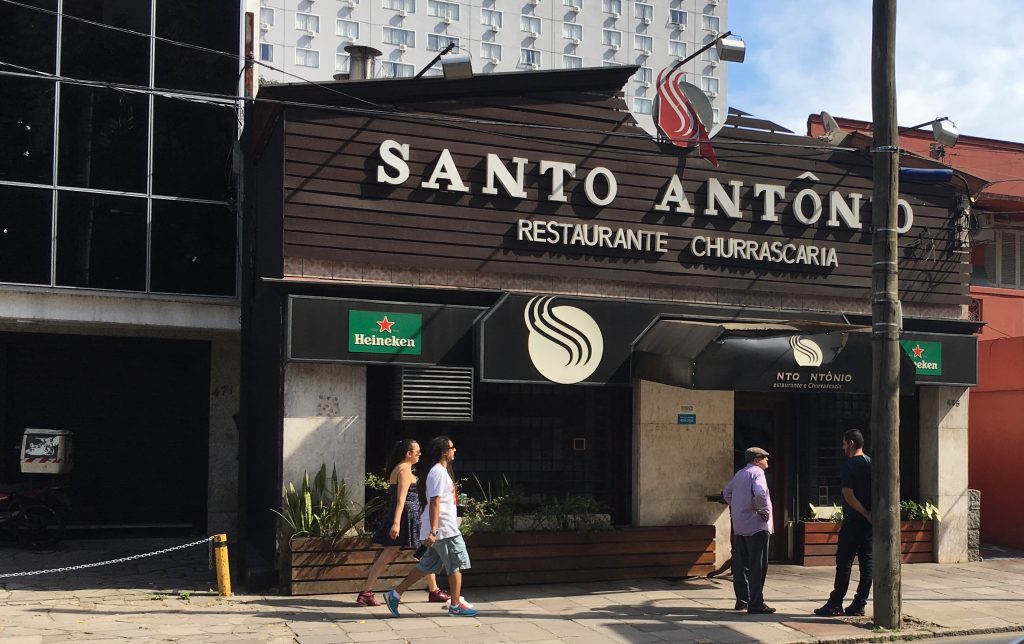
Things are often better remembered than they are lived, so it was with some trepidation that I went to the churrascaria Santo Antônio. I remembered the steak there as the best steak ever and I did not want to confound that good memory. On the other hand … I had to know and I really wanted a good steak.

So I walked down and had the steak with mushrooms that I so liked. They used to make a big deal of cutting the steak with a spoon and they do that still. It was as good as I remembered, the experience and the steak.

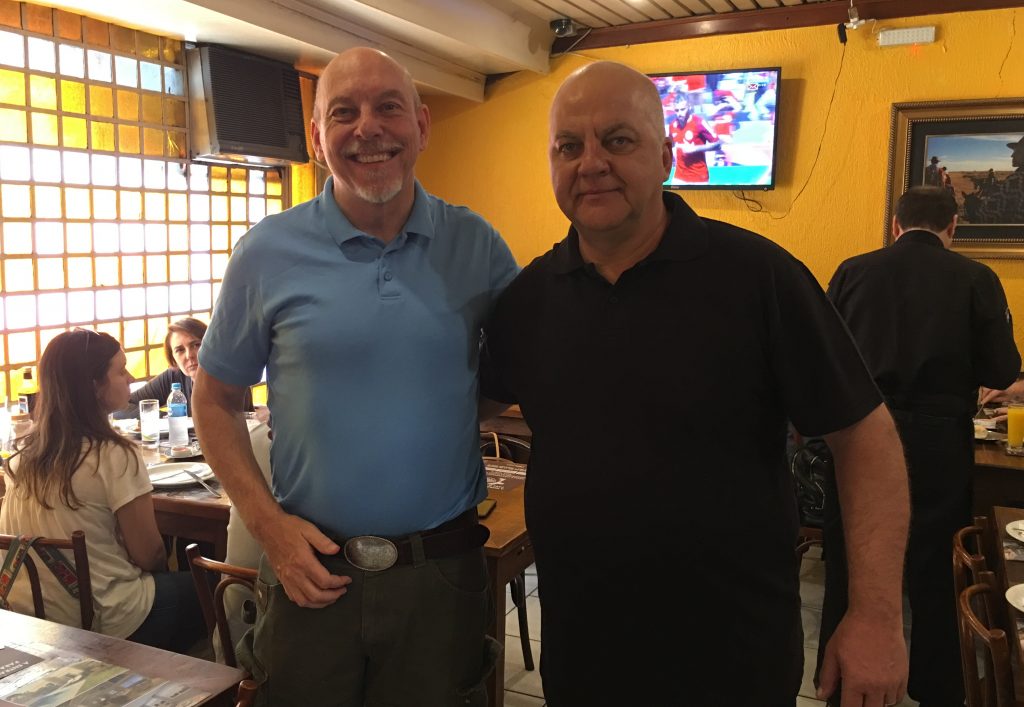
Santo Antônio is a modest place, family owned and operated since 1935. Lots of the waiters have been there a long time, but I did not expect anybody to remember me and nobody did. I thought it proper, however, that I mention my thirty years of appreciation, so I told the waiter.

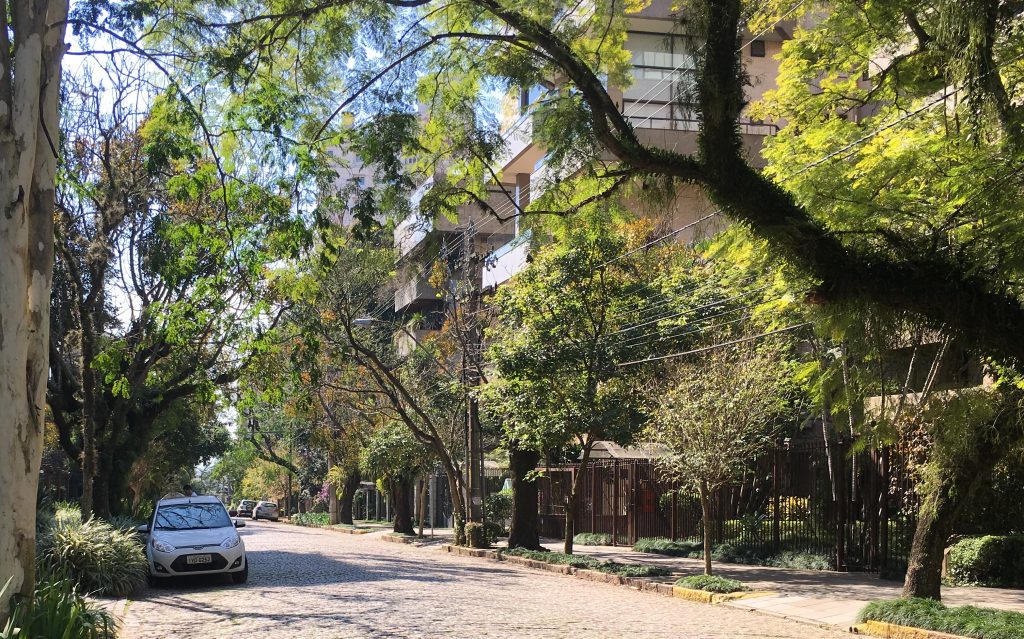
I got to meet the chef and family member Jorge Aita, as you see in the first picture. Next picture is Santo Antônio itself and the last three pictures are from the street where we used to live, Rua Santo Inácio. We were very lucky to live there for our first post.

Adriana Barbosa founder of Feira Preta

Adriana Barbosa is founder of is the founder of Feira Preta, the largest Afro Brazilian entrepreneurship fair in Latin America and she was named one of the world’s 51 Most Influential People of African Descent (MIPAD) in 2017. I was prepared to be impressed by Adriana Barbosa after reading about her in preparation for our meeting and watching her performance on the TED stage and she came through in person.

I am not sure how much we can call this an exchange success, since we made connections with Adriana after her success was manifest, but she is a friend and our São Paulo post has a history of support. She participated in a Mission-funded “Voluntary Visitor program “Social Inclusion During Olympic Planning” in May 2010, and two years later, PAS covered partial travel expenses for her to attend the Global Women’s Leadership Network, Women Leader’s for the World program at Santa Clara University in California.

Our post in São Paulo has supported Feira Preta for several years with participation of American experts.

I had the chance to have lunch with Adriana, along with São Paulo Cultural Affairs Officer and Cultural Affairs Specialist.

Adriana talks about the need to reinvent yourself. This sort of belief system is common in all successful people I have encountered, and it is strongest in those who had to climb the farthest. To know that you can do is the key to doing.

Adriana came to the idea of Feira Preta while bouncing back from a “setback.” She lost her job. Instead of seeing this as a problem, she re framed it as an opportunity to do something new. She does not take the credit for this great achievement (another characteristic of successful people), but rather thinks of it as an outgrowth of her family and local culture.
Adriana comes from a long line of hard-working women. Her mother came from the interior of São Paulo state and found work as domestic. Her mother had a lot of entrepreneurial instincts, but she needed to use them just to survive and give her daughter a better chance at life. Adrianna understood that if these forces of enterprise were freed, people like her mother would flower. Like flowers, however, the vital seeds needed a nourishing environment. Feira Preta helped create that. Adriana created the idea of Feira Preta when she was just twenty-two years old. She didn’t know how to organize such an event, but she had participated in many and so got to work.

The first Feira featured 40 exhibitors with products aimed at the African-Brazilian market. She got Unilever as a sponsor, as they were at that time launching lines of skin care products aimed for African-Brazilians. Red Bull and the City of São Paulo were the other first sponsors. Today there are more than 900 exhibitors and 27 thousand people attended last years event.

Feira Preta has two aspects. On the one hand, it is a place to demonstrate and validate cultural products of Brazil’s African descendant community; on the other hand, it had a more commercial purpose of providing a place to display and sell products – things like clothes, accessories, jewelry and items of art. One of the most successful class of products have been health and beauty products designed for the African-Brazilian market segment. By both measures, it has been a great success.

We talked a little about profit and sustainably. Adrianna does not do all she does to make profit but recognizes that profit is necessary for sustainability of this great program. She just wants to make sure that the small entrepreneurs and artist get their fair share. This means that they have to get “regularized”. A big problem for new entrepreneurs in Brazil and elsewhere is that they know how to make products, but they do not know how to do business. Adriana is working to help with workshops and classes on mundane but crucial topics like accounting, planning and getting legally incorporated. There is also a problem of credit. Small businesses may need only a small amount of money, but it is hard to show credit worthiness when you have little history on paper. It is encouraging that banks are now heavily represented at Feira Preta, but also a little frightening. Interest rates in Brazil are high and there is some danger that new business owners, unfamiliar with borrowing and building capital, might make bad deals and lose their initiative.

Reference https://universa.uol.com.br/noticias/redacao/2017/09/07/conheca-adriana-barbosa-uma-das-51-pessoas-negras-mais-influentes-do-mundo.htm

Saving Tropical Forests

Simple Idea with Worldwide Impact.
She got the idea during a visit to the dermatologist. The hand-held magnifying camera that the doctor used to examine her skin could would as well to magnify and record tiny cells in wood that could be used to identify the species. Her employers were not very enthusiastic about this new idea, so she found out where to buy one of the devices and bought it herself. She showed me the original. Simple, cheap but effective.

Since she – from the Instituto Florestal do Estado de São Paulo (São Paulo Forest Service) returned from her IVLP “Promoting Legal Sourcing of Wood and Wood Products,” in 2011, her connections and cooperation with American researchers and authorities has deepened and thickened. She is in weekly contact with the USDA Forest Products Laboratory in Madison, Wisconsin and has been invited to meet and do training with the U.S. Department of Justice and Border Patrol.

Stop Illegal Cutting and Selling Wood
The goal of all this is to stop the illegal harvesting and export of rare species of trees, and the deforestation, ecological devastation and release of greenhouse gases that goes with it. Many species of Brazilian tropical hardwood are so hard and dense that they do not float in water. This makes them ideal for flooring and some aspects of construction where very dense wood is needed. Add to this their extraordinary beauty – some brilliant vermilion, others almost pure black, still others with patterns that can only be called art – Brazilian tropical hardwoods are among the most beautiful and sought-after woods in the world.
Unfortunately, many of the most popular species are not being grown sustainably and/or are being harvested in ways that damage the local ecology. The – castanha (chestnut) — the tree that produces Brazil nuts, locally called castanhas-do-pará – for example, produces a beautiful hard and dark wood. It is a magnificent tree, that can grow to 160 feet high. The Brazil nuts it produces are among the most valuable non-wood product from the forest. This tree, however, is very hard to regenerate. Its ecology requires not completely understood complexities of an intact forest. Attempts to propagate them artificially have not been very successful. So, Brazilian authorities have made the harvest of castanha — illegal in most cases. Yet this wood regularly appears for sale, usually called something else. It is hard for non-specialists to identify them with certainty and harder still to prove their identity.

This is why she needed the erstwhile dermatological device. She had been working with the São Paulo environmental police and the Federal highway patrol to impound cargos of illegally harvested wood. To identify the species and it provenance, she used something like a jewelers’ loop. She could identify the species by the grain and the cells. But São Paulo is a big state and Brazil is a big country and there was only one and she was it.

Training the Police, Stopping the Traffic
She has done training from police all over Brazil and participated in symposia all over the world, talking about her techniques. Much of the training for police officers involves spotting potential violations and taking proper samples, so that they now roughly what to do. Training experts to identify species beyond a reasonable doubt, however, which is required to impound the wood or prosecute offenders, takes a long time. It is not something an average police officer can be expected to master. The skin camera, modified to look at wood, can take pictures and transmit them via Internet to her lab, where experts can decide. They also have a visual record. If it turns out that the species is not authorized, the cargo can be impounded. In that case, the police take a sample of the wood, label it appropriately with reference to the pictures, and send the sample to the lab, where it is catalogued and secured in case there is a court case.

She says that they so far have never been asked to produce the actual wood sample. The pictures have sufficed. One bad reason for this is that the real culprits are often not found or taken to court. They hire a truck driver does not know the origin of the wood he is hauling. When the truck is stopped, the real crooks disappear and write it off as cost of doing business. In this respect it is like drug smugglers, and there is in fact overlap in the business. Drugs are sometimes hidden in trucks carrying wood from the Amazon, which is also near drug producing areas of Columbia. The way that you can roughly tell the drug truck from the ordinary wood truck is that the drug truck often has a chase car, with armed thugs – a kind of evil “Smokey and the Bandit” scenario. It is dangerous for the police to stop this sort of truck. She has done more than forty training for police, including in the Amazon, reaching thousands of officers. They do not allow her to go along when these sorts of encounters are likely.

Experts have tried to apply IT and AI process to identifying wood, and she has been cooperating with American experts, especially with the Center for Wood Anatomy Research at the USDA Forest Products Laboratory, but it is currently more art than science. She said that it might work okay in the USA, where we have fewer major species to identify, but in the very diverse tropical and subtropical forests of Brazil, it has still proved to be a bridge too far. I asked about DNA analysis. This is also something for the future. Many of tropical hardwoods have not been sequenced adequately and the testing currently takes too long. When a truck is stopped on a Brazilian highway, the police legally have two hours before they decide to impound the cargo or let it pass. There is no mobile DNA test that can do that at this time. It is also easier to do DNA tests from leaves than from wood. The field, however is developing rapidly.

What did IVLP do For Her and for the USA
The United States amended the Lacey Act in 2008, which makes it unlawful to import into the United States any plant (or plant product) that was illegally harvested. It is in everyone’s interest to stop the illegal product before it ever moves AND – consequently – to remove much of the profit and incentive for those would exploit, deforest and denude large areas of the world. It is possible for buyers in the USA to be innocently duped. This creates problems for them, the court system, the cops and everybody except the crooks who deliberately broke the law. Better to stop that rock before it starts rolling.

She has been a thought leader and influential participant in the science and application of the science to protect the integrity of tropical forests in Brazil, in American and worldwide. She credits her IVLP experience with making this happen as it did. Not only did it do the usual great things of plugging her into American and international networks, where ideas propagate, but it also provided her the credulity to be heard.

Recall that she had to buy the hand-held dermatological equipment with her own money. She just did not have the clout to make it happen more expeditiously. On her return, things were already different for her and success built on success. This is especially important for her as a woman. The men she worked with had theretofore been quicker to shunt her aside. With her bigger profile came more influence and the forests of Brazil and the world have been the beneficiaries.

Please note – it is not a secret who goes on IVLP visits and nobody I talked to so far would object to being known, in fact they have been proud of their participation and I share the notes with them, but I replaced names with pronouns since there is no need to put all that on social media.

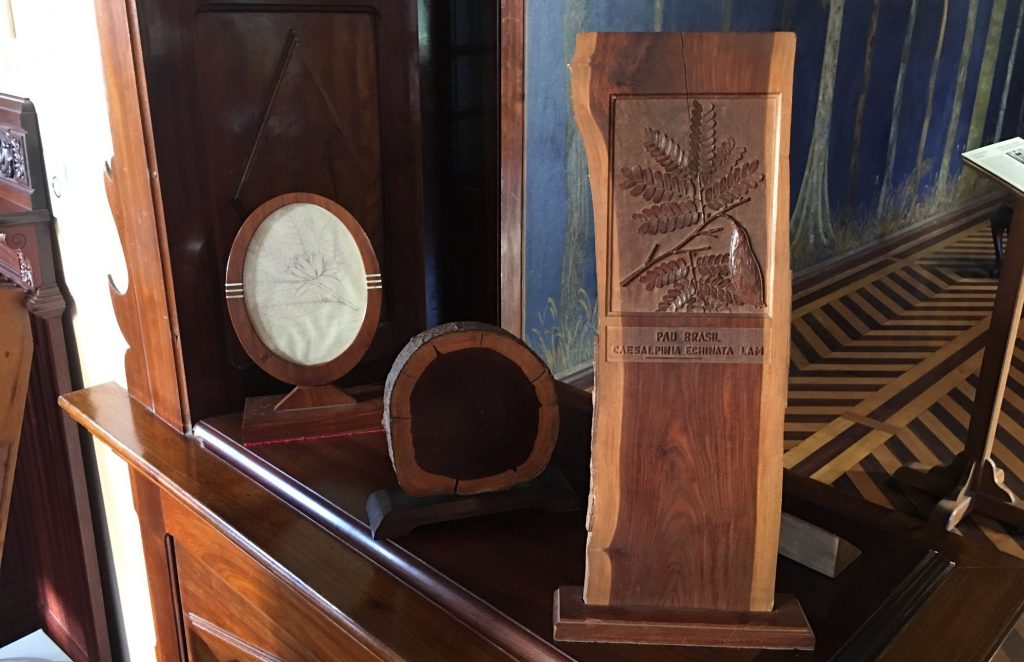
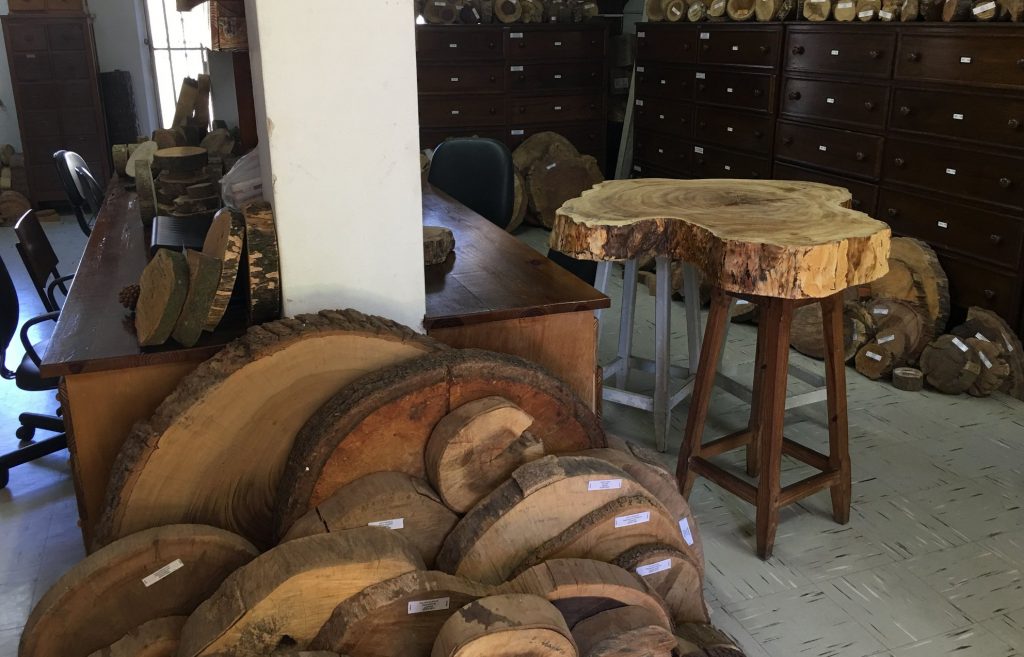
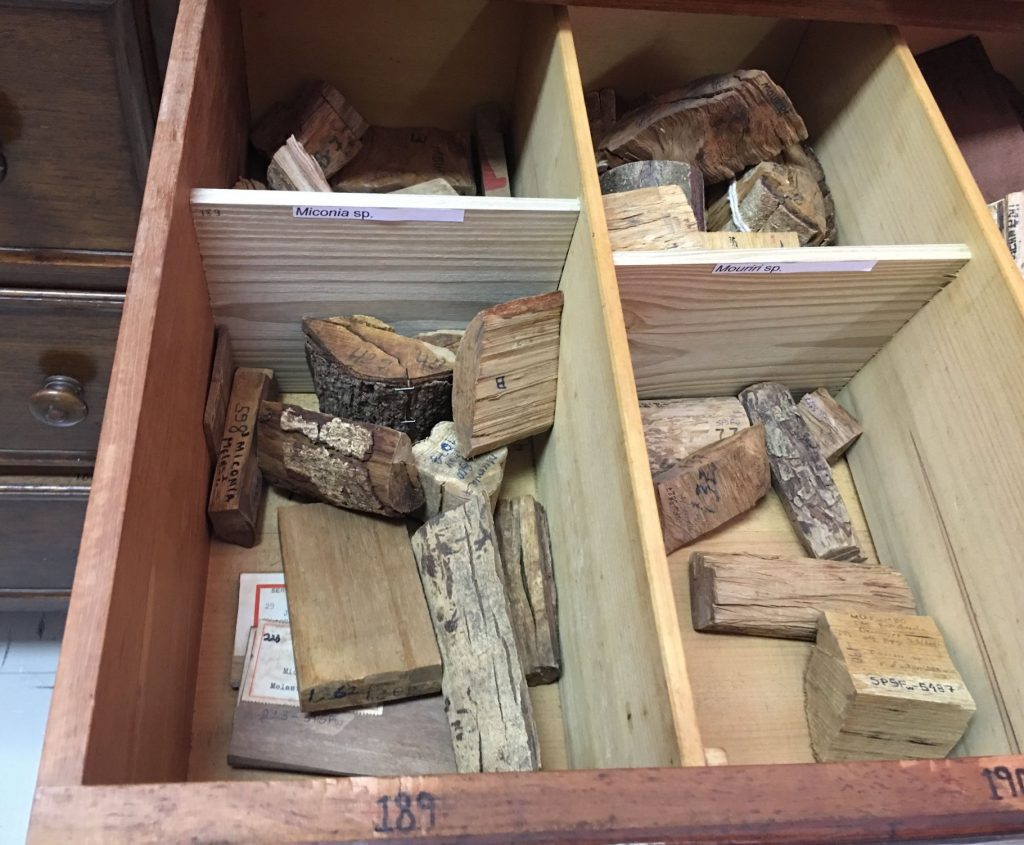
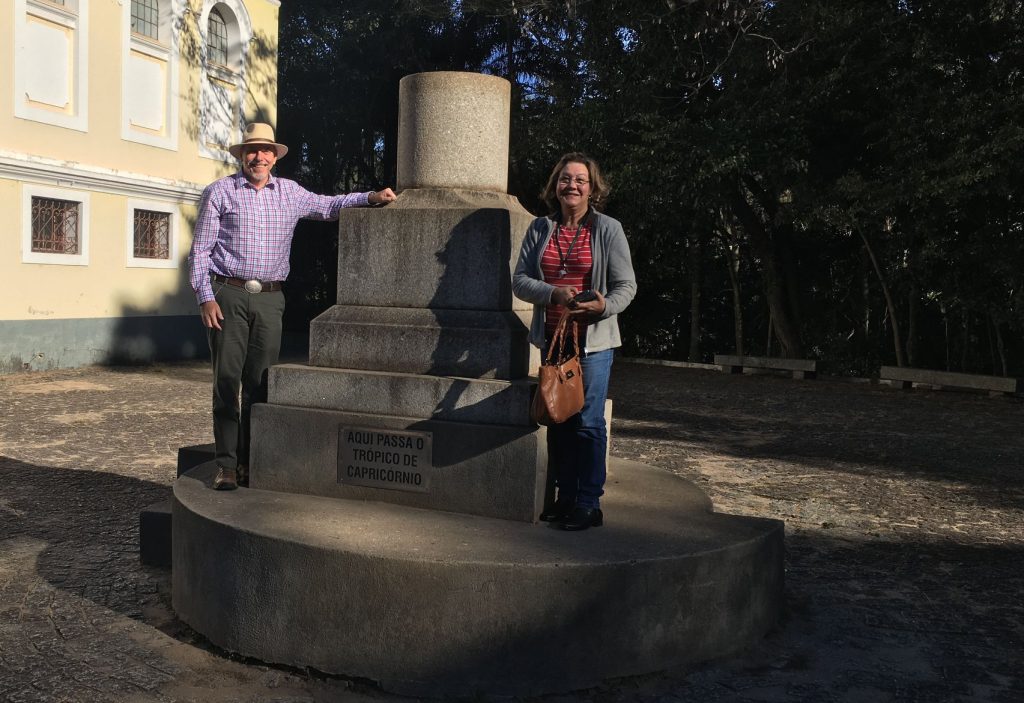
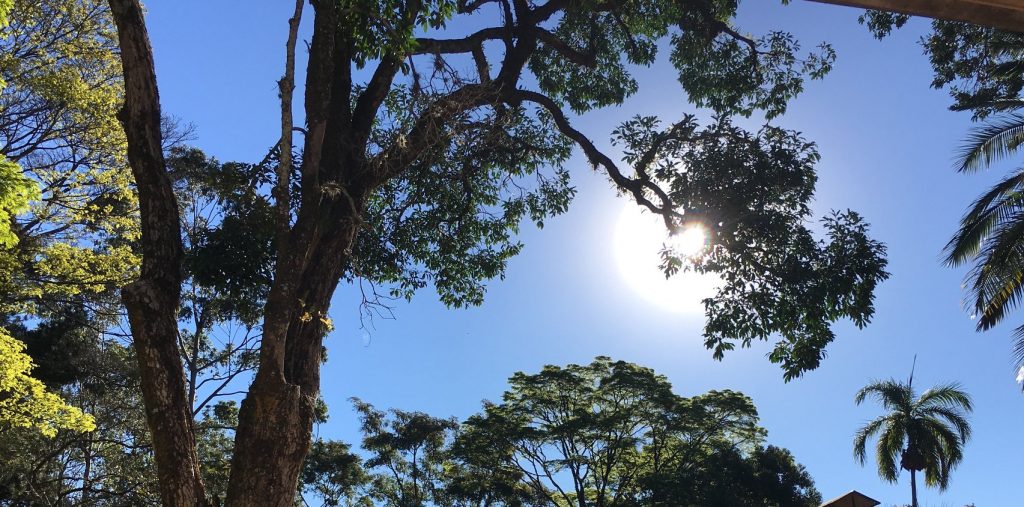
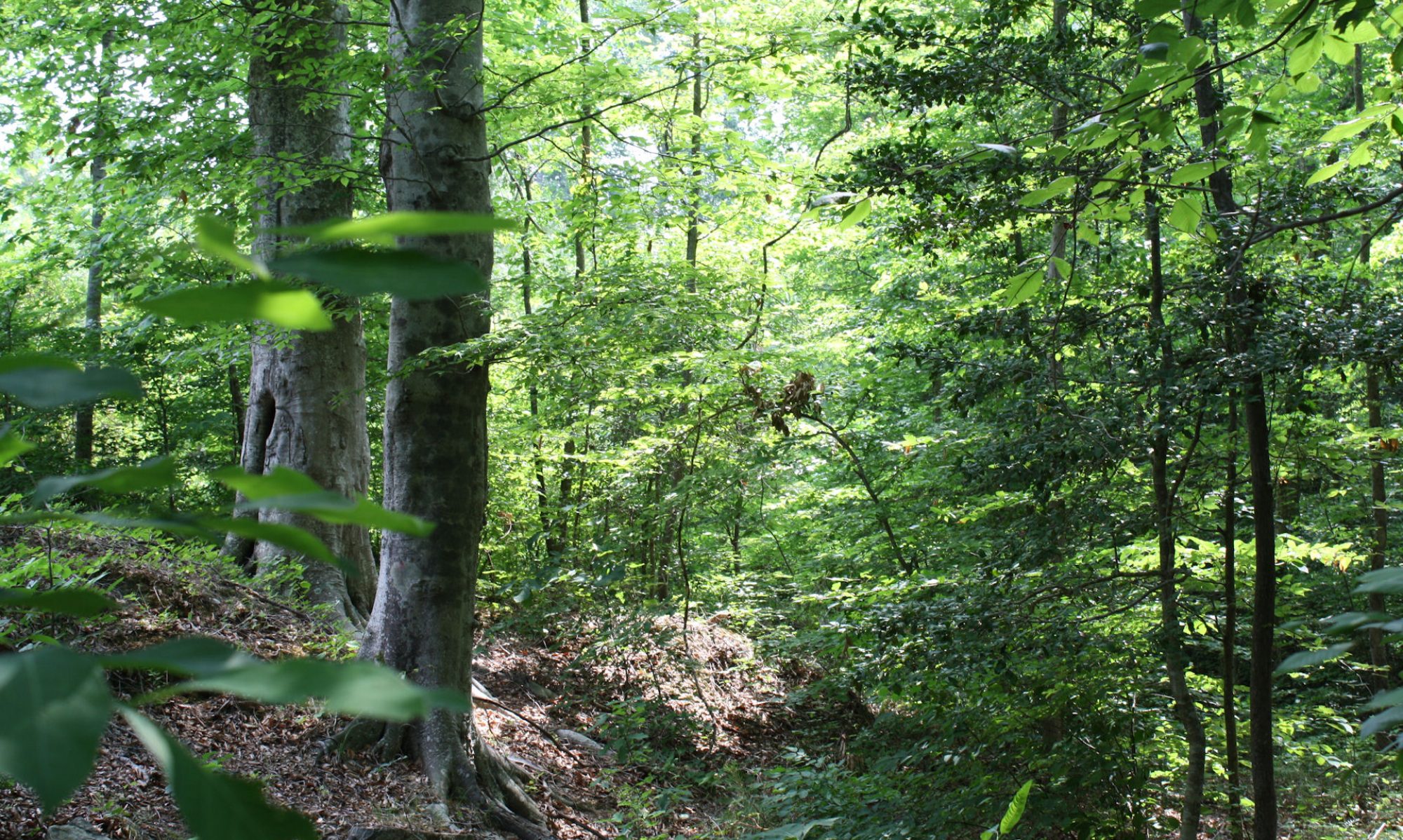
Pictures show pao Brasil – the Brazilian wood that gave the name to the country. It is very beautiful and that was its curse. The Atlantic forests were largely denuded centuries ago. Next shows some of the wood slices at the laboratory. Yes, the place has a kind of 19th Century feel. Picture #4 shows the Tropic of Capricorn. It runs right through the forest park and around the world, but that spot is evidently most important. Last is just a nice picture of the sun and the trees.