Well managed forests

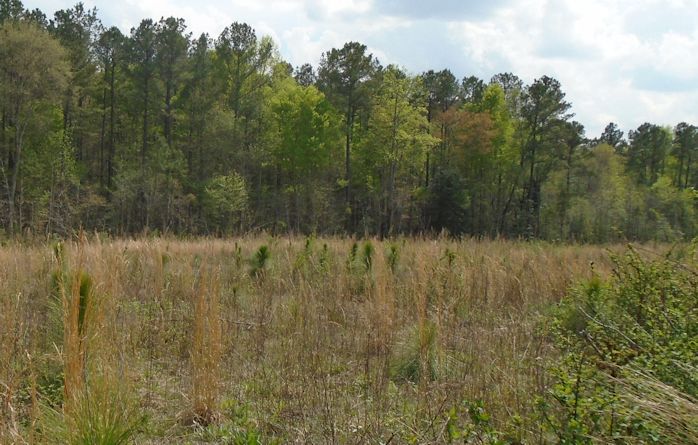
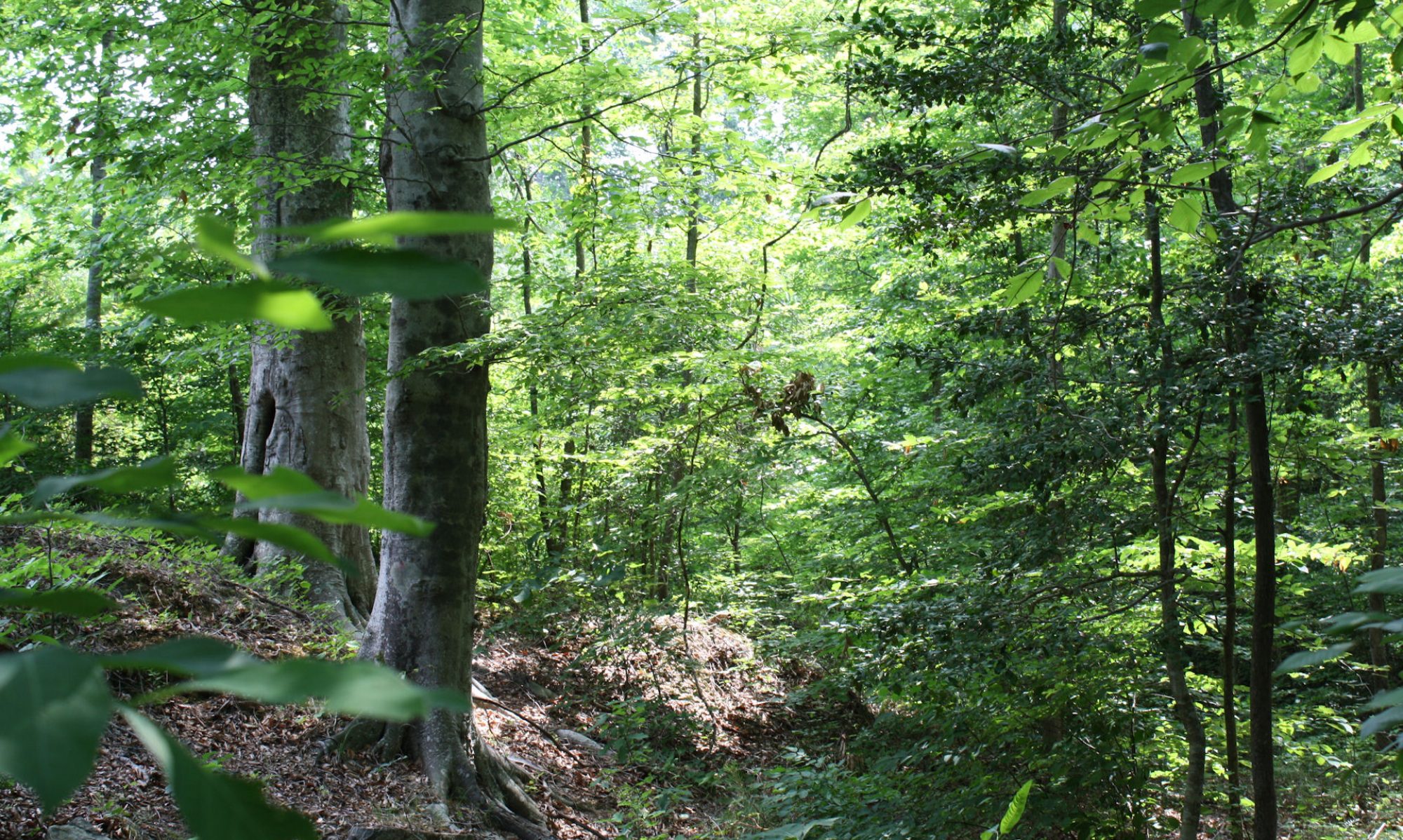
“Scientists have discovered that private forests that are harvested and regenerated yield about 30 percent more carbon sequestration benefits than if they are left to grow.” I think true scientists and forest managers have long known these things. If we manage our forests well, we get more of almost everything we want AND we do it profitably.
The problem has been that ignorant activists have used emotion and passion to trump both science and experience. BTW – those of you who have that thing on the bottom of your email about saving trees by not printing, please remove it. Using less paper may be a good thing in terms of saving money and energy, but it does not save trees.
Reference – http://www.capitalpress.com/California/20150513/forest-thinning-could-boost-sierra-water-yields-researchers-say?utm_source=WIT051515&utm_medium=Email&utm_campaign=WeekInTrees
Thoughts on Science Magazine May 9

Ecological restoration
Reference – http://mailings1.gtxcel.com/portal/wts/uemckdyf%7CTvqeggbmLjs2TBamvwskrdm%7E1CfPmtsODOWSrTa
This is a great initiative, but we need to be flexible. It will generally be impossible and maybe undesirable to restore old ecosystems in detail. Changes in local climates and other conditions mean that formerly “native” species may no longer be best adapted to where they used to be dominant. Some are no longer available.
The article uses two very important terms: sustainable and resilient. The system needs to stand on its own with minimal inputs or protection. I also think it important to keep in mind that we are usually not talking about preservation kept away from all hum an influences. We live in the anthropocene whether we like it or not, whether we recognize it or not.
New and nasty bugs
Reference – http://mailings1.gtxcel.com/portal/wts/uemckdyf%7CTvqeggbmLjs2T-qmvwskrdm%7E1CfPmtsODOWSrTa
This is the big downside to globalization. Bugs, pathogens and strange animals arrive and devastate an established environment. This has always been the way of nature. When long isolated islands come in contact with larger landmasses, species loss and change are inevitable. But humans have accelerated the process beyond the speed at which natural systems can adapt. Besides, we sometime like and depend on particular mixes of plants and animals and really do not want to give newcomers and equal opportunity. A bug worm that can maybe crawl only a few feet in a generation can move at 70 mph if it sticks to a car or even cross thousands of miles in a plane or boat.

We have to be vigilant to keep out destructive plant and animal immigrants, but vigilance will be insufficient. IMO, this is one of the strongest arguments for GMOs. Existing crops or trees can be altered in ways that maintain all their characteristics save that they are made immediately resistant to the new menace, a process that may have taken thousands of years of normal evolution. Of course, this does not save the current generation in most cases, but it does allow for a new one to grow up.

The bike is back

I broke the fork on my bike and was using Espen’s heavier bike.  But I went to Bikenetic in Falls Church.  They got a new fork and fixed it up.   They could not match the color, but the chrome looks good and I again have the joy of riding my good bike.  I get to work about ten or fifteen minutes faster (it takes about an hour on the fast bike) on my road bike and it is more fun to ride.

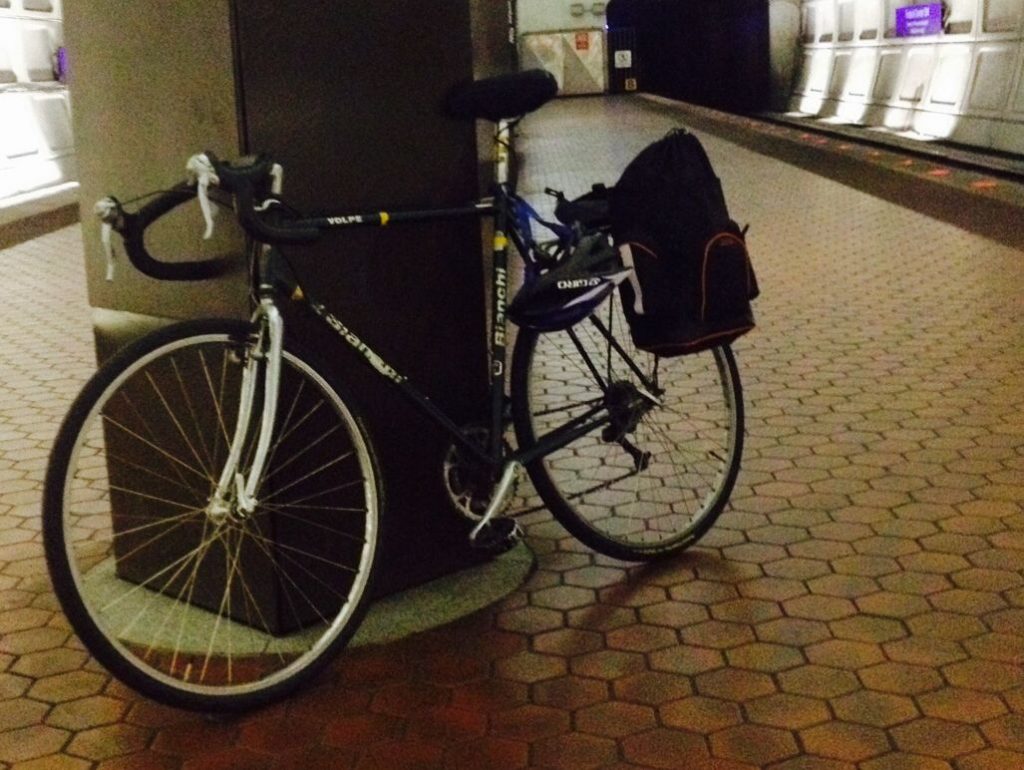
I bought this bike back in 1997.  If this new fork extends the bike’s life for another eighteen years, I will be content.  My picture shows my bike at the Federal Center SW Metro stop.  You can take your bike on the Metro before 4pm or after 7pm.   It is 17 miles along the bike trails I ride from home to work.  On the way to work, it is usually a nice ride because it is cooler in the morning, more downhill on the way to Washington and very often the west wind provides a tailwind.  I can take a shower at Gold’s Gym and get to work fresh.  It is less fun riding home, so I arrange my schedule to leave earlier or later and take advantage of the Metro rules.

When I first discovered that you could take the bike on the Metro, you had to get a special permit.  I used to work at the Ops Center and I got off not too long before midnight.  I had to rush to the station to make sure I did not miss the last train.
 

Tree Farm strategy

I took part in a tree farm strategy meeting in Charlottesville, at the Department of Forestry building.  The goal is to make more people aware of the sustainable way we do forestry in the U.S. today and make tree farming more valuable to tree farming members.  Learn more about tree farming at this link – https://www.treefarmsystem.org

One of the challenges is that certified wood really does not get a premium price.  People claim to be interested in sustainability but they will not really pay for it.  Most forestry people want to do the right thing anyway, but it would be nice to be able to tell them that there was a cash benefit.  There are other benefits to tree farming besides the feeling of doing the right thing.   The tree farm provides inspections and advice  And I do not think we should underestimate the value of just paying attention to values and standards.

Anyway, my task is to develop a communications strategy.  I know how to write these things and I really believe in the goals.   I am not sure that we happy few can make a big difference, but I expect that we can do something.

Water prices

We need a market price for water. Then people could decide the relative value of products and projects. Maybe almonds would be a good deal; maybe not, but we would not need lots of debate among people who did not have particular expertise to know.

Prices are wonderful things for all the information they contain. I spent years in Eastern Europe after the collapse of communism and learned a few things about what finally killed the benighted system. Communism collapsed for lot of reasons, but a big one – not often noticed – was their lack of price information. Planners just could not figure out relative values, so they wasted resources, creating shortages of things that could have been plentiful. We distribute water much like the Soviets distributed bread, and we get similar problems with misapplication and shortage.

Reference – http://www.motherjones.com/tom-philpott/2015/04/california-almond-orchard-defy-critics-continue-expanding

Wolves: healthy and in decline

The wolf packs on Isle Royale used to be the paradigm for a successful natural system. I studied them when I was in college. But that was forty years ago. Sic transit gloria mundi. That applies to wolves as well as humans. Today the pack is inbred and declining. It is still a great study of a natural system. A healthy wolf population is just not naturally sustainable. Maybe more correctly, it is episodic. Wolves move in and then die off.

Isle Royale is an island w/o sufficient size or diversity to support a healthy population forever. The current wolf population arrived years ago when Lake Superior froze hard enough that they could cross. (Interestingly, this year it was cold enough for the first time in a long time so scientists could see the real conditions.)

Isolated populations tend to become weak and die out. I posted an article below about wholly mammoth die out, where some of the same inbreeding was happening. We have human cases.

I recall reading about Finders Island, near Tasmania. It was colonized by humans in the deep past and then they became isolated. Gradually, aspects of their technical culture were not passed along and they regressed to a primitive, inbred society that just died out about 4500 years ago.

A better documented case, although for different causes, was the Norse colonization of Greenland. The Norse colonized the place when it was warmer, about the year 1000. It was uninhabited by people at the time (Inuit had not yet arrived) and there was grass and resources to support two colonies. As the climate became much cooler over the next centuries, connections were lost, until the last people just died out.

Anyway, it is likely that human management, i.e. bringing in more genetic diversity, can sustain the wolf packs. Park officials take the hands-off approach. I suppose there is a “prime directive” type problem of humans managing nature. That means watch the packs die out and wait for them to others to arrive by random chance. It works in the long run, if you have thousands of years to wait. When new wolves arrive in their new world, it is like heaven for them, with lots of moose and other animals to eat. The populations grow rapidly, but not sustainability.

Reference article from Science Magazine – http://www.sciencemagazinedigital.org/sciencemagazine/24_april_2015?sub_id=CfjvGuIE7FnHW&folio=383#pg15

Carbon Taxes

Please refer to the link for reference – Pricing energy right is crucial and maybe a carbon tax can reduce taxes on things we think are good, such as labor and capital. If we want to reduce CO2, we can do that through regulation or through a carbon tax.
Regulation is a type of tax, it just is not very efficient. It appeals to people who just like to tell others what to do, but it is always more complex and does not – unlike a carbon tax – raise revenue. A carbon tax is relatively easy to administer, harder to cheat and it permits individuals and firms to plan. By making carbon a clear cost, firms can target reductions. – Vítor Gaspar, International Monetary Fund.
This elegant tax also have the advantage of focusing intelligence on reducing CO2. If you regulate, the best minds try to figure out ways to avoid regulation. If you make carbon a cost, those same smart guys figure out ways to reduce the cost.
Next up was John Delaney, US House of Representatives (D-MD). He talked about his new bill to tax pollution not profits. He proposes a carbon tax with proceeds to lower corporate taxes (American corporate taxes are highest in the world) and target some to help displaced coal workers and the poor. He said that these are not all optimal places to put the money, but in politics you need to compromise.
Even if you think climate change is a low probability event, the potential costs are high enough to take action now. This action is the most effective. He quoted Wayne Gretzky, the hockey great who explained that you have to go where the puck is going, not where it has been. Regulation tends to be backward looking.
Finally we had Bob Inglis, Energy and Enterprise Initiative. He spent most of his time praising Delaney, who had to leave for a vote. He thought the carbon tax would come, it would go from impossible to inevitable w/o pausing at probable. Both sides need to give. Conservatives need to give on the idea of the tax. Liberals need to make it sweeter by agreeing to reduce corporate taxes. It depends how important they really think climate change is.
These are good events. One of the great things about Washington is that you can continue your education in these ways. And you often get a free lunch.

When not to recycle

The bottom line is energy consumption. If something consumes more energy to recycle, it is better not to do it. We can add the permutation of toxic materials. We should recycle things that may cause damage.
However, recycling sometimes makes no sense. For example, recycling of office paper is worse than a waste of time. It takes more energy to recycle than to make fresh paper, and since most paper is made from pulp thinned from sustainably grown trees, paper production HELPS forest health.
Glass is inert, like sand. It causes no trouble to the environment. If it takes more energy to recycle glass than it does to dump it, we should dump it.
Recycling as become a kind of act of religious faith. It is past time we figured out when it is a plus for the environment and when it is a liability.
BTW – the biggest sin in recycling is when municipal sewage waste is put into landfill instead of being recycled into fields and forests. Strangely, this elicits almost no protests. In fact, many fight the deposition of biosolids. This is ignorant.
Reference – http://www.wsj.com/articles/high-costs-put-cracks-in-glass-recycling-programs-1429695003

Priceless water

The problem with water is that it is priceless. We had the same problem with energy. We tried to distribute it “fairly” and ended up with shortages. When people have no incentive to figure out better ways to use something, they just don’t bother.
reference – http://www.wsj.com/articles/californias-water-woes-are-priceless-1429051903?mod=hp_opinion

April 2015 forestry visit

Alex and I went down to the farms to look around and see what might need be done. We were a couple of weeks too early. The trees have mostly leafed out, but the pine trees have not started growing yet. Still, everything looks green and healthy. There has been a lot of rain this year, so the streams are full and there is mud on the roads.

We are looking to harvest around 45 acres of loblolly on the new farm. Alex is going to get three bids on the logging. I would like to have it done by end of summer so that we can get new trees in the ground in November-December. I want to try some of those new hybrid trees. They are expensive, so I figure that we can plant them much farther apart and let the natural regeneration fill in between them. We can spray to suppress the brush and let the pines survive. They are supposed to grow 25 feet in five years. If they really grow so much faster, it will be evident in a few years. If not, the natural regeneration will be okay. That is my plan anyway. I think it will be a good experiment.

We will doing some kind of harvest each year for the next years. We will harvest 45 acres of the new place this year and probably get the next 45 in 2016. In 2017, we will do the second thinning on the Freeman property and then the first thinning on CP in 2018. I would like to burn under the trees in Freeman in 2019. Then we get a little rest.

The Freeman property is looking good. The hunt club built their headquarters on six-acres that I sold them for that purpose. It is very attractive building, suitable for parties and meetings.

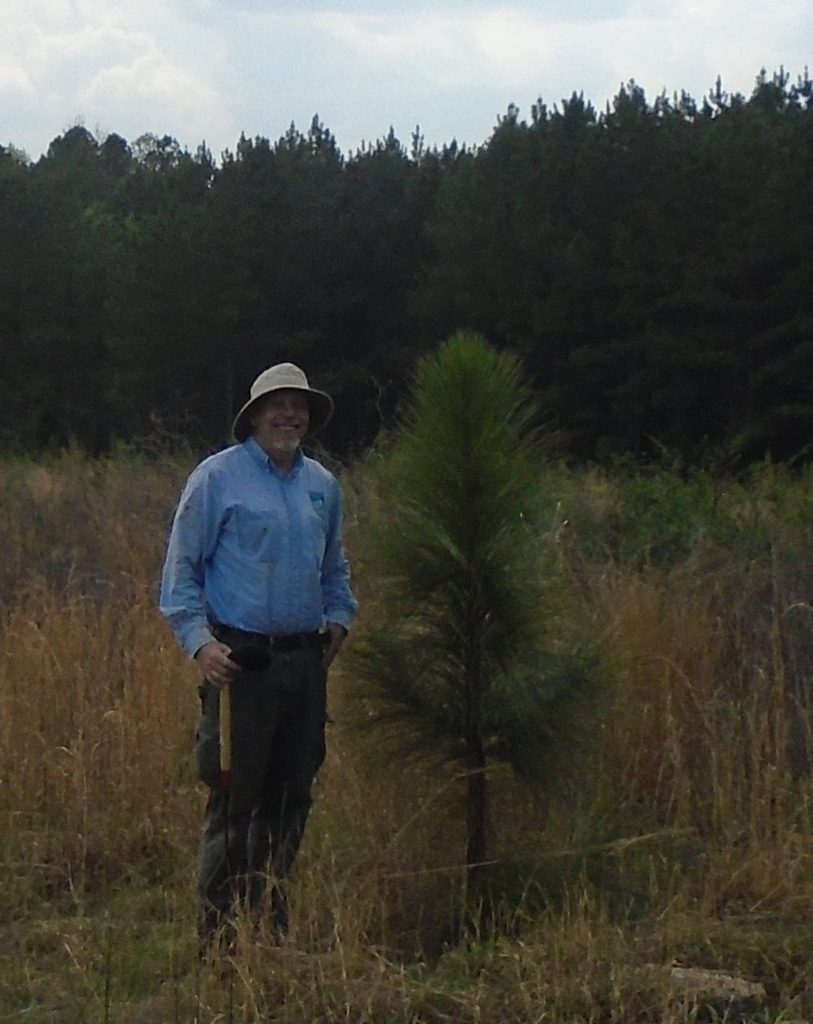
My longleaf pines are looking good. I did a little bit of work with my scythe knocking down brambles near them and – sadly – taking out a few volunteer loblolly. There are only five acres of these, so my slashing makes a difference. You can see my picture with one of the longleaf pines.  I will get a picture again for comparison each year. The big ones are about six feet high; others are still in the grass stage. They are odd trees. They spend a couple years looking like grass and then they shoot up.

The longleaf were planted in 2012.  You can read about the site preparation here.