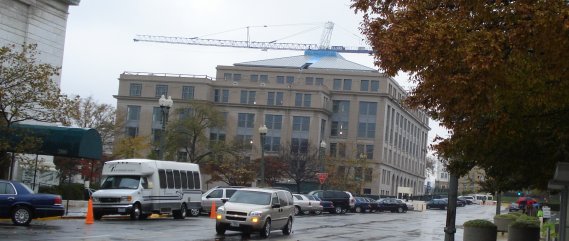
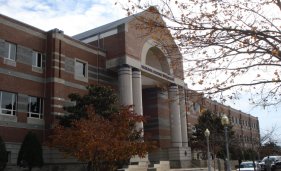
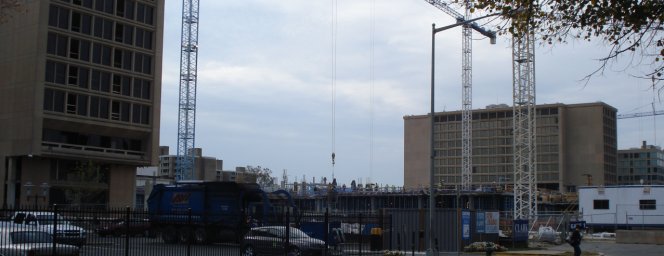
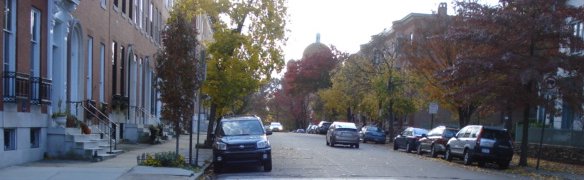
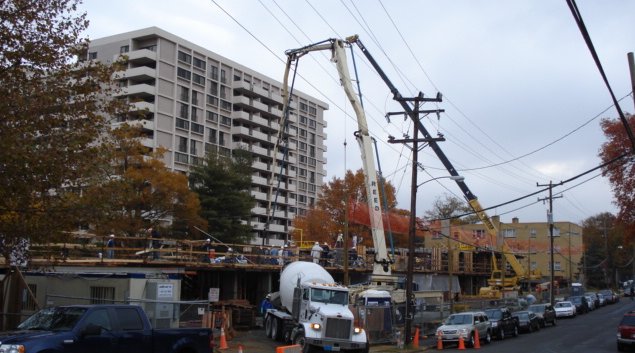
Below is our new office building across from Main State (Harry Truman Building). It should be ready for us to move into by June. Construction is ahead of schedule, which is uncommon.
We are moving to a new building where space is at a premium & we had to assign offices. I really cannot picture the layout by looking at the map of the offices. Fortunately, my colleague Joel did the thinking for both of us. He evidently understands blueprints and knows a lot of those arcane rules e.g. how much space a GS-12, 13,14s etc are suppose to get. Office space allocation is one of the thorniest issues you can think of. It is not so much about comfort – more about status. The problem is that there are natural work flows and work groups that do not follow rank. For example, by the nature of the job a low ranking receptionist will almost always command more space, albeit not very private, than a higher ranking analyst. It might also be useful to group people by their tasks, but that almost always means that you might crowd the higher ranking group members and give more space to the lower one. I think the whole rank thing is a little silly. Of course we all want a nice big place with a window, but you have to consider the job to be done. I figure that I need a big space to accommodate my big ideas, but not everyone agrees. Some tasks require space, others not so much.
There is also the bugaboo of privacy. It makes logical sense that a private workspace would be smaller because there is no need to have group interactivity. In fact, it usually works the other way around, with people demanding large private spaces and the loudest or highest ranking people getting them.
My favorite office arrangement remains one I saw in Norway at one of the environmental organizations. Everybody from the director to the newest hire had the same small sized office, but there were common spaces in the middle where people could meet. There was not much privacy, but I think that is a good thing if you are trying to create teams and synergy. It is better if people see what is going on. You want to avoid providing covered places to hide Unfortunately in our organizations somebody always wants to knock down walls and expand his/her office, then close it off from everybody else. I suppose the desire for mark off defensible territory goes back to our Pleistocene ancestors, but you would think after all this time we would have gotten over it.
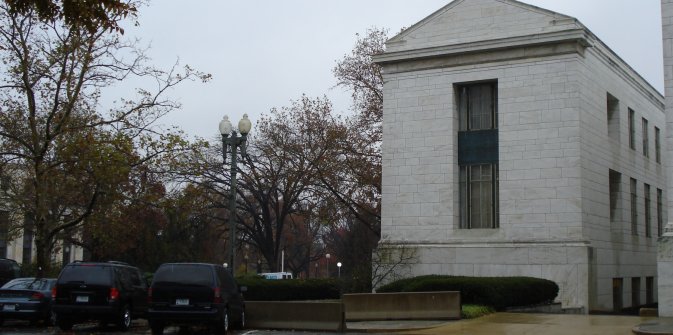
Below – rainy day at the shuttle bus stop.
There is another point of view on all this. I understand that my insouciance on this matter leads to my getting rolled on space issues. The Pleistocene warriors get to take over my hunting grounds and eat my lunch because they are so much more passionate. Sometimes I suppose I should toss a few rocks and feign a scream. But I am speculating way too much on way too small an issue in this situation.
I don’t want to leave the false impression that I am having problems already. The office space thing was just interesting, not a problem. My new colleagues are great and I got no worries. I am pleased to report that everyone seems reasonable. Perhaps that is because they are mostly new in their jobs and in relatively new offices. Nobody has developed an abiding attachment to their space. I don’t suppose everyone will be as lucky as I am. Some offices look like they have been occupied since Neolithic times and moving those offices may require an environmental impact statement to ensure that the ecological communities that have grown in and around them are not disturbed. I pity the guys who have to make those choices.
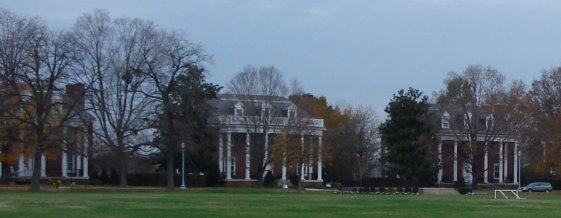
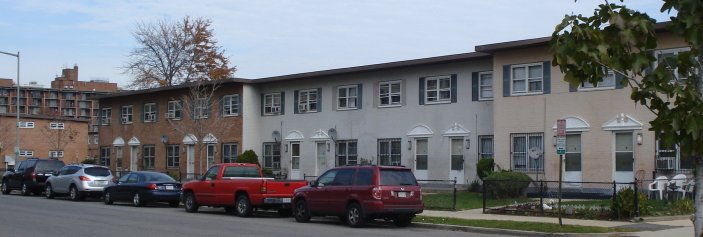
Above is housing on Ft McNair, the home of National Defense University (NDU).
I went back to work today at IIP/P. My job will be interesting since my group is supposed to act as an incubator, take ideas and then spin them off for others. That suits my preferences. My strength is that I am good at innovating, but that comes with a corresponding weakness that I am not great at doing things that require me closely to follow established procedures. Most strengths have corresponding weaknesses and if somebody tells you what he is good at doing you can often guess where he has troubles. The trick is work with your strengths. You really cannot eliminate your weaknesses, but you can deploy your strengths in such a ways to minimize them.
Above is Marshall Hall at NDU.
But I found out that the job will be different than I thought, at least at first. In the first months, I will be working down at NDU. I have to take the green line to waterside mall and then walk about a mile down to NDU.
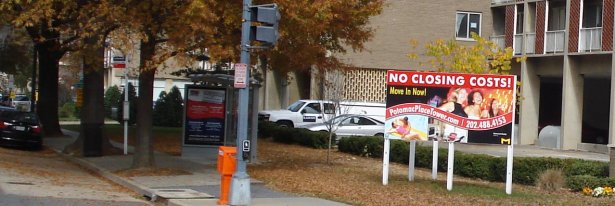
Below – apartments become condos. We lived in this building when it was Oakwood temporary housing.
I lived around there in SW when I studied Norwegian back in 1988. It was kind of a strange mix. Some of it was very nice and some very bad because it sat on the edge of the gentrifying district. In the last decades, the nice part has expanded. It still retains some of the seedy parts, but it is not scary as it was in 1988. Of course, 1988 was still the time of Mayor Berry, when Washington in general was a scary place. Things have really improved. Of course, some of the improvement is just making up for earlier attempts at improvement.
Evidently in the 1960s, SW was – in the parlance of the times – blighted. Using Federal dollars, they drove out the inhabitants and built those 1960 style structures we all love so much. It is hard to believe this is what they WANTED to accomplish. In the 1960s, our country and much of the world seemed to have lost its good taste. Were any attractive buildings constructed during the 1960s? The worst part of the area is L’enfant Plaza. I will have to wander down there and take some pictures for a future blog.
On the plus side, they did a good job planting trees and so after forty years there are lots of nice big trees. Even better, many of the 1960s buildings are being torn down and replaced. When we lived in SW, we used to go to Waterside Mall. It was a sad place. In 1988, there was a CVS (I think still called People’s Drugs), a Blimpie, Roy Rogers and some record stores. Outside was a Pizza Hut and a Safeway. Over time, everything flickered out, until finally only Safeway and CVS remained. I used to go down there sometimes and get a salad at safeway. The Mall itself provided a shortcut to Safeway and had a bunch of “outdoorsmen” hanging around outside, but was otherwise abandoned. Sometime in the last year they tore down the Waterside Mall. Safeway is still in business outside, so there is no real loss, except now you have to walk all the way around the block. Now that there is a metro stop, the neighborhood is improving.
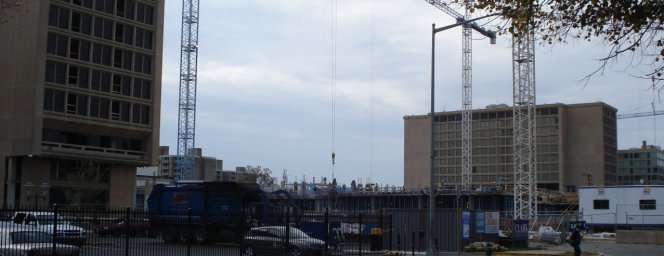
Above – the former site of Waterside Mall.
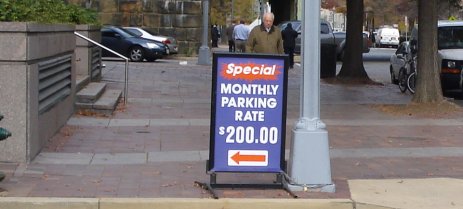
Above – parking costs. I guess this is a good deal. It is “special” after all.
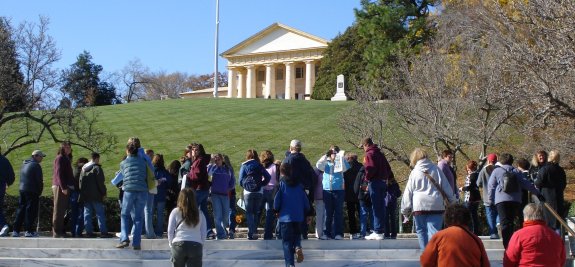
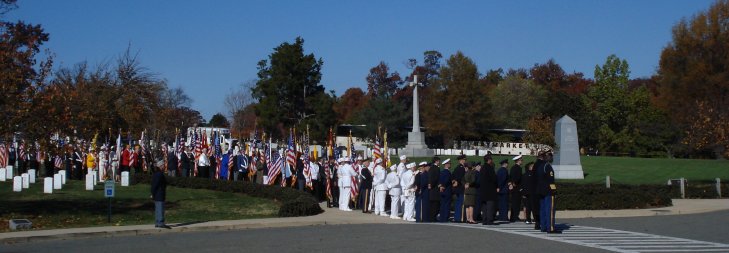
Veterans’ day is one of the few Federal holidays held on the actual date, even when it is not on a Monday, because it commemorates the specific occasion on the eleventh hour of the eleventh day of the eleventh month when the armistice went into effect in World War I. I went to Arlington Cemetery to think about what the day signifies.
I used to pass through Arlington Cemetery on my bike when it was still possible to cut through Ft Meyer on the way to Washington. After 9/11 this was closed off and they also banned bikes and runners in the cemetery. I understand that but I don’t really agree. It is not a sign of disrespect to pass through the place. I made a special effort to pass through Arlington. It was a little out of the way, but worth it. When you see something regularly, it becomes more a part of your consciousness. That is the way I also feel about museums, art and monuments in general. These things should be part of your life, not place you go only on special occasions.
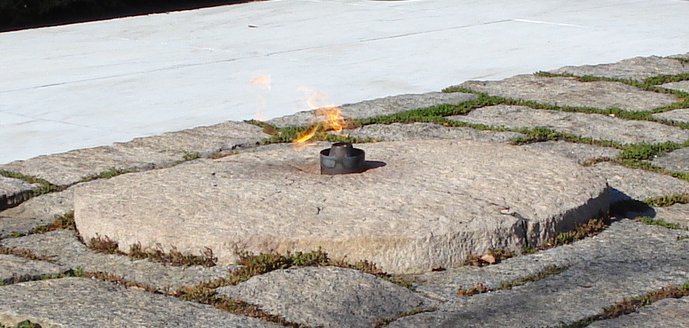
Arlington National Cemetery overlooks the Potomac and Washington. Before the Civil War, it was Robert E. Lee’s estate. Lee decided to resign his commission and offer his services to the State of Virginia. The next day, he went to Richmond and never returned to Arlington. The Union used it to bury the dead from local battles, which is how it started to be a cemetery. Before the ceremony, I went up to see Robert E. Lee’s house, stopping off at the Kennedy memorial with the eternal flame. Bobby Kennedy is there too. Below is the eternal flame on Kennedy’s grave.
Below – the Kennedy monument is flat, so you cannot see it over the visitors. The simplicity is impressive.
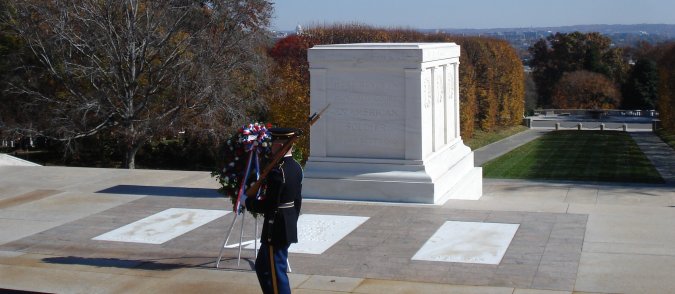
At 11am Dick Cheney laid a wreath at the Tomb of the Unknown. I couldn’t get close enough to see the ceremony. In fact, I could not get a place generally in the amphitheater. I don’t know when you had to show up, but it was earlier than I got there. I really didn’t care if I could see Dick Cheney, but Bo Derek was the master of ceremonies. I would have liked to get a better look at her. All I could see were columns and the crowd as I hung around the periphery of the ceremonies.
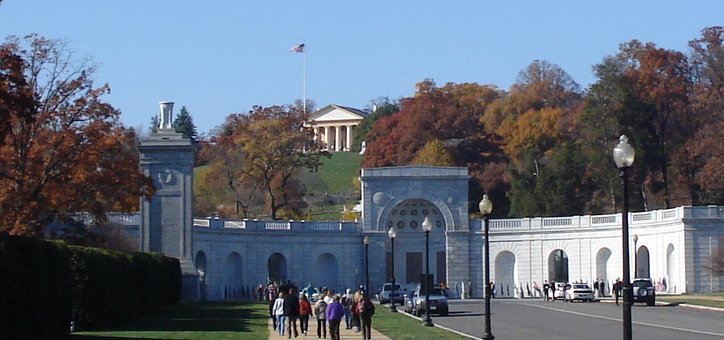
Above is the entrance to Arlington. On top of the hill is Robert E. Lee’s house. In the foreground is the women’s monument.
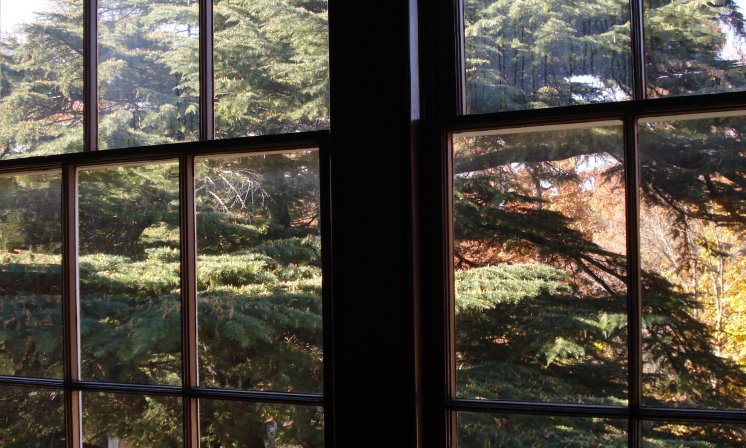
Above is the view out of Robert E. Lee’s window looking at a beautiful old cedar.
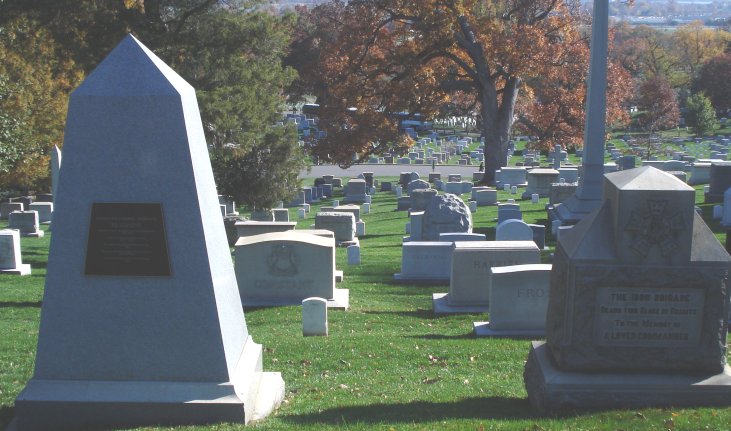
Above – some of the older parts of the cemetery have more elaborate monuments. This one caught my eye. It memorializes a Julius Szamwald. He was a Hungarian freedom fighter who came to the U.S., where he helped organize the 8th New York infantry regiment and became a general during the Civil War. He finished his career in the Foreign Service. He did great a service to America, which put him in the company of the heroes around him. All of them have their own stories.
Above is the veteran color guards.
Above is the Tomb of the Unknown Soldier.
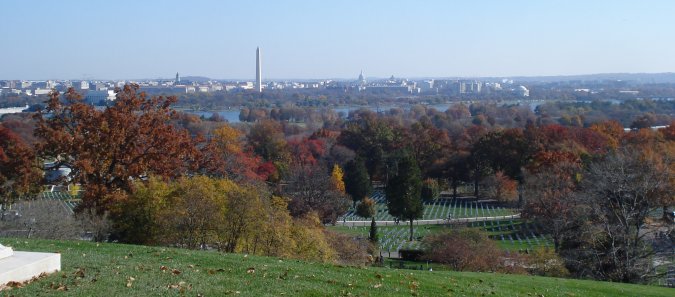
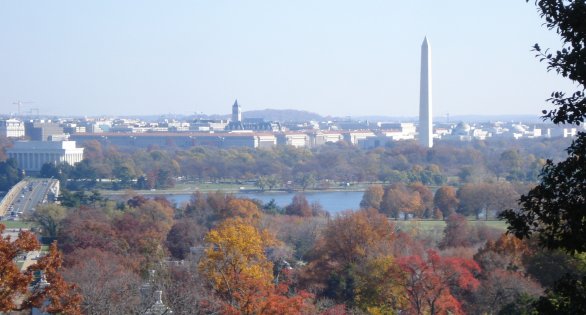
Above – Washington with the telephoto. You can see the Lincoln Memorial over Memorial Bridge. Of course, you recognize Washington Monument.
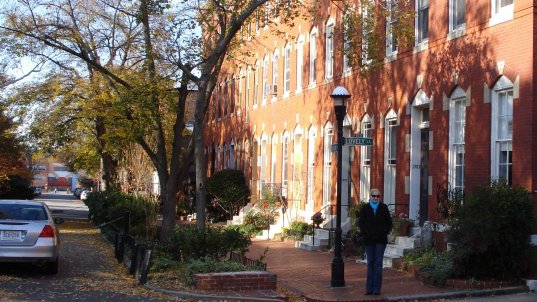
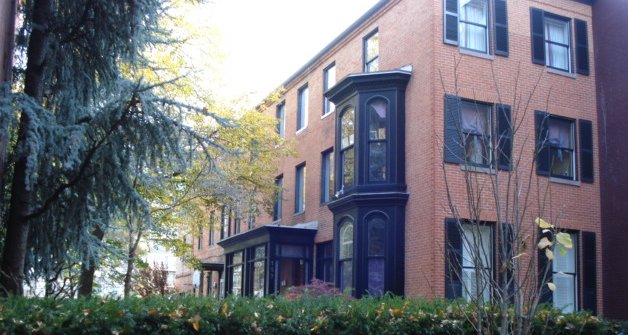
Mariza rents a house along with some roommates in Baltimore’s Bolton Hill district. I was a little apprehensive when Mariza got her job in Baltimore. I remembered the crime and squalor. But the city has improved a lot in recent years and there are some really nice and neighborhoods. The Mount Vernon area, right next to Mariza’s area is very nice. A lot of her co-workers live in Federal Hill, evidently a yupifiying district. We walked around there. It is not that nice, IMO, but it does have large numbers of restaurants. It reminded me of State Street in Madison.
Mariza moved her last year. She started out by looking for apartments in the Inner Harbor area, which is superficially attractive but too expensive and a little artificial, sort of like living in Disneyland. Actually, I have to admit that it was our advice that she look there. It was the only area of Baltimore that Chrissy and I knew. Her further investigation turned up other, better opportunities.
Where she lives now has lot of parks and museums and the Maryland Institute College of Art is there. Many of the old buildings have been recently renovated and it is a mostly intact 19th Century neighborhood. It is within walking distance to restaurants and stores and has good access to public transportation and the light rail system, which is important because Mariza doesn’t have a car. It is a nice place to live and seems safe.
I like the fact that she has roommates. She has the usual roommate woes. The landlord forgot to pay the electric bills for the previous period and they were about to lose power, so Mariza had to pay. The others owe her money. This is not a big problem; she is in touch with the landlord and can just deduct it from the rent, but she is now in the position of managing the landlord relationship. They have the mirror image problem with water bills. Mariza and her roommates were supposed to get the water bills, but they went to the landlord instead. Now he wants to be repaid for those bills. It looks like Mariza will again have to front the money and get it back from the roommates.
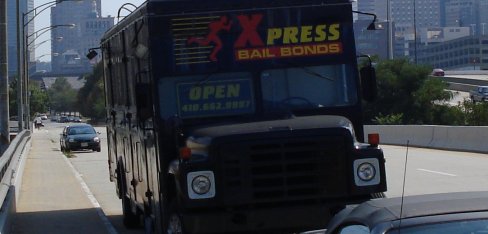
Below – We were a little worried about some Baltimore neighborhoods. Mariza didn’t look for houses where we saw this rolling bail-bond truck a couple summers ago.
I had six roommates one year when I was in college in Madison, but we had trouble after two women moved out and went to Florida. We had a joint lease and we all had the responsibility to pay our shares of the rent, so we had to find new roommates. In a college town, there is usually something wrong with anybody looking to rent an apartment in October or November, but we were desperate and got some real weirdoes. Some were more responsible than others in paying. I got the enforcer job. One of my roommates, Marcus, didn’t pay until I threatened him. This I had to do two months in a row. After that, he claimed it was a hostile environment and he moved out with one day notice just before the third month’s rent was due.
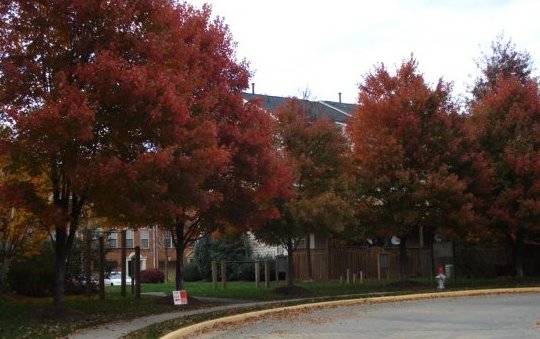
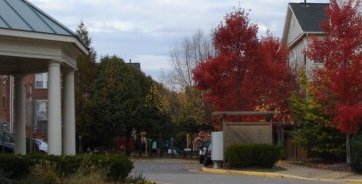
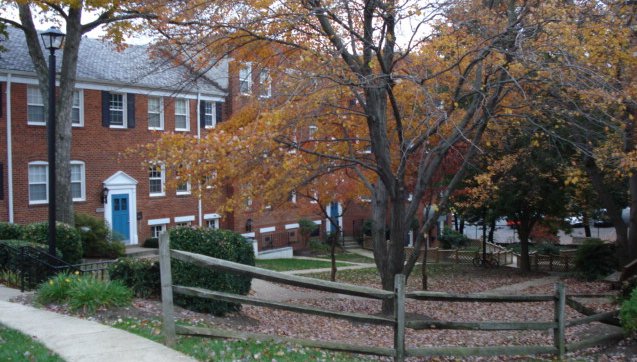
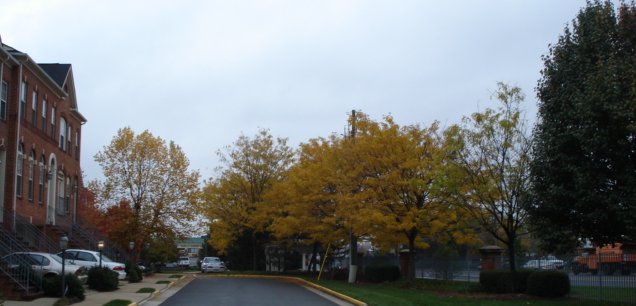
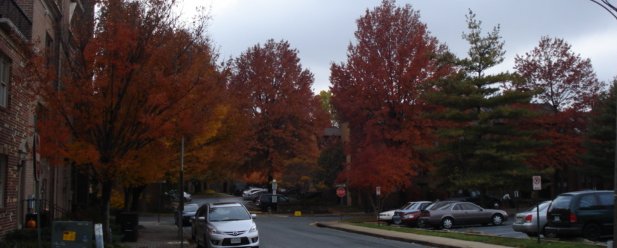
These pictures are from our town house complex in Vienna, VA. The trees are turning nicely.
Marcus was slob who didn’t use sheets on his mattress and it was stinky and dirty. When I came home the day after Marcus moved out, I found the house full of smoke. One of my other roommates, Tom the stoner (this was the 1970s), was sitting around with his friends in the living room. I asked them what was going on and Tom just said, “I don’t know, man. It’s been that way for about an hour.” I thought it a good idea to find out where the smoke was coming from and found it was coming from under the door in Marcus’ room. When I opened the door, his bed burst into flames. Tom had wanted to get the smell out of Marcus’ mattress, so he put some incense on top it. It burned through into the mattress and was smoldering inside so that when I opened the door, the rush of air ignited it. I expect it would have started flaming soon enough in any case and I believe that had I not come home when I did, Tom would have burned the house down and he and his friends would have been caught in the conflagration and become literally burnouts. When he saw the flames, Tom just said, “Wow!” I beat the flames out with my coat. We dumped some water on the mattress and got rid of it. Roommates can be challenging, but they provide interesting stories. The stories are funny when you look back; not so much at the time.
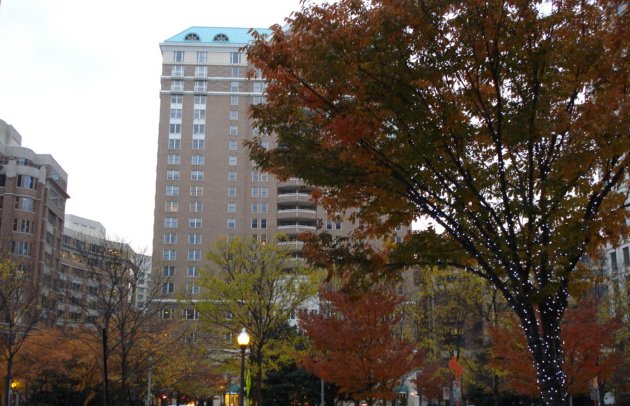
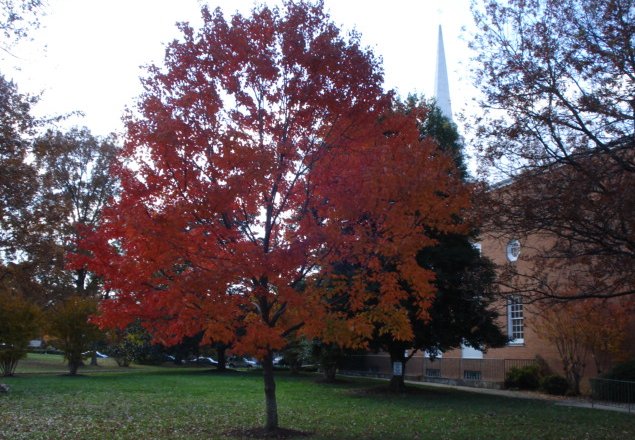
Our complex again. I just like the trees in their fall colors.
Back to the present, I like Baltimore and have been pleasantly surprised by the charm.
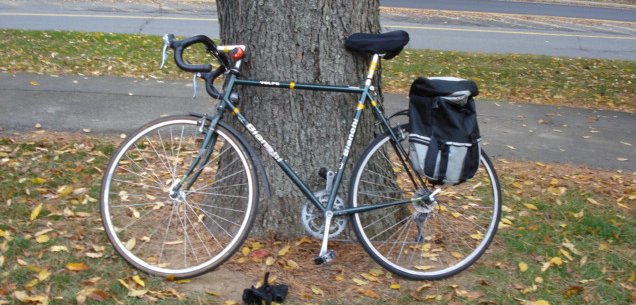
Since I am talking about old stuff, I thought I would put up a picture of my bike. I had to take it to the shop and get new back sprockets. The guy at the shop commented that he rarely saw one of them actually worn out, but mine was. I got that bike in 1997. I rode it a lot. Best bike I have ever owned.
My walks to the Metro and to FSI plus the Metro rides take more than two hours a day and I have had a lot of opportunity to listen to my I-pod. I have a really good program from the Teaching Company about Roman history. (The History of Ancient Rome, by Garrett Fagan of Penn State)There are 48 half-hour lectures and I have gotten as far as the assassination of Julius Caesar. Studying Roman history is a good way to learn about leadership, good & bad, and the fall of the Roman Republic provides examples of what happens when the traditions and institutions of order break down. The Founding Fathers were well versed in Roman history and our own Constitution is very much influenced by the Romans. We tried to address the fatal flaws that played out in the ancient city. Besides that brief unpleasantness in the 1860s, it seems to have worked out okay.
Look at a dollar bill to see the persistence of Rome. On the great seal, we have the Roman style eagle holding a scroll that says “e pluribus unam” – from many, one. The other mottos are “novus ordo seclorum” – new order of the ages and “annuit coeptis” – he (God) favors, taken from the Virgil’s Aeneid. All in Latin. The Roman Empire fell in the west in AD 476. In 1776 it was a profound influence on what for Romans was an undiscoved country.
So much of what I learned more than thirty years ago comes back when I listen to the lectures. I thought I forgot, but now I realize how much I learned, kept & internalized. I just didn’t remember where it came from. I had a seminar in Polybius my first year in grad-school. My major professor, Ken Sacks, specialized in that historian. Polybius wrote in Greek about the rise of the Roman Republic. We read the sources in Greek (at least tried) but the big lessons were in historiography and the nature of evidence. History is constructed by historians and they have a responsibility to follow the sources and not exceed or extrapolate from them.
Polybius discussed the rise of Rome and the Punic Wars. He figured those were events worth investigating. The Romans and the Carthaginians stumbled into the conflict over a bunch of Italian criminals who had taken over a not very important city in Sicily. One lesson I take from history is that events are a lot more illogical than we make them sound later on. A good historian makes a story that hangs together with conditional causalities, most of which would be unknown or unclear at the time AND some of them might actually be only the artifact of the historian’s story telling skills.
One of the biggest pitfalls of the study of history is the overemphasis on agency. Sometimes shit just happens. But we look for some person, persons or particular events to credit or blame for what happens – the agent – and historians always find one. If that person had not already figured out how to make his own contribution look brilliant, his biographers provide him with an ex-post-facto plan more brilliant than than any that could have been concieved in advanced. I believe that history is shaped by human choices and that great individuals have a great influence on events, but it is sloppier and less direct than we have to make it appear when we write up the reports. It makes us too confident that our leaders can solve our problems and creates a systematic bias in our politics.
Scholars and military historians look at the Punic Wars as case studies in conflict and the perils of power. The most studied of the three wars is the second (the one with Hannibal). The Romans should have lost that war, but they just refused to give up. The refusal to be beaten, coupled with the unusually large manpower reserves they could command explains their dominance of the Mediterranean. They were not brilliant strategist, brilliant inventors or subtle thinkers. They just has a talent for doing practical things and they just kept on coming back when most others would have given up.
Pyrrhus of Epirus learned it the hard way. He beat the Romans twice and beat them big. He waited for them to ask for terms but they just raised more armies. Pyrrhus had to give up and go home saying “One more victory against the Romans and we shall be utterly ruined,” hence the term Pyrrhic Victory.
The body of the history of the Republic is patchy and contradictory. Less than 5% of what historians think was available is extant. The author describes the process of finding history like looking at the Palace of Versailles through the keyholes. You see some things very clearly, but there are big places you don’t see at all. Historians know very little about ordinary folks because the ancients, at least those who could write, really didn’t care much about them. They wrote about the important people, i.e. generals, senators, kings and emperors, so even if we had all the sources available in the ancient world we still wouldn’t know much re the common people.
Nevertheless, a lot of historians are trying to write the history of the common man. We can draw clues from archeology, but while archeology can tell us a lot about physical structures, and lately with a sort of CSI archeology even a lot about the physical condition of the people themselves, it doesn’t tell us much about their attitudes or ideas. You may also draw the wrong conclusions. Imagine if a future archeologist knew there was a war with the U.S. on one side and Japan and Germany on the other, but doesn’t know the exact dates or who won. He digs up a Los Angeles from around now and finds that cars and products made in Japan and Germany predominate. Does he conclude that they won the war and colonized the U.S.? In my history seminars so long ago, I learned to assess and judge sources. We did that by the context, the language, the historian’s skill and comparisons with other events. You have to try to assess not only whether the historian THINKS he is telling the truth but whether or not he has the capacity to know the truth. Some things you just cannot know. No matter how troubling this may be, it is the fact. We don’t get to fill in the blank spaces with what we want to be the truth. Polybius, BTW, was a very good historian and his access to leading Roman politicians put him in the position to know lots of things. Still, like everyone else, he has his strengths and weaknesses. A lot of what applies to ancient history also applies to evidence in general and especially all that is proliferating on the Internet. Sure, there is a lot more information on the Internet, but like the ancient sources, you have to assess whether it is true or if it can be true. People just lying are only the start of the challenge. Some honest people are not in postions to know and others cannot figure it out even when they have all the facts in front of them. Not everybody who thinks he is telling the truth IS really telling the truth and many people aren’t even trying very hard. You have to be careful. Those lessons of studying history apply today too.
The study of history does indeed have practical value.
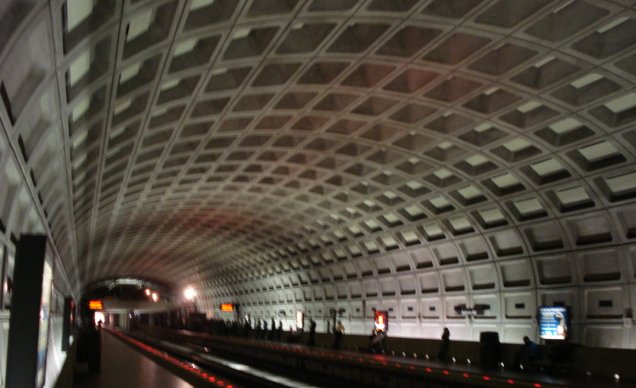
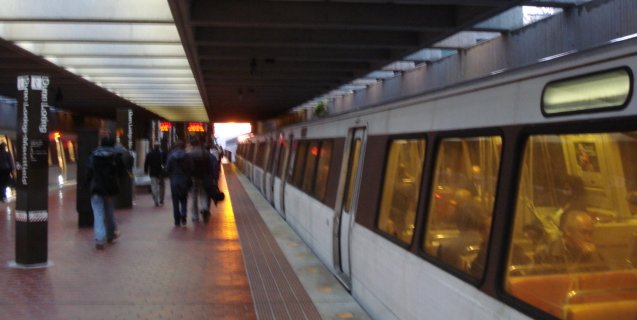
Below – Washington Metro has nice vaulted ceilings.
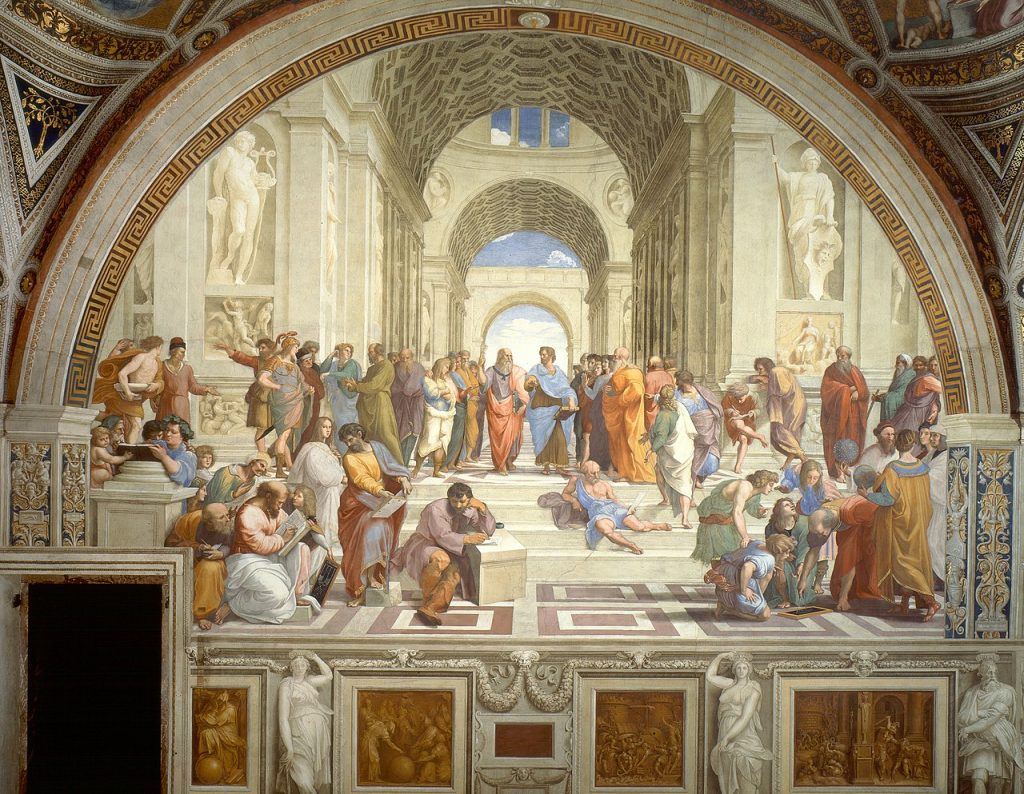
Below – School of Athens by Raphael, also vaulted ceilings. Both roads to learning (sorry for the hyperbole).
It has never been easier to learn but the options are daunting because there are so many of them. I recently completed the State Department’s leadership seminar, which left me a little disappointed. But my education is my responsibility and I will carry on. There were some lectures I wished to have heard and when I got home I got some of them – on my computer.
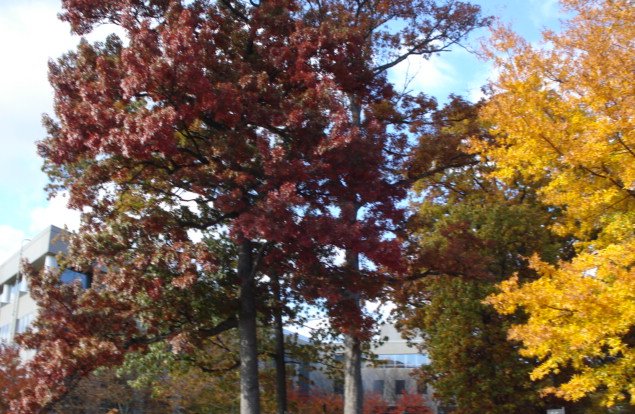
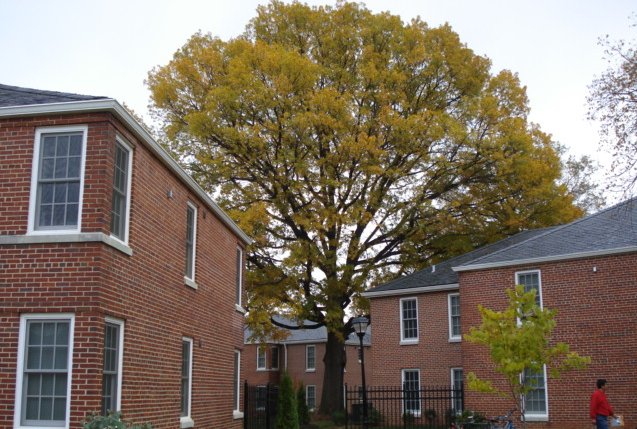
Below – oak tree in fall colors
For example, I wished we had talked a little about prospect theory and its effects on decision making. Prospect theory explains a lot re why we make what seem like illogical decisions even when we have the needful information. So when I got home I listened to Nobel Prize winning economist Daniel Kahneman, who along with Amos Tversky originated the theory. You can watch it too at this link. At the same place, you will find a talk by Peter Bernstein re risk analysis. Bernstein wrote one of my favorite books, “Against the Gods” the story of risk.
You could always just read to all the books, but it is more effective to learn on a variety of fronts. Reading reinforced by the visual or audio of a lecture is great and online even allows for interaction. There are situations where audio works best. I have regularly listened to audio programs for more than twenty years. A long drive can almost be like a college course. My sloppy way of listening enhances learning. I tend to let them play again or pop in repeats. Leadership and management programs are particularly appropriate for audio programs, IMO.
Online education opens many more possibilities and variety. What it lacks is the social aspect of education. Discussing ideas with others helps fix them in the mind, sort out the pluses and minuses and make the learners see the bigger picture. You cannot replace that. I think that is why self educated people often have an uneven knowledge base. The autodidact chooses what he wants to emphasize and will inevitably introduce bias. Online learning exacerbates this, since you can find what you want very precisely and not come into even superficial contact with anything else. The advantages outweigh the costs, IMO, but it is something to be aware of.
Other great sources of education in the Washington area are think tanks and the Smithsonian. Most sponsor regular lectures and seminars on a variety of topics and they are usually not only free but you often get a free lunch. These have the advantage of being in a social setting. You can talk to people before and after the lecture and just being there in person adds something to the educational experience. I took advantage of these things when I was last in Washington & will do it again.
Most learning isn’t done in formal settings and FS provides more opportunities than most jobs. You learn most from your colleagues and fellow citizens and just by observing events and things. In other words, you learn from experience, but learning is not automatic. It is great to notice the trees and take time to smell the roses, but it is important actively to seek out and think about information and lessons from experience otherwise it just washes over you, runs into the mental sewers and is lost. Socrates said that an unexamined life is not worth living. I think we could extend that to say that an unexamined experience is not worth having.
I lived near the Clarendon Metro when I first came to Washington in 1984. A that time the area around the Metro was mostly covered in parking lots, cheap restaurants and pawn shops. It wasn’t nice. The area around the Courthouse Metro was a forest of construction cranes. The Metro only went as far out as Virginia Square, which had a shopping center, used car lots and (again) pawn shops. I really cannot explain the pawn shops; I just remember noticing a lot of them.
Below – Ballston
Today all these places are really nice. Arlington, VA did a good job of planning for transit oriented development around the Metros at Rosslyn, Courthouse, Clarendon, & Virginia Square . The area near the Metros are built up with high rise apartments, offices and shopping areas. There is less need for cars and pedestrians can feel reasonably comfortable. The Metro has pushed out to Vienna, with stops at Ballston, Falls Church East & West and my stop Dunn Loring/Merrifield. Transit oriented development is strong in Ballston, but it is just developing at Vienna and Dunn Loring and is not doing very well at all in Falls Church. Fairfax has a plan too.
Below – Construction near Ballston
I am most interested in Dunn Loring, because that is where I live now. They are building a town center served by the Metro. It is still in the planning. Chrissy has taken part in many of the meetings. A lot of the “town meetings” are just a show. The people from around the area come and make demands on the developers. Many of the demands are silly and some are designed just to slow the process. We favor density. It is the only way you can have a useful transit system. Many of our neighbors want to keep things low profile and spread out. It is a waste of Metro, IMO, but the public hearing process gives activists opportunities to make trouble. In any case, when we moved it, the area was not as good as it is now. It was parking lots, open lots and a few apartments. I think the town center will make it better.
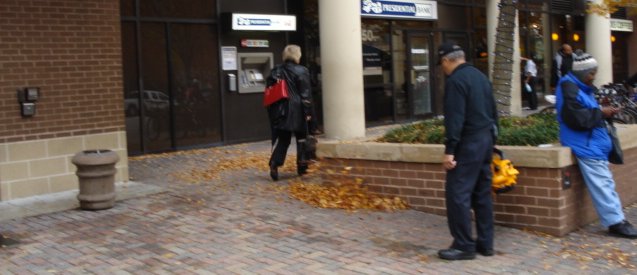
Below – everywhere you go you find the guys with the leaf blowers, uselessly pushing leaves and grass, while making noise and pollution.
I think we can take credit for a little prescience in buying here. We bought a lot that was only red clay where they promised to build town houses. Today we have a developing neighborhood. The walk to the Metro, from my door to the platform, takes seven minutes, so we don’t have to worry much about traffic. We wanted to find a place near both the Metro and bike trails. Fortunately, the two are parallel, so during the warmer months I can ride my bike to work. It is seventeen miles. In my old age, I have become lazier, so I ride down and take the Metro back. You can take your bike on the Metro after 7pm, so I hang around at work until that time. I tell people that I am not really that ambitious and I am only at work in order to wait for the Metro, but people don’t believe me and it makes me look like a hard worker. In all candor, I do get a lot of work done after 5pm. The other advantage to the transit orientation is that Gold’s Gym sits between my work and the Metro stop, so I can stop by on the way home. It takes away the excuse for not working out.
Anyway, the availability of transit means that I can go for days or weeks w/o really needing to drive the car, except to go to Safeway for groceries. In the 24+ years I have worked for the Federal Government, I have never used a car to get to work only around five times.
Below – Arlington did a good job a long time ago planning. These places used to be inexpensive housing but now are trending upscale.
A have been attending the SETS seminar at FSI, so I take the Metro to Ballston and then walk to FSI. It is a nice walk, takes a little less than a half hour. Some pictures are included with notes. I like the fall colors and I would like to share the beauty.
Above are honeylocusts near my house. They grow slowly and although they are in the legume family they do not fix nitrogen in the soil. I was unaware of this until last year. I wrongly assumed that it behaved like other members of the family. I guess we need to plant some clover.
Above – Newly renovated apartment/condos with a big laurel oak in the yard. Planting trees pays off long after. Laurel oaks do not have the nice russet fall colors most other oaks have.
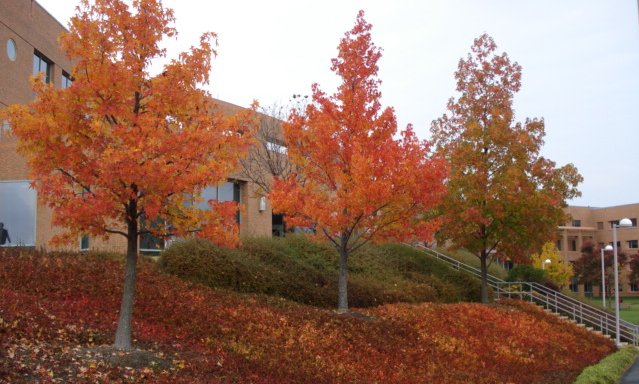
Above – Fall color among the condos near Ballston Metro.
We talked today re managing various generations in the workforce. Postwar baby boomers are still the most numerous of government employees, but there are still a very few from the WWII veteran generation, a growing number of generation X and the up and coming millennial. All my kids are Millennial. They sometimes call this generation the baby boom echo generation since these are mostly the kids of us boomers. Most of us thought the idea was useful but that it was easy to overdo the generation analysis. There are some general patterns. For example, the veterans as a group are not very comfortable with technology, while the millennials are digital natives. But some of it just depends on where people are in their careers. The literature we read on the topic was a couple years old and the people at my table, boomers all but one, agreed that we were starting to look more like the veteran generation, with concerns about retirement and leaving a legacy.
Generations make a difference in the government, since such as big percentage of us are or soon will be eligible for retirement. We have to plan for a big turnover that has already begun and will continue for around ten years. Besides the general challenge of simply hiring so many new workers, making sure the experience and knowledge is passed along.
There was an interesting lecture on possible futures. This one was called the “Seven Revolutions” and it analyzed trends such as population, resource shortages, tech innovation, movement of data, global economic integration, conflicts and the challenge of governance. The last one of these refers to the increasing inability of governments to cope with or even understand the other trends mentioned.
Predicting the future is difficult. When you think re all the predictions of the past it is easy to see the problem. Think of all the apocalyptical predictions of the late 1960s and 1970s. According to those guys we were supposed to have starvation in the streets during the 1980s and even global cooling by now. “Soylent Green” was set in 2022. I don’t think that future is very likely anymore, but it scared me at the time. I think the trouble with predictions is that we have to project from what we have today. Many of what will make the future better than the past has not been invented yet, or at least not developed for their eventual uses. Developments like nanotech, biotech and alternative energies are just at past the starting line. We really cannot make accurate projections.
We cannot predict the details of the future, but we can think about possible scenarios and how we might react. Tomorrow we have scenario simulations. It should be fun.
I got one good ironic saying. In government we always talk about the dangers of stove piping in the organization. Somebody renamed this. They are now “cylinders of excellence.” We sometimes talk like that. I am not entirely sure it was supposed to be a joke.
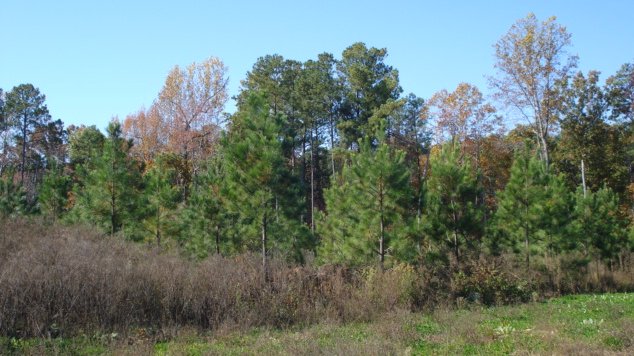
Below – unrelated to my post below is a picture of my thinned pines, a food plot and the tall trees from the SMZ in the background.
I bought gas at BP in Petersburg, just south of Richmond and paid only $1.97 a gallon. That was below the price I saw advertised on the electronic board at Pilot. They were offering regular at $2.03, but when I passed going home around nine hour later the price had dropped to $1.99. I have never seen anything like that before, but it is not all good.
High prices encourage conservation and alternatives. Low prices do the opposite. We had a chance to do the right thing in the 1990s and we blew it. The right thing, BTW, is to raise taxes on gasoline as the price goes down. We need to keep the prices high to put a floor under conservation and alternatives and to drop the floor out from under despots and potentates who control much of the world’s oil. I know that I could never run for political office with a “raise the gas price” platform, but it is the right thing.
Countries like Venezuela, Iran & Russia depend on high oil prices to fund their adventures. It is probably better if they don’t get them. I am not enthusiastic about any sort of taxes, but gas taxes serve the salutary purpose of dampening demand for oil. There is no painless way to a more independent energy future. We use oil for a very logical reason: it is cheap. But the price we pay does not reflect the price of sending cash to despots in the most unstable parts of the world. Nor does it include the mitigation of the greenhouse gases it puts into the air.
It gets worse. Not only does cheap oil keep us from a more independent energy future, it also leads – paradoxically – to high energy prices. The oil despots, IMO, drop prices periodically in order to drive alternatives to bankruptcy and make conservation look like a dumb idea. I know this sounds like a silly conspiracy theory and it is the only one I suspect might be true. The solution is simple, but not easy.
I drive and I use gas. That is how I know the prices. I understand that we will be using oil for a while to come. I am not advocating quitting cold turkey, but it would help to get the incentives right and price is one of the biggest incentives I know. Of course, I can say all this because I won’t be running for office.
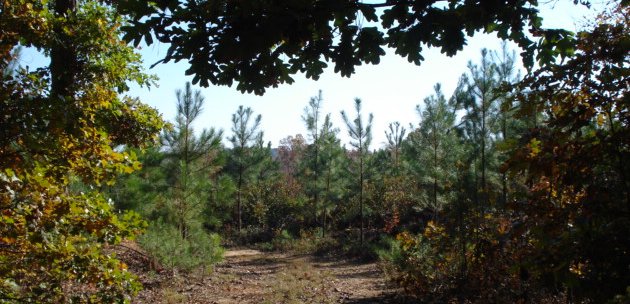
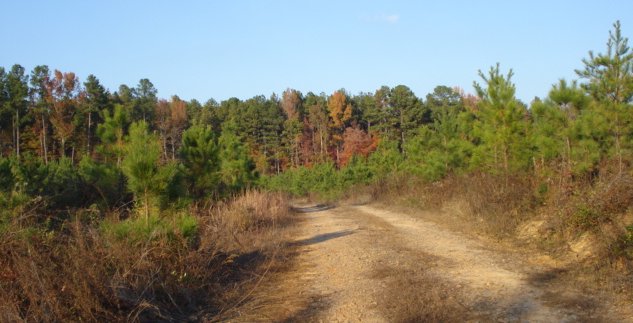
I don’t have a real theme for what I learned in the seminar today. I enjoyed it more than playing games in W. Virginia. I will just list a few take away snippets. Most are not new but it is good to think about them again. Below, BTW, is a unrelated picture, again from my tree farm. This is the last of my pictures from my visit yesterday. I have posted them all now.
We took all did a survey that divided us into three categories: conservers, pragmatists and originators. The names imply what they are. Conservers are careful and circumspect. Pragmatist do what they think will work and are flexible. Originators are change catalysts. Each has weaknesses that are the mirror images of the strengths. I fall right on the edge between pragmatists and originators, a little into the originator and I am not surprised. I understand that I sometimes can be a little too enthusiastic, which is why I always try to make sure that I have conservers on my team. That was the lesson. A team is strong to the extent that it embodies diversity. The team is stronger than the sum of its parts because members fill in for each others’ weaknesses. It is like a diverse portfolio. I remember reading “Founding Brothers” by Joseph Ellis. Each of the founders had his flaws and strengths. The flaws could have ruined anybody as an individual. Together, however, they made a great team and produced a great result. The other lesson is that they didn’t have to TRY to work together. In fact their disagreements and even their animosity made the result better. It is uncomfortable to have disagreements, but it can produce better outcomes.
I also thought about “Decision Traps”. That is a great short book about how to come to decisions. The author talked about group decisions. It is kind of a Goldilocks and the three bears situation. If you have too much diversity and discussion, you never reach a conclusion. If you have too little, you get groupthink and a rush to judgment. You need the just right, but that is easier said than done. Beyond that, the longer a group stays together the more group think comes in. Finally, I thought about “The Wisdom of Crowds” and how the author says that you can often improve group decisions by introducing individuals with LESS expertise but also different viewpoints.
When working to foster useful change, you work with a combination of pushing and removing obstacles. It usually takes more energy to push than to clear the path and remove obstacles. The book that helped me understand this process was “The Fifth Discipline.”
I count the seminar successful to the extent that it makes participants think and I thought back to a lot of the decision literature I had read over the years. I was happy with the seminar today.
We also talked about the Embassy of the future and the differences between risk management and risk -avoidance. I thought those were interesting subjects, but I didn’t have any strong take-aways. You can download the PDF file re Embassy of the Future at this link.