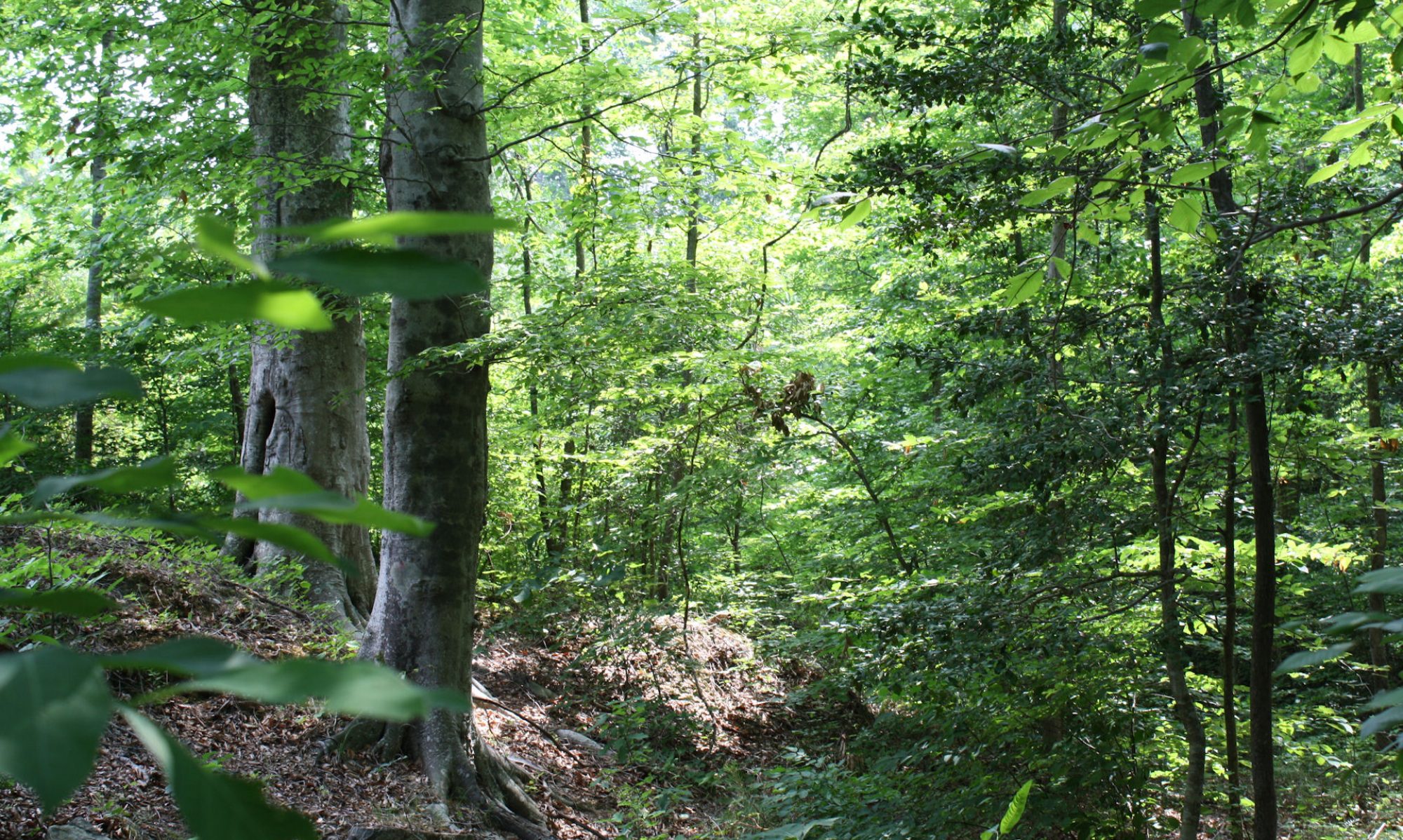
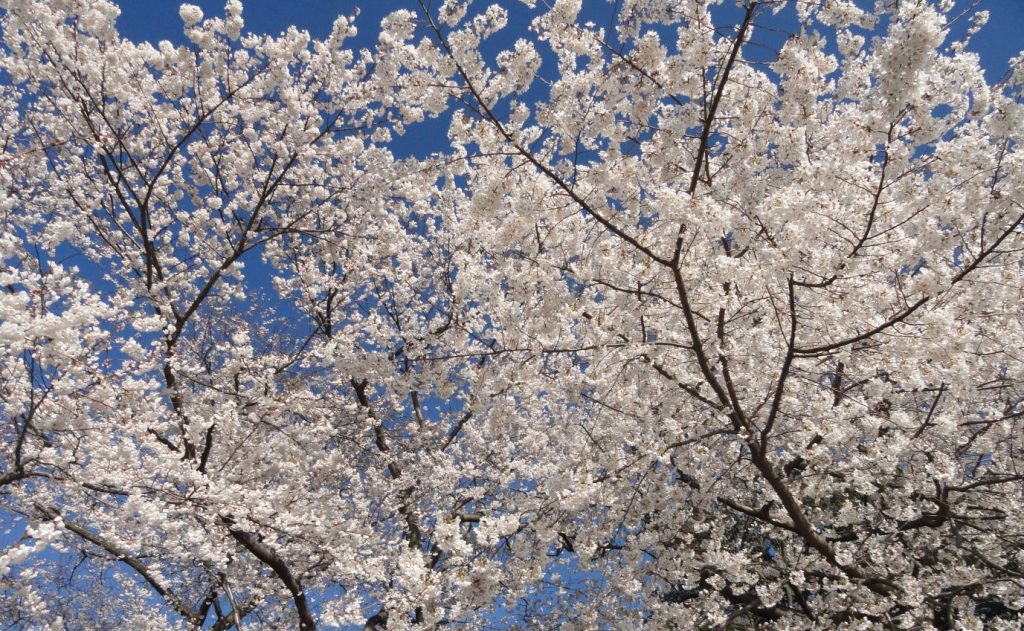
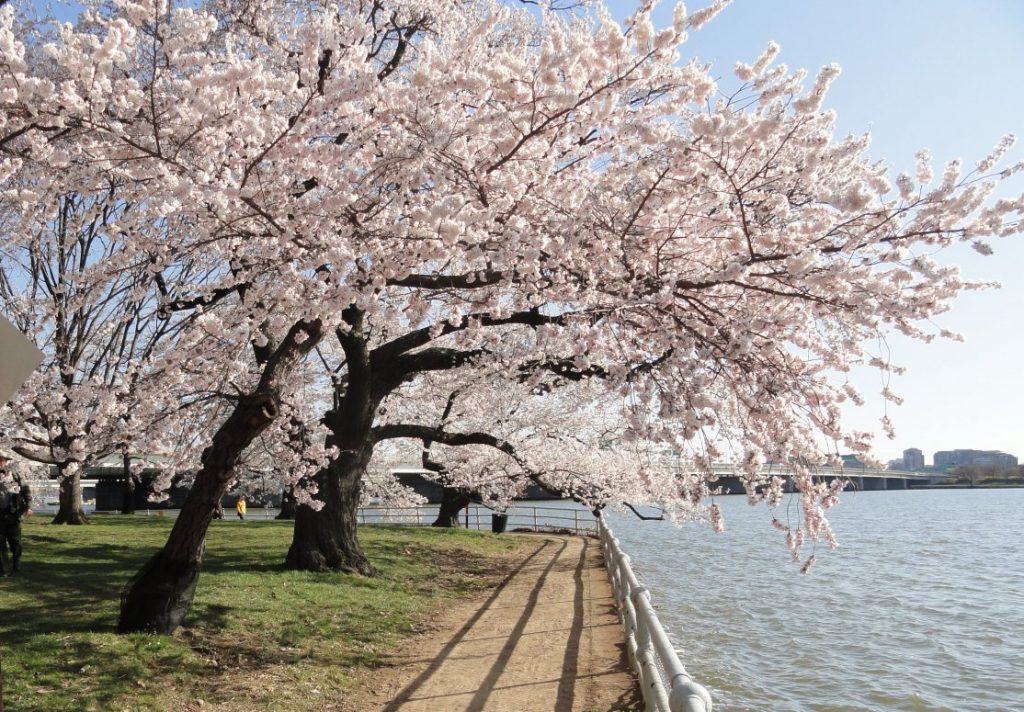
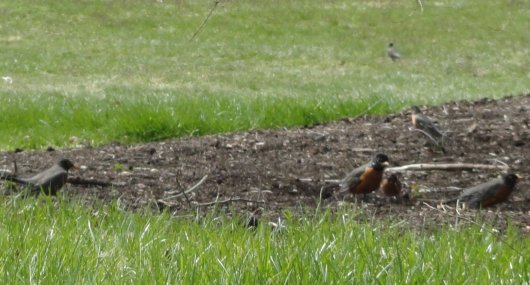
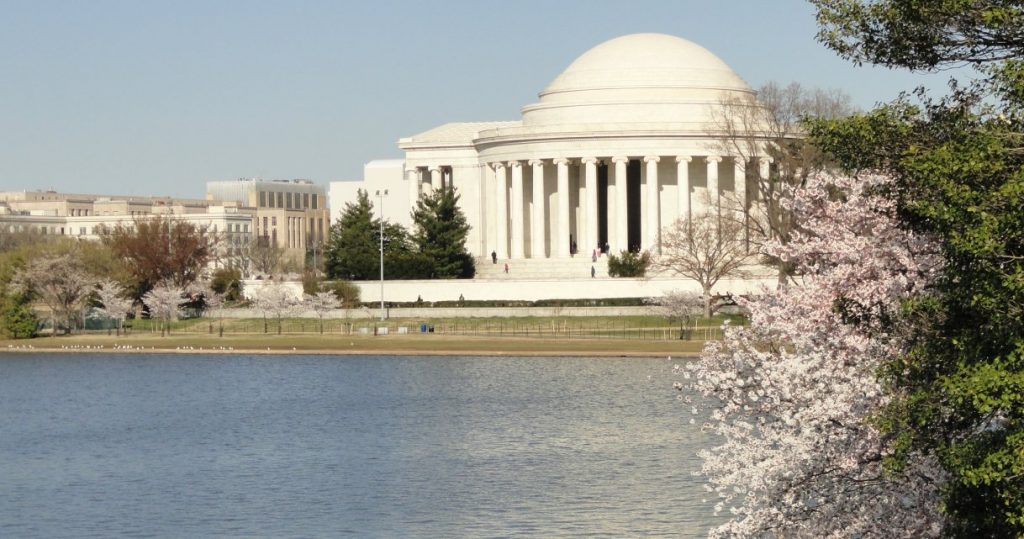
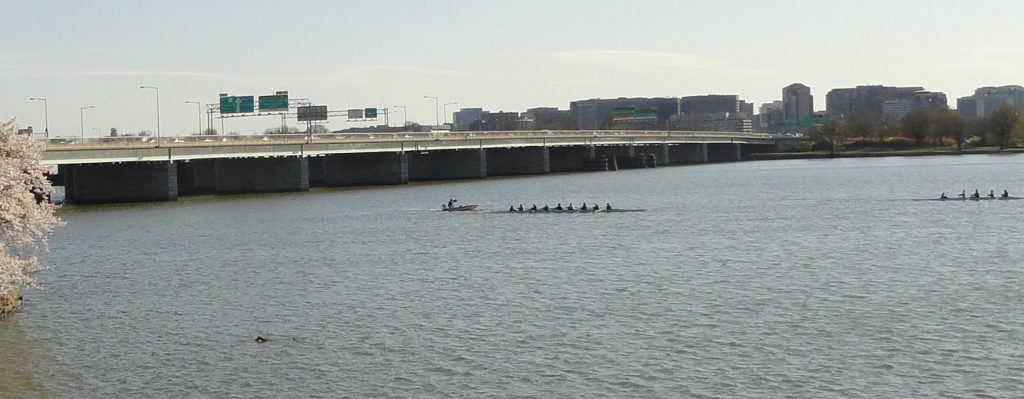
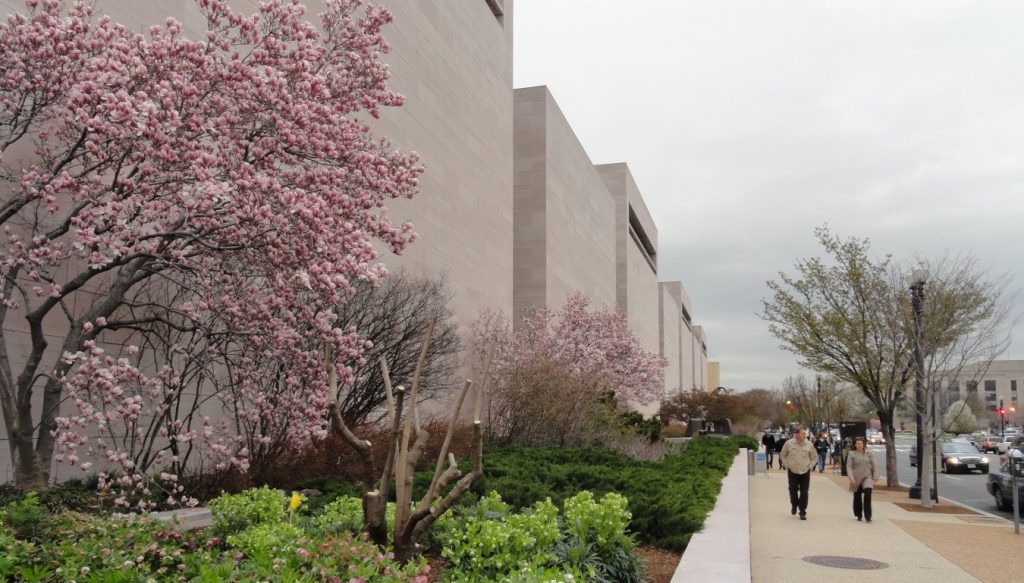
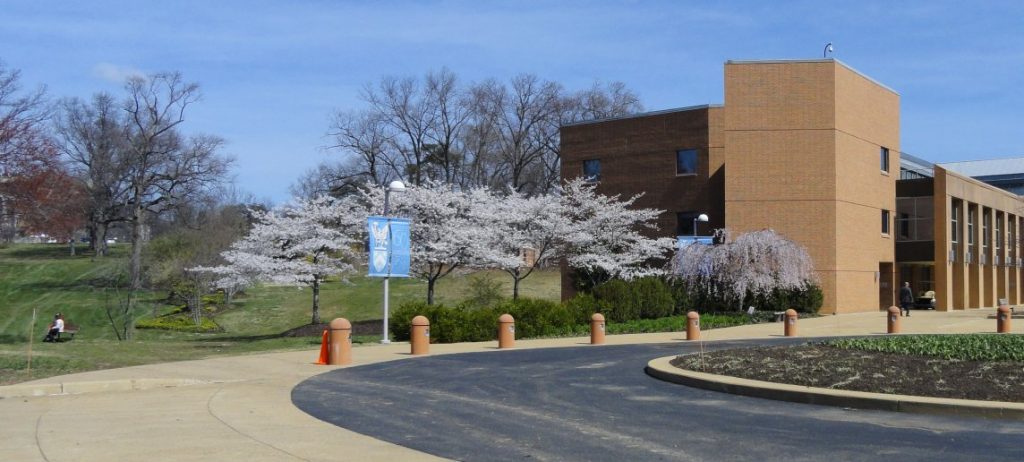
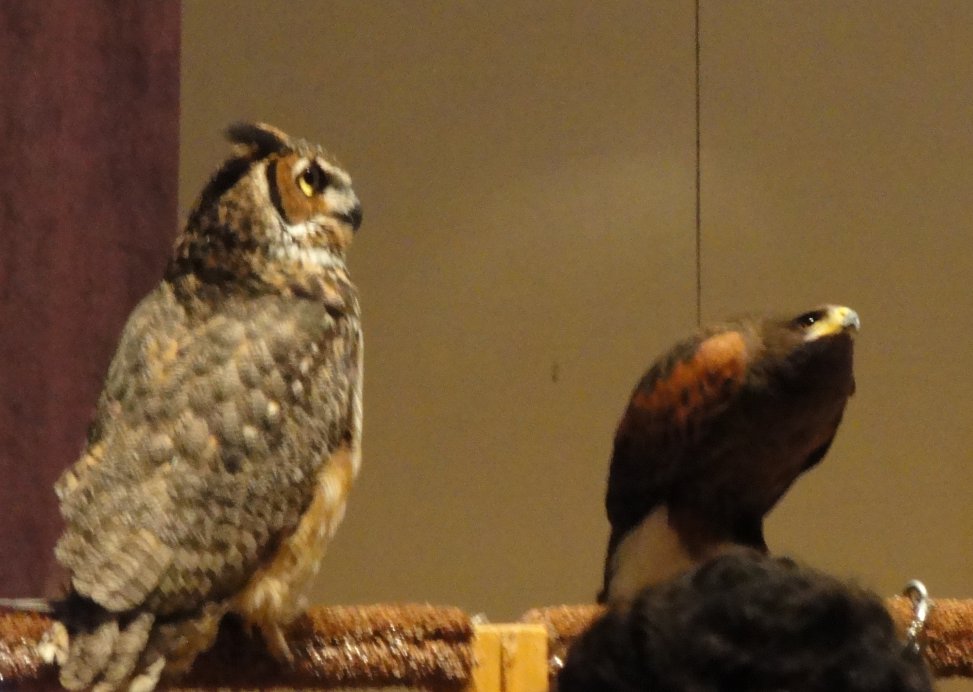
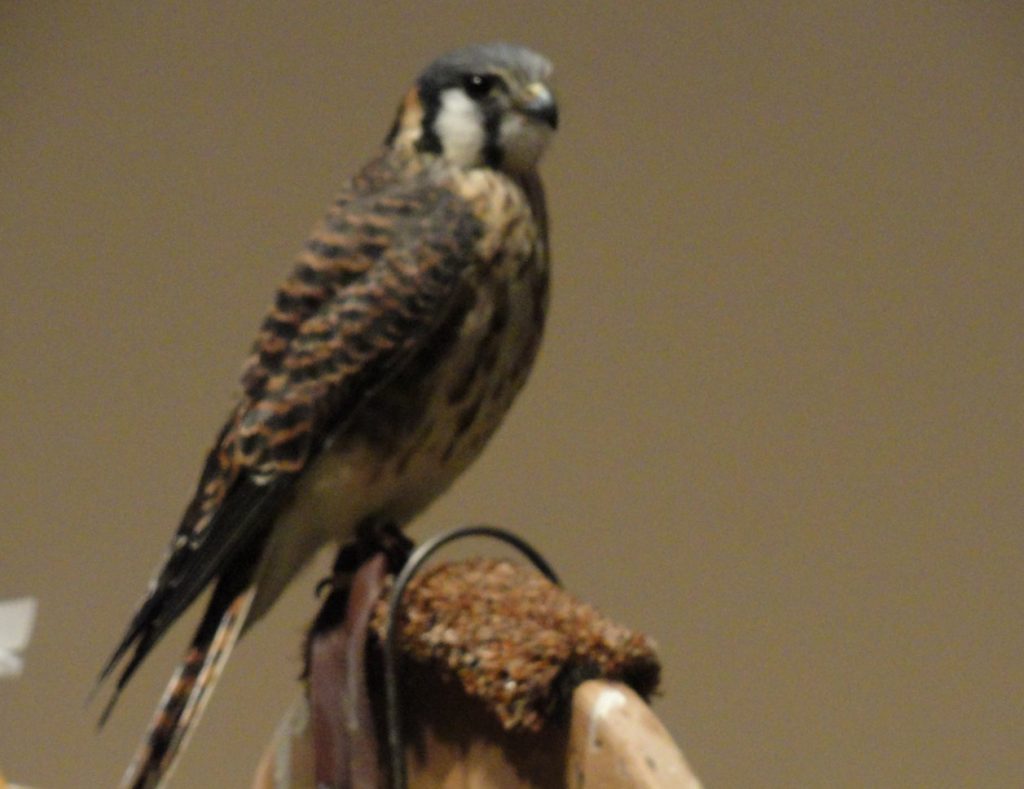
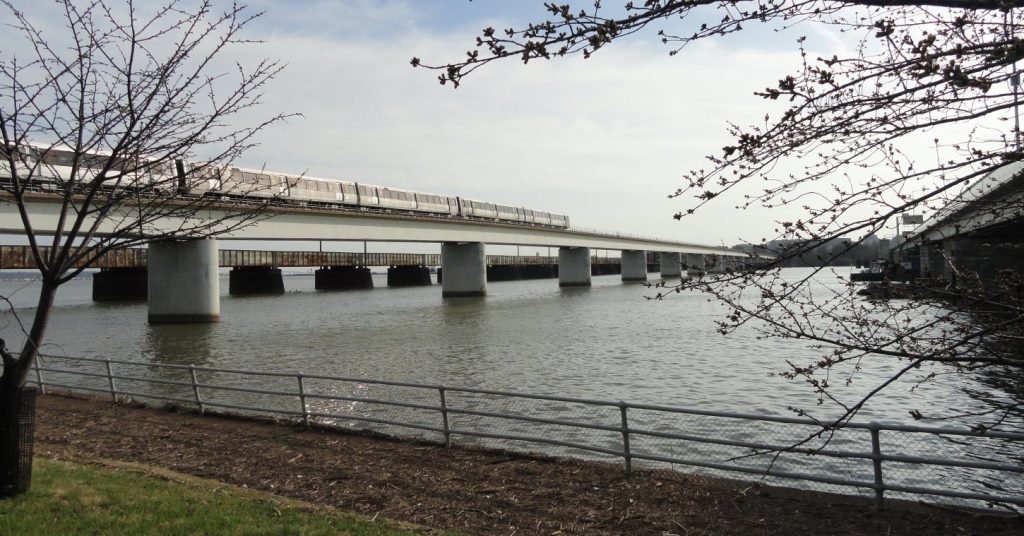
Spring has arrived in Washington, although it was cool yesterday and today and we had a dusting of snow a couple days ago. But the cherry trees are blooming and robins are out in flocks. I didn’t know robins came in flocks. Here we have some pictures.
Humans have affected the environment for many years. Europe’s beech forests grow mostly on areas that were once cleared by Neolithic farmers. Native Americans’ fires created the beautiful and productive “natural” ecosystems that greeted the Jamestown settlers. Pockets of extremely fertile soils in the Amazon, called terra preta (black soil), were created by humans. The surrounding soils are often very poor and do not retain much carbon in the soils of retain water. Naturalists have long recognized the crucial role tree islands play in in enriching the wetland ecosystem and providing habitat for animals like birds and panthers in the Everglades. Archeologists recently discovered that many of the islands started as ancient garbage dumps. The garbage heaps gave trees fertile places to root. As the water levels rose over the centuries and flooded the surrounding land, the action of the trees drawing up water and nutrients stabilized the islands and made them what they are.
Human activity in nature can be harmful. But it can also be beneficial. Natural systems are living, changing and renewable. There is not a finite amount of nature that we “use up”. We live in a living and renewing system, always have and always will.
Our forests in America are healthy and getting healthier with good management. The Global Forest Resources Assessment is not as optimistic about forests in South America or Asia, but our history, there offers reason for hope in the long run. American forests were in poor shape a century ago. One of the great American ecological success stories of the Twentieth Century was the return of healthy forests. Our American Tree Farm System (ATFS) was developed in 1941 as part of this success story. Since then, some of the first tree farms have been harvested, often clear cut in the case of southern pine, three of four times and have never been better. ATFS certifies more than 25 million acres of privately owned forestland managed by over 90,000 family forest landowners committed to excellence in forest stewardship, with wood certified from harvest to final user by the Sustainable Forestry Initiative (SFI).
Good management practices and certifications are spreading to places where forest conservation has been viewed with less enthusiasm. When people understand the long-term benefits of good forest management, they get less interested in short term exploitation. And when governments support landowners with strong property rights protections and sensible laws, a virtuous circle begins to coalesce, as it did in the United States. Today only around 10% of the wood sold globally comes from certified forests, but this is growing. The largest certification international network is PEFC, currently comprising thirty-five independent national forest certification programs with 510 million certified acres. ATFS is in the PEFC family. Among the countries with PEFC certified forests are Canada, Norway, Sweden, Finland, Spain Brazil and Malaysia. We human are blessed with intelligence that gives us the ability to contemplate the natural system. This also endows us with the ability and the responsibility to made good choices, ones that sustain our environment for ourselves, our children and for other living things. We can do it.
Alex and I attended a lecture at Smithsonian about raptors. Hawks and other raptors were in serious trouble into the 1970s, when they were being killed by hunting and poisonings of the environment. But today all significant species have come back and are now very common throughout the U.S. Hawks have taken care of lots of the pigeon, squirrel and rabbit problems in Washington and other big cities. I had noticed that there were fewer pigeons around lately.
I learned a few things I didn’t know. For example, the tufts on the heads of owls are not ears. Owls’ ears are placed unevenly on their heads, with one lower on the head than the other. When owls move their heads in circles, what they are doing is listening differentially to identify the source and distance of objects. When owls go after prey, they are more often using their sense of hearing than sight. The speakers said that the owl can pinpoint a prey a hundred yards away by sound alone.
A few other facts – You can tell falcons from hawks by the shape of their wings. Hawks have rounded wings, while falcon wings are pointed. Great horned owls have no sense of smell, so they are one of the only birds to regularly prey on skunks. The speaker said that great horned owls usually stink on ice as a result. Hawks have phenomenal vision, but they kind of zoom in on prey and do not see things not in their target zone. This is why they sometimes get hit by cars as they go after something near a road.
One of the most interesting things about the lecture came from the demographics of the audience. The room was packed with at least a hundred people. When one of the speakers asked how many people had heard of the Epic of Gilgamesh (from ancient Mesopotamia; it mentioned falcons) dozens of hands went up. This is not something that most people know about. On the other hand, when the speaker asked how many people in the audience were hunters, nobody raised a hand. I might have paid no attention, but I know so many hunters and down in the south everybody hunts. Washington does not really represent America. I have been hunting a couple times, but I am such a bad shot that I never got anything. Alex went hunting rabbits with the club and achieved similar results. We didn’t raise our hands either for Gilgamesh (which we have both read) or hunting, so I suppose the sample was not exactly fair, but still in the main it is interesting.
Spring is arriving in Washington and with it the bike weather. I have been taking a roundabout way to and from FSI. I have been riding my bike down to FSI, which is a nice morning ride that takes around 45 minutes. But I don’t like to ride home, since the wind is usually against me and it is more uphill. So I go the other way at the end of the day, back down to Washington all the way to SW, where I can go to Gold’s Gym & catch the Metro on the way home after 7pm. It is a longer way around and more total miles than a return trip home, but it is nicer. I go a little out of the way past Jefferson onto the start of Haines Point. But it is worth the trip to see Washington at this time of the year.
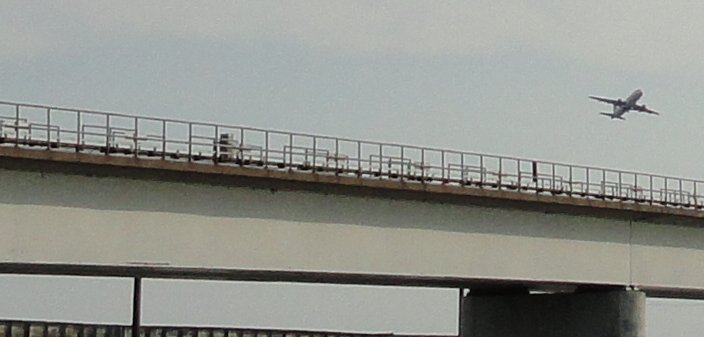
The cherry blossoms will be out soon, but in the meantime I was watching some of the Metro trains crossing the river and the airplane coming from Reagan National.
I attended the Washington Energy Seminar at the Department of Energy over the last three days. We had three days of talks about fossil fuels, alternatives, nuclear and conservation. It was one of the better seminars that I have attended. I wrote us some notes and will put them in later posts, but as an introduction I have to assert my belief that we do not have an energy problem that can be solved by technology, conservation or anything else. Our energy use is based on our collective and individual preferences and the options available.
We are constrained in our use of energy almost entirely by its cost. Everything else is just commentary. As energy becomes more plentiful, we find new uses for it. A recent study shows that over three centuries individuals have spent about the same amount of money (relative to time and income) over all those years. In centuries past, we got a lot less for our earnings; put another way, we had to work a lot more for everything. In terms of light provided, candles, manufactured in the old ways, was a lot more expensive than our modern light bulbs. People in the old days were very careful with candles. As artificial light became cheaper, people started to find new places where it was “needed.” More recently, we see that when cars become more fuel efficient, people drive more.
Most of us seem to have some kind of mental accounting that tells us how much we should spend on various things. For example, we might think that $25 a week is a good amount to pay for gas. When gas gets more expensive per gallon, we find ways to use less. When it gets cheaper, we find reasons to drive more. The behavior change doesn’t come immediately, but it is quick. Economists call this the rebound effect. It can swamp improvements that merely conserve. (It also, BTW, helps explain why we don’t always feel better off when we are objectively better off.)
The perhaps unwelcome but very simple lesson is that price matters. If the price of gas goes up, people seek out alternatives or cars with better mileage. If the efficiency of cars goes up w/o a price rise, people drive more to make up for it.
The big reason we have trouble conserving energy is that the human habit of mental accounting plays directly into the weaknesses and biases of our politicians, who love to pass new rules that promise cost-free solutions. I have been interested in energy and environmental issues since I was in HS, forty years ago. As long as I can remember, politicians have promised to end the energy “crises” with all sorts of calls for research, standards and breakthroughs. Actually, whatever happened worked. U.S energy use per unit of GDP (energy intensity) has declined by about 1.7% a year for the last 60 years, better than the world average. We have all the energy we need, but we will never have enough “affordable” energy.
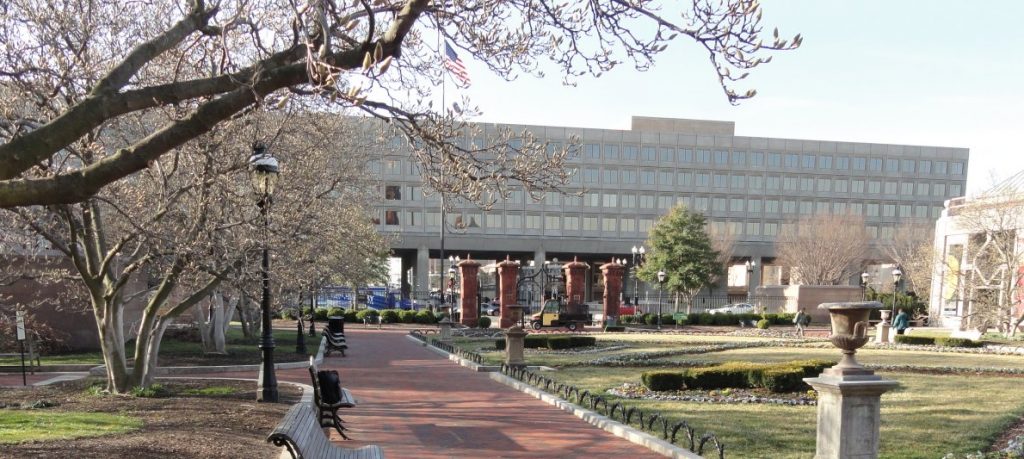
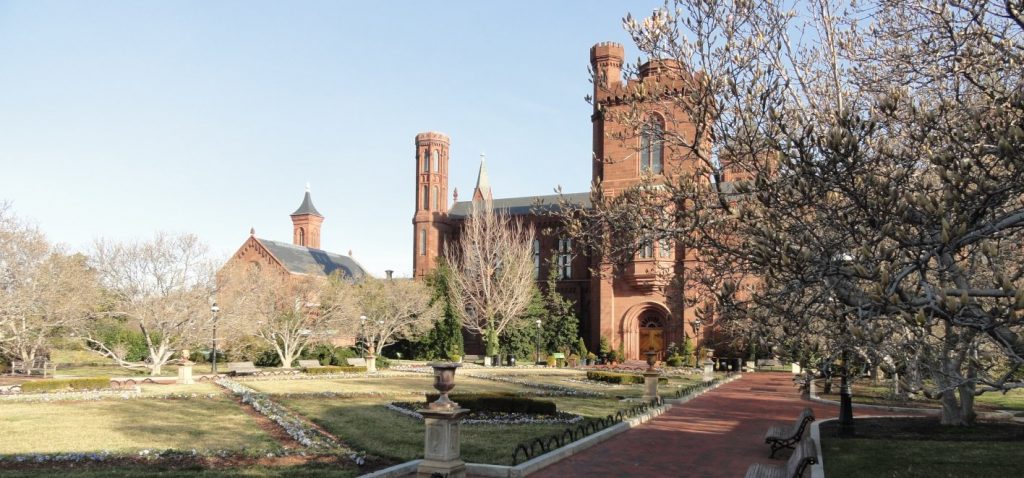
The picture up top is the Department of Energy, taken from the Smithsonian Garden. It is one of those 1960s buildings. It looks better in the picture than it does in real life. I don’t much care for the concrete buildings. I prefer the nicer old brick. The next photo is from the same spot just looking the other way. Notice it is almost spring time. It will take only one warm or two days to get the magnolias to flower.
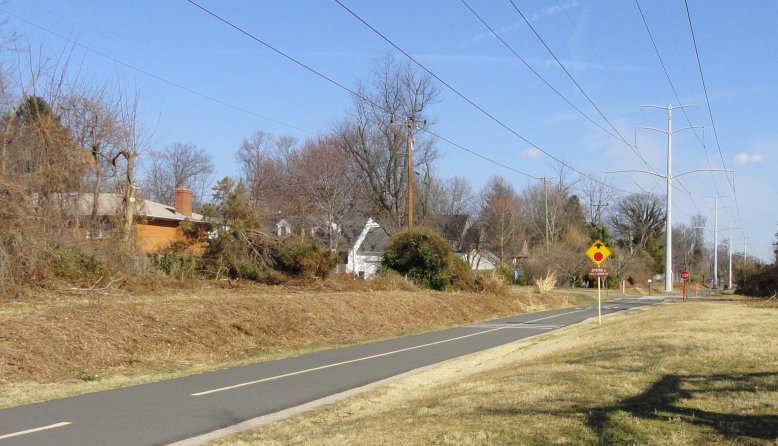
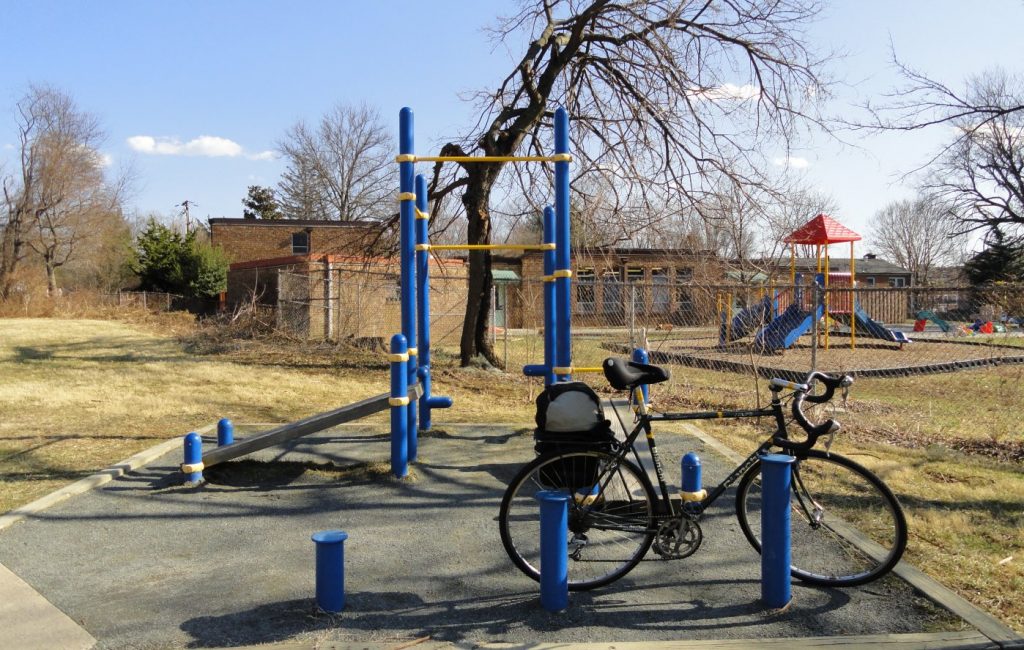
Studying at FSI has the advantage of being closer, so I can push the biking season a bit. It has been a little cooler than average this year so far, but pleasant enough on some days to make the trip enjoyable. I don’t like his hitting the strong west winds in springtime. They get a little more languid in summer and the leaves on the trees block some of the wind. Above & Below are parts of the trail in Falls Church. It will look better when the leaves come on in a few weeks. The W&OD bike trail is a nice park. Narrow, but very long.
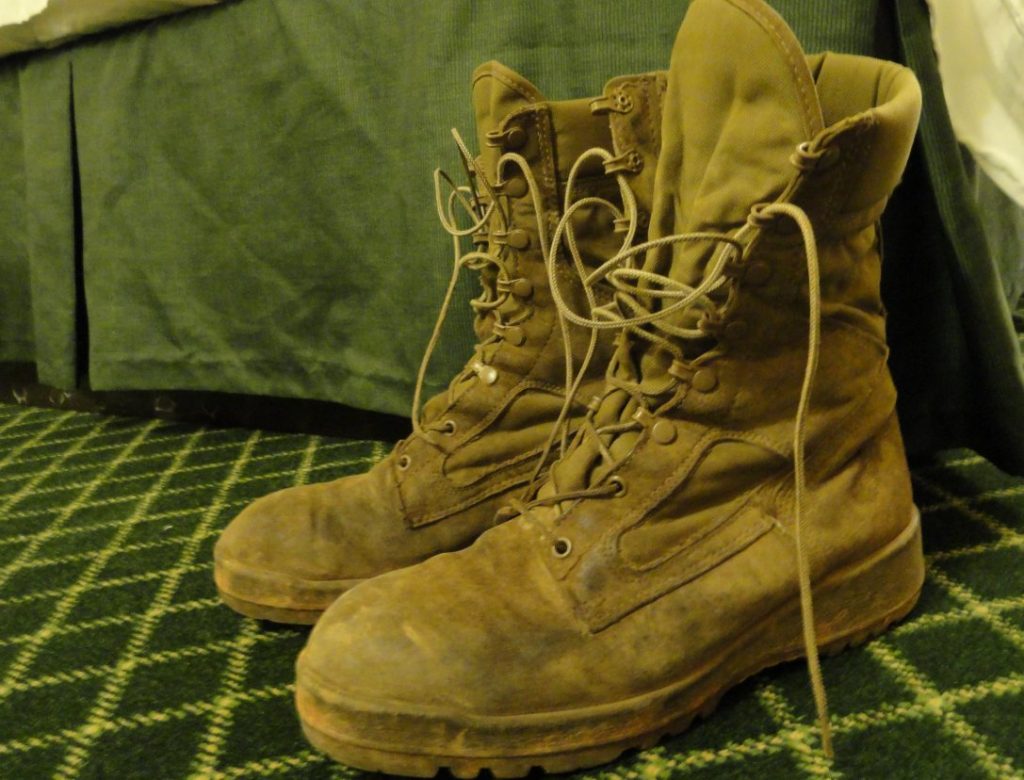
Best boots ever
My Marine boots are still doing service and don’t seem to be wearing out. I wore them every day for a year in Iraq, walking on some pretty rough surfaces and they have been great in my forestry since. My only complaint is that they are not waterproof. Of course, who can complain that boots designed for a place where it almost never rains may let water in?
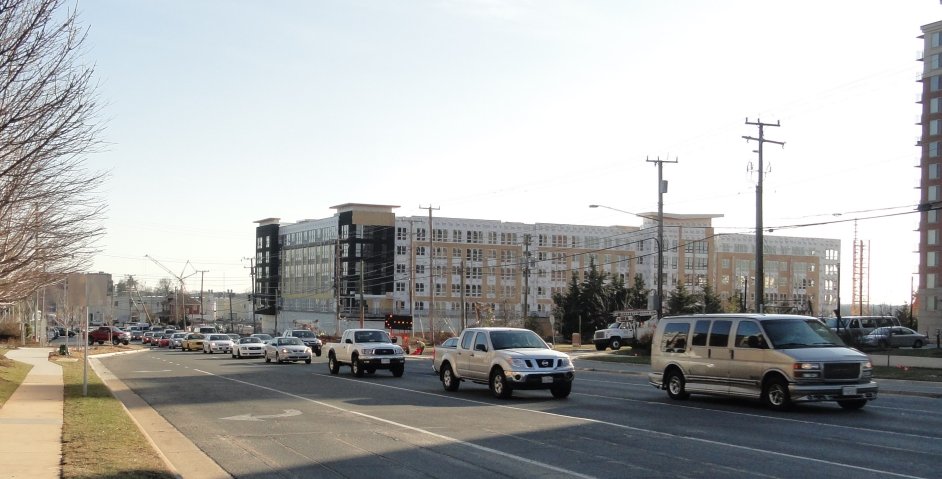
Construction on Gallows Road
Our neighborhood is changing; I think improving. Above is the new building on Gallows. It is mostly wood framed and going up really fast.
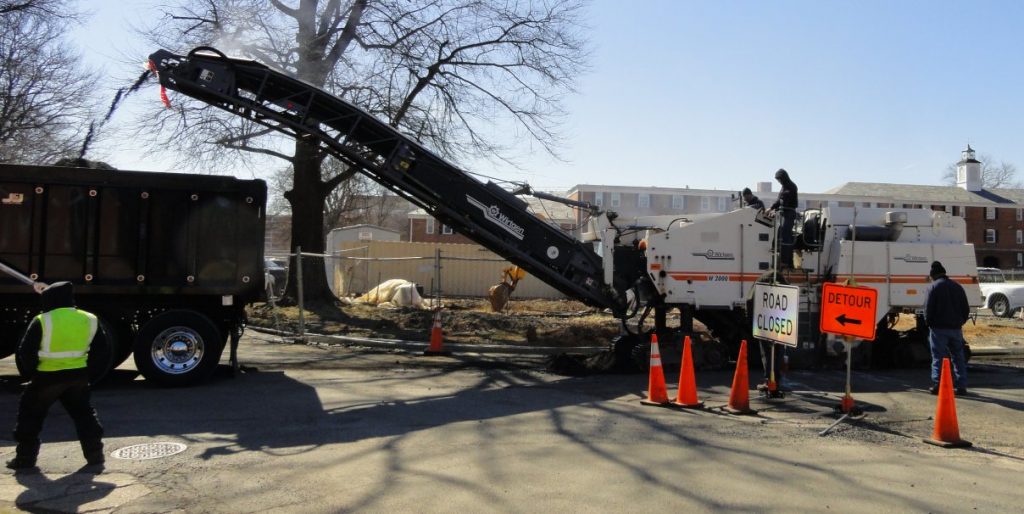
Road Work
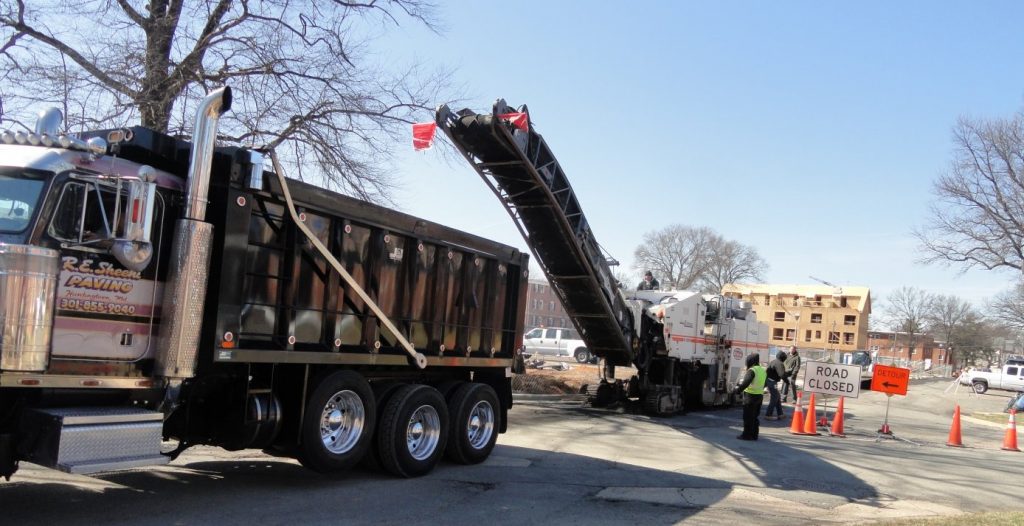
I liked to watch construction when I was a kid and I still do. But now big machines do most of the work and everything is a lot cleaner. This machine (above & below) pulls up the asphalt, grinds it up and drops it in the truck w/o even slowing down.
Washington
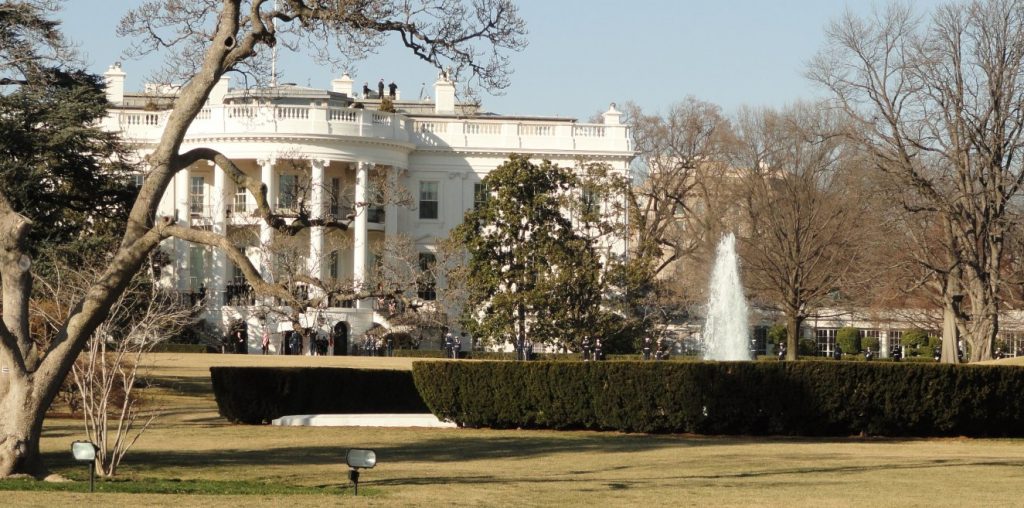
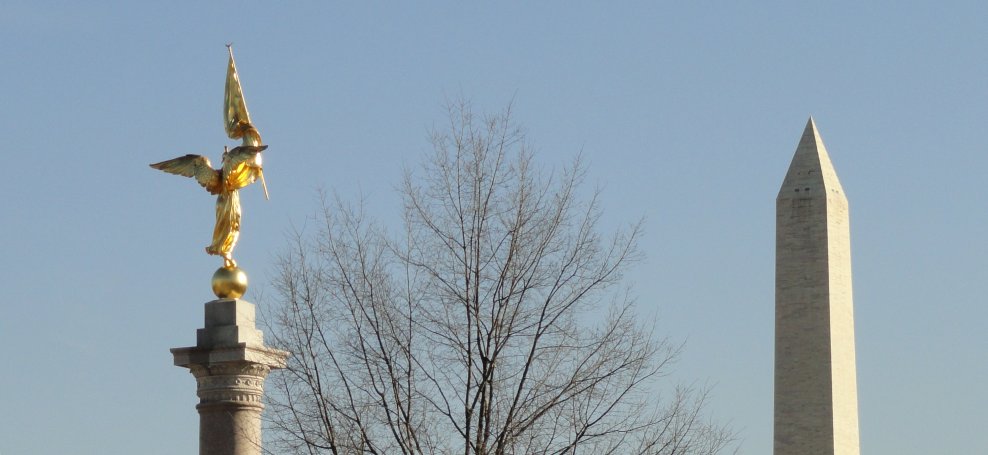
I got back to Washington the other day. Now that I don’t work there everyday, I miss it. Above is the White House. They were having some kind of ceremony. Below is a statue in front of the Old Executive Office Building and the Washington Monument.
Some people don’t like to make the distinction between conservation & preservation. It is true that they overlap. Conservation is the one with the Teddy Roosevelt tradition. Conservationists indeed aim to preserve nature, but also recognize the special place humans will always have in it. Hunters are often great conservations, so are foresters and even loggers. These guys are rarely welcome at a meeting of true preservationists. Preservationists on the other hand can count among their ranks deep environmentalists, who sometimes believe that earth would be better off w/o humans, and animal rights activists, who sometimes put the “rights” of the beasts above the needs of humans.
Deep environmentalism has all the attractions of a religion. Its strongest adherents resemble puritans in many ways, but there is no redemption for them or the human race. Of course, this is an extreme view held by fringe people, but the pure preservationist ideal infects many in the environmental movement & even more casual adherents often see preservation as the true religion.
I am agnostic about this, but I don’t believe in intelligent design. That means that there is nothing humans can do that will “destroy” nature because “nature” is only a human concept. In the billions of year of earth history before human consciousness developed, plants and animals lived and died w/o consequence. When MOST of the world’s species died out at the end of the Paleozoic era, it didn’t make a bit of difference. The disappearance of the dinosaurs was mourned by nobody until the modern kids found out about the great extinction and called it a tragedy.
I was happy to read the most recent Nature Conservancy Magazine. In an article entitled, “Beyond Man vs. Nature”, the Conservancy’s chief scientist explains that biodiversity and/or simple preservation should not be top goals. “The ultimate goal,” he says, “is better management of nature for human benefit.” Follow the links if you want the details. Suffice to say, everything in the article makes sense to me.
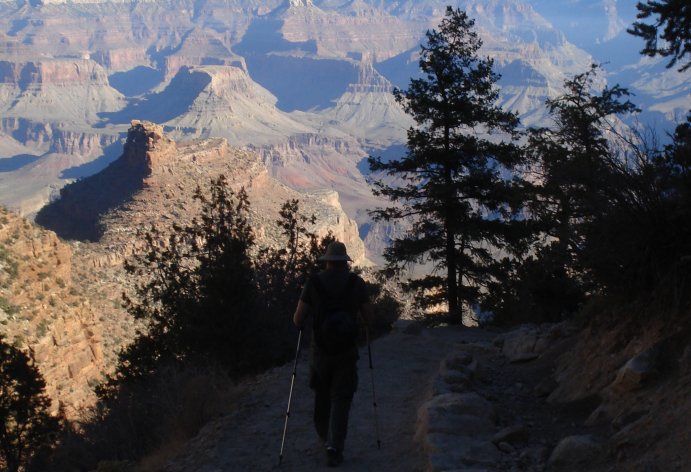
Of course, there are places we choose to preserve mostly untouched. I have visited the Grand Canyon four times. It still fills me with awe. We should preserve the Grand Canyon for future generations. Let me modify that. We should conserve the place. I enjoyed the Canyon by walking to the bottom on trails carved out by human hands. I drove up there on roads build by men and machines. W/o those human improvements, the Canyon would be as inaccessible to me as the mountains of the moon and as meaningful as some great canyon that might exist on Venus or Mars.
We are humans. We can understand the world only with our human intelligence and perceptions. What gives nature meaning and what allows us to get meaning from nature is the interaction of us with it. An old epistemological conundrum asks, “If a tree falls in the woods, and nobody hears it, does it make a sound?” It is an insoluble problem unless you add more detail. If you are talking about the sound waves that our human ears interpret as sound, a tree falling in the woods certainly does this. But a sound also requires interpretation. If nobody is there to hear it, all we have is physical phenomenon.
My guess is that preservationists would generally say it makes a sound, even if nobody hears it. A conservationist like me might be a little more human-centric and say that it does not. For me, sixty million years of dinosaur history had no meaning until it was discovered by human consciousness.
I have written on many occasions that sustainable and natural are overlapping contexts, but they are not the same and that sustainable, in both natural and human influenced system doesn’t mean something that last forever. Nothing lasts forever. Sustainable just means a system that goes a long time adapting to continuous change. A good conservation strategy strives for a healthy human population interacting with a healthy environment. We don’t have to keep our human hands off, in fact we probably should not leave very much of anything untouched. Human interaction does not always profane nature; the interaction done right can ennoble both.
Conservation is a higher order activity compared with mere preservation, which is an abdication of responsibility in the guise of wisdom. Conservation demands that you apply intelligence and ecological factors to sustaining a system that works for man and beast. We humans live in this world. If/when there is a world w/o us, it really doesn’t matter anymore. As long as we are here, however, it is our job to do things right.
Forestry is special in its commitment to long-term stewardship and sustainably. I got involved in forestry because I love almost everything about it. I just feel happier in the woods. Alex has been coming with me on some of my visits. He commented that everybody seems happy in the woods and I think they are. The foresters are happy, so are the wildlife biologists, loggers and landowners.
Forestry provides a great combination between short term efforts and long term dreams. You get an uncommon combination that includes choices & accomplishments you can make along with something much bigger, on which all our success depends, that we can spend a lifetime trying to understand. I don’t have musical or artistic talent. I feel I have a kind of expression like those things in nature. I understand that my forest is part of a something bigger. I checked out where the water that ran off my land ended up. I posted stories about my harvesting and planning for future forests. A couple days ago I got to see where the thinned trees go and how they turn into paper products.
The trees harvested off my land last month went to KapStone Paper Mill in Roanoke Rapids, North Carolina. The mill has been there since 1907, although not under the same ownership. The mill takes only pine and makes the kind of brownish paper used for bags and packing materials. Next time I buy a bag of Kingsford charcoal, maybe the bag will have some of my fiber in the paper. They produce paper with something called the Kraft process. You can read about it at the link. The Kraft process uses a wider variety fiber sources than most other pulping processes. The important part for me is that it can use all types of wood, including the resinous southern pine that we grow.
They start off chipping the trees. The chips are heated and treated chemically. For the details of how this works, check out the link I mentioned above. They brought out three cups of fiber and water from various stages of refinement. The liquid was a kind of brownish color. I couldn’t help but think of the time Chrissy & I visited the Jim Beam distillery. They both have a kind of mash. Of course, it was not the same thing in any other sense and there was no tasting at the end of this tour.
Paper making today is capital intensive and minutely coordinated. The big machines – They give them names, BTW, one called the Dixie Queen, for example – represent a big investment. There is not much warehouse space to store the finished product, so everything runs through as quickly as possible. Trucks and trains are standing by to take away the rolls of paper as soon as they are good to go. Other inputs are also ready just when they need to be. The mill uses only virgin wood fiber to make paper, i.e. there is no post-consumer content. Lots of the chemicals used in the paper process are recycled over and over again. It is all a chain, with one event depending on the ones before, and since any stoppage is very expensive, they spend a lot of time making sure nothing breaks down. It doesn’t take many employees to make the plant run. It surprises me every time I visit a modern facility. Factories were full of workers when I started working back in the early 1970s. Historical pictures and movies tell me that they were even more crowded before that. Parts of the KapStone facility obviously were designed for lots more workers, necessary with older technology.
The best part of the tour for me was visiting the guys working on the lines. It is the kind of thing that restores your faith in the American worker. I met skilled and involved workers at every step. They understood not only their own jobs, but evidently how what they did fit into the whole picture. And they were eager to explain how everything worked. Most of the operation is computerized these days. The paper runs past at around 30MPH. One of the guys explained that at that speed any little thing can cause a break, but the cause of the break will be way down the line. They have cameras constantly recording the process, so they can go back until they find the place where it went wrong. This allows them to continually improve the process. One of the guys said something that was basic quality-control but worth repeating. Results are what count, he said, but in order to get good results you have to have a process that you can observe study and improve. If you have the guys on the line articulating things like this, you know that your colleagues are really on the team.
Paper-making requires lots of water. The water comes from the Roanoke River. The Roanoke river discharges into the Chowan and then into Albermarle Sound, the same places the water from my farms ends up. I know it is silly but I feel a little propritary about it and I wanted to make sure the water was okay. They showed me their water treatment facility. During the short tour, I didn’t look at it in great detail. It has the usual settling, aeration & filtering. It was a serious operation. Remaining solids were deposited in a landfill on the site, which provides good wildlife habitat. Our guides told us about improvements to the paper-making process that allow more paper to be produced with less waste. As a result, the landfill is filling up much less rapidly than anticipated. The KapStone plant produces much of its own energy, producing energy from wood residues and from “black liquor,” a residue that remains after the paper-making process. In the old days, Black liquor used to be dumped into rivers and streams. Today it is a valuable biofuel that helps power the plant. After the black liquor has been burned off, chemicals used in the paper-making process are recovered from the ash and recycled. The KapStone plant relies on renewable biofuels for about 60% of its energy needs.
I was satisfied with KapStone’s commitment to the environment. It is important to me to know that my trees are grown, harvested and processed in an acceptable way. I can watch the growing part myself, but I have to rely on good people for the other steps. I found some.
There are three things that I notice when visiting industrial plants. First, as I mentioned above, I am surprised at how few people it takes to produce so much. Second, there is so little inventory. I remember working in factory warehouses groaning with products. We filled orders from accumulated stock in those days. Today the products move right through plant, from raw material to buyer. The third thing that has changed is that less is wasted, which translates into more efficient production and less pollution (which is waste, after all.)
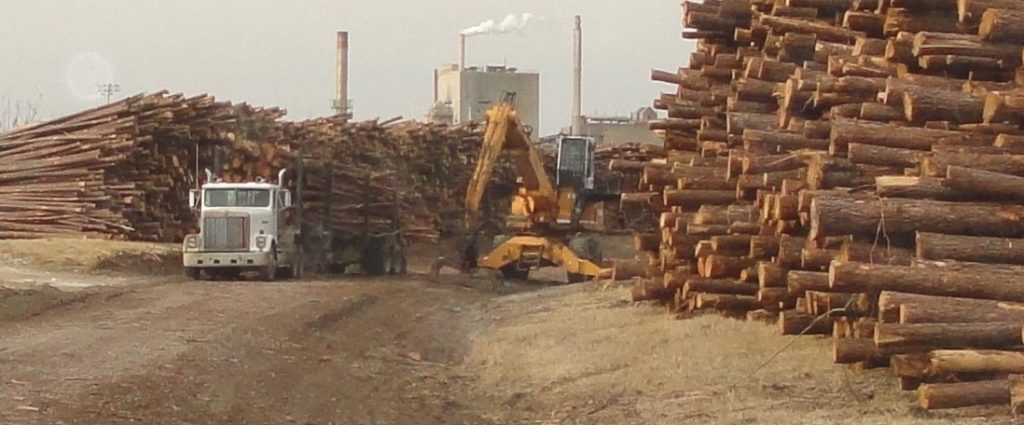
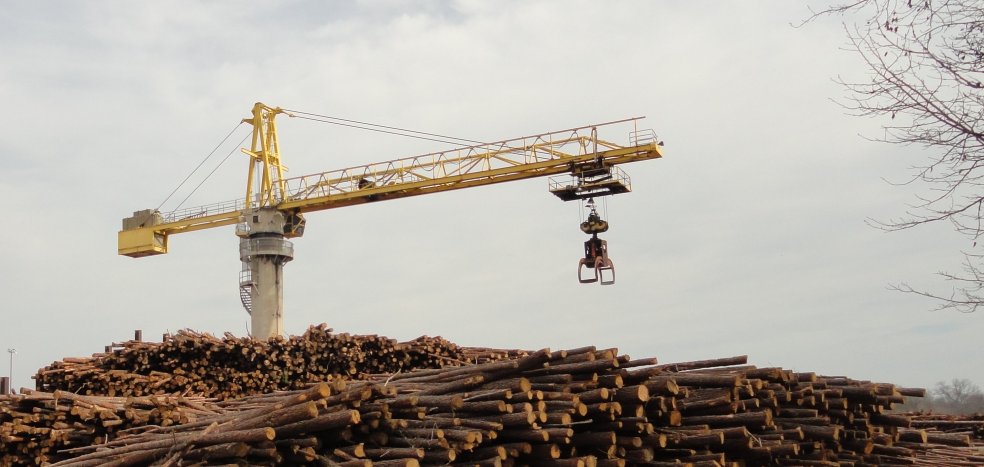
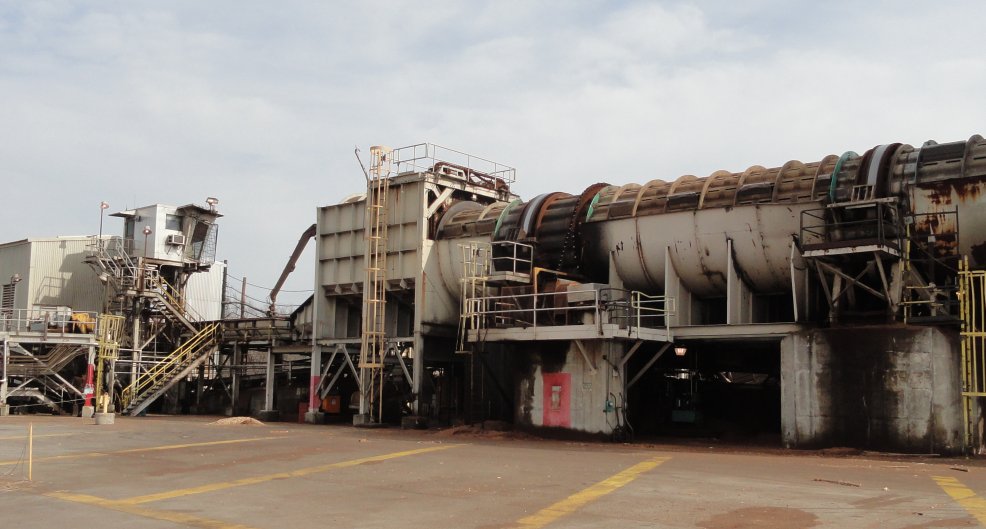
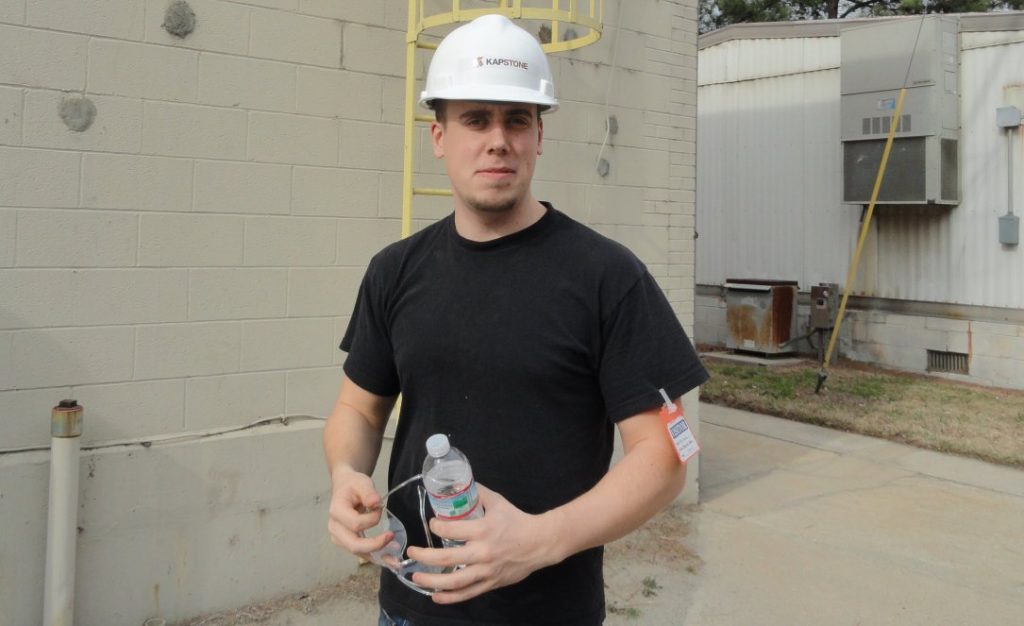
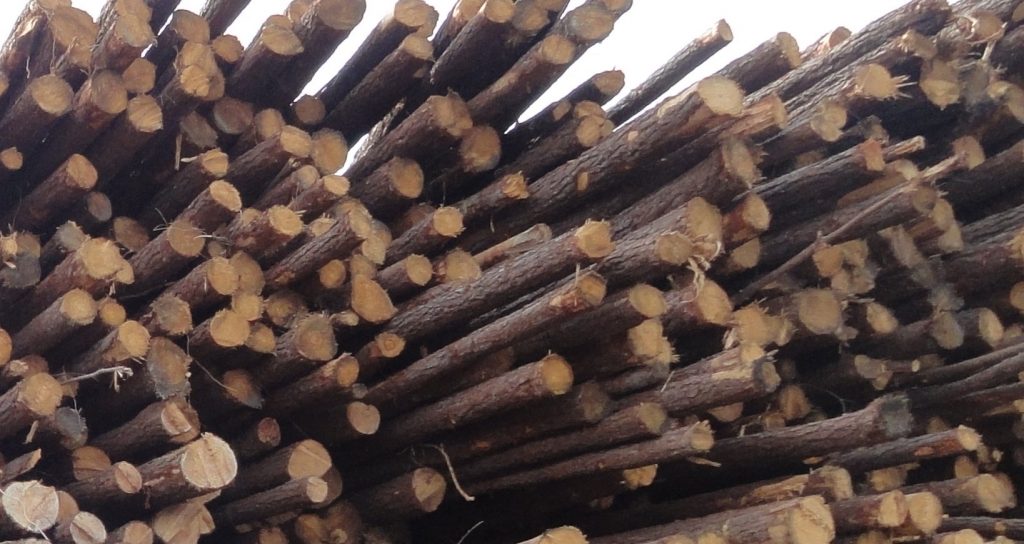
Let me tell you about the pictures. The top shows a truck loading pulp to move in the yard. Below is a stationary crane that can move the wood around. Those are obvious, but the third picture down is a little harder to recognize. It is a “de-barker” and it works very simply. The logs go inside and roll around against each other. It knocks most of the bark off. Below the de-barker is Alex, all grown up and manly looking. The last picture is just stacked wood. I just thought it looked cool.
We have big plans for my little piece of forest. I say “we” because the planning has grown beyond my expertise. Yesterday, Alex & I met with Eric Goodman from Kapstone, Frank Meyer from Gasburg Forestry and Katie Martin, a wildlife biologist to talk about plans for the Freeman property. The local hunt club also has a stake in all this, so I have to bring them in too. As I described before, the woods have been thinned to different densities, to see which ones produce the best harvests. We will also use different management regimes to test for different outcomes. Some parts will be biosolids; others will be burned or treated chemically.
This will be a kind of demonstration forest for this part of the Virginia Piedmont. Already there is talk of bringing 4H, Boy Scouts and school groups. We will probably put in a path. Although Brunswick County is a center for forestry in Virginia, there are few places nearby to see forestry at work. The advantage of our land is that it will have several different types of cutting and management within a short distance. I think it is important for people not involved in the business to understand it, especially understand the renewable and sustainable aspects. Most people don’t understand this part. It shows in everyday expressions, like “Save a tree: don’t use so much paper.” There are plenty of reasons not to waste paper, mostly related to the energy it takes to make and move it, but using less paper in any reasonable sense does not make a difference in saving trees. You have to thin trees, whether or not you can sell the pulp to make paper. If you don’t thin, they die anyway from overcrowding or bug and if you don’t thin, even more of them die in these ways. It is like planting flowers or vegetables in a garden too close together. Land can be overgrazed and overused. It can also be “over-treed.” And the trees grow back. This is what I have learned over and over again as I look at harvested timber tracts. As I take pictures and document the growth of my forests, it is clear to see. I expect to have more total green growing in my forest next year, after the thinning, than we had this year before.
One of the more interesting parts of the plan is longleaf pine planting. We plan to mix longleaf with loblolly. Frank looked at the dirt and told us that we needed to plant to longleaf farther down the slope, where the soil had more sand and less clay and where the microclimate would be a little more moderate. That is the kind of knowlege you can get only from experience and that is why I need the help of all these people who know local conditions so well. If things go as planned, we can harvest the loblolly in fifteen years leaving a stand of longleaf. Longleaf pine used to be very common in the south, but have lost ground, since they require specific conditions; most important is burning to get them started. In other words, longleaf pine is a fire dependent species that didn’t do as well when fires became less common.
Katie will come up with recommendations for wildlife habitat under the power lines. We can plant warm season grasses and a mix of wildflowers, she says. It won’t cost me very much, since we probably can get some cost shares from Dominion Power (it is under their lines and our activities will save them the worry of cutting as well as provide a little “green PR”) These plantings will help restore something like the habitat common in this part of Virginia hundreds of years ago. It will also give us a chance to see how well these habitats respond under local conditions.
In some ways I am more excited about the grassy ecosystem than about the trees. I love trees and the longleaf will be treasures, if we can get them to grow well. (Once they get going, they are very robust, but the start is tricky, especially where we are, near the natural edge of the biome.) But as we talked about the future of this piece of ground, and plans for activities years from now, the big thinning to take place maybe in 2026, I realized that my chances of seeing big longleaf growing on my land are small and my chances of seeing a mature ecosystem is zero. I was glad to have Alex with me. He can bore young people with stories of the creation, when he is an old guy.
The grass and forbs will mature this year and a few years from now they will form a working ecology. I have reasonable confidence that I will be around to see that. The trees belong to the next generation. Understanding that fills me with an exquisite mixture of sadness and joy. I am glad that something will be around after I’m gone, but it reminds me that I will be gone.
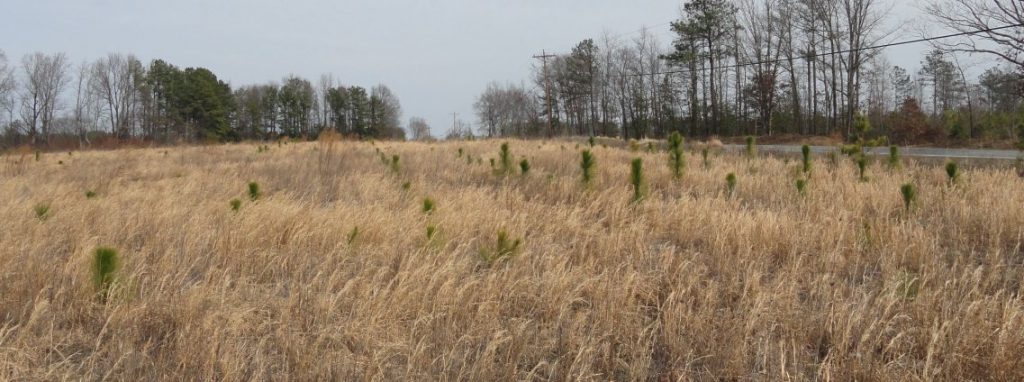
The picture up top shows some longleaf seedlings near the Virginia-North Carolina border. They are just coming out of the “grass stage”, called that because it is really hard to tell the little pines from the grass around them. You would not be able to see them during the summer, since they would be covered by and the same color as the grass. The grassy vegetation has to be controlled. In the natural run of things, a fire would do that, allowing the pines time to grow above the grass. I was told that this was an old farm field, so the trees got a head start before the grasses came in. Some of the bigger ones in this stand have done that, as you can see in the picture.
We go through phases in my work where we spend way too much time fighting rumors and accusations. It rarely seems to do much good. People believe all sorts of silly things, sometimes things that if true would violated the laws of physics, but they believe them. Attacking rumor with mere truth is sometimes worse than doing nothing. Our comments are taken as confirmations of the rumor. After all, the old saying goes that “where there is smoke, there is fire,” and many people seem to figure that strenuous denials indicate that something important has come out. “Fair” people will look at both sides with equanimity, thinking that the truth must be in the middle. It rarely is. If you see a discussion between someone who believes the world is flat and one who tells you it is round, they both do not have good arguments and you should not conclude that truth lies in the middle, maybe earth is shaped like a cough lozenge.
Human belief is a complicated system. I have come to understand that there are some arguments you cannot win, no matter how much truth you possess. The way to prevail is to run around them. Bring the weight of attention onto something else. Change the frame. These are all things smart persuaders do, yet we still get stuck in the denial game. Sometimes we have to play that game, but it should be low key. Put the facts out there, but don’t play on that unfair field. My personal favorite tactic is to get someone else to ridicule the opponent’s stand, but this is hard to do and can created backlash.
I read a good article about this recently in the Economist explaining that some researchers from Kellogg School of Journalism & at Stanford have come up with research that shows with some academic rigor what public affairs professionals know is a rougher and more intuitive fashion.
The researchers experimented by planting rumors among undergraduates. With each repetition, they found that skepticism diminished, increasing the chances that the students would believe them. So what do you do? The best thing to do is flood the zone with positive messages. This takes the fuel out of the rumor fire.
Early in my career, I read a book by Herb Schmertz, the head of PR at Mobile. It was called “Goodbye to the Low Profile.” As his title implies, Schmertz advocated a kick-ass relationship with critics. He felt that businesses were letting their adversaries get away with attacking them and it was not working for them. There were lots of rumors and innuendo spread about energy companies, then as now. Schmertz mentioned one dramatic example of countering disinformation, when he described how Mobile debunked the myth that energy companies had tankers full of oil just outside American harbors waiting for prices to rise. Mobile took journalists up in helicopters and challenged them find them. Of course, they couldn’t.
Schmertz never really solved the problem free riders. Everybody in the industry benefits when somebody takes on critics, but the firm that does the heavy work not only has to pay the expense of the counterattacks, but also makes itself a target for activists and is likely to bring in political pressure. Most firms opt to keep as quiet as possible and hope that the false charges don’t cost them too much. The idea of a “good news flood” addresses this. It doesn’t provide much of an opportunity to counter attack and it can be justified as image building or even advertising.
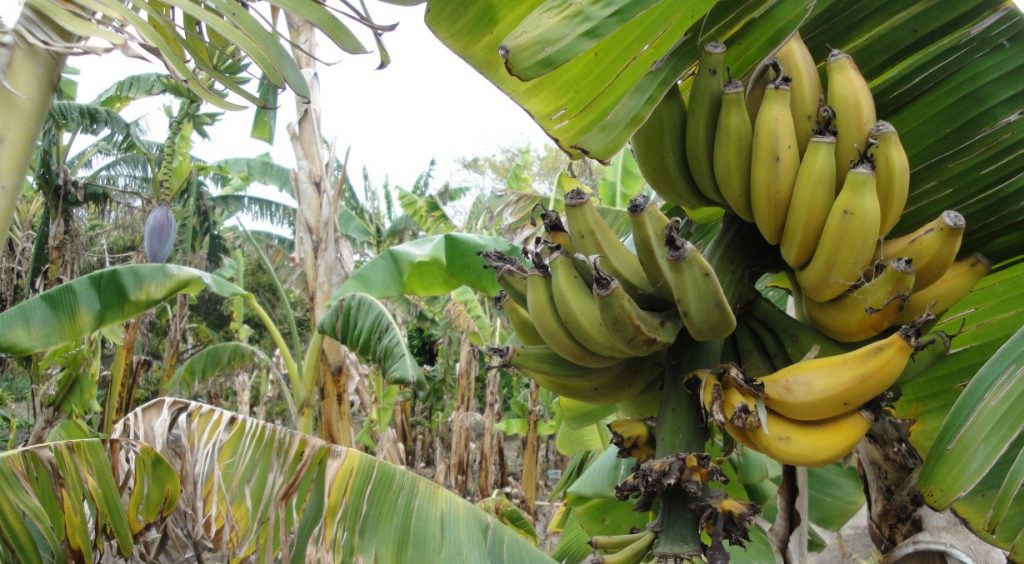
The thing I remember most about the book was the saying “Yes, we have no bananas.” Schmertz chose the words from an old and familiar song. (I remember it sung by Jimmy Durante, but evidently it was a big song by many.) The fact that I still remember it shows the usefulness of a memorable handle. That was one lesson I took. But the underlying explanation was also useful. The idea is that you always bridge from the negative to the positive. If you say, we don’t have any bananas; it is just a negative statement. “Yes, we have no bananas” says the same thing. But it brings a little positive levity. Nobody is fooled, but it takes the edge off.
The good news flood is a more effective and practical way to do this. It frustrates critics, since if done well it changes the game and marginalizes them. Sometimes they are honesty angry because they think you are not answering their questions, but nothing says you have to do that. There are always many ways to look at anything. Their way is only one and probably not the best. When I read more on the subject of persuasion, I found out that this was called reframing or redirecting. It is a potent tool, especially if you actually have good news to tell. You don’t have to take the frame you are handed and you should always test any frame for validity. Some questions cannot be answered satisfactorily as stated. The classic example is when you are asked to answer yes or no to the question, “Do you still beat your wife.” An even more pernicious formula is when you are asks something like, “Why do you hate [name the group]? There is no way you can bring facts to bear on those subjects. The questioner knows this. It is not honest. If you have to respond, talk over him/her to a wider audience.