
I went down to FSI today to do a couple of talks. I spoke first at the Portuguese Department about Brazil. This is probably that last time I will give a full-out lecture in Portuguese. My audience was colleagues almost done with their Portuguese language studies and about to go on their assignments. The other talk I gave was to PAOs headed out to their first posts as PAOs. I tried to give realistic advice, with the caveat that my experience should be taken in the context of Brazil, which is special.

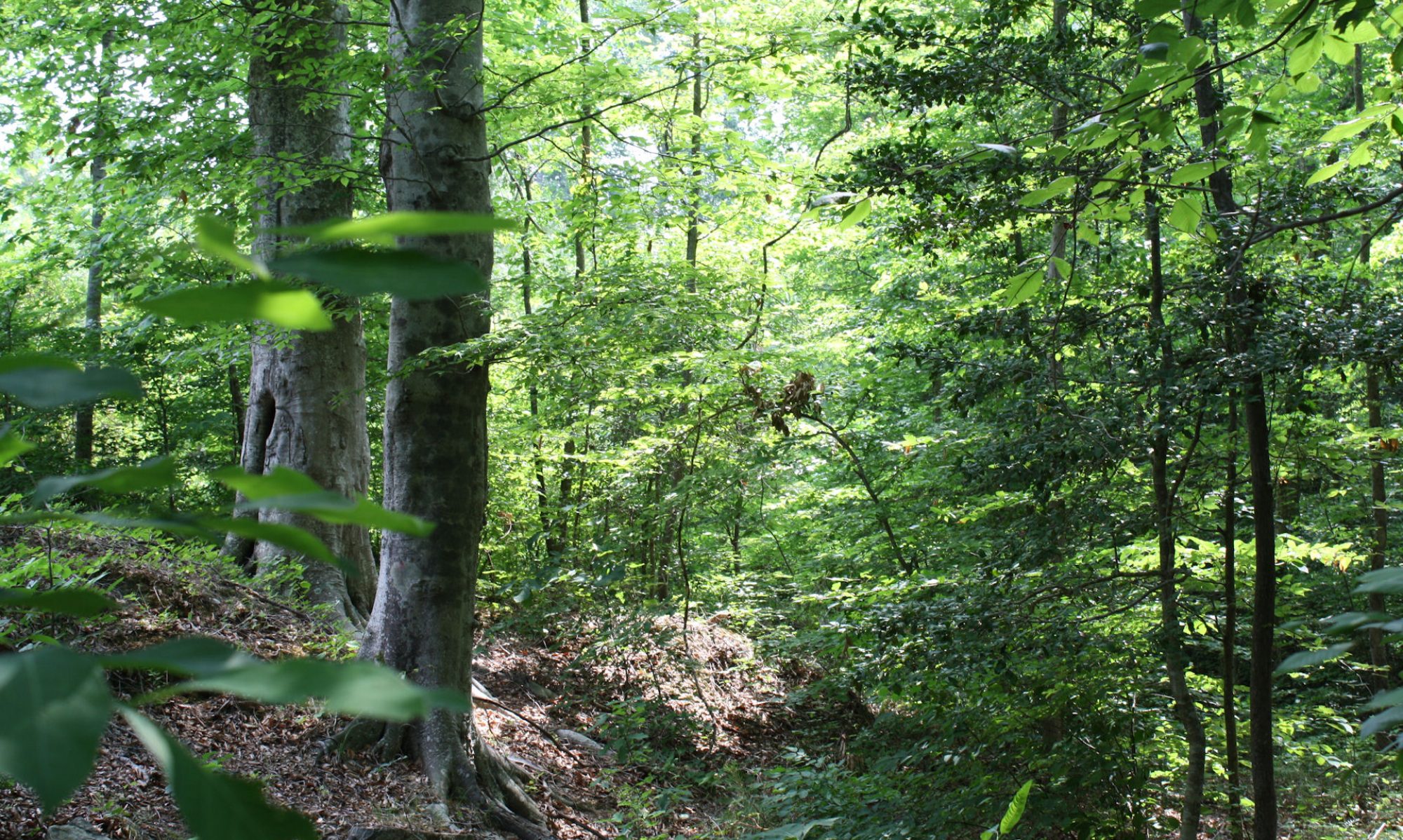
FSI has changed and improved. They have created nice environmental spots you can see in the photos with lots of tall grass and natural looking rain gardens. I liked the cedar meadow. This would be typical of an old farm field in Northern or Central Virginia in the early stages of natural succession. This is one of my favorite stages, so full of dynamism and potential. I really don’t much like manicured lawns and I am pleased – maybe a little surprised that State Department has adopted the more raggedly natural approach.
I rode my old bike down to FSI. It feels off balance, but I will get used to it again. It is faster than my bike in Brazil and comfortable. In fact, of all the bikes I have ever owned, this one remains my favorite. I bought it back in 1997 and put more miles on this bike than any other, mostly on the same W&OD bike trail. I look forward to many more miles.
BTW – W&OD has also improved. They now have signs on the road and cars are stopping at the crosswalks.
Last time in Recife

This is a little late. I did my last visit to my erstwhile post in Recife last week. I visited Recife only three times. It was not like São Paulo or Rio that constantly called for attention.

One of my goals in Brazil was to get away from the big cities of Rio, São Paulo and Brasília into the rest of Brazil. I will not say the “real” Brazil, since there is no such thing. Each section is real in its own way. São Paulo probably has the biggest claim to be called “real,” since it has so many people and is so productive. But there is a lot more.

And there are big changes. Brazil used to be the land of Samba and coastal cities; it is now more a country of sertaneja and interior growth.
Before going to Brazil, I wanted to see all that, put my feet on the ground. I succeeded to some extent. I visited a total of eighteen out of the twenty-six states, including the extreme ones like Acre, Rondônia and Roraima. The ones I missed were mostly near Recife. There are lots of smaller states up in the Northeast and I didn’t get there. I thought of making a last run in my last few weeks. I could have hit all of them by driving in a circle from Recife and then just setting a toe into Tocantins & Mato Grosso, the other two I managed to miss. But I thought that was just a false way to do it. So I did not succeed in visiting all the states of Brazil, but I got around a lot.
My picture up top is the beach in Recife. It is nice that they have grass and trees near the water. There is less a beach than Rio. Maybe one of the reasons is those sharks. Look at that sign. Recife has some kind of special conditions with the reef. Sharks evidently are kind of herded toward the beach and they come very shallow. They eat a few people and it kind of puts a damper on people’s enthusiasm for swimming.
Planning in public diplomacy
A problem with public diplomacy is the illusion of planning and control. I was looking though my old documents and found an “aspirational statement” from my first month in Brazil. In that statement, I laid out things I wanted to accomplish and thought I could. I talked a little about who would help do it and conditions that would help or hinder. That was it. It was only a page long. I don’t recall ever referring to it again, but I am amazed to the extent that it came true. I acted on those aspirations for the next three years and expanded them. The result was the greatest success of my career.
Contrast that with detailed planning. It takes a lot more time to do than my one page. And it hinders innovation. You try to follow the path. Let me be clear. Engineers need to plan. You need to plan buildings and bridges. You need to make some plans for personnel and you have to plan budgets. But you should not really plan diplomacy in any detail because the challenges and opportunities are unknown and probably unknowable.
Maybe more importantly, good diplomacy requires that we work with partners, whose plans might not mesh with ours and who certainly will not be under our control. Synergy creates something better than just adding our plans together.
We have the QDDR. I am not sure what those initials stand for. I am vaguely aware of what is in the plan. I have never actually read it and don’t plan to read it ever. I had no need to know the detailed contents. I think I know the general aspirations because they are the simple ones we have worked with for many years. I am not saying that all the effort that went into making this document was wasted. Well, let me leave it at that.
We need to abandon the idea that we can plan in detail. It is not only useless; it is pernicious when it allows us to pretend to know more than we do and absolves us too often of the need to apply judgment to what happens.
When I arrived in Brazil, the plan was very different from what we did. Within a month of my arrival, the Brazilian government announced a “Science w/o Borders” program to send Brazilian students overseas to study in the STEM fields. We went all in. I neglected other priorities to take advantage of this once in a lifetime opportunity. Whatever plans existed were ignored and it was good. By the end of this year, more than 30,000 Brazilians will have studied in the U.S. on this program. We are sending (with Brazilians resources) 1080 secondary teachers of English to the U.S. to study how to teach. Up from 20 in 2011. We have a senior ELF in the ministry of education helping implement English w/o Borders complement to Science w/o Borders and 120 new ETAs deployed around the county. And there is much more. NONE of this was planned or could have been planned in 2011.
Makes you wonder about that planning stuff. I don’t think doing much better would have been possible, although worse was an option.
I had a discussion with a counterpart at another embassy about this. He was approached by the Brazilians about the same time we were asked about sending the 1080 teachers to the U.S. At the time of our discussion, we had already sent our first 540 and the next wave was leaving. He told me that his ministry was “thinking about it and planning.” They still got nothing and nothing is what they will get, but they will look better on paper.
Maybe better to aspire than to plan in detail.
What we need is process, not planning. We need to be ready to take what comes. We should be able to say that I don’t know (and won’t try to predict) exactly what challenges my colleagues and I will face, but I am reasonably sure that we are prepared to face them and can adapt to the changing circumstance. When asked about your plan, repeat the last sentence.
I ask all of you to think about you best tour, your best year, the one that really made your service worthwhile. Did it work out as you planned? Did you know going in what you were doing and who you were going to work with? If we think we control events, we have little chance of success. If we understand our own limitations, our chances improve greatly. Let’s learn to do less planning and more doing.
Contrast that with detailed planning. It takes a lot more time to do than my one page. And it hinders innovation. You try to follow the path. Let me be clear. Engineers need to plan. You need to plan buildings and bridges. You need to make some plans for personnel and you have to plan budgets. But you should not really plan diplomacy in any detail because the challenges and opportunities are unknown and probably unknowable.
Maybe more importantly, good diplomacy requires that we work with partners, whose plans might not mesh with ours and who certainly will not be under our control. Synergy creates something better than just adding our plans together.
We have the QDDR. I am not sure what those initials stand for. I am vaguely aware of what is in the plan. I have never actually read it and don’t plan to read it ever. I had no need to know the detailed contents. I think I know the general aspirations because they are the simple ones we have worked with for many years. I am not saying that all the effort that went into making this document was wasted. Well, let me leave it at that.
We need to abandon the idea that we can plan in detail. It is not only useless; it is pernicious when it allows us to pretend to know more than we do and absolves us too often of the need to apply judgment to what happens.
When I arrived in Brazil, the plan was very different from what we did. Within a month of my arrival, the Brazilian government announced a “Science w/o Borders” program to send Brazilian students overseas to study in the STEM fields. We went all in. I neglected other priorities to take advantage of this once in a lifetime opportunity. Whatever plans existed were ignored and it was good. By the end of this year, more than 30,000 Brazilians will have studied in the U.S. on this program. We are sending (with Brazilians resources) 1080 secondary teachers of English to the U.S. to study how to teach. Up from 20 in 2011. We have a senior ELF in the ministry of education helping implement English w/o Borders complement to Science w/o Borders and 120 new ETAs deployed around the county. And there is much more. NONE of this was planned or could have been planned in 2011.
Makes you wonder about that planning stuff. I don’t think doing much better would have been possible, although worse was an option.
I had a discussion with a counterpart at another embassy about this. He was approached by the Brazilians about the same time we were asked about sending the 1080 teachers to the U.S. At the time of our discussion, we had already sent our first 540 and the next wave was leaving. He told me that his ministry was “thinking about it and planning.” They still got nothing and nothing is what they will get, but they will look better on paper.
Maybe better to aspire than to plan in detail.
What we need is process, not planning. We need to be ready to take what comes. We should be able to say that I don’t know (and won’t try to predict) exactly what challenges my colleagues and I will face, but I am reasonably sure that we are prepared to face them and can adapt to the changing circumstance. When asked about your plan, repeat the last sentence.
I ask all of you to think about you best tour, your best year, the one that really made your service worthwhile. Did it work out as you planned? Did you know going in what you were doing and who you were going to work with? If we think we control events, we have little chance of success. If we understand our own limitations, our chances improve greatly. Let’s learn to do less planning and more doing.
This is what I am leaving in Brazil (work at least)
Below is a description of what my colleagues are doing. You can see why I will miss it, even if it will be great to be back home and at Smithsonian.
Millions of Brazilians, who entered the middle class in recent decades and today constitute a majority, are demanding improved educational opportunities, enhanced international connections and development of essential skills, such as English competency. Brazilians know that the U.S. is a key partner in these priorities, and there is an element of urgency. The young Brazilian population is in rapid demographic transition. Fertility below replacement level provides space to improve education and social standards but Brazilians must develop new skills during a “demographic sweet spot,” when fewer dependent children are yet to be offset by more dependent seniors.
Much beyond that is also on fast-forward. Internet is creating new communications channels and fostering a boom in distance learning. We see the complex nature of the development, as social media is powering protests as well as education. Post has made impressive gains in social media through dedicated engagement. Our Mission Facebook page now has more than 400,000 fans and has recently been growing by more than 10,000 fans a week. While we don’t expect growth to continue at this torrid pace, adult literacy is improving, expanding the universe of readers and making Brazil a nation of Internet consumers, so we expect robust advance.
Education, English and youth outreach dominate our programming. PA encourages Brazilians to study in the U.S. in support of President Obama’s 100,000 strong for the Americas as well the Brazilian Science Mobility Program (AKA Science without Borders, see below). We nurture sustainable institutional linkages mostly in but not limited to education. The Smithsonian’s long-term cooperation agreements with Brazilian counterparts are being implemented and will facilitate myriad partnerships. Post fostered similar partnerships in English language and distance learning.
Our youth outreach programs include a robust Youth Ambassador Program, which regularly garners more than 12,000 applicants for the fifty spots, a Youth Council with representatives from every Brazilian state and specific programs, such as girls science camp and English immersion programs, as well as electronic and social media programs targeted to youth.
Despite recent progress and muscular effort, Brazilian authorities understand that English competence remains the big obstacle to greater Brazilian involvement with the U.S. and the world. Post is addressing this through our network of thirty–eight BNCs as well as Access programs that reach hundreds of students (with retention rates consistently above 90%) and programs targeted to underserved communities. We are continuing our partnership with the Ministry of Education (MEC) on “English w/o Borders, a massive effort to improve Brazilian English. We have placed a senior English Language Fellow in the Ministry who is helping implement this massive program. 120 English teaching assistants, recruited by us and paid for by GOB are deployed at Federal Universities. In 2013, 1080 Brazilian secondary English teachers took six-week courses at U.S. universities in a cooperative Mission/MEC program. Only 540 are travelling this year, due to World Cup and election complications but the program is slated to return to 1080 in 2015, up from only 20 in 2011. MEC expects to reach 7 million Brazilian students, many through distance learning, another fertile area of Mission cooperation.
U.S.-Brazil education landscape was transformed after the Brazilian President’s July 2011 announcement of the Science Mobility Program to send 101,000 Brazilian students overseas in the STEM fields. The U.S. got there first with the most and remains by far the largest recipient. More than 26,000 Brazilians have gone to the U.S. on the program so far. For comparison, in 2011 there were fewer than 9000 Brazilians studying in the U.S. in total of all programs. National efforts have been supplemented by local and state initiative, such as Brasília without Borders, which will also send thousands of students to the U.S.
Earlier success of our priority to connect U.S. and Brazilian education networks means that education initiatives are self-catalyzing at a significantly higher level. We are consolidating our gains. Education remains our top priority, but we are pivoting back to more traditional public diplomacy events and broadening our educational focus to include more on community colleges and lifelong learning. We also plan to devote more time to promoting social inclusion and a more expansive vision of Brazilian society by finding common aspirations and fostering links among cultural institutions, such as museums, and through sports.
Reaching underserved populations is a key priority that suffuses all PD programs, specifically through JAPER, support for favela pacification and women’s empowerment. Brazil is, and perceives itself as, a leader in sustainable development and clean energy; post remains active with outreach and exchanges to connect Brazilian and U.S. environmental communities.
Brazil has become a major venue for international mega-events, hosting the World Cup 2014 and Olympics in 2016, even as infrastructure lags to sustain Brazil’s status as major destination. In fact, infrastructure deficiencies – physical, human and institutional remain a general drag. PD programs have addressed these issues of Brazilian concern, especially through the VV and IVLP programs. Other major themes for visitor and speaker programs include environmental protection, security and economic integration.
A Brazilian economic slowdown is a caveat. We shared Brazilian aspirations and our division of labor was often our expertise and their money. Our enviable challenge was to manage unprecedented flows of mostly Brazilian resources. We are not sure this happy circumstance will continue in tighter times.
PA Brazil’s problem is too many excellent opportunities. We prioritize those that involve full partnerships with Brazilian institutions and government, use our unique expertise and flexibility, and provide significant leverage to produce outstanding results.
Good bye to Brasilia & all that
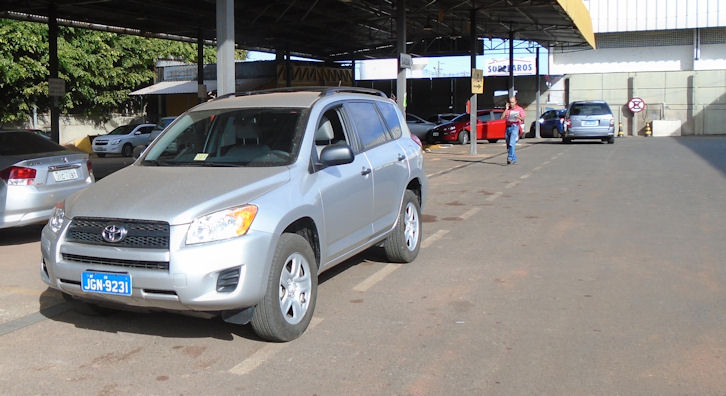
I have less than a week left here, so almost everything I do is “for the last time.” I sold my old car, pictured above. It had only 7,000 miles, most of those put on during a few long trips. But it is better to sell it here in Brazil than to take it home.
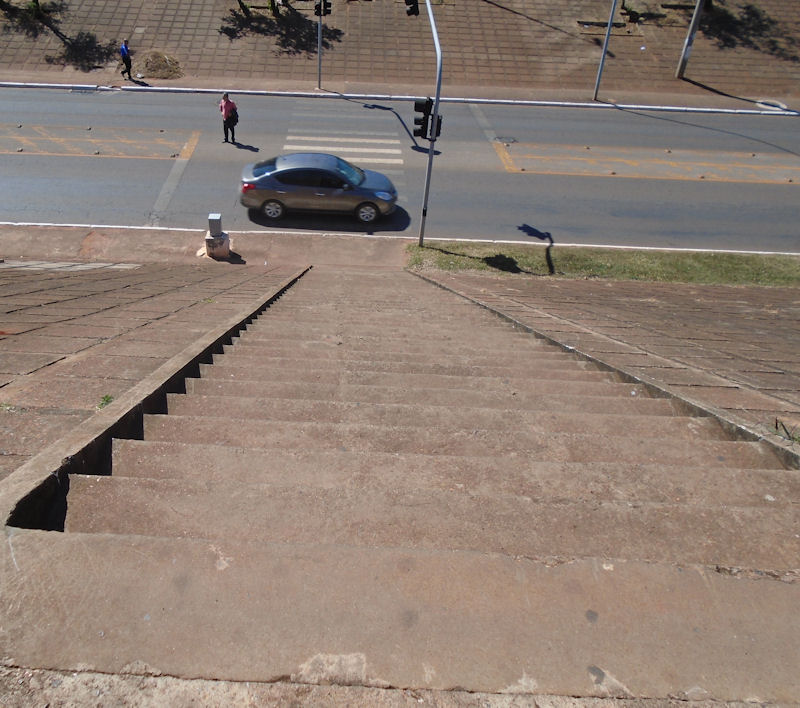
I went to the dentist for the last time. Dentists are a good deal in Brazil. They charge less, work faster and don’t give you a lot of trouble. I found that I could walk to the dentist office in reasonable safety. It takes only around 35 minutes. I don’t have a car anymore anyway, but even if I did, I prefer to walk whenever practical. You don’t always have a sidewalk and there are sometimes some steep walks, as you see above.
Brasilia is also changing quickly. The old planned city is still around, but it is being replaced by newer and usually better features. They are building lots of bike trails and pedestrian crossings. If the original planners didn’t dislike pedestrians, they sure didn’t do anything to make their lives safer or more pleasant. Brasilia’s current leaders are making up for some of this.
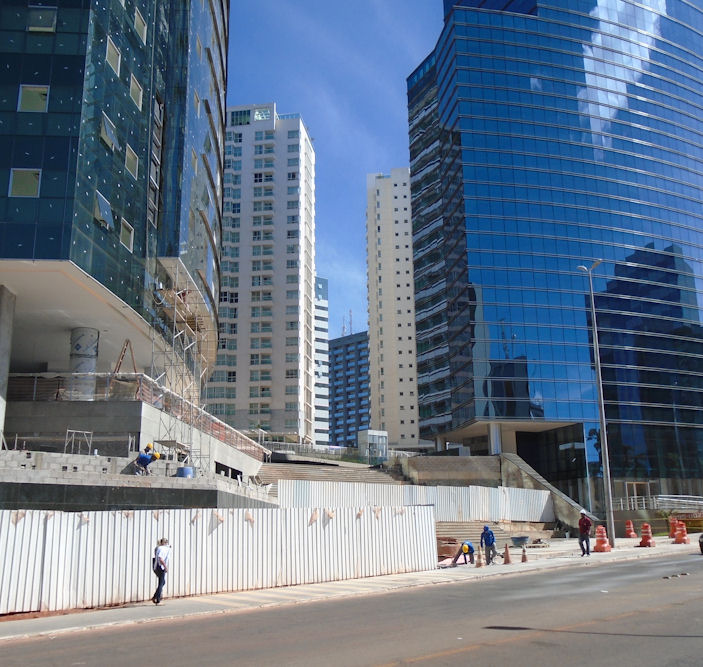
Last visit to São Paulo
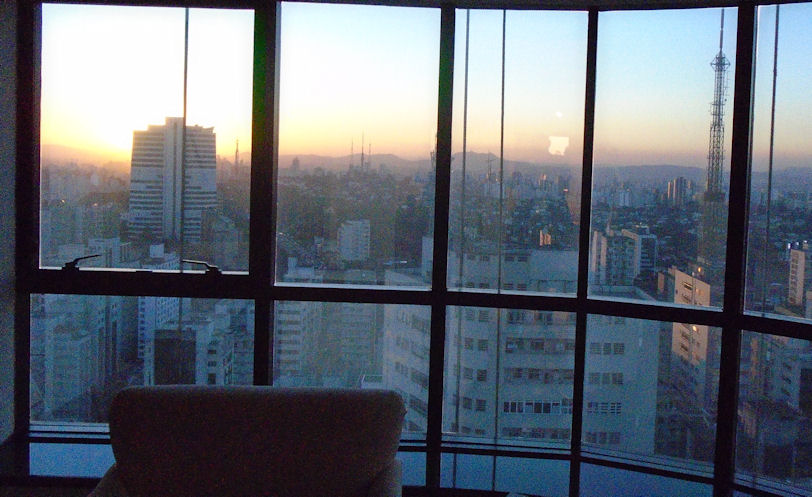
Let’s call it a victory tour. I have been so extraordinarily lucky in Brazil, with opportunities opening and good people to work with, that I developed a kind of unreasonable dread that something would go wrong in the last few months and reveal me as only that little man behind the great wizard of Oz. “Pay no attention to the man behind the curtain.” With only days left, I think that I can declare victory, as nothing short of a catastrophe can prevent me from successfully completing the course.
As I wrote before, I am visiting my posts to say goodbye and thank you to the people who did the real work to make these years the success they have been. Today I am in São Paulo. I like São Paulo a lot. It has everything. You often hear bad things about the city and it is truly crowded and the traffic can be horrible, but it is also a very green city when you get to the human level. There are a surprising number of trees. True that many don’t have enough room to grow, but grow they do.
The people in São Paulo sometimes think of themselves as a country and in many respects they are not wrong. The São Paulo district, which includes São Paulo, Paraná, Santa Catarina, Rio Grande do Sul and Mato Grosso do Sul, produces about half of Brazil’s GDP. São Paulo state alone produces about 1/3. It has the best universities and the big newspapers. That is why I have been to São Paulo so many times, that and I like to stay at the Renaissance-Marriott. But as public affairs officer for all of Brazil, I had to be careful not to be beguiled by São Paulo. You could spend all your time working in São Paulo and never run out of excellent projects and valuable things to do, but Brazil is a bigger country than that. I always remind myself that having priorities means not doing many things that are good and so much of my challenge was making sure I did LESS with São Paulo lest I become too fond of it. Well, I am done with all that anyway.
That is one of the reasons they built Brasília. São Paulo and Rio were just too attractive and they wanted to pull people and attention to the rest of Brazil. Actually, in the “old” Brazil they had three states that really counted plus one associate member. São Paulo and Minas used to trade power between them. They called it café com leite, or coffee with milk, since São Paulo was the big producer of coffee and Minas was a dairy state. Rio was important because the capital was there and Rio Grande do Sul with its peculiar characteristics and ambitions was off to the side, but still a power-player. These places are all still the most important parts of the country, but w/o the old predominance. It is the story about the rise of the rest and moving the capital to the interior really helped.
This may have been my last ever time in São Paulo. I liked it better each time I visited the city. This is a post from one of my walks through the city on a quiet morning and another from the newer part of the city. And my more recent walk. My picture up top is from my hotel room.
I flew back to Brasilia on Gol. Usually I take Tam. Gol is a nicer. There is a lot more room.
My favorite Secretaries of State
My favorite was Lawrence Eagleburger and not only because he was born in Milwaukee and went to UWSP, like me. He was just smart and I admire that. I recall when he came to Norway. He had only a very small staff with him, not the big retinues we see today. We prepared the usual talking points. He told me something like, “I don’t need these things: I am the one who makes them up.” And he did. He handled all the questions as effortlessly as most of us would talk about our favorite colors.
They say the world is more complicated now and that this kind of lean simplicity is no longer possible. I disagree. The world was plenty complicated back then too. Complex, really, which is even harder. But guys like Eagleburger could absorb that complexity and come up with simple explanations. You don’t meet many people like that. My former Ambassador Tom Shannon had that skill, which is why it was so good to work with him. Something to strive for, I suppose, but not achieve. A man’s reach should exceed his grasp.
I am reading a good book about FDR called, “the Mantle of Command.” I have read several FDR bios. He had a fascinating leadership style. He was not a great intellect, they said, but he had a great temperament and the talent to work through and with others, even working well with those who opposed him passionately. And he was comfortable with ambiguity. I am not sure why I went on this tangent, but I will leave it on anyway.
If I rank order the Secretaries of State I worked for, Eagleberger, Schultz and Powell are in a first class of their own. I will not be undiplomatic enough to continue to the low performers, suffice it to say that if I talked to a group of colleagues, I think we could come to a consensus about those top three I mentioned above and the bottom three, which I will not put into print.
Getting to know the neighborhood
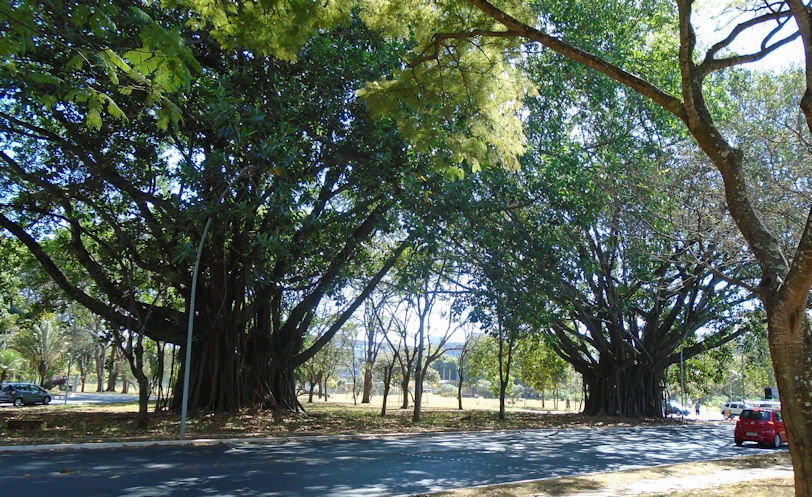
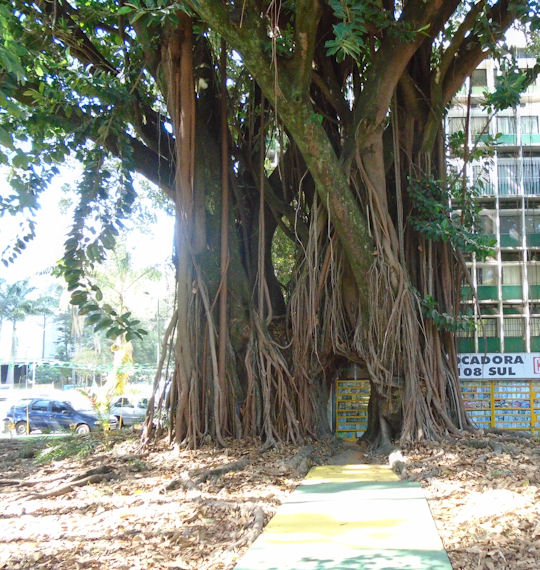
India rubber trees get really big around here. You really cannot tell where the truck stops, since “roots” drop down from the branches and add to the girth. These trees do give latex, but they are not the rubber trees where we get rubber that is the Pará rubber tree, a completely different species. You can see from the pictures how impressive they get. Recall that none of these trees are more than sixty years old, since that is when they built the city.
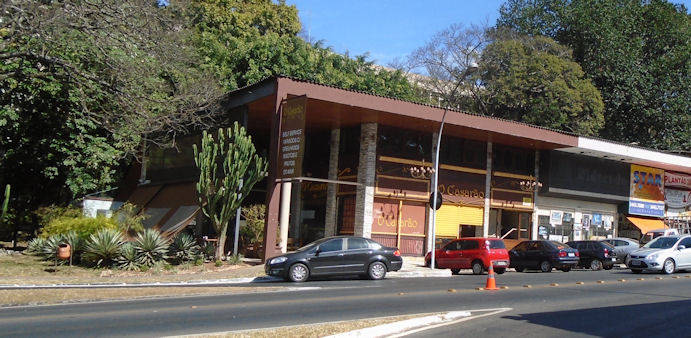
I have been looking for a good place to get my weekend meals. Maybe my criteria are not common. The place cannot be TOO close. I want to walk at least twenty minutes to get there, so that disqualified the nearby ones. I think I have found one in section 107. You can see in the picture. It has lots of salads plus churrasco.
The people of Brasília have done a good job of modifying their city to make it more pedestrian and bike friendly. It was designed as a car city, the vision of the future of 1960 and it still suffers from that original design. But it is getting better.
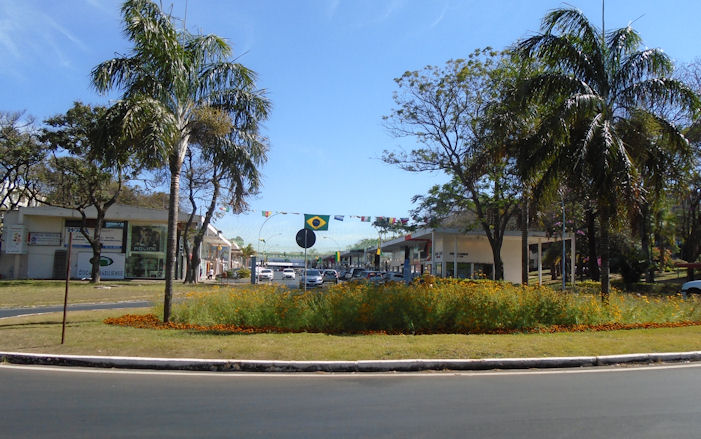
Rio, one last time with feeling
I am on the farewell tour of my posts. I am in Rio today. I will be in São Paulo next week and Recife the week after that. There is nothing left for me to do but say goodbye and to thank my good colleagues for all they did.
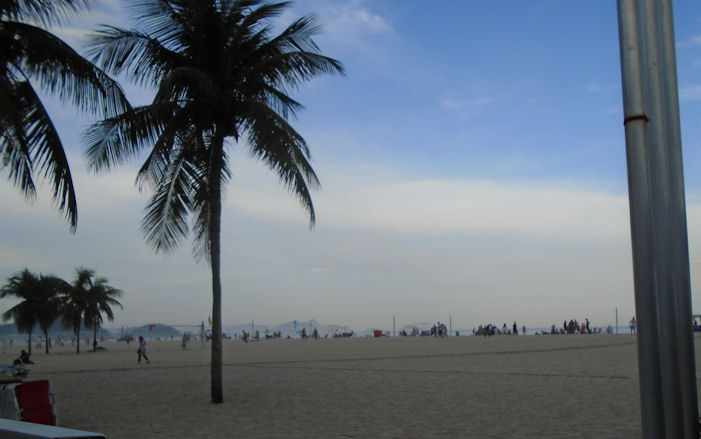
I am at the Marriott at Copacabana. It is really a great place, right across from the beach. I am not very much attracted to the beach, per-se, but I do like to go to the little cabanas and drink draft beer while watching the waves. Copacabana is interesting sociologically. During the sixties, it was a magnet for the young and the beautiful. Many never left. They are not as beautiful and young only in comparison to the sand and trees. Actually, it is likely that most of the coconut palms are younger. But I think it is a good thing. They seem content. There will probably soon be a generational change with new young people starting the cycle again.
The taxi driver on my way to the consulate was a real Rio lover. He seemed a little gruff until I opened my window, explaining that I wanted to feel more of Rio. He told me as much as he could get in about the history of the city and why it is the greatest place in the world. The Paris of the tropics, he called it, but better than the Paris of France because God has sculpted nature to enhance Rio. He has a point about that. Rio is one of the world’s most beautiful natural locations for a city.
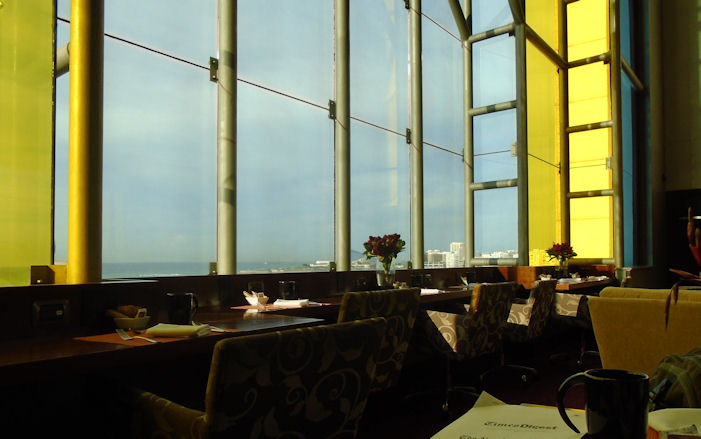
One of the big advantages of the Marriott, besides the location, is that I get free caipirinhas. I was a little unhappy when I noticed that I did not have my return flight to Brasília until 8:20. But now I am happy. I had time to go to the beer place near the beach & Marriott gave me a special pass to come back to the lounge, nice of them.
I am experiencing one of those moments in time where everything comes together. This happens not very often when the single moment seems to merge with the eternal. I cannot explain it and won’t try, but it is really a beautiful, peaceful and balanced feeling. It seems like nothing could cause me distress. It will pass when I have to get running to the airport, if not before, but I will enjoy it as long as it abides. I may never get back here and I want to remember Rio in this pleasant mood.
My picture up top shows the view from the little bar on the beach where I had my last Rio beer. The next picture shows the Marriott lounge, where I had my last Rio caipirinha. You can see why it is not hard to be in a good mood.
My temporary place
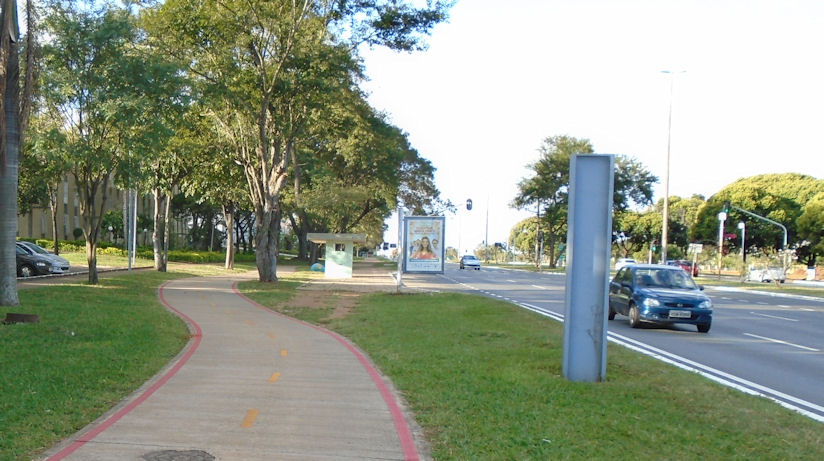
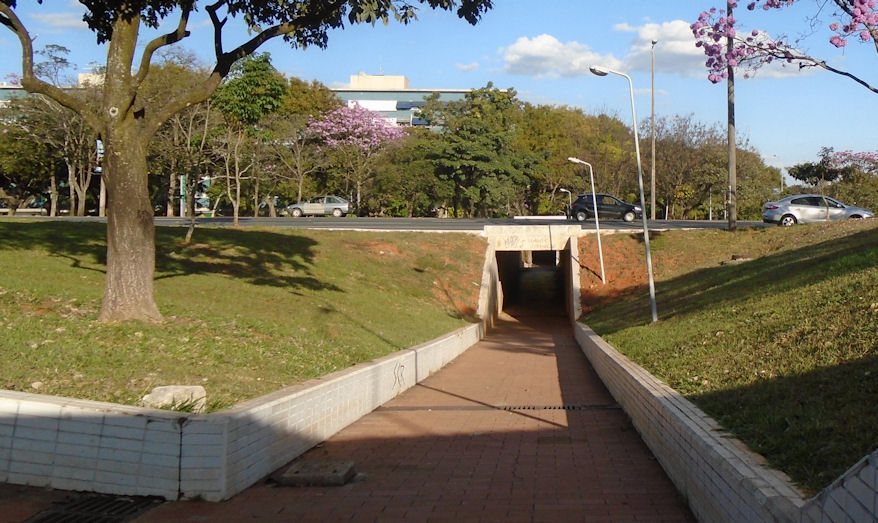
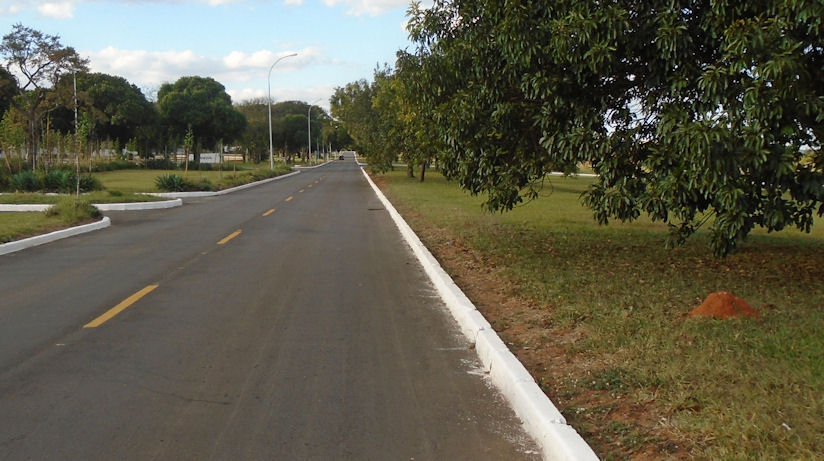
I have moved into temporary quarters in anticipation of my final leaving. The place is okay, although I liked my old place better and would not have moved had I not been asked. The commute is better. I don’t have to run across a busy highway. A bike trail follows the main road, see above. There is a tunnel under the big road here. You can see it below. It kind of smells, you might call it a pee-tunnel, but certainly better than running for it across the busy highway. After that, I can take side roads w/o much traffic. It is just a little farther than the other ride. It has some nice views, as you can see from my pictures a little farther down.
The neighborhood is good here. There is a supermarket within easy walking distance and lots of restaurants. What I miss is that there is no backyard. I like to go outside. Of course, I can do that here, but I don’t have a private nice place like I had.
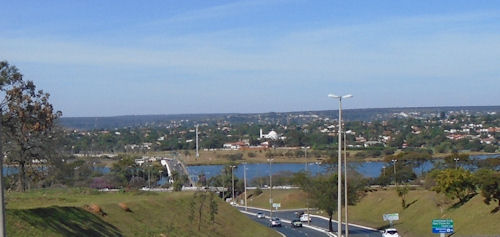
I lived in this part of Brasília when I was first assigned way back in 1985. It has changed for the better. Trees have grown much bigger; grass has covered most of the red dirt, eliminating much of the dust. And lots of good restaurants have opened. There is a significant micro-climate difference between here and my place on the other side of the lake. It is drier here and a little cooler. The wind blowing over the lake keeps the other side, at least the peninsula were I used to live, more humid and a warmer. I was always a little surprised when I walked down to the lake in the evenings and it was warmer. I grew up next to Lake Michigan and it was not warmer near the water.
It is so strange to be almost done in Brazil. I had big plans. Things did not happen as I planned, but I am happy to say they turned out much better. I have always been lucky in my career; I have arrived at posts just before some big opportunity and always found great people to help me. But never before have I arrived to something as big as Science w/o Borders and all the programs that grew from it like English w/o Borders. This will influence U.S.-Brazil relations for a generation, not to mention improve education for tens of thousands of young people and improve science cooperation. This is probably my last overseas assignment and it is good to go out on such a high note. I don’t think it would have been possible to do better. I think I made the finish worthy of the start in Brazil and my next job is a dream. Lucky.
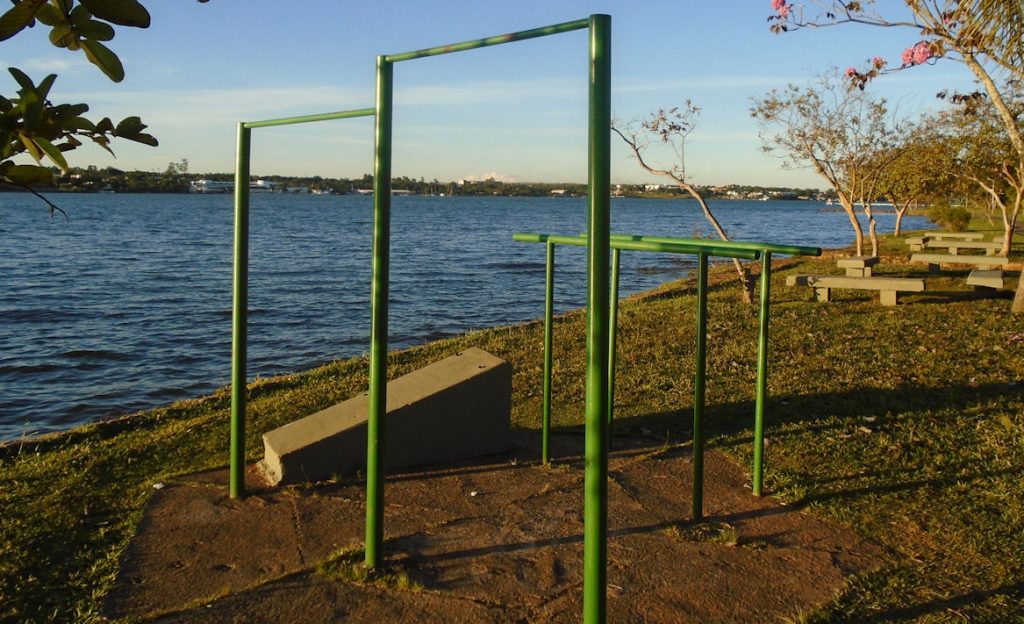
But I still have not found a chin-up bar equal to the one I left behind, above. This was the world’s best chin-up bar, exactly the right height for me, with a nice view and not many people around.