Know the place for the first time … again

When I was first in the Foreign Service, I was embarrassed that I did not know my own country. So I have always tried to get to know America again whenever I had the chance. It always renews my love of the United States and our people. American diplomats should have a boots-on-the-ground acquaintance with America. It changes enough that you have to go back a lot. I am trying to recall how many times I have gone across most of America, not counting flights. I think it has been five times. Once from California over the northern route, we did most of that on Amtrak. We went from Seattle twice, once south through Utah and Nebraska and from Spokane north through Idaho and South Dakota. We drove from Phoenix through the middle south and I drove from Washington to Phoenix through Wisconsin and then back along the south. I drove maybe a dozen times from DC to Wisconsin. And in August Chrissy & I will make a big circle across the north and then back though the south.  We want to make a special point this time of seeing tall grass prairies, Yellowstone, Brice Canyon and Oxford & Elvis’ house in Tupelo, Mississippi.  Other than that, we rely on sweet serendipity.

The State Department set up some speaking engagements for me on one of my trips. I talked at Rotary Clubs and international clubs and learned a lot. I was in Amarillo, Texas talking to a group of cowboys and ranchers and I realized I was out of my league. They asked about international trade and I deployed the usual State Department platitudes. But these guys knew international trade. The success of their ranches and farms depended on it. I realized that my fancy-pants education  needed some real world leavening and I have been seeking it ever since. I try to ask more than I tell these days.

I hate it when educated fools – unfortunately often people like me – denigrate “ordinary” Americans. They talk about “fly over country” or “rednecks.” They wonder loudly why “those people” think as they do, make special efforts to point out the worst. It is a myth, a caricature. My experience with real Americans is that my people are among the friendliest and most open people in all the world. They know what they need to know, as the cowboys in Amarillo taught me, or the gas drillers in Dakota or my neighbors near the tree farms. I am looking forward soon to learning some more.

I will be back in the U.S. in August. The State Department, in its wisdom, gives me a month of “home leave.” Home leave is statutory. Congress doesn’t want American diplomats to stray too far from our roots and the people who pay us so they require we spend some quality time with America. The law is that we have to spend non-working time in America, i.e. we cannot go anywhere else,  and I think that is just fine. I love to wander the U.S. I really have a great job. They “make” me do what I want to do. So I am finishing up in Brazil and soon to be back in the U.S.

The lines from TS Eliot come to mind, “We shall not cease from exploration, and the end of all our exploring will be to arrive where we started and know the place for the first time.” But I don’t think we ever really know the place. That is what keeps life fresh.
My Smithsonian job starts on September 1. That will be a new adventure.
California highway

I drove from LAX to San Diego Airport, starting along I405 to I5 in the early morning gloom.  I had gone up to LA with our Brazilian delegation.  They had onward flights from LAX, but I was unable to change my San Diego reservation w/o it costing more than a new ticket.  Just as well. I spent the night at LAX Marriott and hit the road early to catch my 11am flight in San Diego. I could have left much later, as it turned out, but I like to be sure to be on time.

Even early on a Saturday morning, there was traffic, not bad but you never got the feeling that you really left the city.  The radio had some oldies including “Ventura Highway.” Ventura is the other direction but it seemed appropriate for me too.  I kept on thinking of all those songs from the 1960s about Southern California. It must have been an interesting place back then.

The freedom of the road is not what it used to be.  It is easier to drive on the Interstates, but they are pretty homogeneous.  You can still go on the blue highways but they are mostly drained of commerce.  The Interstates did their job.  You can drive all over the place w/o really knowing for sure where you are.

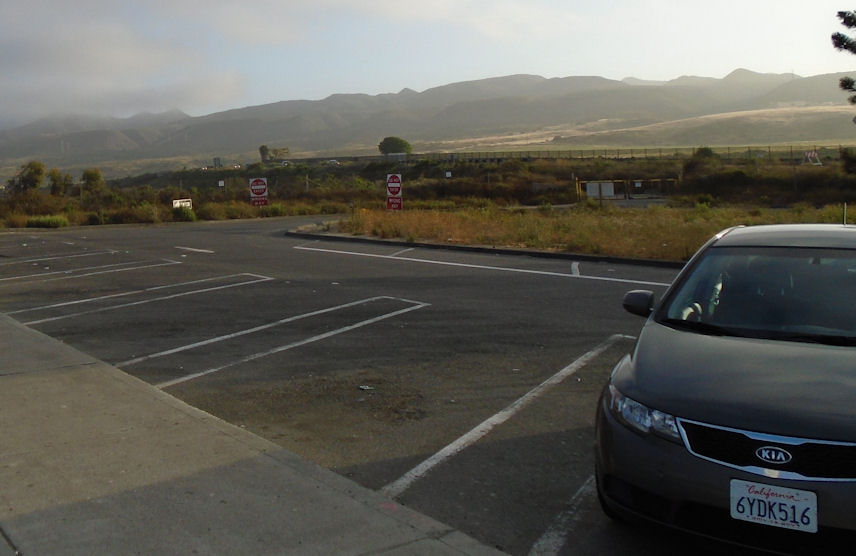
Great stories are usually about journeys.  The Odyssey created the genre.   The story requires unexpected challenges, discomforts and dangers to be confronted and overcome.  Life is easier on the highways now, but we have fewer stories.  My trip from LAX to San Diego was easy and predictable.  My greatest challenge was exiting at a rest stop that had no bathroom (see above).  While that seemed very pressing at the time, it wasn’t; not exactly the same as facing the Cyclops.

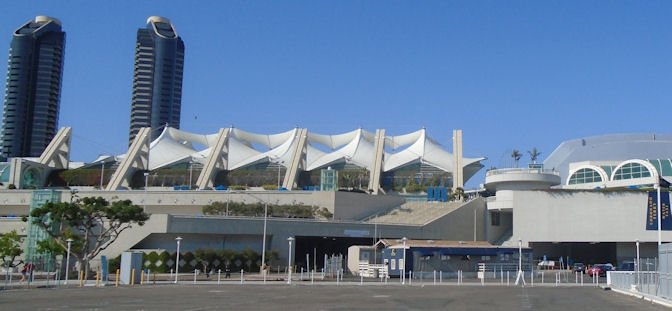
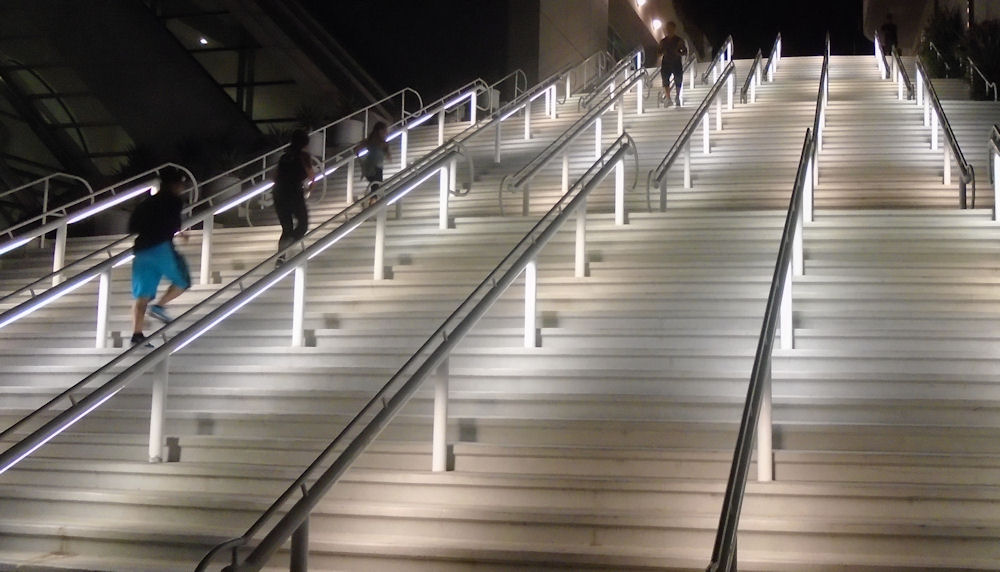
My picture up top is a pull off on road.  There were no facilities there.  Below are stairs at the convention center.   It reminds you of one of those Aztec pyramids, but I think there are even more stairs in San Diego.  People were running up and down in exercise reminiscent of the myth of Sisyphus.

Southern California

Our Brazilian delegation went to Los Angeles to explore connections with California universities. We met a bunch of university representatives at the Brazilian consulate in LA. I hope that some permanent matches were made. Diplomacy in many ways is the art of matchmaking. We put the partners together, maybe help them find their common aspirations, but others have to do actual connecting.

Anyway, it was a pretty sweet deal for me and I was flattered that our Brazilian partners wanted me along. That is another function of diplomacy, BTW – diplomatic cover. Our official status helps open doors and legitimize. I know these kinds of values are very soft and I underestimated them for most of my career. I was looking for the cash-value-concrete result. Those come, but sometimes long after. Our value is often part of the process. We are like oil (some might say grease) to smooth things along.

I have been surprised to find that people sometimes remember key phrases from the short speeches I make. I have some stock phrases, but I try to tailor to the circumstances. That is why I rarely know exactly what I will say until I hear what others have said and get a feel for the mood. This is one reason why I know that I should not seek work in contentious issues or ever try to be a spokesman. I do not stick to my talking points. In a field like higher education exchanges, you can get away with this and even prosper doing it. I would not be so lucky trying to “fix” official statements. A man’s gotta know his limitations. Interestingly, this particular limitation hasn’t kicked me very often during my long career in public diplomacy, although I have avoided some “career enhancing” jobs that would have put me in harm’s way.

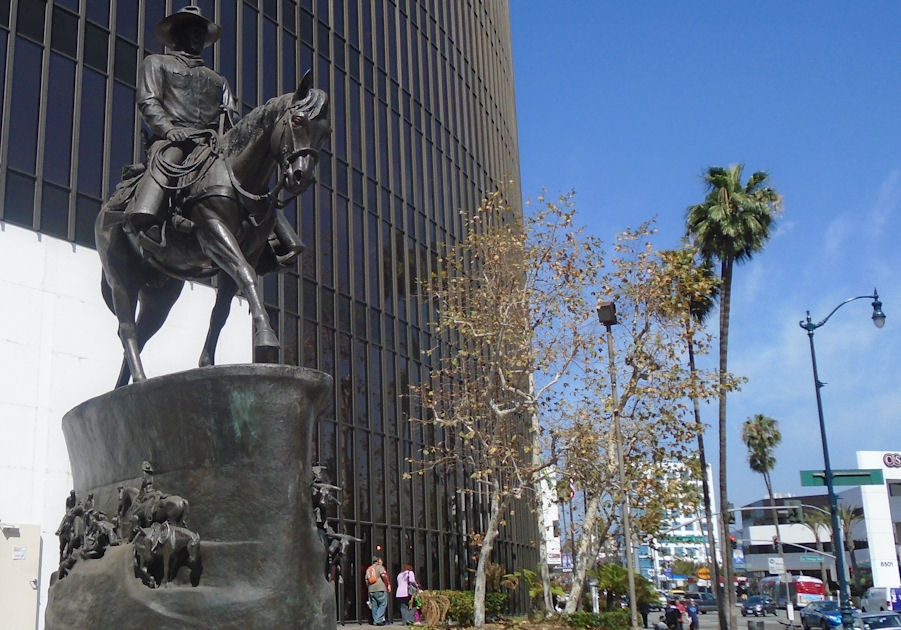
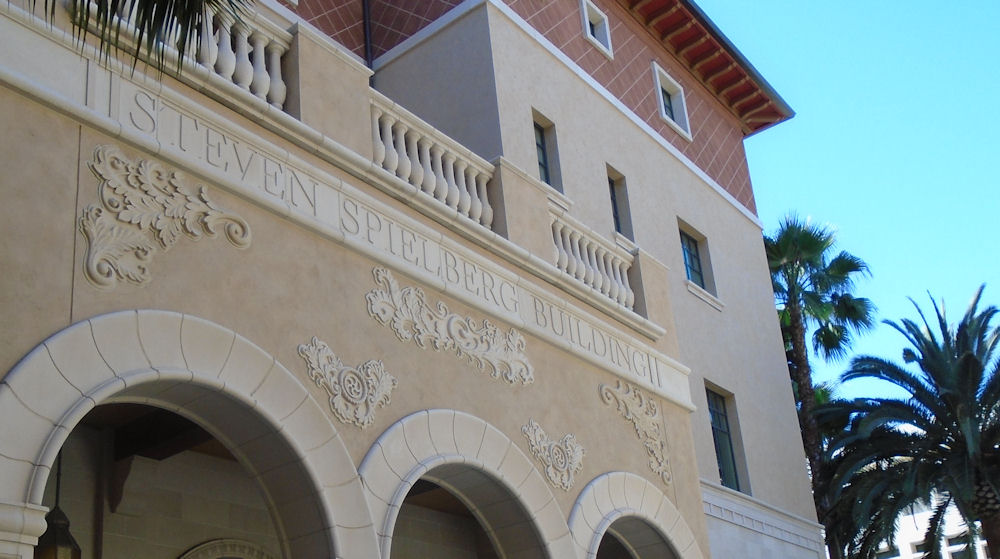
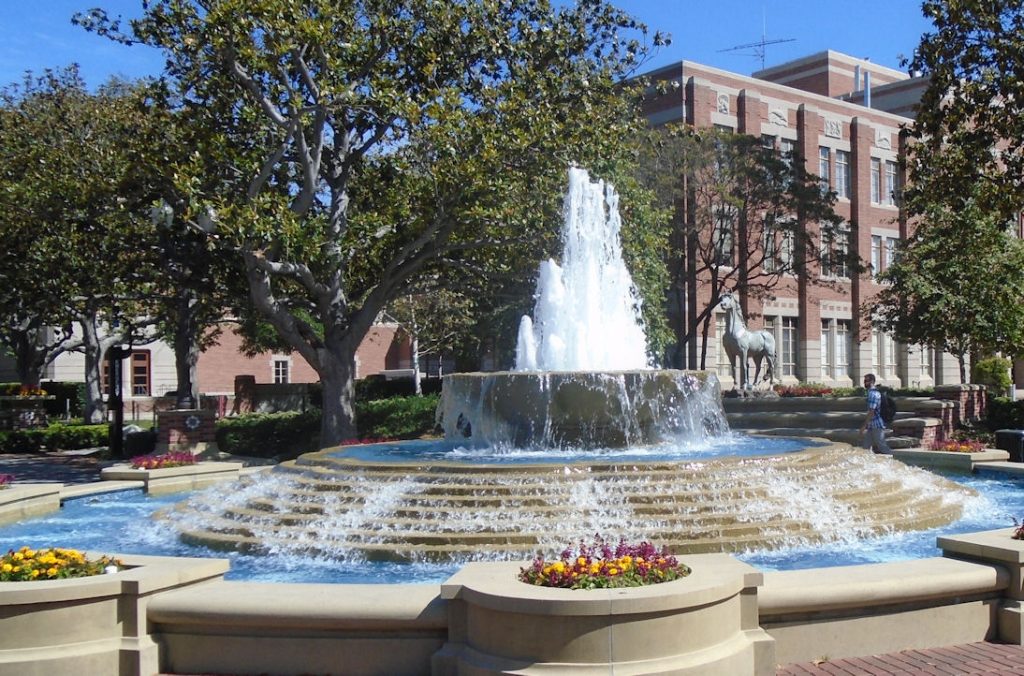
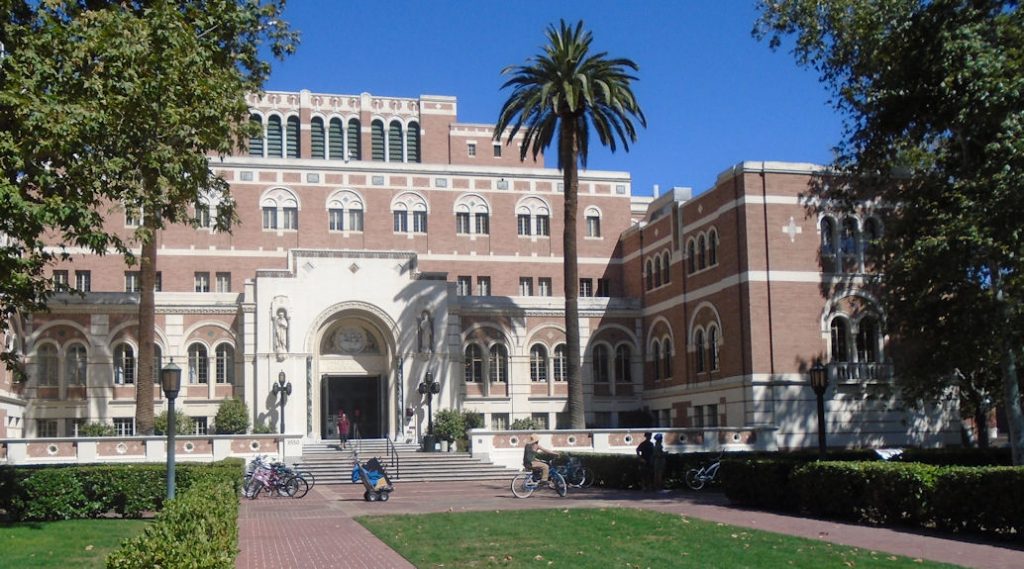
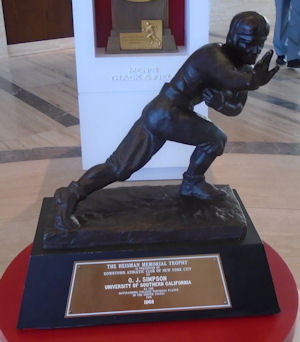
My pictures are from USC, except for the statue of John Wayne up top, which is in front of the Brazilian Consulate. Steven Spielberg and George Lucas are big supporters of USC. Spielberg was denied admission to the cinema school, but he doesn’t hold a grudge. Imagine how successful he could have been with a decent education.

The Heisman Trophy was won by OJ Simpson. They told me that it is the most photographed among their trophies displayed. They don’t take it down, since OJ was found not guilty and (if the glove don’t fit, you must acquit)– anyway – the OJ that won the trophy was not the same man on trial for murder. This unfortunate incident was in the far in future.

San Diego NAFSA

I am finally getting around to writing up my notes, a few weeks late. I went to San Diego for the NAFSA conference. I usually would not attend such a thing, but this was the last time I would have to be with some of our Brazilian friends and my final attempt to help make sustainable connections between U.S. and Brazilian educational institutions.

Most of my work consisted of meeting people and attending receptions. I know that most people consider this a perk of the job but believe me when I say that is work for me. I enjoy talking to people; I even like public speaking. But going to reception is less fun for me than writing reports. I don’t like and don’t do well with the small-talk. But I recognize the importance of being there so I was where I could see and be seen.

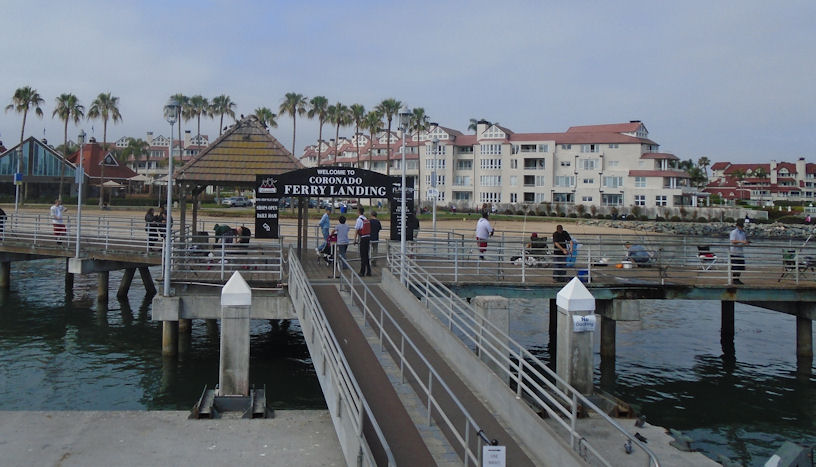
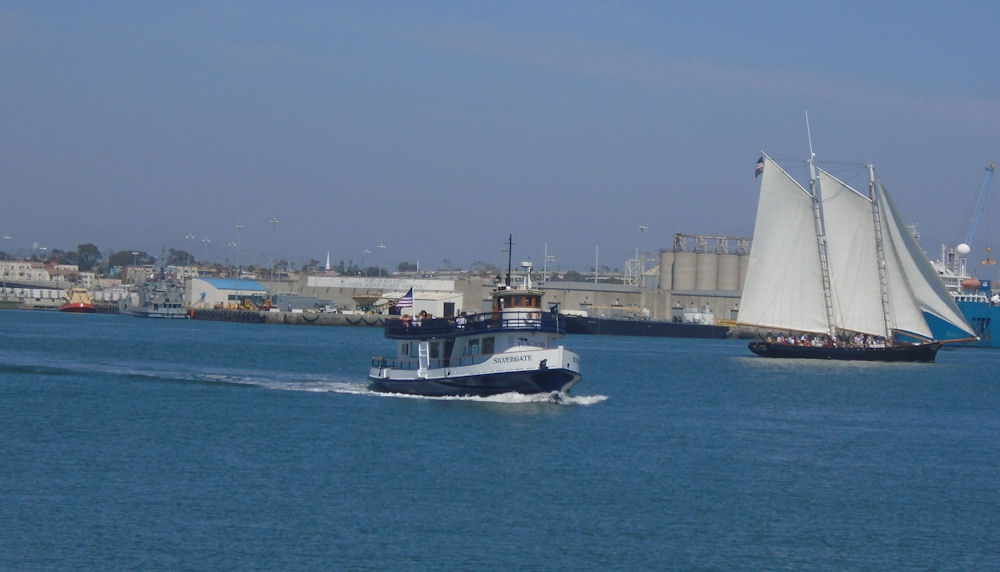
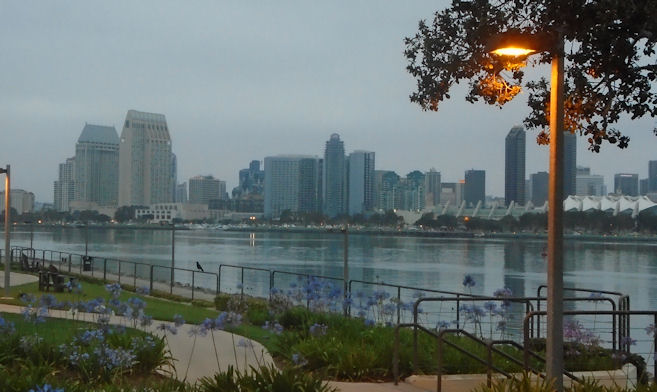
I cannot complain about being in San Diego, however. It is a pleasant place and I had a pleasant time. I stayed on Coronado Island. It is right across from the Convention Center, where the NAFSA meeting was held. You catch a ferry to get there. It costs only $4.25 and takes only about five minutes. It would have been a little more convenient to stay in the hotel actually at the convention center, but not very much and the hotels there cost a lot more. None of them were available for the per-diem rate. Anyway, I liked the idea of commuting by ferry. It is a very civilized way to go.

Coronado Island is a delightful place. It would be a little too neat for my liking to live there permanently but it is really nice to visit. There is a bike/walk/run trail along the ocean. My hotel had a view of the bay. I walked almost all the way across the island my first morning there. I had to do laundry and evidently there is only one Laundromat on the island. The guy at the hotel said that they could send it out for me, but I am not going to pay a couple dollars to wash a t-shirt. Anyway, it was a nice walk. Because of jet-lag I work up really early and started in the pre-dawn twilight. The place seemed very safe. There are a lot of retired U.S. Navy folks around and they tend to be orderly and peaceful.

My main “problem” and my excuse for not writing in real time is that my computer charger died. I could not find a new one anywhere in town where I could walk. They all have the equipment for telephones. So after the battery went dead, I was w/o computer for a couple days. It is strange how you become accustomed to computers. I wrote in my notebook and I do enjoy actual writing, but it is a very different experience. I think I am more open and honest with myself on paper, since I am pretty sure nobody, probably not even I will ever read it. But on those occasions when I do read, I find it more banal, maybe because it is harder to cancel a line and rewrite with pen and ink than to insert or delete with the computer.

My pictures show the convention center.  Next is the Brazilian section.  They let me hang out there.   The next two pictures show the ferry landing and the ferry.  The next picture is taken from my room.  You can see the convention center across the water and why it is an easy water commute.  Finally is a big fruit boat.

Rio Negro meeting Rio Solimões

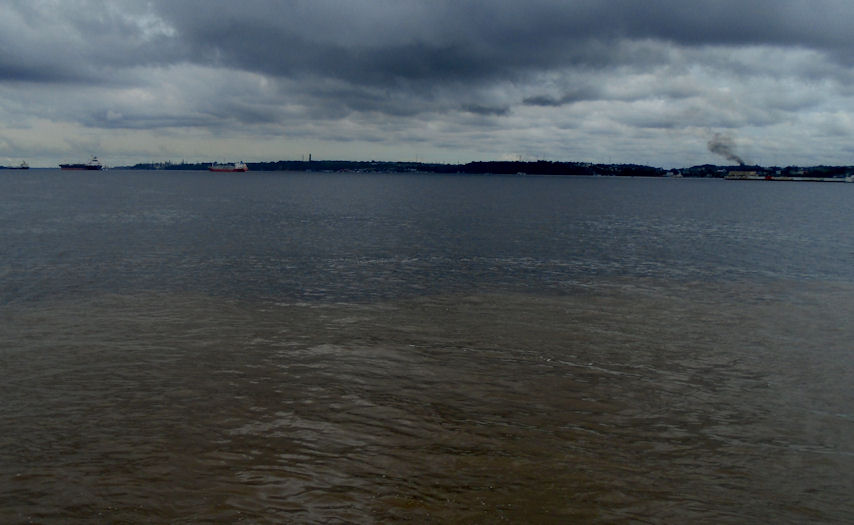
The meeting of the waters is the place where the Rio Negro and the Rio Solimões meet to form the Amazon. The rivers are very different. The Rio Negro is mostly black with a pH of black coffee. The Solimões is like coffee with cream and full of silt. The two meet just past Manaus and the two waters run side by side, visibly different for a few miles.

It is de rigueur to visit the meeting of the waters if you go to Manaus and we did. IMO, it is one of those things that is worth seeing but not worth going to see. It looks like some muddy water mixing in with some less muddy water. The river trip was long, but interesting.

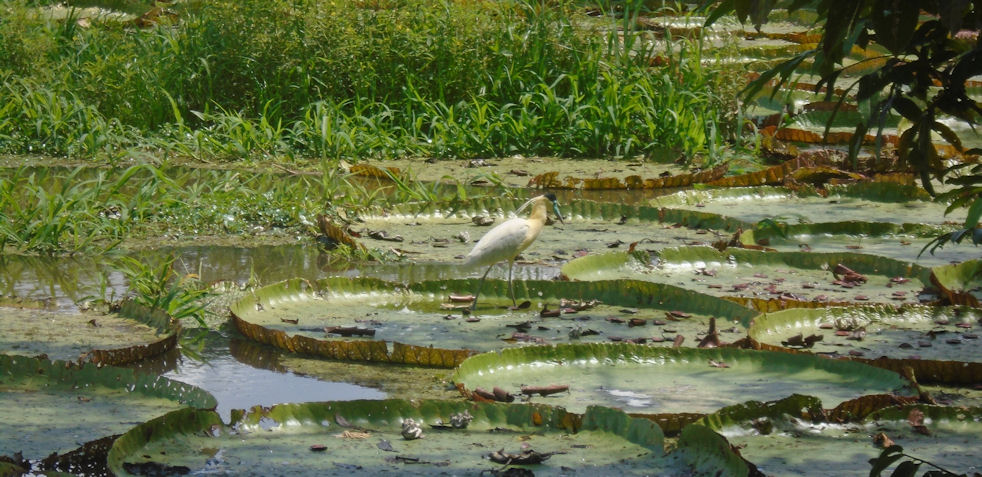
We went up the Solimões. The river is very much alive, lots of fish and plants. We stopped off at a riverside restaurant. The food was unremarkable. It probably was not alone worth the trip. But I did enjoy the lilies and river. I am very fond of these kinds of swamp landscapes. The trees were full of monkeys. You could hear the howler monkeys howling. It was an interesting experience.

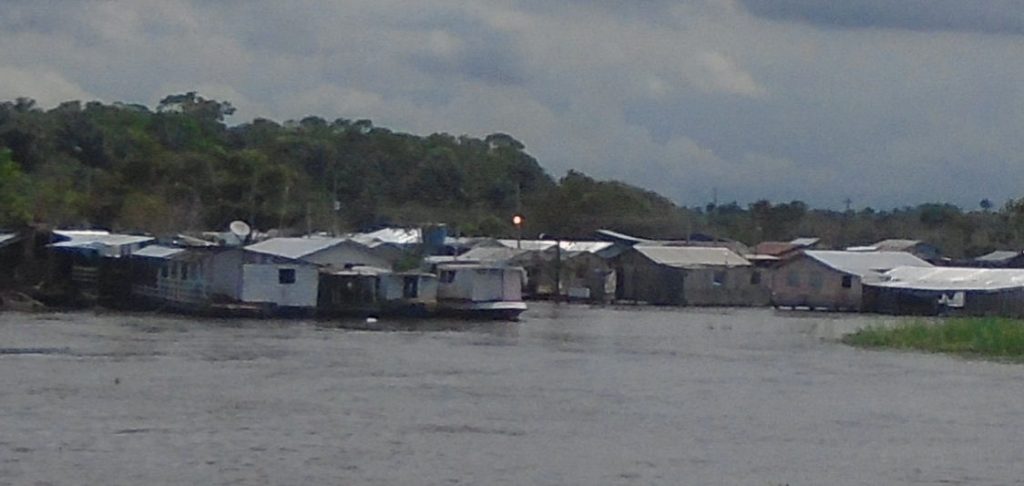
Along the river are shacks made most of tin and scraps. The guide told us that government had recently furnished them with electricity and other amenities. I don’t think this is a good thing. It is nice to give people things to make them more comfortable, but perhaps eking a living from the river like this is not something to be encouraged. It is not environmentally friendly to live on these margins either.

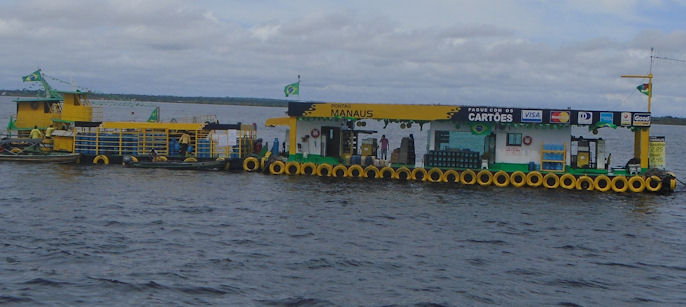
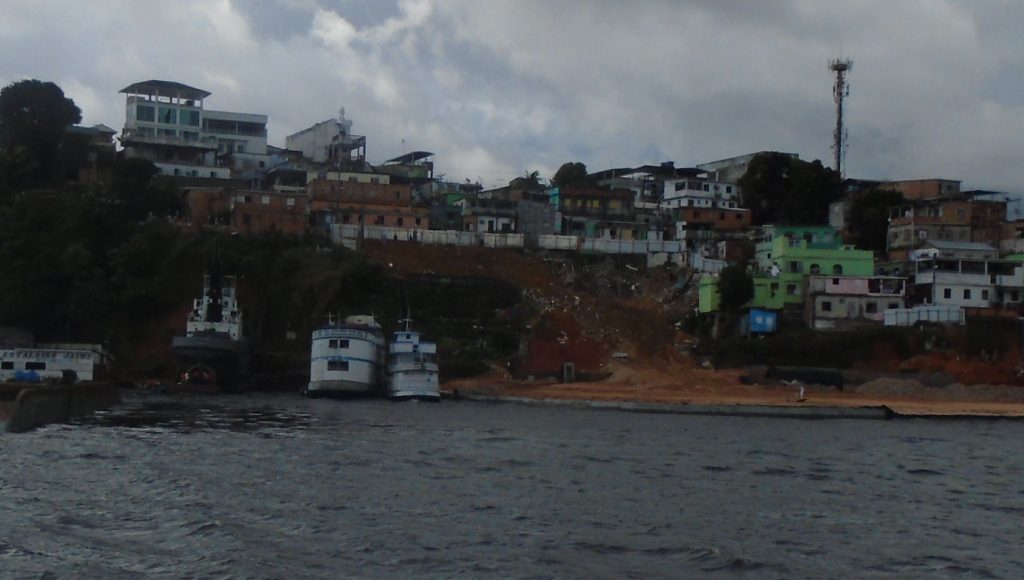
Above is a floating gas station.  Lots of things on the rivers.  Below is another future problem.  There are places where you should not build houses.

On the river

It is maybe wiser to avoid the forest floor, but the river is another story.  I understand that there are also piranha, caiman and snakes in the water, but it seems peaceful and if you stay in the boat it is mostly safe.  The rivers are the highways of the Amazon.

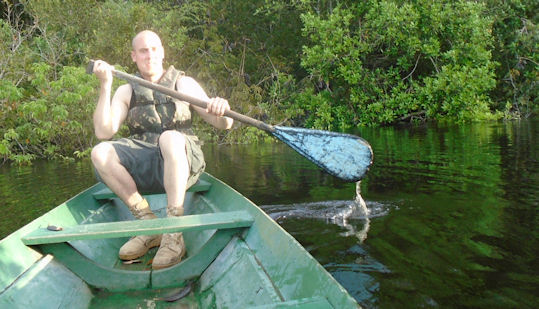
Alex and I took a canoe out for a while.  We are not good at canoe paddling.  Alex has become very strong, much stronger than I am so we are always drifting in the direction his paddle takes us.  It was, however, peaceful and quiet.

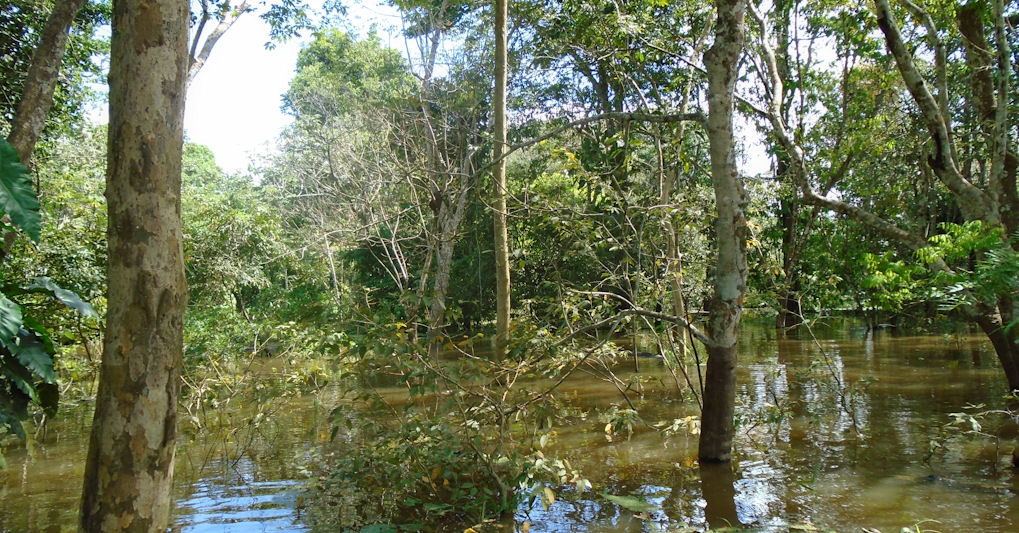
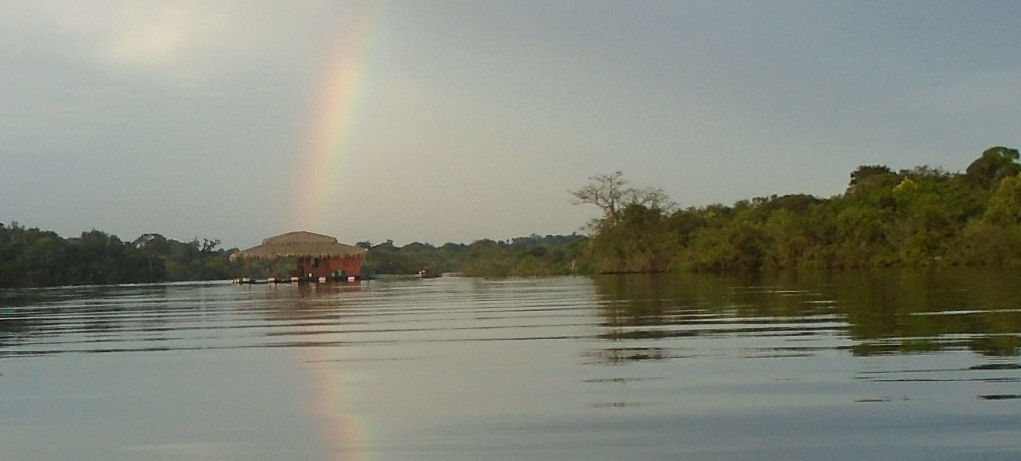
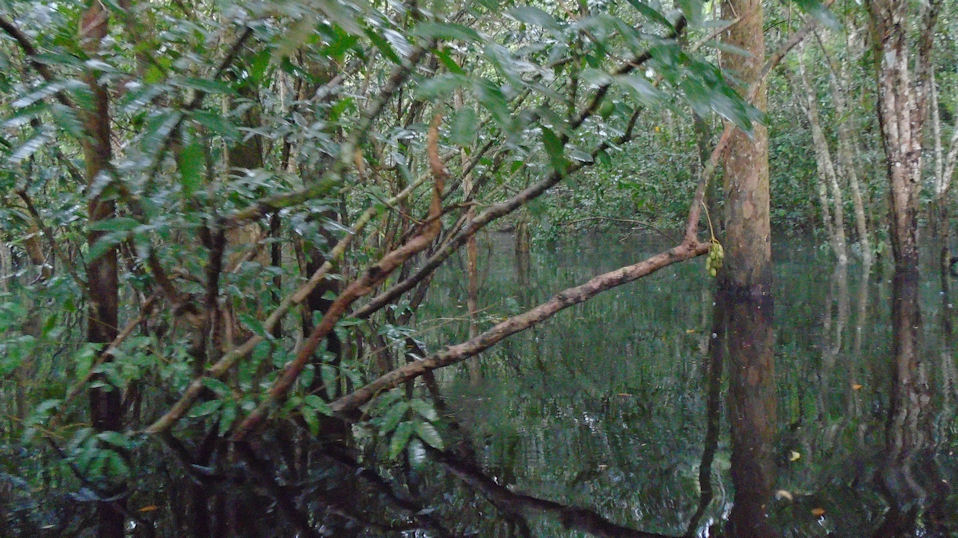
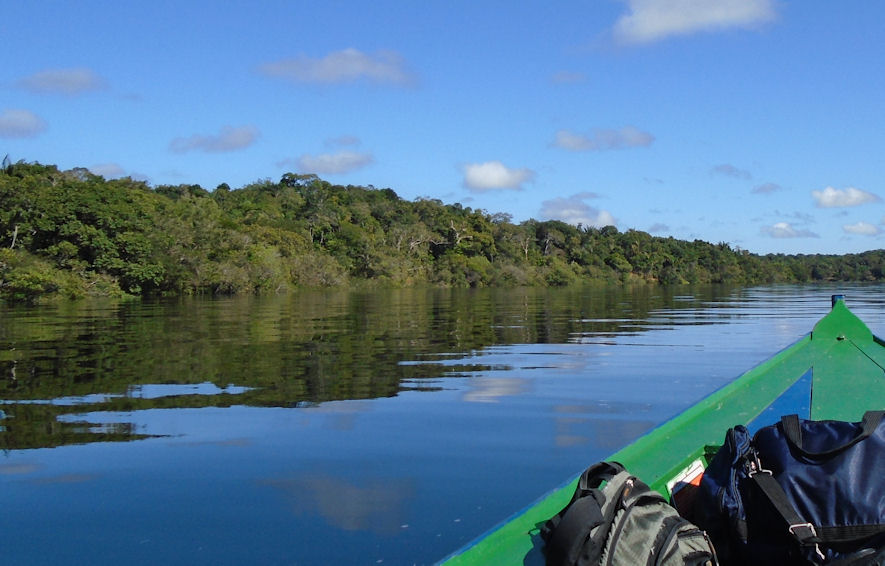
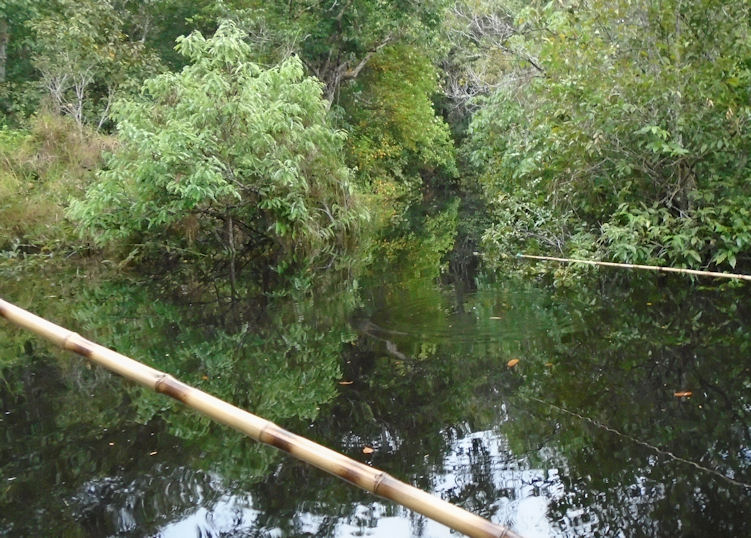
The rivers are very wide and the forests are flooded this time of the year, so you really do not see a shoreline, just the tops of trees and bushes.

Walking in the Amazon jungle

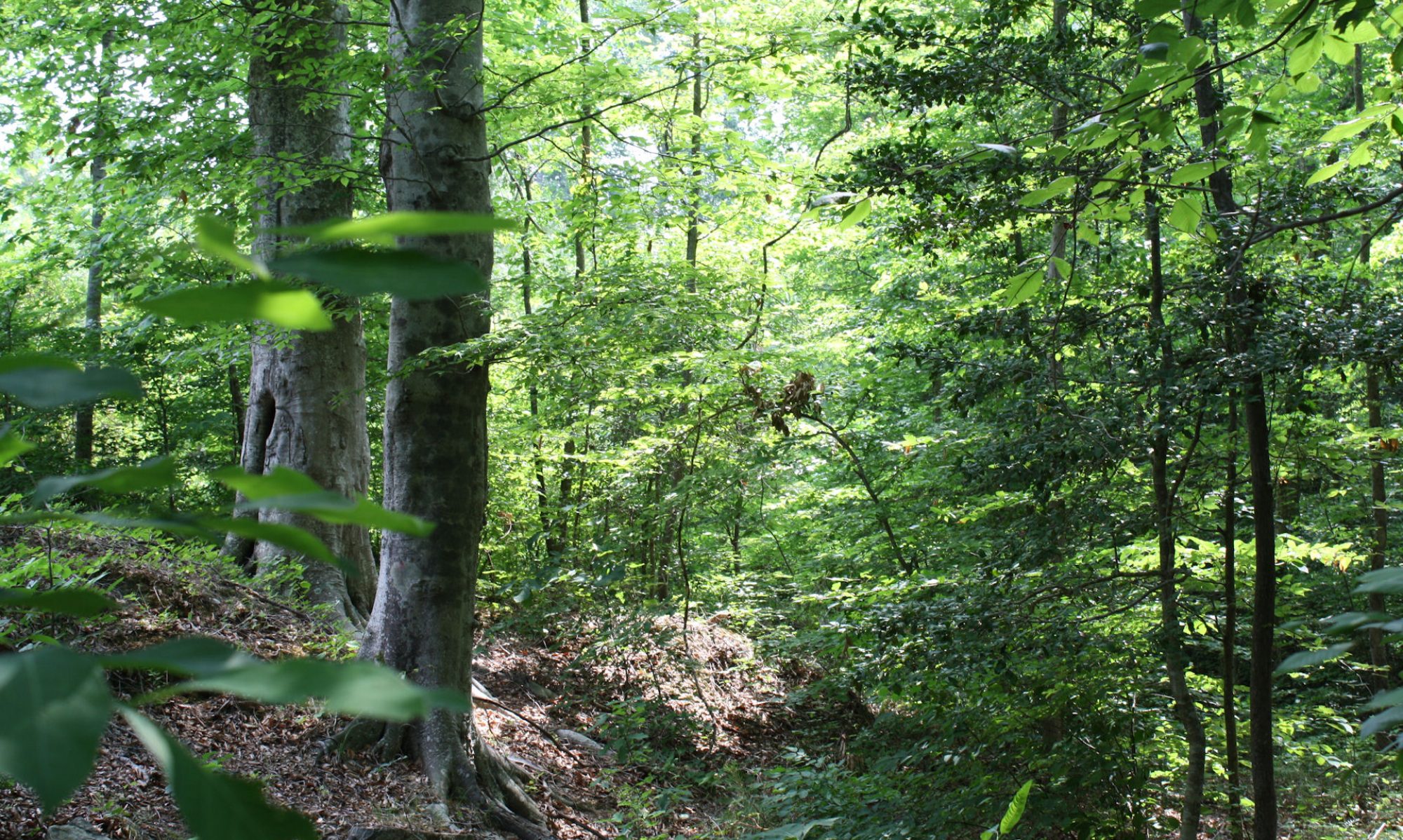
The jungle walk was familiar enough to make me long for the forests of home and different enough that I knew I was not at home anymore.

The forest here is wet, literally dripping with dew and humidity all the time. The ground vegetation is thick, although that may be because this was cut-over. I understand that in the true triple canopy forest, which I don’t think I have ever really seen, it is so dark on the forest floor that not much grows. The forest soil here is not fertile and it there is little organic material. It is all quickly recycled into growing plants. It is a different sort of forest from those I know. I feel connected with the forests back home. Here I am clearly alien. I recognize that this is a wonderful, complex and diverse ecosystem. Maybe that just overwhelms me.

Maybe it is because it is a dangerous place. There are snakes and bugs around that can poison you. If you get stuck in the jungle at night, never sleep on the group. That is why local Indians always use hammocks. If you lay down on the ground for the night, you are likely to still be lying there the next morning, just no longer alive.

We didn’t see any big animals or really animals at all. Many of the animals are nocturnal and all the animals are good at not being seen. Life is dangerous and short for the forest animals here. Beyond that, the soil is not very fertile, so there are not rich supplies of food. This poverty is especially acute on the Rio Negro, since (as mentioned) the river does not have many insects, which form the base of the food pyramid. The nearby Rio Solimões is coffee brown, full of silt and nutrients, and so full of bugs and fish. Tourists like it less because of the bugs and the mud, but it is a more living river.

Francisco, the guide, said that there were jaguars around but not very many. This is good, since jaguars are dangerous. They will attack and kill people and you don’t see them coming. He wears a jaguar tooth around his neck and he showed it around to emphasize his point. Jaguars are stealth hunters. They hide or sneak up and then jump on their prey from behind. They go for the jugular. When they get a hold, they just hold on until the animal, or human, passes out from loss of blood. They are beautiful creatures, but nasty. I recall seeing them at the jaguar sanctuary safely behind a fence. I am glad that we didn’t run into any w/o a fence.

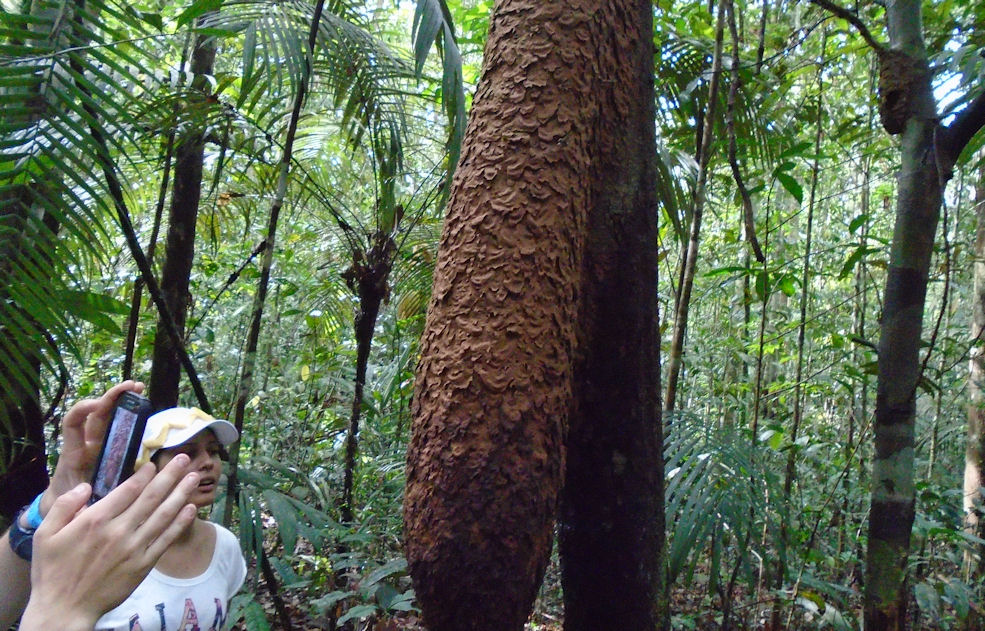
That long brown thing in the picture is an ant nest. Maybe it would be more appropriate to call it an ant hive. The outside was crawling with ants. Francisco squashed a few and rubbed them on his hands. He told us that the native Indians would do that and rub it all over their bodies to mask their scent when hunting. The local Indians are also stealth hunters. They hide or sneak up on their prey and then dispatch them with an arrow or poison dart. Neither has much range in the woods, so they need to get close, close enough to smell the animal and be smelled. The ant juice makes hunting like this practical.

We didn’t see any Indians in the wild. They are not very numerous and those that still live traditionally are protected and contact with them limited. Meeting “wild” Indians is potentially hazardous to all involved. While I was there, I read an article about three people killed by semi-wild Indians. Evidently one of them worked for the electric company and made himself unpopular by trying to collect bills. He was marked for death, but he caught a ride with a couple other people, thereby dooming them too. Those are situations I cannot predict so prefer to avoid.

BTW – walking is not the way you usually get around in the jungle.  It is difficult to walk most places.  With all the water, boat is the best way to go.  Alex and I paddled a little.  I will show pictures in the next post.

Monkeys are inherently funny

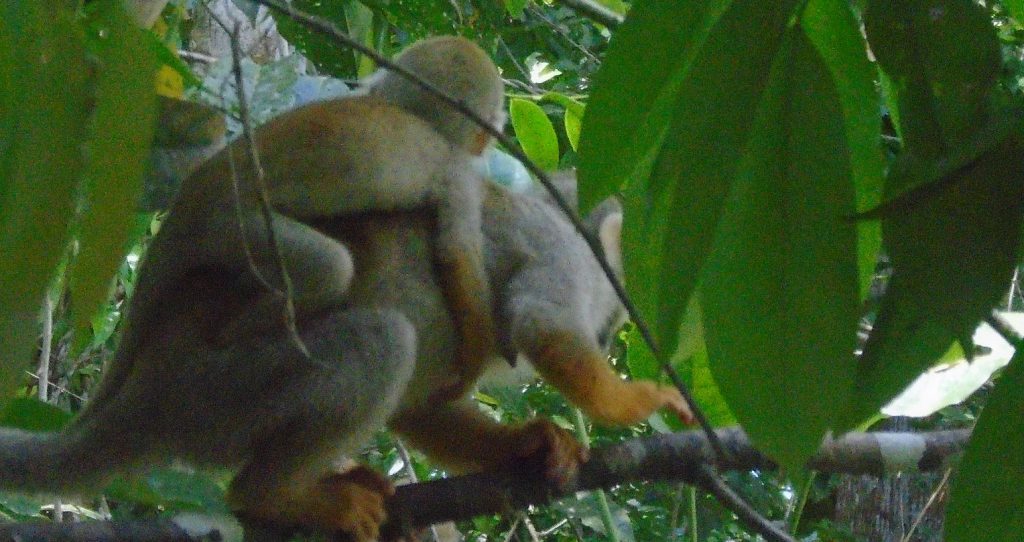
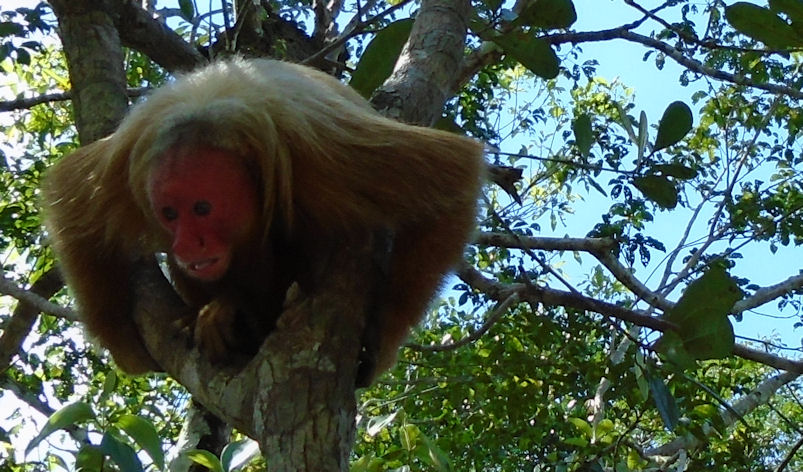
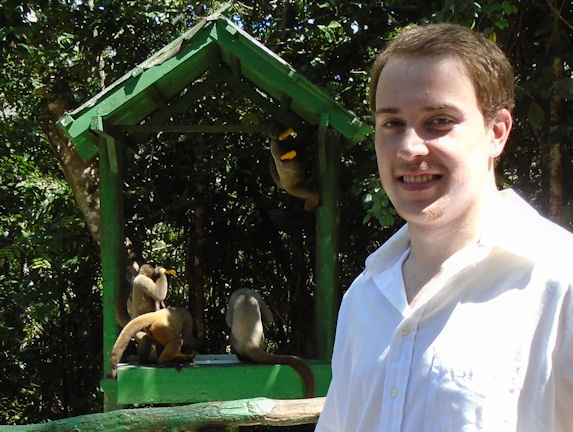
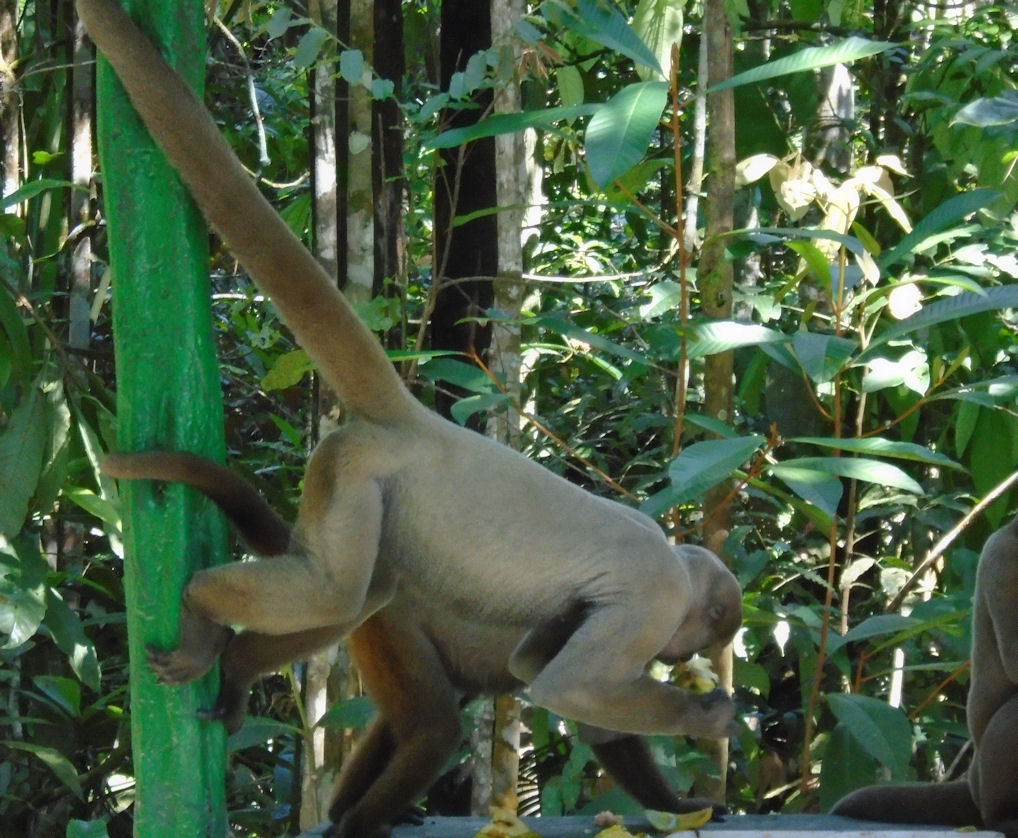
Although they make a big deal about presenting the operation as a scientific endeavor, the monkeys are not really wild and they essentially perform for tourists. When they put out the fruit, the monkeys come. It is interesting to see them all swing on over. They look pretty buff. New World moneys have prehensile tails, i.e. they can grab onto branches with their tails.  Old World monkeys cannot. The red faced monkey above is called locally an “English” monkey, with reference to the red skin which the locals think resembles a fair-skinned Englishman with a sunburn.

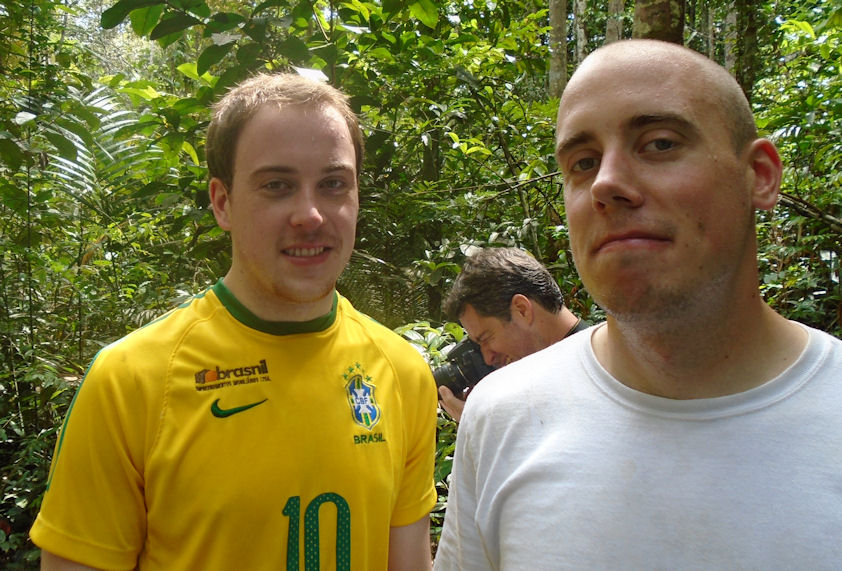
The monkeys are not dangerous, but we were told that they might try to grab jewels or cameras. They did not.  They paid no attention to us at all. You can see Espen with the monkeys in the picture below. Espen is the one wearing the shirt.

Rio Negro in Amazon basin

The boys and I spent the last week in the Amazon forest. It was a good time & probably the last time any of us will be in this place. We stayed at the EcoPark, about an hour and a half outside Manaus on a branch of the Rio Negro (Black River).

The Rio Negro is black, as it name implies and it is a better place to be than many places in the Amazon basin, since there are fewer bugs. The Rio Negro flows through some swamps, where the water drops its silt and acquires an acid character. It is a mild acid, about as strong as black coffee, which it kind of resembles. This is enough to make life more difficult for insects. I was surprised at how few mosquitoes were around. I guess that is why.

A bus from Manaus takes you to a dock on the Rio Negro and the EcoPark picks you up in a small boat. There is a drier and a wetter season in this part of the Amazon basin and the river is high this time of year. This means that forests are flooded, sometimes several meters deep. This is a regular event and a good time for fish, since they can go into the erstwhile forests to find food and try to avoid becoming food for others by hiding in the trees.

The rivers are variable. They get very wide and then narrow out depending on the rain.  The flood is part of the life of the river.  The Mississippi used to be like this before we built all the levies and channels, although the Amazon is even bigger.  On the downside, for us at least, the wet season allows the fish and animals to spread out where we can’t see them as easily.  We went fishing for piranha.  The boys and I didn’t get any.  The guides told us that they were out there but more in the flooded forest.  Evidently they are not as numerous or aggressive as they seem to be in movies.

Let’s not meet about it

I have failed in my admittedly quixotic quest to limit meetings and protect time. My goal was to limit time spent in meetings, eliminate many meetings altogether and just say no to just being there.

I have learned (confirmed) to my sadness that in government, maybe any large organization, many people define their “work” by the number and duration of the meetings they attend.

We talk about saving time and say time is our most valuable resource. I listened to a podcast re (see link,) which actually provoked this post.

In truth, I have not been completely unsuccessful. I have learned to say “no” to lots of meetings. I think I have paid some cost, but what do I care at this stage of my career.
I ridicule most suggestions of “brainstorming” for example, especially when “brainstorm” is used as a verb, i.e. “let’s brainstorm it.” Brainstorming is a colossal waste of time. People substitute brainstorming for thinking things through. I can think of a few cases where brainstorming sessions produced some value, but I cannot think of very many. And I am sorry but there are some stupid ideas and it is not much use to “get them out there” except maybe to get them out into the open where they can be eliminated more easily.
But my ridiculing of brainstorming upsets brainstorm advocates. Some don’t tell me, but they are.

Returning to the main meeting topic, I had a very interesting case with one of my staff members, who was holding too many meetings. When I asked him to stop, he told me that “his bosses” expected of him. I pointed out that I was his boss and I didn’t want it. He stopped – I thought. I later learned that he had not stopped at all; he just stopped reporting back to me. What for, if the ostensible recipient of the results doesn’t want them? My belief is that it was just a way to seem to be busy, like doing a rain dance.

But I have learned a simple technique. I noticed that when somebody closes a meeting, it is customary to ask if anybody else has anything else to say. This question is often followed by a “are you sure?” and/or by additional comments. I have noticed that when the last person speaks, the best thing to say is “okay, let’s get back to work.” If someone really has something important to add, they will say so. Otherwise, head for the door while the opportunity is there. I have a variation if I am not leading the meeting. When the leader says “okay, let’s” I get up and make to leave. This often finishes the meeting w/o the request for additional comments.

In the link I included, the author talks about making it harder to set up meetings. Outlook makes it too easy. All you need do is send out those notices. I used to think it was rude not to respond at all, but now I just ignore most of them, since few of them really need me. They have no business asking me and I figure if they really care they will follow up.
IMO, many if not most meetings result from inability to make decisions. How often are you talking with a few people and somebody says, “let’s have a meeting to resolve this.” The correct answer is almost always “no”.

If you need more information, ask whoever is likely to have it. If a decision is within your portfolio, just make it. The cost of coming to the “right” decision with meetings and research often exceeds the cost of making the wrong decision and some things just don’t matter very much.

Anyway, I lost that long war against meetings, although I did manage to clear an areas that was, if not meeting free, was at least meeting scarce. This gave everybody more time to do real work and I think it was effective. I would discuss this with anyone who asks, but let’s not meet about it.

PS – I am not really against wasting time. Some wasted time is unavoidable. But I can waste time all by myself. I don’t need to call a meeting of a lot of other people to help.