Tobacco Heritage Trail in Southside Virginia

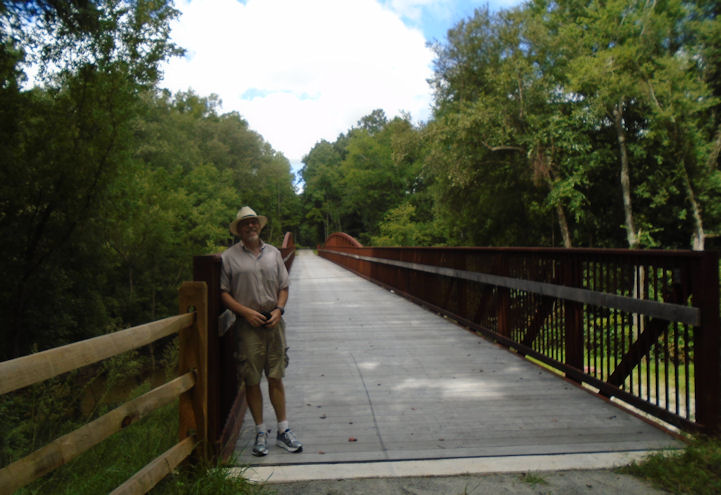
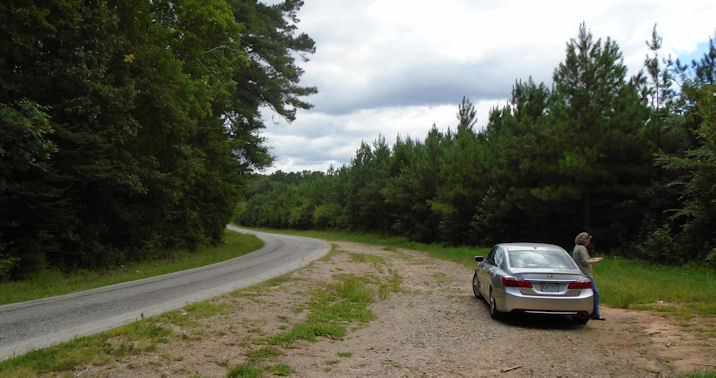
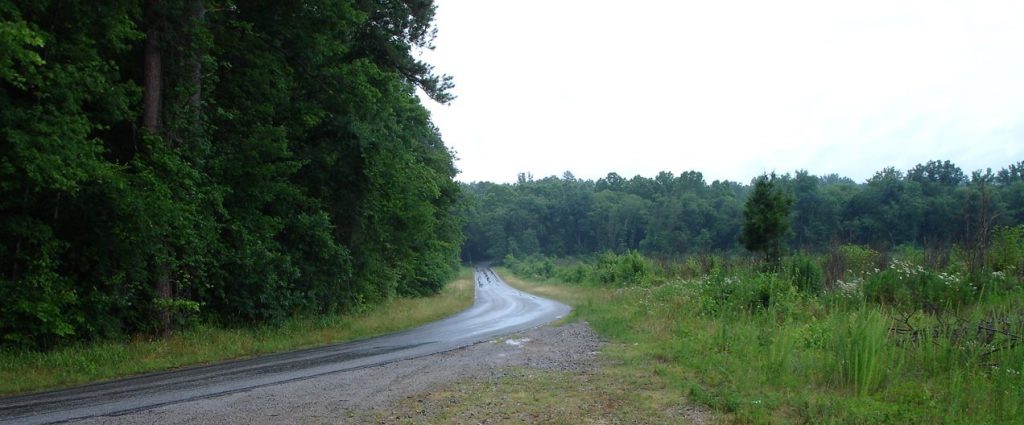
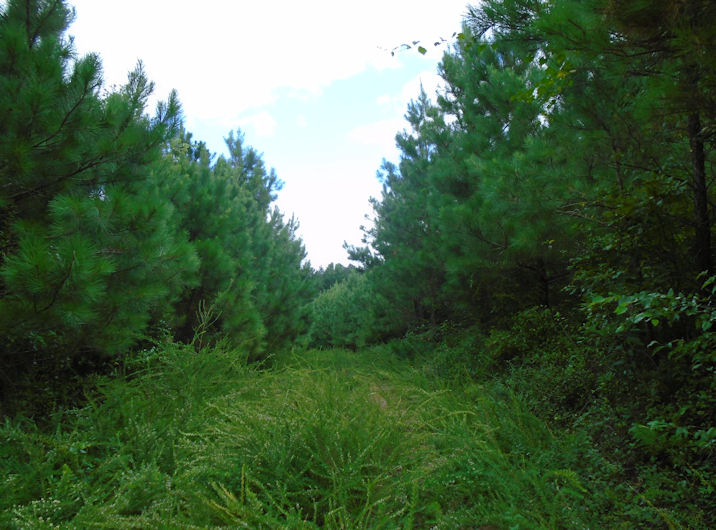
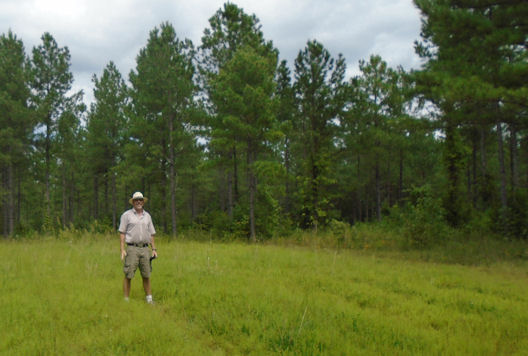
The Tobacco Heritage Trail (THT) follows an old Norfolk & Southern right of way in Southside Virginia.  We walked about a mile up and back on the part near the CP tree farm in Brodnax.  Besides the location in tobacco country, I didn’t see much sign of tobacco heritage, but it was a great trail.

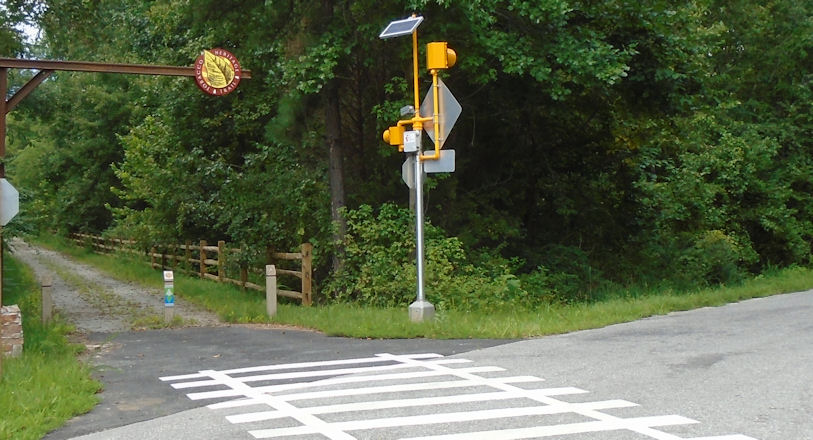
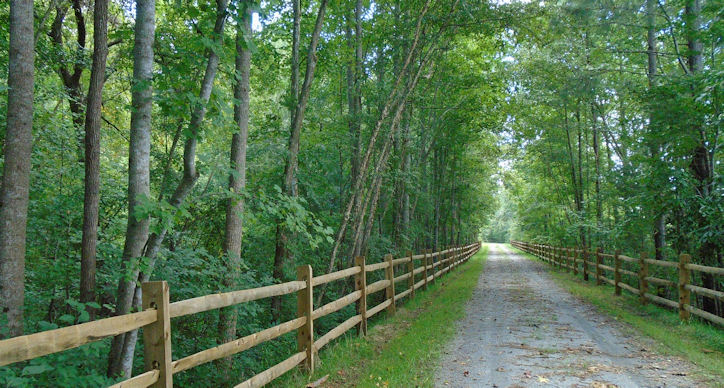
You can see from the pictures that the trail is well designed with some good infrastructure.  The surface is perfect for running.  I think that next time I go down I will try it out.

When complete, the THT will include 174 miles of trail in five Southside counties. The East Coast Greenway will use 55 miles of the trail, stretching from Lawrenceville to Clarksville.
 

First tree farm


My first farm is still my favorite.  I have had the pleasure of watching the progress.  The plantation trees, about 110 acres, were planted in 2003.  They were the loblolly super trees of 2003.   New varieties have since been developed, but these are good.  There were also some management benefits.  We did pre-commercial thinning and applied biosolids back in 2008.  I thought that this was good timing.  There is enough fertility in the soil for the first five years because the young forest is living off the decaying brush from the cut.  The biosolids gave the boost when needed in the fifth year.   We can probably do the first thinning early.

2014 was a good year.  It was an unusually cool and wet summer.  I was surprised this morning when I went out and actually wanted to wear a light jacket in the early morning.   This is August in Virginia.   It is supposed to be hotter than this.

The trees have gone through a phase transition this year.  They have now mostly closed the canopy, i.e. they are shading out the lower branches.  You can see the difference now because you can see into the woods.

About a third of the land – 68 acres out of 178 – is contained in stream management zones or other non-commercial uses.  This part changes less.

One thing I have noticed is that there is generally less water in the intermittent streams.  I think this is because the pine trees have grown.  Their branches are intercepting more of the rain and their roots are soaking more of it up.   Nevertheless, it was been wet and you can see the evidence of lots of water.  There is mud and sand pretty far up the hills and even on the little stream, you can see that the water flowed over and around the usual beds.

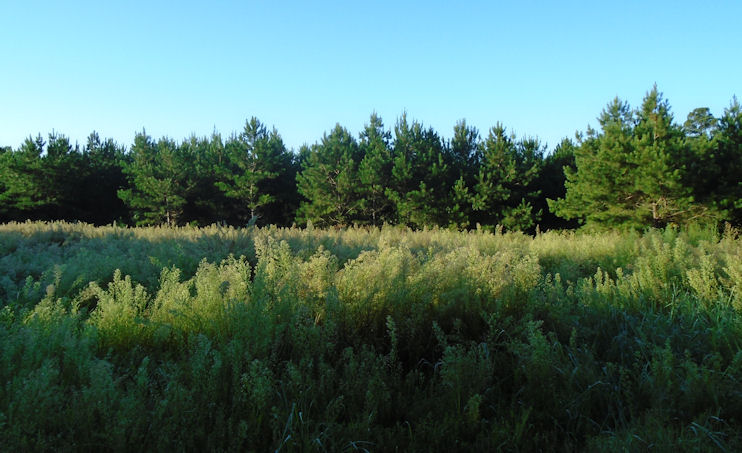
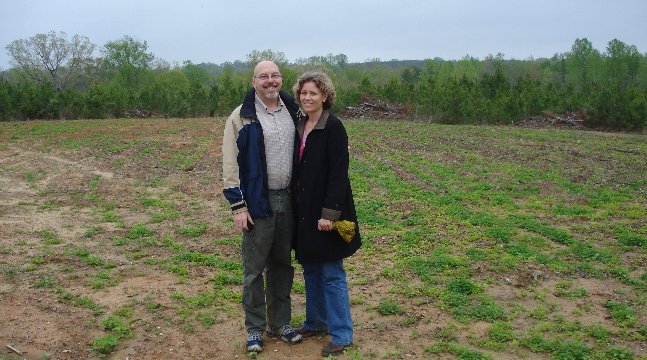
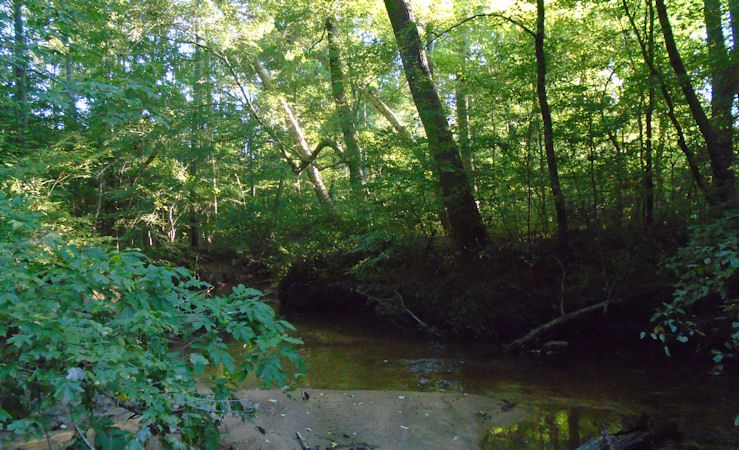
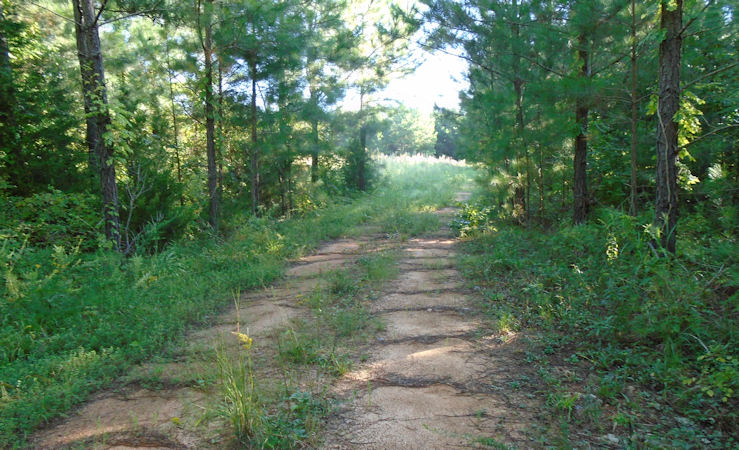
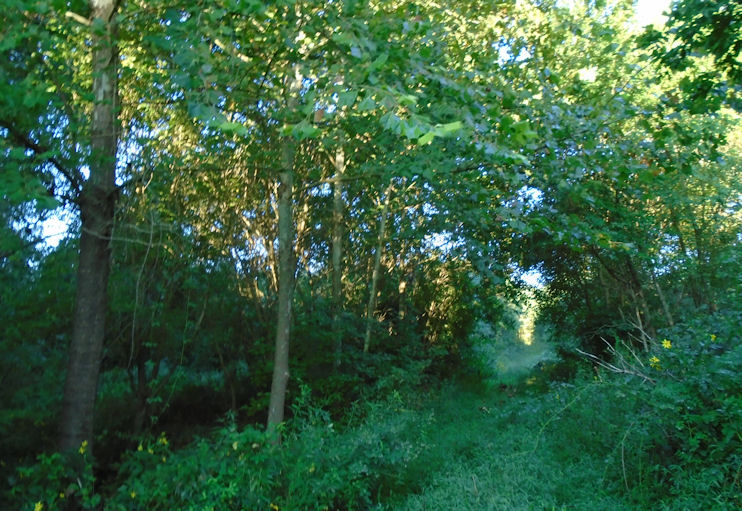
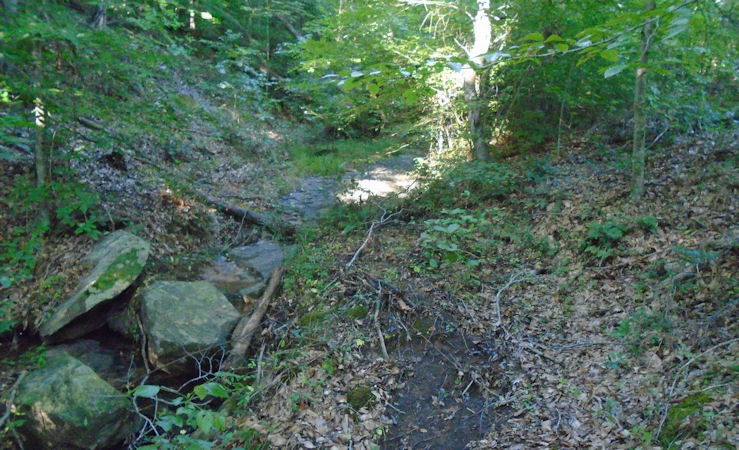
My top picture shows the trees from one of the food plots, now a bit overgrown.  Right below is the plot when it was first established with clover in 2008. Below that is Genito Creek.   It has a muddy-sand bottom and flows back and forth, undercutting each bank in turn and meandering across a fairly wide area.  Next is my road. You can see the way the water made ripples with the pine needles.  Below are the sycamores along the path. The path is now covered with vegetation.  Finally, the bottom picture shows how the water ran out of the stream bed and over the bank.  This little stream stays where it because the lower bed is solid stone.  This is one of my favorite places.  The water makes beautiful music.

Virginia tree farms

Coming up from North Carolina, we arrived today at the tree farms. It has been a cool and rainy year in Brunswick County and the trees have done very well.  They are clearly bigger.  The trees on the CP property have reached the stage where the canopy is closing.  Above is the property now and below is the same view nine years ago.

The road is overgrown.  I like it.  The surface is still hard underneath and you can drive on it w/o any trouble, but the vegetation is holding the dirt down a little better.  I expect that it will get worn down during hunting season, when the road gets more traffic from the hunters’ trucks.

Speaking of hunting, the local guys think it will be a good year for deer.  And several members of the hunt club are going after bear.  We saw bear tracks on the farm for the first time.  They have seen a big bear near the farm and one of the guys in the club got a picture of four bears with his wildlife camera.  Bears were gone for 100 years. They are making a big comeback.  I am not fond of them.  I don’t like anything in my woods that could beat me in a fair fight.  They say that the bear is more afraid of me than I am of the bear.   I don’t think that is true.

One of the hunt club guys killed a bear with a crossbow last year.  It took five shots to finish it off and it was still trying the chase the guy up a tree after the fourth shot.
Chrissy insisted that we buy a can of bear spray when we were out west. We didn’t see any bear, but I still have the spray.  Maybe I will start taking it with me.

The local forestry business is good. Markets are good for wood and wood products.  A big help has been chips and pellets.  We are exporting pellets through the Port of Chesapeake.
I talked to a woman whose father buys white oak for Jack Daniels to use in its whiskey barrels.   I have white oak.  I don’t think I can make too much money from it, but I think it would be really cool to know that my wood was used for making whiskey barrels.  She gave me the contact and I will give him a call.

Great Smokey Mountains

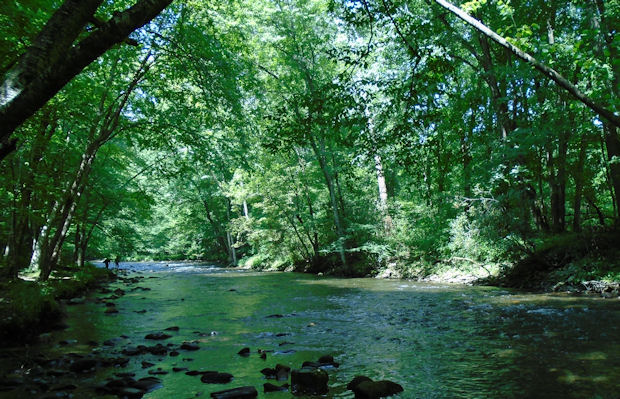
The land now occupied by the Great Smokey Mountain National Park was once the home to mountain farms and mountain people.  The area was relatively healthy because the altitude kept the disease rates lower.   Fast moving water provides less habitat for germs and disease carrying insects.  Families were large and farms were divided and subdivided.  The soils were not generally good, so it got harder and harder to make a living.

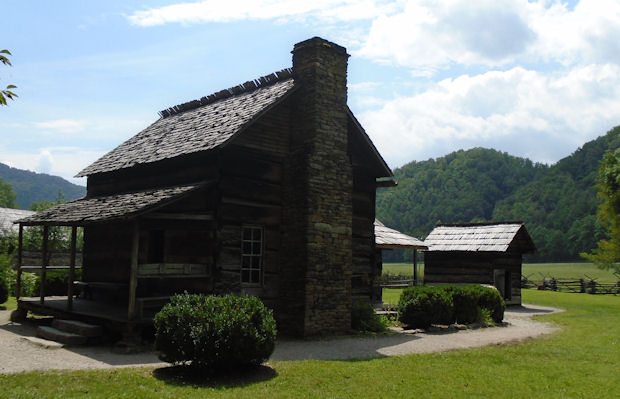
Timber companies cut much of the forest and by the time the park was started there was no much left.   It has since grown back, as you can see in the pictures.  Park authorities have reconstructed a mountain farm by bringing buildings.

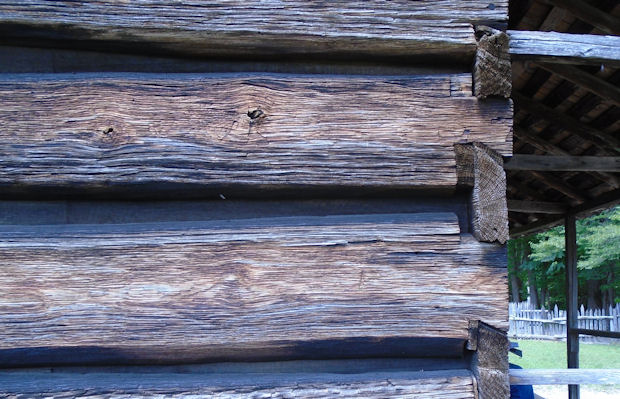
The cabin you see was built around 1900 our of local chestnut, which was very common back then.  The guy who built it carefully cut the edges of the wood so that it fit together very tightly.   It took him two years to complete.

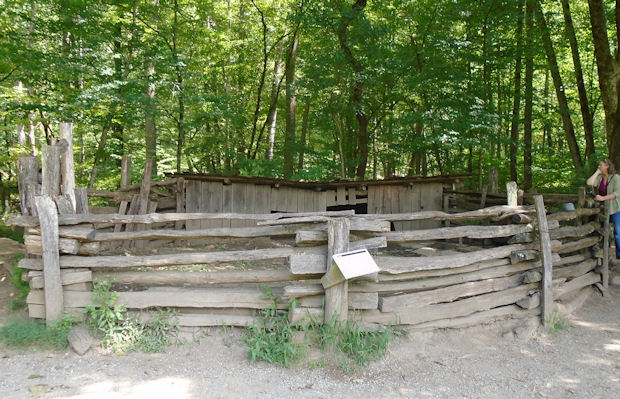
“This is the worst pigsty I have ever seen,” my mother used to say of my room.  Most mothers are experts on pigsties, evidently.  The picture nearby shows a real pig sty.  The pigs were not kept there all the time.  During the summer, they were allowed to run free in the woods.  Pigs are very self sufficient – and destructive of the forest.  They would round up the pigs in the fall.

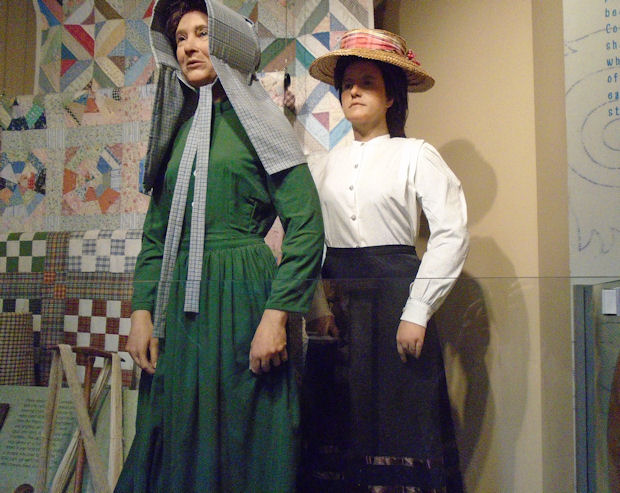
Life improved for the mountain people when they could buy things from Sears mail order.  The picture above shows the styles.  We sometimes idealize the simple life of people like those of these farms.  They do too – in retrospect.  But life was tough. As soon as people could leave, they did.  And when they could buy from Sears, they did.  It is well to remember that if other people think your lifestyle is picturesque, you probably having a hard life.

Tennessee Valley

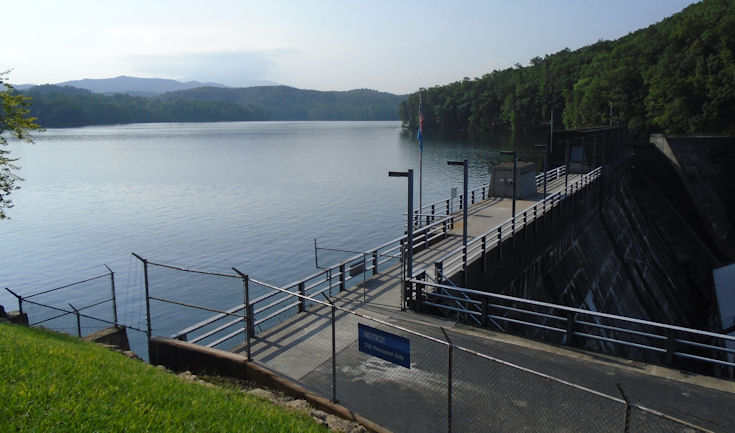
Work started in 1910 on this dam and was completed eighteen months later. Ocoee No. 1 was one of the first hydroelectric projects in Tennessee, and remains the oldest dam in the TVA system. It is another example, BTW, of how we used to be able to do things much faster. Could we build anything like this in only 18 months today? We could not even hire the lawyers in that time.

I always thought of the Tennessee Valley Authority as part of the New Deal and it was. But I learned that some of it was in place much earlier. As I reached back into older parts of my memory, I found that I never really knew much about it. What I did recall came as part of general lecture on the New Deal, which back when I was in HS and college was taught as just mostly a good thing. My cursory research on the subject indicates a much more complex and interesting subject. You could write whole books on it and some people have.

Wendell Wilke, who ran against FDR in the 1940 race, was one of the big players in the power generation industry. He was FDR’s big opponent in the TVA. The man was a genius and I wonder how different the world would have been had he been elected in 1940. Would he been able to bring the War, which would have come to the U.S. sooner or later, to the successful conclusion that Roosevelt did?

I greatly admire Roosevelt’s leadership prior and during World War II and have read many books on the subject. Among them was one called “Rendezvous with Destiny,” which describes how FDR used personal envoys to understand the unfolding events of World War II and to communicate with foreign leaders. Among his envoys was Wendell Wilke. FDR wisely used Wilke to strengthen his domestic base, and make his efforts more bipartisan. But he also chose Wilke because he was right for the job.

Anyway, these are big questions to be provoked by looking at a dam. I will study up a little on the subject and have just one more area of expertise whose principle value is to bore the people I talk to.

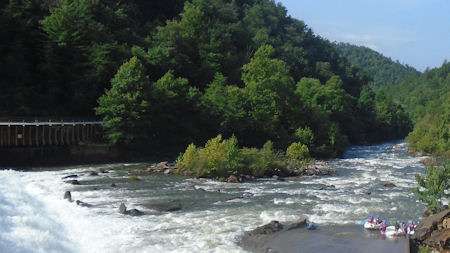
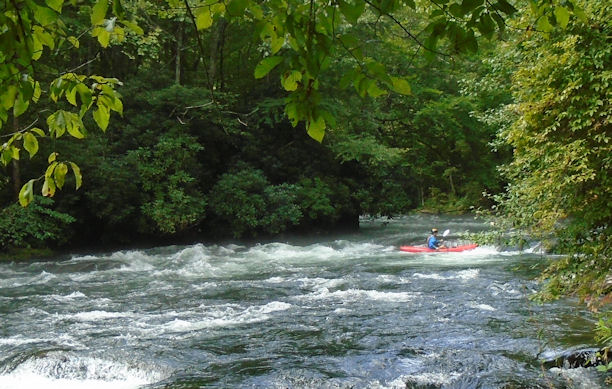
Anyway, the area is also used for white water rafting. We saw lots of people doing that. I understand that the water levels are high this year, which makes for a better ride.

Elvis’ birthplace in Tupelo

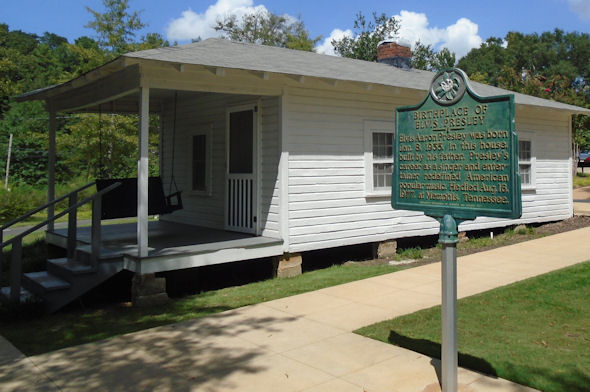
Most people in the past were poor, of course some were poorer than others and among these was Elvis Presley.  We went to visit his birthplace in Tupelo, MS.  It has two small rooms w/o a bathroom.  We could compare it to one of those camping cabins you can rent in national parks, except Elvis’ family lived here all the time and it was not as nice.

Yet Elvis turned out okay. Even before he became a famous singer, he stayed out of trouble and worked to earn money for himself and his family.  He had serious problems with substance abuse, but he was a fundamentally a good man, who was generous to his community and did his duty, for example serving his time in the army.

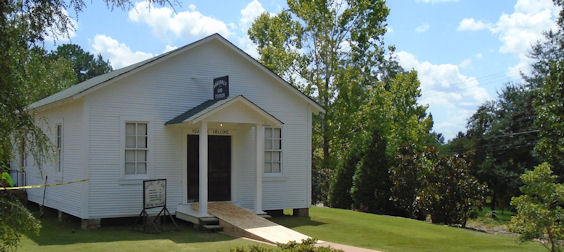
I think the difference might have been his religious upbringing.  The little church gave him stability his family otherwise could not have provided.  The church was also responsible for his musical education and hence for his success in later life.  Elvis himself credited this.  He made a whole album of hymns in tribute to his upbringing.

Elvis remains a cultural icon.  He died before most people alive today were born, but his image is still current.  I saw Elvis one time, at least I think I did.  He was driving down East Washington Avenue in Madison.  People were lining the route and I joined in.  The King waved in my general direction.

BTW – Elvis was literally born in that house, not the hospital.  He has a twin brother who was stillborn.

BTW -2 – speaking of being poor in the past, we have made fantastic progress in the last decades. We like to claim that poverty was gotten worse, but imagine someone living in Elvis-like conditions today.  This probably happens in America today, but not often.  In Elvis’ time is was normal for the working poor in many places.  This improvement in the general condition is also why most old people can claim to have been poor in their youth.  A middle class family in 1955, the year I was born, would be considered living in poverty today based on what they could consume.  Of course, man does not live by bread alone.  Elvis was abysmally poor, but his life was rich in many ways because of his family and church.

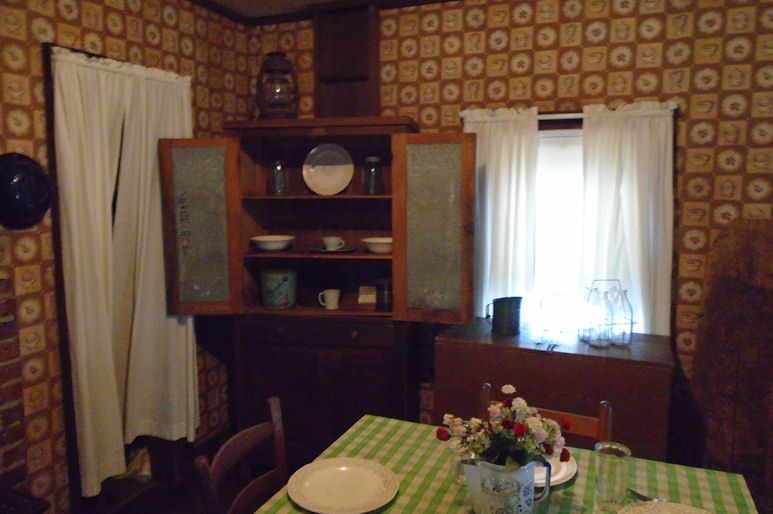
My pictures show Elvis’ house, church and kitchen.   The kitchen looks bigger than it was, since I am standing with my back against the wall.  It was also one of only two rooms.  The guide told us that in Elvis’ time there was no wallpaper.  During the winter, they put up newspaper to cover the cracks. In summer they took it down to let the breeze blow through.  They heated and cooked with coal, which must have really made the place unpleasantly greasy and dirty.
William Faulkner & Oxford, Mississippi

I read excerpts and absorbed a lot of his work when I worked at a bookstore in Madison when I read the backs of lots of books and introductions.  But I never completely read any of Faulkner’s books.  We went to Oxford to see Faulkner’s house because Chrissy wanted to go.  After the visit, however, I went and bought “The Portable Faulkner” and I will spend the next couple of weeks completing this part of my incomplete education.  BTW – I learned from the guy at the bookstore (they have a whole Faulkner section) that the portable Faulkner was instrumental in reviving his career, so I picked the right work.


Faulkner was really his own man.  I respect that.  He didn’t graduate HS, although they let him into university anyway after he came back from WWI.  He said that he was largely self-taught and it seems he was.


There was a quotation at his house that I liked.  “…writing is a solitary job – that is, nobody can help you with it, but there is nothing lonely about it. I have always been too busy, too immersed in what I was doing, either mad at it or laughing at it to have time to wonder whether I was lonely or not lonely, its simply solitary. I think there is a difference between loneliness and solitude.”


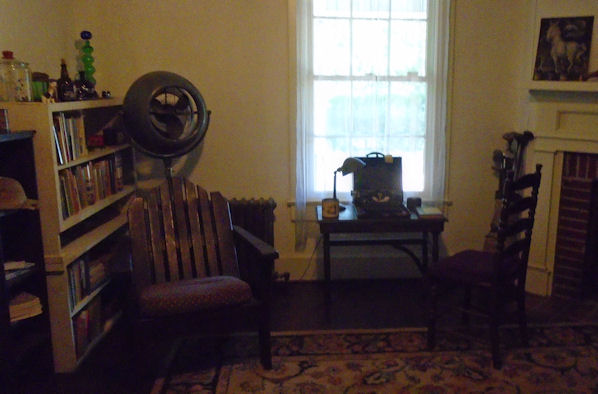
Not many people visit the Faulkner place and it is not obviously easy to find.  You get to a kind of dirt road and walk.  The house is certainly southern style.  Faulkner disliked air conditioning and never allowed it to be installed.  They have air conditioning now.  It must have been hot w/o it.

Oxford Mississippi is a charming place.  We had lunch at the Ajax Cafe, which is an authentic diner.  We didn’t know it was THE place to go, but we noticed a line.  Following the old Eastern European custom, when you see a line you figure there is something valuable, so we got in line and it was valuable.

But the best part of the square for me was the Square Bookshop.  It is how a bookshop should be, with employees who know and love books, lots of pictures of authors and pleasant understated music.

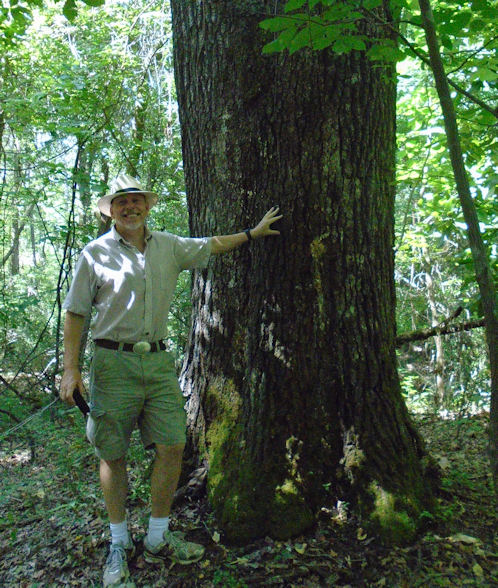
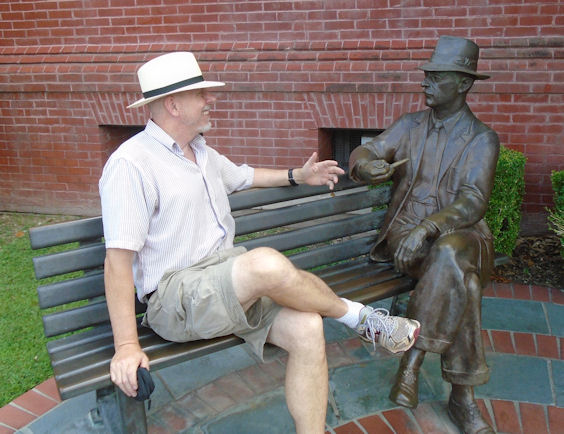
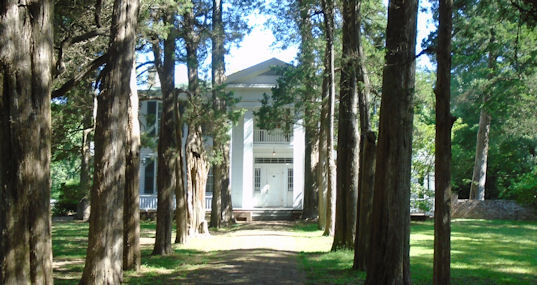
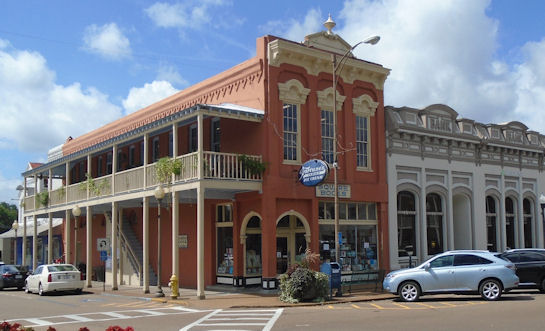
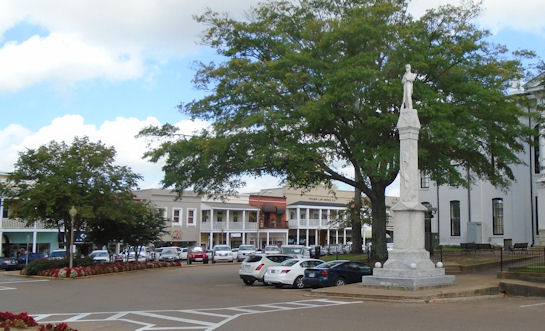
My pictures show William Faulkner sitting with me on the bench on the square, the books shop, Faulkner’s house “Rowan Oak” and a big oak tree in the woods near the house.  The cedar trees lining the path were planted after the big yellow fever epidemic in 1878.  They thought the trees were healthy.  The big oak is one the big trees in the forest near the Faulkner house.  You can see the big oaks with lots of smaller trees around. It is natural succession at work.  We walked in the woods. It was very nice.  It is hot and humid, with that languid smell and feel of late summer in the South.  I used to dislike it, but I now appreciate it for what it is.  The trees grow well and even ferns on the trees.

Memphis

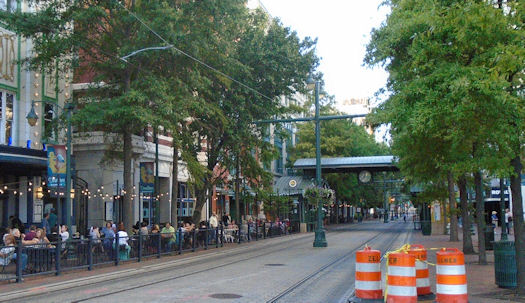
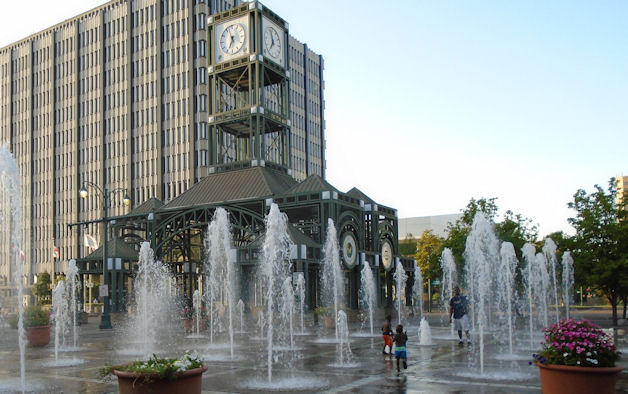
Memphis has been renovated.  The area near the river is now occupied by nice condos.  The Main Street is really nice and clean.  Even Beale Street is starting to seem family-friendly, at least for families that don’t strongly object to beer.

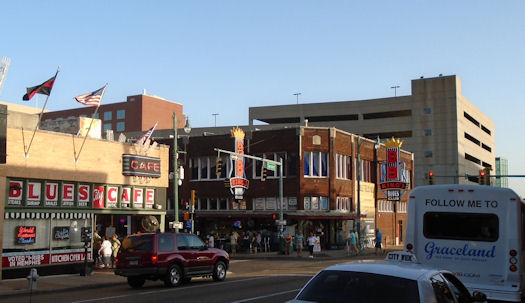
We ate at the Blues Cafe on Beale Street, walking down from our hotel about a quarter mile away. It was a pleasant walk.  I have learned to enjoy even the heat and humidity and there was plenty of that available.

There are still lots of street people around. They are actually friendly and helpful, i.e. they tell you about the attractions and give useful advice.  I gave away a few dollars and don’t really mind giving the money.

Chrissy in unenthusiastic about my engaging with them, but some of the guys are fun to talk to.  It is a kind of profession with reciprocity.  Anybody who tries to make me feel guilty gets nothing.  I look for good stories and/or local information.  One time I gave one guy $20 after he told me a long story about how he was coaching a girls’  basketball team, whose bus had broken down and he had gone out to get repairs, but somehow got lost … What made him useful to me was what he told me about the neighborhood.  For a guy who was lost, he had an astonishingly detailed knowledge of the local area. When I gave him the money, I laughed and told him that he should repair a few holes in his story.  He insisted that it was the truth.  Maybe it was.  Maybe Sasquatch is real too.
But I don’t like people calling out to me.  Politeness dictates that I have to acknowledge them and then they start with the tales of woe that end with the need to hand over a few bucks.

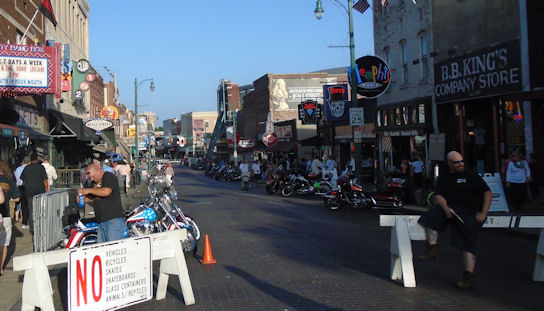
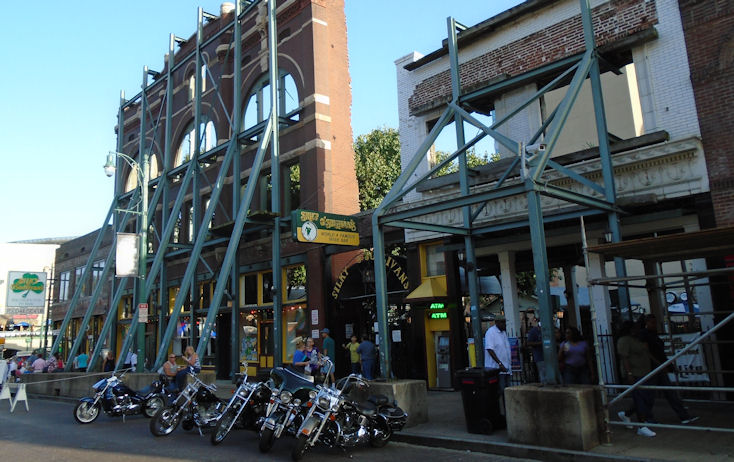
Pictures are from around downtown Memphis. Above shows how they maintain the old look while making the insides nice and modern.

Bartlesville, OK

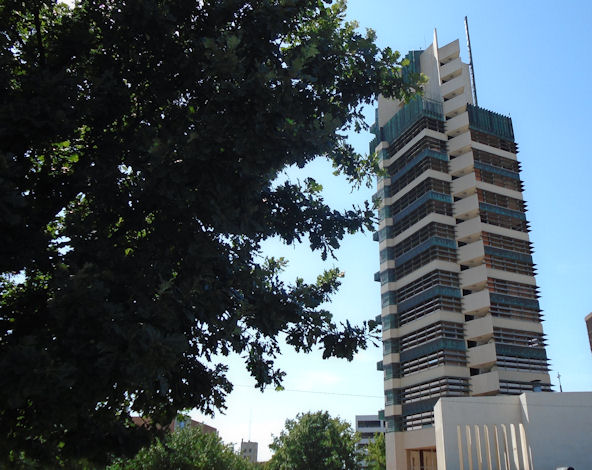
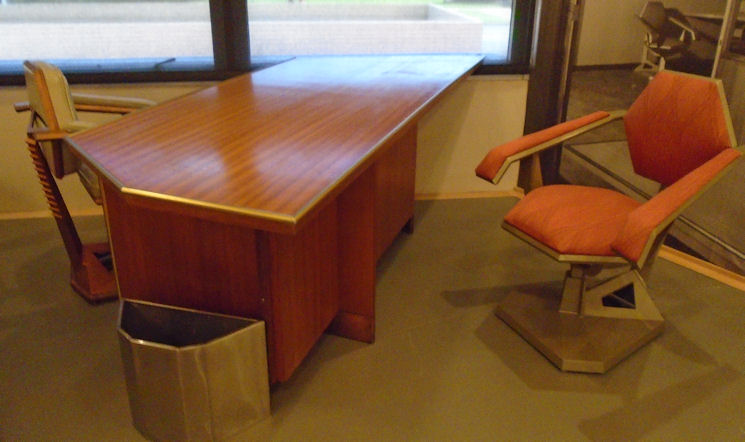
The closest “big”city to the tall-grass prairie is Bartlesville, Oklahoma.  It is a nice little city, very clean and neat with ample parking.   The biggest attraction in the city is a skyscraper designed by Frank Lloyd Wright.  It is called the Price Tower.  It is his only skyscraper.  Like most of his designs, it looks better on paper than it works in real life.  You can see the building up top. Below is some furniture designed by FLW. IMO, any office chair w/o wheels is not worth having.

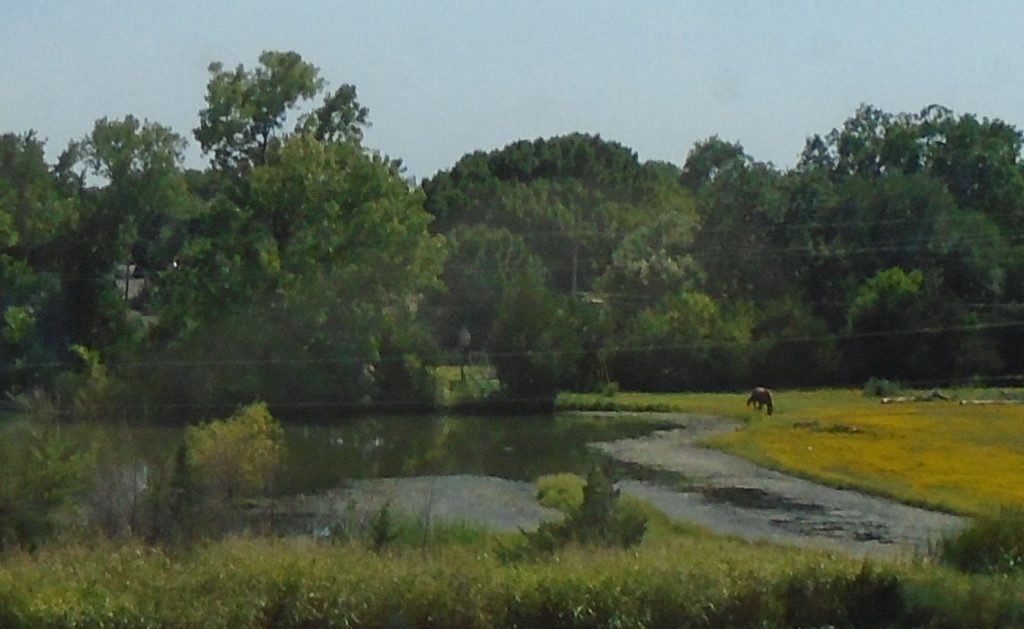
Chrissy & I had some drinks at the top of the building in the Copper Restaurant.  We stayed at the Fairfield Inn in Bartlesville.  It was a nice place.  We like the Marriott hotels.  This one was in a strip mall area, not particularly interesting, but out of my window I had a nice view, a pond with horses that you can see below.

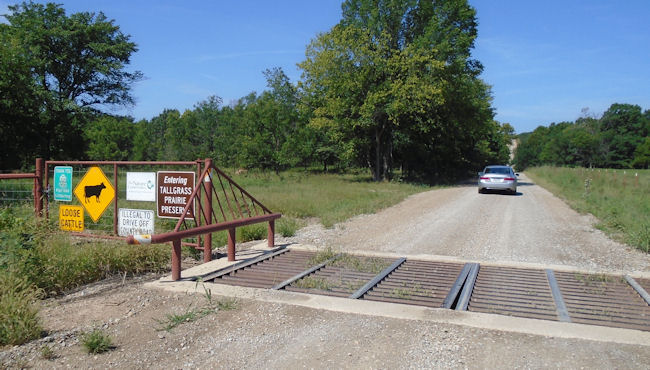
Buffalo tall-grass prairie

I have been donating to the Nature Conservancy for more than twenty-five years. The donor relations manager was nice enough to invite me for coffee and ask if there was anything she could do for me.  There was.  I wanted to visit the Conservancy’s tall-grass prairie.  Actually, anybody can visit the unit, but her call meant that I got a special welcome and tour.

The unit is in Osage County.  The land was never plowed.  This was not due to any particular foresight but rather because the rocks are very close to the surface, making plowing difficult.  It was a working cattle ranch, however.  The people at the unit told said that the cattle ranch owners had been good stewards of the land.

I will let you read details of the tall-grass prairie at this link.

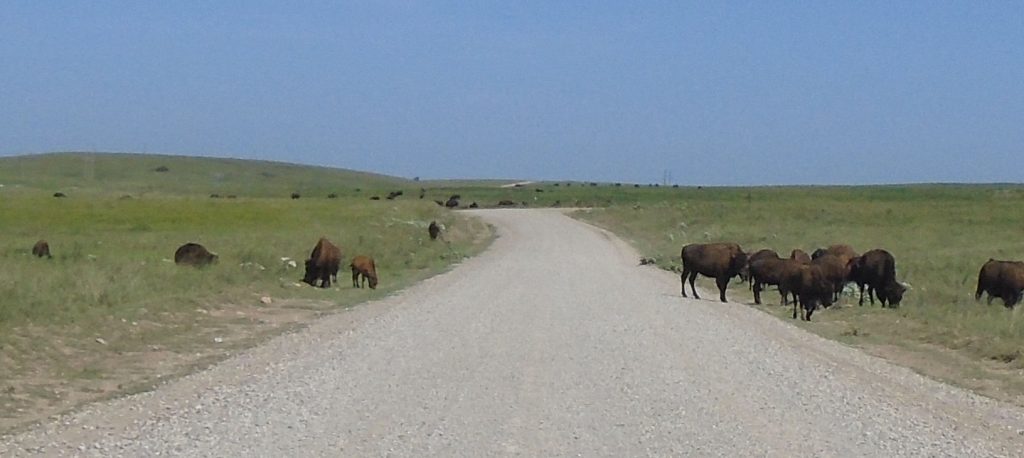
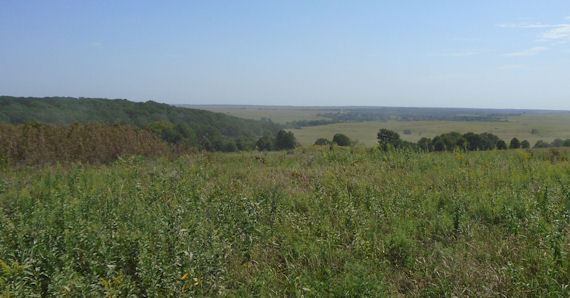
Today the cattle are gone, replaced by bison, as you can see in some of the pictures. The land is managed for tall-grass prairie, which requires fire and grazing.  The tall-grass prairie is a particular ecosystem.  As the name implies, it is dominated by tall grass, big bluestem.  Bluestem grows 6-9 feet tall, with roots about that deep too.   This means that it can withstand drought and burning.  It REQUIRES burning.  Tall-grass prairies are located in regions with enough rain to support forests.  W/o burning, the trees would take over.  As you can see in my pictures, the system has both trees, mostly oak, and grass. They coexist in dynamic tension.

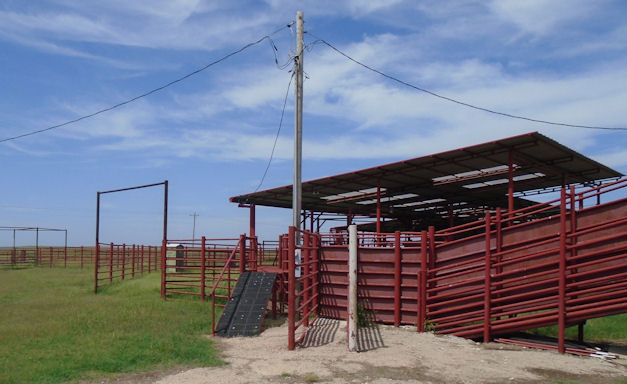
W/o grazing, the prairies would be much less diverse and robust.  Big grazing animals, bison in the old days and cattle etc now,  fertilize the soils, spread seeds and help push them into the ground.  Bison also provide little wallows where water accumulates.   The bison also support the unit. Each year they cull about 700 animals from the herd so that they do not exceed carrying capacity.  The culled bison are auctioned off.  The round up the bison every fall, to give them vaccinations, check them out and cull some. Above shows the pens where this is done.

TNC has done a great job of restoration.  They are also doing ongoing research in cooperation with Oklahoma State University and others.  One of the best things about TNC is its cooperative nature. They partner.  In this case, local ranchers are seeing the benefits of some of the land management techniques and working with TNC to expand the area of sustainability.

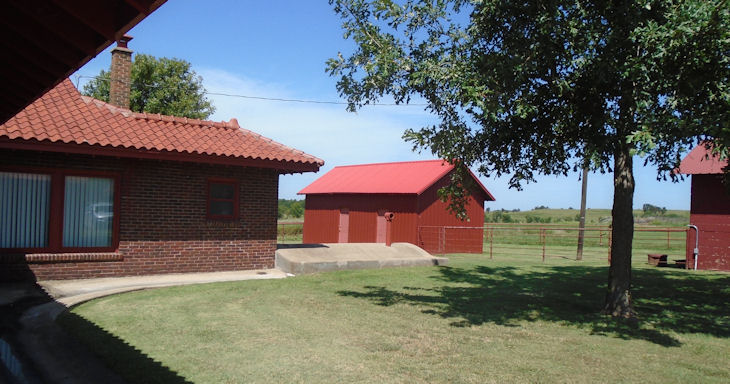
The original ranch has an interesting history.  We saw a painting of cowboy actor Ben Johnson.  He played along side John Wayne in many movies, including one of my favorites, “She Wore a Yellow Ribbon.”  He was a real cowboy and he worked on the ranch here.  His father was a ranch foreman.