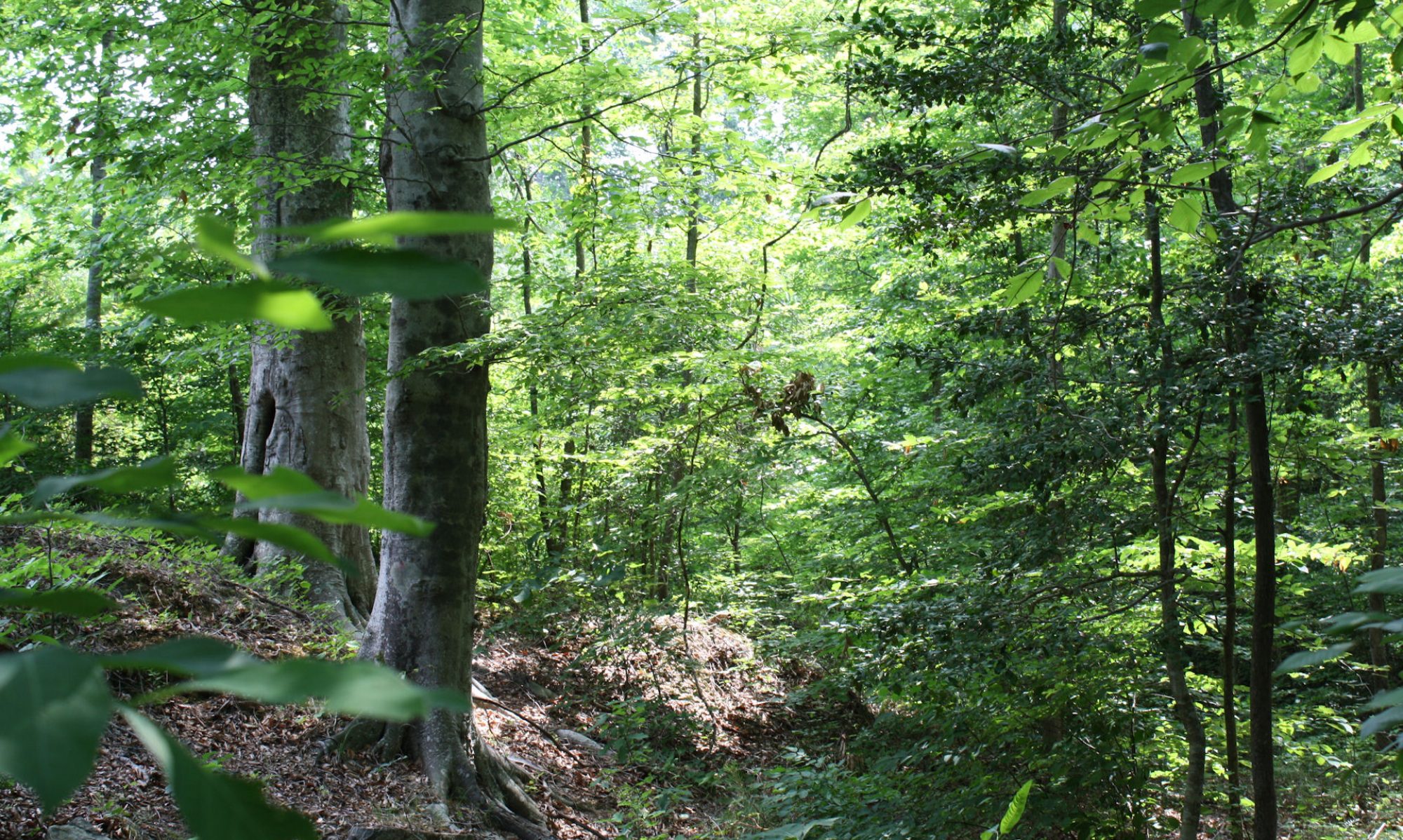
Japanese honeysuckle is very pretty and it has a sweet fragrance. That is probably why gardeners planted it all over the East Coast. I suppose its robust vigor was also a factor, but it is precisely that aggressive robustness that makes it such a formidable invasive species.
I didn’t hardly even notice it growing on the CP last year, as I pulled down the trumpet and grape vines. But these earlier infestations were small potatoes compared to the Japanese honeysuckle, which seems to have grown exponentially this spring. That’s the way exponential growth works. As it doubles and redoubles, you don’t see it until it is too late to stop before it covers everything. Well, it isn’t quite that bad, but I can’t just let it stand. I ordered some “Chopper Gen2 and next week the boys and I will go and address the problem using the backpack sprayers.
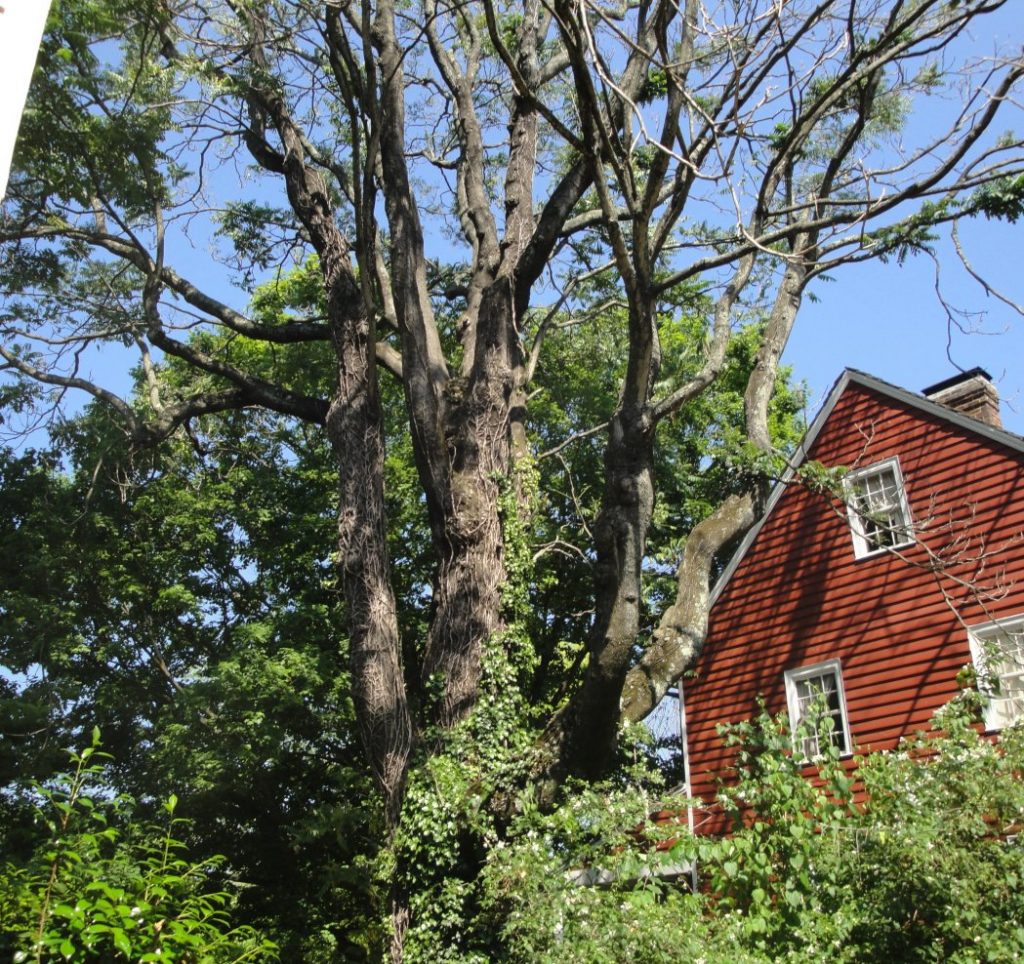
Chopper Gen2 has evidently replaced Arsenal AC in the constellation of BasF forestry management products. I have been reading about vegetation control. The Japanese honeysuckle has to be controlled; otherwise it will climb and bend the trees. If we set it back this year and maybe next, the trees will be big enough to mostly shade it out. We have more or less defeated the tree-of-heaven infestation. There still are a few of them cropping up and we can zap them with Chopper too. BTW – the picture along side is a tree-of-heaven in Old Salem. This is the biggest I have seen. They are not bad looking trees and are fine – in their place, which isn’t in the woods.
I was hoping to burn out the honeysuckle, but the guys at the tree farm committee told me it would be a bad idea. My trees are still a little too small. A prescribed fire could work, but any bad luck might kill half my trees. It isn’t worth the risk. I got enough chopper for the whole farm for just over $200, so along with my in-house labor force, waging chemical warfare against the invasive species will be the way to go. My research shows that Chopper Gen2 is much better than the first generation, both in its effectiveness and it benign environmental impacts. It also gives the kids some stake in the place. Espen and Alex still brag about their hard work in fighting against the tree-of-heaven and setting down the streambed rip-rap.
Invasive species are one of the most threatening environmental problems we face. They have a greater impact than the projected consequences of global warming, but it is not as cool to “rock against” honeysuckle or phragmites. Most gardeners are complicit in the invasion. I planted some wisteria on the mailbox shelter across the street from my house. It looks good and grows well. Many of the invaders are indeed better than the natives, but they can get out of hand.
Money can’t buy happiness. Beyond minimum levels, people do not become happier as their countries get richer. Studies show, however, that those who have relatively more money compared to their peers tend to be happier, no matter what the general level of wealth. Maybe everybody has got to have somebody to look down on. Maybe we feel threatened by the success of others because we are just big bipedal apes we still see our relative status in Darwinian terms. Or maybe knowing that we have earned what we got has something to do with it.
Don’t underestimate the power of envy & resentment (people often dislike those who do better than they do) but don’t think that there is no more to life than greed and material considerations. I attended a good talk at AEI discussing the morality of free enterprise.
Brooks mentioned the studies I alluded to up top about how people feel good about their own success mostly in relation to others, i.e. the rich are happier, but then he took the numbers apart. It is not being rich that counts; it is the idea of earned success. People need to feel that they have done something useful to get what they have got. And it really doesn’t have that much to do with money.
Money & relative status just tend to correlate with the feeling of earned success because those are often the rewards of earning. But correlation is not causality. People engaged in what they consider a good cause or good work also can achieve the feeling of earned success even if it doesn’t pay well. Satisfaction is common among skilled craftsmen, who use their skills to create something special. People often report more satisfaction working to achieve something than in the achievement itself. We want to fight the good fight and prove our character.
Brooks cited studies showing that lottery winners didn’t win long-term happiness along with their Powerball millions. After the euphoria of the first few days, they drift back to their previous levels of happiness, only with a little less joy. Unhappy lottery winners is a cliché and maybe it says more about the type of people who “invest” heavily in lottery tickets than it does about winning. But Brooks also mentioned studies that looked at people who came into unexpected inheritances. These people were presumably a different group but the results were the same. This makes sense anecdotally. Paris Hilton has piles of money, but she doesn’t seem to have much soul. You can have piles of money and still know you are not worth very much and that hurts.
All human civilization is based on reciprocity. We cooperate together because we are better off when we help each other. Our primitive ancestors learned that before we were even fully human. If I share with you when I have a successful hunt, you will share with me when I don’t. Reciprocity doesn’t have to be perfectly symmetrical. Good parents get joy from giving to their children w/o the reasonable expectation of ever recouping their investment. Most of us leave tips in restaurants even in places we will never return. Most of us like to be generous. But we do these things with the implicit expectation that there will be some kind of balance and most of us hate “free riders,” people who give less than they should and try consistently to sponge off others. Among our primitive ancestors, such shirking was easy to detect, and consistent shirkers might end up smilodon lunch. Reciprocity was an evolutionary plus. The idea of reciprocity is programmed into our cultural DNA and maybe our actual DNA. Good people feel an obligation to return good for good. Those who don’t care about these things we call sociopaths.
That is probably why earning your own way is important, why nobody really likes equal outcomes for unequal effort and why you cannot buy self respect. You can achieve monetary success through luck, dishonesty or the kindness of strangers, but unless you feel you earned it, it won’t buy you happiness.
I don’t understand “good wine.” I tend to like sweeter wines, which are considered “cheap” and less classy. I also like the “oak” flavors. Chrissy and I went to the wine tasting at the Biltmore. They gave us a kind of a checklist. I thought that three of the wines were okay: a Biltmore Estate Chardonnay, a Riesling and something called Tempranillo. Some of the wines come from North Carolina grapes, but others are California wines according to the Biltmore recipe. I think that means that they put it in bottles at the estate. You got a special deal on three bottles, so Chrissy bought one of each.
I don’t know how they will be in larger quantities. Lots of things taste good in small amounts, like they give you on the tastings. But we got it now, so I guess I will see. I would have enjoyed a beer tasting. I know I like beer in larger quantities.
When I was in Warsaw I got to take part in a bourbon tasting, sponsored by Jim Beam. The organizers told us lots of stories and legends about bourbon and the various kinds of bourbon. I think they made some of them up, but they were good stories so why mess with the legends. You really can tell the black label from the white label bourbons, but only if you drink one right after the other. A good time was had by all. The Jim Beam guys were smart. They had a lot of their wares for sale and offered them while everyone was in the type of exuberant moods provoked by whiskey tasting. I bought three bottles of higher-class/higher-price bourbon than I would have normally.
I learned a little. Bourbon is aged in warmer places in North America. It is good to go in seven years. After that, it gets a little harsh. Scotch can be aged up to 18 years, since it is cooler in Scotland. But it doesn’t get any better after that. Actually it doesn’t get much better after 15 years, but paying more for anything over 18 years is a waste of money.
Shakespeare didn’t invent the concept, but he made it famous. I am at number five of the seven ages of man and considering whether or not the concept still makes as much sense in the modern age, when machines and medicines may change the way the whole game is played.
We still think today of the traditional career track, where we settle on a life-work when we are in our early twenties and stick to it until we are in our early sixties. After that we live off a pension or savings and whether we move to a retirement center in Arizona or Florida or whether we age in place, the remainder of our lives are just post scripts from the working/productive point of view. This really doesn’t work anymore.
For one thing, there is a crisis in Social Security and pensions. Franklin Roosevelt was very clever when he sold the country Social Security. It really is a type of Ponzi scheme, but he sold it as insurance and we have had that concept of it ever since. In fairness to Franklin, it was also a sort of insurance, since many workers did not live long enough to collect SS and nobody was supposed to depend only on it. Life expectancy was only 63 when Roosevelt proposed making the retirement age 65. Things have changed.
The last generation that will be able to depend on pensions and Social Security will retire within the next five years. There will not be enough young people to support the old people in the style to which they have become accustomed. “Young people” like me and younger, should expect to work longer and pay for more of our expenses through savings and continued work income and society will have to adjust to accommodate these needs.
As we live longer and healthier lives, as the physical demands of most paid-labor become less onerous and as our retirement funds run out of money, it just makes a lot more sense to keep working.
Staying on the job will mean getting rid of the old career paradigm we have today, as well as blurring the distinction between work and retirement. Most of us won’t be able to keep our current jobs and just tack on a decade or two.
For one thing, we have to move aside and give others a chance. This is especially true of managers and leaders. In the Civil Service, where longevity is rewarded, you often have the sad case a couple of workers growing old together. I say sad because one may have got the job only a year or two after the other, yet he could remain the junior guy for thirty years. We saw a similar higher profile case, BTW, with former Senator Ernest Hollings, who was the junior senator from South Carolina for nearly forty years, serving with Strom Thurmond, who hung around for almost fifty years and turned 100 while still in office.
Another problem is that we just get bored and/or our skills are overtaken by events or technologies. It is hard to keep up with changing requirements. Most of us tend to slow down in our search for improvement after we think we have enough. This makes perfect sense. It is like the old joke that you always find your lost keys in the last place you look … because who keeps on looking after that. Calvin Coolidge said that you should always leave when they still want you to stay and it is very sad if you don’t take that advice.
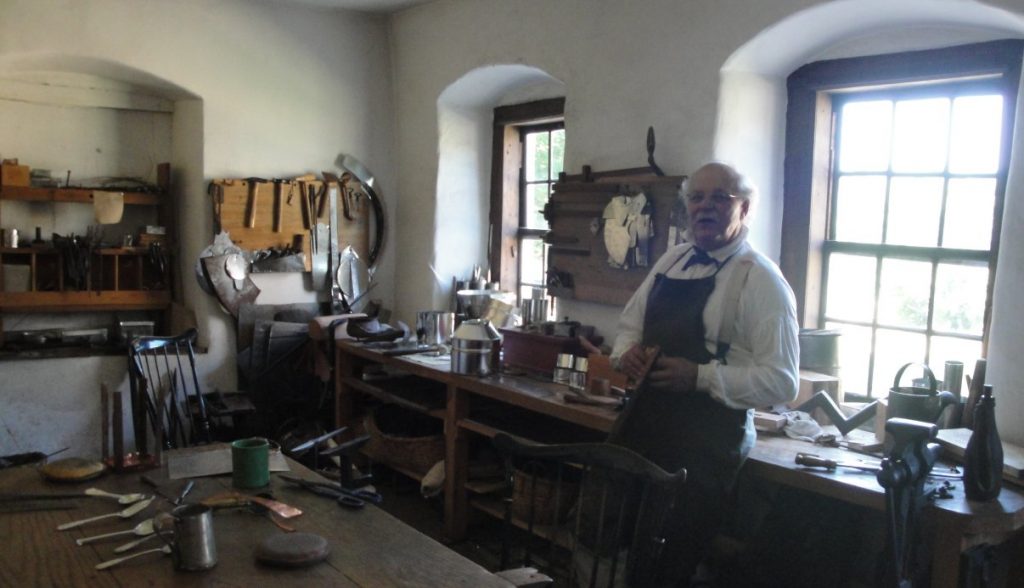
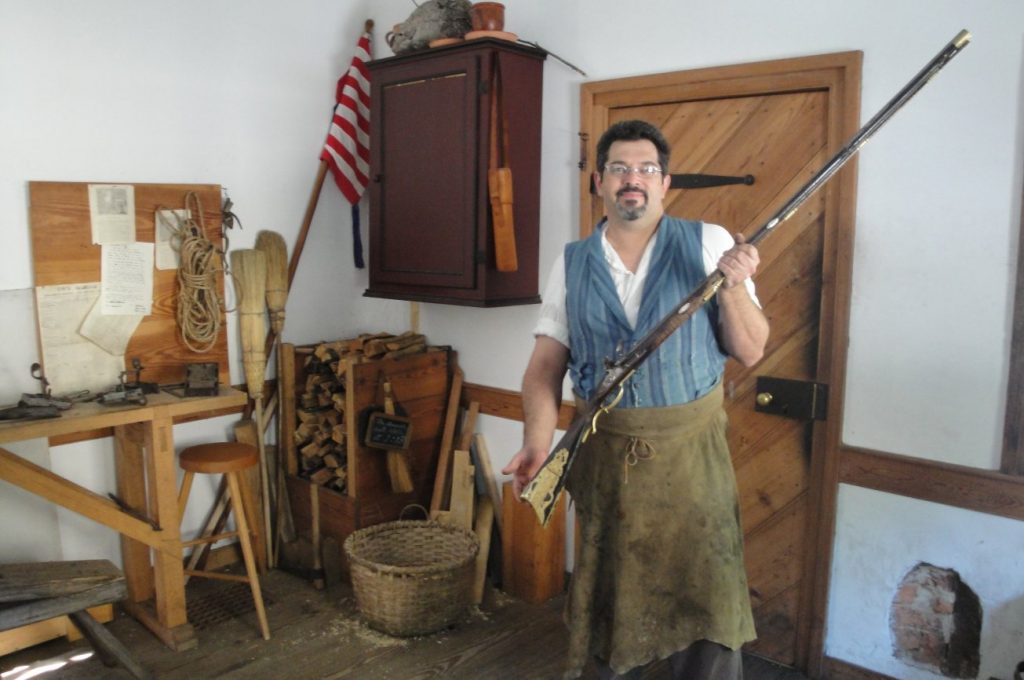
So if most people probably shouldn’t just keep on doing their current job, what should they do? I met a guy who has one of the most perfect retirement jobs. He is the gunsmith/tinsmith at Old Salem, where he crafts guns and tools by hand. He told me that he wanted to be an artist, but discovered that there were more talented people than there were places for them to work, so he went into business. After retirement, he got to indulge his creative side again doing a job and developing skills that keep him both useful and busy. His picture is up top.
Not everybody can get this exact sort of job, but there are lots of jobs that are functionally equivalent. I want to spend some of my productive golden years doing forestry and working on real estate development. My currently amorphous & slow moving dream is to work some cluster development into working forest and agricultural land, allowing them to exist in a symbiotic way. I think too many people are living too far from natural systems and I include in this group many who live in ostensibly “natural communities” that separate the work of man from nature. When Thoreau tramped though the nature around Walden Pond, he and his neighbors were aware of where their food came from and where the wood that would heat their houses next winter was growing. I think we should strive to strike a balance with nature – local nature – not separate ourselves and/or treat nature like part fragile flower in a museum that will be profaned by our touch and human actions. I hope to make that the work of my sixth age. It will be useful and I hope profitable work. I would like to make the kids and (eventually I hope) grandchildren part of that before I shuffle off this mortal coil.
Most people have something like this that they can do and want to do, something that will give them meaningful work until they can work no longer. I want to die with my boots on and I think most people want to keep working if they think about it. Years of leisure sound great until you have to live through them.
The Bible tells us that the lifespan of a man is three-score and ten. That’s seventy years and roughly ten years for each of the seven ages of man. We do better than that today.
If we tweak Social Security rules to make it easier and more lucrative for retired folks to work, I think more of them will. And if we made work rules more flexible to allow more part-time, flexible and intermittent work schedules, we can keep people working for decades past official retirement. New studies indicate that many of us will live to be 100 or 110. We really don’t want to work for forty-five years and then retire for another forty-five years and just wait listening for the steps of the grim reaper. Old people can be assets or burdens to the earth. Increasingly it is a choice get to make ourselves.
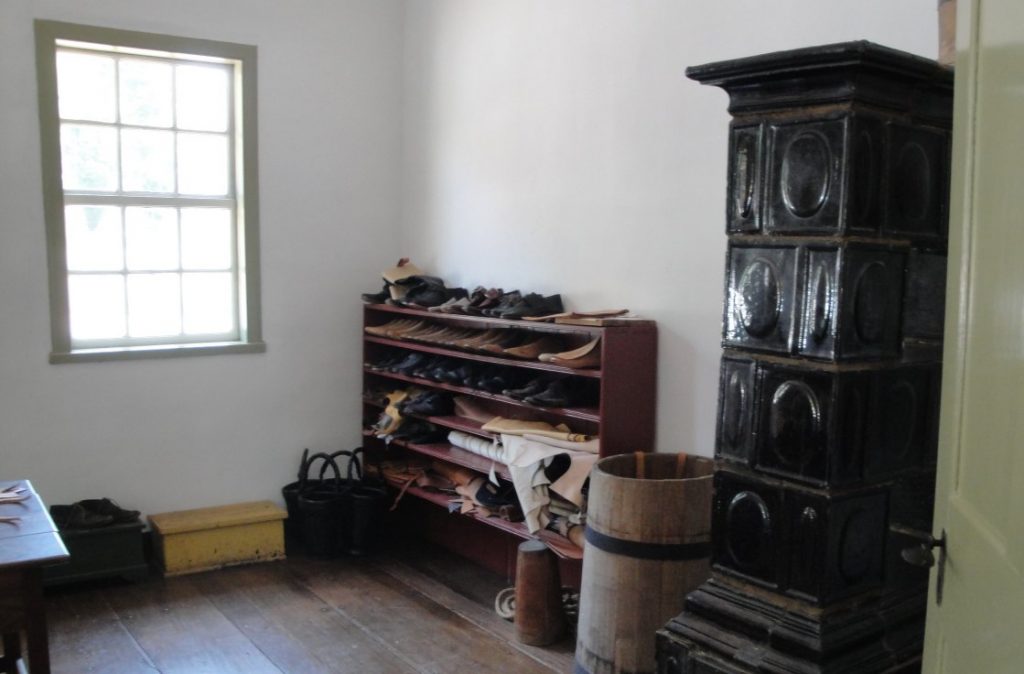
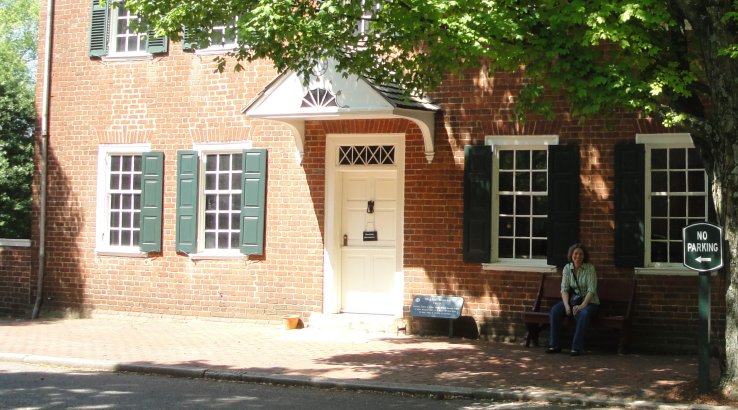
Above is the single men’s workshop at Old Salem. Below is the shoe maker’s room in Old Salem. There is a story about a man who was in a terrible accident. When he woke up in hospital the doctor said, “I have some good news and bad news for you.” The guy asked for the bad news first. The doctor told him, “we had to amputate both your legs.” The guy shouted back, “what could possibly be good news to make up for that?” “The guy in the next bed wants to buy your shoes.”
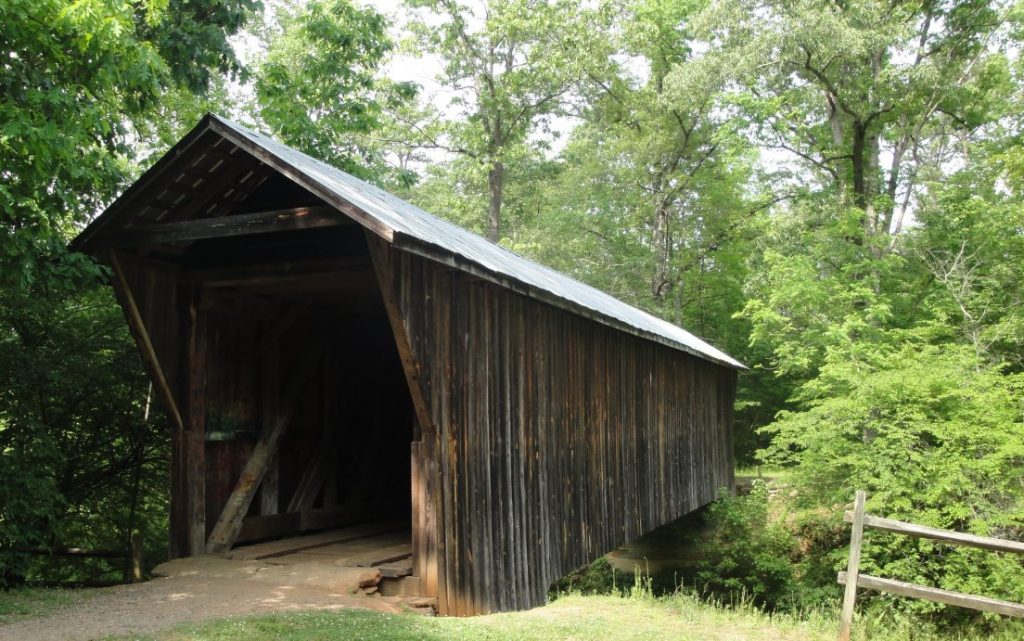
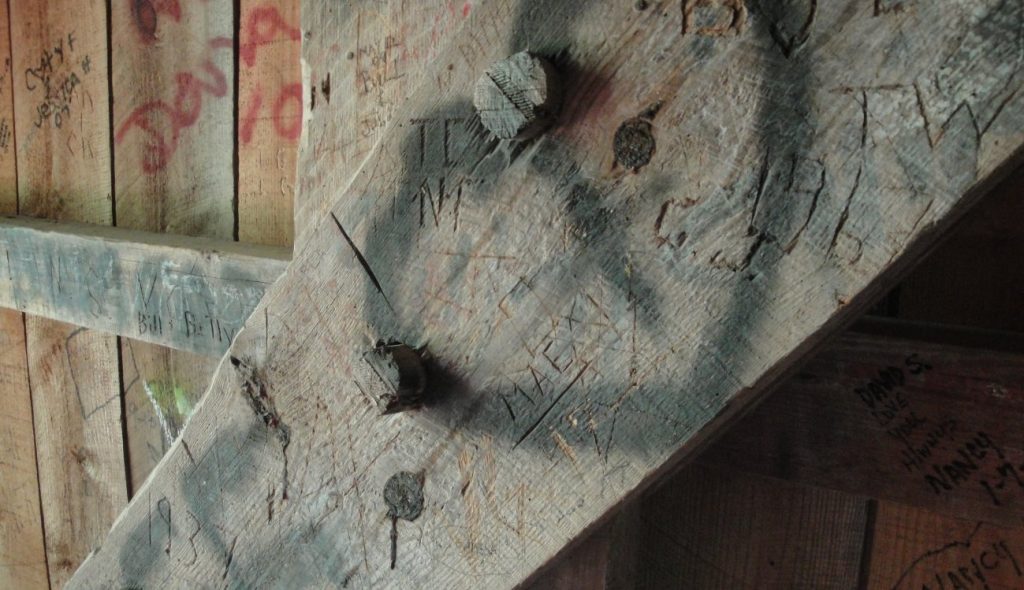
We saw a sign for the “Bunker Hill covered bridge” and found it after driving down a couple of country roads and a gravel path. The bridge was built in the late 1800s and it is an example of a lattice construction. There were thousands of these kinds of bridges back then in the U.S. and hundreds in North Carolina. Now this is the last one.
The covering protects the wood. An uncovered wooden bridge lasts around twenty years. The covered variety can last 100. The covering also made the horses feel like they were in the barn and they didn’t spook because of the water.
This bridge was build by a guy called Haupt. He literally wrote the book on building such bridges as the the note about it says, Haupt was “Chief of Military Railroads for the Union Army during the Civil War. A Philadelphia born civil and military engineer, author, professor, inventor, and industrialist, Haupt’s improved lattice truss bridge was a response to Ithiel Town’s 1820 and 1835 patents for the plank lattice timber truss. Haupt used the analytical methods he developed in the 1840s to design a more efficient lattice truss which consisted of web members positioned only at locations which required support. Redundant members were removed, resulting in the improved lattice truss as described in his book General Theory of Bridge Construction published in 1851.” It is good for a man to have a passion.
Today the bridge goes from nowhere to nowhere. It has outlived its usefulness, but I suppose that 100 years ago there was a road that people sometimes needed.
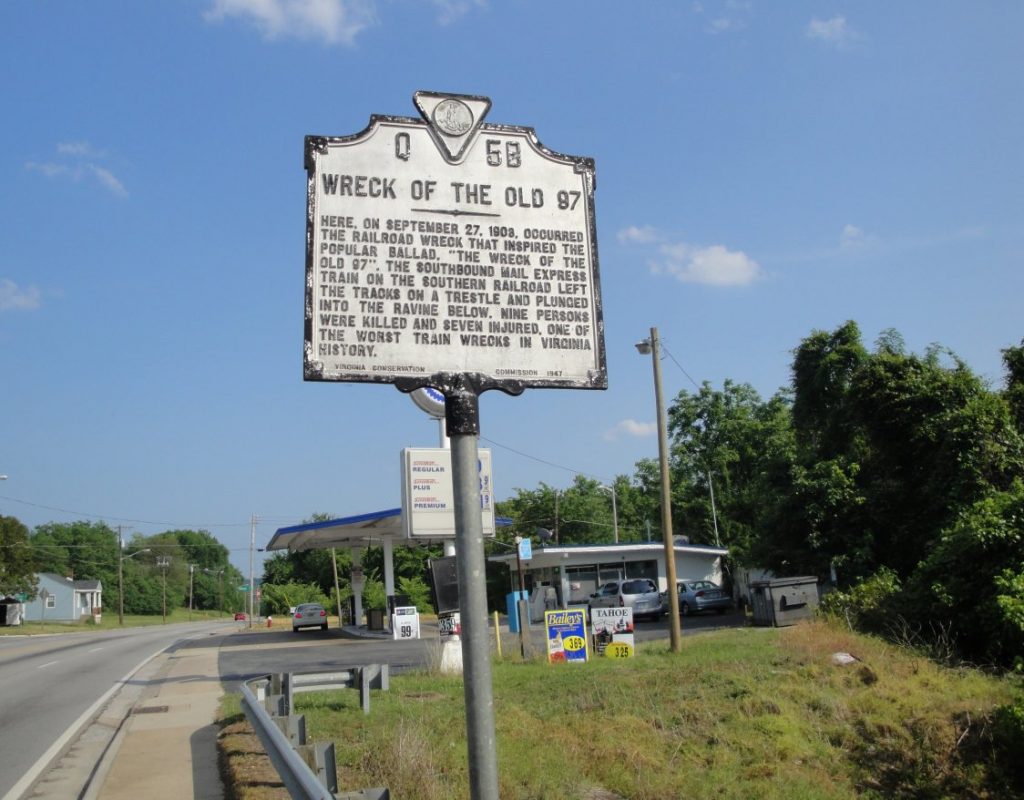
When there is a big industrial accident these days, the lawyers come out and drain any of the real emotion or truth out of the event and displace it with cash. In the old days, at least in the southern hills, they wrote a ballad. So it was when a train with Joseph A. (“Steve”) Broadey’s hand on the throttle plunged into a ravine near Danville, VA in 1903. Nine people were killed and seven injured in what the plaque called one of the worst railroad accidents in Virginia history. This is what they mean when they say you are heading for a train wreck.
I heard the song as a kid. My father’s version was sung by Boxcar Willie (I think), although there is a Hank Snow rendition and Hank was my father’s favorite singer. I thought it was just a song, not a real historical event, but it had some very precise lyrics. “They gave him his orders in Monroe Virginia saying ‘Steve you’re way behind time’” … “It’s a mighty rough road from Lynchburg to Danville and a line on a three mile grade.”
So in the wonderful world of Internet, I checked it out and found out it was true, so when I drove through Lynchburg I went looking for the place. A couple people claimed to have written the lyrics. It was first recorded in 1924 and you can listen to the original version at this link.
All that is left now is this easily overlooked historical marker along a seedy patch of Highway 58 just to the west of Danville. There is nothing left of the trestle or the tracks and the ravine is overgrown with brush and vines. It must have been really big news around here in 1903, but more than 100 years later only the song abides. The picture of the train, BTW, is just a train crossing in Danville, unrelated to the Wreck of the Old 97, except that they are both trains.
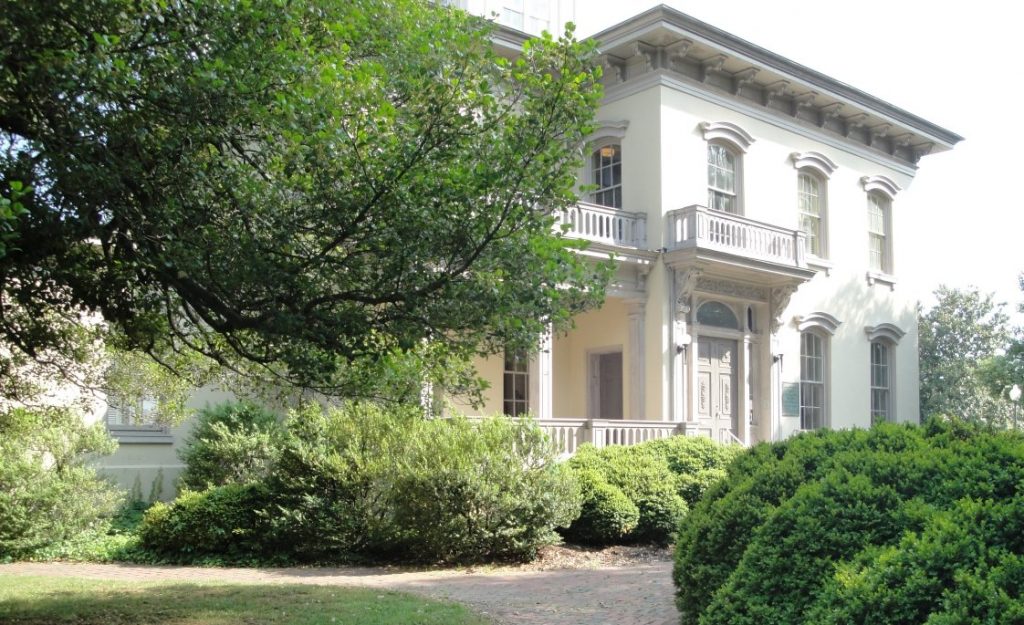
Another thing about Danville is that it was the last capital of the Confederacy. This lasted literally only a matter of days, as Jeff Davis and his cabinet fled south, with Union troops in hot pursuit, after the defeat of Southern arms. Davis took up residence in the house of a prominent local man called William Sutherlin. Sutherlin made his money in the tobacco business and was a successful and flexible businessman both before and after the Civil War.
Davis was a great man, according to his lights, but he was misguided. Robert E Lee and Joe Johnston did the right thing and in April 1865 contributed to saving the United States and making it the country whose freedom we love today. Davis wanted to keep on fighting, even after Appomattox. At some point, hanging on stops being noble and becomes stupid, pernicious and immoral. I admire Lee & Johnston, Davis not so much. The guide treated Davis as a hero. I don’t agree.
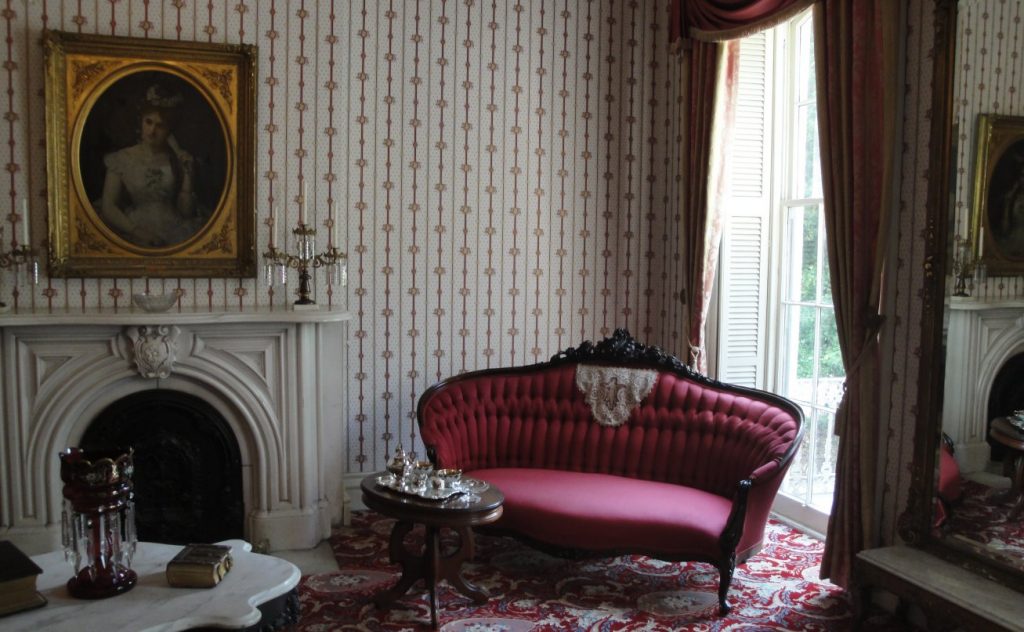
Chrissy and I visited the house, an Italian style mansion. Pictures are above and below. The woman in the painting above fireplace is the Sutherlin’s daughter on her wedding day. The house is restored to the period of around the Civil War. You really get the old South feeling there. The Daughters of the Confederacy use the place for their meetings. One of the rooms is deeded over to them.
Religions, regions, firms, families, clubs and even individuals often have distinctive cultures that help determine the choices they make. You might object that these things are ephemeral, but all cultures are ephemeral. Some last a short time, some a long time, but none is forever. When we try to keep them as they are, we create either cultural museums or graveyards. America has been home to many cultures, many that you don’t notice toady because over time they melted into the American mainstream, making their contribution by not remaining separate. It is pluralism that worked for us.
Pluralism allows a variety of different philosophies and organization types to coexist, jostle together and produces disparate results that together are usually better than from what would seem a more logical planning process. It requires an acceptance of inequality and pluralism thrives when central governments exert only generalized authority (as was the case in the U.S. through much of our history.) Pluralism creates a kind of cultural marketplace of choice, where the most adaptive ones succeed and all of them collide, collaborate, combine and constantly change into something else.
Pluralism works because it allows the greater society to take advantage of productive arrangements and systems that might be destructive or dangerous if applied too widely or too long. The difference between a life giving medicine and a life taking poison is often in the dosage and the application. Pluralism allows us to take advantage of the positives of many systems w/o suffering the ill effects that would afflict us if they were widely applied. People can choose to live under particular rules that might be odious to others, and it works much better if one standard does not cover the whole society. We enjoy a kind of a la carte cultural menu in the U.S. We are free to copy the best and leave the rest. None of us has to keep all the aspects of the culture we were born into, and few of us do.
I thought about this as we visited Old Salem in Winston-Salem, NC. Many people confuse this Salem with Salem, MA famous for the witch trials. Both were founded by religious groups that followed a kind of a localized theocratic socialism, but they are otherwise not very similar.
Old Salem is something like Colonial Williamsburg on smaller scale. I found it really interesting because it told the story of the Moravian settlement. I knew almost nothing about that before. It is well worth the visit. The people who work there and play roles make products by hand using the old methods. But they don’t always remain strictly in character, which allows them to explain a little more about how things are. The gunsmith, for example, told us that there is a good demand for his custom products. Their products go to high end collectors and museums. The market is strong, he said.
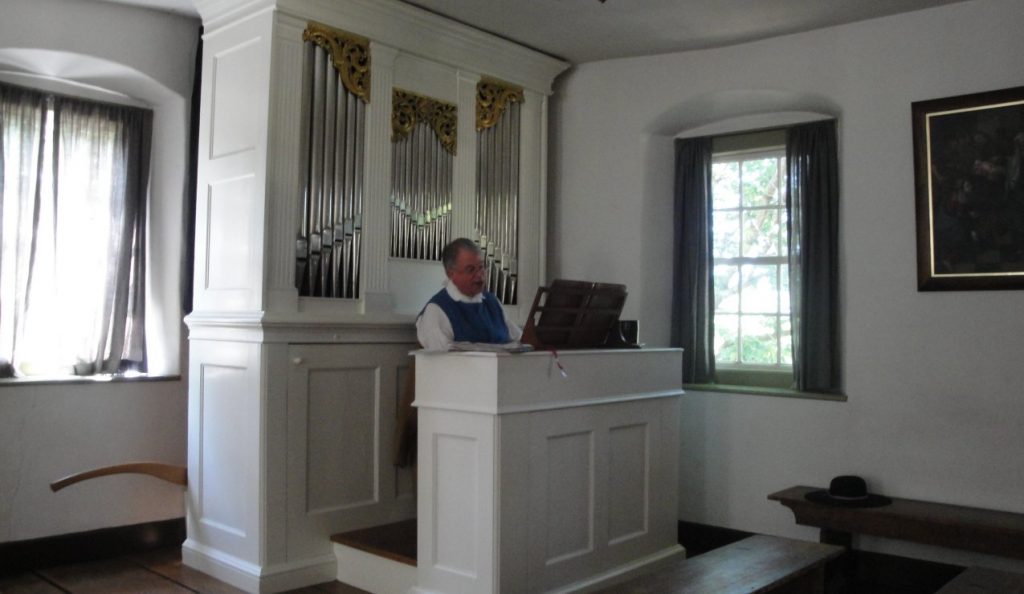
The people who work there really seem to like their work. The guy in charge of the organ played us several of the pieces used in the churches and sang along. He had a good voice. Everybody enthusiastically told us about the history of their location and of the community in general.
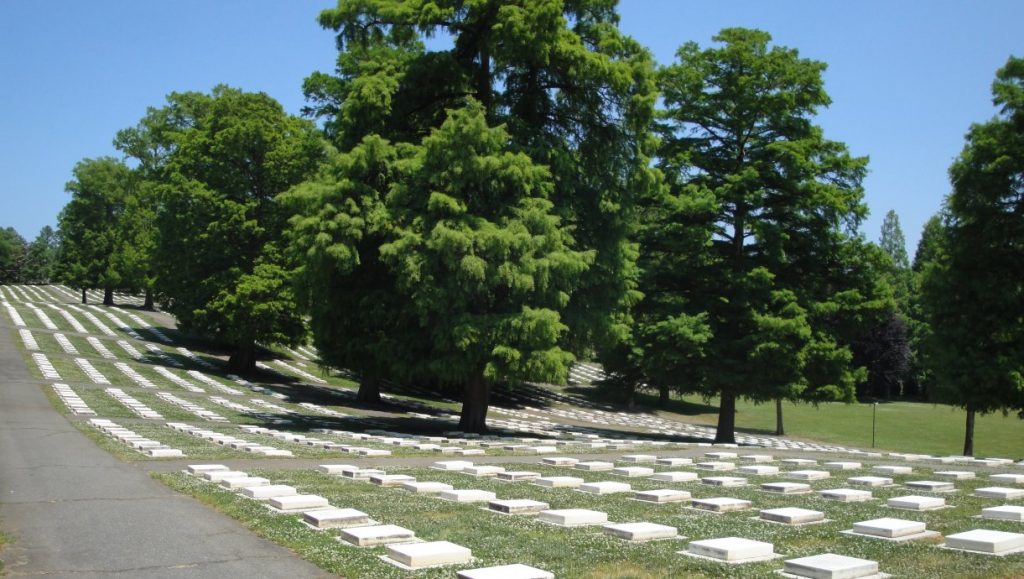
Salem, NC was consciously founded as a commercial and agricultural colony of the Moravian protestant sect, which traces its roots to Jan Hus, a century before Martin Luther. They seem to have been practical people who sought the elegance of simplicity. Society was divided into groups, called choirs, based on status – young men, young women, male children, female children. married men, married women etc. When they died, they were buried according to their choir, not with their families. The graveyard, called God’s Acre, has flat tombstones, so that nobody is above anybody else. The Moravians clean the graves and scrub the stones each Easter.
The Moravians were good planners and were very well organized. They trained their people in useful trades and skills and produced simple but high quality products. One of the reenactors told us that Moravians supplied good products at reasonable prices and that they were honest. Having all three of those things at the same time was rare on the frontier. Their community prospered. Their location in the middle of North Carolina also contribute to their prosperity. It was right on the wagon road and had access to the growing North Carolina frontier, with its cheap land and good soils.
Organization was the key to success and organization and the needs of the community circumscribed personal choice. Boys were trained in trades, which were chosen for them by the church authorities, so that supply of labor met demand. Nobody could actually own land in Salem; it was all leased from the church and held on conditions of good behavior, including attending church and living a moral life. Women could marry when they were eighteen. Men could marry when they could demonstrate the ability to support a family. A man would build a shop and a home and then petition the church for permission to marry. He could submit a specific name if he had a girl in mind, but that match might not be approved. If he didn’t know any girls he especially liked, he could make a generic request and the church authorities made suggestions.
People like the Moravians made very valuable contributions to the development of North Carolina and to America, but most of us would not want to live under their strict rules, nor would those rules necessarily be adaptable to a wider society or changing conditions. In a pluralistic society, they were able to survive and prosper with the implicit conditions that they produce something useful for the wider America. W/o access to political power, they could not impose their views outside the fold. In fact, the ultimate punishment for those who consistently did not play by the rules was to be kicked out of the community. In other words, at base it was a free-choice association. You could leave if you didn’t agree and you could be forced to leave is others didn’t agree with you.
In a pluralistic society, individuals have the right to belong to whatever group that you want provided they will take you. All the individuals involved have the choice and they have to work out the particular relationships. It has to do with freedom of assembly. You can choose your friends and associates and should not be forced into any group membership. Groups themselves have no right to exist beyond the choices of their individual members. This is an important distinction. Pluralism as we have used it empowers individuals to be members of groups of their choice. If you empower groups over individuals you have a type of corporatism or fascism.
There were advantages and disadvantages to being a member. Leaving out the spiritual benefits, which believers would have considered the most important aspect of their lives, on the pragmatic side members, on average, were more prosperous than their similarly situated neighbors. Of course, they had to accept the strict rules, which included devoting large parts of your income, energy and time to the collective and one of the important reasons behind their success was their adherence to the rules. Would it be considered unfair that others couldn’t get the advantages w/o buying the whole organization?
Pluralism demands diversity and requires inequality of results. These are the things that choice will inevitably produce. We sacrifice pluralism and choice in exchange for greater equality. This may be a wise decision at times, but we should be aware of what we are doing – getting and giving up – and not hide it by misusing terms like diversity or multiculturalism. It should be about choice to the extent possible and that means picking up both ends of the stick and living with the results of our poor choices as well as our good ones.
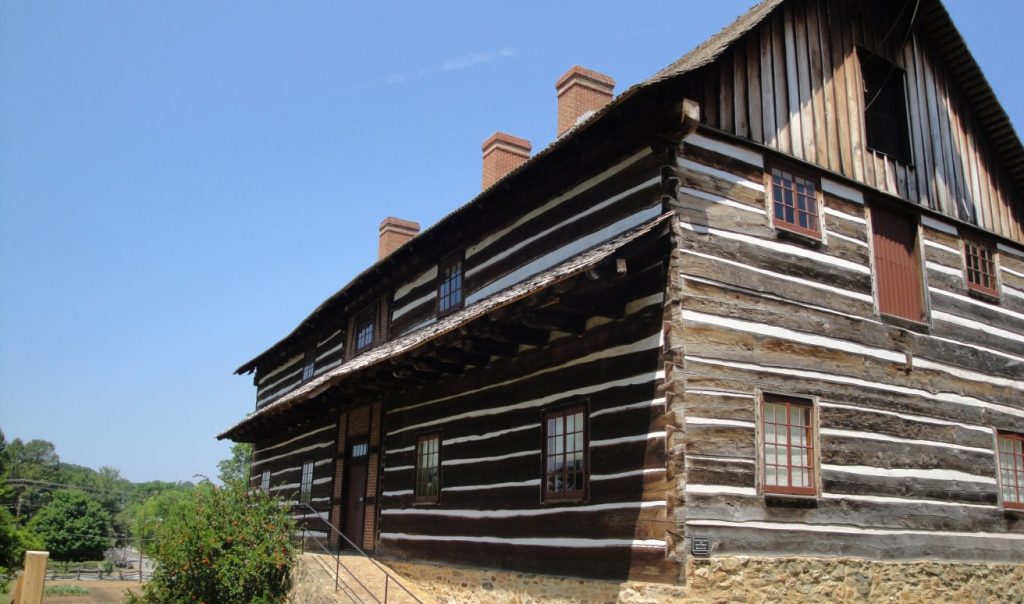
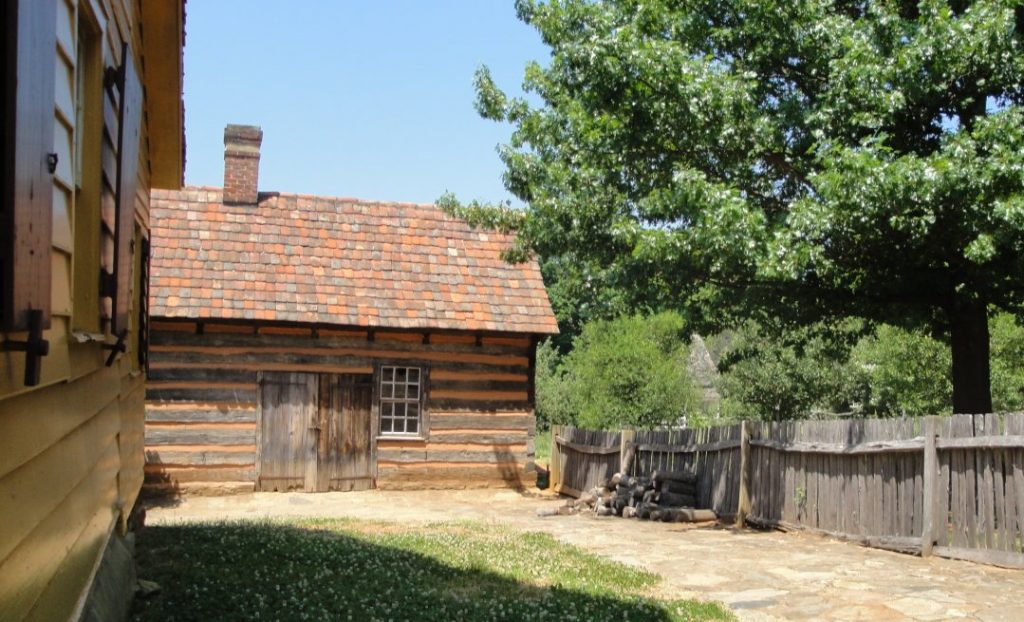
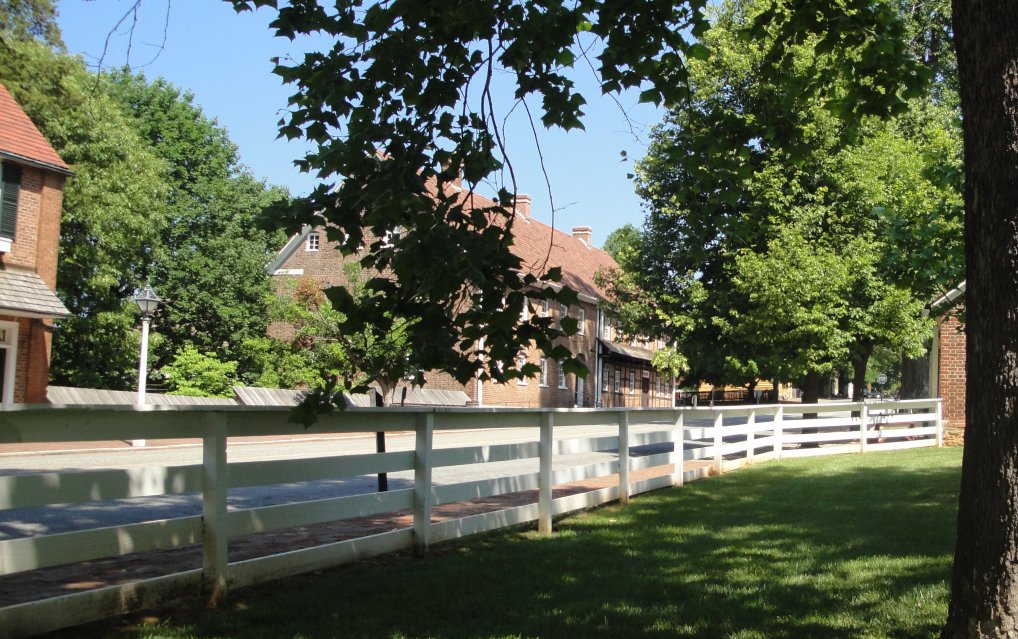
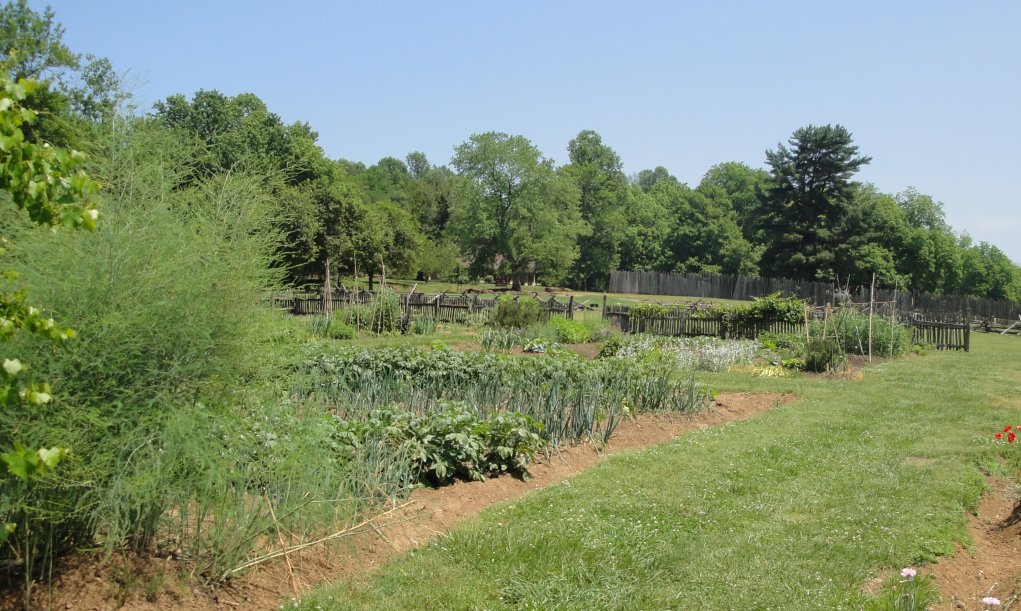
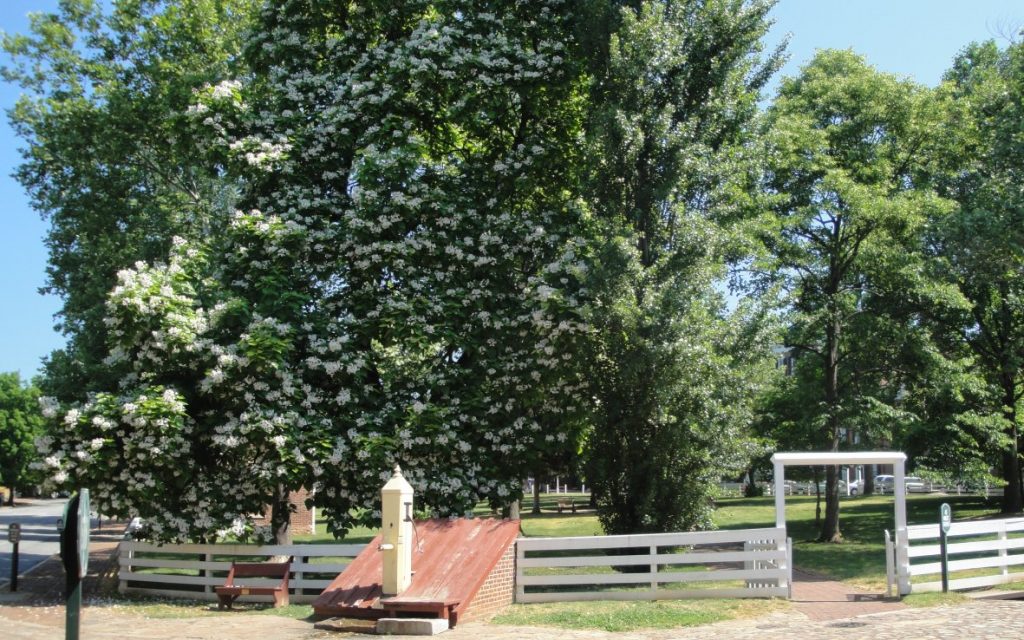
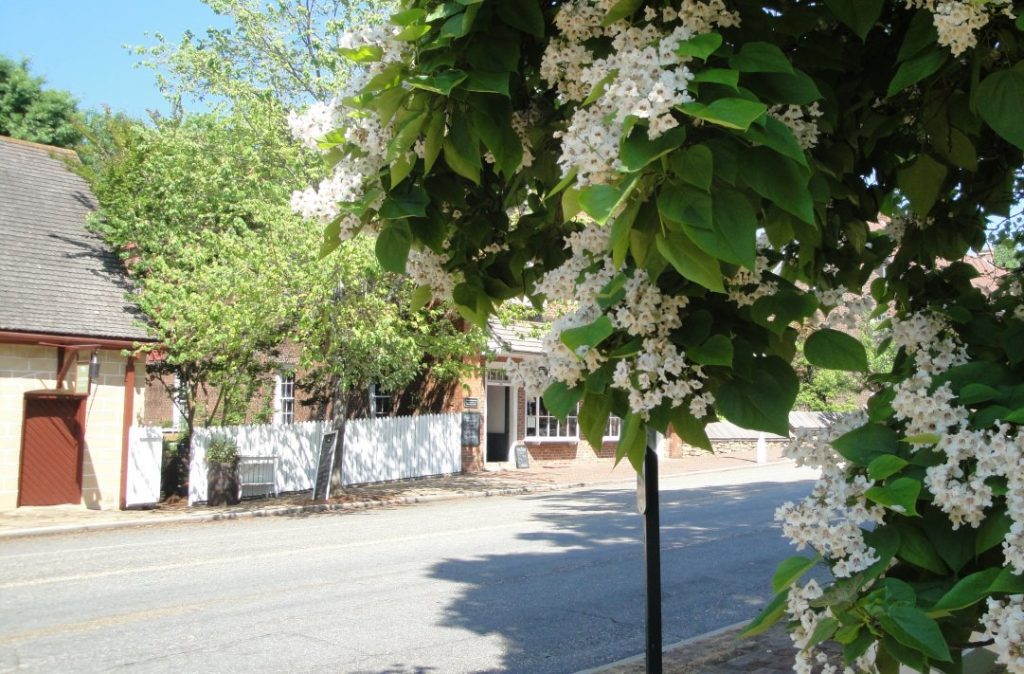
The pictures are from around Old Salem. They include the gun smith, the organ master and some of the buildings. The flowers and the flowering tree are catalpa. They are also called Indian cigar trees, because of the long seed pods. I took a picture of this tree because it was so full of flowers and unusually beautiful.
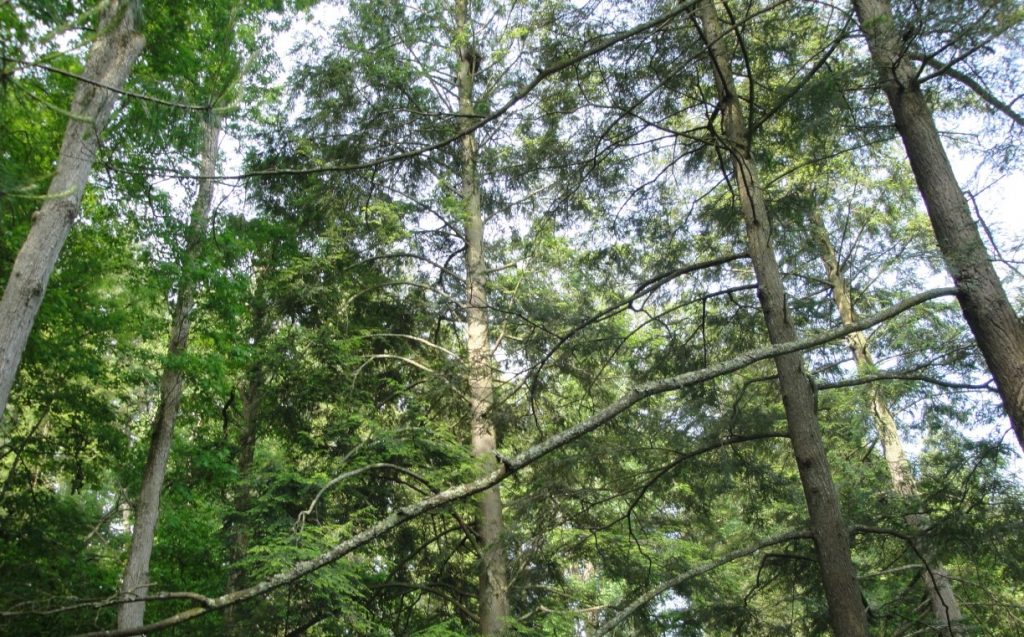
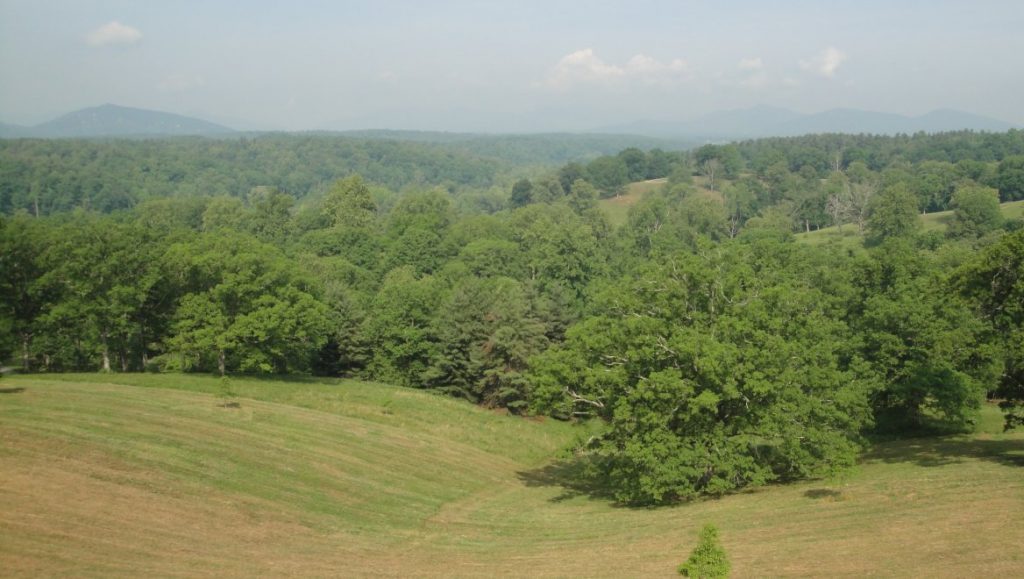
The Biltmore estate had lots of big and beautiful trees, including some hemlocks. Hemlocks are common much farther north. They hang on in the southern Appalachians as a relic of when the climate was much cooler thousands of years ago. Or maybe we should say they hung on and that they were common farther north.
The hemlocks on Biltmore don’t look good. It is not bad management or climate change that did this. This destruction is probably the work of the hemlock wooly adelgid, an invasive pest from Asia that arrived in 1924 and has now spread from Maine to the Carolinas. This is an ecosystem altering monster, although the insect itself is almost too small to notice. It threatens the existence of hemlocks in eastern North America. The hemlock is a beautiful tree that grows well in shade. It occupies this special shady niche and w/o the hemlock many of the woods will be a lot more open and hotter. The destruction of the hemlock is a slow motion disaster.
When I first visited Old Rag mountain in the Shenandoah, the start of the trail was shaded by giant hemlocks. That was twenty-five years ago. Today they are gone. All that is left are dead and decaying skeletons. Some of the guide books still describe the cool shade and the deep green solitude of the place, but if you won’t find it no matter how hard you look. Hemlocks make a particular sound when the wind blows through.
We lost the chestnuts before I was born. Now the hemlocks are going. We did manage to bring back the American elm, however, so maybe there is still hope. A lot of good work is being done in biotech and plant breeding.
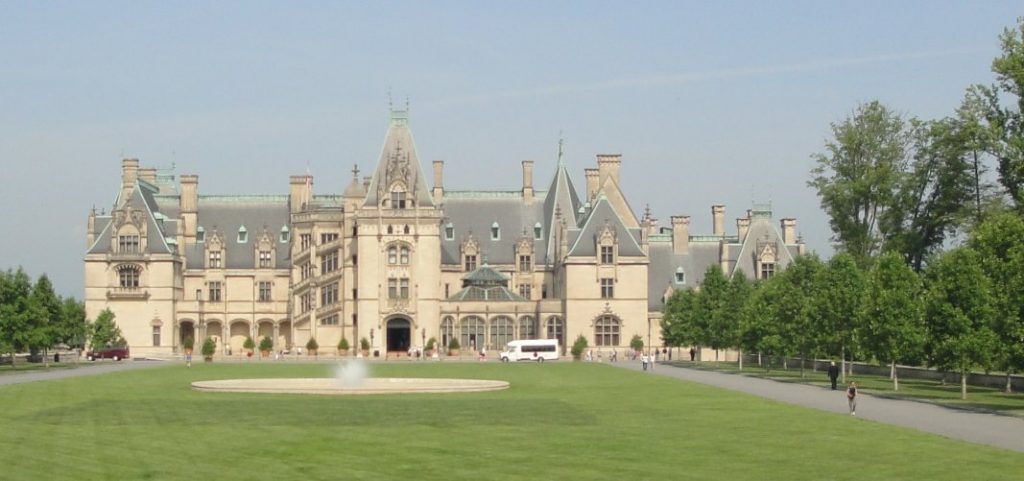
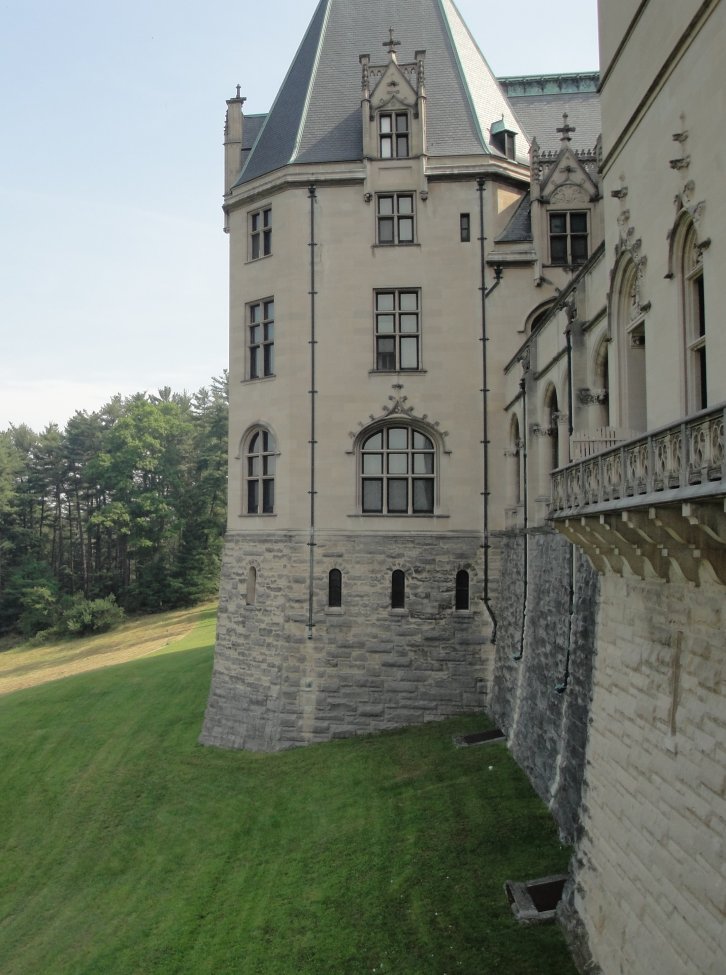
The Biltmore is the biggest house in America, built by George Vanderbilt in the 1890s. It is part of a enormous estate. When Chrissy & I toured the house, the gardens and the general area, it changed our point of view a little. An estate this size is not all about the owners and it is not really about a house as a place to live.
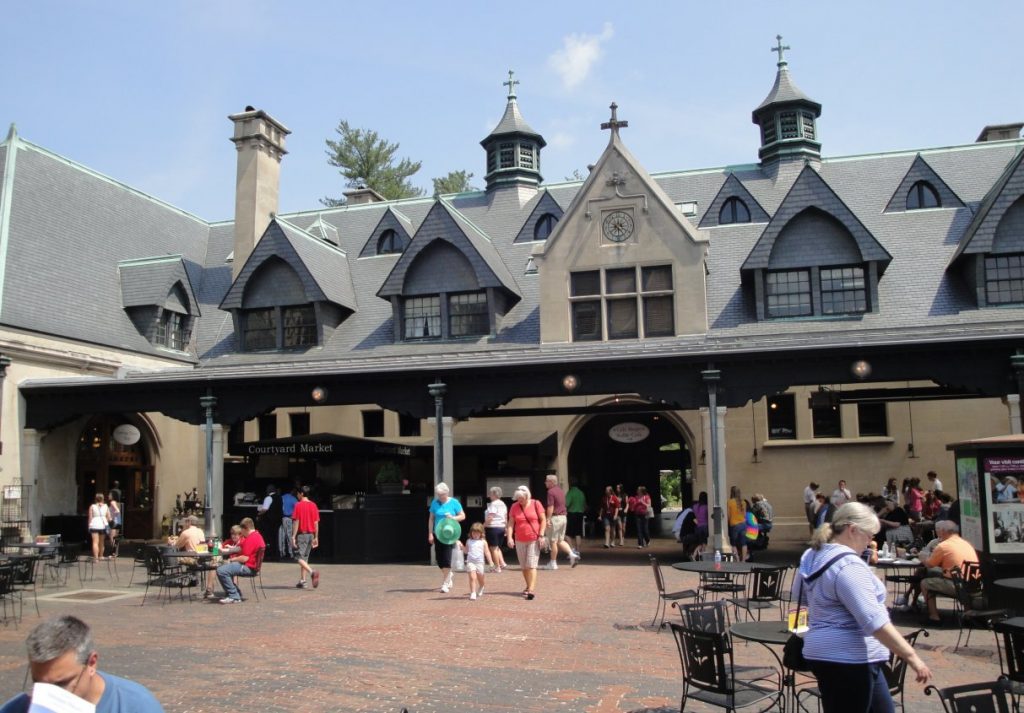
The first thing I noticed is how much the place resembles a hotel. Hotels tended to copy many aspects of these mansions. The “winter dining room” at the Biltmore is a classier version of the Holidomes I used to like so much at Holiday Inns. Beyond that, these big houses were a lot like hotels in their functions. They were set up to host, entertain and feed guests with a large staff devoted to doing it.
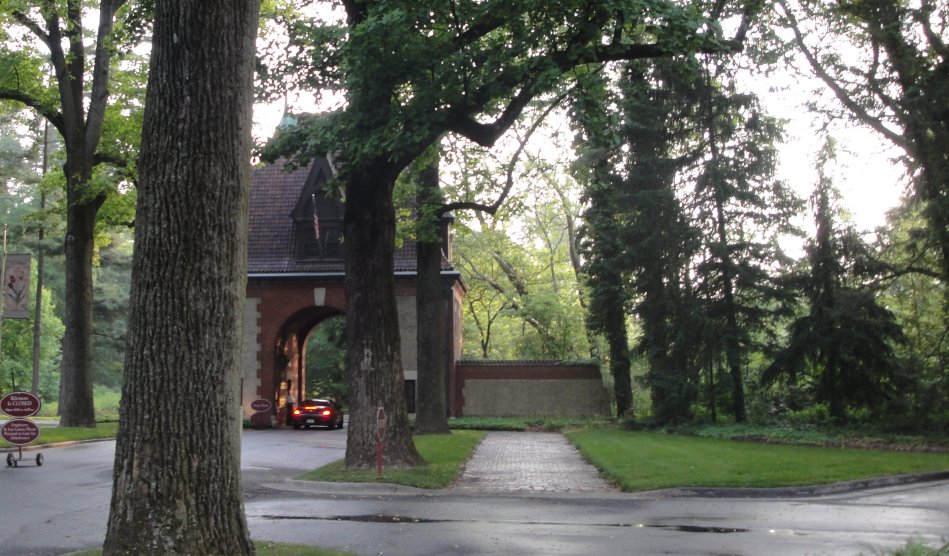
The second thing I noticed is how much the owners of this estate played their role. The Vanderbilts always seemed to be on stage. They changed their clothes dozens of times a day. There were specialty clothes for walking in the eating each of the meals, playing tennis, sitting in the library or walking in the garden. Below is the gate to the Estate. After you pass through the gate, it still takes you around 15 minutes to drive to the actual estate buildings.
My first impulse was to dislike the Vanderbilts because they had piles of money and engaged in conspicuous consumption on a grand scale. But they did a lot of good with the money too. This massive investment in the hills of North Carolina employed lots of people and not only maids, butlers and kitchen staff. Building the place required a massive labor force, as did building and maintaining the gardens. Of course those things are still a type of consumption. But the estate also included working farms and forests. Some of the science of forestry was invented on the estate. Gifford Pincot, the father of American forestry worked here. I learned how to use a “Biltmore stick” to estimate timber volume when I studied forestry in college. I never knew were the word came from. I guess I just figured it was named after some guy named Biltmore. It was named after the estate because its use originate here.
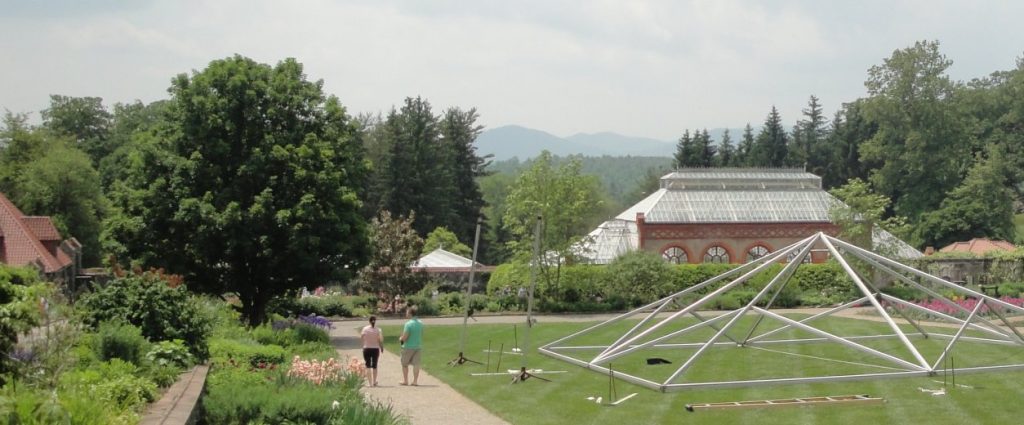
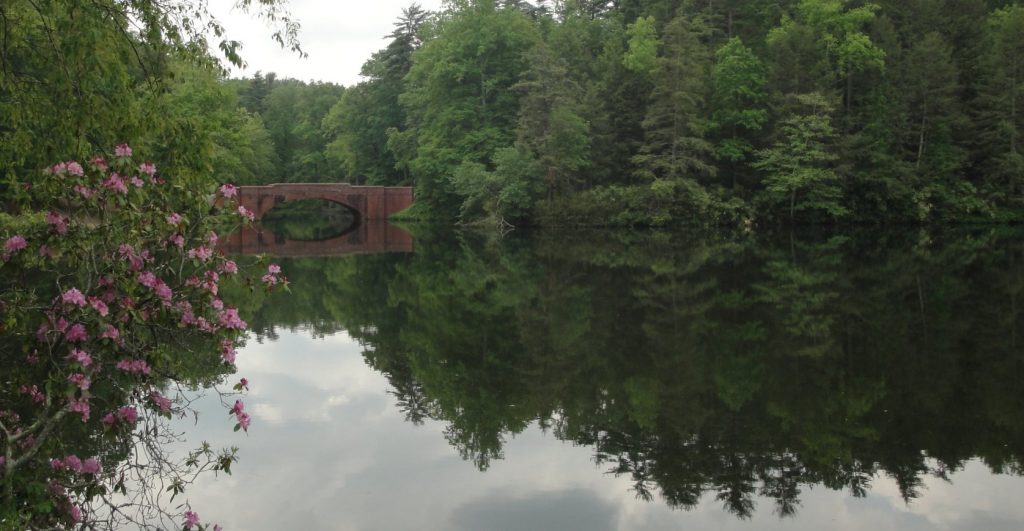
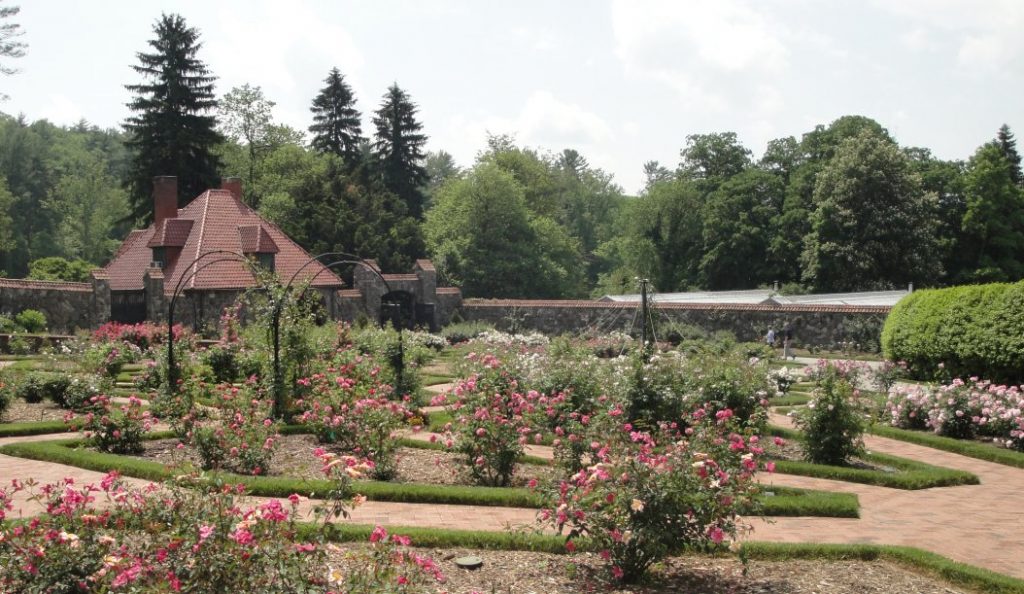
Fredrick Law Olmsted designed the gardens, the same landscape architect who designed Central Park in New York. He also designed some parks in Milwaukee, including West Park (which became Washington Park), Riverside Park and Lake Park. Olmsted was expert in the use of water in the landscape. Above is a bridge over the bass pond he created at the end of the garden. Below is the rose garden.
You couldn’t take pictures in the house. It was a nice place. As I said, it reminded me of a nice hotel, so if you have been in a nice hotel, you have an idea. It must have been really impressive 100 years ago. Today we are accustomed to big buildings (like hotels). At the time the Biltmore had new innovations such as electricity, indoor bathrooms and refrigeration. Now everybody has those things. The rich today can live a very opulent life, but the practical difference between being rich and poor is smaller because being poor is a lot less miserable than it used to be.
I don’t much like coffee, but I like cream and sugar mixed with coffee. I am especially fond of the French vanilla cream, but I put so much of it in that I need a strong coffee to stand up to it. IMO, the best coffee for my purposes is the Sumatra coffee at Pilot. Pilot is a truck stop station, which usually has the least expensive gas on the highway. The bathrooms are clean and they are usually lively places, so I stop at Pilot whenever it is reasonably convenient.
McDonald’s is okay in moderation
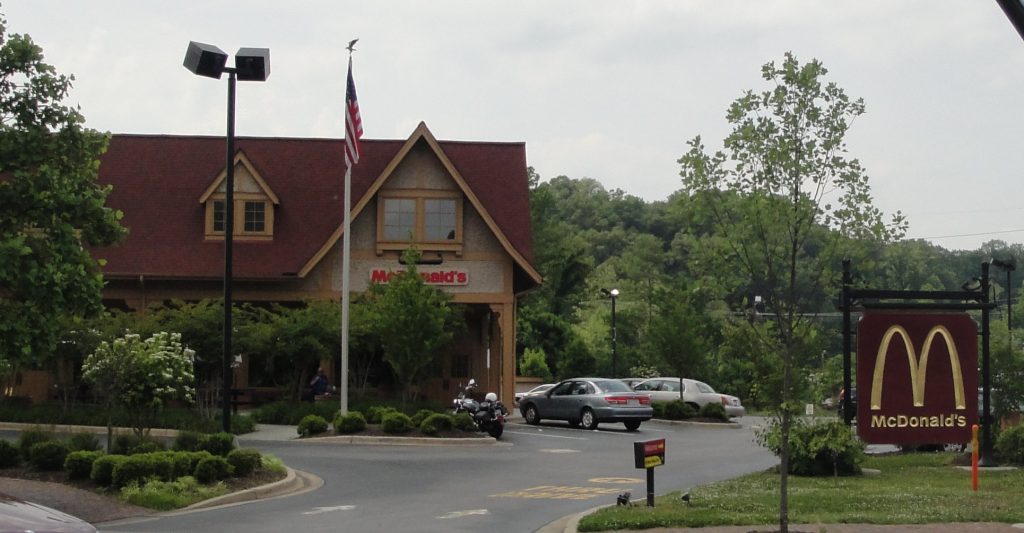
Above is the McDonald’s in Asheville, one of the fancier McDonald’s I have visited. It was hosting lots of old people while we were there. My father always complained about old people when he used to shop at Pic-n-Save. He said they were so slow and they always just stood around in the way. And I used to make fun of him. Maybe you have to be almost old yourself to make these kinds of judgments because I am beginning to understand his point. It took ten minutes to get at the straws, napkins and catchup. Evidently how many napkins to take and whether or not you need a straw is a decision that requires more thought than some people can give it in less time.
I have been eating at McDonald’s since HS. They used to give you a free Big-Mac for every A you got, which was a good marketing strategy. I didn’t get many free Big-Macs, but I did get to think they were good. Some people go on about fast food being bad for you, but it doesn’t hurt in moderation. “Nothing too much” is a good life guide. I used to have a minor cholesterol problem, but then I got a low dose of Lipitor and the problem was solved. Any problem you can afford to buy off is not a problem; it is merely an expense. I call my daily dose of Lipitor my “cheeseburger tax.” Maybe someday it will kill me, but not today.
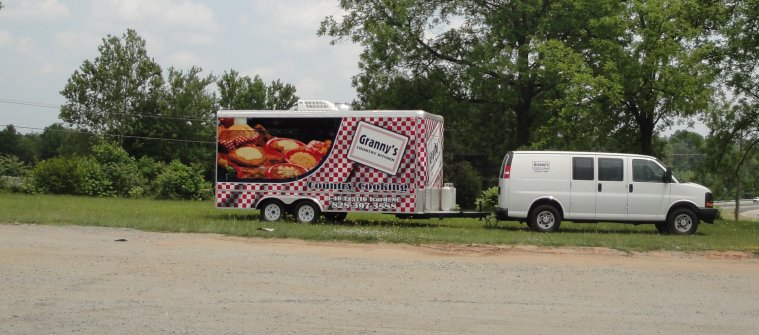
Granny’s Country Kitchen
It isn’t always fast food. Other food can have lots of calories and cholesterol. We stopped off at Granny’s Kitchen just past Hickory, NC. Chrissy & I both had the pulled pork and French fries. Chrissy didn’t eat all of hers, so I helped out. We have been trying to go to local restaurants when we travel to get a little more of the local flavor. The trouble is that there is less & less local flavor that is worth eating unless you have inside local knowledge. Various franchises are pushing them out or at least away from the places convenient to the major highways.
Boutique hotels
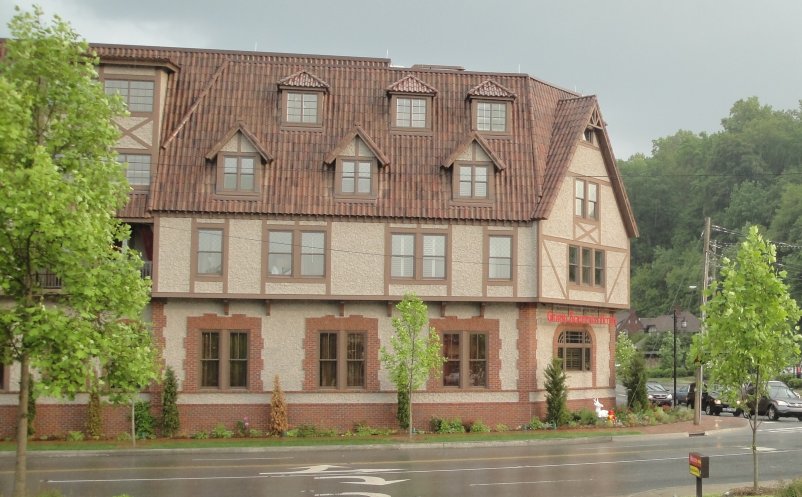
We stayed at the Grand Bohemian hotel near the Biltmore Estate. It is in the Biltmore Village, a kind of ersatz central European hamlet set the southern hills. The Grand Bohemian is part of the Marriott’s “Signature Collection” of boutique hotels, i.e. ostensibly ones with special or unique character. It is different, but I don’t know that I like the character. It is European-like and made to look like a hunting lodge. I used to visit one like it near Bielsko in Poland. That one was used by the Hapsburgs in the 19th Century. It had character and I liked it. But the one in Asheville is not a hunting lodge. Hunting lodges are set out in the forests and fields. This one is surrounded by busy roads … and the ersatz village.
These Central European style buildings are just not suited to the Carolina climate. They are designed to hold heat and support roaring fires. These are things that are not really appropriate in North Carolina. It doesn’t get very cold around here, but it is hot and humid a good part of the year. Of course, our modern society defeats the weather with air conditioning, but still it looks funny all buttoned up in a hot climate.
Weird weakness
The hotel has a nice health center, however. I don’t use treadmills very much. I prefer just to go outside and run. But these had TVs attached, so you could just walk along and watch TV rather than couch potato it. I lifted some of the weights. Something strange happened last week. My right arm got 1/3 weaker. I noticed I was bit clumsy and when I tried to use the one-hand weights, I found that my right arm couldn’t do curls with 45 lbs, as usual. My left arm did okay with the 45lb (which I have been using for 30 years BTW), but with the right I could do only 30lbs. Otherwise it was normal, just a lot weaker, but really only with the curls. I can still do chin-ups and presses. It also sometimes has that tingling feeling, like when you sleep on it. If it doesn’t get better maybe I will have it checked out.