Learning from Experience of Others

I wish I had served on the promotion panels before. It is grueling work & eye bugging, but all that reading is paying off in terms of vicarious experience. Each individual report is an encapsulated history/biography for a year and a whole file paints a picture of the progress of a career. My colleagues have done lots of interesting things, achieved some great things and made their shares of mistakes and in these experiences are valuable lessons.

After reading and thinking about what the texts tell, you see patterns in individual careers, in the ways of the FS and – excuse the hyperbole – even in the development of the world in the last decades.  For all the important things that happened, some of us were there, close up and personal.  These sorts of files will someday make excellent primary historical sources. I am sure they do already.  

So serving on the boards has been personally enlightening. I can see how the kinds of work I do fit in – or sometimes not – with the bigger events.  I think it is nearly impossible to see this perspective when you are thinking about your own career or when you are down in the day-to-day fight.  We all like to think we are unique and that the problems we face and solve are special. In detail, they are that; in general they are not.   

The names and the places change, but the situations recur … monotonously. I think we can learn from history and that with the wisdom of experience we may be able to avoid some problems, but not all.  They mutate enough that we just cannot always recognize them or anticipate all the permutations. Experience might allow us to minimize pain or pass through hard times easier and faster, but we will still have hard times.

Progress in careers is never linear. I don’t think it can be.  Not every year can have bigger achievements than the one before.  I can read that there were times when the people involved must have thought their careers were finished.  Often this comes just before a big opportunity or a jump to a bigger achievement. I don’t think this is a mere random occurrence.  Opportunities may come and go, but being able to see them and take advantage of them is a skill and a choice.  Maybe the setback or the career doldrums give the affected person the chance and incentive for introspection and reinvention or maybe just a time to rest before continuing up the mountain.  

It is success that can be more dangerous. It breeds arrogance & complacency and makes you less likely to consider changes, improvements and alternatives. A very successful person may be blind to opportunities. Failure is a better teacher, as long as you can see a way out of it. Of course, if you fail consistently, perhaps you taking the wrong lessons, or none at all.

I can see patterns of success and failure in the files and when I look back I can see them in my own career. They are repetitive and faults are astonishing persistent; it is hard for people to get away from them.  You can travel 1000 miles and leave everything else behind – except you always have to take yourself along on the journey. I recall one of those “de-motivating” saying, “the only consistent factor in your failed relationships is you.” The same goes for success. Of course, we tend to blame failure on outside factors or bad luck, but assume success is earned and maybe overdue.  All those things are true, and vise-versa.
Life Nasty, Brutish & Short

“I need it like a hole in the head”.  I always thought it was probably a direct translation from a foreign language because of the peculiar grammar.  But I don’t really know where it came from and I figured it was just a saying. 

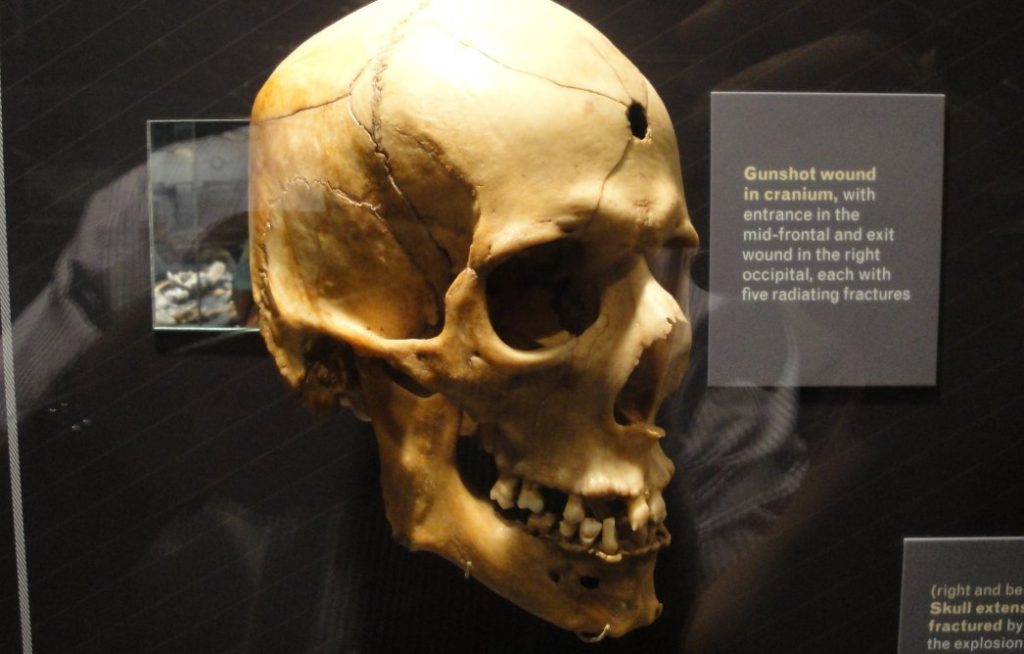
Alex and I went through a forensic archeology exhibit at Smithsonian. Take a look at the skull alongside and try to guess what killed this guy. I don’t suppose you would need a degree in forensic anthropology. Most of the other exhibits were less obvious. They can read various types of sickness on the bones. Evidently significant numbers of people died of toothaches in the old days, or more precisely from infections related to abscesses. What a way to go? There was a lot of misery back then from things that we just no longer think about. I stroll through this exhibit will cure even the worst case of nostalgia for the good old days.

Life in the old days was nasty, brutal & short for most people. Even the rich people lived rotten lives if you look at the things they had to put up with and suffer from. The old palace looks good, until you recall the state of plumbing, air conditioning and medicine that the fat cat had to live with. None of us would willingly trade places with Louis XIV if we had to really live his life.

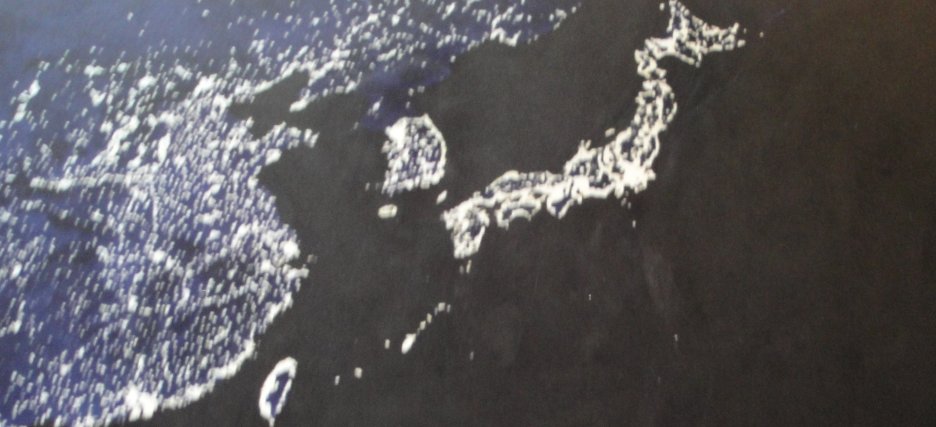
Speaking of living nasty, brutal & short lives, take a look at the map below and try to find North Korea. It is truly a benighted place – literally. When you go to museums and think about how rotten life used to be in the dark old days, it is useful to recall that in some places it never got any better and I have no doubt that living in a fever ridden colony a couple of centuries was better than living in a place like North Korea today. It must be like living in a giant, endless concentration camp, where technology is used to create misery and control rather than improve lives.

BTW – the map is just supposed to show the world’s bright lights, but when you look at it you cannot help noting that North Korea doesn’t have many. 

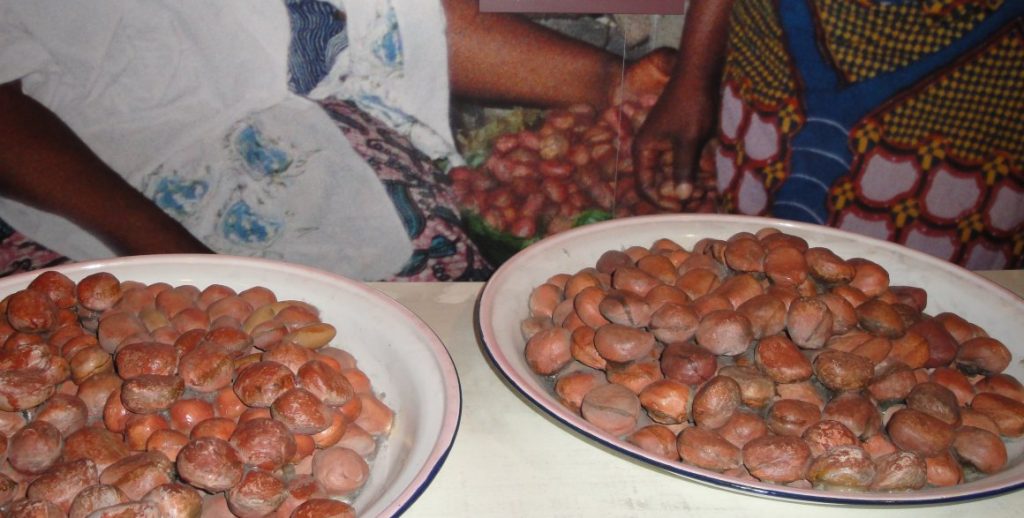
Finally, we have something that makes life better, IMO, something even the richest king couldn’t have before the 1880s – Coca-Cola. Below are Kola nuts, used to make Cola flavored soft drinks. I recalled an old commercial for 7up talking about the un-cola nuts and with the wonders of YouTube we can see it again.

Human Origins

Alex and I visited the “human origins” exhibit at Smithsonian.  I have trouble keeping up with the changes.  As I recently wrote, I had to change my opinion of the Neanderthal man now that I found out he is a closer cousin and probable ancestor.   You would think that all these prehistoric things would be more or less consistent, but they are not.  Scientific perceptions change.

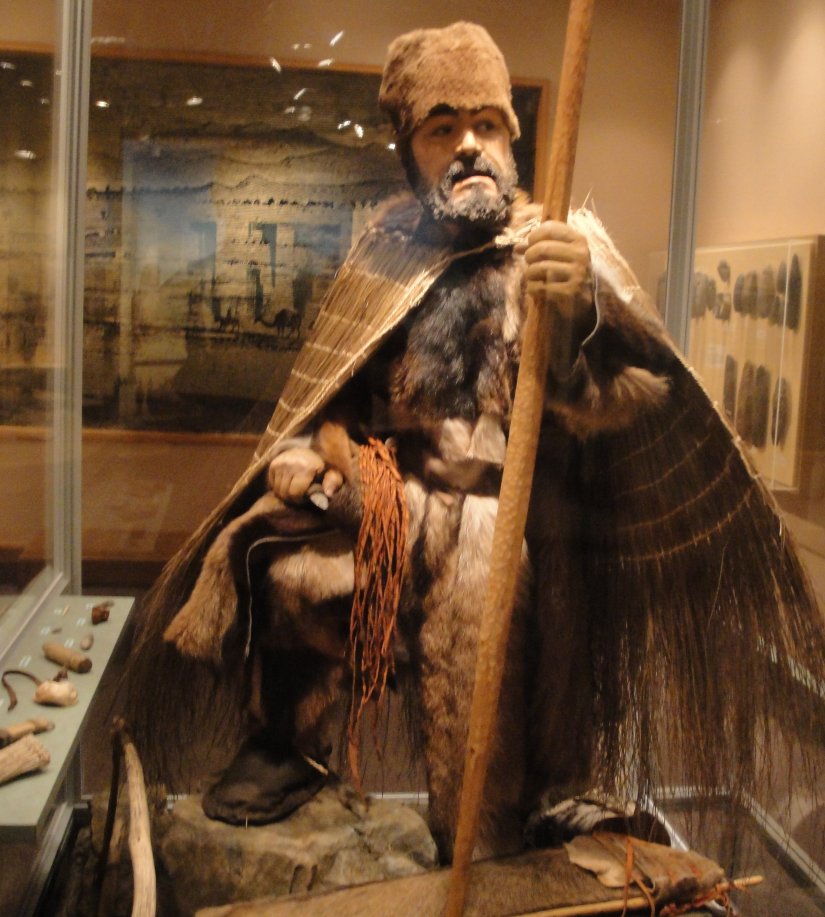
Anyway, the exhibit is very good.   Most of the artifacts are copies, but I wouldn’t be able to tell the real ones anyway.  The picture on the side is the “ice man” discovered frozen in the Alps. He may have been the victim of a murder more than 5000 years ago. Anyway, the exhibit is mostly set up to educate kids, but old people like me can enjoy it too.

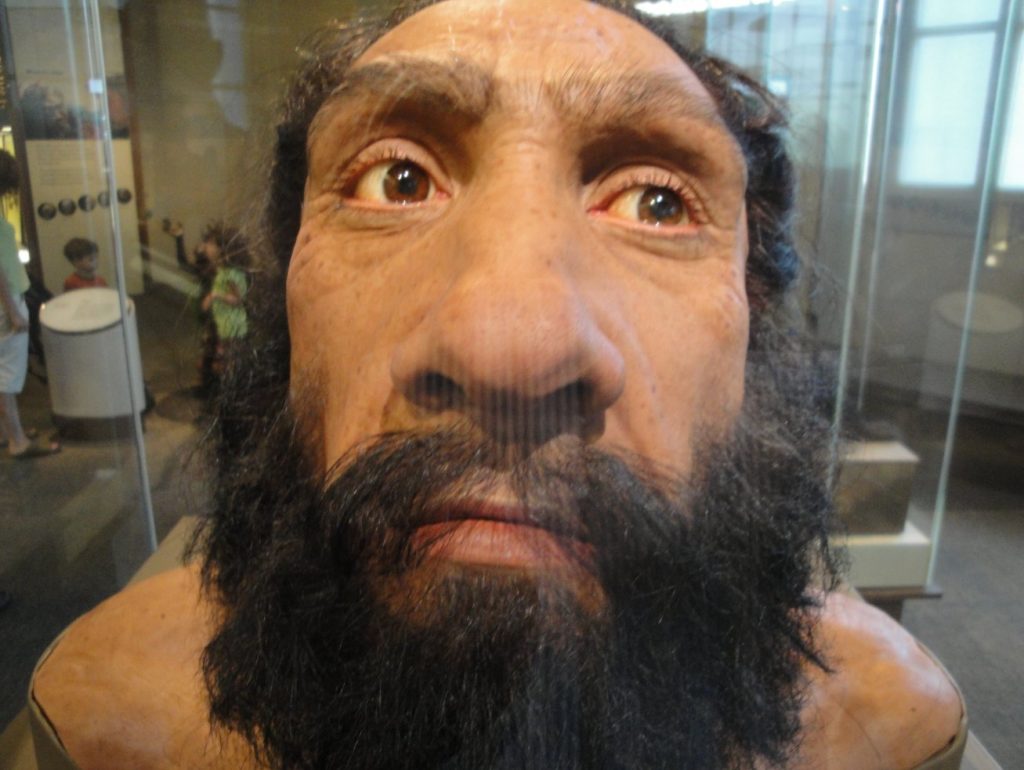
The thing that made the biggest impression on me were the wax museum recreations of pre-humans.  If the Neanderthal man walked down the street today, you might notice that he was unusually husky and unattractive, but if we was properly groomed you might not give him too much of a second look. Of course one reason not to stare would be to avoid eye contact with a dangerous looking weirdo.  But my point is that I think you would consider him human.  We do share genes with this guy, as we have recently discovered.  Not so the others like the Homo-erectus.  It was interesting looking into their eyes, or at least the eyes that current science has provided them.

Another surprising part of the exhibit was a skull from Lapa Vermelha, Minas Gerais in Brazil.  (I will put that on my list of places to visit.)  This fossil has been carbon dated to 11,500 years ago. The interesting thing is that the ancestors of today’s Native Americans were not supposed to be there yet.  There is a lot of political argument over very old human fossils in the Americas.

Native American tribes often have creation myths that say they have always been in or near their current locations. Science and anthropology indicate that their ancestors wandered over from Asia via a land mass at what are now the Bearing Straits. The discovery of ancient skulls that do not resemble the current Native American populations upsets some people. They can go to considerable lengths to prevent the evidence from being uncovered that contracts the myths or threatens their positions as “the first Americans”, as with the Kennewick man, who looked more like Jean Luke Picard than Sitting Bull and was evidently most closely related to the Ainu people from Japan.

History is never really simple and when it gets tied in with current political sensitivities it is really hard to get things right.   It is really hard to believe that things that happened more than 10,000 years ago still make a big difference to today’s politics, but they do.

It is a little silly.  When you go far enough back, none of the current ethnic distinctions make any sense and all human history is the common heritage of mankind.  The more we learn from archeology and genetics, the clearer that becomes.

Being Middle Class – In Brazil

I am watching Brazilian news programs (through the wonders of Internet) to learn more about Brazil and improve my Portuguese. I especially like “Globo Rural” about agriculture and environment. But it is time to step it up. If I don’t take notes, I will certainly forget, so am taking notes on some of the – for me – more interesting and evergreen topics. Today I watched the “Globo News Painel” about the profile of the Brazilian middle class (Qual o perfil da nova classe média brasileira?). Tonico Ferreira was the host.  Guests included, Waldir Quadros – Economist/Unicamp (State University at Campinas),  Bolivar Lamounier – Augurium Consulting & Jose Pastore Sociologist from University of Sao Paulo.  

Millions of Brazilians have moved to something like a real middle class lifestyle in the last decade. Research shows around 30 million. There has been a great reduction of absolute misery, according to panel members. They pointed out that many of these people are no longer poor, but that they are still not very secure. Most of the mobility has been from the very low to the not so low. The panel members agreed that they are not yet looking at a middle class society as we have in the U.S. or Western Europe, but in some ways this initial movement is more satisfying to the people involved.  In fact, as aspirations come to outrun results, richer people might feel that progress has been less advantageous.

Some progress came from better return/profitability of work, i.e people were paid better. But a key factor was the economic reforms and currency stabilization gave people the ability to save. Stable currency gave security that allowed people to save and plan. The big inflation Brazil experienced before created a cash, fast-turnover society. Families couldn’t buy on credit, because nobody wanted to sell on credit w/o charging fantastic risk premiums. On the other hand, they couldn’t really plan to buy later because they had no idea what kind of prices they might face later and they were never sure if they could ever catch up.

I was in Brazil during one of the great inflations and I recall how it was nearly impossible to comparison shop. If you noticed something in one shop and the next day saw it in another for a higher price, you couldn’t usually tell if price were higher in the second shop or if the general price had just gone up. I remember thinking at the time that high inflation was corrupting for a culture. It create a nation of gamblers and threw even prudent people into a casino state of mind. IMO the better habits that we are seeing these days are evidence of that, as people are behaving much more responsibly and prudently now that inflation is under control. A reasonable ability to anticipate future events is a prerequisite for a stable and good society.  

A panelist pointed out that the difference between TYPES of consumption of the upper, middle and lower classes has diminished.  Much of this has to do with generalized technological and economic progress. The rich person might have better quality clothes, mobile phones or refrigerators, but now most people have those things. This was not true in the past. There is a kind of threshold.  There is a huge difference between those who have and those who don’t. After that threshold has been cross, the relative differences in quality matter much less.

Brazilian sociologists divide their society into classes A, B, C, D & E based on income. Classes AB make up around 10% of the population, make most of the big decisions and pay most of the taxes. When Brazilians in earlier times called themselves “middle class” they really meant the lower rungs of this AB group. The new middle class in actually the one in the middle, class C. Class C makes up around 50% of the Brazilian population and account for around 68% of the total jobs. The panel was mostly talking about changes within this class C and movement into it from lower classes. The new middle class family has family incomes from around 1200 – 4800 Brazilian Real (about $650-2600).  This doesn’t sound like much money but it allows much greater consumptions.  The Commercial Federation of Sao Paulo estimates that from 2003-2010 the increase in consumption among classes CDE double that of AB. 

Brazil has significant social mobility, but it remains a country of great inequality. Much of the mobility has been in the lower part of the pyramid. The problem has been what we would call human capital and it will probably get worse. People achieve mobility by hard work, cleverness and gumption, but such things will take most people only so far.  You can open and operate a small shop if you have the above characteristics plus some common sense. But as you get bigger, you need things like accounting skills, for example. Of course, you need specific skills for professions or technical work. To make the jump to AB, poorer people need education and specific skills, increasingly technical skills.  The educational system and their life experience tend not to give them these skills. The panel agreed that Brazil needs to step up its investments in human capital. Brazil, in many ways, is in the same position relative to the countries of the world, as its class C citizens are to the other classes. The country has achieved impressive gains in development, but many of those big gains have come because of the high prices of commodities that Brazil produces mixed with the good effects of economic reforms made in the 1990s (the Real Plan).  I will not say that “this was the easy part.” That would incorrectly diminish the extraordinary success. But we can recognize that the skills and techniques that brought Brazil so far in the last decade and half may not be the skills and techniques the country needs to move forward from here. 

Another pitfall is ordinary infrastructure. Brazil has underinvested in roads and facilities. This is already creating problems for continued growth. This is easy to overlook if you drive around the Southeast on what seem to be very good and not especially crowded roads in the countryside, but if you turn off the highway the pavement often stops and maybe there is no bridge.  Anyway, what was good enough won’t be good enough tomorrow.  The better you get, the better you have to get to keep on going.

Success changes the rules of the game and often what got you here won’t keep you going. That goes for individuals and for whole societies.

Biking

Today was simply beautiful bike weather.   It is unusually fresh and cool for the season. It was around 60 degrees for my ride this morning, with a nice tail wind and beautiful blue skies and low humidity.  This is not the usual middle of June weather in Washington. 

I manage to fall off the bike yesterday. I tried to jump onto the path too precipitously after passing some pedestrians spread all across the path. I left a little skin on the pavement and today it hurts like mad.  I guess it is like a burn.  It is a scrape just deep enough to excite all the pain receptors but not deep enough to turn any of them off. The leg is a bit worse, but they are not the kinds of things that take too long to heal.   I had to wear short sleeves so as not to stain a good shirt, since some blood is still rubbing off.

Way back when I first came to DC, I had a spectacular fall near Arlington Cemetery.  I fell and slid on my back across the wet pavement.  It made a very conspicuous but not deep wounds, much like today’s but all over my back. I washed it off when I got to work, but it wasn’t finished and I ruined one of my shirts.  Lesson learned.

There is a sequel. I was discussing biking a couple years later with my colleague George Lannon in Brazil.  He said he would never ride to work because of the danger.  When I inquired further, he said that he had once seen “some a-hole” slide clear across the road on his back near Arlington Cemetery. That evidently put him off biking forever. Small world.

I ride past that place almost every day.  I haven’t fallen there for twenty-five years.

Promotions

I have not been writing much on the blog because I am serving on promotion panels, which are sapping all my psychic energy.  I am on the “threshold panel” which recommends FS-01 officers from senior Foreign Service.  There is a lot of reading to do and lots of things to consider.  It really is making me sad.  So many great people and not enough places for all of them.   It is like a deadly serious game of musical chairs.  Some people’s careers will end because of our decisions.   I make the choices as best I can and it is my responsibility to do it, but I find it harder than I thought it would be.

I have learned an amazing amount in just a few days.  There are things I thought that were wrong about how the system works, but mostly it is just a different perspective.  After the panels are over, we can talk and write about the process in general terms, but not yet.  For now suffice to say that the process really is as fair as we can make it.   I was very impressed by that and will do my best.

Seeing all these good people makes me wonder how I ever made the leap.  It is truly a humbling experience, but it also makes me proud to be a member of such a group.

Anyway, if I write less for the next couple of months that is why.  I write about what I am thinking about and right now I cannot properly do that.

May 2010 Forest Visit

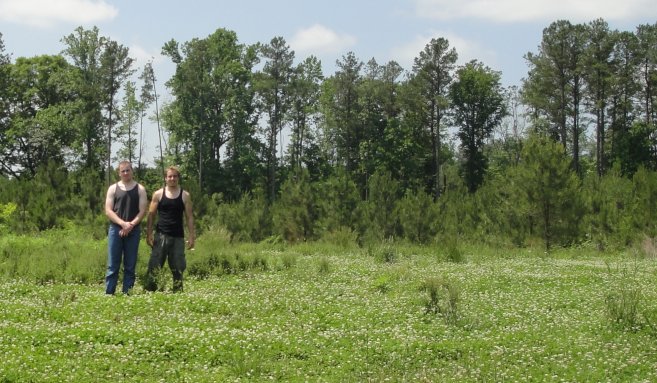
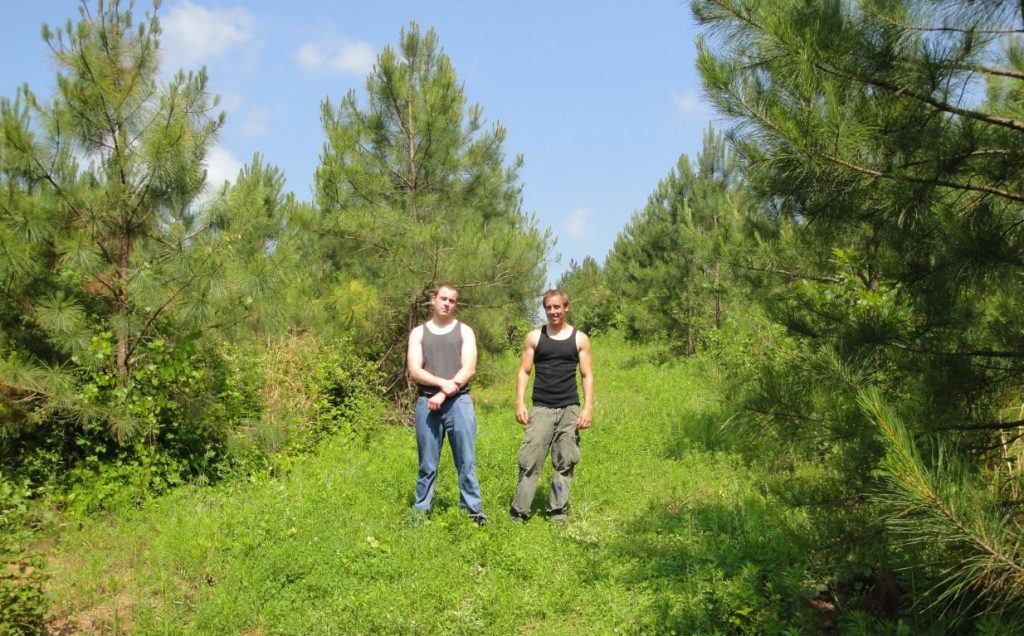
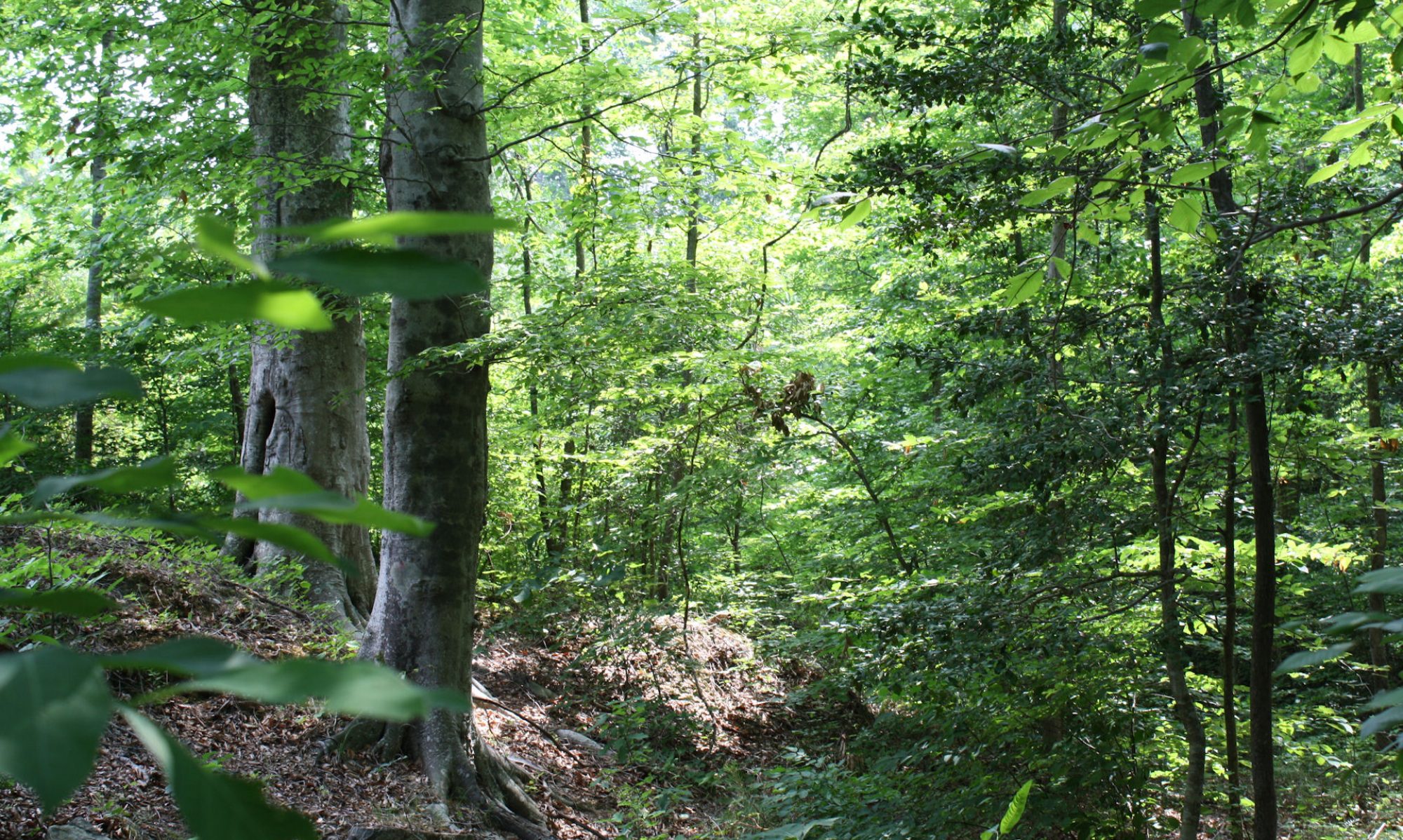
I bought a couple gallons of Chopper Gen2 and some backpack sprayers. The boys and I went down to the forests to check up on them and spray down some of the vines. I have mixed feelings about spraying.  I would spray the whole place if I was really doing intense pine management. They usually do this with helicopters and it would cost me around $6000. I don’t like to spend the money and I don’t like to spray everything.  I want some diversity, but the vines are getting out of hand. The backpack sprayers allow more precise applications and they cost much less. The materials cost a couple hundred dollars and labor is cheap, essentially free. Getting the boys involved with the land is also a good idea. So that is what we did.

We got an early start, but only worked until about noon. It was getting too hot and I didn’t want to kill the boys or make them not like the forest.  We got the easy targets, i.e. the places within easy reach of the roads and paths. I like to do these things in iterative ways. This will give me a chance to see how it works and decide if I want to do it more widely. It will also give me something useful to do on my visits.  I can spray down some of the offending vines each time I go down and do it selectively.

I talked to Larry and Dale Walker from the hunt club. They also work at a forestry company and showed me their operation last year. You can see pictures and read about that here and here. They are honest guys and their firm does a good job.  We talked about thinning on the Freeman property. It would be good to do it this fall. This would be my first significant harvest and I look forward to it.

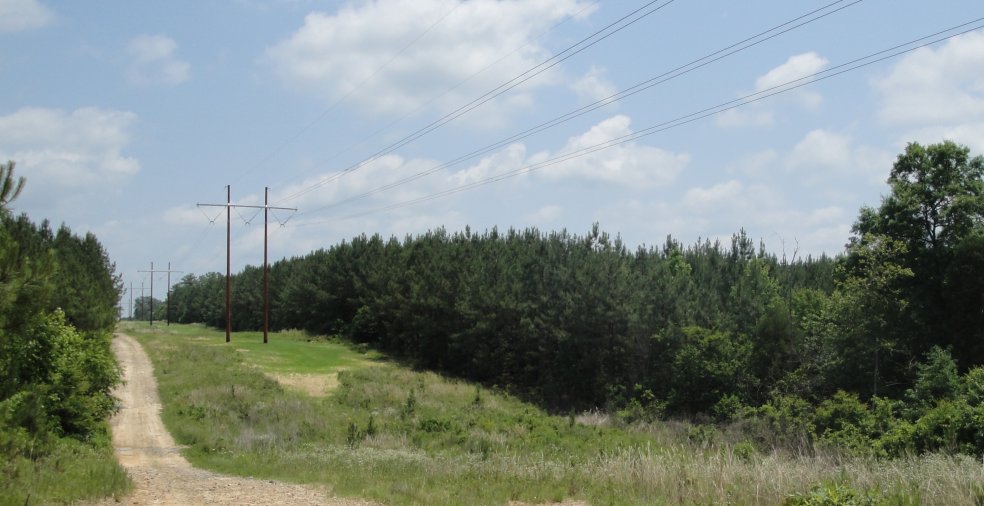
The utility company put in new poles. They ripped up the dirt a lot, but have since leveled it out and reseeded it.  The grass is coming up. The wires and the right-of-way are useful, despite the fact that they take up eight acres of my land.  The opening provides good wildlife habitat and the long, narrow aspect produces a lot of the “forest edge” so favored in wild ecology. From the practical point of view, the most useful thing about the right-of-way is the road. The electric company maintains the road and they just finished fixing it up. It was really rutted before, but they put in rocks over the washouts and made little stone banks to divert the storm water. All this will provide good infrastructure for the thinning operation.  If for what they did, I would have to do it and/or the timber companies would have to do it and that would cut into what they could pay me for the wood. It is a de-facto subsidy for me.

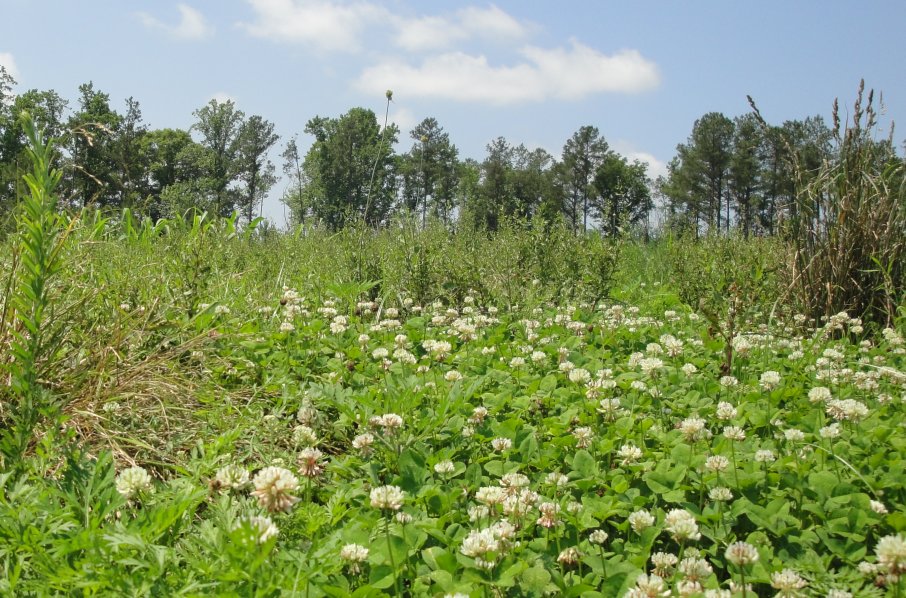
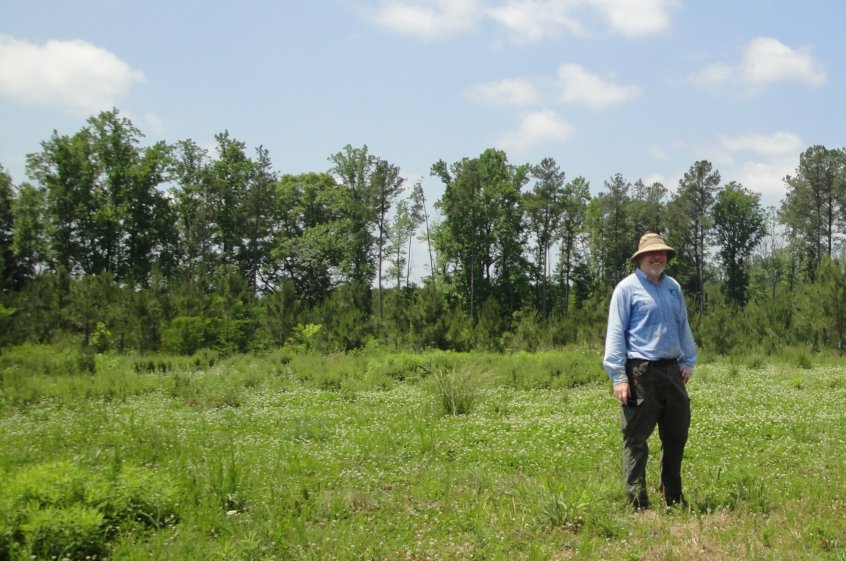
The pictures are from the farms. You can see the roads along the right-of-way. The picture of Alex and Espen shows the grassy path Larry Walker made down to the creek. It is a “wildlife corridor” Alex is looking very buff these days. They are hard workers and strong boys. They can get a lot more done than I can. My clover fields are looking good. Other wild plants are beginning to seed in and this is okay.

America’s Biggest Ethnic Group

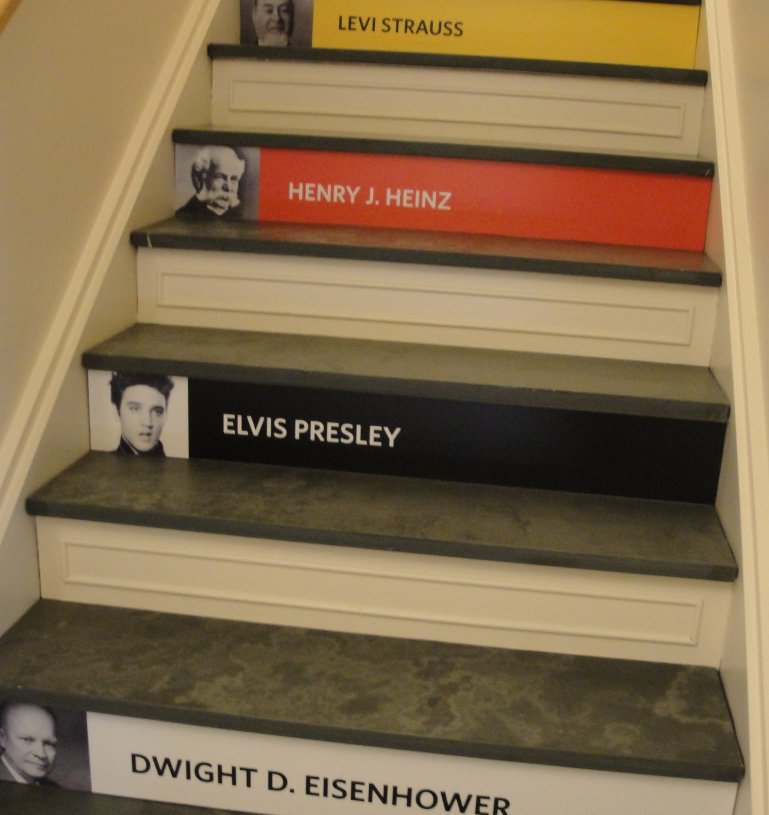
America’s largest ethnic group is German.  Nearly a quarter of the American population or 58 million Americans claim German ancestry.  It used to be a big deal; as far as I know the Germans never formed a group specifically called “the race” (as in La Raza) but some clearly had separatist notions. It is a tribute to the American assimilation machine that now it matters hardly at all. You can see some famous German-Americans on the stairs to the left.  Who knew Elvis was German?

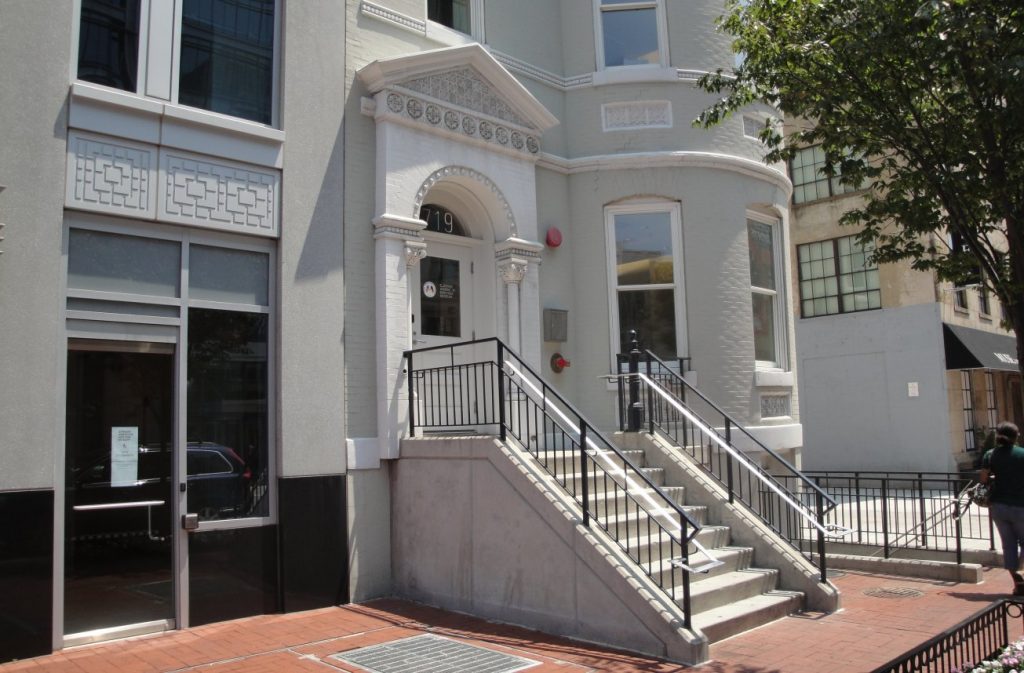
I had been meaning to go over to the German-American cultural center since I read about it in the paper.  Yesterday I went.  It is the kind of place that is worth seeing, but not worth going to see and you could easily miss it. Look at the picture below. The signs are small. Mostly, it is a permanent poster show detailing the long and varied contributions of Germans to American culture.   Since German contributions are now as American and Americanized as hamburgers, hot dogs and potato salad, it is easy to overlook them and think that now is the first time we have really had such large influx of immigrants and foreign cultures.

Those who forget history are doomed to repeat it and those who remember will have to go along with them too, but it is interesting to consider the conditions that existed within living memory. So let me say a little about Germans & America.  I grew up with it in Milwaukee, so talking about German-American culture is like talking about childhood. (The picture below is the Germania building in Milwaukee. They used to joke that the towers were like the spiked Kaiser helmets.)  But I had a child’s understanding of it based on caricatures and molded by subsequent history.  It is hard to put ourselves in the mindset of a century ago but I will try. 

1910 was before the wars and before the atrocities.  Germany in those days was arguably the most advanced country in terms of science and technology.  An American who really wanted to learn science had to learn German.  It was like English is today to sciences.  This persisted.  When I was growing up, the stereotype of a scientist was a guy with a beard and a German accent.   During our space race with the Soviets, it is largely true that our German rocket scientists competed with their German rocket scientists.   We probably could not have achieved what we did in space flight w/o Germans and the Russians certainty did not have the home grown talent to compete with us.

Germans also pioneered what became the research university.   Our American universities resemble them because we specifically imported German methods, ideas and often Germans themselves to remake our system during the late 19th and early 20th Centuries.  If we see Germany through the prism of the Third Reich and the World Wars, we see it in entirely a different way than our grandparents would have in 1910.  Germany under Wilhelm II was not a full democracy, but it was more democratic than most of the current UN members today and it was certainly less corrupt that most of the world’s countries now. They held regular, generally free elections. There was a strong respect for the rule of law and reasonable protection of individual rights. If you can look beyond the pomp and circumstance of the aristocracy, you see that in terms of democracy, rights, rule of law & transparency, Germany of 1890-1910 would compare favorably to most of the world’s countries a hundred years later (1990-2010) and has big modern countries such as Russia & China clearly beat. 

Although emigration to the U.S. declined after German unification and subsequent massive economic growth, there still were more opportunities in the U.S. and we continued to draw German immigrants. But it was a different sort of immigration in many ways.  As I mentioned above, Germany was one of the world’s most advanced countries, with technical and scientific skills at a par or above our own. This situation just doesn’t exist anymore. Today technically savvy immigrants are still important to us, but they usually develop their skills and/or use technologies already available in America.  A century ago, we were much more the recipients of skills and technology transfer. We all know that immigrant muscle helped build America, but we may overlook that immigrant brains also had a big role in designing it, none more so than the Germans.

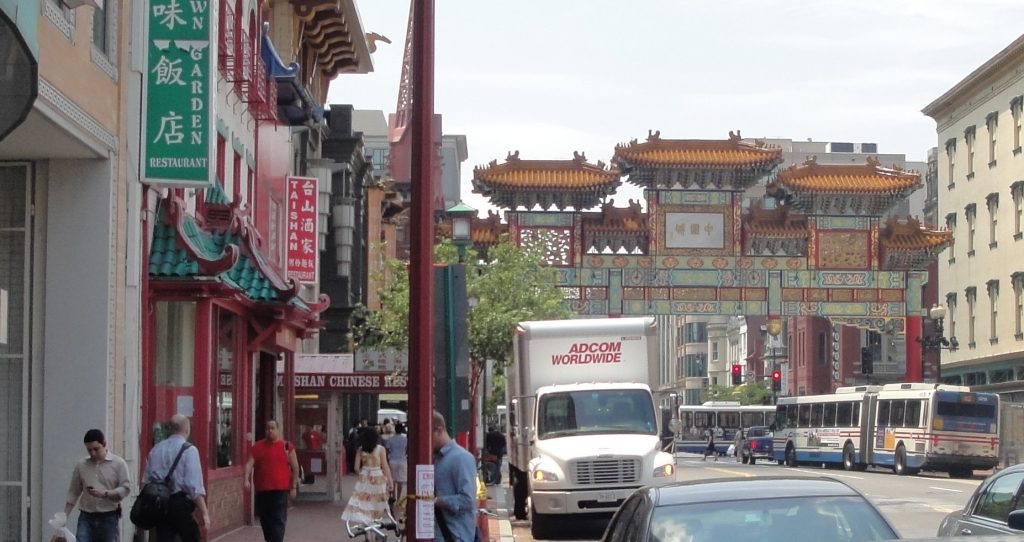
We made an effort to wash the German out of our national memory. During World War I, sauerkraut became liberty cabbage; dachshunds became dash hounds; frankfurters became hot dogs and hamburger was renamed Salisbury steak; many streets changed their names and so did many families. Germans assimilated much faster than they might have otherwise. Wars do things like that and we have a way of trying to fit the events of the past into our current narrative. The problem is that the German heritage just doesn’t fit well into what we think of them and ourselves today. And now we don’t think much of it at all. That is why the German American heritage museum is kind of depressing. It is now located in the middle of Washington’s Chinatown. Immigrant communities come and go. 

All this is past. History happened as it did and we cannot change it. People in the past did what they did, but we have to remember that history didn’t have to happen that way. Just as our futures are not determined, neither were theirs.  W/o that unfortunate and almost random event in Sarajevo (that pathetic little loser, Gavrilo Princip, actually got lost and the Archduke’s car passed him by chance.  Terrorists only have to get lucky once) and the incompetent reactions in 1914 how different the world could have been.

Bike to Work & the Snapping Turtle

Last Friday was bike to work day. I noticed an unusual amount of bike traffic that day, but now it is back to normal. The weather has been good for biking, warm but not hot with gentle winds. I have been at FSI this week, which is a little more than half way as far as my usual ride, but since I have to make the return uphill trip, it is a little harder.

I see some of the same people on the bike trails, which is not surprising. Most of the people riding at that time are commuters like me.  We tend to ride faster and more consistently. I am very consistent in my biking times. Only a strong wind makes significant differences. 

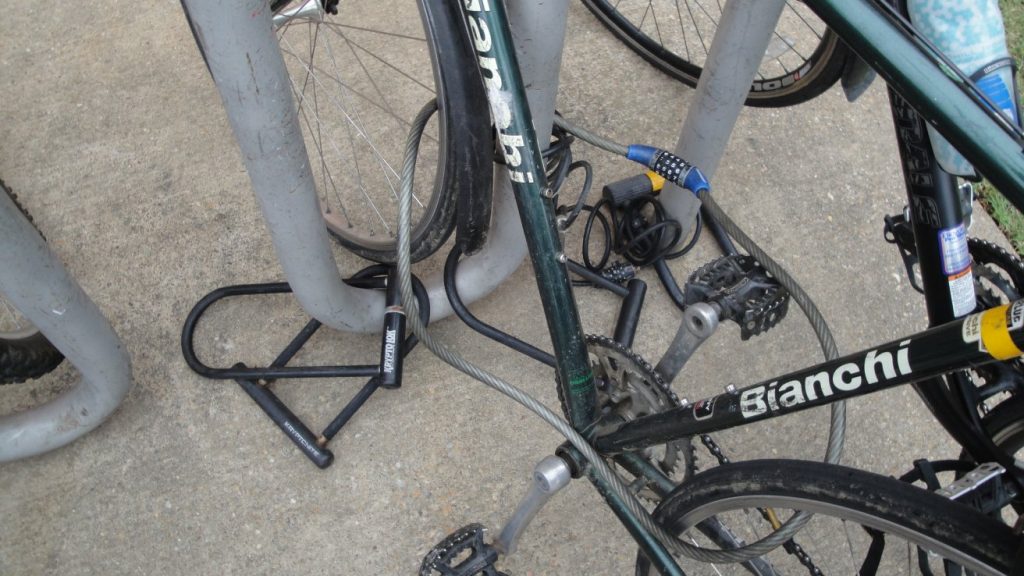
People who bike only occasionally or for leisure are less predictable or consistent. Sometimes I see someone way ahead, but when I catch up and pass, they go faster and pass me back. Then they slow down again until I pass again and the game continues. One of the habits some bikers have is a kind of lock colonization.  People leave their locks attached to bike racks, presumably because they are too onerous to carry around every day. I think some people just forget about them after a while and they accumulate.

Most people walking dogs on the trail are okay, but some have bad habits and so do their dogs.  The offensive dog walkers have their animals on long leases. The dogs run back and forth across the path, alternatively getting in the way and setting up a rope barrier across the trail. Dogs have become dumber and less agile. They used to be alert. Old time dogs knew when you got close and would leap out of the way with alacrity. Many of today’s dogs are like slow-witted drunks. They stare blankly as you come up on them and often don’t move until the owner pulls them away. I think they are too cosseted by their owners. It has dulled their instincts. Maybe there is more inbreeding too. Those little designer dogs seem to be the stupidest.

I haven’t really figured out the runner etiquette. I run to the extreme side of the trail or on the gravel verge. It is easy to bikes to pass me.  Some runners insist on running down the center line.  I give them as much space as I can when I am riding, but if they are striding the center there is not much space to give them. The center runners tend to be the crankiest. Some of them complain when you pass them about not getting enough space or warning.  Shitheads. I just keep on going. But most of the runners are good.  I think the ratio is like I used to tell the kids. Ninety-nine out of a hundred people are good, but you pass more than 100 people.

There is one old guy I have been seeing for more than ten years, a barrel chested guy with a Marine style haircut. I never talk to him but he seems so familiar that I wave at him when I pass.  

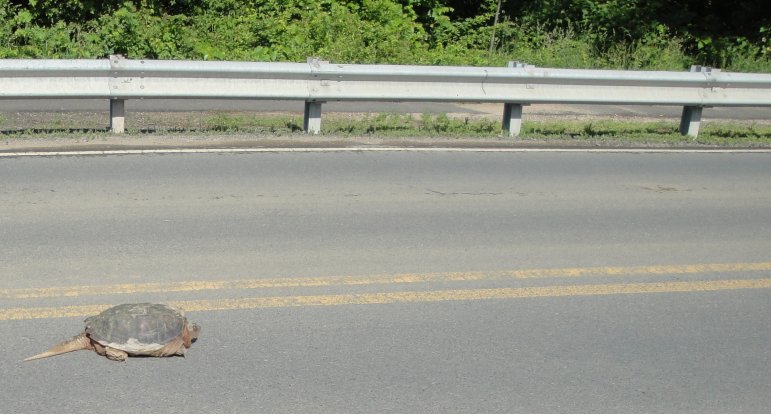
A big snapping turtle was stranded in the middle of Shreve Road when I rode home. Cars were swerving to avoid it and I didn’t figure it was long for this world. His shell would have done him no good against the car tires. At the pace he was going, I wondered how he got that far w/o getting squashed. A guy stopped his car and we kicked it along until it ambled to safety on the side of the road. Another passing motorist suggested we grab it by the tail on the assumption that it couldn’t snap us in that position, but both of us were afraid of the thing. It opened its mouth threateningly as every time we nudged it and everybody knows that those things can snap off a finger if they get a good shot. There is a wetland on the side of the road where we shooed him. The other side is just a construction site. It seemed like the thing was crossing from the verdant swamp to the rocky construction site. It would have been a mistake, but turtles don’t do a lot of hard thinking.

Why did the turtle cross the road? To get to the Shell Station. 

Five-Five

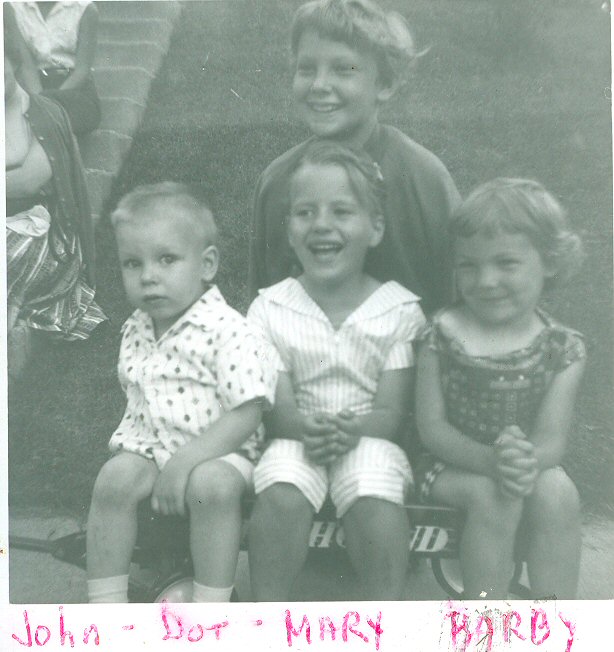
Jake, Dorothy, Mary, Barb

If there is significance in numbers, this birthday is significant. I am double nickels now and it was double nickels the year I was born. You notice birthdays that end in zero or five. They seem like milestones. This one really isn’t, beyond the numbers. Nevertheless, it is an occasion to pause and think about past, present and future. But I don’t have any profound thoughts today.

Life has been good so far and most things worked out better than I planned, although I can’t say that I ever really had a smart plan. Maybe that’s why things worked out. You don’t have to be smart if you are lucky and I have been lucky.