Learning & Education

I have more formal education than I can practically use and that is the way I wanted it. I just liked to study when I was in college and for my leisure today I do things very much like studying. I read books and write essays (now known as blog posts). But I think you don’t understand real education until you understand that all of life is – or should be – about learning.

I took the formal “book learning” education route; others chose different ways.  Sometimes we make too much of a distinction. Learning, whether it comes from books, experience or anything else, has to be integrated into a person’s life and outlook. Some people despise “useless” education. Others boldly assert that no education is useless. I think both miss the point. Education of any kind is useful if it changes how you look at and/or do things, if it spawns new ideas or skills or if it just makes you think. This definition would seem to include almost everything, but it doesn’t. There is useless education, although it has more to do with the recipient than the subject.  Some people just don’t pay attention or don’t integrate what they learned into their behaviors or thoughts. They don’t turn information into knowledge. These are the kinds of people who memorize lots of things, but cannot recognize them when they are a little changed or in different contexts. Unfortunately, these are often the people who call for more “education” and are most interested in official credentials. These are the guys that try to trump you by quoting experts or citing their own expertise. I recall discussing economics with a guy who didn’t like my opinion. He said something like, “Wouldn’t you feel stupid if I told you that I wrote my PhD dissertation on this subject?” I just said no. I should have elaborated, “Wouldn’t you feel stupid if I told you that you went through all that trouble and learned so little?”

I have to admit that I take some refuge in my own formal education credentials.  I can be a lot more of a smart-ass because I have some of the smart papers. Lately I have been in closer contact with practical people who know things I want to learn about buying land, developing property, building roads and sustainable forestry/agriculture. These guys know all sorts of detailed things, like the quality of dirt or the type of rocks you need to use to shore up a bank.  Lots of these things seem really easy until you have to make the decision yourself. As with anything else, some people are better at what they do than others. I was thinking about the type of education you might need and how you could figure it out. There are some places where my education has a very direct connection.  For example, figuring out how much I can pay for things and still make profits and payments is something I did indeed learn in finance class, although I have to admit that I really didn’t understand it until I  bought my first house. Let me jump back to my other life for a minute.

I have been sitting on promotion panels and trying to judge which of my esteemed colleagues should move to the next level. Many of us get formal training at the upper-middle or lower senior level. I valued that training, but I wanted to see what they did with it two or three years later. I wanted to know if it took root and grew or if it was just a pleasant sojourn in academia. I found some of each. Some people were clearly changed and improved by their educations, i.e. they learned something. Among others you just couldn’t tell. Everybody had earned the same credentials, but it was different. So I guess I am advocating a kind of “Gold’s Gym standard.” I go to Gold’s Gym three times a week.  I do an intense workout that takes me less than 15 minutes and then I am out. People make fun of me for that.  I get a variation of “Leaving so soon?” with monotonous regularity.  Most people spend more time than I do and many spend a lot more time, but time in doesn’t matter. It is like the credentials. The only thing that matters is whether or not you can pick up the weights. The answer to the question, “Can you bench press 250 lbs?” is not, “Well, I come here every day and workout really hard for at least an hour.” All that matters is yes or no, probably followed by an actual demonstration if you answered in the affirmative. Educational achievement is harder to measure, but the same type of standard should apply.

College is not the only place you get educated. Increasingly, there are other options. Many firms have their own training programs, which are often more up-to-date and almost always more specific than the program at the local college. Community colleges are increasingly important because of their low-cost, almost universal access and flexibility. Of course, online options are exploding. Aristotle thought that the best education was just to live in a good city. I think if he were alive today, he might call it lifetime learning and advocate a learning culture. Learning, like art, truth  and beauty, is ubiquitous. We just need to be aware and constantly searching. And our needs are protean. (Me use hard words from education).  I never thought that variations in rocks and dirt would absorb so much of my intellectual energy.

I apologize if this post has gone off in so many directions, but I think the idea of education is like that.  We talk a lot about the need to educate our population. We say that education is the key to the future.   This is true. But too often we are thinking narrowly of a specific place and time where education will be delivered by certified professionals who will hand out certificates when all the education is done. Maybe instead of education, we should think more about learning.* *How about a little display of etymological erudition, which is usually not of much value but fits here? Think about the words. Education is a Latin-based word. It means to bring out or lead out. The one being educated may be a little passive in this case. You can be educated by someone else. Learn is a Germanic based word.  Its original meaning was to get knowledge. It requires that you take an active part. Learning is what you are supposed to do during your education. Some people do.   

The reason I made the distinction between Latin and German was because of the nature of our wonderful English language.  English is a Germanic language, but it is heavily Latinized, much of it through the use of Norman French (descended from Latin). After the Norman conquest, since the rich guys spoke French, the educated people read Latin and the poor guys spoke Anglo-Saxon (old-middle English), we tend to have a rich vocabulary of overlapping words; the Latin-French words tend to be classier than  the Germanic-Saxon ones that mean almost the same things.  

Most swear words are Germanic. In Latin-French based English, for example, people have intercourse in the bedroom and they defecate in the bathroom. The German-Saxon words for those things cannot be spoken on network television.  But the twin words do not always mean exactly the same things. So it is with education and learning.  My education taught me the things I just wrote, but I have learned that most people don’t know or care about them. That is another difference between learning and education.
Secrets of Success

I wrote these notes for these posts during my time on promotion boards, but held off posting them until the work was done.  

After many years of trying to figure out the tricks of getting promoted, I finally got it.  It is an epiphany. After now reading  the files of 100s of my very competent colleagues, I found that the secret of success is to be good at what you do. Of course, the write up is important. If a tree falls in the woods and nobody hears it, it doesn’t make a sound for any practical purpose. But you have to have something to write about.  A week of energetic writing and spinning won’t make up for a year of lethargy on the job. You just cannot sell Edsels.  On the other hand, people stand in line to get the good products they want.

I like the fact that people write their own first pages on their assessments. It gives a better look at what they can do and what they think is important.  Some people “get it” more than others. In their own write-ups they emphasize the right things first and they make logical and meaningful connections among the things they accomplished.  

There is focus.  In the good EERs, I notice a “purposes principle” at work. They explain the “so what?” and list the results and outcomes of what they have accomplished.  I also get the impression that they frequently ask the purpose question.  When someone gives you a task, it is not impertinent to ask, “what do you plan to use it for?” This will often make the person focus more, give you a better idea of what is necessary and maybe make it more of a partnership.  The person getting the task might know, for example, that there is a better way to achieve the goal.   Of course, you have to ask the question in the right way, but a good leader should be glad to have subordinates who try to improve on what they are given.

Nobody is perfect and I like it when I can find areas of actual conflict or mistakes that provided learning opportunities. This is perhaps the hardest part to get right. Nobody likes to be criticized and it is always a risk to have any criticism prominently mentioned. However, it may be a acceptable risk that sets you apart. Nobody has a good year every year. It is unlikely that someone goes from one success to another w/o any setbacks.  I was reminded of the juvenile lovers who ask their partners whether they love them more today than yesterday. Despite what we hear in song and story, the inevitable true answer eventually must be “no”. It doesn’t mean that careers, or love, do not or cannot grow over a long period, but it will never be a straight and clear path in either case.  

That said, it makes no sense to dwell on failure. One of the things I dislike most is when people seem to revel in the hard times they have suffered. Difficult conditions are a mitigating factor, but the fact is that there are two sorts of criteria. You either did something or you didn’t.  Almost fought the great chicken of Bristol just doesn’t compare to actual achievement.  Ideally, you should mention the problem immediately followed by how you moved on from it.  And remember that most FS careers have had some hardships. I served a year in the Western Desert of Iraq, with dust in the air and bad guys behind the rocks; many of our colleagues have had worse. The bad plumbing or poor phone service at someone’s post just doesn’t sound very impressive.

Overall, some files just seem to sing beautifully, others are a little off key and a few are bad. Sometimes one person manages to be/do all three.  That is why I like to see the person in more than one type of job or place.  Some people can do well one time and in one place. That is admirable but doesn’t mean they should be promoted to more responsibility. It is not the one home run that counts but the day-to-day success that adds up over a long period.

Land Investments

I made an unexpected trip to the farms yesterday. I wanted to look at a piece of land near the Nottoway River.  FM wants to buy the timber and wants me to buy the land. In other words, he gets the wood; I get land to grow new trees. It is a long-term proposition for me. I couldn’t even thin until around 2025. On the other hand, I can get the land cheaper and grow the trees later.  

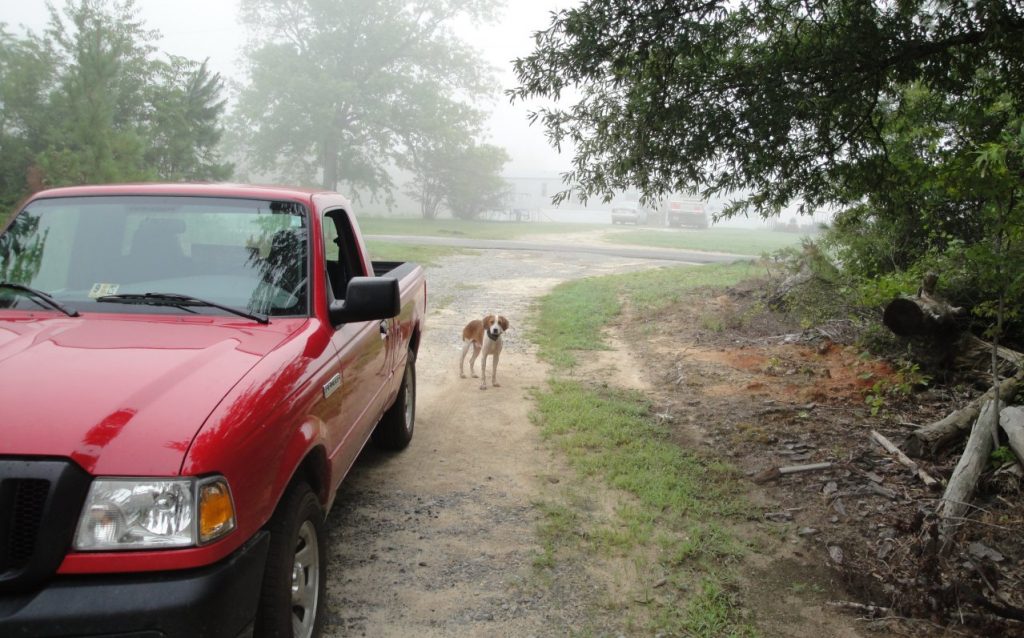
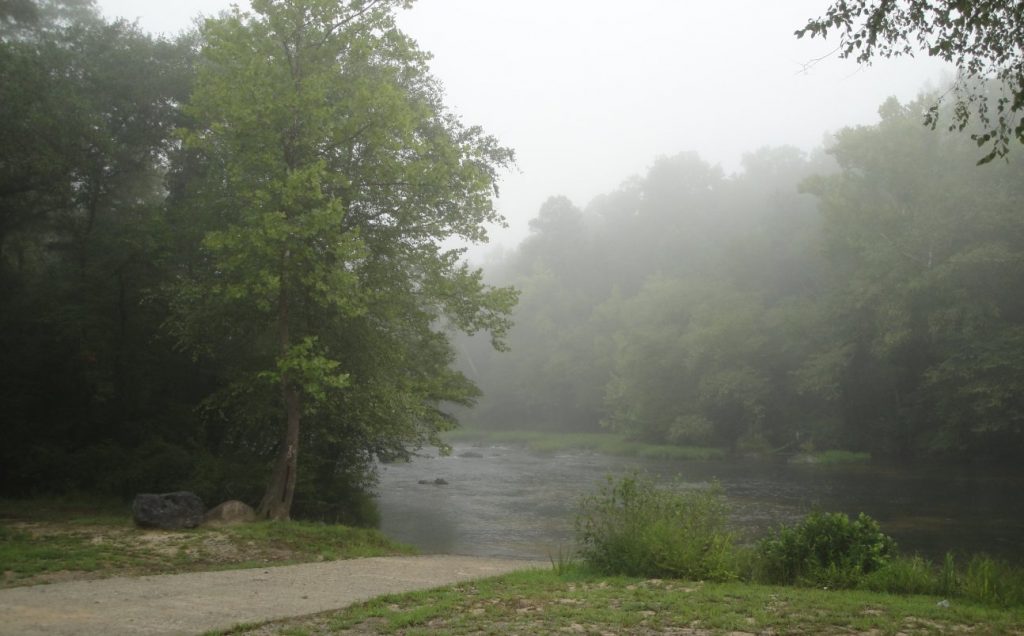
The land would not be only for forestry. There is a lot of road frontage and the property is across from the Nottoway River, which you see in the picture. (It was a very foggy morning, as you can see and chilly. It later got hot and humid.) They would leave the trees near the streams etc, so it would remain wooded and attractive. There is a public boat launching place across from one corner of the property.  It was a very foggy morning, as you can see and chilly. It later got hot and humid. Under the right conditions, I could sell off some lots right at the corner with the river, where people could build “farmettes” or cabins. I have no idea how that works, but I bet I can figure it out. That would help pay for the land.

Land is inexpensive these days because of the recession. It won’t stay that way forever and this may be a good time to buy. But the timing is always tricky and I don’t have that kind of money to just risk.  The forest land and its produce will essentially fund large chunks of my retirement, or not. In a rational market, this land would become more valuable. Markets are always rational … in the long run.  But as John Maynard Keynes said, “Markets can remain irrational a lot longer than you and I can remain solvent.” 

Anybody want to come in on a forestry investment?  Or maybe buy a beautiful home site near an officially designative senic river? Well, I have to figure out the finances. I really just don’t know.

Pictures

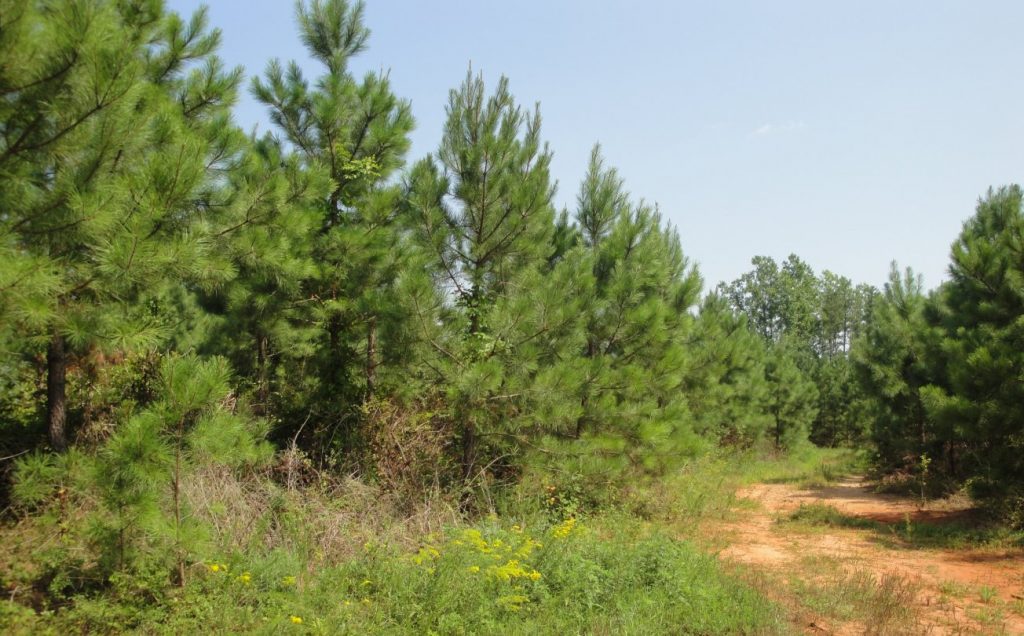
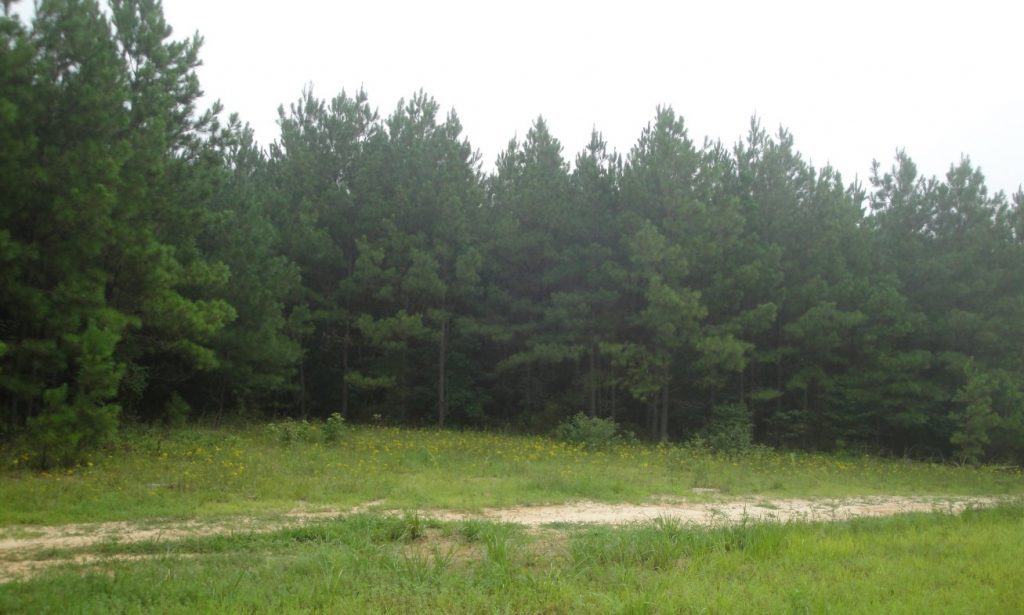
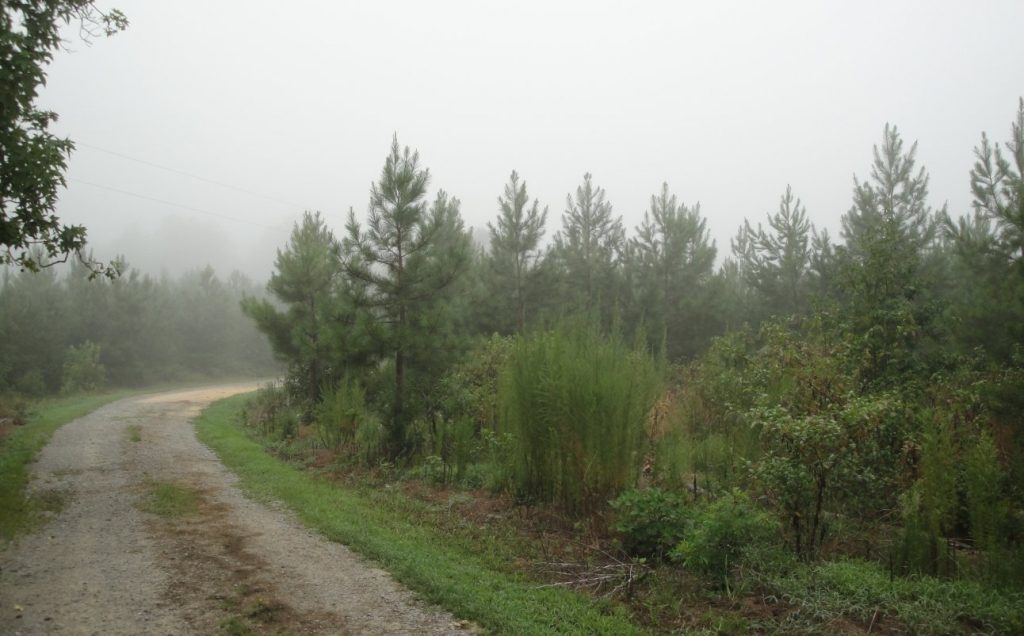
The first picture shows the boat landing on the Nottoway River. The picture under that is the part of the property I was looking at that was cut in 2001. This is natural regeneration and would remain on the land.  I would have to mange it a little, but the trees look healthy. As comparison, you can see my trees on the CP property (same day. The sun came out.) They are only six years old (planted 2004) but they are bigger by a couple feet and fuller because of better genetic stock and some management.  The second lastpicture shows the pines on our Freeman property.  They were planted in 1996 and will be thinned later this month (first thining). They need thinning. Light will reach the ground and it will be better for wildlife. The last picture is a dog that just wandered by. He has a tracking collar, so he is probably a hunting dog. I offered him a piece of ham from my sandwich.  He took it but remained a little spooked.

Slugs

Northern Virginia has an interesting hitchhiking system called slugging.  Drivers who want to use the HOV lanes, but don’t have the required three passengers, pick up “slugs” at various lots south of DC.  The occupants allow the use of the HOV lane and get both drivers and passengers there much faster.  No money is exchanged and there are some simple rules, such as no talking unless the driver initiates it. This form of transport has been around since 1975 and it is evidently as fast or faster than taking the bus and significantly faster than driving as a single person in traffic.  A couple of my colleagues slug to work w/o any significant problems. 

It is interesting that such a cooperative market has grown up w/o outside regulation.  Local governments accept it and welcome it as a way to reduce congestion.  There have been occasional calls for the government to somehow regulate the system, but that would probably make it collapse.   If it ain’t broken …  

More information is at this link.

Hunting Season

Hunters are the backbone of rural society. People who live in cities and suburbs rarely appreciate that fact. I thought of this in relation to my own land and was reminded when Chrissy’s sister Diane visited a friend who lives in western Virginia. The friend owns some forest land in the Shenandoah.  Local hunters watch over it,  make improvements and generally take care of the place.  She was a little surprised at the role of local hunters. I used to be too, but not anymore.

The hunters on my land have been there for generations. Much of what I know about the land comes from them. They knew how long the roads had been in place. They remembered when the streams had flooded and when they had gone dry.  They had experience of fires and storms.  And they loved the land and understood the relationships with the animals on them.

Deer hunters are working to create better habitat for the animals they hunt and improve the herds.  They always have done this.  Much of the county’s wildlands were conserved by hunters.  Lately the equations have changed a bit.  The burgeoning wildlife and especially deer population has shifted emphasis from any deer to quality deer. Hunt clubs are actively managing the herds through selective  hunting, feed plots etc.  I get a magazine called “Quality Whitetails” from an organization by the same name that provides a place for the exchange of information and experience. It is very interesting the things hunters are doing in the conservation field, literally out in the field.

Another big factor is development and urban encroachment. A generation ago, there were a lot fewer deer and they were spread over a bigger area of undeveloped land. Today deer populations have grown to almost nuisance levels in some areas and this is exacerbated by the fragmentation of the forests.  This is another reason to emphasize quality of the herds over mere numbers.  The numbers problem is no longer a problem.

Hunting keeps people closer to the land.  One of my friends down in Southside Virginia spends most of his free time working on conservation projects on land his hunt club leases. He helps restore wetlands, makes wildlife corridors etc. He has helped a lot on my farm, at no cost to me since we work in our mutual interest. This guy doesn’t hunt very much anymore in the traditional sense.   He just really enjoys the conservation and wildlife management aspects of hunting.  Most of the hunters I know enjoy the sport more for the insights it gives them into nature than the actual shooting deer, which is only one part  of a full-year, multi-year effort.

The numbers of hunters has been declining over the past decades.  There still are enough, but if the trend continues, this will be a serious threat to the health of rural communities and the rural environment.  Somebody else – probably at taxpayer expense – will have to do what as work hunters do joyfully and for free. In fact, they actually pay to do it.

I am not a hunter myself, for the same reasons that the number of hunters has been declining.  I was a city kid, with no hunting tradition. I am also a terrible shot.  I support hunting by working with the hunt clubs  on my farms and supporting some hunting organizations, such as Quality Whitetails, that provide hunting education and advocacy.

Beyond the environmental benefits, hunting has a long tradition in American culture.  It is very different in the U.S. than it was in many parts of the world.  In Europe, hunting was a rich man’s sport.   When the ordinary people hunted, it was usually called “poaching,” especially when talking about bigger game, a crime that was severely punished by the aristocrats. Besides just wanting to keep the animals to themselves, aristocrats sensed the fundamental democratizing nature of hunting.  Besides giving the common man access to weapons and the training to use them, hunting allowed individuals a personal connection with nature, unfiltered by the hierarchy of the old world.  It also provides a means of support. One of the older hunters down near the farms told me that when he was young, hunting wasn’t just a hobby; it was needed to put meat on the table.  One of the things that impressed former-peasant immigrants to the early America was that they COULD hunt.  They were the owners of the land and didn’t have to kiss the ass of the local baron or “his” deer and elk untouched in the forest where only the fat-cats could hunt.  

So this is my paean to the pastoral pursuit of hunting in our great America, whether it is deer, turkey, geese, quail, ducks or bears (yes we have a few on the farms now).   We should appreciate what hunters and hunting have done for us.

Cultural Relativism: Jeitinho Brasileiro

A practical and effective cultural relativism would start with the premise that if people are doing something for a long time, they must have a reason. It does not suppose that the reason is a good one or that it remains valid. Many parts of culture become fossilized.  People continue to do things that were once useful and adaptive but are no longer. This has been most tragically-comic and obvious in military affairs, where warriors often continue to use weapons and techniques made obsolete by advancing technologies. A Samurai warrior, all decked out in his panoply of armor and edged weapons is a wonder to behold, but he is no match for a kid with a pistol. The Japanese, BTW, addressed this cultural problem by banning firearms (as European knights had tried to ban longbows and crossbows) and managed to hold technological progress at bay for a couple centuries. 

You must acknowledge that the cultural trait is done for a reason and has/had value.  After that you try to put the trait in context. This helps understand the culture. Seek first to understand before trying to be understood. But at some point soon after that, you have to start making judgments and choices.

I have been trying to brush up on my things Brazilian. I have a favorable attitude toward the place and a general affection for the people left over from when I lived there twenty-five years ago.  But I recognize that there are challenges. I just finished reading a book on sociology called “A Cabeca do Brasileiro” (the mind of the Brazilian) and I have been watching Globo (Brazilian TV) every day on the Internet.  All this reminds me of things I liked about the place and some things I didn’t like.   It is condescending to talk about only the good things and churlish to emphasize only the bad.  Anyway, many of the traits have aspects of both.

The author, Alberto Carlos Almeida, devotes his first chapter to “jeitinho brasileiro.” I don’t know how to explain what that is to an American reader and it is obviously hard even for Brazilians to explain it to each other if the guy writes a whole chapter about it.  Suffice to say that it lies in the twilight zone between a favor and corruption.  The jeitinho is a way around something, often a way around a regulation or procedure that everybody knows doesn’t make sense. One of the things I loved about Brazilians was/is their cleverness and flexibly. They can always think of a way to get something or get something done. You can easily see how this “good” trait could cut both ways.

So should we accept, celebrate or condemn the jeitinho? You really cannot ignore it because people will be asking you for it and doing it for you even if you don’t ask. Would you be an “ugly American” if you insisted that you – as an American – don’t do Jeito? Or would you be an even uglier American if you took advantage of it?   

Biofuels: Food, Fuel & the Future

Biofuels can be a part of our energy future, but are not a solution and they will never play a dominant role.  That one of the big ideas I took away from a talk on biofuels at the Wilson Center, called Biofuels: Food, Fuel & the Future. The reason we use fossil fuels is that they are so wonderfully concentrated. Coal, gas or oil represent millions of years of concentrated power of the sun captured by photosynthesis. Any crop we grow captures only one season of energy or maybe a couple decades in the case of trees. This is a fundamental limit even if we can figure out how to efficiently capture the energy stored in corn, sugar, wood, palm oil or switchgrass.

We noticed the BP oil spill because it is quick and compelling, but scientists have long known about the Gulf dead zone, a more persistently serious problem. This is a vast area of the sea near the mouth of the Mississippi where fertilizer runoff (especially nitrogen and phosphorus) have caused extravagant growth of algae. When the algae die back and decompose, it sucks the oxygen out of the water, making life for fish impossible. Much of this fertilizer runs off of corn fields. To the extent we turn more corn into ethanol, we increase this problem. We tend to notice fast developing problems like the BP spill while the slow motions ones, like the dead zones, escape notice. 

One of the dangers of something like the BP spill is that people panic and politicians and special interests take advantage. You can see this already in the calls for more biofuels and other alternatives.  Remember the cause of the dead zone in the paragraph above. But it gets worse. The nitrogen fertilizer for the corn is often derived in part from natural gas and we have to account for the fossil fuels that go into planting, moving and refining the 1/3 of the American corn crop that becomes ethanol.
 
W/o massive government intervention, there would still be an ethanol industry. It would just be a lot smaller. Ethanol has a good use as an oxygenator added to gasoline. It makes gasoline burn more effectively & cleaner. In the early 2000s it replaced MTBE (methyl tertiary-butyl ether), which had itself replaced lead as an octane enhancer a generation ago. But a little ethanol is good; a lot is less useful.  Gasoline packs a lot more energy per gallon than ethanol. As you add ethanol beyond a small amount, it begins to decrease mileage. There are also other problems related to corrosion and evaporation, but I will let anybody who cares learn about that elsewhere.
 
Suffice to say that the push to use more ethanol as transport fuel moved it from being a high end additive to extend gasoline mileage to a low end commodity. Since it is less efficient & more expensive than gas, it raised the prices. Yet the push for more ethanol continues because it is driven by politics, not by economics or common sense.
 
Let’s digress a little. You can make alcohol from almost anything that grows on earth. You can see that from the vast array of alcoholic beverages available worldwide, made from potatoes, corn, cactus, grapes, apples and even watermelon. But it is easier to make ethanol from some things than it is from others. It is relatively easy to make ethanol from sugar cane. That is why Brazil has an ethanol advantage. It is significantly less efficient to make it from corn and so far prohibitively expensive to make it from cellulous (i.e. switchgrass, wood chips etc).     

The U.S. does not have a competitive advantage in making ethanol. For one thing, corn is not a great feedstock and to make that worse we (the U.S.) has a relative advantage growing corn as food for man and beast, but when we make it into ethanol, we manage to negate our natural advantages, converting a product we do well into a product that we do merely okay. Beyond that, corn ethanol tends to be produced near where corn grows, i.e. in the middle of the country. Much of the demand for liquid fuel is on the coasts.  Ethanol cannot be transported via gasoline pipelines because it is corrosive and tends to create evaporation problems. Transporting ethanol by road and rail is relatively expensive. On the other hand, ethanol from Brazil is cheaper and closer – in terms of transport – because it is produced near ports in Sao Paulo state and can be easily sent via sea transport to places like Norfolk. That is why we have to subsidize ethanol production in the U.S.  by $0.45 a gallon AND put a tariff of $0.54 on ethanol from Brazil.  

In other words, public policy is pushing us toward one of the most expensive energy alternatives made even more expensive by public policy.
 
What about cellulosic ethanol? This can be made from materials that now go to waste, such as forestry waste or stalks and sticks from crops. We can also easily grow some crops, such as hybrid poplars or switchgrass, specifically for energy. The biggest problem is that we still cannot do it efficiently. Nature has been evolving for millions of years to prevent wood from easily being converted (i.e. fermented or rotted).  There are better alternatives. The more you have to process something, the more costs you add.  Wood chips, for example, CAN be turned into ethanol. But it is a lot easier to make them into pellets or burn them directly to make heat or electricity.

The problem is liquid fuel. Gasoline makes great liquid fuel and alternatives cannot compete. Direct government attempts (such as subsidies and mandates) to change this equation don’t work well for that reason. Beyond that, alternatives and gasoline are locked in a feedback loop. If alternatives, such as biofuels displace a lot of gasoline, the price of gasoline drops relative to the biofuels in question, making them less competitive.

Government has a role, but it is supportive and indirect. Government should not try to pick particular technologies. The ethanol debacle should have taught us that. It can help with infrastructure and basic research. Real, sustainable gains come from increasing productivity that lowers costs or costs of doing business, rather than tries to pay them down with taxpayer money.

A final interesting concept they talked about at the seminar was “peak gasoline.” People talk about peak oil. Peak oil is the theoretical spot where we have used up half of the petroleum available on earth. It is a slippery concept that is meaningless w/o specifying a price. At $5 a barrel, we reached peak oil years ago. We may never reach peak oil at $500 a barrel.  Peak gasoline is an easier concept.  Given the changing nature of our society, our driving habits and mileage efficiency, we probably reached the maximum amount of gasoline we will ever use. We cannot expect consumption to rise forever. Consumption is already dropping. Of course, we have not and may never reach “peak energy.”

There will be no magic solution to the energy problem. We choose our energy portfolio based on cost, convenience, availability and mere preference. This is how it will always be. It is an ongoing situation, not a problem that can be solved. No matter what elegant and wonderful solutions we devise (and we will come up with some) we will still be talking about the same sorts of things fifty years from now.  It is good to remember – despite the current pessimism – that our energy situation is better than that of our ancestors in terms of the amount of work we need to perform for each unit of energy. But as energy gets easier to get, we want more of it.

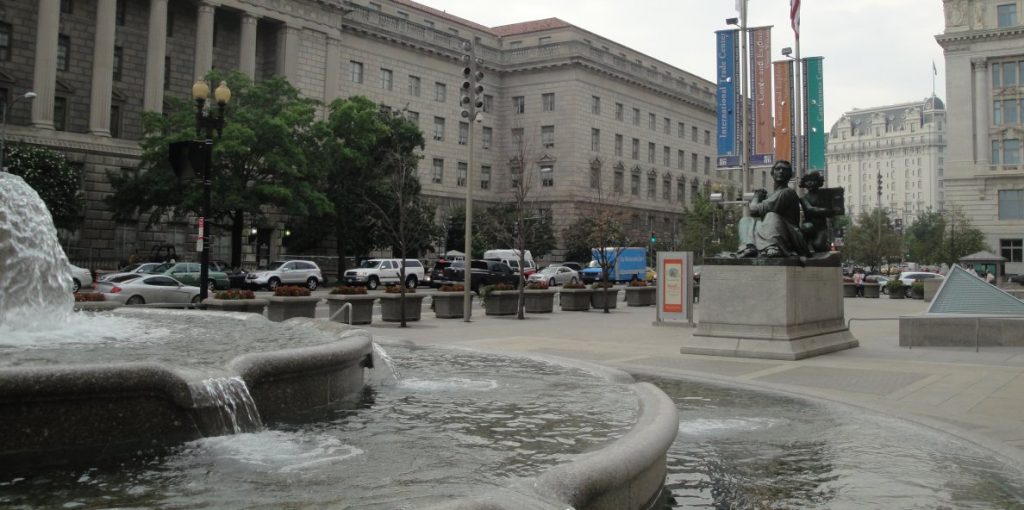
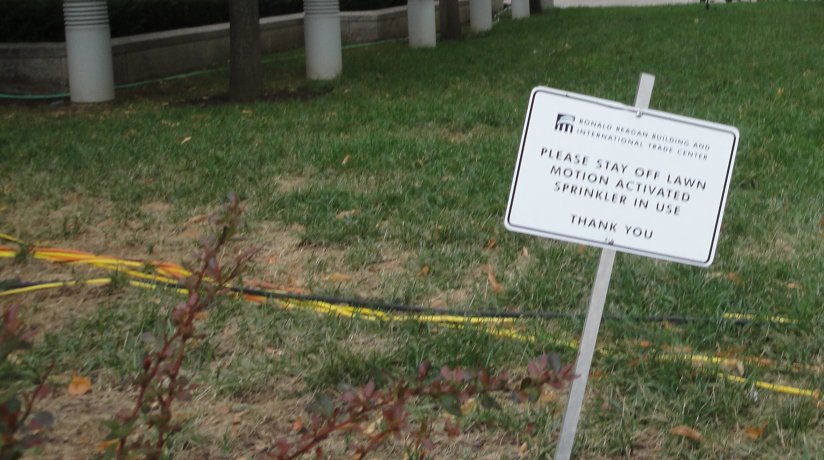
The picture up top is the inside of the Wilson Center. In the middle is the outside of the of the Reagan building, where the Wilson Center is located. In the lower middle is a sign warning that if you step on the grass, motion activated sprinklers will flow. It is an idle threat. I tested it and stayed dry. 

Waterfront Mall

We lived in the Oakwood Apartments across from Waterfront Mall when we lived in Washington in 1988 while studying Norwegian.  It was a dump back then, the failed experiment in 1960s urban renewal.  The Mall had few tenants, although I did appreciate the Blimpy and Roy Rogers. They went out of business a few years later until there was essentially nothing  left but a CVS, Safeway & some used music stores. Perhaps most poignant was an escalator that went up to a non-existent second floor. They had great expectations at some time ago. But they plunked the place down in the middle of a crappy neighborhood that really couldn’t support a Mall. We were afraid to go there after dark and apparently so were most other unarmed customers not engaging in pursuits of questionable prudence or legality. 

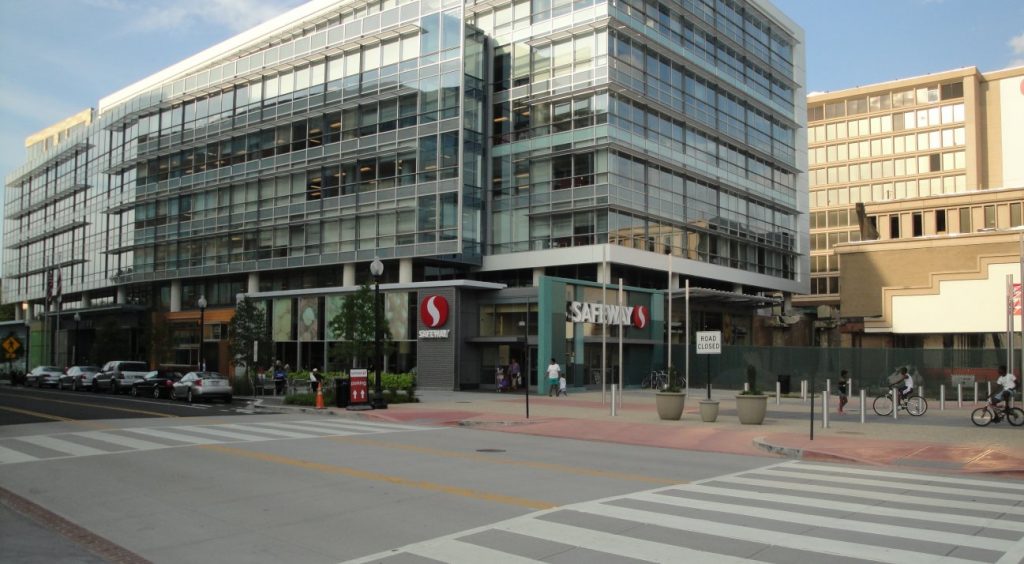
They tore it down a few years ago and started to build a new residential-commercial complex. Conditions have changed. There is now a metro-stop (Waterfront) and a more prosperous set of people has moved in around.  It is the classic gentrification of anyplace within reasonable walking distance from a metro. You can see the new Safeway up top. Notice that the buildings are medium tall. It is illegal to build anything higher than the top of the Capitol. This keeps Washington’s skyline low.

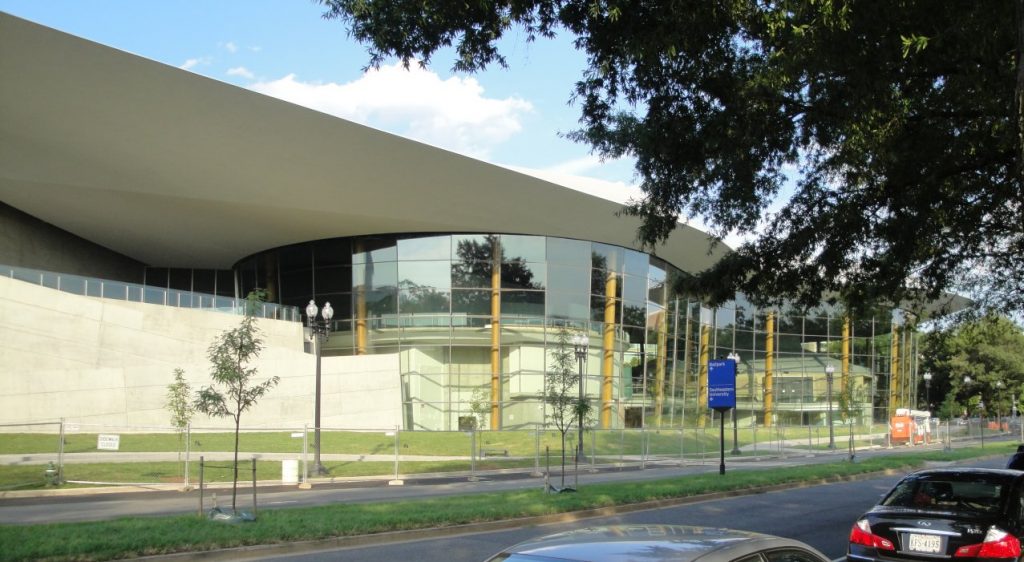
They also have just about finished the Arena Stage that you see in the picture above. You can see pictures from a couple years ago, during construction here, here & here.

Hot & Humid All Day, Every Day

Horses and caison in Arlington Cemetary on July 20, 2010

It has been really hot. The weatherman said that we have not had this kind of string of hot days since the 1930s. I remember that my father used to say, “It ain’t the heat; it’s the humidity.” He was right, but we have both. I still have been riding my bike to work and it has been about 80 degrees when I set off in the morning. I am soaking with sweat by the time I get to work and am more grateful than usual for the showers.

Yesterday I went to the Wilson Center to hear a talk on Brazilian biofuels. I will write notes later. I got to work and took my shower and then I decided to walk over to Wilson for the program that started at 9am.  It is only around a 15 minute walk, but the humidity made it really uncomfortable. Well, the really hot weather is supposed to be over in a couple of days. Then it will be merely hot.

I got a little spoiled last year when it was cool (by Washington standards) most of the summer. I understand that this is an “El Nino” year, which means it is hotter than usual. 

The funny thing is that it is an especially cold winter in South America. I have been watching Brazilian TV and they talk a lot about the “cold wave” hitting their country. Cold for them does not mean the same thing it does for us. When it gets down around freezing it is a very serious event. They just aren’t ready. There are reports of cattle just dropping dead from the cold in states like Mato Grosso do Sul and Parana. You can see it on TV. They evidently just drop down and are laying right where they stood in the fields. These are tropical breeds that just don’t make it through a cold (by Brazilian standards) night. They also tend not to have sheltering barns, since there is usually no need for them. Cattle raising is extensive instead of intensive and often what we would call “free range”. Brazil has a lot of pasture land. I read that each cow has an average of a whole hectare of land.

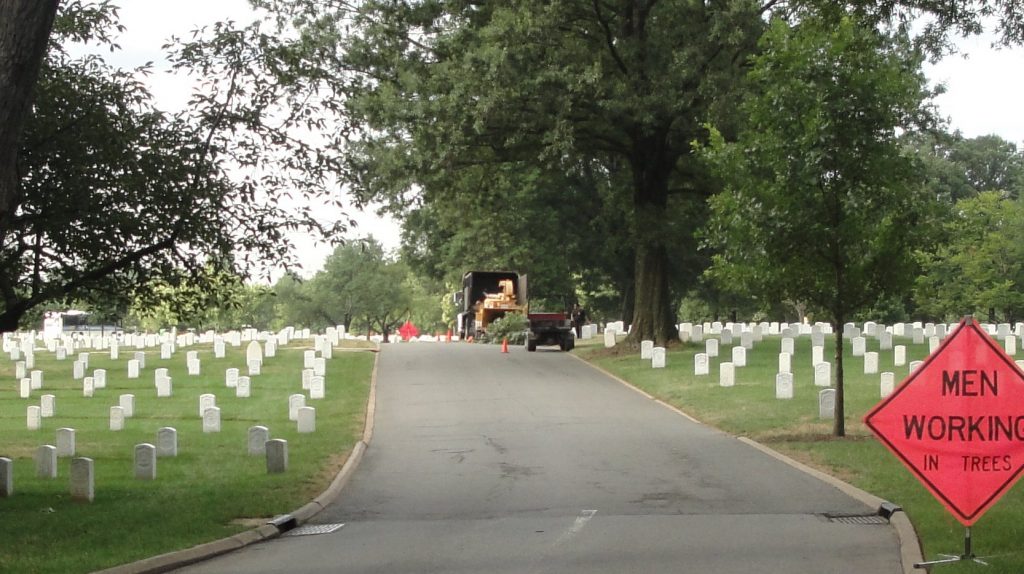
The pictures up top are from my morning ride through Arlington Cemetery yesterday and the day before.  You can sort of see the humidity in the air.  

Ongoing Ecological Disasters

China is now the world’s biggest consumer of energy. It passed the U.S. as the world’s bigger emitter of CO2 a couple years ago and accomplishes these things with an economy 1/3 as big as ours. Low energy efficiency and excessive dependence on dirty coal explain why China falls high on the list of ecological disasters. Over the next fifteen years China will build 1,000 gigawatts of new power-generation capacity, the total amount of all electricity-generation capacity in the U.S. today. The big environmental problems will increasingly be beyond our borders. We have to drop our America-centric viewpoint.

As environmentalist, we have to be concerned about our world, not only our back yard, and the world is generally dirtier than our back yard. Oil spills like the recent BP catastrophe are routine in Nigeria. In fact, you would not be far wrong if you characterized the whole coast of this part of Africa as one big spill eternal. In all fairness to the Nigerians, natural oil seepage was common even before, but not like this.

But before we get too excited about the ecological cost of fossil fuels, consider what happens to forests when poor people depend on biofuels (i.e. wood). The people of Haiti have created a wasteland out of a naturally ecologically rich island. The problem is charcoal production. We can see how this used to work in Europe if you want a historical perspective. Europe’s forests returned during the 20th Century because the stress was taken off when Europeans shifted from biofuels to fossil fuel. But charcoal was not the only thing destroying forests. Horses did their part. Horses eat a lot of grass and grass cannot be grown in the heavy shade of forests. As long as horsepower was really horsepower, large areas had to be devoted to growing horse food. I know everybody likes horses, but it is not good to have to depend on them. Fossil fuels replaced this too.

The Soviet Union was an ongoing ecological disaster in itself and the evils done by communist central planners lives after them. You can see the example in the Aral Sea, now perhaps better referred to as the the “Aral Depression”. This used to be a really big expanse of water, complete with a fishing industry. But during the 1960s, the Soviets built dams, dikes and canals to support their planned cotton industry. The Aral Sea literally dried up. I have seen the dramatic pictures of boats in the middle of fields used as examples of global warming, but it is merely garden variety central planning that did this. It gets worse when the wind picks up sand and salt from the erstwhile seabed and blows it all over the place.

As you probably have noticed by now, I have been picking up my ongoing ecological disasters from FP-Online. The last one they mention is the Pacific garbage patch. This is a kind of Sargasso Sea of plastic bottles and wrappers concentrated by the current and floating on the ocean surface. The currents pick up garbage from the coasts of North America and Asia and send it in a continual loop in the Northern Pacific.

I think the world is in a kind of development race. As societies develop, they get cleaner. America was much more polluted a generation ago than it is today. As China, Nigeria or the countries of the former Soviet Union develop we can hope they also become more environmentally responsible. But it will be a dirty couple of decades as we wait for it. Fortunately, they don’t have to make the same mistakes that we did. They can jump the line to the best technologies. Our duty is not to stand in the way of those developments.