A Dry Smokey Season

You rarely think about the air you breathe. We talk vaguely about air quality, but very rarely anymore is our air bad enough that most people change their behaviors. Even when we get those warnings about air quality, it is not that bad. It wasn’t always like that. I remember in the early 1970s in Milwaukee when I could tell where I was in the city by the particular sorts of pollution: yeasty smells near the breweries, a sweet smell near the Ambrosia chocolate factory and a horrible stink that would knock a buzzard off a sh*t wagon near the tanneries. You didn’t need to hear a report on the radio that air was bad and that you should limit your activities. The air itself told you and forced you to change.
The air has gotten a lot cleaner, at least in most of the places I have lived. I have not seen much of anything you could really call serious widespread air pollution, in the old style, in the U.S. in many years. Poland was very bad when we got to Krakow.  As they closed down the communist era pollution factories, things improved rapidly, but you still had to consider the air quality in your running or biking plans.  

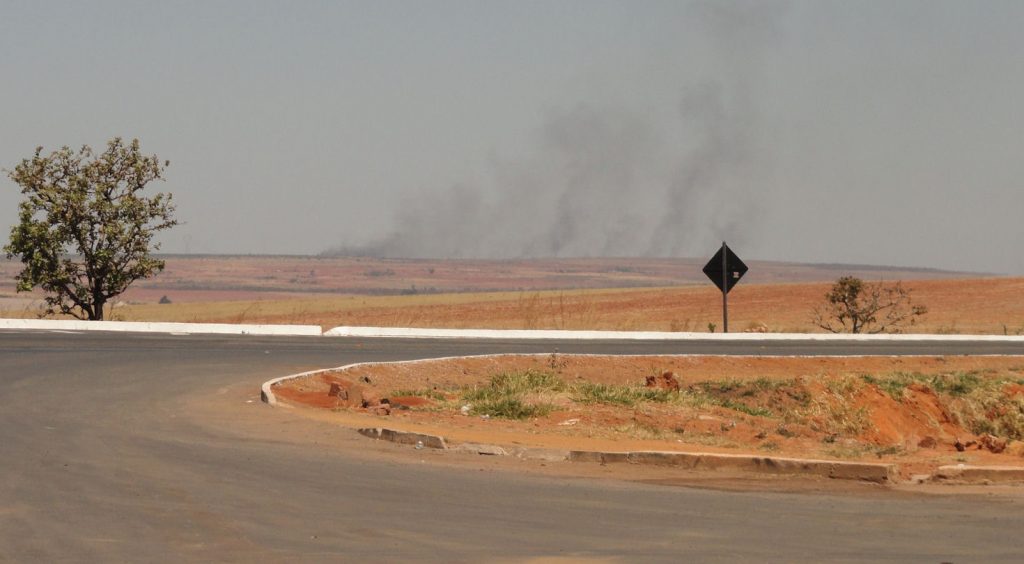
I have been noticing the air again here in Brasilia. I wrote a little about the fires during the dry season a few posts ago. It is bad.  The smoke hurts your eyes, throat and lungs and it just smells bad.  Last night I used the air conditioner for the first time, not to cool the house – you don’t really need to do that in Brasilia – but rather to try to filter the air a little. It didn’t work.
The smoke problem follows the clock. It is not so bad during the day when the smoke rises easily and disperses, but the cooler and calmer conditions of the evening seem to hold it closer to the ground. This is only my observation and I do not vouch for the scientific veracity. It could also be that people are setting fires in the evening or maybe the cooler temperatures make the fires less intense and less intense fires smolder more.  I don’t know. All that I know is that the smell and smoke at night are bad, but it clears up fairly well during the day. The rains will come in a few weeks. Until then, the expectation is that it will not improve and will get worse.
Brasilia in general is a great place to live. I suppose we can tolerate a smoke season and I think it could reasonably be called a season, since it evidently happens every year with monotonous regularity. There is lots of speculation about how the smoke moves. Some people say that during the night the smoke hangs in the basin of the lake, which would help explain the problem in my particular area. 

I will be happy to see the rain and not only to stop the fires. I look forward to the green and the rainbows.  I prefer the rainy season.

PS – I took Chrissy to the airport for her flight back. The air was not too bad until I got back near the lake at my house. I think that I indeed to have an unlucky smokey spot. In additon, I bought a local paper that talked about the fires. The national park is burning.  Chrissy and I noticed four engine prop planes flying over the house. I found out from the paper that it was a fire fighting plane.

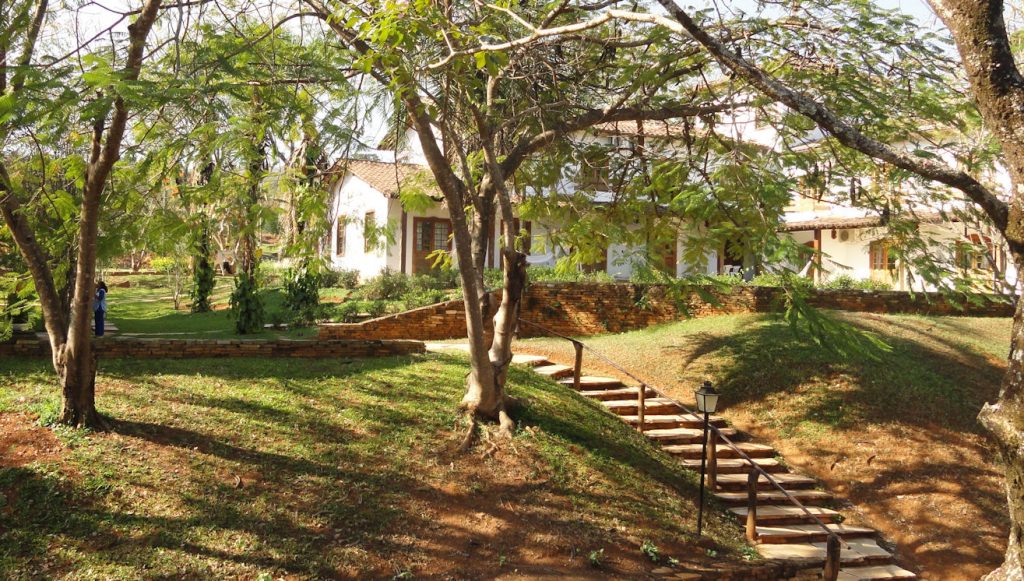
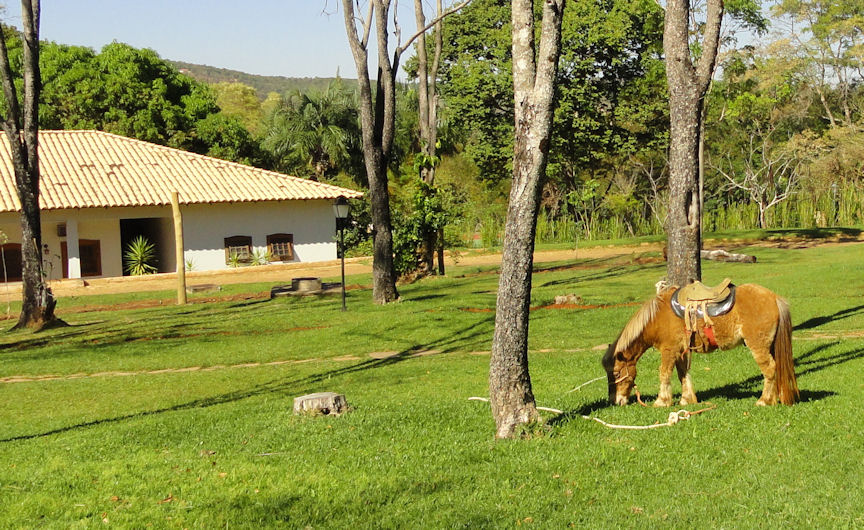
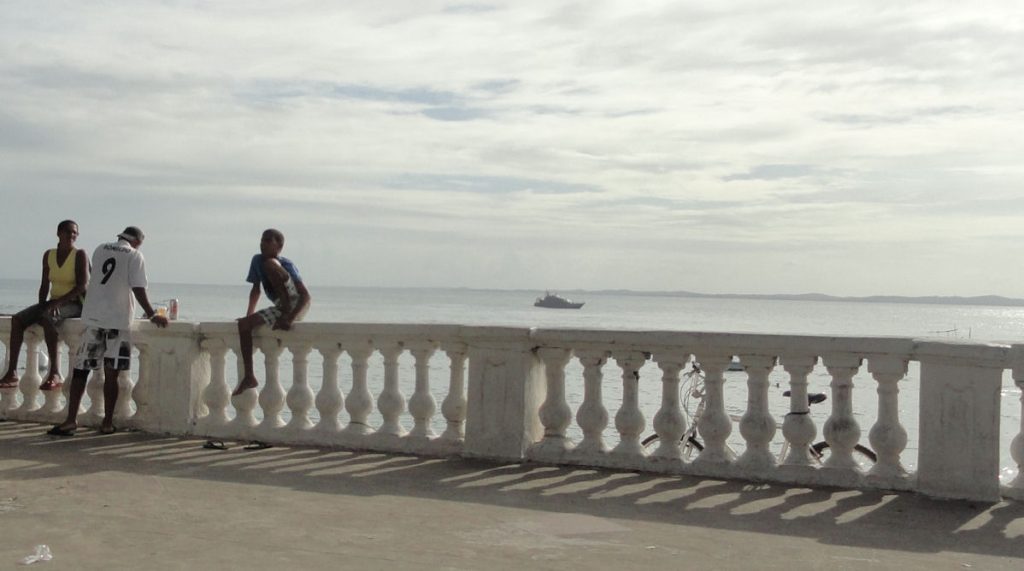
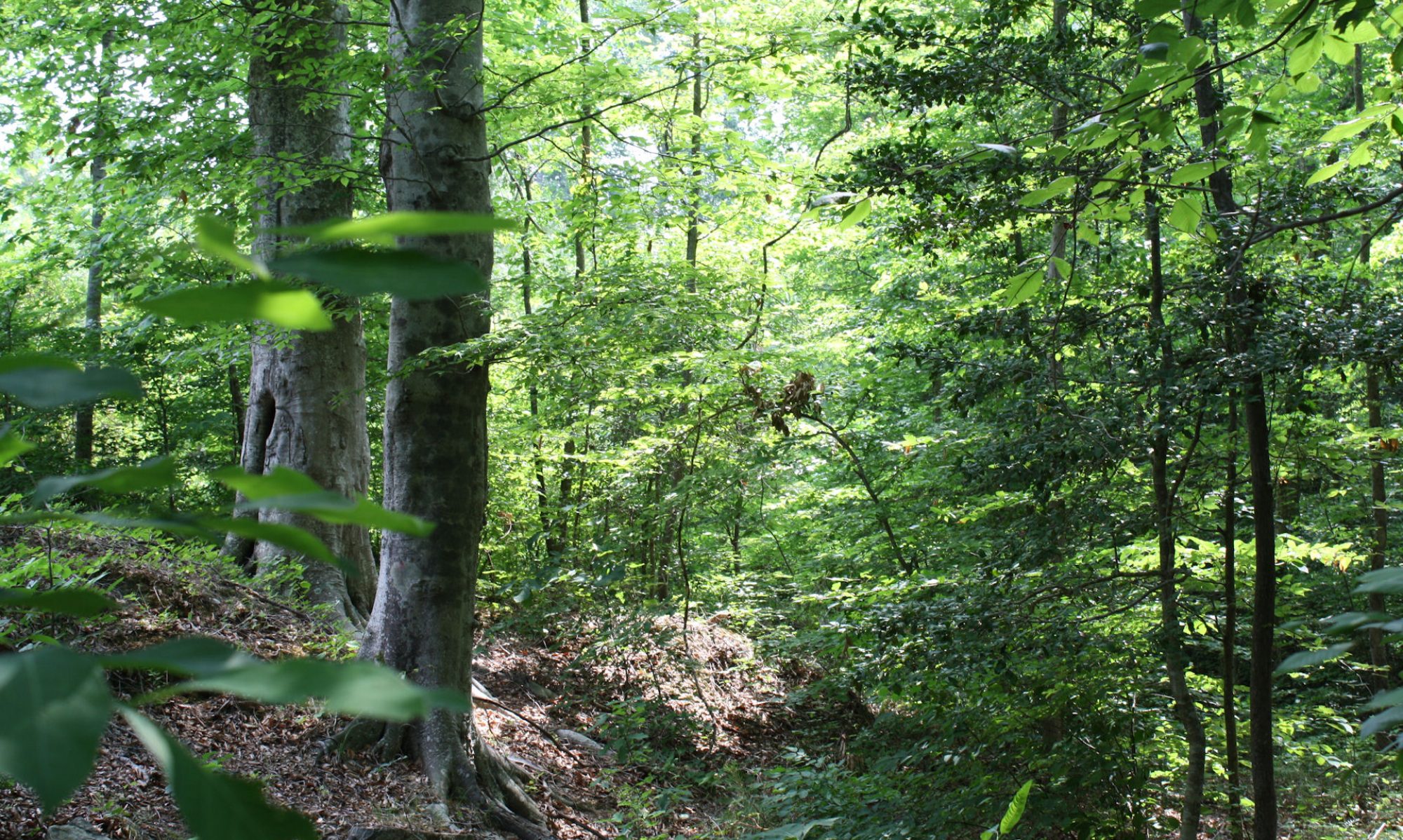
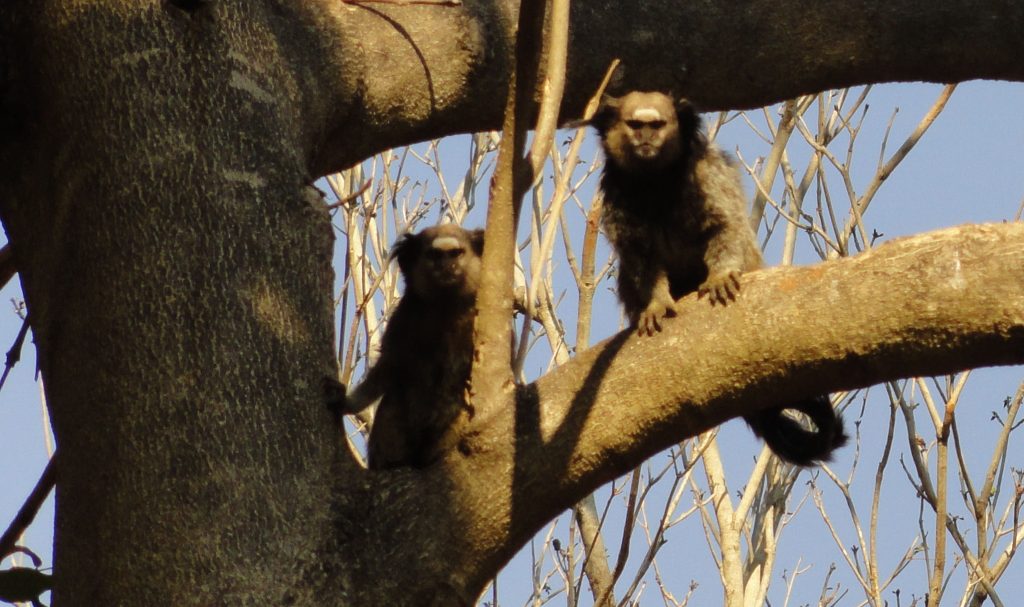
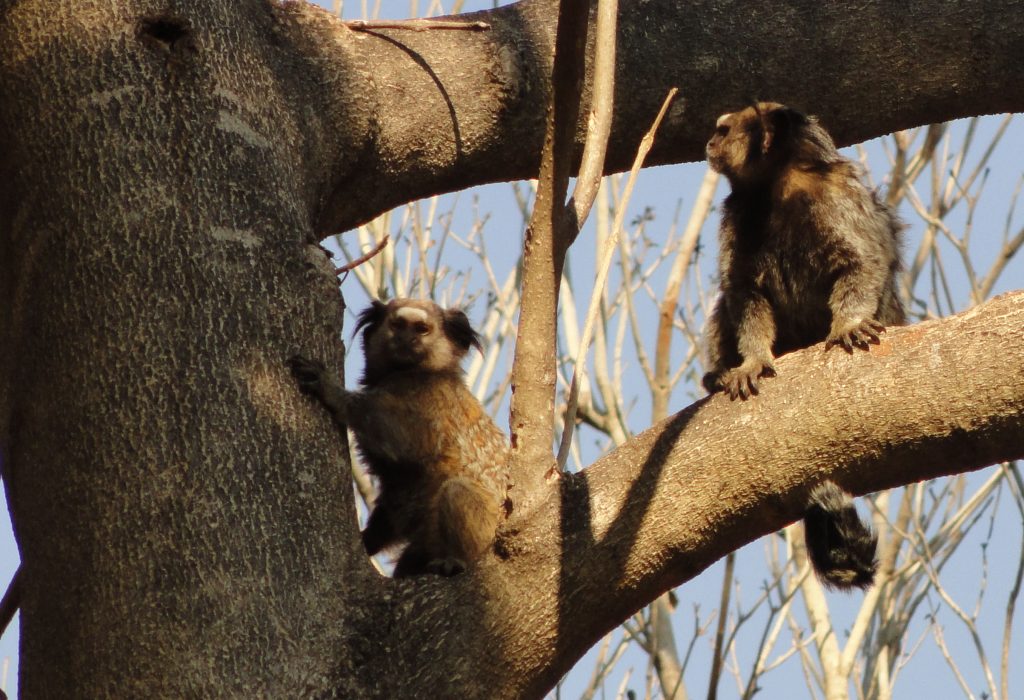
The pictures have nothing to do with smoke. They are just some of the neighbors in my back yard. The monkeys are about the size of cats and seem to move like squirrels. I don’t see them too often. The parrots seem to have just arrived. They don’t talk; they just make unpleasant squawking sounds. They seem to be threatening each other or other birds. 

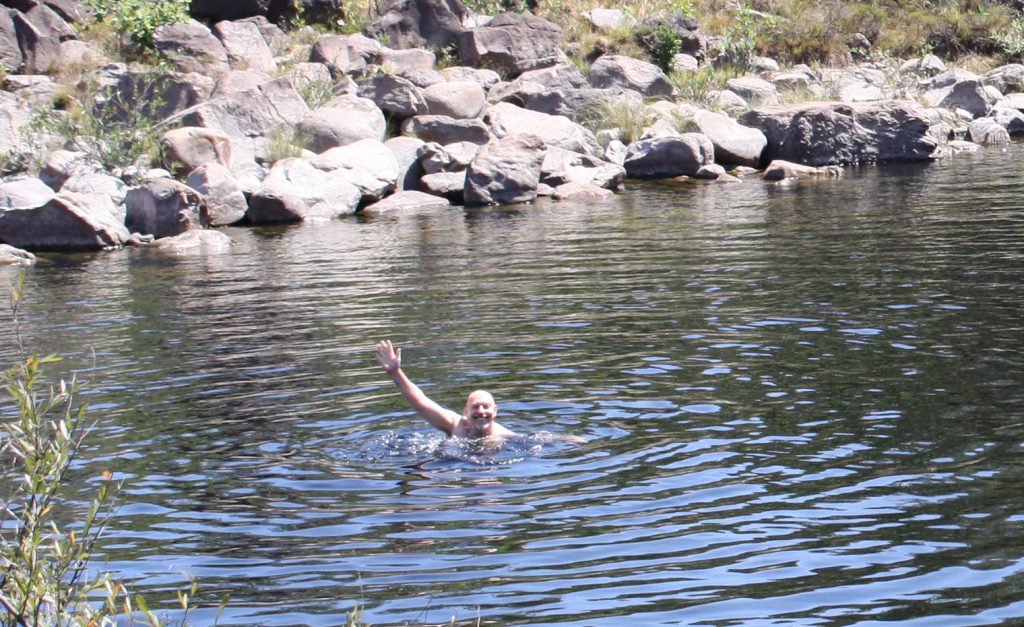
The last picture is just me swimming in the pool at Chapada dos Veadeiros.  I didn’t have any other place for it and it was nice to feature cool water in the dry season post. Those pools are deep. I could not hit bottom there.
Chapada dos Veadeiros

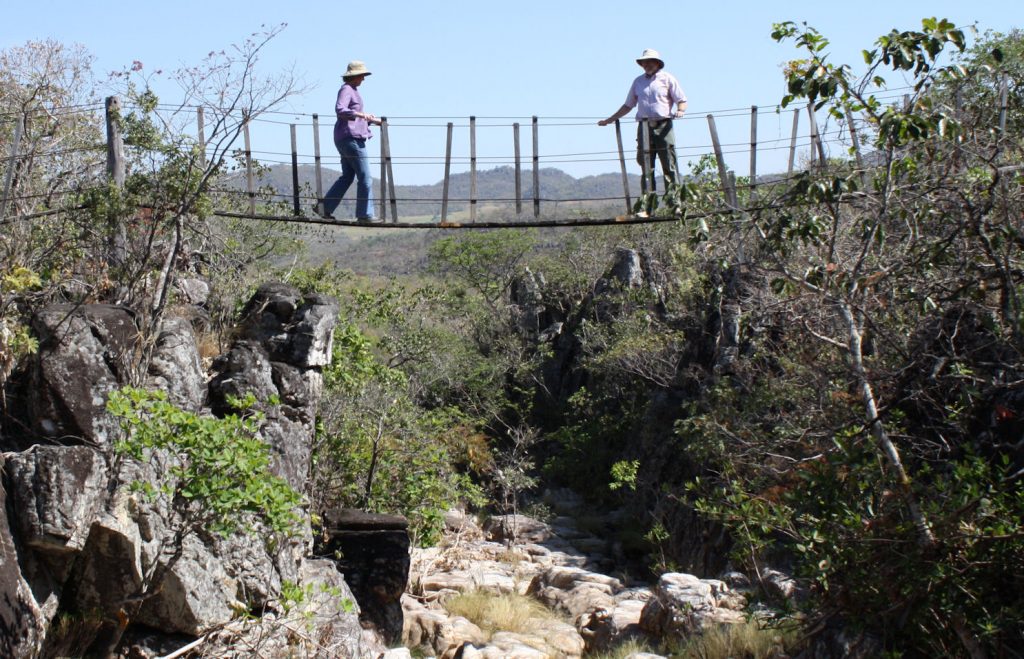
Chrissy & I went for a hike in Chapada dos Veadeiros National Park.  You are required to have a guide, which is used to keep the numbers in the park low and keep them on the straight and narrow trails.  The park is at an ecological intersection cerrado grassland a savannah and tropical forest.  It is not the tropical rain forest, however.  This forest is semi-deciduous. Many of the trees drop their leaves during the dry season.  

Chapada dos Veadeiros encompasses many of the headwaters of the Tocantins River, which is reason enough to protect the area. It also contains, according to the signs, a great deal of biodiversity. I don’t recognize the tree of plant species. I found a good webpage at this link and hope to learn more.  I am also still trying to get a feel for the cerrado.  

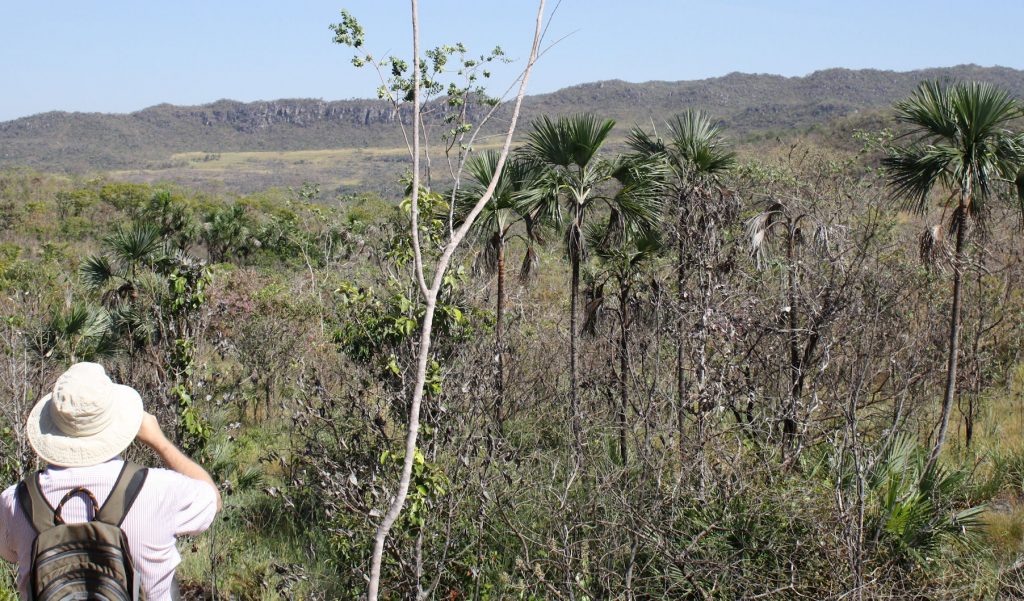
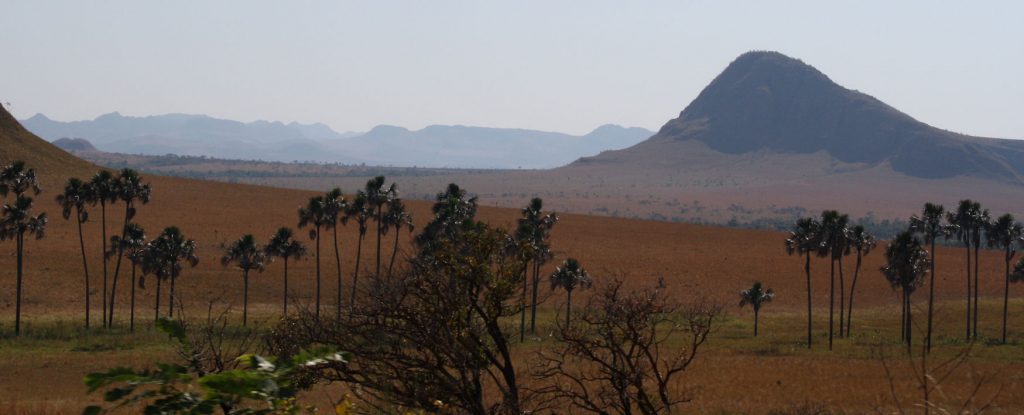
Above & below show Chapada dos Veadeiros landscapes.  Palm trees follow water courses, above or below ground.

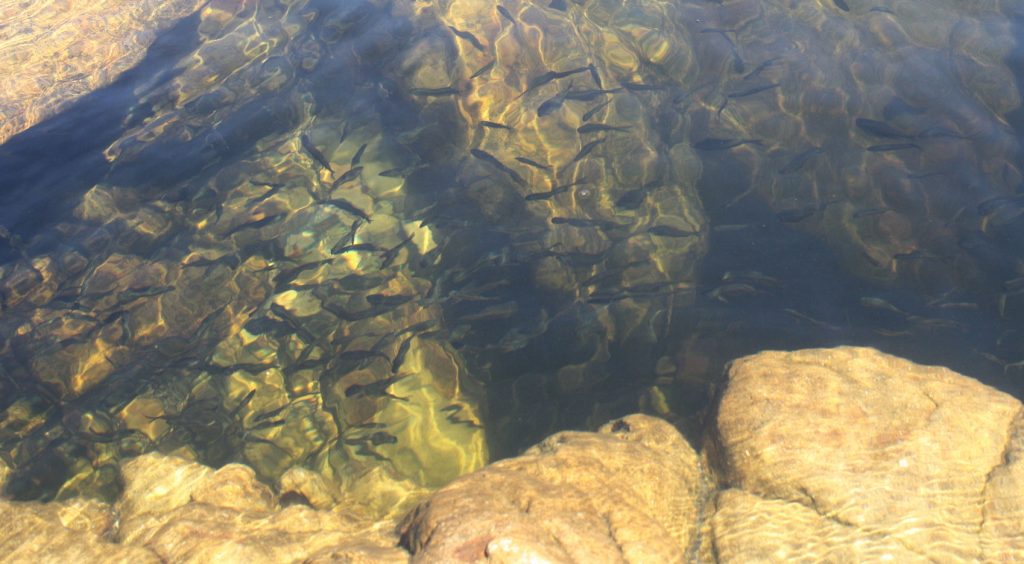
Below shows the fish that are common in pools among the rocks.

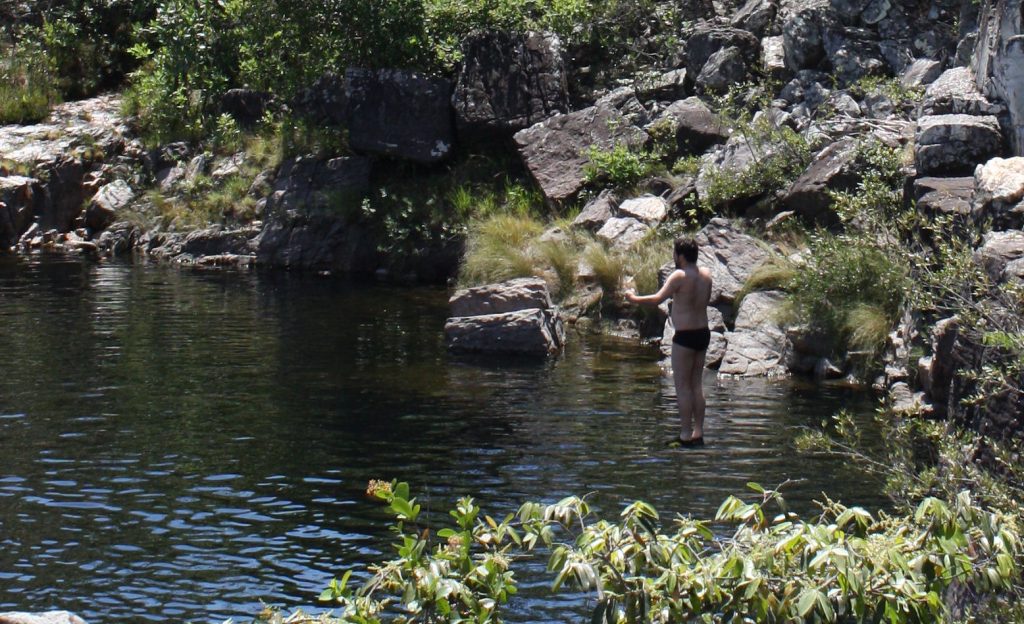
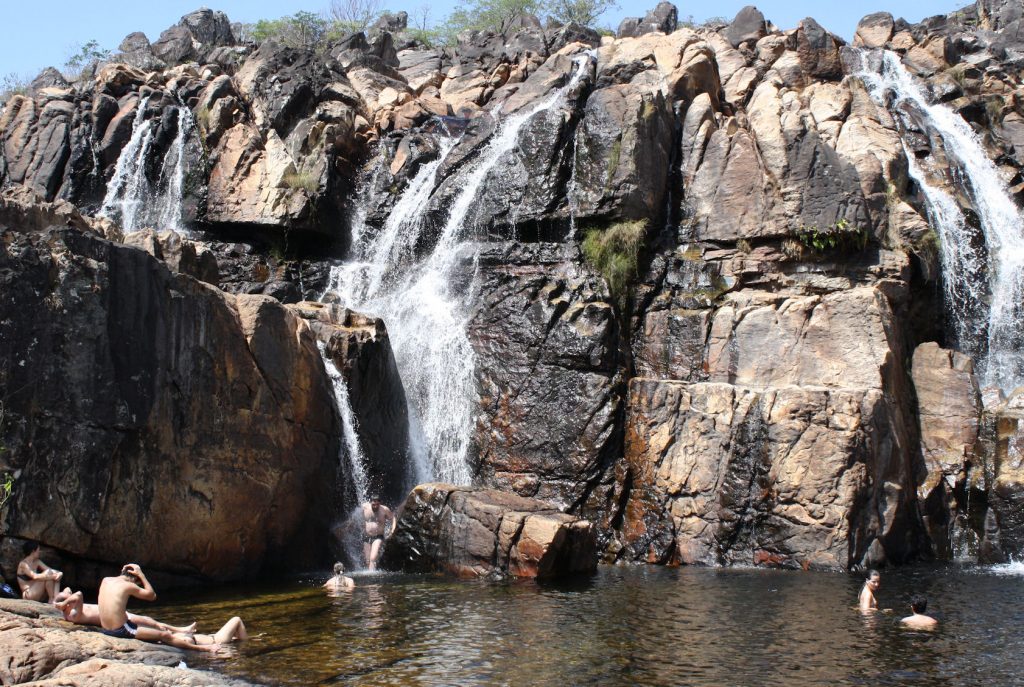
Below – people swim in the clear pools. I did too. The guy in the photo jumped from the cliff. I did not. 

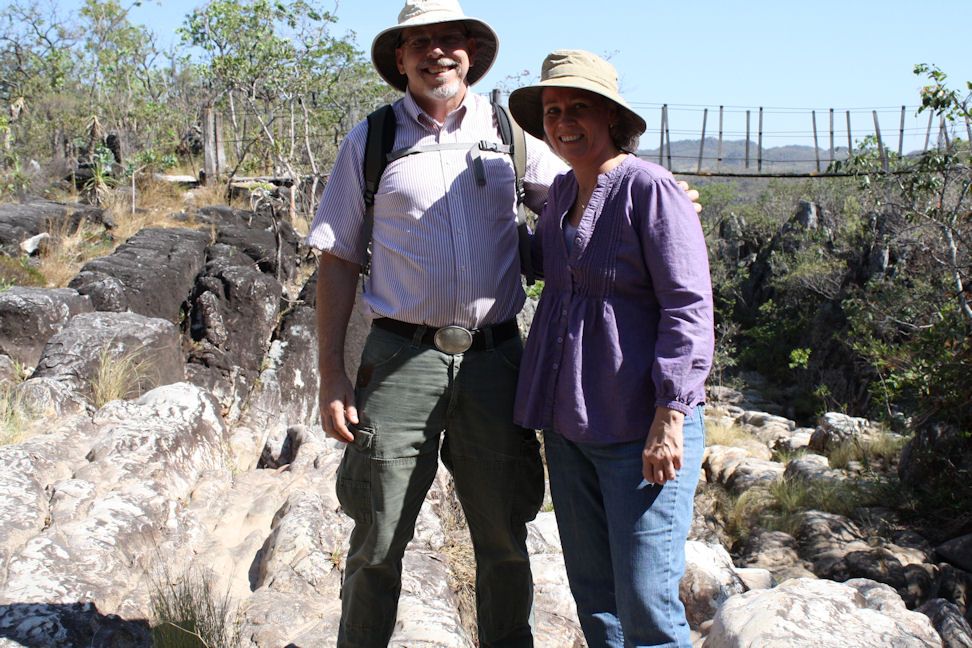
Below shows Chrissy and me in the park.

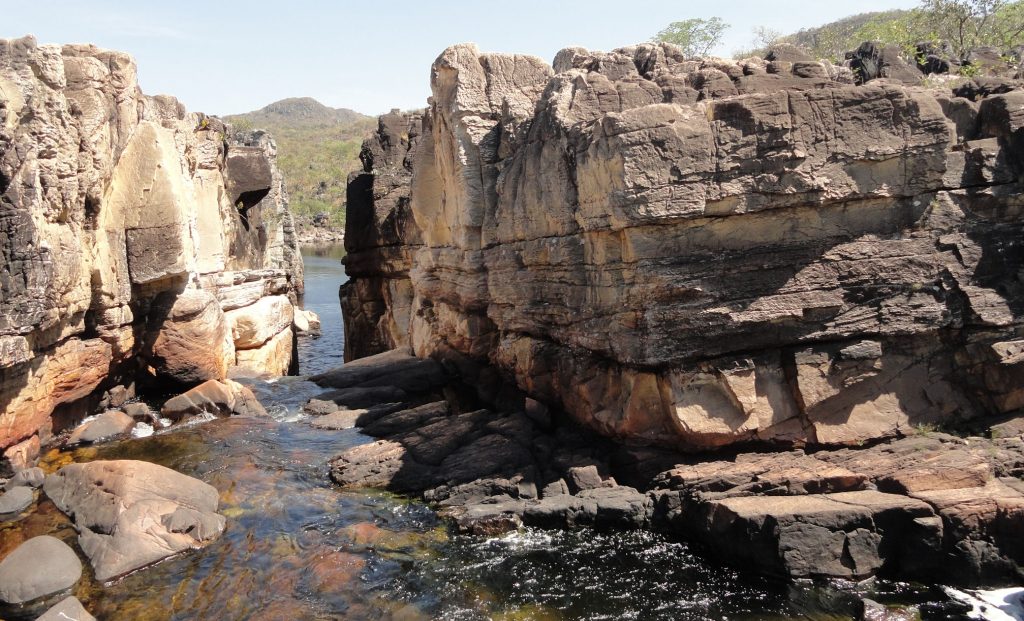
Below is one of the canyons and streams in Chapada dos Veadieros.

Northern Goiás

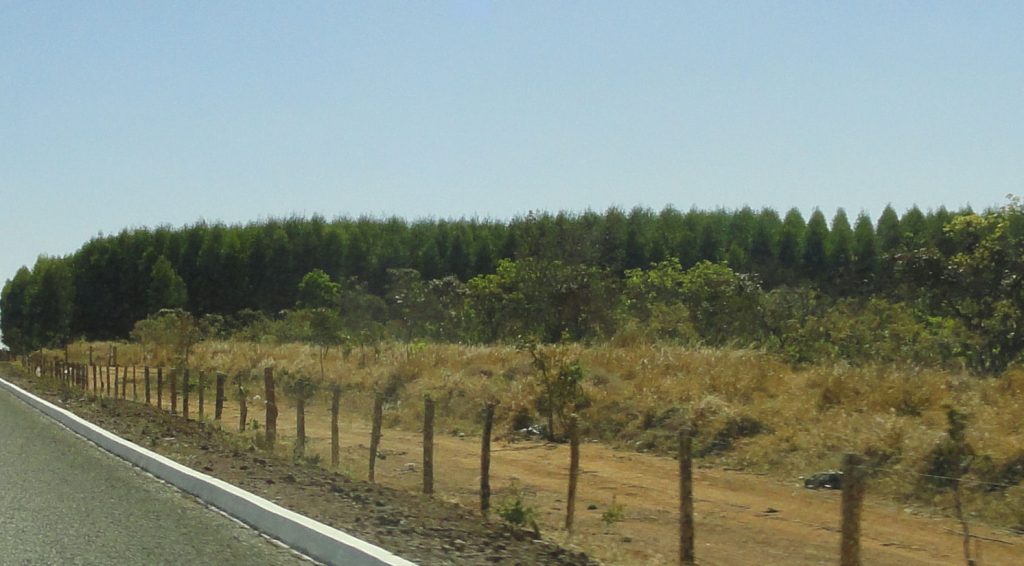
We drove up Goiás 118 to Chapada dos Veadeiros national park. It took about four hours and it was interesting to see the changes in landscapes.  Leaving Brasilia you see the typical planalto landscapes. There are plantations of eucalyptus and pine. The pine is on the way out. I saw lots of young eucalyptus plantations, but the pines are all older, usually past prime. This makes me a little sad; I like the pines, but I understand that eucalyptus is just a superb producer of fiber in this climate. Nothing can compete with it, economically or biologically. Eucalyptus plantations are so neat because the eucalyptus tannins inhibit the growth of anything else.

As you get farther in to Goiás, you come up on forty miles of bad road and almost no people. It is surprising how empty this land is still. I drove through Kansas, Oklahoma and the Texas panhandle  a years back. This reminds me of some of those places.  Imperfectly, of course, since Goiás features palm trees and other vegetation not typical of the American plains. American roads are also better and there are more signs of human habitation. I think this has to do as much with settlement patterns as actual population. Brazilians tend to live in concentrations, while Americans spread out on their own farms or in suburbs.

The land changed abruptly and became hillier and greener as we got closer to the chapada. Maybe I should stop making the analogies, since it doesn’t really look like any of my familiar landscapes. The cerrado is its own sort of landscape.

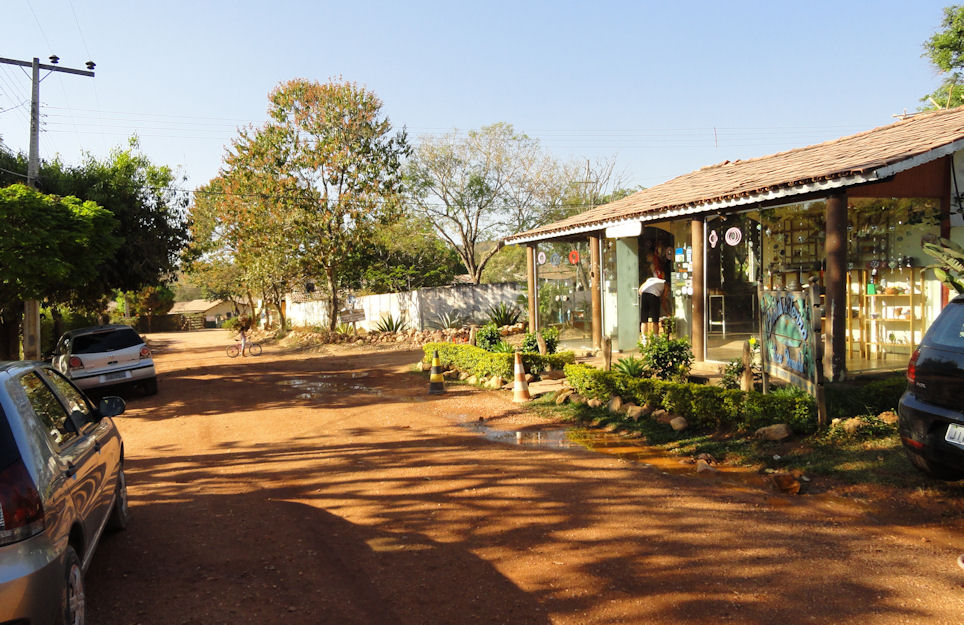
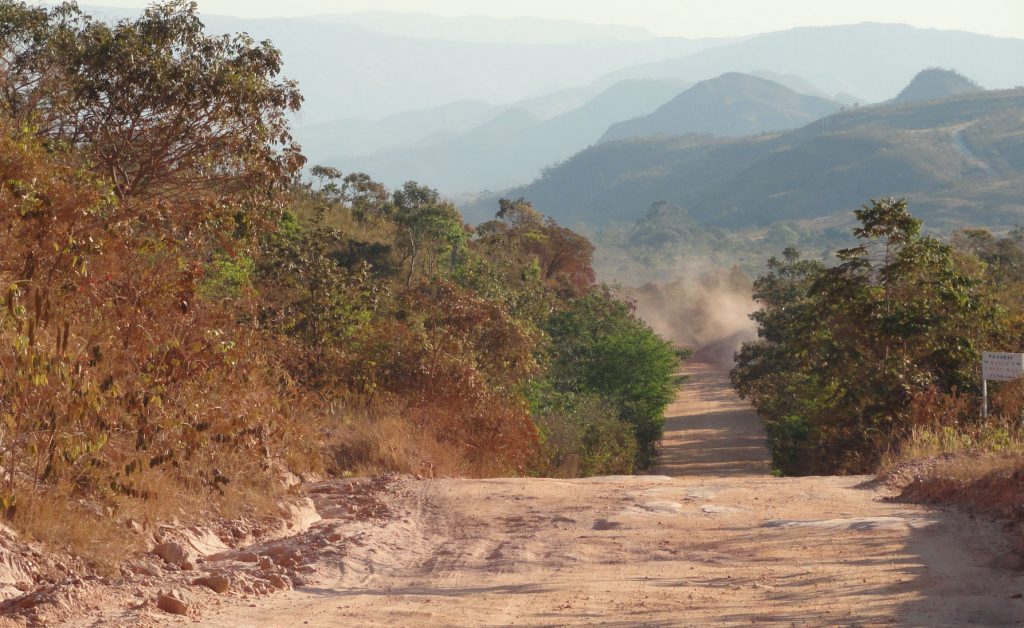
Our destination for the day was São Jorge. It is literally the end of the road, actually PAST the end of the road. You drive down a decent paved road, which end abruptly. Twelve kilometers down the dirt road is São Jorge. I found this really fascinating.  It is an active village. People are walking around and there are several pousadas and restaurants of sorts, but no paved streets. I have been here before.  I mean, it is like many of the towns at the gates of national parks. In America they have paved streets, but the feeling is the same. People work in the hospitality industry or in outdoor occupations such as guides, forestry workers or rangers.  These places also attract alternative lifestyle types.  In São Jorge there are shops that sell crystals etc. that are supposed to have some kinds of special powers, kind of like you might find in Sadona. People respond in similar fashion to similar environments.

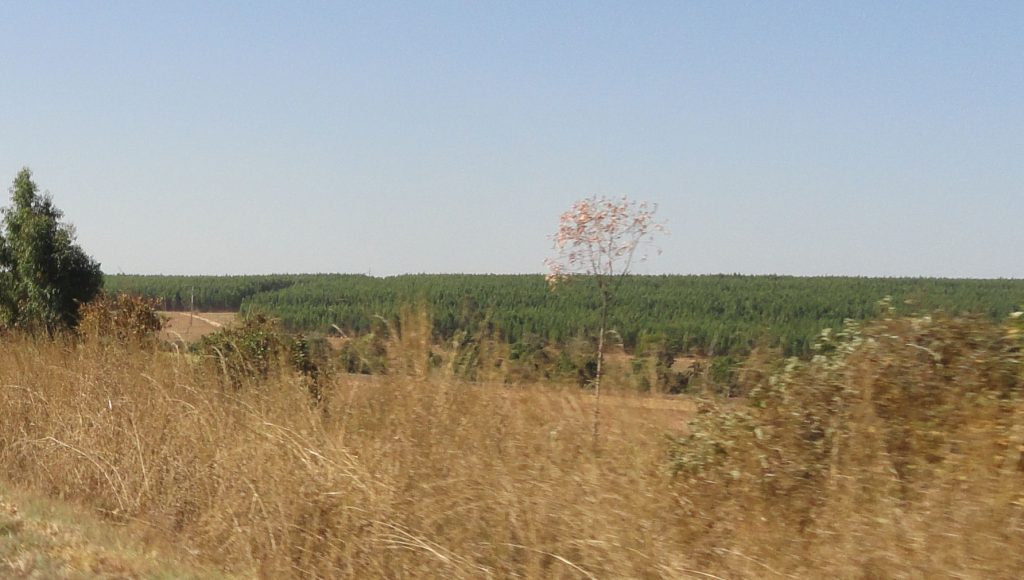
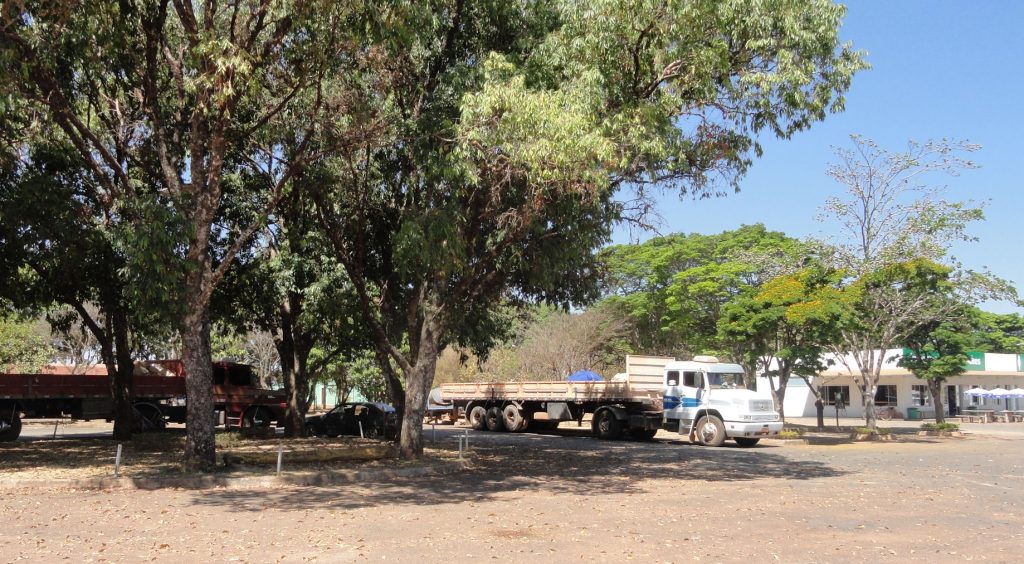
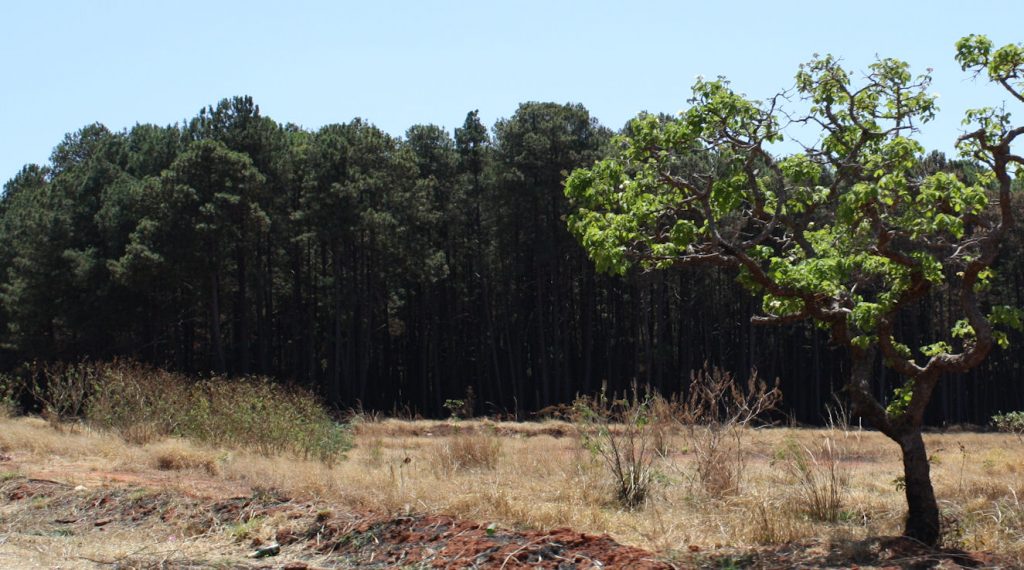
The top picture is another of those eucalyptus plantations. Farther down is a pine plantation. The pines are way too close and should be thinned, but I don’t think this forest is being used for forestry. It is decorative. Still, it should be thinned. The picture between is at a gas station on GO118. Below that is a main street in Sao Jorge. The bottom picture is the dirt road that leads to and past Sao Jorge. What looks like smoke is dust. A car was coming but I didn’t get a good picture.  

Where There’s Fire, There’s Smoke

I don’t mind the dry air, but the smoke is starting to get difficult.  The rains will come in a few weeks.  Until then, this is not the best time to be in Brasilia.

I am not unsympathetic to using fire as a management tool. I understand that it is crucial to the cerrado ecosystem. But most of the fires set around here are not good management. They are either too hot and destroy too much or not well done so as to be ineffective. Most of the fires, in fact, seem to be garbage fires that got out of hand and/or much of the smoke comes from actual garbage fires, which do nobody any good. Using fire as a tool is not the same as using it as a convenience.

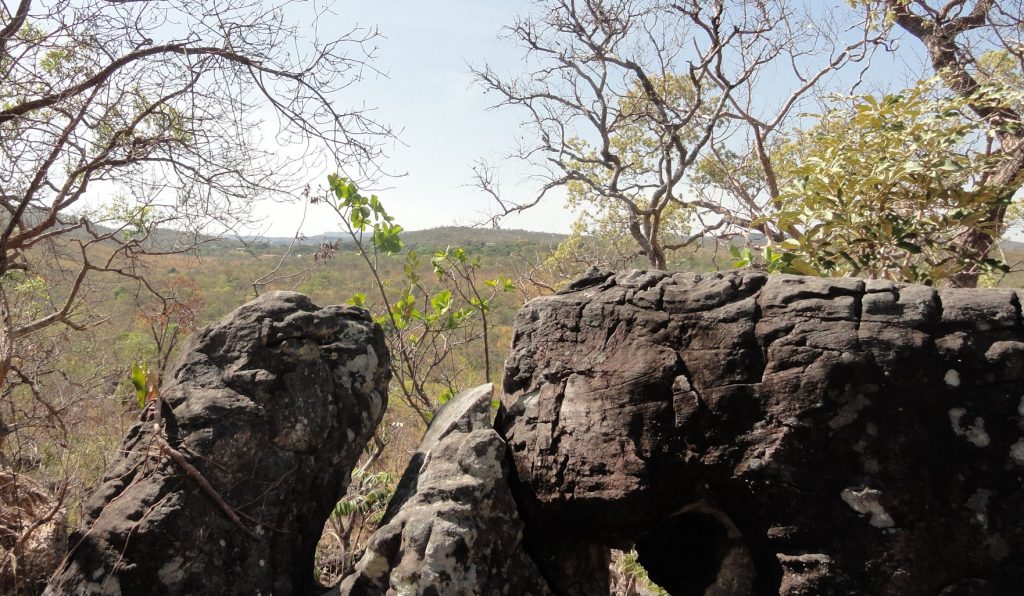
We saw lots of fires on our way up to Chapada dos Veadeiros and you can see the effects of fire in the national park.  The rocks are black. The guide said that they get a natural black patina and that it is not the result of fires.  I don’t believe that.  I know that the guide has been there all his life and I don’t want to oppose his local knowledge, but it is probably true that this place has been burned over all that time. I remember the black “cream city brick” in Milwaukee. Cream city brick is a kind of yellowish white color in its natural form, but the porous nature of the brick surface turned it black when exposed to the constant coal smoke. Not all brick was equally blackened.  When the air was cleaned up in the 1970s, the cream city brick again looked creamy.  I think the same thing happens to these black rocks. They soak up the carbon black and never get clean. Different sorts of rocks absorb more than others, as in the rocks above.  

“Natural” fires would have been rare, since lightning to start those fires would tend to come with thunderstorms during the wet season, which would limit their extent. But with the arrival of man many thousands of years ago, fires during the dry season changed the landscapes. Native Brazilians set fires, just as native North Americans and there has not been a “natural” landscape here since.

I learned in my fire class (I am certified as a fire manager by the State of Virginia) that fires that are too hot or too frequent destroy natural diversity, since only a few species can take the stress.  On the other hand, places where fire never comes also lose diversity, since a few species come to dominate. I wrote a post about how fires work at this link. A proper fire regime produces greater variety and a robust ecosystem. The problem is knowing how much is enough and how much is too much.  It also requires setting priorities.  Land managers must make choices, which some a loath to do.  They want to default to the “natural” option. Unfortunately, there is no natural option, only a variety of different choices for human management. Do we take it back to 1500?  The landscape at that time was already altered by the native populations. Do we guess at what it must have been before humans? Of course, we cannot restore all the species.  Or do we manage for diversity, productivity and robustness?  This would be my option.  

Anyway, fire can be used well or poorly. All fire will produce smoke, but there are better ways of smoke management. A well designed fire will consume much of its own smoke and will not smolder for a very long time.

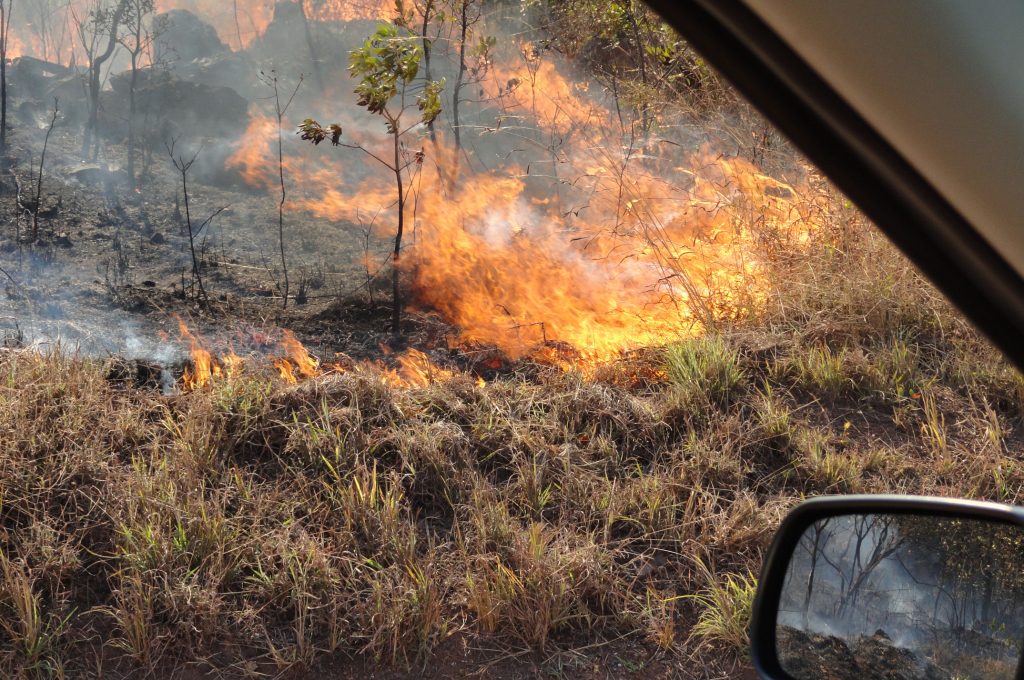
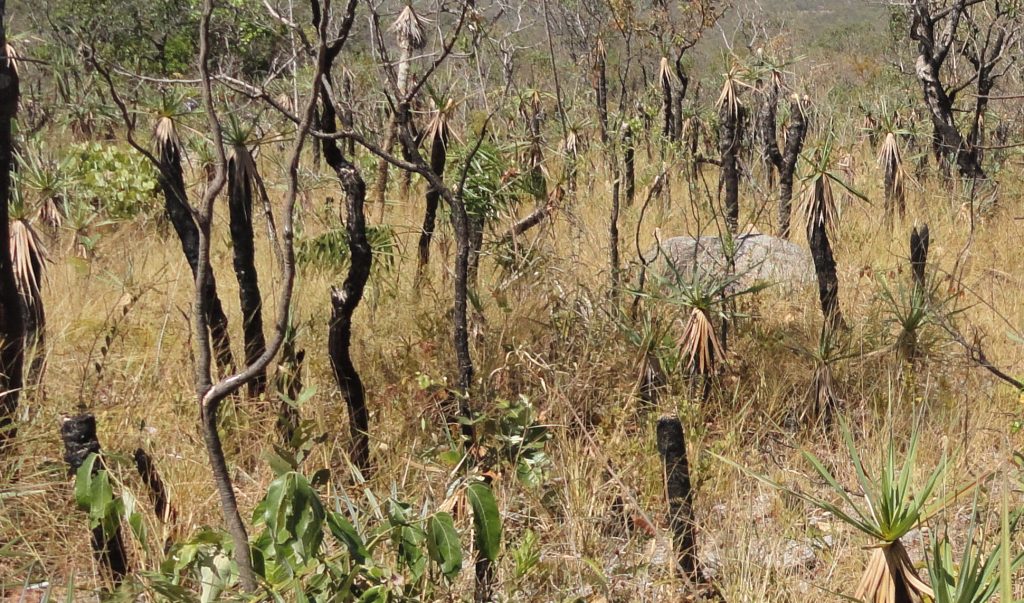
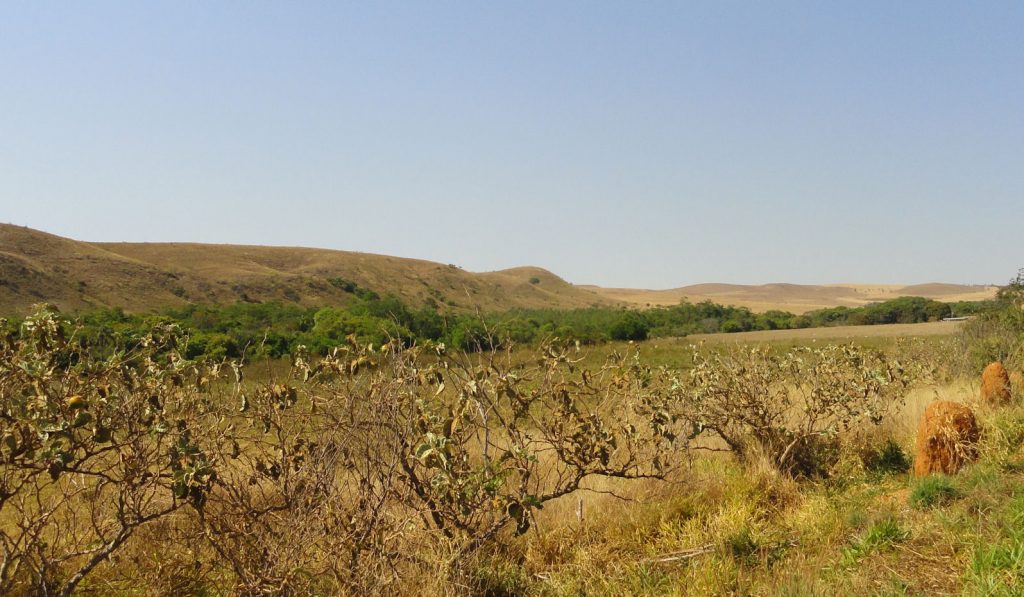
The picture at top is a fire by the side of Goias 118. I don’t think it was a “managed” fire, but you can see by the direction of the flames that it is a backing fire, i.e. it is burning in the direction away from the wind. This produces a cooler fire, not as destructive to the plant life. I wrote a post about this when I was taking the fire class. It is at this link.  You can see the burned over area in the side mirror. Next picture shows some fields on fire. The blackish rocks are below. The plants in the next picture are burned but not killed. Last is a typical Goias landscape as you get near the hills.

Changing Brazil, New Comparisons

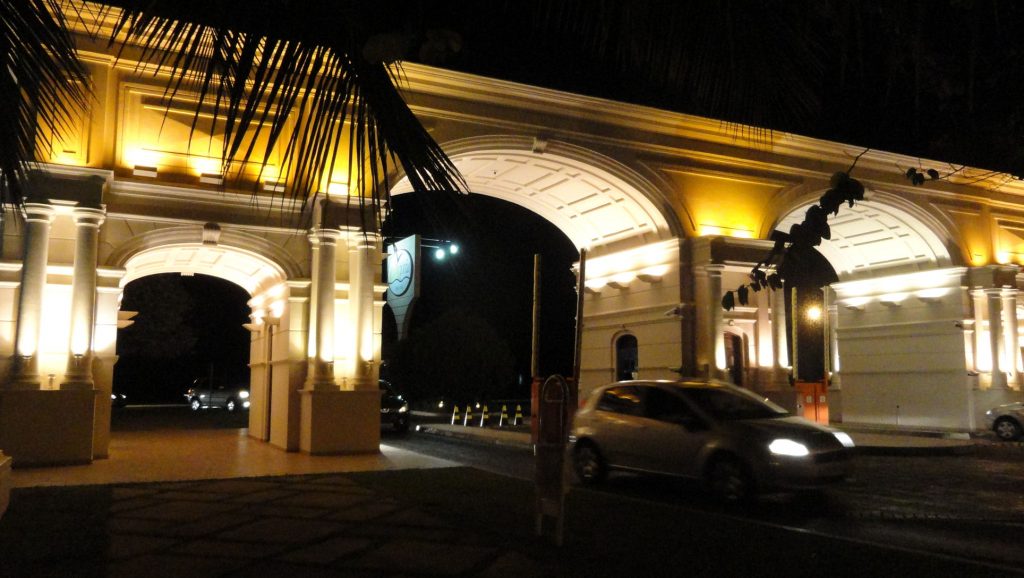
Chrissy & I have been going to various restaurants. My diet has improved a bit, or at least I have gotten more than just bread, cheese and peanut butter. There are good restaurants within walking distance.  The picture above is from a place called “Pontão”. It is a cluster of restaurants and clubs near the lake. We went around 7pm, which is way early for Brazil, so there was not a big crowd. 

Brasilia has improved, but there are still aspects of the former Brasilia. It is still hard to cross the roads on foot. The city was designed for cars, not people. But the thing that reminds me most of the old days is the smoke. It is very dry and grass is burning. The smoke has been wafting in. It will start raining in a few weeks and that will put an end to it, but the next few weeks will be less pleasant. 

The “Economist” magazine has an interesting graphic at this link that compares Brazilian states with countries in terms of population, GDP & GDP per person. The interesting thing for me given my personal history is the comparison of the state of São Paulo with Poland. São Paulo has a population and GDP about the same size as Poland. It is funny to think about that. Poland is so different. But the perspective is also important. Poland is a relatively poor European state made poorer by its history of fascist and communist oppression. São Paulo is one of Brazil’s richest states. 

I would have guessed that São Paulo was richer than Poland, but I understand why that is not true. There are more very rich people in São Paulo than in Poland, but there are also more very poor. This makes the per capita income similar, but the distributions are very different. 

There are other interesting comparisons. One of the poorest Brazilian states is Alagoas.  But as poor as it is, Alagoas has a GDP per capita similar to China. We think of China as almost a rich country and it is, but only because there are so many poor people adding up. 

Wandering Goiás

We had to rent a car, since mine still has not arrived. I had them pick up it up in the middle of May. It really doesn’t do any good to send it early, since they kind of save them up to send all at once.  After it gets to the country, the Brazilian bureaucracy is daunting. I suspect they just delay so that there is no way the car will be in officially in the country for three years before you leave.  That way you still cannot sell it tax free.


Anyway, rental cars are fairly expensive here and they only have stick shifts, so it is not a good thing. But we needed the car for Chrissy to travel.  For her first visit we wanted to get around Brasilia and Goiás. You cannot do that w/o a car.

It is the end of the dry season around here.  It will rain in a few weeks, but everything now is as dry as it will get.  We saw lots of fires along the roads in Goiás.  The news mentioned the extreme dryness and fire danger and the smoke irritated our eyes and throats.

The grassland/savannah burns naturally, but a combination of human-made fires and human fire suppression causes trouble. Many people here still see fire as an enemy to be fought or prevented rather than a natural process that needs to be used and managed.

I still want to study the ecology of the cerrado more.  (FYI – the cerrado is the vast area of grass and widely spaced trees in the middle of Brazil, especially Goiás.)  It is strange to me because of the very dry season and the very wet season.  We have nothing really like it in the U.S.  The predictably of the rain is making it a good agricultural region, but I didn’t see that much crop agriculture. It seems mostly pastures and there is significant forestry, especially eucalyptus. Eucalyptus grows very rapidly here; I have heard that the rotations can be as short as five or six years. And the Brazilians have developed varieties especially adapted to the specific demands of the region. The wood is used to make charcoal and for cellulose pulp.  

Eucalyptus is unpopular with some people because not only is it an introduced species, but it also has been developed extensively both with conventional breeding and biotech.  There are indeed drawbacks to extensive eucalyptus monoculture. They do not support large populations of wildlife. The leaves are not palatable to most animals and even bugs tend to shun them.  It is no coincidence that the flavor is used for cough drops, but what is good for menthol in cough drops is usually not great for ordinary eating. The bark is loose and resinous. It tends to fall off and lay on the ground where it causes more intensive fires.  The eucalyptus themselves can usually survive these conflagrations, but other native plants often cannot. Like everything else, you have to trade benefits for costs. As a tree farmer who grows loblolly pine, I see the eucalyptus as a competitor. It produces a substitute for man of the things that my pines also produce. Putting aside my self-interest, however, I can see that eucalyptus have a place in well-managed forestry systems, but as the Greeks used to say, “nothing too much.” 

The eucalyptus plantations we saw were extremely orderly.  The rows were neat and there was almost no undergrowth of competing vegetation.  This is very much unlike pine in Virginia.  I respect the ability to transform nature, but I prefer to leave a little on my own land for the animals and natural systems. Something too orderly is probably not so good for nature. 

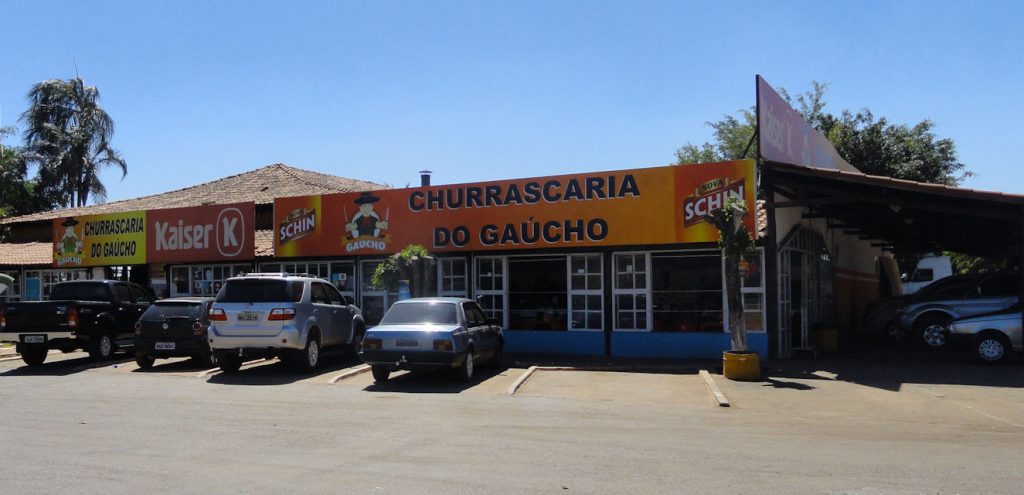
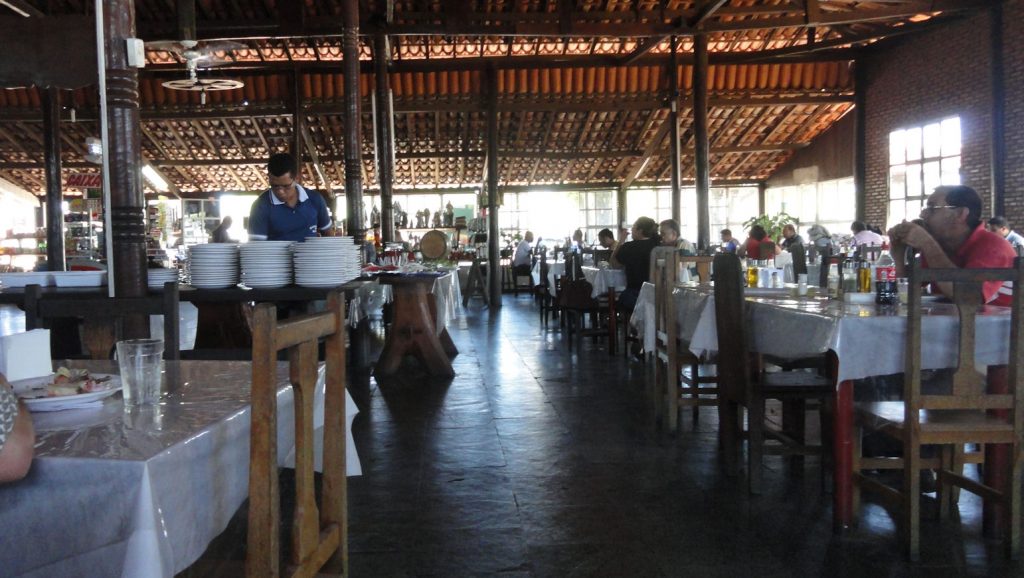
We followed BR 60 to Pirenópolis and BR 70 back home to Brasilia. These are good highways. There was a lot of traffic near Brasilia, but it was quiet once you got out of town. We stopped at a nice churrascaria on the road called Churrascaria Gaucho. It has gotten expensive in Brazil in all the big towns and in the tourist centers, but it is not bad in the smaller places. The total for the two of us was only $R44. They had lots of good cuts of meat and it came quickly and generously. 

My pictures show the churrascaria I mentioned above.  The middle picture is a very neat eucalyptus plantation and the two bottom pictures are the pousada where Chrissy & I stayed.  

A Banda-Larga Public Diplomacy Success

Our Information Section did something really great with social media. I find it almost unbelievable. It came, as many things do, at the intersection of preparation and changing conditions, with a little bit of luck. Let me explain.

We launched our 9/11 commemoration campaign a couple days ago. Our theme is “superacão” or resilience & overcoming difficulties. My colleagues prepared a poster show. We did some media interviews & generally reached out to Brazilian media and people. There is no shortage of attention to 9/11 in Brazil. We don’t have to create a demand.  But we do prefer that the narrative be one of superacão and resilience rather than destruction.  We want to remember and honor the victims, but emphasize the resilience of America.  

Among the things I find most appealing is a program we have set for September 12. Ten years ago, after the attacks of 9/11, a school in Ceilândia, just outside Brasilia, made an American flag for us. All the students contributed part. It was very touching and we still have their work. We will return to the school for a ceremony and have invited the original students, now young adults, and their teachers to join us. Response has been great and I look forward to taking part. But I am drifting. Let’s return to social media.

We launched the campaign this weekend and as of this writing we have more than 106,000 responses. We might have had a few more, but the initial surge crashed our server and we had move to a bigger server. Our theme of superacão was popular with our audiences. They were invited to write their own feelings about 9/11 and/or their own stories of superacão. And they did. Our Facebook page has almost 10,000 new members and we have gained another 38,000+ on our Orkut platform. Orkut is popular with non-elite audiences in Brazil. A video of Ambassador Thomas Shannon talking about 9/11 has garnered 9,260 views as of this morning, but I figure more than 8000 by the time you read this. Today we were getting almost 1000 new comments every hour. I say comments, not visitors and not “hits”. A commenter has to take the time to write something. 

Our initial demographic analysis indicates that participants are coming to us from all over Brazil, even interior towns indicating that Internet has penetrated far into Brazil. Many of our participants are from the less-privileged social groups. This is because the Orkut component is providing them a forum, we believe.    

I want to emphasize again that these are responses, not mere “liking”. Of course, we have been unable to look at all 100,000+ responses, but our sampling indicates that most are thoughtful. Most are also favorable to the U.S. Many of the personal stories of resilience are moving.   

We will follow up with social media and with boots on the ground. I remain a little skeptical of social media that doesn’t yield physically tangible results. One of our initial ideas is to take representative groups from various cities and invite them to programs or representational events when we visit their home towns. This will create a good media opportunity both in MSM and new media, especially in those places were we rarely tread. It makes it more concrete and exciting for the participants and fits in well with our plant to reach out to the “other Brazil”, i.e. those places not Rio, São Paulo or Brasilia. As I wrote earlier, we had planned to reach to the 50 largest cities.  I had to add a few extra so that we could encompass all state capitals, even in places with thin populations and some cities of special significance, such as an especially good university, for example. I ended up with 61, but I think I will find five more so that I can call the plan “Route 66”.

I don’t know how many Brazilians we will have touched by the time we are done with this campaign, but I think we are doing okay so far. As I have written on many occasions, this is a great place to work. The only problem is that we might get tired taking advantage of all the opportunities. 

Up top I mentioned the intersection of preparation, good luck and changing conditions. Preparation is what my colleagues did and have been doing. They built a social media system ready to be used. It needed an opportunity. They also prepared for what they knew would be a big anniversary. But this program would have gone nowhere had not Brazil expanded its internet network, so that people could respond. I don’t think this success could have happened last year or even six months ago. One of the Portuguese terms I learned was “banda larga”. It means broadband. Many Brazilians were learning the term and its meaning the same time I was. Now they have the capacity to log in and they are doing it. New fast-spreading technologies have allowed Brazilians to jump over a digital divide that we thought was as wide as the Grand Canyon. We are lucky to have these conditions.

The New Bahia

Bahia is a big and diverse state and there is a lot more than the well-known images of carnival, capoeira or the images from Jorge Amato novels.  A place like Bahia, which was less developed than many other places, has the advantage in that it can jump ahead, taking advantage of advances w/o having to go through all the mistakes that other suffered along the way. It is the advantage that the sun-belt had over the rust-belt and the U.S. analogy works on several levels. 

We bought a Ford Fiesta for Mariza. I noticed it was made in Brazil; now I know it was made in Bahia.  The plant opened in 2001 and started to make cars for the U.S. market a couple years ago.  It is a new plant and one of the most productive in the world.  It doesn’t have the so-called legacy costs of older-plants. The equipment is new and up-to-date and so are the workers, who are trained and accustomed to the up-to-date equipment.  BTW – I didn’t know that all the Mercedes-Benz “M Class” vehicles are made in Alabama. So the American car (Ford) comes from Brazil and the German car (Mercedes) comes from America. Who can keep track?

There are lots of new things in the old state of Bahia. Money is pouring in because of good business opportunities in general but also because of the pre-salt petroleum discoveries off the coast.  Some of this oil will come ashore in Bahia and the petroleum industry will require billions of dollars of support activities.   Bahia also is set to become a leader in the biofuels industry.  Sugar cane is one of the most efficient crops for producing ethanol and sugar cane in a prime crop in Bahia. They are also experimenting with other crops to be used to make oils and biodiesel.

Western Bahia has become some of the most productive farmland in the world, thanks to better ways to manage soils and new crop varieties.  The remaining problem is infrastructure.  Roads are bad and railroads almost non-existent, but the Brazilians are building a railroad across Bahia, from Tocantins to the sea to carry the grains of the inland farms to the ports of the world.   

I knew that corn and soy could be successfully grown, but I was surprised to learn that they are growing grapes for wine in Bahia. The season never really ends and with the help of irrigation they get two and a half harvests a year from their vineyards.  I thought that wine grapes could not be successfully grown too far into the tropics.  I recall that there was some doubt that a successful wine industry could be established even in Rio Grande do Sul.  But it worked there and now it is moving even farther toward the equator. I also heard that EMBRAPA is developing pears that grow well in the valley of the Sao Francisco, in Bahia. Pears are/were also a cool climate crop. The wonder of modern agriculture is how we keep on developing new varieties of crops that grow in places where nobody thought they could.  Actually, it is the wonder of human imagination.  Somebody always figures out ways to overcome those who tell us things cannot be done. 

One of the complications of development for a place like Bahia is that a lot of the work is done by newcomers and many of the benefits are gained by them. The farmers in the western part of the state, for example, are often immigrants from states like Rio Grande do Sul & Paraná. They brought their know-how with them and developed it to a higher level in the new land of Bahia. Sometimes transplanted ideas and methods work better. 

My first trip to Bahia only gave me a start. Salvador is only a small part of the state.  I have not been to western Bahia, but I plan to go and see those productive farms in places where a few decades ago everybody said could grow nothing but poverty.

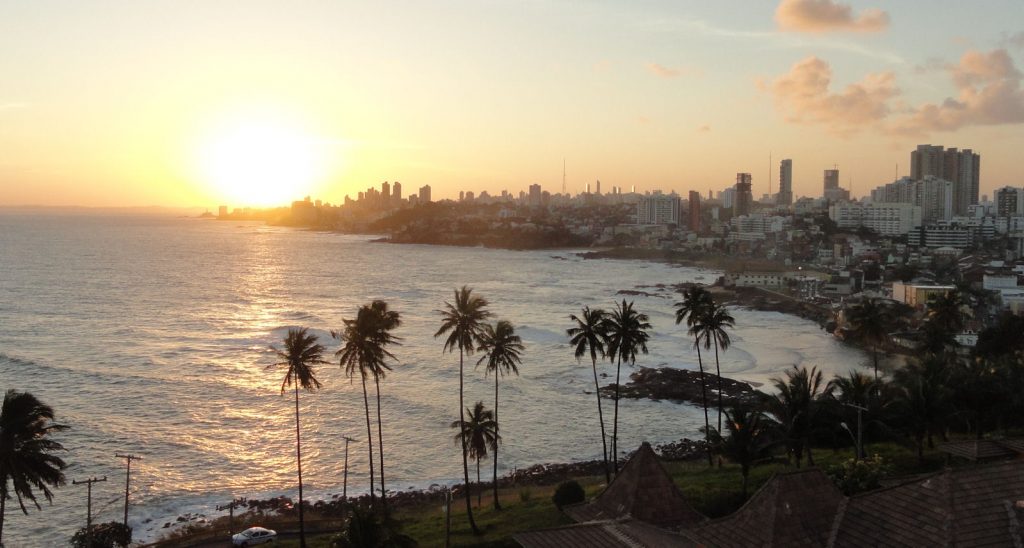
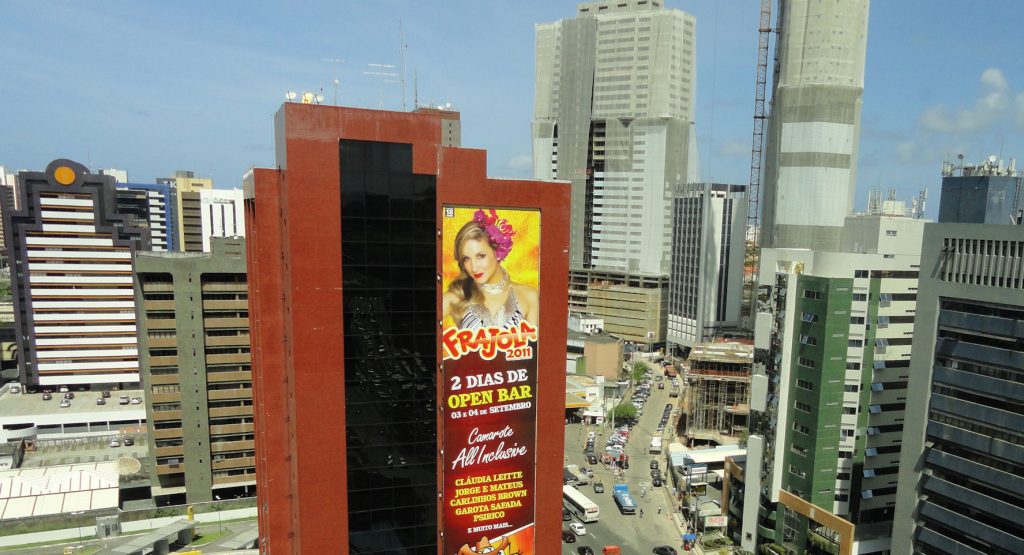
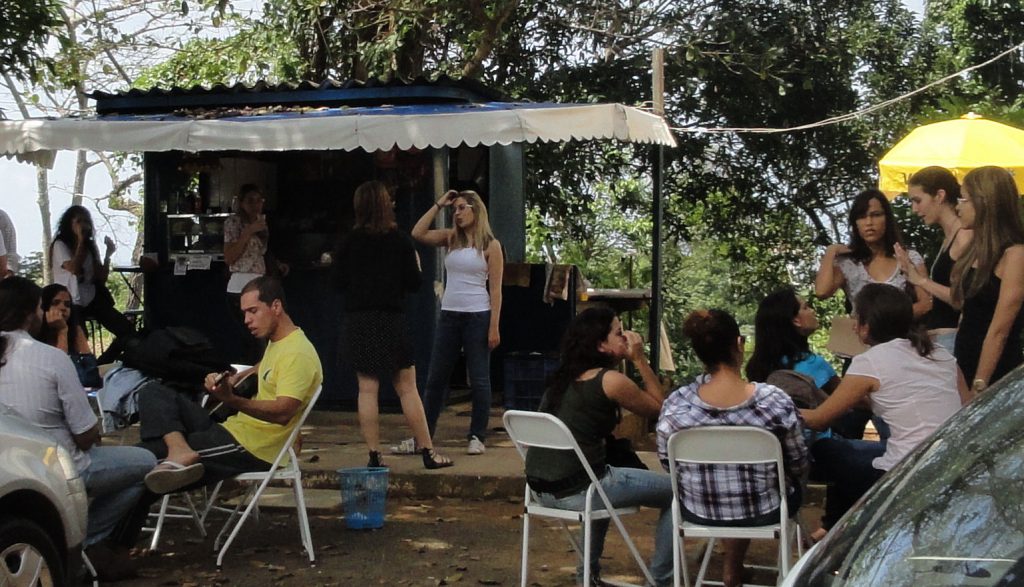
My pictures show Salvador from the ocean view, a new area of town (notice the new buildings under construction) and the last picture shows students at the Federal University of Bahia. 

Live fast; die young; leave a nice looking husk

I didn’t know much about coconuts and much of what I did know was evidently wrong.  I thought that inside the coconut was a whitish liquid – coconut milk. No, inside the coconut is mostly water. The Brazilians call it aqua de coco. It tastes a lot like ordinary water except it is thicker & is supposed to be good for you. I was offered coconut water lots of places in Salvador and one of the hosts told me the story of coconuts. Many people also like the white coconut meat. I happen not to, but I suppose if you are hungry enough it would be good. I also thought that the coconut was a big seed. It isn’t. There is a single seed inside the nut.  When conditions are right the seed sends roots and stems out those weak spots in the shell, the things that look kind of like a face on the nut. With all these attributes, you can see what a useful thing this would be on the proverbial desert island. 

The coconuts come in a green husk that floats. That is how coconuts get distributed throughout the world.   The thing falls or is washed into the sea.  The sea-journey and the salt water don’t hurt the coconut. If it washes up on a hospitable beach in a reasonable amount of time, a new coconut palm can be born. That is why coconut palms ring the tropical seas and are a symbol of tropic beaches. 

Coconuts do not live very long, at least for trees. But they grow fast. This is another adaptation to life on the beach.  Roots cannot sink too deep into the shifting sands and over the course of a few decades it is almost certain that a storm will come along that is strong enough to disrupt even a well rooted tree growing not very far above the tide line. So the coconut’s strategy is to live fast, die young and leave a nice looking husk.

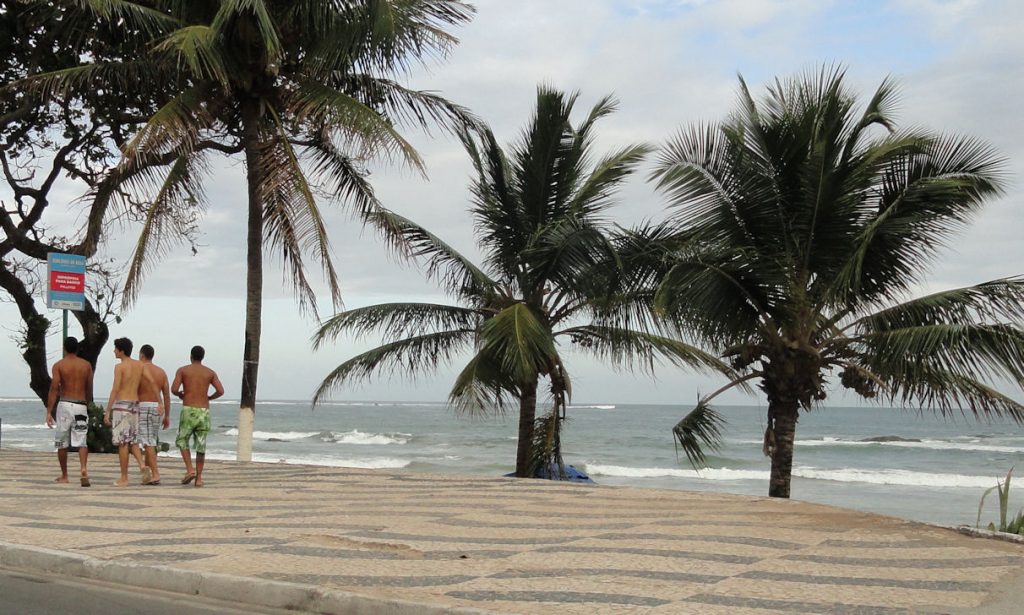
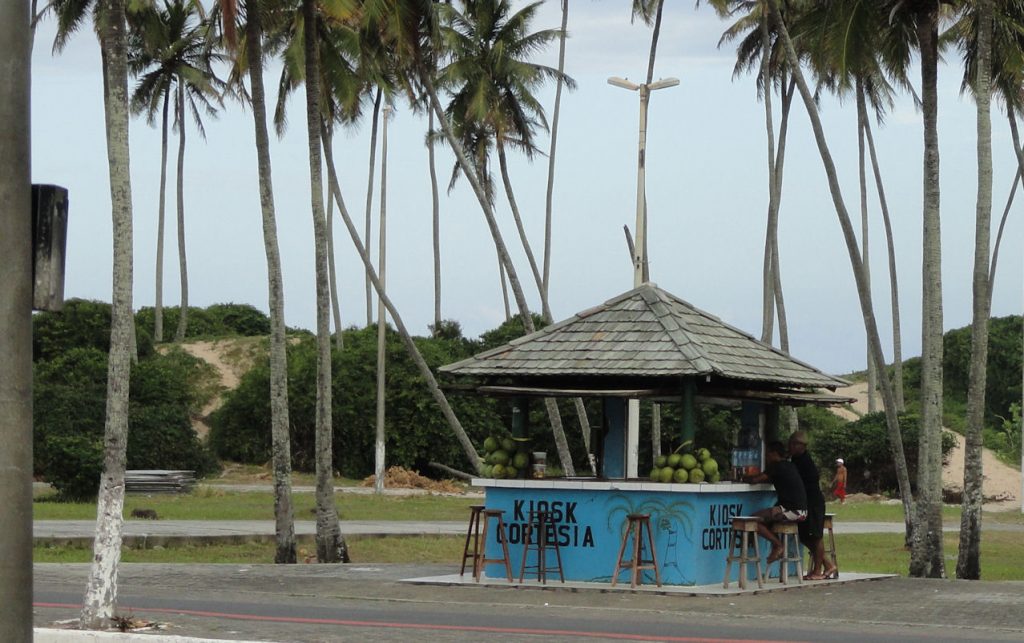
My pictures are from along the sea in Salvador. The top two show coconut palms.  In the second picture you can see an agua de coco stand where you can get fresh coconut water.  Notice the big dunes of white sand behind the stand. I don’t know the details of how it gets deposited there, but some places along the coast these big dunes block the ocean. Some are covered by vegetation, like the ones in the picture, others are just sand.