A faith based life

Whether or not we have specific religious faith, all successful lives are faith-based. I am aware that I am using this phrase in a specific way, so let me explain.

We rarely can immediately see the results of our decisions and most of the things that makes us happy and prosperous in the long run give little satisfaction in the here and now. More often they are even unpleasant or painful. This is not deep wisdom, although an astonishing number of people seem not to understand it, or at least it is not reflected in their choices. I think the explanation is not that they have too little intelligence but rather that they have too little faith.

“Now faith is the substance of things hoped for, the evidence of things not seen.” This is the best practical definition from a trusted source. We can better apply this to the secular world by inserting one word. … the evidence of things not YET seen.

When the out-of-shape guy starts to eat better and exercise more, he does it with the faith in the vision of his thinner healthier self, aware that he will not be seeing this reality for a long time. He can’t see how any particular hour at gym or day spent defying donuts makes a difference. He has faith.

When a twenty-five-year-old buys the first stock fund in her new 401-k account, she does in contemplation of a better life that by definition will not show up for at least forty years. That $50 investment seems less than a drop in the ocean and could be much more enjoyably deployed buying beer of coffee. But she has faith.

In my old job in diplomacy and my new vocation of promoting forestry products, networking is important. You must see and be seen. I am mostly an introvert. I do not enjoy big social gatherings, but I know that I have to get out there. When I come home from any particular event, and ask myself if it was worth the energy spent, it is very easy to answer in the negative. “Yeah, I saw a few people and they met me, but what really happened? Nothing.” But I know that with time and persistence good things happen and opportunities open. I do not know what they will be. I act out of faith that I will find them and know what to do when I do.

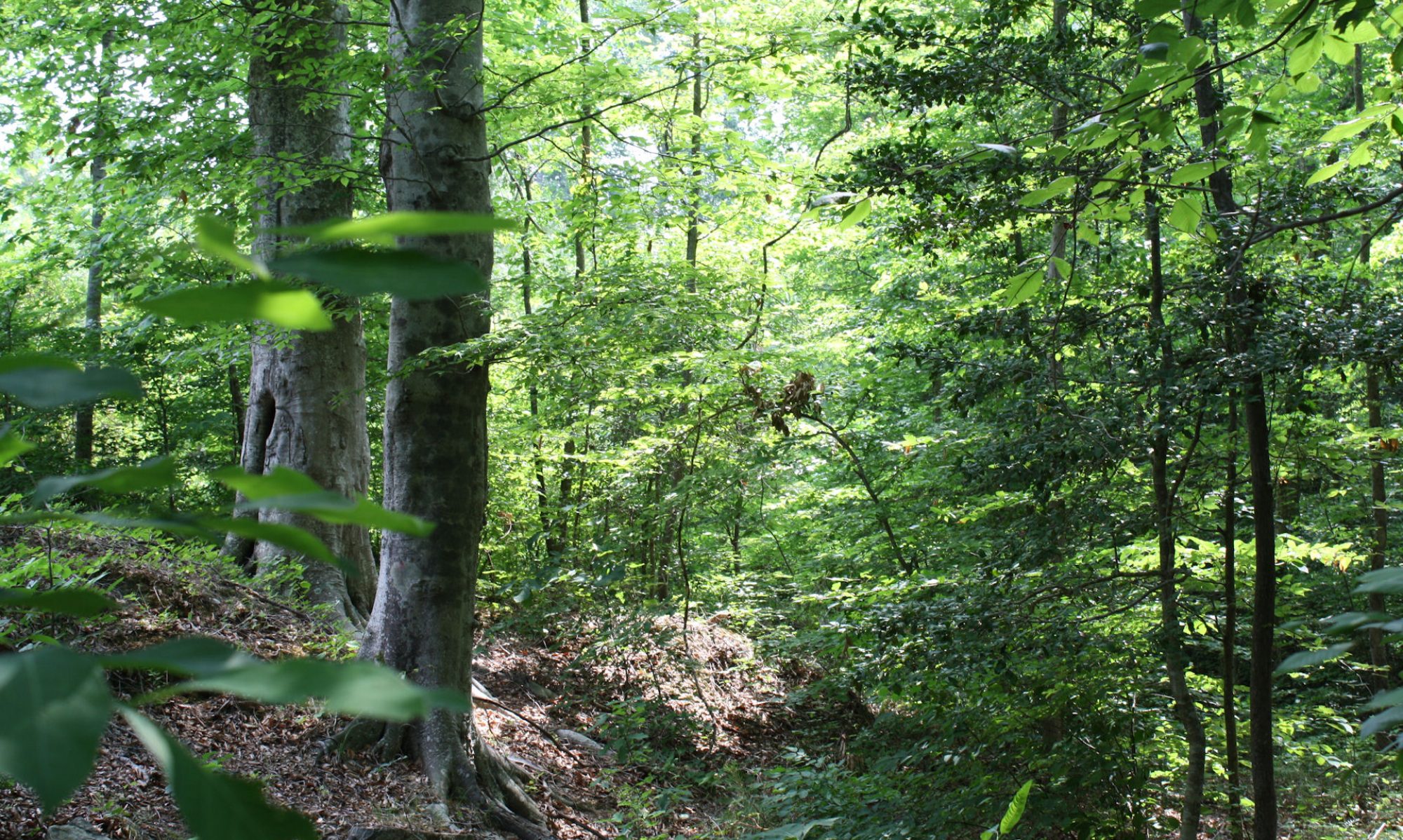
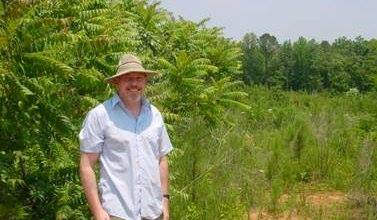
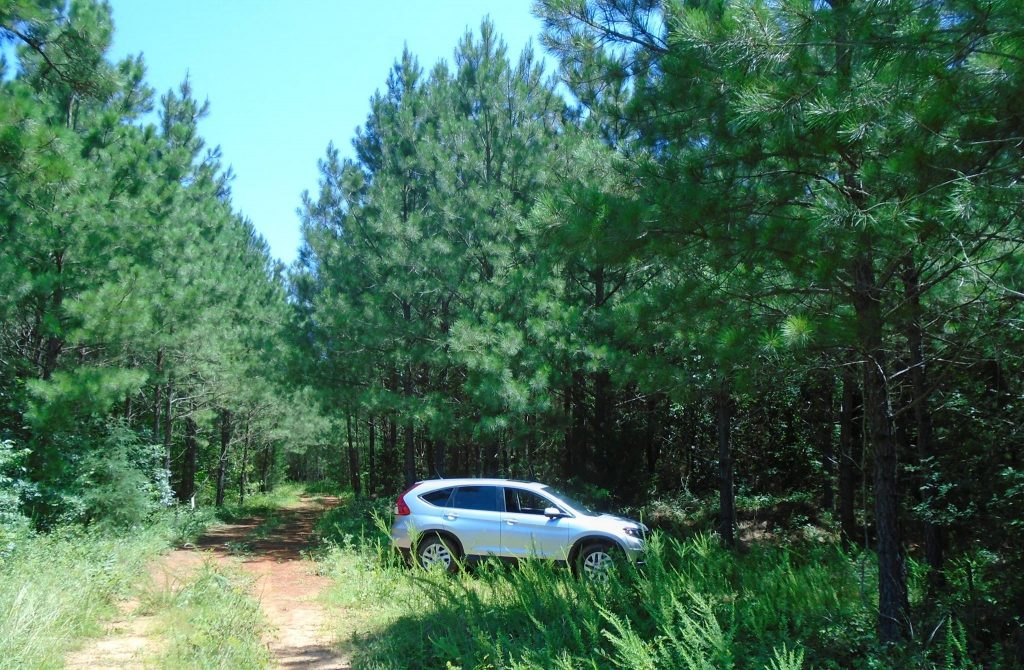
Maybe this secular faith comes easier to forestry folks, since our whole outlook is faith-based. I plant trees that I will never see mature and rely on forests provided by others. When I bought my first “forest” in 2005, it didn’t look like woods. It was a recently cut-over mess of weeds and brambles. The most prominent trees were invasive tree-of-heaven that I knew I would have to battle. The loblolly were there, but you had to look really hard to find them. But I had faith that the pine trees would grow and that I could control the invasives. Twelve years later you see what we have in the attached photo. The one below is what it looked like in 2005. Notice the very big tree of heaven patch and the smaller pine trees.
Faith is the substance of things hoped for and the evidence of things not YET seen. A guy with a forest gets to see it, if he has the patience and faith to wait. But everyone can and needs to find the evidence of faith in their own chosen sphere.
Travel along I-95

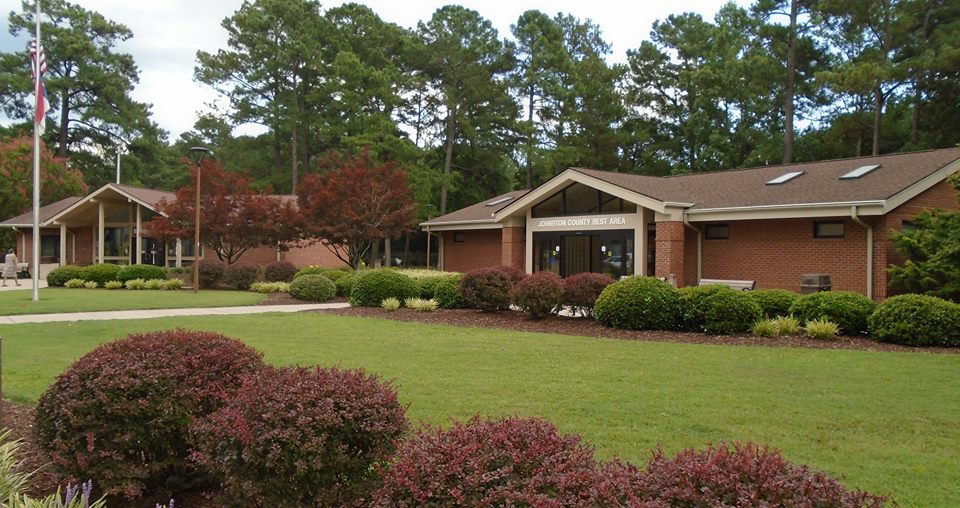
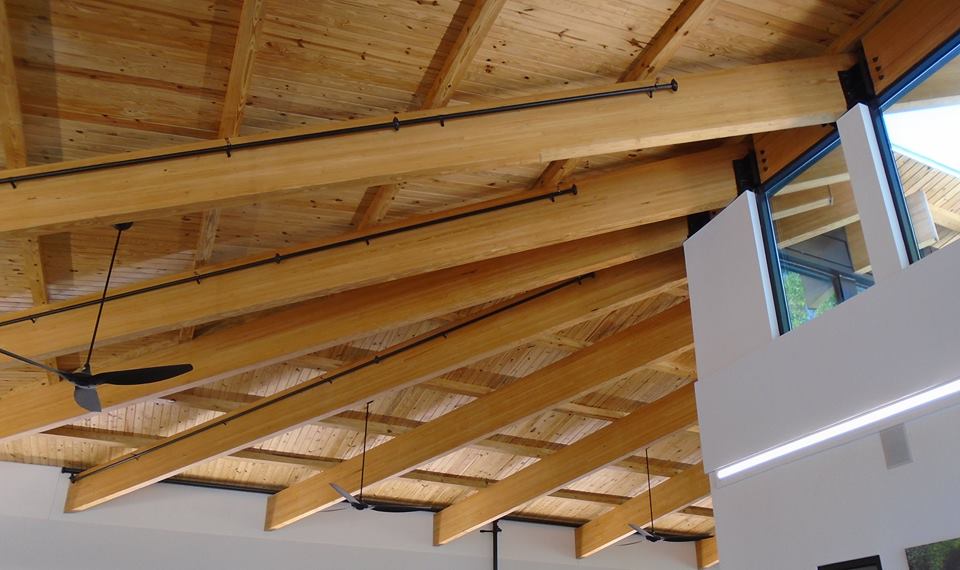
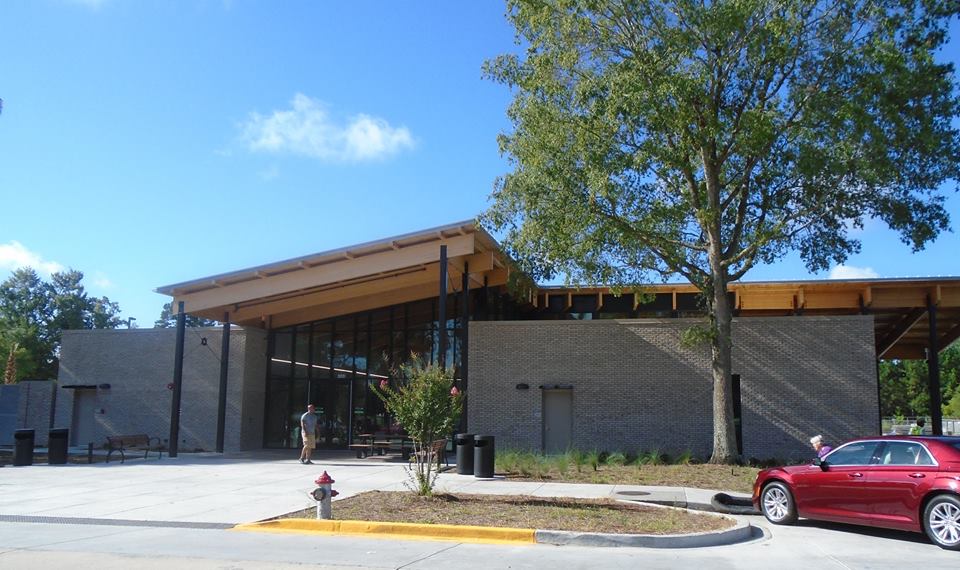
I drove all the way from Georgia to Virginia yesterday. I was afraid that I would get fatigued and not know it, so I resolved to stop at all the rest areas along the way. The first I hit was a really nice welcome center in South Carolina.

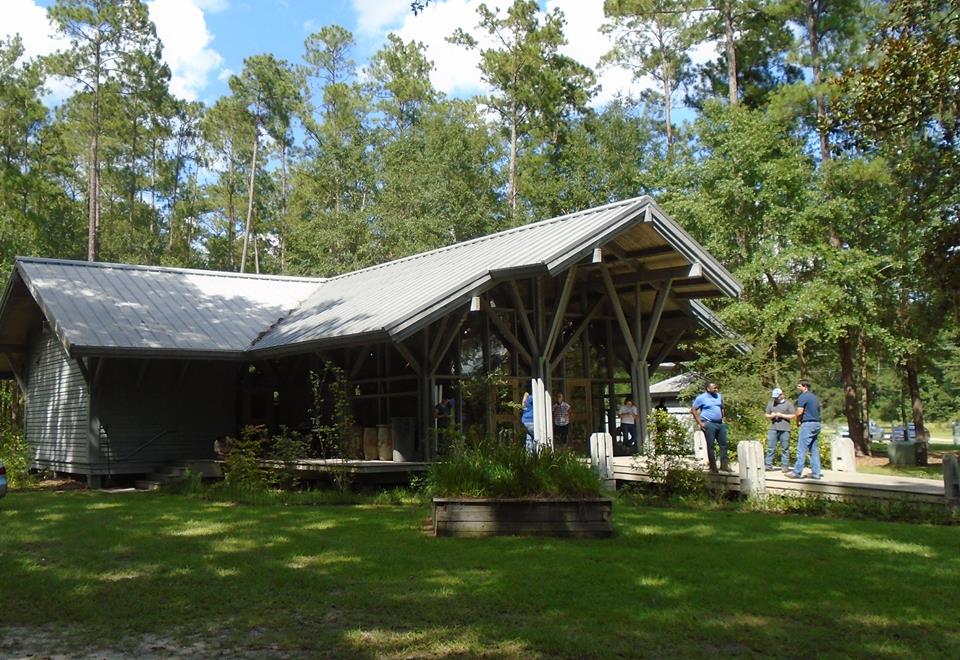
You can see in my photo that they used a lot of wood construction. This is southern pine, appropriate for this place. It is not CLT, but the beams are gluelam, a decent alternative.
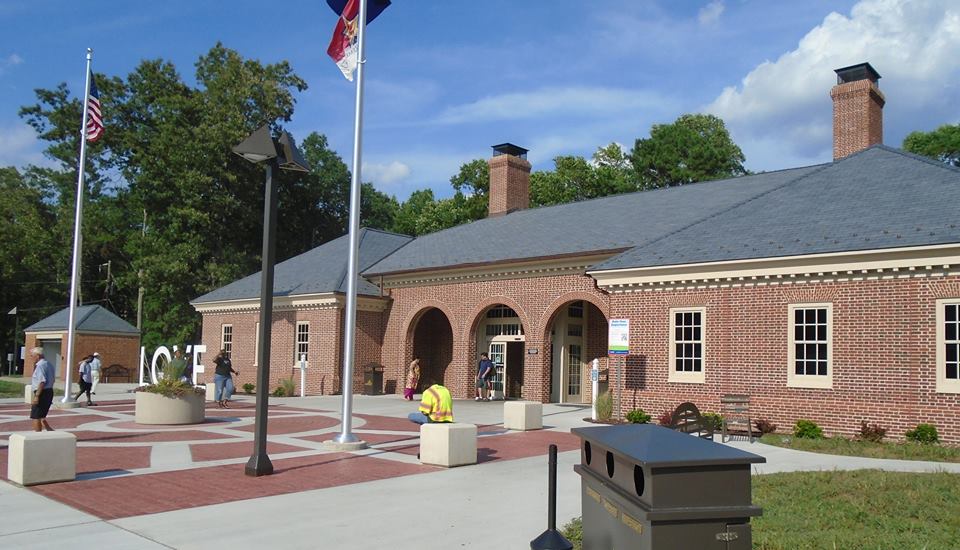
North Carolina has some nice rest stops, but they are normal looking. Virginia’s are done in the colonial style.

One thing you don’t have much at rest stops is shade. I would like to take a 15 minute nap to rest, but with the sun heating up the car it is not easy to do. I wish there were some bigger shade trees, or how about some solar panels. They would do double duty as shade and energy providers.

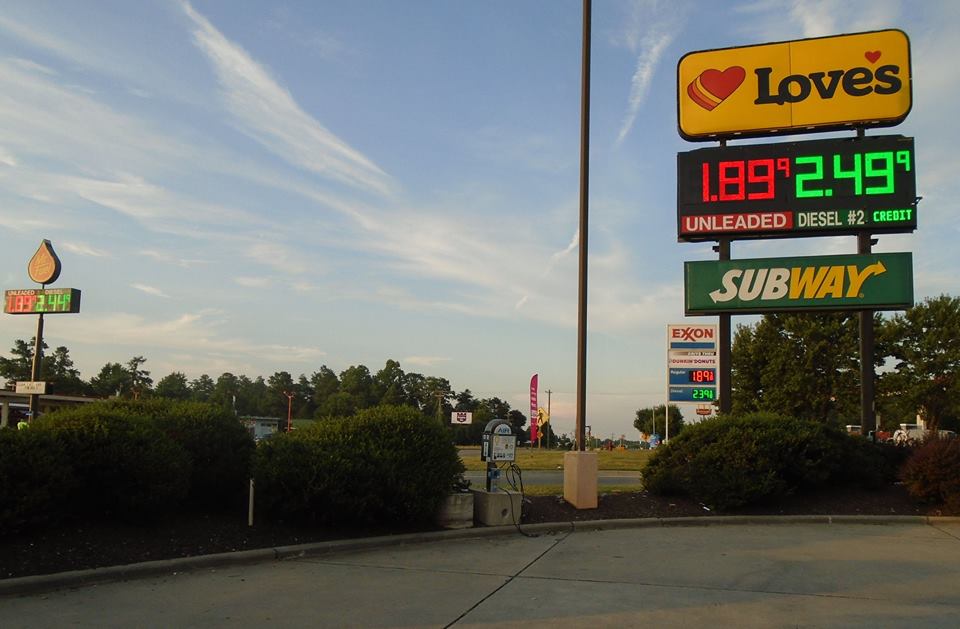
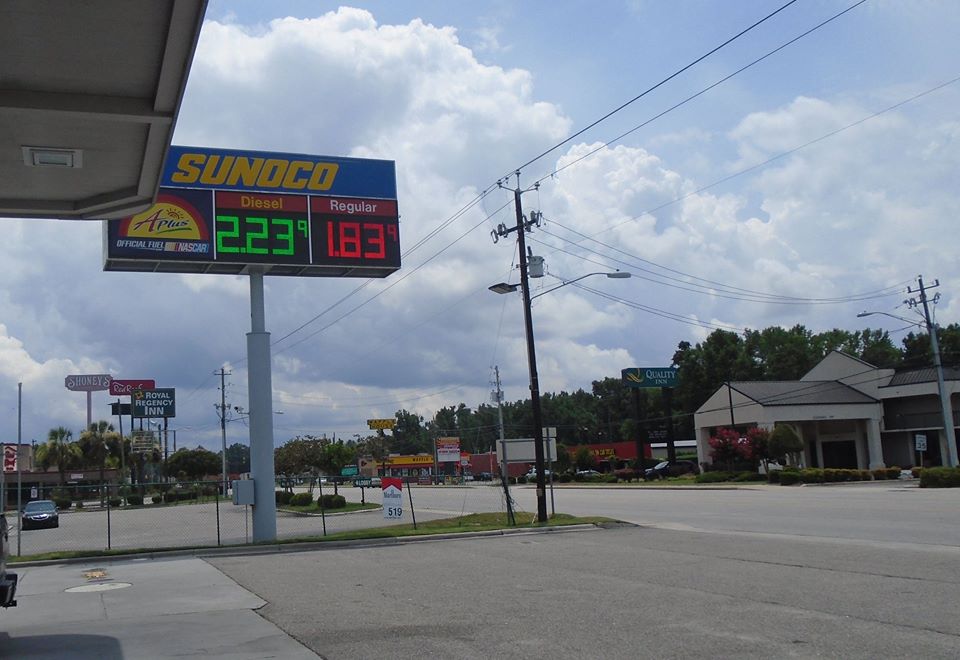
I only filled up on gas twice: once in South Carolina and then again at exist 104 in Virginia.
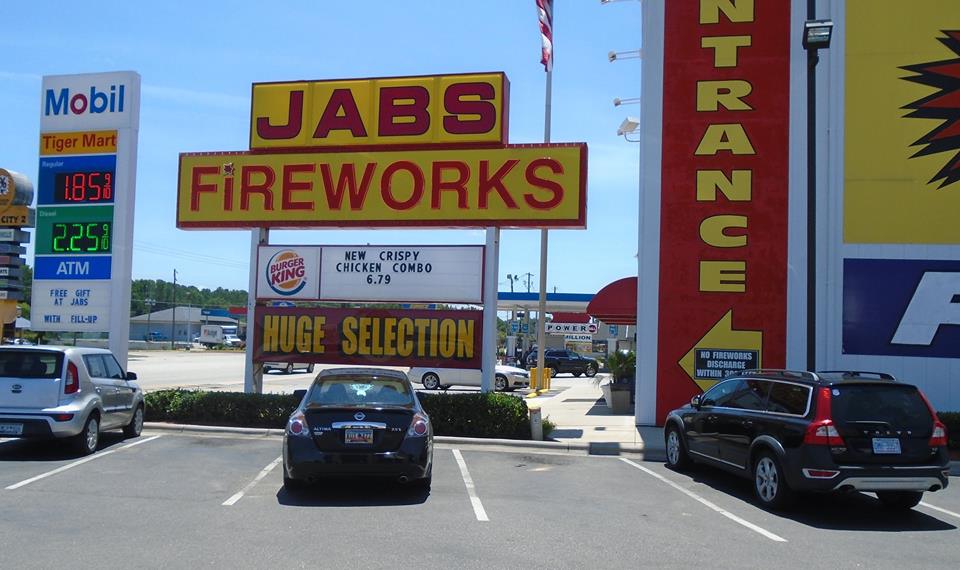
In SC, I also bought some firecrackers for the boys. They have some really big things down there in South Carolina.

Longleaf Academy in Georgia

I am down in Guyton, Georgia. I learned a few things at the longleaf academy, sponsored by the Longleaf Alliance, but maybe as important was knowing that lots of people are working to understand and restore this great and diverse ecosystem at least to some of its former glory.

The pictures are from Fort Stewart, where they manage 120,000 acres with fire. The management is only in recent decades but fire was always common. They do live fire exercises. These can set off fires.

You cannot stop fire, but you can make choices about when and where. In the past, they had 700 fires a year (almost two a day). Now they are down to about 40.
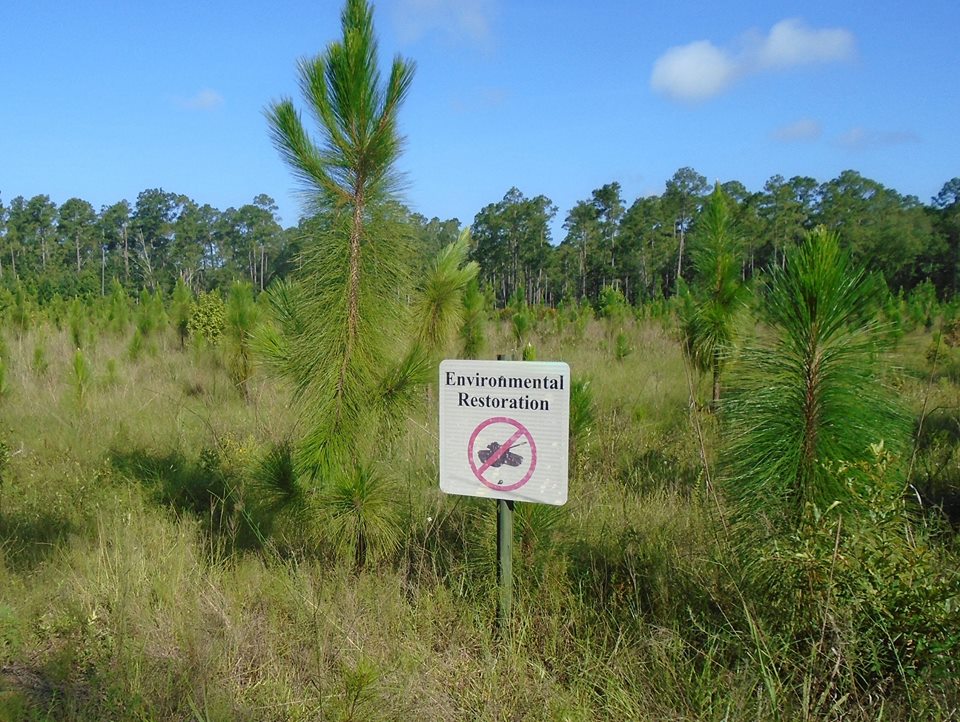
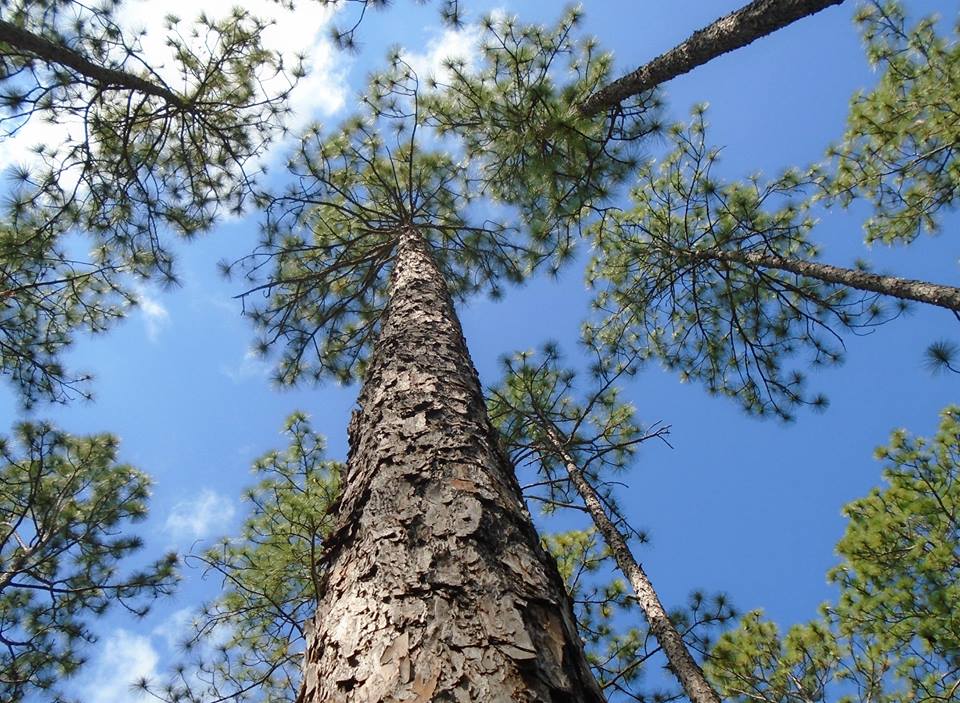
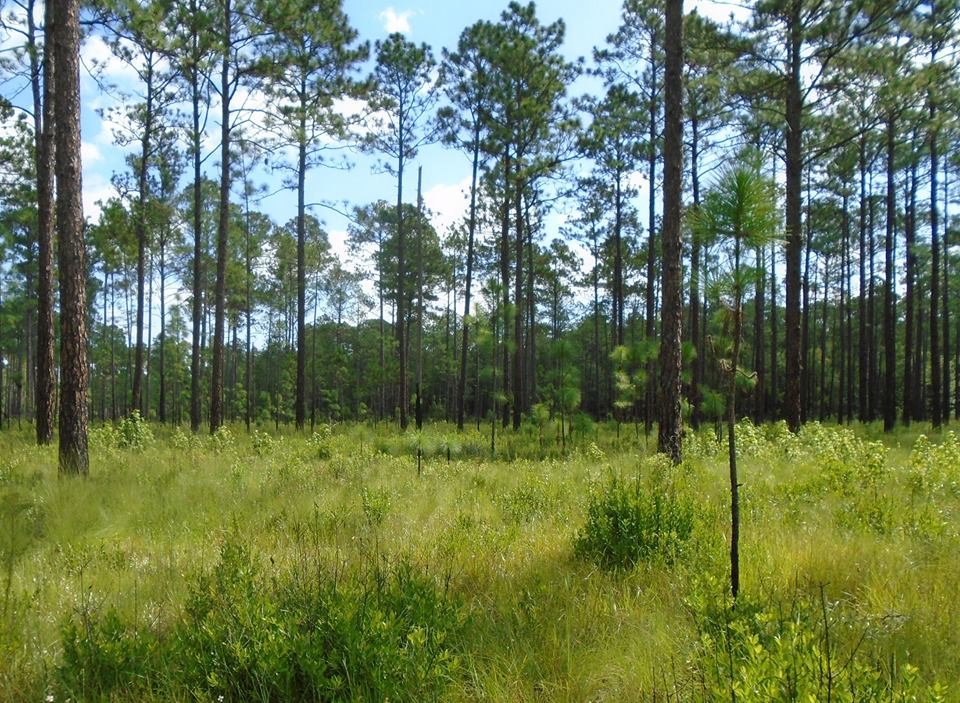
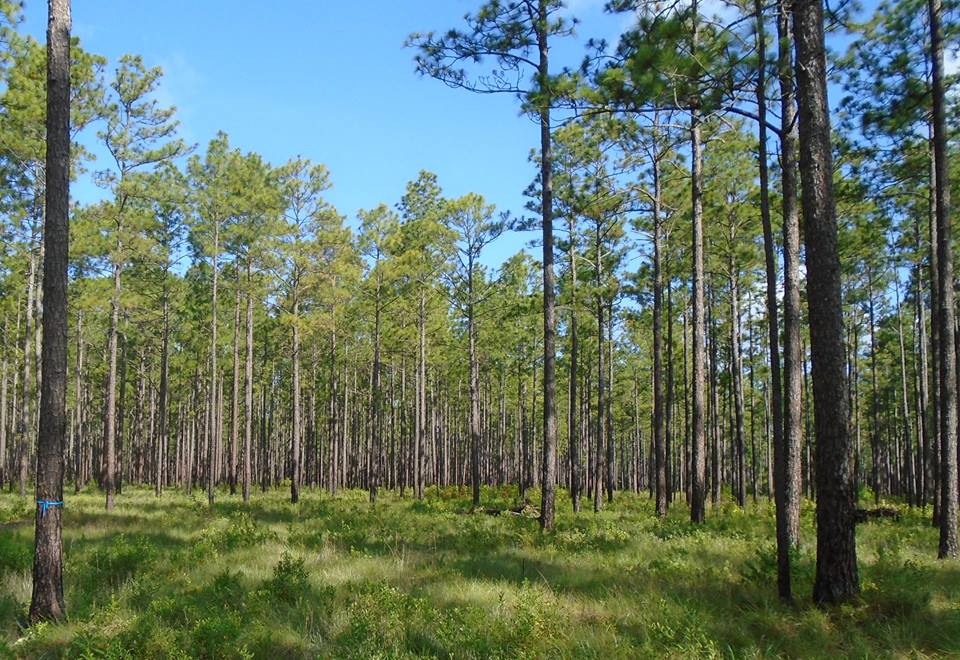
The first photo is a restoration zone. Notice the no tank logo. Never saw that before. Next is looking up on pole trees. A poles is worth more than any other use for pine, but it has to be the right size, straight w/o defects. Longleaf make good poles, but not every tree qualifies. The last two pictures show longleaf savannas. They are not that old. When the army acquired the land in the 1940s, the former landowners cut off all the merchantable timber, so these forests are no more than around 60-70 years old. Nature is resilient and it gives us hope for other restorations.
Longleaf Academy

I am down in Georgia for the “Longleaf Academy” to learn about longleaf pine regeneration as the name suggests. We discussed transitioning loblolly to longleaf. I plan to do this on some of our acreage.
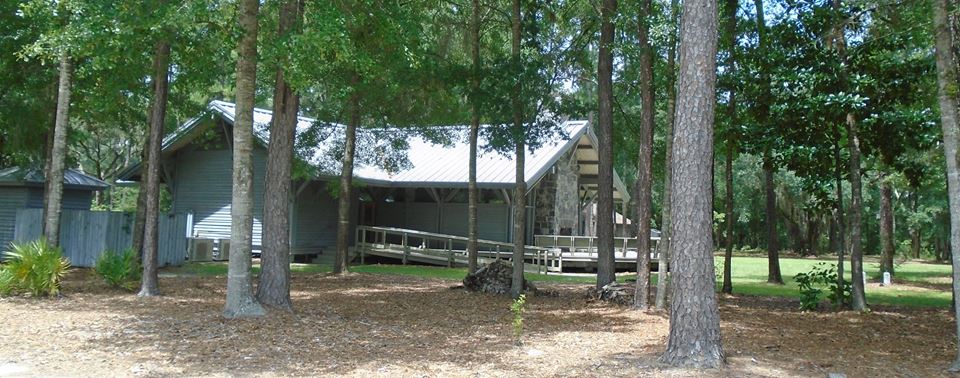
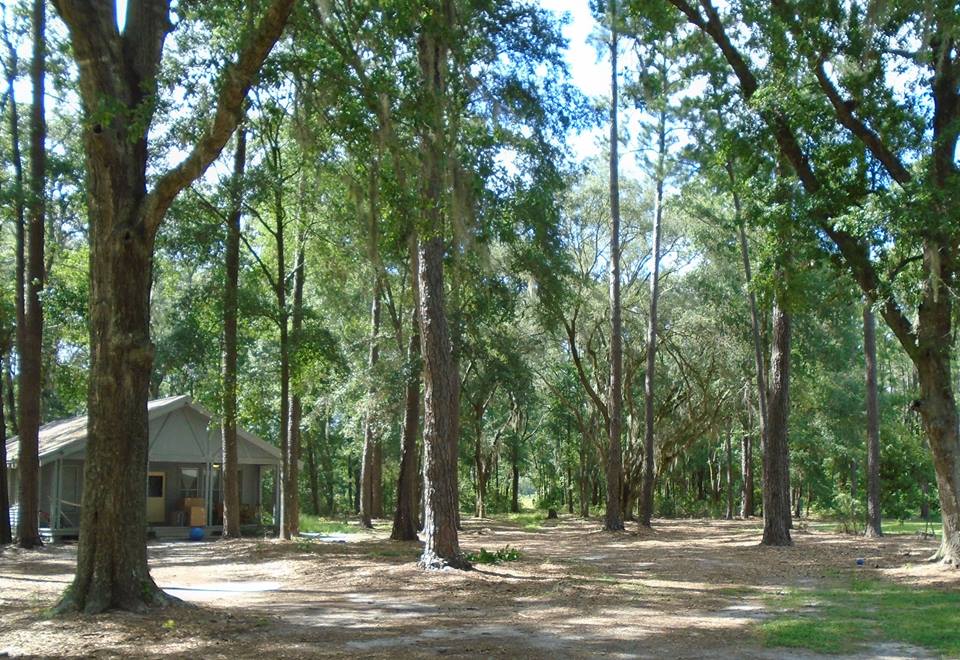
My photos show the cheaper gas in South Carolina. If you are traveling south, fill up in Virginia and then do not do so again until you’ve reached South Carolina. The other photos are from Mary Kahrs Warnell Forest Education Center, where the conference is being held.
Down the middle of America

Heading home from Baraboo right down the middle of Wisconsin and Illinois. Got my last slice of Rocky Roccoco and headed south and east.

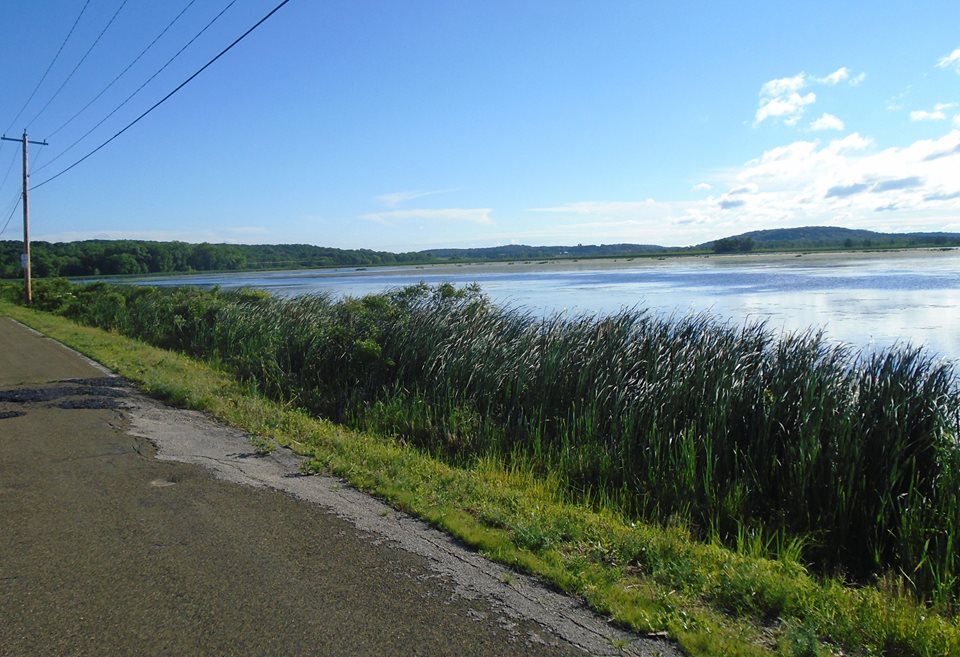
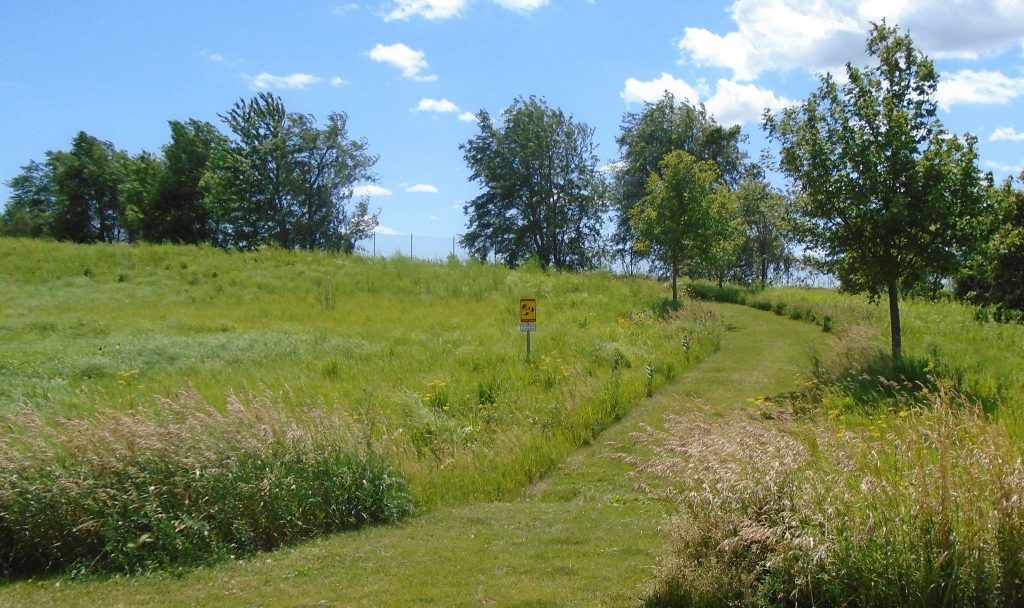
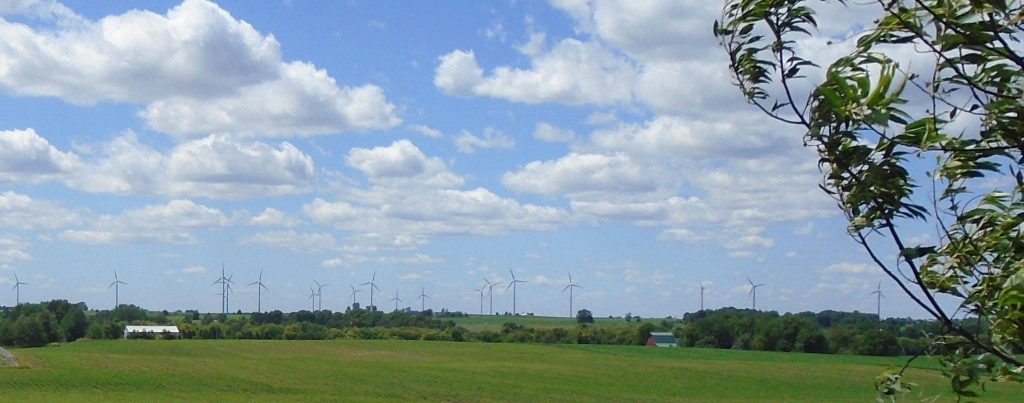
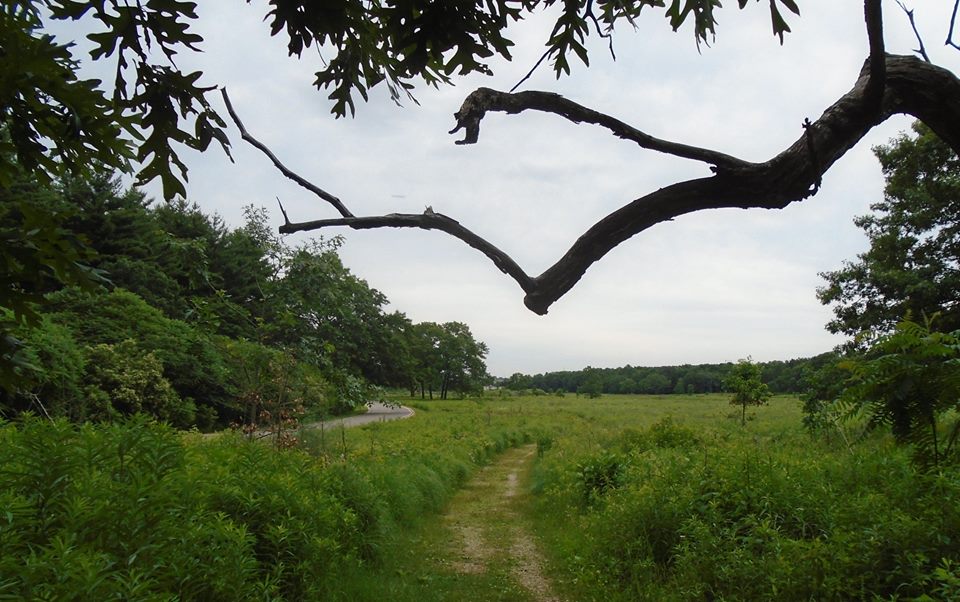
My first photo shows the Wisconsin River flowage, Lake Wisconsin. You go slower on the country roads, but you can see more. Next is a walking path at a rest area in Illinois. The windmills are taken from that same stop, as is the photo of the linden flowers. I just love that scent.

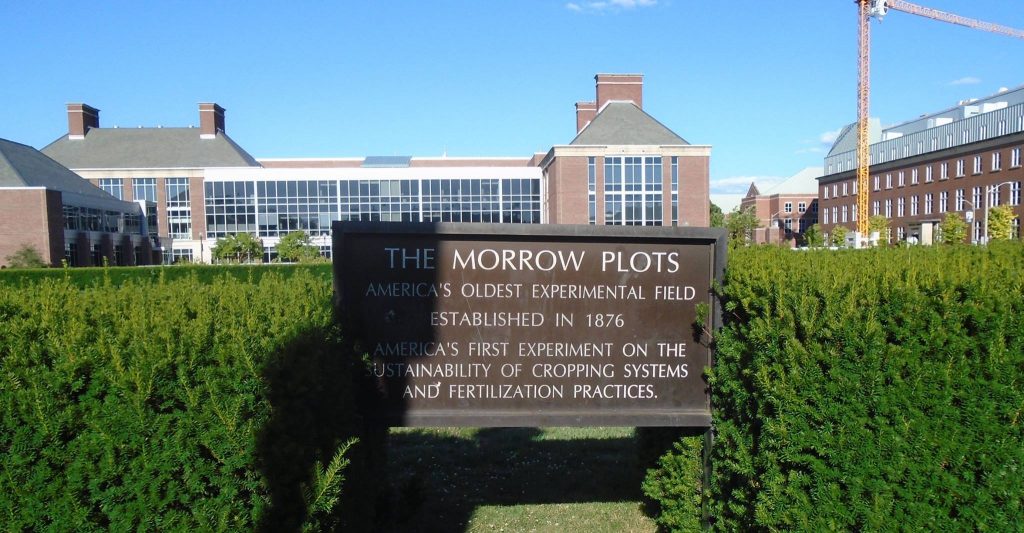
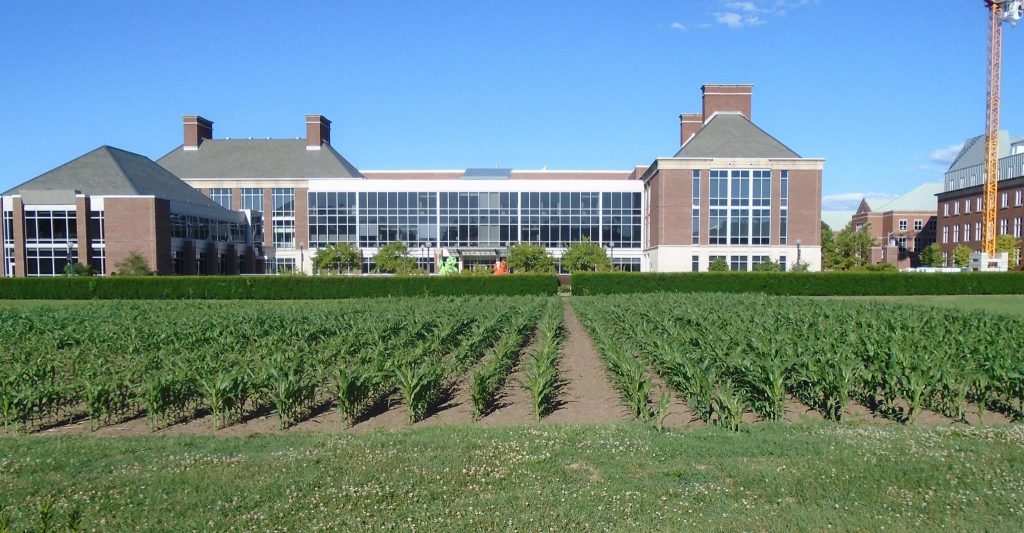
The last two photos are the world famous Morrow plots at University of Illinois. They have been planting crops on that spot since 1876 to learn about fertilizer, crop rotation and soils. These are the oldest such plots in North America, but they are not that easy to find. Seeing as how they are probably the biggest tourist draw in all of Urbana-Champaign, you think they would make bigger deal.

Trains, ships & Medusa Cement

We noticed when we were in Oak Park and Elmhurst that many trains went by on at-grade tracks. Trains are a key to our prosperity, but they are largely out of sight.

America has the worlds best freight train network, facilitated by the Staggers Act or 1980. This fact comes as a surprise to most people, since American passenger rail is not very good and that is what experience most directly.

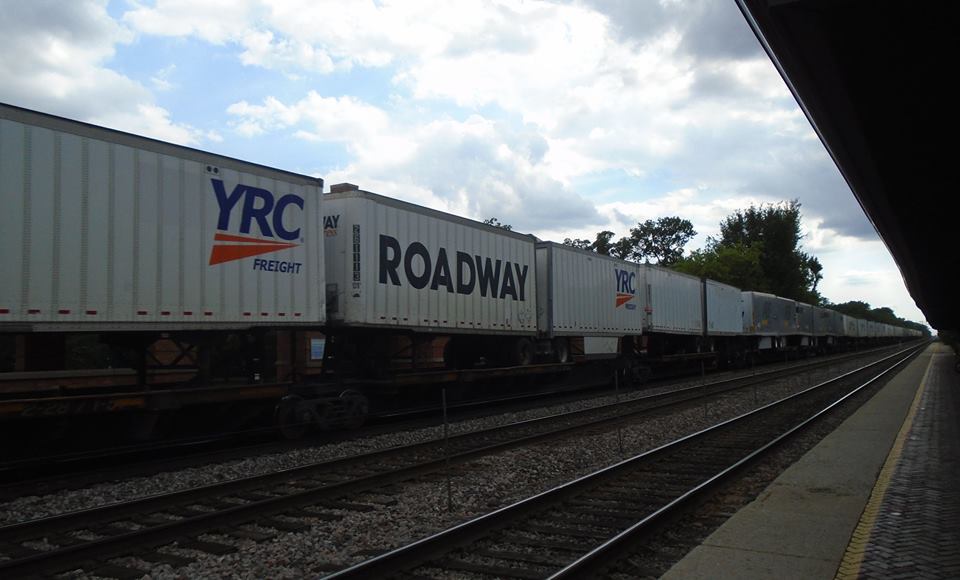
You can see the power of freight when you watch a train go by. Today they often carry containers. This is intermodal transport. The containers can be moved by ship, train or truck w/o being unloaded or reloaded.

The intermodal revolution – and it was a revolution – happened in plain sight starting around 1970. Before that time, something moved by ship required unloading and reloading at the port. Something shipped by train required loading, unloading and reloading all along the road. The same for trucks. Each step created delays, damage and “shrinkage,” i.e. stealing. This is the “fell off the back of a truck” idea.

I was in the Longshoreman Union back in the 1970s when I worked at Medusa Cement. We were in that union because we had a dock, although I never worked on ships.

Longshoremen were hard workers, but the episodic nature of the much of the work meant they did not need to be very consistent. It was possible to be a good worker AND a drunk. In fact, some of the hardest workers were drunks. There was also a fair amount of fringe benefit or the “falling off the truck” sort. And there was lots of unskilled or semi-skilled work to be done. All this changed in the 1970s. Containers require many fewer workers and most of them need to be skilled at operating heavy machinery, i.e. shaky drunks cannot do well.

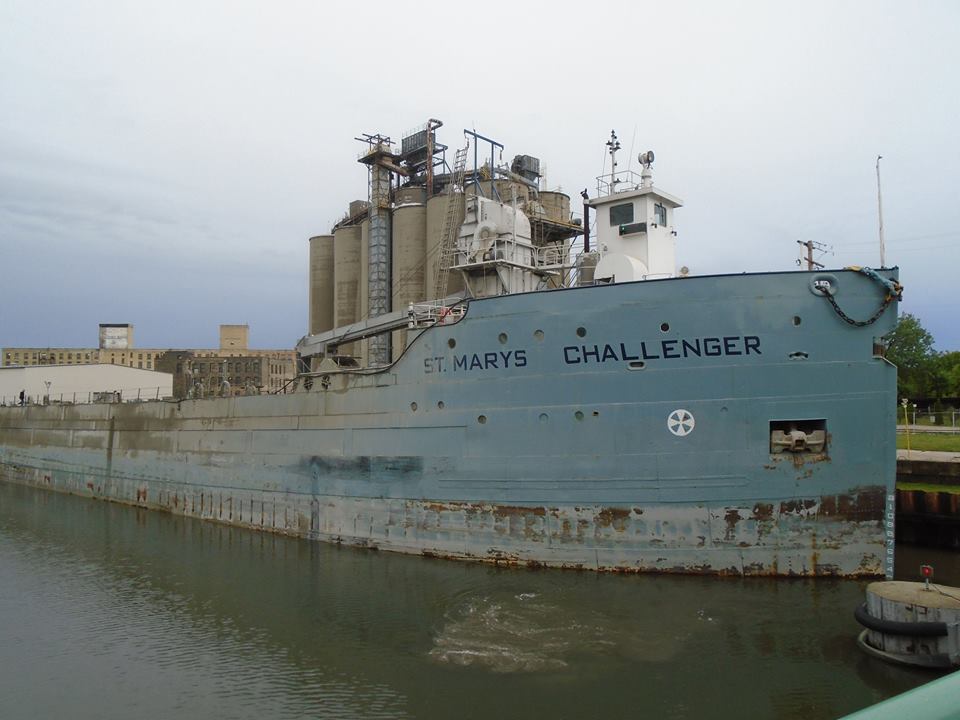
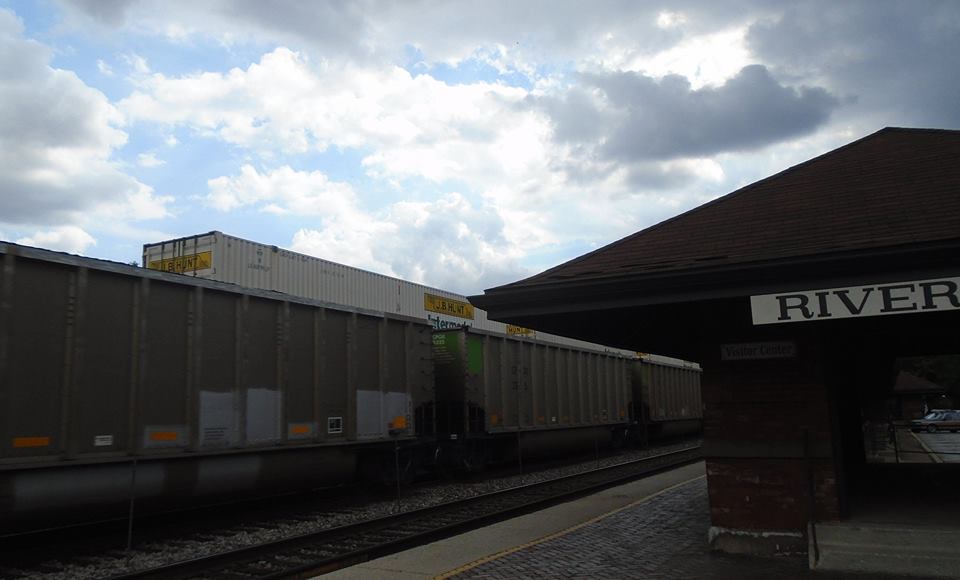
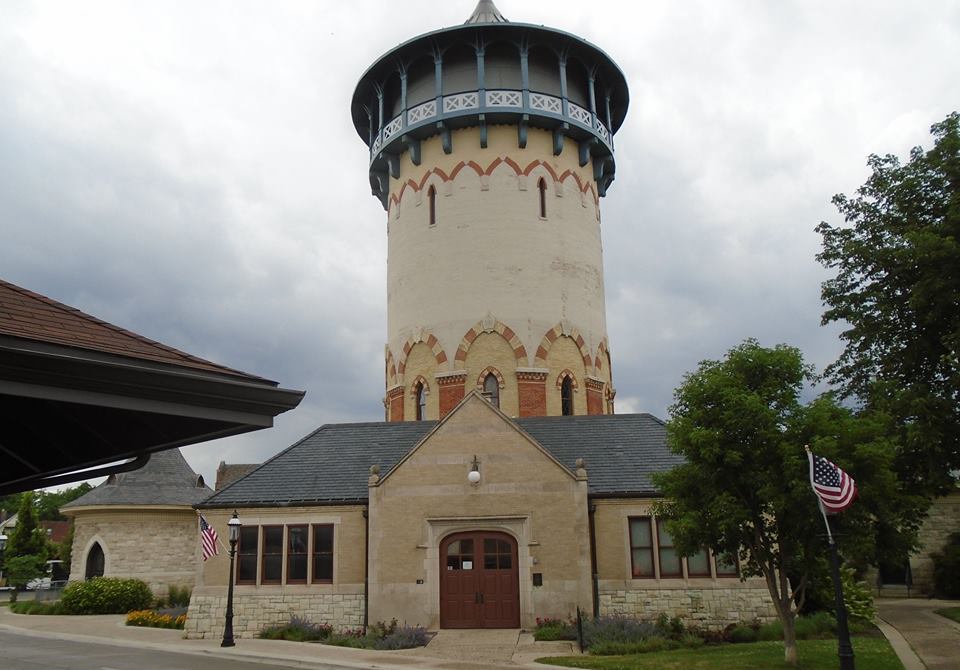
My pictures show some of the trains. The first shows how many trucks can be carried on one train and the next (look closely) shows trains going in both directions. In front are bulk hopper cars, in back containers. I have enjoyed watching them go by since I was a little boy and still do. The first photo, however is Medusa’s cement ship – the “Challenger”. It is now owned by St Mary’s, so it is the St. Mary’s Challenger, but I think it is the same boat that my father used to unload. The last photo is a water tower in Oak Park, Illinois. They were more artistic in those days.

Landowner dinner in Freeman

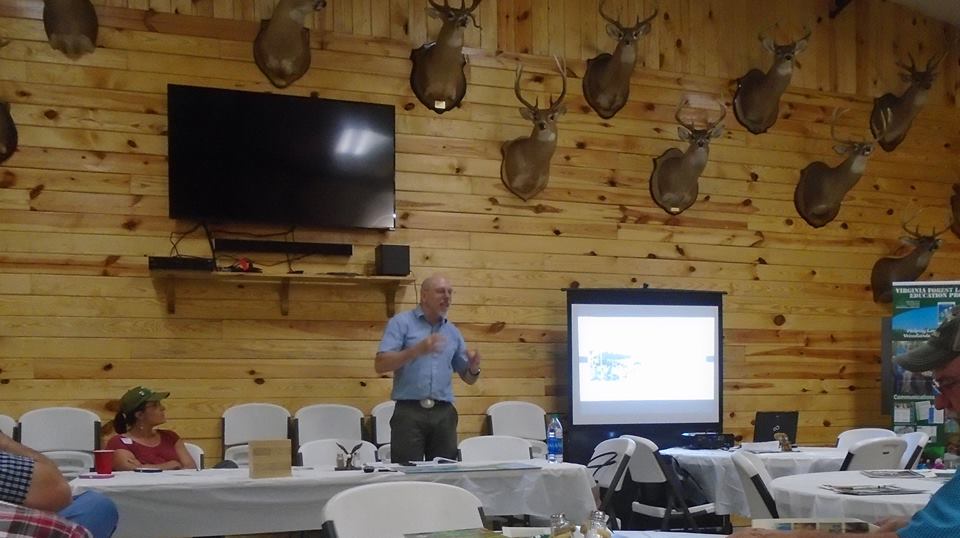
We held a landowner Tree Farm dinner at Reedy Creek Hunt Club in Freeman, Virginia. I sold the hunt club six acres a few years ago and they built a really nice facility. The meet there and can cater lunches or dinners, which they did for us. They made an excellent pulled pork. They can seat around 150. Our local meetings are much smaller, but they can do large or small.

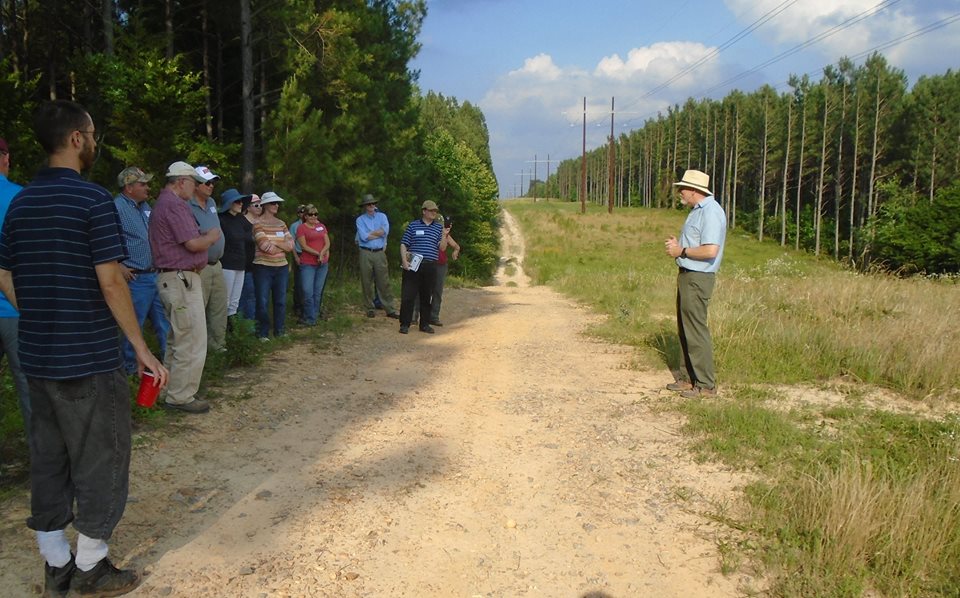
I got to show my land to the dinner guests. I am proud of my longleaf pine and the progress since they were burned in February. We also talked about tree farming and the values of conservation.

My theme is that we should not talk about making our ecological footprint smaller, but rather make it much bigger, since what we do improves the land, soils and water conditions for biotic and human communities depending on them. I hate this whole “footprint” concept. It is defeatist. It says that you can never move forward, but only limit the damage you do. It is like the original sin, but worse since there is no redemption. I think we can – and we do better.

Leopold landscapes

Taking advantage of my pilgrimage to the Aldo Leopold place, I stopped off in Madison. Always liked it there and Madison formed the backdrop for lots my thinking. I studied Greek and Latin. I forgot both, but the discipline of those languages stayed. I didn’t actually go to the city or the university, however, but stuck to the edges at the Wisconsin Arboretum and my old running trail that juts into Lake Mendota.

They do prescribe burning at the Arboretum, so I went to see some of the prairies maintained by fire. The big one is Curtis Prairie, originally laid out by Aldo Leopold in 1935, along with the less well-known Norman Fassett, Ted Sperry and the eponymous John Curtis, on an abandoned pasture. There was also a graduate student John Thompson, who planted seeds, along with dozens of CCC boys. It was the first example of scientific restoration. They brought in sod and seeds that they thought represented the original cover and it has been growing ever since.

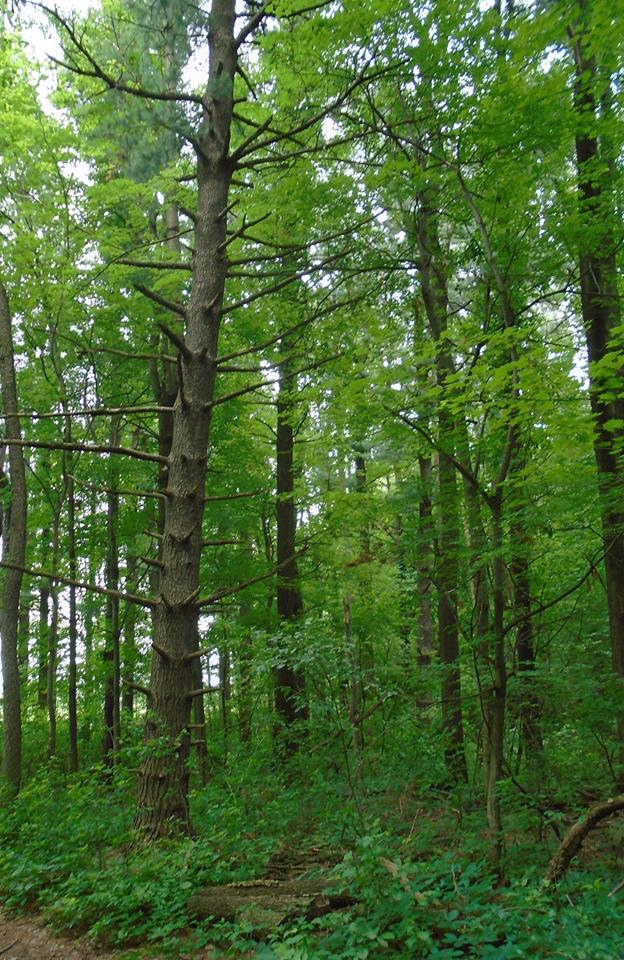
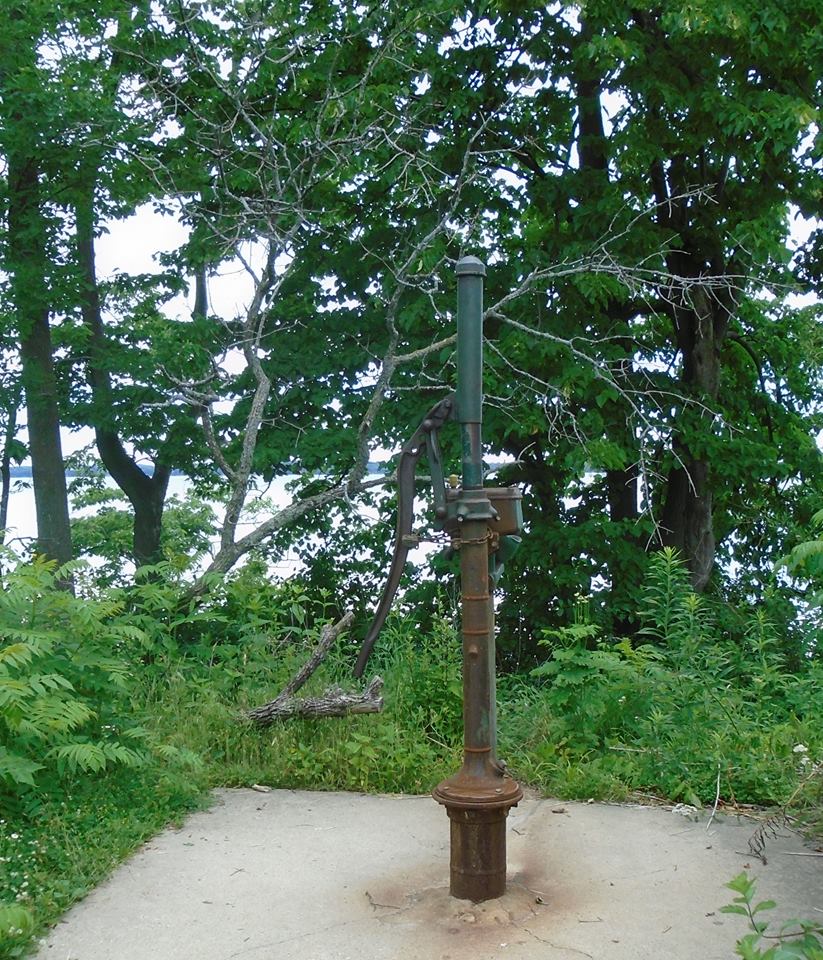
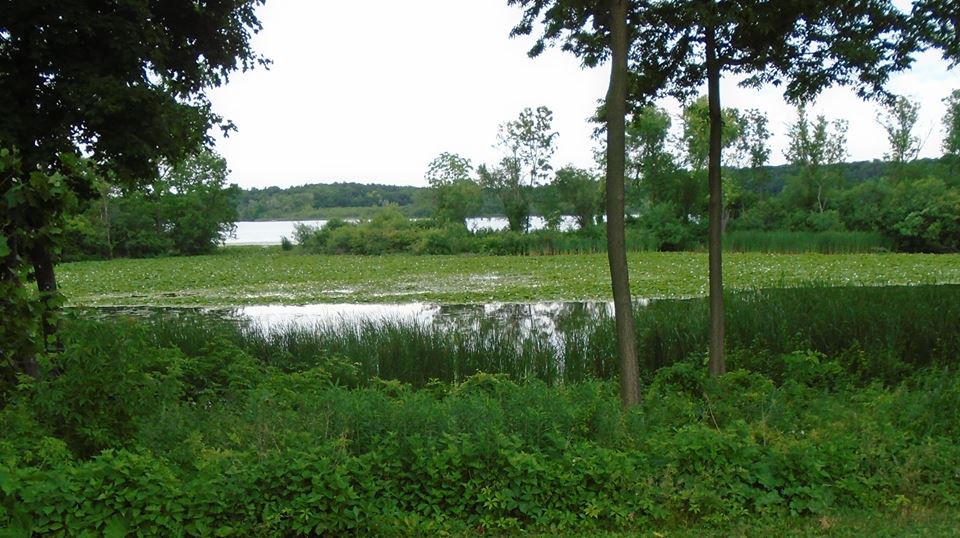
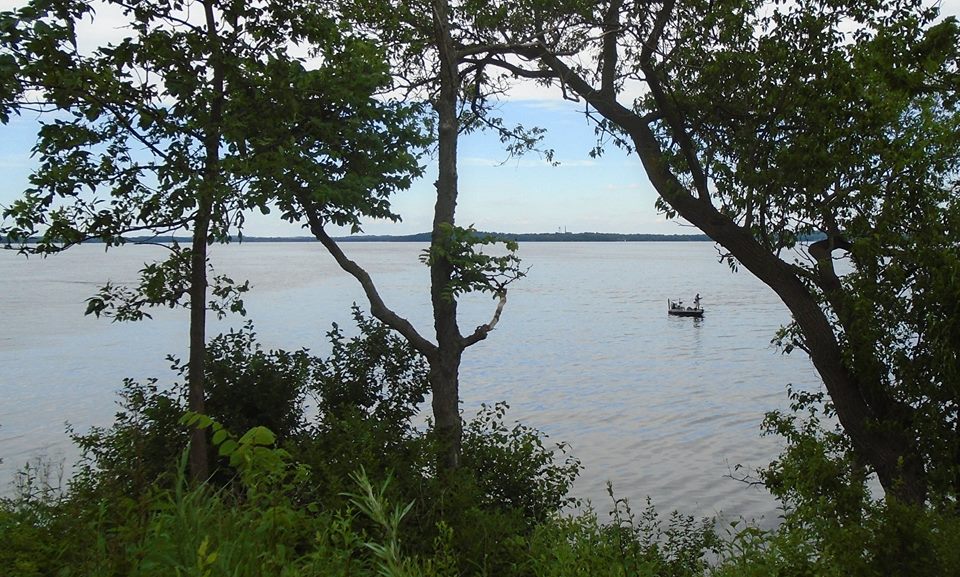
You can see Curtis Prairie in the first photo. On the side is Leopold woods. It is good to have the history, since you can get ideas about the ages of the trees. These are about eighty years old. In the next photo you can see that they grew up in the open, since the white pine kept many of its lower branches for a long. Lake Wingra in the next photo is surround on three sides by the Arboretum and so is nice and clean. Next is the end of Picnic Point on Lake Mendota, the turn around point for my runs for obvious reasons. I used to be able to stop and get a drink at the pump shown in the photo, but it is now defunct.

Chicago with Chrissy

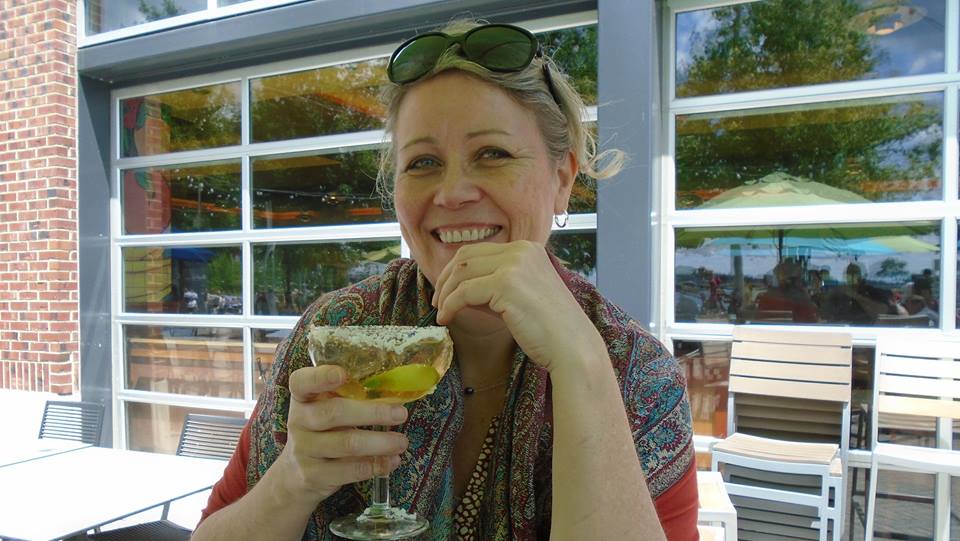
Of course, the big reason that it is fun to tour is because I get to be with Chrissy in new situations. You can see in my first photo when we had supper at a nice Italian place. The second photo is from the Navy Pier on Lake Michigan. As we walked back along the pier, I mentioned that this scene reminded me of Lake Michigan (I was thinking of Milwaukee). Chrissy made fun of me, pointing out that maybe it reminded me of Lake Michigan because it WAS Lake Michigan.

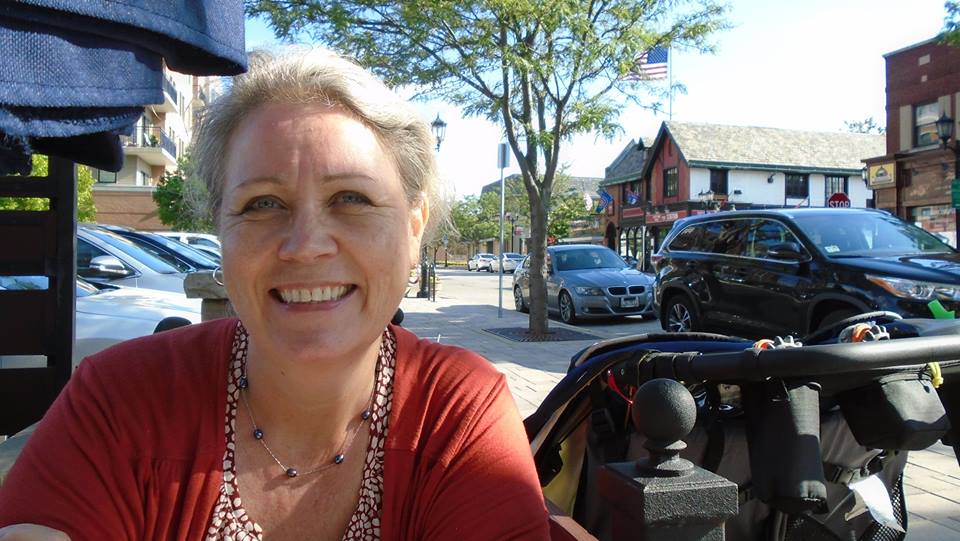
We stayed in the Chicago suburb of Elmhurst. It is an “trolley suburb,” i.e. one built around trains and transit. These are pleasant suburbs, since they are fairly dense near the train stations. This one featured restaurants and beer gardens, surrounded by leafy suburbs.

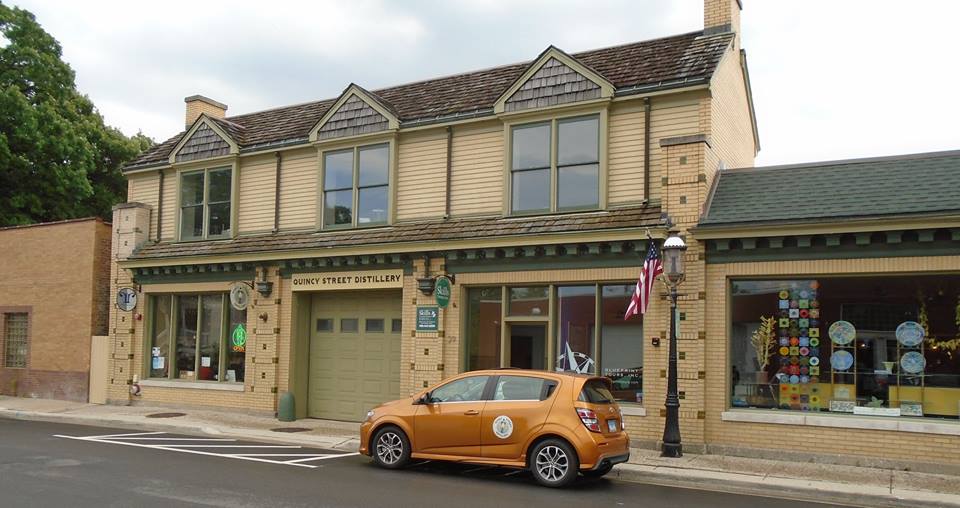
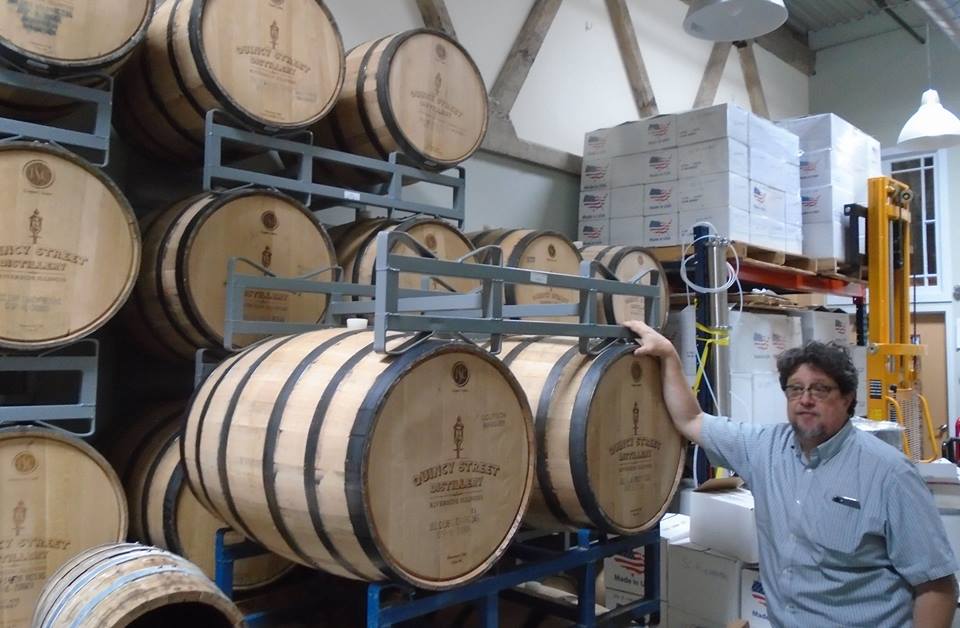
We also toured the Quincy Street Distillery. They make a variety of spirits there, including various sorts of whiskeys and gins. The owner and manager, Derrick Mancini, was clearly an enthusiast for his profession. He explained how the system worked. The key to flavor is aging. Whiskey acquires flavors from the wood in the barrels. If they use smaller barrel, it ages faster, but produces a less mature whiskey. We did the tasting. Chrissy liked the younger whiskey. We bought three bottles, each of the different sorts.

As I listened to Mr. Mancini and perceived his love of what he did, I thought about the future of work. We have passed through the machine age, where we need to mass-produce standard products. Maybe we can do products the are also in their own ways works of art.

Wisconsin Nature

Old growth forest in Milwaukee

Cudahy nature center is actually in Oak Creek, just off College Avenue. I started coming here sometime in the early 1970s, before it was a nature center and before Milwaukee County owned it. I used to read books about ecology and natural succession and then come to place like this and try to see how it worked. This is very much my “home woods.”
The preserve is about 42 acres of maple-basswood forest (farther east it would be joined by beech, but there are no natural occurring beech trees in Milwaukee County outside the immediate reach of Lake Michigan fog) that managed to avoid being cut. I doubt it is “virgin” forest, as some say, but it sure is old growth.

An obvious sign of old growth are big trees, but there is more. If the stand is really old growth, i.e. has been there for more than a generation or two, you will find unevenly aged trees and a variety of species.

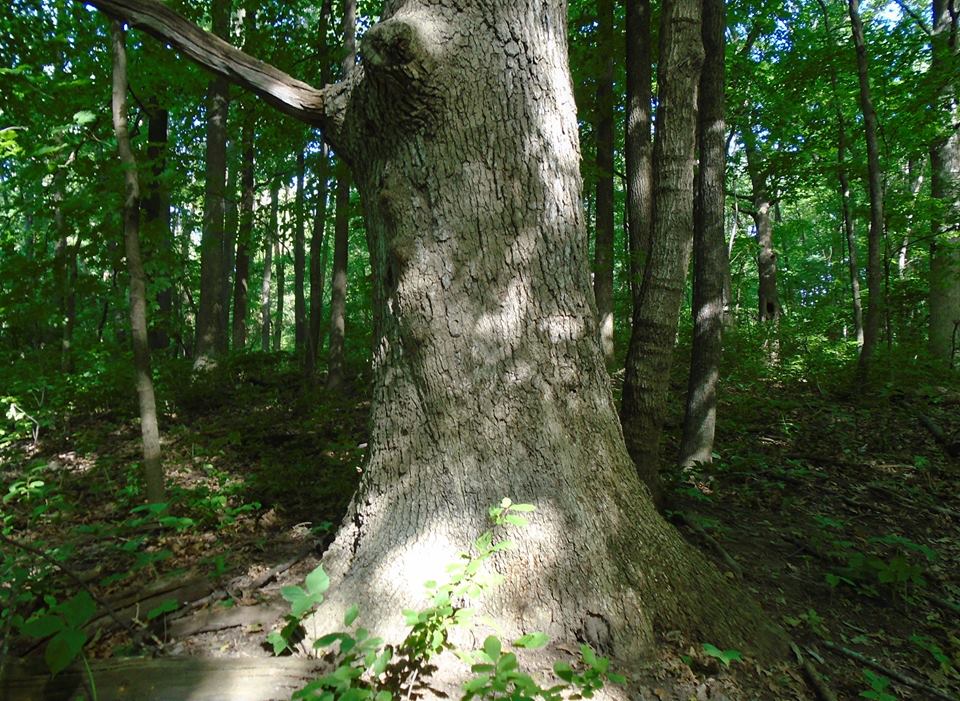
If you look closely, you can see how the forest composition has been changing. There are some very old oak trees. They are probably at least 200 years old. Some look like they grew in a more open setting, since they had lower branches, but most are very tall before they branch, indicating that they grew with lots of other trees.

The oaks, however, are not the future. Oaks are disturbance dependent, since they need a fair amount of sun. Their offspring will not grow in the shade of the parents and here you have sugar maples and basswood that replace them.

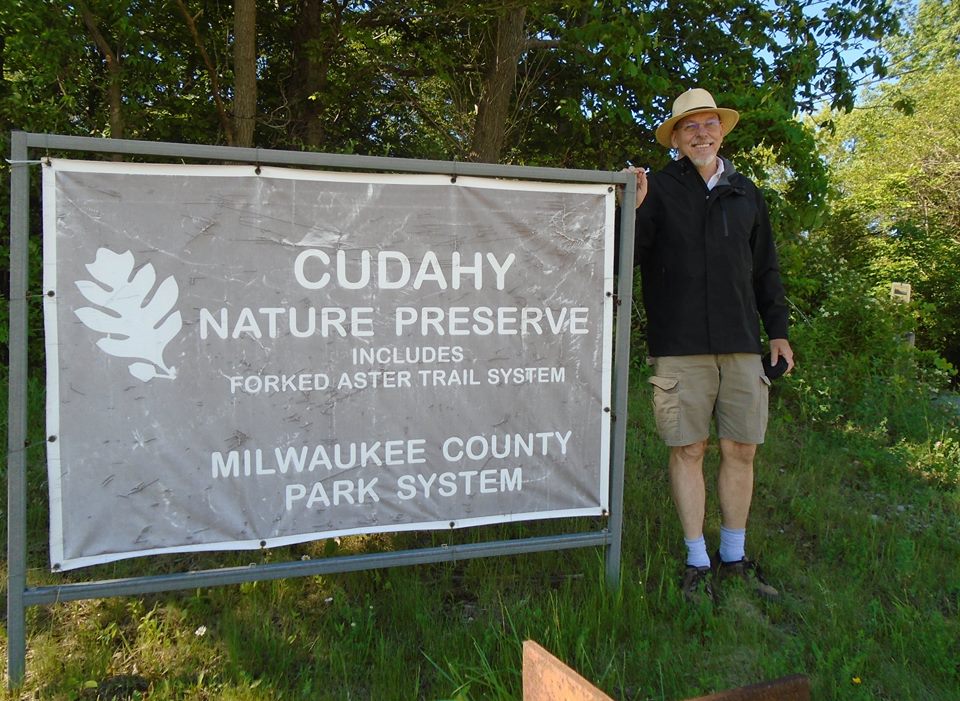
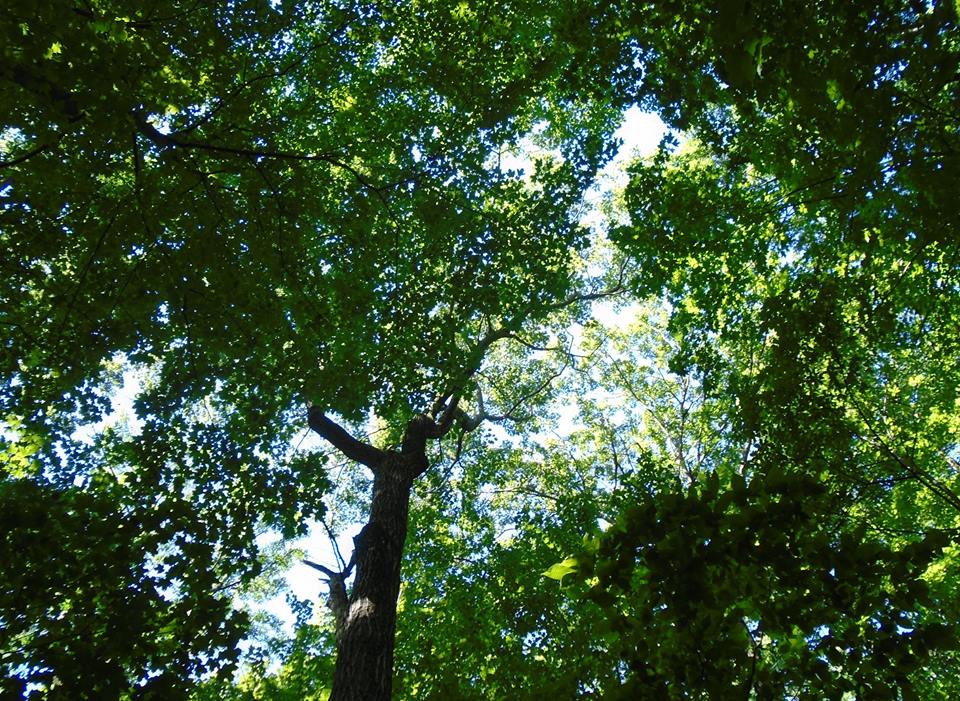
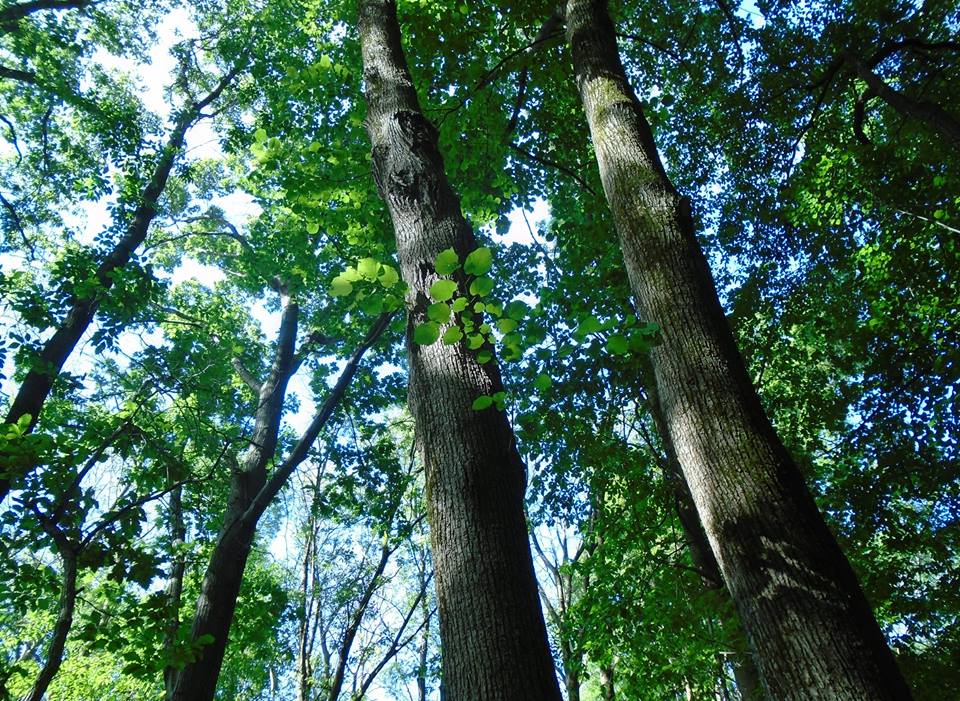
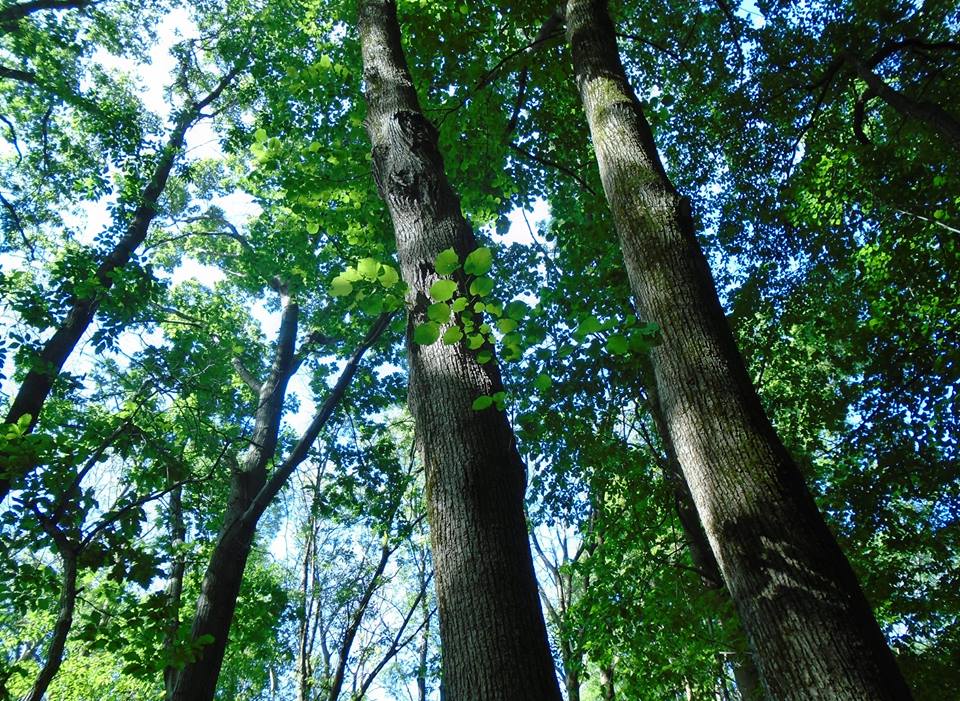
You can see that in my first photo. I saw the trunk and the bark and though “oak” but then looked up and saw maples leaves. I was confused for a second and then looked farther up and saw oak leaves. If I could jump 100 feet into the air, I would see an oak poking out above a sea of maples. The next photo shows some very big basswood trees. They are part of what we used to call the climate community. Basswood and maples will dominate this site until disturbed, since their seedlings can thrive in the shade. The third photo is one of the old oaks that I bet grew up in a much less dense forest, maybe a field. Last is me by the sign for the nature preserve.


Kettle Moraines
Continuing some observations from yesterday’s wet walk around Mauthe Lake. One thing I like about the walk is the constancy of the biotic communities around the lake; another is the constant change. It seems like a contradiction that both can be true at the same time, but that is how natural systems work.

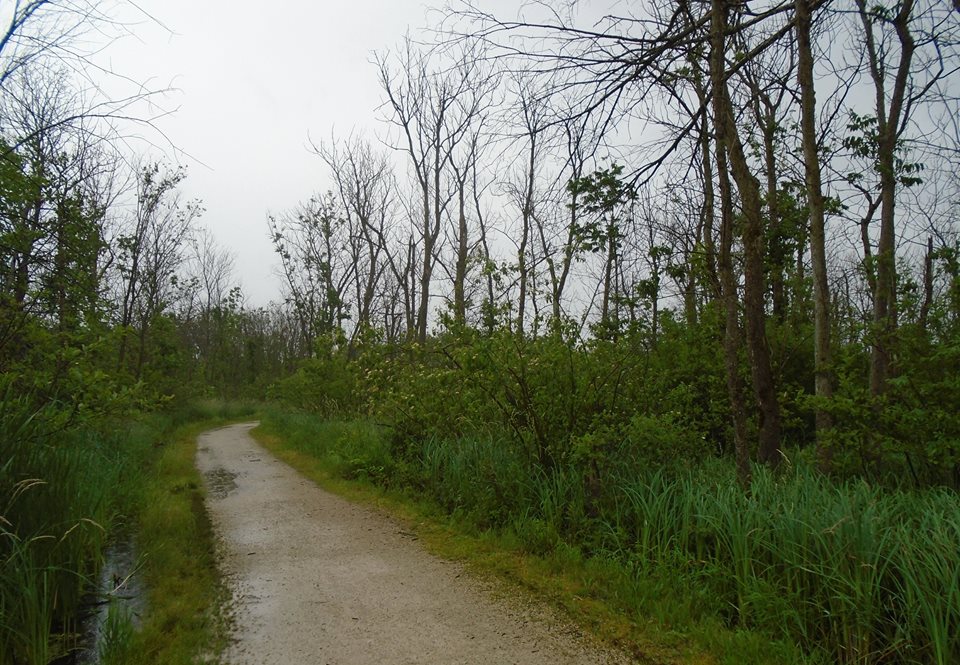
One change I do not like is the death of the ash trees. I noted last time that the ash were still alive. Invasive emerald ash borers evidently arrived in sufficient numbers to change that. I wonder how the damp, but not wet, land near the lake will change.The ash grew well in this environment and changed it by their growing, pulling up water and transpiring it. Will the damp-land become wetland now that they are not doing that? Will the damp forest become more marsh-like. Or will some other sort of trees take up the slack from that niche? There may adapt some natural control. Emerald ash borers eat only ash. They have now eaten themselves out of a home, although I am sure there are residual populations lurking around. Maybe local birds and frogs will learn to like the taste of ash borers and they will be transformed from an existential threat to a mere local menace, maybe just a nuisance, or maybe human effort can extirpate them. Hope.

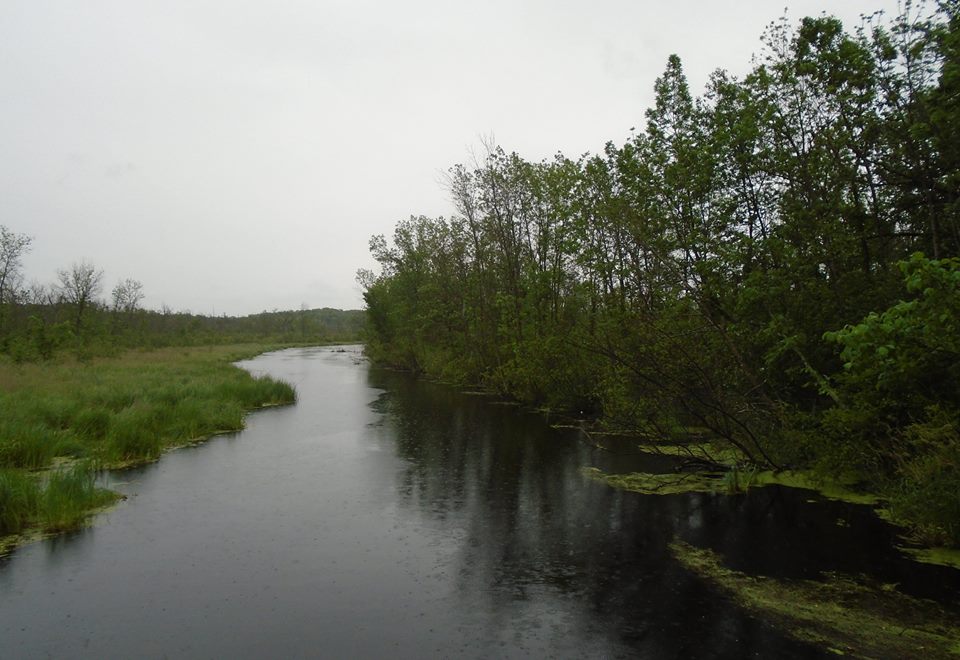
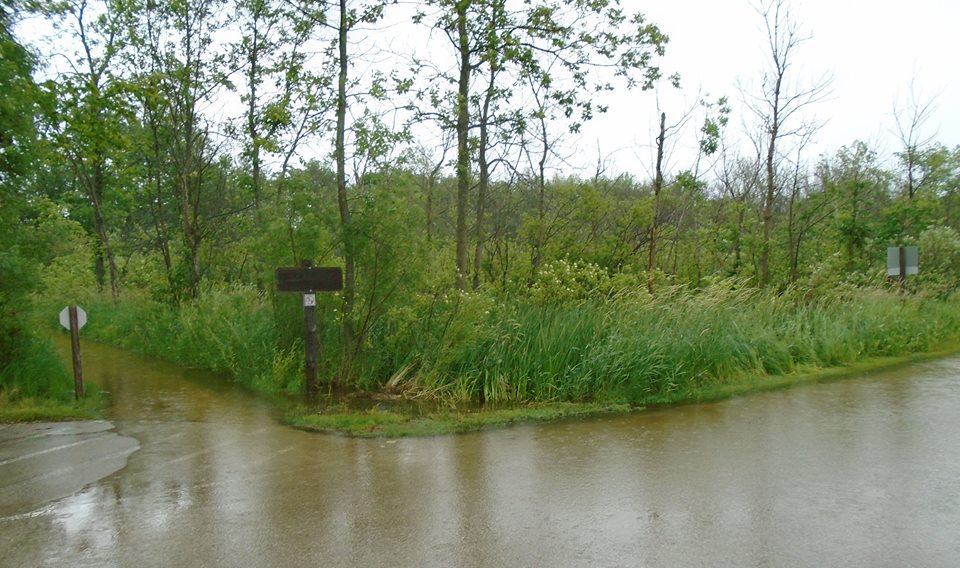
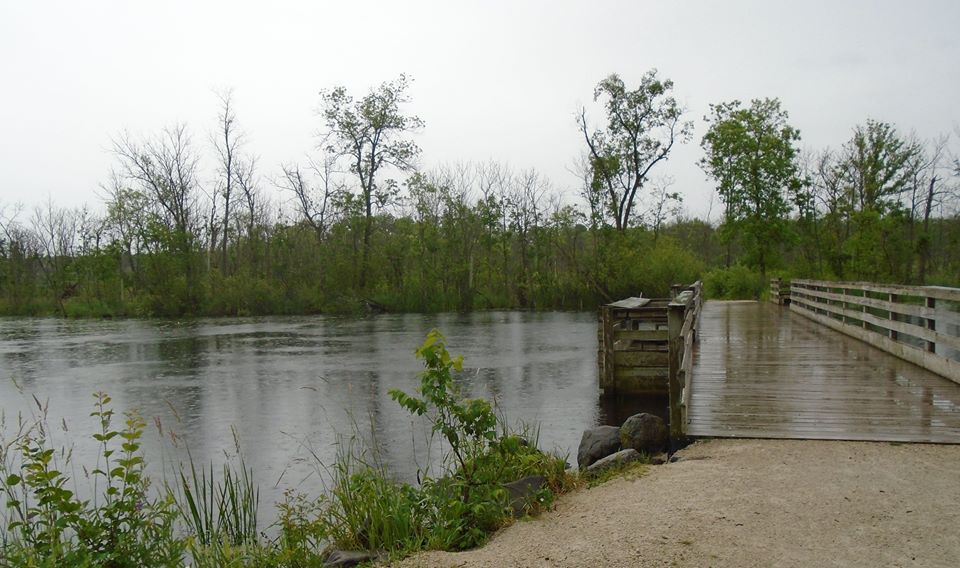
Mauthe Lake represents the headwaters of the Milwaukee River. The official source is nearby Long Lake, but it flows through Mauthe. The river was high, as you can see from my photos.

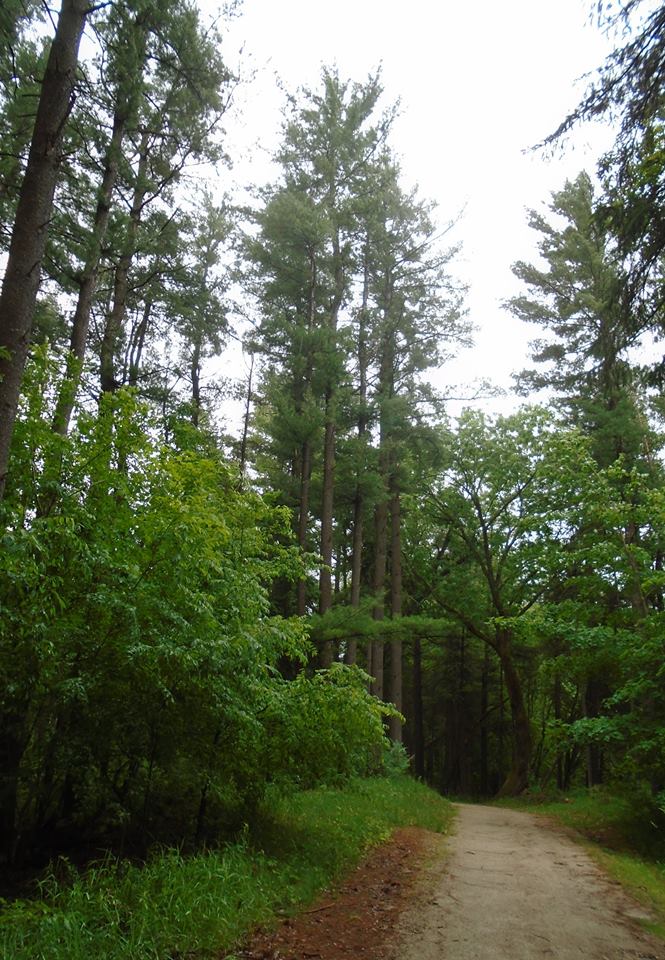
My first picture shows a nice stand of white pine along the path. They are probably (only a guess, I was unable to confirm & if anyone knows better let me know too) seventy years old, planted by CCC. Next is the Milwaukee River leaving Mauthe Lake, followed by a photo of is coming in. The “river” after that is not a river at all. the left branch is the hiking trail and the right one is a bike trail. The water was shallow and warm. Last is the ghost forest of ash trees.