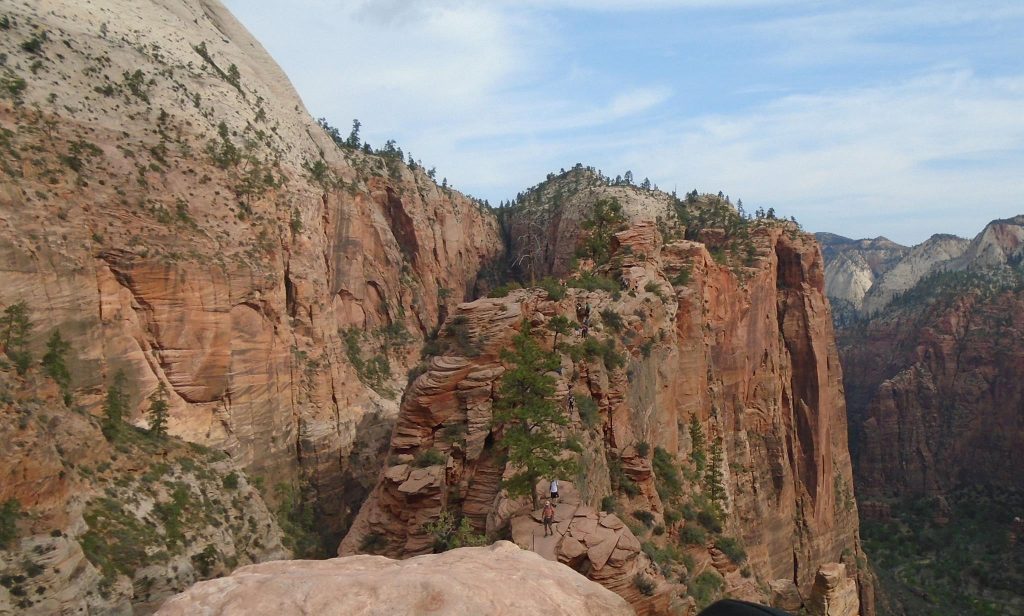
Angels' Landing in Zion National Park

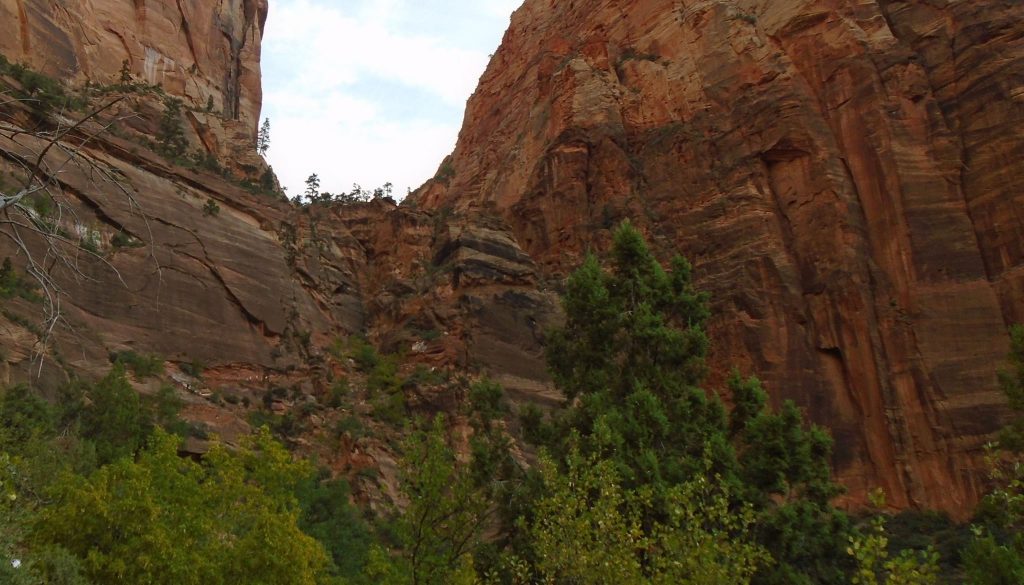
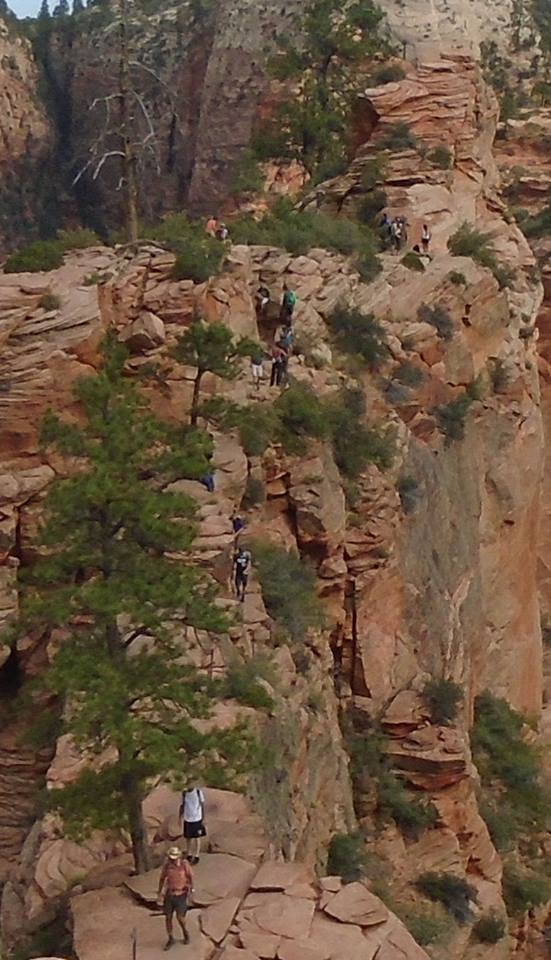
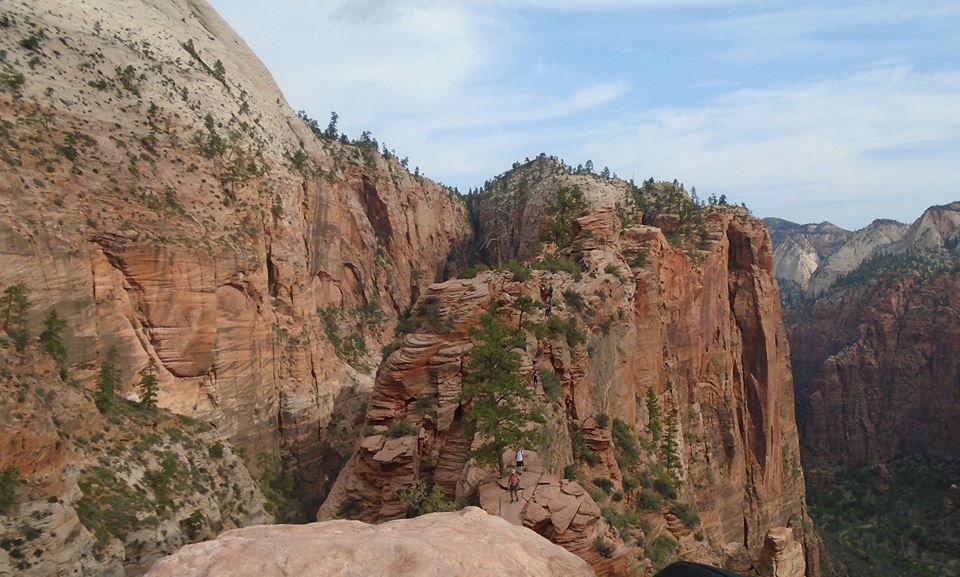
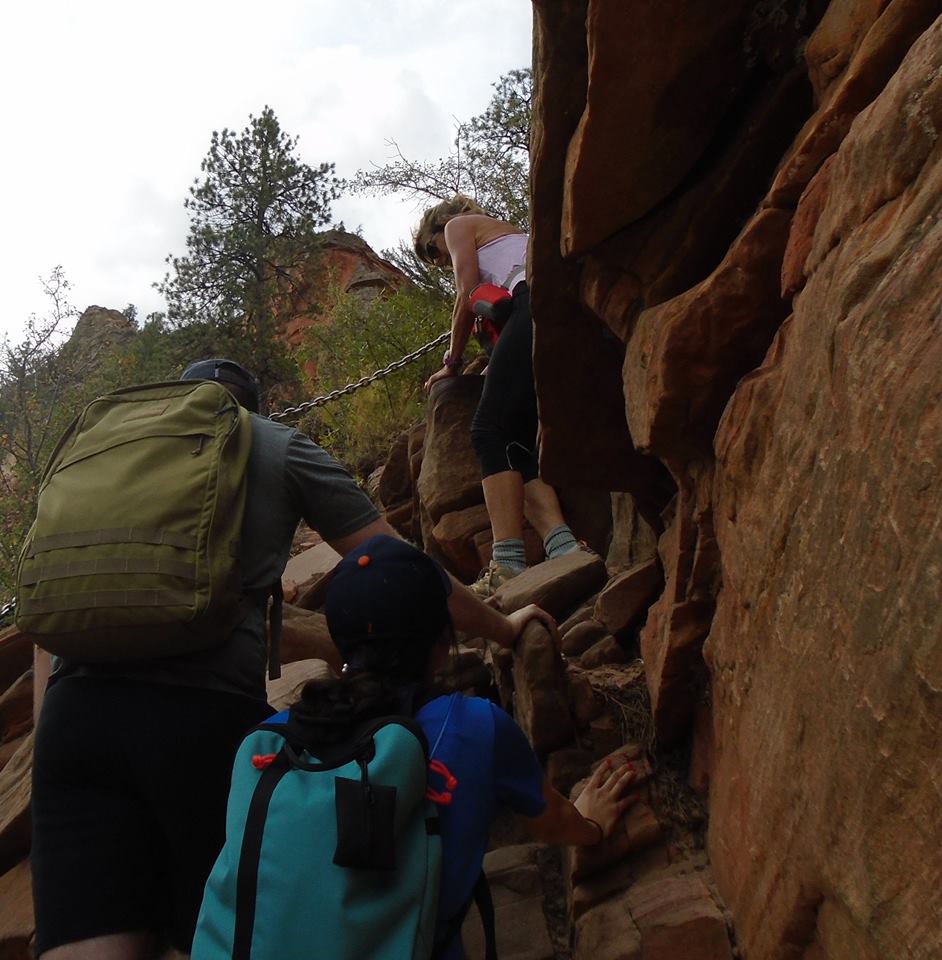
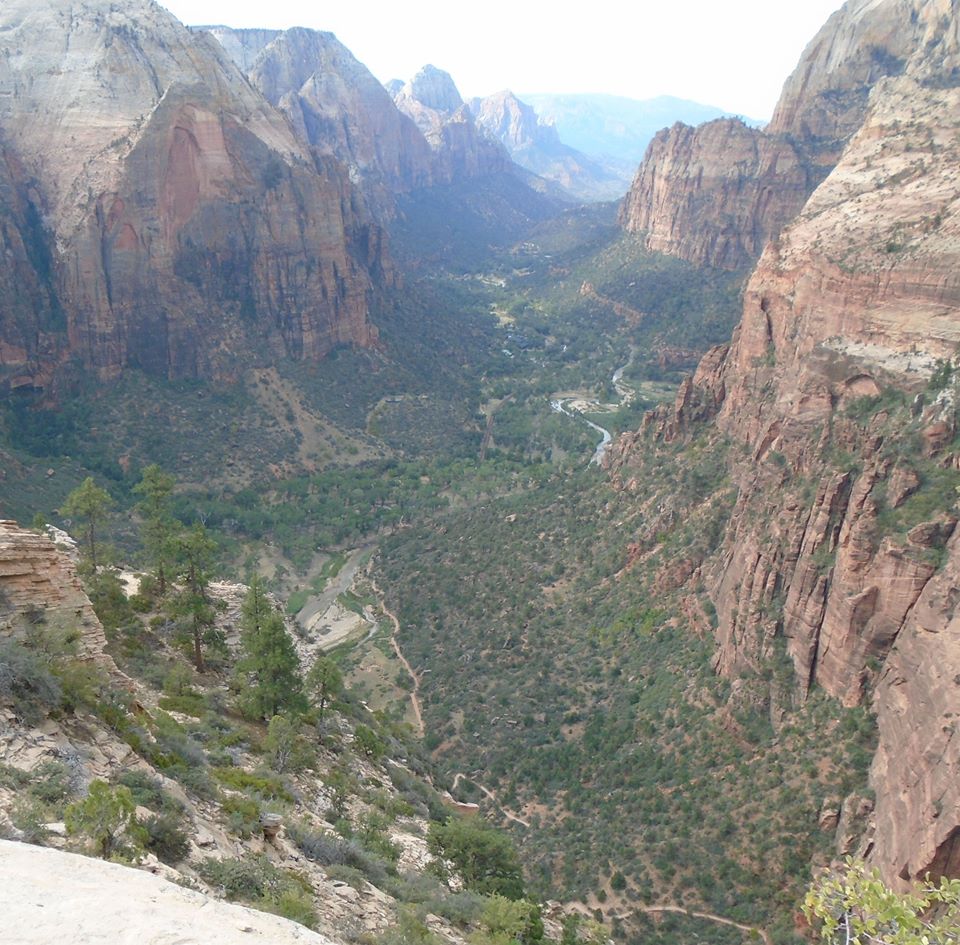
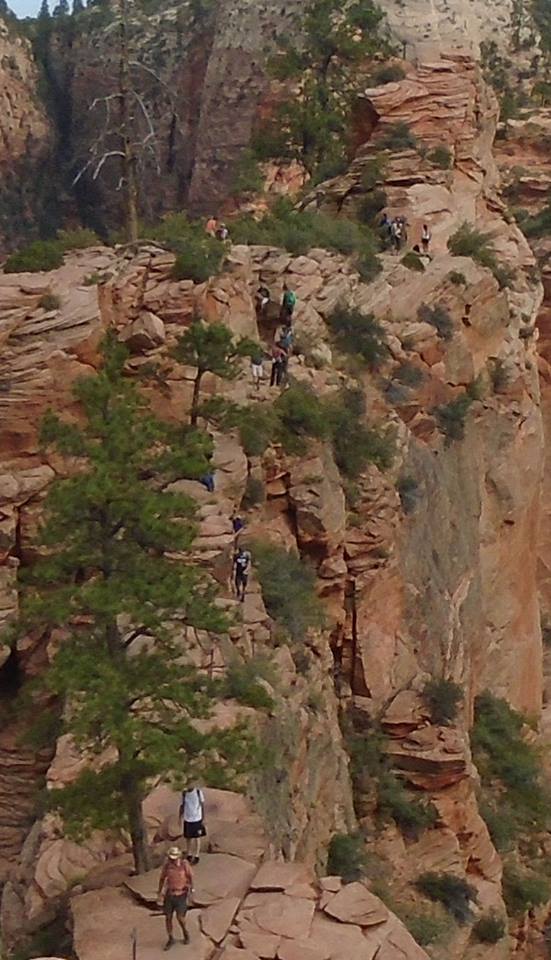
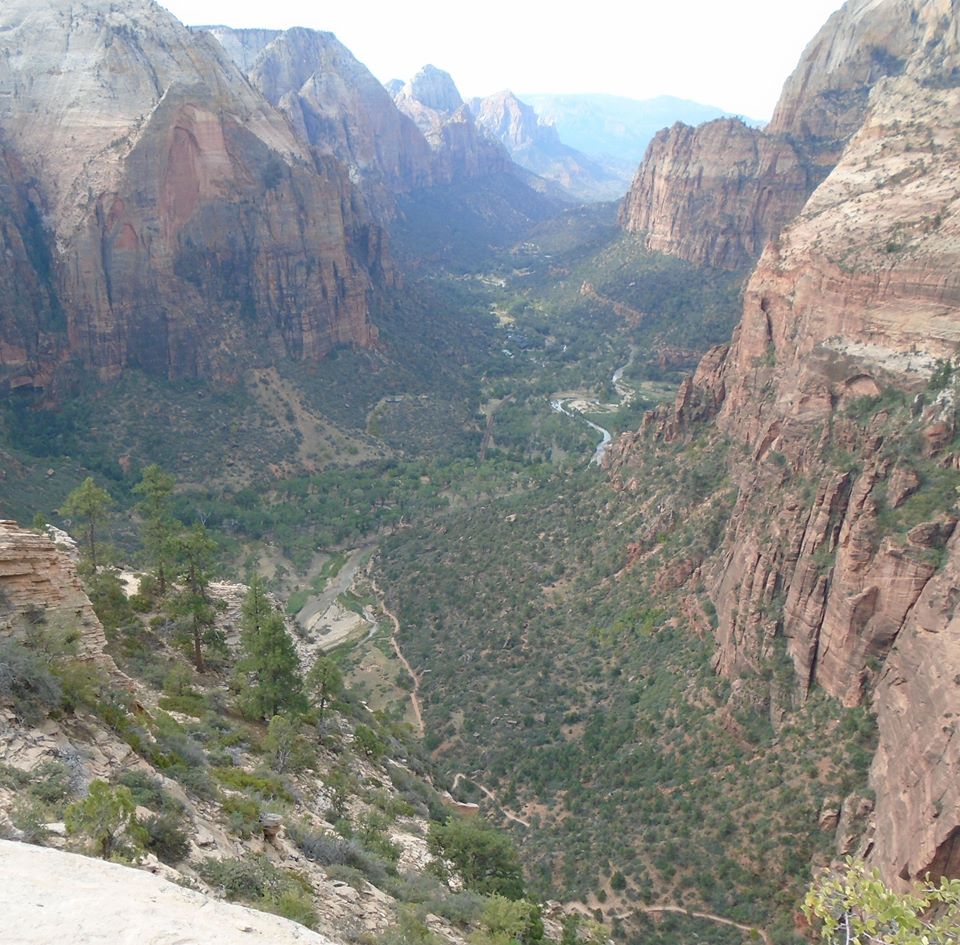
Alex and I climbed to “Angel’s Landing” in Zion. It was not a very long hike, but it is steep, arduous & scary. When you get near the top, it is impossible to climb safely w/o the help of chains anchored to the living rock. At some point there is drop off of hundreds of feet on both sides of a narrow causeway.

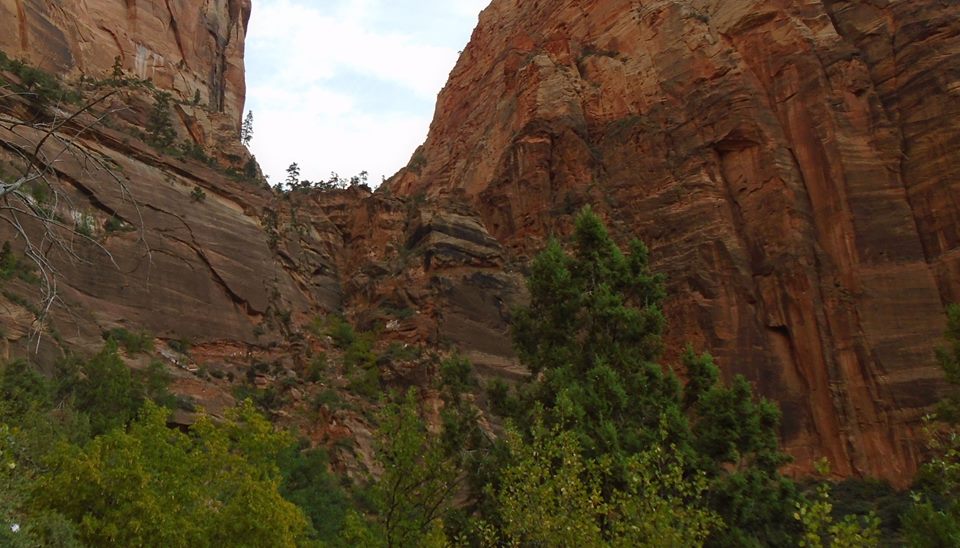
The pictures I took do not show the reality. I am not naturally afraid of heights, but I felt a little dizzy sometimes and held fast to the chains at all times.

A lot of people climb up. It takes almost an hour to climb down from the rocks to the ordinary trail, as you have to take turns and wait for people coming up, and you are packed in. It is like when they are doing road construction and traffic can move only one way. We had some pretty French girls in front of us and some nice looking American girls behind.
We were talking to the girls at one of the stops. One of them pointed out that I was an inspiration to the people coming the other way. I felt proud until she continued that the oncoming folks would feel encourage that if an old guy like me could make it, they could too. She quickly realized that she had inadvertently told the truth and tried to dissemble, but I told her that she was right.

As I said, the pictures do not do it justice. I suggest that you Google a video of “Angel’s Landing.” The video shows it better. The trail has two summits. You get up to “Scout’s Landing” and then you climb some chains and you think you are almost to the top. When you get to the top, you see there is much more, as you can see in the first photos.
Around Utah

German bakery in the high desert
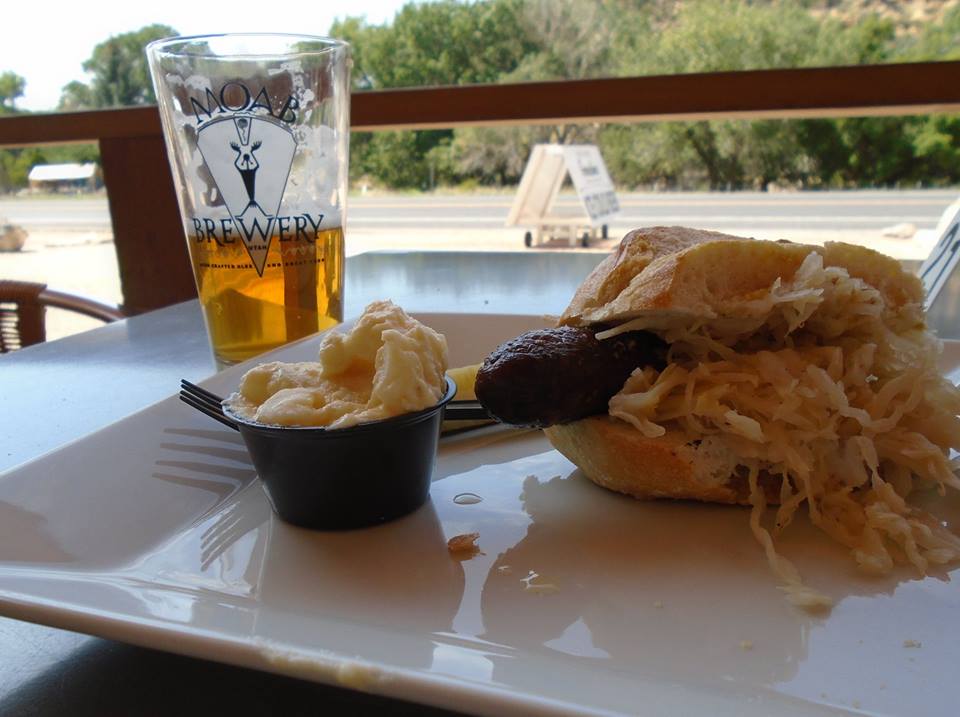
Had lunch at a German bakery. They had a nice set up. We had brats and beer. Just like Germany, except different geography, drier conditions, much lower population density …

Fixing the tire
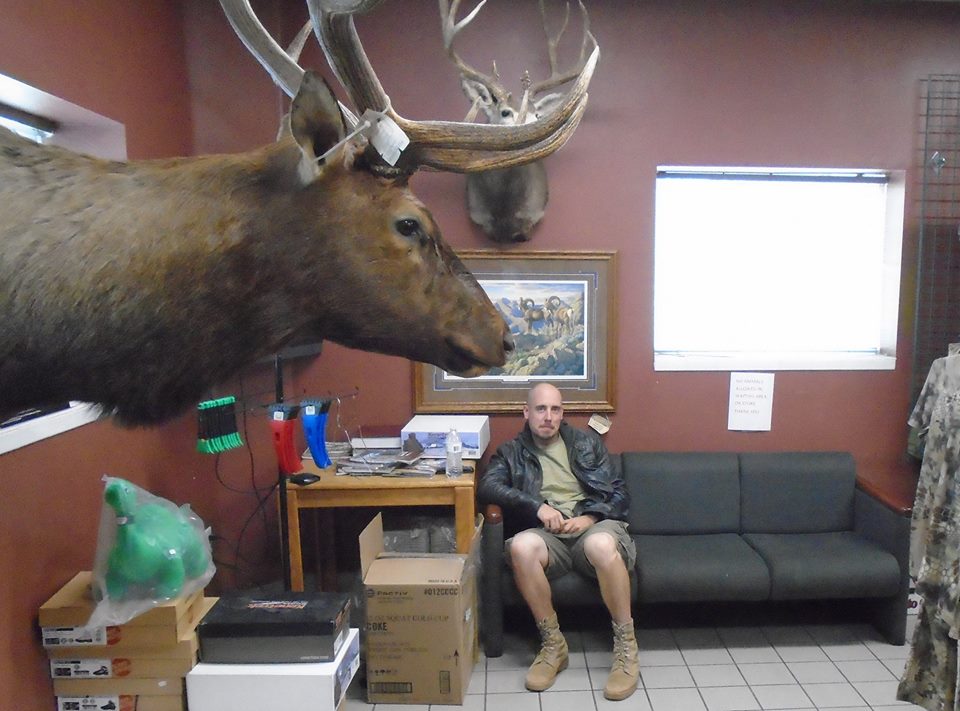
We got a slow leak on one of the tires. Lucky we found a place to fix it. You can see the shop waiting area with the big elk. The guys evidently liked hunting. The waiting area featured lots of mule deer, a pronghorn and a bighorn sheep.

Desert rain
After visiting Bryce Canyon, we had a short but very intense summer rain storm. It was over in about ten minutes and dried out right after. There are also a few more photos of the canyon.

Beer belongs

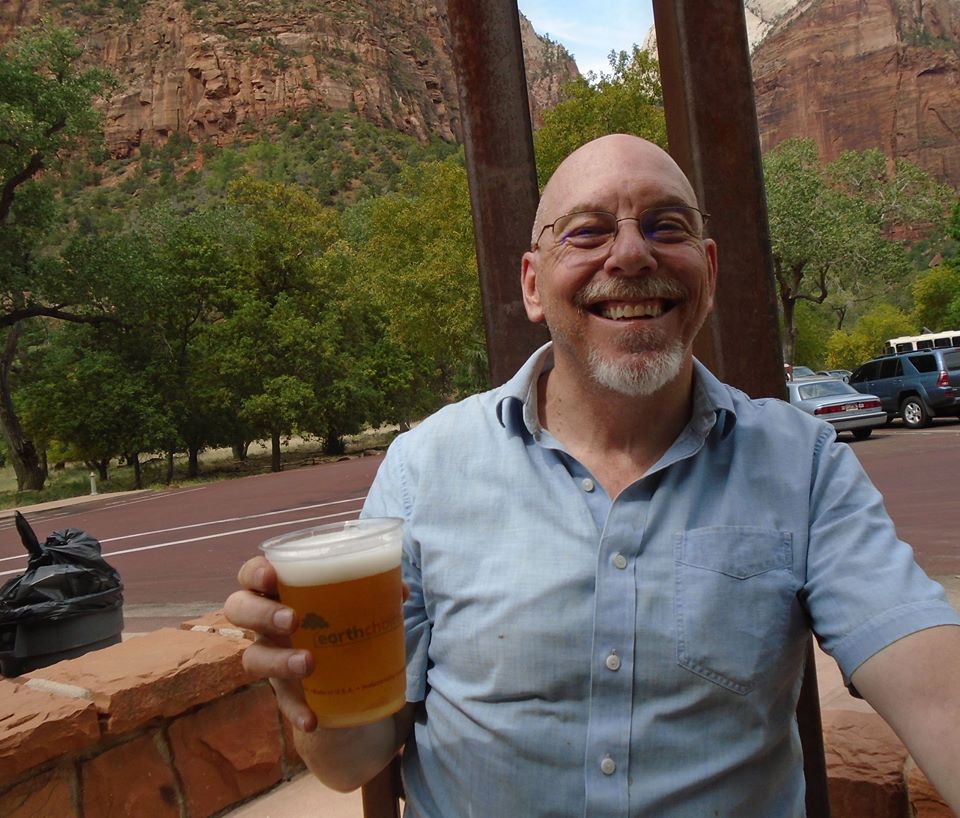
I like to think of my “natural environment” as the forests and fields, but I think it might actually beer gardens.

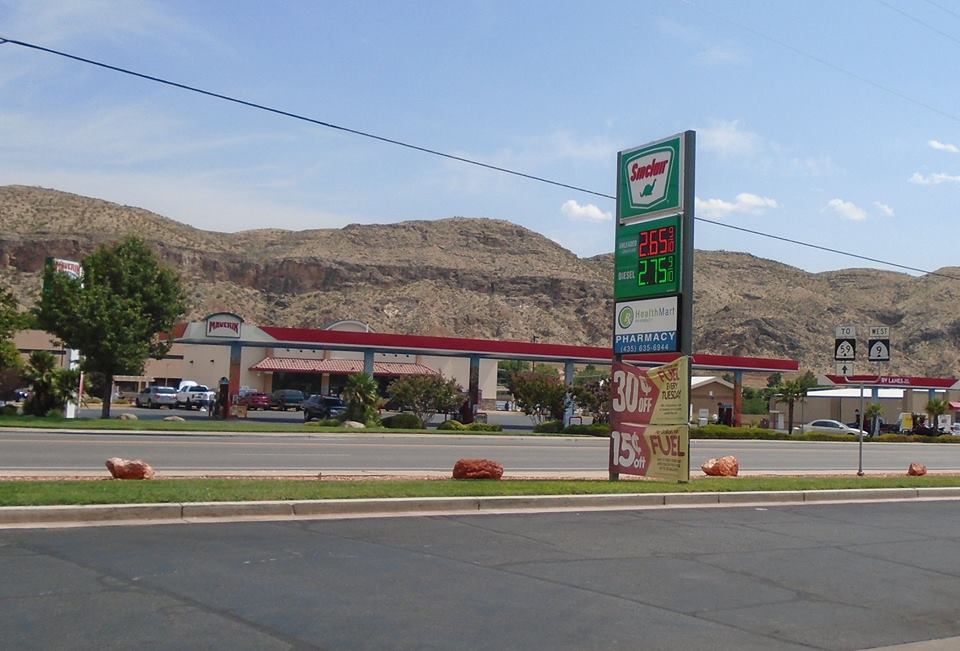
As long as I am in Utah & Colorado, I think I will transfer my allegiance from Love’s to Sinclair. I have three good reasons. First, I like the dinosaur logo. Second, when I was a kid, there was a Sinclair station on Howell Avenue near my house. Third, there don’t seem to be many/any Love’s around here.

Good mileage
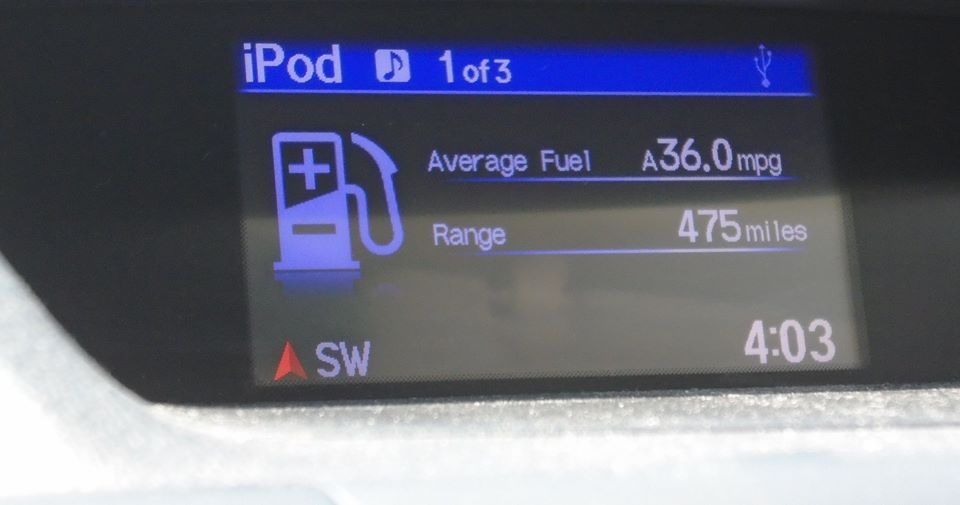
I have been getting very good gas mileage for the SUV around here. Maybe it is the “dinocare” from Sinclair. More likely, it is because I am driving on good highways, but at lower and more efficient speed.

Alex and I climbed to “Angel’s Landing” in Zion. It was not a very long hike, but it is steep, arduous & scary. When you get near the top, it is impossible to climb safely w/o the help of chains anchored to the living rock. At some point there is drop off of hundreds of feet on both sides of a narrow causeway.

Angel landing
The pictures I took do not show the reality. I am not naturally afraid of heights, but I felt a little dizzy sometimes and held fast to the chains at all times.


A lot of people climb up. It takes almost an hour to climb down from the rocks to the ordinary trail, as you have to take turns and wait for people coming up, and you are packed in. It is like when they are doing road construction and traffic can move only one way. We had some pretty French girls in front of us and some nice looking American girls behind.

We were talking to the girls at one of the stops. One of them pointed out that I was an inspiration to the people coming the other way. I felt proud until she continued that the oncoming folks would feel encourage that if an old guy like me could make it, they could too. She quickly realized that she had inadvertently told the truth and tried to dissemble, but I told her that she was right.

As I said, the pictures do not do it justice. I suggest that you Google a video of “Angel’s Landing.” The video shows it better. The trail has two summits. You get up to “Scout’s Landing” and then you climb some chains and you think you are almost to the top. When you get to the top, you see there is much more, as you can see in the first photos.
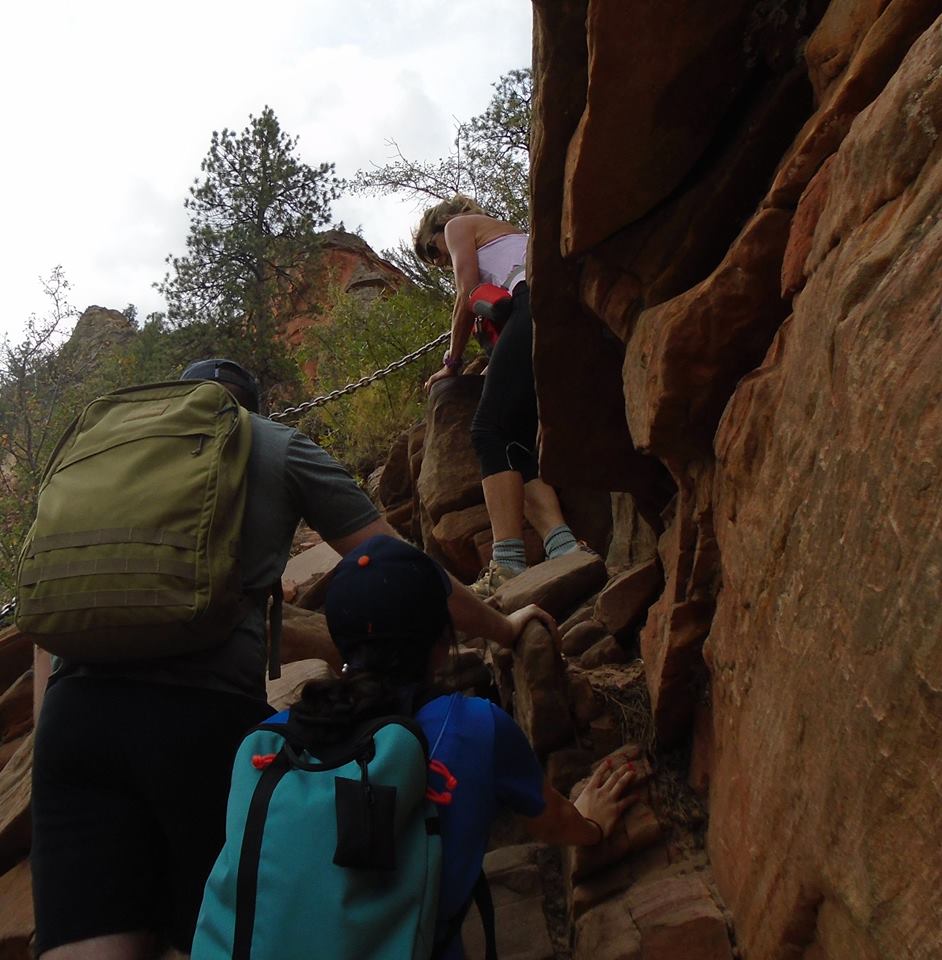
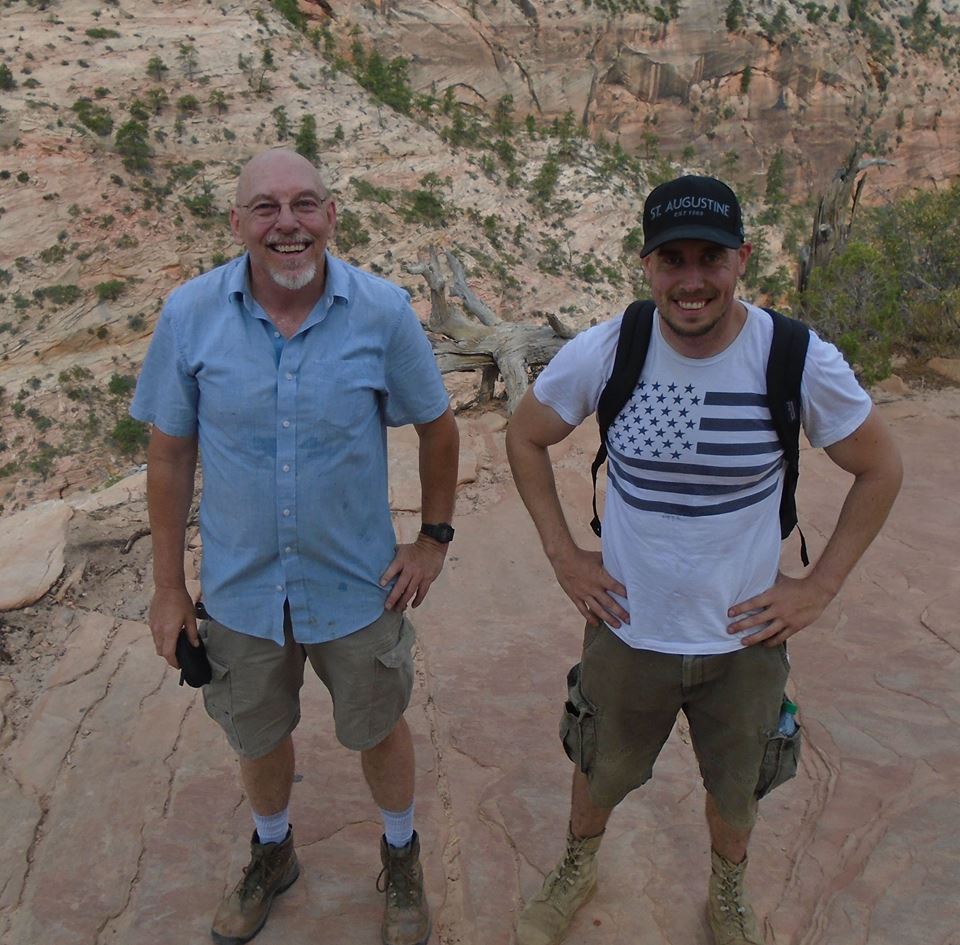
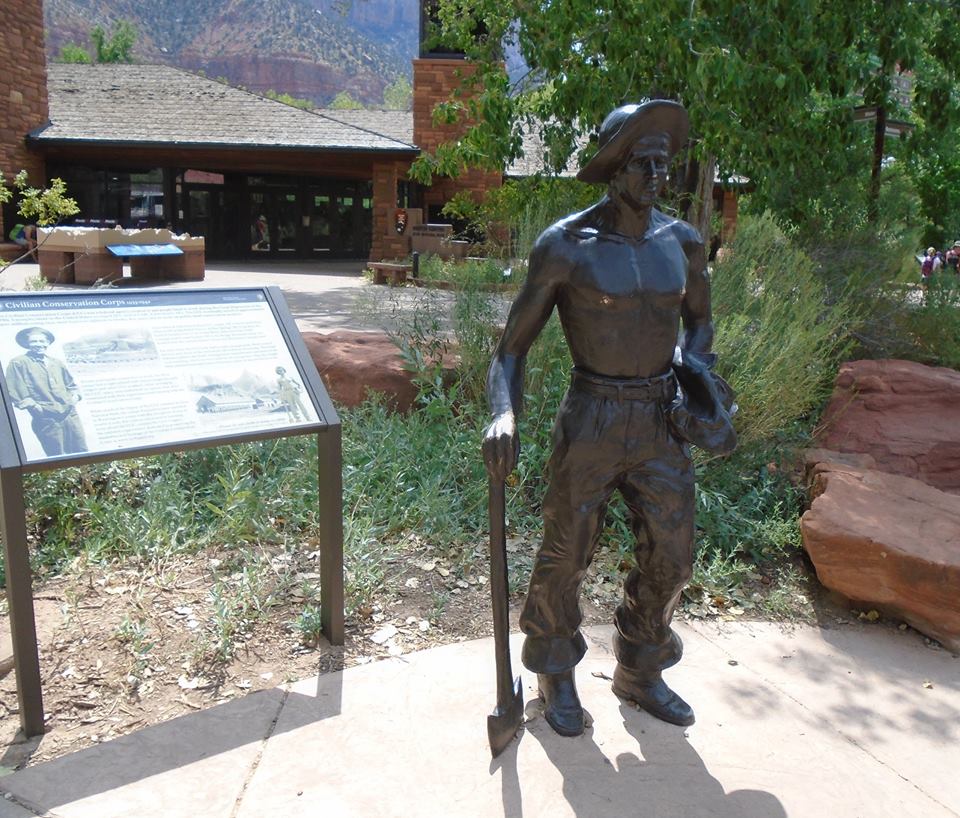
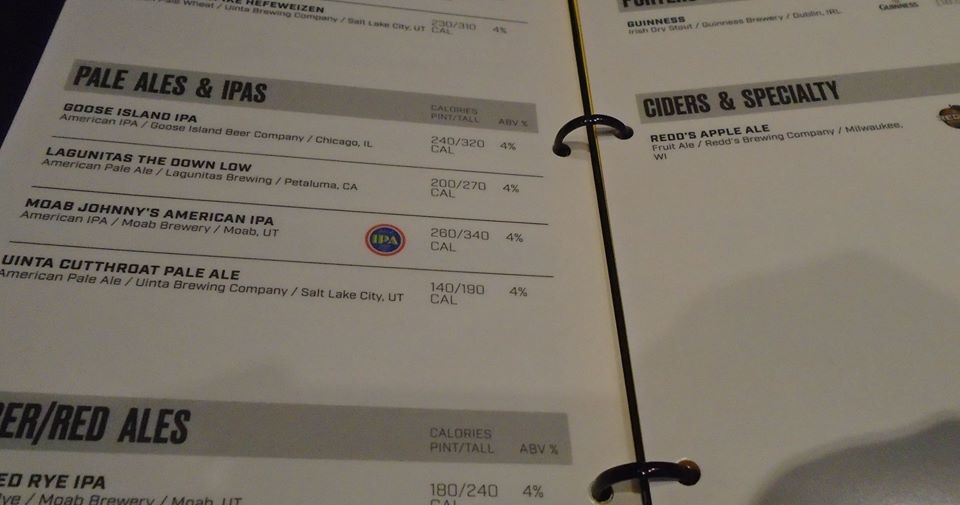
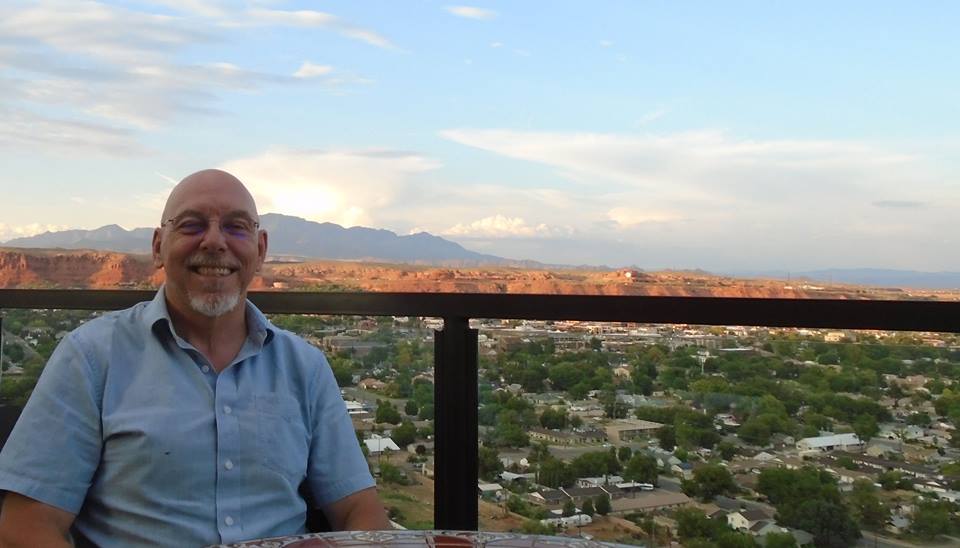
Last pictures. First is Alex and I near the top of the Angel’s Landing climb. Next is a monument to the CCC boys, who did a lot of work in Zion. After that is Alex’s supper and finally the beer menu. Evidently, beer can be only 4% alcohol in Utah.

Bryce Canyon

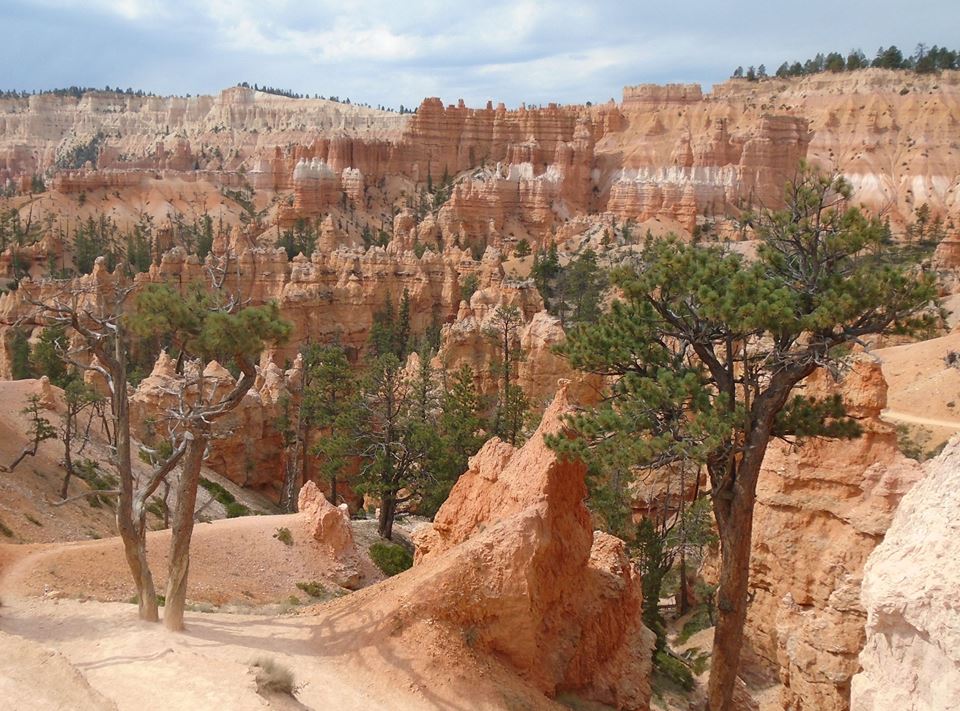
Bryce Canyon is very nice, but more a theme park than a wild place. Alex and I went down into the canyon for a short hike. It was pretty easy until the last part.
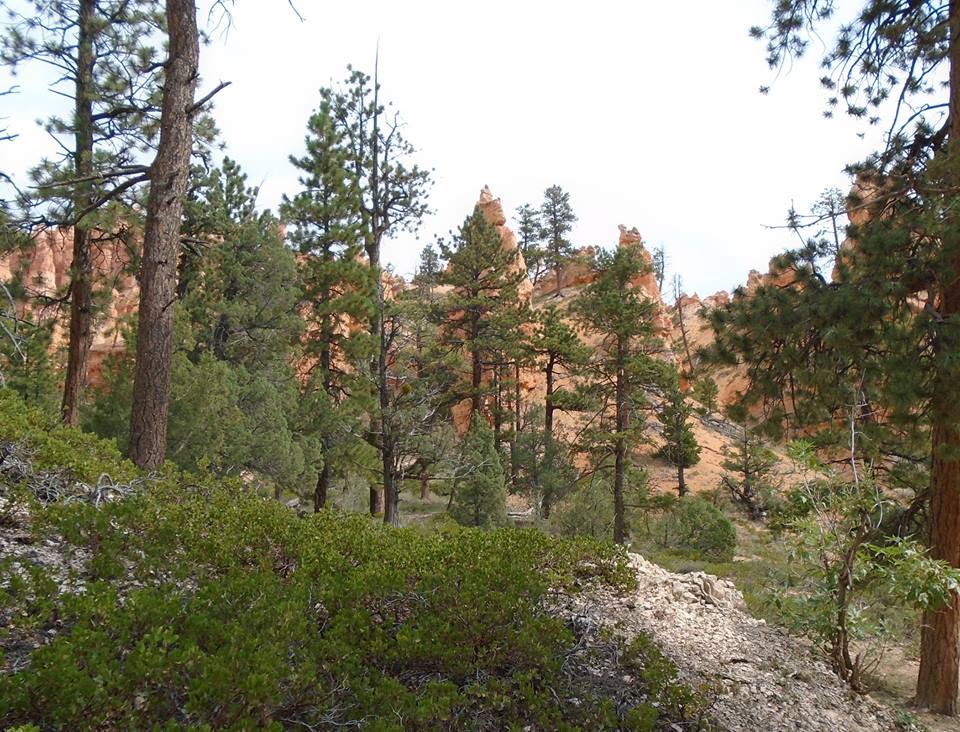
It reminded me of some kind of science fiction movie, with people trudging up to some high goal. You can see this on the first picture. Next shows some big trees in the narrows. You wonder how they got their starts, but they are impressive. Next two are Alex and me. Last is Alex with some big old ponderosa pines.

Hiking in the high and dry

Stopped off at the John Wesley Powell museum in Green River, UT. Powell explored the Green and Colorado Rivers in little wooden boats. It was a different experience than people today get going down in rubber rafts.
The museum was small but interesting. One of the corny – but effective – tricks was talking manikins. Their eyes, mouths and arms moved. In Powell’s case arm, singular, since as the robot explained, he lost one arm at the Battle of Shiloh.
Powell is known, if people know him at all, as an explorer. He was also a great naturalist and an anthropologist, and he was a proto-ecologist.  The science had yet to be developed, but Powell described the relationships between biotic communities and factors like soils and water.
Hiking on the high and dry BLM land
We got up at the smudge of dawn so that we could avoid the 100-degree predicted heat. We could not go earlier since I was afraid to drive on dirt paved Hole in the Rock Road. It still took us more than an hour on more than 40 miles of bad road, but Alex had a particular place he wanted to be. There seemed to be several similar walks into the void along the way, but I deferred to his wishes.
It was not that bad. I went along to the edge of Coyote Gulch, at a place called Jacob Hamlin Arch. It was cool in the morning and although it got up to 94 degrees before we got back at about noon, it was the proverbial “dry heat” and not as hard to take. Still, even in the “dry heat” I was dripping sweat. I brought along the requisite four liters of water, but drank only one 12oz bottle and I forced that down. I don’t really like water. It is plain. Back at the car I had an ice chest full of Coke Zero, so I figured I could wait and I did. I think this whole hydration thing is overrated. If you are out for only a few hours, you can make do. Those guys at Gold’s Gym with their bottles of water are silly. Get a drink from the bubbler before and after, but you don’t need to slukke down during the workout.
This was a sojourn on BLM land. BLM land is NOT a park and NOT developed with trails, but it was not hard to follow the way. Generations of hikers had set up cairns, piles of rock that you can follow from point to point. Still, this kind of system makes me nervous. There is a lot of territory out there and if you miss one of the connections you could find yourself far away from where you hoped to be.
Alex was confident. He does some sort of orienteering contests with his infantry unit, but I was less than eager to bushwhack through those prickly bushes and up and down steep rock faces. I figure that if there was a better trail somebody would have found it by now. So, I keep to the cairns.
Generally, I have found it advantageous to follow water courses, Around here they are dry and nice paths. Water is even lazier than I am. It seeks the path of least resistance and tends to wear down the sharp and jagged. The way down for water is often the easiest way to get up the rocky rise for humans.
As you see in the picture, I use the ski-style walking sticks. They are wonderful for climbing and crossing rocks. I observe that most people use them incorrectly. I you are pressing straight down, you are doing it wrong. What purpose does that serve? The point should usually be behind you. You bring the stick up to the lead foot and then push from there. You put them in front when going up a big rock or when going down you hold them by the end. They are great for balance. Four legs are more stable than two and you can use the sticks to test the ground in front. Don’t leave home w/o them.
Remember the wisdom: four legs good; two legs bad.
My first picture is four-legged me. Next is Alex on the ridge, followed by a cairn and the arch. Last photo is the crossroads of nowhere.
Prehistoric graffiti

Final post before bedtime. We had lunch at a nice place. Again, we had pizza and again the pizza was unremarkable, but the ambiance was great.
The penultimate photo shows Alex looking at petroglyphs, a kind of prehistoric graffiti. Ironic that all around are signs warning people of the dire consequences if they create any graffiti of their own. I wonder if they ancient authors got in trouble with their parents. The last photo is Alex with the giant lizard. I guess that is sort of the local mascot. The real ones are smaller.


High deserts and old rocks

We drove across the narrowest ridge highway I ever used. The picture does not do it justice. There was sheer drop on both sides for much of the way. You can see Alex standing at the edge and I stuck my foot out over the chasm for illustration. On top of it all, it was windy and steep.
Spent much of the day living in the past – the deep past. We started on the trail through time, that went past a dinosaur quarry. They found lots of fossils and some are still there. Alex is pictured with the diplodocus vertebrae. It was a generally peaceful walk.
We also visited a petrified wood park. The fossil trees were like the Araucaria angustifolia I so loved in Brazil, at least that is what they picture showed. You can see what remains of it in the last photo.
Utah in those days was not the dry desert of today, but rather a lush subtropical forest. Deep time.

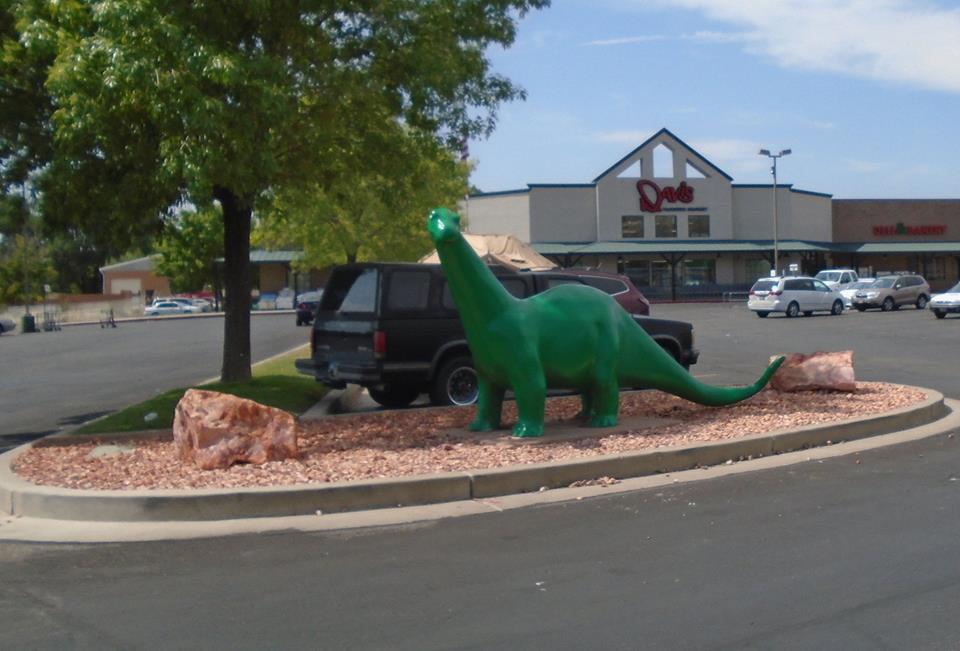
Speaking of dinosaurs, we filled up at Sinclair.

Ponderosa pine

The ponderosa pine ecology is certainly one of the most pleasant in the world. It is a fire dependent landscape. The ponderosa pine system burns less often than the longleaf, but it is still meant to burn.
They manage the Dixie National Forest well with fire and according to the sign have been doing it for a long time. As a result, you see that healthy and diverse biotic community.
Ponderosa pine can live more than 500 years. For the first century, they have a kind of black bark, but that later turns to an orange-red, so if you see a ponderosa pine with this color bark, you know it is old.

The pictures show some of the open woods. What you really have in a healthy ponderosa pine forest is a forest mixed with a grassland, with all the diversity that implies. You see the desert in the background in the first three photos. The climate varies greatly depending on the weather caused by the mountain and the vegetation shows that.
Third photo shows aspen trees and finally is along the road.

On the road in Colorado 2

Alex and I had pizza at the place pictured. The pizza was ordinary, but the ambiance was great. We got to sit outside in near perfect weather with lost of nice scenery.
Alex and I had pizza at the place pictured. The pizza was ordinary, but the ambiance was great. We got to sit outside in near perfect weather with nice scenery.
 

On the road in Colorado

For Christine Johnson – sunrise on farm credit. Share with your co-workers
They get a lot of blowing snow on these highways. To prevent that, they have ordinary snow fences and living ones, i.e. trees. They even have signs that tell you that they are living snow fences. Living – green infrastructure is better.
Colorado mountains are very nice, but there are too many “wilderburbs,” houses way out in the woods. They are great for the folks living there, but it requires more infrastructure and makes it harder to fight fires and nearly impossible to do good prescribed fires.

My last two photo are a nice lake along the road and beautiful tree and meadow.

Truman

Harry Truman was a plain guy who know next to nothing about international politics (FDR deliberately kept him in the dark) but ended up leading the creation of the most successful international system in the history of humanity.
But he knew how to let others work and he succeeded because of his great team, guys like Marshall, Kennan, Harriman and Acheson (shown below) and a generally deep bench of talent below. These “wise men” learned from the mistakes following WWI. They knew that you cannot rely on good will and idealistic talk, so they crafted institutions and structures that have lasted.

If you read the biographies, and there are many good ones, you see that these men were all flawed and imperfect, and the world they created was also imperfect, but it was better than anything else ever tried.
The sad and alarming fact is that none of these men could make it in today’s politics. Kennan was really weird. He would have been castigated as an elitist. Harriman and Acheson were really elitists in every way. (Nothing wrong with being elite if you really are better) Marshall was as near a perfect man as this world gives us, but I am sure they would have dig some dirt on him too. Truman did not graduate college and was self-taught. He came up in politics through the legendarily corrupt Pendergast machine (although he was Pendergast’s token honest man). And Harry could swear and carry on.
These men were/are my heroes. They inspired me in my diplomatic career and in life. I could not miss the chance to see Harry’s home.
BTW – one of the best biographies ever written is David McCullough’s “Truman.”

Urban forestry

We did a field trip during our urban forestry workshop to see what kind of standing timber could be made into furniture and crafts.

The thing to recall about urban timber is that its primary value is in its uniqueness. It has artistic value. This is the opposite of general timber, which is valued for being consistent. Artists and craftsmen value urban timber for its knots, twists and irregularities.
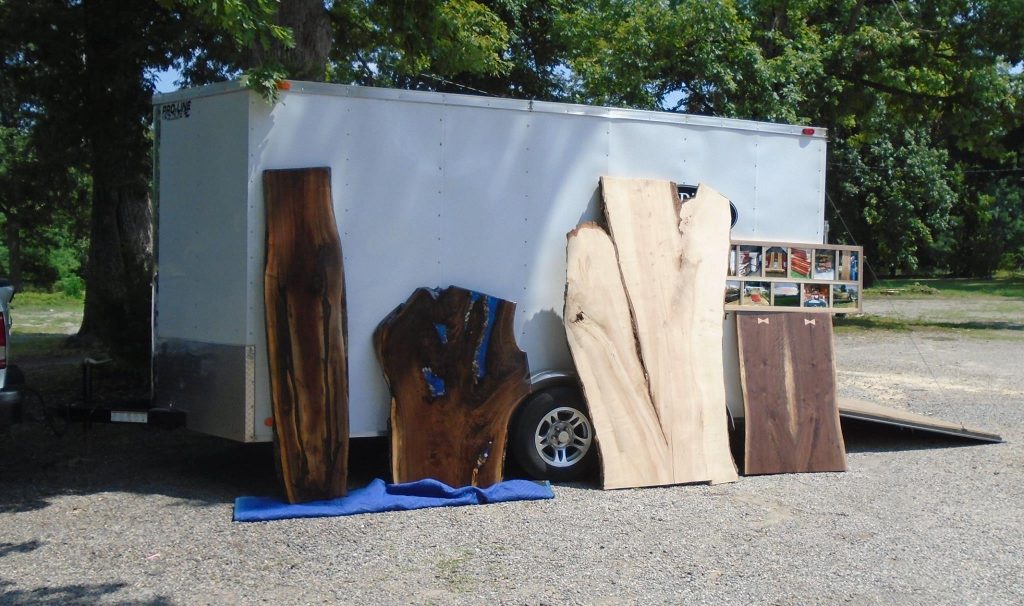
Slabs are a big part of the urban timber market. The slabs are mostly used for tables. Customers like “living edges”, i.e. the rough edge that the tree had when growing.

Personally, I dislike these things, but I am not the customer. The challenge with all unique or artistic products is that they are labor intensive. Even if the wood is free, the time it takes to get the lumber and make it into something beautiful means that there is limited potential to make a living. SOME people do, but most do not. “Don’t quit your day job” may be good advice.

I was thinking about what it means to be art, but I think the better question is what it means to be an artistic or lead an artist’s life. Sometimes the finished “art” is less important than the thought and process that the creator put into it.

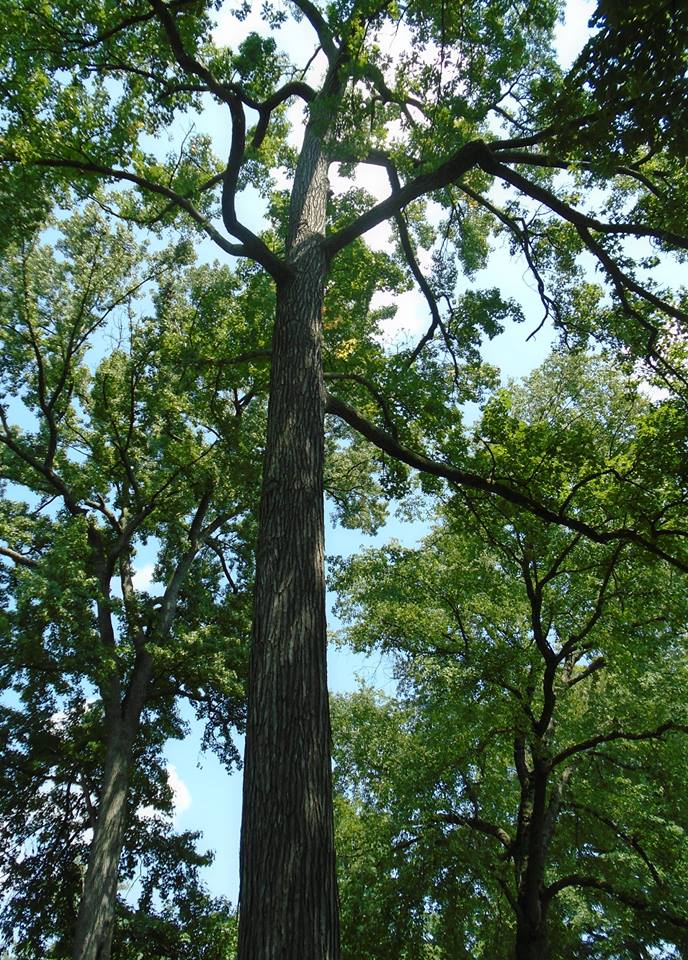
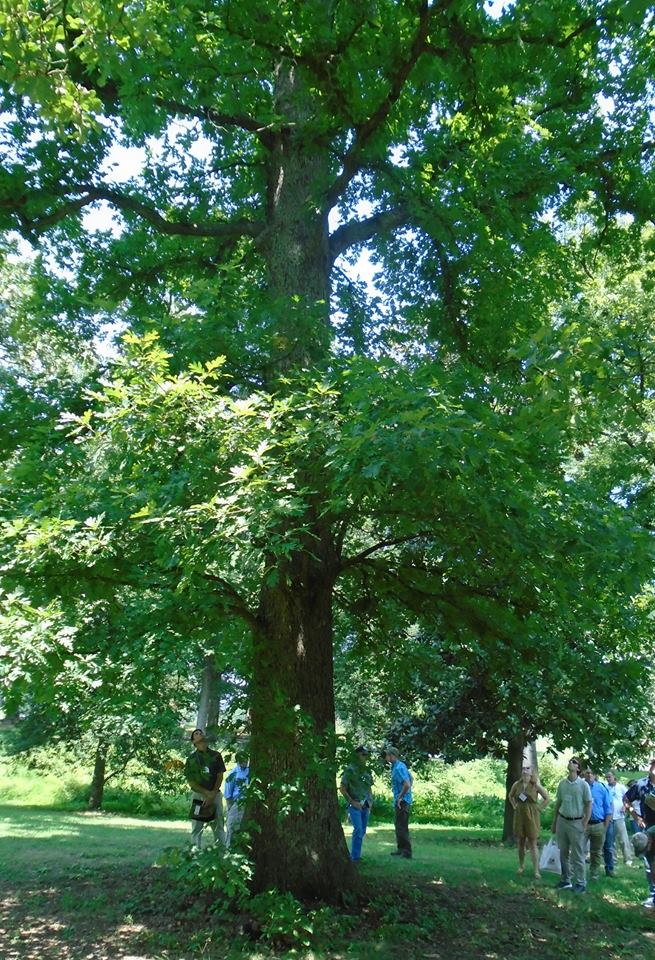
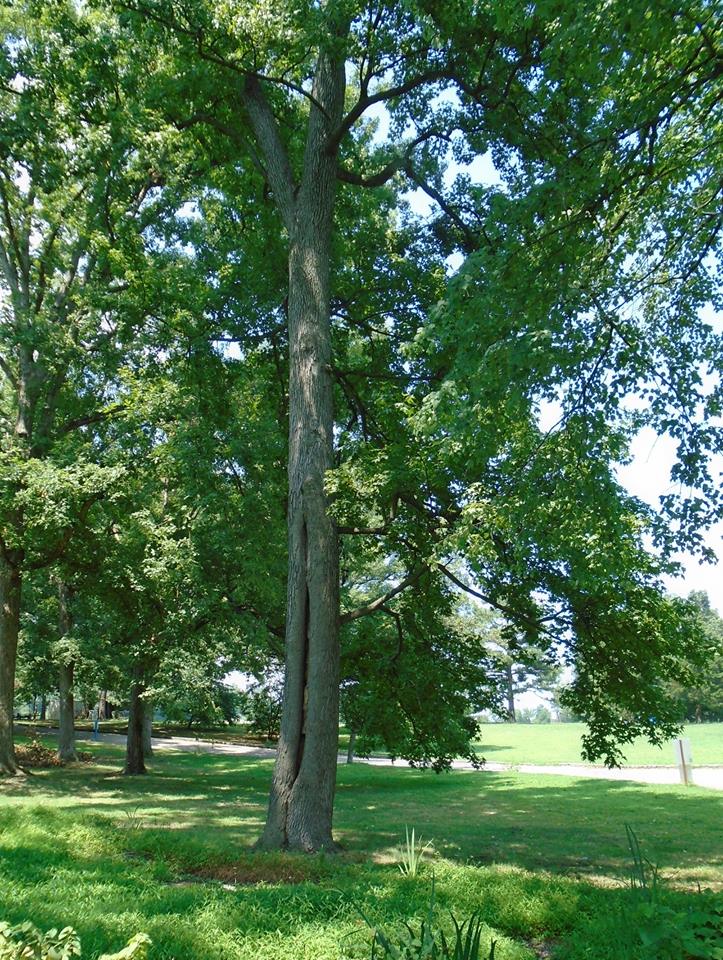
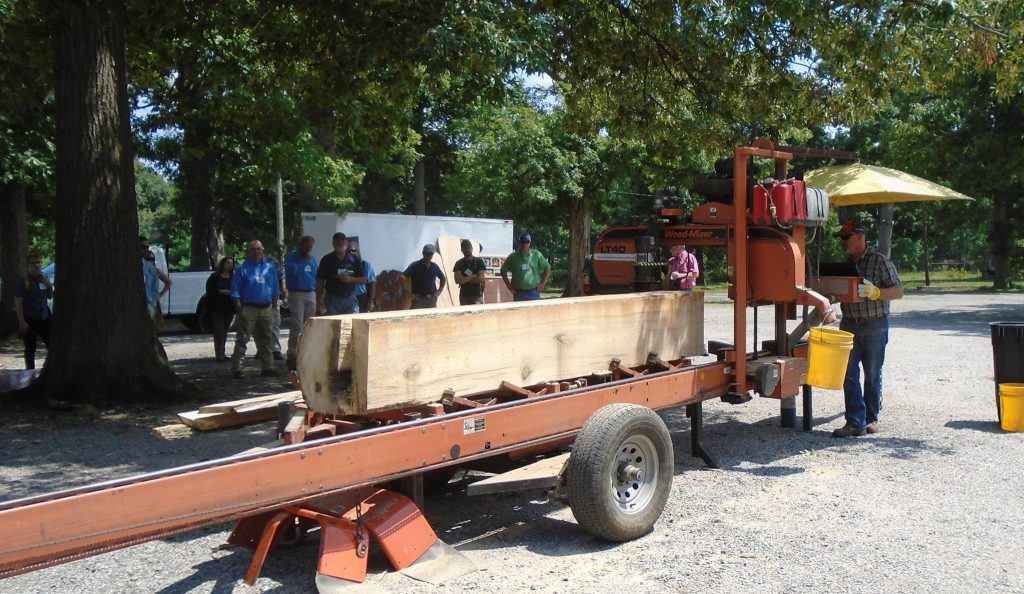
My pictures show some of the trees that could be make into artistic furniture. The first is a big sweet gum tree. This is a beautiful piece of timber, but maybe too clean to be art. Next is an oak tree with lots of branches. This would not be a great timber tree, but the irregularity makes it good for art. Then we have a tree with a recovering lightning strike. This would also produce nice shapes. The slab makers like the parts where the branches reach out. Next picture shows a portable sawmill. They can process logs on site. The machine is cutting some yellow poplar, which is not very high quality wood, but made a good demonstration. Last shows some of the slabs that might be make into tables or decorative walls.