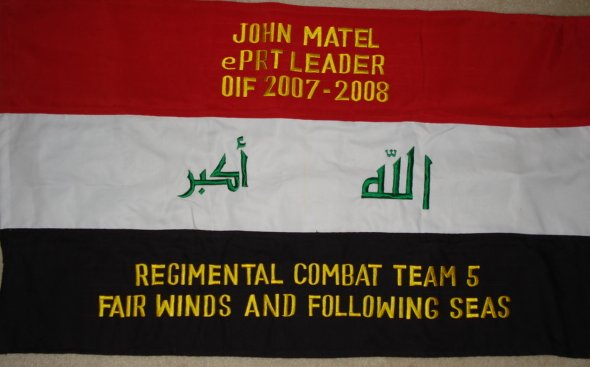
Risky Business

NPR featured a story this morning about a couple of people who were bitten by a non-poisonous snake at the Renaissance Festival in Maryland.  Stop the presses!  Unfortunately, this kind of “news” is becoming more common.  I suppose it is a kind of human interest story, but it feeds the general impression of the world as a dangerous place. 

I went down to the farm a couple of days ago.  I picked up lots of chiggers and got stung by a hornet that managed to get under my work glove.  I killed the hornet  and scrapped off the chiggers.   In the spring, I often pick up ticks.  I read in the paper that you are supposed to save the tick and show it to your health care professional.  Who goes to the doctor for a tick?  I would have to go every week and he would have a complete collection of ticks.  Are hornets, chiggers, ticks and snakes dangerous and annoying?  Yes, they are.  But you elevate them to the level of a major risk, you cannot do very much. 

When I was a kid we used to play in a swamp in back of Nordberg and Pelton Steel mills.  This was not a natural swamp.  When we followed the stream to its source, we discovered it issued from the factories.   I suppose by today’s standards, we were playing in the toxic waste dump.  That explains why the water would burn your skin a little.  We were too casual about those things back then.  But we have overcompensated and overreacted now.   Today if somebody finds a little battery acid they cordon off the area and men in moon suits go in to decontaminate it.  They evacuated a local high school a while back because somebody broke a thermometer and some mercury spilled on the floor. 

Poison is defined by the dosage.   Most life enhancing medicines and vitamins can harm or kill you if you take too much, which means that most – in the wrong dosages – are poisons.  Many things have threshold levels.  Below a certain level, they are harmless or even helpful; beyond it they are dangerous or deadly.  We too often make the error of extrapolating that if something is dangerous in quantity even a little must be harmful.   This is wrong. For example, arsenic can occur naturally in spring water.   Arsenic is a deadly poison, but you can drink this water your entire life w/o suffering any consequences.  If you really analyzed it, almost everything we eat and drink is full of poisons.  Plants evolved with them as a means of defense.  We tolerate or even benefit from all those chemicals found in apples or pears. 

As our ability to detect risk has improved, we have become a little hysterical about it and have begun to avoid low probability risks to the extent that it impacts our fulfillment in life.  Ironically, our risk aversion creates a whole new set of risks.
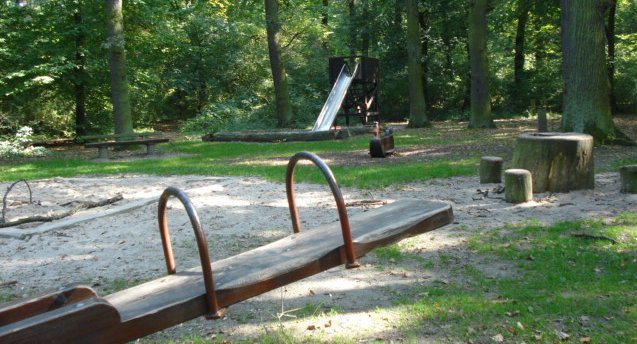
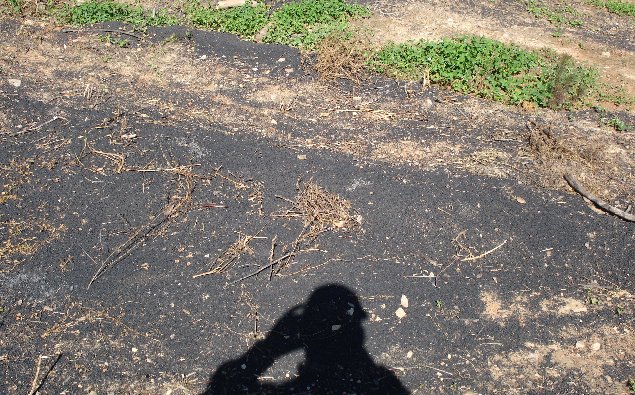
I took this picture in Germany.  They still have the old stuff sometimes.

Take the example of playground equipment.   I don’t see how kids can have much fun at the playground anymore.  Everything is low down, easy to climb, slow paced or stationary.  I remember the high metal slides that burned your ass on a hot day or those merry go rounds that you could spin so fast.   Teeter totters?  They are gone.  So what happens?   Some kids push into even riskier things.  Most just learn to sit around and get fat playing video games.   In the long run, you are a lot better off breaking a leg when you are eleven than staying fat your whole life.  Which risk would you prefer?  There is not risk-free option.  Some problems just take a longer time to develop.

I assume snake-bit couple will make a full recovery.  Now I am sure our society will take added precautions to make sure such a tragedy never happens again.
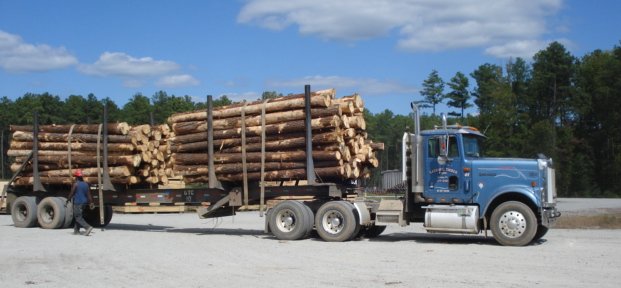
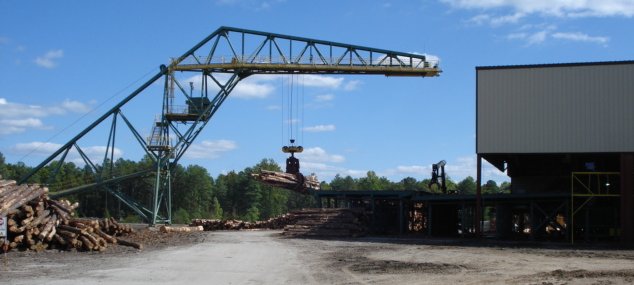
ArborTech – Sawmills Have Changed

Above – wood from nearby tree farms arrives at the mill.   

Saw mills have changed.   Machines, computers and robots have replaced the army of unskilled workers and the dirty and dangerous jobs are mostly gone.  The ArborTech saw mill near Blackstone, Virginia runs three shifts with only eighty workers.   I was interested in looking at the plant, since it processes loblolly pine (which I grow) and gets its timber within a sixty mile radius of the plant.  Both my timber tracks are within that zone.

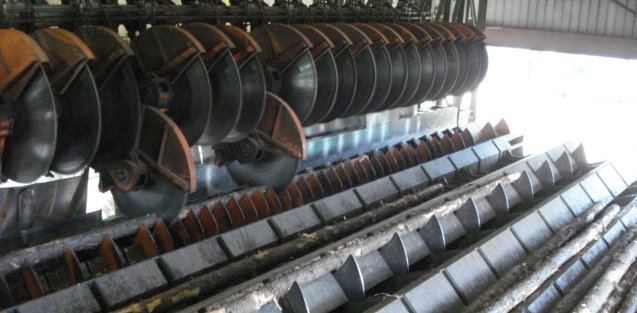
Below – The giant hook loads the logs.  The initial processing can handle a log every 2-3 seconds.

The plant is run by a couple of partners who established it in Nottoway County in 2001.  They chose the location on the northern edge of the great loblolly pine forests.  There is lots of renewable wood resource available to the south and good markets to the north. 

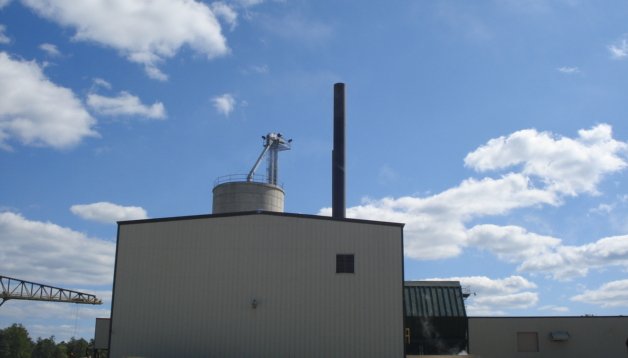
Below – They switched from oil to sawdust, produced as a by-product of the mill.  You can see from the smokestack that it makes almost no pollution and it is carbon neutral.

Loblolly pine grows fast and is strong enough for structural timber.   Southern pine (which includes loblolly, slash and longleaf pine), also called yellow pine, satisfies around 58% of America’s timber needs.   We can grow this resource, sustainably, essentially forever.  I am glad to have an efficient mill near my property.  Below are some pictures and explanatory texts.

Below the computer decides where to saw to get the most straight wood.

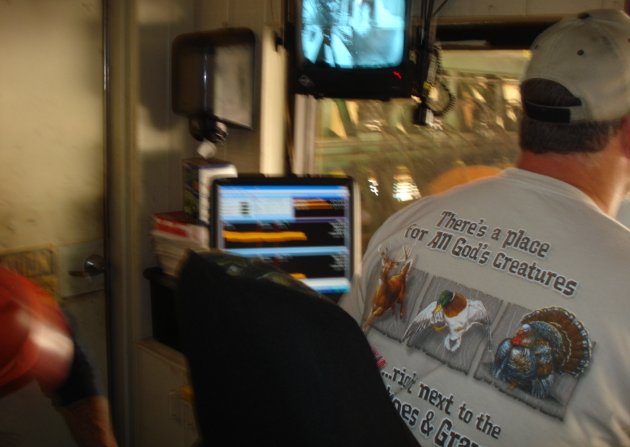
Below is the guy running the computer to do that sawing.

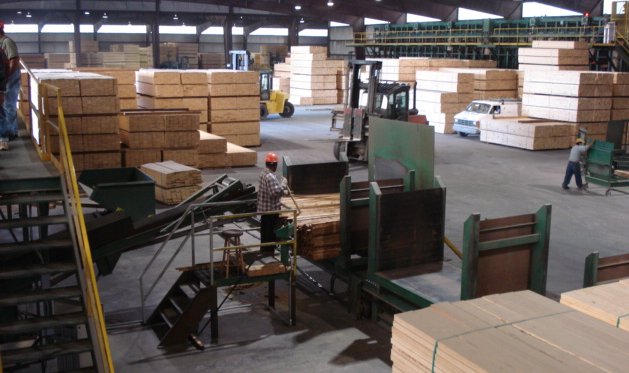
Below – the boards move out just after they are cut.  The warehouse is very tidy and clean.

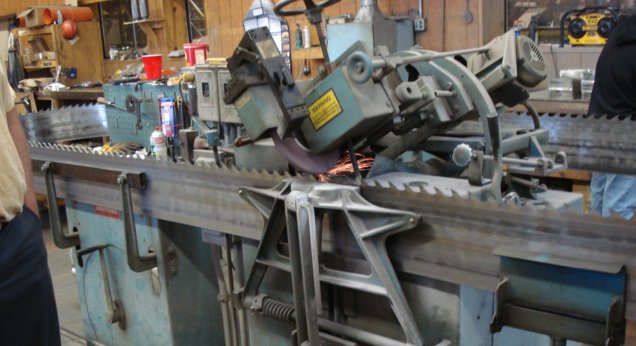
Below – the boards are cut with this bandsaw.  The computer keeps it sharp.

Modern industry is so different from what I remember.   It is much cleaner and automated. Despite all the talk about the decline of American industry, American industrial production is actually higher than it was twenty years ago.  But industrial employment has plumeted.  When you go to a modern plant, you can see why.   A lot of product is coming out of the plant, but there are not many people working there.  Industry will be like agriculture.  In the past almost everybody had to work on the farms.  Today less than 2% of the workforce does.  Yet they produce enough to feed us and much of the rest of the world.  Productivity means fewer jobs to produce more stuff.  That is good, but it sometimes hurts.

Leadership

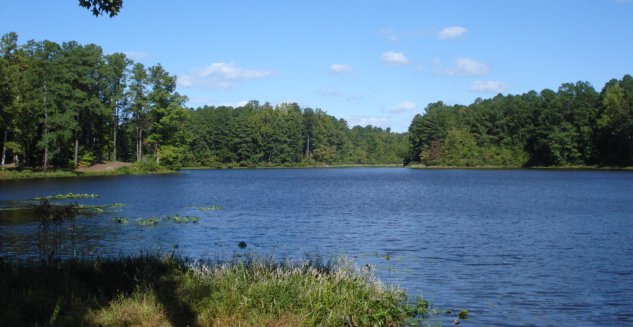
Below is a pond on Ft. Pickett near Blackstone, Virginia.  I was there during my field day mentioned a few posts back. 

State Department has a course on leadership that I will take and they sent me some preliminary questions to prepare.   Generally, they want us to think about the nature of leadership.   It is not easy to define.   I have seen those who seem to be the ultimate leader in their manner or comportment, yet the organizations they run produce little.  On the other hand, there are those who seem barely aware that they are in charge whose teams produce phenomenal results.   Since the essence of leadership is the ability to produce results through the efforts of others, we must conclude that that second kind of leader is better.

Leadership in government is particularly hard to judge because we don’t have a bottom line.  Everything is political and subjective.  People in government can win points just by being busy.  In practical affairs, sometimes doing nothing or at least doing less is preferable to taking action or doing more.  The non-action alternative is rarely available in government.  Many times government officials are running around solving problems a smart leader would have avoided entirely.  More often than we like to recognize the problems are actually caused by our own activity.  The need to be seen to be doing something limits the efficacy of government.  Government also comes with a specific overt limit on leadership. 

We really don’t want government officials to be leaders.  Think about it.  Government is a public trust.  Government officials work within the rules ostensibly created by the people and their representatives.  Leadership usually involves setting new courses, changing paradigms and innovating, i.e. changing the rules … unilaterally.  

Leadership always concerns making decisions in the climate of risk and uncertainty.  Otherwise it is just administering rules.  The leader decides and leads others in toward the goal he defines or discerns.   Government bureaucracies are designed to make that difficult or impossible.  Let me emphasize that point.  They are DESIGNED to limited freedom of action.  It is not a by-product or a mistake.  Government systems are and must be designed to limit innovation by those operating them.

This is an important distinction that divides private enterprise from government administration.   Government and free market techniques overlap, but they do not occupy the same space.  There are things government can do and private enterprise cannot and the reverse is also true.   That is why is doesn’t make much sense to advocate more or less government w/o determining the appropriate TOOL to be used. 
 
It is not appropriate to ask government to innovate.  Government always must follow a set procedure.  If government officials or bureaucrats deviate too far from the rules and regulations they are, by definition, acting illegally.  That doesn’t mean government cannot be creative if given a task.  The USG sent a man to the moon and brought him safely home.   But it cannot do the kinds of innovations that determine truly new courses or preferences.  Government cannot legitimately be entrepreneurial.  Government consumes wealth; it does not create it. 

Private individuals and firms create wealth.  However, government is necessary to the production of wealth.  W/o the rule of law and reasonable regulation the private sector cannot create wealth, since individuals and firms cannot protect the wealth they create.   Government must provide the legal and often the physical infrastructures.  Since government has a monopoly on the legitimate exercise of coercion, only it can perform this function.
  
Lately I have been thinking about my government job in relation to my “job” on the tree farm.   In the past year, I have made decisions in both jobs that put thousands of dollars at risk in the anticipation of greater good.  In the tree farm, it is my money.  I will benefit if I am right and suffer if I am wrong, so it is really nobody’s business to second guess me.   I can also do things just because I think they are good things, with little or no anticipation of a concrete return.   For example, I spent a couple thousand dollars on wildlife plots, which I never expect to pay off in any practical sense.  I have a personal preference for that.  I can feel generous and virtuous for improving the environment.  My land is nicer, but only in my opinion.  In government I cannot and should not allow my personal preferences to impact decisions.  It is not my money.  Nobody can be generous or virtuous giving away the government’s money.   As ePRT leader, I had a lot of discretion, but it was a very different sort of discretion spending taxpayer money and using Uncle Sam’s resources.

As a government official, I have a duty to LIMIT my own leadership and not elevate my own preferences beyond my assigned mandate.   It is a significant responsibility.   I can exercise leadership, but only in the predetermined direction.   It is not like running your own show.

A Forest and Field Day – With Biosolids

One of the great services provided by the State of Virginia is ongoing landowner education.   The courses I like are usually hosted by Virginia Tech and I prefer to go to the Southern Piedmont Research Station near Blackstone, VA because that is close to my forest land.   Forestry is very localized in terms of soils and climates.   I prefer to share the experience with people who work with my kind of tree in similar climates and soil types.

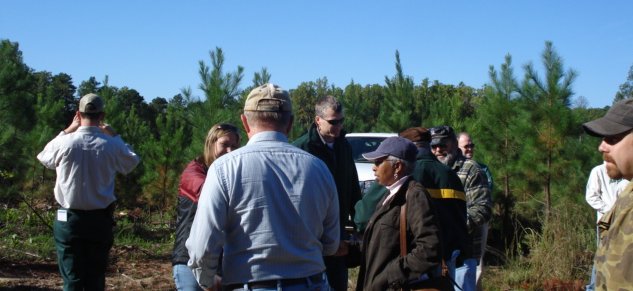
Below is a discussion of precommercial thinning.  The Dept of Forestry recommends it to keep the forests healthy.  I already did mine.

I attended a field day that included talks on forest road maintenance, carbon credits & pond management, as well as a tour of a local saw mill.

The instructors and my fellow landowners are always very nice to me, but I am strange to them with my northern accent and unusual background.   Most of the other landowners are old south & rural and I feel always in the presence of Andy Griffith or Billy-Bob Thorton.  They inherited their land, which has often been in their families for many generations.  

As the older generation dies off, farms and timberlands are left to kids who have moved away to the cities.  They often divide it up among the heirs and sell it off.  This leads to fragmentation of the forests.   100 acres in one parcel is not the same as 100 acres divided in to ten or twenty fragments.  You really cannot practice forestry on land less than forty acres.  We also talked about conservation easements, which might reduce this trend.  A conservation easement lowers taxes in return for a contract never to develop the land.  It stays in forest or farm.  This can be a good thing.

I also went down to my forest to check on the biosolids application.   The workers had just finished.  There is a little smell to the biosolids, but not that much.  The bigger effect is that the heavy machinery crushes down the vegetation, including some of my trees.  It would be better to apply biosolids first and then do pre-commercial thinning.  There is not that much damage really.  The rows are far apart and unless the trees are actually run over by the tires there is a good chance they will recover. 

My forest is looking very good in terms of spacing and tree health.  There is a debate re how close the trees should be.  The closer spacing provides more wood at first, but lower quality.  The closely spaced trees are also more stressed and in more danger from insects.  Wildlife also does better with more widely spaced trees.   Anyway, my choice is more spacing.   I am interested to see how much fertilization does for the trees.  Most forest owners do not fertilize at this stage and I am one of the first in the area to use biosolids at this stage of the lifecycle.  Virginia Tech has studied the applications of biosolids in Southside Virginia.  I went to their seminar last year and I trust them, so I am doing what they recommend.   We did 132 acres of the 2004 generation.   I probably should have left a control plot for comparison.

Below are what the biosolids look like.  These particular pellets produced by anaerobic digestion.  Some are lime stabilized and in more liquid form.  Biosolids are a great circle of life thing – from flush to farm.  Wastes are applied to land to produce more growth and life.  Virginia Tech has found no significant amount gets into the water supply, even when applied massively beyond what we usually do.  People complain about the smell, but I walked all over the place and hardly noticed them.  It is a mild fertilizer smell that will go away in a couple of weeks.  BTW – this was the place where they piled them for spreading.  The actual spread is much thinner.

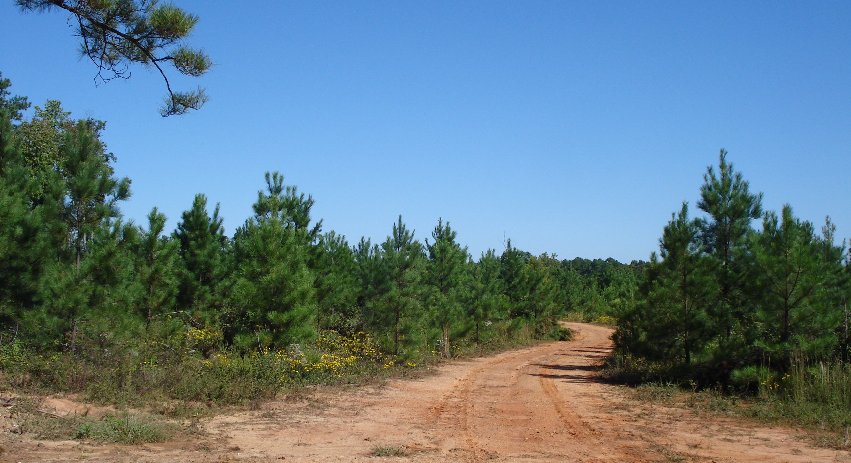
One side benefit of the application was the paths the machines made through the brambles.  I was able to get to places on the land where I never set foot before.   In fact, I was so beguiled by the new paths that I stayed too long and almost didn’t get back home in time.

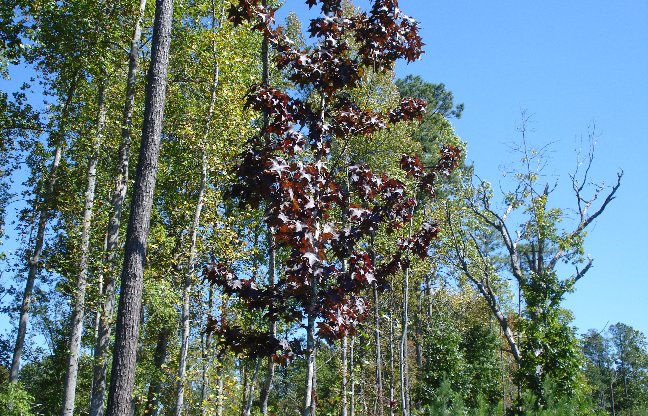
Below is a sweet gum in its fall colors.  They are pretty trees, but sort of like big weeds if you are trying to grow pine.  This one is near the stream management zone and it is a natural part of the Virginia landscape, so we will let it to grow to old age and I will enjoy its color next fall too.  It will be prettier each year.

Stupid

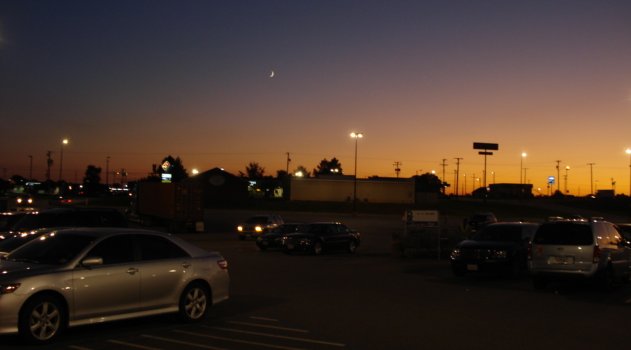
Below is the crescent moon over the Wal-Mart parking lot in South Hill, Virginia.

We figured that it was more economical to have only one car and rent one when we really needed another.  This was good logic and over the past year we probably have spent less than $200 on rentals versus the thousands it costs to own a second car.  But now that Espen got his license we now have five drivers (Mariza doesn’t have her own car and uses ours); we probably need a second vehicle.   Next week we are getting a Ford Ranger.   Tony, Jerry and Andy have Rangers and like them.  They know about these things, so that is what I am getting.

I had to rent a car to drive down to the field day and farm visit.  Alex needed ours.   I am always a little paranoid about rental cars.  I take special care not to lock myself out, but I did.   I went to Wal-Mart in South Hill to get some necessities: beer, peanuts and a pair of work gloves.   I tossed these things in the trunk of the rental car, along with the keys I had in my hand and closed the trunk.  I checked to be sure I had my keys in my pocket, but my good habit was ineffective as I misled myself by finding the keys to my Honda.  Not surprisingly, those keys didn’t open the door.  It was kind of embarrassing.  I had to call the sheriff to help me.  A deputy came by a few minutes later.  He opened the door; I popped the truck, showed him the rental agreement to prove my bona-fides and we were both on our way.   

It is shocking how fast and easy it is to break into a car.  The sheriff’s deputy told me that a real crook would be even faster, since he wouldn’t bother to unlock the door, but would simply break the window.   Maybe you would be better off just leaving the door open. 

Back in 1988 some guy broke into our car in Washington.   He didn’t steal much.   In the glove compartment was one of those glow sticks, a Norwegian language tape and a motivational tape, ironically talking about the need for high ethical standards in business.   The crook took those things.  He must have been disappointed; maybe that accounts for the large number of highly motivated Norwegian speakers in some parts of Washington.  The loss of the goods was inconsequential, but the cost of replacing the window was significant. 

Matel-in-Iraq

This blog records my experiences as a Provincial Reconstruction Team Leader in Al Al Asad, Al Anbar Province, Iraq 2007-8. My comments may be delayed several days. I invite your questions & comments. If you are reading for the first time, please refer to the first entry – John Matel Goes to Iraq – for background.

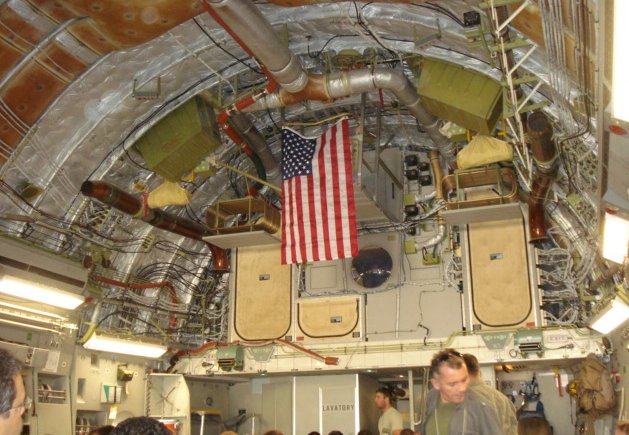
Above is the original intro to this blog. Below is my flight out of Iraq. The planes are big inside.

This blog had more than 20,000 visitors in September. I know that some are repeat customers, but it still shows some interest.   It is a record I will probably never again reach.   Being in Iraq was exotic; I am now going prosaic.

I tried to give an accurate picture of what was happening in Iraq.  It was not as scary or dangerous as I expected and certainly not as bad as we read in the media.  I was lucky to arrive at an inflection point, when violence was down and when we really started to win.

The Marines and our military in general are very impressive.  I ambcertain that there has never been a better military force in the history of the world.  They are fantastically disciplined. For example, our military personnel are not allowed to drink alcohol while deployed in Iraq and as far as I saw they didn’t.  

How amazing is that?  Our purpose was to respect Muslim customs.  I saw our Marines do that repeatedly in many ways.  They risked their own lives rather than risk the lives of Iraqis.  This is something special in the annals of war. When I tell people about this, I know some don’t believe me.  It is hard to believe.  

Sometimes people are just mistaking our military for their own prejudiced stereotypes.  Many Americans these days have no direct contact with the military, so they get their impressions from old TV shows like “M*A*S*H* or from the likes of Oliver Stone or Michael Moore.  Just say no to these things.  They are fictional accounts not designed to be fair or accurate.

I cannot blame the average guy.   Before I went to Iraq, I believed a lot of things that were not true.  In fairness, much of the bad news was true before the surge.  As I try to explain, the bad news is not wrong, it is just old and outdated. 

I learned a lot in Iraq about the military, the Iraqis, war, peace, leadership and myself.   It was a great experience.  I am very glad that I volunteered and also glad to be finished, but it is finished.  I will continue to write the blog.  It helps me understand when I write.   This will be the last “Matel-in-Iraq” entry.   And this entry serves as the official ending marker.  I will put a link to it in the intro to the new blog page.

If you are looking for “Matel-in-Iraq” just do back from this page.  If you are looking for “World-Wide-Matel” go forward.

Twenty-Four Years

I started with the FS twenty-four years ago today.  Time flies.  I wanted to fight world communism and the Soviet Empire, which seemed to be ascendant.  Five years later it was gone.   Ronald Reagan, Pope John Paul II, millions of Poles, Afghans and others were undermining the foundations in the middle of the 1980s, but the outcome was far from assured, despite our hindsight certainty.  Nobody predicted its imminent demise in the middle of the 1980s and the relatively peaceful breakup of the Evil Empire was completely unexpected.  We can thank many for pushing the old bear off the cliff, but we have to credit Gorbachev for taking it quietly into that good night.   It could have gone down a lot worse. The decline agony or the Austria-Hungarian Empires dragged us into WWI.  

Vladimir Putin considers the fall of the Soviet Union the biggest geopolitical tragedy of the 20th Century.  That is an astounding statement when you consider the many tragic events of the 20th Century.   Today Russia is resurgent, buoyed by the high prices of oil and other primary materials.   There is no reason to believe the Soviet Union could not also have restructured and also been resurgent if it had not been dispatched when it was down. 

Some people long for the stability of those times because they have forgotten the fundamental horror of the Cold War and have sometimes taken the wrong lessons from the finish.  We rightly see our success as the triumph of the ideas of freedom and democracy over those of communal tyranny.  But our ideas won because they were supported by an infrastructure of strength.   If Ronald Reagan had not faced down the Soviets AND the peace movements in the early 1980s, we could still be facing the near instant Armageddon we did back then.  If Pope John Paul II had not pushed communism in Poland, if the American and Western labor movement had not worked with the president and the Pope to help keep Solidarity alive, the Warsaw Pact would not have cracked.  And if we and our allies had not carried on the forty-year twilight struggle that interdicted the spread of communism they would not even had the chance.

Freedom is built on a foundation of strength and resolve.  When people forget that or just take it for granted, they soon stop being free.  However, when strength and resolve are exercised successfully in a timely and prudent manner their impossible achievements tend to look inevitable.  That is why some people think that the Soviet Empire just kind of fell by itself or that Iraq would have worked out okay w/o our recent efforts.

Freedom is usually not taken away.   People give it away because they think keeping it is too hard or they want to get things w/o the effort.   When you give someone the power to take care of you, you also give them the power to control you.

Anyway, it has been twenty-four good years to be alive and active.

The start was not that auspicious.  We had the fear of nuclear war; uemployment had reached more than 10% a short while back and the economy had shrunk.  We could all remember long lines for gas and even long lines to get free cheese.  All those things we worry COULD happen now DID happen in then.  But we were coming out of it.  It was morning in America.  

Old guys get nostalgic and I look at the time of my youth and vigor with fondness, but when I really think about it, times are a lot better now.  There is no final victory, just constantly changing challenges and our happiness and success depends on how well we identify and address them.

I am glad I chose the FS and very lucky in what I got in the last twenty-four years.  I am more or less where I should be doing what I do well.  What more can you want?

“There is nothing better for a man, than that he should eat and drink, and that he should make his soul enjoy good in his labour. This also I saw, that it was from the hand of God.”

Advertising

I am going to give a talk re infrastructure in Iraq. I include the advert in the interests of shameless-self-promotion. Please come if you can.


Tuesday, November 18, 2008
Section Meeting. Sponsored by the Younger Members’ Forum, John Matel, leader of the Provincial Reconstruction Team (PRT) for Iraq’s Western Al Anbar Province, will give a presentation on the successes and continuing challenges of rebuilding Iraq’s government and infrastructure. The U.S. Embassy in Iraq began establishing PRTs in 2005, and they are now a key element in the strategy for stability in Iraq by strengthening the Iraqi government’s ability to provide basic services and to construct roads, water and sanitation projects, electric power infrastructure, and other public works. See more information in the November E-Update newsletter. Where: Sheraton Crystal City (Metro: Blue/Yellow lines, Crystal City) is located at 1800 Jefferson Davis Highway in Arlington, VA (one block from the Metro). Registration and networking begins at 6:00 pm with the dinner at 6:45 pm, and the program from approximately 7:30 to 8:30 pm. Reservations can be made by e-mailing reservations@asce-ncs.org. Please RSVP by close of business on November 12, 2008. The cost is $30 for members and non-members and $5 for students, which includes a buffet dinner. No free parking is available at the hotel for the meeting. However, free parking is generally available on the street.

Disastrous Predictions Exceeding Disastrous Predictions

Now that I am back from Iraq, where we succeeded despite the dire prediction, I see that we are now having the same sort of scare re the economy.  People think it is wise to be pessimistic.  They are just silly. 

The good thing about the terrible predictions we constantly see and hear in the media is the most of them don’t come true.   The bad thing is that we usually don’t hear that part.  Somebody makes the big-bad prediction and then when it doesn’t happen, just moves on. 

We are now hearing the warnings of economic Armageddon.   This is not the first time we have heard it.  Remember the big industry in decline and doom books during the 1980s?  How about the S&L disaster that was supposed to pull us all to hell around 1990?  Do you know the government actually MADE money on the S&L bailout?  That contributed to the prosperity of the 1990s.

We have to go through adjustments.  Systems tend to get out of whack.  It is nobody’s and everybody’s fault, but we always have to look for the guilty parties.  Politicans make their careers out of leading the virtual equivalent of a mob of torch and pitchfork bearing peasants against the “monster castle”.  Remember the old Frankenstein movies?  Now we do it online and through the media.  There is always plenty of greed and stupidity to go around, but that is rarely the cause of the trouble.   We will get through this if we don’t overreact and try to solve the wrong problem.  Some of the early programs in the New Deal actually deepened the Depression.  Strong action in the wrong direction is worse than none at all.

It is useful to remember that the property boom started in the 1990s and it didn’t start in America.  Places like the UK, Australia and Spain saw property values rise before we did, and they have fallen even more in some other places.  That property values could rise and fall in so many disparate places with such different  regulatory regimes indicates that it was not a particularly American problem.  That the boom started in the middle of the 1990s indicates that it is not merely a problem of the most current administration.   

We should also remember that Freddie and Fanny were doing what their masters in Congress asked them to do – push loans to low income people.  There is something about low income people that makes it harder for them to get loans.  What could that be?  Oh yeah – they don’t have much money.  They tend to default more often.  That is why Congress has to push lenders to put their money there.  Why does this surprise anybody?   Much of the problem is not in SPITE of the best efforts of government, but BECAUSE of it.

Despite all the gnashing of teeth and the real response that are required, prudent people were not much hurt by the swings.   If you bought your home before 2005, it is likely still worth more than you paid for it.  Maybe you felt richer last year, but you had paper profit.  If you sold you house, it would have cost you more to buy a new one.  Now both your house and the one you might want to buy are cheaper.  It is a wash.  If you didn’t take money out of your home with a refinance or equity loan, your payment is lower in real dollars than it was when you bought the place.   Over the long run, home prices rise not much faster than inflation.   In the short run they fluctuate.  That is why smart people don’t speculate. 

Many people have been living beyond their means.  It is not a bad thing to bring them back to reality.  This is not only natural, it is useful and good.   I understand that the government needs to stabilize the markets, but they should avoid the moral hazard of rewarding greed & stupidity.  That goes for the big guys who lend money to bad credit risks AND to the bad credit risks who are currently defaulting.   The only victims in this whole thing are the good people who lived within their means, didn’t buy what they couldn’t afford and now have to bail out the deadbeats. 

Remember the tale of the grasshopper and the ants.  Unfortunately, in modern times the grasshopper gets a bailout, but let’s not feel sorry for him.  He is still a deadbeat, not a victim.

BTW – for all the gloom re the U.S. consider this:  The United States accounts for 40 percent of total world R&D spending and 38 percent of patented new technology inventions by the industrialized nations of the Organization for Economic Cooperation and Development (OECD), employs 37 percent (1.3 million) of OECD researchers [full-time employees], produces 35 percent, 49 percent, and 63 percent, respectively, of total world publications, citations, and highly cited publications, employs 70 percent of the world’s Nobel Prize  winners and 66 percent of its most-cited individuals, and is the home to 75 percent of both the world’s top 20 and top 40 universities and 58 percent of the top 100.

I won’t say, “don’t worry; be happy”  but the world will not end next year and we will still be #1 for a long time to come.

P.S.  Take a look at this article.   It seems the better things get, the more people complain.

Come Safely Home

My year is finished.  I have accomplished all that I will and I have come safely home.   So … how did we do?

It is always hard to judge one’s own success and I am not sure I can tell.  I am also not sure ANYONE can tell.  So many factors were at work and my role was so small.  If I crow about the successes achieved in Anbar, it will be a lot like the rooster claiming credit for the sunrise.   But if I just pass over the whole thing as though my efforts meant nothing, I am denying reality and denying the whole concept of free choice.  It is almost my metaphysical duty to brag on our achievements.  I did only what others could have done, but most others did not do them.   What a person could do, what he can do and what he actually did are often not strongly related.

I made a difference to the extent of my capabilities for Western Anbar and the security of the United States.  The environment is now more hostile to insurgents and terrorists because of the efforts of my team.  (The Colonel told me that it is easier for his Marines to eliminate “f-ckos” because my team has made it harder for them to survive among the people.  I consider that great praise indeed.)  Conditions are better for the people of the province. I cannot separate my personal achievements from those of the team, so what I am most proud of is that I created the conditions for team members to thrive and that I motivated and empowered them to do a great job, but as a result of this THEY did of the heavy lifting.   That is as it should be.

The better the team, the more the leader can & should act as a catalyst rather than a directive manager.   Being a catalyst for positive change is a good thing, but a catalyst by its very nature is never actually part of the transaction.   To the question, “What did you personally do?” I would have to answer, “Almost nothing.”  But if they asked, “What did you enhance or make happen?” I could answer, “Almost everything the team did.”

I learned that from forestry, which I have been sort of practicing since I planted my first trees back in 1966.  A little leverage and patience creates great things, but you never can point to a precise moment of accomplishment and you have to understand that everything depends on the synergy of forces, many of which you do not control.  

If I look at my early post re going to Iraq, I think you can judge if I met my own vaguely stated goals.  I like vagueness.  It is better to be vaguely right than precisely wrong.   There are things you just cannot predict or measure precisely.   Most big things are like that.

I consider it achievements that I have come safely home, that my team will continue to do its good work w/o me, that our activities made things better in Iraq, created confusion among our enemies and enhanced the security of the United States.   When we all do our small part, big things get done.  I am proud that I won the respect of the Marines and my team member colleagues.   Nothing else matters too much if you have those things.

Back safely home in Virginia, watching the gentle rain fall on green leaves.

John Matel

PS – I wrote some posts during the journey home and will post them here.  I will then archive this blog and continue on with more prosaic postings.  I will call the blog Matel-in-America.  If some of you want to come along on that trip, you are welcome.  If not thanks for coming along so far.