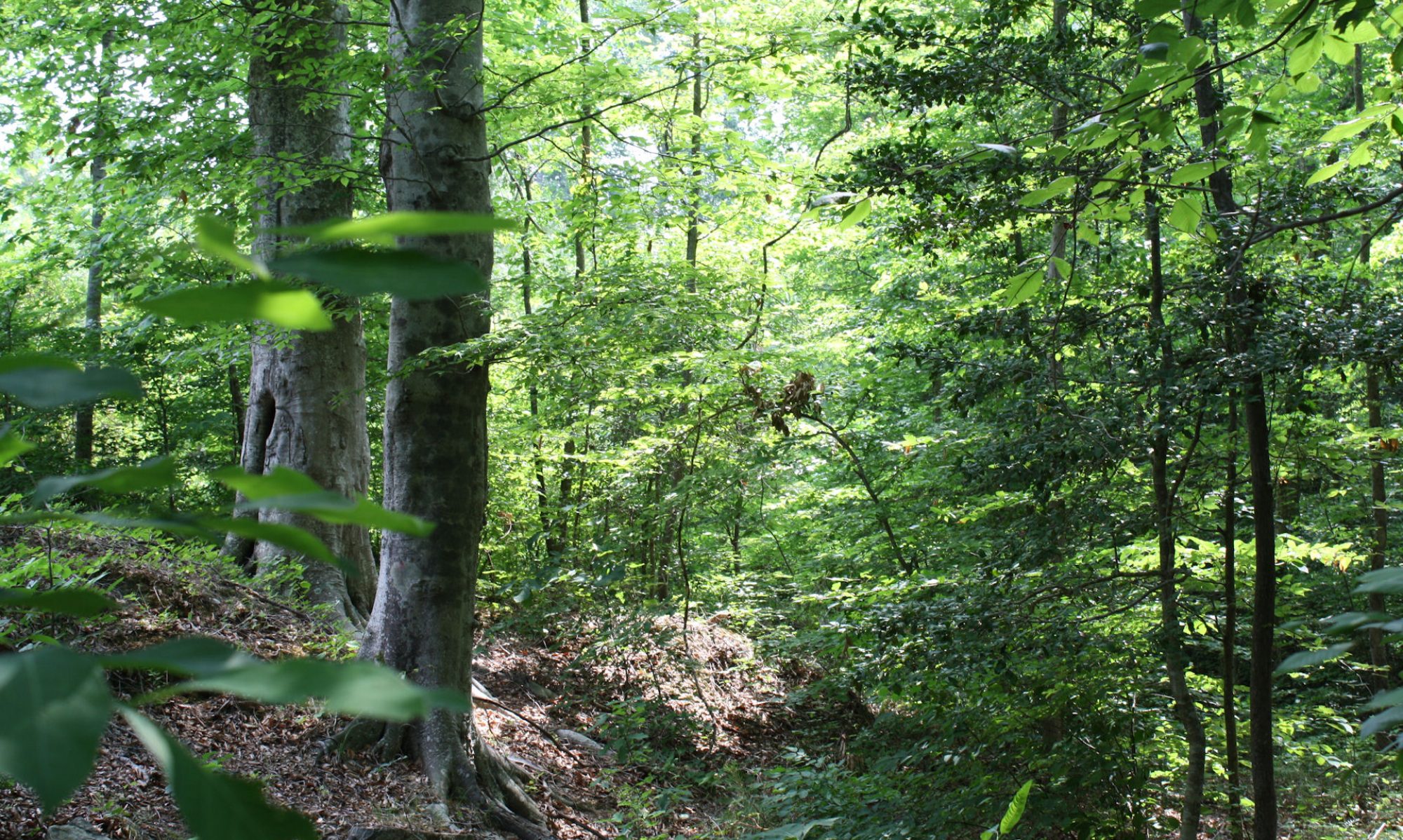
Burning longleaf – February 6, 2017

Save
We did the prescribed burn under our 2012 planted longleaf. Longleaf and loblolly were planted at the same time. Loblolly are fire adapted but longleaf are fire dependent. I am reasonably confident that almost all the longleaf will survive the fire ant thrive. I will see about the loblolly. My guess is that most will be okay, but some will be thinned out.  I am going to update every month with pictures and texts. My longleaf sit on the north and western edge of the natural loblolly range. I am interested not only in the tree themselves but also in what grows on the ground underneath.

The longleaf ecosystem is the most diverse in North America because it combines a prairie ecosystem with a forest.

I got to be there and I could “help,” but Virginia Department of Forestry did the real work, and they laid fire lines, which are the real determiners of success in fire. And they brought their bulldozer to stand-by just in case.

We started the fire at the fire line going against the wind – a backfire. The backfire burns slower but more intensely, since the wind is pushing it back. After there was enough black space, we started doing strips with head fires. Head fire go with the wind. They burn faster but not as completely. The head fire is what we want for longleaf. We don’t want it burning too hot. There was not too much wind and it change direction a few times, so whether we call them head fires or back fires was a little unclear.

The fire creates its own wind to some extent, since it sucks in air. Our fires were not very big, but they still had some of that. Fires also burn faster going uphill than downhill. This is because heat and fire, rise. Additionally, fire coming up hill pre-heats and pre-dries the fuel above. We do not have very steep hills on this unit, but the topography still made a difference.

Only one time did we get a kind of flare up. The fire was coming up a gentle rise and the wind picked up and shifted a bit at about the same time the fire hit a thick patch of broom sage. The flames were suddenly 8-10 feet high and coming in our direction. We had to retreat beyond the safe line, but it passed quickly.

Broom sage is a sign of soil infertility. This is okay on a longleaf site and my pines seem to be growing well. On the plus side, broom sage burns quickly and carries the fire w/o it making the fire hot enough to harm the trees.

Smoke was not much of a problem today, because we had the right kind of weather and a generally fast moving fire, but smoke is probably the biggest challenge to prescribed burns. People don’t like it and it can be dangerous and damaging. What you want is for the smoke to rise and then blow away, but this does not always happen. Some weather conditions can cause it to flatten out a few yards into the air and some even make it hug the ground. This seems counter-intuitive, but smoke can sometime flow, like fog down a gully and sometimes it can linger a long time, a real problem if there are nearby roads or houses.
Watching the fire hit the trees was interesting.  They kind of burst into flames, but the fire passes quickly. The longleaf have an adaptation that lets them singe the needles while leaving the terminal bud interact. I walked around after the fire and observed that the buds were intact and ready to grow. I look forward to watching.

I talked to a guy down at the North Carolina Botanical Gardens.  They have developed a recommended list of longleaf ground plants. These seeds are expensive but I might want to plant a half acre and let them spread. The NC guy told me that lots of the native species are probably already present in the area, especially because the area under the wires has been mowed regularly but otherwise left alone. The plants will soon colonize the longleaf patch if we just burn it regularly. Nature is resilient.

The whole burn took only about forty-five minutes. Of course, I am not counting all the preparation time. It is surprising (to me at least) how a conflagration, so quickly rise and how quickly it dies out. The key is to use up the fuel. You don’t have to put it out if it has nothing left to burn.

While the burning was going on, I was reminded of the story of Wag Dodge, made famous (at least in fire circles) by his fast thinking during a fire in Mann Gulch in Montana and by Norman Mclean’s best selling book about the incident “Young Men and Fire.” (Read my note about the book.)This fire killed thirteen firefighters. They were caught by a quick change in conditions as the fire chased them uphill pushed by a steep wind. Wag Dodge realized that he would be unable to outrun the fire, so he set his own fire in advance, and then hunkered down in the burned over black. He survived.

A fire burning mostly fine fuel, like grass, burning quickly and quickly passing. There is a wall of flame with a blackened place behind the flames and black is safe, since there is nothing more to burn.

I know that fire is necessary to the health of longleaf pine and I have all sorts of scientific reasons to want to burn the land. But I must admit that it is just fun to do. Fire is primal. I can almost feel the pulse of my distant ancestors using fire to hunt and create more hospital ecosystems. Our fire was not very dangerous, but it is still a little scary, watching that elemental force in action. It is always at least a little unpredictable. Interesting.  I plan to do it every 2-3 years from now on.
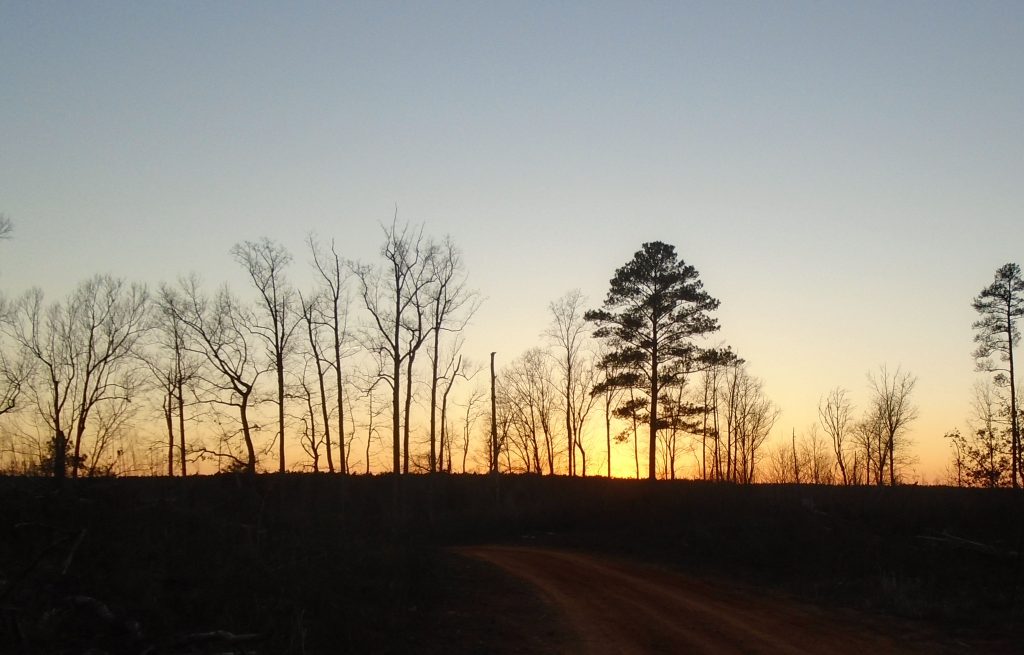
February in the forest, burning time

February is the least attractive month down on the farms. The grass is brown, no leaves on the deciduous trees, pine trees are looking a little anemic just before spring & there is usually a lot of mud. But there is some attraction in the bleakness, kind of like in Andrew Wyeth’s Christina’s World.

I am down here in hopes of seeing the burning of my longleaf acreage. The Virginia DoF will do it, I hope on Monday, but it is weather dependent. They made fire lines already and I walked the perimeter today. I know that burning is the right thing, the needed thing, for longleaf, but I am still nervous that too many will die. I will document the fire and what I expect to be the rapid recovery and renewed and more rapid growth.

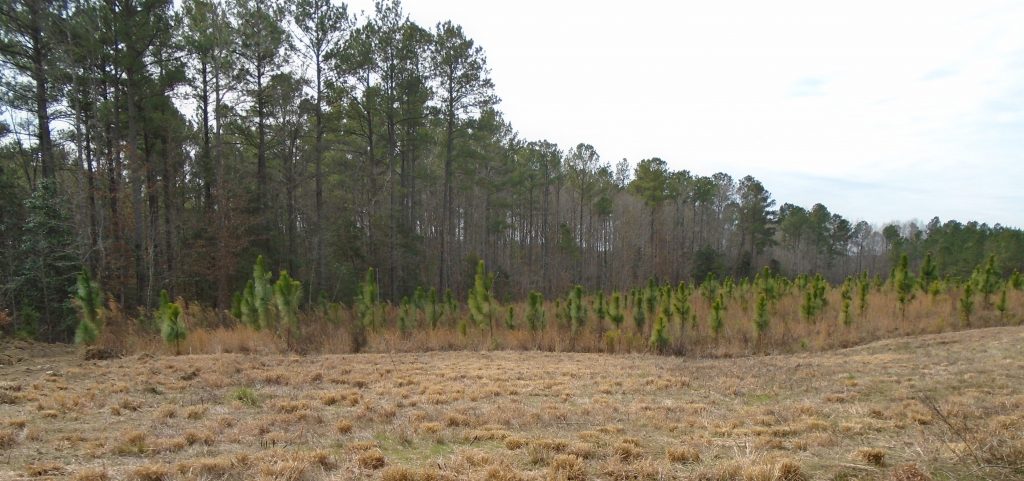
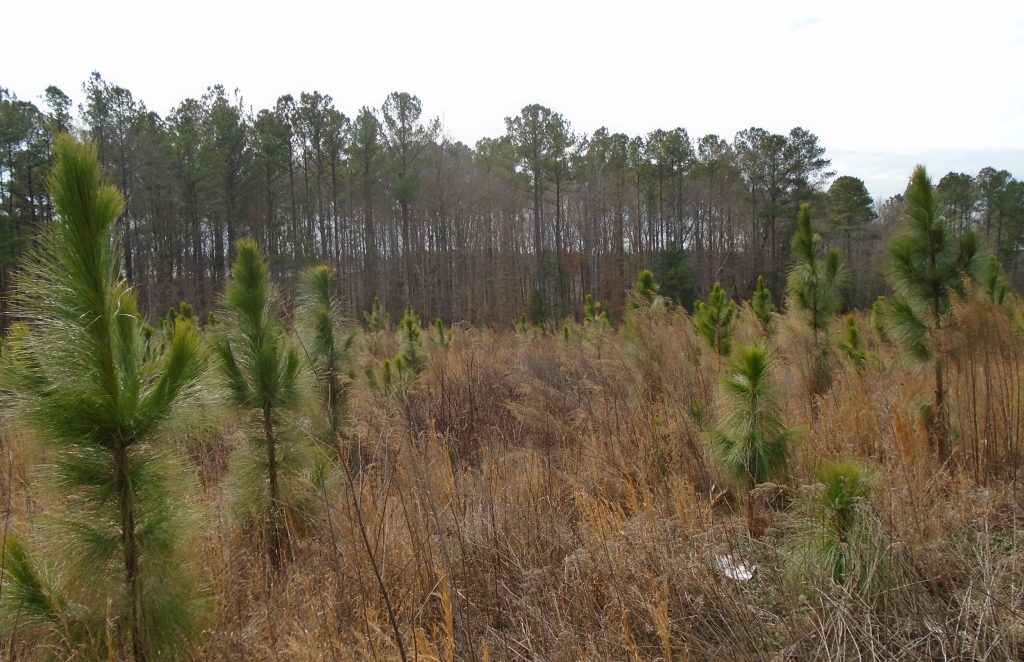
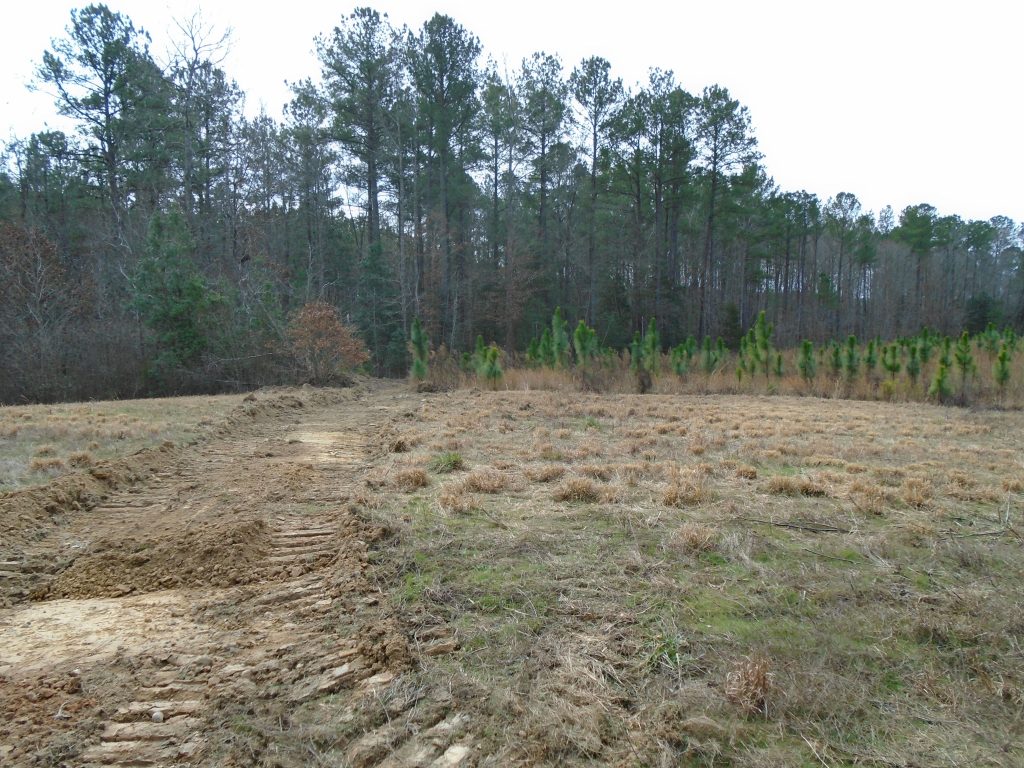
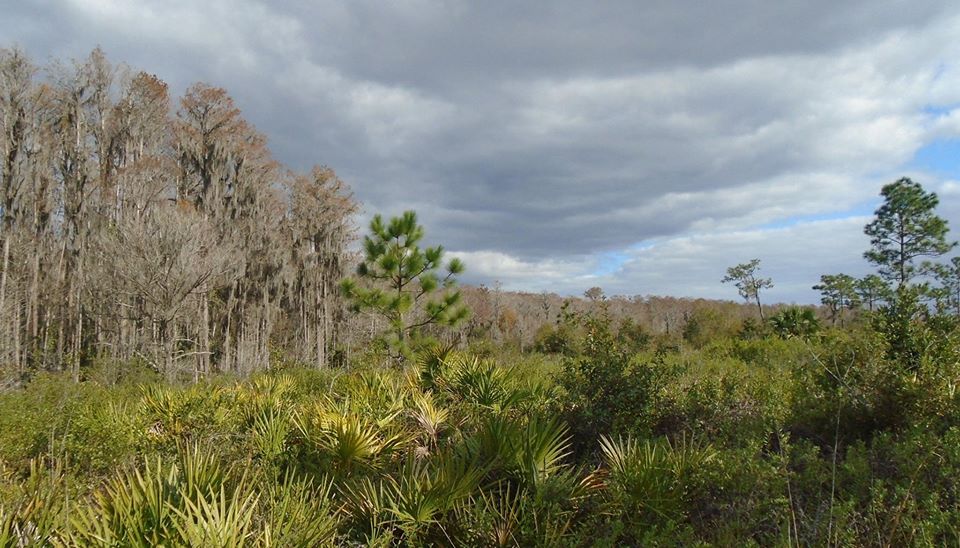
My first photo shows some of the attraction that February still holds. Next is the longleaf on the eve of the fire. We will also burn the grass in front to make the grassland ecosystem. You can see the track/fire line in the last photo.

Summers Vindicated (Again)

Background  

How much do innate differences account for differing outcomes? This is an uncomfortable question and even asking it is dangerous. Larry Summers lost his job at Harvard in part for stating a truth about how the distributions of men and women differ, with the male distribution having a much higher dispersal, i.e. the average is very similar but there are more men at the extreme genius level and more men among the abject failures.

Science has been unable to determine how much of this comes from biology and how much is from cultural reasons. What is not in dispute is that men and women – in the aggregate – make different choices that result in different outcomes. We stipulate that we should counter all forms of overt discrimination. We are talking about what would remain even if we were 100% successful, the differences based on innate characteristics or choices. If we could identify the sources of this, what should we do?

John Rawls, on whose theories are an important underpinning for current progressive ideas on justice, talked about the vail of ignorance. If you did not know what position you would have in society, what sort of society would you choose?

Let’s adapt Rawls’ formulation a little. If you knew nothing about what your position in society would be, would you choose to be male of female in America? Consider the following – the distribution of men and women is different. A male will have a better chance of being among the top individuals in professions, business and science. Good. But there are not many people who reach these heights. The top 1% is … 1%. A male also has a greater chance of being homeless, landing in jail, being a victim of violent crime, dying in an on the job incident and dying in general. Men don’t live as long. Recent research indicates that although females earn less on average than males, women control more than half of all the personal wealth in the U.S. Some of this is likely related to the living longer factor.

Anyway, if you were a non-designated individual in some ethereal plane, and given the choice of gender – with absolutely no other information about whether you would be born rich or poor, privileged or persecuted, lucky or cursed – which would you choose?

Everglades

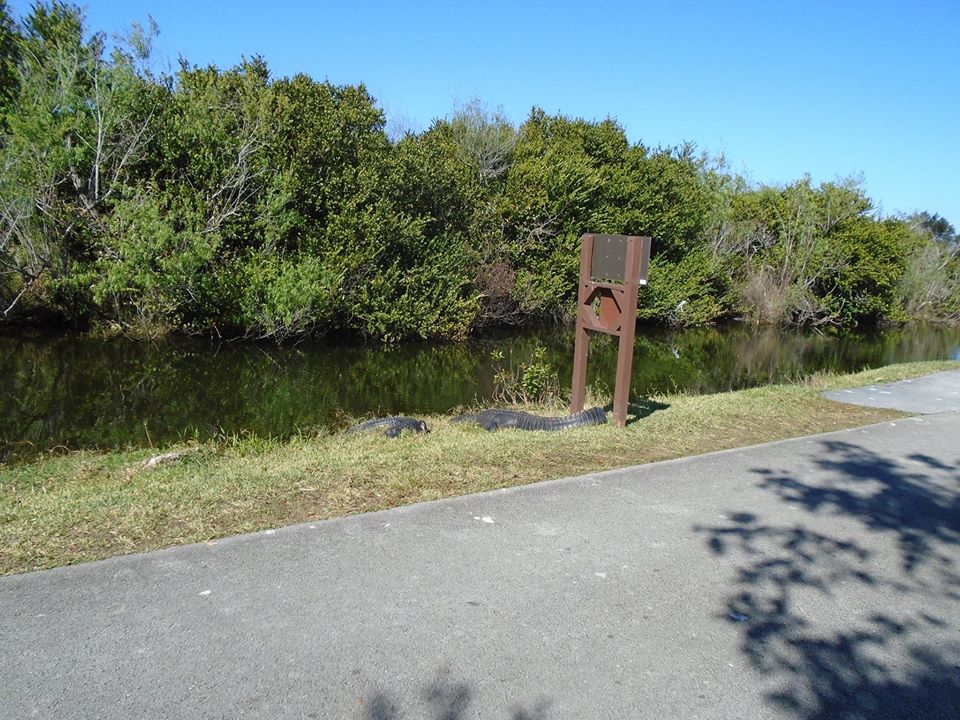
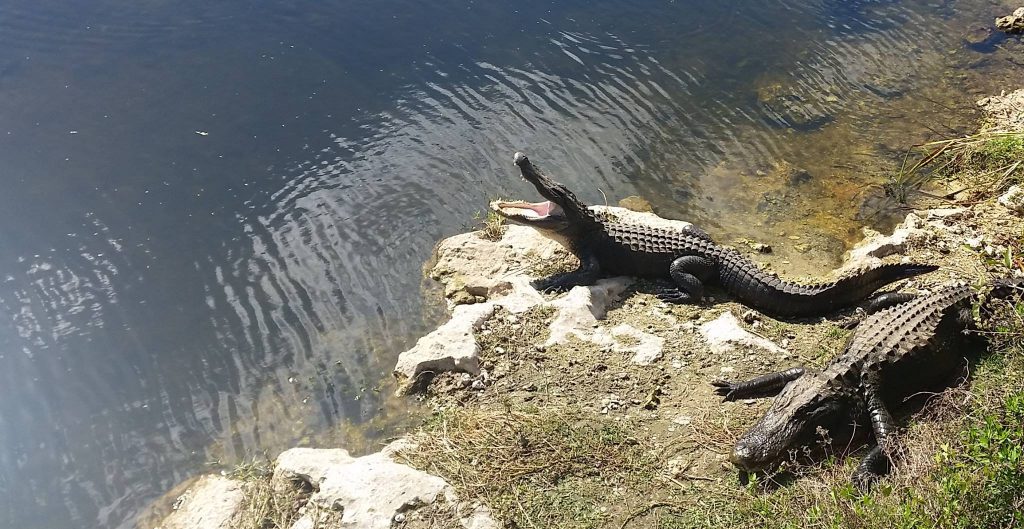
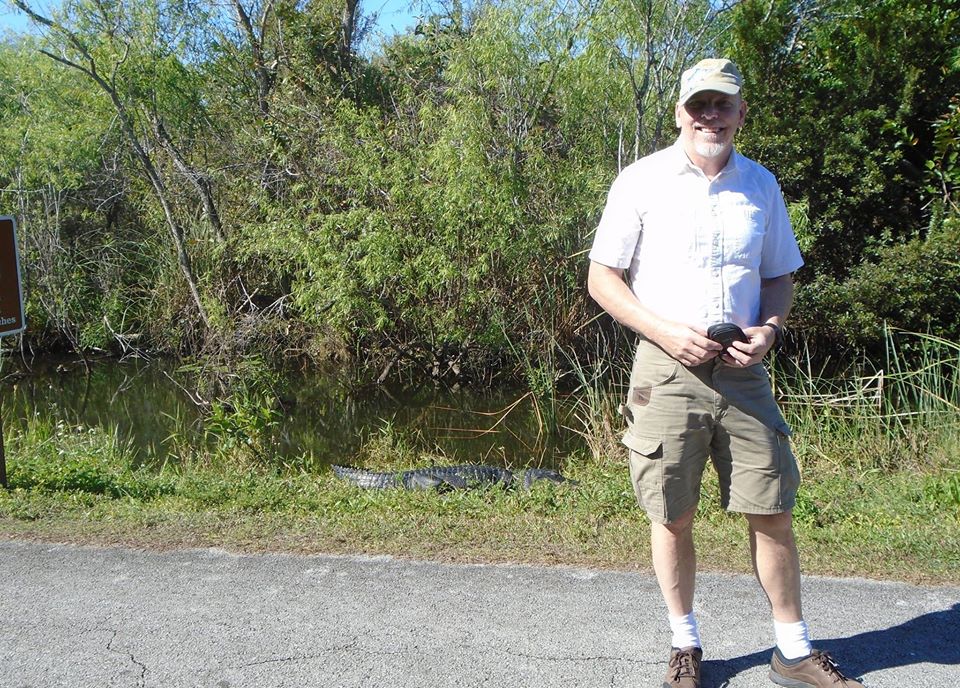
Alligators used to be so rare that they were put on the endangered species. Today they are so common as pigeons, common enough to be a nuisance. We visited Everglades and Big Cypress. One stop featured a 15 mile loop you could ride on rented bikes. We did. We hoped to see maybe one alligators. There were dozens. The rangers said that they were not dangerous as long as you didn’t get too close. The ones we saw barely moved, but Chrissy did get a good action picture of one that you can see in the first photo.

The bikes were not very good. They had only one very low gear. I felt like one of those clowns on a little bike. The distance that I easily cover in less than an hour on my own bike took two hours on the little ones.

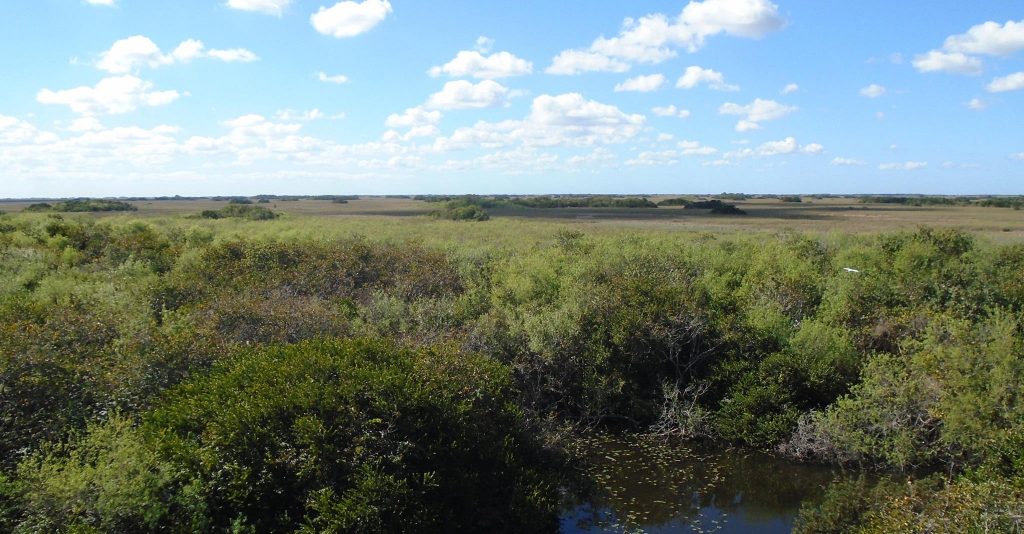
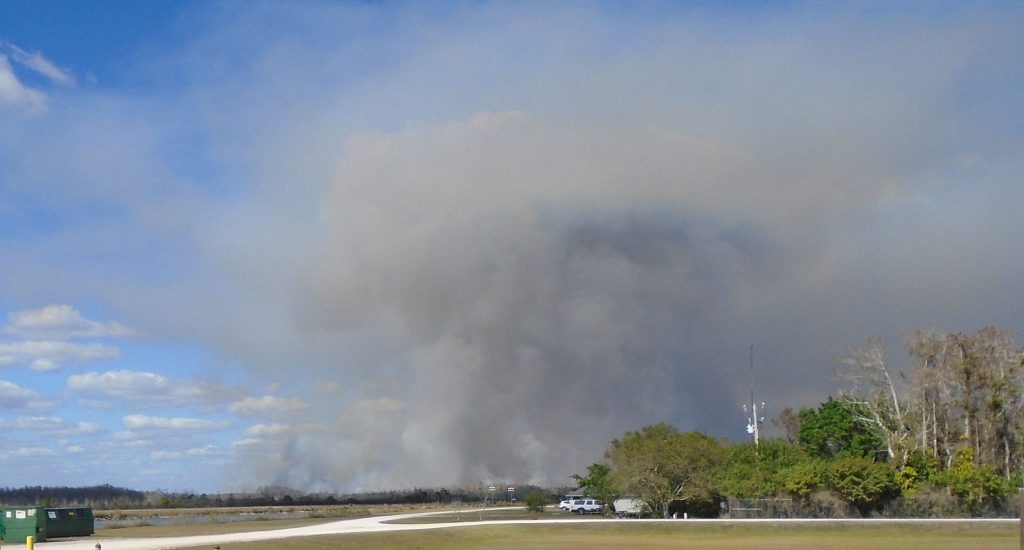
The second last photo shows the Everglades from an observation tower. It is an interesting ecology, very flat and wet most of the year but with a dry season. During the dry season, it often burns. We saw smoke from a fire (last photo) but all I know about the fire is contained in the photo.

Polydactyl

I learned a new word from my cousin Dorothy Bozich. The word was polydactyl. It means that the animal has too many toes. It was good to know because we went to visit Ernest Hemingway’s house in Key West. Hemingway thought that cats were lucky and that those with six toes were even better. He had as many as 70 cats. Today there are only 53. All have the pterodactyl gene, although not all have six toes.

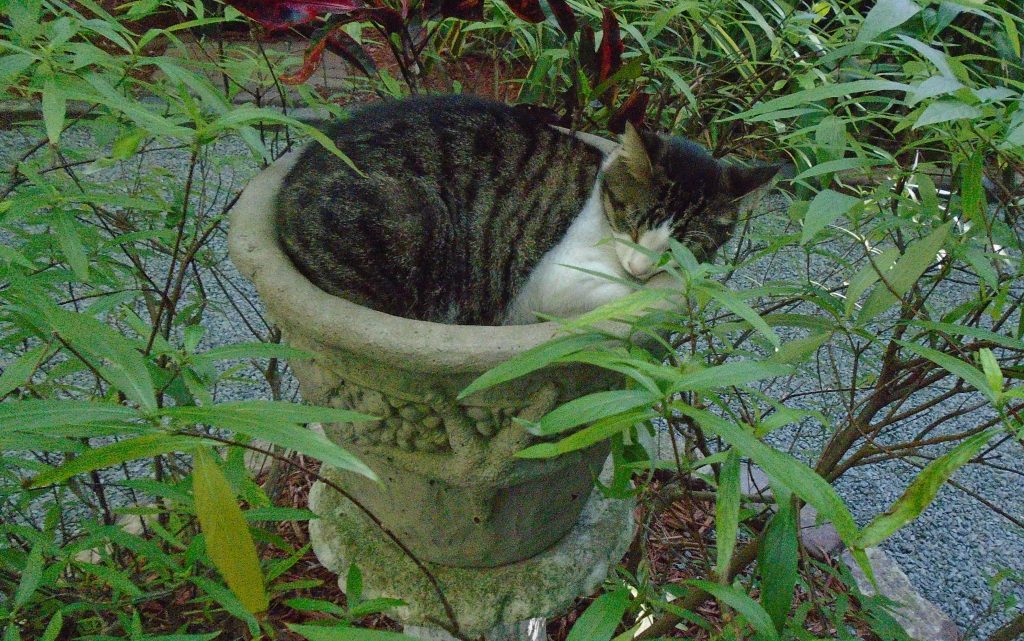
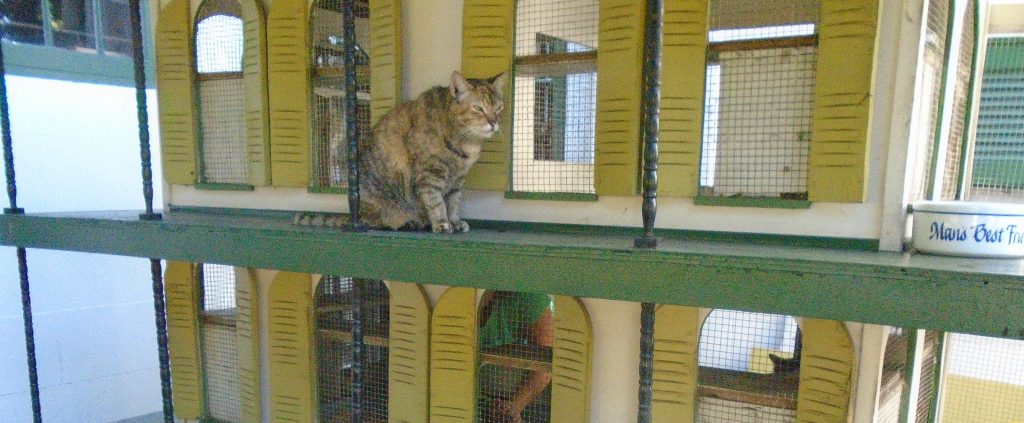
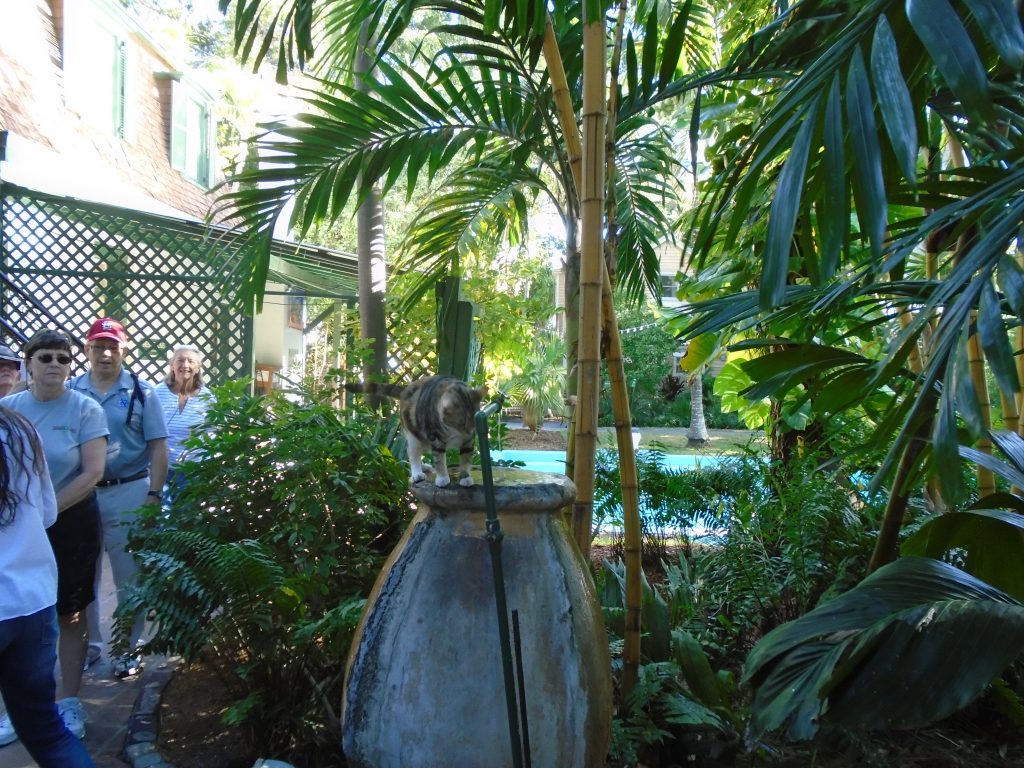
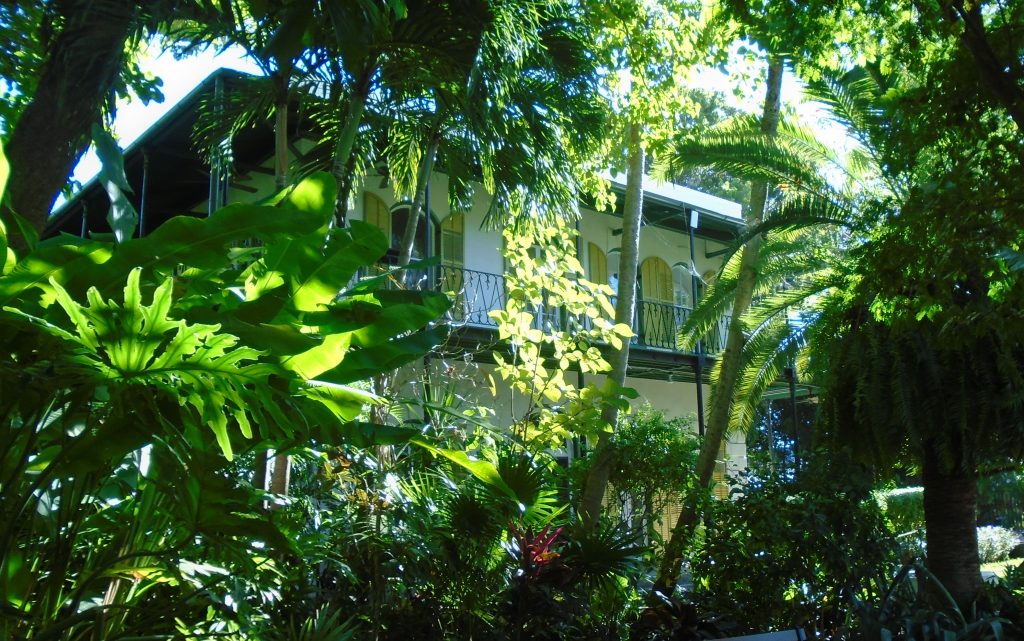
The cats have names from the Hemingway’s life and times. For example, there is a Greta Garbo, a Humphrey Bogart and we actually saw a Patsy Cline. My photos show the various cats w/o names I know. Actually, I Chrissy says that the cat on the fountain is called Elizabeth Taylor. The last photo is just Hemingway’s house.

The cats are free to go, but none do. It is a kind of cat heaven. Why would they leave? The only lost cat was called F. Scott Fitzgerald. Evidently a visitor loved that cat and wanted to buy him. He was told that F Scott was a free agent and not for sale. A few days later that cat mysteriously disappeared. Got a better offer?

Key West

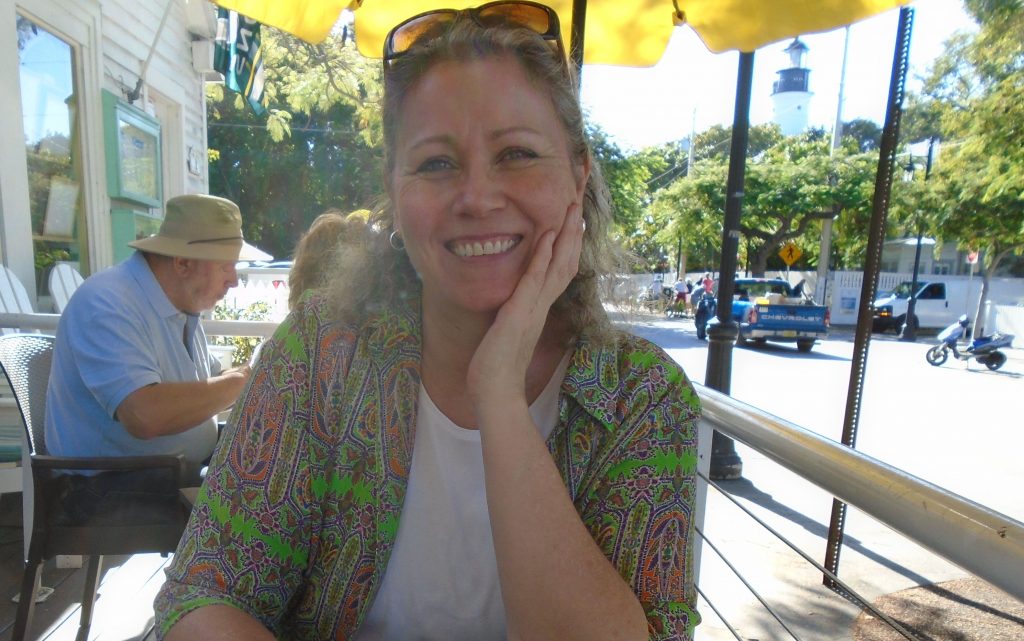
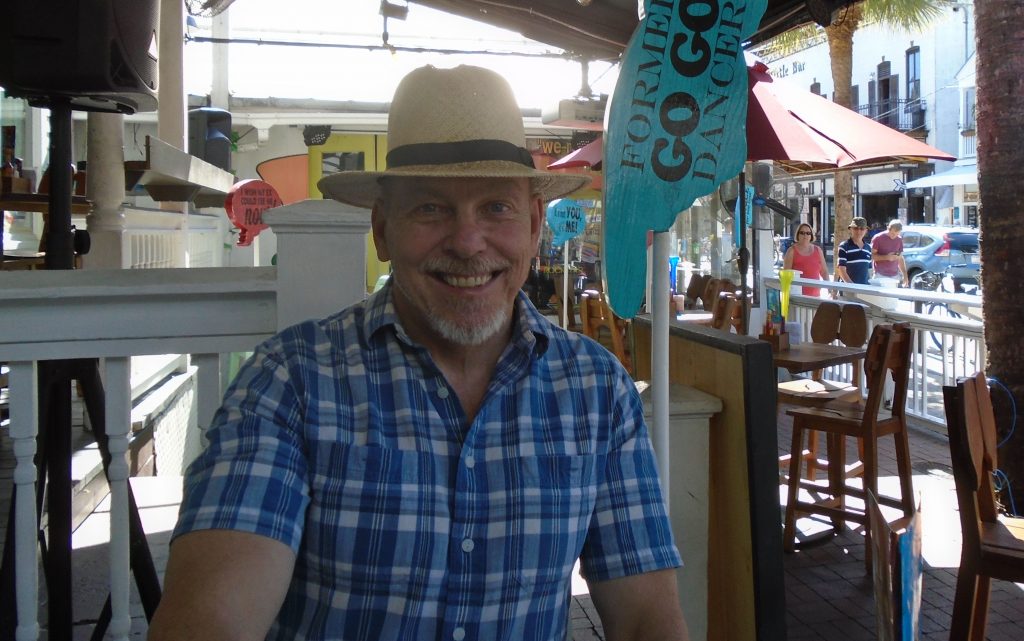
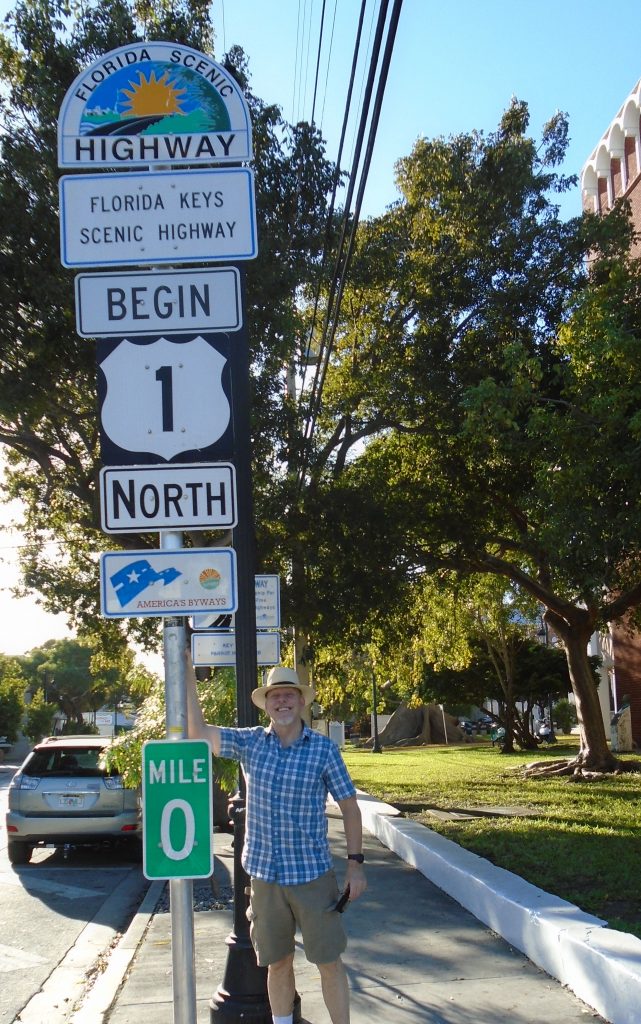
A few photos from around Key West. We have Chrissy and me eating breakfast and then Key Lime pie, separate places. Last is me at the very end of US. 1.
Save

Mangroves: Edge Ecosystems

Edge ecosystems are often among the most diverse, since they combine two or more environments. They usually punch well above their weight and are crucial to the larger ecosystem they join.

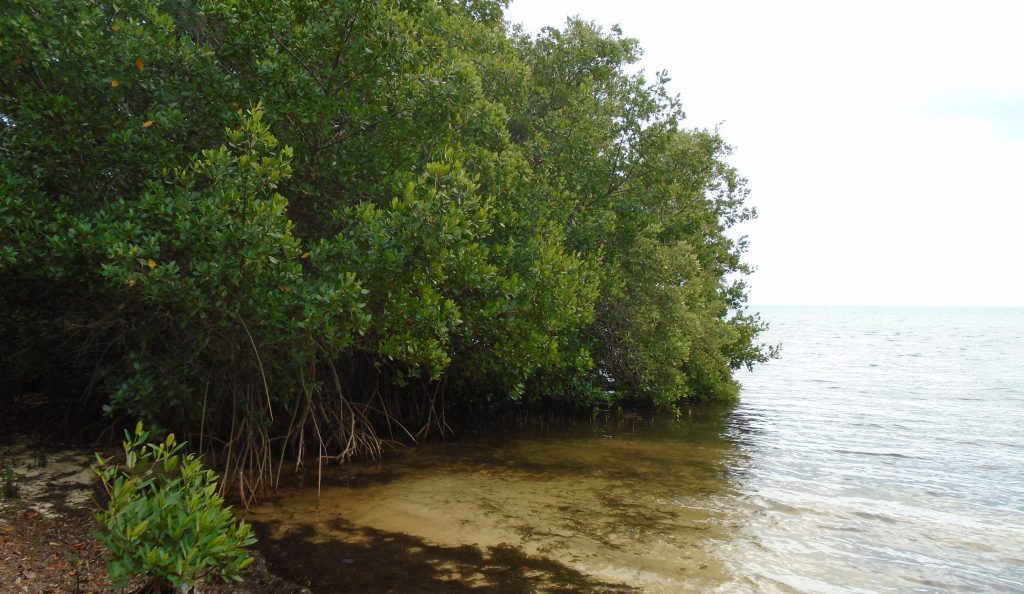
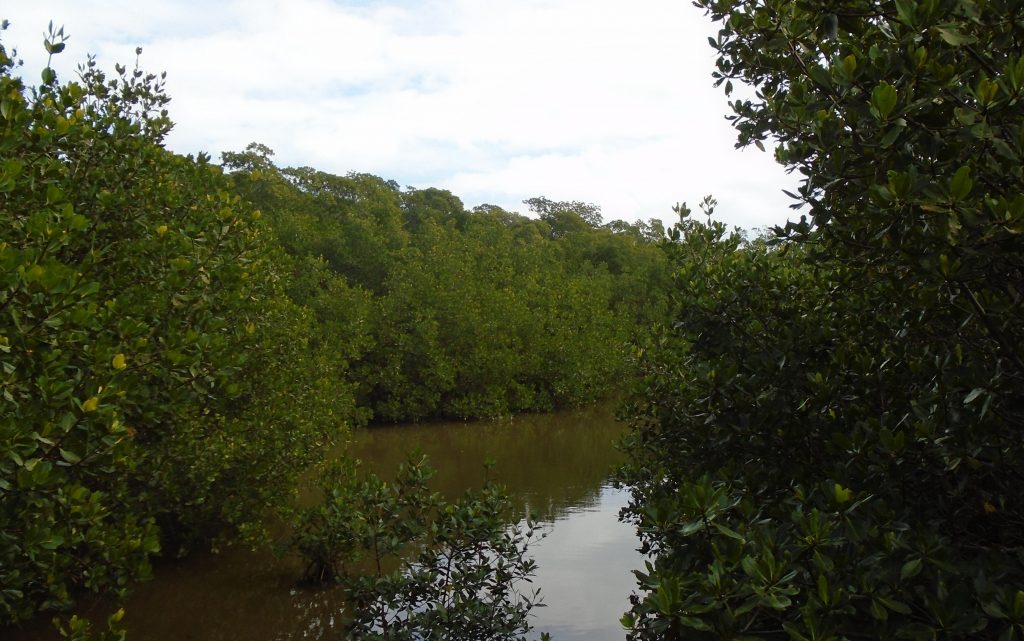
Among the richest of these sorts of ecosystems are mangrove forests. Mangroves are amphibious trees that grow between high and low tide. They are sensitive to frost. In the U.S., they grow only in south Florida, and a few places in Louisiana so we went to see some in the Florida Keys.

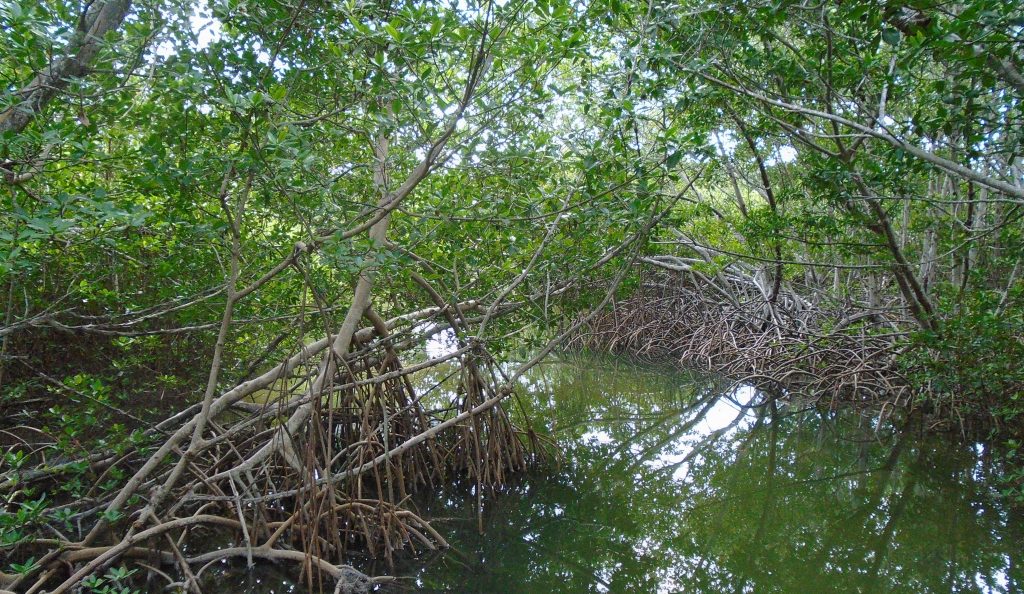
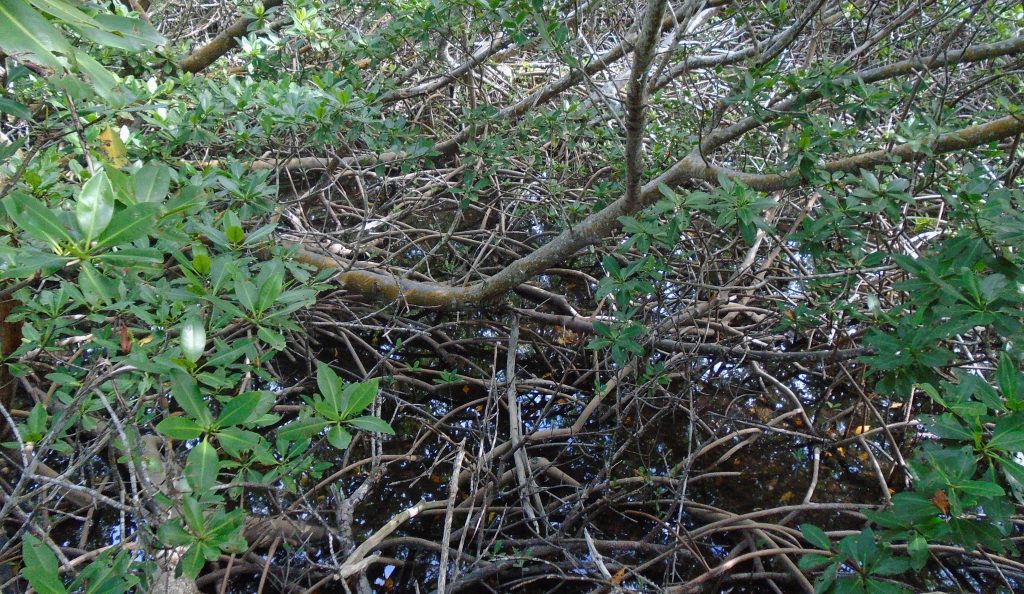
You can see in my pictures how & why they do the jobs. The tangle of roots and branches help hold soil and protect the coast from erosion and storms. They also provide cover for fish and other wildlife to breed.

There are dozens of species of mangrove in parts of the tropics, but in Florida there are only three: black, red and white. Red mangroves grow in the inter-tidal region where their roots are always under water, even at low tide. If you see a clump of mangroves in the water at low tide, they are red mangroves. Black mangroves’ roots are under water during high tide, but exposed during low tide. White mangroves grow above high tide, but in places where their roots are always wet.

The keys, BTW, are are the end of a chain of barrier islands the stretch all the way from Canada. Barrier Island are interesting ecosystems with or w/o mangroves. A barrier island is temporary thing. They are more than sandbars but less than real terra-firma. In an instant of geological time, they are born and disappear and they are always moving. Storms play a big role in determining what grows on barrier islands. Most of the vegetation is small because storms blow down bigger trees. Where some hardwoods can establish, they are called hammocks. These are not big trees as we would expect inland, but they are forests.

Nature Conservancy in Florida

The best thing about the Nature Conservancy is the way they bring ostensibly competing interests together in pursuit of common aspirations. What is now the Disney Wilderness Preserve near Orlando was a cattle ranch slated to be developed into another subdivision. Today it is an essential part of the Everglades ecosystem with 3,500 acres of restored wetlands that act as nature’s “sponges” in the landscape capturing rain, filtering out nutrients and replenishing our ground water. All this based on the cooperation of NGOs, private firms, individuals working in voluntary association and government. This means that TNC preserves are usually managed better than public parks, are more better integrated to greater ecosystems than most private lands, provide ecological services to human communities and provide individuals with places of peace and renewal.

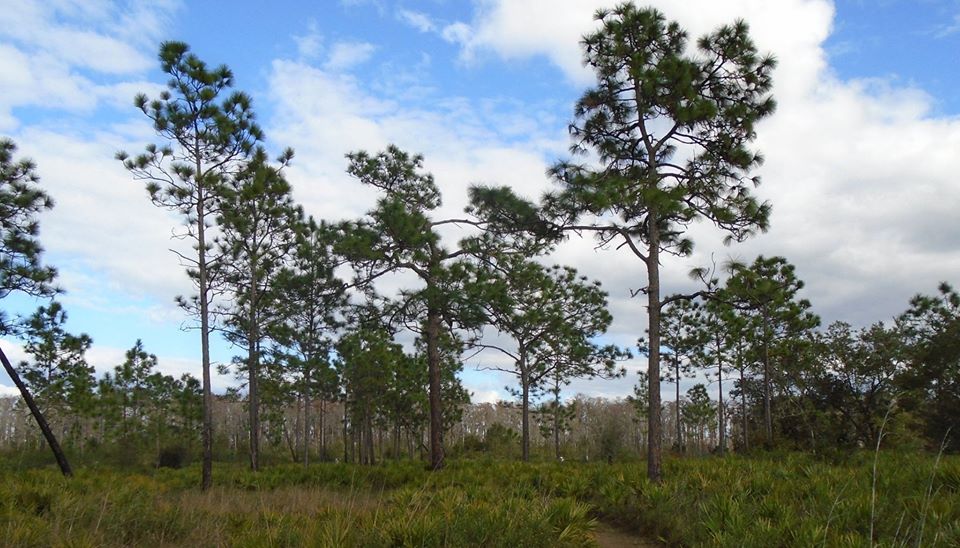
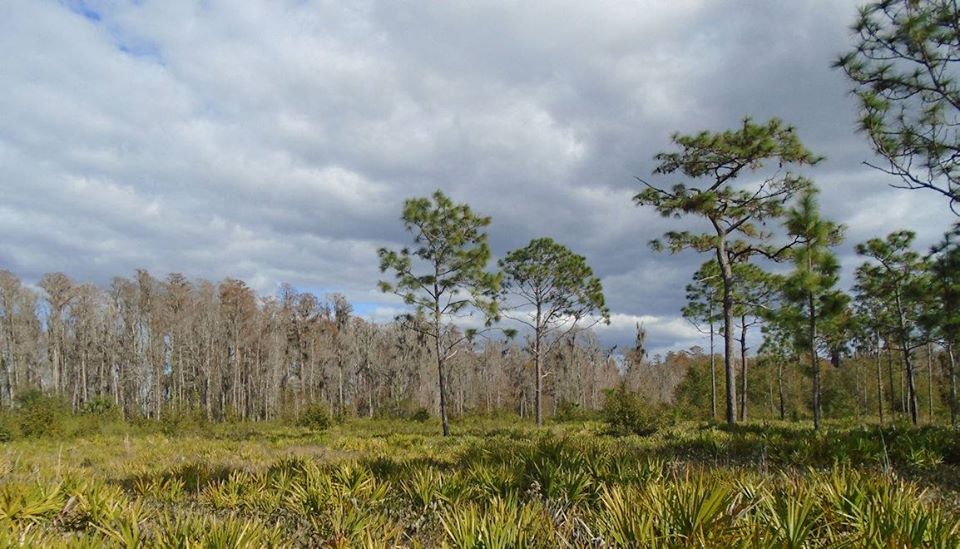
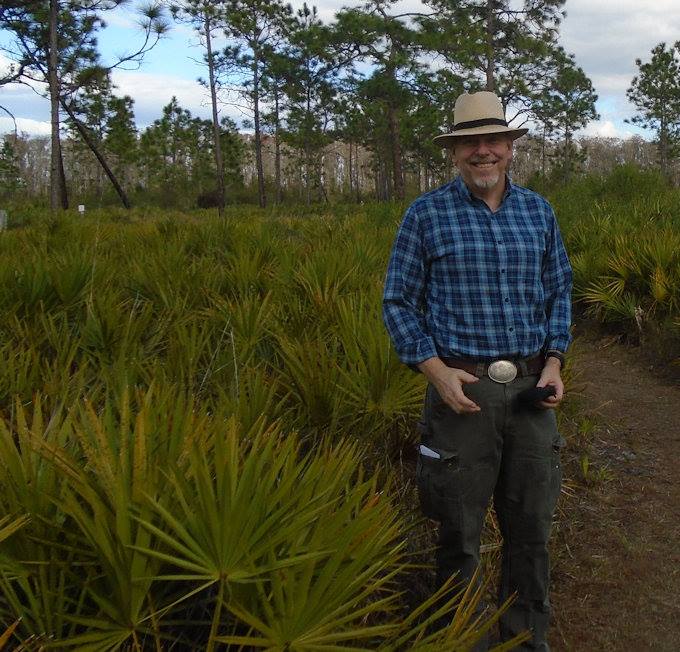
You can visit this and most other TNC properties. We did this today. I was interested in seeing how the longleaf restoration was coming. It is good. You see on my photos that the understory is largely saw palmetto. This is something we will not get in Virginia longleaf forests.

I have supported TNC for thirty years. It is the only charity that I have never failed to remember. If you study the details of conservation in the last sixty years, you cannot help but be impressed by the consistent role TNC has played. It has not been through overt political action or even through the wonderful work they did buying and protecting land, but rather through the development of theory and theory in practice of conservation. For example, TNC was literally the keeper of the flame, keeping alive and viable principles AND practices of prescribed burning when “only you can prevent forest fires” was the official mantra and the generally respected consensus.

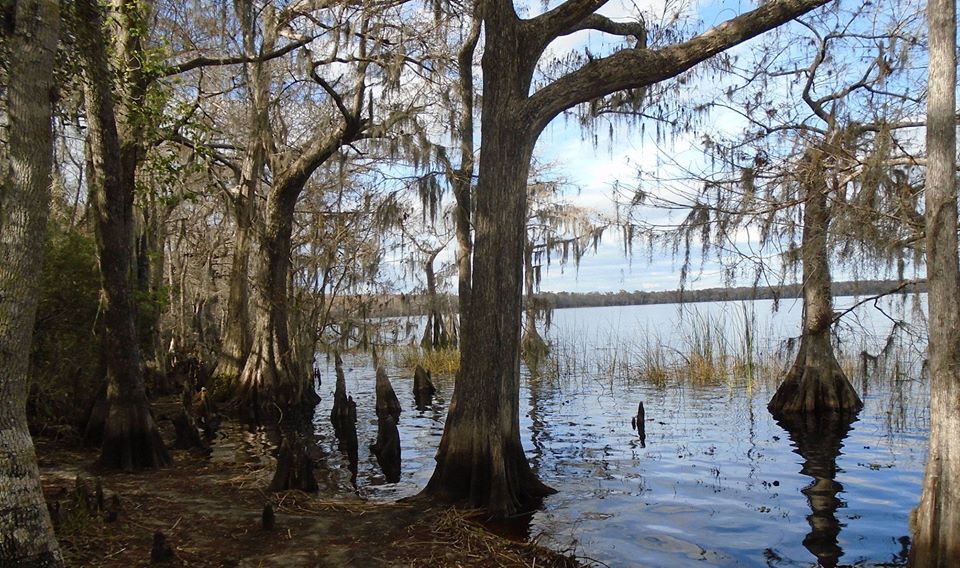
My photos are from the preserve. Notice the pine and palmetto, as well as the evidence of frequent fire that keeps this fire dependent ecosystem in balance. What looks like dead trees in the background are bald cypress, that lose their needles in winter, hence the name bald.

I also note that while my photos show the trees I love, the sky is a big player in the pictures. In that, it reminds me of Brasilia.

Convertibles

I would never own a convertible, but we are making it a tradition to rent one one time a year for a road trip. We started the tradition by accident. I was finishing up a training simulation at Camp Pendelton, near San Diego. Chrissy came out to meet me. I rented a car, but it turned out to be a piece of junk. When I took it back and complained, they offered a nice convertible. We drove up the California coast and then out to Palm Springs and Joshua Tree National Monument. Driving the convertible greatly enhanced the pleasure of the trip.
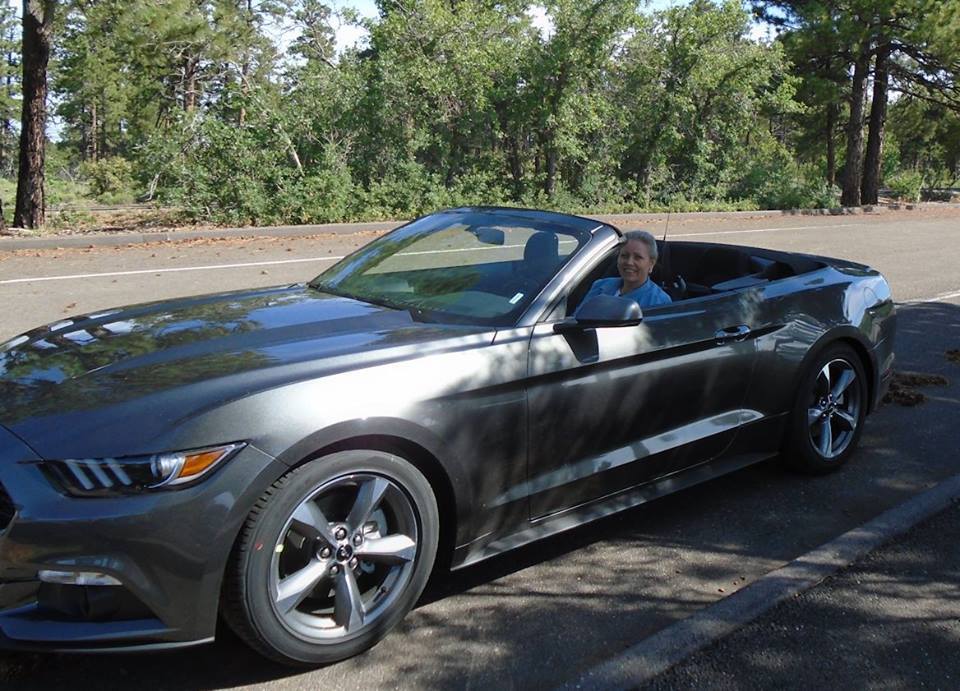
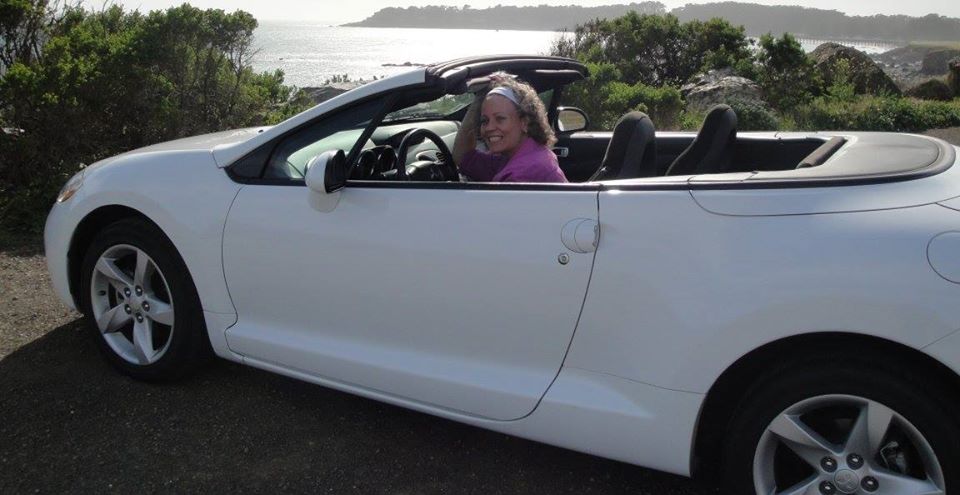
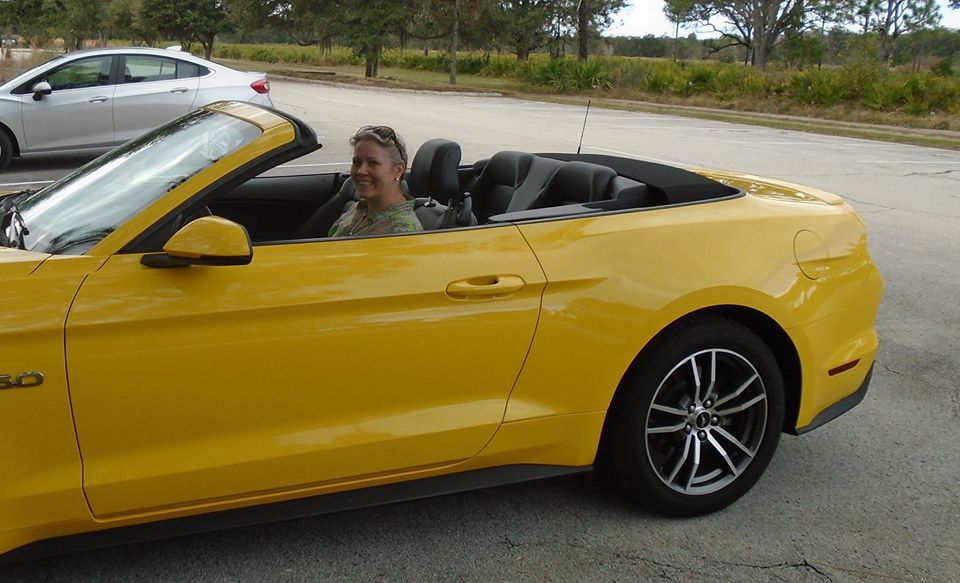
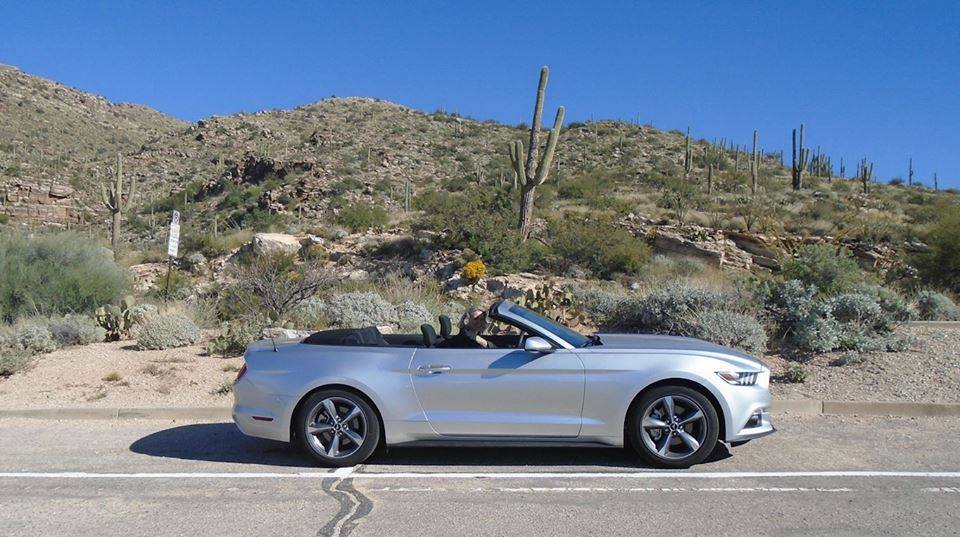
We are going to do a road trip from Orlando down to the Key West, so we have a convertible again. Chrissy gets to drive it most. The yellow one is the current version. The silver one is Mount Lemon, near Tucson. The white one is California coast and the gray one is Grand Canyon.

Forestry Book of Days

January 11 – 1887 –  Aldo Leopold is born on this day in 1887.  Considered by many to be the father of wildlife ecology and the United States’ wilderness system, Aldo Leopold was a conservationist, forester, philosopher, educator, writer, and outdoor enthusiast. Among his best know ideas is the “land ethic,” which calls for an ethical, caring relationship between people and nature. Leopold’s collection of essays, A Sand County Almanac, sold more than two million copies and has become one of the most respected books about the environment ever published.
 
February 7 – 1958 – On this day in 1958, Tall Timbers Research Center is established near Tallahassee, Florida.  Now called the Tall Timbers Land Conservancy (TTLC), it  is a widely regarded information resource for fire ecology, game bird management, vertebrate ecology and forestry. The Research Station is recognized as the home of the study of fire ecology and is an advocate to protect the right to use prescribed fire for land management. The Land Conservancy is recognized as one of the nation’s leading land trusts, and protects traditional land uses in north Florida and south Georgia by conserving more than 128,000 acres in this region through conservation easements. (Ref – http://talltimbers.org/welcome-to-tall-timbers)
 
February 24 – 1889 – Herbert L. Stoddard is born on this day in 1889.  Stoddard was one of the most important southern conservationists of the twentieth century.  He developed a method of forest management in the longleafwiregrass region of Georgia that is still widely practiced today.  Known as an authority on the bobwhite quail, Stoddard advocated the reintroduction of fire as a land management tool to improve habitat, at a time when scientists and officials were trying to eradicate fire from forests. Along with his friend and colleague Aldo Leopold, Stoddard also helped establish the wildlife management as a profession.  Stoddard was among the first to advocate an ecological perspective to land management.  (Ref – http://www.georgiaencyclopedia.org/articles/geography-environment/herbert-l-stoddard-1889-1970)
 
June 12 – 1941 – The first official tree farm is dedicated in Montesano, Washington on this day in 1941. Washington Governor Arthur B. Langlie delivers the dedicatory address. Owned by the Weyerhaeuser Timber Company, the 120,000-acre Clemons Tree Farm was established to demonstrate fire control and reforestation practices.

October 8 – 1871 – The most devastating fire in United States history is ignited in Wisconsin on this day in 1871. Over the course of the next day, 1,200 people lost their lives and 2 billion trees were consumed by flames. Despite the massive scale of the blaze, it was overshadowed by the Great Chicago Fire, which began the next day about 250 miles away. ( http://www.history.com/this-day-in-history/massive-fire-burns-in-wisconsin)

October 24 – 1947 – On this day in 1947 Virginia certifies its first twelve tree farm units. Governor William Tuck presents the first certificates at a meeting of Virginia Forests, Inc., in Richmond. The first certificate is awarded to M.M. Jones of Purdy.