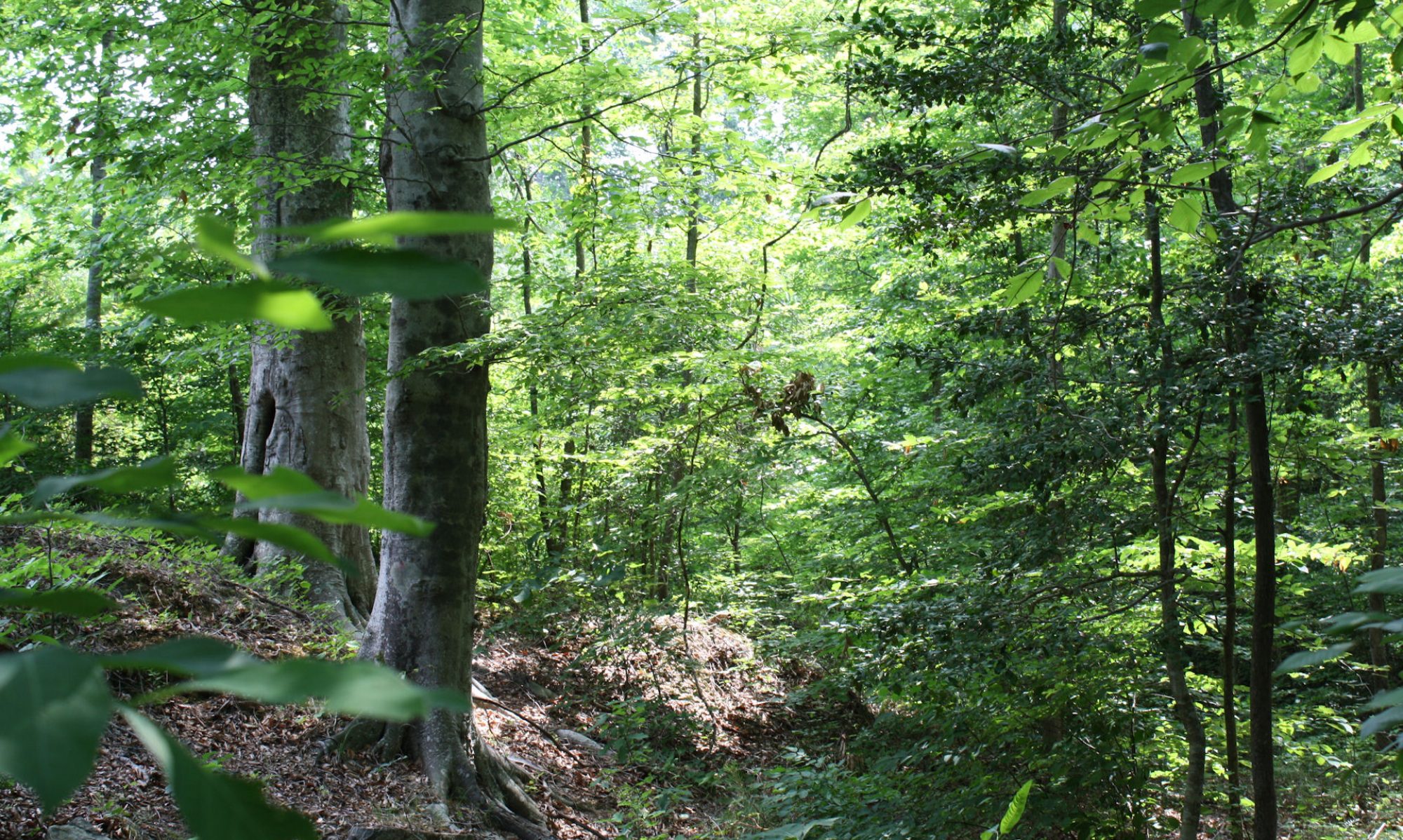
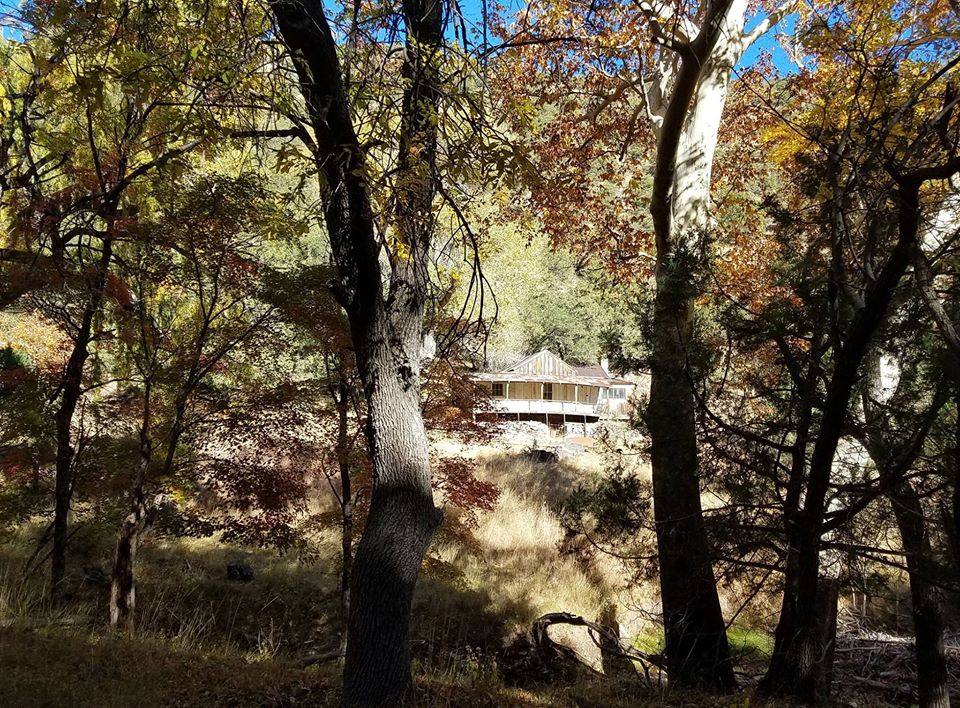
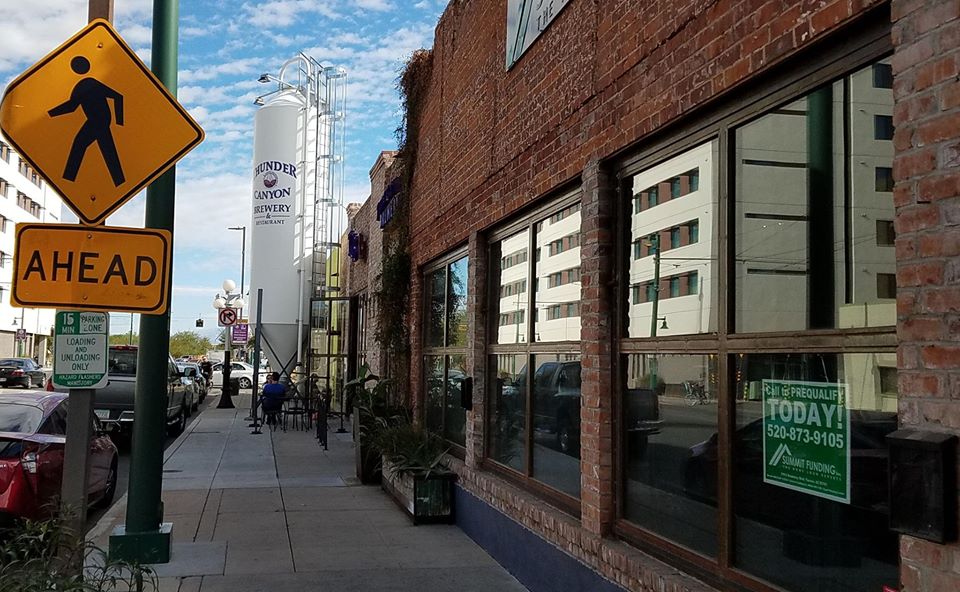
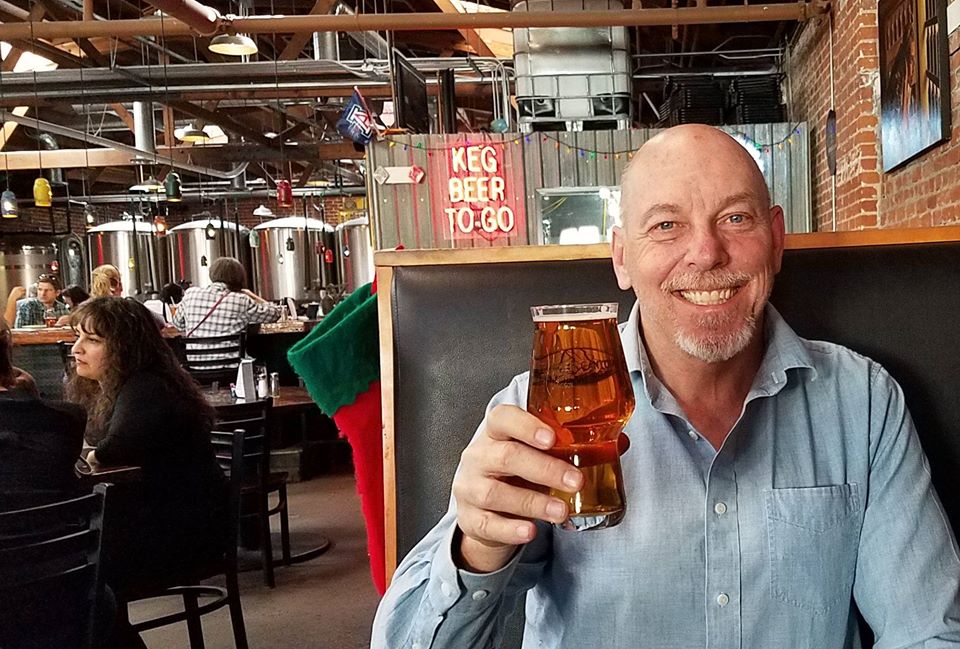
In keeping with my beer tour activities, we stopped off at Thunder Canyon Brewery in Tucson. They have an IPA called “Sky Island”. It tasted good, but the taste came second to the name in my book. Anyway, the photos below are self explanatory, except maybe the last one. That is a left over picture from the Ramsey Canyon/Sky Island post of a couple days ago. Ramsey Canyon had people living there permanently and seasonally escaping the hot desert. This shack is typical of them and seems familiar to anybody who has watched old westerns. I could imagine the sheriff coming up to see if outlaws were holed up in a place like this.
Maricopa Agriculture Center
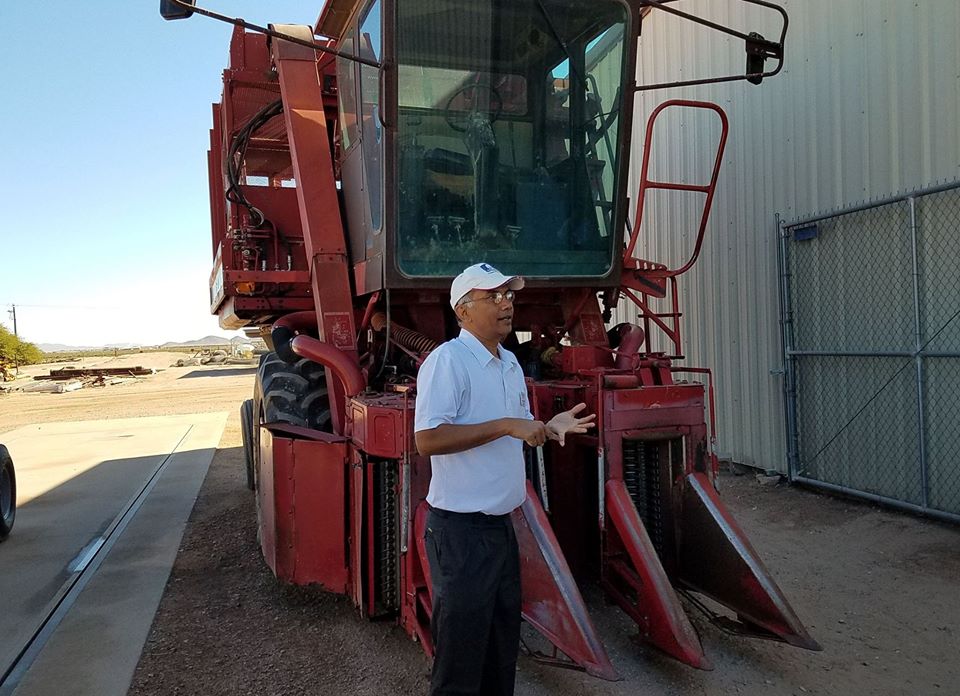
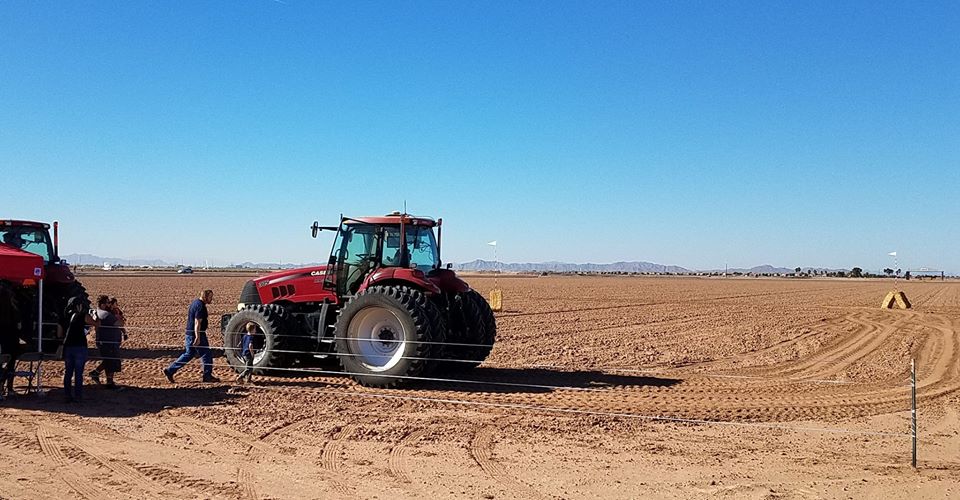
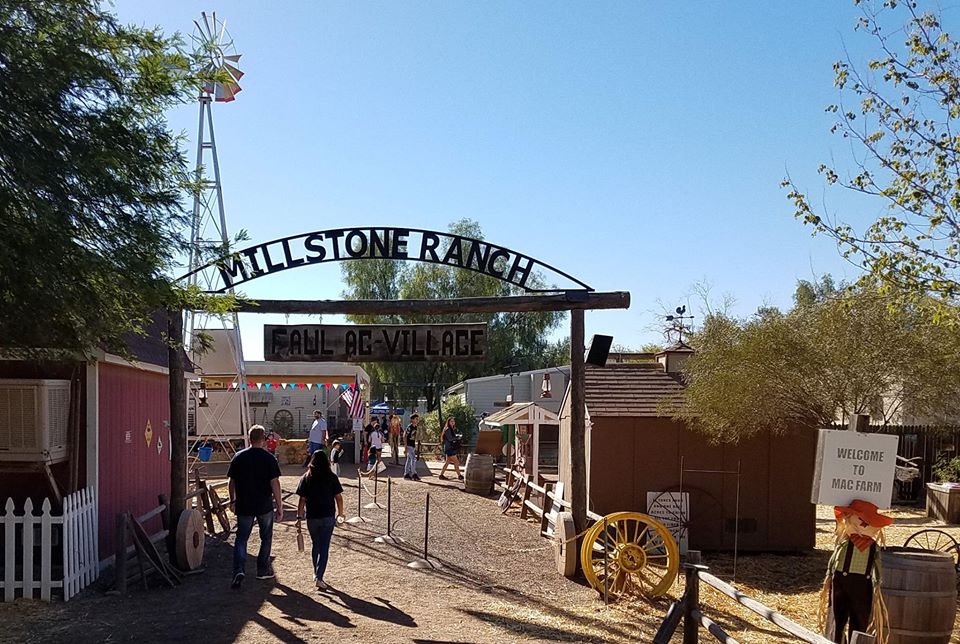
Visited the MAC (Maricopa Agriculture Center) today.
We saw some tractors that run on GPS. People could ride in the driverless vehicles to show how it was done.
Another interesting thing was a mechanical cotton picker. This is not a new invention. It was developed over a couple decades in the starting in the 1920s by John Rust with the later help of his brother Mack Rust. It was a kind of Wright Brothers thing. These guys just worked and improved until they got it right.
The Rust brothers grew up on a farm and picked cotton as kids. It was an unpleasant task, so John was always thinking of how it could be done by machines. Problem was that cotton comes in fiber balls, not like corn or grain. He remembered how the cotton stuck to his hands on wet days, and water is the secret of the cotton picker. It has rotating screws that are kept wet. They pull the cotton off the plant and it sticks because of the water until it is brushed off.
The machine they showed us is a relatively old and small model. It can pick 9,000 pounds a day. There are some that can do 90,000. In comparison, a reasonably fast human picker can do only around 400 pounds a day. That means that the big machines replace more than 200 field workers. This was not welcome everywhere. Since it would replace so many workers, some feared disruption and social upheaval. Besides, labor was cheap and there was a lot of it available during the Great Depression so not much interest in financing the machines.
The Rust brothers eventually did make good. Commercially viable models came out after World War II, and they soon transformed the fields of the South and West. Today, the only cotton not picked by machines in America is in a few very small experimental fields, too small for machines. Even in developing countries, where labor is still very cheap, the machines are taking over.
I wondered why mechanical cotton pickers were not developed earlier. After all, mechanical reapers for grain were developed in the 1830s, a century before the cotton pickers, and widespread within decades. The difference was probably in the type of labor employed harvesting. Grain was grown everywhere in the USA, but the big producers were in the Midwest and on the plains, grown by farmers who owned their land and/or employed free labor. For a long time, cotton was grown only in the South and by slave labor and later where labor was less mobile, less free.
Adam Smith argued that slave labor was inherently inefficient and he was right. Even setting aside the really big moral issues, free labor is in the long run better and progress is hastened when free people can innovate and benefit from the innovations. The cotton picker might have come around about the same time as the mechanical reaper, had the labor system been different.
Bisbee, Arizona
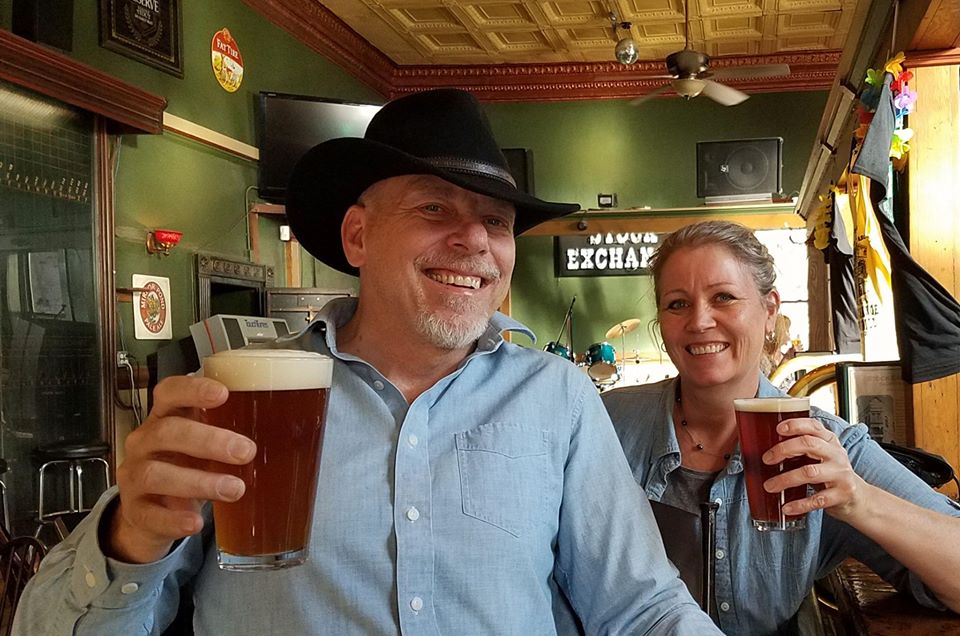
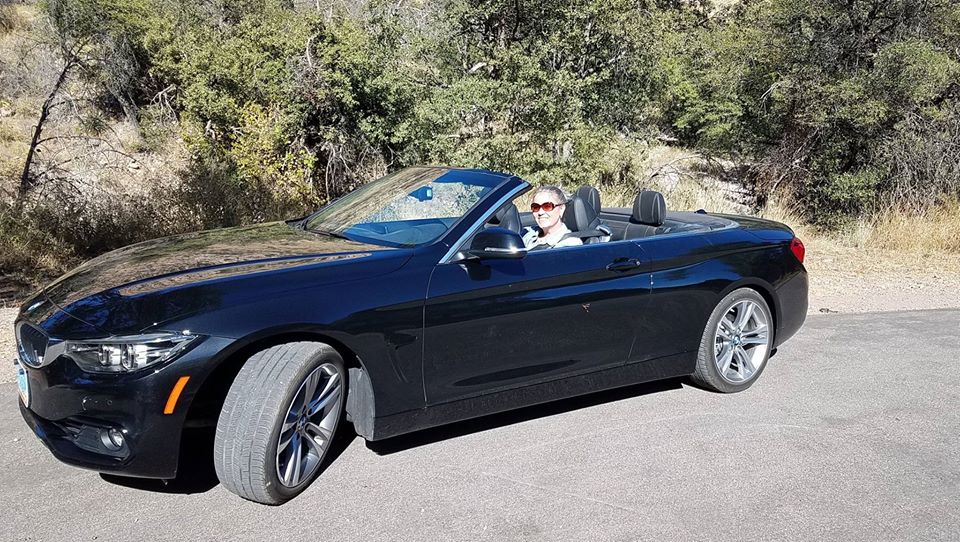
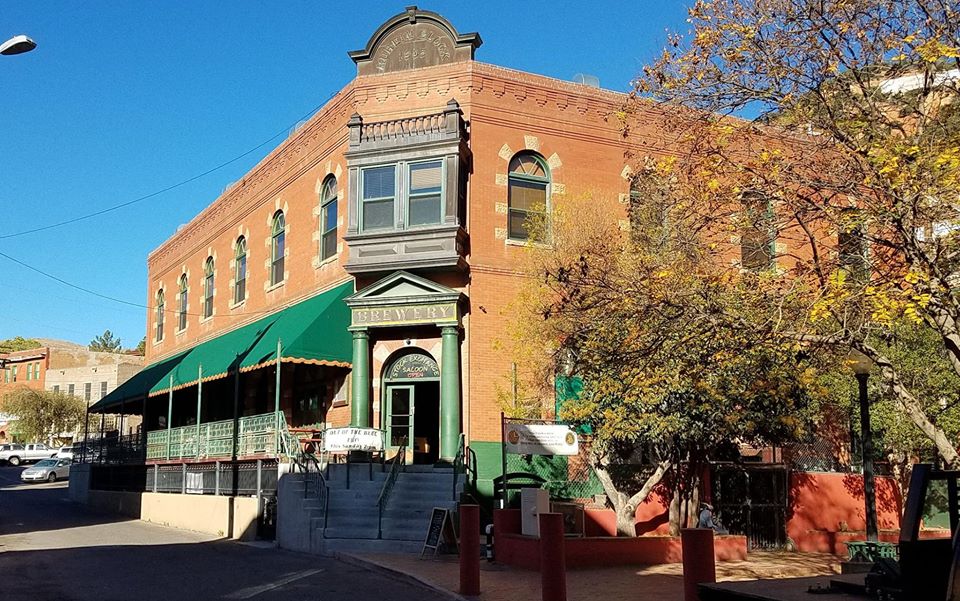
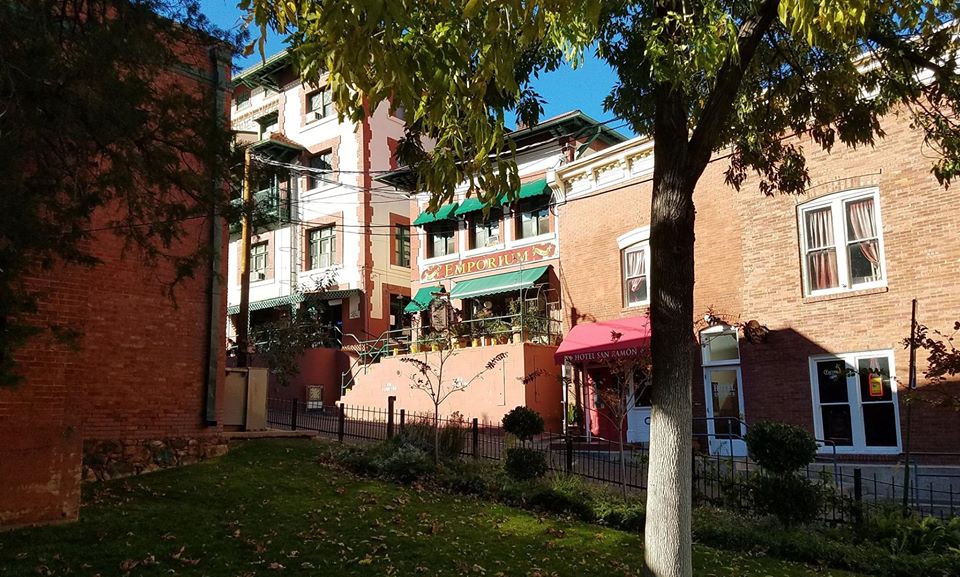
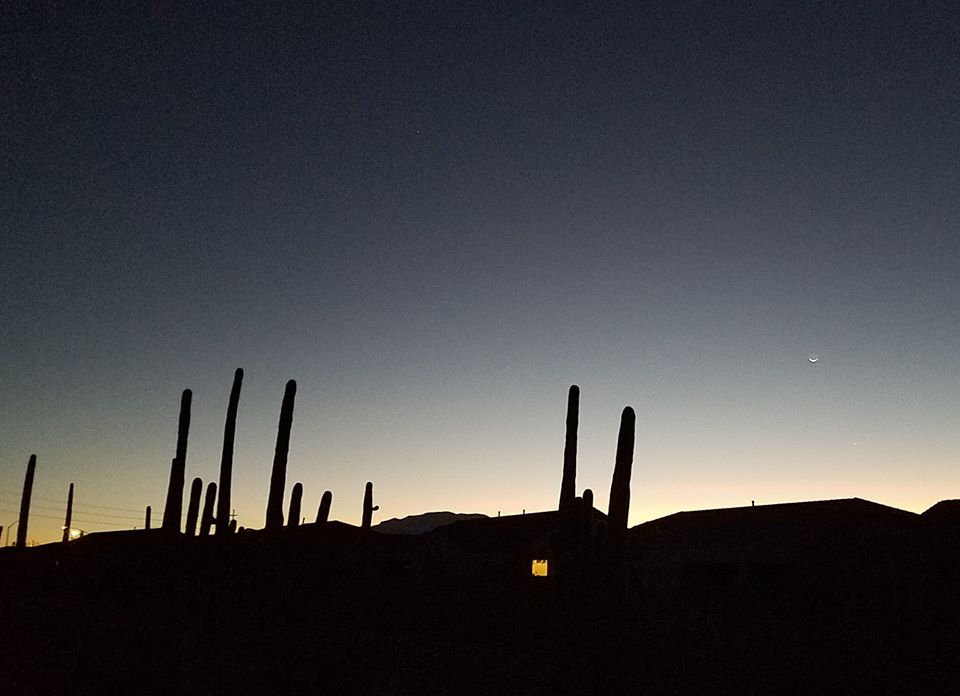
We came here to look at TNC lands with Apache pines. I will write about that in a few hours. But meanwhile we enjoyed some nice things in southern Arizona.
We drove through Bisbee, Arizona. It used to be a big mining town and there were lots of rich people there at the turn in the late 19th and early 20th centuries.They built some nice houses, often in the eclectic style of people newly in the money. But the boom did not last and prosperity moved elsewhere, leaving a smaller city with a bigger past. The funky atmosphere, pleasant climate and inexpensive real estate attracted lots of the children of the 1960s, after Haight-Ashbury got too expensive and too square. They ended up here, where they seem to have aged in place, making it a kind of new age haven. Lately, there has evidently been a boom in brewing, which is a good thing.
First picture shows Chrissy & I hoisting a couple of local beers in Bisbee. Next is Chrissy in the rental car. After that is the bar where we drank the beer and a street scene from Bisbee. Last is the pre-dawn sky from cousin Elise and Carl’s house.
Visiting Elise & Carl
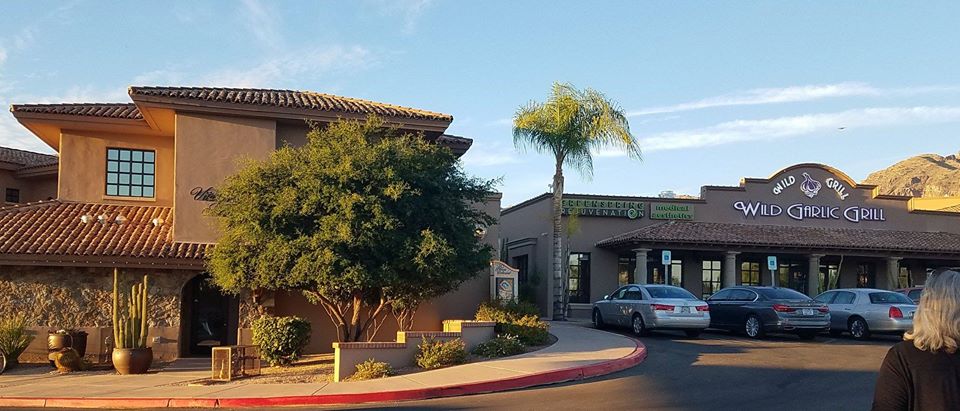
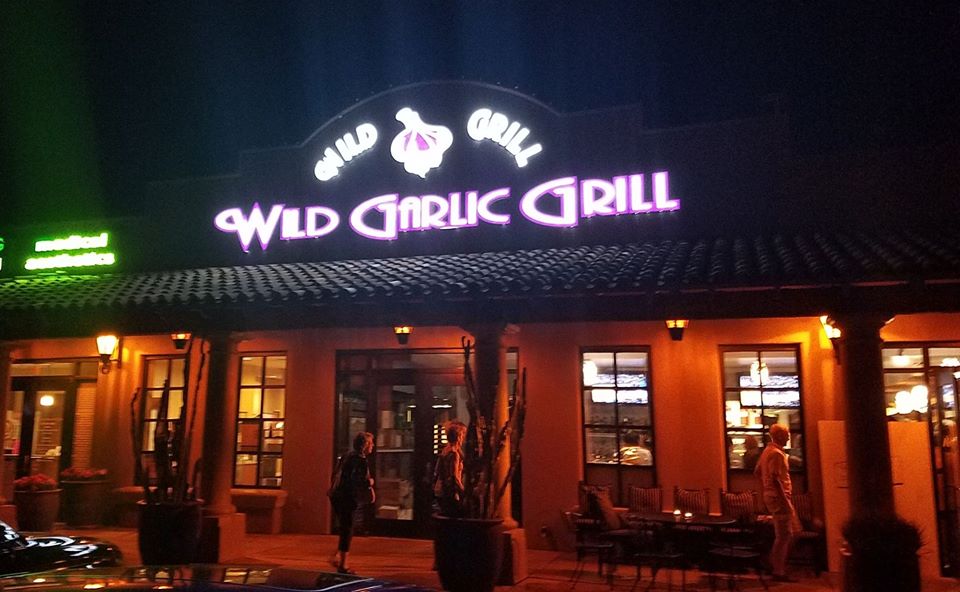
Visited cousins Elise and Carl in Marana, Arizona. We had a really good meal at Wild Garlic Grill.
November on the farms
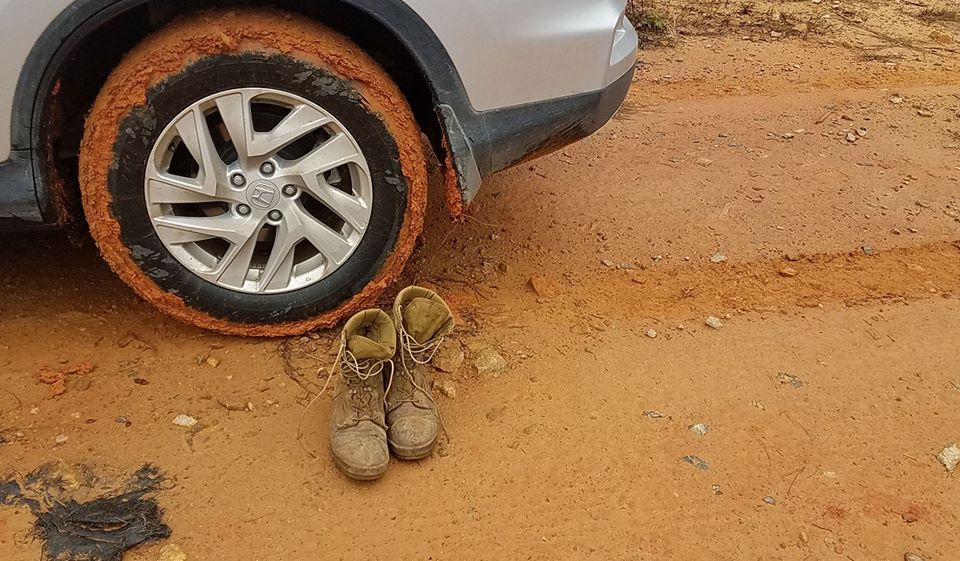
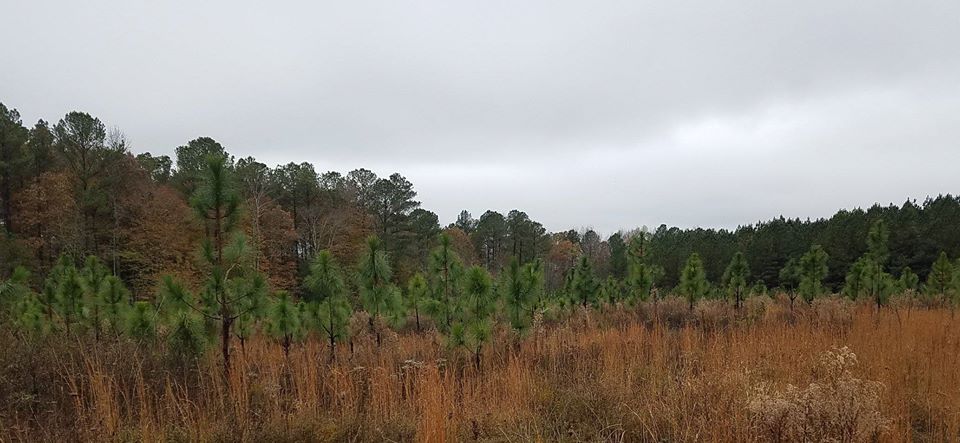
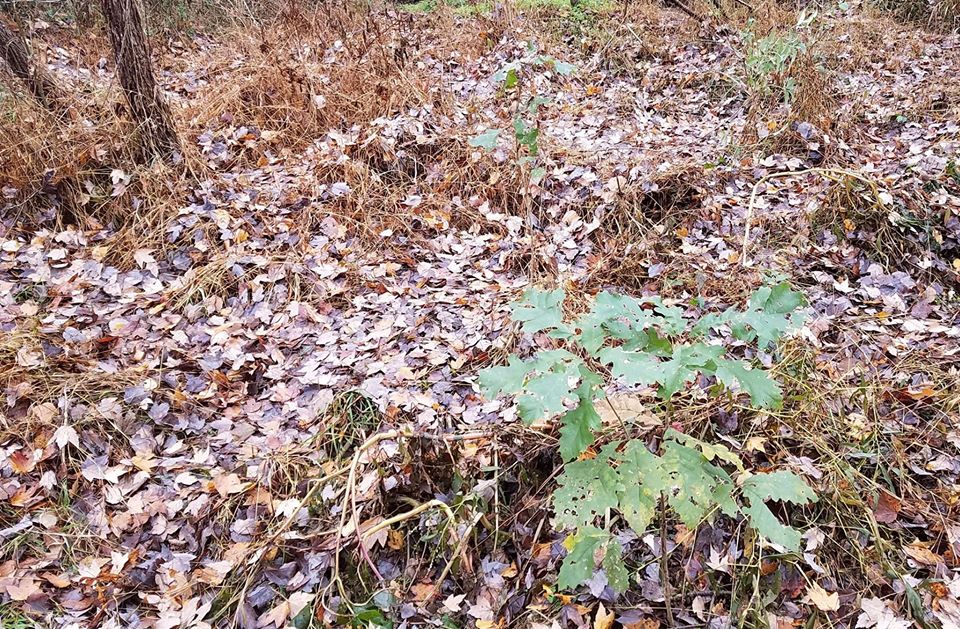
The weather man promised sun and pleasant weather by the middle of the day. He was mistaken. It was wet and muddy at the farms.
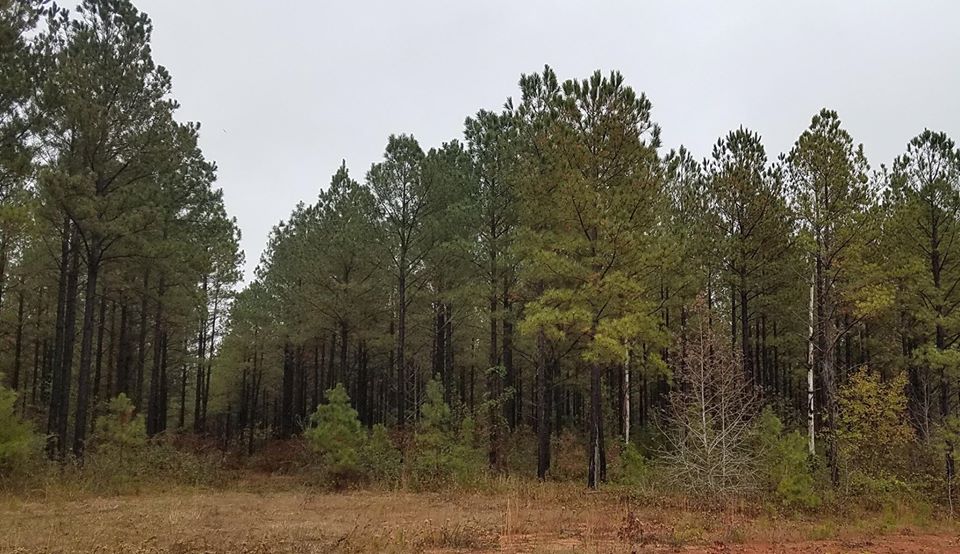
I walked through the longleaf. Most survived the fire and they are thriving. I noticed some fairly big holes in the plantation. It seems they are mostly in places were the brambles were very thick. I think they may have killed off the little pines. I thought about an alternative explanation, that maybe the planting crew avoided the brambles, but we had burned before planting, so the brambles were not there. Of course, maybe it was something else entirely.
The fire killed a large number of loblolly in their section. I may inter-plant some longleaf there and in the empty spots, but maybe not until next year. I think we will burn again in late 2018 for the general longleaf planting among the loblolly that I will thin to 50 BA plus make the patches. Easier to plant then.
I also noticed a few shorleaf pine that came back after the fire. Shortleaf are also fire adapted. I am letting them grow. Shortleaf don’t get the respect they deserve.
The fire had a few effects besides cleaning out much of the brush. I noticed a lot of double leaders. I think the fire may have affected this, but I am not sure. I lopped off a maybe twenty double leaders. Some of the trees also developed long and almost horizontal lateral branches. I lopped many of them off too, since I fear that an ice storm would weight them down and maybe bend the trees beyond recovery. I don’t know if I am doing the right things, but it seems right.
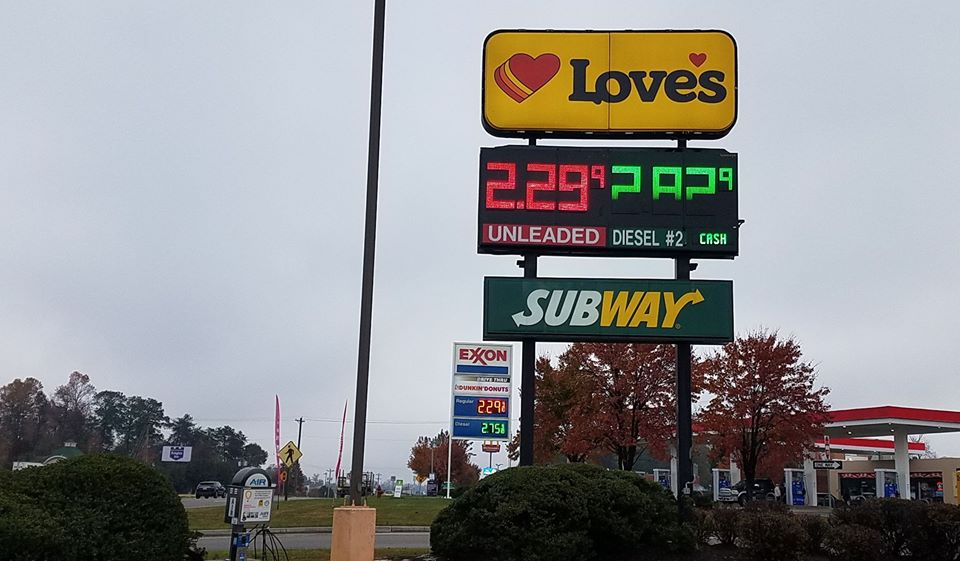
My first picture shows my boots. The Marines gave them to me in Iraq and they are still good. I wore them every day for the year I was in Iraq, but I now use them only on the farms, so I suppose that is one reason why they are lasting so long. The Freeman farm (with the longleaf) is also related to Iraq, in that I used some of what I made there (danger pay etc) to buy this land. Next picture shows the usual longleaf panorama. They are easier to see now that the grass is yellow. After that is the Freeman lobolly that we are going to thin early next year. Next is my usual Love’s photo, prices are higher. Finally are a couple of the bur oak Espen & I planted last spring. They are just for fun. Bur oaks are cool.
Fulbright at Brazilian Embassy
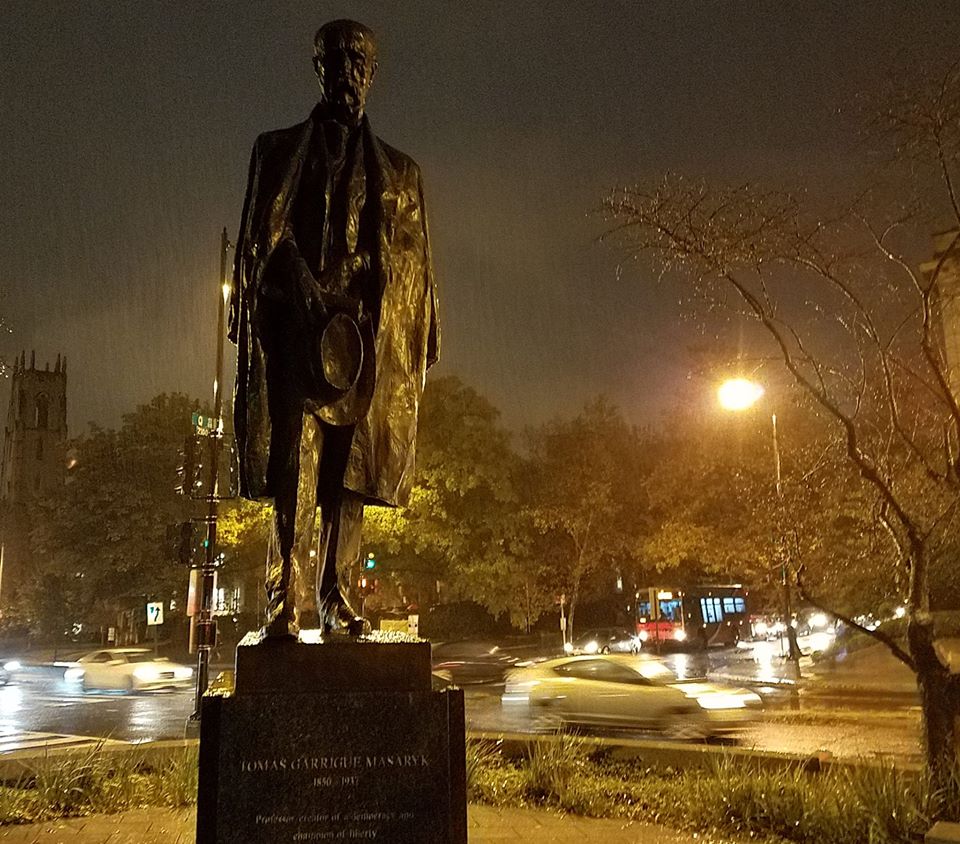
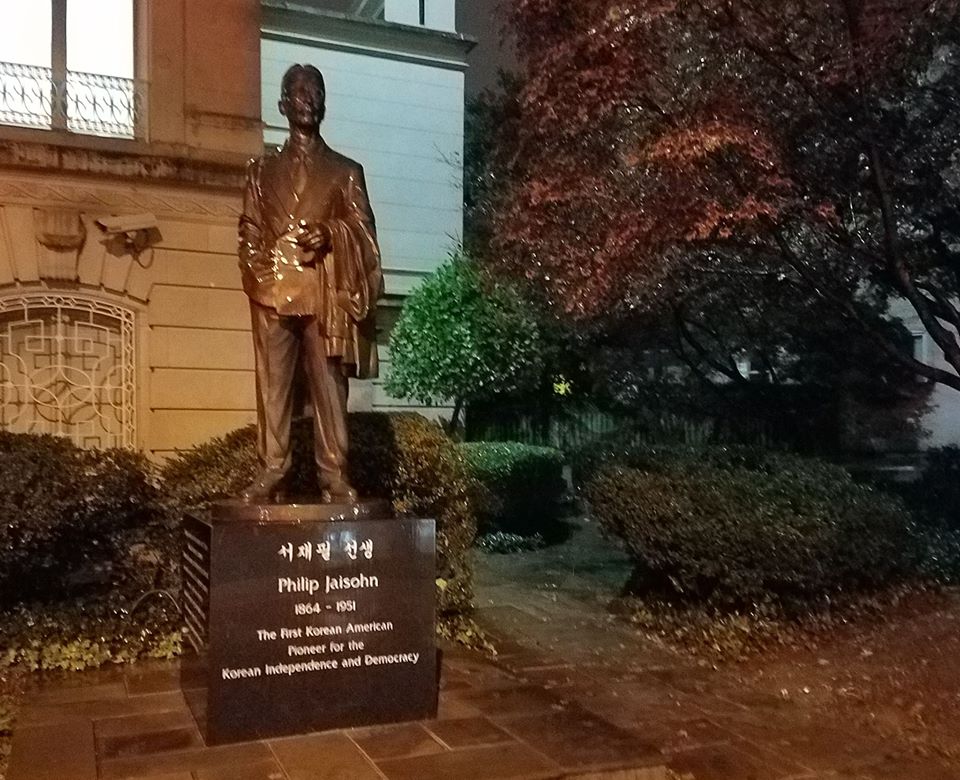
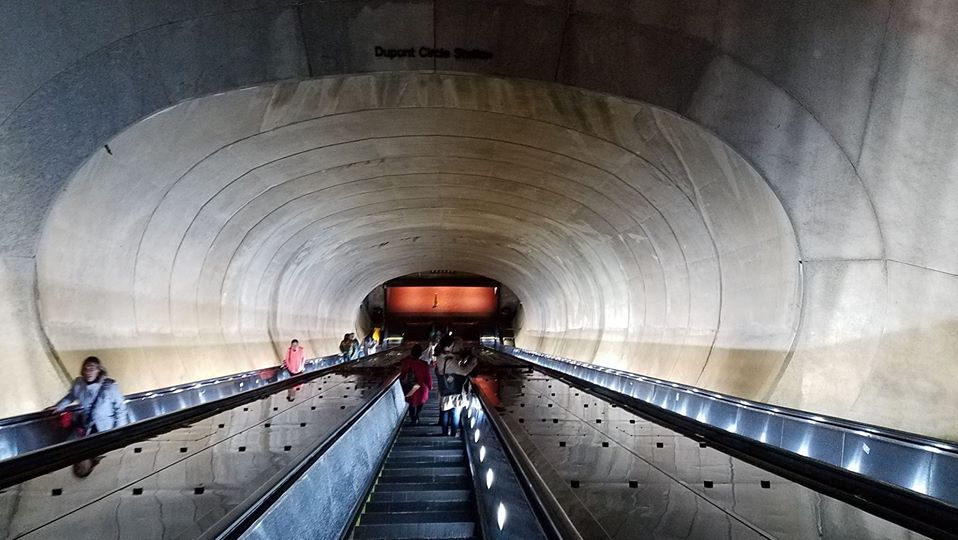
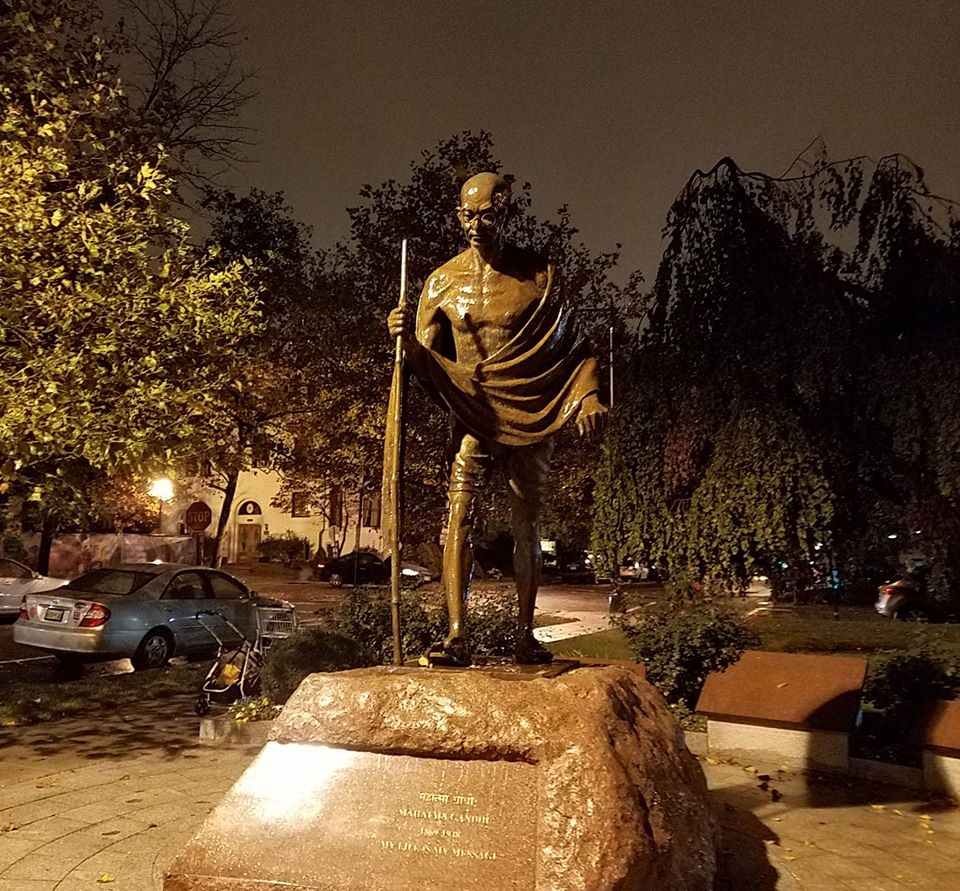
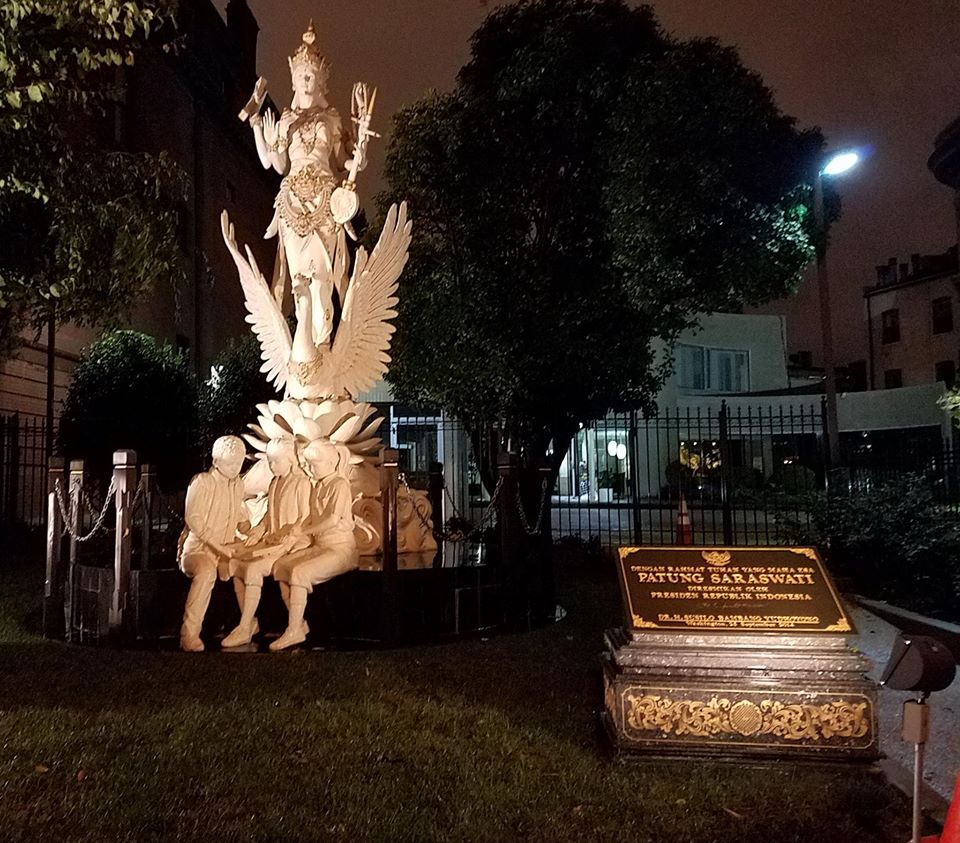
Went to the Brazilian Embassy for the 60th Anniversary of the Fulbright program in Brazil. I was glad to be invited, even though I have been away for a few years. I am a true believer in education exchanges and Fulbright is the gold standard.
On the down side, it was rainy. I took the subway to Dupont Circle Metro and then had to walk a bit more than a mile up Massachusetts. If not for the rain it would have been very pleasant and even with the rain it was interesting, as you can see from the pictures. The first group are statues along the way. Last is the tunnel down to the Metro – a little scary.
Nice fall day in Washington
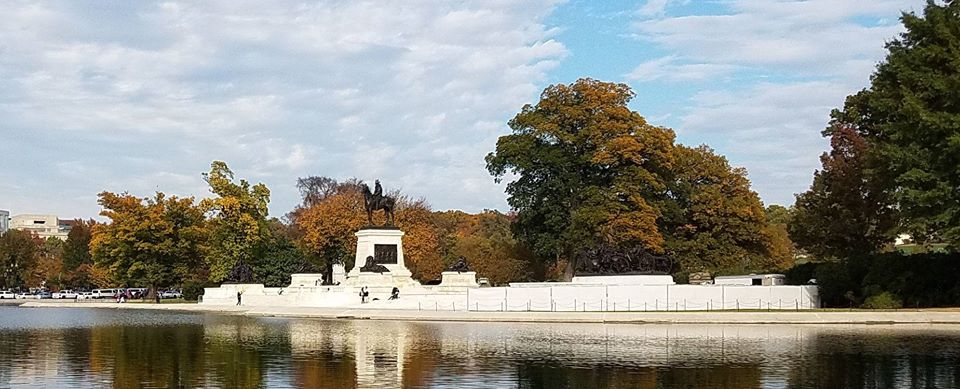
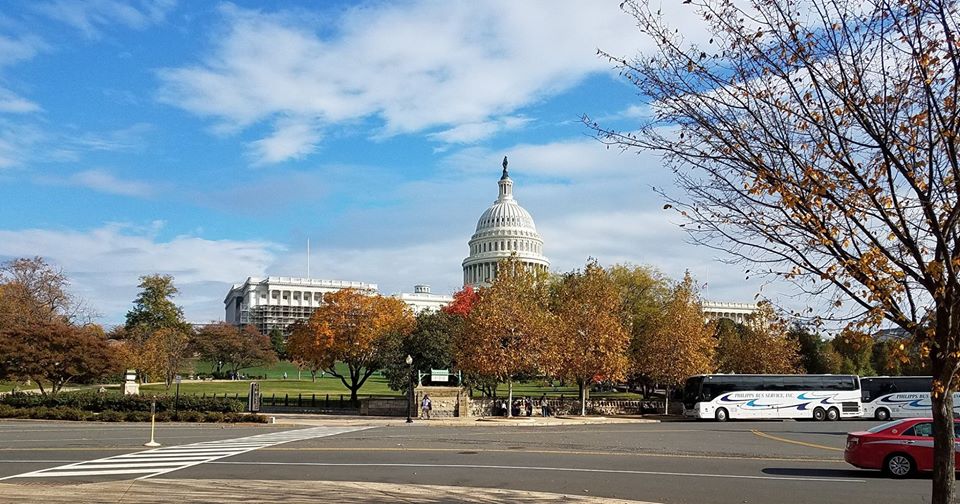
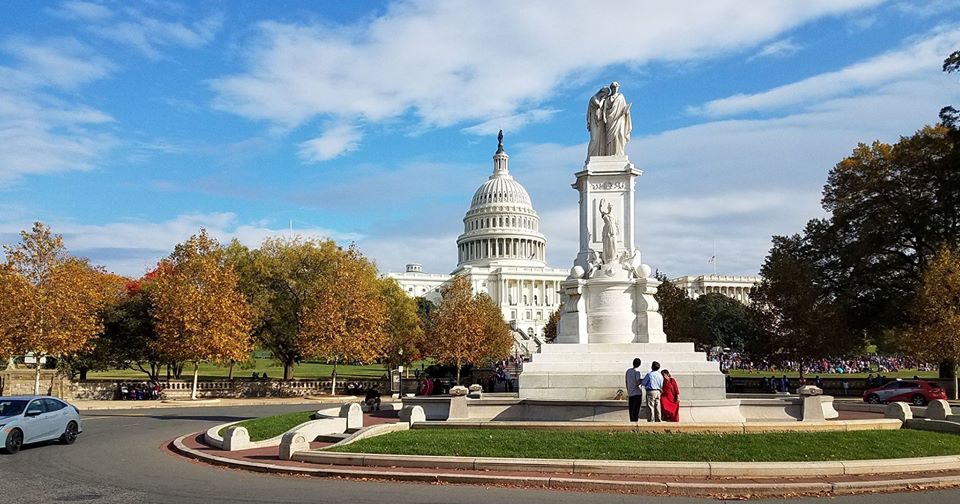
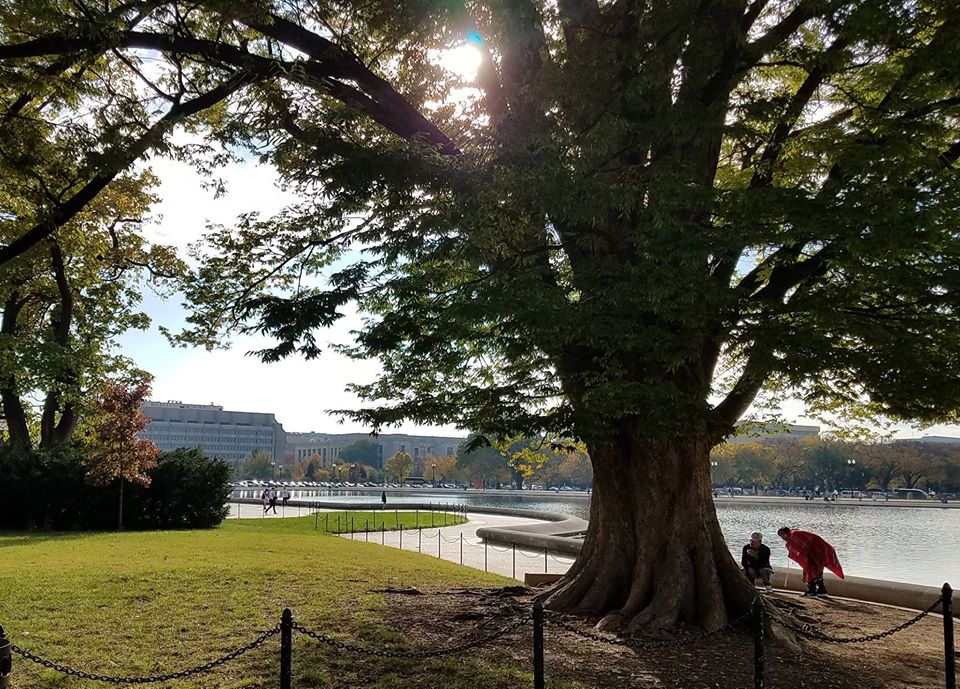
They said it was going to rain. My custom is to ride my bike if it is not actually raining when I set off, no matter the weather prediction. It turned out to be a beautiful day.
I was going to Washington to listen to a “First Monday” lecture about public diplomacy outreach to North Korea, sponsored by the Public Diplomacy Council. I am not really interested in North Korea. I took some notes on the presentations, but I like to attend these meetings more to see old colleagues and ride my bike.
Anyway, it was a great day, one with the kind of soft air, that kind of balmy but pleasant weather you experience only in spring and fall, warm enough to be comfortable but cool enough that the warm sun feels good on your back.
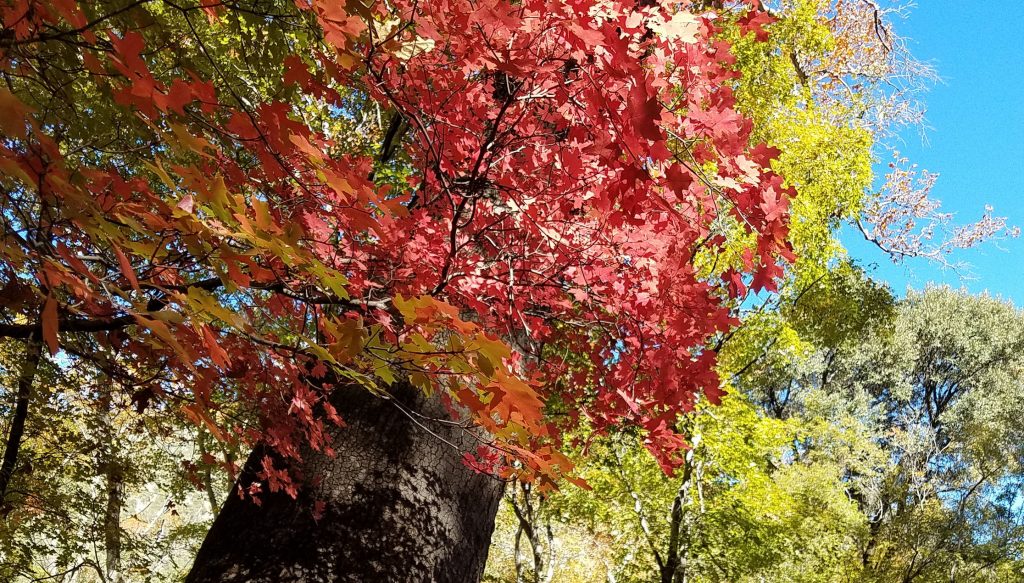
My first two pictures are slightly different aspects of the Capitol. Next is Grant’s monument. I felt a little trepidation posting this photo, lest some protestors see the beard and the Civil War uniform and seek to pull the statue down. Last is a big Japanese zelkova. I used to run around the Mall and this was part of my running trail, so it feels familiar. Grant and the Capitol have not changed much, although they cleaned up the Grant monument recently. The zelkova has grown a lot in the last ten or fifteen years. It is bigger, but I liked it better before. At one point in its life, it had a wonderful grace, a kind of hourglass trunk. It is still nice, but now it is just generally thicker.
Islands in the Sky
Sky islands are communities of plants & animals in places like Arizona characteristic of more northern ecologies. Altitude substitutes for latitude. They are remnant populations, surviving from a time when the earth was much cooler during the most recent ice age. As the earth started to warm about 10,000 years ago, these cooler-adapted communities moved up the mountains. They are like islands because they are surrounded by scrub or desert. That makes them precious and vulnerable, since they are unconnected to other islands or to the larger populations of their similar species, i.e. from seed/genetic banks to regenerate if a population was extirpated locally. It also makes them extremely interesting, since you can essentially go through biomes from hot desert to something like Canada by walking up hill and they provide lessons for adaption when climates change.
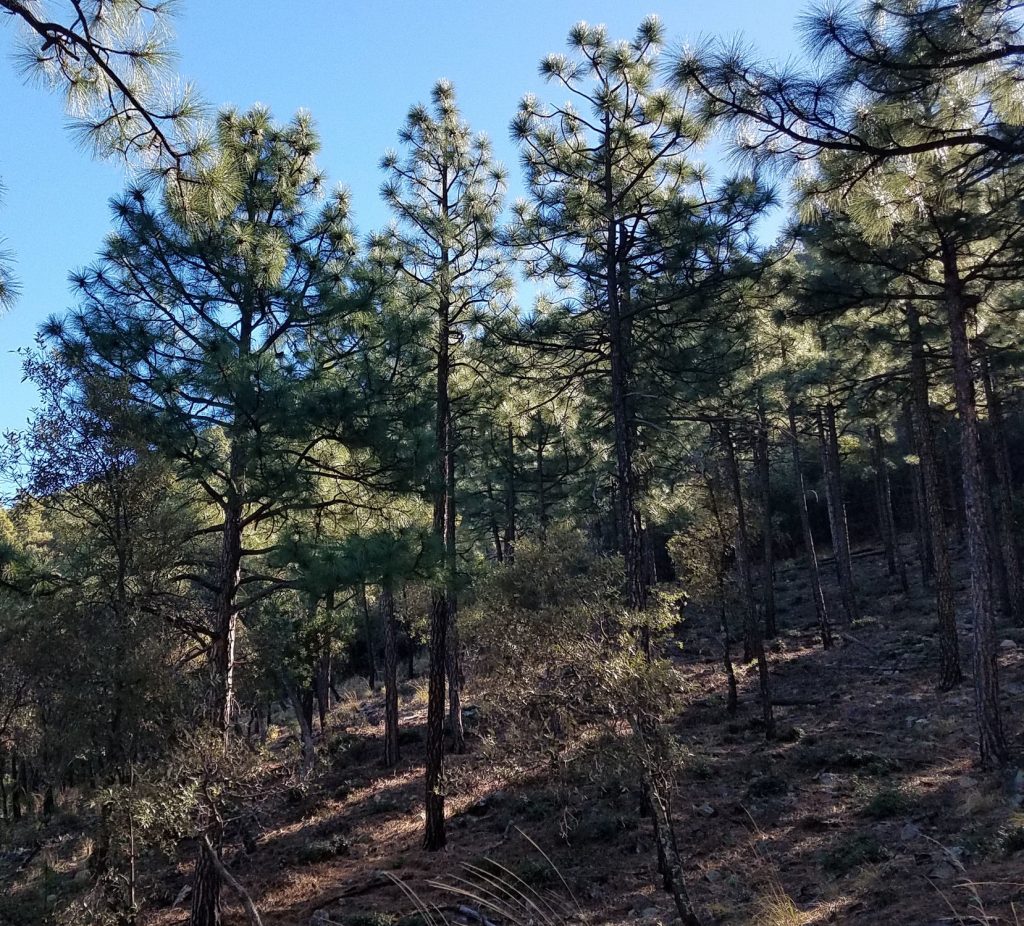
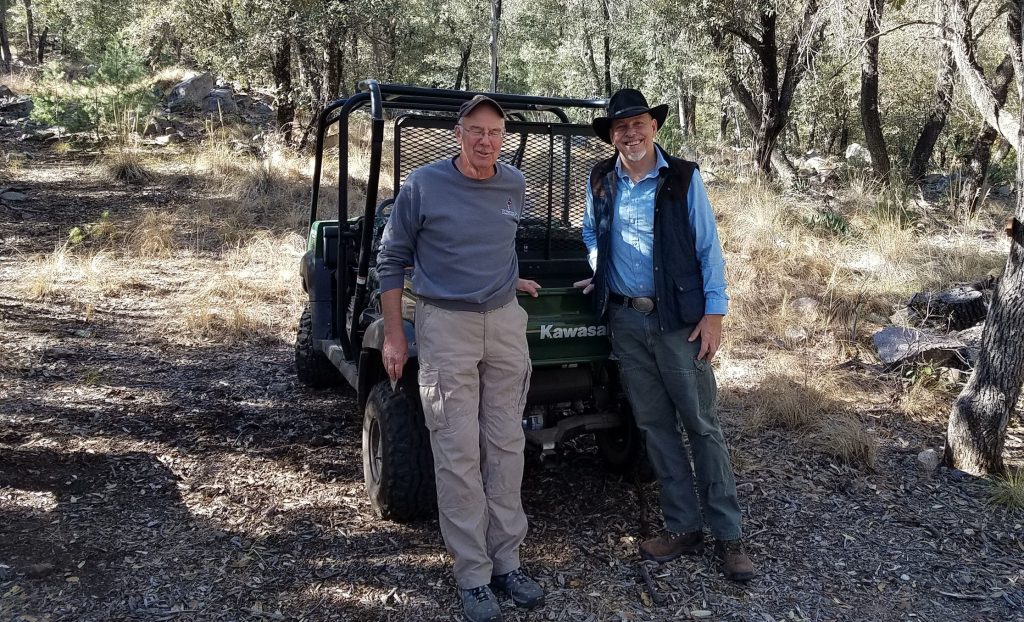
We came to the sky island at Ramsey Canyon to see Apache pine, pictured above. I learned that Apache pine have an ecology kind of like longleaf and kind of like ponderosa. Since I love both those species, I wanted to get to know these too. Apache pine are mostly present in Mexico’s Sierra Madre. They extend into the USA in parts of New Mexico and Arizona on patches like Ramsey Canyon. The Nature Conservancy owns a the preserve at Ramsey Canyon. I asked if I could talk to the steward of the place, and Eric Anderson was good enough to spend the morning with us, explaining the unique ecology of this part of Arizona. Eric and I are pictured below.
Ramsey Canyon sits at the nexus of four disparate biomes. To the north are the Rockies; south are the Sierra Madre; west is the Sonoran Desert and east is the high Chihuahua Desert. All of these influence the plant and animal communities, and you find species associating in ways like no place else. For example, Eric showed us agave cactus next to Apache pine, not far from Douglas fir and partly in the shade of massive sycamores.
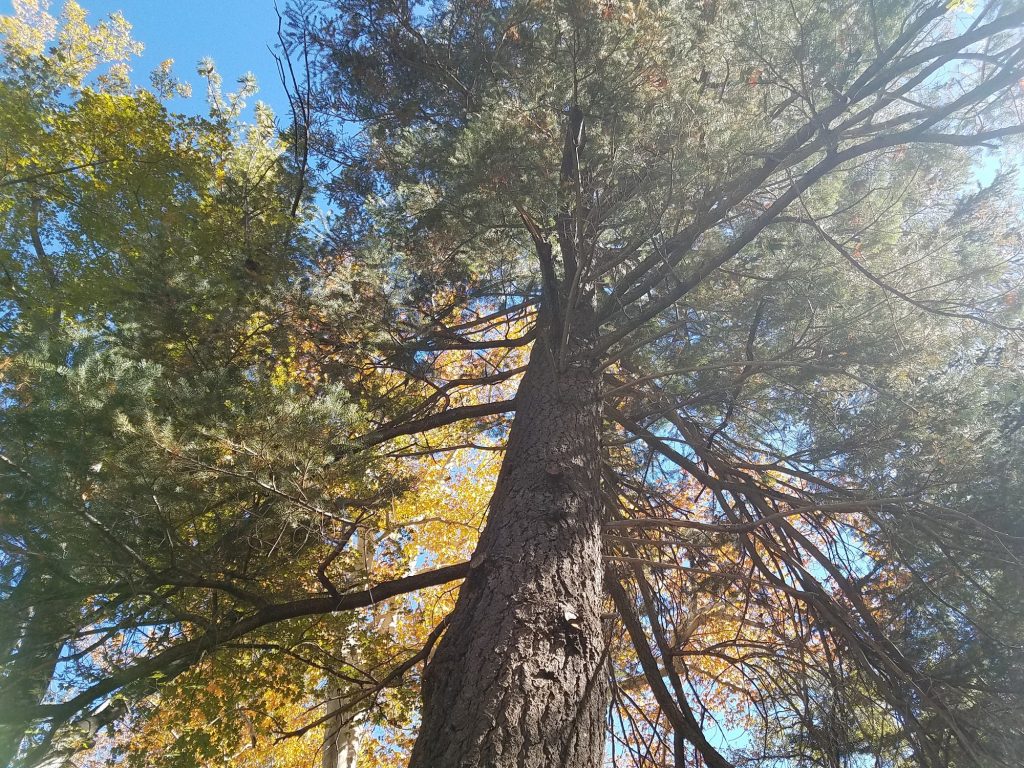
You can see some of this above and below. The Douglas fir surprised me. There were some really big ones. I associate Douglas fir with the rain forests of the Pacific Northwest. I did not expect to find them thriving so far south and near such dry deserts.
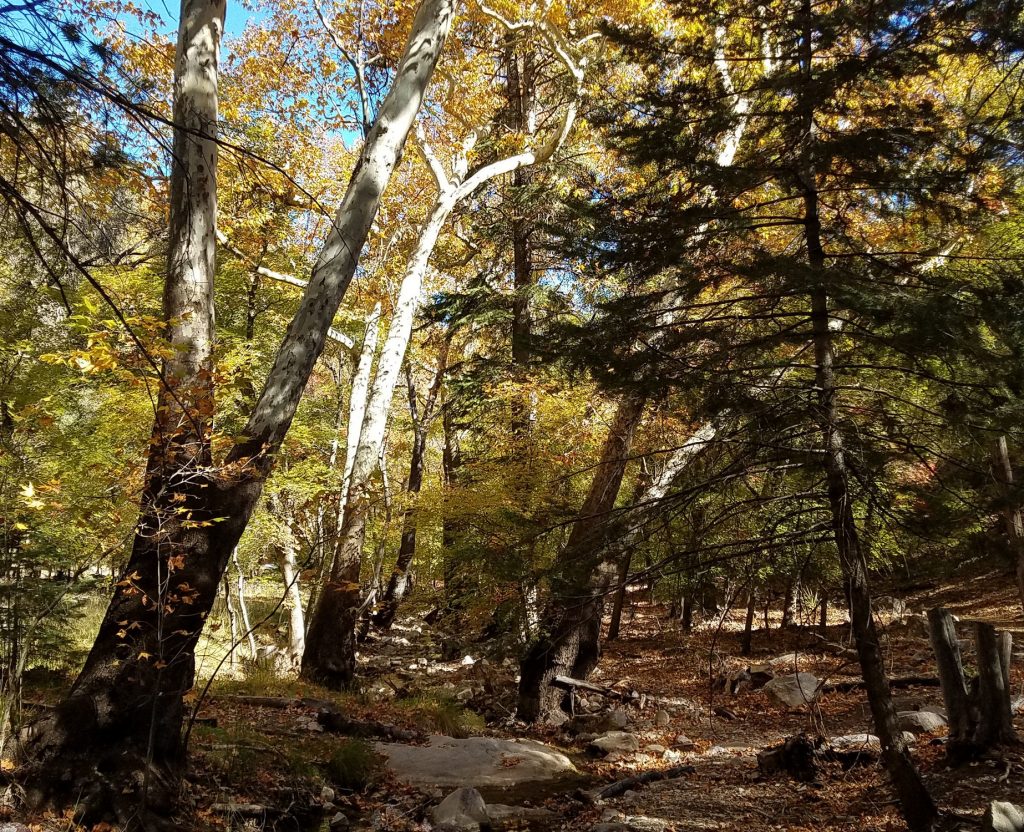
Most of the timber from the region was cut in the late 19th century, with the wood used for houses, mines and fuel in what were then fast-growing places like Tombstone and Bisbee, at the time among the fastest growing cities in the USA. Eric thinks that accessible forests were was mostly clear cut and the wood hauled away. Forests regenerated, but they were very different from those they displaced. The open and park-like coniferous forests were replaced by thick brushy forests of scrub oak. What these forests mostly produced was fuel for disastrous fires. When conifers did grow back, they also came in thick, what foresters call “dog hair” woods. These provide little space for the food that supports wildlife, and, like the scrub, they burn very hot.
On a tangent, Eric told us that the oak trees do not drop their leaves in autumn. They hold them throughout the winter and drop them in spring, before the hot and dry period in April and May. Those are the hottest two months. After that, the rains arrive and the wetter and cloudier weather cools the hills.
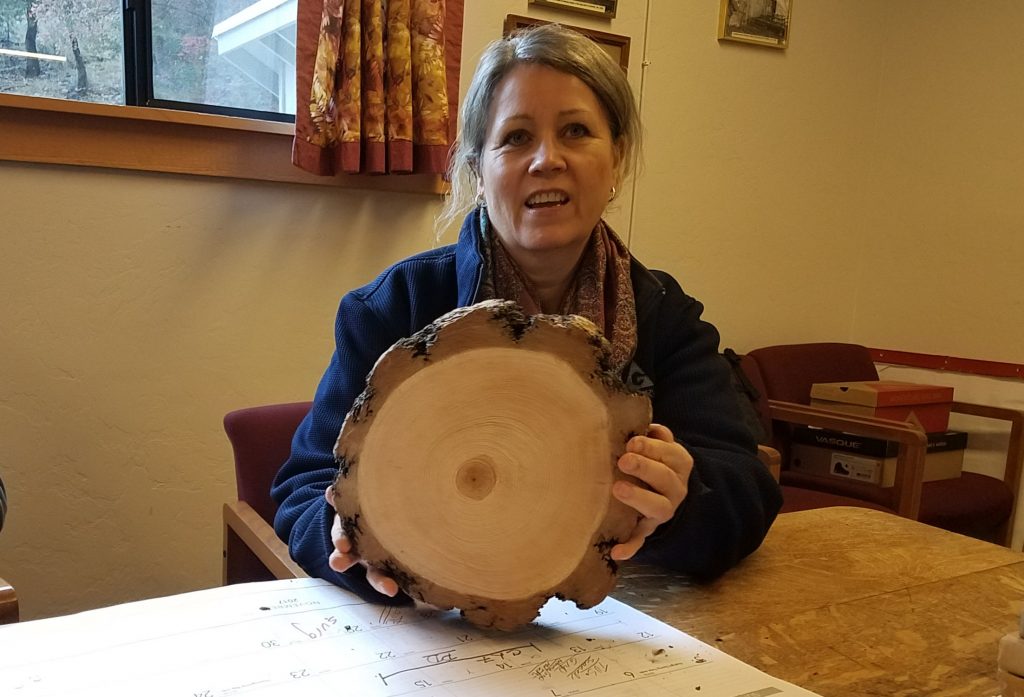
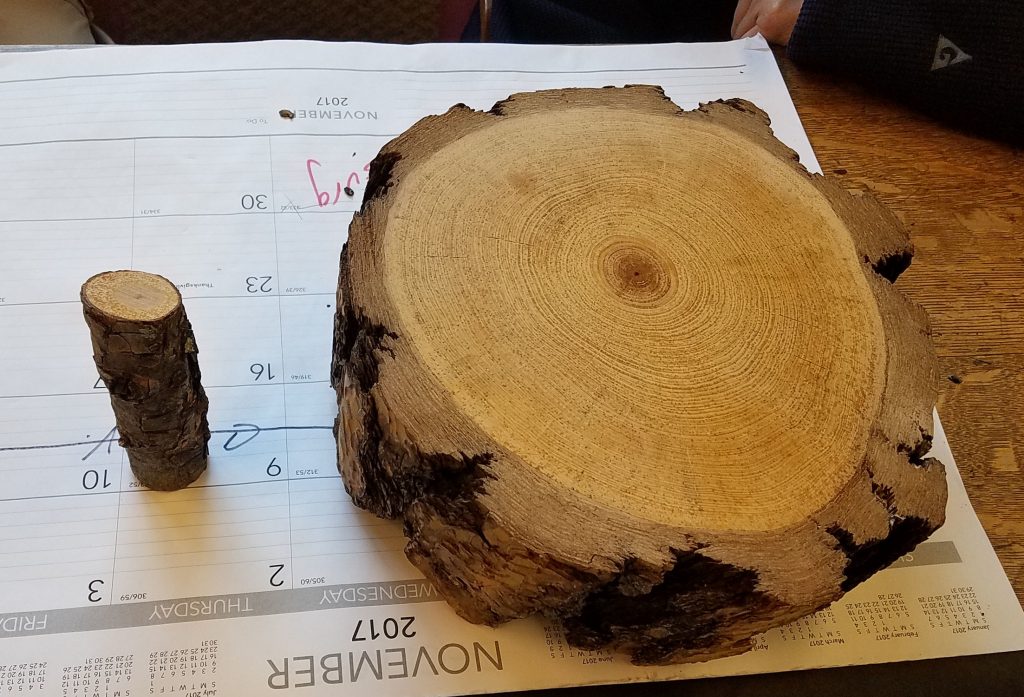
Fire was a key component of the pine forests. It burned through every 7-10 years, but those fires were low intensity. It knocked out the scrub but big trees were largely immune. The new fire regime featured less frequent but hotter fires that destroyed much of the standing forest and burned to the bare earth. It was a terrible cycle and we are still suffering. You can see a cross section of an Apache pine in the picture above. The thick bark is almost immune to low intensity fire. The two cuts you see below are about the same age. The one grew in an open forest; they other was part of a “dog hair” forest.
TNC wanted to reestablish natural rhythms, but could not used fire as much as the the natural ecology would indicate because there is too much chance of it getting away into nearby inhabited places. Another complication is that Ramsey Canyon is surrounded by wilderness areas. You would think that wilderness areas would be more “natural,” but you would be wrong. These areas were also impacted by the logging and mining of past, but now they are frozen in that state. They also grew back in the scrub and “dog hair” manner. They are full of fuel and are liable to burn in that disastrous way I mentioned above. Because they are officially called wilderness, they are subject to various restrictions and cannot be managed to reduce fuel and fire risk in ways that would be applied elsewhere.
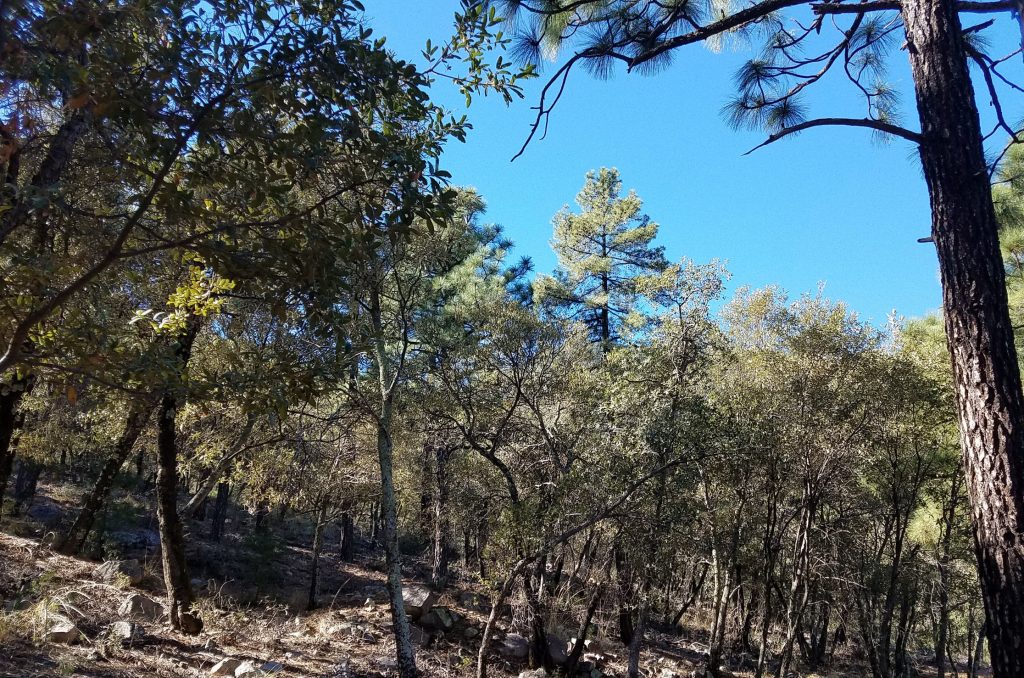
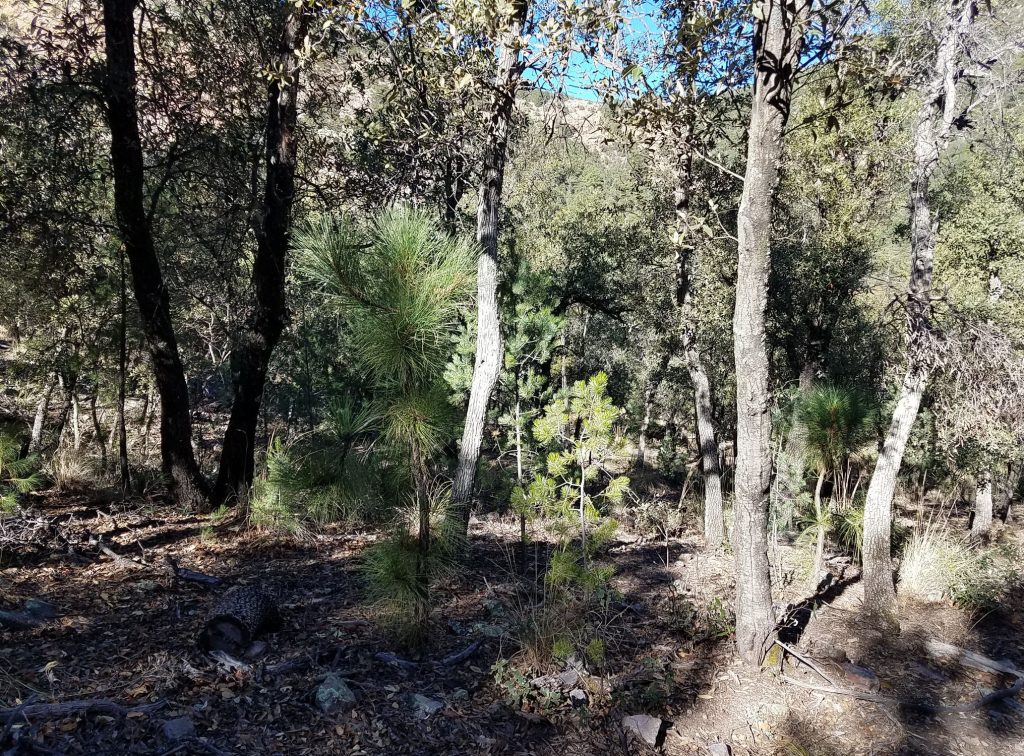
On the TNC land, they have thinned down the scrub oak on the north facing slopes and they hauled away the cutting. This is not as good as thinning followed by prescribed fire, but it as close as they can do under the current restraints. Some beneficial results are already clear. We saw regeneration of Apache and Chihuahuan pine, seedlings and young trees. The young Apache pine look a lot like longleaf in their grass and bottle brush stages.
There was a nice section of almost pure Apache pine. We could see carbon on the trunks and speculated that this area was fortunate to have a few low intensity fires pass through. It is amazing what comes back when you reestablish some of the natural factors. You can see the thinned brush above and below. Eric says that before the thinning, it was almost impossible to walk through the brush. Since the thinning, he has noticed that raptors like hawks have come to the area and more wildlife in general is present.
Eric shared a poignant story about the guys who do the thinning. They are convicts from the local prison. It is sought after work for them and Eric says that they are usually hard-working and thoughtful men, but with the big problem is that they cannot stay out of trouble. He says that when they get out on parole, they often come by with their wives or mothers to show them the work. They are proud of the work they did and the restoration they helped encourage. Eric stays in touch with some of them, but it is hard for them to stay on the straight and narrow. When they get out, they often fall in with the same sorts of people and lifestyles that caused them the trouble in the first place.
TNC is doing wonderful work to protect and regenerate these precious sky islands, and they do such excellent work wherever they are. I love what they are have done and are doing with longleaf. Theirs is the perfect combination of doing-learning-adapting and doing again. I have visited TNC preserves all over the country. Seeing their work and hearing about it from the people doing it is a great privilege.
Below is a link to more information about Ramsey Canyon.
Learning more about the local ecology
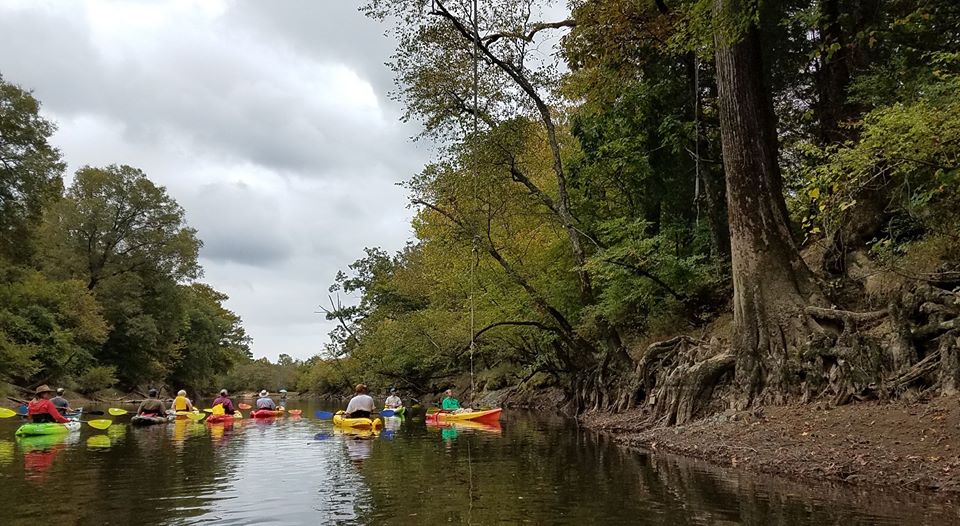
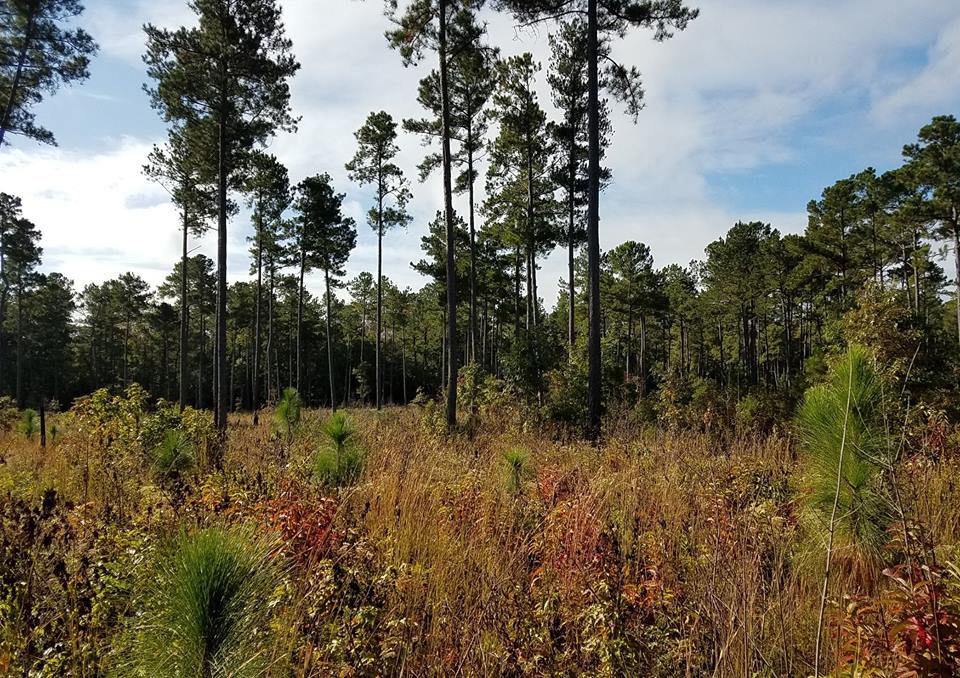
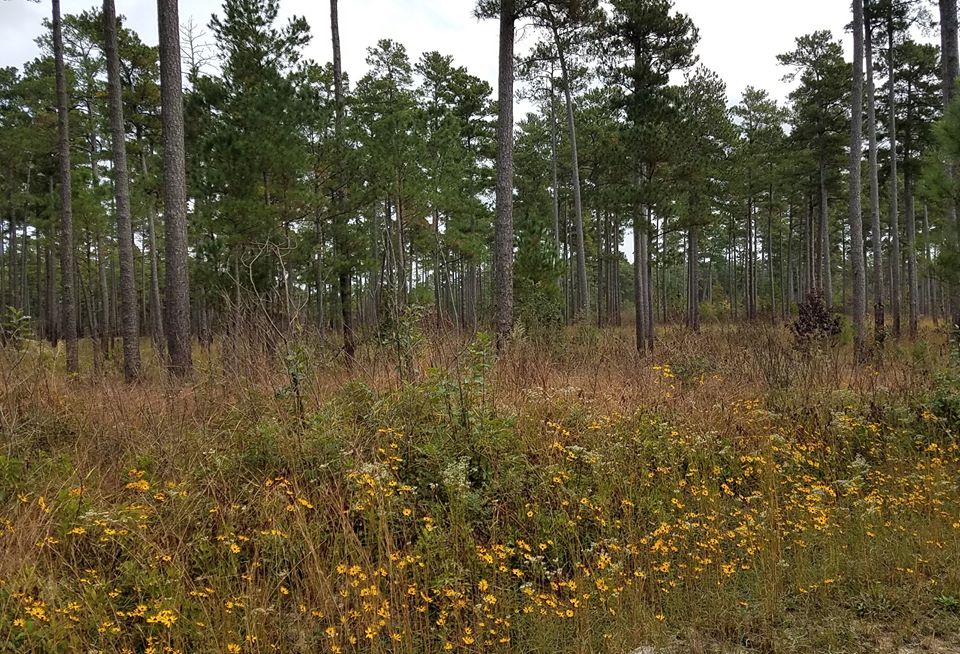
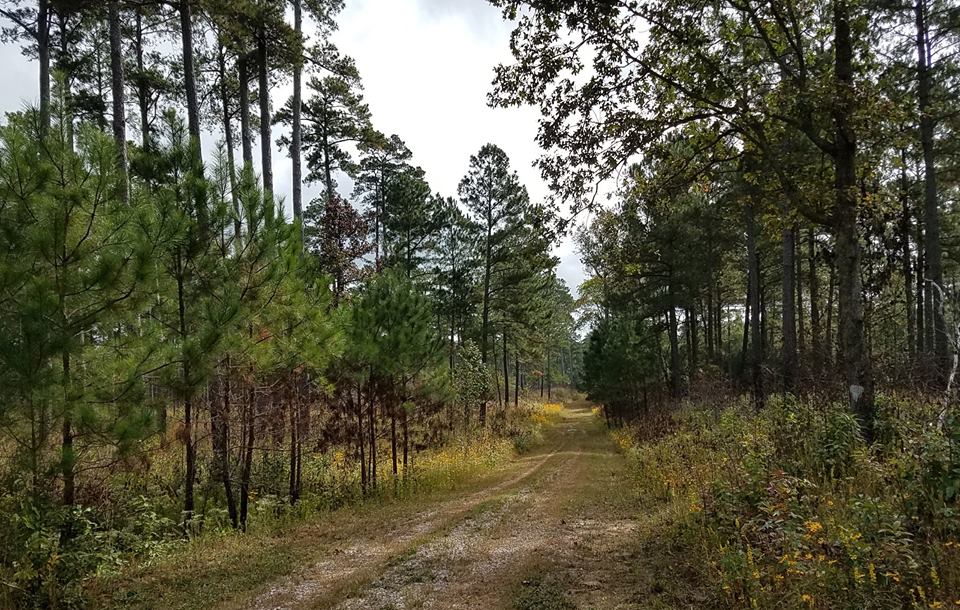
Went down to Piney Grove in Sussex County on a Nature Conservancy tour. They are restoring 3200 acres in Sussex County and looking to do even more. I visited once before but it is always fun to look at forests, always fun to hear about managing them and this time Chrissy came along.
The goal is to recreate a longleaf pine savanna and protect the endangered red cockaded woodpecker. This takes time, maybe 50-70 years or more. In the meantime, they are using lobolly that were already on the land. A loblolly savanna shares can be a substitute, but not quite as good.
Longleaf pine ecosystems, as I have written many times, is one of the most diverse in North America. They once covered 93 million acres in the southern USA. They were reduced to only 3 millions acres and literally only 200 trees in Virginia. The key to longleaf restoration is fire and TNC is applying this to its property on Piney Grove.
After touring Piney Grove and learning about the pines and the various flowers and grasses the under story, we went kayaking on the Nottoway River with TNC guys explaining the local environment. This river is clean and healthy, since it most of the watershed is in fields and forests. The water was shallow, but enough to float.
There are lots of big cypress trees near the shore. Their roots form protection for the shorelines. Natural levies line the banks and a little inland from are flood plain forests. It is a beautiful riparian ecosystem.
My picture show the kayaking on the Nottoway. Next is the pine savanna. You can see the current generation of loblolly and the – we hope – new generation of longleaf. After that are narrow leaf sunflower in bloom and finally the road through Piney Grove.
Lobbying for forests
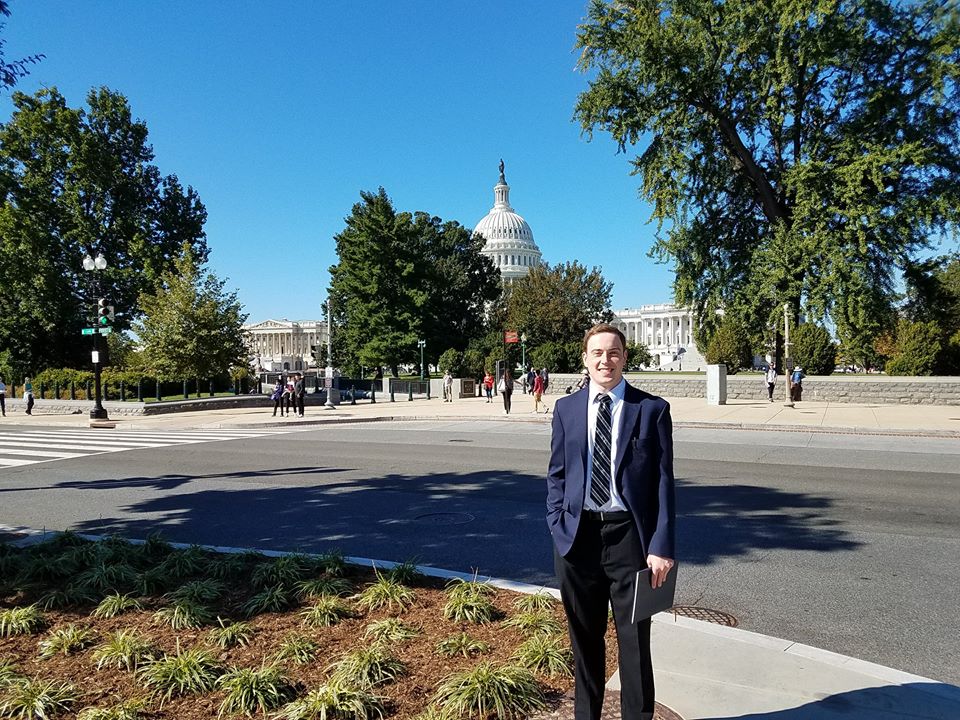
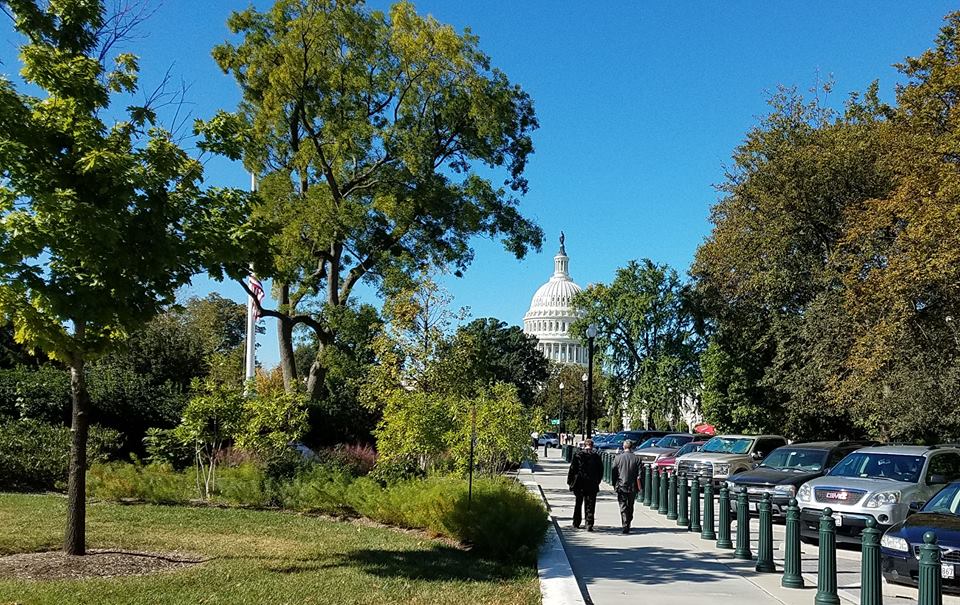
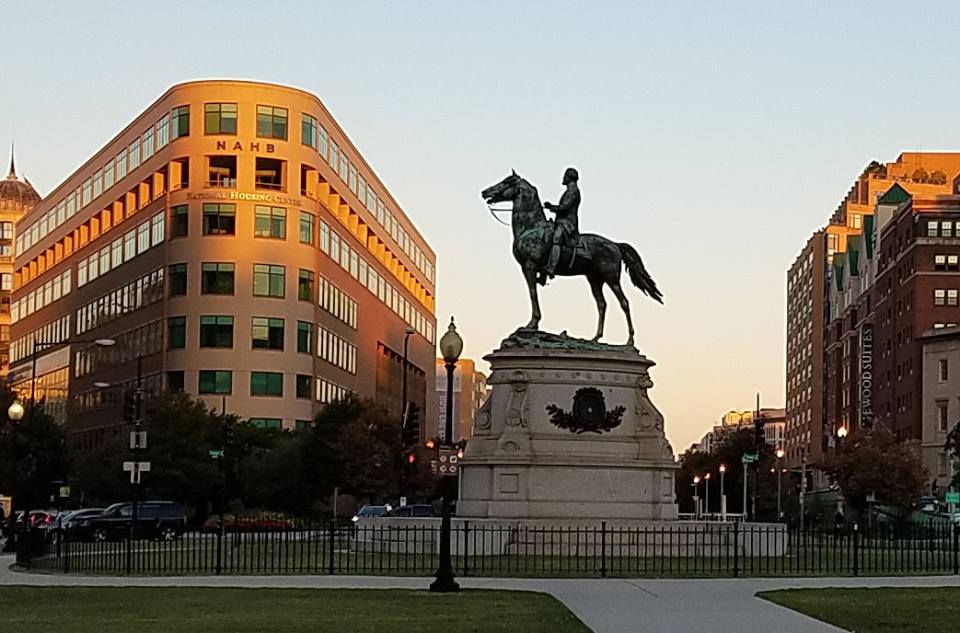

Espen came along to this year’s forestry lobbying event. We went to see staffers involved in forestry or environment for the offices of Senators Warner & Kaine, and those of Representatives Connolly, Wittman, Goodlatte & Griffith.
We emphasized the urgent need to fix the way we fight wildfires and the important opportunity to use more wood in new ways through the Timber Innovation Act. I feel passionate about both these things. I know that we cannot avoid fires, but we can often choose place and times when they will be beneficial and not so dire. In the last year, I have become an evangelist for new uses of mass timber. I am eager to advocate for both these things. We also talked about tax policies. I let my colleagues do the talking. These are important issue too, but they are not among my key issues.
We were lucky enough to speak with Rep Connolly himself. Connolly is my Representative. We got to know him when he was Providence District seat on the Fairfax County Board. Chrissy met him a couple times when she was president of the Providence Park HOA. I always liked him and have voted for him. We talked a little about his support for the Mosaic District and the Gerald Connolly Trail, which we enjoy. There are no tree farms in Fairfax County, so we could not talk directly about that.
My pictures show similar views of the Capitol, the first with Espen. It was a nice, crisp day and the Capitol looked particularly beautiful today. The second last picture is General George Henry Thomas. He was a Virginian who chose to fight for the Union. Last is a sign on the Metro. I am not sure the prospect of turning an escalator into a slide would discourage young men.