Making Water

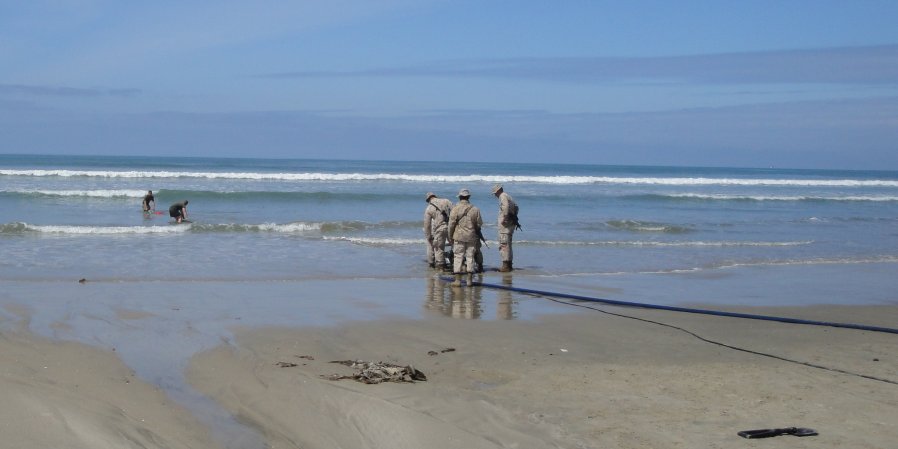
A good lesson is that you should never count on machines.  Luckily, it was only an exercise.   We were supposed to demonstrate how the Marines could make fresh water from sea water.  In the exercise, we were supposed to let the Minister of Health drink the water directly from the desalinization machine.  Of course, the machine didn’t work while she was there.   It evidently worked before and after.  The evidence was that we had a lot of fresh water made.  But there are always breakdowns and hiccups.

Some are just little/big things, like the tide going out farther than the intake pipes can reach.  Other things are systemic, like filters getting clogged.   The better plan is to have the water ready to go, already produced. The machine can be in the background and if it makes water at the time of the visit, we can go down there and watch it.  But the show should never depend on it working at the exact time period.

This also goes, BTW, for web-based presentations.  I have seen it dozens of times.  The person tries to load something up and all we get are those hour glasses that show something is loading, or else it has to buffer so many times that nobody can stand to watch it.  

There is an old saying that one should not watch laws or sausages being made. It is probably good advice not to watch most things being made unless you are especially interested in the process rather than the result.  Most of the time, however, we really just want the finished project. It is tempting, but a little narcissistic, for the creator to want to show the work that went into his creation, but most people don’t care, at least not into the detail the artist himself wants to inflict on his audience.

Peaceful Seas & Dark Waters

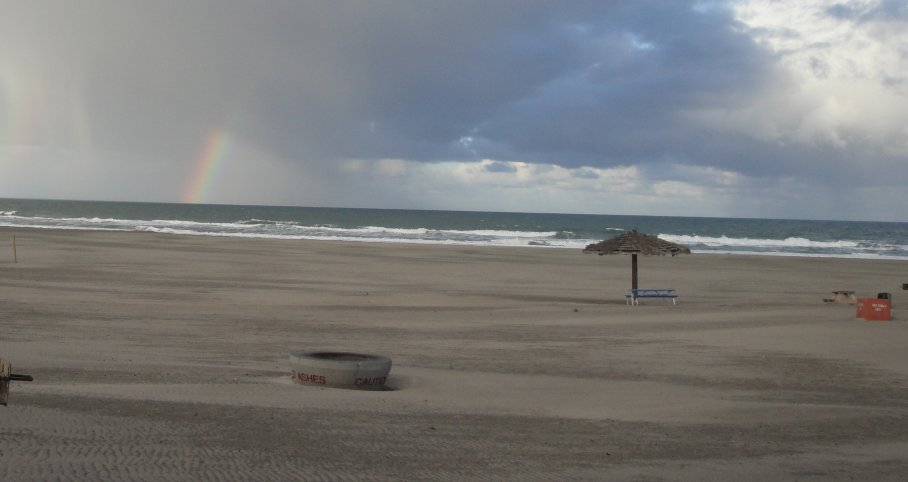
I understand why so many people are fascinated by the sea.   Its moods can change in such rapid and interesting ways.  As I watched for just about a half hour, I saw it go from gray and calm to bluer and wilder.  Finally near sundown it became the wine-dark sea of Homeric description, as you can see on the pictures.

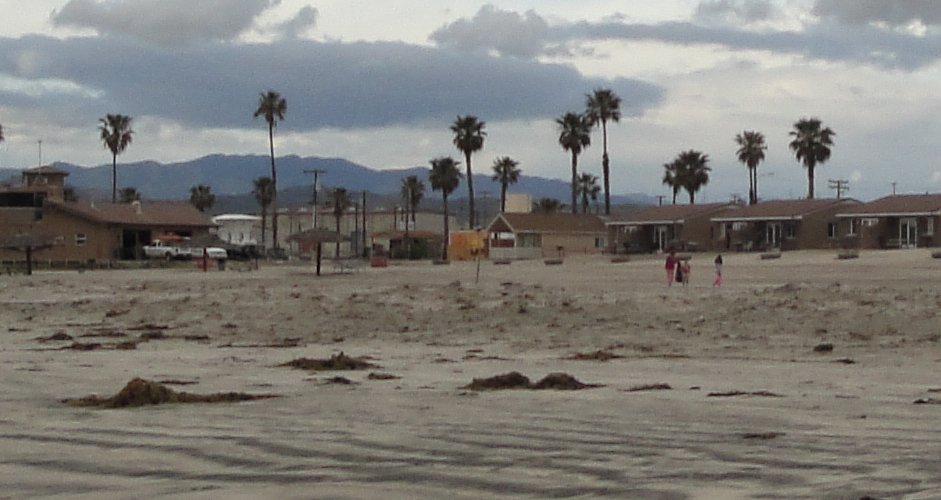
I was lucky enough to get a little cottage on the Pacific instead of staying at the hotel.  The trade off is that I have to walk up to the mock embassy.  Of course, that is also one of the things l like about being here.   So I guess there is no trade-off, unless you count not having Internet access.  This is why you are reading this post a few days after I wrote it.  This is the off season for these cottages. I would not be able to get a place here otherwise.  It is also unusual in that the beach in almost deserted.   There are not many places along the Southern California coast where you can look out over an empty beach.

The ocean is primal and powerful.  It puts your troubles in their proper place.   I watched the sundown yesterday and today.   I guess it is good that I don’t live here.  I would probably eventually go blind from this sort of contemplation.  I have four nights down here on the shore, until I have to move back to the regular hotel.  I don’t suppose it will hurt me in that short a time.

As a Midwestern landlubber, I didn’t see the ocean until I was twenty-three years old and I am not sure that really counts.  I flew over the Atlantic Ocean from Chicago to Frankfurt, Germany, so I only saw it from very high up.   I didn’t actually touch the ocean until a year later, when we drove down to Florida.  I managed to convince some of my friends to go down.  My motivation was to pick up Chrissy, who was down there with her elderly aunt.  My first ocean touch was in the Gulf of Mexico in Bradenton, Florida.  I was surprised at how clear it was and how salty it tasted.

My previous experience was with Lake Michigan.  It is really not that different.  Lake Michigan is too big to see across too and there are some ocean areas that look a lot like the Lakeshore.  The Baltic Sea near Gdansk, for example, reminds me a lot of home.  Maybe that is why immigrant from that area moved to the shores of the lake.  The lake doesn’t get such big waves as the ocean can, but there are lots of times when the ocean waves are no bigger.  The big difference is the lack of salt and the lack of tides.  This means that it tastes different but also that trees and plants can grow much closer to the edge of the lake.  This gives it a different aspect. 

I find the ocean attractive but a little scary.   I walked a short way into surf to get the picture up top and I was paying a lot more attention to the setting sun than to the oncoming surf.  I was surprised by a wave. It didn’t knock me down, but I did get a little wetter than I expected.  The sea has power.  My mind drifted wildly to tsunamis.  I suppose the chances that a big wave will sweep me and my cottage off this beach are very small, but … I am writing this in the middle of the night.  I just came in from looking out over the dark sea.   There was some light provided by the almost half moon and the man-made lights in the background, but mostly I could just hear and feel the ocean.  Suffice to say that I didn’t walk close enough that I could fall off some unseen edge or in range of an errant waves that could reach out and pull me down to Davy Jones’ locker.  Lots of things seem possible in the middle of the night that look really pretty dumb when seen in the light of day.  But it is dark out there for now.

Exercising Marines

HAST – The first two letter stand for humanitarian assistance.  I am not sure what the others are for, but if you just use it as a noun, it means a Marine operation that provides local populations with thinks like food, water and basic medical care.

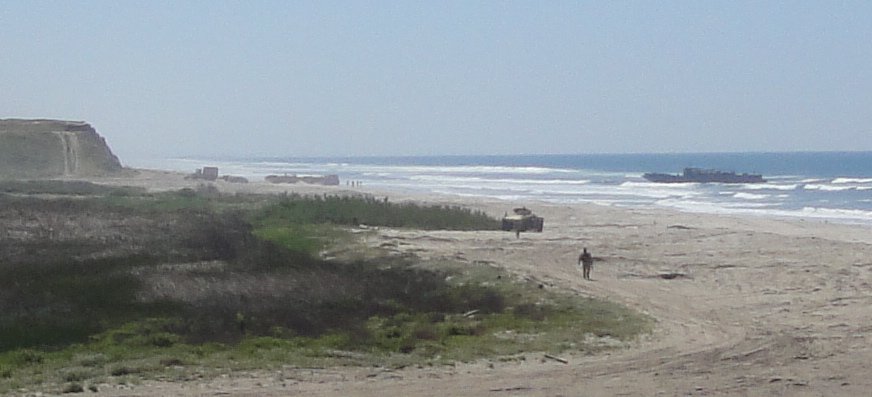
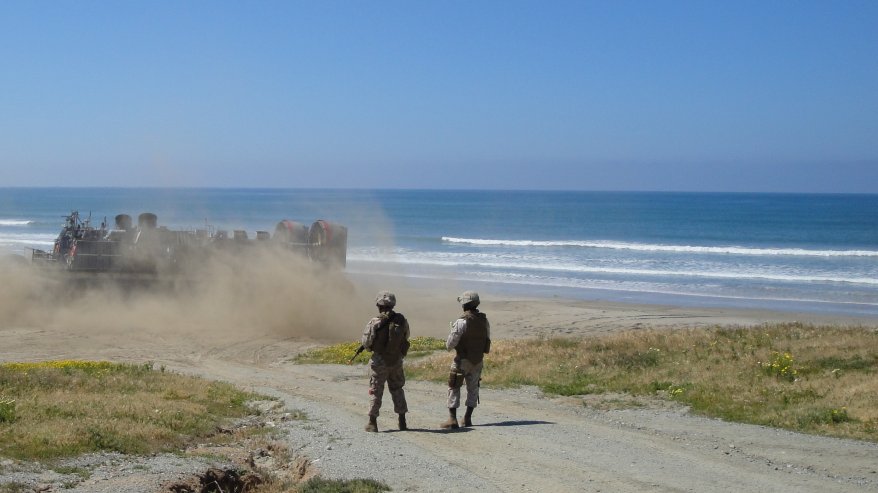
HAST was part of the exercise, but before the Marines could start doing good, they had to land their equipment.   The hovercraft you see in the picture is called a LCAC.  It skims across the surface of the water and then can also skim across the surface of the beach.  It is much more reliable than those landing craft we remember from John Wayne movies.  You know, the kind that are shaped like long boxes and open in the front.

The problem is that the landing craft have to go back and forth to the ships to bring in the materials and that just takes a lot of time and is very dependent on the state of the sea.

One of the keys to relief is clean water. The Marines has a combination filter/desalinization machine that can make fresh water from sea water or clean water from polluted water. We went down to the landing beach to see this thing in action. Unfortunately, sea conditions slowed delivery and it was not ready to do. Maybe tomorrow.

I am playing the DCM (Deputy Chief of Mission) during this exercise. While the exercise is for the Marines and I am just a prop, I am learning some useful things by playing the role. I would like to be more helpful to the Marines, but since this is supposed to be a learning experience for them and a test of their abilities, I have to been less forthcoming. I suppose that makes it more realistic.  In real life I would indeed know more and try to be more helpful. On the other hand, in real life there would be a lot more uncertainty. In the exercise I know or have a very good idea of what the future will be. I could be “helpful” and reveal some things, but that would mess up the whole thing, ruin the game. So I have to let it happen, knowing that around the corner something will happen to ruin their well-laid plans. Of course is the real world most plans don’t work; I just don’t know in advance. It is much better that they learn the lessons here than when they are playing for keeps.

Smell of Memory

The helicopters landed today delivering the Marines for our exercise.  The noise, dust and smell of fuel are unpleasant, but they reminded me of those things in Iraq.  Smell is hard-wired into memory in a way other things are not.  Iraq sucked most of the time, but there were some interesting experiences and lots of great people.   After time has passed, things seem better.   It is much easier to see the joy in something retrospectively than prospectively.  

I can put myself back in that mind set, if I try hard.  I remember when I looked forward to a year of heat, exhaust, dust, boredom and danger.  It was not very inviting.   I remember my friend Reid Smith comparing our predicament to a prison sentence.  “We can’t leave & what got us here seemed like a good idea at the time,” he said.  

Some Miscellaneous Things about Southern California

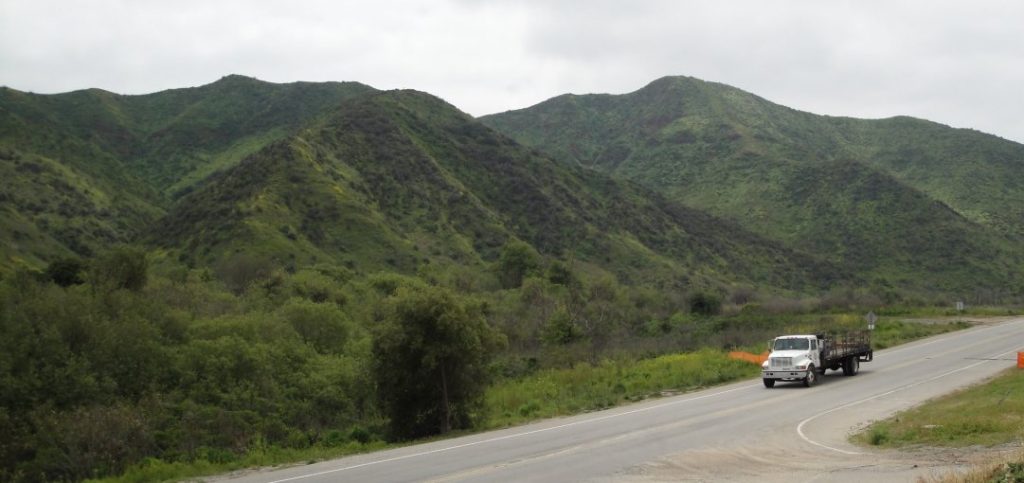
The stretch of I-5 that goes through Camp Pendleton is named after John Basilone, a hero of Guadalcanal and Iwo Jima who won both the Congressional Medal of Honor and the Navy Cross. One of the values of naming things after special people or events, rather than some non-committal thing like “Happy Crest Road,” is that they are remembered. John Basilone was a great hero and I am glad that driving along this road made me think of him.

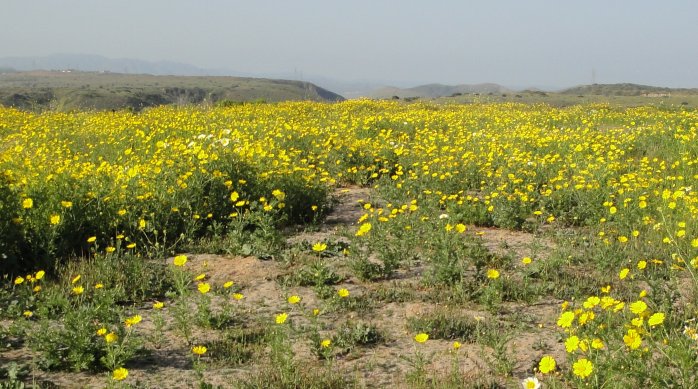
Southern California is semi-arid and the natural vegetation would be scrub and brush.  When you see large trees, they are almost always planted and watered.  This is the best time of year to see the area around San Diego.   The hills are green and flower covered.  When I examined the ground more closely, it is clear that the vegetation is not thick.   It is, as I said, semi-arid.

The Spanish tried to colonize California using missions. They were founded about a day’s journey apart and there were twenty-one of them.  The San Diego mission, built in 1769, was the first one built.

Camp Pendleton is really big. It is one of the largest de-facto natural preserves in the U.S.   If the Marines didn’t own the place, it certainly would be covered with condos, like the rest of the coast here about.

Deadly Serious Games

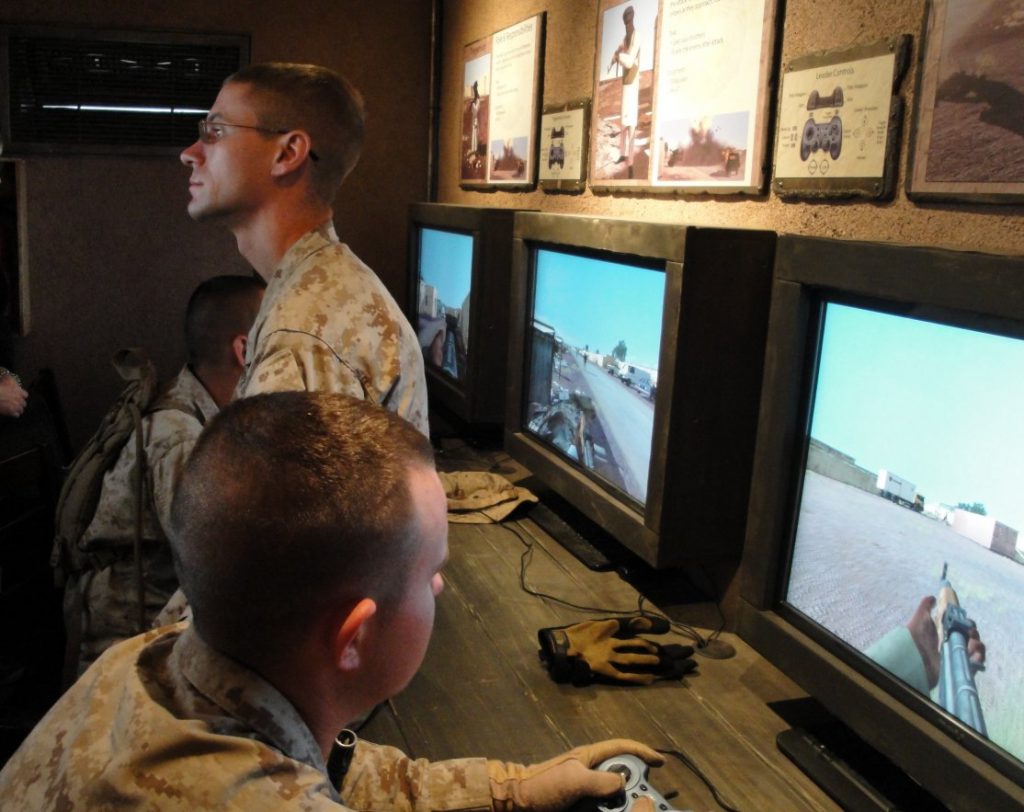
I have never met a young man who doesn’t enjoy shooter games; at least once they have seen one.  But video games are more than just fun.  You can learn a lot from games.  Games implicitly embed various assumptions and incentive particular actions and behaviors.

The Marines are taking advantage of the possibilities of gaming to help young Marines understand real-life combat situations. I think it will end up saving lives, as Marines will more effectively fight the bad guys and be better able to protect civilians in combat zones.

In this video simulation, Marines get to play both sides.  First they drive a simulated convoy through a dangerous part of Afghanistan.  Next they play the role of the insurgents and compete against their colleagues.  They can respond much more effectively when they see the situation through the eyes of the insurgents. 


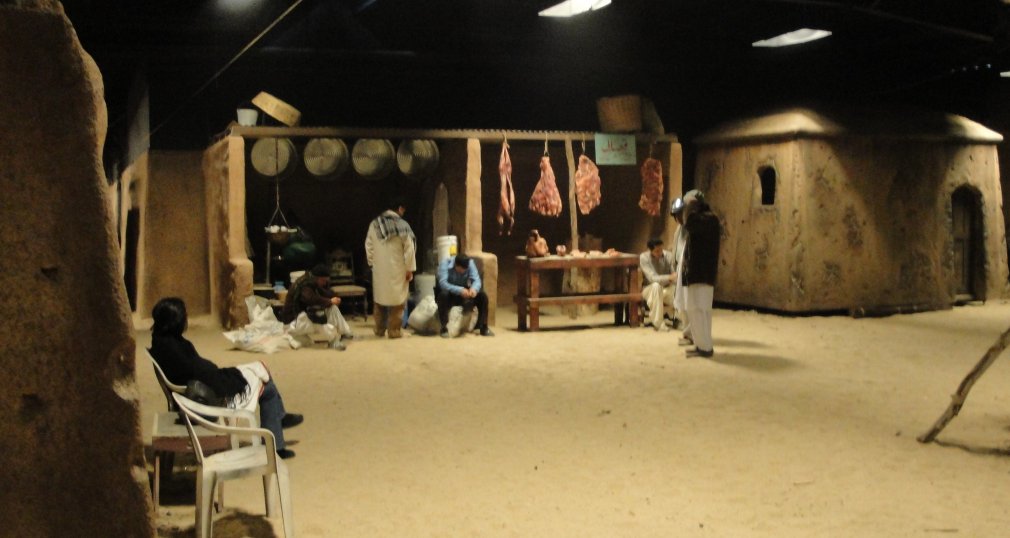
We next went into a mock up of a village.  It was like a museum or a scansen. There were actors who played the roles of Afghan civilians and insurgents.  It was a very realistic. They even piped in the smells. I have never been to Afghanistan but I recognized some of them from walking around in Iraqi villages. The most obvious difference I notice was lack of live animals. They had stuffed chickens and goats, but in real life they are running around and getting in the way. I think that probably makes a difference if you are really walking the streets, especially if you are talking about trying to pay attention to subtle movements and sounds around you.

The goal of these simulations is to make sure Marines can encounter these sights and sounds before they see them in the real-life dangerous situations. They even have an RPG simulation, where the rocket passes over your head and slams into a wall. It scared the crap out of me, even though I know it was going to happen. The shock and the smell is something you cannot properly imagine no matter how many times someone tells you about it. Of course, I can only imagine what it is like when it is a real explosive that could hurt or kill you.

I got to do the simulation handling the 50 caliber machine gun on the gun turret. I have been under the gunner on many occasions but it was different seeing it from the top perspective.   Suffice to say that I would not have done a very good job in the real world. I couldn’t keep track of all the things happening around me and I was especially bad about having a 360 degree perspective.   Even in the safety of the simulation, I developed a kind of tunnel vision.   I was also very clumsy on the reloading.  I suppose with practice I would get better, but I don’t think I could ever develop the alacrity of the Marines I knew.

Pacific Sunset

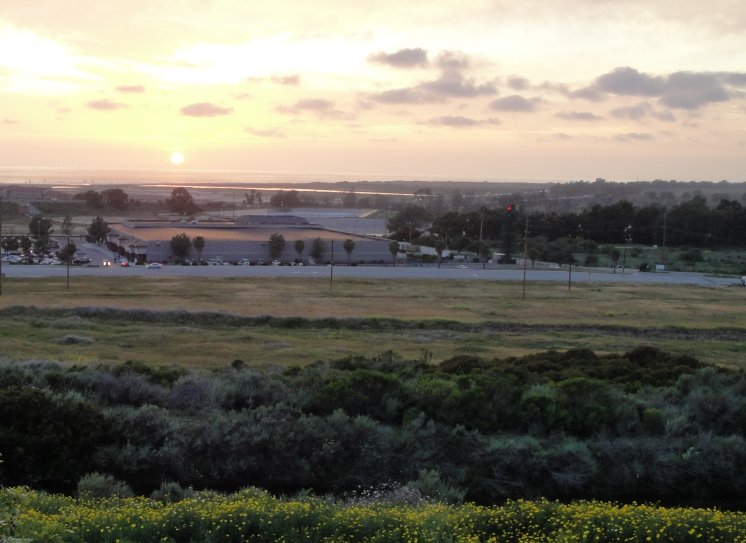
I watched the sun set in the Pacific.  It seems to drop so fast and be so close.  I almost thought I could hear it hiss as it hit the water.

Below is sunrise on Lake Michigan last September.  I suppose the latitude and the time of year make a difference.  There is a much longer twilight time farther north.

Alex Update

Alex still has some headaches and body aches and it is hard for him to concentrate, but he seems to be doing okay.  I will drive up to Harrisonburg to see him later today and bring him home if he is still feeling bad.  This will create some troubles for his classes, since papers are due and exam time is here, but I think he has a valid excuse.   His attack made the Harrisonburg papers, although they didn’t mention him by name, so he has some credibility

There is an interest health care debate permutation, however.  Alex has only a few days left on our insurance, since he turned 22 last month and he gets a month of grace time.  We have signed him up for insurance, which will take effect on May 1.  So he will go into eight days of non-insurance.  Even when he gets the insurance, it has a high deductible, so we may end up paying a lot anyway.

The irony here is that if he had been in an accident, if someone had hit him with a car, he would probably had everything paid for by the insurance of the driver.  He would probably get an extra pay out for pain and suffering.  Or if the authorities had acted inappropriately he would have been in line for a huge compensation.   But since he was the victim of random but deliberate violence, he is just on his own.  Well, not on his own since we will take care of him, but you get the irony.

If I accidentally hit a pedestrian while riding my bike, and he sustained injuries similar to Alex’s, I would probably have to pay damages to include the actual medical costs, plus pain and suffering and probably punitive damages.   But if I successfully avoided the crash and the guy fell into the hands of a thug who beat him, he would get nothing.

We have created a system where an honest citizen must fear lawsuits even for things he doesn’t directly control and a legitimate victim of deliberate violence can expect nothing.   Violent perpetrators w/o significant assets can pretty much get away with anything from the civil point of view and even from the criminal one.   We are also more likely to take seriously a bent bumper on a car than a bump on somebody’s head. 

Hate Crime

We got a call last night that Alex was in the hospital in Harrisonburg and would be soon having a CAT scan to see if he had any damage to his brain. He was transferred to UVA hospital in Charlottesville. We drove through the early morning darkness to get him. It is not good, but it looks like he will make a full & rapid recovery, fortunately, although he will have some scars and will be in pain for a while. We hope follow up exams find nothing new. The story that we learned between that call and now is troubling. I don’t know if I have all the details down right, but let me try.

Alex was attacked by six young men in what evidently was an act of random hateful violence. They hit him over the head by a beer bottle, so Alex doesn’t remember much about the attack.  What we learned came from witnesses, the police & the perpetrators themselves.    

Alex remembers someone running past him and then he was on the ground being kicked by six guys. What happened, according to witnesses, is that these guys  wanted to beat somebody up. Their first victim was the guy that ran past Alex, but as they chased him they decided Alex would do just as well.  So one of them hit Alex with a beer bottle from behind and the others joined in the beating. The original victim called the police, who were already in the area and quickly arrived; this and bystanders scared the perpetrators off before they did lasting damage.

The police told Alex that they caught the guys who did it and that they would probably be charged with felony assault. Alex and the running kid were not the only ones they attacked last night.  This was not a simple case of drunk and disorderly.  These guys were looking for someone to hurt. They didn’t know Alex; they didn’t try to rob him, ask him anything at all or even look him in the face before smashing him over the head and commencing the beating.  The motivation was simply atavistic hatred, based on nothing, nothing at all, maybe a lust to do violence.

How do you deal with someone who wants nothing from you except to do you harm? We look for motivations.  We might feel more at ease if they had tried to steal Alex’s wallet or if we could discover how he antagonized them in even a trivial way.  But there is no comfort there. 

Chrissy is staying with Alex in Harrisonburg tonight and maybe tomorrow to make sure he is okay.  Espen had been up there visiting one of his old HS friends who also attends school up there.  He didn’t know about Alex until we told him this morning. I drove back with Espen and we talked along the way.  It seems the block party got out of hand generally. People were throwing beer bottles.   

Espen and his friend headed toward his friend’s dorm room and Alex went toward his, which was only a short distance from where he was attacked. Unfortunately for Alex, his dorm was right in the middle of a place where lots of rowdy people were gathering and Alex had to walk through the crowds.  Fortunately, the police were there too and that is probably what ended up saving him from a more severe beating.

The cops interviewed Alex. They took pictures of his various injuries and examined his bloody clothes, but he couldn’t tell them much that was helpful, but there are lots of witnesses and the perpetrators are evidently talking. I am interested to see how this case plays out and I want to learn more.  I don’t know anything about the perpetrators and I will admit that I am more than a little angry at them for hurting my boy. But I think there also is a rational argument for making sure this does not get passed along. I don’t think the attackers are hardened criminals but the kind of hatred and violence that went into this attack is dangerous. It is not something we can ignore or forgive.  Letting the attackers too easily off the hook would do them no favors if the lesson they learn is that what they did is no big deal.  It is something we have to confront.

Public Diplomacy Persuasion

Another FSI lecture is below.   I am doing this one on Monday.   The PowerPoint is available below. It has a lot of the same themes as the last one, but is significantly different.

Everything is always becoming something else

Πάντα ῥεῖ  – everything flows. That is what the ancient Greek philosopher Heraclitus said more than two and half millennia ago and he was right. But the fact that he said it around 500 BC indicates that the concept has been around and talked about for a long time. Yet it seems to be a concept that each generation discovers for itself and then thinks that it is the most afflicted – ever – by change.

We always have and always will live in a dynamic environment.  What is more, our attempts to understand and act within it alter it, so that we never really face the same challenges twice.  (Heraclitus also said that you can never step twice into the same river – and he was right about that too.)  There is no finish line; there is no stable end goal.  Success means sustainable change.
So I don’t think my reference to Heraclitus is as obscure as it might seem in the context of something as dynamic as public diplomacy and the media. Our job as public affairs professions is to understand the ebbs and flows of events, to take advantage when things are flowing in the right direction, help direct them when we can and know when to get out of the way of the big waves.

Portfolio or Toolbox Strategy (for an uncertain world)

No technique or media tool will work in all situations.  That is why we need to deploy the whole panoply of tools and techniques and know which combinations are best.  This is more an art than a science.  The key is flexibility. Don’t get too enamored with anything in particular or develop strategies around one platform. You don’t want a Twitter strategy.  You want a strategy that may use Twitter as one of the tools. Carpenters don’t have “hammer strategies.”   They have building strategies that may involve hammers as one of the many tools in the box.

There is no such thing as a global brand or a one-size fits all

Even a ubiquitous & simple product like Coca-Cola tastes different and is marketed differently around the world.  The reason they teach us all these things and all these languages at FSI and the reason you make the big-bucks as public diplomacy professionals around the world is that you are supposed to understand the local cultures and environments and apply a nuanced and appropriate persuasion strategy.  I would add that almost all the effective public diplomacy (as opposed to public affairs, which happens mostly in Washington, BTW) work occurs at posts overseas.  Washington programs should be in business to support the field in this respect.   This is something we sometimes forget.
We are not allowed to change our “product,” i.e. the United States and its policies, but we can choose which aspect to emphasize, what analogies to make, what frames to deploy, what relationships to cultivate and when and where to do these things.

The human equation: bridging the last three feet

Edward R. Murrow, the greatest director of USIA or public diplomacy, observed that our communication technologies could span the world, but the real persuasion took place in the last three feet – human contact. He lived in the days before Internet. IMO, internet can (although less easily than people think) create or at least sustain the kinds of engaged relationships Murrow was talking about, but we still have to build those relationships. There is a cognitive limit to human engagement. You can only keep in real contact with a couple hundred people, although new technologies may expand that number, it does not reach into the millions or even the tens of thousands.  That is why you have to set priorities.  You just cannot love everyone equally and any strategy designed to reach everybody will satisfy nobody.

There is no garden w/o a gardener.   

You cannot outsource or compartmentalize your brains or your engagement.  The person doing the public diplomacy must be involved with the public diplomacy decisions.  There just is no way around this.  If we don’t get involved, we cannot make good decisions.  Too often, we just try to shunt off the PD function.  We hire consultants.   Many consultants are good, but a consultant is often like the guy who borrows your watch and then charges to tell you what time it is. If we outsource our decisions, we essentially outsource our intelligence. Then THEY know what we need to know.  It is a lot like hiring a guy to look after your spouse.  Even if it seems to make her happier, maybe that is your role. BTW – be very wary of pseudo-experts who claim to “speak for” large groups of people or have some kind of inside knowledge that cannot be replicated or properly explained.   If they cannot explain it to you even in broad strokes, they probably don’t understand it themselves and often they are just hucksters protecting their phony baloney jobs.   We have too many such people hanging around us not to trip over them occasionally.

So let me sum up before I move to the next part.  Technologies are new; human relations are old.  Our “new” methods return to an earlier age when communication was engaged, individualized, personal, two-way and interactive.  And for public diplomacy the lessons of anthropology (people) trump technology (machines.) How does public diplomacy really work?

Forget about mass marketing & advertising analogies. We are not selling something as simple as a can of soda and we do not have the resources to engage mass markets. We are not trying to build awareness (who is not aware of the U.S.?) and content DOES matter.Public diplomacy is a mass networking proposition, where we build key relationships with opinion leaders and use leverage to allow/encourage others to reach out, who in turn reach out …  We cannot reach THE common man (because he doesn’t exist) and we should be careful not to mistake A common man for THE common man.

There are thousands of books and experts who will point to the example of the obscure person who did something great.  They are right; but it is really easy to pick Bill Gates out of the crowd AFTER he has been wildly successful.   Then it is easy to explain why he succeeded.  Of course millions of others did similar things and did not become the richest man in the world.   They call this survivor bias.  In many ways it is like a lottery.  We can be sure that SOMEBODY will win, but we cannot tell who before the drawing.  So we have to play the odds and we cannot treat everybody who buys a lottery ticket like a potential millionaire. 

Humans are social creatures who make decisions in contexts of their culture & relationships We make a big mistake if we treat people as members of undifferentiated masses.  Human societies are lumpy. There are relationships that matter more and some that matter less.  And (as per Heraclitus) they are in a constant state of flux. People make most of their important decisions in context or in consultation with people they trust.  Later they might go the some media sources for confirmation or details. Probably the biggest decision you have ever made was buying a home.  Did you just read some literature and make an offer? Or did you ask around and talk to people you trusted?  How about the car you own?   We like to explain our behavior rationally, but relationally will provide more reliable assessments.

Information is almost free and a wealth of information creates a poverty of attention

We now must find or create social context for our message to get attention.   I always laugh (at least to myself) when I hear someone say that “we got the message out” or “We reached a million people”.  I am going to start calling this the barking dog strategy, because like the dogs, we just shout “I’m here; I’m here; I’m here.  It doesn’t matter what you say; it is what they hear that counts.   If your message does not say the right things, if it doesn’t fit into their cultural and socials contexts and if it is not delivered in an appropriate way, it doesn’t get through.   I will reiterate that the reason you get those big-bucks is to understand the right time, place and context of the communication.   The new technologies have not made this easier.

Understand – Everything has rules and patterns

I mentioned Heraclitus.  Let’s go a bit farther east and think of Lao Tzu.   He talked about the need to understand the “Tao”, the patterns and logic in all things.  Understanding these things could make the most difficult tasks fluid and easy.   There is usually easier and harder ways to do things.  Sometimes you CREATE more resistance and make less progress by pushing too hard.   So try to understand before you try to persuade.  If people have been doing things for a long time, there is a reason.  Figure out what that is and persuasion becomes much easier.   And always look for the links and relationships.  People may not be aware of what drives their own behavior, but it is often linked to social acceptance. And a person’s outlook often changes more based on the perceived future than on the present reality. 

Let me digress with a fish story from my time in Iraq.   During the late unpleasantness, Coalition forces had to ban fishing on the Euphrates River for a time, to prevent insurgents from using it as a highway.   But fishermen didn’t return after the ban was lifted, even though the fish were plentiful and bigger given the no-fishing respite.   We thought of helping them buy new boats, nets, sonar etc. But the reason that they weren’t fishing was much simpler – no ice.  The ice factory had shut down and in this hot climate if you cannot put the fish on ice, you cannot move them very far or sell them. We helped the ice house back into operation and the fishing started again.  

ENGAGE – influencing your community but also being part of it and willing to be influenced 

This story shows the importance of engagement.  You also have to get out – physically – and meet people where they are.

Inform & Interpret – turn information into useful knowledge

Engaging is fun and essential, but if we are not giving the taxpayer value for their money if we don’t inform and persuade.   Since information is almost free, what do I mean by inform?  This means turning raw information into useful knowledge and narratives.   Even simple facts must be put into contexts.  What if you didn’t have any dresser drawers or hangers in your closet?  What if you didn’t have any bookshelves or cabinets and all you stuff was just lying on the floor.  It would be hard to find things and many things would not be useful.  Turning information into knowledge is like putting things in some order.  In the public diplomacy realm, that usually means framing and narratives.   People understand stories and until they have a story that makes sense, information just sits there, useless as the shirt you cannot find under the pile of dirty clothes.  Analytical history, BTW, as opposed to antiquarianism or chronicles is depends almost entirely on framing. The historian must choose what to put in and what to leave out and that makes the story.

So if we are talking about actual persuasion, it probably won’t help just to make information available. Providing information was a key to our success in the Cold War because accurate information was in very short supply. Today in all but the dwindling coterie dictatorships in the world’s most benighted places, information is already available.  It is how that information is put together – the contexts, relationships and the narratives – that counts.

As persuaders we need to acknowledge what we know, what salesmen and marketers have long understood and what even science is beginning to explain. We are not in the information business. Information and facts are part of our raw material, but our business involves persuasion that is less like a library and more like a negotiation paradigm and rational decision making is not enough to achieve success. I mentioned framing, but I should say a little more.  The frame is how you characterize information or events.   If you want to be pejorative, you can sometimes call it spin, but there is no way you can understand complex reality w/o some kind of frame. Most of our frames are unconscious, but that doesn’t mean they are not powerful or pervasive.  Think of the ubiquitous sports frame.   Describing something like American football, (i.e. centrally planned, stop and start with specialized plays and players) versus football other places (i.e. fluid, fast breaking with the players less specialized) makes a big difference to how it will be perceived. Or think of how we try to frame our presidents.  We want our candidate to be in the frame with Lincoln and Washington, Warren G. Harding and Rutherford B Hayes, not so much.

Build a community & be part of a community

 Figure out what you can contribute and do it.  Remember people make decisions in the contexts of their relationships.  Also make sure that you get something back. 

The basis of almost all human relationships is reciprocity. All human societies believe in reciprocity. It has survival value. You want to be able to give to your fellow man and expect that he will do the same when you are in need. When that breaks down, so does civil society. It is probably a good idea to be SEEN to get something in return anyway, since if you don’t others will impute an ulterior motive anyway.

I know that this sounds crassly materialistic, but the reciprocity need not be material. You might help a person in the “pay it forward” mode, assuming that when he gets the opportunity he will help somebody else. The reciprocity might just be gratitude. But when a recipient is left w/o some way to reciprocate, a good person feels disrespected.  At first they are happy to get something for nothings, but they soon learn to despise their benefactor.  And maybe they should, since his “generosity” is taking their human dignity.

A simple rule in persuasion is that it is often better to receive than to give.  Let the other parties feel that they have discharged their social obligations, maybe even that THEY are the generous ones. You notice that the most popular individuals are rarely those who need or want nothing from others, even if they are very generous. And one of the most valuable gifts you can receive is advice and knowledge.  Let others share their culture and experience.

Just a few more short points …

Inclusive & Exclusive 

Communities are inclusive for members and exclusive for others. You attract nobody if you appeal to everybody. You have to earn membership in any community worth joining. 

Personal – or at least personalized  

Editors and marketers have tried for years to homogenize for the mass market. That’s how we got soft white Wonder bread and Budweiser beer.  Niche markets – and social media is a series of niche markets – require personality.  We do a poor job of segmenting our market in public diplomacy.  This is something I will work on when I get to Brazil and I suggest you think about when you get to your posts.

Reiterate

Success is continuous learning – an iterative   process- not a plan – and a never ending journey.  As I wrote up top, we never get to the end. We have to learn from our failures and our successes and move on. The best we can do is make our own ending worth of the start.