I got the old per diem paunch blues

Traveling broadens the mind … and the belly, especially if you travel for business as I do and your business is like mine.  It goes beyond the obvious temptations to eat the nice big breakfasts or munch on chips at night.  One of the most important job for a diplomat is to eat and drink for his country.  This is harder than it seems.

Anybody can eat when he is hungry, but it takes a real man to eat when he is not. At official receptions or dinners, I have to eat things I might not like in quantities I would not usually want.  I was a picky eater when I was a kid and still have somewhat pedestrian tastes, but now I eat everything.  I will not share here the things I really don’t like because tomorrow I might be served a heaping helping of it and will have to eat it with eager abandon.

Well, let me share one thing at the “risk” of not getting it again.  I really don’t like açaí.  It tastes like dirt unless you put loads of sugar into it and then it tastes like sugary dirt.  But it is supposed to be good for you and so you often get it around here.  I drink it, but I have learned to “savor” it, lest I get a refill too fast.

I was not – am not – much of a coffee drinker, but I have come to enjoy the little coffees, cafezinho,  that you always get when visiting offices in Brazil.  If I have a busy day of meetings, I get a little shaky from the caffeine, but it is worth it for the social aspect.

When I leave Brazil, I will probably drink coffee no more than once a week and then mostly I like the cream.  I get French vanilla.  When I was in Poland in the early 1990s, they would sometimes break out the vodka for office calls.  That was a bit of a problem.  A busy day of meetings could give you a headache for more reasons than one. The practice died out as the free market took hold.  Under communism, it helped to stay a little drunk at work, not so when you have free choices.  My worst incident was up in the Polish mountains in Zakopane with some local mountaineers, guys that take pride in their capacity to consume hard liquor.  They would drink the vodka and then hold the empty cup over their heads to show it was really empty.  I am not sure how much I drank, but I held up my end.  

Fortunately, it was the last appointment of the day and my driver, Bogdan, made sure I got safely home.  I remember they tried to teach me a song called “Gorale.”   It was a sad song about a poor guy who had to leave his native mountains to seek a better life.  Dla chleba – after bread. They told me in America, but that might have just been for me to hear.  It was similar in sentiment to sad old America country songs, like that old Bobby Bare hit, “Last night I went to sleep in Detroit city.”

As a diplomat, I never turn down anything I am offered to eat or drink.  This sort of gastronomic diplomacy is very important.  And it is true that I sometimes get to like things just from exposure.  There was a kind of sour soup in Poland called żurek,   or white barszcz. I hated it, but after a while I got to tolerate it, then like it and now I really miss it.  I got to like the goat in Iraq too.  Maybe that is how it will be someday with açaí.

Returning to the problem originally stated, I just eat too much when I travel and I don’t get enough exercise.  It is hard to maintain routines.   One thing that I have learned is not be proactive about getting food.  I used to buy food when I had the chance, “just in case.”  This is rarely necessary and usually results in eating even more than I need.   The chances of going hungry are very small and it doesn’t hurt to miss a meal if you do.  One thing I try to do is make sure I have Coke Zero, but that is the only thing that I provision specially.

Don’t get me wrong.  I like to eat and I like discussion at dinners.  Dinner parties are great, if sometimes a little draining. What I don’t like are cocktail parties and receptions.   I would rather write a long report than attend a cocktail party.  But that is another story.
A travelling man

 I try to spread out my travel, but I have to respond events and so I my travel has been concentrated.   I was in Rio last Sunday to address the opening of an IIE/Fulbright recruiting visit for U.S. universities.  After a couple days back, it was off to São Paulo for Fulbright.   We held our board meeting in São Paulo to take advantage of the presence of Tom Healy,   chairman of the Fulbright Foreign Scholarship Board.  Returning to Brasília, I went right from the airport to a restaurant where Fulbright and IIE were hosting the returned university group.  They had split into two groups. One went south to Porto Alegre; the other went north to Belém.  Members of both groups thought they got the better deal.   The trips were successful.    For me still travelling.  I left for Boa Vista in the state of Roraima.  

You could argue whether Acre or Roraima is the most remote Brazilian state.   I am putting my vote on Roraima.   You can fly from Brasília to Acre’s capital Rio Branco with a direct flight.   To get to Boa Vista you need to take a nearly five hour flight through Manaus in order to arrive at 2am.

I have not been contributing properly to the blog, but I will be writing up the notes and maybe unlike the travel, spreading out.

Air travel

We like to complain about travel, but we also want to travel very cheaply and not pay for many of the things we demand. IMO, we have the system most of us deserve. I am not that unhappy with travel. It is not fun and I don’t fit in most seats, but I am getting what I (or my employer) pays for. Well, maybe not. The USG, in its wisdom, pays about twice as much for a flight as I could get on the ordinary website and they get a lower class ticket in the bargain. I am told there are reasons for this beyond my immediate understanding and I have to accept my cognitive limitations. Evidently, they sometimes get good deals on flights I never take and so the overall system is okay. It is like judging the symphony when you just sit next to the drum. I am missing the sublime beauty of the total system harmony. They even have special webpages that manage to give you less convenient service at a higher price, something that private businesses just cannot match. USG webpages require special training.

That aside, I am have generally happy with Delta, which has the flight to DC via Atlanta. They cancelled my flight in January because of air storms, but got me quickly on a replacement and gave me lots of free miles. Travel has also improved with electronic tickets and internet. Some people recall a golden age of travel. I do not. Travel sucked more thirty years ago than it does today and it cost a lot more in inflation adjusted dollars.

Being too busy

One of my most valuable tasks as a leader, of my own life and of my organization, is setting priorities. Priorities mean NOT doing most things in order to concentrate on those of highest value added. I spend a lot of time and energy thinking of ways to skip steps, simplify procedures and get other people to do what I need to get done. As a result, things that used to take me days to do, I can now knock out in hours or sometimes I don’t have to do them at all. This is as it should be. Much of this happy outcome is the result of thinking about the process, i.e. not being busy.

There is an old story about a guy who is locked out of his house. He needed to get in quick and calls a locksmith, who tells him that he can solve the problem for $50. The guy agrees. The locksmith shows up, takes a look, thumps the lock with a little hammer. It opens and he asks for his $50. The guy doesn’t want to pay. “$50 bucks,” he stammers, “for thumping the lock? I want an itemized bill.” He gets it – $0.05 for thumping the lock; $49.95 for knowing how. We should strive to know more and do less.

All successful people are busy sometimes, but if you are busy all the time, you are either not in control of your life and should spend more time trying to figure it out, sort of like glancing at a map before setting out on a cross country journey instead of wandering Neanderthal like until you stumble over a route. I suspect most people are not as busy as they say. As the article says, many of us derive status from appearing busy all the time. Not me. I am a man of leisure and proud of that. If I can get more done than in less time, that is how I want to derive status. I am content if people think my success is the result of dumb luck because working hard for meager results is just kind of dumb.
Competing to be the busiest
www.washingtonpost.com
We don’t feel important, experts say, unless we have too much to do.

Saturday in New York

The weather was nicer today; evidently Saturday will be the one nice day wedged between cold ones.  Today the wind had that soft feel; tomorrow back to the rough stuff.

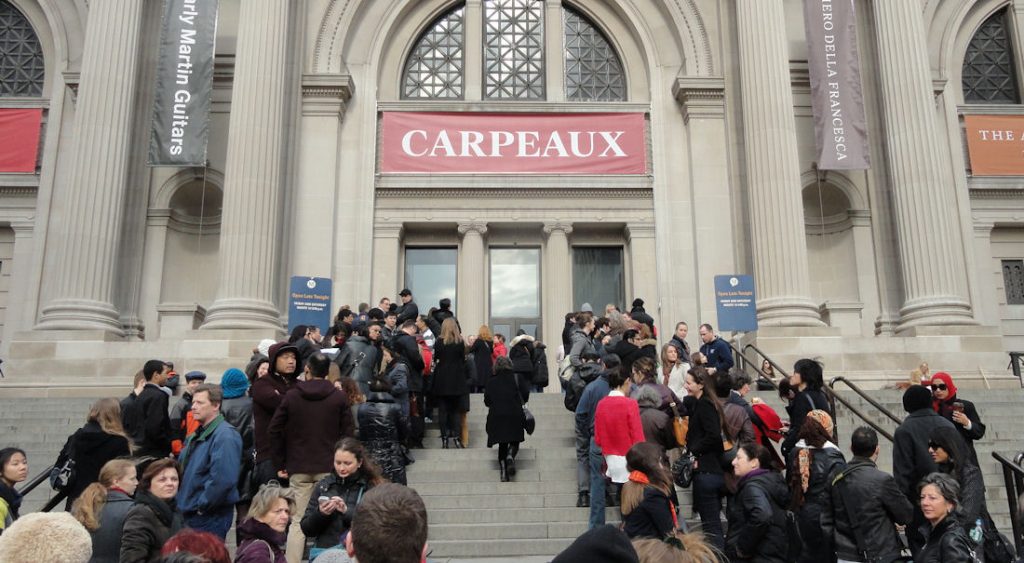
We went to the Met today.  You can never spend enough time there, so we didn’t even try.  We just enjoyed what we could at the museum and then walked through Central Park to the Neil Simon Theater, where we saw the play “All the Way,” about Lyndon Johnson, starring Brian Cranston, who played Walter White on “Breaking Bad,” one of Chrissy’s favorite shows, which makes Cranston an actor she wanted to see in person.  It was a good play, worth seeing

On the way back to the hotel, we stopped at Lindy’s Café, where they claimed to have the world’s best cheesecake.  I don’t know if it was best, but it was very good and very big portions.  Chrissy and I also had Irish coffee in honor of St. Patrick’s Day tomorrow.

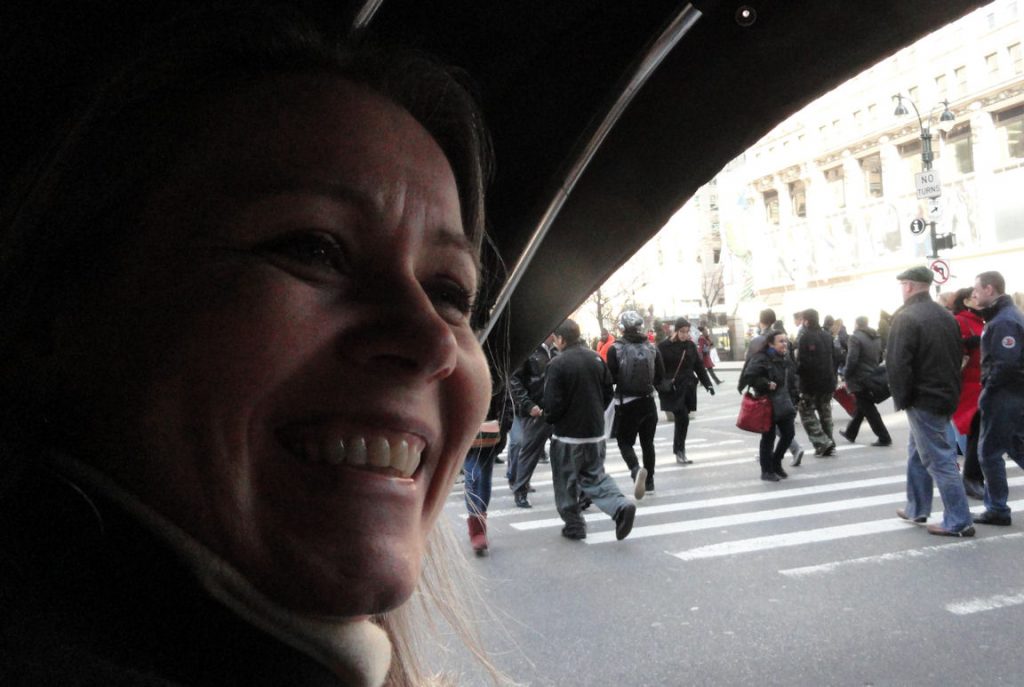
It was a full day and fun.  Chrissy arrived yesterday.  Instead of taking a taxi, we used one of those bike taxis.  It costs a lot more, is less convenient and unsafe in the traffic.  It is something interesting to do – once, maybe once.  Actually, I would not recommend it.

Private-public-partnership saves Central Park.

It was a cold and gray day, but still worth it to walk around in Central Park.  Central Park is a monument to lots of things.  From the original smart idea devote a big area of the middle of the city to a park, the wonderful “planned spontaneity” of the design by Frederick Law Olmsted, to the extraordinary voluntary management by the Central Park Conservancy, Central Park has been an example.

It really was not that cold, but I was unprepared for the cold there was.  I just didn’t have warm clothes to bring from Brazil, so I faced the 25 degrees and bitter wind with a running windbreaker and a sweatshirt underneath.  I joke that it was the same temperature in Brasília as New York, both 25 degrees, but one Celsius and one Fahrenheit.  I bought a hat for $5, which at least kept my bald head warm.

Central Park is familiar, like going home to a place you never lived because of the frequent use of the place as a setting for movies and TV.   It is also familiar because of the design.   Lots of places copied Olmstead’s designs and the man himself actually designed some Milwaukee parks.  It was the default design of urban parks for generations.

The thing that interested me most today was the role of the Central Park Conservancy.   Central Park was not always as pleasant as it is today.   The NYC was unwilling or unable to maintain it to a high enough standard.  NYC contracts with the Conservancy, which is a non-profit private group, to run  maintain the park, but most of the money to do the needed operations is raised privately by the conservancy.   It is a successful example of public-private-partnership and a good lesson that collective action need not be organized by a government authority.  People working in voluntary association can do wonders given the chance.  

Public need not mean run by government.  The public includes more than that.  The word has developed a somewhat pejorative connotation.  Think “public” restroom and what do you think?  It need not be this way. Central Park is a public park in every important sense.  It is run by “the public” but by the public that cares the most.

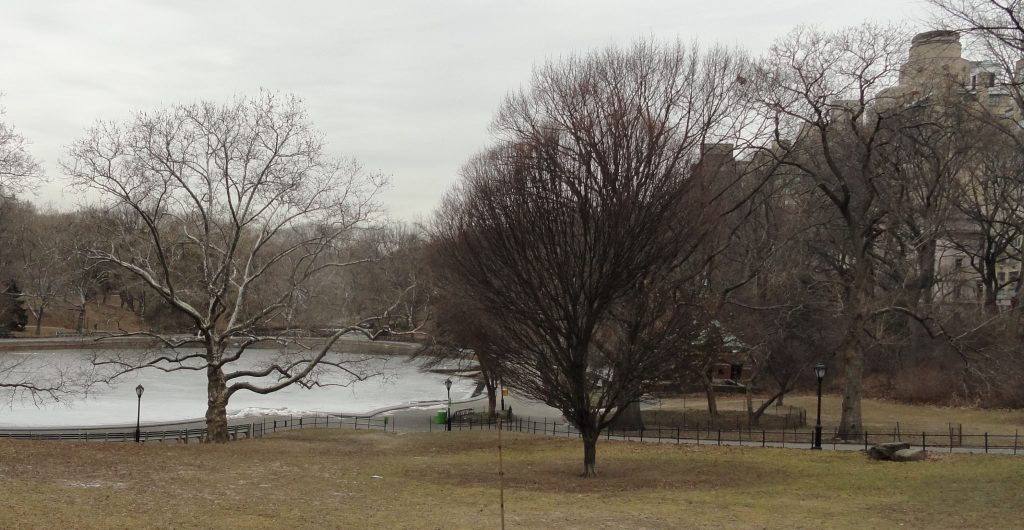
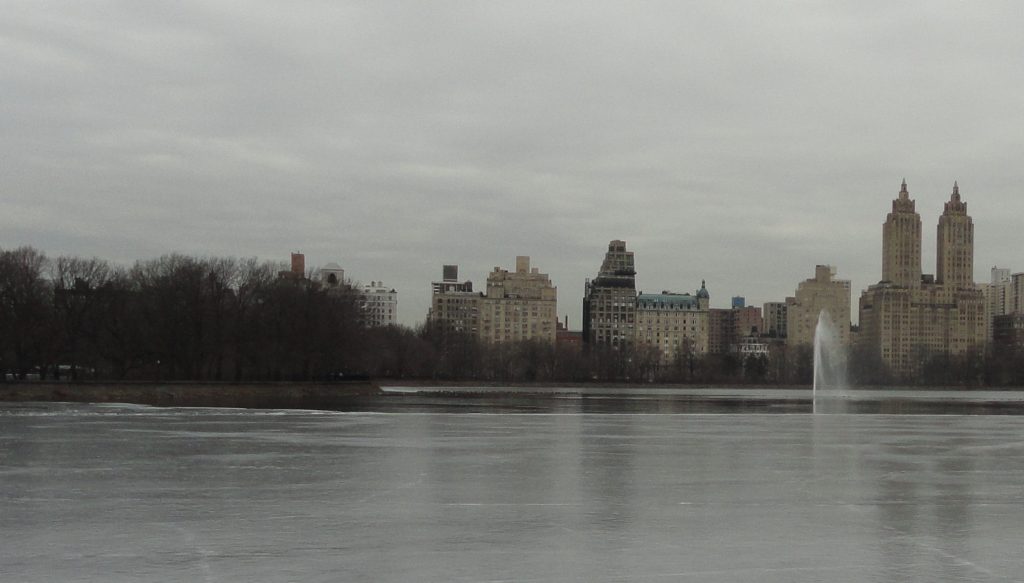
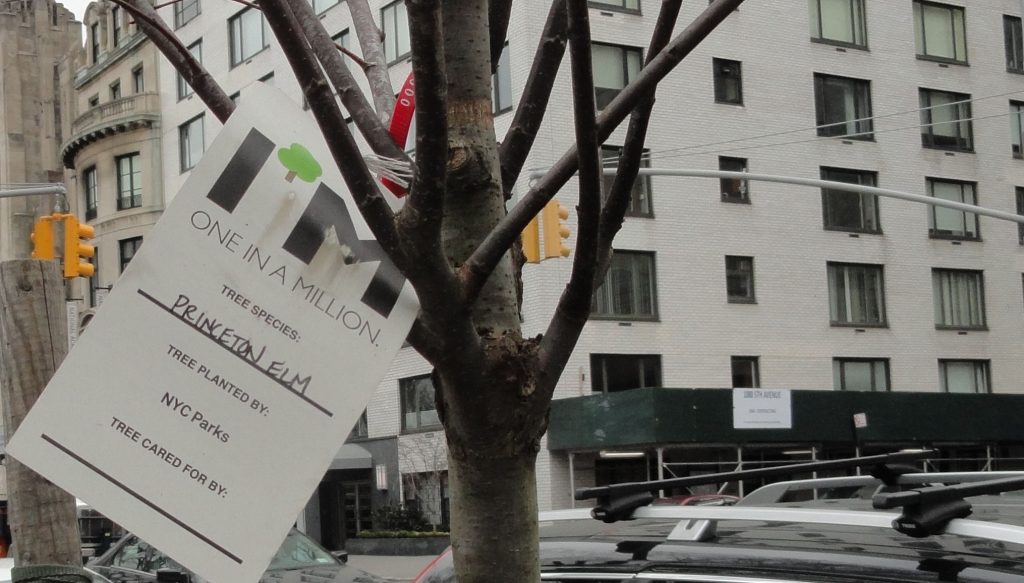
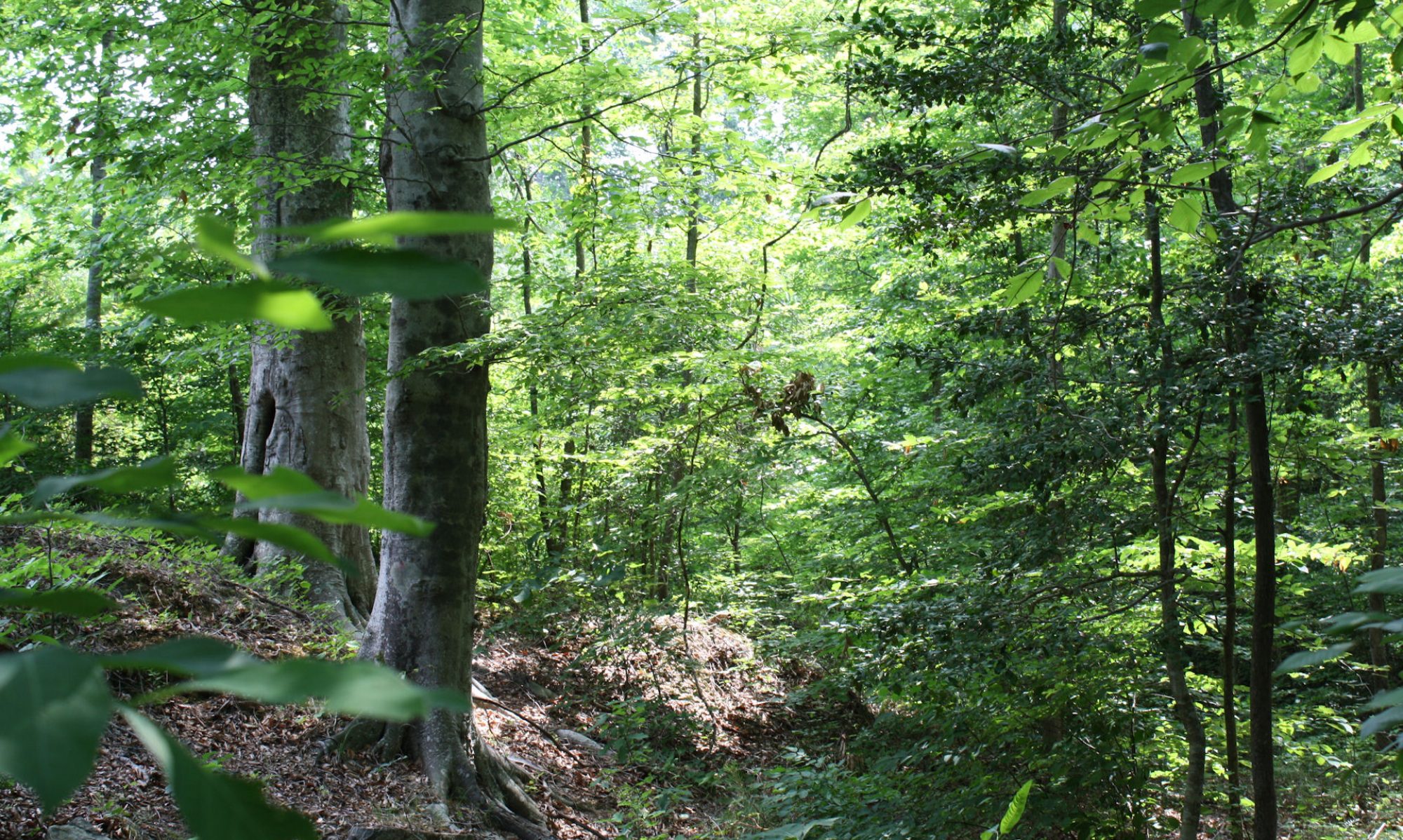
My pictures show Central Park this morning.  The lower picture is a newly planted Princeton elm.  They are resistant to the Dutch elm disease and yet have the nice shape.

Bright and brightening American energy future

We might worry that the American energy boom is creating too much prosperity, since we have bottlenecks in inadequate, ports, pipelines, rail and shipping. Of course, adapting to those things will create jobs based on REAL wealth.

IMO, we sometimes forget that real wealth comes from real stuff. This is a real stimulus, both the biggest hope for an eventual robust economic recovery tomorrow and the thing that is keeping our economy growing today, albeit a bit anemically.
We should also make the distinction between infrastructure that is real and that for show. The real infrastructure it built to satisfy needs created by tangible things like our American energy boom. We see that as wealth creating and good. So we are tempted to make bogus investments, that look like this but really don’t carry anything. Real investments raise the economic temperature. The bogus ones are more like lighting matches under a thermometer and hailing success. Glad to see real need which will create real wealth.

A Boom In Oil Is A Boon For U.S. Shipbuilding Industry

Ten supertankers are under construction and there are orders for another 15, but just three years ago the tanker market was barely moving.

Speaking of the energy boom, the ingenuity of our fellow Americans is not limited to fossil fuels and our happy challenges will soon include how best to integrate abundant energy from alternative sources.

As solar and wind become cheaper and batteries improve, more people will be in the energy production business. However, the temptation to go it alone should be resisted. As the linked article says, “Distributed resources such as solar and storage can generate more value and have better economics for customers and society both if they are connected to the grid.” I think of it like the Internet. You CAN have a stand alone computer, but does anybody really want one?

Why the Potential for Grid Defection Matters 

This blog post explores why cost parity doesn’t necessarily equate to widespread customer defection, why defection would create a suboptimal electricity system, and why even the specter of customer defection is relevant.

Fear tactics

Interesting misuse of statistics.  Cancer is a serious issue. The report on which this is based headlines “Effective prevention measures urgently needed to prevent cancer crisis.”  But there is no crisis. Why is cancer rising? Because people are living longer.  If you live long enough, cancer will kill you.  Our ancestors were “spared” cancer because most died of something else first.  The black plague was a great way to avoid cancer or heart disease. It seems less a crisis to know that increased cancer is caused by longer lives.

It reminds me of the headline from the Onion “World Death Rate Holding Steady At 100 Percent.”  It went on to call all medicine a failure, since it clearly had not prevented even one death in the long run of history.

The good news is that cancer rates have been dropping for two decades, that is when you compare the comparable.  Naturally, an 80-year-old has a greater risk of dying of anything than a 20-year-old.  If you have more old guys, more people die. It doesn’t mean life is more dangerous.

BTW homicides using guns has also dropped a lot.  They are down 49% in the last twenty years.  Rape rates have dropped to one-sixth of what they were 20 years ago.
The fact is that almost everything is getting better, but we don’t know that because the reports are much worse.  Some of this just has to do with the news.  But much of it is the active measures by activists to create fear to gain more funding or political power.  Life is not perfect today, but it really is better than ever.

But if you want to be afraid, let me help.  I can guarantee that sometime in the future something will kill you.  Nobody gets out of here alive.  And if you live long enough, you will get cancer.  Believe it.

Fire in the forests

Fire is unavoidable in natural systems. What and how it burns is often a human choice. The article acknowledges good fire management in Southern pine country, where practice and culture accept prescribed burning. There is an irony in the West. Westerners sometimes feel closer to nature, but the region is the most urban, i.e. people living in cities, in the U.S. People living in cities surrounded by vast open and ostensibly natural spaces, IMO, make make it harder to manage land well, since those whose experience with land consists mostly of hiking and vacationing tend to think that nature requires no management.

Southern fire managers have more practical experience than anybody else. It was not always so and it is earned knowledge. It would be good to apply that knowledge elsewhere. I recommend looking at the Southern Fire Exchange.

The linked article quotes Scott L. Stephens, professor of fire science at the University of California at Berkeley, saying, “Why don’t we hear about all these houses burning down and people dying in the South? They’re doing a better job.”

Scientists say megafires in West will grow bigger, hotter www.washingtonpost.com

Weird rain

The “dry” rainy season has now turned more normal and wet.  It has been raining every day, fortunately not all day.   I have been lucky in that it has not rained much on me while riding my bike to and from work.  Yesterday, my luck ran out.   It started to rain at around 3pm and didn’t let up until after 10.  I hung around until a little before 6pm.  After that it gets too dark.  So I embarked in the rain and got completely soaked. 

It was not that bad.  The rain in Brasília is warm and once you get completely wet additional drops make no difference and I had dry clothes at home.  Of course, I got a lot of red dirt up my back, down my pants.

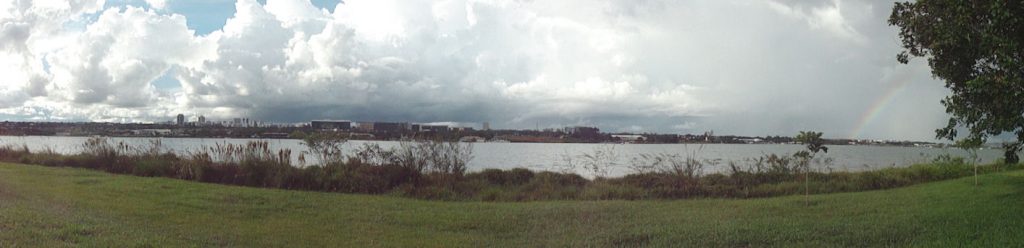
It rained again during the night and in Saturday morning, but there was an opening around 2pm. This time my luck held.  I rode over to the Embassy to lift weights.  Exactly as I arrived, it started to rain.  And it stopped almost exactly when I wanted to leave.   Sweet.  But was even more interesting.  As I rode done the hill, I noticed that the road was completely dry except for where water had flowed from the slightly higher slope of the hill.  This is how it is in Brasília.  It can rain hard in one place and not at all a few yards away.   I took the picture above to illustrate.  You see we have the sun in one place, rain in another and a rainbow at the end.

It does make it hard to predict the weather, however, or even report it.   This afternoon, it rained at the Embassy, but I don’t think that it rained at my house, less than four miles away as the crow flies.