Midwestern Landscapes

It was surprisingly rural so close to Chicago as I continued down the country roads through Illinois & Wisconsin.  I went through Kankakee and then up State Road 47.  It was mostly corn fields and evidently home to a thriving ethanol industry. The gas stations sell E85, which I understand that some cars can use. I don’t think mine can, so I didn’t try.

I crossed into Wisconsin in Walworth County.  Southern Wisconsin sort of merges with Northern Illinois.  There is rich, black soil.

Not many people know it but it used to be that some of the Southern Wisconsin counties were prime tobacco country. It was the cash crop that paid for a lot of the mortgages. It was also a way that young people could make some money.  It helped to be young, since hoeing tobacco was almost literally bank breaking work. I still recall the tobacco barns in Dane County. They were long and narrow and had open sides so that the crop could dry out.  I dislike cigarettes, but the smell of tobacco curing is actually kind of pleasant. Wisconsin tobacco tended to be chewing tobacco and not used for smoking. They don’t grow much tobacco anymore.  Demand has largely dried up; tobacco support programs are gone and besides growing the weed is really hard work.  Young people have other options or are lazier, depending on how you want to view it. Tobacco is a finicky crop that requires significant skill and experience to cultivate and cure. 

Chrissy’s father used to grow a little tobacco. 

I kept on going north and caught up with I-94 at Johnson Creek. I needed new running shoes, so I stopped at Johnson Creek outlets. They have a Nike outlet there.  This is a new development.  The area around the freeway exit is not part of the original Johnson Creek.

I used to stop in Johnson Creek or nearby Helenville when I rode my bike between Madison and Milwaukee. Jefferson County, which sits between Dane and Waukesha, was (and still mostly is) a nice mix of farms and little towns.  I used to also ride from Lacrosse to Milwaukee, which required an overnight stop. One trip, I made it as far as Johnson Creek. I was looking for a hotel, but they were all filled. I ended up at a place called “the Gobbler”.  It was a funky place, sort of a 1970s dream with a kind of a purple color scheme and shag carpets. They only had one room left, which was a bridal room.  I was tired and it was getting dark so I took it. That night I slept in a water bed with a mirror on the ceiling over it. It came with a dinner as part of the package. The dinner was for two, so they saved a little money on me, although I ate a lot.     

They are out of business now.  

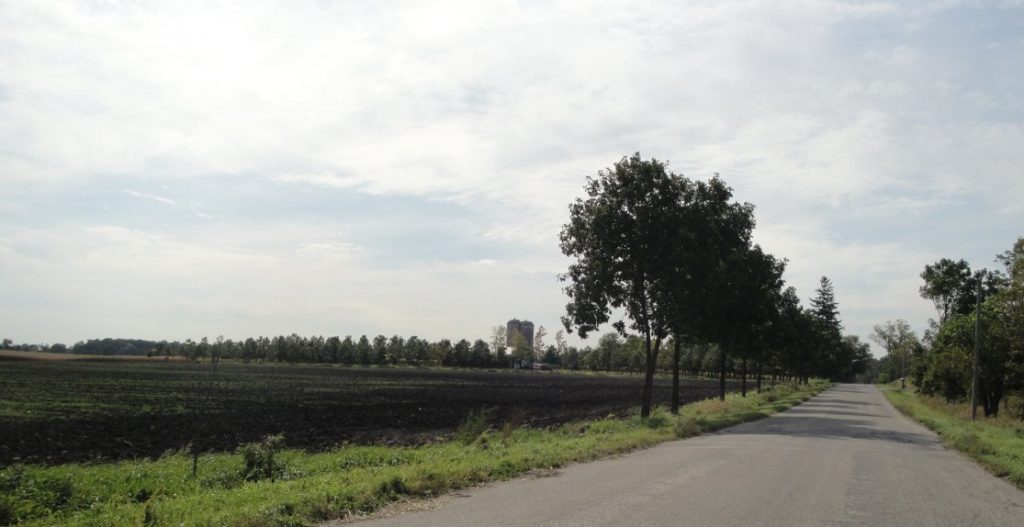
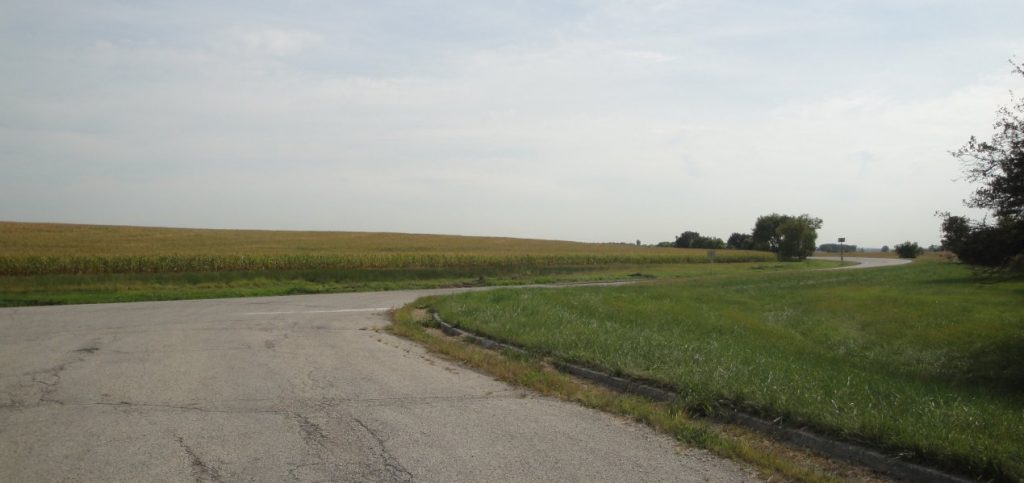
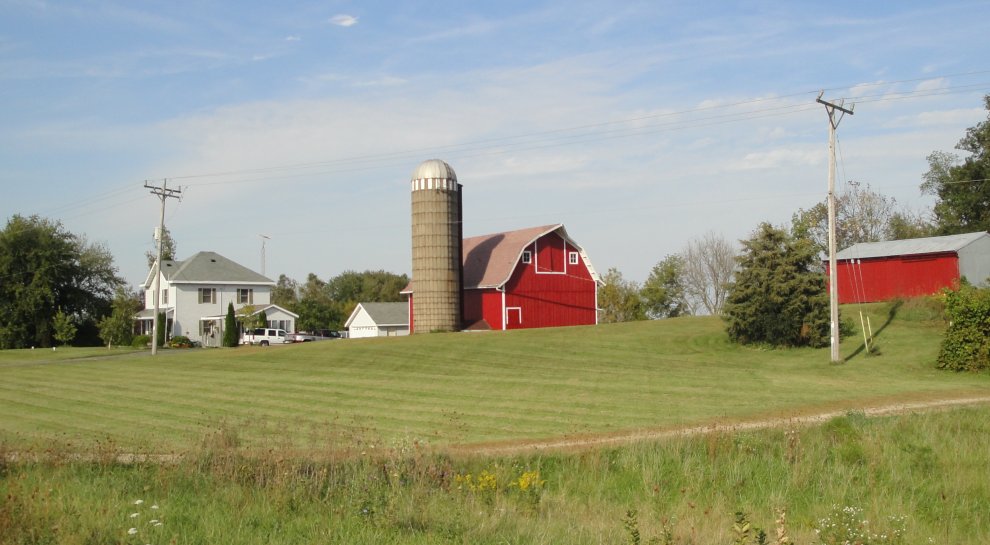
The pictures are a barn in Walworth county, black soil in Northern Illinois and a cornfield in Northern Illinois on state road 47. 

Tippecanoe & Windy Ridge Too

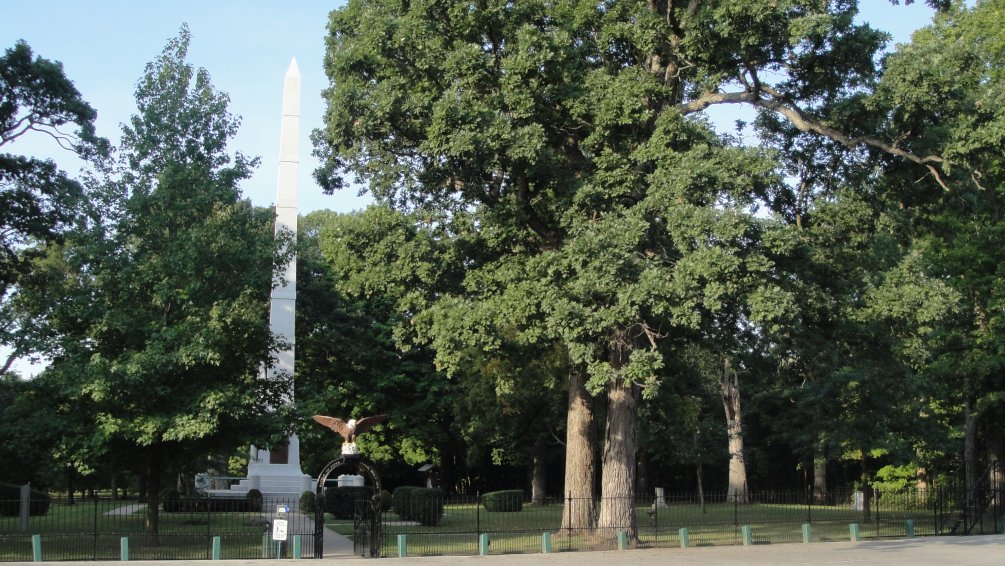
Just outside Lafayette is the Tippecanoe battlefield. This is where William Henry Harrison defeated the combined forces of the local woodland Indians.  Not many people were actually involved in the battle, but it was decisive.  It was the last time that the Eastern Indians stood a chance of stopping, or even slowing American settlement. 

Tecumseh and his brother Tenskwatawa (the Prophet) tried to build a vast Indian confederation to push white men back.  But the Prophet moved too soon and provoked the battle of Tippecanoe before the confederation was ready. The Prophet told the Indians that his strong medicine would make it so the soldiers bullets couldn’t hurt them. He was mistaken.

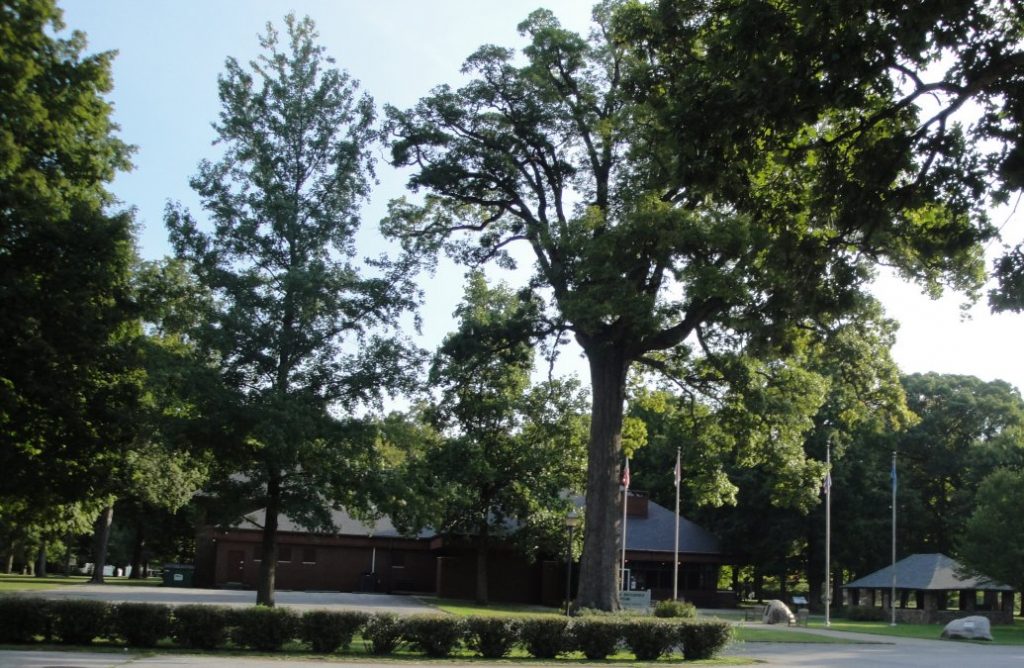
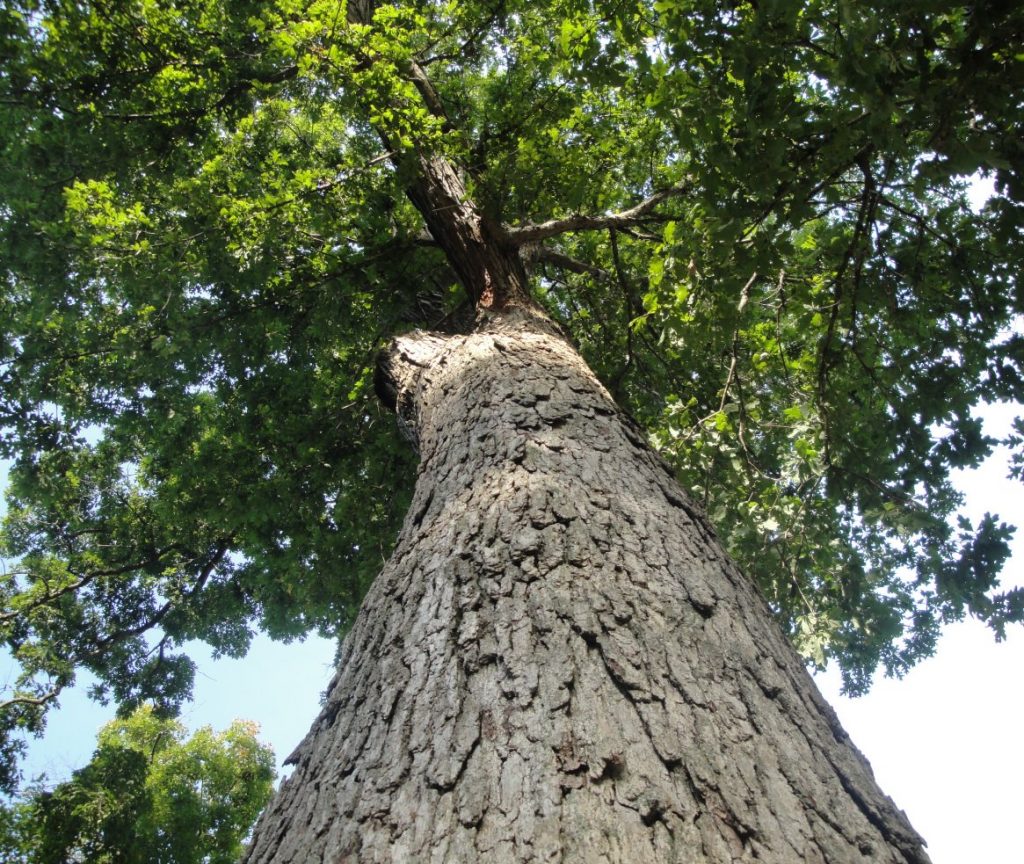
The site of the battlefield is very pleasant.  There are lots of big trees, mostly oaks and maples. Look at the shape of that oak tree. Lots of the older trees in the Midwest have that basic shape. I think it might be from growing up with other trees nearby, making the long trunk, and then having them cleared so that the tree is free to branch. Along side is just looking up one of the big oak trees.  I just enjoy doing that and thinking about how long they have been growing. 

Not many people visit the place anymore, so it was quiet.  I walked around a little near a creek the feeds the Wabash.  It was a beautiful early fall day with some leaves slowly drifting down.  

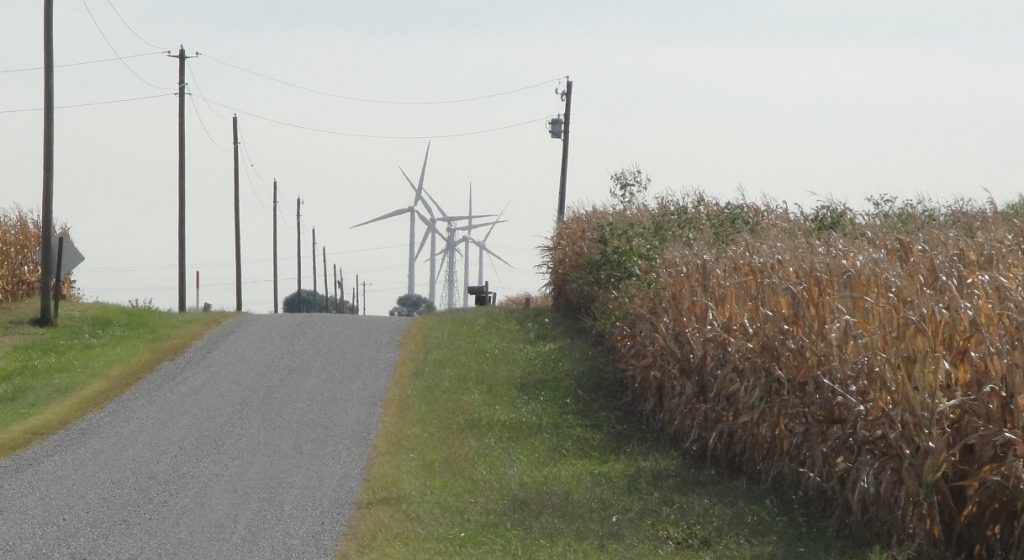
I heard that there was a lot of construction on I-65 near Chicago, so I took the more scenic, country road route. Between Lafayette & Remington I ran into this forest of windmills.  Most were turning.

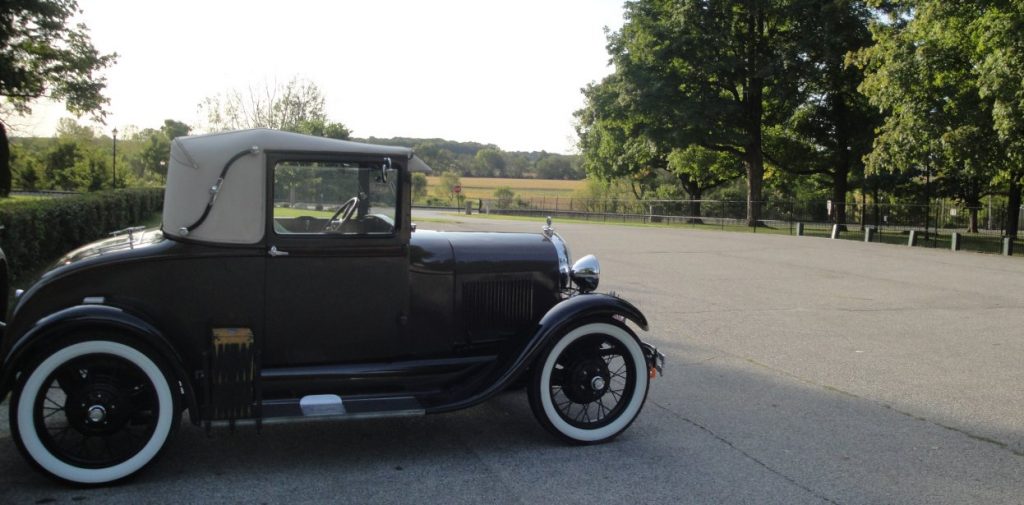
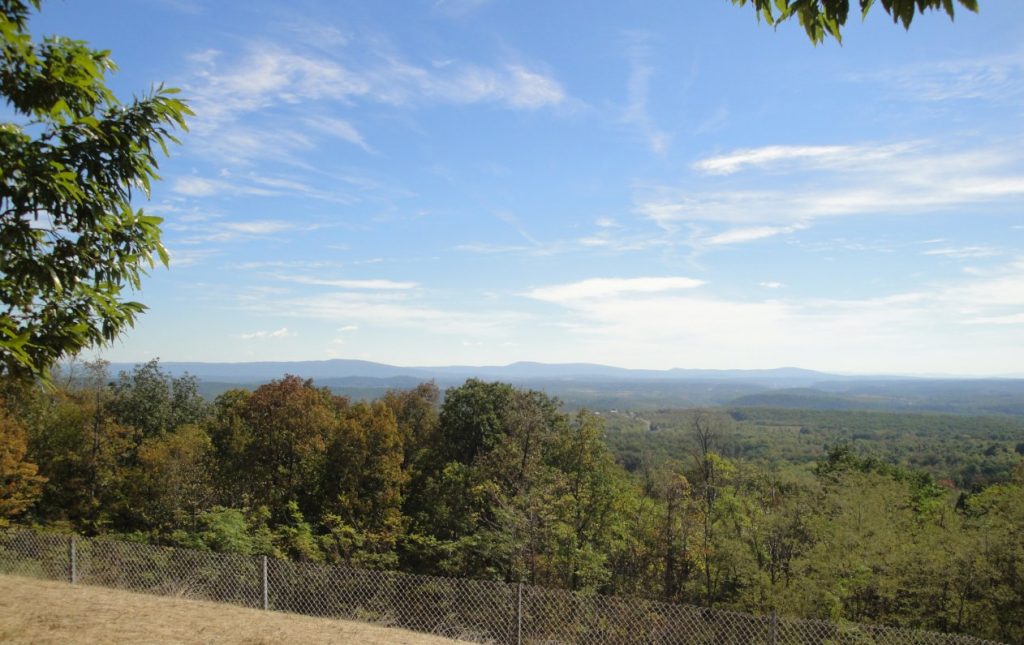
I drove down one of the gravel roads to get the pictures. Gravel roads are still common in Indiana farm country.  I guess there really is no need to put asphalt on everything.  They make good running trails but are probably hard on the cars’ paint jobs. Below is a landscape scene from Tippecanoe. They were having some kind of antique car rally, so I got the 1929 Model A Ford in the photo.

John Gets a Speeding Ticket

On the Road – Maryland, WVA, Ohio & Indiana

My almost cross country trip started today with the rather long drive from Virginia to Lafayette, IN.  Why Lafayette?  I lived here for a couple of weeks way long ago. I landed the job of Director of Marketing Research at Microdatabase Systems right out of B-school. Of course, there was nobody in the marketing research department except me. That is why I was director. Sort of like the guy who has 1000 people under him at work – cuts grass in the cemetery. Never trust titles.

I worked at MDBS for five weeks before I took the job in the FS. I think I made a good career move.  How different life could have been. Lafayette is a very pleasant place, but there is not much here besides Purdue University. I suppose that I would have found more to like if I had been here more than a few weeks.  Running trails were good. I used to run on the country roads through the cornfields.

It was a long drive. I got a speeding ticket. It is the first I got since 1992. I have only had two in my whole life, so it was actually more exciting and interesting than unpleasant. I thought about trying to outrun him, like in the Dukes of Hazard or Smokey & the Bandit, but the Civic-Hybrid probably was not up to the job. I was going 80 in a 70 zone. That is what the cop said, and he was right.  I know because I had the cruise control set to that, so I didn’t try to claim that I didn’t know or it was some kind of mistake. I would have had to pay up w/o complaint. He got me fair & square, but he only gave me a warning ticket, no fine attached. Nice guy. 

Always be polite to policemen, none of those rude questions or complaints. My old Milwaukee upbringing tells me that if the cops stop you, they must have a good reason. And I know they have a tough job.  I suspect a lot of the people they stop give them a hard time. I would have taken his picture for the blog, but I figured it was not a good idea to push my luck, so I just said “thank you” and drove off – chastened – at the legal speed, until I got across the state line. I did try to keep my speed lower for the rest of the trip, but it is hard. All the trucks pass you if you drive the speed limit and it is very nerve wracking. I try to stay with traffic.

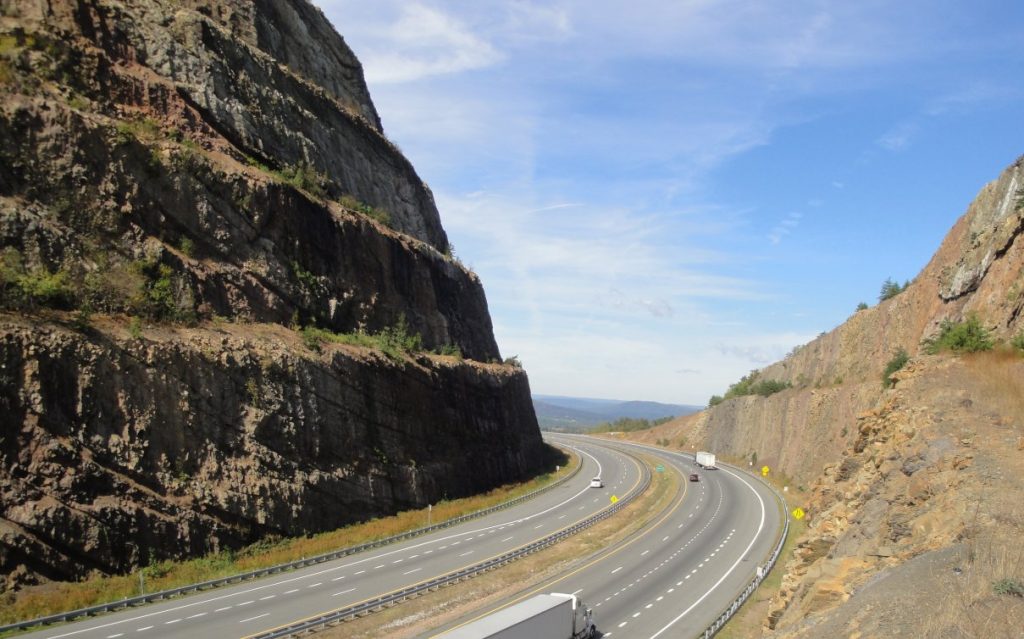
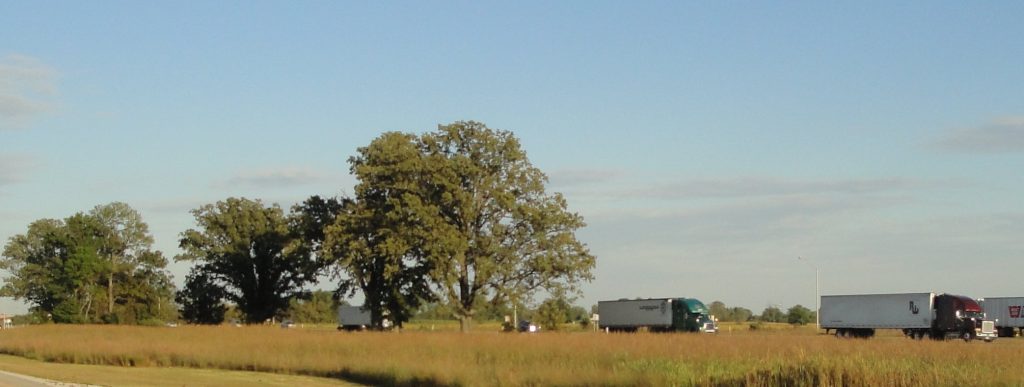
Let me tell you about the pictures.  On top is a western Maryland landscape.  It is a pretty place.  The thing that looks like a canyon is the cut through Sideling Hill on I-68.  They blasted through in 1985. It must have been hard to go over the hill before that time. The mountains in the Appalachians are arrayed in long folds.  In many ways, they are tougher than the Rockies, which although they are higher often have less relief and wider passes. The picture at bottom is I-70 just passed Dayton, Ohio. It is a typical Midwestern road picture, pretty with flat fields and isolated oak trees. There were lots of trucks on the road.

Washington is Improving

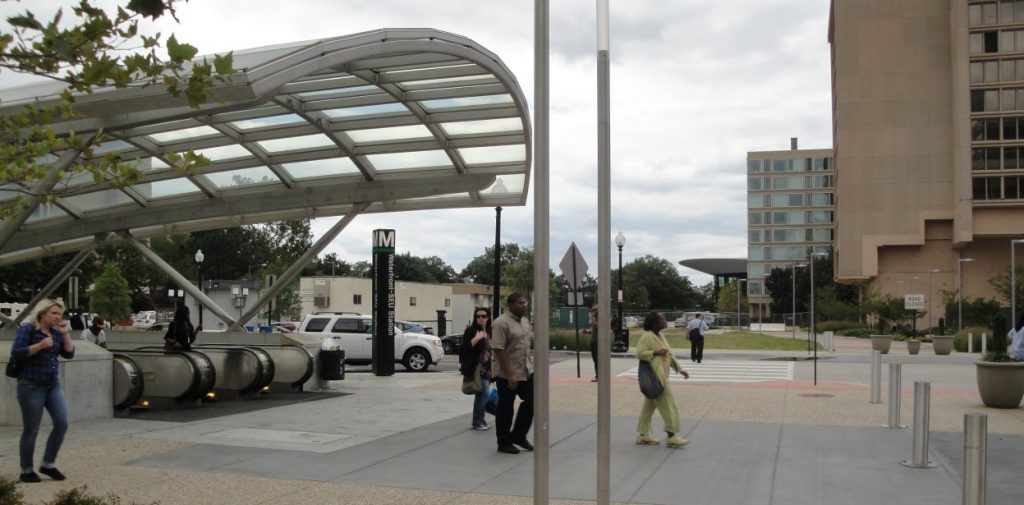
I went past Waterside Metro stop again today.  I have been going that way to get to Gold’s Gym.  It is a little out of the way, but worth the few minutes of the trip along the Potomac.  Above is the Waterside Metro stop. in the background you can see the new Area Stage.

This used to be a very bad & dangerous area just five or ten years ago.  Now it has a nice new Safeway and lots of new office buildings.  The Safeway has good bakery.  I have been picking up fresh bread for Espen and usually a donut for myself.

The bad neighborhoods have been retreating.  When I got here twenty-five years ago the border was on around 14th Street. Today you can go almost to the Anacostia River before you start furtively looking over your shoulder.

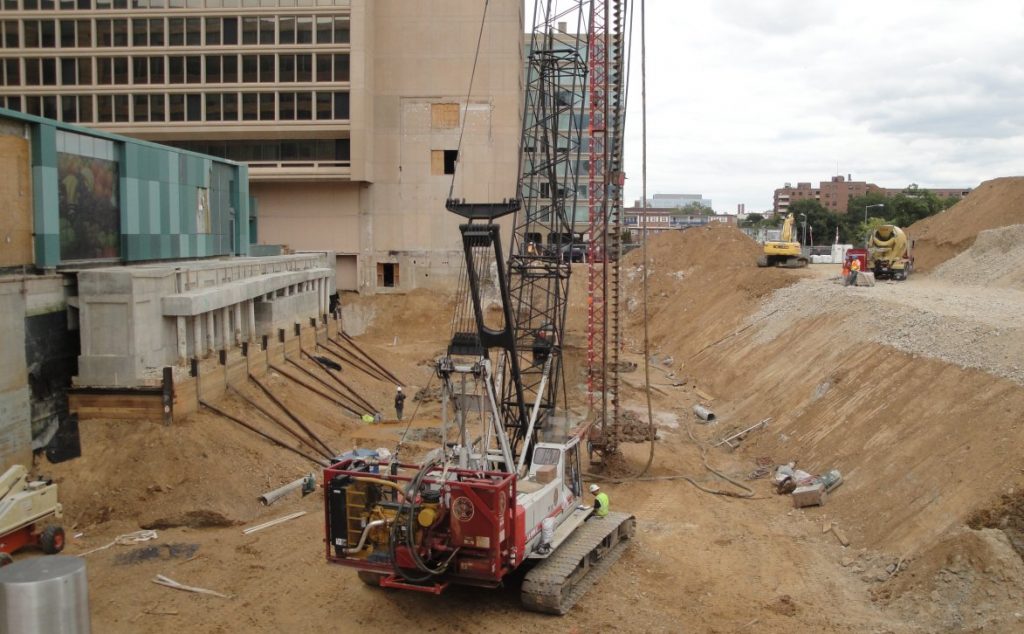
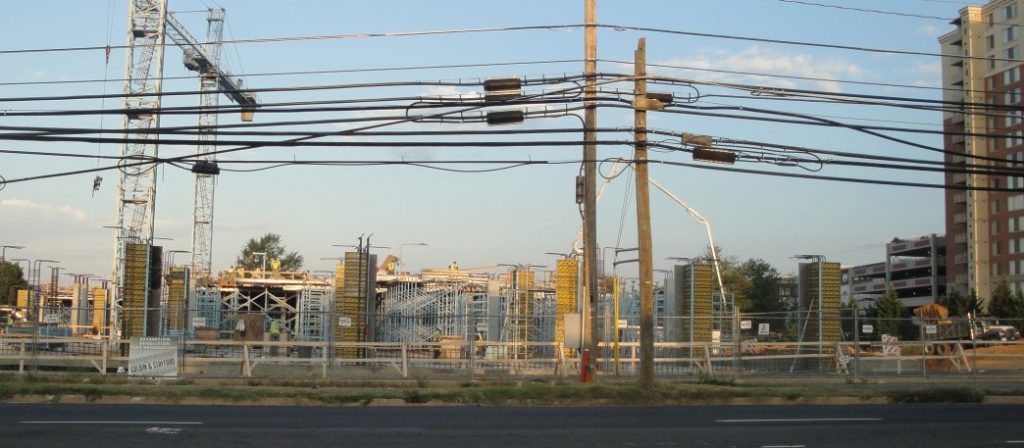
Above is construction on the site of the old Safeway.  I don’t know what they are going to build there, but they are digging deep.  The old Safeway was dumpier than the new one, but it was familiar.  I guess that I cannot say that I miss it.  I do miss the gum machines.  The new one doesn’t seem to have a place for me to waste my quarters.  Below is construction on the new building across from our house on Gallows Road.  I don’t know what this building will be like either, but it I know it is supposed to be a tall building with some retail space on the ground floor. Our neighborhood is improving too.

Blue Ridge

I went down the Blue Ridge Parkway to pick up Alex in Harrisonburg. He wanted to come back to see his friend Colin, who is moving to Oregon, and to pick up his amp. I don’t mind driving down to get him. It is a pretty drive; we get good mileage on the hybrid and I can listen to NPR or my audio books. Gas is cheaper outside the Washington metro area. You get it for $2.39 a gallon in the Shenandoah Valley; the best you can do in Northern Virginia is $2.69. 

Lots of the turnouts are under construction with signs that our stimulus dollars are a work. I saw lots of such signs, lots of barriers and lots of port-a-johns, but no workers. I suppose it put people to work setting up the signs and port-a-johns, but we might have hoped for a little more actual construction.

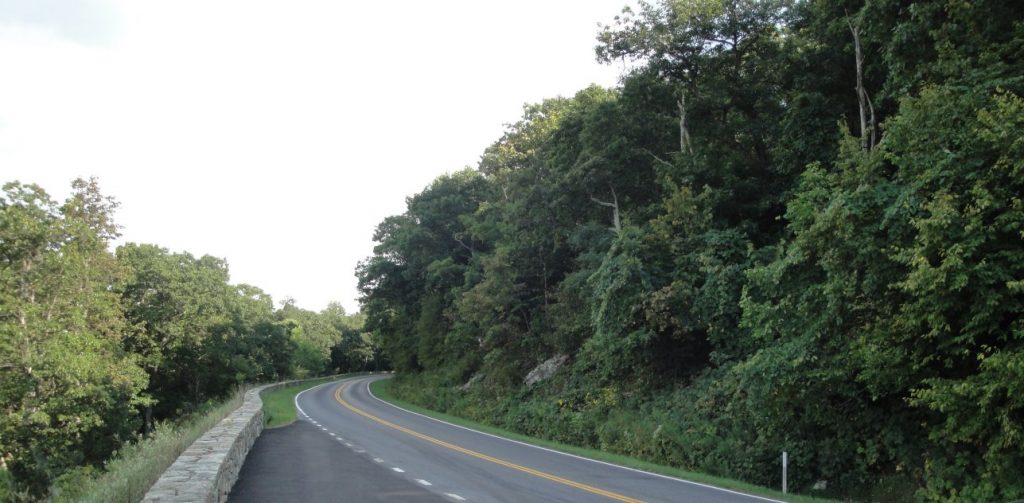
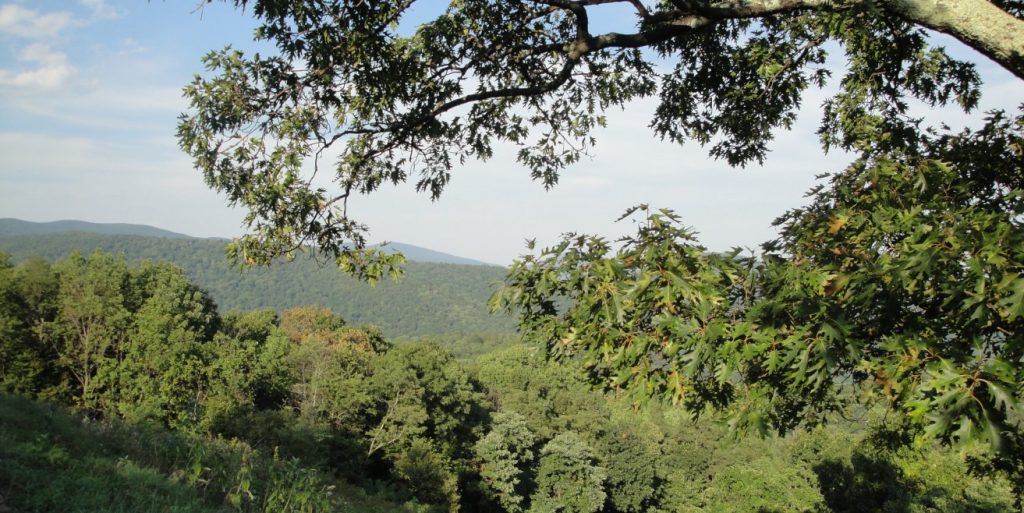
The Blue Ridge is very pretty. You can see why they were called blue ridge. It is almost all secondary growth. They cut most of the trees off during the 19th Century  Some was done for agriculture, but a lot of the wood was used to make charcoal for small steel and lime production. There are still lots of place names in the hills with forge or furnace in their titles. Farming was not very profitable with the thin and soon eroded mountain soils and most of the farmsteads were abandoned. The hillsides reverted to the thick oak-maple & tulip poplar forests you see in the pictures. Actually, at the time they were oak and chestnut forests, but the chestnuts were wiped out by a blight that came in 1904. I am hoping GMOs can bring them back.

It was a little hazy when I took the pictures yesterday. They would have been better today, since the wind left over from Hurricane Earl cleared the air.  Today is beautiful weather. We are getting into the nice fall weather, IMO, the best time for Virginia weather. October is usually the best month.

Pseudo Bike Friendly

I am at FSI for the PAO course that I never took. I figure that there are basic things that I just didn’t know and I hope to learn about them.

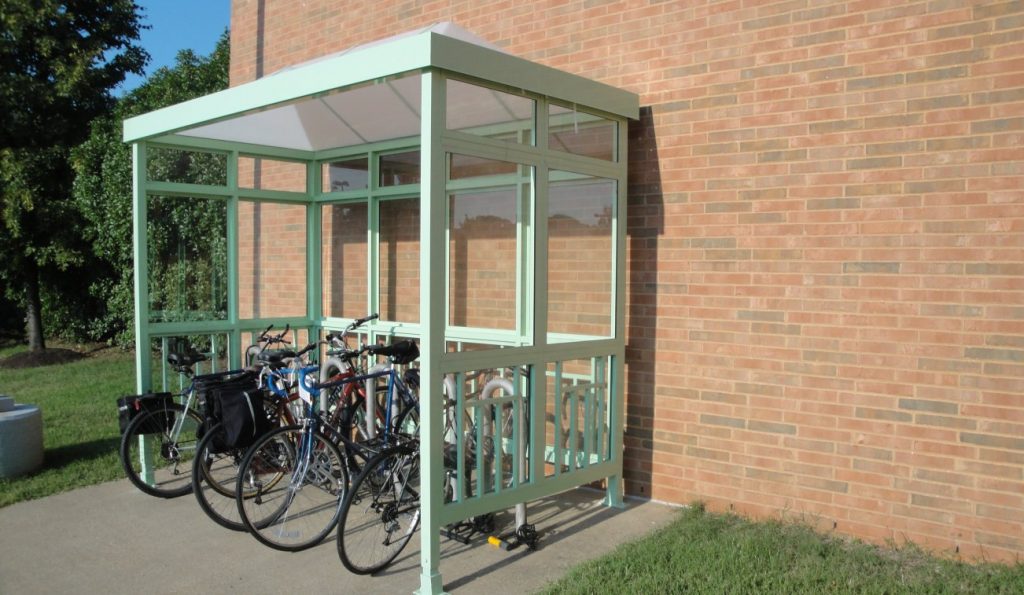
At FSI, I was greeted with an “improvement” around the bike racks. Look at the picture.  I bet these things cost the government a lot, because we never get anything cheap. What good are they? They won’t protect the bikes from the rain. The probably actually make it hotter around the bikes, since they face into the south and into the sun.  Worst of all, they eliminate at least two bike parking spots (on each end) and make it a lot harder to get at the bikes in the middle.

This is the kind of thing that someone who doesn’t ride a bike much thinks is “bike friendly.”

I figure that somebody will get an award for putting those things up. They will look better on somebody’s personal report than they do in real life. Maybe that same person will earn another award when they take them down, create more space and “save” the upkeep.

Class got out early enough for me to head down to Washington, go to Gold’s Gym and take the Metro home.  It is easier for me to go down to Washington and take the Metro than to go up hill home, although both are about the same distance. Actually, it was a bit farther, since I went the long way through Shirlington and along the Potomac. They connected the bike trail all the way. Sweet. You used to have to get off the trail and cross the freeway on a footbridge.

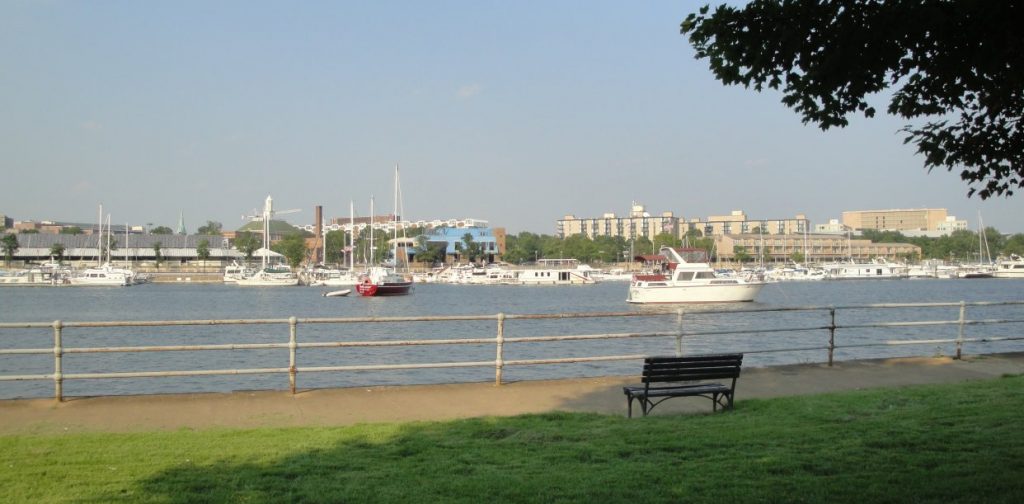
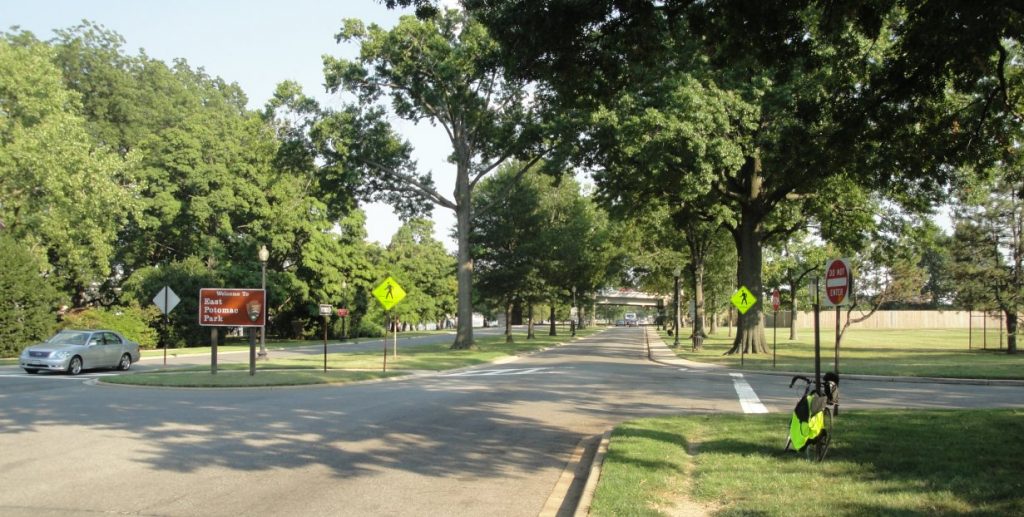
Above and below are pictures of East Potomac Park. I have been stopping here at the end of the day to kind of settle back into that peaceful, easy feeling.  It is another thing that is a little out of the way, but worth going.  I went down there today for around a half hour, listened to my audio books and watched the water flow. It is a pleasant place to be. The breeze blows off the water in the late afternoon, keeping the mosquitoes confused.

Feeding the World

When I lived in Brazil twenty-five years ago, I was only vaguely aware that the Brazilian agricultural frontier was pushing west. I knew about a significant number of farmers from Rio Grande do Sul moving into western Parana, Mato Grosso do Sul, Mato Grosso & Goias. But Brazilian agriculture was not efficient and I heard the soils out west were acidic, poor and subject to rapid exhaustion. Lately, I have been watching Globo Rural (a Brazilian agricultural TV show) on Internet and have been impressed by what looks like efficient and forward looking agriculture. Today I read a really good briefing article on Brazil’s agricultural miracle. It is a good news story thirty years in the making and it sort of crept up on us such that we didn’t notice. But it is big, a game changing development.

The way I think of a place like the Brazilian states (such as Mato Grosso) story is to compare it to what it must have been like in Ohio in the early part of our Western expansion. Ohio entered the Union in 1803 and at that time was largely potential. Twenty-five years later, it was a settled and very productive part of the United States. The transformation was fast and so big that it was not properly noticed because by the time it was finished it seemed so inevitable. But it wasn’t. The same goes for Brazil.

I went down to the State of Parana last year to look at some Brazilian forestry operations. I was massively impressed. They were taking timber in a sustainable manner and were heavily into improving silvaculture. The Amazon, BTW, is up north and the deforestation is not related to the developments I am talking about. That is a serious problem, but a different one. In fact, good silvaculture and agriculture in the south and central west takes the pressure off the rain forests.

They used to joke that Brazil was the country of the future and always would be. Looks like the future might be now. I have to admit that I was not optimistic twenty-five years ago, but all that I read and see has changed my mind. It gives me lots of hope for turning around what is so far the world’s biggest failure – Africa. Maybe in twenty-five years we will be talking about the African miracle.

Let me excerpt from the story from the briefing from the “Economist” and we can talk about it. You can read the whole thing at the link above.

“In less than 30 years Brazil has turned itself from a food importer into one of the world’s great breadbaskets. Between 1996 and 2006 the total value of the country’s crops rose from 23 billion reais to 108 billion reais, or 365%.

“No less astonishingly, Brazil has done all this without much government subsidy. According to the Organization for Economic Co-operation and Development (OECD), state support accounted for 5.7% of total farm income in Brazil during 2005-07. That compares with 12% in America, 26% for the OECD average and 29% in the European Union.

“Since the biggest single agricultural failure in the world during past decades has been tropical Africa, and anything that might help Africans grow more food would be especially valuable. In other words, you would describe Brazil.

“Since 1996 Brazilian farmers have increased the amount of land under cultivation by a third, mostly in the cerrado. And it has increased production by ten times that amount. But the availability of farmland is in fact only a secondary reason for the extraordinary growth in Brazilian agriculture. If you want the primary reason in three words, they are Embrapa, Embrapa, Embrapa.

“Embrapa is short for Empresa Brasileira de Pesquisa Agropecuária, or the Brazilian Agricultural Research Corporation. It is a public company set up in 1973, in an unusual fit of farsightedness by the country’s then ruling generals. At the time the quadrupling of oil prices was making Brazil’s high levels of agricultural subsidy unaffordable.

“Embrapa received enough money to turn itself into the world’s leading tropical-research institution.

“When Embrapa started, the cerrado was regarded as unfit for farming. Norman Borlaug, an American plant scientist often called the father of the Green Revolution, told the New York Times that “nobody thought these soils were ever going to be productive.” They seemed too acidic and too poor in nutrients. Embrapa did four things to change that.
First, it poured industrial quantities of lime (pulverised limestone or chalk) onto the soil to reduce levels of acidity. Embrapa scientists also bred varieties of rhizobium, a bacterium that helps fix nitrogen in legumes and which works especially well in the soil of the cerrado, reducing the need for fertilisers.

“Second, Embrapa went to Africa and brought back a grass called brachiaria. Patient crossbreeding created a variety, called braquiarinha in Brazil, which produced 20-25 tonnes of grass feed per hectare, many times what the native cerrado grass produces and three times the yield in Africa. That meant parts of the cerrado could be turned into pasture, making possible the enormous expansion of Brazil’s beef herd.

“Embrapa has recently begun experiments with genetically modifying brachiaria to produce a larger-leafed variety called braquiarão which promises even bigger increases in forage.

“Third, and most important, Embrapa turned soyabeans into a tropical crop. Soyabeans are native to north-east Asia (Japan, the Korean peninsular and north-east China). They are a temperate-climate crop, sensitive to temperature changes and requiring four distinct seasons. Embrapa worked out how to make it also grow in a tropical climate, on the rolling plains of Mato Grosso state and in Goiás on the baking cerrado. More recently, Brazil has also been importing genetically modified soya seeds and is now the world’s second-largest user of GM after the United States. This year Embrapa won approval for its first GM seed.

“Such improvements are continuing. The variety of soya now being planted [in Brazil’s Northeast] did not exist five years ago.

“Lastly, Embrapa has pioneered and encouraged new operational farm techniques. Brazilian farmers pioneered “no-till” agriculture, in which the soil is not ploughed nor the crop harvested at ground level. Rather, it is cut high on the stalk and the remains of the plant are left to rot into a mat of organic material. Next year’s crop is then planted directly into the mat, retaining more nutrients in the soil. In 1990 Brazilian farmers used no-till farming for 2.6% of their grains; today it is over 50%.

“Embrapa’s latest trick is something called forest, agriculture and livestock integration: the fields are used alternately for crops and livestock but threads of trees are also planted in between the fields, where cattle can forage. This, it turns out, is the best means yet devised for rescuing degraded pasture lands.

“The fields of Mato Grosso are 2,000km from the main soyabean port at Paranaguá, which cannot take the largest, most modern ships. So Brazil transports a relatively low-value commodity using the most expensive means, lorries, which are then forced to wait for ages because the docks are clogged.

“Partly for that reason, Brazil is not the cheapest place in the world to grow soyabeans (Argentina is, followed by the American Midwest). But it is the cheapest place to plant the next acre.

Big is beautiful

“Like almost every large farming country, Brazil is divided between productive giant operations and inefficient hobby farms. According to Mauro and Ignez Lopes of the Fundacão Getulio Vargas, a university in Rio de Janeiro, half the country’s 5m farms earn less than 10,000 reais a year and produce just 7% of total farm output; 1.6m are large commercial operations which produce 76% of output. Not all family farms are a drain on the economy: much of the poultry production is concentrated among them and they mop up a lot of rural underemployment. But the large farms are vastly more productive.

“From the point of view of the rest of the world, however, these faults in Brazilian agriculture do not matter much. The bigger question for them is: can the miracle of the cerrado be exported, especially to Africa, where the good intentions of outsiders have so often shrivelled and died?

“There are several reasons to think it can. Brazilian land is like Africa’s: tropical and nutrient-poor. The big difference is that the cerrado gets a decent amount of rain and most of Africa’s savannah does not (the exception is the swathe of southern Africa between Angola and Mozambique).

“Brazil imported some of its raw material from other tropical countries in the first place. Brachiaria grass came from Africa. The zebu that formed the basis of Brazil’s nelore cattle herd came from India. In both cases Embrapa’s know-how improved them dramatically. Could they be taken back and improved again? Embrapa has started to do that, though it is early days and so far it is unclear whether the technology retransfer will work.

“A third reason for hope is that Embrapa has expertise which others in Africa simply do not have. It has research stations for cassava and sorghum, which are African staples. It also has experience not just in the cerrado but in more arid regions (called the sertão), in jungles and in the vast wetlands on the border with Paraguay and Bolivia. Africa also needs to make better use of similar lands.

“Still, a word of caution is in order. Brazil’s agricultural miracle did not happen through a simple technological fix. No magic bullet accounts for it—not even the tropical soyabean, which comes closest. Rather, Embrapa’s was a “system approach”, as its scientists call it: all the interventions worked together. Improving the soil and the new tropical soyabeans were both needed for farming the cerrado; the two together also made possible the changes in farm techniques which have boosted yields further.

“Systems are much harder to export than a simple fix. “We went to the US and brought back the whole package [of cutting-edge agriculture in the 1970s],” says Dr Crestana. “That didn’t work and it took us 30 years to create our own. Perhaps Africans will come to Brazil and take back the package from us. Africa is changing. Perhaps it won’t take them so long. We’ll see.” If we see anything like what happened in Brazil itself, feeding the world in 2050 will not look like the uphill struggle it appears to be now.”
Virginia Goats in Forestry

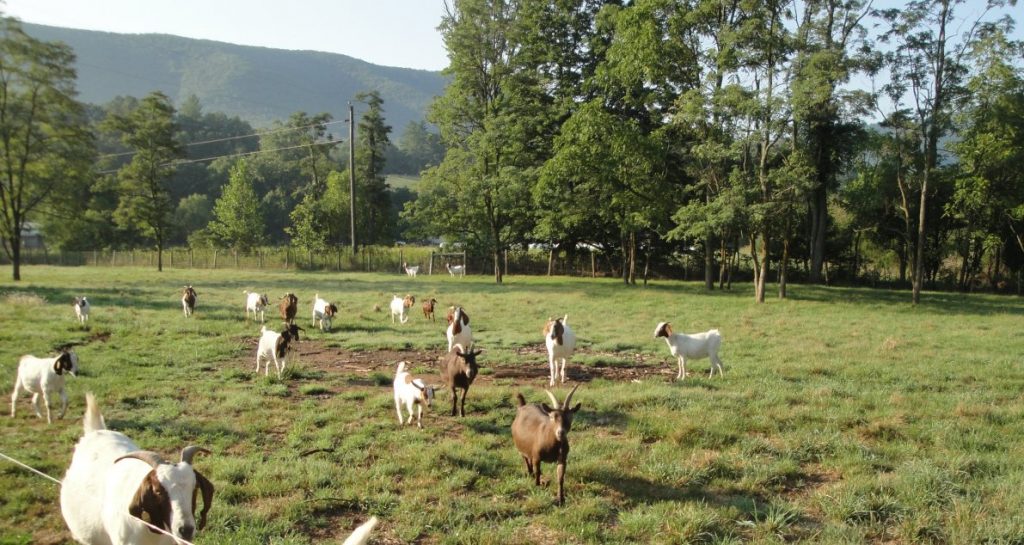
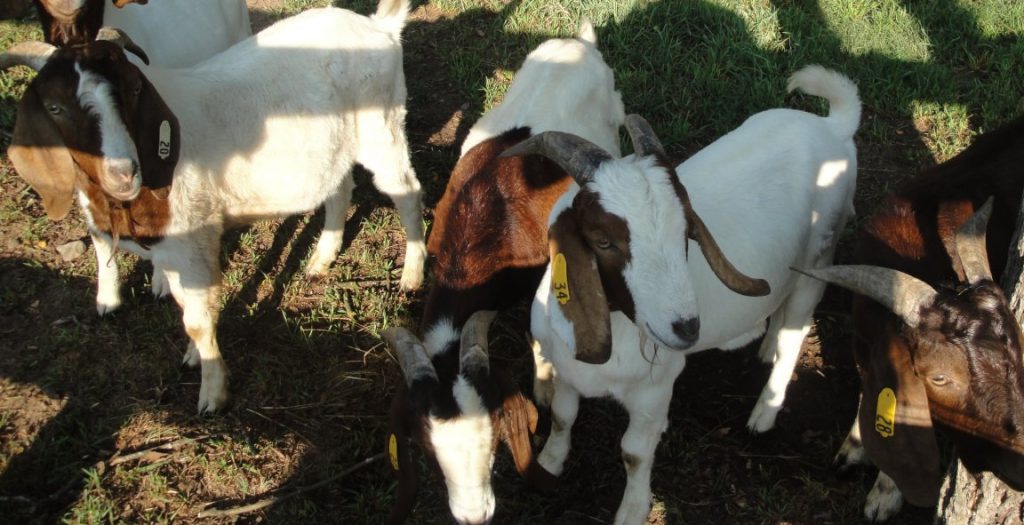
Boer goats were developed in South Africa.  They are bigger and more solidly built than most goat breeds, which makes them better as meat goats.  They are not as agile as other breeds, which is good since they are not as likely to climb onto structures and through fences.   They were really developed as land clearing machines.  They can climb steep hills and will eat almost everything in their paths, including thorny bushes and vines, such as multiflora rose, blueberries, kudzu and honeysuckle. That is why I am interested in them.

I want the goats to eat down all the brush that grows underneath my pine trees, especially after we do the thinning.  They would be well-adapted to that job, since they can and will eat all the common brush that vexes me.  In addition, they also fertilize as they go.   There is also a growing market for goat meat because of the growing immigrant populations from Central America and the Middle East.  It seems almost too good to be true.  They don’t need much care, but unfortunately, I don’t think I can give them that.

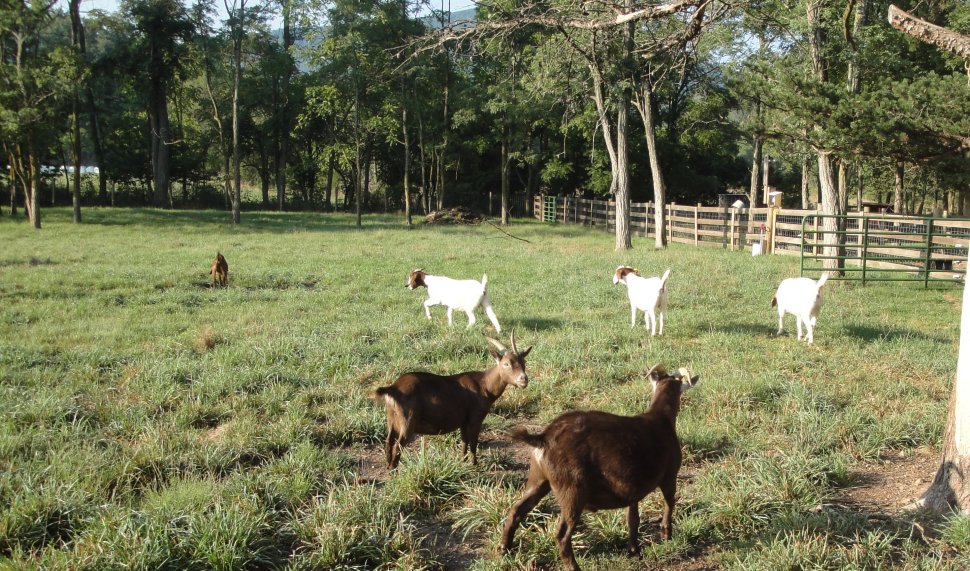
Since I was taking Alex back to school at JMU, I took the opportunity to visit the goat farm of Jeff and Loretta Whetzel in rural Rockingham County.   They are semi-retired.  Jeff joked that goats are his hobby and he is lucky to break even.   I enjoy the same situation with my forestry, so we understood each other.   The Whetzels started raising goats only a few years ago and are kind of easing into the business. 

The goat business is still mostly a small-farmer operation in Virginia.  Although goats have been resident on American farms since the first settlers landed in Virginia and founded Jamestown, they have never been a big business.   But the changing demographics might be creating business opportunities for goat farming.

Goats are fairly easy to take care of and do well in Virginia.  Goats are criticized as “desert makers” because of their voracious appetites and promiscuous eating habits.  But this is not a problem in Virginia, where we have enough rain and good soils to make the grass and brush grow.  Goats are browsers, not grazers.  That means they eat mostly leaves and brush, unlike cows that eat mostly grass, legumes and forbs.  (Of course, goats also eat grass and forbs; they just have a wider diet.)

Goats will eat pine needles and so you cannot put goats into a working pine forest until the trees are tall enough that goats cannot reach the tops or the vital branches of the crop trees. For practical purposes, this means the trees need to be about ten feet high (about five years old for a loblolly pine in Southern Virginia), since goats can reach up about five feet by standing on their hind legs. They will eat pine bark, but only if there is not other things to eat.  Presumably this would never become a problem if the goal was brush clearing. Jeff says that pine needles in the goat diet are beneficial, since something in the resin helps prevent worms.

The goats are very friendly. They are like dogs in that they follow you around. I can see the attraction of having them around.

But after talking to Jeff & Loretta, I realized that I cannot put goats on my lands unless and until I have to more time to devote. For one thing, I would need a lot of them to eat down 80 or 100 acres. I would also have to build electrified fences and dig some ponds or other water sources. My farms have flowing water, so that could be done. But you have to watch them. They require some grain supplements etc. And they need protection.

Coyotes are a problem.  Jeff and Loretta have a big dog called Yogi that chases them away. He is a Pyrenees sheep dog, very big and tougher than coyotes, developed by shepherds Spain to fight off the local predators.  He looks a lot like the podhale dog in Poland.  This is another reason why I cannot put the goats on our land and be there to watch.  The goats can be left more or less alone for a long time, but a dog cannot. We have coyotes, along with some bobcats and a few bears, in Southern Virginia too, so we need that protection.

Anyway, I have to put my goat plan on hold for at least the next couple of years when I am in Brazil.  We are thinning eighty-six acres this year. I plan to burn under those trees in 2012.  After that and after the brush grows in, maybe it will be time to deploy some Boer goats.

Links to some related posts are here and here.  

Country Roads

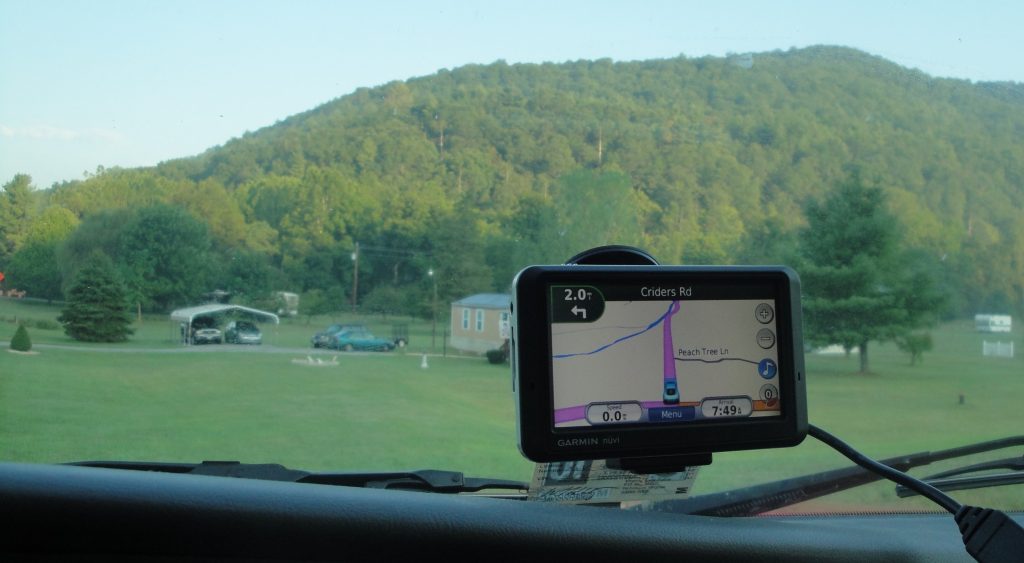
I used my new GPS to find the goat farm of Jeff & Loretta Whetzel (more on that in the next post).  I am a late adapter of the GPS for the car. I had one a long time ago that I used in my forestry, but it was not really good enough for precise measurement.  This one (see above) is nice and was much cheaper. It tells you when to turn etc.  I made it speak in Portuguese so that I can practice. Of course, vocabulary is limited. Also can play audio books.

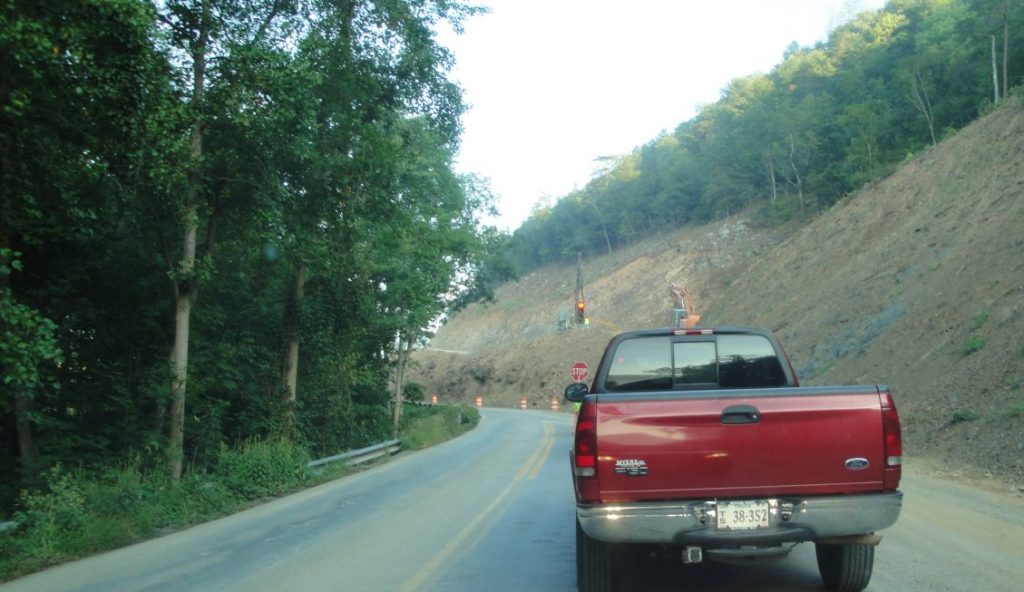
Above you can see road work.  We had to wait around fifteen minutes while the cleared out the rocks.  They are widening the road.  The rock is shale, which is common in the Eastern Mountains.  It is very good for paving running trails as it breaks down into flattish chips and forms a springy surface. 

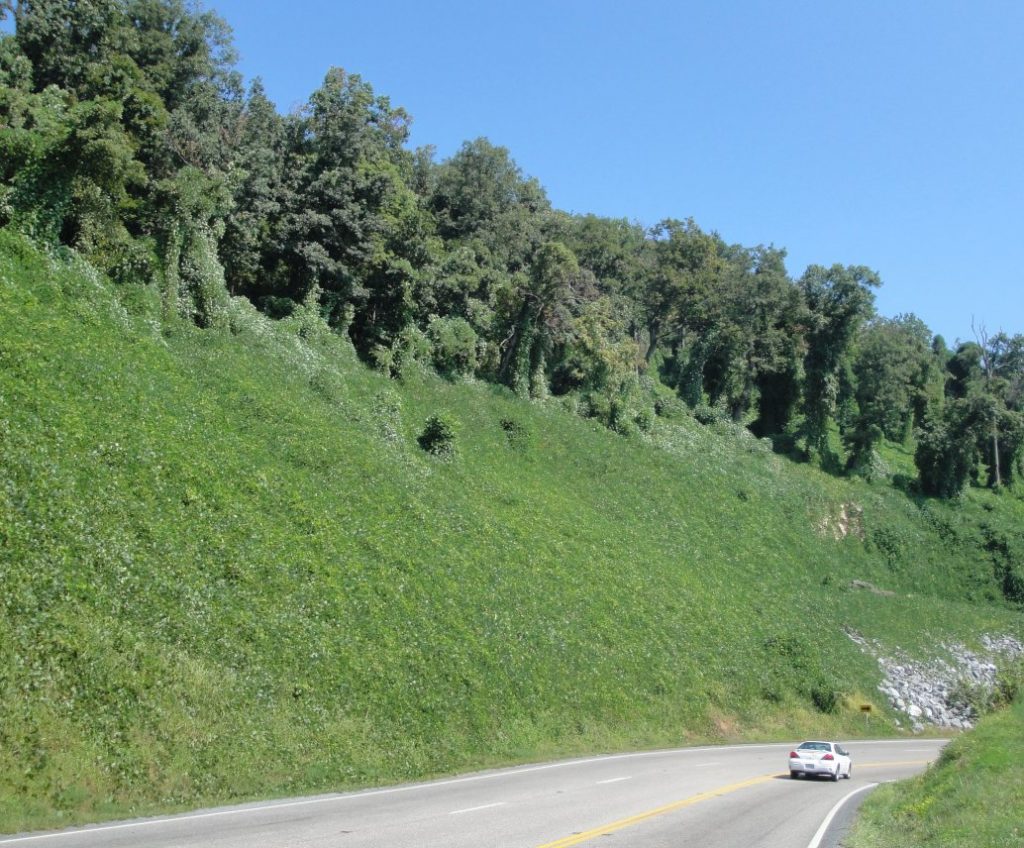
Below is kudzu growing along US 211 (also called Lee Highway, BTW, a continuation of the Lee Highway that runs near my house) and doing the one thing it is good at – holding a steep bank. The government encouraged Kudzu planting in the U.S. because of its extreme ability to grow. That was not an entirely wise idea. What makes it a great cover for everything also makes it a troubling invasive, since what grows over rocky hillsides also grows over trees and other plants, choking them off.

I drove the country way home from Harrisonburg, through Luray and over the mountains. I enjoy driving that more than the freeway. It is a bit shorter in miles, but takes about the same time since you have more curves and have to drive slower.  It is not a good idea to drive through the mountains during the winter or at night, but it is nice on a nice day like today.  

Most of the way after the mountains is the way home from Old Rag Mountain, so I have been driving this way for twenty-five years. The area up to Warrenton is very built up, and much of US 29 has become a big strip mall. This includes areas near the Manassas Battlefield. It kind of takes away from the historical feel.  But after Warrenton, it has not changed that much.  It is still very rural, green and pleasant. Fauquier and Rappahannock Counties are among the nicest in Virginia. It is a great pleasure to pass through them. 

Alex back to JMU

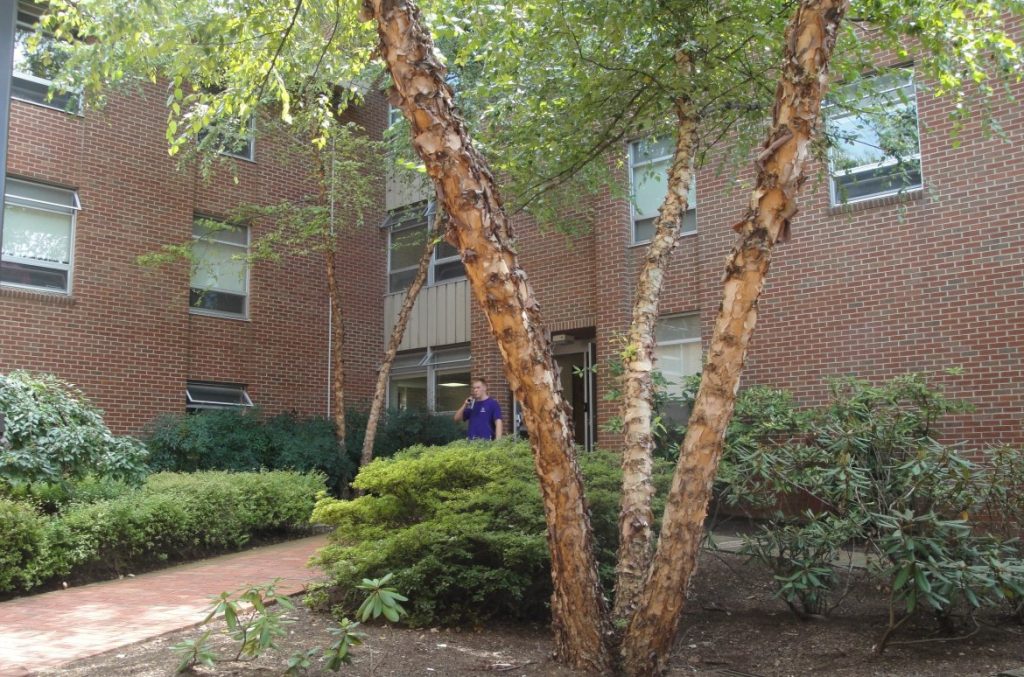
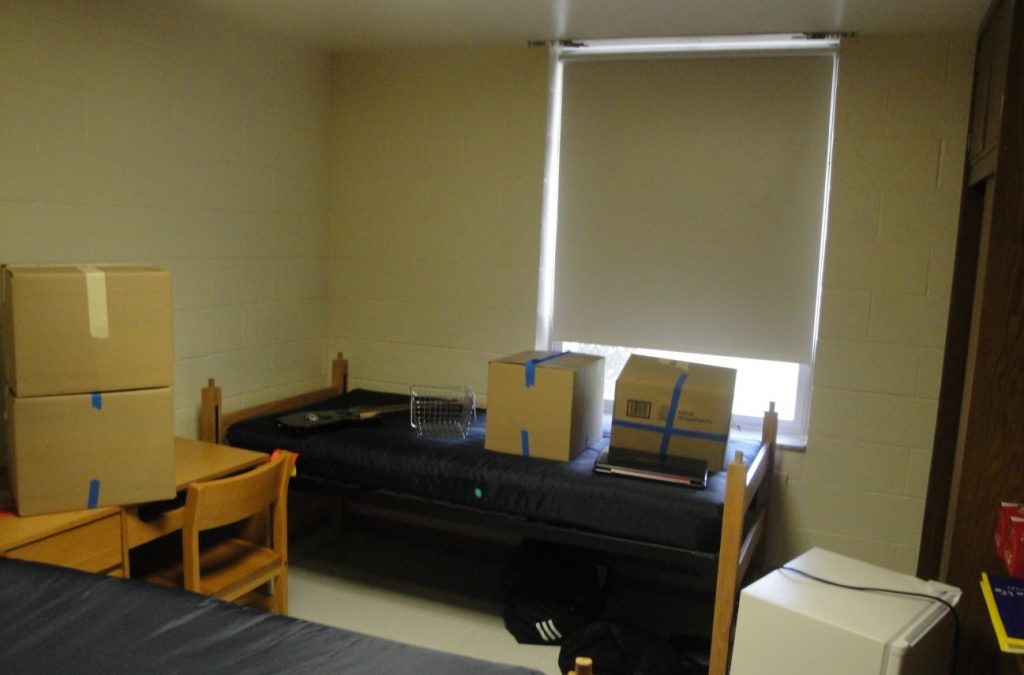
I took Alex back up to school at James Madison.  He is in a new dorm right in the center of the campus.  I think he will be better.  He can more easily walk to the places he needs to go and will have more contact with other students.  The room is smaller than the one he had before & has no air conditioning.  This will be okay most of the school year, but it still can get hot in September.  His room is part of a suite with six guys, who share a kind of living space in the middle.  Above is his building and below is his room as it looked when he moved in. The tree is a river birch, the southern cousin in the birch family. In Wisconsin we can grow the paper birch or the white birch. They are pretties than this kind of brownish one, but you have to adapt to local conditions.  I wanted to get a picture of Alex too, but he refused and kept on moving in and out of the shot.

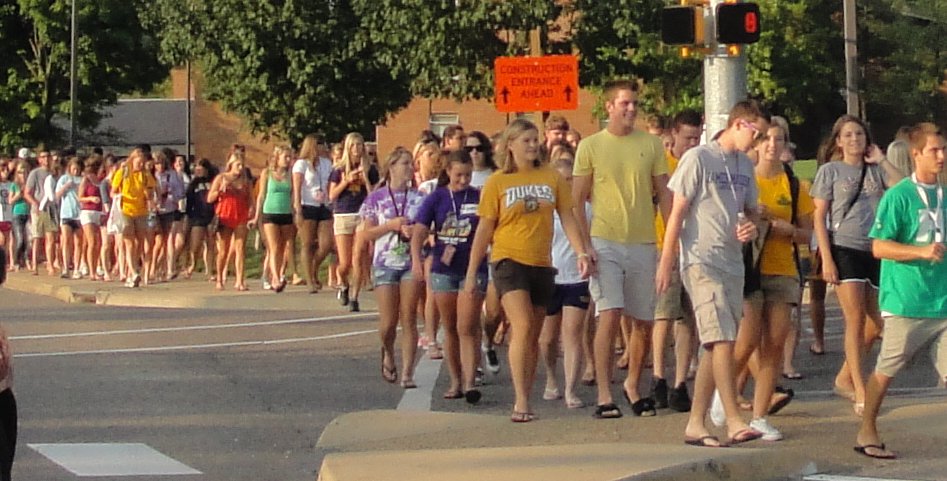
The campus was full of new freshmen, you can see the gaggle of them below. They are much better groomed than back in the 1970s when I started, but otherwise look similar. Speaking of gaggles, the geese just stroll across the road and most cars stop.  I didn’t.  I went slow enough that they could move out of the way, but I am not going to yield to geese.  They squawked a little but they cleared a path.  Up at the farm, a turkey stood in front of my car and stared at me.  I actually had to get out and shoo it away. Turkeys are dumb enough to be run over by a car going 3MPH; geese are not.